Category Archives: Travel & Tourism

Sharon Stone’s Taj memories set in stone

This wasn’t the typical Sharon Stone you see posing in glamorous gowns on red carpets across the world. The star decided to ditch the gowns for a much more casual black smock with her hair tied up in a ponytail, and traded the fashion poses for the more awkward touristy ones, as she went about dropping to her haunches and leaning alarmingly far back to capture her friends, with the Taj Mahal in the background, at the best angle possible.

(Sharon Stone strikes the…)

Stone took her sweet time on this visit. Not only was her camera trained on every stone carving, she’d also stop to point the lens at cows, cute Indian babies or other locals. When two Indian women pointed their camera at her, the actress was so fascinated with their sindoor that she started clicking them back. It took them 10 seconds to change their expression from bewilderment to a smile.

This was also not a typical Hollywood celebrity visit to an Indian monument. Missing, for starters, was the sea of paparazzi we’d witnessed when Tom Cruise was here in 2011. There wasn’t even one bodyguard in sight. Instead, Stone chose to sightsee with six of her closest friends, including family friend Tikka Shatrujit Singh.

“I have known her for eight years, she’s a crusader,” Singh said. When asked if he catches up with the star regularly, Singh replied, “It’s because she’s here in India for the first time that I got to spend so much time with her. Wahan pe kahan time milta hai? Bade Hollywood star hain.”

The Taj Mahal didn’t fail to impress the Basic Instinct actress, who was teary-eyed when the guide told her the story behind the monument, and she broke down at Shah Jahan and Mumtaz Mahal’s graves. Stone continued to whisper ‘beautiful’ and ‘magical’, until it was time to leave.
When asked about her lasting impressions of India, Stone chose to be bitingly frank rather than politically correct. Calling India a poem that was both beautiful and sorrowful, she said, “I think that there are things that are required to gracefully bridge the gap between the eccentricity of wealth and the slumber of the poverty. For example, the millions of people that are defecating in the streets, I think it’s not only of service to those people to create a sanitary system, but also for the wealthy people. It’s not logical or intelligent to breathe that in the air. And so, for modern sense of grace, and a higher elevated sense of that same poetry, it seems logical to produce the sanitization system.”

She also spoke about CBI Chief Ranjit Sinha’s recent “rape is inevitable” remark. “When we see public officials making statements that, you know, ‘rape is inevitable’, ‘when it happens to you, enjoy it’ – it lacks the logic that rape is not a gender issue and that lacks compassion, and should be regarded in that way. So, I think it’s a sense of creating maybe one step further in the use of modern communication to achieve that goal,” she said.

“For example, if six out of 10 people aren’t registered to vote, it’s illogical that we don’t use the six billion cellphones or the cellphones that the six billion people on the planet have to register people to vote. Because, if you have everyone voting, then you have a more logical sense of fluidity among the people. And a more modern sense of the inevitable. Because the world, with communication as it exists, is taking an inevitable step towards understanding what’s happening on a global sense,” she elaborated.

source: http://www.articles.timesofindia.indiatimes.com / The Times of India / Home> Entertainment> Hollywood> Taj Mahal / by Kritika Kapoor, TNN / November 22nd, 2013

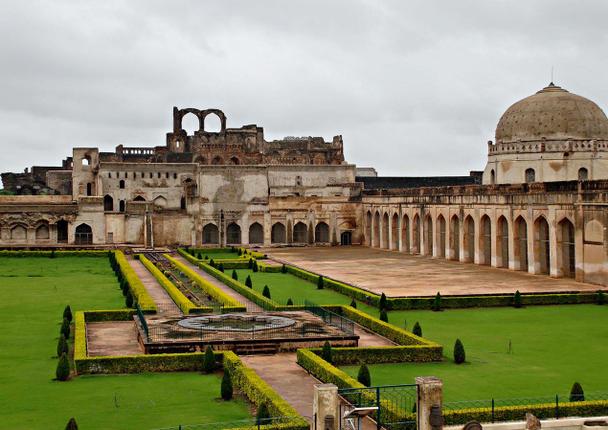
Bidar only South Indian monument to figure in latest World Monuments Fund list

According to the World Monuments Fund, the sites in the list are crying for immediate attention for preservation, protection, and adaptive reuse. / The Hindu

House of Sheikh Salim Chisti in Fatehpur Sikri and Juna Mahal in Rajasthan are also on the list

The historic city of Bidar figures in the 2014 World Monuments Watch list released by the World Monuments Fund (WMF), a New York-based NGO working for the protection of monuments.

WMF president Bonnie Burnham announced the list in New York on October 8, according to P.C. Jaffer, Deputy Commissioner of Bidar. The WMF had received 741 proposals from 166 countries. But the final list contains 67 sites from 41 countries.

The three sites in India to figure in the list are the house of Sheikh Salim Chisti in Fatehpur Sikri, Juna Mahal in Rajasthan and “the historic city of Bidar”. These, according to the list, are sites are in need of immediate attention for preservation, protection, and adaptive reuse.

Benefits

Mr. Jaffer said the announcement would benefit the city in many ways. It would attract worldwide attention, leading to increased tourist footfalls. It would also help the government get technical advice and support from institutions specialised in the preservation of monuments.

“It could also help us raise funds from the government or donor agencies for protection and preservation of monuments,” Dr. Jaffer said.

Bidar has three national monuments - Bidar Fort, Ashtur tombs and the Madrasa of Mahmud Gawan. / The Hindu
Bidar has three national monuments – Bidar Fort, Ashtur tombs and the Madrasa of Mahmud Gawan. / The Hindu

Bidar has three national monuments – Bidar Fort, Ashtur tombs and the Madrasa of Mahmud Gawan. The city also has 20 sites recognised by the State Department of Archaeology and Heritage and over 40 unrecognised sites of the medieval periods.

Facebook page

“We will upload the WMF recommendations on the district website. We will also open a Facebook page on Bidar on the WMF watch list and raise awareness about the issue,” the Deputy Commissioner said.

Two interpretations centres would be set up in the Bidar Fort and at Ashtur at a total cost of Rs. 80 lakh. This would provide information to tourists on the architectural and cultural aspects of monuments. In this background, an international seminar on Bidar’s heritage would be organised in January.

According to a release issued by Ms. Burnham, a copy of which was sent to the district administration, the list contains sites that are facing several preservation challenges like climate change, armed violence, neglect by authorities, lack of resources or even increased tourism activity that can damage monuments. An independent panel of international experts on archaeology, culture and preservation had prepared the list, Ms. Burnham said.

Over 150 sites have been preserved and protected by the WMF and its associate organisations in several countries since 1996. Famous sites restored by the WMF personnel include Venice in Italy, Gokarna Mahadev temple in Nepal, and the Citadelle Laferrière in northern Haiti.

The WMF also takes up restoration works on sites referred by Unesco.

source: http://www.thehindu.com / The Hindu / Home> News> National> Karnataka / by Rishikesh Bahadur Desai / Bidar – October 10th, 2013

Kashmir Ki Kali: Srinagar’s famed Shalimar Bagh has been restored to what it was in Jehangir’s time — Farah Baksh

Srinagar’s famed Shalimar Bagh has been restored to what it was in Jehangir’s time — Farah Baksh, or ‘the delightful’. Now for the 15 others, writes Gargi Gupta

KashmirMPos21Nov2013

In a television interview, conductor Zubin Mehta proclaimed that despite the controversy about the concert, Kashmir now had a beautifully restored garden, fountains, flowers et al.  Many agree.

“Zubin Mehta’s concert was the best thing to happen to Shalimar Bagh,” laughs Sheikh Irfan Qadir, assistant executive engineer in the Roads & Building department of the Jammu & Kashmir government. Qadir should know — he’s been working at Shalimar Bagh since early this year, deputed by the state government in its race-against-time to restore the 17th century gardens laid out by Mughal Emperor Jahangir, in time for Mehta’s concert with the Bavarian State Orchestra held on September 7.

German ambassador in India Michael Steiner and Chief Minister of Jammu and Kashmir Omar Abdullah took close interest in the repair works, visiting the site several times in the months leading up to the concert. After all, this was a high-profile event, hosted by the German Embassy in India, attended by dignitaries and broadcast on high-definition to millions of viewers across the globe.

“When the German ambassador first came here,” says Qadir, “Shalimar Bagh was in such a bad state that he looked around and despaired at having the concert here.” Describing the state of ruin, an October 2012 report in British newspaper Daily Mail bemoaned that the ‘fountains have long stopped working and the walls are peeling at every corner’. Photographs accompanying the article, showed the water channels silted up and covered in vegetation.

Strangely, Shalimar Gardens, or any of the other 15 Mughal Gardens in Kashmir, is not protected by the Archaeological Survey of India, or its Kashmir circle. It is the floriculture department of the state government that looks after these gardens, which attracts lakhs of tourists every year.

“The last ‘sensible’ conservation effort took place in 1941,” informs M Saleem Beg, convenor of the Jammu & Kashmir chapter of Indian National Trust For Art and Cultural Heritage (INTACH), which has overseen the current restoration exercise. The committee prepared a detailed conservation plan for Shalimar Bagh in 2005. That, says Beg, came about by sheer accident. “In 2004, Jagmohan, then tourism minister, allocated Rs1 crore for reconstructing the Mughal wall in Nishat Garden. Appalled, I met him to point out how inappropriate ‘rebuilding’ a historic wall was.

He told me to come up with a conservation plan for the gardens and asked me to name the budget. I had rattled off a figure of Rs5 lakh. We ended up spending Rs9 lakh.”

Much of the work at Shalimar, says Beg, entailed undoing earlier unscientific, ill-considered conservation efforts. For instance, the water channels were covered in concrete. “We removed thousands of kilos of cement,” says Qadri. The channels, measuring 1,000 ft x26 ft, were relaid with crushed stones, then covered with lime concrete. “We had to source lime concrete, which is what the Mughals used, from Amritsar. The material takes much longer to dry than cement, but we were determined to do it the right way,” he says. “The stage for the musicians was laid out over these channels, but they did it very carefully, placing it over small metal stools so as not to leave a single mark on the grass,” says Qadir.

The stones that lined the rim along the water channels, the foot-bridges across them, niches along the walls and terraces had become loose or were displaced over time; these were carefully taken out, cleaned and refixed. The pavements too were re-laid with local devri stone. The Pink and Black Pavilions were restored with new shingle roofs and their walls covered with a 20mm coat of lime plaster. “We have not yet touched the ceilings,” says Qadir, pointing to the richly-painted panels, which are a more recent addition, probably the time of Kashmir’s Dogra rulers.

Nearly Rs3.5 crore was spent on Shalimar Bagh’s restoration. The fountains are working; the channels are clear; a Mughal-era hammam (public bath house) on the premises has been opened to public and there are better public conveniences. Of course, the problems too are visible, the most being the buildings outside that have been built too close to the Mughal-era boundary wall.

Perhaps, the only long-term hope for Kashmir’s Mughal Gardens is in securing a World Heritage Site status. Six of the better-known gardens did make it to the tentative list in December 2010. But despite several representations to the culture ministry, the elaborate dossier that is required for their final application, has not yet been prepared.

source: http://www.dnaindia.com / DNA / Home> Lifestyle> Report / by Gargi Gupta / Agency:DNA / Sunday – October 20th, 2013

A woman’s romance with well of death

Baby Khan.
Baby Khan.

Alappuzha:

She is a woman who dares death by doing  motorcycle stunt-riding in motordromes (well of death). Baby Khan, 40, from Chadayamangalam of Kollam district,  is also a housewife who takes care of a big family.

On the sidelines of a carnival being held at Oachira Parabrahma temple, Baby Khan, mother of three,  told DC:  “I perform the stunts that a  man does in a motordrome.”  Her  romance with bike stunt began during childhood when her poor parents took her to watch a motordrome show in Chadayamangalam. “The sound of the bikes  without the silencer  attracted me. When my family moved to Tirunelveli, they let me learn  bike riding,” she says.

Rajiv, a bike stunt rider,  taught her the first lessons of riding a bike and doing stunts. Subsequently, she  joined an amusement troupe in Tamil Nadu. She is now part of the troupe called Golden Amusement owned by Babu Khan, her husband.

There are seven bike stunt riders in the group. “Even though we have been in the field for decades, an insurance coverage or pension is still a distant dream. Two years ago, I met with an accident  in the carnival held as part of Oachira temple festival. I was rushed to the hospital and was forced to take two days’ rest,”  she says. “We are constantly on the move  and I have travelled the whole of India several times,” she adds.

She performs the stunts from 4 p.m. till 10 p.m.   “I am proud of being a bike stunt rider and I have a lot of fans as well, mostly children. They often look at me with wonder.  I intend to do stunts as long as I can as there is a thrill in being one of the few women in the field,” she says.

source: http://www.deccanchronicle.com / Deccan Chronicle / Home> News> Current Affairs / DC / by T. Sudheesh / November 20th, 2013

Archaeological Survey of India to touch up Tipu’s summer palace

Tipu Sultan's Summer Palace / The Hindu
Tipu Sultan’s Summer Palace / The Hindu

Paintings will be cleaned using chemicals, and scribbles on the walls will be covered by patch plastering work

Years of dust and smoke that have masked the paintings on the walls and ceiling of Tipu Sultan’s summer palace in Bangalore may finally be cleaned up, while portions of the wall vandalised with graffiti could also receive much-needed attention.

The Archaeological Survey of India (ASI), which protects the 18th Century monument, will take up chemical cleaning of the paintings. The scribbles on the walls will be covered by patch plastering work.

Protected monument

Located in the busy Kalasipalya area, the wooden edifice built in Indo-Islamic style, is a protected monument along with the nearby fort and dungeon.

The chemical wash is expected to brighten the paintings at the palace, most of which are vivid floral designs in water and vegetable colour.

Conservation wing

The process will be done by the ASI’s Mysore-based chemical conservation wing.

“Chemical wash was conducted on a small test area about five years ago. The painting has not changed much since then,” a senior ASI official said. He explained that it was a slow process that was dependent on humidity and dust, among other factors.

Besides, structural conservation work has to be completed before chemical wash is taken up.

TipuPalaceAbodeMPos19nov2013

An eyesore

However, this will do little to address the damage to paintings from scribbles and scratches.

“If the graffiti has to be removed, restoration of paintings has to be taken up. This is nearly impossible. It is difficult to maintain the same quality of painting and sourcing raw materials is highly impossible,” the ASI source said.

Instead, patch plastering work could be taken up to remove the eyesore in some spots.

“We will attempt to fill the scribbled portions with the patch work.”

Public office

The official claimed: “The palace was a public office before it was handed over to us in the 1950s. Much of the graffiti is from that period.” It was this sort of vandalism that had led the ASI to hire private security guards at the palace.

“We do not encourage visitors to stay on the palace premises for long,” another official said.

Colour washing of pillars with a protective coating and replacing some wooded portions that have been damaged by the elements too are on the agenda.

source: http://www.thehindu.com / The Hindu / Home> News> National> Karnataka / by Sharath S. Srivatsa / Bangalore – November 19th, 2013

Mumbaikar climbs rare bandwagon

Salar Jung Museum in Hyderabad and (top) the British musical clock, one of the rare clocks housed there

Hyderabad’s Salar Jung Museum plans to evaluate & tabulate its antique clock collection.

The Salar Jung Museum in Hyderabad, will begin work on evaluating and tabulating its clock collection, considered by clock enthusiasts as among the finest in India. Speaking to dnaover the phone from Hyderabad, Dr Nagender Reddy, director, Salar Jung museum said that this would be the biggest such exercise since the clocks were taken over from various private collectors in the 1960s.

“We want to do it in a scientific way, to add value to what is already a glorious collection of more than 400 of the rarest clocks in the country. It is a tedious and delicate process which includes the showcases that hold these clocks, evaluating the individual parts. All of this has to be done in such a way that no damage, whatsoever, comes to the clocks,” said Reddy. The process would be done along with the Lucknow-based National Research Laboratory for Conservation (NRLC), which is the apex body in the country for the conservation of cultural heritage.

The plan to evaluate the clock collection has already begun creating excitement among watch-lovers with Dr Reddy admitting that several people had contacted the museum to be part of the process. However, he said that it calls for a lot of formalities at various levels of the government as outsiders are not allowed to be part of these processes.

dna has learnt that among the people who have shown willingness to be part of the process is a senior railway officer from Mumbai. Saurabh Mitra, an Indian railway accounts service officer with Western Railway. Mitra, a watch enthusiast and collector, however, refused to comment.

About Salar Jung Museum
The museum was established in 1951. A major portion of the collection was acquired by Salar Jung III. In 1958, it was taken over by the Indian government. It is now run by an autonomous board chaired by the governor of Andhra Pradesh.

source: http://www.dnaindia.com / DNA / Home> Mumbai> Report / by Binoo Nair / Place: Mumbai, Agency: DNA / Friday – November 08th, 2013

She flies high with her wings of passion

Meet Saara Hameed Ahmed, all of 24 and flying commercial flights for the last 18 months! In her words, she is living the dream she dreamt for herself every moment of her life.

SaraHameedMPos08Nov2013

Often seen piloting a private airline’s Boeing 737 out of Bangalore to destinations such as Pune, Ahmedabad, Kolkata, Kochi, Chennai, she was one among the 70 pilots recruited by the company from among 600 candidates holding commercial flying licence in 2010.

Several hurdles

Saara had left for Florida (US) immediately after her PUC at Jyothi Nivas College in 2007 to join a pilot training school in Orlando. A year’s rigorous training which entailed logging 200 flying hours within the course period, yielded her a commercial pilot’s licence. But that was not all. Several hoops lay ahead on return to India. Supply was more than the demand and several were in the queue for fewer jobs. Conversion of the American licence to an Indian one required a waiting period. Even recruitment was not the end of the road to success. A month’s further training in Lithuania for learning the nitty-gritty of specific aircraft types preceded the start of her entry into the cockpit.

The kickstart

Saara says she loved heights from her childhood and had several sessions of training in climbing mountains, trekking, rappelling in Kanteerva Stadium before the choice of a career in flying got crystallized.

Her mother recalls that she was adventurous type from the very childhood and would not balk at doing what is normally expected of boys.
Some counselling. Some support.

But it was participation in a career counseling session by an Australian pilot in her college which actually lit the initial spark. From then on, there was no looking back. She began to see herself being a pilot from 2006 onwards. Her father’s friend, Atif Fareed, a pilot with the South West Airlines in the US, was a major support for her. He got her enrolled in Paris Air Inc. flying school in Vero Beach in Florida.

Religion no bar

She says, odds were formidable from the beginning itself. “I would think, wouldn’t the authorities at the US Consulate in Chennai think twice before issuing visa to a Muslim girl after 9/11? But by God’s grace, it took just five minutes for them to decide. No questions were asked and I was out with a visa in hand within five minutes. It was as if all the forces of Nature were propelling me forward towards my goal,” she muses.

Child’s wings of dreams

While her mother remembers Saara asking her permission to join bungee jumping even while in high school, father Hameed says she had jumped from a balcony to a lower parapet at the age of three inviting reprimands. She would look at planes flying low in skies while approaching former HAL Airport while they stayed in a house in Madiwala during her childhood.

Fly, girl! Fly!

While admitting inhibitions mainly stemming from the way a girl child is brought up in Indian families, she says she never faced any prejudices on the basis of faith. As for the pilot training school in the US, she says gender did not make any difference there. “Of course, women comprised merely 20%, but the stress was on physical fitness, perceptivity and basic aptitude for learning,” she reveals.

Male world?

Didn’t she ever feel she was risking her life for a career which has so far been dominated by males? Saara says, “Be it male or female, you have to be courageous to take up a career such as this. It demands tremendous self confidence and gender does not make women any less confident with the right kind of upbringing.”

On flying high, eternally.

Saara says all airlines make the atmosphere extremely safe for the women staffers with element of gender sensitivity forming part of the training. Intelligence and decisiveness play a very crucial role while commanding an aircraft.

Saara has so far put in 1,200 flying hours in 18 months and hopes to continue her career in the skies till retirement, regardless of circumstances.

source: http://www.deccanherald.com / Deccan Herald / Home> Supplements> She / by M A Siraj / October 19th, 2013