DELHI :
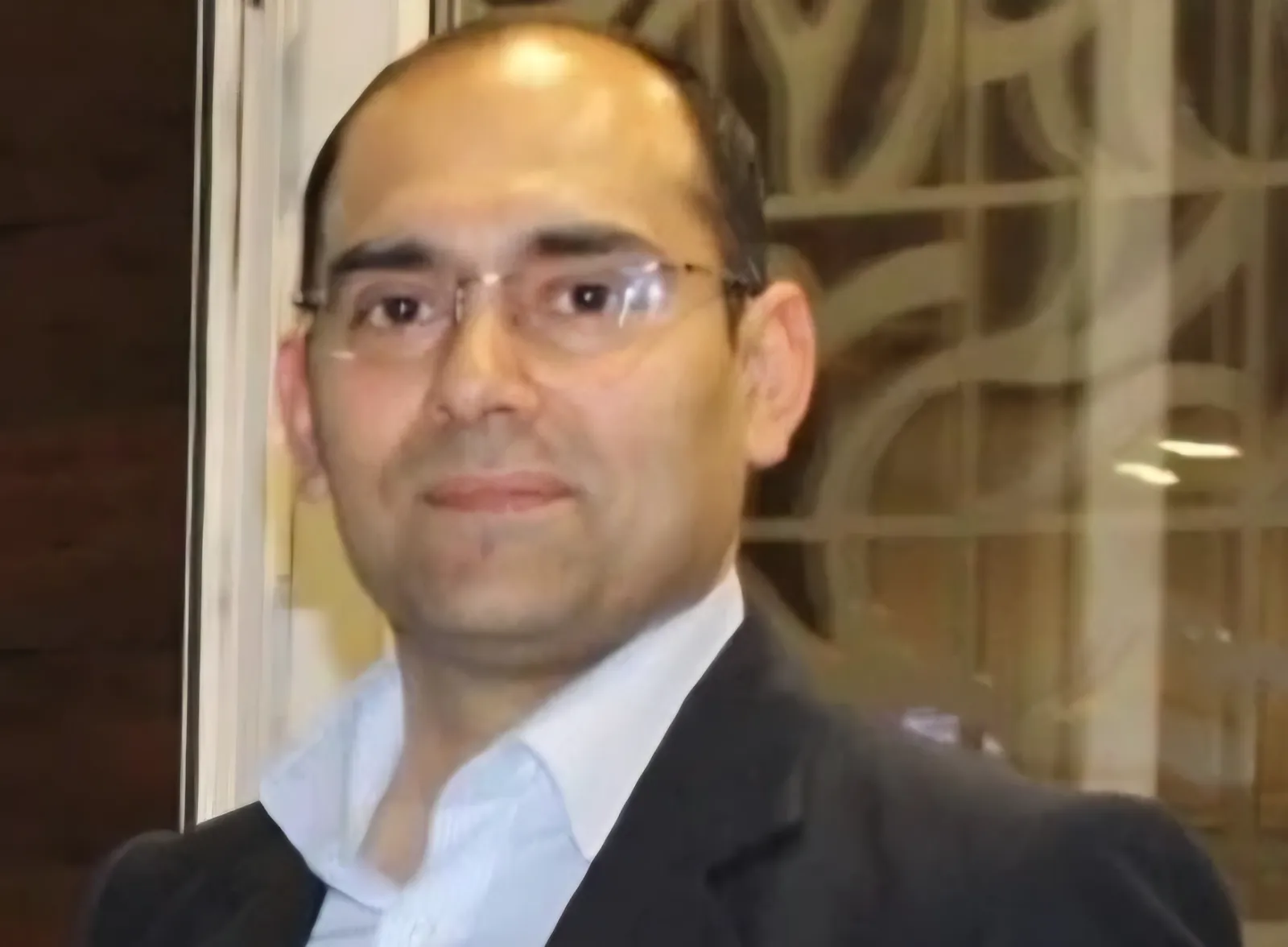
Hamid Khan
In an era where corporate success is often measured solely in balance sheets, Hamid Ahmed stands out as a rare blend of business acumen and social commitment—quietly carrying forward the towering legacy of his grandfather, Hakim Abdul Hameed, a visionary who believed that enterprise must serve society.
A young, suave, and dynamic Indian business leader, Ahmed today occupies multiple roles with ease and purpose. As the Chief Executive Officer and Trustee of Hamdard Foods India, and former Chancellor of Jamia Hamdard, he represents a new generation of leadership rooted in legacy but driven by innovation.Owing to his leadership acumen and expanding contributions to the service of humanity, he has been featured among the 100 Most Influential Muslims of India in the 2025 list compiled by the Muslim Mirror. The list also features distinguished personalities such as former Vice President of India Mohammad Hamid Ansari, noted industrialist Azim Premji, and politician-barrister Asaduddin Owaisi, among several other eminent names.
Born in 1977 in New Delhi, Ahmed’s early education at St. Columba’s School laid the foundation for a disciplined and forward-looking career. He went on to pursue a Bachelor’s degree in Economics from the University of Delhi, graduating in 1998, before earning an MBA from London in 2000—equipping himself with a global outlook at a young age.
His association with the Hamdard legacy began early. In 1995, he was appointed as a Trustee of Hamdard Laboratories India by his grandfather. By 2000, he had formally joined the organization, embarking on a professional journey that would span over two decades. When he assumed the role of CEO in 2016, Ahmed brought with him not just experience, but a renewed vision—one that sought to modernize while preserving the ethos of Unani medicine and ethical enterprise.
Under his leadership, Hamdard Foods India has expanded its footprint across both domestic and international markets, strengthening its position in the food and Unani healthcare sectors. His approach combines strategic expansion with a nuanced understanding of regional consumer behavior, reflecting years of hands-on experience across diverse markets.
Yet, Ahmed’s influence extends well beyond boardrooms. His commitment to education is deeply intertwined with the legacy of Jamia Hamdard, an institution founded on the principles of accessible and value-based learning. As Chancellor, he played a key role in reinforcing its academic and institutional growth, ensuring that the university continues to serve as a hub of excellence for students from all backgrounds. Today, Jamia Hamdard has secured a top-tier position among a plethora of private universities, distinguished for its academic excellence, research output, and commitment to holistic education.
He is also the Founder and President of the Unani Drug Manufacturers Association (UDMA), where he has worked to strengthen the traditional medicine sector and advocate for its modernization and global relevance.
Philanthropy remains central to his work. Through the Hamdard National Foundation India and the Hamdard Learning and Welfare Society, Ahmed has championed initiatives focused on education, skill development, employment generation, and the upliftment of economically weaker sections. These efforts echo his grandfather’s philosophy—that business must ultimately serve humanity.
His contributions gained particular prominence during the COVID-19 pandemic, when he led large-scale vaccination drives, organized holistic healthcare camps, and initiated environmental campaigns such as tree plantation drives—demonstrating a hands-on approach to crisis response and community care.
In recognition of his service, he was conferred the Paul Harris Fellow award by the Rotary Club of Delhi South in 2022—an honor reserved for individuals who make significant contributions to society.
Beyond his executive and philanthropic roles, Ahmed has also brought his expertise to the corporate governance space. He has served as a Non-Executive Independent Director on the boards of several prominent companies, including Religare Enterprises Limited, Religare Finvest Limited, Religare Housing Development Finance Corporation Limited, Care Health Insurance Limited, and Religare Broking Limited.
At a time when legacy institutions often struggle to remain relevant, Hamid Ahmed’s journey offers a compelling narrative—of continuity without stagnation, of growth anchored in values, and of a leadership style that sees business not merely as a vehicle for profit, but as a force for social transformation.
On his inclusion in the 100 Most Influential Muslims-2025 list, senior journalist Abdul Bari Masoud engaged Hamid Ahmed in an in-depth conversation for Muslim Mirror, exploring a wide spectrum of issues—from his leadership at Hamdard and vision for the Unani sector to his commitment to education, philanthropy, and inclusive nation-building.
Excerpts from the Interview
Q:To what extent were you inspired by your grandfather, Hakim Abdul Hameed Sahib?
A : Hakim Abdul Hameed Sahib was not only the founder of Hamdard but also a visionary who believed in combining traditional health system with modern scientific approaches. His life’s work was deeply rooted in service to humanity, education, and healthcare. His philanthropic initiatives, like establishing Jamia Hamdard University and other institutions, shows how he linked business success with social responsibility. His vision continues to inspire Hamdard’s focus on blending tradition with innovation. His humility and dedication to public welfare set a self reliant leadership and business model that balances growth with ethical responsibility.
Q:Which aspects of his life and philosophy had the greatest influence on you?
A: His decision to dedicate Hamdard as a charitable institution inspires my own sense of responsibility towards society. His passion for education, his humility and ethics, simplicity and global vision not only motivates me but drives me to spend my energies in the research, innovation and making Hamdard’s every effort relevant to the human beings in everyday life. For me, his life is a compass that shapes my journey into the future.
Q:What made Hamdard diversify into the food sector? And what was the thinking behind this transition?
A: Having Rooh Afza- a beverage stalwart already a household name, diversification into the food sector was a natural extension of consumer trust in Hamdard’s quality and purity. Naturally consumers expected that Hamdard could reach out for their food’s need requirements in the categories of core food and functional foods. This way Hamdard could see the light of faster growth and avenues for ensuring sustainable revenue growth, which helps out our charitable mission requirements. To meet India’s growing demand and global needs of quality foods, we introduced several products in a short span of time like, Milkshakes, Lassi, Juices, Squashes, Coconut Water, Honey, Saffron, Soya Nuggets, Vermicelli, Mustard Oil, Olive Oil and range of Spices.
Q:How do you assess the position of Hamdard Foods India within the current Indian food industry?
A: At Hamdard Foods, we have always believed in blending tradition with innovation. Consumer preferences in India are evolving rapidly, with a growing emphasis on quality foods and convenience. Our iconic brands like Rooh Afza continue to resonate deeply, but we are also expanding into new product categories that meet modern lifestyles — from ready-to-drink formats to sugar-free variants. Sustainability and quality remain at the heart of our mission, and we are committed to ensuring that every product we deliver carries forward our legacy of trust while embracing the future of the food business.
Q:What are your future plans and long-term ambitions for Hamdard Foods and the broader Hamdard legacy?
A: Hamdard Foods has always stood for trust, tradition, and purity. As we look ahead, our future plans are centered on three pillars: innovation, expansion, and sustainability. We are committed to introducing new product formats that cater to evolving consumer lifestyles, while ensuring that our heritage brands like Rooh Afza continue to remain relevant across generations.
On the global front, we aim to strengthen our presence in international markets, taking the Hamdard legacy of quality to new geographies. At the same time, we are investing in sustainable practices — from responsible sourcing to eco-friendly packaging — so that our growth is aligned with the well-being of both people and the planet.
Our long-term ambition is to ensure that Hamdard remains not just a household name in India, but a global symbol of nutritious food producer imbibing traditions along with innovations. We want the Hamdard legacy to inspire future generations by showing that a company rooted in heritage can thrive in modern times while staying true to its values.
Q:Is there any particular experience or anecdote that significantly shaped your outlook or altered the course of your thinking?
A: One experience that profoundly shaped my outlook was witnessing how Rooh Afza continued to unite generations within families. I recall visiting a household where grandparents, parents, and children all had their own stories tied to the drink — from Ramadan evenings decades ago to modern-day summer gatherings. That moment reminded me that Hamdard is not just about products, but about memories, traditions, and emotional connections.
It strengthens my thinking by reinforcing the idea that our responsibility goes beyond business growth. We are custodians of a legacy that touches lives deeply in personal ways. This realization drives me to ensure that every decision we make — whether it’s innovation, expansion, or sustainability — honors that heritage while preparing the brand for the future. It’s a constant reminder that Hamdard’s strength lies in being timeless yet adaptable.
source: http://www.muslimmirror.com / Muslim Mirror / Home> Interviews> Positive Story / by Abdul Bari Masoud / April 02nd, 2026