NEW DELHI :
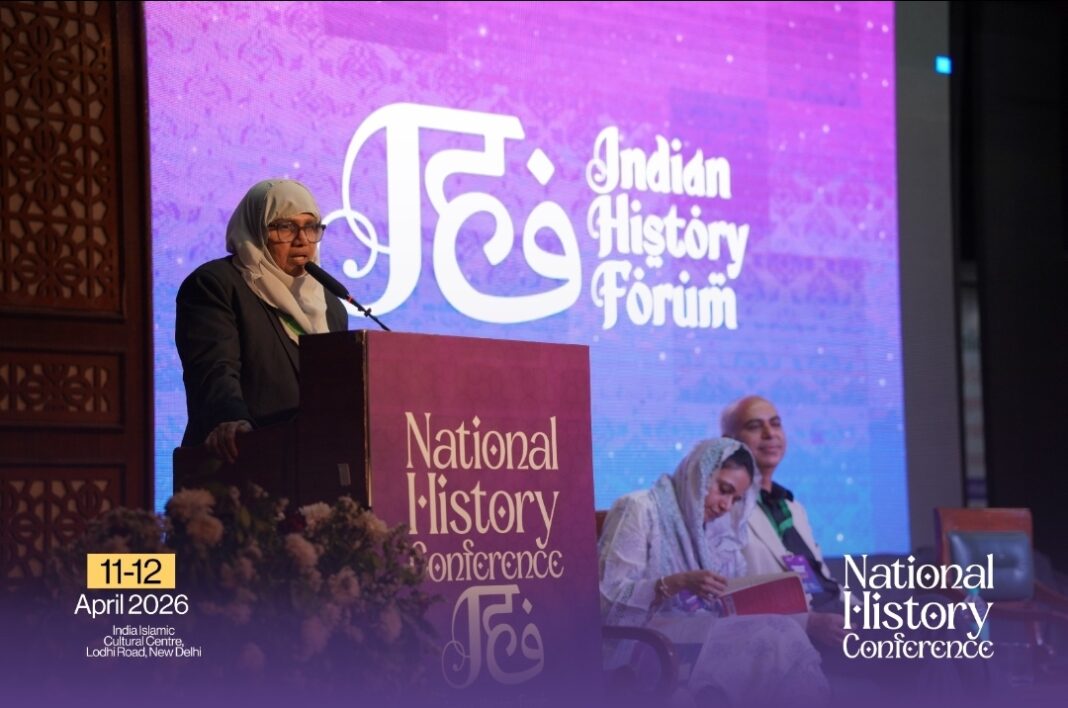
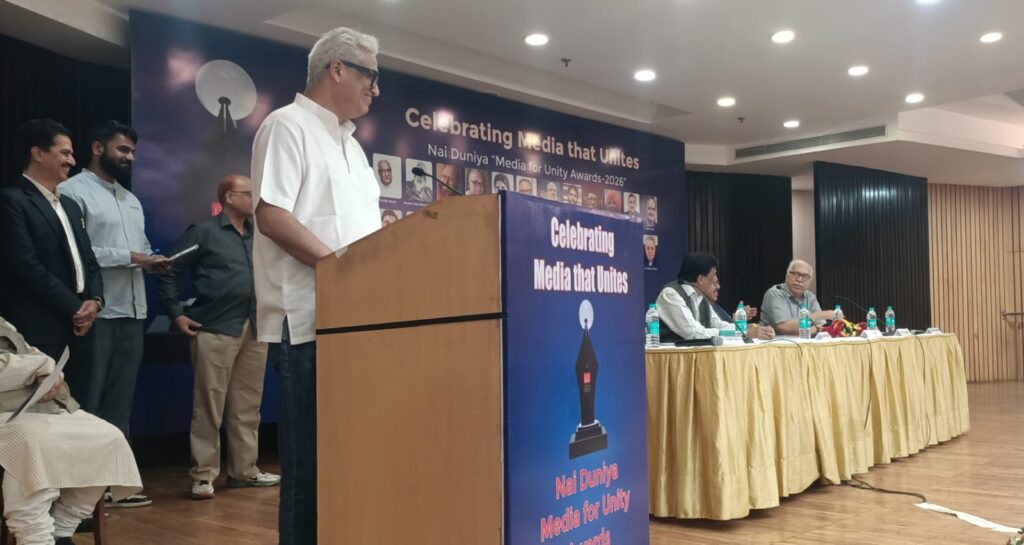
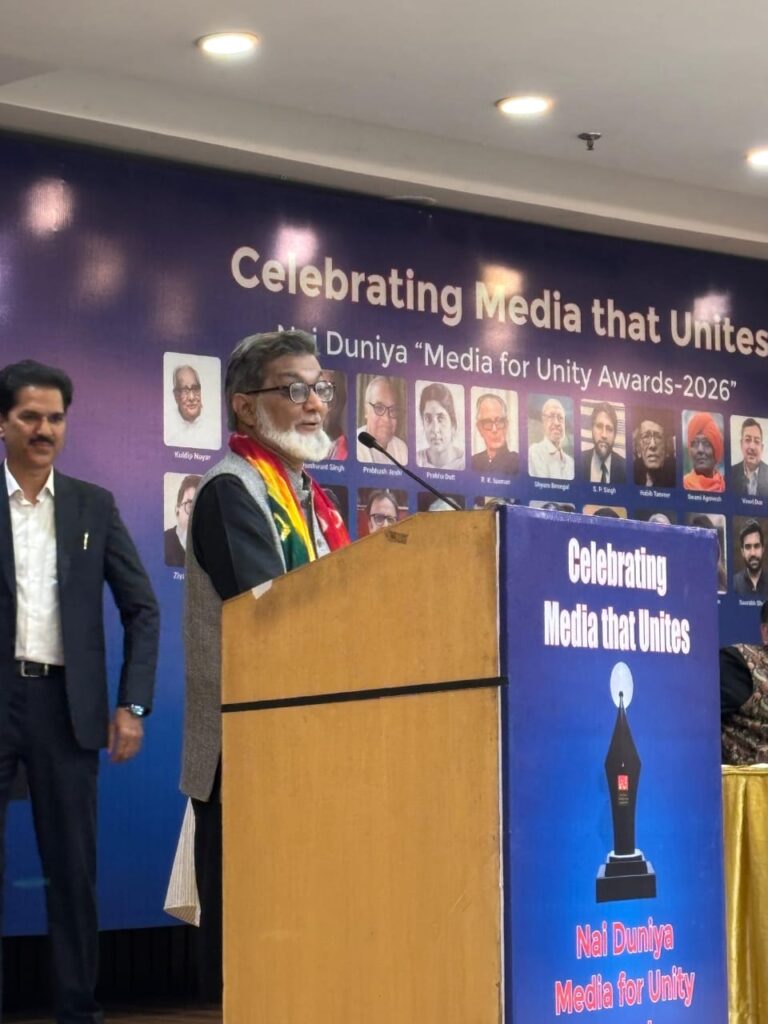
Rahmathunnissa A, National Secretary of Jamaat-e-Islami Hind, speaks at an event organised by the Indian History Forum at the India Islamic Cultural Centre in New Delhi on April 11, 2026.
In a thought-provoking conclusion to a scholarly session on women’s role in history, Rahmathunnissa A, National Secretary of Jamaat-e-Islami Hind, delivered a compelling reflection on the overlooked contributions of Muslim women in shaping India’s past and present.
Opening with gratitude to scholars and participants, she emphasized the urgency of reclaiming historical truth in an age where narratives are increasingly shaped by selective memory. Quoting George Orwell, she reminded the audience that “the most effective way to destroy people is to deny and obliterate their understanding of their history.” This, she noted, is not merely a warning of the past, but a reality unfolding in contemporary times—where facts are often erased and replaced with convenient fiction.
The Crisis of Historical Erasure
Appreciating the efforts of academic forums in reviving authentic inquiry, she highlighted the importance of connecting the present with a truthful understanding of the past. In today’s intellectual climate, narratives are frequently constructed to serve ideological purposes, leaving little room for nuanced and inclusive histories.
Within this context, the contributions of women—especially Muslim women—remain largely invisible. Despite living in what is often described as a progressive and democratic society, public discourse tends to focus disproportionately on negative portrayals, while constructive roles are sidelined or ignored.
Invisible Yet Indispensable
“History is not just his story; it is our story,” she asserted, emphasizing that women’s contributions—whether visible or invisible—are integral to the making of society. Yet, when it comes to Muslim women, even basic references are difficult to access. Scholars and writers often struggle to find credible material, moving tirelessly in search of scattered sources.
This absence, she explained, stems from two key reasons. First, there exists a deliberate or unconscious selective amnesia—an attempt to suppress or overlook certain narratives. Second, many Muslim women themselves have historically contributed with humility, prioritizing sincerity over recognition, often refraining from documenting their work.
Beyond the Archives: A Living Legacy
Despite these challenges, the historical record—however fragmented—reveals remarkable contributions. From governance to social reform, Muslim women have played a foundational role in shaping India.
Citing the Arakkal dynasty of Malabar, she noted that out of 38 rulers, 11 were women—an extraordinary example of female leadership. Among them, Bibi Junumabi emerged as a formidable figure, whose resistance against colonial powers was documented in British archives such as the Letters from Tellicherry. Today, the Arakkal Museum stands as a testament to this legacy.
She also highlighted the dynasty’s firm stance during the Partition of India, when its leaders refused calls to migrate, asserting their identity as Indians.
Historical figures such as Razia Sultan, the Begums of Bhopal, and M. Fathima Beevi further illustrate the diverse roles Muslim women have played—from political leadership to judicial excellence.
The Power of the Unrecorded
Yet, she emphasized, the most profound contributions often lie beyond formal recognition. During India’s freedom movement, countless women supported national struggles by donating their jewelry and resources to leaders like Mahatma Gandhi. Others sustained families under immense hardship, ensuring resilience in times of crisis.
Recounting her visit to the Cellular Jail, she shared moving accounts of women who upheld their families while their husbands were imprisoned. These women not only managed households but also raised children with strength and dignity, often visiting prisons with young children to console their loved ones.
Such stories, she stressed, form the backbone of India’s social and emotional history—yet remain largely undocumented.
Unsung Builders of Society
In post-independence India, Muslim women continued to contribute significantly to social transformation. Following the Sachar Committee Report, many initiatives aimed at community upliftment were driven by women at the grassroots level.
Particularly in regions like Kerala, while the contributions of men working abroad are widely acknowledged, the silent labor of women managing households remains overlooked. These women adapted to new financial systems, educated their children, and ensured stability despite limited resources and communication challenges.
Their resilience transformed remittances into long-term social development.
Redefining Narratives in Contemporary India
In recent years, movements such as the Shaheen Bagh protest have reshaped public perceptions of Muslim women. Led by young women, many of whom proudly embraced their identity, the movement demonstrated courage, conviction, and democratic engagement.
It sent a powerful message: that faith and cultural identity are sources of strength, enabling women to stand firmly for justice and question authority with dignity.
A Call to the Next Generation
Concluding her address, Rahmathunnissa A offered two key takeaways. First, she called for urgent and sustained efforts to document the legacy of Muslim women. This requires investment in research, archiving, and publication—efforts already initiated by organizations in regions like Kerala.
Second, she reminded the community of its collective responsibility. Drawing from Qur’anic guidance, she emphasized the role of both men and women as partners in promoting good and preventing injustice—an ethical duty that lies at the heart of societal progress.
Conclusion: From Silence to Recognition
The story of Muslim women in India is not one of absence, but of silence—an imposed and internalized silence that must now be broken. Their contributions, whether recorded or not, have shaped the nation in profound ways.
Revisiting this legacy is not merely about correcting historical records; it is about restoring dignity, inspiring future generations, and reaffirming a collective commitment to truth and justice.
As Rahmathunnissa A aptly concluded, the responsibility now lies with all of us—to rediscover, document, and carry forward this rich and enduring legacy.
source: http://www.indiatomorrow.net / India Tomorrow / Home> Education / by Rabia Basri / April 14th, 2026