Lucknow’s Biggest Eidgah Aishbagh Turns into Covid-19 Vaccination Center

Lucknow, UTTAR PRADESH :

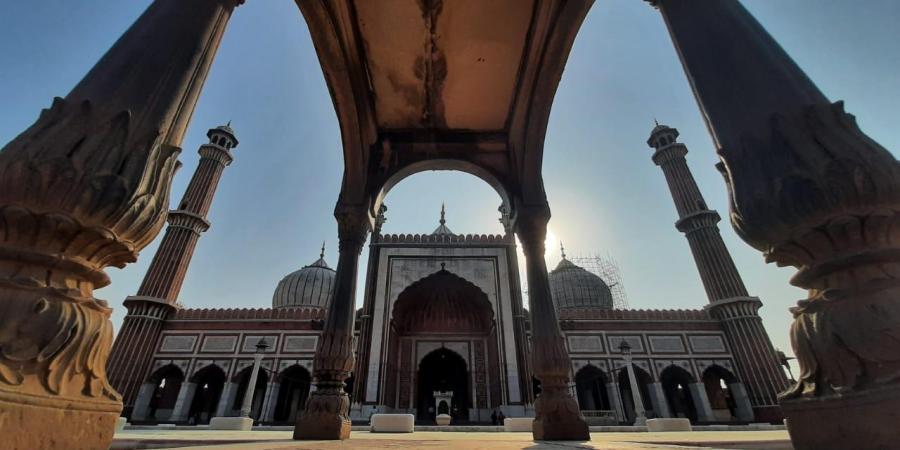
The Aishbagh Eidgah, which is the biggest Eidgah in Lucknow, will now double up as a COVID-19 vaccination centre. This will be the first religious establishment in the state capital which will be providing jabs against COVID-19 to the people. Till now vaccines were being administered only in hospitals in Lucknow. Two inoculation centres — one for ages 18-44 and another for people aged 45 and above — have been set up at the Eidgah.

Beneficiaries of all age groups above 18 years, who have registered on the CoWin portal, will be able to get the jab here. The officials of the All India Islamic Centre will also be assisting people with online registration for getting the vaccine shot. The nodal officer for COVID-19 in Lucknow, Roshan Jacob, reached Aishbagh Eidgah on Thursday to take stock of the preparations. “It is a very good initiative that has been taken by the Islamic Center. This will facilitate the people to get vaccinated,” she said.

Meanwhile, Imam Idgah, Lucknow and Chairman of Islamic Center of India, Maulana Khalid Rashid Farangi Mahli said, “People should keep in mind that along with precaution for prevention of epidemics like COVID-19, the best and most effective thing is vaccination. Lucknow has a lot of population, especially old Lucknow. Keeping in mind the population, two centres have been made at the ground of Eidgah. One center is for people between 18 years to 44 years and one center is for people aged 45 years or more.”

“The huge space here helps in maintaining social distancing and also lowers the risk of transmission of infection. There are a lot of people who are unable to register themselves for vaccination, our team at Islamic Centre of India will help such people in getting themselves registered online for the jab,” he added.

Meanwhile, the fresh cases of COVID-19 infection continue a downward trend in Uttar Pradesh as 6,725 new infections were reported in the last 24 hours. Additional Chief Secretary (Health) Amit Mohan Prasad said 13,590 patients were discharged in the last 24 hours, while there were 11,6434 active cases in the state. Of these, 82,801 were in infected home isolation. The recovery rate in the state has risen to 91.8 percent. The positivity rate in the state has come down to 2.4 per cent, while 238 corona-infected people died in the state. In the last 24 hours, 2,91,156 samples were investigated in the state.

source: http://www.in.news.yahoo.com / Yahoo! News / by News18 / Thursday 20th, 2021
JMI PhD Student Receives Bill and Melinda Gates Foundation Abstract Award

NEW DELHI :

Firdoos Ahmad Gogry is among a few applicants around the world to receive this prestigious award.

JMI PhD Student Receives Bill and Melinda Gates Foundation Abstract Award
JMI student Firdoos Ahmad Gogry

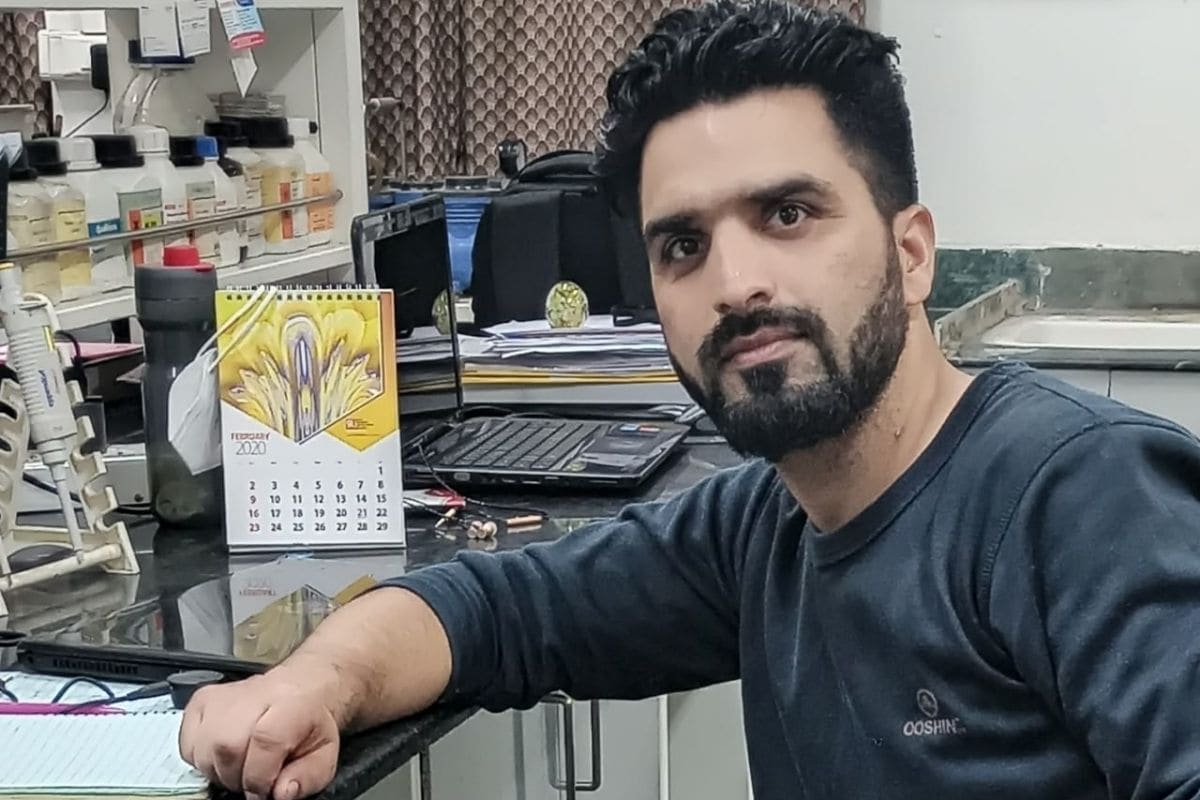
A research scholar of the Jamia Millia Islamia (JMI) has received the ‘Bill and Melinda Gates Foundation Abstract Award for Scientists’ – Firdoos Ahmad Gogry, will be able to attend the World Microbe Forum 2021 for his contribution. He is among a few applicants around the world to receive this prestigious award claims Jamia.

Enrolled in Ph.D under the supervision of Prof. Qazi Mohd Rizwanul Haq, Microbiology Research Lab, Department of Biosciences, Faculty of Natural Science, JMI, Firdoos received the award for his abstract entitled “Occurrence of high-risk mcr-1, blaNDM and OXA genes in bacterial isolates from Delhi, India”, JMI said.

On the other hand, JMI started its admission process from May 17 onwards. The varsity has released an e-prospectus for the academic session 2021-2022 for both undergraduate and postgraduate courses. It contains information about admission to various courses like BTech, BArch, diploma, advanced diploma and postgraduate diploma and can be downloaded from the university’s official website. The last date for candidates to fill the application form is up to June 30. The last date for submitting class 12 marks for admissions to undergraduate courses is September 30.

Besides, the varsity has introduced eight new courses this year including master of design in the faculty of architecture, BA (Hons) French and Francophone Studies, BA (Hons) Spanish and Latin American Studies, MSc Environmental Science and Management, MA Mass Media (Hindi), PG Diploma in Translation Studies, PG Diploma in English-Hindi Translation, MBA in Healthcare and Hospital Management. It will also start four new departments from the coming session – the department of design and innovation, the department of hospital management and hospice Studies, the department of foreign languages, and the department of environmental sciences.

source: http://www.news18.com / News 18 / Home> Education> Career / May 22nd, 2021

It is humanity first for Bilal and his friends

Bidar, KARNATAKA :

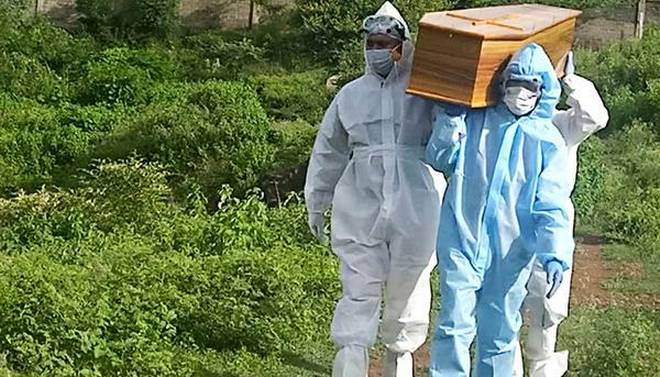
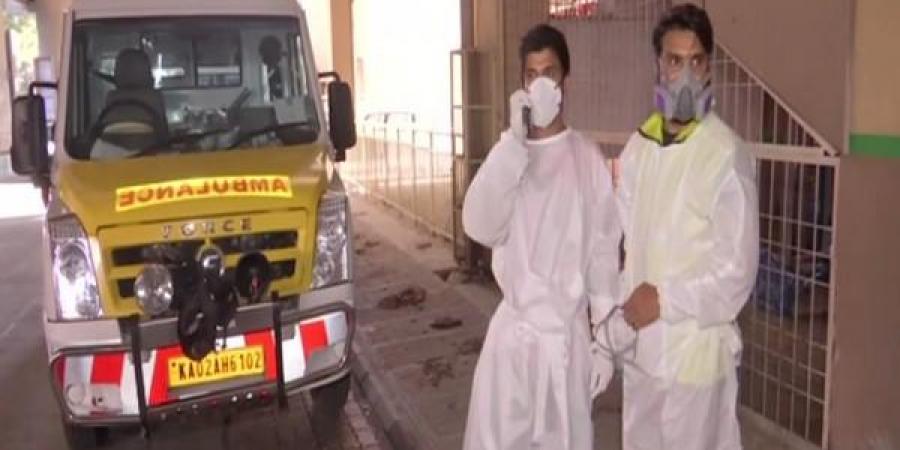
Noble service: Members of the foundation following COVID-19 protocol while performing last rites. GOPICHAND T.  

His NGO has performed last rites of over 700 COVID-19 victims

Humanity First foundation, a Bidar-based NGO, has been performing the last rites of COVID-19 patients ever since the epidemic broke out in 2020.

Majeed Bilal, a small business owner who founded the NGO, says members have performed the last rites of over 700 bodies so far, irrespective of faith.

The rituals of different religions are followed during the final rites . The services are free, though the NGO accepts donations.

Mr. Bilal has spent a considerable amount of his own money on this service. “My family had two small plots in Bidar. I have sold them, to set up this NGO and conduct the final rites of COVID-19 victims with honour,” he told The Hindu.

He feels the stigma attached to COVID-19 is discouraging some families from attending the funerals of their loved ones.

“We mostly work around Bidar. But there haven been instances where our hearses have gone to places like Hyderabad, Kalaburagi, Humnabad, Bhalki, and Aurad to fetch the mortal remains,” he said.

At first, he converted a van that he used for his business into an ambulance and hearse. He rushed patients to hospitals and carried bodies from hospitals to the graveyards. Later, some philanthropists donated two hearses to the NGO.

“In some cases, the families pay us ₹1,000-2,000 per cremation. We use it to buy wood and kerosene. In case of burials, the city municipal corporation helps us by digging pits,” he said.

He began the last rites after an incident near his house early in 2020. “An old woman had died and even her children were afraid to go near the body. CMC personnel carried the body in an earthmover and threw it in a pit. I decided to start volunteering at conducting the last rites and some of my friends joined me,” he said.

Mr. Bilal is married with children. But for over a year he has been living in a boarding house, to avoid any chance of infecting his family members. His friends, business associates, and some family members who have been helping him have also been staying in lodges and boarding houses.

Members of the foundation follow COVID-19 protocol while performing the last rites.

“We have been routinely undergoing RT-PCR tests. I have tested myself 28 times and each time the result was negative. I would like to think that is the Almighty’s way of blessing me,” he added.

source: http://www.thehindu.com / The Hindu / Home> News> States / by Rishikesh Bahadur Desai / Belagavi – May 19th, 2021

Bengaluru biker-brothers turn ambulance drivers to help COVID-19 patients

Bengaluru, KARNATAKA :

I have seen visuals where people were running from pillar to post for hospitals.I did not want to sit back and complain, so we started volunteering, one of the biker brothers Muteeb Zoheb said.

Bike-brothers Muteeb Zoheb and Murthaza Junaid volunteer as ambulance drivers.

Bengaluru :

While India grapples with the second wave of COVID-19, common people across the country are stepping up to help others in distress.

Among these are two biker brothers from Bengaluru, Murthaza Junaid and Muteeb Zoheb, who have been volunteering as ambulance drivers.

“I have seen visuals where people were running from pillar to post for hospitals and there is a scarcity of beds and oxygen. I could see the pain of people. I did not want to sit back and complain, so we started volunteering,” Muteeb Zoheb told ANI.

“As we travel across India and neighbouring countries on our bikes, we have been trained on evacuation. Ladakh is at a high altitude. On the saturation level, we have been using oximeters there also and checking the physical condition of the riders. We are using the same tools and we are getting a similar experience to check patients and give them first aid,” Zoheb said.

He further said that they have been volunteering as ambulance drivers for the last three weeks.

“People used to get the patients in two-wheelers and autos because they could not afford ambulance service,” he added.

Zoheb also urged people to volunteer and help people in distress.

Junaid said, “It is the need of the time. We have taken the opportunity to help people on the ground. The transformation is heartwarming.”

“Either we can watch, or we can do something. We chose to do,” Junaid said.

According to official data issued on Tuesday, India recorded 2,63,533 fresh infections of COVID-19 in the last 24 hours. There are 33,53,765 active cases of COVID across the country. 

source: http://www.newindianexpress.com / The New Indian Express / Home> Cities> Bengaluru / by ANI / May 19th, 2021

Faith inspires Muslim veterinarian’s compassion for animals

BIHAR / Chicago, U.S.A :

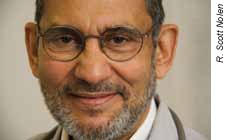
“If you try to understand what Islam is and what Islam teaches, it’s just the opposite of what you hear in the media,” said Dr. Zia Usman, owner of Rogers Park Animal Hospital in Chicago.

Dr. Zia Usman is a rarity within the U.S. veterinary profession.

Not only does the Indian-born and -trained veterinarian own a companion animal practice on Chicago’s North Side, Dr. Usman is also a Muslim. 

Such a combination is unusual among first-generation immigrants who are followers of Islam, according to Dr. Usman’s colleague, Riaz H. Siddiqi, a professor at Truman College in Chicago and president of the Muslim VMA.

The association believes approximately 500 Muslim veterinarians are in the United States. Dr. Siddiqi thinks most of them are employed in academia, research, industry, or government, where they are likely to be inspectors in slaughterhouses. Few Muslim veterinarians in the United States work with pets, he said, but this is more a matter of economics, not any Islamic taboo.

“Many of us who come here, we have families, and we’re in a hurry to find a job quickly, and we don’t have the time or money to go through the certification process,” Dr. Siddiqi explained.

Growing up in India, Dr. Usman was expected to become a physician like his father, yet his “heart was inclined toward animals,” he said, so he enrolled at the Ranchi College of Veterinary Science and Animal Husbandry in Bihar.

Two years after graduating in 1970, Dr. Usman immigrated to America. His first job was as a laboratory animal technician at the University of Illinois Biological Resources Laboratory in Chicago.

In time, Dr. Usman passed the AVMA Educational Commission on Foreign Veterinary Graduates certification program, became assistant director of laboratory animal resources at Northwestern University College of Medicine, and got his veterinary license. In 1992, he left laboratory animal medicine to open a private practice in Chicago, allowing him to work with pets and educate the public about Islam.

The Muslim community is well-established in Chicago, but Sept. 11 raised its visibility and put Islam in a negative light. “Now people know more about Muslims and Islam, and, unfortunately, they’re not knowing in the proper way,” Dr. Usman said. The media portrays Muslims as terrorists when “it’s just the opposite,” he said.

Muslims understand why Islam is one of the world’s fastest-growing religions, according to Dr. Usman. Islam, he said, is a peaceful religion that details man’s obligations to animals, especially the slaughter of food animals. Muslims are admonished not to slaughter an animal in front of other animals, for instance, and to end an animal’s life quickly and with as little pain as possible. There are even instructions on how a Muslim is to hunt humanely. “Every step of the way, we have religious guidance,” Dr. Siddiqi noted.

A common misconception is that Muslims shun dogs as unclean animals. Neither Dr. Usman nor Dr. Siddiqi is an Islamic scholar, but they say their faith does not prohibit Muslims from dog ownership. In fact, Dr. Usman owned a German Shepherd Dog as a teenager. “That was my baby,” he recalled. “I would take care of him and cook for him.”

Dr. Usman cited a popular account in the Hadith—a collection of narratives based on the words and deeds of the prophet Muhammad and, in addition to the Quran, one of Islam’s primary sources for instruction. According to the story, a man took pity on a thirsty dog by giving it water from a shoe. “Allah approved of his deed and made him to enter Paradise,” the story goes.

When Dr. Usman came to America, he didn’t know what to expect. So in 1999 he helped found the Muslim VMA to give Muslim veterinarians coming to the United States information he didn’t have. In addition to providing career advice, the association helps Muslims find halal food, that is, sources providing food that complies with Islamic dietary laws. The Muslim VMA wants to eventually start its own halal certification program.

Dr. Siddiqi said the association is planning to hold a meeting in Chicago of Muslim veterinarians and is hoping to network with human physicians to strengthen efforts at preventing the spread of zoonotic diseases.

source: http://www.avma.org / AVMA / Home>> JAVMA News / February 10th, 2010 / by R Scott Nolen / February 01st, 2010

Lucknow’s Jama Masjid provides oxygen cylinders to COVID patients

Seeing the hardships faced by patients, the mosque committee took the decision, said Zunnoon Nomani Nomani, chief of the panel.

Lucknow, UTTAR PRADESH :

Jama Masjid (Photo| EPS/ Shekhar Yadav)

Lucknow :

The Jama Masjid in the Lalbagh area here has come forward to provide oxygen cylinders and concentrators to COVID-19 patients free of cost.

Half of the equipment have been reserved for non-Muslims.

Seeing the hardships faced by patients, the mosque committee took the decision, said Zunnoon Nomani Nomani, chief of the panel.

Nomani said, “Any needy person can come to the mosque, show his Aadhaar card and some other documents and take an oxygen cylinder or concentrator free of cost.

Fifty per cent of the oxygen cylinders and concentrators have been reserved for non-Muslims.

If needed, more help can be provided.” Nomani said initially they had only three to four oxygen cylinders.

Now, after the contribution of people, they have 50 oxygen cylinders and 25 concentrators, he said.

Nomani said whenever any person comes to donate money, he is requested to pay the amount to the seller of the equipment and send the bill via WhatsApp to the Masjid Committee.

Members of the committee collect the equipment from the seller by showing the bill, he said.

source: http://www.newindianexpress.com / The New Indian Express / Home> Nation / by PTI / May 18th, 2021

How this 26-year-old UP girl came to be known as ‘Cylinder Bitiya’

She reaches out to people in need with Oxygen cylinders.

Shahjahanpur, UTTAR PRADESH :

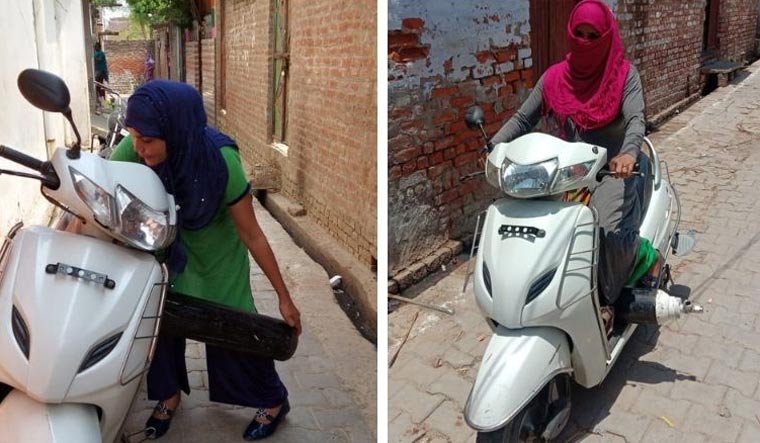
A 26-year-old woman from Uttar Pradesh has earned the moniker Shahjahanpur’s ‘Cylinder Bitiya’ (cylinder daughter), for reaching out to people in need with Oxygen cylinders on her Scooty.

Arshi Ansari’s father, Mashkoor (65), fell ill on April 2, the first day of Ramzan. Tests revealed that he was COVID-19 positive. Arshi went to the city magistrate to ask for an Oxygen cylinder for him but was told that there was no such provision for patients in home isolation. The official suggested that she finds a hospital for her father.

Arshi, a resident of Madar Khel area, went to the district hospital but was appalled by its stench and dirt. She then tried a few private hospitals, but was told that they had no Oxygen and that she would have to make her own arrangements.

“I did not want to leave my father uncared for, in a hospital,” says the woman who has completed her Bachelor of Arts in English and Urdu.

Next morning, she again went to the city magistrate and pleaded for a cylinder. This time she was given one.

Meanwhile, Arshi’s appeal for a cylinder on social media had attracted response from a group of volunteers in Rudraprayag, who sent her 10 cylinders.

Though Arshi’s father took a month to get well, after the first 12 days of illness, he did not need Oxygen cylinders. Arshi then decided that she would distribute these to the needy, who could reach out to her through a WhatsApp group. Around Shahjahanpur and even to Hardoi which is 67 km away, to the neighbouring state of Uttarakhand, Arshi has carried the life-giving gas over long distances without any charge. She also gets empty cylinders filled on request.

“No one hoards a cylinder. After have no use of it, they refill it and pass it on to others in need”, she says.

Arshi started distributing Oxygen cylinders during the month of Ramzan. Yet, she says, she never felt any discomfort or hunger. “It is my belief that I got success in my work because it was Ramzan and I had Allah’s blessings”.

When she started the work, she had to face nasty comments from passers-by and cat calling by boys. “There were even filthy posts and memes made on me”, she said.

However, the woman, who runs a computer coaching institute for underprivileged children, said, “It will be so much better to give up this childish behaviour and get out of your homes to help at least one person in need. This pandemic has taught that all we have are each other”.

source: http://www.theweek.in / The Week / Home> News> India / by Puja Awasthi / May 17th, 2021

Jamia professor, who put out Twitter request looking for a bed for herself, dies of Covid

According to colleagues and friends, Dr Nabila Sadiq, a PhD scholar from JNU, was teaching and helping students with their thesis until April 20.

NEW DELHI :

Dr Nabila Sadiq

Nearly a week after she tested positive for Covid — and sought an ICU bed for herself on Twitter — a 38-year-old assistant professor from Jamia Millia Islamia died at a Faridabad hospital on Monday night.

According to colleagues and friends, Dr Nabila Sadiq, a PhD scholar from JNU, was teaching and helping students with their thesis until April 20.

Ten days before Nabila’s death, her mother Nuzhat (76) had also died of Covid-related complications. Her father was hospitalised for Covid but was eventually discharged and is under home quarantine.

Friends and family said Nabila wasn’t aware of her mother’s death, and died “worrying” about her parents.

Among her last tweets, on May 2, was: “At this rate no one will stay alive in Delhi at least.”

Laraib Neyazi (27), an MA student from Jamia, said, “When I came to know about her health, I rushed to her home with other students, and we started looking for a bed. We found one at Alshifa hospital, where she also tested positive for Covid. Two-four students would always stay at the hospital. Meanwhile, we rushed her mother to Sanjay Gandhi Hospital but she passed away. We didn’t tell Nabila because she was critical…”

Students said Nabila was a caring teacher who loved writing poems, and discussing politics and gender theory. Her students helped perform her mother’s last rites on May 7. Around the same time, Nabila’s health deteriorated.

Waqar, a student from JMI, recalls calling “every hospital in Delhi-NCR to get an oxygen bed”.

“Her friends helped us get a bed at Fortis Hospital in Faridabad. However, her oxygen levels dropped to 32%. After a CT scan, the doctor said her lungs were damaged. I received hundreds of calls every day from her colleagues, relatives and friends asking about her health. We didn’t know what to do” said Waqar.

“Every student who was pursuing gender studies wanted to do their PhD under her mentorship. She helped so many people during the pandemic. We would talk to her and tell her that her parents were missing her, hoping she would feel better and recover. But on Saturday night she was put on a ventilator,” said Waqar.

Nabila’s doctors said she wasn’t responding to medicines and treatment. She died around 11 pm on Monday.

On Tuesday, her students and friends performed her last rites at Mangolpuri, where her mother was buried ten days earlier.

Nabila’s father Sadique (80), a retired professor who taught at Aligarh Muslim University and JNU, was told about his daughter’s death in the afternoon.

He told his family members: “I think she loved her mother more and left with her… leaving me alone here.”

Nabila’s colleague and friend Tarannum Siddiqui said she feels helpless because Sadique is alone. “I have known Nabila and her family for seven years. They helped me last month when I had Covid. When Nabila was admitted to the ICU, I sent her messages on her phone. I knew she wasn’t reading them but I was waiting for her to recover, read those texts and meet me. She was an honest woman. We both taught gender studies. I can’t believe she has left me. JMI has lost a great academician,” said Tarannum.

Manasi Singh, a professor from the Central University of Gujarat, said she has known Nabila for 18 years. “We pursued our Master’s and PhD at JNU together. She was a good friend and a great scholar. I would watch her seminars online and admire her work. She was jovial and I loved her child-like innocence,” said Singh.

source: http://www.indianexpress.com / The Indian Express / Home> Cities> Delhi / by Jignasa Sinha, New Delhi / May 19th, 2021

Builders of Bengal: Begum Rokeya

Pairaband Village (Rangpur), BENGAL (British India):

A PAST WE MUST PRESERVE | She was a pioneer of women’s education and feminist writing who started the first school for education of Muslim girls in Calcutta

Begum Rokeya, 1880-1932 / File picture

Rokeya Sakhawat Hossain, popularly known as Begum Rokeya, was a pioneer of women’s education and feminist writing who started the first school for education of Muslim girls in Calcutta. She considered education to be crucial to women’s emancipation.

She was born in 1880 at Pairaband village in Rangpur, now in Bangladesh. Her elder sister Karimunnesa, who was a poet who wrote in Bengali, was a great influence on her life. Rokeya at 18 was married to Khan Bahadur Sakhawat Hussain, who was 38 and the deputy magistrate of Bhagalpur.

A liberal man who spoke Urdu, he encouraged his young wife to continue her studies in Bengali and English and to write.

Rokeya chose to principally write in Bengali and her works uphold the equality of men and women. Matichur (1904, 1922) is a two-volume collection of her essays on her thoughts about women and society, Padmarag (1924) is about the oppression of Bengali wives and Abarodhbasini (1931) is a robust critique of the severe forms of purdah for women.

Ten years before the American novelist Charlotte P. Gilman published Herland, Begum Rokeya wrote her feminist utopia Sultana’s Dream in 1905. Written in English, it is a novella set in Ladyland, ruled by women.

A few months after her husband’s death in 1909, Begum Rokeya started Sakhawat Memorial Girls’ High School in Bhagalpur, with five students. She moved the school to Calcutta in 1911, where it is still located, but is run by the government.

In 1916, Begum Rokeya founded Anjuman-e-Khawateen-e-Islam (Islamic Women’s Association) to hold discussions on women, education and progress. She advocated change in Muslim women’s lives and spoke up against rigidity and conservatism.

She went from door to door to ask Muslim families to send their daughters to school. She was engaged till the very end of her life in ideas and activities that would lead to the empowerment of women. She passed away on December 9, 1932, shortly after presiding over a session of the Indian Women’s Conference.

Bangladesh observes Rokeya Day on her death anniversary every year.

source: http://www.telegraphindia.com / The Telegraph Online / Home> Culture> People / by Chandrima S. Bhattacharya / March 28th, 2021