The incident takes the number of serving and retired faculty members who have died because of Covid or Covid-like symptoms to at least 39.
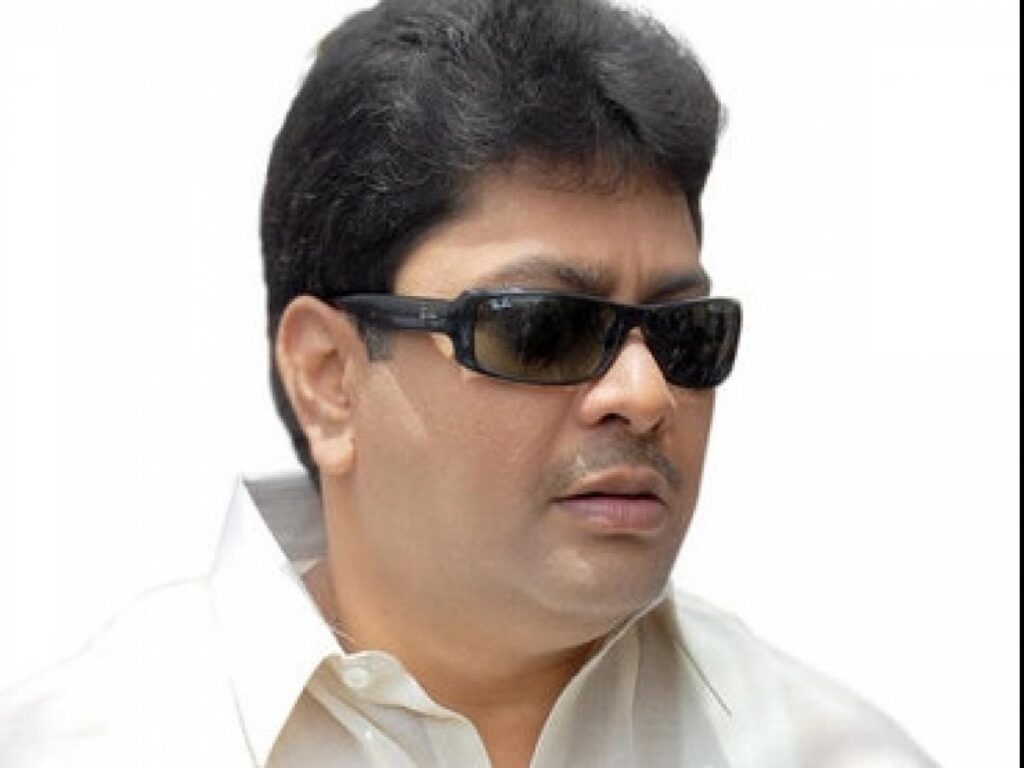
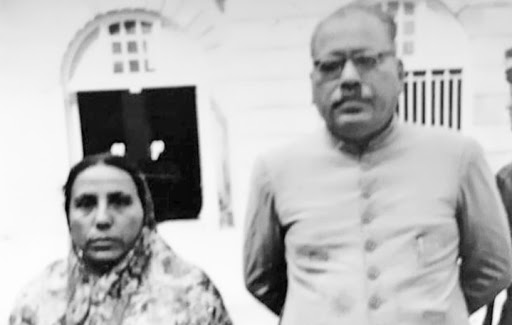
Professor Mohammad Nasiruddin, 55, from the department of pharmacology died on Sunday / File picture
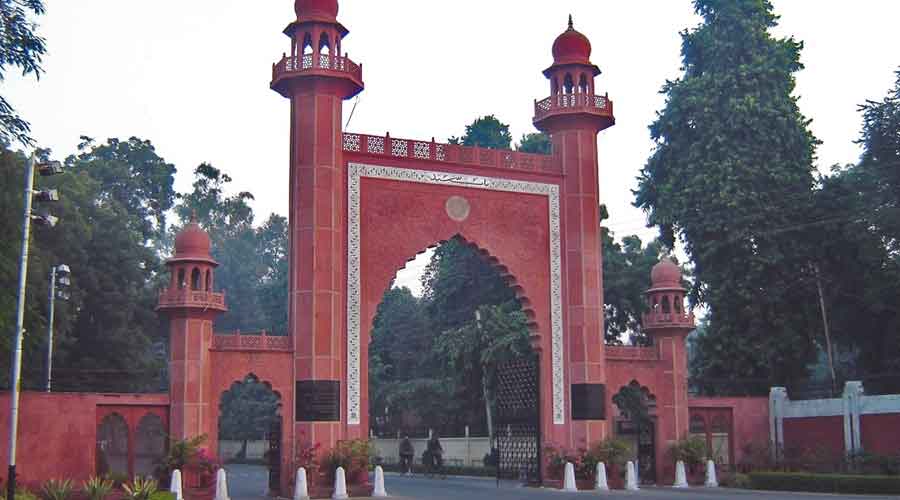
A senior professor of Aligarh Muslim University has succumbed to the coronavirus disease at the varsity’s Jawaharlal Nehru Medical College, according to officials, taking the number of serving and retired faculty members who have died because of Covid or Covid-like symptoms to at least 39.
Professor Mohammad Nasiruddin, 55, from the department of pharmacology died on Sunday.
Professor Shahid Ali Siddiqui, principal of Jawaharlal Nehru Medical College, said Nasiruddin had tested positive for Covid-19 and had been admitted to the hospital two weeks ago.
Students of the AMU have submitted a memorandum to vice-chancellor Tariq Mansoor urging him to set up separate vaccination centres on campus for university staff and students.
At least 18 serving and 21 retired AMU faculty members have died of Covid or Covid-like symptoms.
On Sunday evening, AMU students took out a candle march in memory of the serving and retired faculty members.
AMU proctor professor Wasim Khan told reporters on Sunday “according to available information, none of the AMU teachers who lost their lives to Covid-19 had been vaccinated”. He said the authorities would consider the students’ demand for separate vaccination centres for them and university staff.
source: http://www.telegraphindia.com / The Telegraph Online / Home> India / by PTI, Aligarh / May 18th, 2021
Virologist Shahid Jameel. File | Photo Credit: Eswarraj R
The eminent virologist did not give any reasons for his departure
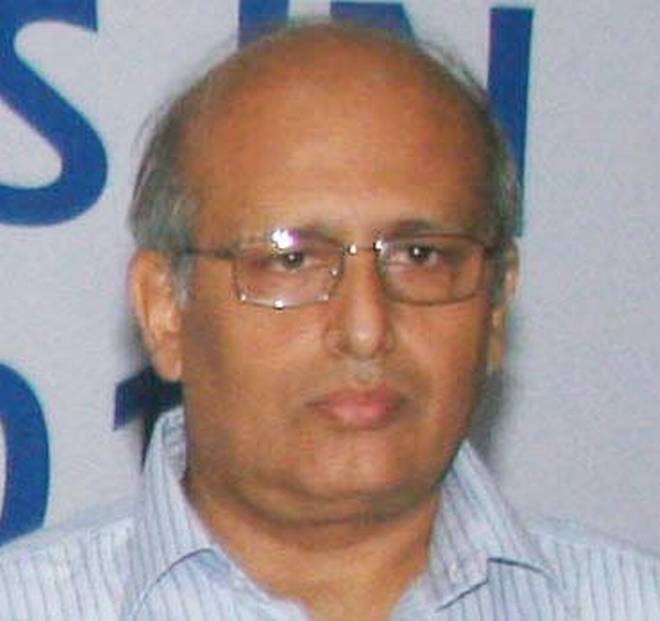
Shahid Jameel, eminent virologist and head of the advisory group to the Indian SARS-COV-2 Genomics Consortia (Insacog), resigned from his post on Friday.
Dr. Jameel confirmed to The Hindu that he’d quit but did not give any reasons for his departure.
Multiple scientists who are part of Insacog — a group of 10 laboratories across the country, tasked with tracking evolving variants of the coronavirus — told The Hindu that Dr. Jameel’s decision appeared to be sudden as he hadn’t communicated reasons for his resignation to consortium members but one of them cited “government pressure” as a potential reason.
Dr. Jameel, who is Director, Trivedi School of Biosciences at Ashoka University has been critical of aspects of the government’s handling of the pandemic.
On May 13, in an invited opinion piece for the New York Times, Dr. Jameel summarised India’s response to the multiple waves and the uneven vaccination rollout and concluded by saying “scientists were facing stubborn resistance to evidence-based policy-making. On April 30, over 800 Indian scientists appealed to the Prime Minister, demanding access to the data that could help them further study, predict and curb this virus. Decision-making based on data is yet another casualty, as the pandemic in India has spun out of control. The human cost we are enduring will leave a permanent scar.”
The Insacog, setup in December, faced initial challenges with funds and equipment but since March has considerably accelerated sequencing samples from all over the country for variants. It has been tracking international variants of concern as well as discovered the so called ‘Indian variant ‘ (B.1.617) that is believed to be instrumental in India’s devastating second wave.
source: http://www.thehindu.com / The Hindu / Home> News> National / by Jacob Kohsy / New Delhi – May 16th, 2021
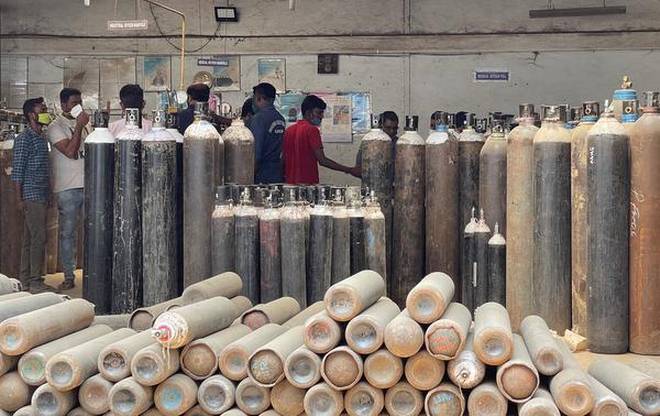
People wait outside an oxygen production unit at Peenya Industrial Area in Bengaluru, after many hospitals ran out of oxygen and beds with ventilators. File photo for representation. | Photo Credit: K. Murali Kumar
Bangalore Medical College and Research Institute 1992 batch doctors liaise with volunteer groups to offer services
Doctors living across the world — all alumni of the Bangalore Medical College and Research Institute (BMCRI) from the 1992 batch — have now banded together with a coalition of volunteer groups to offer end-to-end COVID-19 management for patients in Karnataka, particularly in Bengaluru.
While the Karnataka COVID-19 Volunteers Team (KCVT), with over 500 members, has set up a helpline (080-47166115) which counsels patients, refers them to doctors for tele-consultation, helps in home management and to find hospital beds, Mercy Mission is operating two COVID-19 care centres and has a tie-up with the HBS Hospital in Shivajinagar for critical care. While the helpline and tele-consultation with doctors is available for patients across the State, other on ground facilities are in the city.
“There are over 50 doctors, most of them from BMCRI 1992 batch, and many living in the U.S. and the U.K., who are offering free tele-consultation for COVID-19 patients. I have been doing this for a week now. Most cases are manageable at home. What patients need is guidance and some confidence,” said Umesh Nareppa, a senior cardiac surgeon at Vikram Hospital in the city, and an BMCRI 1992 batch alumnus.
Fund raising
The doctors abroad have also raised funds to the tune of around ₹2 crore and sent 250 oxygen concentrators to the city for patients who need them during home isolation.
Another BMCRI alumnus, H.V. Vasu, who is coordinating the KCVT, said the helpline also has over 100 trained counsellors and will follow patients through the entire course of the infection, advising them with course of treatment, diet, tele-consultation with doctors and try to organise oxygen, hospital beds, if need be. “We have helped book more than 200 beds in the last few days, all through diligent follow-up with the civic body,” he said.
Meanwhile, the KCVT and BMC-92 have partnered with Mercy Mission, another network of NGOs is also running helplines organising oxygen, beds, food and even cremating COVID-19 patients, and for hospital infrastructure. “We have a tie-up with Al Ameen Hospital and HBS Hospital, both in Shivajinagar. While we refer mild to moderate patients to Al Ameen Hospital, we are partnering with HBS for critical care. Mercy Mission is also looking at partnering with CSI hospital, also in the same area, for which talks are in initial stages. Meanwhile, Mercy Mission has partnered with a hospital in Hassan,” said Ali Shariff, who is coordinating these efforts. Patients who need hospital care are being referred to these hospitals.
Mercy Mission is also looking to reactivate the over 40 on ground triaging centres it operated last year in the city’s slums, with focus on vaccination this time. “There is vaccine hesitancy in the slums and we need to send in motivators who have earlier worked in these slums to get people to take the jab. Vaccine coverage is inequitable and low in these pockets. Once we are assured of vaccine supply, we will begin these centres, where we will also take up triaging for COVID-19 cases,” said Mr. Shariff.
source: http://www.thehindu.com / The Hindu / Home> News> States> Karnataka / by K.V. Aditya Bharadwaj / Bengaluru – May 16th, 2021
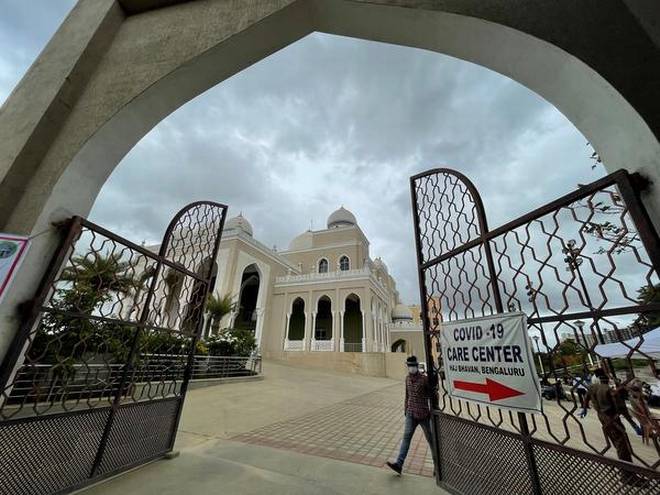
A 100-oxygenated-bed facility was inaugurated at Haj Bhavan COVID-19 Care Centre in Bengaluru on Saturday. | Photo Credit: Murali Kumar K
8 doctors, 12 nurses, 12 housekeeping staff, data operator posted at the CCC
As many as 100 of the 400 beds at the COVID-19 Care Centre (CCC) in Haj Bhavan in Bengaluru have been converted to oxygenated beds. The facility was inaugurated by Minister for Revenue R. Ashok on Saturday. The Minister told reporters that in the second phase, 50 beds each would be converted to ICU and HDU beds.
According to a press release, 8 doctors, 12 nurses, 12 housekeeping staff and a data operator have been posted at the CCC, which is also a triaging centre. For emergency purposes, 2 ambulances are on standby.
Mr. Ashok said that to mitigate the oxygen shortage supply in the city, all CCCs have been equipped with oxygenated beds. Over 800 oxygen concentrators have been delivered to the CCCs apart from ‘Oxybuses’ to support patients. “Every day, we are striving to increase 100 oxygen beds. This will cut down the oxygen problem in the city,” he said.
CCC with 46 oxygenated beds
A COVID-19 Care Centre with 46 oxygenated beds has been established at the Kempegowda Community Hall, near Nandini Layout, in Mahalakshmi Layout Assembly constituency. The facility, which is also a triage centre, was inaugurated by Union Minister D.V. Sadananda Gowda and Minister for Excise K. Gopalaiah on Saturday.
Mr. Gowda said the CCC will be operational from Sunday. Three oxygen mobile vans have been making the rounds of the constituency to provide oxygen to patients in critical need, he said and added that a systematic plan is in place to contain COVID-19 in the city.
source: http://www.thehindu.com / The Hindu / Home> News> Cities> Bengaluru / by Special Correspondent / May 16th, 2021
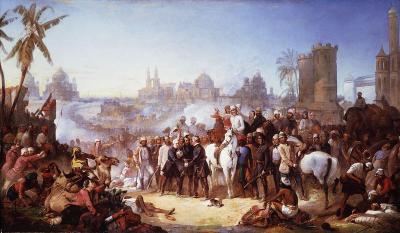
The Maulavi of Faizabad managed to keep the city free from British rule for almost a year until his death at the hands of British agents on June 5, 1858.
Faizabad (Ayodhya District), UTTAR PRADESH :
The Relief of Lucknow, 1857, by Thomas Jon Barker. Photo: Wikimedia Commons
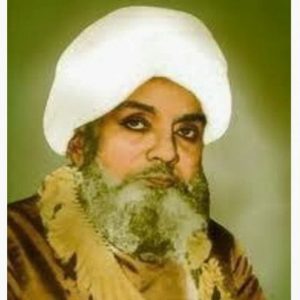
Ahmadullah Shah, born in 1787, more famously known as Maulavi of Faizabad, was one of the leading figures of the great Indian revolt of 1857. In the Awadh region, Maulavi Ahmadullah Shah was known as the ‘Lighthouse of Rebellion’. Hailing from a noble warrior family of Awadh in Faizabad, he grew up to be a political leader committed to armed revolutionary insurrection against British rule in India.
During the freedom struggle, Maulavi made Faizabad the centre and launched revolts in all of the Awadh region. He made the local mosque Masjid Sarai located in Chowk area of Faizabad his headquarters. As he liberated Faizabad and the larger part of Awadh region, he used the premises of this mosque to hold meetings with rebellion leaders.
Maulavi Ahmadullah Shah kept Faizabad free from British rule for almost one year, until his death at the hands of British agents on June 5, 1858.
According to researcher and historian Ram Shankar Tripathi, “With being a practicing Muslim, he was also the epitome of religious unity and Ganga-Jamuna culture of Faizabad. In the revolt of 1857, royalties like Nana Sahib of Kanpur, Kunwar Singh of Arrah fought alongside Maulavi Ahmadullah Shah. Maulavi’s 22nd Infantry Regiment was commanded by Subedar Ghamandi Singh and Subedar Umrao Singh in the famous Battle of Chinhat.”
Tripathi narrates, “Maulavi wanted Raja Jagannath Singh of Pawayan, a zamindar in district Shahjahanpur of Uttar Pradesh, to join the anti-colonial war. On June 5, 1858, with prior appointment, he went to meet Raja Jagannath Singh in his fortress-like house. On arriving at the gate, he was greeted with a volley of gunshots from Jagannath Singh’s brother and retainers. The Maulavi breathed his last on the spot.”
“The martyr’s head was severed and carried in a piece of cloth with blood still oozing from it to the district magistrate, Shahjahanpur, by the zamindar. The district magistrate was at lunch with his friends. But the depraved feudal lord rushed in and presented the severed head of the hero on the dining table of the district magistrate. With a reward of Rs 50,000, he returned home, flying atop the flag of loyalty.”
According to another historian Roshan Taqui, “Maulavi use to bring out revolutionary pamphlets mobilising the masses to do ‘Jihad’ against the British. Maulavi was arrested by the British in January 1857 and was held captive in Faizabad, but three months before the revolt broke out in Lucknow on June 3, he escaped and launched a war against the British in Awadh region including Faizabad, Lucknow and Shahjahanpur.”
“During the revolt, the revolutionaries appointed him as chief of 22nd Infantry Regiment that fought the famous battle of Chinhat in Ismailganj of Lucknow on June 30, 1857, against British forces led by Henry Lawrence. Britishers were badly defeated in this war,” informed Roshan Taqui.
British officers like George Bruce Malleson and Thomas Seaton have made mentions about courage, valour, personal and organisational capabilities of Maulavi Ahmadullah Shah. Malleson has repeatedly mentioned Ahmadullah in the History of Indian Mutiny, a book written in six volumes covering the revolt of 1857.
source: http://www.thewire.in / The Wire / Home> History / by Arshad Afzal Khan / June 05th, 2018
Hafiz Azeemuddin is part of the only Muslim family in Rajanpur village.
Rajanpur Village (Ayodhya ), UTTAR PRADESH :
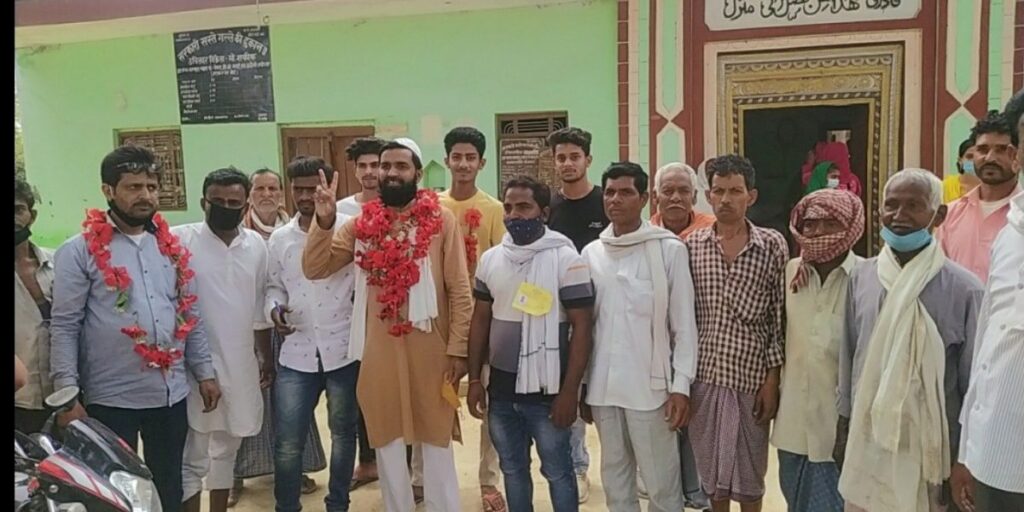
Hafiz Azeemuddin after winning the election. Photo: Special arrangement
Ayodhya:
In an unprecedented show of brotherhood that reaffirms the syncretic soul of Ayodhya, a Muslim cleric who is part of a lone Muslim family in Hindu-dominated Rajanpur village in Ayodhya district won the gram pradhan election with a thumping margin, defeating six other candidates in the fray — all from the majority Hindu community.
Hafiz Azeemuddin, who considers the panchayat poll victory as his Eid gift, attributes his success to his Hindu brethren, who reposed faith in his leadership. This win, however small it may be, once again buried the concept of majority-minority vote-bank politics in what may be considered the symbolic epicentre of Hindutva — Ayodhya.
Azeemuddin and his 27 family members are the only Muslim voters in the village. He received 300 of the total 600 votes polled. “I am sure that of the 200 votes I secured, only 27 will be from Muslims – because in my village there are only 27 Muslim voters,” Azeemuddin told The Wire.
Rajanpur village, which comes under the Mawai police station area of Rudauli assembly constituency in Ayodhya district, has proved that bonhomie and trust between Hindus and Muslims continues to live on.
Azeemuddin is a farmer by profession and graduated from an Islamic madrasa. He also taught in a madrasa for ten years before moving on to take care of his family’s 50-bigha farm.
Reacting to this election result, where Hindu voters came together in favour of a Muslim candidate, Girish Rawat , a local, said, “This is an example of how the fabric of communal harmony is intrinsic to our society.”
“We have not voted on the base of religion, we have voted for the person who would be good for us. Despite being religious Hindus, we voted for a Muslim cleric. This shows to what extent our souls are secular,” said Shekhar Shau.
“It is a manifestation of our pluralism. It is quite obvious that our idea of a syncretic India survives despite all the odds. Let us strengthen such bonds of harmony and fraternity,” said Athar Hussain, secretary of the Ayodhya Mosque Trust.
source: http://www.thewire.in / The Wire / Home> Politics> Religion / by Arshad Afzal Khan / May 12th, 2021
Out of the 10 Muslims from different political parties who contested in the Puducherry 2021 elections, one candidate – A. M. H Nazim from the DMK (Dravida Munnetra Kazhagam) won the Karaikal South seat with 17,042 votes.
The other Muslim candidates who contested include A Mohamad Kassim, R Anifa and C K Ummer Master from SDPI (Social Democratic Party of India), N Sharmila Begum, M Faritha Begum, and A Mohamed Yousuf from NTK (Naam Tamilar Katchi), S Mohamed Seedique from AMMK (Amma Makkal Munnetra Kazagam), A Fazil from DMDK (Desiya Murpokku Dravida Kazhagam), Adv V P Abdul Rahman from AINRC (All India N.R. Congress) and two independent candidates- Mohamed Saleem and Reyaz Ahmed.
In the Puducherry elections, the All India NR Congress won ten seats and its ally BJP six seats. The AINRC alliance is set to form the next government in Puducherry. The Congress-led Secular Democratic Alliance (SDA) saw DMK win six seats, while the Congress was reduced to two seats.
Vidarbha has been a fertile soil for many social reformers and intellectuals. It has played an active role in the nation’s destiny and its social, cultural and political rivulets have flown into and enriched the great sea of national civilization. One such luminary who emerged from Yavatmal was Kazi Syed Karimuddin. He rose to be a great criminal lawyer of the region and played a critical role in the drafting of the Indian constitution.
Kazi Karimuddin was born on 19 July 1899, at Darwah in Yavatmal district of Maharashtra to Kazi Syed Nasiruddin and Dayanath Begum. He had his school education at Mohamedan High School, Amravati. He graduated from Morris College, Nagpur and obtained his postgraduate degree in economics from Aligarh Muslim University. He later qualified for law. He married Qadirunnisa Begum (May 24, 1926) .
Kazi Karimuddin had an active presence in social, legal, judicial and political circles in Yavatmal. He was Vice Chairman, District Council (1924-28) Sub-judge (1928-31) President, Anjuman Middle School (1932-37) and Public Prosecutor (1939-45). He was member of Constituent Assembly (1947-50) and of Madhya Pradesh Assembly (1947-52) (at that time Madhya Pradesh was known as the Central Province). Following that, he was a member of the Rajya Sabha (the upper house of the Indian Parliament) from 1954 to 1958. He died on 14 September 1977.
Kazi Karimuddin moved an amendment in the Constituent Assembly on the lines of American Constitution to make right to privacy a fundamental right but Dr. B.R. Ambedkar gave it only reserved support. Article 20 provides that no person shall be convicted of any offence except for violation of a law in force at the time of the commission of the act; that no person shall be prosecuted and punished for the same offence more than once; and that no person accused of any offence shall be compelled to be a witness against himself.
Endowed with rare forensic skills, Kazi Karimuddin’s vast experience and insights gave him an uncanny knack for unraveling the anatomy and pathology of crimes. He was always apprehensive of the pervasive scope of the intrusive lens of the state as well as private agents. He considered privacy a vital constituent of a healthy constitutional polity since India’s large population of minorities had become vulnerable due to the emerging communal situation.
He wanted that the following be added as clause (4) in article 20: “ The right of the people to be secure in their persons, houses, papers and effects against unreasonable searches and seizures shall not be violated and no warrants shall issue but upon probable cause supported by oath or affirmation and particularly describing the place to be searched and the person or things to be seized.”
He said: “This is very important amendment. You will be pleased to find that this finds place as article 4 in the American Constitution and in the Irish Constitution there are clauses (2) and (5) which are similar and in the German Constitution there are article 114 and 115 on the same lines. In the book of Dr. Ambedkar—Minorities and States—on page 11, item No. 10, a similar provision has been made. What is the situation in India today? …Arrests are made without warrant and searches without justification. We are being governed by lawless laws and there is no remedy for the redress of grievances on account of unauthorized arrests and searches.”
Dr. Ambedkar pointed out that this clause was already in the Criminal Procedure Code, and was therefore a part of Indian law, but also acknowledged that it may be desirable in the interests of personal liberty to ‘place these provisions beyond the reach of the legislature’. Despite Ambedkar’s support the amendment was negatived.
However the Karimuddin amendment in the Constituent Assembly re-emerged through the process of judicial engineering in Kharak Singh v. State of U.P where the court discussed the relationship between surveillance and personal liberty (personal liberty being guaranteed by the Constitution) and found that unauthorised intrusion into a person’s home would interfere with her right to personal liberty. The court recognised “the right of the people to be secure in their persons, houses, papers, and effects” and declared that their right against unreasonable searches and seizures was not to be violated.
Kazi Karimuddin was also the key persona in the deliberations on the Uniform Civil Code in the Constituent Assembly. He argued: “The people outside and the members of the Constituent Assembly must realize that a Muslim regards the personal law as part of the religion and I really assure you that there is not a single Muslim in the country—at least I have not seen one—who wants a change in the mandatory provision of religious rights and personal laws, and if there is anyone who wants a change in the mandatory principle, or religion as a matter of personal law, then he cannot be a Muslim.”
Kazi Karimuddin had three sons and five daughters. Though he was a staunch opponent of the UCC, he was a very progressive and forward-looking Muslim who educated his children at the country’s premier educational institutions. Since Yavatmal did not have adequate facilities for higher learning, he sent his daughters to Hyderabad to pursue postgraduate courses at Osmania University which was a renowned educational hub for women.
His sons-in-law also excelled in their respective fields: Nizamuddin Ahmed (LLM) was trained in UK in Labour Law and retired as Deputy Commissioner- Labour, Maharashtra; Syed Mukassir Shah was former Chairman of the Andhra Pradesh Legislative Council; Justice M.M. Qazi was former Chairman of the Maharashtra Administrative Tribunal and retired judge of Bombay High Court; and Dr Mirza Basheer Baig was an orthopedic surgeon (FRCS) in UK.
The life of Kazi Karimuddin serves as a beacon to modern day Muslims who are now at the most challenging crossroads in history.
source: http://www.muslimmirror.com / Muslim Mirror / Home> Indian Muslim / by Moin Qazi / May 13th, 2021
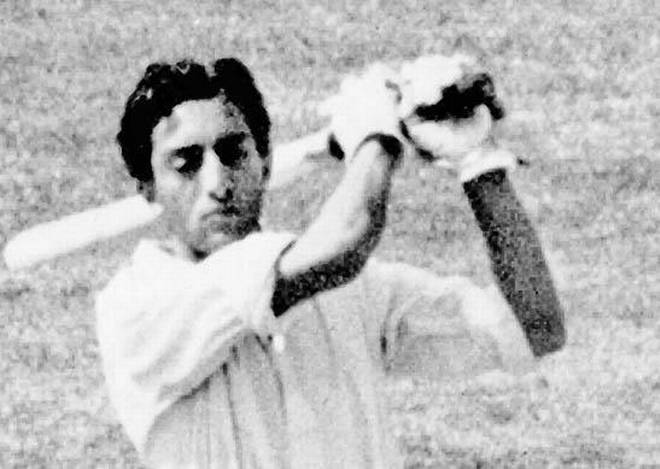
The Nawab of Pataudi. It was one of India’s greatest triumphs…with a most remarkable man leading the way… (Published in The Sportstar on October 19, 1985) PHOTO: THE HINDU ARCHIVES
Cricket and music? Yes, they are perfectly in tune with each other
It was January 1973. India was playing England in a Test series. Ajit Wadekar was leading India, while Tony Lewis was the English captain. The Nawab of Pataudi had been inducted into the team after a fine show in a tour match. The two teams had wound their way to Chennai (then Madras) for the third Test. The series was tied one-all. And the match at Chepauk was crucial.
But this story is not about cricket and the unflappable Pataudi’s exploits with the bat or of Wadekar’s marshalling of his troops on a turning Chepauk pitch. In those days, Test cricket was played over six days with a rest day after three days. I was a student of the Indian Institute of Technology, Madras. The institute had a music club (still does), and a violin concert by Lalgudi Jayaraman had been organised for Sunday evening.
The ace violinist had just begun his concert and essayed the varnam, when suddenly there was a minor commotion at the entrance. In walked Pataudi with Tony Lewis (Monday was a rest day). They proceeded to the front row, where two seats had been hastily vacated for them, and sat in rapt attention while Lalgudi, after a courteous bow to acknowledge their presence, proceeded with his concert. We later learned that Tony Lewis was a part-time musician and violinist, and Pataudi wanted to expose him to how India had adapted this instrument for its classical music.
Even in those pre-WhatsApp days, word of the great man’s presence in the Central Lecture Theatre spread like wildfire on the campus and the hall which had till then only a sprinkling of listeners, fast filled up and was soon overflowing. Concert over, Pataudi and Tony Lewis exchanged a few pleasantries with the maestro and left.
I dare say that Pataudi had unwittingly acted as a catalyst to convert quite a few of the Pop, Rock, Blues and Jazz aficionados among the young IITians to serious listeners of Indian classical music.
srinivasan.bhashyam@gmail.com
source: http://www.thehindu.com / The Hindu / Home> Opinion> Open Page / by S. Bhashyam / May 09th, 2021
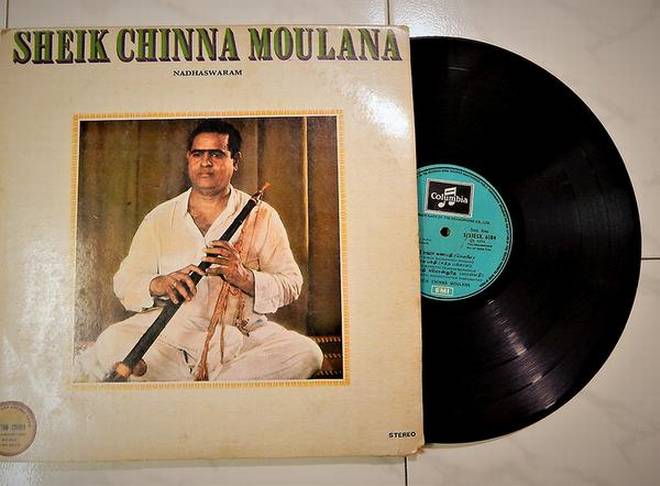
An old record of Sheik Chinna Moulana’s nadaswaram recital from his son Subhan Kasim’s collection.
The archive is being maintained at ‘Alapana’, the 1950s-era house in Srirangam that was formerly Sheik Chinna Moulana’s residence.
Nadaswaram exponent Subhan Kasim has put the long spells of isolation caused by the lockdown this past year to good use by cataloguing at least 250 hours of music recitals by his grandfather and guru Sheik Chinna Moulana in a digital audio format along with a collection of video performances.
The archive is being maintained at ‘Alapana’, the 1950s-era house in Srirangam that was formerly Sheik Chinna Moulana’s residence and is now Mr. Kasim’s home.
“From the age of 14, I was interested in collecting music discs as a hobby. This shifted to cassette tapes and CDs. I still remember the gramophone which we had to crank up manually to play three-minute recordings in those days,” Mr. Kasim told The Hindu.
The archive is a good example of the advancements in sound recording technology, added Mr. Kasim. “At first we had releases from Columbia Records, [established in 1889], where the discs played only for three minutes. When HMV took over, LP discs introduced in the late 1950s, which allowed for up to 18 minutes of recording per side, made it easier to accommodate lengthier recitals,” he said.
Though he had meticulously preserved much of his grandfather’s work in various formats from an early age, Mr. Kasim opted to digitise the invaluable collection only recently, when some of the tapes started deteriorating. “Though I had the records from HMV and Columbia, the machines to play them were out of production. So I used digital technology to convert everything from wax records to spool tapes, cassettes and CDs into digitised copies, which I have saved in .mp3 and .wav formats.”
In addition to several complimentary discs given by recording companies, Mr. Kasim completed his collection of his grandfather’s work with the help of V.V. Sundaram, a key organiser of the annual Thiyagaraja aradhana (homage concert) in Cleveland, Ohio, and V. K. Viswanathan, a NASA scientist and ardent fan of Sheik Chinna Moulana.
Among the most significant recordings in the archive is that of a live concert in Chennai in the 1950s, whose broadcast by All India Radio had to be extended beyond its allotted two-hour slot to over three hours on popular demand.
The collection also includes the album of Sheik Chinna Moulana’s recital at Haus der Kulturen der Welt (House of World Culture) in Berlin released by German authorities as part of ‘Festival of India’ in 1991.
Mr. Kasim says the digital archive will be useful for aspiring artistes. “I am quite willing to guide serious students of nadaswaram, and share copies of the recordings with them. As per our grandfather’s guidance, the research and education will be free of cost.”
Mr. Kasim collaborates professionally with his younger brother Subhan Babu. Dr. Chinnamoulana Memorial Trust run by them has been encouraging the growth of traditional nadhaswaram music and supporting aging artistes since 1999. Both brothers are special nadaswaram artistes of Tirumala Tirupati Devasthanams.
source: http://www.thehindu.com / The Hindu / Home> News> Cities> Tiruchirapalli / by Nahla Nainar / Tiruchi – May 11th, 2021