Abandoned “Mosques of India” are crying for attention, one Muslim youth is bridging the gap

INDIA :

Picture Courtesy: Outlook India

Mohammad Mirza is a travel writer and a social media executive from Hyderabad. He is currently based in the Middle East. His Instagram page “Mosques of India” is stocked with images of abandoned mosques with striking architecture that has remained elusive to the imaginations of present-day craftsmen.

Ten years ago, walking through the bustling street of Shaikpet in Hyderabad, thirty-year-old Mohammad Mirza was distraught to see the sight of a tumbledown Shaikpet mosque. Once, the Shaikpet mosque would echo with prayers, stirring the hearts of many. Seeing the plight of the mosque, Mirza started on a journey to research and write about the abandoned “Mosques of India.” 

His aim is for the Archaeological Survey of India (ASI) and Muslim Waqf Boards to recognize these mosques as state-protected monuments.
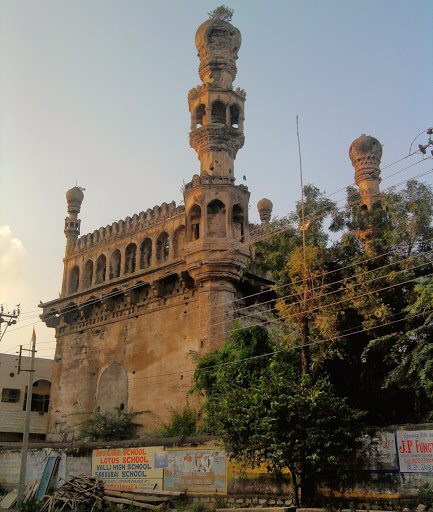
Picture Courtesy: Muslim Mirror

“I started writing about the abandoned mosques of India in lockdown. I am a history junkie and I read vastly on architecture,” Mirza told TwoCircles.net. 

“I didn’t want to post the images of the mosques alone. I wanted to create awareness about their poor and dilapidated condition. I also try to extensively research and write about the historical significance and the cultural heritages of these mosques,” he said. 

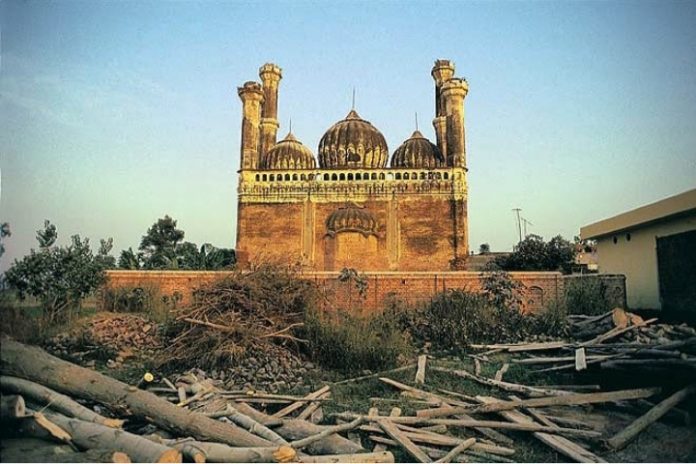
His page features an assortment of solitary mosques, which include the Palaiya Jumma Palli, one of the oldest mosques in India located at Keelakari in Tamil Nadu, which has a semblance of Dravidian Islamic Architecture and was constructed around 628 – 630 AD, the Akbari mosque in the sleepy town of Kalanaur, Punjab. The Akbari mosque is speculated to be the coronation place of Akbar the Great. Each mosque featured on the page has a unique ‘unknown’ history but are in ruins at present.
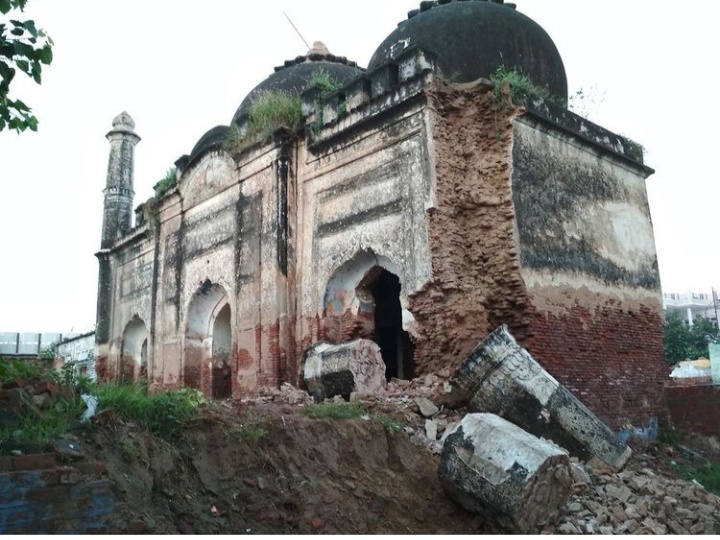
Picture Courtesy: Gurmeet Singh

“The Arabic calligraphy and inscriptions are still intact in some mosques, but most of the mosques are in a very bad condition. The minarets and domes are broken. The walls of the mosques have plants and trees growing out of their fissures, and sometimes they are just cloaked in algae,” says Mirza.

Mirza archives the heritage of these mosques by doing ‘short series’ items on these old and abandoned mosques. “The short series helps people to focus on a particular place filled with heritage,” he says. 

In his first series, he wrote about eight different “Abandoned Mosques of Haryana” (as he calls it). It featured mosques from the villages of Gondar, Fatehabad, Kahni, Turkiawas, Meham, Dujana, Urlana Kalan and Jalmana.

“Sadly today these mosques are encroached and used as residences and cowsheds. Mosques used to be a house of prayer for Muslims. There are no Muslims in these small villages to worship in these mosques as they have migrated during the partition,” he says. 

In one of his series, Mirza writes that Haryana is blessed with so many historical monuments, and “there is perhaps no other state in India where historic monuments are left to vagaries of nature like they are in Haryana.” He is talking about a forsaken mosque of Fatehabad, Haryana.

Mirza says that these mosques are the symbol of India’s pluralism and they must be preserved. “Not only mosques, I see many historical monuments in ruins too. Conserving the architectural heritage of a place depends upon the state’s recognition of its value,” he said. 

Mirza says that “we must rebuild all these mosques so that our future generation can see all of this great history of their predecessors.” 

“Hopefully, Muslims can visit and transfer these mosques hopefully,” says one of the followers on his page.

Mirza’s work is in line with Adopt a Heritage (2018) scheme, which was jointly established by the Ministry of Tourism, Ministry of Culture and Archaeological Survey of India. The project faced repercussion for its public-private partnership to sustain the monuments of cultural heritage and for selecting the sites based on tourist footfall. Activists had then sought to take into consideration the need to preserve and manage such cultural heritage before the adoption policy.

“These mosques are not just cultural heritage, they have religious significance too. The respective estates must give recognition to them and bring them under their protection,” says Mirza and adds, “I always wanted to be an armchair historian.”

source: http://www.twocircles.net / TwoCircles.net / Home> Lead Story / by Shalini S, TwoCirlces.net / March 31st, 2021
West Bengal Assembly Elections | Crucible of ISF, Bhangar reflects experiment in Muslim politics

WEST BENGAL :

Site of land conflict, the constituency on the outskirts of Kolkata will prove key to the future of the Opposition alliance.

Two of the three hawkers selling hard-boiled sweets and iced water tubes at the Indian Secular Front (ISF) rally at the Bhojerhat football ground in Bhangar on the last day of campaigning had decided on their choice for MLA — the Samyukta Morcha candidate, Naushad Siddique.

But their colleague remained undecided. A beneficiary of the Trinamool Congress’s welfare schemes for his daughters, he said, “I got ₹50,000 for my daughter under Kanyashree [a scheme of financial aid for girls who have studied till Class XII] and Rupashree [for a girl child’s marriage] but we were denied Amphan relief.”

Naushad Siddique at Bhangar on the last day of campaigning on April 8, 2021.  

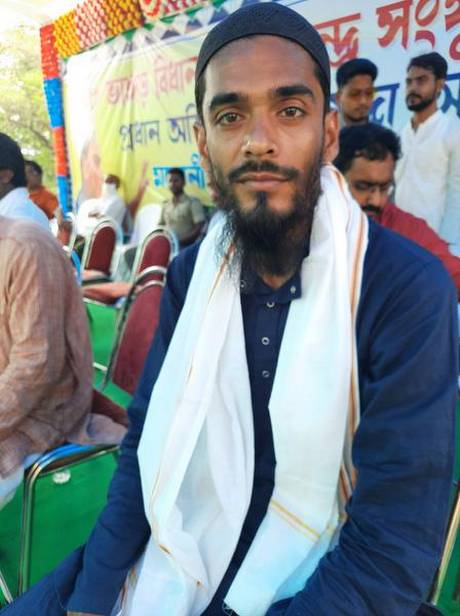
Naushad Siddique, ISF chairman, is the brother of the peer of Furfura Sharif, Abbas Siddique.

A pitch for power

As the crowd at the rally swelled to hear Abbas Siddique, a few others explained, “It is not that Didi [Trinamool chief Mamata Banerjee] has not worked, but those under her are all corrupt.”

Almost an hour before the Siddique brothers took the stage, CPI(M) State committee member Tushar Ghosh arrived with slogans like “Inquilab Zindabad” and “Bhaijaan Zindabad” renting the air.

The crowd was largely young. In fact, some people seemed too young to cast their vote but they held aloft sticks with the white, blue and green ISF flag and the red CPI(M) flags tied together.

At the Bhojerhat meeting, Abbas Siddique delivered a fiery speech. “She [Ms. Banerjee] is calling me a shaitan (devil). Am I in politics to become an MP or a Minister?” he said rhetorically. Minutes later he asked the crowd who brought the BJP to West Bengal, showing an old photograph of Ms. Banerjee with former Prime Minister Atal Bihari Vajpayee at a meeting.

It was Naushad Siddique who was instrumental in sealing the ISF’s alliance with the Left and Congress for this Assembly election.

To a question on the Trinamool’s allegation that the ISF will end up helping the BJP, Naushad Siddique said, “The Trinamool leadership can say whatever it wants, but you can see the response to the ISF here. We are against both the Trinamool and the BJP.” If elected, he said, the ISF, which has fielded candidates in 28 seats, will seek a bigger role for the party.

It is from Bhangar that Abbas Siddiqui began his political foray, making a pitch for power through his popular religious jalsas (gatherings) that continued right through the lockdown. “Bhangar is the crucible from where the ISF experiment began,” said a villager at Padmapukur.

Inner party issues

Bhangar has a predominantly Muslim population and the ISF’s spirited entry has put the Trinamool, which is battling inner party squabbles, on the backfoot. In 2016, Abdur Razzak Mollah (former Land Reforms Minister in the Left Front regime) won the seat by a margin of 18,000-odd votes on a Trinamool ticket. However, the Trinamool dropped the 75-year-old veteran this time, opting for Rezaul Karim, also a former CPI(M) member who had contested the Lok Sabha election from Birbhum in 2019. Dr. Karim was preferred over Trinamool strongman Arabul Islam, which has sparked a party feud.

Just a few days earlier, while campaigning for Dr. Karim, Mr. Islam made his discontent public. “We will ensure the victory of our candidate, even if he is from Pakistan. The previous elected representative did not visit the constituency for five years after getting elected,” he said.

The BJP’s Soumi Hati has campaigned only in the Hindu pockets for the April 10 vote, and the ISF has stayed away from them, further polarising the electorate, villagers pointed out. On whether a split in the Muslim vote would help the BJP, villagers at Kamarhait and Machi Bhanga said, “Not in this constituency. But a divide in the Muslim vote here will go against the Trinamool.”

Land movement

Bhangar, a rural and poor belt on the fringes of Kolkata’s rich suburbs of Rajarhat and New Town, was in the news over a land movement that began in 2013 when the State government acquired 13 acres from villagers for a power grid project.

From 2014, the stir against the land acquisition led to tension in the area. Things came to a head on January 17, 2017 when villagers blocked roads with uprooted trees and clashed with the police. Two protesters were shot dead, but the police denied opening fire, putting the blame on “outsiders”. The State government reached an agreement with the villagers in August 2018, said Alik Chakraborty of the CPI(ML) Red Star, one of the leaders of the movement.

The CPI(ML) Red Star has fielded Mirza Hasan, a face of the land movement. He admitted that the ISF has a hold over the villagers, who tend to listen to the peerzada (religious leader).

“Bhangar is a case study of communal politics now,” said Mr. Chakraborty. “The deep polarisation that is happening here will find an echo in other constituencies,” he added.

The CPI (ML) leadership was, until a few months ago, hopeful of support from the CPI(M) but the latter forged an alliance with the ISF. In the densely populated South Parganas district, according to the 2011 Census, there is a 35.57% minority population which will influence several of the 31 seats including Bhangar, Canning, Magrahat, Sonarpur and Metiabruz. In 2016, the Trinamool had won 29 seats and the Left Front, two.

The Trinamool, which came to power in 2011 in the State riding on the land movements of Nandigram and Singur, found itself on the wrong side of the people in Bhangar. When villagers protested against heavy-handed tactics on the ground, the government moved to make amends, promising not to acquire any land by force.

The villagers hailed the “people’s victory” but three years on, Bhangar is being asked to choose between the Furfura cleric, who holds considerable influence over the region, and the Trinamool, which claimed it had nurtured the constituency with its welfare schemes.

source: http://www.thehindu.com / The Hindu / Home> Elections> West Bengal / by Shiv Sahay Singh and Sudipta Datta / Bhangore (South 24 Paragnas) / April 09th, 2021

Mapping Tipu’s defeat

Mysuru, KARNATAKA :

Bengaluru-based collector Sunil Baboo has acquired maps that show the battle plan of the Third Anglo-Mysore war, which Tipu Sultan lost.

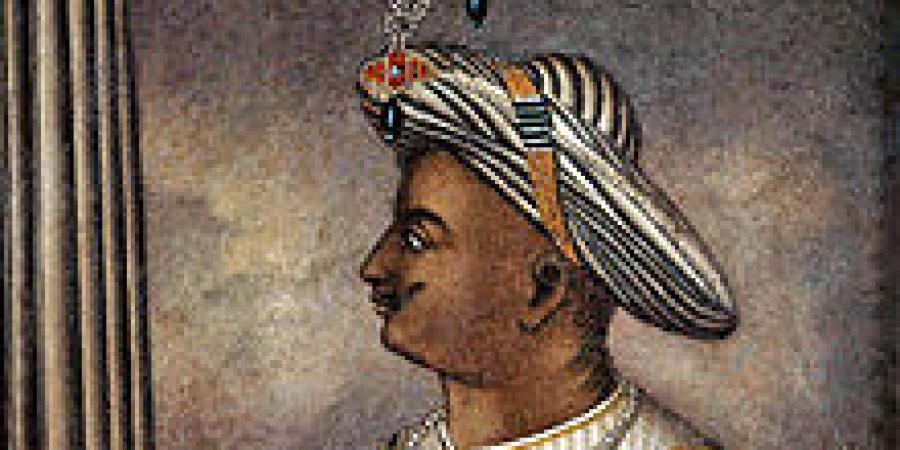
A painting of Tipu Sultan used for representational purpose only

Bengaluru : 

Sunil Baboo, a Bengaluru-based collector, has a penchant for procuring items of historical significance. The latest additions to his private collection? Maps detailing the British battle plan to corner Tipu Sultan.One of the maps, engraved by J Cooke, a man who worked under the British, shows the battleground of the Third Anglo-Mysore war that lasted between February 5-24, 1792, and saw Tipu’s defeat. 

Sunil Baboo | Ashishkrishna HP

He acquired the map during a trip abroad. He met a French woman named Christine Champlaine, whose great-grandfather served in the French army and came into the possession of the maps of the 1792 battle. “I bought them from her in early 2020,” Baboo says.The map details the seige of Seringapatam (now called Srirangapatna), and the position of the various troops on the side of the British, and the positions of British generals.

It shows the locations of Nizam’s forces, the Nawabs of Arcot, and the Marathas, vis-a-viz Loll Baug, Shair Ganjaum, Dowlet Baug (Daulat Bagh), Tippoo’s Tent, Powder Works, Hyder’s Mausoleum, Palace, Pavilion, River Cauvery, and Carigaut Pagoda.

“They cornered Tipu even before he realised it. Cornwallis went on to conquer all of Tipu’s forts – Nandidurg, Savandurg, Uttaradurg, Manjarabad fort, Ballari fort, Krishnagiri fort and others. Also, Tipu had a sense that his own people were turning hostile. There were instances of his own people falling for the lure of money from the British,” says Baboo.

In 2018, he acquired a lithograph titled ‘Taking of the City of and Fort of Seringapatam’ from a dealer of antiquities in Canada. Created by French painter Jean Duplessi Bertauz, the piece illustrates Tipu’s final battle. “It shows the slyness with which the British laid siege to Seringapatam, cornering Tipu from every side. In fact, Napoleon Bonaparte, who was busy fighting wars in Europe, had offered to help Tipu, but it was too late,” says the 60-year-old. 

Also engraved is the following text: “Tippoo perished with a great number of this followers and all his treasure fell into the hands of the conquerors. Colonel Wellesley commanded the reserve at the assault, and was afterwards nominated Governor of the City.”Baboo, who used to run an export business, is drawn to history. “I have a passion for documenting antiquarian documents, and maps that represent the past and which shaped our present,” he says.

source: http://www.newindianexpress.com / The New Indian Express / Home> Cities> Bengaluru / by Sanath Prasad, Express News Service / April 06th, 2021

Students overcome several odds to secure ranks, gold medals

Davengere, KARNATAKA :

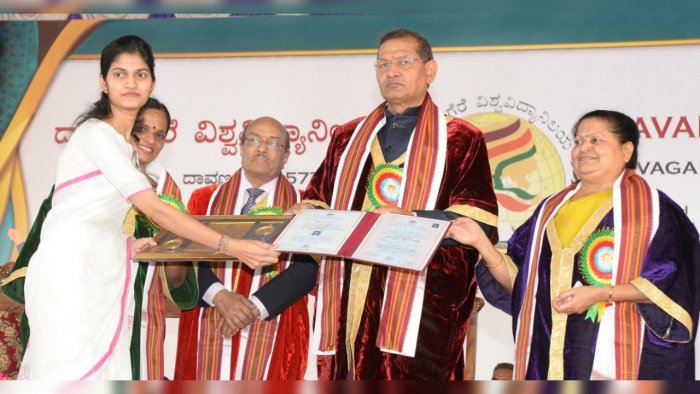
Davangere University Vice-chancellor Sharanappa V Halase presents gold medals and certificate to Nisarga K P, who secured the first rank in MA (English) even when she had epilepsy during examinations last year, at the 8th convocation in Davangere on Thursday. University Registrar (Evaluation) H S Anitha, Academy for Creative Teaching Chairman Gururaj Karajagi, and Registrar Gayathri Devaraj are seen. Credit: DH Photo

Every rank holder in academics will have a story to tell. Likewise, Megha S N, who emerged as the golden girl with four gold medals in MSc in Mathematics at Davangere University’s 8th annual convocation held at Shivagangotri Campus here on Wednesday, wants to become a mathematics teacher with the sole intention of eradicating from the minds of students that it is a hard nut to crack.

She is the daughter of Nagaraj, a school teacher in Davangere and Sudha, a homemaker.

Speaking to DH, she said, many students find mathematics a tough subject due to wrong teaching methods adopted by teachers. If it is taught in the right way at the school level, all students would love it. “Being a daughter of the Mathematics teacher, I was taught it in the right method.”

On her future plan, she said she is preparing for NET/KSET to become a teacher in a degree college. She also has a plan to do a PhD.

Student suffering from epilepsy gets first rank

Nisarga K P, the first rank holder in MA in English, was suffering from epilepsy during the examinations last year. She was bedridden. But her perseverance fetched her two gold medals. She is still undergoing treatment. She was hospitalised in Manasa nursing home in Shivamogga in April last year.

She studied the subject on the phone and laptop on the bed as examinations were held in September due to lockdown. “I am alive today due to treatment by doctors Avinash and Vamana Pai. Parents and my brother Kotresh, BBM student, gave much-needed moral support.”

She told that many children from rural areas still find English as a hard nut to crack. “I want to set up a private school in the rural area and teach English to rural children effectively so that they not only overcome inferiority complex when they come to a city for higher education but also able to compete with their counterparts in urban areas.” 

She is the daughter of Panchakshari, a civil contractor and Basamma, a homemaker, the residents of Vidyanagar in Davangere.

BA rank holder aims for IAS

Jyothi Gupta V, a student of AVK college in Davangere, and who secured the first rank in BA, wants to become an IAS officer. Currently, she is doing MA in English at Davangere University. She is the daughter of Vinod Kumar Gupta, a businessman, and Reena Gupta. English, Sociology and Political Science were her optional subjects in BA.

Street vendor’s daughter bags first rank

Irshad Jabeen a native of Chitradurga, and the first rank holder in MSc in computer science, said, though her father Syed Islam is a street vendor. who sells sofa sets, he always encouraged her to do well in in her studies. In order to realise her dream of becoming an IAS officer, she quit the job in Bengaluru and she is now preparing for UPSC exams. Currently, she is working as a lecturer in SRS PU College in Chitradurga. She travelled from Chitradurga to the campus every day and became the topper. 

Hyder Ali, son of Mehboob Sab, a bangle seller at Bhanuvalli in Harihar taluk, bagged the first rank in MA in Political Science. “ My parents have five children and all are graduates. I am preparing for UPSC examinations,” he said.

Chaitanya C M, daughter of Chennakeshava, Principal of the government the First-grade college in Chitradurga and Manjula B K, a homemaker, bagged the first rank in BCom. She is a student of SJM Degree college, Chitradurga. She also has a plan to become an IAS officer. Currently, she is doing MCom at the University of Mysore.

Sindhu P K, the first rank holder in MSc (Physics), proved that poverty can never become an impediment to achieving success. Her father Karibasappa P T works in a grocery store in Davangere. She also wants to become an IAS officer, she said.  

source: http://www.deccanherald.com / Deccan Herald / Home> State> Karnataka Districts / by Nrupathunga SK, DHNS / April 09th, 2021

Muslim man’s library with 3,000 copies of Bhagavad Gita torched by miscreants in Karnataka

Mysuru, KARNATAKA :

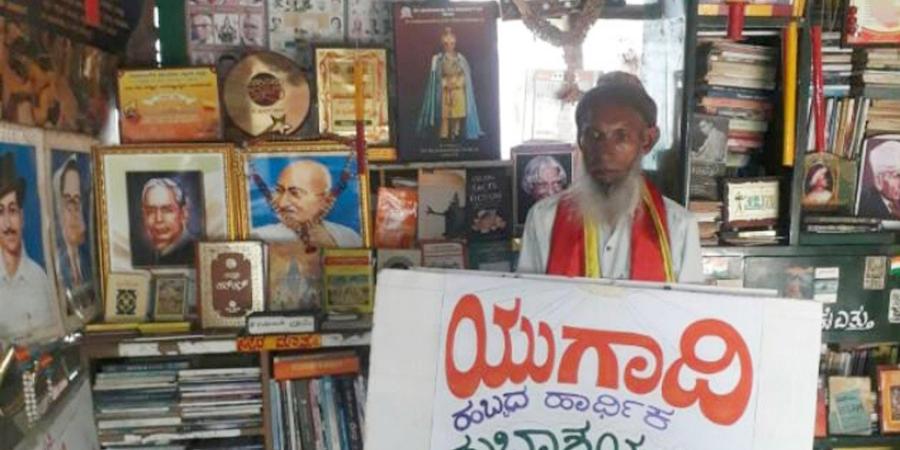
Syed Isaaq in front of a portion of the library (Photo | EPS)

Syed Issaq, a daily wage worker, had collected more than 11,000 books for his library, 85% of books were in Kannada.

Mysuru :

In a tragic incident, miscreants have allegedly set ablaze a public library run by a 62-year-old daily wage labourer that had a collection of 11,000 books including three thousand copies of Bhagavad Gita, in Mysuru on Friday.

Syed Isaaq had become a popular face among the residents of Rajiv Nagar and Shanti Nagar in the city as he took up a bold step of setting up a library giving free access to all the residents in the region for the last 10 years.

Deprived of education, Isaaq worked as a bonded labourer before turning into an Under Ground Drainage (UGD) cleaner and did odd jobs to earn a livelihood.

“At 4 am, a man residing next to the library informed me that there was a fire inside. When I rushed to the library which is just a stone’s throw away distance, I could only see them being reduced to ashes,” said Isaaq in teary eyes.

With an intent to help inculcate reading habits among the people and also encourage them to learn Kannada, Isaaq had set up this public library in a shed-like structure inside a corporation park in Rajiv Nagar second stage near Ammar Masjid. Every day, over 100-150 people would visit his library. Issaq would purchase over 17 newspapers including the ones in Kannada, English, Urdu and Tamil.

Nearly 85% of the books in his library collection were Kannada while several were English and Urdu. “The library had over 3,000 exquisite collections of Bhagavad Gita, over a 1,000 copies of Quran and Bible besides thousands of books of various genres which I sourced from donors,” he says.

Though he did not spend money from his pocket, he used to spend nearly Rs 6,000 for the maintenance of the library and on the purchase of newspapers.

Following this incident, Issaq approached the Udayagiri police station and lodged a complaint against the miscreants. Police have filed an FIR under the IPC section 436 and have launched an operation to nab the culprits.

However, the incident has not deterred Issaq. “I will not cow down. I will rebuild the library from the scratch”.

“I was deprived of education and I want to ensure that others should not face my plight. I want people to learn, read and speak Kannada and will rebuild it again,” he said.

source: http://www.newindianexpress.com / The New Indian Express / Home> States> Karnataka / by Karthik KK , Express News Service / Myuru – April 09th, 2021

Fatima Rafiq Zakaria – Journalist, Padma Shri – Dies In Maharashtra Aged 85

Mumbai, MAHARASHTRA :

Fatima Rafiq Zakaria - Journalist, Padma Shri - Dies In Maharashtra Aged 85
Fatima Rafiq Zakaria was awarded the Padma Shri in recognition of her work in education in 2006

Aurangabad, Maharashtra: 

Fatima Rafiq Zakaria, a Padma Shri awardee, renowned journalist, academician and chairman of Maulana Azad Educational Trust and Khairul Islam Trust Mumbai, passed away at the Bajaj Hospital in Maharashtra’s Aurangabad due to age-related illness on Tuesday noon. She was 85.

Besides being affiliated to the Maulana Azad Educational Trust and Maulana Azad Education Society, Ms Zakaria was also the executive vice-chairman of the Board of Governors of the Trust’s Institute of Hotel Management which is run in collaboration with the Taj Group of Hotels.

Ms Zakaria, who had played an eminent role in the field of education, was also honoured with the Sarojini Naidu Integration Award for Journalism in 1983.

She was awarded the Padma Shri in recognition of her work in education in 2006.

source: http://www.ndtv.com / NDTV / Home> All India / by ANI / April 06th, 2021

Former Vice President Of Jamaat-E-Islami Hind Prof KA Sidheeq Hassan Passes Away

Koottil, Eriyad (Thrissur District), KERALA :

Prominent Islamic scholar and former Vice President of Jamaat-e-Islami Hind Professor KA Sidheeq Hassan passed away today at the age of 75. He was the chief architect of Vision 2026, a flagship project of the Human Welfare Foundation, a public charitable trust working for the development of Muslims.

Prof Sidheeq Hassan worked as an educator in various educational institutions including University College, Thiruvananthapuram and Maharaja College, Ernakulum.

He served as the President of Jamaat-e-Islami Hind, Kerala from 1990 to 2005. Earlier he had held the positions of Chairman of Alternative Investment and Credit Limited (AICL), founding chairman of Baithuzzakath and sub-editor of Probodhanam Weekly.

Sidheeq Hassan was born in Koottil in Eriyad in the Thrissur district of Kerala and was one of the contributing founding members of Madhyamam Daily, a prominent newspaper in Kerala.

He was conferred with many prestigious awards including the Imam Haddad Excellence award, Islamic Online Star of 2010 by Islam Online and Ebrahim Sulaiman Sait Foundation Award.

He is survived by wife VK Zubaida, sons Faslurrahman, Sharafuddeen and daughter Sabira.

source: http://www.thecognate.com / The Cognate / Home> News / by Ghazala Ahmad / April 06th, 2021

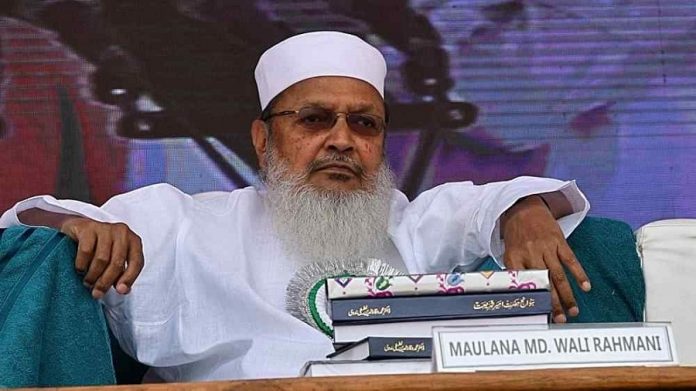
Maulana Wali Rahmani: India’s torchbearer Muslim scholar who made promotion of education his mission

Patna, BIHAR :

Maulana Wali Rahmani | Photo Courtesy: Clarion India

What set Maulana Wali Rahmani, an Indian Sunni Islamic Scholar, academician and founder of Rahmani30, apart was his efforts towards the promotion of education among Muslim youth. Although Rahmani was a multi-lingual man, he had evident love for the Urdu language. In February this year, he launched a campaign for education among the Muslim community and promotion of the Urdu language. 

The well-known torchbearer of India’s Muslim community, who strove to work for the promotion of education, Maulana Mohammad Wali Rahmani would have turned 78-years-old on June 5 this year. On April 3, Maulana Wali Rahmani breathed his last at a Patna hospital after a brief illness and other complications.

Such was his repute and respect among the community that he had 8.5 lakh followers who took the oath of allegiance to him as “Sajjada Nashin” of Khanqah Rahmani in Munger in the Indian state of Bihar. Rahmani became “Sajjada Nashin” of Khanqah Rahmani, Munger in 1991 after the death of his father Sayyid Minatullah Rahmani. At present, Rahmani was the Secretary-General of All India Muslim Personal Law Board (AIMPLB). He was Ameer-e-Shariat, or the head, of the renowned religious organization Imarat-e-Shariah of Bihar, Jharkhand and Odisha. However, what set him apart was his endeavour in the field of education. His organization, Rahmani30, founded in 2008, was his gift to the Muslim community of Bihar, and the country.

Had there been no Rahmani30, hundreds of students might not have heard about him and many poor Muslim students could not have realized the dream of making it to India’s top engineering institutes; the IITs or the Indian Institute of Technology.

The Rahmani30 has since then expanded to NEET or the National Eligibility cum Entrance Test for medical education. Top accountancy and Law entrance tests have also been included now.

Rahmani30 is modelled on Super30 founded by famous mathematics teacher Anand Kumar of Bihar who started selecting 30 poor students and grooms them for IITs. Super30 was a big success. So is Rahmani30. Since its inception, Rahmani30 had the services of Bihar senior police officer Abhayanand, who retired as DGP Bihar. Every year test exams are held for the selection of Rahmani30 and the selected candidates are provided with free residential coaching with food.

Maulana Wali Rahmani was a political personality. His proximity with political leaders got him brickbats too. He was elected to the Bihar Legislative Council on April 7, 1974, and continued till 1996. In 1984 and 1990 he was elected as deputy chairman of Bihar Legislative Council. He was criticized after his (in)famous Deen Bachao Desh Bachao (Save Islam, Save Country) rally at Patna in 2018. Just after the rally, one of its organizers were declared as the candidate from Nitish Kumar’s party for the Bihar Legislative Council. Maulana Rahmani was accused of compromising with Nitish for ‘a seat in Bihar council.’

He, however, was also praised for his bold statements before the top political leaders when the issues related to the Muslim community were discussed.

His birthplace Khanqah Rahmani is a well-known religious place that was founded in 1909 by his grandfather Maulana Mohammad Ali Mungeri, who was a co-founder of Nadwatul Ulema, Lucknow. Maulana Wali Rahmani’s father Maulana Minatullah Rahmani was also a renowned religious scholar who also held the post of General Secretary in All India Muslim Personal Law Board.

Maulana Rahmani got his initial education at Rahmania Urdu School, Jamia Rahmani in Munger, Bihar and then proceeded to Nadwatul Ulema and Darul Uloom Deoband. He also studied at Bhagalpur University which is now known as Tilka Manjhi Bhagalpur University in Bihar.

At the age of 22, Maulana Rahmani joined ‘Naqeeb’, a weekly published by Imarat-e-Shariah. He also served at Jamia Rahmani.

In 1991, following the demise of his father, he was made Sajjada Nashin of Khanqah Rahmani.

He was made Ameer-e-Shariat at Imarat-e-Shariah in November 2015 and held the post till his last breath. Here too, Maulana Rahmani’s focus was on education. He also worked for the better medical facility at Sajjad Memorial Hospital being run by Imarat-e-Shariah.

Although Maulana Rahmani was a multi-lingual man, he had evident love for the Urdu language. In February this year, he launched a campaign for education among the Muslim community and promotion of the Urdu language.

He also campaigned for the upliftment of the Madrasas.

His biography Hayat-e-Wali penned by Shah Imran Hasan states, “Maulana’s untiring efforts and timely steps to save the country’s Madrasas are worth mentioning. He met several dignitaries, including the then Prime Minister Atal Behari Vajpayee and presented before him the case of Madrasas in the context of their roles in the country’s freedom struggle and nation-building.”

Maulana Rahmani was a man who loved to make friends in other Muslim organizations too. He kept Maulana Rizwan Ahmad Islahi, the young Ameer-e-Halqa (Bihar chief) very close to him. Maulana Rizwan recalls that when representatives of Muslim organizations went to meet Bihar Chief Minister Nitish Kumar, everybody wanted Maulana Rahmani to talk to him but he proposed his name (Maulana Rizwan’s). “Such was his generosity,” he said.

Maulana Rahmani will be missed at many places, including at AIMPLB and Imarat-e-Shariah. However, his absence would be felt most at Rahmani30. The passing away of Rahmani poses a challenge for both Imarat-e-Shariah and Rahmani30 to take his dream further.

source: http://www.twocircles.net / TwoCircles.net / Home> Lead Story / by Sami Ahmad, TwoCircles.net / April 05th, 2021

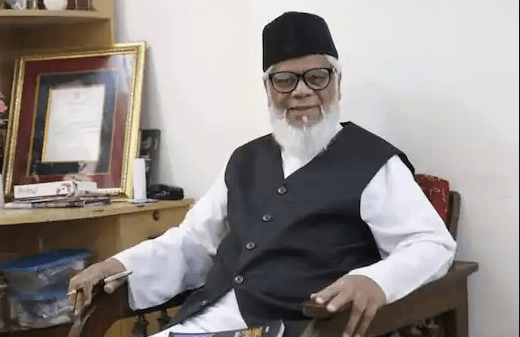
After Wali Rahmani, Anees Chisti also left for heavenly abode

Pune, MAHARASHTRA :

Pune:

Well known educationist, intellectual, thinker and author of several books, Professor Anees Chishti has passed away in Pune at the age of 79.  He was unsung hero of the community who made tremendous contributions in the progress of the community in the country.   He will be also remembered for his dawha works as he translated Islamic literature into local Marathi language. He was a close confidant of late Maulana Abul al Hasan Nadvi who launched All India Tahreek e payam e insaaniyat with an aim to dispel misunderstandings about Islam.   Chisty was one the pillars of this movement.

According to Anees Chishti’s family, he first suffered a heart attack and then later normal infected by COVID-19. During his treatment at Azam campus Unani hospital Pune He took his last breath and was buried on Monday, April 5, after Isha prayers at Muhammad Jamia Hussaini Masjid in the city.

As news of his demise spread, condolence messages flooded on social media. Many important personalities expressed their grief and sorrow who acknowledged the scholarly and social services of Anees Chishti.

Chisti was born on February 6, 1943 in Pune. His father Shakeel Ahmad was a freedom fighter. He was educated in Pune and Sholapur. Pune is considered the brain of Brahminical forces.

Expressing condolences on the demise of Anish Chishti, PA Inamdar administrator of Azam Campus Pune, said his demise is a great  loss to the nation. He said that Anees Chishti was recognized as an authority in Islamic studies and science and literature.

Munawar Pir Bhai from Pune termed the demise of Anis Chishti as a great loss of the society and said that he was a very capable and intelligent person. Traveled to many countries, he had a keen eye on Islam and Allama iqbal. And he described the death of Anis Chishti as his personal loss.

Talha, nephew of Anees Chishti, said that after the death of Maulana Wali Rahmani, he had gone to Lucknow to meet Maulana Rabi Hasni Nadvi.

After returning from the trip, his health deteriorated and on April 5, at around 5.30 pm, he passed away. The personality of Anees Chishti was a person with various attributes.  He was a member of the Majlis-e-Shura of Darul Uloom Nadwa tul Ulema, Lucknow and member of the, All India Muslim Personal Law Board.

He was very close to Maulana Syed Abul Hassan Ali Nadvi, a thinker of Islam, and he was the General Secretary of the All India Tahreek e payam e insaaniyat. The movement was launched in the backdrop of Babri masjid dispute which had been used by the communal forces to spread lies about Muslims and Islam in the country.

He was the author of many Urdu, Marathi and English books. His books have been translated into various languages. He was a connoisseur of calligraphy, a teacher of calligraphy, an Islamic scholar, and an educator. Apart from Urdu, many of his books have been published in Marathi.

Mirza Abdul Qayyum Nadvi, a bookseller and activist from Aurangabad, said that he had spoken to Anis Chishti two days before his death. More than 53 of his books have been published. Anis Chishti was fluent in many languages. These included Urdu, Marathi, Hindi, English, Arabic, Persian and other languages. He was a very good man, a man of knowledge, a good teacher, a good writer, a credible writer, an eloquent speaker, a guest lecturer on the panel of high-ranking training institutes. He has received numerous accolades for his books on education, and books on Muslim freedom fighters .and other books. In many countries, his Urdu and English language books are included in the Syllabus.

He trained soldiers at the Indian Institute of Education, College of Military Engineering Pune. He has delivered sermons and lectures on Islamic and scientific and literary topics in different parts of the country. He is survived by a daughter and four brothers.  Arguably, his demise made the community further poorer as it was in the shocked after Muslim Personal Law Board General Secretary Maulana Mohammad Wali Rahmani in Patna just two days before.

source: http://www.muslimmirror.com / Muslim Mirror / Home> Indian Muslim / by Abdul Bari Masoud / April 07th, 2021

CA Final Jan 2021 Toppers: Mohammed Shabeeb secures AIR 3

Malappuram, KERALA :

The top two positions AIR 1 and AIR 2 have been respectively secured by Bishal Timsina and Noothula Naveen.

CA Final January 2021 Toppers: 

Mohammed Shabeeb of Kerala has secured the All India Rank 3 (AIR 3) position in the Chartered Accountant (CA) Final exams held in the month of January 2021.

The top two positions AIR 1 and AIR 2 have been respectively secured by Bishal Timsina and Noothula Naveen.

Bishal Timsina of Chennai (Tamil Nadu), Noothula Naveen of Karimnagar (Telangana) and Mohammed Shabeeb Malappuram (Kerala) secured the top 3 positions of CA Final January 2021 exams held based on Old Scheme i.e. Old Syllabus.

Bishal bagged 479 marks out of the total 800 marks with a pass percentage of 59.88 whereas Noothula and Shabeeb respectively got 468 (58.50%) and 460 (57.50%) marks.

CA Final results of New and Old schemes were declared by Institute of Chartered Accountants of India (ICAI) last evening.

In CA Final Jan 2021 exam based on New Syllabus, the top 2 positions have been secured by Bhramar Jain of Raipur (Chhattisgarh) and Vaibhav Hariharan of Dombiwali (Maharashtra).

Bhramar Jain has bagged 611 marks out of the total 800 and Vaibhav got 601 marks out of the total 800.

The Institute of Chartered Accountants of India (ICAI) had conducted the CA Final (Old and New Course both) and Foundation exams in the month of January 2021.

The results of CA Final and Foundation both were declared late in the evening Sunday.

Steps to check CA Final, CA Foundation Results

  1. Click here to go to the official website: icaiexam.icai.org.
  2. Click on the Result Tab.
  3. Login using Roll No and Pin or Registration No.
  4. Enter the code as shown.
  5. Click on Check Result button.

The ICAI CA Final and Foundation 2021 results can also be accessed on icaiexam.icai.org, icai.nic.in and caresults.icai.org. Along with the results, ICAI has also published the Merit List.

source: http://www.ummid.com / Ummid.com / Home> Education & Career / by ummid.com news network / March 22nd, 2021