US Military’s First India-Born Female Muslim Chaplain Graduates

U.S.A :

Saleha Jabeen said she was grateful for the opportunity and aware of the responsibility that she has to set an example and show that there is a place in the military for anyone who wants to serve.
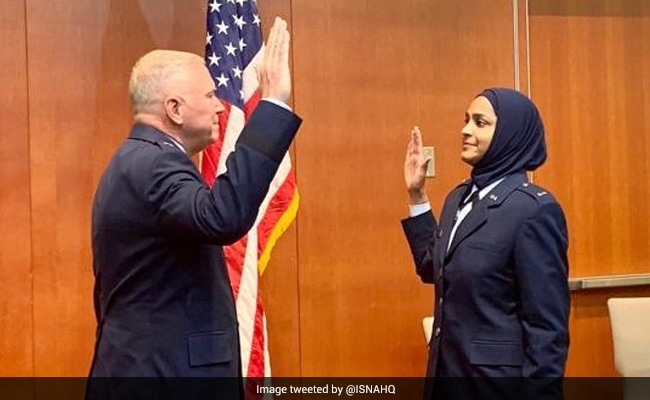
Image result for images US military's 1st India-born female Muslim chaplain graduates from Chaplain College

Washington: 

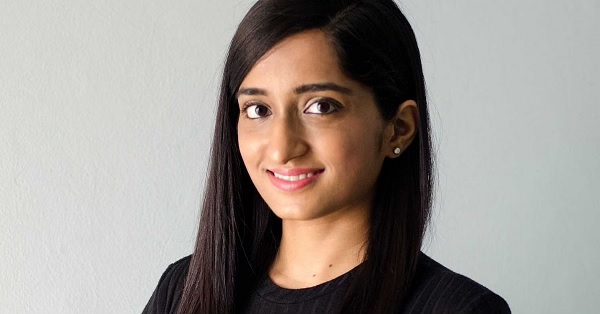
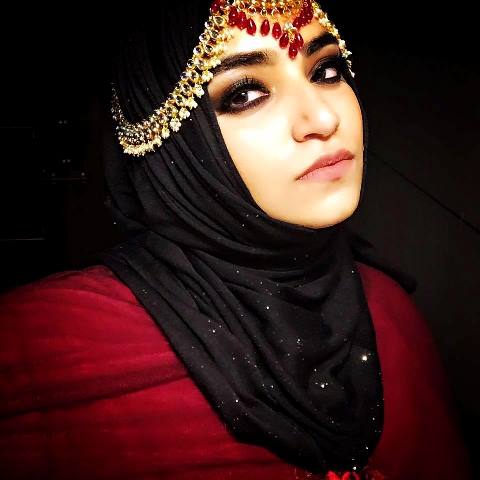
Saleha Jabeen, US military’s first India-born female Muslim chaplain, has graduated from Air Force Basic Chaplain Course, vowing to take her duty as a spiritual mentor very seriously.

The historic graduation ceremony was held on February 5, an official statement said on Wednesday.

Ms Jabeen said she was grateful for the opportunity and aware of the responsibility that she has to set an example and show that there is a place in the military for anyone who wants to serve.

“I did not have to compromise on any of my religious beliefs or convictions. I am surrounded with people who respect me and are willing to receive what I bring to the table as a woman, a faith leader, and an immigrant,” she said.

“I am provided with numerous opportunities to learn and develop skills that best equip me to be a successful officer and a chaplain in a pluralistic environment,” Ms Jabeen said.

Ms Jabeen was commissioned in December as a Second Lieutenant at the Catholic Theological Union in Chicago, becoming the first female Muslim chaplain in the Department of Defense. She came to the United States 14 years ago as an international student.

“I get to provide spiritual care to all service members, guardians and families and advise the commanders on religious and moral matters regardless of my faith, ethnicity or gender. Like our boss says, it has never been a better time to serve as a chaplain in the US Air Force Chaplain Corps,” she said.

Capt. John Richardson, Air Force Chaplain Corps College staff chaplain, said that his goal is to create chaplains who are ready to provide front-line ministry upon graduation.

“They are trained to lead the units they serve spiritually. The bottom line is to care for Airmen – every single Airman. When they care for Airmen in a professional way, every other aspect of our calling falls into place: advising leaders and providing for the religious needs of our force,” Captain Richardson said.

Capt. Mara Title, Air Force Chaplain Corps College staff chaplain, said Ms Jabeen’s addition to the chaplain corps will be of great benefit to everyone.

“The Air Force Chaplain Corps endeavours to promote diversity in all respects,” Title said.

“Chaplain Saleha Jabeen’s presence enables an even broader scope of spiritual care for our Airmen, and for this we are very grateful. She is as determined to take on the role of chaplain as she is kind, caring and compassionate. We are thrilled to have had the opportunity for her to graduate with the class of BCC 21A,” she said.

Ms Jabeen said she was passionate about her role as a chaplain, and takes her duty as a spiritual mentor very seriously.

“We all have a purpose that is specifically meant for us to fulfill,” she said.

“We must listen to our heart and follow our conviction. It is important to have people in our lives who model that for us. Choose that kind of mentorship and choose good companionship. I just want people to remember that God, or higher power or the values that people uphold, remind us that we all are created with a plan: to become the best versions of ourselves,” she said.

According to her LinkedIn profile, Ms Jabeen completed her BA in Business and Economics at North Park University, followed by an MA in Theology-Interreligious Dialogue from Catholic Theological Union and course in counselling psychology from Trinity Christian College.

source: http://www.ndtv.com / NDTV / Home> Indians Abroad / by Press Trust of India / February 18th, 2021
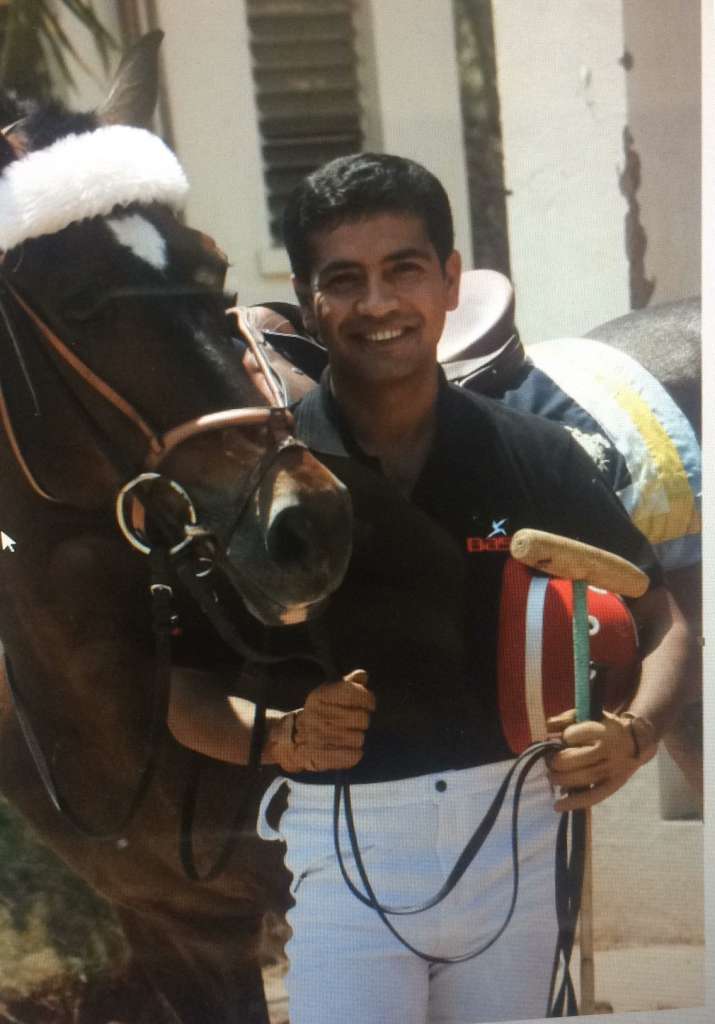
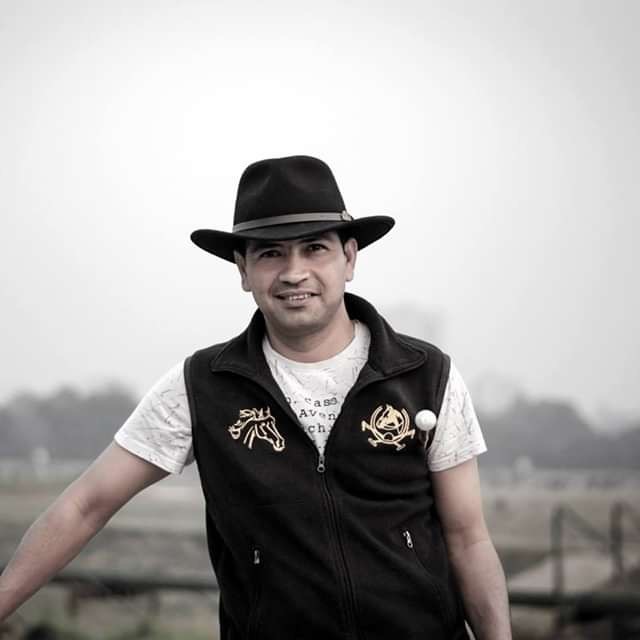
‘Keep Calm & Ride On’: Meet Lt Colonel Faiz Siddiqui, and delve deeper into the art of horse riding

xxx

Keep Calm and Ride On! Well, take a cue from this in life. And that’s what Lt Colonel Faiz Siddiqui’s book is also all about — horses.

Keep Calm & Ride On’: Meet Lt Colonel Faiz Siddiqui, and delve deeper into the art of horse riding

In times when we keep on telling ourselves how dogs are man’s best friend, we must not forget horses. Oh wait, hold your horses…quite literally. 

Lt Colonel Faiz Siddiqui, an internationally certified coach, has come out with his book: ‘Keep Calm and Ride On’. The book delves deeper into the art of horse riding, especially at a time when parents are struggling hard to move out their children from mobile screen and experience real life. 

Keep Calm & Ride On!

The book emphasises the importance of horses and horse riding. Infact, it is quite a part of every institute where future leaders are trained, be it Army, IAS or IPS. 

This book gives an easy and interesting insight into the world of horses and induces a desire to experience them in real life. It covers all the important aspects which a non-rider or a beginner needs to know without overwhelming him/her with avoidable and boring details. 

source: http://www.indiatvnews.com / IndiaTV / Home> English News / by India TV News Desk, New Delhi / September 27th, 2019

J&K girls are flying high, as pilots

JAMMU & KASHMIR :

Kaneez Fatima.

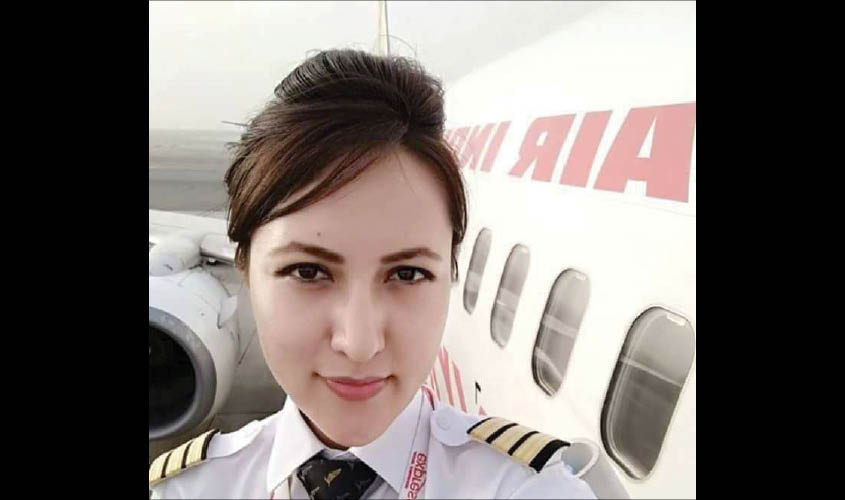
In the recent past, Jammu and Kashmir has been giving to the country several women professional pilots—young women who have struggled hard to get their wings to fly. The latest to join the club is Kaneez Fatima who became the second lady from Ladakh to become a pilot.

Talking to The Sunday Guardian, her mother Shakeela Bano said that her daughter’s success was because of her, the mother’s, struggle as she had single-handedly brought up Kaneez and provided her with the required education. Shakeela was divorced at a young age and devoted her life to bring up her two daughters.

Shakeela said that she saw a spark in her daughter and was very keen for her education. “I got myself transferred from Ladakh to Srinagar only for the better education of my daughter. I gave her my best as a single parent, I tried my best to give her everything she needed,” she told this newspaper.

She said she was satisfied that her daughters were settled in their lives and added that the burden of her bank loan for their education was no longer occupying her mind. Her elder daughter Nahida is an engineer with HAL. She did her engineering from Srinagar.

“I took a huge loan from a bank in Srinagar for the education of my daughters. Now it is all over. I have achieved what I wanted for my daughters,” said a smiling Shakeela. She said that she could get her daughter admitted to the Government Aviation Training Institute at Bhubaneswar, Odisha. Kaneez, according to her mother, went through a six-year training course and subsequent flying experience.

According to Shakeela, another girl from Leh was so inspired by her daughter’s struggle that she too got herself enrolled for training in the same institute.

J&K came into prominence when Captain Tanvi Raina became a pilot. It was followed by other success stories of women pilots Ayesha Aziz and Iram Habib. The state got its first Muslim pilot Hina Masood, who is working with Air India now, and belongs to Ladakh. Like Hina, Kaneez has also joined Air India. Ayesha is flying fighter jets and has roots in Kashmir as her mother is from the Valley.

source: http://www.sundaygurardianlive.com / TSG – Sunday Guardian Live / Home> News / by Noor ul Qamrain / September 22nd, 2018

Jamia Millia Prof launches book on Covid-19 pandemic, therapy

NEW DELHI :

Compiled by Parveen and her research group, this book is for PhD, MSc students, research scholars

New Delhi: ‘100’ year journey of Jamia, today Shatabdi Foundation Day

New Delhi:

 Jamia Millia Islamia has come out with scientific information and research regarding the coronavirus pandemic. Shama Parveen, an associate professor at Jamia university, has made public this information related to the Covid-19 pandemic through a special book.

The book describes anti-virals and other drugs, natural compounds and corona vaccine.

The coronavirus pandemic has affected almost every part of the world. This has resulted in the loss of lakhs of lives. In these difficult times, the book on ‘The Covid-19 Pandemic: Epidemiology, Molecular Biology and Therapy‘ by Shama Parveen provides readers with a comprehensive description of the Covid-19 pandemic, Jamia Millia Islamia said in a statement.

Parveen is an associate professor at the Centre for Interdisciplinary Research and Basic Sciences at Jamia Millia Islamia in New Delhi. She completed her Ph.D (Microbiology) in ‘Molecular Epidemiology of Respiratory Syncytial Virus’ from the Department of Microbiology, All India Institute of Medical Sciences (AIIMS), New Delhi.

She is also involved in clinical and basic research in the molecular biology of human viruses such as dengue, chikunguniya, zika, hepatitis and respiratory syncytial virus and now SARS-CoV-2.

Parveen said:

“The book is divided into 11 chapters focusing on various aspects of Covid-19. This includes topics such as pathogens (morphology, genome, protein, structural protein genes and replication), global epidemiology, transmission, risk factors, clinical expression, management, immune response, and pathogenesis.

“The book also describes the diagnosis of Covid-19, therapeutic agents (antiviral and other drugs, natural compound) and corona vaccine.”

Compiled by Parveen and her research group, this book is for PhD, MSc students, research scholars, post-doctoral fellowship and colleagues published by Bentham Science, Singapore, and is also available online.

Her work on clinical research is concerned with the analysis of viral strains around the world, focusing on their changing evolutionary potential and oncological epidemiology. Basic research involves cloning, expression, purification and structural characterization of various viral proteins and identification of related potential inhibitors.

Parveen has published more than 50 papers in journals of international repute. She was awarded the prestigious “Sayeeda Begum Woman Scientist Prize” in 2018 for her significant scientific contribution. She is also a member of the National Academy of Sciences India (NASI), Allahabad

source: http://www.ummid.com / Ummid.com / Home> India / by IANS / February 06th, 2021

Woman DSP Shabera Ansari in MP a Role Model for Youngsters from Muslim Families

Ballia, UTTAR PRADESH / Indore, MADHYA PRADESH :

Shabera Ansari.

New Delhi :

Parents in middle-class Muslim families generally believe that their children would hardly get a government job, hence, they find it better to engage them in some work rather than letting them pursuing studies. But a young woman from a middle-class family has busted such myths by becoming the Deputy Superintendent of Police.

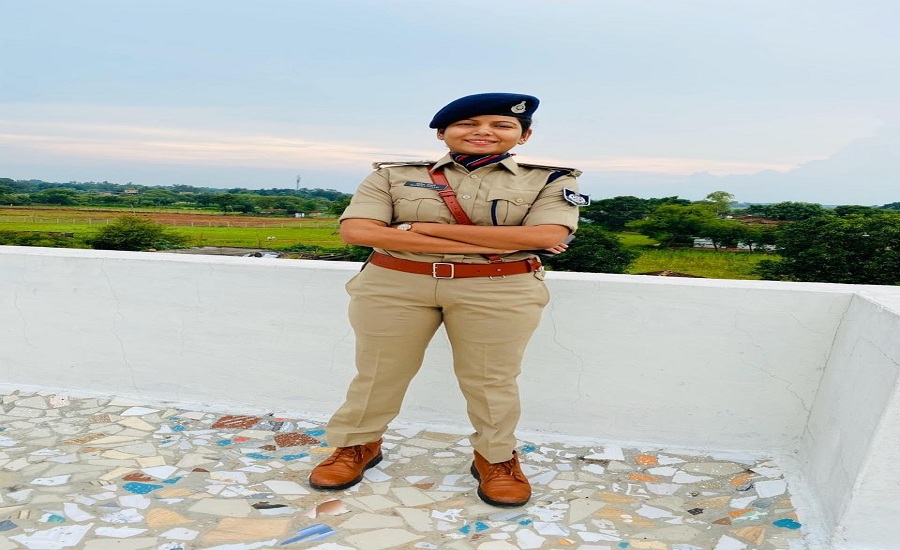
Shabera Ansari, a resident of Indore, is posted as DSP (Women’s Cell) at Dewas in Madhya Pradesh and her father is posted as a Sub-Inspector at a police station in Indore.

Shabera said she had a normal childhood and there were never big dreams to pursue. When she went to college, at the age of 19, marriage proposals started coming in but fire in the belly to do something egged her on. Finally, she joined the police forces and became a DSP. Currently, she said, she is preparing for civil services exams.

The young woman said that soon after passing her out of a government school in Indore, she enrolled in a college and started preparing for Union Public Service Commission examinations along with her regular studies.

She was selected as Sub-Inspector in 2013, and in 2018 posted as Trainee DSP in Sidhi.

Shabera’s family originally hails from Ballia in Uttar Pradesh, but settled down in Indore about 30 years ago due to his father’s job in state police.

“I was an average student in school and also failed in mathematics once,” she told IANS with a chuckle.

“A marriage proposal came when I was just 19. I was scared and decided to do something. I started my journey and never looked back. I started preparation for the state government services during college and tasted success in the first attempt… I have continued studying ever since,” she said with confidence.

Shabera further added: “My mother always supported me. Initially, it was not clear if I will opt to join the police, though there was always an interest since my father is in police service.”

Surprisingly, Shabera is the first woman in her family to crack state civil service exam and has now become an inspiration for her community.

Many times, she was honoured as chief guest in various functions, including school programmes where she interact with children who are always curious to know about her journey.

“I always try to encourage children and motivate them to do something in life,” Shabera said.

“Little children seem very fond of taking selfies with me,” she smiled.

She said: “I often do counselling of children of Muslim families, especially boys. I tell everyone to trust themselves and study seriously; hardwork will definitely change things.”

Shabera said she also got to learn a lot from her father. It could be a coincidence that Shabera was incharge of a police station during lockdown where her father was posted.

In fact, her father had gone for some work to Uttar Pradesh when the lockdown was imposed and he got stuck. Shabera tried to somehow bring her father back but to no avail. Eventually, the police authorities issued direction that he could do duty from wherever he was stuck.

She said that she had many times gone out on patrol duty at night with her father. However, once back home, she used to cook for him.

She said that her father respects her as an officer but Shabera has to many times remind him that she is an officer at office not at home. -IANS

source: http://www.clarionindia.net / Clarion India / Home> Featured / by Muhammed Suaib / February 09th, 2021

UTI appoints Imtaiyazur Rahman as full-time CEO

Mumbai, MAHARASHTRA :

Imtaiyazur Rahman, CEO, UTI AMC (File Image)

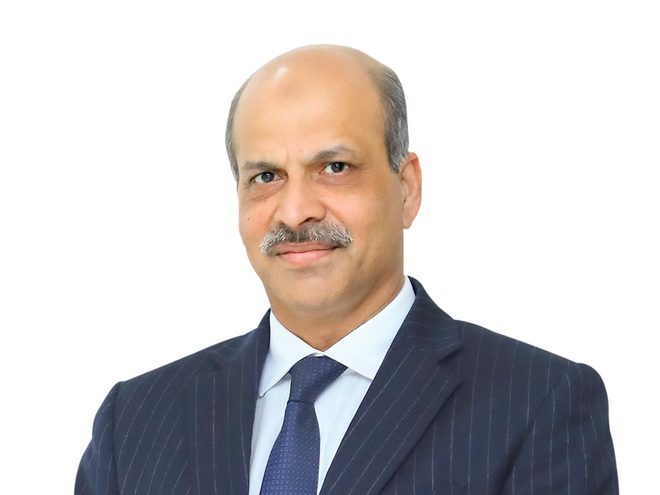
UTI AMC board on Saturday appointed Imtaiyazur Rahman as the Chief Executive Officer. He has been the acting CEO of the company for nearly two years.

The post was vacant since Leo Puri completed his five-year term as CEO of UTI AMC. Group President and Chief Finance Officer Rahman was appointed as acting Chief Executive Officer after Puri’s term ended in August 2018.

Rahman joined the UTI Group in 1998 and is with UTI since 2003.  Working with earlier Chairmen M Damodaran and UK Sinha, he was involved in the transformation of the organisation after the restructuring of the erstwhile Unit Trust of India.

He was CFO of the company and has headed diverse functions, including international business.

“This appointment brings stability in the top management of the company especially since it is planning to launch its IPO shortly and addresses the concerns of SEBI on the CEO position which was vacant for quite some time,” UTI AMC said in a press release dated June 13.

source: http://www.moneycontrol.com / Money Control / Home> News> Business / by Money Control News / June 13th, 2020

Meet the Lady Behind India’s First Incubator for Indian Muslim Women

DELHI / NRC :

Ruha Shadab is a doctor and a graduate from the Harvard Kennedy School where she was on a full-tuition scholarship. Shadab has worked as a doctor in low-income neighborhoods in Delhi and later moved on to work on systemic issues of healthcare, as a part of the Government of India.

LedBy, India’s first incubator for Indian Muslim Women helps them by providing leadership workshops, 360 degree advisory framework, and executive coaching.

Dr Ruha Shadab (30) is the founder of LedBy Foundation, India’s first and only leadership incubator focused on empowering Indian Muslim Women by providing leadership experiences to undergraduates and postgraduates. Launched in 2019, LedBy was incubated at Harvard University and was pre-seed funded by them as well.

Dr Ruha has been quite an achiever all her life – she pursued her medical degree, worked as a physician for a few years, then decided to join public health and worked at the Clinton Health Access Initiative (CHAI), worked with NITI Aayog and then made her way to Harvard with a full-tuition scholarship to pursue a master’s degree in public policy. At Harvard, Dr Ruha realised the need to do something for Indian Muslim women given the specific challenges that they faced, and also found the medium to address the problem.

From a religious majority to a religious minority

To understand why Dr Ruha felt the need to start an initiative for Indian Muslim women, it is imperative to understand her early influences.

While Dr Ruha is originally from India, she was born and raised in Saudi Arabia and she spent the first decade of her life there before moving to Delhi/NCR.

Narrating an incident that left a deep impact on her, which eventually led her to start this initiative, she says, “Twenty years ago, it was on Diwali that my family and I moved back to India. While driving from the airport to our home I saw every house on the way lit up and children on the streets bursting fire crackers. This suddenly took me back to the Diwali’s in Saudi and I realised how my friends there, the minority, never celebrated it in this way.” After a few years, she saw Eid in a similar light as Diwali.

She says, “In Saudi, as part of a monolithic society, one does not even think of what the minority is feeling. And then I moved to India where so many things just hit me so hard.” That is when she understood what being a Muslim woman, especially in a multicultural society like India, felt like.

It was not like there were not enough Muslim women, but they were hard to find in the mainstream.

“It was tiring, after a point of time to be the only Muslim woman in school, college, workplace. There was no one who shared a similar background as me whom I could look up to and aspire to be and that is what I wanted to change,” she says. During Dr Ruha’s stint as a clinical physician, she says, “At the hospital I worked at, I would see so many young Muslim girls with large families. Without saying it was right or wrong, what I saw was that there was an issue that needed to be addressed.”

Dr Ruha believes that there is a lot of talent in them [Indian Muslim women] but what they lack is 3 A’s: agency, access, and avenues. LedBy is looking to change that. If you have the privilege of knowing, you do not have the luxury of not doing,” says Dr Ruha.

LedBy works closely with high potential college-going Muslim women in India and provides them with three things – leadership workshops, 360* advisory framework, and executive coaching. “For all these three things we have very skilled women, across regions and religions, on-board to help the younger women realise and achieve their potential,” says Dr Ruha.

“We have been able to get coaches, mentors, and facilitators from across the globe. Being a virtual program helps breaks barriers,” she says. It is a summer program of four months in which 24 women are selected on merit. To be eligible to apply for this programme, you must identify yourself as an Indian Muslim woman, no more than two years away from completing a full-time undergraduate degree (that means, is in 3rd or 4th years of a 4-year program; 2nd or 3rd year of a 3-year program) or are in a full-time postgraduate program of one or two years duration, and physically reside in India.

For the 24 women who were part of the first cohort – what stood out were the connections that they made and the validation that their ideas and dreams received from others at the programme. While for Ammara Gul Qaisar, a student at Lady Shri Ram College, the programme “represents the power of human connections”, for Sahreen Shamim the programme allowed her a chance to delve into her dreams and find ways of realising them.

With an office based in Noida, Dr Ruha says that everything that they do is virtual and in a sense COVID-19 only helped in pushing it towards being online.

source: http://www.maeeshat.in / Maaeshat.in / Home> Entrepeneurship / January 11th, 2021

Hana Bawa : The artist who paints emotions

Mumbai, MAHARSHTRA :

Paintings by Hana 2

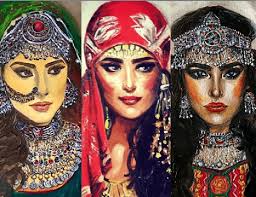
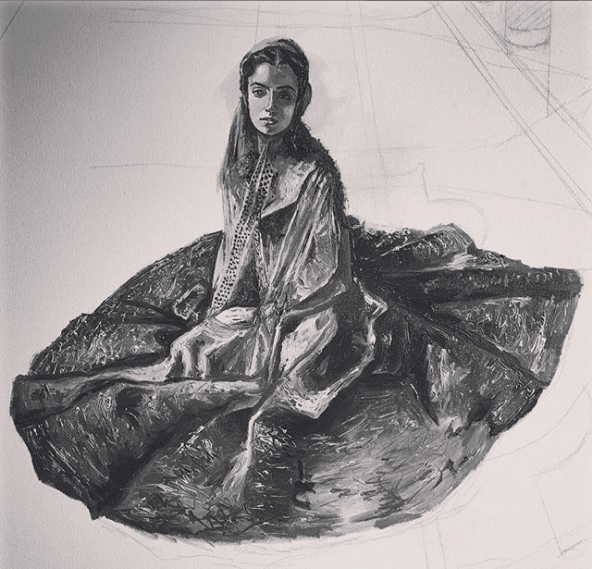
Five full minutes is what it takes for me to tear myself away from the allure of this painting I find myself staring at. Decked up in traditional jewellery and dress, it’s a portrait of a girl, looking back as if beckoning you to follow her, and yet there is nothing beyond her. Complete unto itself, the portrait doesn’t need a backdrop for contextualization. Your eyes must not travel elsewhere and the intrigue in her eyes ensures that it does not. The bold strokes defining dropped shoulders, tousled hair, lips that might break into a smile any minute, and eyes gazing intently at some unknown familiarity- Hana Bawa, a Mumbai based artist, paints the stuff of dreams. It’s not just the technical perfection of her paintings but the sheer magic of their intrigue that pulls you in.

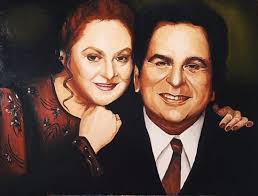
Dilip Kumar and Saira Banu : By Hana Bawa

A 27 year old single mother, Bawa is a self- taught painter. Almost like that of a child prodigy, the story of her artistic journey begins with her perfectly complex childhood drawings. She was already drawing animal figures at the age of seven years. Born into a family of largely sportspersons, Bawa stands out for her artistic talent that finds some resonance only with her grandmother’s interest in crafting. Thanks to an unconventional family background, she never had to face the typical Indian parents’ pressures and diktats to pursue only a certain kind of career, and she remembers not to forget it, as she adds “I am immensely thankful to my family for being extremely supportive of my decisions and career choices throughout.” A graduate in sociology, she also pursued a fashion designing course but an intense passion for art propelled her towards the career path she eventually ended up paving for herself. It is her philosophy of “grow(ing) in whatever you choose to do” that makes her exclaim “I’m still learning” even after having sold numerous pieces of her stunning art.

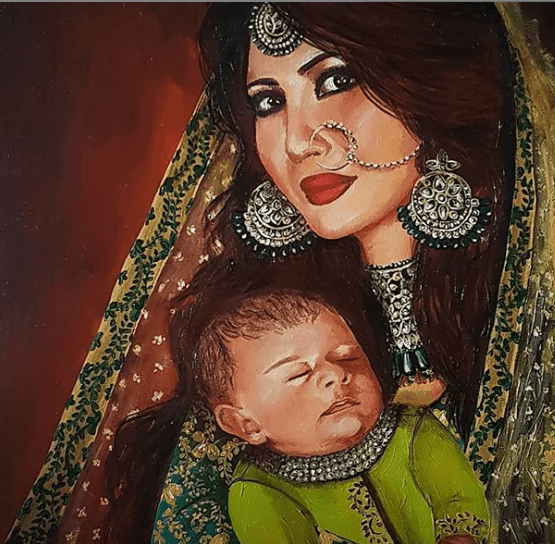
A mother and her baby

Hana Bawa has not just made commissioned artwork, but her paintings have also been exhibited in Minnesota (USA) apart from various art galleries in India, and Afghanistan – no mean feat for an artist who climbed this high sans a formal art training. When asked about her participation in the said exhibition on the theme of ‘Afghan Culture’, she tells me that it came about largely because of the fame she found in Afghanistan. Well- known in the foreign territory for her detailed paintings depicting Afghan culture, Bawa was asked by the curators of the exhibition to send her artwork that celebrated it. Following naturally from this impressive success story, my questions turn back, once again to her journey and how she made it this far without ever receiving a formal training. Probed further, she reveals that she learnt to colour, quite late in her life (at the age of seventeen) and that too, from the internet. Colours opened up for her, a richer and brighter world that was otherwise largely inaccessible. Colours also lent an emotive dimension to her art, because now she could use different kinds of strokes as well to create different effects, as is evident from her paintings.

A mosque by Hana Bawa

Hana Bawa’s bold and confident strokes sweeping the surface of the canvas neatly are characteristically hers, and hence find a place in almost all the portraits. Asked about the painters who inspire her, Bawa counts three off the top of her head, out of which it (rather unsurprisingly) is Vincent Van Gogh who receives the first mention. Julie Dumbarton, a Scottish landscape painter and another Turkish painter Remzi Taskiren are the other two artists she mentions. Though widely separated from each other in terms of their style, cultural background and subjects they choose for their paintings, all of these artists excel in their skilful use of bold strokes. Van Gogh – in creation of post- impressionistic art that laid the foundation for modern art; Dumbarton in her effective employment of the technique in order to create a riot of colours on a harmonious landscape and Taskiran in his deployment of bold strokes in his portrait paintings to create an effect not very different from what Bawa’s achieves. Apart from these artists, Bawa also adds ‘cultures from around the world’ and ‘women’ to her list of influences and inspirations. With so much for a thought, I expect to hear of the politics that informs her paintings. Painting mostly women from middle- eastern cultures I assume carries a certain kind of latent political symbology, given the kind of times we are living in; but Hana vehemently denies any conscious political underpinnings to her alluring portraits.

She says “No, nothing political. I’m just drawn to these cultures because I cannot actually experience them, so I live them through my paintings and also allow others to access the same through them. For this reason, I do not paint portraits, I try to paint emotions. So, I focus a lot on the eyes – the windows to the soul. It is the look that captivates, not the colours, or the sketch. I paint anything that has a culture and meaning associated with it.”

Hana Bawa

We end the conversation with Bawa telling me about her four year old showing exactly the same skills as she did at his age, if not better. As I sit down to write this, and the world witnesses Bawa’s phenomenal skill and artistic genius, I smile with the hope that there’s another young life who might further enliven the world she has created and aims to create through her art – a world of emotions, passion, dreams and intrigue.

Click here  to follow Hana Bawa on  Instagram.

source: http://www.muslimmirror.com / Muslim Mirror / Home> Featured / by Iqra Raza / November 05th, 2019

Ali Manikfan: The versatile genius without formal education

Minicoy (Lakshwadeep) / Olavanna (Kozhikode), KERALA :

Another major interest of Manikfan is Lunar calendar and he has built one calendar based on the New moon and on astronomical algorithms

Thiruvananthapuram :

The locals of Olavanna in Kozhikode used to see an upright, lean person wearing Arabian clothing walking towards his home. They only knew that he was a retired official from Central Marine Fisheries Research Institute (CMFRI) living here and was from Lakshadweep.

But, when television screens flashed the name of Ali Manikfan among the Padma awardees, the people were lost in words as to who they had ignored albeit unknowingly.

Mohammed Basheer and P.R. Ramachandran, employees of a private firm in Olavanna said, “He is lean and frail but walked straight and with a twinkle in his eyes but we never knew who he was until the news flashed that he was awarded the Padma Shri.”

Manikfan, who is currently living in a rented accommodation along with his wife in Olavanna, was sent to Kannur in Kerala for studies but after fifth standard he did not pursue formal education and returned to Minicoy, his home town in Lakshwadeep Islands.

He was a keen observer, knew almost every fish that inhabited the sea off the Minicoy islands and this observation turned into a passion for fishes. This motivated him to study more about fishes, their origin and everything in and out about them.

The research in fishes got him a job at the CMFRI where he discovered a rare fish which has been named after him – Abudefduf Manikfani.

He can speak, read and write 14 languages including French, German, English, Arabic and other languages and uses seven of them to communicate.

In 1981, he was invited to Oman to make a ship, a replica of the one believed to be used by Sinbad, the Sailor, during his voyages. He was invited by the Irish voyager Tim Sirven who wanted it to be made without metals. Ali and his made a 27-m long ship using timber and coir in an year. Named “Sohar” after the town of Sohar in Oman. Tim and his team travelled 9,000 km from Oman to China on it and it is now kept in a museum in Oman.

Manikfan told IANS, “Those days metal was not used for making ships and hence we had to replicate one using timber. This ship sailed up to China from Oman and is still kept at Oman museum.”

Another major interest of Manikfan is Lunar calendar and he has built one calendar based on the New moon and on astronomical algorithms.

The multifaceted personality had invented a bicycle with roller motor and travelled to New Delhi along with his son Musa.

Another of his interest is agriculture and he has converted a barren 15 acre land at Tirunelveli in Tamil Nadu into a lush green farm land using indigenous methods of cultivation. He also built a residential premises using traditional materials.

He is now basking in the glory of Padma Shri award but local people vouch that there is no difference in his attitude even after this honour.

Ramachandran said, “He is a great personality and down to earth, we never knew who he was until media reported about him. The local people are planning a grand programme to felicitate him.”

–IANS

source: http://www.muslimmirror.com / Muslim Mirror / Home> Featured / by Muslim Mirror / February 07th, 2021

10th trustee appointed for Ayodhya mosque project

Ayodhya, UTTAR PRADESH :

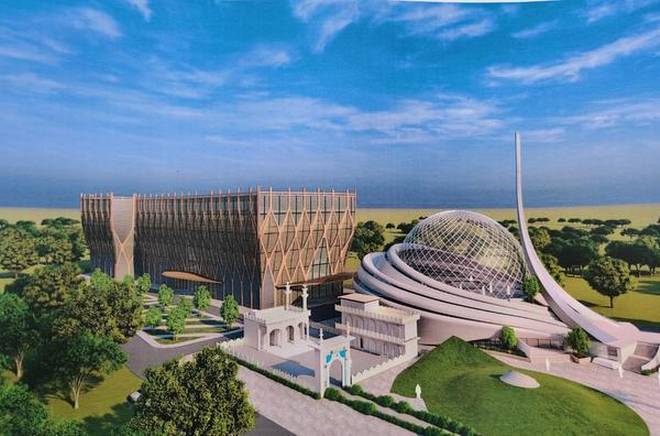
The design of a mosque and a hospital to be built on a five-acre land in Ayodhya’s Dhannipur village was unveiled on December 19, 2020. Photo: Twitter/@IndoIslamicCF  

The new mosque will be bigger than Babri Masjid, says war veteran Mohammad Afzaal Ahmad Khan

The new mosque will be bigger than Babri Masjid, says war veteran Mohammad Afzaal Ahmad Khan

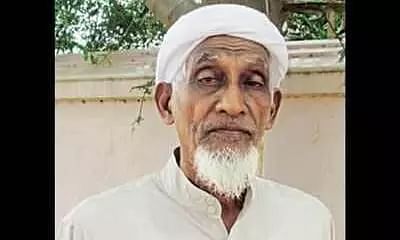
The trust entrusted with building a mosque and hospital in Ayodhya’s Dhannipur village on Tuesday nominated war veteran Mohammad Afzaal Ahmad Khan as its tenth trustee, officials said.

The Dhannipur mosque project was formally launched on Republic Day at Dhannipur, around 24 km from the Ram Janmabhoomi, exactly six months after the Sunni Waqf Board constituted the mosque’s trust — Indo-Islamic Cultural Foundation (IICF).

The trust was constituted following the 2019 Supreme Court verdict that backed the construction of a temple at the Ram Janmabhoomi and ruled that an alternative five-acre plot be found for a mosque in Ayodhya in lieu of the Babri Masjid.

The blueprint of the mosque complex, which includes a hospital, was unveiled on December 19.

In a virtual meeting of the IICF in Lucknow, it unanimously nominated 80-year-old Khan as its tenth trustee, officials said.

Khan is a veteran of the 1965 and 1971 wars and a recipient of the Sena Medal. He is also a recipient of the President Award – Samaj Ratan.

The Ayodhya Mosque project of the IICF is based on serving humanity. The hospital will be the centre stage of the project, Khan said.

“We will provide free of cost treatment to the ailing poor through this hospital, and our community kitchen, another important part of our project, will feed at least 1,000 people daily, and the research centre that is also part of the project will be dedicated to great freedom fighter of Awadh Maulvi Ahmadullah Shah,” he said.

The new mosque will be bigger than Babri Masjid, but won’t be a lookalike of the structure which once stood in Ramjanmabhoomi premises.

Meanwhile, the Indo-Islamic Cultural Research Centre, to be built by Uttar Pradesh Sunni Central Waqf Board in Ayodhya, would be named after freedom fighter who led the first war of Independence in the Avadh region, Maulvi Ahmadullah Shah.

The decision was taken in the IICF meeting, spokesperson of the trust, Athar Hussain said.

The research centre will have a museum, library and publications to showcase Indo-Islamic culture of shared struggle and accomplishments of Hindus and Muslims of India, he said.

Shah had led the first war of Independence in 1857 in the Avadh region.

The spokesperson said that as the Allahabad High Court has dismissed a petition filed by two Delhi-based sisters claiming ownership of the five-acre land at Dhannipur village in Ayodhya, the process to speed up the project will begin now.

source: http://www.thehindu.com / The Hindu / Home> News> National / by PTI / Ayodya, Lucknow / February 10th, 2021