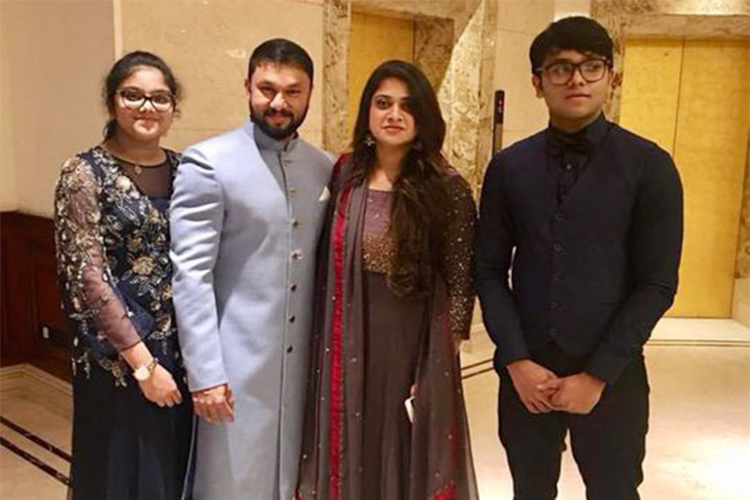
She almost did not become a Doctor; but now Dr Farida Ghoghawala helps thousands of women for free

Ahmedabad, GUJARAT / Fort Myers (FLORIDA) , U S A :
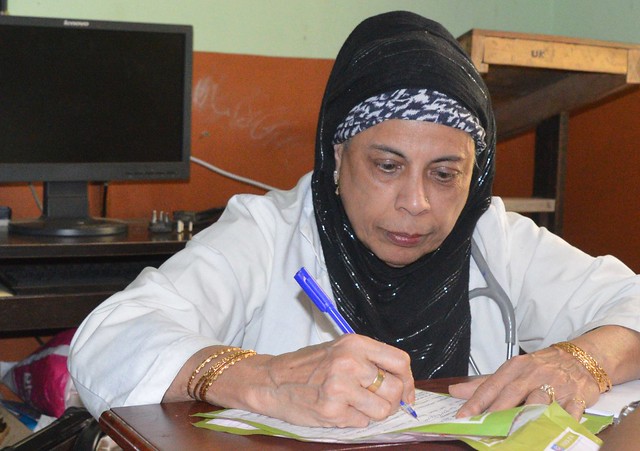
Dr Farida Ghoghawala.

Fort Meyers, Florida: 

For most professionals, 60 is the age when they are expected to take a backseat, relax, and retire. But then, most professionals are unlikely to have the zeal of Dr Farida Ghoghawala. She might have officially retired in 2000, but since then, the 72-year-old obstetrician-gynaecologist, who is now a US citizen, has travelled extensively in India, Philippines and Jordan to treat women who can’t afford quality health care. What is even more commendable that she offers her service for free, paying for her own travel and food, only to serve humanity.

After retiring from her practice in 2000, Dr. Farida started volunteering for health programs. In 2012, she came to India to help in a health initiative organised by Indian Muslims Relief and Charities and has been visiting every year since then. Since 2015, she has been spending six months in India doing medical activities, treating and providing quality medical care to poor and low income women, free of cost.

Her dedication to women who cannot afford treatment comes partly from dire financial constraints during her childhood. Dr Farida was born in a low income class family in Ahmadabad, Gujarat in 1944 to Mohammad Usman, who worked in a book-binding center and Zeenat-un-Nisa,a home maker. She did her primary education in a neighborhood Government-run Urdu elementary School. However, her parents asked her to drop out, as they weren’t much educated and wanted her to instead focus on domestic chores.
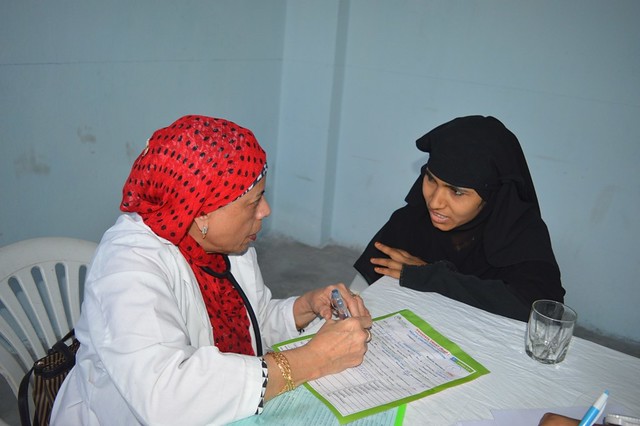
Fortunately, her maternal uncle came to her rescue. He took her with him and got her admitted into an English school in 5th grade. Having studied in Urdu medium school, English was quite difficult to comprehend for the little girl, but she was full of enthusiasm when it comes to studies and joined Kindergarten classes to learn the subject.

After years of struggle and getting admission into B. J. Medical College Ahmedabad, she finally graduated in October 1967. But fate had better in store for her. “Mamu (maternal uncle) insisted that i should take the US entrance exam called Educational Commission for Foreign Medical Graduates (ECFMG). However, there was a small catch. India had closed centers for ECFMG exam to prevent physician outflow to foreign countries. So, Mamu sent me to Ceylon for the exam by borrowing application fee of 15 dollars from the Physician son of his business colleague, who was doing residency in Cleveland Ohio,” recalls Dr. Farida.

Finally, she was selected in four-year residency program in Saint Johns Hospital of Cleveland Ohio in 1970.With 15 dollars in hand Dr.Farida landed in United states.
“That time was such a struggle for me. I use to sleep in hospital call room,” she recalls.
After finishing her residency, she started private practice in Fort Myers Florida and settled their along with one daughter and a son, who is now working as an ophthalmologist in Texas.

Dr. Farida has also served during Iraq-US war in the United States Army. But she continued to have one wish.

“Despite all such work something was amiss in my life. I always wanted to go back to India, because my childhood memories and our poverty and that of other people living in the neighborhood used to haunt me and I wanted to do something for them, especially the women who used to suffer silently,” says Dr. Farida.

Dr. Farida came for treating poor patients in India in year 2012, with IMRC, which conducts an annual India Health Initiative for treating poor patients in India for free.

“Finally in 2012, I first came to India as a volunteer doctor for IMRC, organizing free medical camps across various parts of India. They are really doing a great job in India,” she added.
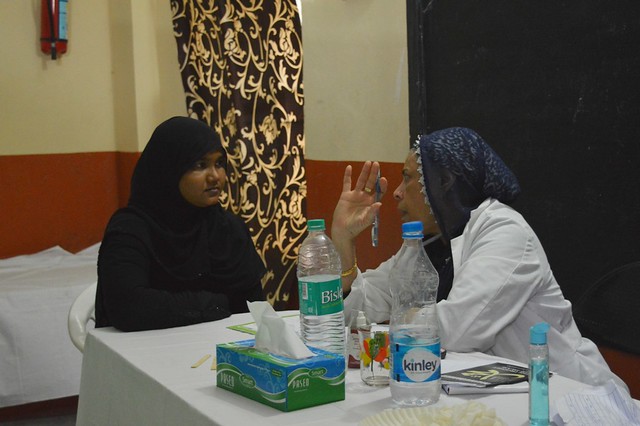
The India Health Initiative (IHI) was started by IMRC in 2010. Every year, doctors from the US volunteer for this health initiative by rendering their services free of cost. Since its inception, the organization has successfully conducted seven India Health Initiatives comprising of medical camps across different rural areas, poor localities and slums in India.

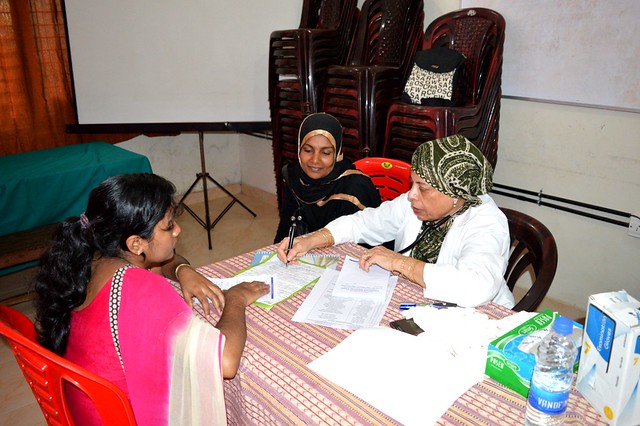
Dr. Farida, through her efforts, has treated thousands of female patients in Uttar Pradesh, Telangana, Kerala, Karnataka, Rajasthan, Assam and Haryana in the last four years.

“Really, the experience has been so fulfilling that after my first visit in 2012, I started coming to India every year and now Alhamdulillah, every year, I spend six months in India,” she says.


While sharing her experience, she further said, “Women here get exploited by local medical fraternity due to lack of awareness, especially in fertility treatment. I am educating them on when to say no and how to get proper treatment. Apart from that, many ailments arise in women due to nutritional deficiency. Women are the caretaker of the whole family if we educate them about health issues then we are saving families from chronic diseases.”

Earlier this year Dr. Farida travelled with a team of 10 US based doctors volunteering for IMRC and treated patients in slums of Hyderabad and villages in Kozhikode district of Kerala.


She has also volunteered and worked for four months since November, 2015 in a low cost medical care clinic in Bangalore, Karnataka.

On August 18, Dr. Farida will embark on a new mission, but to a new country and new people, whom she considers most deserving. She is going to Amman in Jordan with IMANA Syrian Refugee care mission, where she will treat refugee women.

Later this year she is again coming to India to be the part of IMRC’s health initiatives and also treat poor women in Jammu and Kashmir. This might seem daunting tasks for many, but for Dr. Farida, this is what she does best, and she is unlikely to stop anytime soon.

source: http://www.twocircles.net / TwoCircles.net / Home> Indian Muslim> TCN Positive / August 12th, 2016

Finding the Timeless and the Universal in Naiyer Masud’s Short Stories

Lucknow, UTTAR PRADESH :

Masud is the author of four acclaimed collections of short stories in Urdu. Most of his stories meticulously detail everyday feelings and sensations, but in ways that render them unfamiliar, uncomfortable and new. COURTESY SABEEHA KHATOON

“Destitutes Compound,” a story by Naiyer Masud, is about a young man who leaves his home after an argument with his father. After his only friend dies, the man concludes that it is time for him to return to his family. As he makes preparations for his homecoming, he realises that the children he met when he first arrived at the compound now have greying hair. When he returns, he learns that both his parents have passed away, but an old, blind grandmother still sits in the house’s entrance cracking betel nuts, just as she had when he left. The image of the grandmother rhythmically cracking betel nuts has stayed with me for years. To me, she symbolises time itself, resting still, awaiting our return.

Masud is the author of four acclaimed collections of short stories in Urdu. Most of his stories meticulously detail everyday feelings and sensations, but in ways that render them unfamiliar, uncomfortable and new. The narrator of “Ba’i’s Mourners” is consumed by a fear of brides when he learns of one who died from a scorpion bite before reaching her groom’s house. In “Obscure Domains of Fear and Desire,” the narrator describes the complex sensations that old houses evoke in him—some sections of them make him feel afraid, while others evoke an eerie expectation that a distant desire will soon be fulfilled. “Dustland” features a narrator who experiences an uncontrollable attraction towards dust storms. Most of Masud’s stories are told in the first person. Sabeeha Khatoon—Masud’s wife, who was always his first reader and critic—told me, “When I read his stories, I felt I was the narrator. I never quite understood what was happening or why it was happening, but felt that I was experiencing the same emotions as the narrator.” Masud’s focus on sensations, rather than events, helps create this effect. For the most part, I find it hard to recall the plot of Masud’s stories, even immediately after reading them, but I can never elude the feelings they conjure.

Not all critics have praised Masud’s disregard for narrative. In 1994, partly in response to readers’ criticism that his stories, while enthralling, lacked kahanipan (storytelling) and were difficult to follow, Masud wrote “The Myna from the Peacock Garden.” This endearing tale is set in Lucknow, during the mid 1850s, when it was the capital of the state of Awadh. In it, the main character, Kale Khan, tends to the king’s mynas in the royal garden, and his young daughter begs him to gift her one of the birds. Kale Khan is reluctant, but eventually he succumbs to his daughter’s pleas and steals a myna from the king’s garden, knowing he will face dire consequences if his crime is discovered.

“The Myna from the Peacock Garden” is arguably Masud’s best-known story. It earned him the Saraswati Samman, one of India’s most distinguished literary awards. This story, however, stands apart in Masud’s oeuvre. Not only does it have a clear plot and plenty of kahanipan, but it is also set in a very specific place and time—during the last years of the rule of Wajid Ali Shah, the final nawab of Awadh. Masud explained in an inteview  that he hoped this story would “offer a corrective to the bad reputation Wajid Ali Shah had acquired. Certainly, he had weaknesses but he had good qualities as well. I wanted to deal with him, Lucknow, and the culture of Lucknow in a story.”

Masud’s father, Syed Masud Hasan Rizvi, a renowned scholar of Urdu and Persian literature, had long being fascinated by Wajid Ali Shah, and collected many of the aesthete king’s works. Rizvi also owned several hundred books and manuscripts about nineteenth-century Awadh. Masud’s story was in large part inspired by his father’s research, and, in particular, by a poem that describes Wajid Ali Shah’s decorative birdcage and his affection for mynas.

Masud was born in 1936 in Lucknow, and lived there, in a house built by his father, for most of his life. His father chose to stay in Lucknow after Partition, even as most Muslim families in north India faced increasing pressure and discrimination, and many migrated to Pakistan.

Masud taught Persian literature at Lucknow University, from 1967 until he retired in 1996. In addition to his fiction, which earned him world fame, Masud also authored countless articles and radio features about the Lucknow-born marsiya (elegy) poet Mir Anis, and the city’s literary culture.

In particular, Masud’s scholarship explores how Lucknow became a literary centre under the patronage of various kings, while the Mughal courts in Delhi declined. Naturally, many readers associate Masud with Lucknow. Yet, I believe that his stories possess a vision simultaneously larger and smaller than his native city.

Lucknow, of course, does show up in Masud’s fiction. Its artisan culture features in many stories: the glass worker in “Sheeha Ghat,” the chikan embroiderer in “Ganjefa,” the perfume maker in “Essence of Camphor.” In “Interregnum,” a mason carves designs of fish into the facades of buildings. Fish designs just like these were once the emblem of Awadh, and they adorn Lucknow’s Asifi Imambara, as well as the frontages of many buildings in the neighbourhoods of Chowk, Ashrafababad and Aminabad. Whenever I spot a fish on an old Lucknow building, I inevitably think of the mason in “Interregnum.”

I am, however, uncomfortable with tributes that bind Masud to Lucknow. They form part of a larger tendency to read South Asian authors, particularly those who write in Indian languages, as windows into a distinctive local culture. This approach misses the essence of Masud’s fiction. His Spanish translator, Rocío Moriones Alonso, once noted that Masud’s stories show us that the universal can be found in the extreme local. The blind grandmother cracking betel nuts in “Destitutes Compound” might be an undeniably Lucknavi—or at least north Indian—character, but the sensation she evokes is that of motionless time and placelessness.

Moreover, Masud was in many ways a global writer. He was a professor of Persian, a former global language, and a translator of Persian and English into Urdu. His own works in Urdu were translated into many languages. A few years ago, I found a Spanish translation of a collection of Masud’s stories in Mexico City, in a bookstore called Libreria Gandhi. As I sat rereading “Essence of Camphor,” I realised that Masud might have hardly left his native city, but he travelled more widely than most who board a transcontinental flight every year. One of his most commendable accomplishments is that, through his stories, he ultimately expanded Urdu’s reach. And he did so precisely at a time when the language—as well as its speakers, readers and writers—faced harsh political pressure, and many in India actively sought to restrict and confine it.

I had the pleasure of knowing Masud during the last decade of his life. By then he was ailing. Nonetheless, it was not hard to see how his writing reflected his lifestyle. He owned several books about crafts, and his home was decorated with pieces of art he had created. Masud once told me that he often was afflicted by “craft spells” and described how, two decades earlier, he had become obsessed with making wood and clay sijdegah—small tablets used by Shia Muslims to rest their foreheads on during prayers. He made many sijdegah and gave several dozen away to friends and relatives. Some of them, however, are still lying around his house, and his son, Timsal Masud, offers namaz on one of them every day.

Masud’s writing style echoes the rhythm and meticulousness of his craft projects. His prose stands out for its precision and unhurriedness. Muhammad Umar Memon, his English translator, once said that “there is absolutely nothing arbitrary or rushed” about Masud’s “verbal choices.” The unhurriedness of his prose also helps create the sensation of motionless time that permeates his stories.

More than a decade ago, Masud suffered a stroke that left one side of his body paralysed. Later, a series of fractures further impeded his mobility. Not being able to leave the house with ease, however, did not seem to concern him. Even before falling ill, he left only sparingly and reluctantly. “This is the only place where I can write,” he remarked. “I’ve never written anything outside of my home.” Even while his imagination spanned great distances, Masud’s home is undeniably present in his writing. The neem tree, the entrance, the staircase and the garden of Masud’s home show up in various stories, as do the people that inhabited the place. Home to three families, Masud’s house was never a quiet library, but rather a place filled with the noises of a full life: the laughter of children, the clatter of cooking pots, the azan from nearby mosques, the singing of visiting beggars, the unceasing traffic and the voices of people going about their daily lives.

Masud passed away on 24 July 2017, at the age of 81, with his wife and son at his side. A few days later, I asked Sabeeha Khatoon how long it had been since her husband had stepped outside the house. Maybe three years, she responded. I told her that in the seven years I had been his daughter-in-law, I had not seen or heard of him ever leaving his home. “Well, he went to Delhi to receive an award,” she said. “I think it was 2007.”

“I believe he briefly attended a Muharram procession. It must have been after that trip to Delhi,” his oldest daughter intervened, but she could not recall exactly when. Neither woman seemed surprised at their inability to remember.

The day after the panjum ki majlis, which commemorated the fifth day after Masud’s death, I visited his grave. He rests next to his mother and father, in a cemetery only a few blocks away from his beloved home. When the wind blows, white flowers from a nearby tree fall and decorate Masud’s grave. As I stood in the cemetery thinking of the life and death of a great artist, I was overwhelmed by the sensation that I was standing in one of his stories.

ISABEL HUACUJA ALONSO is a professor of South Asian history at California State University, San Bernardino.

source: http://www.caravanmagazine.in / The Caravan / Home> Books – Literature / by Isabel Huacuja Alonso / August 18th, 2017

Mangaluru: Beary Chamber of Commerce & Industry felicitates Covid warriors

Mangaluru, KARNATAKA :

Mangaluru :

Beary Chamber of Commerce and Industry (BCCI) felicitated COVID-19 warriors on Wednesday, February 3 at Hotel Ocean Pearl, Mangaluru.

The felicitation program commenced with prayer offered by Ashraf Kinara Kudroli.

Chancellor of Nitte University, N Vinay Hegde said, “When society was facing turbulent times, extending a helping hand to those in need is commendable. I have never witnessed such unprecedented times in the last 81 years of my life. People have been philanthropists on several occasions, but being one during the pandemic is a different thing altogether.”

Chairman Sri Devi Education Trust Sadananda Shetty said, “I congratulate the Beary Chamber of Commerce and Industry for felicitating COVID warriors who worked hard, faced all the difficulties, and risked their lives during the pandemic.”

President Beary Chamber of Commerce and Industry, S M Rasheed said, “The year 2020 was a tough year for all of us, as one of our active founder members lost his life due to coronavirus.”

Image result for images Mangaluru: Beary Chamber of Commerce & Industry felicitates Covid warriors

As many as 11 COVID warriors were felicitated in the event namely: Abdul Rehman Goodinabali, Ziyauddin Ahmed, Abdul Rauf Putthige, Dr Farhan Fazal, Dr Tajuddin K, KM Asif, Abubakar Siddique, Mohammed Ilyas Bajpe, Ashraf Kinara Kudroli, Abdul Azeez and Mohammed Ashraf Kandak.

President Beary Chamber of Commerce and Industry S M Rasheed welcomed the gathering, treasurer Mansoor Ahmed proposed the vote of thanks and Abdul Razzaq compered the event.

source: http://www.daijiworld.com / DaijiWorld.com / Home> Top Stories / February 03rd, 2021

Mangalore University proposes to introduce courses in Beary art forms

Mangaluru, KARNATAKA :

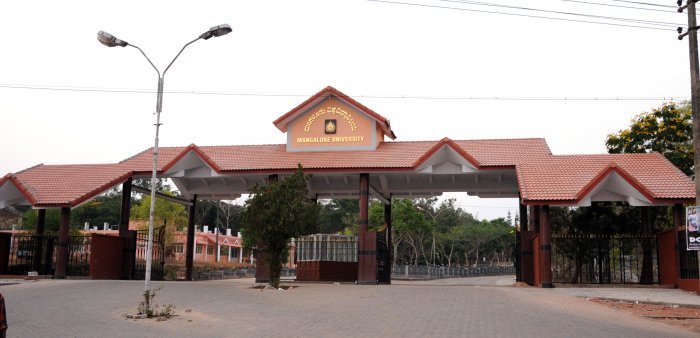
Mangalore University. Credit: DH File Photo

The university has issued a notification on January 28 constituting a committee for drafting the curriculum and regulations.

The university has issued a notification on January 28 constituting a committee for drafting the curriculum and regulations to introduce the courses in Beary art forms. The committee is headed by Prof Uday Barkur, Dean of Faculty of Arts at Mangalore University.

Karnataka Beary Sahithya Academy Chairman Rahim Ucchil said that the Academy had written to the university to introduce courses in Beary art forms like ‘Duff’, ‘Burda’, ‘Mehandi’, ‘Oppana’, and ‘Kolkali’ on September 16, 2020. The university has accepted the request and constituted a committee the draft the regulations. The introduction of the courses will help in saving the art forms and promoting it, he added.

Beary is an ethnic Muslim community, mainly concentrated in coastal Karnataka, and has its own language and culture.

The committee constituted by the university comprises organisers of Beary programmes Bashir Baikampady and Ahmed Bava Moideen, teachers Abdul Razak Ananthady, Haidarali, language expert S B Darimi, writers K M Siddique Montugoli and Mariyam Ismail, ‘Duff’ teacher Noor Mohammad, ‘Oppane’ and ‘Kolkali’ artist Rahis, artiste Zulfikar Ahmad, member coordinator Aboobakkar Siddique, Academy President Rahim Uchil said.

The courses in art forms will help in warding off the feeling of inferiority among a few people on the art forms. If it is introduced as a course, it will help in passing on the art forms to the future generation. It may be recalled that the Academy had recently introduced Beary script and numerals. Beary script has 13 vowels, 33 consonants and nine numerals. The Academy had released a calendar with all 12 months in Beary language.

The academy intends to submit a proposal on introducing Beary language as the third optional language in schools from sixth standard onwards. The Chairman said that Beary language has a history of 1,400 years and is spoken by over 20 lakh people. 

source: http://www.deccanherald.com / Deccan Herald / Home> State> Karnataka Districts / by Naina J.A , DHNS / February 06th, 2021

The coming-of-age story of Rani Rudrama Devi on television

Mumbai, MAHARAHTRA :

Producers of the Telugu TV serial ‘Rani Rudrama Devi’, Alind Srivastava and Nissar Parvez explain why period dramas need a rich storyline to go with its technical brilliance in order to connect with audiences

The legendary warrior queen Rudrama Devi of the Kakatiya dynasty was celebrated for her valour. But how many of us are aware of her formative years, her emotional journey and of her hardships as an eight-year-old girl who was brought up as a boy?

Star Maa’s new period drama Rani Rudrama Devi depicts the emotional journey of a little girl before her transition into a fearless leader.

Nissar Parvez   | Photo Credit: Special arrangement

Producers Alind Srivastava and Nissar Parvez, of Mumbai-based Peninsula Pictures, explain over phone that a team from the Star Maa channel had approached them last year with the story pitch. The duo says that there were “so many emotions” to tell about her and the other characters who aid her journey. “We realised the story is not just about the warrior queen,” Alind remarks.

Once the research team finalised the storyline (after drawing references from various books) the project got rolling in October 2020. A set was constructed at Naigaon, Mumbai.

Right ingredients

Peninsula Pictures has prior TV experience; two of their shows currently on air are Aladdin – Naam Toh Suna Hoga and Hero — Gayab Mode On, which is telecast on Sab TV, but the Telugu-language serial Rani Rudrama Devi marks their début in the vernacular space.

A set was constructed at Naigaon, Mumbai by mid-October. While the technical crew including a team of technicians, director Santosh Badal, director of photography Kunal Kadam and costume designer Niyati Pathak from their VFX studio in Mumbai give it the required grandeur and scale, the cultural nuances and Telugu flavour are enhanced by artistes, a language editor and dialogue writer from Hyderabad.

The main challenge, however, in a period drama is the familiarity. While it can serve as an advantage, with audiences able to connect to the story easily, the familiarity also brings about scrutiny. “The moral of the story has to be absolute correct. It is the same story being told, but what matters is the way it is presented,” says Nissar.

“Visual effects, colour palette, music and acting will make for a visual spectacle, but only a rich storyline will excite the audiences. The glamour, glitz and technical chutzpah of a historical drama is present but at the heart of Rani Rudrama Devi is the story of a girl. We want our presentation to make the viewers think, ‘Oh, I know the story, but never imagined it like this’,” Alind adds.

Alind Srivastava   | Photo Credit: Special arrangement

Having previously watched the Anushka Shetty-starrer Rudhramadevi (2015), which was also based on the warrior queen, the duo feels that the movie cannot be compared to their TV series.

“We didn’t emotionally connect with the film which we feel we have achieved in our series. Unlike the movie, we are trying to show how Rudrama became what she became. Also, the interpersonal equations between the characters is something to watch out for in our series,” says Alind.

Aladdin and Hero Gayab Mode on Sab TV are their two shows currently on air. With this first historical drama in Telugu, the production house has made its debut in a regional space.

Rani Rudrama Devi airs weekdays at 9pm on Star Maa.

source: http://www.thehindu.com / The Hindu / Home> Entertainment / by Neerja Murthy / Hyderabad – February 03rd, 2021

Arjuna and Padma Shri awardees felicitated in Karnataka

Mumbai, MAHARASHTRA :

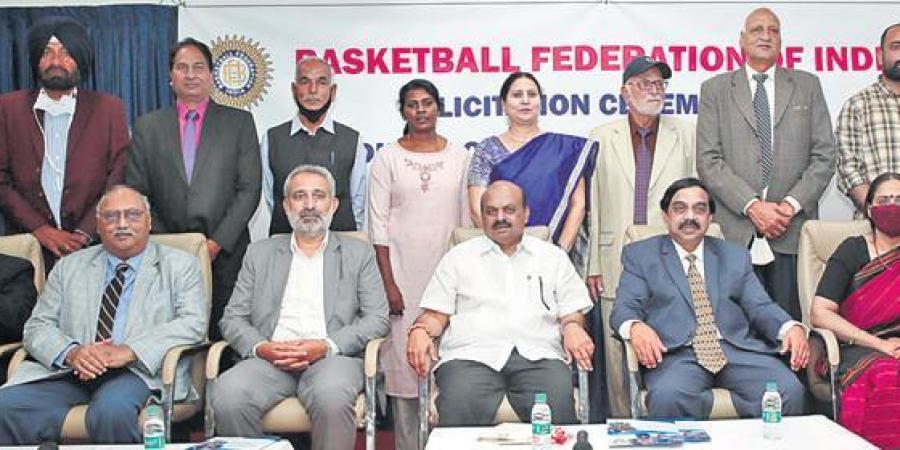
The felicitation programme was held at Karnataka Olympic Bhawan, Kanteerava Sports Complex, on Saturday. Home Minister Basavaraj Bommai felicitated over eight former basketball players.

Home Minister Basavaraj Bommai (centre) with K Govindaraj, president of Basketball Federation of India (second from right) at an event to felicitate Arjuna, Padma Shree awardees. | vinod kumar t

Bengaluru :

The Basketball Federation of India felicitated sportsperson who received Arjuna, Dhyan Chand and Padma Shri Awardees between 1961 and 2019 for their contribution and achievements in basketball. The felicitation programme was held at Karnataka Olympic Bhawan, Kanteerava Sports Complex, on Saturday. Home Minister Basavaraj Bommai felicitated over eight former basketball players. 

Bommai said, “It gives me immense pleasure to know that the Basketball Federation of India felicitated Padma Shri, Arjuna and Dhyan Chand Awardees. I wish good luck to all the awardees.” The Arjuna awardees included Gulam Abbas Moontasir, Arjun awardee from the 1970 batch, Hanuman Singh (1975), Ajmer Singh (1982), Suman Sharma (1983), Sajjan Singh Cheema (1999), Vishesh Bhriguvanshi (2019), Surendra Kumar Kataria (1973), Om Prakash Dhull (1979-1980). 

Anitha Paul Durai got the Padma Shri award 2020 and Ram Kumar got the Dhyan Chand award (2003).

K Govindaraj, president of the Basketball Federation of India said, “Basketball is believed to be the fastest growing sport. It has immense appeal among school and college students. Almost every school and college has a basketball court on its premises.”

source: http://www.newindianexpress.com / The New Indian Express / Home> Good News / by Express News Service / February 07th, 2021

Meet Abbas Moontasir, the Asian All-Star who rose from Mumbai’s basketball courts

Mumbai, MAHARASHTRA :

The 75-year-old is one of the biggest names to emerge from the Late Bachookhan Municipal Playground in Nagpada.

Scroll.in photo

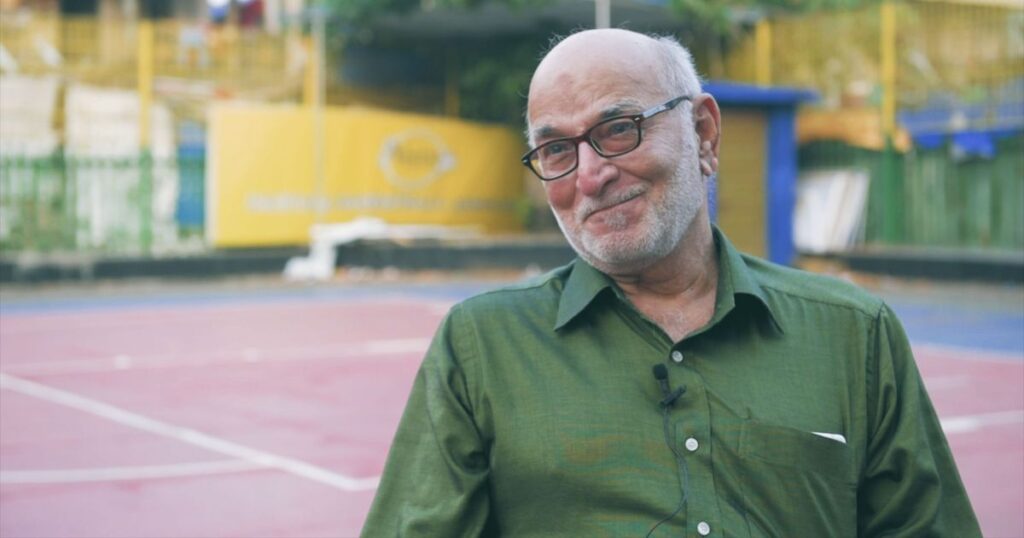
The tall frame of Gulam Abbas Moontasir stands out in the narrow by-lane with mushrooming slums that leads to the Nagpada Basketball Association courts. The ground has the distinction of producing almost a dozen internationals and many more national-level players. The 75-year-old Moontasir is one of the biggest names to emerge from the Late Bachookhan Municipal Playground.

Moontasir’s elder brothers were more inclined to body building but the youngster picked up basketball at the age of nine thanks to a group of friends and insists that he was a very bad player and can’t really explain when the transformation really took place.

“I was very bad. As an athlete, I just couldn’t run. Any child could have beaten me straight away but I don’t know I got into it. One thing we did because of our elder brothers was that they put us into weight training in the 1950s,’ says the man who captained India in the 1969 and 1975.

The strong foundation soon became the bedrock of Moontasir’s style of play as he was known to dominate play with his sheer physical presence as the Nagpada hoopsters began to first dominate arch rivals Mastan YMCA and then the state and national scene.

“It was physical but isn’t basketball also a physical game? I’ll tell you, some of my friends. For eg, Narsimha Sharma, who is in the US now, would tell me, ‘just grab the ball, you don’t have to push in your weight.’

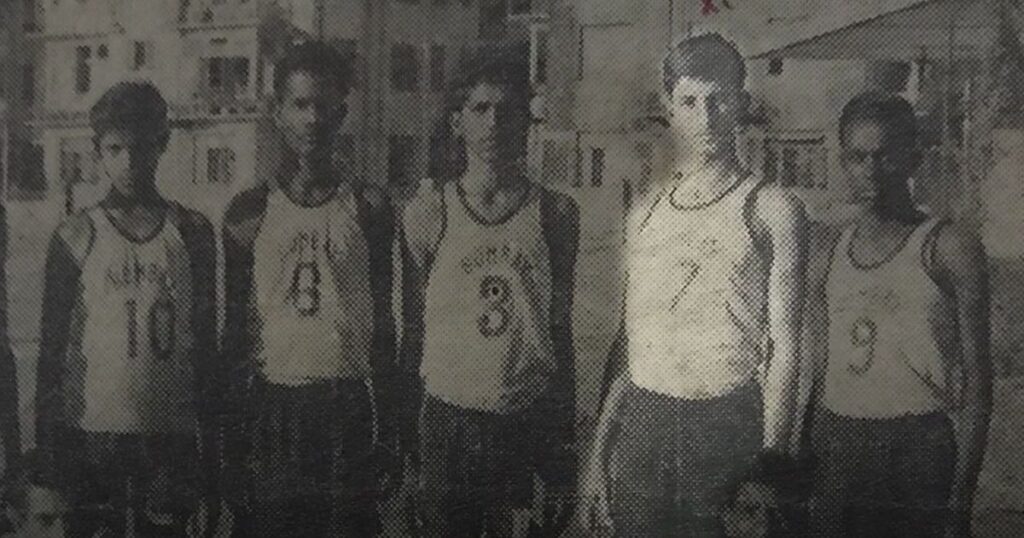
“When I started out Napgpada was not a big name in basketball. It was known for its volleyball. But slowly we made a name for ourselves… The first tournament we won was under 5 feet. We beat Mastan YMCA in 1953. I was 11 years old. After that of course Nagpada picked up basketball.

“In 1957, before I was 16 years, we won the men’s state championship. And we were Nagpada ‘B’ team, not Nagpada ‘A’ team. We beat them in the finals in 1957. I was selected of course for the state team also then it was Bombay. Next year, I was the captain of the Bombay state team in nationals and I was ranked 3rd in the country in the men’s section,” explains Moontasir, who went on to ply his trade at the national and international level for three decades and became the first player from Nagpada to be honoured with the Arjuna Award in 1970.

Railways boost

His career really blossomed after he joined Western Railways as the side boasted of the country’s top stars and Moontasir was the pivot around whom the team revolved.

Ask him about his own memorable game and Moontasir prefers to speak about the worst one rather than the best. “It was in Bangalore. It was so bad that the children you see [points at youngsters dribbling in a basketball court] would have played better. I just couldn’t hold the ball. People always ask me about what my best game was. I say, I remember my worst game which I will never forget in my life.

“I don’t know why. I would double-dribble, I would fall down, I would lose the ball,” stating these were the kind of games that one needs to learn from.

Never the one to mince words, Moontasir was suspended twice for his run-ins with the referees and lost out almost three years of his career.

“Twice I got suspended for arguing with the referee. And I was suspended for three years. Arguing with the referee. Not abusing, not hammering, not doing anything. Just arguing with the referee I was suspended for three years. Anyway I did come back after that,” he adds.

He made his international debut during an exhibition game against Australia in 1960 and the high point of his career probably came in 1970 when Moontasir became the first Indian to be named in the Asian All-Star team after a brilliant showing in the Asian Games in Bangkok.

“We were supposed to tour Europe but we didn’t,” he says with little regret, adding he then tried to move to United States of America to make a career in basketball but things did not materialise.

“In fact, I had applied for an overseas scholarship in America. But unfortunately they said ‘We don’t give scholarships to overseas students.’ And then in those days I had to pay $3000 which I didn’t have. So I didn’t go,” he adds.

Moontasir, who played his last nationals for his employer at the age of 44 and continued playing competitive basketball for four more years, insists that even if had got a chance to go to America he would have had to work extremely hard on his fitness to match the standards of the players there.

A stickler for hard work, Moontasir uses the phrase “working very very hard” almost a dozen times during the half-an-hour interaction and goes on to explain why he would appreciate an Ivan Lendl more than his idol John McEnroe.

“Between McEnroe and Lendl, who do I think I appreciate more? Lendl. It was because the guy had no talent. It was sheer hard work. If McEnroe had worked as hard as Lendl, he would have had 30 Grand Slams,” he adds, before stating that the Indian players who are trying their luck in USA’s National Basketball Association League will have to really step up on the fitness front or would not stand a chance.

This is also why, Moontasir did not really venture into coaching after his playing career apart from working with the Western Railway women’s team.

Even today he visits the Nagpada Basketball Association courts occasionally and those running the show definitely want him to provide some inputs to the young trainees who are looking to make a mark on the domestic scene.

But Moontasir, who has even acted in a few feature films, isn’t really interested. “During our playing times we were told that a basketball player never walks on the court but runs. I don’t see that kind of intensity in these players now.”

The 75-year-old insists that even the Basketball Federation of India isn’t providing enough exposure and game time for the players to mature and excel. “We are far away from world standards. But we can definitely be among the top five in Asia and that should be our primary aim,” he signs off.

source: http://www.scroll.in / Scroll.in / Home> The Field> Field Watch / by Abhijeet Kulkarni, Shashank Rajaram and Crystelle Rita Nunes / December 17th, 2017

Indian woman who won Dhs15 million in Big Ticket raffle, says she bought the ticket for the first time

KERALA / Doha, QATAR :

Thasleena Puthiya Purayil with her husband and children.

Indian expat based in Qatar Thasleena Puthiya Purayil has hit the Dhs15 million Big Ticket jackpot in Abu Dhabi on Wednesday.

Thasleena who lives in Doha bought the winning ticket online.

Thasleena, who hails from Kerala, took home the mega prize amid pandemic.

Big Ticket Abu Dhabi wrote on Facebook, “Congratulations to Thasleena Puthiya Purayil, from India, with winning ticket no. 291310. She won Dhs15 Million in The Fantastic 15 Million series 224.”

Thasleena told Big Ticket officials that she brought the ticket for the first time.

In Qatar, Thasleena and her husband Abdul Gaddaf run a chain of restaurant and their business is doing quite well.

The happy couple has 3 children, a son who is studying in a University in Dubai, daughter and an infant.

Big Ticket also wrote, “Congratulations to Wilma Danthi with Ticket No. 001517 from India for winning the Dream Car Range Rover series 1!”


Apart from Thasleena, 7 other Indians won prize money between Dhs350,000 to Dhs20,000 in the raffle draw.

The Big Ticket, the longest-running and biggest raffle draw in the UAE is hosted at Abu Dhabi International Airport, Al Ain Airport and online at www.bigticket.ae

The raffle draw said, “What started out with a Million Dirham cash prize, gradually grew over the years and now on Big Ticket’s 29th year, we’re giving away grand prize’s of up to 20 Million Dirham.”

The raffle draw guarantees cash prizes vary from month to month with Big Ticket giving away a minimum of 10million dirham up to our biggest jackpot of 20 million.

source: http:///www.gulftoday.ae / Gulf Today / Home> News / by Gulf Today, Staff Reporter / February 06th, 2021


Meet Sameera Khan from Andhra Pradesh with ‘Himalayan’ ambitions

Anantapur, ANDHRA PRADESH / Hyderabad, TELANGANA :

Sameera Khan is a cyclist and a mountaineer. Image courtesy: IANS

Hyderabad:

A cyclist and mountaineer, she is out to prove to the world that girls are capable of doing anything without family support.

After losing mother when she was just nine and her father, a tailor, few years ago, P. Sameera Khan overcame all odds to come up in life and is now looking for sponsors to fulfill her ambition of scaling Mount Everest, the highest peak in the world.

A solo traveller, she has already cycled her way to 20 countries. The 30-year-old from Anantapur in in Andhra Pradesh has already scaled four mountains, the highest being 6,858 meter high Ama Dablam in Nepal.

“I want to tell the world that a girl in India needs lot of support from her parents. I am trying to pursue my dream, earning for it, spending for it, everything on my own but now I have come to a point where I need some financial support to attain my ambition. I want to tell the world that girls are capable of doing everything despite not having family support,” Sameera told IANS.

The backpacker’s Mt Everest expedition requires Rs 30-35 lakh. “I have some money and I need sponsorship. The kind of work I do should be getting lot of support,” she said.

She wants to scale Mt Everest from Tibet side and not Nepal, which she said is commercial and easy. ” “From Tibet side, it is tough and also very technical. Rather than doing just for the sake of doing, I want to do something which makes me feel I have done the whole thing beyond my ability,” she said.

Sameera said she approached the government authorities for help but they refused as they don’t consider mountaineering as a sport.

Youngest among five siblings, she lost her mother at the age of nine and was brought up by her father, a tailor.

While pursuing medical lab technology course after 10th standard, the family finances forced her to take up a job in BPO in Bengaluru.

During Srinagar floods of 2014, she travelled to Kashmir as a volunteer. She went on a solo Pahalgam valley trek for two days and soon she started learning how to survive in tough conditions.

Sameera, who lost her father in 2015, started undertaking solo travels with her savings. She cycled across South Asian and South East Asian countries. In India, she cycled for over 1,000 km covering various states.

Her trekking expedition started with Kashmir, Himachal Pradesh and Uttarakhand and later extended to Nepal, Tibet, Bhutan, Sikkim and Arunachal Pradesh. She has already covered 550 km high altitude trekking.

She has have not done any course in mountaineering. “I was already cyclist. I cycled in 20 countries . I think that boosted my confidence to become a high-altitude trekker,” said Sameera currently an entrepreneur at Kepler Home Cinema in Hyderabad.

Always ready to accept new challenges, Sameera started high altitude mountaineering. “Mountaineering is very down thing. It’s toughest of all sports. People who are into mountaineering have to be mentally and physically tough. Only those people who are not afraid of death can survive,” she said.

On November 13, 2018, she climbed 6,859 meters high Ama Dablam mountain peak in Nepal. This came barely a month after she had ascended 6,160 meters high Imja Tse (island) peak.

This further boosted her confidence and she started training for scaling Mount Everest. She has to go to the UK for advance training, which alone will cost Rs 3.50 lakh.

“I want to attribute to my demised parents a legacy of my lifetime achievement by inspiring women and girls from the suburbs of South India. Then I want to publish my book and make a small documentary on my life journey. I want the world to respect women and regard them high,” shared Sameera, whose all four sisters are married.

She said that she has so much to say to the world but before that wants to scale the peak. “I can be heard if only I am at the top as people listen to eminent and dynamic personalities,” added the girl with Himalayan ambitions.

source: http://www.onmanorama.com / OnManorama / Home> Lifestyle / by IANS / February 05th, 2021

Tennis legend Akhtar Ali passes away

Kolkata, WEST BENGAL :

Ali’s coaching influenced well-known players like Vijay Amritraj, Anand Amritraj, Ramesh Krishnan, Leander Paes and Somdev Devvarman.

Tennis legend Akhtar Ali, a father figure in Indian tennis, passed away here in the early hours of February 7, said a Bengal Tennis Association source.

He was 81 and is survived by his son, well known tennis player Zeeshan Ali, and two daughters.

Ali had been suffering from various ailments for the last few months. He was hospitalised for a few days before being brought back home recently. He passed away at 2:30 a.m. on February 7.

His cremation is expected to take place around 4 p.m.

Born on July 5, 1939, Ali played in eight Davis Cup ties against Pakistan, Malaysia, Iran, Mexico, Japan and Monaco between 1958 and 1964. He also captained and coached the Indian side. He has also played in the Wimbledon and French Open grand slam events.

His last ATP tour outing was against Vijay Amritraj in a clay court match in Bombay on November 11, 1974.

A fine and soft-spoken person, Ali is well known as a coach, whose coaching influenced well-known players like Vijay Amritraj, Anand Amritraj, Ramesh Krishnan, Leander Paes and Somdev Devvarman.

He was passionately involved in coaching and organising events for grassroots players throughout his life.

Ali was conferred the Arjuna Award in 2000 for lifetime contribution to tennis.

source: http://www.thehindu.com / The Hindu / Home> Sport> Tennis / by Y.B. Sarangi / Kolkata – February 07th, 2021