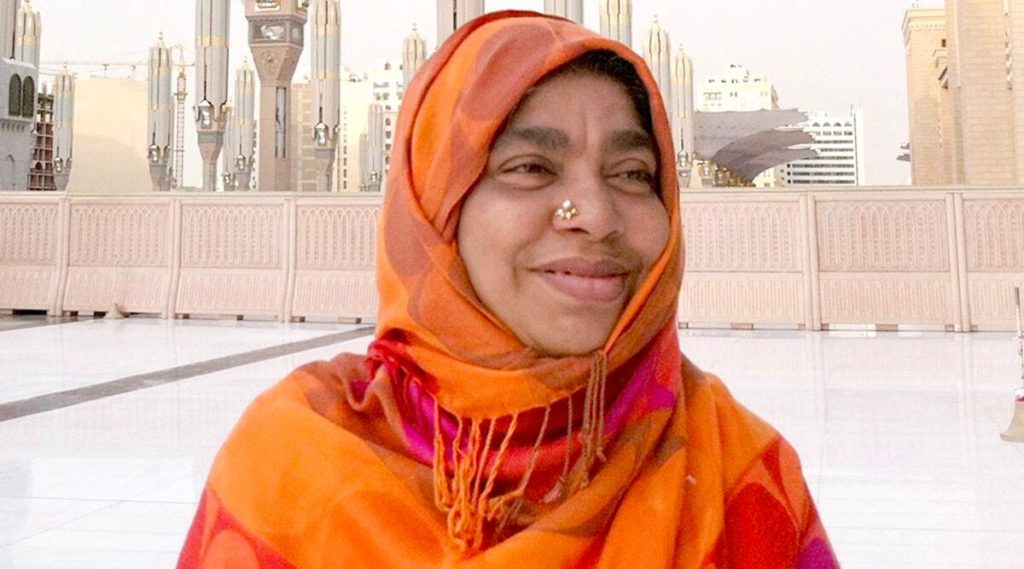
AR Rahman confirmed the news by sharing a photograph of his mother on Twitter.
AR Rahman’s mother Kareema Begum passed away on Monday in Chennai. (Photo: Twitter/AR Rahman)
Music maestro AR Rahman’s mother Kareema Begum passed away in Chennai on Monday. Rahman confirmed the news by sharing a photograph of his mother on Twitter.
Director Mohan Raja, producer Dr Dhananjayan, singer Harshdeep Kaur among others took to social media to offer their condolences to Rahman.
Mohan Raja posted on Twitter, “Our deepest condolences sir. May her soul Rest In Peace.” Meanwhile, Harshdeep Kaur tweeted, “Dear Sir.. deeply saddened by your loss.. may god give you strength. Remembering Amma’s wonderful and gentle soul. She will forever remain in our hearts.”
Lyricist Vivek shared on Twitter, “Heart broken. Used to hear inspiring stories about how she was like an iron pillar and instrumental in the making of the genius musician. May God give you the strength to overcome this unbelievable loss @arrahman sir @arrameen and family.
AR Rahman was raised by his mother after his father and music composer RO Sekhar died when he was only nine years old.
In many interviews, the Mozart of Madras had expressed that it was his mother who first recognised and nurtured his musical gifts.
source: http://www.indianexpress.com / The Indian Express / Home> Entertainment / Pop-Bollywood Music / by Entertainment Desk , New Delhi / December 28th, 2020
The University has a campus spread over 467.6 hectares of land in the city of Aligarh, Uttar Pradesh. It also has three off-campus centres in Malappuram (Kerala), Murshidabad-Jangipur (West Bengal) and Kishanganj (Bihar).
pix: ani
New Delhi:
Prime Minister Narendra Modi released a postal stamp as part of centenary celebrations of Aligarh Muslim University (AMU).
Chancellor of the University Syedna Mufaddal Saifuddin and Union Education Minister Ramesh Pokhriyal Nishank were also present on the occasion.
This is the first time PM Modi is participating in a programme of the Aligarh Muslim University, being held via video conferencing.
Speaking to ANI, AMU Public Relations Officer (PRO) Omar Saleem Peerzada had said, “A centenary celebration is a landmark event in the history of any university. We are celebrating this event following all protocols of the COVID-19 pandemic. There are webinars, seminars and symposiums going on.”
AMU became a University in 1920, through an Act of Indian Legislative Council by elevating the Mohammedan Anglo Oriental (MAO) College to the status of a Central University. MAO College was set up in 1877 by Sir Syed Ahmad Khan, the PMO release stated.
The University has a campus spread over 467.6 hectares of land in the city of Aligarh, Uttar Pradesh. It also has three off-campus centres in Malappuram (Kerala), Murshidabad-Jangipur (West Bengal) and Kishanganj (Bihar).
source: http://www.newsroompost.com / Newsroom Post / Home> Education / by Newsroom staff / December 22nd, 2020
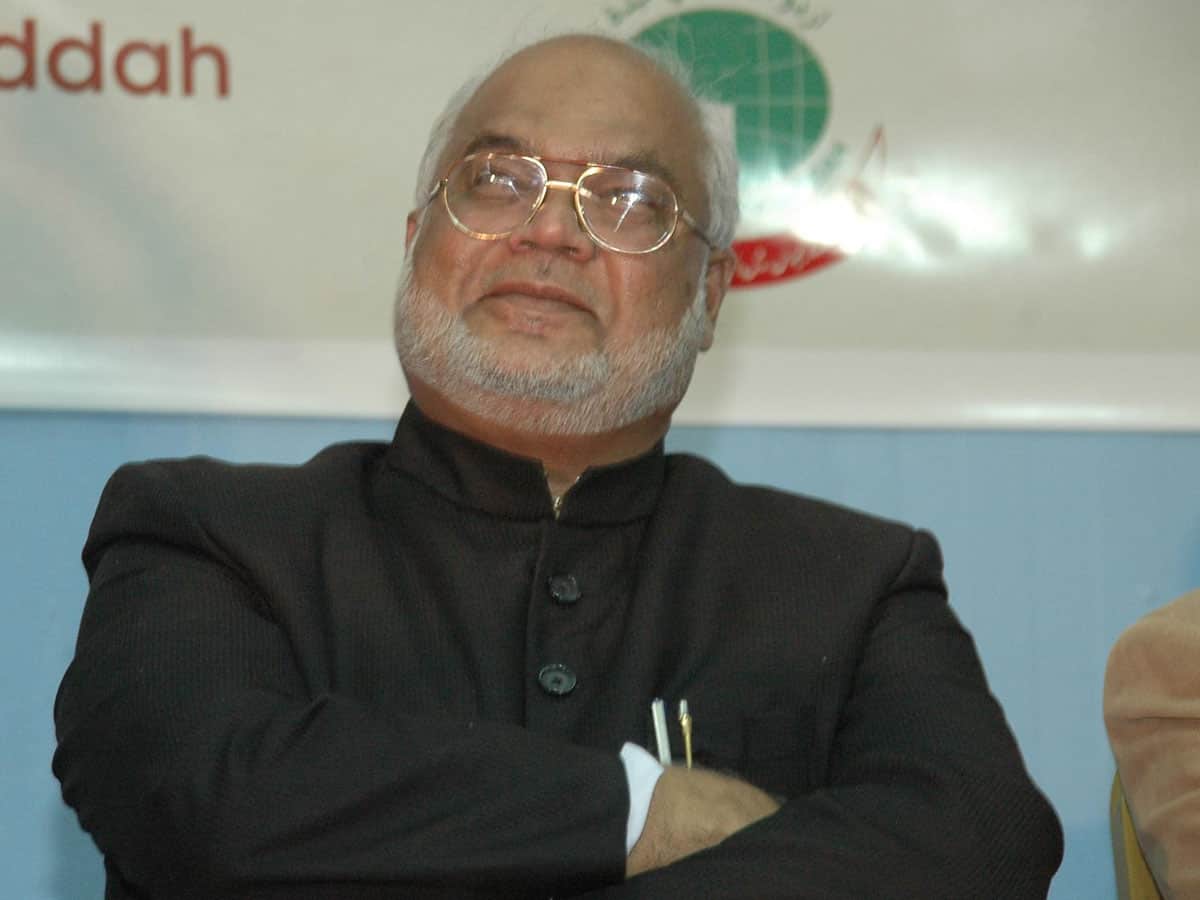
Syed Jamaluddin Quadri who was known among his friends and family members as Khusro passed away last year in Hyderabad, his hometown.
He wasn’t keeping well for quite some time. I had been told that he has developed difficulty in walking owing to serious knee problem.
I remember Jamal as Jamaluddin and not as Jamalullah that he is referred to by many of his friends.
When his close friend and companion Sheikh Ibrahim said his organization is bringing out a special issue on him and wanted me to pen my own thoughts, I agreed immediately.
His demise had triggered a stream of memories ranging from his childhood to the time he spent in Jeddah. I had attended his funeral prayers that were held at Abdullah Shah Saheb mosque in Hussaini Alam.
I first came to know of him when I was admitted to Modern Kinder Garten, a new English medium school in Hussaini Alam, the area in which I too lived. I was not alone in not knowing the meaning of Kinder Garten. We always thought it was Kinder Garden. And no one took pains to explain to the students the meaning of the school’s name. It was much later in life that I came to that Kinder means children and garten means garden.
Khusro was two years senior to me in the school. Traditionally, the juniors do not get the attention of the seniors. But circumstances at the school were such that I came to know of him and his family in the first few weeks of entering the MKG. His father Janaab Imaduddin sahib, a salt and pepper bearded gentleman was committed to the cause of education. He was looked at with tremendous respect by his peers, teachers and students. Khusro was his only male child. He had sisters, older and junior to him. Some of them taught at the school. We the students called them Bajis. One such sister, Rafia Baji, later became the Principal of the school. That of course was much later than I left the school. Interestingly, the school is still working.
I distinctly remember two incidents from the MKG days. The first was a Kabbadi tournament where we the fourth or fifth class students were pitted against the eighth class boys in the finals. Khusro was in that team which won the tournament. We had no regrets in losing to the big boys because we had given them a tough competition. In fact, we won more appreciation as we were the underdogs.
The second incident belonged to the annual day function that was organized in the mid-sixties. The war with China was still fresh in the minds, therefore, the management decided to present a play on that subject. The play showed the dedication of the people to sacrifice their lives for the country. The story revolved around a family that had just celebrated the wedding of its son who was on vacation from his army duty. Khusro played the bridegroom wearing an impressive army uniform. Since the girls were not allowed to take part in the play on stage, especially with the boys, the management was looking for boys who could play the female characters. My friend and classmate Abdul Wahab Abid played the role of Khusro’s mother and I was cast as his newly wed bride. As I was being prepared in a red bridal dress and jewelry for the stage a senior student, Nayeem, suddenly entered the room, stared at me intently for a few moments and suddenly kissed on my cheek and ran away. He left me red-faced and bewildered. I believe he was punished for the ‘mischief’ later.
It was a great show where the beautiful bride asks her handsome husband to attend to the call of the nation and fight against the enemy. But she does it with lots of weeping. That patriotic play was a hit.
A few years after I left the MKG I was invited by Khusro and his group of dedicated friends to teach younger students at a mosque during early morning hours every day. I accepted the offer and joined the group. That was a great social initiative led by Khusro. I saw in him at that age the leadership qualities that blossomed further during his long stint in the Kingdom of Saudi Arabia to which he had migrated in the middle seventies. Incidentally, many of those who had worked in that mosque also left for the Kingdom. These young men and their families lived in a neighbourhood located on way to King Abdul Aziz University in Jeddah. It was perhaps called Kilo Six or Seven.
After joining Saudi Gazette, one of the two English language newspapers published from Jeddah, in early 1982 I started meeting some of the members of that group. I found that in his own way Khusro had kept his tradition of social activism alive. He was helping the newly arrived Indians to find jobs and settle down. He was holding weekly classes on social and religious norms of the Kingdom and explained to them matters pertaining to religion.
He began working for the preservation and promotion of Urdu by helping students. He also started the tradition of celebrating The Education Day in commemoration of the birth anniversary of Maulana Abul Kalam Azad, every year on November 11. To coincide with the occasion he was regularly bringing out a souvenir on Maulana Azad. While I was working with Maulana Azad National Urdu University in Hyderabad as its Consultant/Advisor he used to phone me asking for my articles for the souvenir. I contributed a couple of write-ups on Maulana Azad for the souvenir.
His another area of interest was Jamia Nizamia, the 135 years old Islamic institution in Hyderabad. He invited Aalims and scholars to Jeddah to be part of the celebrations he would organise to sustain the interest in religious education among Indians, especially students, who were missing a lot by being away from their homeland.
A Sufi by the belief he never hesitated in working with different groups. I remember his regular meetings with Janaab Maslehuddin Saadi with friends to gain more knowledge about Sufi philosophy and practices.
I also remember the deep sorrow in his eyes when one of his sons drowned in the sea near Visakhapatnam. That boy was spending his vacation there. But Khusro managed to control it and did not allow the tragedy to deter him from his regular work.
I truly believe that people like Khusro come from are a rare breed. They do not forget that they have to play their role, however small or insignificant it may sound. I hope his friends in Hyderabad as well as those who are still in the Kingdom of Saudi Arabia or in other parts of the world would carry forward his positive work.
Mir Ayoob Ali Khan is a Senior Journalist who has worked with Saudi Gazette, Deccan Chronicle and Times of India. He is currently associated with Siasat.com, an English language news portal.
source: http://www.siasat.com / The Siasat Daily / Home> Featured News / by News Desk / December 28th, 2020
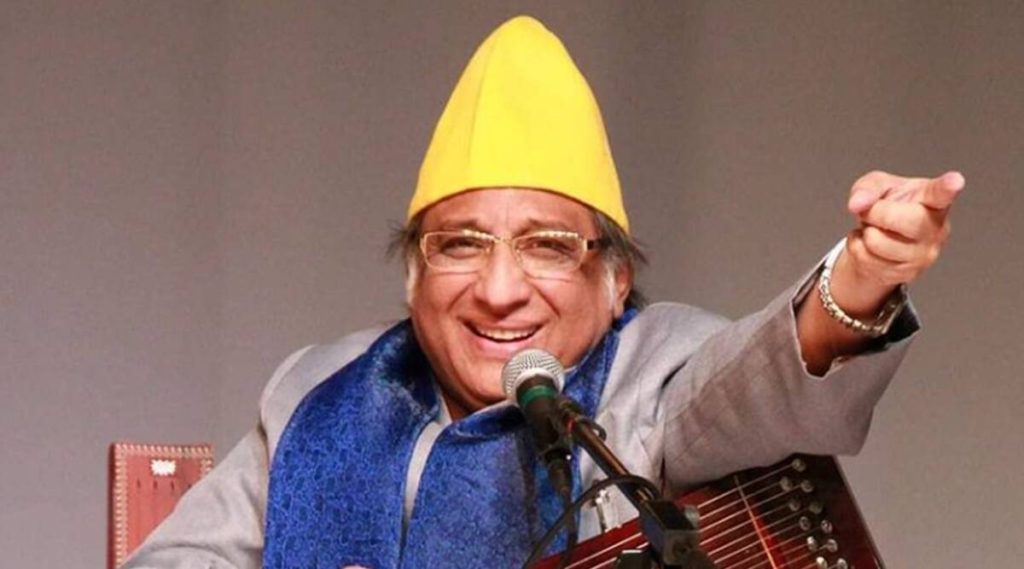
Ustad Iqbal Ahmed Khan was a renowned vocalist. (Source: Instagram)
Since 1981, Ustad Iqbal Ahmed Khan was serving as the custodian or Khalifa of Dilli Gharana.
Hindustani classical music maestro Ustad Iqbal Ahmed Khan passed away at the age of 66 on Thursday, December 17, 2020. His demise left many people shocked who took to social media to express their condolences. The vocalist, who belonged to Dilli Gharana, was a recipient of the Sangeet Natak Akademi Award for his contribution to classical music.
After receiving his initial training in music from Ustad Chand Khan and later under the guidance of Ustad Hilal Ahmed Khan and Ustad Naseer Ahmed Khan, Ustad Iqbal went on to “teach Indian Classical Music and style of Dilli Gharana Gayaki”, as per his official LinkedIn profile.
A well-known name in Delhi’s cultural scene, owing to his immense contribution to the field, he was serving as the custodian/Khalifa of Dilli Gharana since 1981. He took over the reins after the demise of Ustad Chand Khan Sahib in 1980 and other senior members (rather in quick succession), as per the official website dilligharana.in.
The Gharana’s Sursagar Society was founded in 1940 by the late Ustad Chand Khan Sahab/Saheb (Sangeet Martand) in the memory of his father, Shams-e-Mousiqui Ustad Mamman Khan. The society aims to conserve and promote an awareness of both the rich and heterogeneous cultural tapestry through a focus on the classical arts, with their attendant legends, rituals, mythology and philosophy and the deeper and subtler values of these arts, as per dilligharana.in.
Here are some musical soirees the society used to organise at distant places in Delhi, courtesy Sursagar Society of Delhi Gharana page on Facebook.sources
His style of classical singing and his renderings of Thumri, Dadra, Tappa, Bhajans and Ghazals won him great acclaims.
He was actively involved with classical music through various mediums that included performing, teaching, research, recording and archiving, and curating productions and events that aimed towards preserving and promoting the classical repertoire, both in India and abroad.
source: http://www.indianexpress.com / The Indian Express / Home> Lifestyle> Art &Culture / by Lifestlye Desk / New Delhi – December 17th, 2020
Lucknow, United Provinces (British India) / Mumbai, MAHARASHTRA :
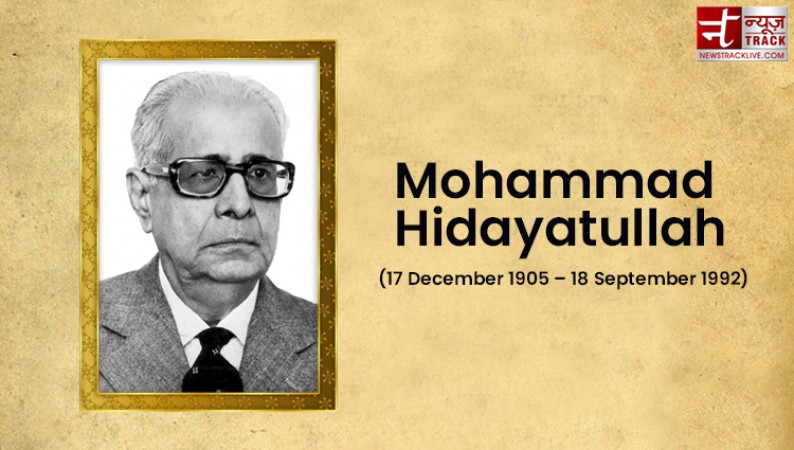
Mohammad Hidayatullah was born on 17th December 1905, he was the first Muslim Chief Justice of India. It would be more appropriate to call Mohammad Hidayatullah the first acting president of India, as he was not as elected president according to India’s constitutional system. He also assumed charge as the acting President of India on two occasions. He also became the sixth Vice-President of India.
On August 31, 1979, Mohammad Hidayatullah was appointed as the Vice-President of India. His tenure lasted till 31st August 1984. He was also vice-chancellor of Jamia Millia Islamia, Delhi and Punjab University from 1979 to 1984. On October 4, 1991, Mohammad Hidayatullah was also conferred honorary membership of the Indian Vidya Parishad. After concluding the term of vice president, Mohammad Hidayatullah felt like an independent bird. He was also the chairman of the Rajya Sabha. But he was never accused of misuse of his post or favouritism.
In the upper house, he was a friend to all. After retiring, eminent politicians praised him. Indira Gandhi, Vice President R Venkataraman, Home Minister Narasimha Rao and high officials were among those who were there at the station to see him off Mumbai after he completed the term of vice president. He passed away on 18th September 1992 due to a heart attack.
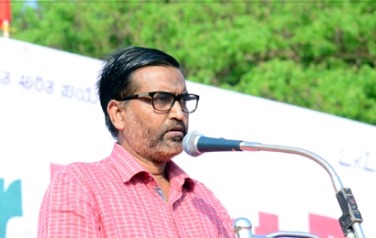
Karnataka is mourning the demise of KM Shareef, the former National President of Popular Front of India. With his demise, the community has expressed grief and a great sense of loss for he was a voice that spoke in favour of the oppressed.
Since the year 2000, KM Shareef – known in the public sphere as a writer, critic, translator, author, orator, and journalist – has been working tirelessly on the social front.
After graduating with a BSc degree, he spent four years in Dubai as a career person.He was a student of Mittabailu Jabbar Ustad, the general secretary of the Samasta Kerala Jamiatul Ulema, from whom he secured religious education.His father, the late Abdullah Haji, served as a Mudarris for 30 consecutive years in the Mittabailu Jamath.
KM Shareef, who advocated towards creating a united struggle for the empowerment of Dalits, Muslims, and other marginalized communities, sought to unite these communities and struggled towards realizing this objective throughout his lifetime in the organizational setup.He emphasized the need to politically empower these communities and stressed the importance of alternative politics in this regard.
In 2003, he served as the convener of Coastal People’s Union, an organization that was established as a coalition of various Muslim social organizations across Coastal Karnataka.
He played a prominent role in establishing ‘Prastutha’, a fortnightly news magazine in 2007, and also served as the editor-in-chief of the publication.Through this media publication, he constantly wrote on behalf of exploited communities.
His writings delved into issues affecting the country, through which he warned that the country was endangered by communal fascism, capitalism, and imperialism.
He has been instrumental in bringing new press campaigns through the Prastutha publication and introducing newfacets of journalism to the press.He was constantly encouraging and inspiring budding young talents to read and write.
Opposing the exploitation of women in society, he has consistently asserted that dowry is a social evil and one of the main causes contributing to women’s atrocities and exploitation in the country.
His Kannada research work, ‘ಶಾಂತಿಗಾಗಿವಿವಾಹ'(Marriage for Peace), is by far the most prominent among his written works. In this book, he objectively outlines how dowry is in effect across the country and in what manner it is weaponized to commit atrocities against women.
When he was the President of the Karnataka Forum for Dignity (KFD), he organized a series of state-wide, anti-dowry campaigns and encouraged young people to organize simple weddings and dowry-free marriages.
In 2006, KM Shareef spearheaded theKFD campaign ‘ಕೋಮುವಾದಿಫ್ಯಾಶಿಸ್ಟರಿಂದಕರ್ನಾಟಕವನ್ನುರಕ್ಷಿಸಿ'(Protect Karnataka from Communal Fascists), across Karnataka. When the ‘VidhanaSoudhaChalo’ convention was held in Bangalore on the occasion ofconcluding the campaign, a delegation headed by KM Shareef had met with the then Chief Minister Kumaraswamy and filed an appeal.This historic campaign, which occurred amid a series of sustained attacks against minorities in coastal Karnataka, resulted in the KFD organization becoming a household name in Karnataka.
KM Shareef, who sought no limelight or fame in the public sphere, was known for his straightforward, simple personality and disciplined disposition.
He was in constant contact with other leaders who were activelyfightingtowards social justice in the activism circle.He continued to hold close associationswith Dalit leaders, progressive figures, human rights activists, thinkers, and writers.
He was a man who had already possessed farsighted vision and ideas towards Muslim empowerment, when he presented his paper titled, ‘Education and Empowerment of Muslims’ during the Second Beary Literature Conference.
KM Shareef is survived by his wife, three sons, three daughters, and a multitude of relatives, friends, and well-wishers.
source: http://www.prasthutha.com /Prasthutha.com / Home / December 22nd, 2020
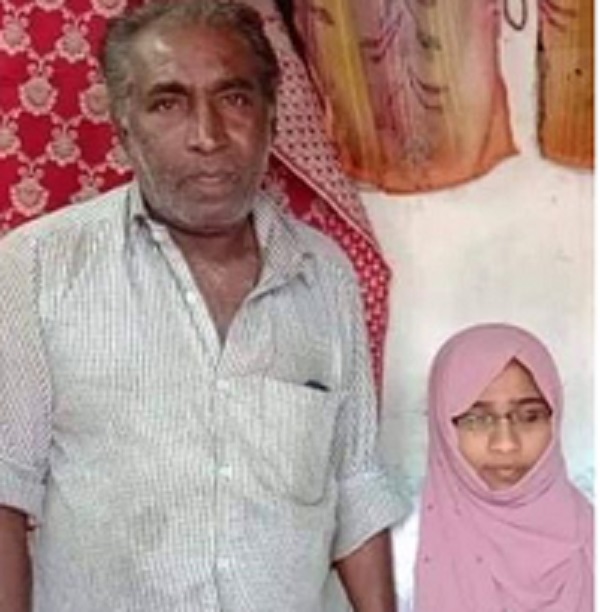
Hina Mohammadi Begum of Hyderabad with her father. — photo courtesy Gulf News
In a test in which 1.5 million young girls and boys appeared, Hina Mohammadi Begum got admission into the prestigious medical institution
New Delhi :
With sheer determination and hard work, the daughter of an auto rickshaw driver living in abject poverty in Hyderabad has secured a free seat at Shadan Medical College in Telangana.
The 20-year-old girl, Hina Mohammadi Begum, who found it difficult to get coaching for NEET performed impressively in the National Eligibility Entrace Test, an all India competitive test for admission in Medical colleges across India.
In a test in which 1.5 million young girls and boys appeared, she got admission into the prestigious institution, reports Gulf News.
The significance of her achievement can be gaged from the fact that a medical seat in management quota costs a student Rs 12 million or more.
The private medical colleges in India offer medical seats in various categories. ‘A’ category seats are filled on the basis of scores in NEET and they carry much less fee. But in the management quota the seats go to the highest payer of what is called a “donation to the college”. Begum secured the seat in the first category.
Dream come true
“It was my dream since childhood to become a doctor and I could become possible because of the sacrifices and hardship of my father and by the grace of Allah”, she said.
What makes her story remarkable was the fact that she was the eldest of four sisters who stays with their maternal grand parents as their father can not afford even a rented house. The family stays in a slum area in Chadarghat on the bank of river Musi with high tension electric tower and wires casting their long shadows over them.
“My father’s earning as an auto driver is hardly sufficient to meet our basic requirements but he never compromised on our education. All my three sisters are also pursuing education and have dreams of their own”, she added.
“This is because for the poor education is the only salvation”, said her father Maqbool. “I will do everything possible to help my daughters to get good education”.
He gave credit to the untiring efforts, single minded focus and hard work of her daughter for her success. “Her only interest was study”, he added.
Begum did her schooling from Model Government High School and junior college from MM government junior college and came out with flying colors despite the poor reputation of government educational institutions.
“In SSC I secured 9.5 points and in Junior college I got 97.6 per cent marks”, she said. “In fact I wanted to do a long term coaching for NEET while in Junior College but financial problems did not allow it. Finally I did coaching in MS Junior college during 2019-20 and it paid off.”.
Now an elated Begum is looking towards the future with more confidence and determination. “I have plans to pursue post graduation in neurology after finishing MBBS”, she declares emphatically.
source: http://www.clarionindia.net / Clarion India / Home> India / by Clarion India / December 20th, 2020
After observing that several non-Covid-19 patients are dying due to delay in accessing medical treatment, a city-based biochemist is helping them in a unique way.
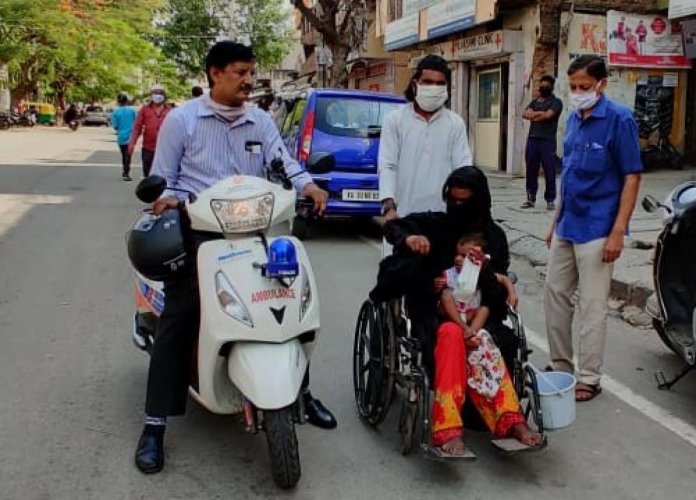
Dr Syed Moinuddin Shabbir, a clinical biochemist at Santosh Hospital in Fraser Town, has turned a two-wheeler into a bike ambulance to treat needy patients at their home. He also provides medicines to poor patients based on prescriptions from their doctors.
“After the lockdown was imposed, people were facing problems in even buying provisions. Many senior citizens and children were finding it difficult to access hospitals. I started with providing medicine to poor patients,” he said.
The problems were exacerbated in containment zones where people had to struggle for simple check-ups like blood pressure and glucose levels. “I went to containment zones on the bike and did what was needed,” Shabbir said, listing Padarayanapura, Frazer Town, Bharathinagar, Indiranagar, Vijayanagar, and Thanisandra as some of the areas where he has treated people.
In Shivajinagar, 40 people in one building had tested positive for Covid-19. Shabbir could not take his bike there, but he managed to send the necessary medicine to the people.
The demand for his services did not come down with the lifting of the lockdown but has only increased.
“At least 50 people contact me through Facebook or WhatsApp,” he said.
Shabbir said charitable organisations have come forward to fund his work, which has benefited about 5,000 people and cost him Rs 3 lakh.
source: http://www.deccanherald.com / Deccan Herald / Home> City> Life in Bengaluru / by Manohar M ,DHNS, Bengaluru / September 04th, 2020
“Dare to Dream!” – Two Girls from a Government School allotted MBBS & BDS seats by the Government of Tamil Nadu.
Ms. Gouhar Parveen aged 18yrs and Ms. Jouhar Parveen aged 17yrs are sisters who stand out for their grit, determination and academic excellence. Their father is an embroidery artisan, currently out of work due to the pandemic and mother is a homemaker.
These girls are the alumni of Government Hobart Higher Secondary School for Muslim Girls, a 147 year old historic minority institution that primarily caters to students from economically disadvantaged backgrounds in Chennai.
Both the girls being first generation learners, have always dreamt of becoming doctors, and have been encouraged and inspired by their father to follow their dreams. With tremendous hard work, dedication and resilience, against all odds, Gouhar has been fortunate enough to obtain a medical seat (MBBS) and Jouhar, a dentistry seat (BDS) under the government issued minority quota.
Both the girls will be contributing assets to their family, society and the greater community. They are an inspiration to all children from underprivileged backgrounds. A resonant – “You can also dare to dream”
அரசு ஹோபார்ட் மேல்நிலைப்பள்ளி சிறுமிகள் எம்.பி.பி.எஸ், பி.டி.எஸ் படிப்புக்கு தேர்வாகியுள்ளனர்
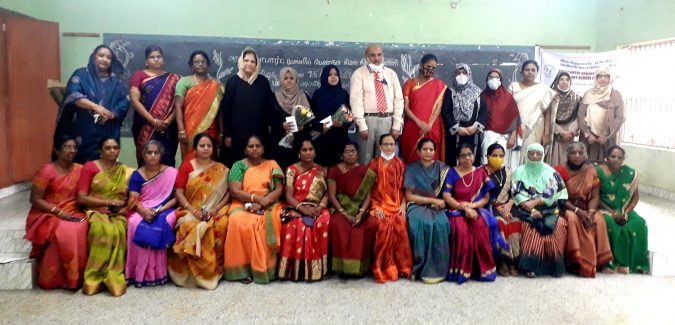
The students have been greatly supported and encouraged by their teachers, their Head Mistress – Mrs. S. Kanmani , a State level Best Teacher – Dr. Radhakrishnan Awardee for 2020-21 and the Parent Teacher Association (PTA).
Since the inception in 1993, the Parent Teacher Association has been working along with the school in providing quality education to the students and helping in creating a positive and healthy environment for the student.
The PTA does not stop with just schooling, they handhold them to build fruitful careers. It has been supplementing the students with additional coaching to improve their calibre.
In fact, the above students were privately coached by the PTA to crack the NEET exam. In the last 3 years alone, they have helped 108 students in pursuing their collegiate education in both Arts and Professional Streams.
source: http://www.chennaiglitz.com / Chennai Glitz / Home> Education / by Adminstrator / December 16th, 2020
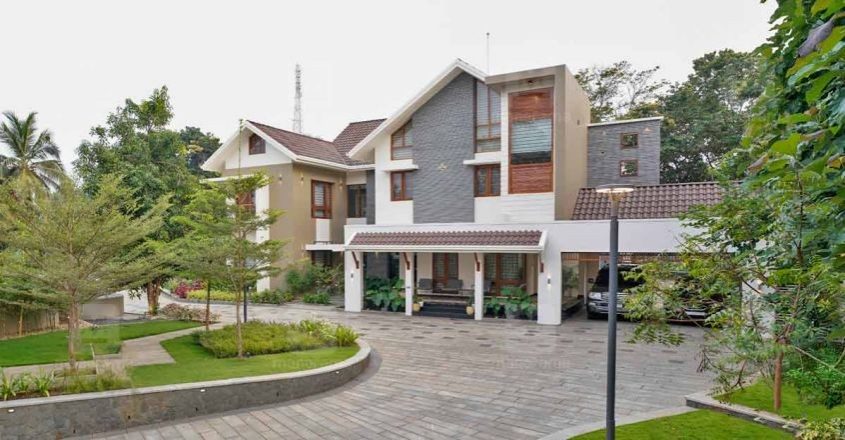
A blend of flat and sloped roof perfectly suits the weather of Nilambur which receives huge amount of rain
Rahim, an expatriate, has built his dream dwelling near the railway station in the beautiful town of town of Nilambur in Kerala, which is known as the haven of exquisite teak wood.
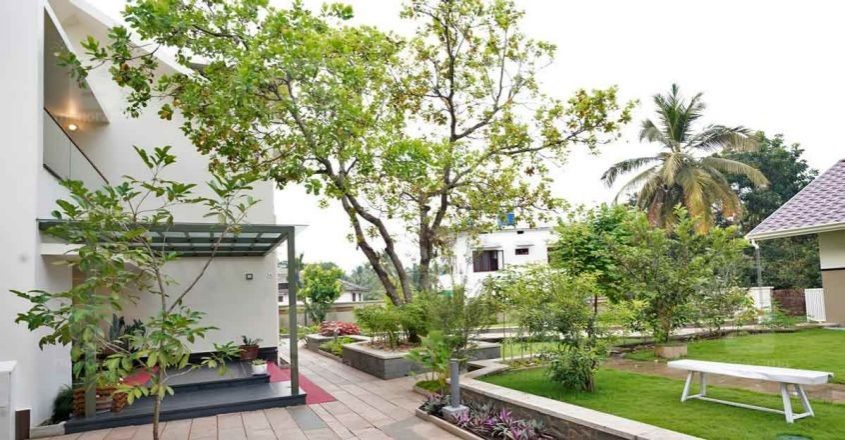
The structure is built by retaining the natural layout of the steep plot. Most of the trees that stood on the plot are still been protected here.
The house has a spacious front yard which is paved with Bangalore stones.
A blend of flat and sloped roof perfectly suits the weather of Nilambur which receives huge amount of rain. Meanwhile, the cladding on walls are the highlight of the elevation.
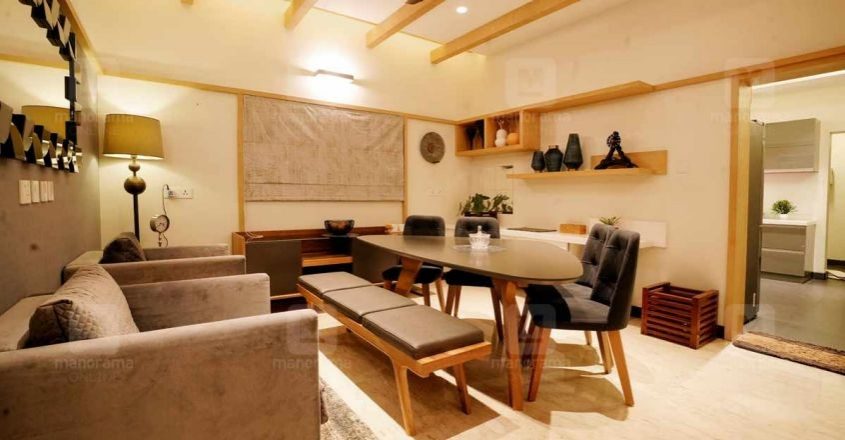
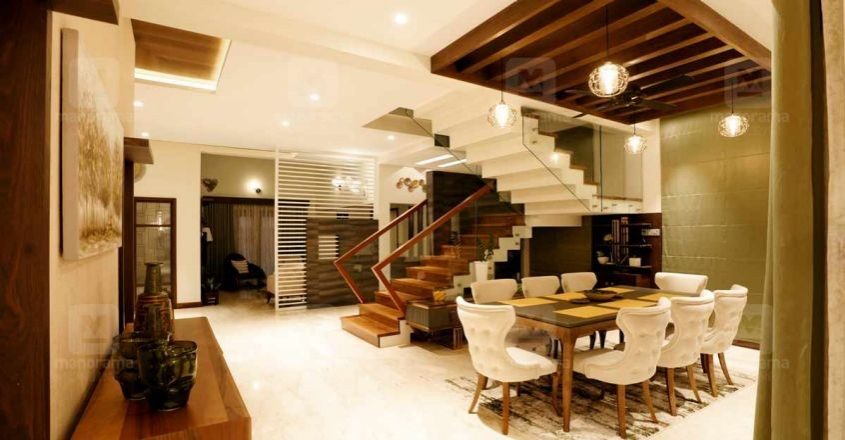
This majestic mansion that sprawls in 6500 sqft, has a spacious car porch, sit out, formal and family living areas, dining space, family dining area, courtyard, prayer area, kitchen with an adjacent work area, five bedrooms, upper living room, home theater and balcony.
The family living area has a double height ceiling. The TV unit too is arranged here. Meanwhile, the patio beside the family living area and the dining space leads to greenery of the beautiful garden outside.
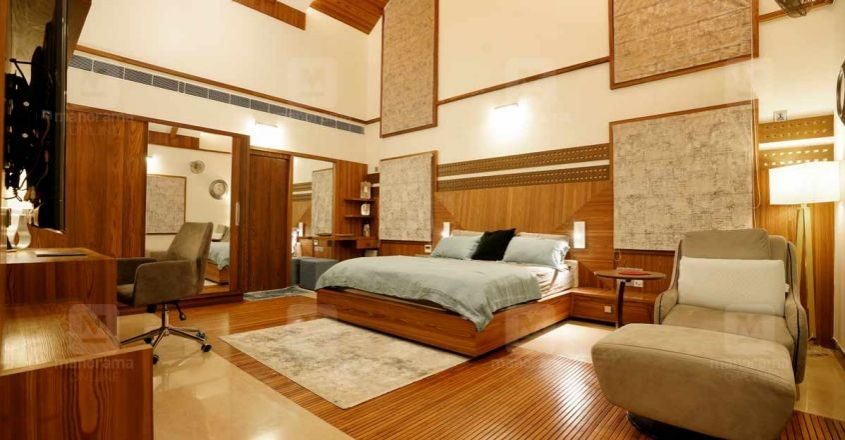
Imported Turkish furnish adorn the posh interiors of this house. Meanwhile, exquisite Italian marble grant a regal charm to the flooring works. The common areas don a pleasant green hue to complement the fabulous greenery of the yard. The flooring in the living area and the bedrooms are done using teak wood. The hand railings of the stairway too feature teak wood.
The stairway leads to the spacious upper living area. A sitting space, sturdy area and a home theatre have been arranged here. Besides the main dining area where the guests are hosted, there is a separate family dining area too. The family dining space is closer to the kitchen.
The kitchen cabinets are done in marine ply with planilaque glass finish. Meanwhile, Korean stone has been paved on the counter top.
source: http://www.onmanorama.com / OnManorama / Home> Section> Lifestyle / by IANS / December 18th, 2020