Aimed at helping the visually impaired, it fits into a smartphone’s port
Four students from the Indian Institute of Technology – Madras have come together to develop a handy device for the visually impaired.
The assistive device fits into the port of a smartphone and helps them to type, learn and read braille content. It also allows them to self-navigate through space and recognise people and objects.
Four students — Sundar Raman P., Adil Mohammed K., Shivam Maheshwari and Andrea Elizabeth Biju — got together to develop the device. While Sundar is a final-year electrical engineering student, Adil and Shivam are pursuing second- and third-year engineering design. Andrea is a second-year student of aerospace engineering.
The students improvised on an existing product that allows the visually impaired to read PDF files on their phone. But it is a cumbersome exercise as the reader must carry a separate device. Sundar said the aim was to leverage the smartphone’s capability, as most people carry one today.
The team came up with Cube, a compact device that fits into the smartphone’s charging port or earphone jack. It has four refreshable braille cells (24 dots) on one side and a camera on the other.
The camera on the device, along with the smartphone’s camera, is used to capture and process (computer vision) a wide field of view to provide the user navigation information through tactile braille cells about the proximity and nature of the obstacles.
The refreshable braille cells project symbols to convey time, proximity to obstacles etc. and help in learning and typing on the smartphone in braille.
Currently, the visually impaired rely on slow audio feedback to type. But Cube intends to change that, said Sundar. The device can be folded to the back of the phone using a flexible connector.
Vishnu Suresh, a fourth-year student of Integrated MA in English Studies, who tried it out, said being able to type on the phone was like typing on a braille typewriter. “It has a keyboard through which we can type the way we type on a braille typewriter. It is perfect,” he said
source: http://www.thehindu.com / The Hindu / Home> News> Cities> Chennai / by R Sujatha / Chennai – November 26th, 2020
Piraman Village (Bharuch District) GUJARAT / NEW DELHI :
Ahmed Patel was one-point contact person for Congress leaders, workers from Gujarat
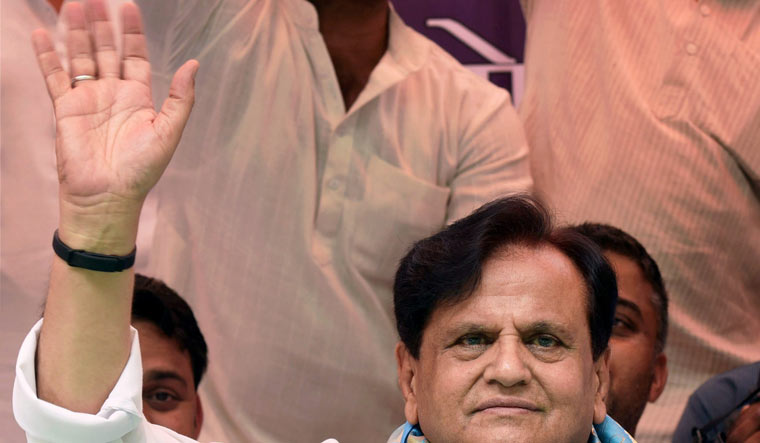
Ahmed Patel | PTI
When the COVID-19 pandemic started spreading in India in March, many journalists in Gujarat received a call from Ahmed Patel asking about their well-being and also that of their families.
“Hope you and your family are doing well. Do let me know in case any help is needed,” he said.
Even several Congress workers received a call from him. He personally called up a reputed hospital in Ahmedabad to book a room for his colleague, Rajya Sabha member Shaktisinh Gohil, who tested positive for COVID-19.
On Wednesday, when the nation lost Ahmed Patel of post-COVID-19 complications , for the Gujarat Congress, it is a loss that the party and its leaders cannot even imagine.
Ahmed Patel was the one-point contact person for the leaders and party workers from Gujarat. Ahmed Patel was accessible 24×7.
A three-time Lok Sabha member and five-time Rajya Sabha member, Ahmed Patel was a man who was in New Delhi but did not forget his roots in Gujarat and was ever ready to help Gujarat and raise concerns when it mattered.
He had friends across party lines and Prime Minister Narendra Modi and people of Ahmed Patel’s age called him ‘Babubhai’, a name he got from his native Piraman village in Bharuch district of Gujarat. There is a likelihood that he might be buried beside the graves of his parents in Piraman.
Not many know that Ahmed Patel was instrumental in running many gaushalas (cow shelters) in Gujarat. A Congress leader in Rajkot, Dr. Hemang Vasavda, recalled how during drought Ahmed Patel aided gaushalas and the way he stayed in Kutch during the killer earthquake of 2001 to guide the party workers.
Totally dedicated to the party without aspiring for any post and easily accessible is how former Gujarat Congress president Arjun Modhwadia described Ahmed Patel. “We have lost a friend, philosopher and a guide,” he said.
Tributes came from the young working president of Gujarat Congress Hardik Patel as well. Hardik recalled how Ahmed Patel inspired him before he joined the party over two years ago. “I remember how he offered me mango ras and puri in peak summer in New Delhi when I went to meet him,” he recalled.
Hardik also said that when he was in jail, Ahmed Patel often called up his parents to comfort them and say that lawyers would be arranged for his case.
Ahmed Patel reaching out to party workers and meeting them personally during his visits to Gujarat in their good and bad times is something that the rank and file of Gujarat Congress is not able to forget.
The manner in which Ahmed Patel won the Rajya Sabha election from Gujarat in a nail-biter in mid-2017 strengthened the Congress and it put up a good show in the Assembly election later that year.
source: http://www.theweek.in / The Week / Home> News> India / by Nandini Oza / November 25th, 2020
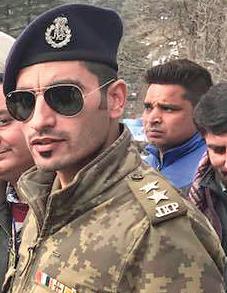
The 33-year-old officer says he chose the location outside his office so that he could monitor and supervise the arrangements.
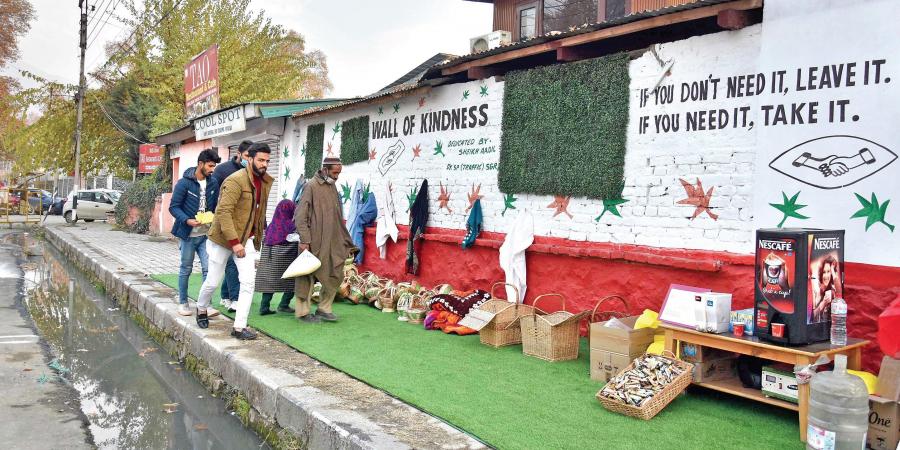
From food items to hangers filled with warm clothes, ‘Wall of Kindness’ in Srinagar brings warmth during this harsh winter | Zahoor Punjabi
As the mercury drops to 2 degree Celsius on a windy Saturday evening in Srinagar, a youngster, Zubair Ahmad, puts up a blanket on a hanger mounted on the ‘Wall of Kindness’, a unique wall set up for the needy and homeless, outside the office of the traffic police department.
Ahmad is among thousands of residents who have come forward to donate their clothes — jackets, coats, suits, mufflers, among others — for those in need of warm clothes during the chilly winter, as a gesture of their “kindness”.
And the ‘architect’ behind the Wall of Kindness initiative is Sheikh Aadil Mushtaq, a 2015-batch Kashmir Police Service (KPS) officer from Baramulla district who is posted as deputy superintendent of police (DSP) traffic police in Srinagar.
Moved by the deplorable conditions of the poor — hit by two shutdowns, after the abrogations of Article 370 in August last year and the Covid-19 lockdown in March — the young police officer took the initiative on November 13 on the occasion of World Kindness Day. The Wall of Kindness was first started in Mashhad in Iran in 2016 and later, the charity initiative spread to other parts of the world.
Starting from food items to hangers filled with warm clothes to sanitary pads, the Wall of Kindness in the heart of summer capital brings warmth during this harsh winter. Painted in white, the wall has a message, too: “If you don’t need it, leave it. If you need it, take it.” “It is not a new idea. It is a corollary effort. This Wall of Kindness is an interface that I have dedicated to the people of Srinagar,” Aadil says.
The 33-year-old officer says he chose the location outside his office so that he could monitor and supervise the arrangements. According to Aadil, there has been an overwhelming response to the initiative. “Every day, hundreds of people come and donate items such as woollen clothes, food and blankets etc.” The DSP, who is pursuing post-graduation diploma in cybercrime, says with the onset of winter, the arrangements for kangris (earthen hot pots) have also been made at the wall.
A coffee and tea vending machine has also been set up there by the donors. “Any homeless or an underprivileged person can have a cup of tea or coffee to beat the chilling winter,” the officer says, adding that it is being ensured that the items reach the needy only. “My initiative has been successful. The things are reaching the needy and the deserving people, and this was the main purpose of my initiative,” Aadil says. Asked whether people have been hesitant in donating, the officer says: “I have been lucky here. The kind of love and affection I get from people is overwhelming.
Without their help, it would have been impossible. I don’t have to instruct much. People are themselves cooperating and donating items.” “I am not doing it as a police officer. Being a police officer is my second identity. I am a responsible citizen first, and I have certain responsibilities towards the people of Jammu and Kashmir,” says DSP. Aadil says he has been receiving calls from people from Jammu and other places who want to join the initiative and generously donate for the destitute.
The police officer says the winter in Kashmir is harsh and many people struggle in the absence of warm clothing. He said he and other police personnel wanted to help those people. The clothes hanging on the wall catch the attention of people who stop to take a look. Locals have, however, appreciated the initiative. Ahmad, a local who has also donated a pair of blankets, says the initiative should be appreciated to encourage others.
“It hardly matters whether the initiative has been taken by a police officer or a civilian. What matters is that we need to be compassionate towards people, who have been economically hit by two lockdowns since August 5 last year. We need to be compassionate towards each other and help each other in the trying times like Covid-19 pandemic. We should come up with such initiatives regularly,” he says.
Moved by deplorable conditions of the poor in Srinagar, after two lockdowns in seven months, a young traffic police officer sets up a ‘Wall of Kindness’ where people can donate clothes for those in need, reports Fayaz Wani.
source: http://www.newindianexpress.com / The New Indian Express / Home> Good News / by Fayaz Wani / Express News Service / November 22nd, 2020
In October, Sana Khan shared the news of her quitting showbiz forever citing religious reasons
Mumbai:
Television actress and Bigg Boss 6 contestant Sana Khan who quit showbiz to follow spiritual path, got married to Mufti Anas in Gujarat on Saturday.
The videos of an intimate wedding ceremony of Sana Khan are surfacing online. We got our hands on an adorable video where the newly married couple was seen cutting a cake in the presence of their family members. The video was shared by Bollywood’s ace photographer Viral Bhayani on Instagram .
Sana Khan looked resplendent in a white bridal gown. She also wore a hijab along with her wedding dress and looked stunning. She compliment the look with a very simple and light make up. Her partner, Mufti Anas kept it traditional on the wedding day. He chose a white kurta-pyjama for the occasion.
Who is Mufti Anas?
Mufti Anas is a Muslim cleric from Surat, Gujarat. ‘Bigg Bos 8’ contestant Ajaz Khan reportedly introduced Sana Khan to her husband.
In October, Sana Khan took to her social media and surprised her fans by sharing the news of her quitting showbiz forever citing religious reasons.
In her post on Instagram, Sana Khan said that the entertainment industry has given her “all kinds of fame, honour and wealth” but she has realised that she should not make “wealth and fame” her only goal. She added that from now on, she will “serve humanity and follow the order of her Creator.”
“When I searched for the answer to this question in my religion, I realized that this life in the world is actually for the betterment of life-after death. And it will be better if the slave lives according to the command of his Creator, and does not make wealth and fame his only goal; rather, he/she should avoid sinful life and serve humanity, and follow the path shown by his/her Creator. Therefore, I declare today that from today onwards, I have resolved to say goodbye to my Showbiz lifestyle forever and serve humanity and follow the orders of my Creator. All brothers and sisters are requested to pray for me to Allah to accept my repentance and grant me the true ability to live in accordance with my determination of spending my life following the commandments ofmy Creator and in the service of humanity, and grant me perseverance in it“.
“Finally, all brothers and sisters are requested to not consult me with regards to any Showbiz work henceforth,” she wrote.
While sharing her decision, Sana removed several pictures and videos of herself from her shoot diaries and trips from her social media account.
source: http://www.siasat.com / The Siasat Daily / Home> Top Stories / by Rasti Amena / November 21st, 2020
These are not the boats of the National Disaster Response Force (NDRF) or Disaster Response Force (DRF) of the Greater Hyderabad Municipal Corporation (GHMC)
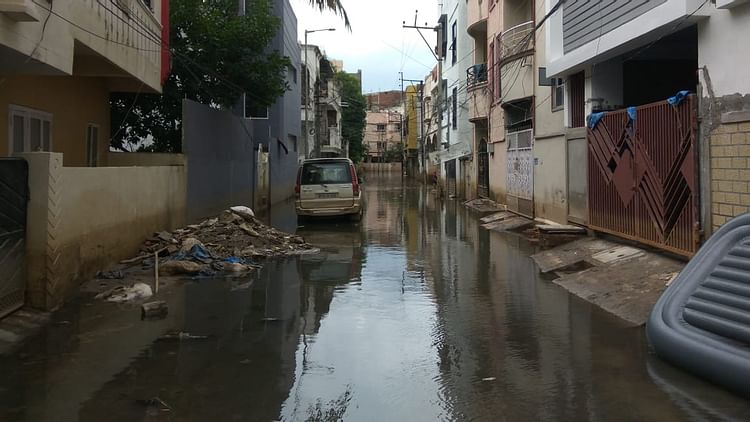
With heavy rains and flash floods inundating Hyderabad’s Nadeem Colony, authorities pressed into service a few boats for rescue and relief operations, but a week later a couple of boats are still seen floating in the flooded waters in the area.
Abdul Qadeer and his friends sail from door to door, supplying free food, milk packets and water bottles to those still trapped in inundated houses. There was another inflatable boat seen floating in the area to provide relief.
These are not the boats of the National Disaster Response Force (NDRF) or Disaster Response Force (DRF) of the Greater Hyderabad Municipal Corporation (GHMC).
With the colony facing perennial problems of water-logging and as there is no end in sight to recurring floods, a couple of residents of the colony have procured boats to remain prepared for the worst.
Abdul Bari, a relative of Abdul Qadeer, brought the inflatable boat with a seating capacity of 5-6 persons from a recent trip to the US.
Though Abdul Qadeer’s house is also inundated with 2-3 feet of water, this did not deter him and some others from helping those who are the worst hit. “The next lane still has five feet of water and this boat is the only means to reach out to the people who have taken shelter on the first or second floor of their houses,” Abdul Qadeer told IANS.
A senior accountant in a private engineering college, he has been living in the colony in Toli Chowki area since 1989. Whenever it rains heavily, the colony gets inundated but the residents have learnt to live with a couple of feet of water every year. “This is the third worst flood. We earlier saw a similar situation in 1989 and 2000,” said Abdul Qadeer.
The colony is located near Shah Hatim pond, which gets stormwater from various uphill localities in Jubilee Hills. The residents in this colony of 500 to 600 families deny that they built the houses in Full Tank Level (FTL).
According to them, the main reason for water logging is the encroachments on the pond. “The pond in 1989 was spread over 35-40 acres but now it is just 17 acres because of encroachments,” he said.
Syed Azhar, a businessman who has been living in the colony for 20 years, said a part of the pond was filled with debris to build houses and a golf course.
The flow of stormwater was also disrupted due to encroachments which led to narrowing of the drains at various points.
Several visits by public representatives and officials and assurances over the years have failed to change the destiny of the colony.
Despite their houses still remaining under water and with no electricity for more than a week, people like Abdul Qadeer are doing their bit to help those worst hit.
Asia Begum, who had to shift to her sister’s house in another colony, cooks food for 50-70 people every day and brings it to Nadeem Colony for distribution. “This is the testing time for all and this is the time to earn good rewards,” she said.
Some families are not ready to leave the houses as they either fear thefts or have no relatives where they can shift. “They can’t go to any other place. In these pandemic times even the guests are not being welcomed,” said Abdul Bari, who also comes here from another area in the city to take part in relief work.
One of the worst floods in Hyderabad’s history last week claimed 33 lives and inundated hundreds of colonies in and around the city.
source: http://www.nationalherald.com / National Herald / Home> National / by IANS / October 20th, 2020
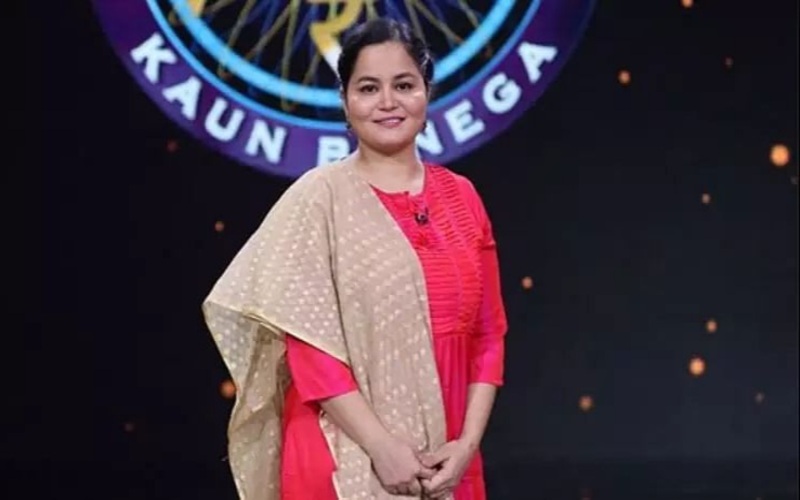
The Wednesday episode of KBC (Kaun Banega Crorepati) was memorable for the Season 12 as the show got its first crorepati in Delhi-based Nazia Nasim. The contestant was lauded not only for her historic victory, but also for not using any lifeline till late during the game.
On November 11, she won the prize money of Rs 1 crore after answering 15 questions correctly. Nasim was the roll-over contestant of Tuesday’s game, during which she had earned Rs 40,000 already. Although Nazia couldn’t answer the 16th jackpot question of Rs 7 crore, she is hailed as the first crorepati after the season premiered on September 28, 2020.
Here are 10 things to know about Nazia Nasim.
Nasim hails from Ranchi, Jharkhand. She moved to Delhi in 2004 to do a PG diploma in advertising and PR from Indian Institute of Mass Communication. Currently, Nasim is working as a communication manager.
She got married in 2008. Along with her husband and 10-year-old son, she resides in the National Capital Delhi.
Nasim’s credits her inspiration of participating in KBC to her mother who has been a die-hard fan of the show and host Amitabh Bachchan. She and her father used to go to the telephone booth early morning to answer KBC’s participatory questions. After having tried for more than 8-10 seasons for 20 years, she finally had to chance to try her knowledge at the game show.
For Nasim, winning the prize money was a ‘Slumdog Millionaire moment’ as she just had to refresh the knowledge she had acquired over the years to answer the questions as she hadn’t prepared much for the show. Slumdog Millionaire is a 2009 Academy Award winning film about the journey of a teenager from slums of Mumbai becoming a millionaire.
Nasim revealed that she would use her prize money for medical expenses of her parents and in-laws. She also wants to get his son proper soccer training as he is an enthusiast of the sport. Moreover, she would donate 2.5 percent of the money for charity (zakat).
Nasim identifies herself as a feminist as she is a big propagator of women’s rights. She hopes that her victory helps cultivate confidence in women and girls from small towns to thrive.
The first crorepati of KBC 12 feels that the show is much more than just money as it provides a stage and opportunity for a person from a decent family to appear on national television and talk to a celebrity.
On talking about not winning the jackpot amount Rs 7 crore, she said that she had gone on the show to fulfill her mother’s dream.
The question that fetched Nasim one crore rupees was, “Which of these actresses once won a National Film Award for Best Playback Singer?” which she answered correctly as Roopa Ganguly.
Nasim’s strategy on the game show was eliminating every wrong option, which did eventually lead her to the right answer. Notably, she didn’t use any lifeline till the 11th question.
Shikha Chandra is an intern with SheThePeople.TV
source: http://www.shethepeople.tv / She The People / Home / by Shikha Chandra / November 13th, 2020
Local flavour, global appeal Mudassir Ahmed and Syed Irshad of Thugs Unit
Mudassir Ahmed and Syed Irshad have pioneered Urdu hip hop movements since the early 2000s.
Mudassir Ahmed and Syed Irshad of Thugs Unit are unable to contain their excitement about making a comeback with hip hop album Resurrection 040 on Apple Music on Friday, November 20.
Syed Irshad says, “The album will feature exclusively on Apple Music once it goes live on November 20, following which it will be released on other music platforms after a fortnightly exclusive with Apple. We are elated that Bobin James, Editor and Artists Relations Lead at Apple Music liked them enough to feature our music on their platform.”
Within the hip hop community, Mudassir Ahmed and Syed Irshad are popular as ‘Mo Boucher’ and ‘Irish Boi’ respectively. The duo from Hyderabad is known as one of India’s finest hip hop groups who pioneered Urdu hip hop genre in Hyderabad.
Explaining the essence of Resurrection 040, Mudassir says, “The tracks in the album blend eastern and western music producing a mystical confluence of Sufism and hip hop genres. The 12-track album features expressive lyrics in Urdu, English and Jamaican styles. It has tracks include . ‘Rubaroo’ (Face to face), ‘Raahe Rast’ (Straight path), ‘Suroor-e-Ishq’ (Exhilaration of love), ‘Pardafash’ (Unmasked), ‘Azmaish’ (Test), ‘Atishbazi’ (Fireworks), ‘Bossman’, ‘Bus’em’ (Bust Them), ‘Hate monger’, ‘Intro’, Kun (Be) featuring Rebel of Khan Artists, and ‘Original Rajah’ (Original ruler). Our music is Sufism-inspired, self-reflection and raises voice against community evils and power establishments.”
Giving a little background of where the two started from, Mudassir says, he’s been writing, creating and recording his music since 2006. He says, “Around the same time, I came to know of Irshad who used to hold hip hop parties and events. Without wasting time, I met up with him and also performed at his hip hop events. We got along instantly and decided to create our own music with our experience. We cut a few mixed tapes in 2008 and 2010.” The duo later released a couple of singles in 2012 and 2014 on myspace and YouTube. “After our musical journey and the continuous association, I felt I was stuck in a loop; we seemed to be creating one track after the other and yet, I found no contentment. I took a break and pursued a spiritual journey in 2014.” Mudassir explains his spiritual journey ‘as the quest to reflect the purity of thoughts in music.’
Some of their mix tapes are The Beginning (2008), The Movement (2010) and Poets Word (2012). Later in 2019, the duo reconnected to create Resurrection 040.
The pull of Urdu
Why in Urdu? “To bring the real flavour of what Hyderabad has to offer in terms of music. All our music is a mix of Urdu and English for ease of understanding by people of all languages. In the early days, Irshad and I experimented with local languages and decided to go with Urdu as we loved how it sounded. Our followers too appreciated the Urdu hip hop, so we decided to make it our signature style. We also lace it with Jamaican flavour by adding a bit of reggae,” explains Mudassir.
Irshad adds, “We see hip-hop as a tool for spreading knowledge and shifting mindsets. Essentially, hip hop is a genre for representing the voice of the people; we use it as a tool to voice our thoughts against oppression in all forms. When we see something wrong in our community, we speak about it in our music.”
The artistes are very proud that the music for the album is produced by Grammy-nominated and multi-platinum producers like Buck Wild. This also makes the duo the first from Telangana (and perhaps from India) to work with the US-based Grammy-nominated producers.
Resurrection 040. will be available for streaming and purchase on all leading music platforms including Spotify and Amazon among others after 15 days.
source: http://www.thehindu.com / The Hindu / Home> News> Cities> Hyderabad / by Prabalika M. Borah / Hyderabad – November 20th, 2020
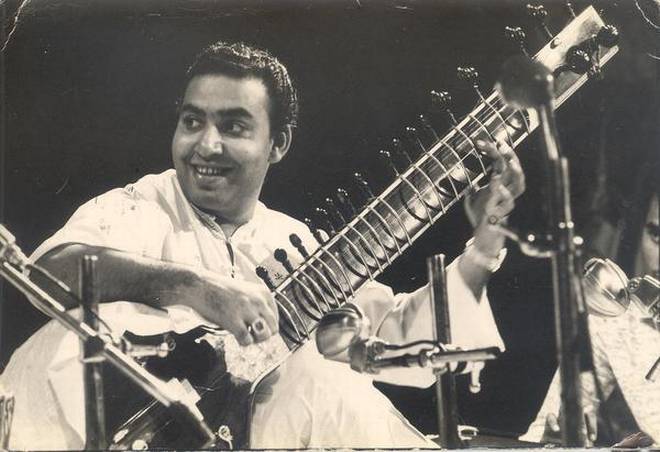
Remembering surbahar legend Ustad Imrat Khan, who shone bright despite being overshadowed by his celebrated brother Ustad Vilayat Khan
Mention the name Ustad Imrat Khan to any young Indian classical music lover, and chances are the reply will be, “Imrat Khan sahib? Oh yes, Ustad Vilayat Khan’s younger brother, the surbahar player.” But Ustad Imrat Khan was much more than just the younger brother of an iconic musician. He was also one of the finest instrumentalists of his time, an innovator, composer, great teacher, and the inheritor of the surbahar playing tradition of the five-generation-old Imdadkhani gharana.
Largely forgotten by a younger generation of listeners, he is a musician whose impact can be discerned in the instrumentalists of today. For one, the fact that he was as fine a sitar player as surbahar player was deliberately underplayed by his mother, Begum Inayat Khan, who was keen that the legacy of her late husband Ustad Inayat Khan be carried forward equally by both her sons, Vilayat and Imrat. From an early age, Imrat was encouraged to practise only the surbahar, on which he was trained by his uncle Ustad Wahid Khan.
Imrat was only three when his father died, so his gurus were his maternal grandfather, Ustad Bande Hasan Khan, uncle Ustad Wahid Khan, and brother Ustad Vilayat Khan. In the early years, the brothers were encouraged to also present their music as a jugalbandi, with Imrat playing the much heavier, more difficult surbahar with his brother Vilayat Khan on the sitar. Some of their immortal recordings, ‘Night at the Taj’, ‘Mian Malhar’, and a private recording of Yemeni on YouTube, reveal Imrat’s musical prowess. Although Ustad Vilayat Khan was famed for his amazing musicality, creativity and virtuosity, the jugalbandis reveal that Ustad Imrat Khan managed to hold his own with elan.
Looking at the legacy he left behind, foremost is his excellence as a guru. He was thorough, exacting, meticulous and inspirational. His sons and disciples, Nishat, Irshad and Wajahat, are well known worldwide. Ustad Imrat Khan was also a fine composer — Satyajit Ray, who interacted with him closely during the making of Jalsaghar, apparently said that though the name of the music composer was given as Ustad Vilayat Khan, it was Ustad Imrat Khan who dealt with the minute details. He created raags Chandra Kanhra, Madhuranjani, Geetanjali, Amrit Kauns, among others, but these never really became mainstream ragas.
Unusual raags, his forte
Understanding that he had to carve out a musical identity distinct from his more celebrated brother, Ustad Imrat Khan revelled in playing unusual raags; two that he popularised were Kalavati and Abhogi Kanhra. His compositions too reveal an attempt at individuality — son Ustad Nishat Khan speaks of a ‘gat’ in raag Gaoti, which was ‘the smallest gat ever composed, in which the mukhda was in just two matras. Says Nishat, “His compositions had a unique style; he used bolkaari (stroke work) in a distinctive way,” a style that was followed later by other instrumentalists. His son Ustad Irshad Khan remembers how he played compositions other than in teen taal. “This was something his gharana was not known for.”
The training on the surbahar gave him a command on the sitar that was awesome, and the wazan of his right hand, the fluid stroke work, and the extensive use of gamak taans on the sitar were distinctly his own. He preferred to encourage the then relatively lesser-known tabla players, Ustad Lateef Ahmed Khan of the Delhi gharana and Pt. Mahapurush Mishra and Pt. Kumar Bose of the Banaras gharana.
Yet, living in the times of those superb sitariyas, Ustad Vilayat Khan and Pt. Ravi Shankar, Ustad Imrat Khan never got the acclaim that was his rightful due. He moved to the U.K. where he taught at the Dartington College of the Arts, then to Europe in the mid-1970s, where he taught at the Central Academy of the Arts, Berlin, then moved to the U.S. in the 80s, where he taught at Washington University, St Louis. In the process, his concerts in India shrank, and a newer generation of listeners forgot his presence. Recipient of the Sangeet Natak award in 1988, the nation forgot him till his Padma Shri in 2017, which he declined as being too little too late.
The Ustad was a simple, large-hearted and fun-loving man. He loved good food and enjoyed watching Hindi movies. Most of his waking hours were spent in music, whether playing, listening or teaching. He was technically proficient, and and was able to tweak the jawari (the ivory tuning bridge) perfectly. A traditionalist, he turned down all offers for fusion concerts, saying there was enough to explore in Indian music. Today, four decades after his prime, one is able to appreciate the extent of his mastery.
The Delhi-based author writes on Hindustani music and musicians.
source: http://www.thehindu.com / The Hindu / Home> Entertainment> Music / by Shailaja Khanna / November 19th, 2020
The Bharatiya Janata Party will do anything it needs to win elections, we are often told.
Yet, there is one thing the BJP does not do, particularly the BJP of Narendra Modi and Amit Shah. It rarely ever gives tickets to Muslims . That costs it a few Muslim-dominated seats. If the BJP’s single-minded purpose was to win seats, it would happily give tickets to Muslims.
By giving some representation to Muslims in their ticket distribution, the BJP could, perhaps, have won state elections in Rajasthan, Delhi, Karnataka, and Madhya Pradesh. You can find Muslims who are all too willing to engage with the BJP at a time when the party has a monopoly over winning elections. Like most communities, Muslims don’t mind being on the right side of power.
It is the BJP that does not respond to Muslim aspirations, because there are things the BJP values more than winning elections, such as ideology. In its post-2014 phase, it has been clearer than ever that the BJP’s ideological purpose is to marginalise Muslims to the point of making them invisible. The Muslim must shut up and stay at home. The Muslim must not be MLA, MP, minister or leader. Muslims must not speak or be heard.
What was such a big deal about blocking traffic on a road or two over the anti-Citizenship (Amendment) Act protests that it caused riots in Delhi? Was the blocking of a road in east Delhi that nobody was really noticing that big a problem for commuters? That is how unacceptable the Muslim political voice is to the BJP.
The BJP doesn’t want Owaisi
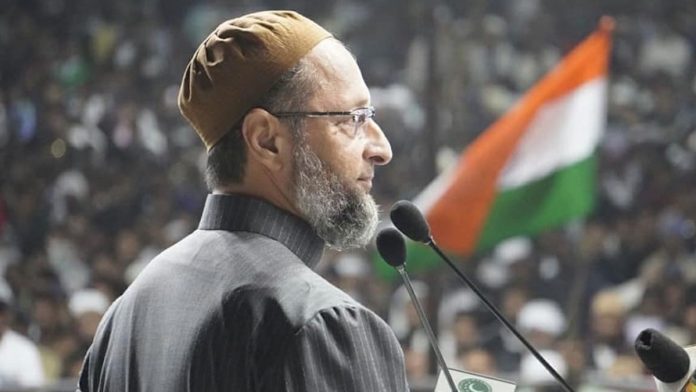
It is facetious to say that the BJP wants Asaduddin Owaisi around in politics. The BJP doesn’t want the Muslim beard or cap. My understanding is that it doesn’t want a Muslim standing up in Parliament — because why should Muslims be present in Parliament of a ‘Hindu Rashtra’ in the first place?
For the first time in the history of Bihar politics, the treasury benches do not have a single Muslim MLA. The BJP did not give a single ticket to a community that is nearly 17 per cent of Bihar’s population — every sixth citizen. It is the only party that seeks to actively exclude an entire community from the corridors of power. Do you think they enjoy the sight of five MLAs from the All-India Majlis-e-Ittehadul Muslimeen (AIMIM) in the assembly?
The five seats won by the AIMIM have led to the usual hand-wringing about how Owaisi’s rise is just what the BJP wants. The BJP wants Muslims to vote for a Muslim party just as it wants Hindus to vote for a Hindu party. This is a misreading of the BJP’s agenda. The BJP-RSS have gone out of their way to make secular parties apologetic about seeking Muslim votes. This has been done to silence the voice of the Muslim community in Indian politics and public life. If Indian Muslims now get a voice through Owaisi and the AIMIM, no, that doesn’t serve the BJP’s purpose.
The BJP would rather that Muslims don’t have a vote at all— which is what might be eventually achieved by the ‘chronology’ laws of NPR-NRC-CAA, which could strip many Muslims of citizenship. One look at the attempts in Assam to repeat the National Register of Citizens (NRC) exercise again and again, flogging a dead horse until it comes alive, shows you how the BJP wants to reduce the number of Muslim voters from the electoral rolls. That’s how the absence of Muslim representation from not just the treasury benches but even the opposition benches might be achieved.
The BJP doesn’t need Owaisi
The BJP does not need Owaisi for polarisation because the BJP has anyway maxed the polarisation game. All that fake news against Muslims — like the Palghar lynching of sadhus immediately blamed on Muslims even though there was no communal angle whatsoever — doesn’t need Owaisi. If anything, Owaisi’s nuanced assertion of constitutional nationalism comes in the way of the BJP leaders and supporters’ efforts to portray the Muslim as the Hindu-hating, Pakistan-loving, cow-slaughtering devil.
The larger misreading here is that the Hindu voter votes only on account of religion. If religious identity was enough, Prime Minister Modi wouldn’t need to sell ‘Atmanirbhar Bharat’ or whatever the latest hollow slogan is. The sort of voter who would vote for the BJP because they are repulsed by Owaisi’s face will anyway vote for the BJP. Owaisi’s presence or absence isn’t going to affect the Hindutva-minded voter’s affinity for the BJP.
Who needs Owaisi?
If anyone needs Owaisi, it is the Indian Muslim. The Indian Muslims who are being deprived of a voice in public discourse because the ‘secular’ parties who claim to uphold their interests have also gone silent. In fact, they’re going beyond silence to active collaboration with Hindu fundamentalism, if you see the recent actions of Priyanka Gandhi, Kamal Nath, and Arvind Kejriwal.
At such a time, Owaisi is a force for good in Indian politics. He’s not going to become chief minister or prime minister and he knows it. What he will achieve is the creation of some competition for Muslim votes, which will force the ‘secular’ parties to acknowledge that, yes, India has Muslims and they must be treated with the same dignity by all political parties as any other voter.
The author is contributing editor to ThePrint. Views are personal.
source: http://www.theprint.in / The Print / Home> Opinion / by Shivam Vij / November 20th, 2020
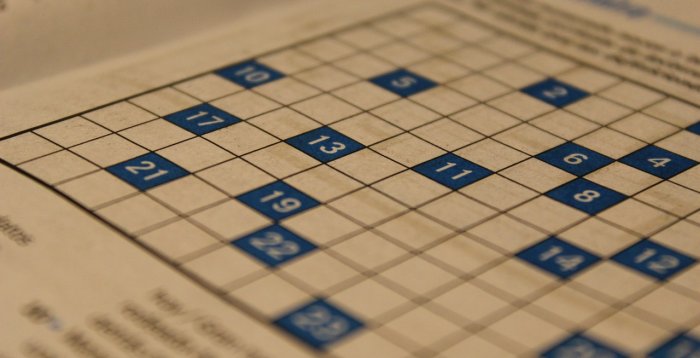
Reigning champion Mohsin Ahmed of Bengaluru has established lead at the end of the first scoring round of the eighth edition of the annual global contest Indian Crossword League, popularly called IXL.
Ahmed is followed by Chennai’s Ramki Krishnan at the second position. Ramki has won the contest four times in the last seven editions, an IXL release said on Sunday.
Three overseas players Sowmya Ramkumar (3rd), Philip Coote (6th) and Koh Ting Sween Kenny (7th) have also made it to the top 10.
The contest, which was open to Indians across the world earlier, has been thrown open to foreigners from this edition, the release said.
There will be eight more weekly online rounds before the offline ‘Grand Finale’ to be held in Bengaluru, the date for which will be decided later.
The top 30 participants on the cumulative leader board will take part in the final.
Started in 2013, IXL has been acknowledged as one of its kind by the Limca Book of Records, the release said.
source: http://www.deccanherald.com / Deccan Herald / Home> City> Top Bengaluru Stories / by PTI / September 07th, 2020