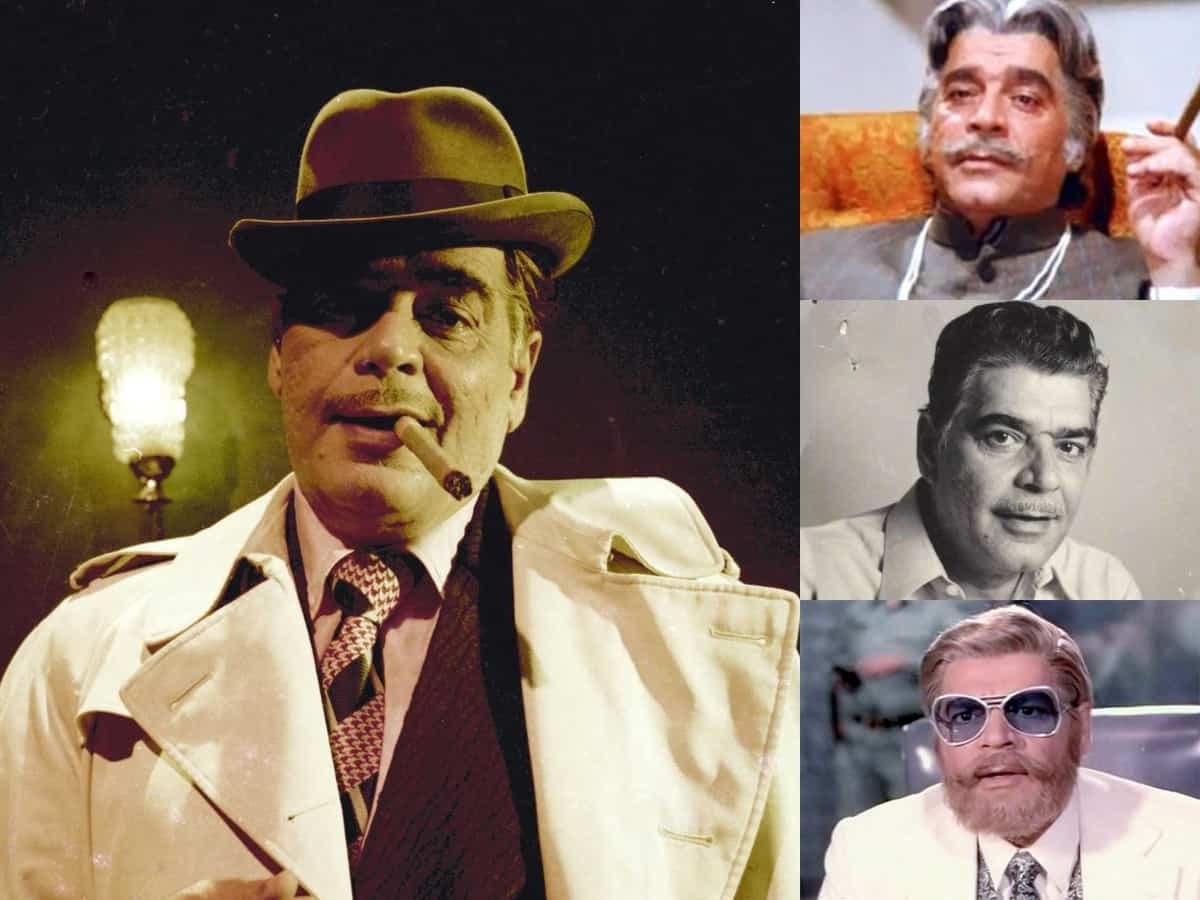
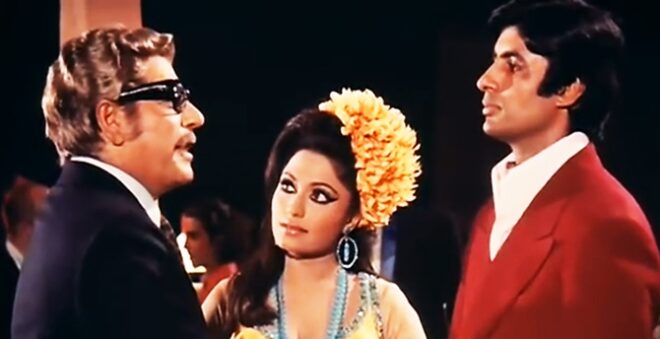
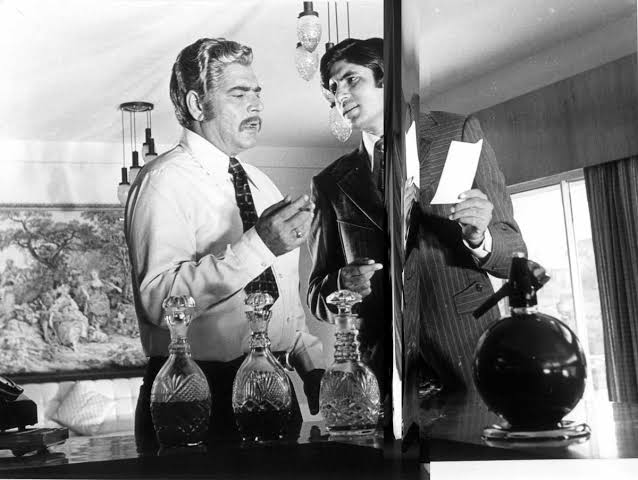
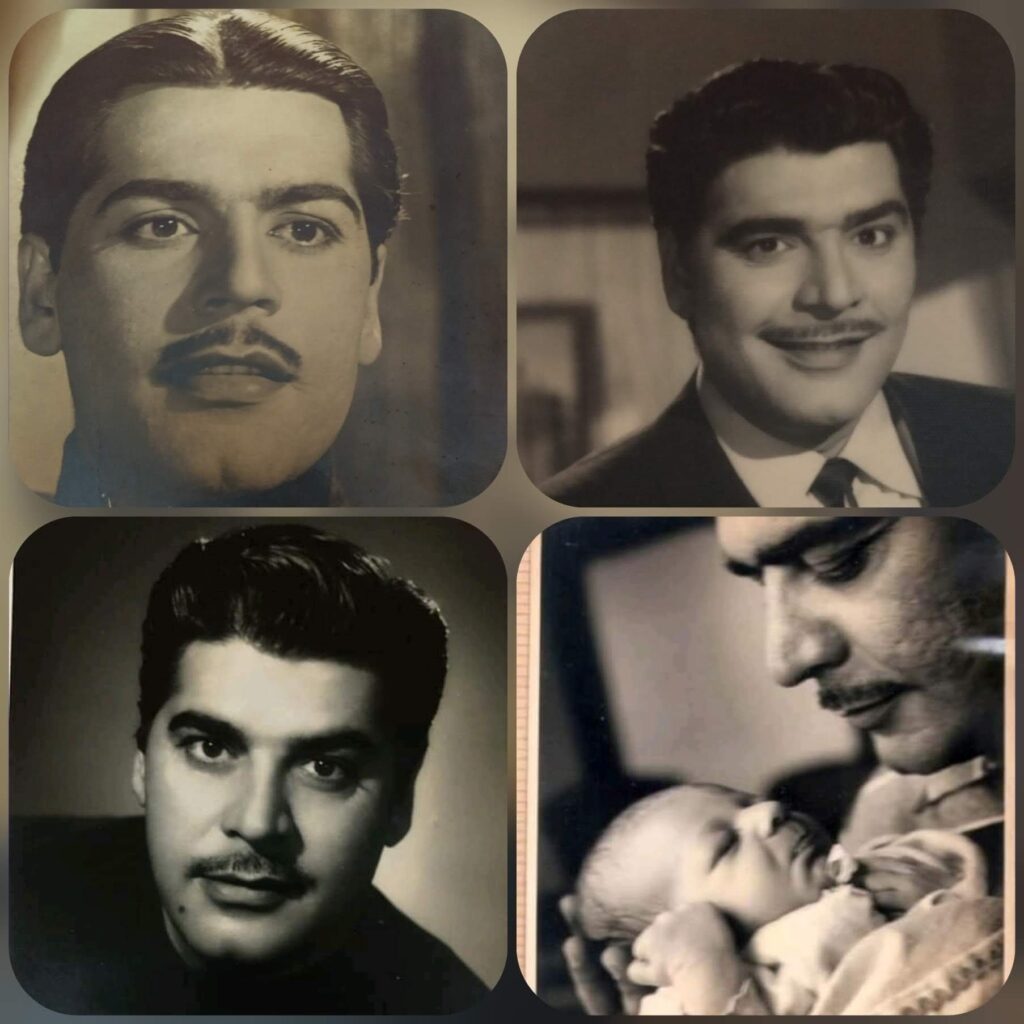
“Sara Shehar Mujhe LION Ke Naam Se Janta Hai” reminds us of the twirling mustachioed daku of Hindi cinema, Ajit. Known for his distinctive performance and incredible dialogue delivery, actor Ajit was the one who had revolutionised the way of villains’ slang in the world of cinema.
He entertained the audience, especially the movie buffs, for over 4 decades by appearing in more than 200 films.
Ajit’s Family background
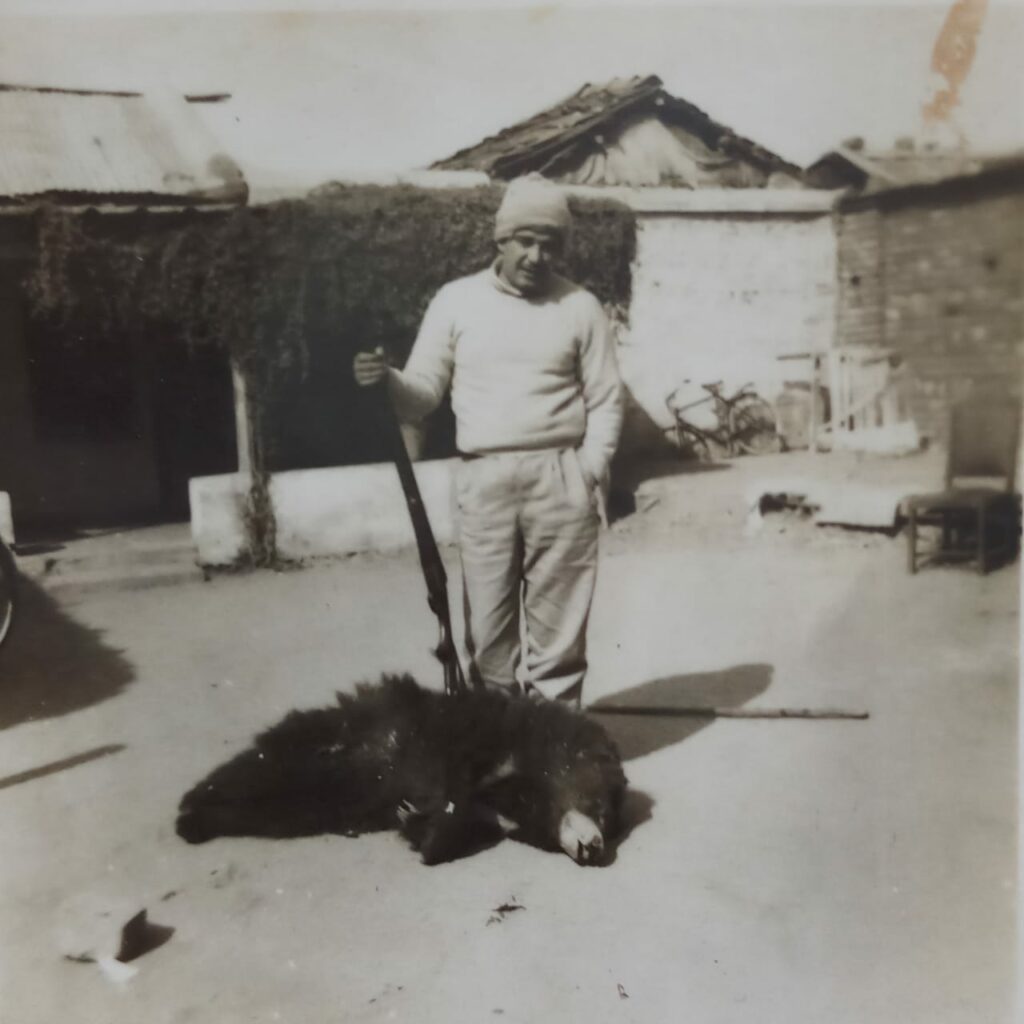
Born on 27 January, 1922 in Golconda, Hyderabad, Ajit was originally known as Hamid Ali Khan. Ajit was his stage name which he acquired after stepping into the world of cinema. His father Bashir Ali Khan worked in the Nizam’s army in Hyderabad.
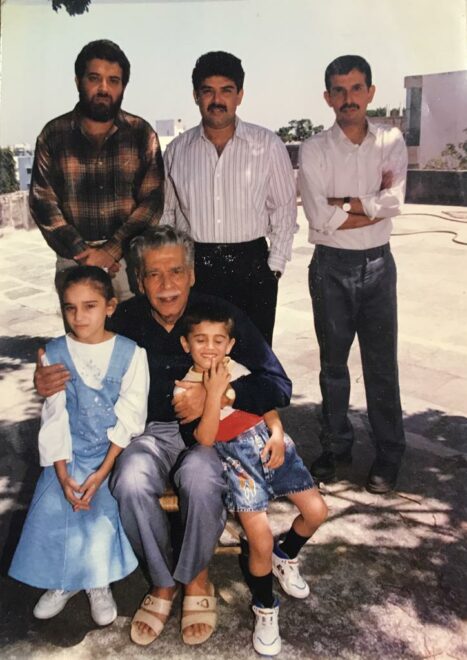
Ajit along with his sons Shahid Ali Khan, Zahid Ali Khan and Abid Ali Khan and grand children Saadia and Saeb.
Ajit did his early education from a Government Junior College, Hanamkonda in Warangaldistrict. He is survived by five sons:: Shahid Ali Khan, Zahid Ali Khan, Abid Ali Khan, Shehzad Ali Khan and Arbaaz Ali Khan.
Journey in the world of cinema
Hamid Ali Khan aka Ajit was fond of acting since childhood. He left Hyderabad and landed in Mumbai to begin his career in the film industry. He was apparently so passionate to get into Bollywood that he reportedly sold his college books to pay for his journey to Mumbai, which is the heart of the Hindi film industry.
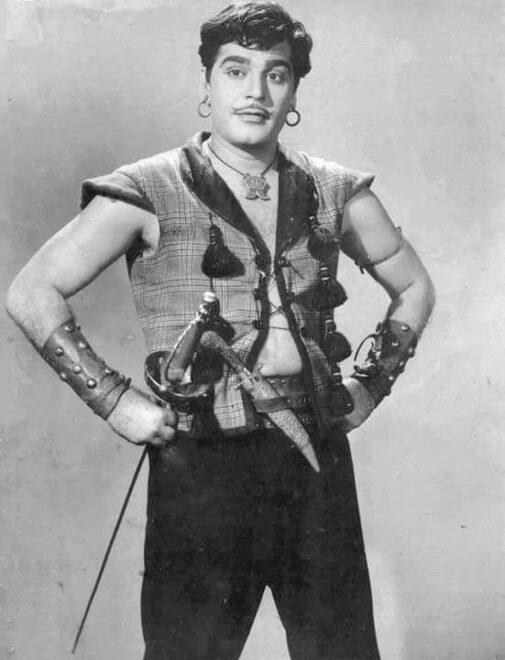
After some struggle, Ajit finally managed to get roles in a few films. He started his acting career with the film Shahe Misra opposite Geeta Bose, which was released in 1946. From 1946 to 1956, Ajit struggled to find his place in the film industry.
After Shahe Misra, he acted in various films like Sikander (with Van Mala), Hatimtai (1947), Aap Beeti (with Khursheed), Sone Ki Chidiya (with Leela Kumari), Dholak (with Meena Shori) and Chanda Ki Chandni (with Monica Desai) as leading hero. Unfortunately, almost all those films flopped as luck did not favour Ajit initially.
In 1950, director K. Amarnath who roped Ajit in his film ‘Beqasoor’ opposite Madhubala, advised him to shorten his film name. Thus on Amarnath’s advise Hamid changed his name to Ajit.
Other films in which he acted as hero include Nastik (1953), Bada Bhai, Milan, Baradari and Dholak. In all of them, his work earned him credibility. However, it would not be enough; Ajit still had to shift to supporting roles in few big ventures of Bollywood like ‘Naya Daur and Mughal-e-Azam’.
When Ajit switched to villainous characters
As most of his films in which he played the leading protagonist roles flopped badly, he chose to switch to antagonist characters. His first movie as a villain was Suraj, followed by films such as Zanjeer and Yaadon Ki Baaraat.
https://www.youtube.com/watch?v=W6d0q1yS2-0
Ajit’s popular dialogues
Known for his peculiar dialogues in a baritone voice, Ajit used to deliver them in Hinglish accent (Hindi+English), something that was never heard before in the industry. Few of his popular dialogues are listed below.
“Lilly don’t be silly” (Zanjeer)
“Saara shahar mujhe Loin ke naam se janta hai” (Kalicharan).
Mera jism zaroor zakhmi hai … lekin meri himmat zakhmi nahi (Mughal-E-Azam).
Rajput jaan harta hai … vachan nahi harta (Mughal-E-Azam)
Kutta jab pagal ho jaata hai toh usse goli maar dete hai (Zanjeer)
Jis tarah kuch aadmiyo ki kamzori baimaani hoti hai … is hi tarah kuch aadmiyo ki kamzori imaandari hoti hai (Zanjeer)
Apni umar se badhkar baatein nahi karte (Zanjeer)
Aashirwad toh bade aadmi dete hai … hum toh sirf rai de sakte hai (Kalicharan)
Zindagi sirf do paon se bhaagti hai … aur maut hazaaron haathon se uska rasta rokti hai (Azaad)
Over the years, his one-liners, iconic drawl and sidekicks — Mona darling and Robert (pronounced Raabert) — gave rise to a whole new genre of ‘Ajit jokes’ that would go on to entertain generations, like the Mona darling-Teja scene in Imtiaz Ali’s Tamasha starring Ranbir Kapoor and Deepika Padukone.
Believe it or not, Ajit gave a whole new definition and look of the villain which has been immortalised in the history of Hindi cinema. Fans especially those from Hyderabad still remember the late actor for his amazing dialogues delivery, antagonist roles and his major contribution to the world of Hindi cinema.
Ajit breathed his last on on October 21, 1998 (he was buried the next morning at about 8 a.m.) , leaving a huge void in the film industry that can never be filled again!
source: http://www.siasat.com / The Siasat Daily / Home> Entertainment>Bollywood News / by Rasti Amena / October 26th, 2020
With only one computer, four students, and just Rs 85 in his pocket in February 2001, Hoque has now emerged as one of the most influential edupreneurs of India. — IANS.
Guwahati :
Mahbubul Hoque, who has set up eight mega educational institutions and a university in 19 years, has turned out to be a guiding light for scores of people in northeast India.
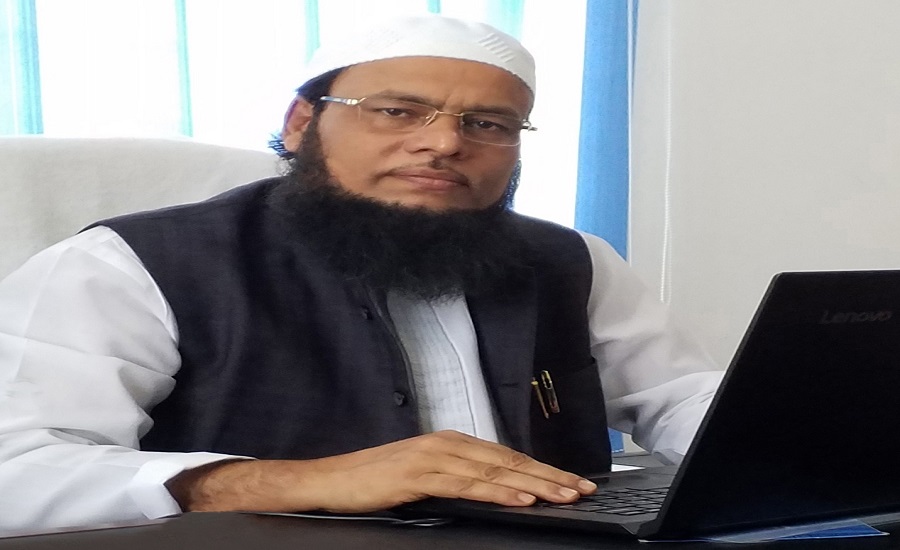
With only one computer, four students, and just Rs 85 in his pocket in February 2001, Hoque has now emerged as one of the most influential edupreneurs of India. He is the founding Chancellor of the University of Science & Technology, Meghalaya (USTM), the first private university on science and technology in the entire northeast.
The university with a student strength of over 5,000 from all the eight northeastern states is empowered by the University Grants Commission (UGC) to award degrees as specified by the UGC.
Besides the USTM, Hoque, being the founding Chairman of the Education Research and Development Foundation (ERDF), has set up nine other educational institutions in the region with a total student strength of 7,500.
These institutions include two CBSE affiliated schools, one AICTE approved engineering college, one law school, one B.Ed. college, one AICTE approved business school, one women’s college, two PCI approved pharmacy colleges in addition to one centre for coaching and guidance centre, and one educational rehabilitation centre.
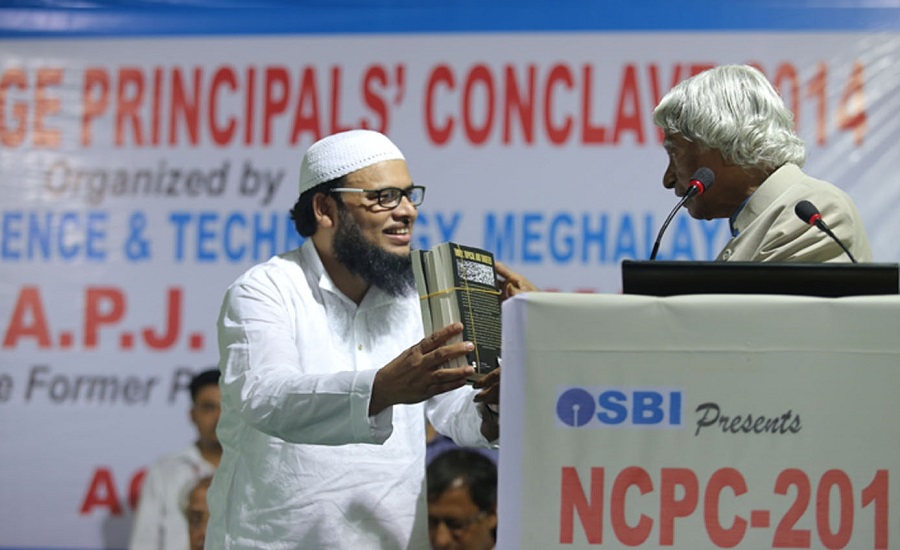
Distinguished personalities including former President A.P.J. Abdul Kalam, Nobel laureate Kailash Satyarthi, former ISRO Chairman A.S. Kiran Kumar and former UGC Chairman Ved Prakash had visited the University of Science & Technology, Meghalaya (USTM) and gave speeches in a number of events and convocations.
Speaking to IANS, Hoque said: “My institutions provide quality education from KG to PG to Ph.D levels. Out of the total number of students, more than 20 per cent belong to underprivileged backward classes who avail free education in each of the institutions where around 750 people work under the ERDF in different positions.”
“After securing the second rank in Master of Computer Applications (MCA) from the Aligarh Muslim University in 2000, I got lucrative job offers from multinational companies, both within the country and abroad. But I returned to my region and started my career as an educational entrepreneur with a strong determination to change the educational scenario of northeast India,” the 47-year-old edupreneur told IANS.
“The key focus of my vision is to provide apt teaching to poor and meritorious students of the northeast region. Of the over 5,000 students currently enrolled in USTM, over 1,200 students are availing free education. Nearly 90 per cent of USTM’s students belong to rural areas, over 38 per cent are tribals and 57 per cent are girls. The university and the other eight institutions run only on the contributions of the students,” Hoque added.
He said that more than 15 vice chancellors from different universities across the country are directly associated with the USTM, while many top personalities, including former President A.P.J. Abdul Kalam, Nobel laureate Kailash Satyarthi, former ISRO Chairman A.S. Kiran Kumar and former UGC Chairman Ved Prakash had visited the varsity and gave speeches in a number of events and convocations.
Terming the USTM as a people’s university, Hoque said it has hundreds of collaborative projects with a large number of reputed educational institutions and universities in India and abroad, including the Jawaharlal Nehru University in Delhi, IIT Guwahati, National Institute Rural Development, North East Space Application Centre, University Grant Commission in Bangladesh, Dhaka University and several institutions in Turkey.
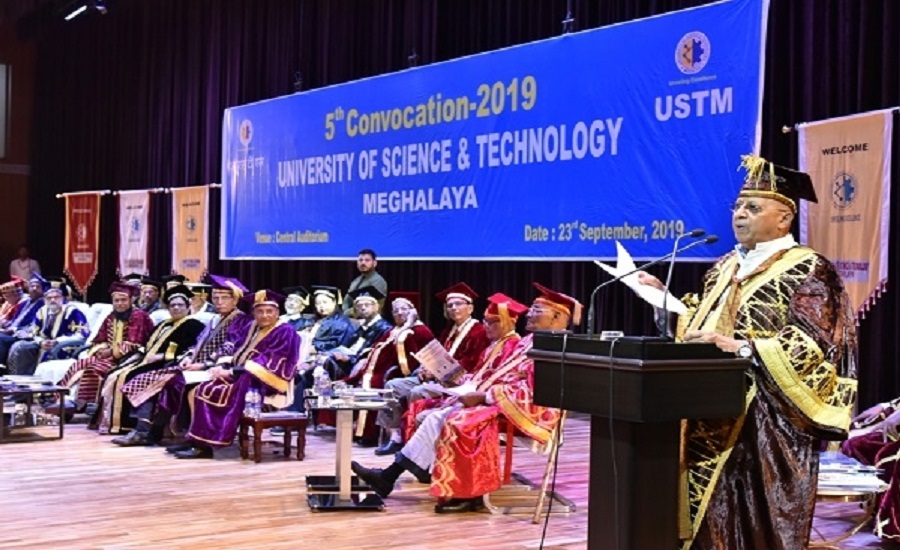
5th Convocaion 2019 of USTM.
Over the years, the USTM has turned into a higher education hub of northeast India.
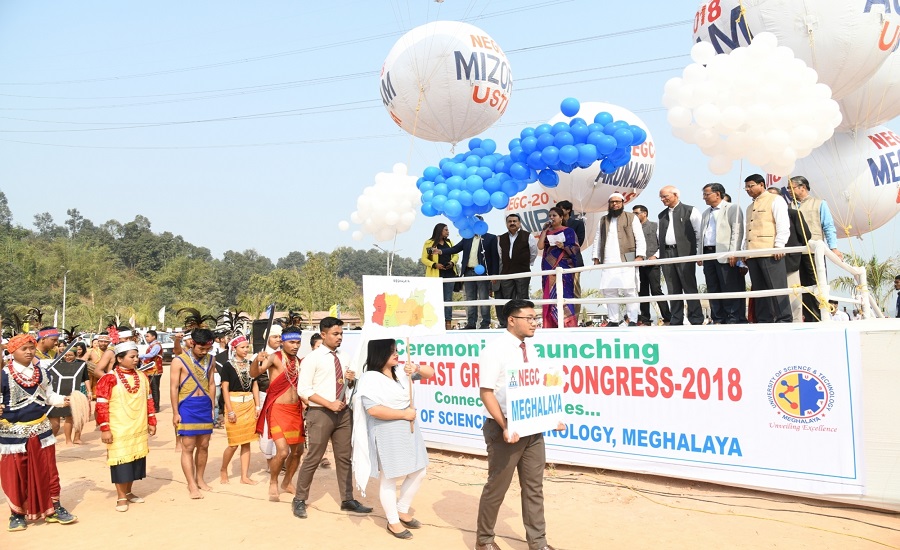
The annual three-day flagship programme — North-East Graduate Congress — sees the participation of more than 10,000 students from over 300 colleges in eight states. More than 30 ethnic communities and languages across the region come together to gain knowledge about the various new career options, enhance their inherent skills.
“This amalgamation of cultural diversity not only creates awareness, but also a sense of inclusiveness and brotherhood thereby paving the way of nation building,” he said.
For his contributions to the field of education, Hoque has received many awards, including the prestigious Shikshacharya Award 2019 bestowed by the Asom Sahitya Sabha.
He said that the USTM, located along the Assam-Meghalaya border in Ri-Bhoi district of Meghalaya, has a strong determination to continue its mission of spreading education to every nook and corner of the region.
The annual three-day flagship programme — North-East Graduate Congress — sees the participation of more than 10,000 students from over 300 colleges in eight states.
“The USTM has charted out a roadmap for its way ahead, ‘Mission Bronze’ – to make it a top university in the east by 2020, ‘Mission Silver’ – to become one of the top universities in the country by 2025, and ‘Mission Gold’ – to become a world class university by 2030,” he said.
Hoque said that ERDF has a plan of establishing a number of institutions for the betterment of education, especially in the rural areas.
He said that some of the upcoming projects include 10 more CBSE affiliated schools in rural and backward places of the northeast region, five B.Ed colleges, a medical college and hospital with allied healthcare institutions, one educational TV channel, and one newspaper each in English and Bangla emphasising on education. — IANS
Source: http://www.clarionindia.net / Clarion / Home> Big Story> Featured> India>Indian Muslims> Spotlight / by Sujit Chakroborty / October 23rd, 2020
Former Indian Administrative Services officer Sabahat S Azim’s biggest challenge when he launched affordable healthcare chain Glocal Healthcare Systems was to prove that he could make the hospitals profitable.
Former Indian Administrative Services officer Sabahat S Azim’s biggest challenge when he launched affordable healthcare chain Glocal Healthcare Systems was to prove that he could make the hospitals profitable.
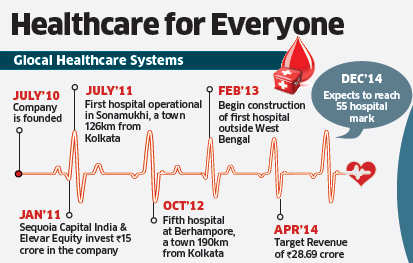
Within six months of launching the first Glocal hospital in July 2011 in Sonamukhi, a town 126km from Kolkata, the hospital had reached break-even. A model that the 37- yearold entrepreneur has now replicated in each of his other four hospitals. “They have proved that social good and profit can go hand in hand,” says Sandeep Farias, Founding Partner of Elevar Equity, which invested Rs 15 crore in the company along with Sequoia Capital India in January 2011. Most other hospitals that also offer affordable healthcare take up to two years to become profitable according to industry estimates.
Glocal is now expanding operations beyond West Bengal with plans to open 50 hospitals in Uttar Pradesh, Bihar, Chhattisgarh, Jharkhand and Orissa by December 2014.
It was the untimely death of his father that led Azim, a trained medical doctor, to launch Glocal in July 2010. “My father died due to unnecessary treatments. I thought, if this can happen to me, a doctor and an IAS officer, what about others?” says Azim, who found an early supporter in M Damodaran, the former Chairman of Securities and Exchange Board of India (Sebi), who became the Chairman of the venture. Azim has known Damodaran since his time as Secretary to the Chief Minister of Tripura, a position he held between 2004 and 2006.
“He is my first sounding board for any idea. When I think of introducing something new, my first thought is ‘how will Mr Damodaran react?’” he says. At Glocal, his team has come up with a protocol-driven model, where the computerised system will help the doctor automate diagnosis of 42 diseases, ranging from ischaemic heart disease to malaria, which they identified as affecting 95% of the patients.
Other affordable ventures are also attempting to cater to the semi-urban and rural market. Like Glocal, eight-yearold Vaatsalya also sets up hospitals (smaller than 100 beds) in small cities and towns with a focus on primary and secondary care. However, Vaatsalya leases out pre-existing hospitals and other buildings and upgrades them to high-quality hospitals. Azim, a fan of Fountainhead—Ayn Rand’s paean to individualism, wanted to design a hospital with just essential infrastructure.
Timely backing from investors helped convert the idea into a business. “I had a 30-minute meeting with Sabahat and he spoke about focusing on a limited set of diseases that constitutes 95% of healthcare issues in the country. I was hooked by this powerful idea,” says Elevar’s Farias.
Sequoia’s Managing Director GV Ravishankar says Glocal fit their requirement of backing good entrepreneurs in large and attractive markets. Glocal charges patients around onefifth of the fees a hospital with similar infrastructure would otherwise charge. It charges Rs 10,000 for a caesarean section, which costs about Rs 50,000 in other private hospitals.
Azim points out that he is able to charge lower fees due to lower cost of infrastructure and by eliminating unnecessary procedures. While a typical 100-bed hospital is about 70,000 square feet in size, Glocal has been able to restrict it to 30,000 square feet thus keeping cost of construction lower. At around Rs 8 crore for a 100-bed hospital, a Glocal hospital is built at about 50% of the cost of a private secondary hospital. The company aims to reach over Rs 28 crore in revenue in fiscal year 2014. As Azim begins Glocal’s expansion beyond West Bengal, he is not resting on his laurels. “It has been exciting so far but there is much more work to do,” he says.
source: http://www.economictimes.indiatimes.com / The Economic Times / Home> Business News> Rise> Entrepreneurship / by Radhika P Nair, ET Bureau / January 25th, 2013
“He ensured everyone got a farewell but his own family couldn’t give him that. They saw his body from afar for a few minutes,” said Jitender Kumar, adding that Khan would have ferried close to 200 bodies since March.
Khan (second from left) was on call 24X7. (Express Photo)
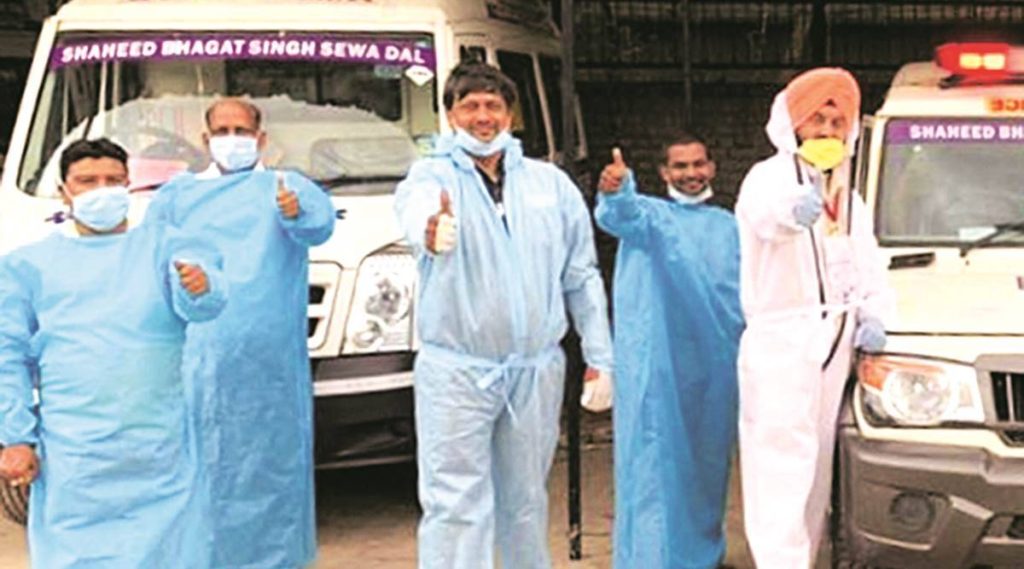
For over six months, Aarif Khan slept in an ambulance parking lot 28 km from his home in northeast Delhi’s Seelampur, staying in touch with his wife and four children on the phone. Khan was on call 24X7, ferrying patients of Covid-19 as well as carrying its victims to their last rites. On Saturday morning, the 48-year-old ambulance driver succumbed to the disease at Hindu Rao Hospital.
Employed with the Shaheed Bhagat Singh Sewa Dal, that provides free emergency services in NCR, Khan would often pitch in with money for the last rites if a family was in need, or help with the rituals if a deceased’s near ones were not around, his colleagues say.
“He ensured everyone got a farewell but his own family couldn’t give him that. They saw his body from afar for a few minutes,” said Jitender Kumar, adding that Khan would have ferried close to 200 bodies since March.
On October 3, Khan fell sick and got a Covid-19 test done, which came positive. He died within a day of getting admitted to hospital.
Khan’s son Aadil, 22, said they had seen him only during his brief visits home since March 21. “We met when he came over to pick up something, like clothes… I used to go to check on him sometimes. We were always worried about him. But he never bothered about Covid, he just wanted to do his job well,” said Aadil, the younger of Khan’s sons, adding that the last time Khan came home, he was already sick.
Khan’s other son, Asif, said, “I didn’t even get to say goodbye to him… How will we survive without him?”
Khan, who earned Rs 16,000 a month, was the sole earning member of the family. Their monthly house rent is Rs 9,000. Aadil said his brother and he did odd jobs once in a while, but work had petered out lately.
“Pariwaar ke liye dukh ka pahaad toot gaya hai (It is a huge blow for the family),” said Kumar, who was present at Khan’s funeral.
“These have been extraordinary times, and even though he was a driver, Khan often helped with the last rites too. Woh Muslim tha par Hinduon ke bhi daah-sanskaar karaata tha (He was a Muslim but he helped out even with cremations of Hindus)… He was very dedicated to his work,” said Jitender Singh Shunty, the founder of the Shaheed Bhagat Singh Sewa Dal, adding that Khan worked 12-14 hours a day, responding to calls even as late as 3 am.
Khan was also around when Shunty and his family tested positive for the virus. So, when Khan got infected and took a turn for the worse, he tried to return the kindness. However, the deterioration was sudden. “Aarif did not have any other health conditions but he was having trouble breathing for the last few days,” he said.
Anand Kumar, 32, a fellow driver with the Sewa Dal who also stays in the parking lot for fear of carrying the virus home, said when he joined a year ago, “Aarif was very helpful. He treated me like a brother and guided me.” Conversations between them often revolved around how much they missed their families, Kumar said.
Founded in 1995, the Sewa Dal provides free and accessible emergency services to the needy in the Capital and around, including ambulances and blood donation, and Khan had been working with them from almost the start.
Shunty said not just hospitals but also RWAs and police stations turn to them. Khan was one of their 12 employees. Last month, Guru Teg Bahadur Hospital had written an appreciation letter thanking the organisation for transporting over 300 bodies from the hospital of Covid patients, and helping in their last rites, including in cases where family members had not turned up. East Delhi District Magistrate Arun Kumar Mishra had also written a letter noting their contribution during the pandemic.
Giving an example of Khan’s dedication, Shunty said, “On September 30, a hospital refused to release a person’s body because his family couldn’t foot the bill… Khan chipped in. He was a man who genuinely cared for others.”
source: http://www.indianexpress.com / The Indian Express / Home> Cities> Delhi / by Ashna Butani / New Delhi – October 14th, 2020
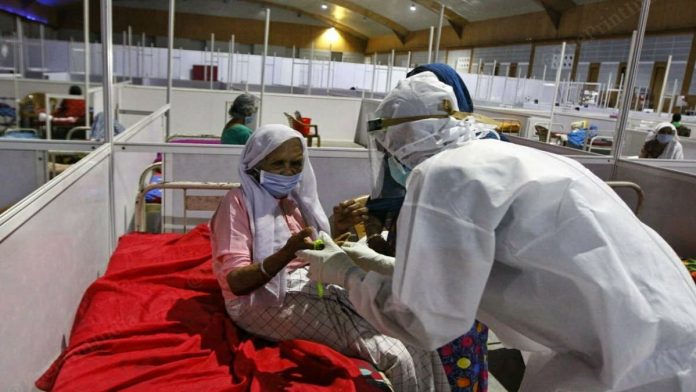
Hundreds of healthcare workers have died while tending to Covid patients around India. But doctors say it’s a risk they can’t avoid on the frontlines of the biggest medical challenge in decades.
Representational image | Praveen Jain | ThePrint
New Delhi:
Ayat Mir, 18, of Kashmir remembers feeling uneasy when her father Ashraf Mir, a doctor, continued his practice through the Covid-19 pandemic.
“When the Covid-19 pandemic hit, I told Baba not to go to his private clinic. But he told me he had a duty towards his patients,” said Ayat. “He told me, ‘what answer will I give to Allah when I am asked why I didn’t serve my patients?’,” Ayat said.
Ashraf, 48, is one of the dozens of doctors across India who have died on the frontlines of the battle against Covid-19.
According to government figures, a total of 300 healthcare workers have died of Covid-19, including doctors. However, the Indian Medical Association (IMA) claims doctor fatalities alone stand at 568.
The number is massive but the true tragedy is brought home by the stories behind the statistics.
The deaths include starry-eyed beginners looking to make a difference, and those who refused to retire, reluctant to give up helping patients.
There were the doctors from Andhra Pradesh and Maharashtra who treated their patients for a pittance, and another from West Bengal who left behind a two-year-old son. Yet another doctor from Maharashtra was planning his son’s wedding when he contracted Covid-19 and died, and a Karnataka practitioner got the disease as he visited different districts to spread awareness about precautions.
Dr Ashraf of Pampore was a government doctor but ran a private practice on the side where he treated patients for free.
Their grieving families speak of their struggle to move on — of trying to make peace with the empty chair at the dinner table — but also talk about being inspired by the sacrifice their loved ones made. In the journey ahead, it’s this inspiration that is helping many push through the grief.
Jammu & Kashmir
Dr Ashraf Mir, a senior medical officer at the District Hospital Pulwama, first developed a fever on 16 July. That day, his daughter Ayat said, Ashraf went to the hospital, but isolated himself in the family’s second house upon return.
“Then I also got Covid. Baba used to come to my door and give me medicines even as he was not well himself,” she added
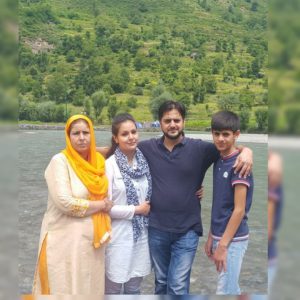
Dr Ashraf Mir, 48, with his wife and children | By special arrangement
Ashraf was finally admitted to hospital on 23 July. He passed away on 9 August at Sher-i-Kashmir Institute of Medical Sciences (SKIMS) in Srinagar, where he was admitted later.
He is survived by his wife, who is a government school teacher, and two children.
Besides his job at the district hospital, Ashraf also had a private practice where he treated patients free of cost, said Ayat.
“My baba’s loss is too big for us but we must get by. He would have wanted that for us. Both my brother and I are inspired by his sacrifice, and we wish to follow in his footsteps,” said the 18-year-old aspiring doctor.
According to Dr Atal Dulloo, financial commissioner at the J&K Health and Medical Education Department, a total of five health workers have died of Covid-19 in the union territory.
West Bengal
Dr Santosh Bhandari, 64, died of Covid-19 in June. A resident of Howrah, the doctor contracted the disease during his daily rounds to nearby villages, where he offered his services during the lockdown.
“It started with a fever,” his widow Manisha Bhandari told ThePrint. “Initially, we could not even manage to get a bed for him. It was all confusion,” she added. “Nobody helped us. We did not get an ambulance for taking him to the hospital. Neighbours blocked our house. We were not getting food initially,” she said, alleging that market runs for drinking water became difficult too.
Bhandari had been the sole earning member of the family, as their son lost his job during the lockdown.
Dr Nitish Kumar, 36, was working at West Bengal’s premier cardiology institute — the Kolkata-based private RN Tagore Institute of Cardiac Sciences (RTICS) — when the pandemic struck. He tested positive for Covid in mid-July.
Nitish had no comorbidities, but his condition deteriorated over the next few days. He passed away on 5 August, leaving behind a homemaker wife and a two-year-old son.
In West Bengal, an estimated 36 doctors have died due to coronavirus since April, according to IMA data.
Maharashtra
Dr Rajani Jagtap, the chief medical officer at Mumbai’s civic agency-run SVD Savarkar Hospital, lost her husband — a doctor who ran a private clinic — to Covid in the first week of July. Dr Shridhar Jagtap, 60, set up his private practice after retiring two years ago from Mumbai’s Shatabdi Hospital.
Many private doctors shut their dispensaries and clinics after the pandemic struck, but Shridhar continued working.
“He wasn’t the kind of person who liked to stay at home. He was happiest when he was with his patients. He was doing a lot of philanthropic work treating HIV positive patients as well,” Rajani told ThePrint. “He was very gentle and loving. I met him 23 years ago while working with the BMC (Brihanmumbai Municipal Corporation),” she said.
Rajani added that she had never once imagined a life without him. Nor had she ever thought that she wouldn’t be with him when he drew his last breath.
“I tested positive on 23 June. I had symptoms like exhaustion and fever. Four days later, my husband tested positive. He had a lot of comorbidities and his condition deteriorated very fast,” Rajani said.
Shridhar, who was originally from Pune, was admitted to the city’s Sassoon Hospital, while Dr Rajani was kept under home quarantine in Mumbai.
Even as Rajani’s condition improved, her husband’s got worse. He died on 7 July.
“My old mother was living with me and there were two helps too, one of whom tested positive. We were isolated and it was very scary. I was absolutely devastated. I had bouts of crying every day. It felt like I had lost a part of my body,” Rajani said. “My heart went out to my kids. Neither of them got to see their dad, although they were constantly in a video chat with him.”
Since her recovery, Rajani has established a support group, Staying Alive, where members help each other come to terms with the death of loved ones taken away by Covid-19.
In another part of the city, doctor-couple Shubhangi Patil and Hemant Patil were picking out a date for their 27-year-old son Saket’s wedding when the pandemic hit.
Hemant Patil, 58, ran a private clinic where he treated patients for Rs 100. He was also a three-time corporator who represented Hitendra Thakur’s Bahujan Vikas Aghadi, a Maharashtra-based party, in the Vasai-Virar Municipal Corporation.
“He did a lot of social work and people really respected him in Vasai. Every year, on 1 May, he would organise a blood donation camp. He also helped the civic body in setting up isolation centres, quarantine centres for Covid,” Shubhangi said.
He had hypertension and diabetes, but insisted on keeping his clinic open throughout the Covid crisis, she added.
In June, Hemant had to resuscitate a 28-year-old patient by administering CPR — which includes artificial ventilation through mouth-to-mouth or rescue breathing. The patient recovered but tested positive for Covid. On 29 June, Hemant isolated himself in his clinic. That was the last time Shubhangi met her husband.
As his condition became critical, the family shifted him to a hospital. He passed away on 11 July.
“The entire family decided not to break the news to me until the next morning. I was Covid positive and admitted to hospital, so I couldn’t even see him,” Shubhangi said. “I am learning to live alone after 39 years of togetherness, first courtship, and then marriage. He was everything for me.”
With her son’s marriage, the family’s finances and her husband’s medical practice to look after, Shubhangi is unsure of what the future holds. And there’s only Covid to blame.
“It is a strange disease. It doesn’t give a person time. Even a cardiac arrest gives the doctor and the patient some time to respond, but the hypoxia that can happen due to Covid just doesn’t. The infection spreads so quickly one doesn’t realise what’s happening,” she said.
IMA numbers suggest 65 doctors have died of Covid-19 in Maharashtra.
Karnataka
Dr Siddana K, 65
Dr Siddanna K, a 65-year-old private practitioner based in Gulbarga city, was a veteran with over three decades in the field. At the time of his death, he was helming his own private clinic after working at Gurmitkal Government Hospital for 31 years.
He died on 26 July. Speaking to ThePrint, his son-in-law said he had “served people for decades”.
Through the pandemic, Dr Manjunath Gowda, a 53-year-old surgeon from Davangere, travelled to different districts in the state to advise people on the precautions to take against Covid-19.
“He wanted to set an example on how we can upgrade facilities and provide safe treatment for patients in Davanagere,” said a relative, Dr Jayachandra, a practising dental surgeon.
Gowda died on 8 September.
According to IMA data, 64 doctors have died of Covid-19 in Karnataka.
Delhi
Joginder Chaudhary, 28, a junior doctor at Dr Baba Saheb Ambedkar Medical Hospital and College, tested positive on 27 June while serving in the Covid ward. Complications caused by the disease killed him on 27 July.
A posthumous profile of the young doctor in the Washington Post features a photograph of him and a colleague volunteering at a medical camp for women. His death in the line of duty came barely a year after he joined the profession.
Joginder was the son of a farmer, who owns two bighas of land in a Madhya Pradesh village and did all he could to put Joginder on the path to a better future. He was reportedly sent to a private school in Rajasthan so he could secure a good education, and his father even sold their family home to fund his medical education.
At the time of his death, Joginder’s income was helping his family get by. His father struggled to pay the bills when Joginder was admitted to Sir Ganga Ram, a private hospital in Delhi, for treatment, but the facility waived his entire fees in recognition of his role as a doctor.
After his death, the Delhi government gave the family Rs 1 crore as compensation.
“We are financially alright for now,” said his father Rajendra. “But we are mentally distraught. We had put in a lot of effort and hard work to help him get to his position.”
While his father is struggling to move on — with a school-going daughter and another son to look after — the death of Joginder was a blow his mother couldn’t recover from. She died a few weeks after him.
Meanwhile, a veteran doctor’s widow is yet learning to navigate her day without her husband. Dr Asheem Gupta, a senior anaesthesiologist at Lok Nayak Jai Prakash (LNJP) Hospital, died in June after serving in the facility’s ICU unit. He was 55.
“Even routine activities like eating food seem dull now,” his wife Dr Nirupama Gupta, a radiologist working in Noida, said.
Their son, who lives in Australia, wants to return to India, but his shaken mother doesn’t want that. “He has been insisting that he will come now but I feel it is safer for him there. I can’t bear the thought of another family member getting Covid-19,” she said.
Dr Gupta was an avid sports fan and the rare anaesthesiologist to share a good rapport with surgeons, a colleague told ThePrint for a profile published after his death. A ward boy at the hospital spoke of his generosity.
“Dr Asheem went out of his way to help people. Be it rich or poor. When many weren’t able to afford ventilators, he had helped them, as he did for two ward boys here,” a ward boy said.
In Delhi, IMA estimates suggest about 14 doctors have died of Covid-19.
Andhra Pradesh
The tag of “Rs 2 doctor” for Dr Ismail Hussain, 76, of Andhra Pradesh’s Kurnool was a testament to a life lived in benevolence. Over his stint as a doctor, Hussain is believed to have treated lakhs of poor patients for negligible rates. He kept a cardboard box at his nursing home and residence, where patients could pay as much as they wanted as fees.
His reputation drew patients not from Andhra alone, but also from the nearby districts of Telangana and Karnataka. He passed away on 14 April, and was tested positive for Covid-19 a day later.
According to Kalkura Chandrashekhar, Ismail’s close friend of 40 years, the doctor continued seeing patients even when most clinics and hospitals shut over Covid-19 concerns. “Ismail’s death is a great loss to the people of Kurnool,” Chandrashekhar said.
He is one of around 65 doctors who have died of Covid-19 in the state.
Telangana
Dr Naresh Kumar was serving as the Deputy Medical & Health Officer (DMHO) of the Bhadradri Kothagudem district, when he contracted the virus and passed away in August. He is survived by his wife and two daughters.
After his death, several doctors’ associations rallied to collect funds for his family and raised over Rs 25 lakh. The Telangana government also announced Rs 25 lakh ex-gratia compensation and a gazetted job for his wife.
State health department data suggests there had been 10 doctor fatalities among the over 2,000 healthcare staff tested positive for Covid-19 until August end. The figure has been contested by doctors’ associations.
In March, the central government announced a Rs 50 lakh insurance cover for families of health workers who die of Covid-19 in the line of duty. State governments, including those in West Bengal, Telangana, and Maharashtra, have since followed suit, while some like Andhra Pradesh are yet to announce such a scheme.
According to a senior officer in the Union Health Ministry, so far, the families of 95 healthcare workers have been compensated under the insurance scheme, while 175 applications are pending and 30 are yet to be sent by various states. The sources said this tally of 300 accounts for all the healthcare workers who have died of Covid-19.
However, the IMA, which has collated data from chapters across the country, pegs the number of doctor fatalities at 568.
ThePrint reached Union Health Ministry spokesperson Manisha Verma to ask about the discrepancy through call, text and email, but the query hasn’t been answered.
However, a senior officer, speaking off the record, questioned the credibility of IMA data. “The IMA cannot tell you 500 have died. Can they tell you that they have all died because of Covid and not died because of natural causes after having caught Covid?” the officer said.
‘It’s our duty’
The Covid-19 pandemic presents one of the biggest challenges the medical community has faced in recent years — highly infectious in nature, the disease puts healthcare staff at immense risk even as they pull long hours on duty to deal with the onslaught of patients.
But doctors tending to Covid patients say the risk is a professional hazard, and they can’t overlook their duty.
“We aren’t superhuman, but we are taking risks and doing our jobs,” said Dr Shahid Bharmare, a consulting physician at Mumbai’s Kohinoor Hospital who has been treating Covid patients since March. “Because there is no escape… It’s not about money. It’s a duty we have to do. If I don’t do it, who else will?”
His family, Bharmare added, was “initially reluctant” when he assumed pandemic duty “but they understood that I have to”.
“Now they’ve gotten used to it. So, I take all precautions. But yes, there are a few things I miss as well. I can’t hug my son anymore. I have to stay away from him,” he said. “That risk is always there in the back of my mind. That is there with every Covid-19 warrior. But it’s my responsibility and I can’t stay away from it.”
According to the doctor, most people will contract Covid-19. “You can’t stay away from it. If you’re anyway going to get infected, why not work and do it?”
Pulmonologist Dr Ravi Dosi of Indore’s Sri Aurobindo Institute of Medical Sciences (SAIMS) said he knew two doctors who lost their lives.
“They made the supreme sacrifice for their passion. Medicine is a passion and these passionate doctors gave up everything they had,” he added.
Dosi has been treating Covid-19 patients since the very start of the pandemic.
“I myself became a victim of the Covid-19 virus but I recovered and had the opportunity to keep serving the patients during that time. But I felt the virus inside me, I felt the potency, and the way that the virus engulfs you in its power,” he said. “Being a doctor, you can understand what it does to your body. This is not a good virus. No one is invincible.”
Inputs from Azaan Javaid, Madhuparna Das, Manasi Phadke, Rohini Swamy, Soniya Agrawal, Aneesha Bedi, Rishika Sadam
source: http://www.theprint.in / The Print / Home> Health / by Angana Chakrabarti / October 18th, 2020
An advertisement about an inter-faith couple garnered so much hate online that it had to be pulled down by Tanishq this week. In a temple in Manamelkudi in Pudukkottai, there is no room for such hate. A muslim district councilor has constructed a pathway in and around the temple with paver blocks at a cost of Rs. 5.34 lakhs.
77-year-old Chidambaram, who has been the temple priest at the Muthu Mariamman Temple in Manamkeludi for several decades had just one demand – a pathway around the temple and one that would connect it to the road. When Najimudeen Jahabersadik came to canvass for votes last year, he told him that he would win, and asked just one thing of him – a pathway for devotees.
“Najimudeen delivered his promise. I am extremely happy, my long pending demand has been fulfilled. I feel even happier that the councilor chose to work on a temple first, proves that God is one,” said Chidambaram.
Najimudeen Jahabersadik has been a union councilor for Manamelkudi since 2011. After a few years when elections weren’t held, he came back to power last year as the District Councilor with the DMK.
He says that he won with a margin of more than 16,000 votes, one of the highest margins ever. As soon as he received funds, the first thing he did was use it for constructing this pathway at the Muthu Mariamman Temple.
“The locals faced lot of problems as there was no proper structure around the temple, it was all sticks and stones. Due to COVID, fund allotment took time and the districts received funds very late. I was in Dubai during the lockdown and did this work with the help of the Panchayat President. We first received Rs. 5.34 lakhs and decided to use it for this temple,” says Najimudeen.
For Najimudeen, duty trumps all. He wants to show his thanks to voters through his performance. “As a councilor, everyone is same for me. I want to fulfill promises made to everyone, irrespective of religion, caste or creed. I will try to fulfill the commitments made to everyone in my district,” adds Najimudeen.
The councilor already has atleast 5-6 more projects up his sleeve, mostly road laying, tank work and helping two other temples in the district.
source: http://www.newindianexpress.com / The New Indian Express / Home> States> Tamil Nadu / by Sowmya Mani / Express News Service / October 18th, 2020
The gate was last opened almost two decades ago, after which it had remained jammed with debris, rocks and plastic.
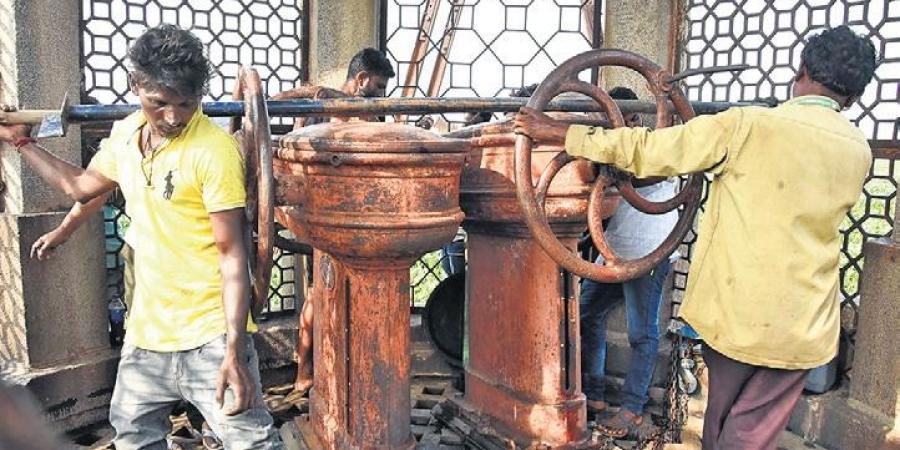
Mechanic Khadeer and his helpers try to open the sluice gates of Fox Sagar lake on Wednesday | rvk rao
Hyderabad :
In a surprising turn of events, the sluice gate of Fox Sagar lake was successfully opened by a local automobile mechanic, Mohammad Khadeer, after engineers and officials in charge were unable to unlock the century-old vents for over a week.
The gate was last opened almost two decades ago, after which it had remained jammed with debris, rocks and plastic.A big rock was stuck exactly where the wheels of the sluice gate were supposed to rotate. After the technical staff failed to remove the rock, Khadeer stepped in on the request of the local councillor.
Speaking to Express, Khadeer said, “We knew that works to open the Fox Sagar sluice gate had begun, as most of the chawls, bastis and residential areas around the lake have been inundated by water. The local councillor called me on Tuesday and asked me to check why the sluice gate was not opening. When I reached there, I was told they had been trying to open it for over eight days. I, with a couple of boys from my shop, tried to understand which part of the gate could or could not be worked around, since it is a very old structure.”
“We soon realised that it was not an engineering issue, rather, debris from the lake had got stuck at multiple levels of the four sluice gates. It took us over four to five hours to cut through layers of tarpaulin, fabric, debris, plastic, loose rocks and boulders,” Khadeer added.
The opening of the sluice gates sparked an outburst of cheers, and the technical team on the spot showered Khadeer with compliments, calling him the ‘man of the hour.’Once the gates are opened, water from the lake flows into the nala underneath the culvert junction, up to Hussainsagar.
source: http://www.newindianexpress.com / The New Indian Express / Home> Cities> Hyderabad / by Oishani Mojumder / Express News Service / October 22nd, 2020
Dr Najma Salim believed she had to tell the truth.
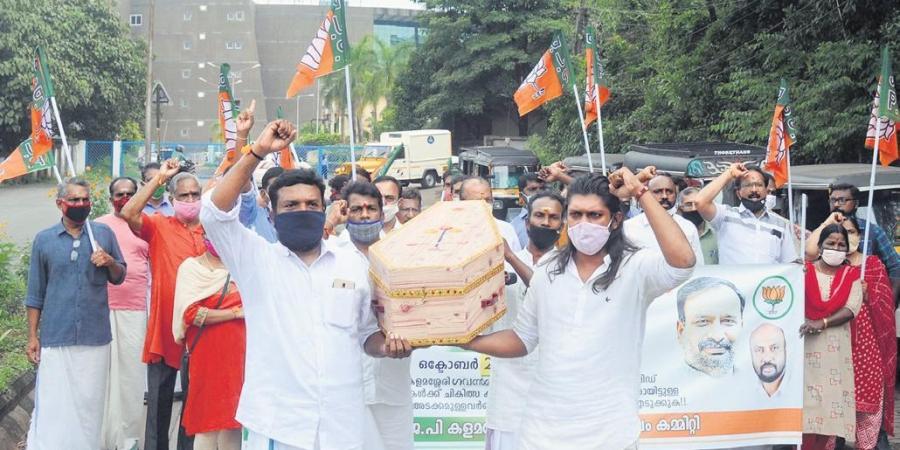
BJP workers stage a protest with coffin in front of Ernakulam MCH on Tuesday against alleged medical negligence at the MCH | A Sanesh
Kochi :
Dr Najma Salim believed she had to tell the truth. The doctor with the Government Medical College Hospital, Ernakulam, who vouched for a nurse’s claim of lapses at the hospital and stood her ground despite coming under pressure, is facing the consequences of taking a bold stance. She has been attacked on social media, with some even questioning her credibility and raising slanderous allegations against her. But her courage to speak out has also won her respect, with many supporting her vociferously.
The voice message of the hospital’s nursing officer, Jalaja Devi, triggered the fire and Dr Najma stood up for truth even when she knew it was against the entire system.“I know my future is at stake. I don’t know what will happen when I go back to duty. But I stand by what I said and these are instances which I witnessed,” she had said.Several trolls questioning her credibility as a doctor are being circulated on the social media.
“There are a thousand examples of Najma that proves her credibility and dedication,” say her colleagues. Dr Jayasoorya K, a friend and her senior at the Ernakulam MCH, said in a Facebook post on Thursday: “One should enquire with the inmates of the Karunya Old Age Home about Najma to clear the air about her selflessness and dedication.
Her efforts to take the drug bank, which is today being relied upon by so many patients, forward is indeed commendable. Please inquire about her work before questioning her competence as a doctor.”
Later, he told TNIE, “Let the truth, whatever it is, come out during the investigation. All of us who hold the medical college close to our hearts want just that.”“Some people called it a political stunt. She never intended any of it. She simply stood for truth,” said another colleague, who did not want to be named.Dr Sanil Kumar, member of the V R Krishna Iyer Movement, said a fair and comprehensive investigation is needed to bring out the truth.
In context The doctor with the Government Medical College Hospital, Ernakulam, who vouched for a nurse’s claim of lapses at the hospital, is facing the consequences of taking a bold stance
source: http://www.newindianexpress.com / The New Indian Express / Home> Cities> Kochi / by Anuja Susan / Express News Service / October 23rd, 2020
At the end of the PowerPlay overs, RCB’s Mohammed Siraj had figures of 3-2-2-3 against Kolkata Knight Riders (KKR) in the IPL.
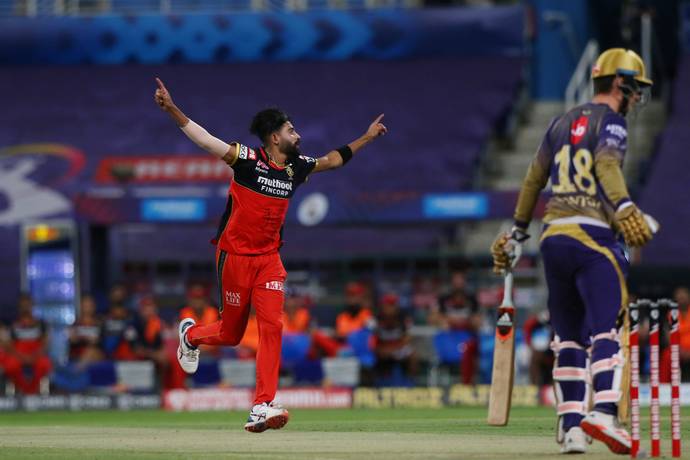
RCB’s Siraj celebrates the wicket of KKR’s Tom Banton. – BCCI/IPL
Royal Challengers Bangalore (RCB) pacer Mohammed Siraj returned to the line-up and made a telling difference with the ball in the Indian Premier League (IPL) match against Kolkata Knight Riders (KKR) in Abu Dhabi on Wednesday.
Siraj dismissed Rahul Tripathi (1) and Nitish Rana (0) off successive deliveries in his first over before accounting for Tom Banton (10) in his second. At the end of the PowerPlay, his figures read 3-2-2-3 as KKR was left reeling at 17/4.
The 26-year-old became the first bowler to bowl two maidens in an IPL game. He finished with figures of 4-2-8-3.
Siraj made a comeback into the team after he had been hit for 44 runs (2 fours, 4 sixes) in his three overs in the defeat to Kings XI Punjab (KXIP) in Sharjah last week. He was then dropped for the next game against Rajasthan Royals.
Before the match against KKR, the Hyderabad cricketer had three wickets in as many outings this season.
On Siraj’s inclusion in place of Shahbaz Ahmed, RCB director of cricket operations Mike Hesson said, “We thought Siraj was a good option on this surface. We thought he could get a wicket or two with the new ball but not three.”
source: http://www.sportstar.thehindu.com / Sportstar / Home> IPL 2020 News / by Team Sportstar / October 21st, 2020
Under the aegis of the Dronacharya awardee coach, Indian rowing team has won as many as 156 international medals.
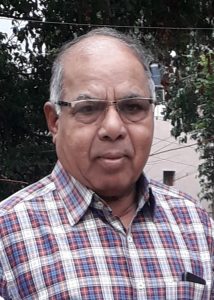
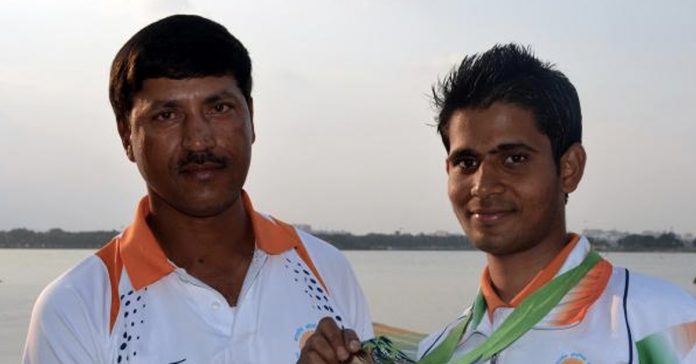
Ismail Baig (Source- Telangana Today)
When Indian rowers brought back three medals (1 gold, 2 bronze) from the Asian Games in Jakarta, there were plenty of speculations around the future of former foreign coach Nicolae Gioga. After the Romanian left, the Rowing Federation of India (RFI) decided to not hire any foreign coaches. In the meantime, national coach Ismail Baig was given the responsibility to take care of the seniors.
The Dronacharya awardee coach guided the team in the Asian Rowing Championships in Cheongju (South Korea) last year, where the Indian won one gold, two silver and two bronze medals. Under the aegis of this 54-year-old coach, India won as many as 156 international medals, including two Asian Games gold, ever since he took over as Indian coach in 1999.
Baig, who has trained many Asiad and Asian medallists at Hussain Sagar Lake in Hyderabad for close to two decades, claims “I accidentally became a coach at the age of 26,” in an exclusive conversation with The Bridge .
Tracing back his journey, Ismail was a part of the Indian army and since it was compulsory to take up sports in the army, Ismail was actively participating in boxing. However, he didn’t find much interest in the sport so when the rowing coach in Bengaluru asked Ismail to take up this sport, he didn’t hesitate. “At that time there were no facilities in Bengaluru, therefore, I was sent to Pune in 1987 and after rigorously being a part of the game, I fell in love with rowing,” said Ismail.
In 1989, he participated in his first national championships and in his maiden appearance, Ismail bagged a bronze in the Coxed Four event. Two years later, in 1991, Ismail converted the bronze into gold. However, the 1991 nationals was the end of his playing career, he took up NIS coaching course and at 26 years he became a coach.
Ismail was sent back to Bengaluru to train the state team. However, there he found a dearth of facilities and broken oars. His skills and experience, however, made the cut as Karnataka won the gold in Chandigarh nationals against the big teams in 1992. “Our technique and training was successful and then onwards, we started bringing medals at every national tournament our team took part in,” Ismail adds.
Before the Asian Games in 1998, RFI appointed Ukrainian Dmitri to be the coach of the Indian national team. Dmitri, was closely following Ismail and he asked Ismail to join the team as the assistant coach. It was Ismail’s first big breakthrough as a coach to be a part of the Indian team. Following the Asian Games in Bangkok in 1998, Ismail was appointed as the chief coach in 1999. “The Asian Championship in Japan was my first outing as an independent coach, and there we won 3 silver and 1 bronze medals,” said Ismail.
As the coxless pair finished second in Asian Championship and after Japan’s withdrawal, the rowers qualified for the 2000 Olympics in Sydney for the first time in history. The Indian camp was also shifted from Pune to Hyderabad. “I can proudly say that I have been the coach of the Indian team in all the Olympics our team has participated in,” quips Ismail.
It was under Ismail’s stewardship. India clinched silver in Asian Games as Bajranglal Takhar (single sculls) stood second in the 2006 Asian Games in Doha, Qatar. In 2010, the record was bettered with the team winning a gold, three silver and one bronze medals at the Asian games. The medal spree continued in 2014 and 2018 as well by the likes of Sawarn Singh, Dattu Baban Bhokanal, Om Prakash, Sukhmeet Singh, who were all trained by Ismail.
source: http://www.thebridge.in / The Bridge / Home> Coach’s Corner / by Md Imtiaz / October 11th, 2020