Face of Lucknow Anti-CAA Protest, Uzma Sanitizing Temples and Streets during COVID Lockdown

Lucknow, UTTAR PRADESH :
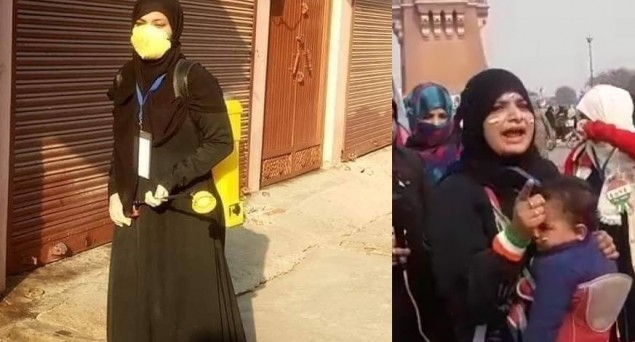
Lucknow resident Uzma in two roles — sanitizing streets during COVID lockdown and earlier protesting against CAA-NRC-NPR

New Delhi : 

After the lockdown, when the country was facing Coronavirus and politicians were blaming religion and faith for the pandemic, a Muslim woman, away from Hindu-Muslim, temple-mosque TV debates, was carrying a spray machine on her back and sanitizing streets, temples and mosques and thus silently playing her role in the war against Coronavirus.

A picture and video of the protest against Citizenship Amendment Act (CAA) at Ghanta Ghar in Lucknow had gone viral on social media earlier this year – a woman in Hijab holding her kid in her lap was loudly raising slogans on mike. When the protest ended and the lockdown began in end-March, the same woman was seen carrying a spray machine one her back and sanitizing temples, mosques and 35 localities, and her pictures again became viral on social media. She is Lucknow resident Uzma.

Resident of Saadatganj in old Lucknow, Uzma has made struggle the mission of her life and her religious identity her strength. She has made her courage her ideal and struggle her way.

Talking to India Tomorrow, Uzma says she wants to make the country better, fight against evils, injustice and all types of epidemics so that the new generations could breathe in the air of love and peace.

Sanitizing Temples and Streets:

Uzma says: “Doctors, police and all others are engaged in the fight against Coronavirus across the country. I also thought to do my bit in this fight against the pandemic and began sanitization work in areas where employees of municipal corporation are not able to reach.”
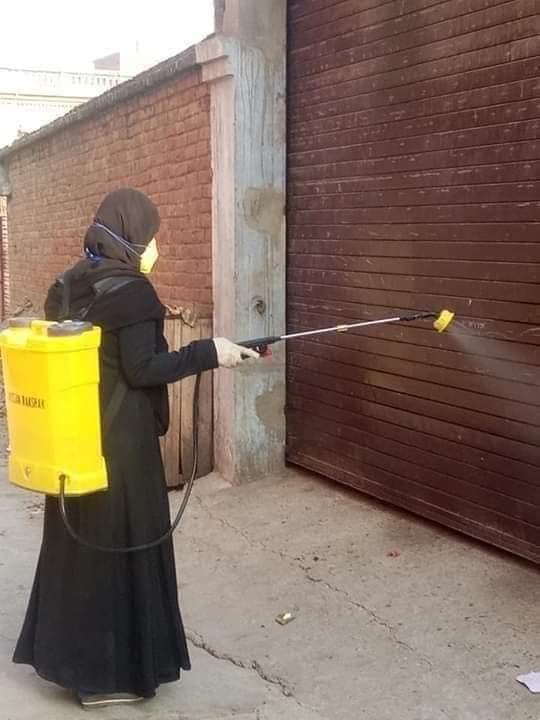
Uzma doing sanitization work in Lucknow

Talking to India Tomorrow, Uzma further said: “I have a passion in my heart to do something for the country and I do whatever I can. Service to the nation begins from your home and neighbourhood, that is why I began my contribution in the fight against Coronavirus by sanitizing the lanes near my house and so far I have sanitized 35 lanes.”

Carrying Sanitization Work with Her Own Money:

During the continuous lockdown, Uzma is spending her own money on sanitizing the localities of her neighbourhood. When asked why she is using her own savings for this work, she said: “I had saved the money for the future of my children but this Coronavirus epidemic is taking away lives of our dear ones in the present. The municipal corporation is doing its efforts but wherever the civic body is unable to reach, I am doing sanitization work to save people from Coronavirus.”

Pictures and videos of Uzma sanitizing streets and localities of Lucknow have been viral on social media for the past couple of weeks. In the visuals, she can be seen sanitizing temples, shops and narrow lanes.

Uzma Was Active in Anti-CAA Protest:

This is not the first time that Uzma is in news and her work is being appreciated. Earlie, during the anti-CAA protest at Ghanta Ghar in Lucknow, a video of her raising slogans had gone viral on social media.

In that viral video, Uzma was holding her child with one hand and mike in the other and was raising slogans and inspiring the women audience there to continue the protest.
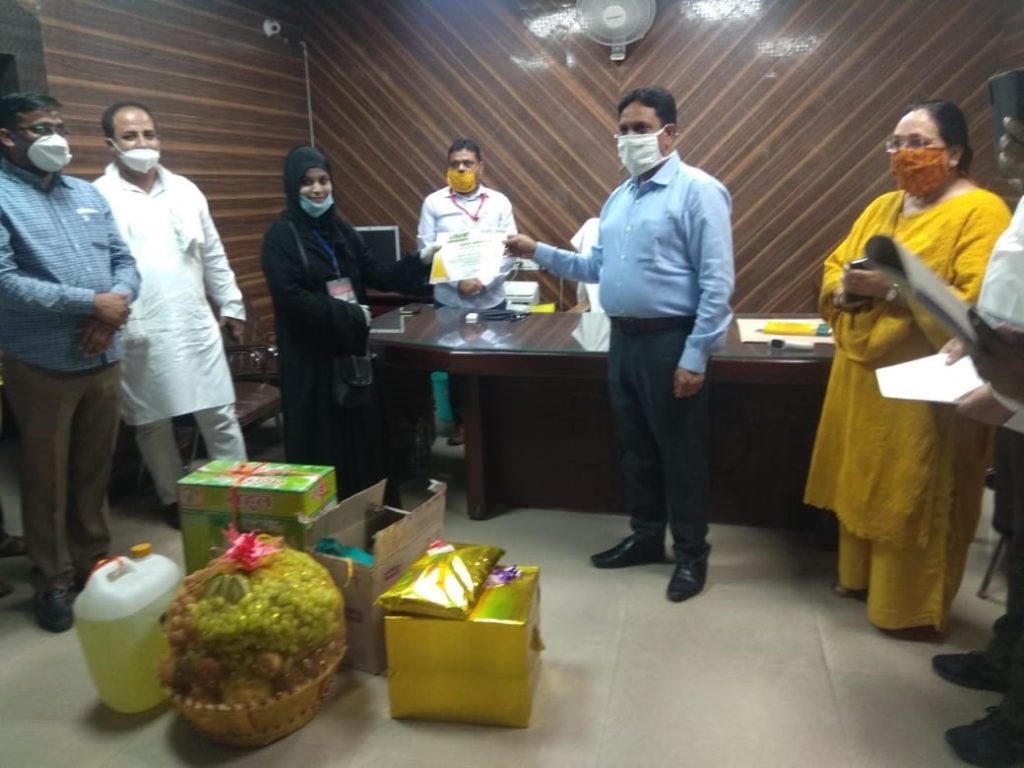
 Lucknow Municipal Corporation honoured Uzma for her exemplary sanitization work

Talking to India Tomorrow, a young lawyer from Lucknow Sajid Khan said: “Uzma was among the women who were leading the anti-CAA protest at Lucknow’s Ghanta Ghar and gave a new dimension to the anti-CAA movement. A video of her holding her child in the lap and raising slogan had motivated women across the country.”

He further said: “When her anti-CAA video went viral, police had gone to shut down the Ghana Ghar protest and misbehaved with women protesters – Uzma was one of them and her video had gone viral. But forgetting all this, the same woman has again got engaged in the service of the nation, which is indeed surprising.”

Several images have emerged from across the country during the lockdown which are enough to change the way we look at the government and society.

Muslim youths like Uzma and students played active role in the anti-CAA movement and when the lockdown was imposed they got engaged in distributing ration and food among the needy people and laborers across the country. Uzma and hundreds of youths like her have done what the government should have. Yet, during the lockdown, the Delhi Police continued arresting those students and youths who were doing relief work and serving the humanity.

Away from TV debates on Hindu-Muslim and temple-mosque issues, the youths of the country are striving to make a beautiful India. The government should also fix its role in this endeavour.

source: http://www.indiatomorrow.net / India Tomorrow / Home / by Masihuzzaman Ansari , India Tomorrow / May 29th, 2020

Fazal R Khaleel replaces Raghuram Bhat as Karnataka’s chief selector

Bengaluru, KARNATAKA :

The Karnataka State Cricket Association took this decision during their managing committee meeting on Friday.

Fazal R Khaleel

BENGALURU: Former Karnataka batsman Fazal R Khaleel was appointed as the new chairman of selectors for the men’s state team, replacing Raghuram Bhat for the top post. The Karnataka State Cricket Association took this decision during their managing committee meeting on Friday.

Khaleel is not new to the senior team as he was a part of the last selection committee too. “The good part is all these players, be it Karun Nair, Manish Pandey, KL Rahul – I have seen them from U-15 days, so I find it easier to talk to them and explain things and they also may also find it easy to approach me,” Khaleel told this daily. He has also been appointed as the chairman of selectors for the U-23 side. Anand P Katti, a member of the senior team’s selection committee, is the chief selector for the U-19 side.

“It is good to have selectors in different age groups so that the feedback comes in and that can be discussed in the selection meeting. We will know who are the youngsters that are doing well and the bench strength can be known,” added Khaleel.

Yere Goud ( head coach) and Sreenath Aravind (assistant and bowling coach) will continue with their respective role for next season as well. However, there is no clarity about the domestic season and also when players can start their practice due to Covid-19 pandemic. KSCA is awaiting for the next set of guidelines before they decide upon any cricket activities.

“We are working on the calendar. But, as of now, we are waiting for the guidelines from the government, regarding lockdown 5.0. Based on that only, we are going to take a final call ,” said treasurer Vinay Mruthyunjaya.

Selection Committee

Men: Chairman: Fazal R Khaleel. Members: B Siddaramu, Anand P Katti, Ramesh Hejmadi. Head coach: Yere Goud, Assistant and bowling coach: Sreenath Arvind

Women: Chairperson: D Jayashree. Members: Mukta Alegeri, Leena Prasad, PJ Hemalatha. Coach: Mamatha Maben.

Secretary and Convenor: Santosh Menon (for both teams)

source: http://www.newindianexpress.com / The New Indian Express / Home> Sport> Cricket / by Ashim Sunam / Express News Service / May 30th, 2020

Music director-singer Wajid Khan passes away

Sahranpur, UTTAR PRADESH / Mumbai, MAHARASHTRA :

Wajid Khan of Bollywood music composer duo Sajid-Wajid passed away on Sunday in Mumbai.

Wajid Khan was 42.

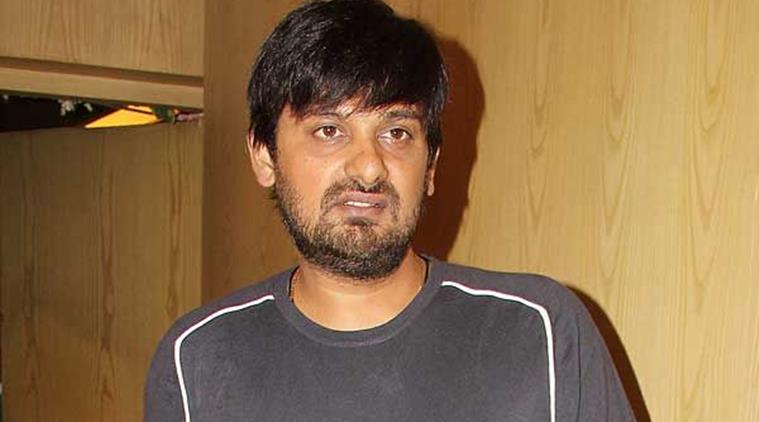
Wajid Khan of Bollywood music composer duo Sajid-Wajid, credited with albums like Dabangg and Wanted, passed away in Mumbai on Sunday due to complications arising from a renal ailment and COVID-19. He was 42.

Wajid’s final rites were held on Monday morning in Mumbai.

Wajid Khan was admitted to Surana Hospital and Research Centre in Chembur after he developed an infection. A treating doctor said Wajid had a long history of infection, and had also undergone a kidney transplant. And since the operation, he was immunocompromised.

The doctor added, “Later, we conducted a COVID-19 test, and it came positive.”

Dr Prince Surana, medical director at Surana Hospital and Research Centre, confirmed Wajid Khan died due to complications from a renal ailment and COVID-19 infection.

Wajid Khan’s colleague and music director Salim Merchant mourned his demise on Twitter.

“Devastated with the news of the passing away of my brother Wajid of Sajid -Wajid fame. May Allah give strength to the family. Safe travels bro @wajidkhan7 you’ve gone too soon. It’s a huge loss to our fraternity. I’m shocked & broken. Inna Lillahi wa inna ilayhi raji’un,” read his post.

Many other Bollywood celebrities took to Twitter to pay tribute to Wajid.

Priyanka Chopra tweeted, “Terrible news. The one thing I will always remember is Wajid bhai’s laugh. Always smiling. Gone too soon. My condolences to his family and everyone grieving. Rest in peace my friend. You are in my thoughts and prayers. @wajidkhan7”

Harshdeep Kaur wrote on Twitter, “Extremely sad to hear about @wajidkhan7 ji… Gone too soon!! May god bless his soul”

Sona Mohapatra posted on Twitter, “Heartbreaking news. Wajid no more. Spent time on the SRGMP show with him as a co-judge & he was so kind & generous. I know he was ailing for a while, regret not picking up the phone on him in this lockdown. Stunned & sad.”

Babul Supriya @SuPriyaBabul – June 01

Shocked to hear about the cruelly untimely demise of Wajid of the renowned Composer duo of SajidWajid•Incredible loss of a very very dear friend & a very very talented musical mind – a Gr8 sport…. @BeingSalmanKhan @singer_shaan @Ramesh h Taurani

“Heartbroken. Both @SajidMusicKhan and @wajidkhan7 have been close & true friends. The kind who might see the light on and show up at our studio in the middle of the night just to meet and talk and share a laugh. Can’t believe Wajid and I will never speak again,” Vishal Dadlani said via Twitter.

Sajid-Wajid made their Bollywood debut with Salman Khan starrer Pyaar Kiya Toh Darna Kya in 1998, and later went on to score many albums for the superstar’s films, including Chori Chori, Hello Brother, Mujhse Shaadi Karogi, Partner, Wanted and Dabangg (1, 2 and 3). Most recently, Sajid-Wajid composed Salman’s “Bhai Bhai” single.

As a singer, Wajid Khan began his career with Partner in 2008. He has crooned popular tracks like “Hud Hud Dabangg”, “Jalwa”, “Chinta Ta Ta Chita Chita” and “Fevicol Se” among more.

source: http://www.newindianexpress.com / The New Indian Express / Home> Entertainment> Bollywood / by Priyanka Sharma, Tabassurm Barnagarwala / Mumbai / June 02nd, 2020

Feature film on biker Anam Hashim announced

Lucknow, UTTAR PRADESH / Pune, MAHARASHTRA :

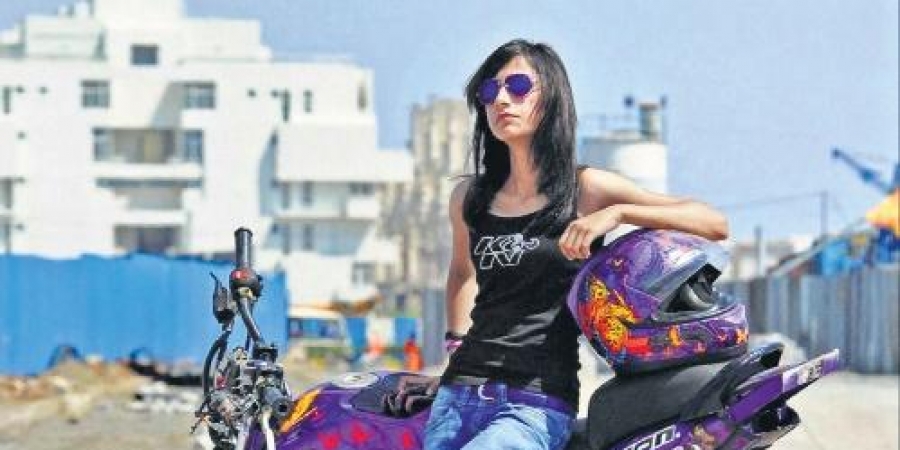
Titled ‘Anam’, Saumitra’s upcoming film is about a 21-year old girl who does stunts as a sport. The film is inspired by the life of Anam Hashim, a female bike stunt performer and rider.

The tagline of the film reads ‘a bike doesn’t know your gender’. The story is conceptualized by Anam and penned by Namneesh Sharma.

Director Saumitra Singh, who had earlier helmed the award-winning short films The Wallet and Painful Pride, is gearing up for his feature debut.

Titled Anam, Saumitra’s upcoming film is about a 21-year old girl who does stunts as a sport. The film is inspired by the life of Anam Hashim, a female bike stunt performer and rider.

The tagline of the film reads ‘a bike doesn’t know your gender’. The story is conceptualized by Anam and penned by Namneesh Sharma. While the cast is yet to be locked, an A-list actor will be a part of it, the makers shared.

“I have been working on this idea for quite some time now. However, I was busy making and promoting my two short films but been working on Anam simultaneously. The script has come out well and I can’t wait to start making it,” Saumitra says.

In 2015, Anam became the youngest woman to ride to Khardung La mountain pass on a TVS scooty for the Himalayan Highs initiative. Her achievement was included in the India Book of Records.Speaking about her journey, Anam shares, “While growing up as a kid, I always was someone who was inclined towards cycles, bikes and cars. Eventually, I discovered my love for bikes and stunts through the internet. 

My journey began by trying to learn how to do wheelies on others bike and it gave me enough confidence to even get my own bike. While I was finishing my 12th, I was very sure of what I wanted to do in life, stunt riding/street bike freestyle.”

source: http://www.newindianexpress.com / The New Indian Express / Home> Entertainment> Hindi / by Express News Service / May 29th, 2020

Research by Indian Muslim professor discovers potential drug to treat COVID-19

Ranchi, JHARKHAND / Riyadh, SAUDI ARABIA :

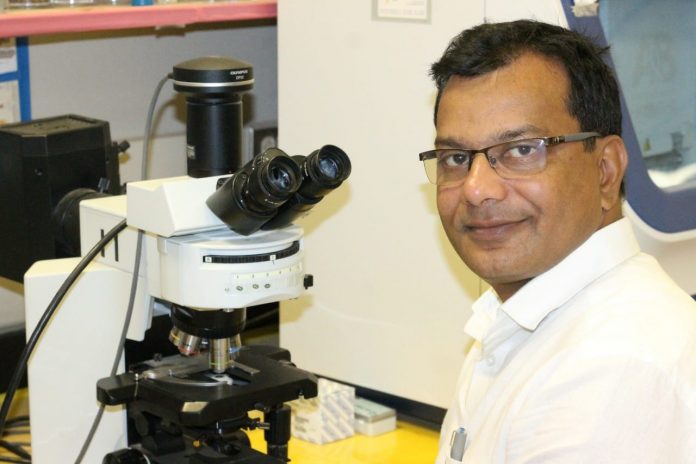
Dr. Mohammad Abul Farah

A collaborative study between scientists in India, Saudi Arabia and South Korea aimed at discovering potential drugs to SARS-CoV-2 infection in humans has led to new findings that could pave way for clinical trials to cure the Coronavirus disease.

The recent study is titled ‘Unravelling lead antiviral phytochemicals for the inhibition of SARS-CoV-2 Mpro enzyme through in silico approach. ‘ It has been co-authored by Dr. Arun Bahadur Gurung (North-Eastern Hill University, Shillong), Joongku Lee (Chungnam National University, South Korea) and three others, Dr. M. Ajmal Ali, Dr. Khalid Mashay Al-Anazi along with Dr. Mohammad Abul Farah (King Saud University).

The research has used screening from FDA approved antiviral drugs applying computational approach to embark on a scientific experimentation of vaccine development for the disease.

Dr Mohammad Abul Farah, originally from Ranchi in the Indian state of Jharkhand, spoke with TwoCircles.net about the study that has revealed substances and proteins having high capabilities of being used in treatment of the COVID-19 disease. An alumnus of Aligarh Muslim University, he is currently Professor at Saudi Arabia’s King Saud University and closely associated in the Genetics Laboratory at its College of Science in the Department of Zoology.

Having more than a decade of experience in academics and research in cytogenetics and genotoxicity, he is also working with Proteonik Inc, a South Korea based biotechnology research organization. 

He opines that “the discovery of novel drug molecules is crucial and is need of the time” as mortality rate due to Coronavirus is rising exponentially and the speed for finding a vaccine must be accelerated with more variety in clinical lab experiments. He explained that at present there are no approved antiviral drugs or vaccines for the treatment of human CoV infection therefore the scientists in this study were compelled to use computational methods to address the problem and build on effective therapeutics against the current pandemic.

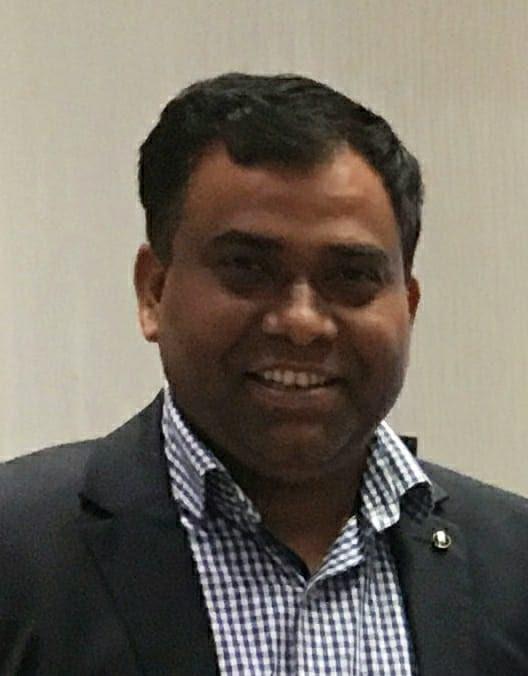
One of the co-authors, Dr M Ajmal Ali

Dr Farah informed that the researchers have proposed “potential lead molecules which can be explored as drug candidates for the treatment of the COVID-19 disease.” He further detailed the findings of the study for TwoCircles.net, beginning with the fact that “SARS-CoV-2 Mpro protease enzyme is a well-characterized drug target.” Through the study’s recent structural elucidation based on X-ray crystallography, it has opened an avenue for structure-based drug design. They have also explored “a small library of phytochemicals with previously reported antiviral properties for the identification of small molecular inhibitors against SARS-CoV-2 Mpro enzyme” leading to identification of three lead molecules which exhibit higher binding affinities as compared to the control.

“The findings are novel and exciting as the lead molecules also demonstrated broad-spectrum antiviral activities against SARS-CoV Mpro and MERS-CoV Mpro,” he informed. He also outlined that the scientists screened small drug-like molecules from a dataset of phytochemicals possessing antiviral activities and this was achieved with the help of drug-like filters and toxicity studies. The selected molecules were evaluated for their binding affinity to SARS-CoV-2 Mpro enzyme using molecular docking, from which a total of 38 phytochemicals belonging to the class of flavonoids, alkaloids, essential oils, organic acids, stilbenes and other phytoconstituents were screened. This led to identification of three lead molecules – Bonducellpin D and Caesalmin B and 5,7-dimethoxyflavanone-4′-O-β-d-glucopyranoside – all three having antiviral activities against parainfluenza virus (PI-3) and bovine (cattle) virus. These three lead phytochemicals, he says, “have potential to be developed as effective antiviral drug specifically against SARS CoV-2.”

When asked whether this identification would accelerate the process of vaccine formation or not, Dr Farah pointed that antiviral drug development takes place via classical mechanisms – usually by targeting important virus enzymes such as polymerases, proteases or neuraminidase; however vaccine against a specific virus is developed by injecting the same virus in inactive form or non-pathogenic form to activate the host immune system to produce specific antibodies against the virus. For that, he said “the current findings need further validations through in vitro and in vivo lab experiments for developing into drug candidate molecules.”

Bonducellpin D is a promising drug candidate against coronavirus, suggest the findings. While the three substances were found to be “significantly inhibiting Mpro enzyme that ultimately block the viral replication,” Bonducellpin D was identified as a unique precursor to a vaccine for coronavirus.

Discussing India’s more than 1 lakh mark of current infection rates coupled with a fourth phase of a nationwide lockdown and massive breakdown of economy unfolding with the migrant crisis, Dr Abul Farah highlighted that all the three lead molecules that need further validations through lab experiments can be obtained through a clinical manufacturing company and in case they are not available commercially, they can easily be purified from the source (plant), or could be synthesized in any chemistry lab equipped for organic synthesis.

“Of course, India can afford all these kind of research,” he said, when inquired about the feasibility of obtaining or manufacturing the same molecular binding in research labs in the country. He assured that India has “many high standard virology and clinical trial labs,” and the substances for clinical experiments can be obtained easily.

(The research paper can be accessed here: https://www.sciencedirect.com/science/article/pii/S0024320520305816)

source: http://www.twocircles.net / TwoCircles.net / Home> TCN Positive> Indian News> Lead Story> Pandemic> Science/Health / by TCN News / May 28th, 2020

As a society, we were more emotional once: Irshad Kamil

Malerkotla (Sangrur Distrit) , PUNJAB / Mumbai, MAHARASHTRA :

The Bollywood lyricist and poet says freedom of expression means staying within prescribed limits

People try to be politically correct, but that’s the problem. I have never tried to be: Irshad Kamil

For a lyricist, Irshad Kamil sure has a sense of irony. His caller tune is a song from the Ranbir Kapoor-starrer Rockstar, sung by Mohit Chauhan. It goes: “Jo bhi main kehna chahun, barbaad kare alfaaz mere… Whatever I want to say is ruined by my words.”

Perhaps even more ironic: these words belong to Kamil himself.

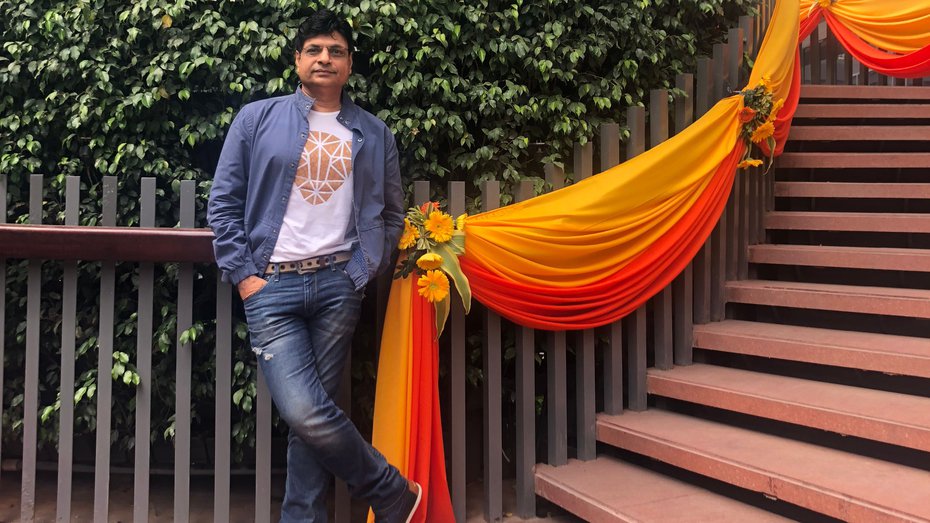
I meet Kamil at a five-star hotel in east Calcutta. The 48-year-old is in town to talk about his book — Kaali Aurat Ka Khwab. It is about his first Filmfare Award and the journey to it. He is wearing a T-shirt and ripped jeans, and a jacket with shiny buttons. Perched on his nose are rimless glasses and there is a string of sweat beads on his forehead.

This is the man who has written songs such as Nadaan Parindey, Agar Tum Saath Ho, Patakha Guddi and Baby Ko Bass Pasand Hai. Life. Melancholy. Woman power. Dhinchak. As we get past the exchange of pleasantries and into small talk about how his lyrics are the stuff of social media posts, the soft-spoken Kamil orders another black coffee — his third in an hour.

If moved by his songs you have ever tried or are planning to google the man, know this: you are not getting to know much beyond his work. Discreet, I ask. He replies, “I am not an advertisement.”

But that does not make him reticent either. He is happy to talk about his poetry — turns out he wrote his first one in the late 1980s. He says without sounding the least bit pompous, “The reason people like my poems and lyrics is because I don’t talk about fake emotions. I put myself in the shoes of the audience. And I talk about the real life. Aap samajh rahe hain na? Yeh reality ke zameen se nikle hue shabd hain…”

It seems no one in Kamil’s family had an ear for music. His father was a chemistry teacher at Government College, Malerkotla, and he pushed all his children to study science. Kamil, alas, was an arts enthusiast. He wrote poetry and acted in school plays. In college, he tells me with some pride, he was the prolific writer of love letters for self as well as others. He quotes Urdu poet Bashir Badr as if in a toast to those days, “Jis par hamari aankh ne moti bichhaaye raat bhar, bheja wahi kaagaz usse, humne likha kuch bhi nahin.”

Eventually, our conversation shifts to political correctness in the creative arts, in day-to-day life. “People try to be politically correct, but that’s the problem. I have never tried to be,” he waves his hands animatedly to make his point.

I nudge Kamil towards specifics before he floats away on another rivulet of verse. As a lyricist, does he have freedom of expression? He unleashes a torrent of thoughts, “Of course, there is pabandi [restriction]. What the sarkar calls unrest is basically kranti [revolution] and kranti comes through the pen, through words and writings. People know there are particular forms of art and culture where it all comes from. And this is not new. It has been there since Safdar Hashmi’s times. We have expression of freedom but there are limits too. Till you praise them or agree with them, you have the freedom…”

Kamil wrote a song called Mere Achchhe Din Kab Aayenge for the 2018 film, Fanney Khan — Do roti aur ek langoti/Ek langoti aur woh bhi chhoti/ Isme kya badan chhupayenge/Mere achchhe din kab aayenge. “Just because of this song, the movie was put on hold by the Central Board of Film Certification,” he says. The song was tweaked and later released as Achchhe Din.

Kamil talks about how he dropped out of engineering. He fled to Shimla from his hometown in Punjab. Decided not to return for the next nine months. Joined theatre and earned Rs 45 a show. On returning, he decided to pursue Hindi for his graduation. The writer Irshad Kamil was in the making. His dimples nearly swallow his cheeks as he says, “Some people say I am a closed-door rebel.”

I tell Kamil that for someone who goes by that epithet, he is surprisingly controversy-free and he furrows his brows. “Do you know about Pahal patrika,” he asks. Seeing my expression, he starts to talk about how he is the only “filmi geetkar” to have poetry published in this Hindi literary magazine. He takes out his phone from his jacket pocket and reads out loud a poem titled Jootey — a journey of the shoes by the shoes.

His poem Tum Mujhe Tanaav Do talks about problems of the increasing population and the government and ends with an altered version of the famous line by Subhas Chandra Bose. It reads, “...tum mujhe tanaav do, main tumhe khadi dunga. Tum mujhe khoon do, main tumhe abadi dunga.”

source: http://www.telegraphindia.com / The Telegraph, online edition / Home> People / by Manasi Shah / May 30th, 2020

Behind the Mask: A Book On Covid-19 And Its Socio-Economic Impact

Hyderabad, TELANGANA / Dubai, UAE :

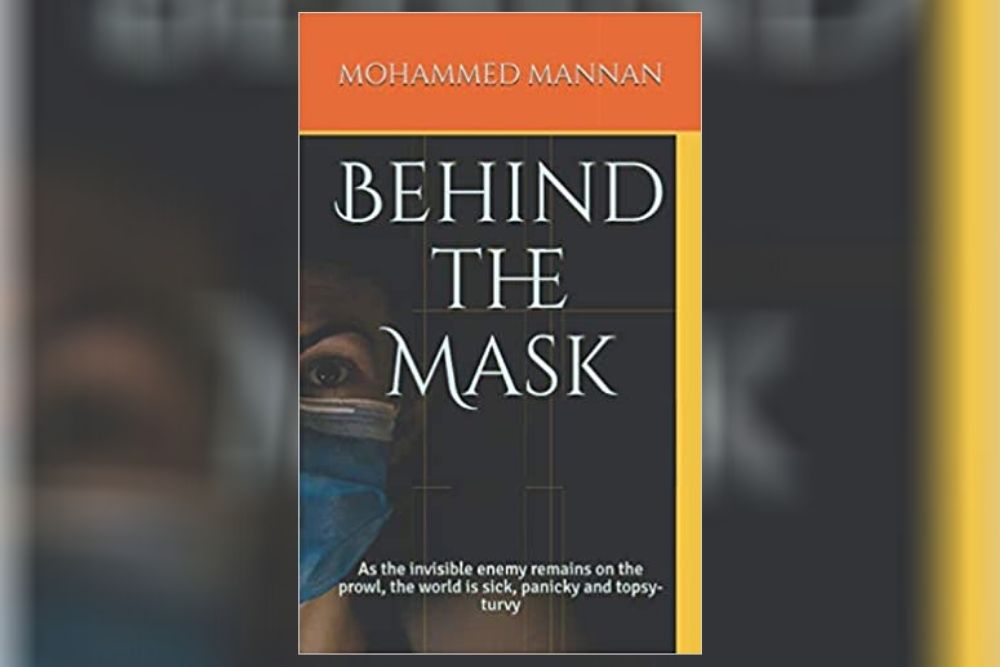
Mohammed Abdul Mannan’s ‘Behind the Mask’ details the origin and spread of the coronavirus and how it has made the world sick, panicky and topsy-turvy.

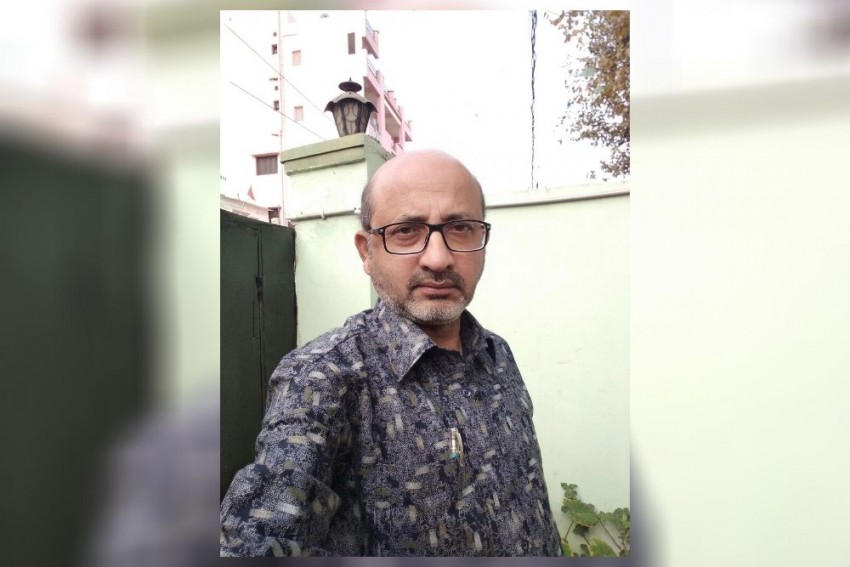
Mohammed Abdul Mannan

The novel coronavirus has infected over 5.5 million people across the world. As countries grapple to contain the Covid-19 crisis, it’s important to discuss the socio-economic fallout of the pandemic.

Mohammed Abdul Mannan’s Behind the Mask answers these questions. The book details the origin and spread of the coronavirus and how it has made the world sick, panicky and topsy-turvy.

How a virus one billionth of a metre size could trigger the 21st century’s second pandemic and why the 15th largest pandemic since the 14th century is massively disruptive on all-fronts. Can the world handle a ‘biblical proportions’ famine and will the world recoup from the US$9 trillion economic impact? The book discusses every aspect of socio-economic impacts of the global pandemic.

This is the eighth book by Mannan who has worked for Deccan Chronicle, Indian Express and India Today, Doordarshan and Zee TV in the past. He also worked as the launch News Editor of Qatar’s second English broadsheet daily, The Peninsula, and later joined Khaleej Times in Dubai. He took a plunge into PR and Corporate Communications with Dubai and Abu Dhabi tourism regulatory bodies. Winner of the first Qatar Tourism Award, his best-seller book had been Dubai – A City Making History.

Behind the Mask is available in print and digital format on Amazon.

source: http://www.outlookindia.com / Outlook / Home> Website / May 27th, 2020

In the footsteps of legends

Mumbai, MAHARASHTRA :

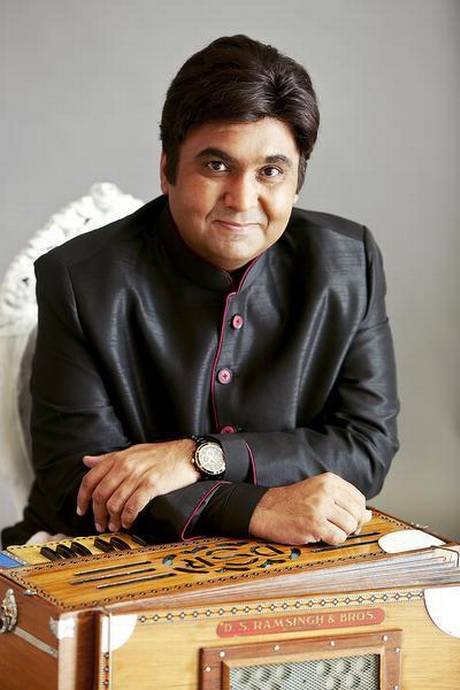
Musical journey: Tauseef Akhtar, who released the album Aamad ( The Arrival ) in November last year, is all geared up for his show this evening  

Tauseef Akhtar will pay fulsome tribute to his mentor and teacher, Jagjit Singh this evening

Ghazal singer Tauseef Akhtar says he is lucky to be born in a poetic and musical environment. His father Akhtar Azad is a renowned Urdu authority, qawwal and poet. And his mentor has been none other than the late Jagjit Singh. Akhtar, who released the album Aamad (The Arrival) in November last year, is all geared up for his show this evening. “Besides my original compositions, I shall do a special segment focussing on Jagjitji’s favourite tunes. His birth anniversary is on February 8, so this will be an ideal tribute,” he says. The concert, Sham-e-Ghazal, will also feature a recital by Sadhana Rahatgaonkar

Containing eight songs, Aamad has been written by London-based poet Roop Sagar, and also features singers Sunil Sajal and Vidhi Sharma. The video of ‘Woh Chilman Se;, sung by Akhtar, was released at the time of the launch. The album is available both in compact disc format and on digital platforms. Akhtar has earlier released the albums Ishq Karo and Ghazalaw. The former is a solo collection featuring songs written by Waali Aasi, Shamim Karbani, Paayam Saeedi, Rahat Indori, Shakila Bano Bhopali and Qateel Shifai, with one ghazal by his father Akhtar Azad.

Ghazalaw, in contrast, is a fresh experiment, where Akhtar has collaborated with Welsh folk singer Gwyneth Glyn to combine the two cultures. “We figured both genres had much in common, and thus used the harmonium, guitar, Celtic harp and violin,” says the singer. The album was nominated for the BBC Radio 2 and Songlines music awards last year.

The conversation then shifts to his association with Singh. Akhtar recalls, “Many musicians like Ustad Nusrat Fateh Ali Khan, Mehdi Hassan Saab, Parveen Sultanaji and Jagjitji visited our place to meet my father. When I heard Jagjitji on the album The Unforgettables, I was hooked.”

Akhtar was initially taught by Pandit Govind Prasad Jaipurwale, but after he passed away, needed to find another guru. When Akhtar was 12, Singh visited their home for a private mehfil. Hearing the boy sing, he was impressed. Soon, the lessons began. “Jagjitji taught me a lot in terms of singing technique, recording and stage presence,” says Akhtar. However, the youngster also got involved with film music, and soon took a break from ghazals.

In 2011, he was planning to meet Singh again when he heard his mentor had been hospitalised. The ghazal legend’s death on October 10, 2011, came as a huge shock. “Since then, I have decided to focus completely on ghazals. Somehow, I feel this genre is totally meant for me,” he says.

What’s next? Akhtar says, “I plan to render the entire Bhagavad Gita in Urdu. I have already recorded four shloks translated by poet Anwar Jalalpuri.”

Tauseef Akhtar will perform with Sadhana Rahatgaonkar for

Sham-e-Ghazal at Experimental Theatre, NCPA, Nariman Point at 6.30 p.m this evening; details at bookmyshow.com

source: http://www.thehindu.com / The Hindu / Home> Entertainment> Music / by Narendra Kusnur / February 02nd, 2018

Portrait of a poet

Indore , MADHYA PRADESH :

“My biographer has written the book so well I almost did not recognise myself. In order to be a big poet, the poet has to be a crazy lover. I could not become a big poet because I could not reach that stage.” – Rahat Indori, Poet

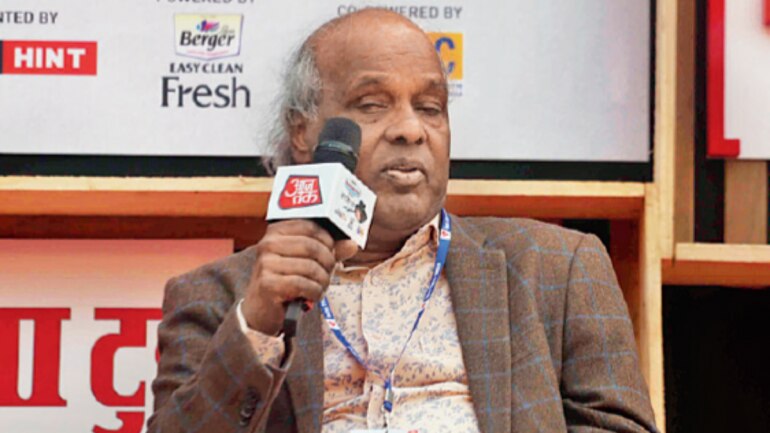
Celebrated poet Rahat Indori at Sahitya Aaj Tak on Sunday

Apne haakim kee fakiri par taras aata hai, jo gareebon se paseene kee kamaee maange, Saara din jel ki deevaar uthaate rahiye, aisee aajaadee ki har shakhs rihaee maange.

This was just one of the couplets recited during the unveiling of the biography of iconic poet and lyricist, Dr Rahat Indori, on the final day of Sahitya Aaj Tak on Sunday. The biography, Rahat Sahab: Mujhe Sunte Rahe Log Waqiya Mere has been written by Dr Deepak Ruhani. The author discussed the making of the biography with his subject, as well as singer-turned politician Hans Raj Hans.

Commenting on the association between Indori and Ruhani, Hans complimented Ruhani on his speed. “You have finished this biography in two years, when many writers take their time writing the and cannot complete them in one decade.”

Ruhani said his association with Indori goes back 17 years. While researching the book, one of the fringe benefits was listening to unforgettable shayari from Indori, he said. “I used to wait for a long time to come and hear him and sat on the grass while he recited the couplets.” Rahat Sahab will be officially released on November 10.

source: http://www.indiatoday.in / India Today / Home> News> Mail Today / by Mail Today Bureau / November 04th, 2019

Muslims donated Ramzan charity to start ICU in Ichalkaranji govt. hospital

Ichalkaranji, MAHARASHTRA :

l
Photo: Twitter

Kolhapur: 

Muslims of Ichalkaranji – a small textile town in Maharashtra donated zakat, an obligatory Muslim charity, and Sadaqah, voluntary charity to start an Intensive Care Unit (ICU) in the Indira Gandhi Memorial (IGM) civil hospital in the wake of rising coronavirus infection across the country.

The Kolhapur town Muslims through Baitul Maal Muslim community has donated sum of Rs 36 lakh. A well-equipped ICU with 10 beds at IGM hospital which is ready to facilitate the fight against coronavirus spread was inaugurated by Chief Minister Uddhav Thackeray on the occasion of Eid-ul-Fitr yesterday.

Applauding the initiative, the Chief Minister via video conference said, “Muslims in Ichalkaranji have shown the way for everyone in the country. Till now, we have controlled the spread of coronavirus with courage and patience. Henceforth, public participation (to fight the pandemic) is necessary. The Muslim community has set an example on how to celebrate a festival.”

The town, known as the Manchester of Maharashtra, has a population of 2.88 lakh where 78.32 per cent are Hindus as per the 2011 Census. Muslims constitute 15.98 per cent of the total population. The majority of the population works in power looms.

With growing number of Covid-19 patients, pressure is mounting on medical infrastructure in Maharashtra. Like any other government hospitals, IGM too has faced the problem of lack of funds affecting medical services to the poor.

Atul Rendale, a local said, “The hospital was in bad shape, with hardly any patients going there because of lack of adequate machinery and staff. The new facility will definitely help the poor who cannot afford treatment in private hospitals,” reports The Hindu. He added that though there are not many Covid-19 patients in Ichalkaranji, the fear of spike in numbers looms large.

Eid festivities this year was largely overshadowed by the ongoing COVID-19 crisis, but unprecedented example set by Ichalkaranji Muslims are welcome shift in the traditional way of making donations.

source: http://www.theshabab.com / The Shabab / Home> Society / by Ubaid Saifi / May 27th, 2020