This couple plans to produce 1 lakh Covid-19 testing kits a day

NEW DELHI :

“It feels good to have a purpose and be able to contribute to the country during these times. We are lucky we have found our purpose even through this hopeless period,” says Afifa.
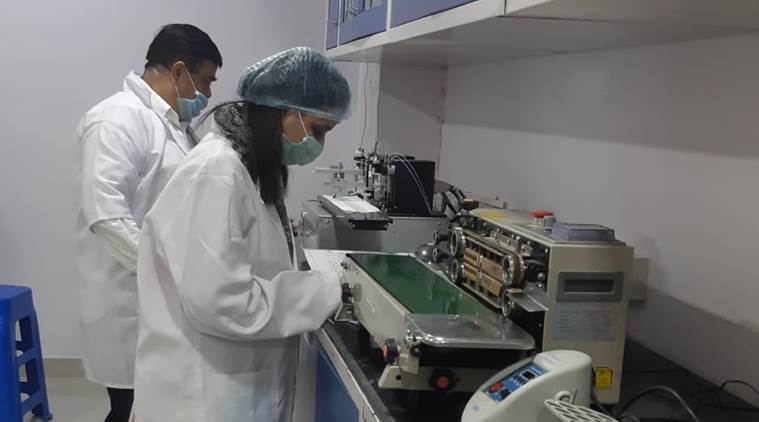
Dr Nadeem Rahman and wife Asifa Rahman in the lab

Dr Nadeem Rahman, a bio-chemist at Nu Life consultants and distributors, and his wife Afifa Rahman, a pharmacist at the same company, have spent the past few weeks working through the nights to fulfill their goal of producing 1 lakh rapid anti-body kits per day, meeting the pressing demand for such kits in India. “It feels good to have a purpose and be able to contribute to the country during these times. We are lucky we have found our purpose even through this hopeless period,” says Afifa, who adds that the couple have lost track of the time they spend in their office and laboratory since the company decided to begin manufacturing these kits.

Nu Life is one of the nine Indian companies which has received validation from NIV Pune and has been cleared by the ICMR to begin manufacturing of rapid antibody test kits, which would take less than 15 minutes to show results. There was a brief glitch in their plans due to some defective kits from China but they are back in action. “We received the approval on Monday, but we began working on producing the kits to be verified ever since the lockdown began,” says Afeefa. Without a moment lost, the team of bio-chemists, pharmacists and bio technicians working at the company began manufacturing the kits on April 14th, a day after they received the ICMR approval. Despite their quick action and fervent commitment, the team’s path towards meeting production goals is full of hurdles.

“If all the parameters are in place, which includes all the staff being able to commute to the workplace per usual, and all the raw materials for testing get delivered in time, then we can easily produce one lakh kits per day, but with current lockdown scenario and global shortage of raw materials, we are realistically producing 60,000 to 75,000 kits per day,” says Dr Nadeem, who is a founding member of the company and has driven the logistics and ideation behind their rapid test kit manufacturing project. According to his wife Afifa, even after the couple goes back to their house in Jasola, they spend time ideating on how to optimize their production. “As you can see, there is no escape from COVID 19 for us now,” remarks Afifa with a short laugh.

Before the company received approval from the government to manufacture kits, the couple would spend hours ferrying their staff to and fro between the laboratory and their homes. “Before they all got passes from the government, we had to make sure they reach home. We even worried for the women’s security, who stayed at the laboratory till late at night, finishing work, but now the UP government has provided passes to all our team members,” says Afifa. The company’s staff commutes from different parts of Uttar Pradesh, taking more than an hour to reach the office, so the team has planned to fix accommodation in the office premises soon, so that production deadlines can be met well in time. “It even limits their potential exposure to the disease which they could in turn pass on to their family members,” says Afifa.

Apart from the challenges of bringing the production staff together, Nadeem Rahman states that their biggest hurdle is the prompt delivery of raw materials. “We are getting access to these materials, but to ensure the best quality, you have to wait for the best products. The demand for antigens especially, has increased worldwide, leading to the shortage of its supply,” explains Nadeem. Antigens are the molecular structure that triggers antibody response in the blood sample deposited in the kit. It is this response which indicates the presence of SAR COV 2 infection in the patient tested for the disease.

Explaining how the testing kit is used, Nadeem states that the kit employs the same lateral testing technology which has been used in pregnancy tests. “Instead of urine though, you just place a drop of blood and if two red strips appear, it suggests that you have enough antibody response to indicate the presence of the virus,” he says. The manufacturing cost per kit is placed at Rs 500 to Rs 600, much less expensive than the Rt PCR test for COVID 19. “As we optimize production, hopefully the cost of the kits will remain close to the manufacturing cost. Either way, it should be accessible and affordable to all if goes straight to the market in the future,” says the scientist.

source: http://www.indianexpress.com / The Indian Express / Home> India / by Chahat Rana / Chandigarh, April 30th, 2020
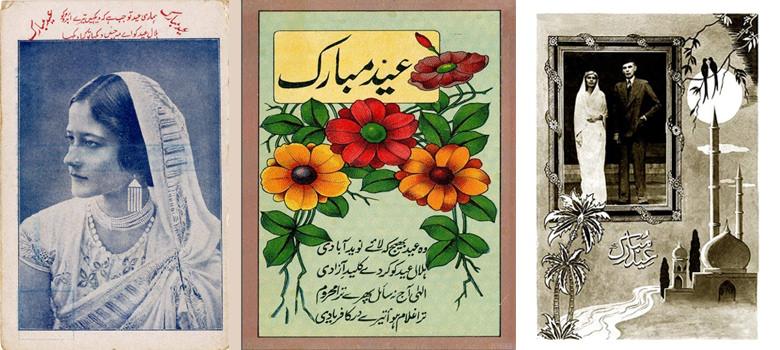
Eid Mubarak: A look at vintage greeting cards, long eclipsed by text messages

The big cities, Lahore, Delhi and Bombay, had printers who specialised in these cards, which often carried Urdu poems written for the occasion.

The image on the left is Kajjan Begum – From Reena Mohan Collection

Eid ul Fitr celebrations take a multitude of forms in our society. As the holy month of Ramzan nears the end, markets all across the country glitter with Eid paraphernalia: confectionery, clothes, bangles, mehendi, objects typically associated with this festive occasion.

But one object is usually missing: Eid cards, because the practice of sending them out has dwindled over the years. It was once routine for most families to spend time selecting, writing and posting Eid greeting cards to friends and families.


“Eid Mubarak,” an Eid card showing two girls on a swing. The printed message starts with a salutation of a young girl to her elder sister: Muhtarma aapa saheba… (Dear respected sister, my salutations. Despite the distance between us, your favours and love still provide tranquillity to my heart. While extending the Eid greetings to you, I request you to remember me forever in your prayers). Printed by Eastern Commercial Agency, Bombay. Unused, circa 1930.
From the Priya Paul Collection, New Delhi.
Courtesy: Tasveer Ghar


In the digital age, people prefer to take a faster route to greeting one another. On the eve and day of Eid, they send out a vast number of mobile text messages.

But what were those cards like? Wouldn’t it be interesting to look at some of the old ones, especially when the practice began in this country?

Here are samples from the collections of Yousuf Saeed, a filmmaker, author and archivist based in Delhi,  who runs the Tasveer Ghar archive, Ally Adnan, a Dallas, US-based engineer, writer and antique collector, and Omar Khan, who  runs Imagesofasia.com, a collection of vintage postcards and lithographs.


“Eid Mubarak,” a floral Eid postcard, published by Hafiz Qamruddin & Sons, Lahore (probably printed in Bombay), and posted from Lahore (sender’s name undecipherable) on 24 December 1935 and arrived at Delhi’s General Post Office on 29 December the same year for the addressee Mr Noor Elahi. The season of Eid-ul fitr or Eid-ul Zuha coinciding with Christmas in these years might have had a bearing on the use of early Eid cards. The sender’s message in Urdu is mostly damaged due to a torn corner of the card. But it basically starts with a salaam and asks about the addressee’s good health etc. Note the British India postage stamps worth half anna and three pies used on the card.  
From the Priya Paul Collection, New Delhi. 
Courtesy:  Tasveer Ghar


On the Indian subcontinent, the tradition of sending greeting cards on Eid started in the late 19th century, when mass-printed cards started becoming available off the shelf, although some well-off Muslim families continued to sent their own hand-produced cards, sometimes with calligraphy and artistically decorated greeting message.

The trend of sending cards was probably fuelled by the expansion of the railway network, which had increased to 25,000 km in 1880 from just 34 km in 1853, when the first passenger train service was inaugurated in India. With the expansion of railway, people began travelling far away from their homes, for employment and business. It also improved the postal service. In addition, advanced printing facilities improved the quality of cards.


“Eid Mubarak, Hamari Eid to jab hai…” Eid greetings and an Urdu couplet likening the eyebrows of the beloved to Eid’s crescent, featuring Indian actress and singer Kajjan Begum, Unused, circa 1930. Distributed by Sultan Husen Bookseller, Bombay.
From the collection of Reena Mohan.
Courtesy:  Tasveer Ghar 


We can see that the early cards resembled European-made Christmas cards, albeit modified for Eid.

In the early years of the 20th century, Eid cards began being printed with India-specific images and illustrations. Hafiz Qammaruddin & Sons, H Ghulam Muhammad & Sons and Muhammad Hussain & Brothers in Lahore, Mahboob Al Matabah in Delhi, and Eastern Commercial Agency, Shabbar T Corporation and Bolton Fine Art Lithographers in Bombay were amongst the earliest companies that came into the business of printing Eid cards in India. Postcards with Indian Muslim architecture, produced by Raphael Tuck in London, were also used for Eid.

No discussion of these vintage Eid cards would be complete without mentioning the Urdu poetry on them written for the occasion.


“Guldasta-e Eid” (a bouquet for eid) title of the chapbook published by Rashid-ul Khairi in 1927, Delhi. Although the chapbook is not a part of greeting correspondence, such literature was produced and circulated in Muslim homes for general reading and reform in late 19th/early 20th century.
From the Yousuf Saeed collection.
Courtesy: Tasveer Ghar  


میرے یاروں کو مبارک عید ہو غمگساروں کو مبارک عید ہو عاشق و معشوق رندو پارسا آج چاروں کو مبارک عید ہو

Eid greetings to my friends,
Eid greetings to my sympathisers,
Eid greetings to the lovers and the beloveds, the drunks and the pious,
Eid greetings to all four of them today.

ہماری عید تو جب ہے کہ دیکھیں تیرے آبرو کو ہلال عید کو اے مہ جبیں دیکھا تو کیا دیکھا

Eid is when I see your eyebrows
Just seeing the crescent, my dear, is no Eid.

سب لوگ تو دیکھتے ہیں کھڑے چاند عید کا مشتاق ہوں میں رشک قمر تیری دید کا

While everyone is interested in sighting the moon,
I only desire to see your face.

یہ شام عید ہے اے میرے ناقہ محمل چمک کے چل کہ دیار حبیب تک پہنچیں

It is the eve of Eid, oh my camel,
Run fast and take me to the city of my beloved.

The tradition of Eid cards continued till the end of the 20th century, diminishing with the surge of mobile and online communication.

Yet those of us who have experienced the joy of handpicking, writing, sending and receiving Eid cards cannot find a substitute in the click of buttons.

This article was originally published on Dawn.com

source: http://www.scroll.in / Scroll.in / Home> Holy Month / by Aown Ali / July 18th, 2015

In Assam, ‘one-man call centre’ for stranded migrants

Guwahati, ASSAM :

How an Assam lawyer became the source of reprieve for thousands of stranded migrants during the lockdown.

Guwahati :

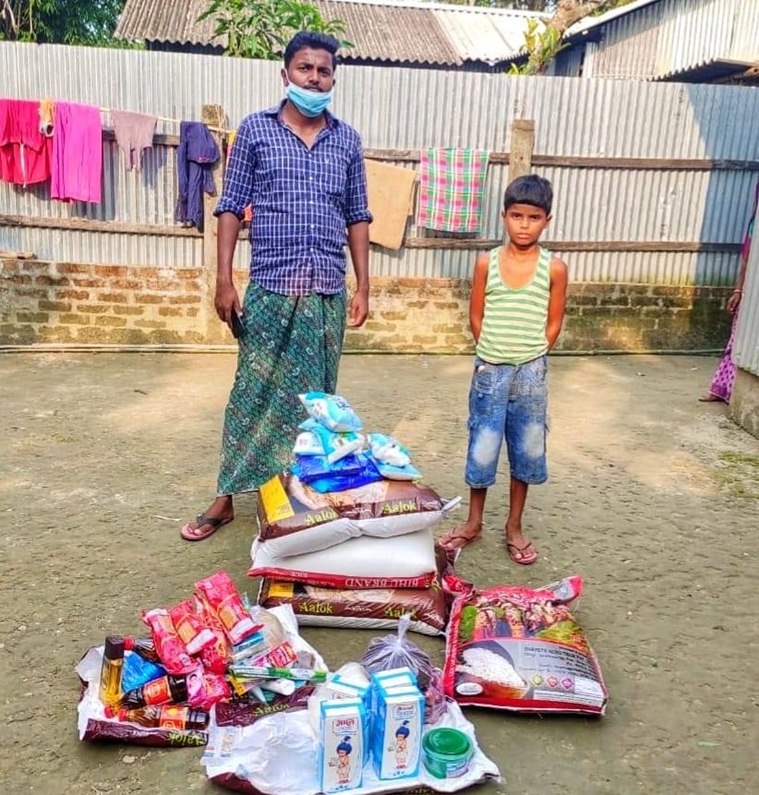
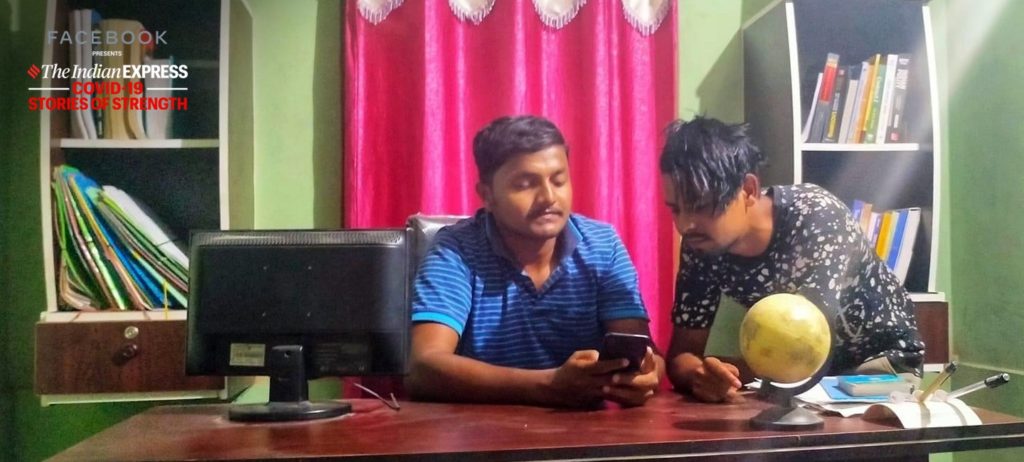
A few days after the lockdown, when the plight of the stranded migrant first started making news, 27-year-old Aatifur Hussain remembered how some people from his village were in Haryana. An advocate from Assam’s Barpeta  district, Hussain decided to give them a call. “They were panicking because they had run out of food,” recalls Hussain, who immediately touched base with a few local NGOs in Haryana. “They got their rations within 24 hours. The problem was solved.”

The next day, however, Hussain received another panic call from Noida. “I called up the local police station where the labourers were stuck, and they, too, received help,” says Hussain. Following that, the lawyer was suddenly receiving calls from all over the country — Kerala, Uttar Pradesh, Tamil Nadu, Maharashtra etc. “Word had somehow spread that I was helping stranded migrant workers from Assam with rations.”

In the beginning, Hussain would meticulously note down details of each and every call in his diary, but now the pages have run out. “There were just too many calls,” says Hussain, “It was almost like I was a call centre.”

Hussain did not mind — two years back, after he passed his LLB exams, he began providing pro-bono services to people caught in legal citizenship battles in Assam. “I had started an NGO called ‘Insaaf’ to aid people who needed help with National Register of Citizens (NRC) hearings or had to face Foreigners’ Tribunals,” says Hussain. The latter referred to the quasi-judicial courts many in Assam have to defend their citizenship in.

In the first two weeks, Hussain’s ‘call centre’ provided at least 2,000 people with basic rations, but a month later, he has lost count. On his phone, contacts are saved as ‘Kerala’, ‘Noida’, ‘Mhr’ (Maharashtra) — “I don’t even remember their actual names now,” he says.

One of his very first beneficiaries was a man named Habejuddin, who was stuck in Ghaziabad, with about 200 people from Assam. “We got his number on Facebook ,” says Habejuddin, on the phone from Ghaziabad, “Someone had written that this was the man who had helped people in Gurgaon, so we took a chance and dialled his number. I do not know what exactly he did but we got rations the next day.”

Hussain says his job simply involved connecting the stranded to the “right people” — administration, police, NGOs or those who could amplify their distress on Facebook or Twitter. “The first thing I ask anyone who calls is how many people there are, their address, and I trace the police station nearest to them, and then make phone calls,” he says.

In the first two weeks, Hussain’s ‘call centre’ provided at least 2,000 people with basic rations but, a month later, he has lost count.

Over the last few weeks, Rahman’s role has changed too, as people’s requirements have. In mid-April, when the Assam government announced Rs 2,000 for those stranded, Rahman began teaching people how to apply for the aid. “Since many of these people are uneducated, they did not understand anything,” says Hussain, “I would explain to them that they have to give a missed call, click on the link, fill up a form etc.” Suresh Zaman, who is stranded in Maharashtra’s Pune district, said that is how many from their group availed the Rs 2,000 service. “Someone from Assam passed us his number,” says Zaman, who is still Maharashtra, “First, he helped us to get rations; later he was the one who told us about this scheme.”

Now, with the special shramik trains introduced, many are returning home. “They often call me agitated when they don’t have information about the trains. I try to give them as many details as possible,” he says, adding that he also ‘counsels’ people who are feeling low because of the lockdown. “I am used to this because I have helped a lot of people who had depression when they received notices from the Foreigners’ Tribunal,” he says.

Just last month, a man named Abdul, an Assam resident stranded in Arunachal Pradesh, reached out to Hussain, threatening to kill himself, if not brought back. “I was very sad as people told me I will never be able to go home,” says Abdul. On May 3, when the inter-state bus services started in the Northeast, Hussain put Abdul in touch with the authorities, who packed him off on a bus from Arunachal Pradesh.

“He used to call me 10 to 15 times a day,” says Hussain, “I have one sim but maybe it is now time to get two,” he says.

source: http://www.indianexpress.com / The Indian Express / Home> Facebook presents The Indian Express / Covid-19 stories of strength / by Tora Agarwala / May 20th, 2020

Doctor designs transparent masks

Tiruchirapalli, TAMIL NADU :

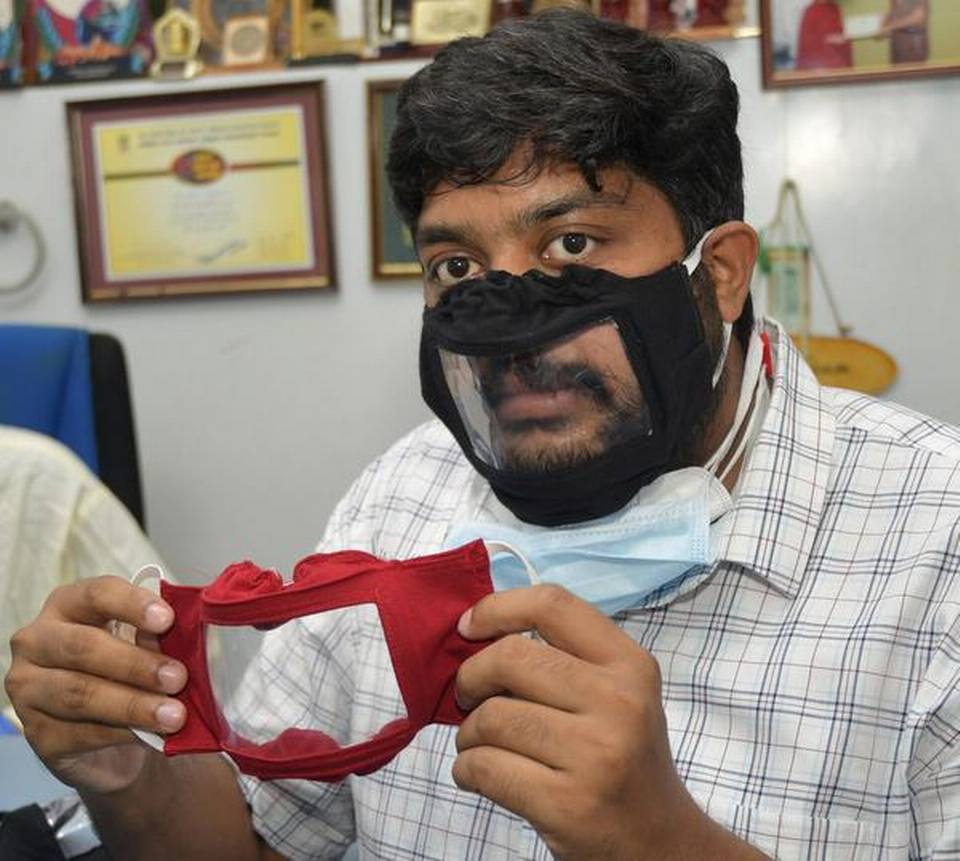
A. Mohamed Hakkim with his transparent masks. 

They are meant for people with hearing and speech impairment

Tiruchi :

With wearing face masks becoming the “new normal,” concerns have risen about its suitability for persons with hearing impairment who depend on lip-reading and facial expressions to communicateTo provide a possible solution, a young Tiruchi-based doctor has designed a transparent see-through face mask. The prototype has been submitted to the Tamil Nadu government for approval so that it could be mass-produced.

A.Mohamed Hakkim, a 29-year-old emergency physician in the city, thought of the need for such masks as some of his patients struggled to communicate with him. “My mouth was covered by a face mask and because of it, the patients could not read his lips and understand what I was saying,” he said.

Dr. Hakkim drew up a prototype using three layers of thick cloth, which N-95 masks are made of, and a biodegradable non-toxic plastic to make the transparent part.

A key feature of the mask is that it is reusable, and is also fog-resistant as one’s breath could fog up the glass rendering the mask useless, Dr. Hakkim said. The material had to be chosen to ensure the feature.

The cost of each mask will work out to be about ₹10 but Dr. Hakkim is looking to distribute at least 1000 in Tiruchi district for free. One must understand that along with a deaf and mute person, more importantly, their parents, teachers, friends, all those who communicate with them will require the transparent mask, he said.

The shelf life of the mask too is long and can be reused for up to 100 days, Dr. Hakkim said. “We have conducted various real-time tests to ensure its functioning. Many have expressed their need for such a mask,” he said.

The Tamil Nadu government has drawn up a plan to distribute 81,000 masks to 31,000 people through the Commissionerate for the Welfare of Differently Abled. Dr. Hakkim is looking to have the masks distributed through them and various NGOs.

source: http://www.thehindu.com / The Hindu / Home> News> Cities>Tiruchirapalli / by Kathelene Anthony / May 23rd, 2020

Survival, a stitch at a time

Dharwad, KARNATAKA :


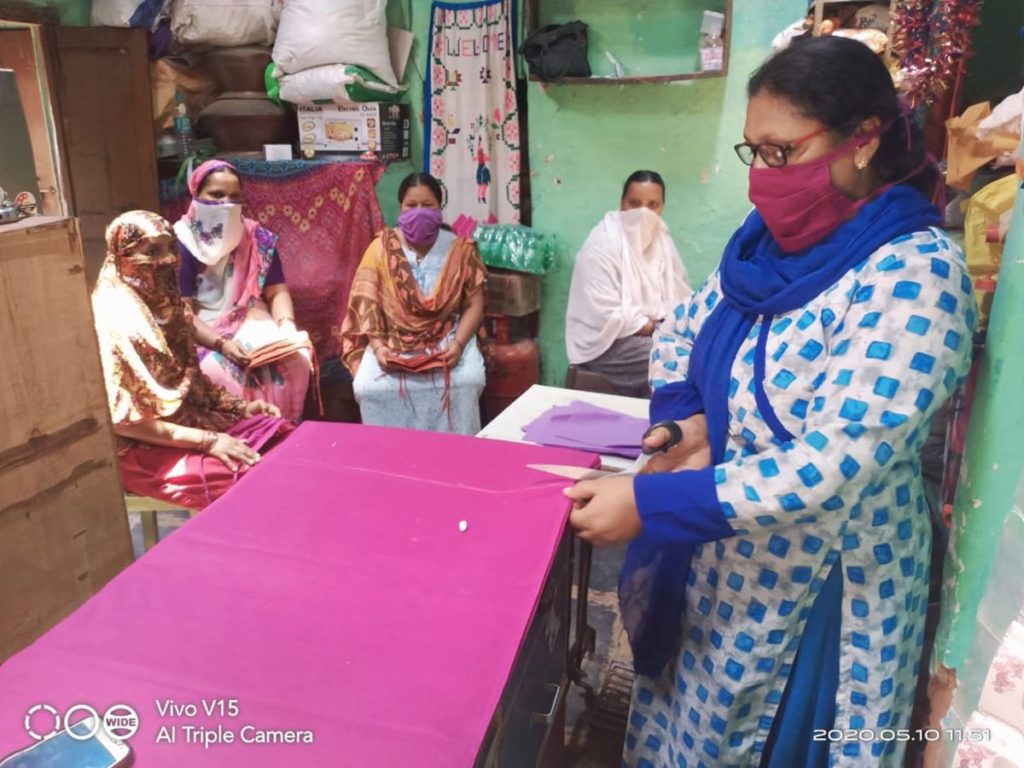
Like to any other woman in her slum near Lakshminarasimha Kere in Dharwad, the inevitable COVID-19 lockdown brought misery to Yasmin Nisar Mangalavadekar. A trained tailor, she was forced to stop work temporarily as there were no fresh orders. Tailoring is the only source of income for this single mother of three. 

While she was struggling to make ends meet, similar plight of women in the neighbourhood moved her to think of an activity that could help them sustain through the crisis. She decided to put to use her tailoring skills to stitch face masks and create livelihoods for women in the neighbourhood.

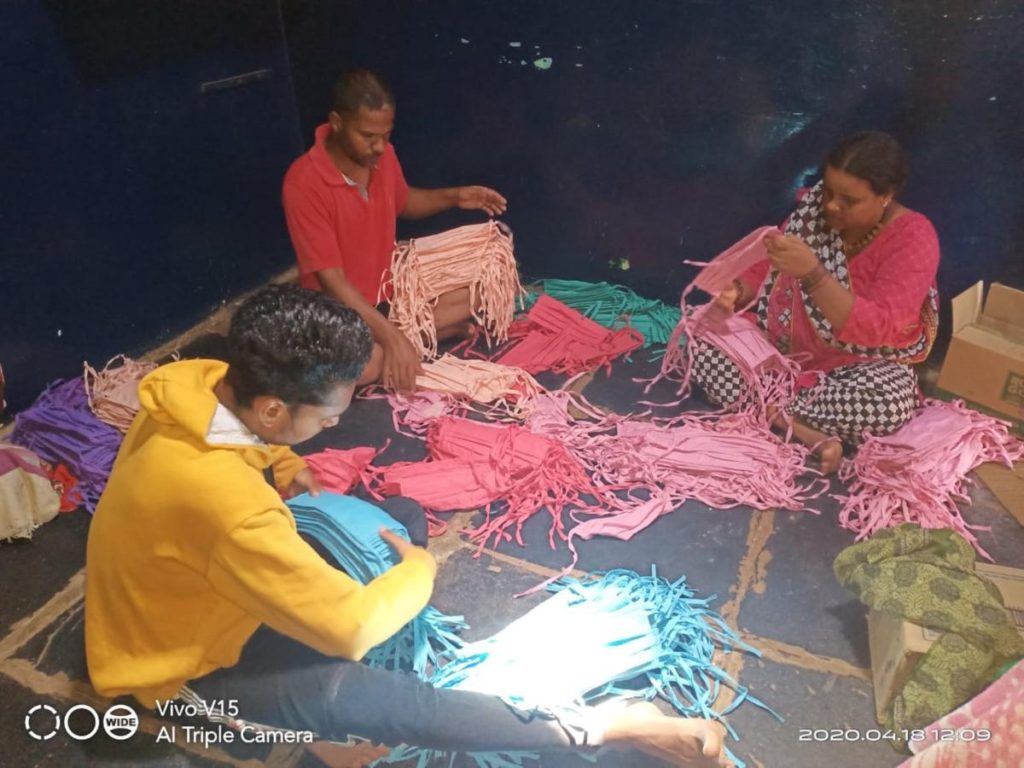
A family engaged in mask making

For the last 50 days, five women from the locality have been stitching masks in Yasmin’s 12X15 ft single-bedroom house. Around 20 slum dwellers engage in the activity from their homes. These women are now earning around Rs 5,000 per month, the sole income for their families during lockdown. They are among hundreds of women trained by Yasmin in tailoring in the past two years. 

“We stitch masks that are crucial to protect people from Covid-19. This, in turn, helps us subsist,” says Yasmin. 

She acknowledges the support rendered by people and organisations who bought masks from them. Hubballi-based Deshpande Foundation purchased over 20,000 masks to be distributed among the frontline Covid-19 warriors including Dharwad Zilla Panchayat workers, Hubli-Dharwad Municipal Corporation civic workers and police personnel. Yasmin is also grateful to Vani Purohit, the chief executive officer of Rehabilitative Assistance for People in Distress, for making this possible. 

Deshpande Foundation’s Sandeep Sabarwal recalls Yasmin as a determined woman, who not only wished to lead a resilient life but also ensure that women around her are empowered. “Realising her qualities we trained her to become an entrepreneur, who, could lead a team and help others earn a living,” he said

Yasmin has trained more than 400 people to stitch dress, bags and do embroidery work. Today, she has become a guiding light to many women in her locality.

“Like me, many people living in our slum have lost their sources of income due to lockdown. As dignified bread-earners, waiting for someone else to feed us was out of question. Deshpande Foundation supported us by giving a big order,” said Yasmin andher team completed the consignment of 20,000 masks in just eight days.

“Each one of us worked for 8-10 hours a day and completed the task in record time,” said Saleema Bilagi. Her husband is a carpenter and couldn’t get work even for a single day in the past two months. She shudders to think of her family’s plight had she not got this opportunity.

Deshpande Foundation helped them with the know-how to stitch good quality masks apart from giving the first big consignment. Other NGOs and individuals followed with orders. The team has also sold over 5,000 masks to them at Rs 15 per piece. The team stitches two-layered and three-layered cotton masks.

Over 100 women from the locality have approached her to be part of the team that emerged from the crisis. Yasmin wants to accommodate as many people as possible but they don’t have any fresh orders now. “With so many families in need of a livelihood, we can stitch about one lakh masks in 15 days,” she said. 

For details, contact Yasmin on 8722620230.  

source: http://www.deccanherald.com / Deccan Herald / Home> Spectrum / by Pavan Kumar H / May 16th, 2020

Hens lay eggs with green yolks in Kerala; scientists launch study

Othukkungal (Malappuram) , KERALA :

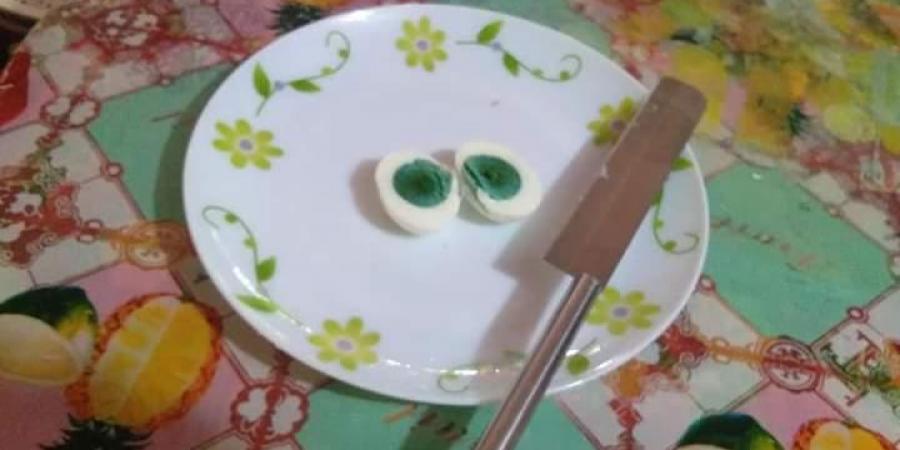
Around nine months ago, Shihabudheen found that an egg laid by one of his hens had a green yolk. Neither he nor his family consumed it since they wondered if it would be safe.

The eggs that are now going viral on social media.

Malappuram :

The curious case of six hens in the small poultry farm of A K Shihabudheen, a native of Othukkungal in Malappuram, laying eggs with green yolks, is now the talk of the town.

After the photos of the eggs with green yolks went viral on social media, people from different parts of the country and even abroad began contacting Shihabudheen to know more about the phenomenon. Recently, scientists from the Kerala Veterinary and Animal Sciences University (KVASU) launched a study on the special hens and the eggs.

Around nine months ago, Shihabudheen found that an egg laid by one of his hens had a green yolk. Neither he nor his family consumed it since they wondered if it would be safe.

Instead, he hatched some of the eggs laid by the hen. Interestingly, the new hens also started laying green eggs. 

“When we found that we could hatch chickens from these eggs, we began consuming the green eggs. The news of this egg phenomenon spread after I shared some pictures on social media a couple of weeks ago,” said Shihabudheen.

He said the eggs with green yolks taste exactly like the normal ones. He now plans to hatch more such hens and eggs for sales. 

“Many have approached me for green eggs. But, now, I’m keeping them for hatching. The eggs will be sold after the scientists of the Mannuthy KVASU complete their study on the phenomenon. The scientists are of the view that some special feed consumed by the hens might be the reason behind them laying eggs with green yolks. However, I did not give any special feed to these hens,” he said.

Harikrishnan S, assistant professor at the university, said they need three more weeks to identify the reason behind the phenomenon. “Some earlier researchers say it is possible to change the colour of the yolk by providing the hens with some special feeds. We are looking into that possibility,” he said.

Harikrishnan and his team will give normal chicken feed developed at the university to the two chickens from Shihabudheen’s farm. 

“We will observe the hens at the university. After three weeks, if the hens lay white eggs, we can confirm that the hens were eating something special at the farm. If the hens lay green eggs even after the three weeks, we will have to do more studies to find out the exact reason behind the phenomenon,” he said.

source: http://www.newindianexpress.com / The New Indian Express / Home> States> Kerala / byExpress News Service / May 21st, 2020

My Book Is About The Need For Education In The Indian Muslim Community: Sanjay Khan

Bengaluru, KARNATAKA / Mumbai, MAHARASHTRA :

Actor-turned-producer Sanjay Khan speaks about his second book ‘Assalamualaikum Watan’ and what he is doing during the lockdown

Actor-turned-producer Sanjay Khan’s second book Assalamualaikum Watan dwells on Islam’s history in India’s multicultural society, the role Muslims have played in nation-building and the issues they face. In the book, Khan emphatically declares that he “considers himself an Indian first and then a person of the faith”. In a conversation with Lachmi Deb Roy, he talks about the book and what he is doing during the lockdown.

What is Assalamualaikum Watan about?

Muslims in India number around 200 million. They contribute significantly to the cultural vitality and vibrancy of India. This number represents the second-largest mass of Muslims in any nation in the world. As Indian Muslims, we should feel tremendous pride, a sense of empowerment and responsibility because we contribute to the achievements of Muslims in the world. The age-old saying is ‘safety in numbers’, but there is also ‘inspiration in numbers’. Our social responsibilities should serve as the spark for the guiding light that Indian Muslims can provide. Through the power of education, I would like all Muslims to illuminate their path and contribute to the exchequer by joining the mainstream as involved citizens. This vast human resource can certainly propel the country’s economic growth.

How is your second book different from your first?

They are poles apart. Assalamualaikum Watan deals with the need for education in the Indian Muslim community, while my autobiography The Best Mistakes Of My Life is just my story.

You have had a successful career as an actor. How does it feel to be a writer?

God’s greatest gift to mankind is the art of writing. I feel fortunate to have authored two books.

What are your favourite films?

My favourite film is Raj Kapoor’s Awara, David Lean’s Lawrence of Arabia and Doctor Zhivago. Among recent films, I liked Aamir Khan’s Dangal.

What do you like about world cinema?

The professional finesse, technical excellence, remarkable performances and extraordinary scripts. James Cameron’s Avatar is one of my favourite films.

Which directors do you like?

David Lean, Steven Spielberg, Ridley Scott and James Cameron.

Any plans of returning to acting?

In the past couple of years, I have been offered quite a few roles, but I am waiting for roles that excite me. In the meantime, I have just finished writing the script of a major biopic that I will direct and produce.

What are you doing during the lockdown?

I am keeping myself busy by reading, exercising and talking to friends and relatives. I am trying to reach out to the people working with me and those who are in need. I love watching Hollywood classics. I am also studying new technologies in filmmaking. I listen to Mohammed Rafi, who sang a total of 48 numbers for my films, and Lata Mangeshkar.

source: http://www.outlookindia.com / Outlook / Home> Magazine> Arts & Entertainment> Interview / by Lakshmi Deb Roy interviews Sanjay Khan / May 08th, 2020

Lawyer offers Rs 25 lakh for travel of UP migrants from Mumbai, moves SC

Sant Kabir Nagar District, UTTAR PRADESH / Mumbai, MAHARASHTRA :

New Delhi, (IANS) :

A Mumbai-based lawyer, who hails from Uttar Pradesh, has moved a plea in the Supreme Court seeking directions to ensure transportation of migrants from Mumbai to their native places in Uttar Pradesh. The lawyer has offered Rs 25 lakh towards the cost of travel of the migrants belonging to districts Basti and Sant Kabir Nagar, irrespective of their caste, creed or religion.

Advocate Sagheer Ahmed Khan moved the plea through advocate-on-record Ejaz Maqbool. The petitioner said that he is well conversant with the plight of the migrants who are left to fend for themselves in this national crisis. The petitioner sought directions from the apex court to ensure immediate and safe evacuation of migrant workers to their hometowns free from any technicality and under its supervision.

Khan, who is a native of Sant Kabir Nagar, contended in the plea that he first tried to help the migrants by approaching the Centre and the Maharashtra government. He moved the apex court after the authorities concerned failed to address the plight of the migrants.

“The petitioner is approaching this court seeking to exercise its jurisdiction vested in it under Article 32 of the Constitution to save the lives of the migrants who are caught between the inactions of the Respondents (Centre and state government)”, said the plea.

The petitioner argued he has moved the top court, as the migrant workers in Mumbai who have no source of livelihood due to the lockdown are constrained to leave Mumbai and are forced to travel to their hometowns in inhuman conditions. “While some migrant workers are undertaking the journey on foot, the others are resorting to truck journeys where at least 100-120 persons are traveling in one truck. It is submitted while some migrant workers are dying of exhaustion and starvation, others are suffocating while undertaking this tedious journey”, said the plea.

The petitioner said this is a clear violation of the right to life of these workers who have suddenly found themselves helpless in the midst of the nationwide lockdown.

“The repeated attempts of the petitioner to contact the nodal officer appointed by the state of Uttar Pradesh to ensure safe return of migrants from Maharashtra have failed as the telephone lines are continuously busy and the emails have not been answered”, said the plea.

The plea urged the top court to direct the authorities concerned to provide the migrants, who are on their way, safe and secure means and mode of travel to their destination.

–IANS / ss/kr

source: http://www.outlookindia.com / Outlook / Home> The News Scroll / IANS /May 12th, 2020

Sania Mirza becomes first Indian to win Fed Cup Heart Award, donates prize money to Covid-19 fight

Hyderabad, TELANGANA :

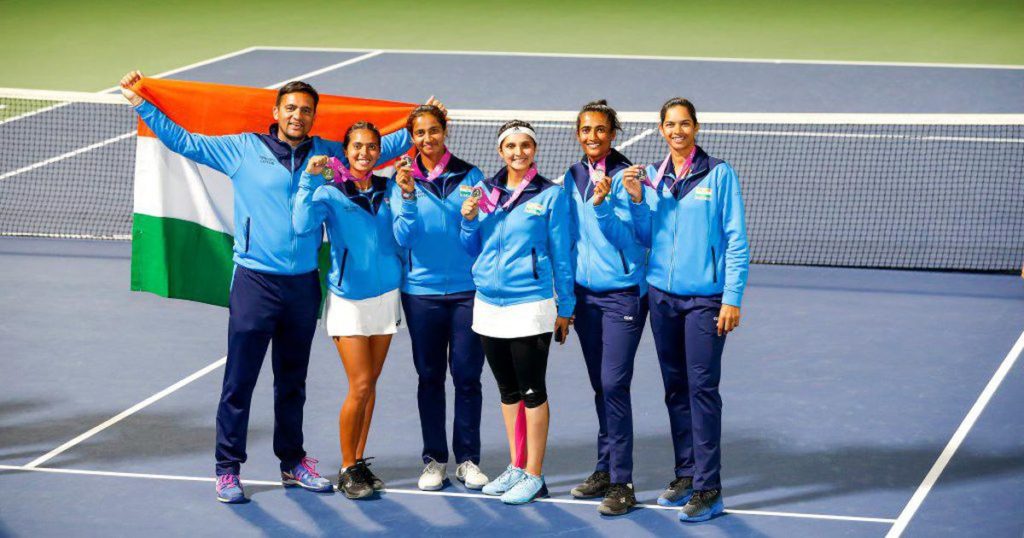
The 33-year-old made a comeback to Fed Cup after four year and helped India qualify for the Play-offs for the first time in history.

File image of Sania Mirza (third from R) and Indian team at Fed Cup from earlier in 2020 | Via Indian Tennis Daily

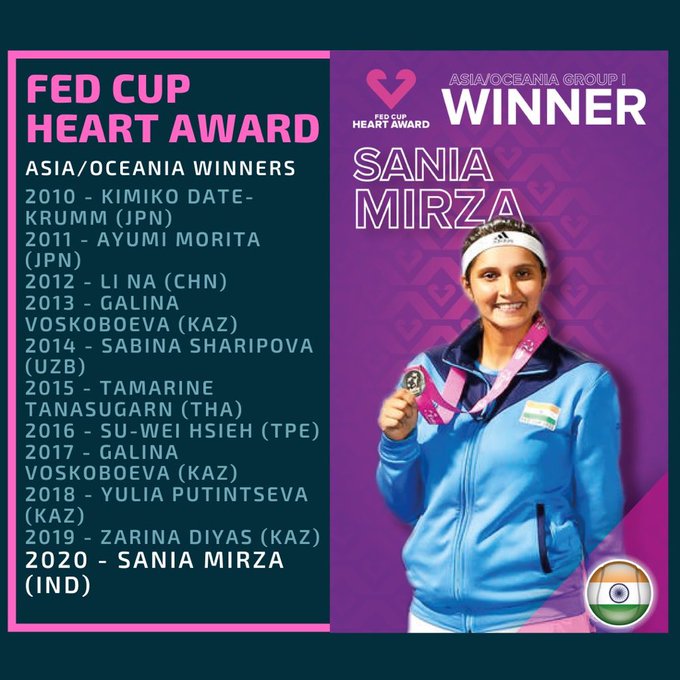
Indian tennis star on Monday won the Fed Cup Heart Award from the Asia/Oceania zone for her performance on return from maternity break earlier this year.

The 33-year-old made a comeback to Fed Cup after four years and helped India qualify  for the Play-offs for the first time in history, with 18-month old son Izhaan present in the stands. Mirza helped India remain unbeaten in doubles with a decisive win over Indonesia that secured second place in the group.

She is also the first Indian to win the award.

“It’s an honour to win the Fed Cup Heart Award as the first Indian,” Mirza, who was also India’s first Heart Award nominee, was quoted as saying on Fed Cup’s official website.

“I dedicate this award to the entire country and to all my fans and thank everyone for voting for me. I hope to bring more laurels to the country in the future.”

Along with the award, she also received a cheque for $2,000 to be donated to a charity and she opted to help with relief during the coronavirus crisis.

“I want to donate the money that I get from this award to the Telangana Chief Minister’s Relief Fund as the world is going through very difficult times with the virus,” she added.

Latvia’s Anastasija Sevastova won the Qualifiers award for her win against USA’s Serena Williams with Mexico’s Fernanda Contreras Gomez and Estonian Anett Kontaveit being the other zone winners.

@MirzaSania

I want to donate the funds that I get from this award to the Telangana CM relief Fund as the world is going through very difficult times with the virus .. thank you all

🙏🏽

View image on Twitter

Mirza won the award for Asia/Oceania zone after securing 10,000 plus votes out of the total 16,985 cast for this year’s three regional Group I nominees, reported PTI.

The Fed Cup Heart Award winners were determined via online voting by fans which went on for a week starting from May 1.

Mirza’s vote share of over 60 per cent of the total votes is a testimony to the global popularity of the Indian star at the Fed Cup competition. She made a comeback to Fed Cup earlier in 2020 after four years. After giving birth to her son in October 2018, Mirza returned to the court in January this year and instantly achieved success by clinching the women’s doubles title at Hobart International alongside Nadiia Kichenok.

Former world No 1 in doubles and six-time Grand Slam champion, Mirza beat Indonesia’s 16-year-old Priska Madelyn Nugroho for the award in Asia/Oceania regional category.

(With PTI inputs)

source: http://www.scroll.in / Scroll.in / Home> Indian Tennis / by Scroll Staff / May 11th, 2020