Jamia Millia Islamia (JMI) faculty member Dr Iram Iqbal Hejazi has been awarded the prestigious RULA (Research under Literal Access) International Award in recognition of her research work in biological sciences.
Dr Hejazi has done her PhD in Cancer Biology, under the supervision of Dr Fareeda Athar and Dr Sonuchand Thakur from Centre for Interdisciplinary Research in Basic Sciences of JMI. She has seven research papers published in international peer-review journals.
With around ten years of experience as a life sciences faculty (guest), she has a passion for research and teaching. Currently, she is teaching as a visiting Faculty at Centre for Physiotherapy and Rehabilitation Sciences. She also taught various subjects of life sciences in Dept. of Biotechnology.
RULA is accredited by World Research Council, the sovereign body committed to empower researchers all over the world with the right use of technology. It is also accredited by the United Medical Council that encloses the major heads from the United Nations to strive for the qualitative health of the public.
source: http://www.beyondheadlines.in / Beyond Headlines / Home> India / by Beyond Headlines / August 25th, 2019
Some of my North Indian friends arrived from Delhi to Chennai for a tour of Vellore Dist (Formerly: North Arcot Dist) to visit some of the shoe and leather industries at Ambur and Vaniyambadi.
I had to lead four of them who could not understand the local dialect. Every where we went, we enjoyed the warmth of hospitality and, Urdu spoken was invariably in a quite queer some but pretty enjoyable. In one of the factories we were offered tea in a jar like cup, and when it was too much I said,” Nakko……Nakko…..uththa Nakko”,meaning “thoda kaafi Hey” –Okay small is enough. One of my friends of north India had recorded all peculiar terms. In other occasion it was, “Uno ab Aangay nai kaththay……saban aangay kaththay”, meaning that, “fellow does not come now, he will come tomorrow”. We hurried to baron’s house and, we had good lounge to relax and to wait. A small boy peeped in and said,” Abbajee pani naalokku hein. Aaaththain Bolay” meaning father is bathing in water and “will come now” meaning to wait for a little while. One of my friends asked me in chaste Urdu,”How can he bathe in “milk” obviously it is by water…..translating “Pani Naalokku Hein?” Yes, the Urdu is being in such a way and so is Tamil both go intrinsically. One can say it a slang or colloquial but none bothers.
The impact of regional language Tamil is so a strong and off setting that the Urdu language got a hold and mutilated. If any one speaks in unsullied Urdu, he/she must be on the public speaking platform or he/she has all set friends from North to speak in chaste form.
“Muhammad Ali Khan, the Nawab of Arcot and the Carnatic” (1770), Tilly Kettle, in the V&A, London [Photo by Jamie Barras]We all wondered how Urdu language became a compulsive order for Muslims whose mother tongues ought to be Tamil. No doubt Tamil is the mother tongue of Labbai (Labbaik) Muslims because their sur names all start from Tamil origin. For example the sur names (family names as in Kerela) such as Nattamkar (Nattai aanmai karar, meaning ruler of the region) Chinna Pakkir (Petty Beggar),
Kandirikkar (Kanda podikkarar, meaning-Kandagam podi- Sulphur powder maker –more precisely fire cracker manufacturer) Vanakkar (Banam karar-fire crackers) Chin Gani (Wee Ghani), Jalladai karar (Sieve maker) Oosi Veedu (Home where needles are sold) Aanaikar(Mahout) Kotlu karar (the people who sell cots), Pambu Kannu (Snake’s Eye)Yey.Paa,Tamil Alphabet meaning Yezhu Paanai (Seven Pots) Valaiyal Karar(Bangle makers). Almost all the Labbai community has surnames of Tamil origin denoting that their mother tongues presumably should be Tamil. Six or seven decades ago elders spoke only in Tamil at Ambur, Vaniyambadi, and Vellore. Even today the Labbais of Pernampet, Valathoor, Melpatti, Visharam etc.are speaking in broken but their offspring speak in Urdu.
One more set of Muslims, Dhakkanis(from Deccan ) have no surnames. Father’s name acts as surname and their mother tongue obviously is Urdu. But there is no distinguishable difference in the spoken Urdu between Labbais and Dhakkanis. It’s appreciable waves that inter Labbai and Dhakkani marriages are taking place. And good renaissance in offing in understanding that “One Kalima and One Allah” is the main concept of Islam. More wed locks have been in vogue between these two sets.
It has been bugging in my mind to persevere in a sense of strict decorum how come that Urdu has crept in the majority of Tamil speaking pelt such North Arcot especially Ambur,Vaniyambadi,Tirupattur.
It has history. Tippu Sultan, the grim freedom fighter of India,who admitted no compromise, ruled from Vellore. Chanda Sahib had fought in Ambur (Battle of Ambur). Both might have brought their armies to Ambur. There is a hillock evidently nearby Ambur, Hillock of Omarabad. Even now the barracks are there atop the hillock. This army (Lashkar) might have stayed a longer period speaking Urdu in Vellore and Ambur. There were four light-bearing stones in the main bazaar of Ambur to commemorate the visiting spot of Tippu Sultan. And this is no more in the sight.
Apart from this fact Arcot Nawab had ruled Walajah, Arcot (Aaru + Kaadu= River and Forest) for a longer period and implying Urdu to find a convenient language for the mass.
Present Prince of Arcot Nawab Mohammed Abdul Ali [ TCN photo]Most of the Labbais are known to be the converts from the south west, south east coastal right from Andhra Pradesh and, above all the trading immigrant Arabs were intense in Malabar, Kerela. The Kerela Muslims do not speak Urdu or Arabic but their physical structures are more akin to the Arabs, quite fair in colour and robustness, suggestive inter Arab marriages. Similar to Tamil Labbai Muslims, Muslims from Kerela also have sur names. These Muslims from Kerela might have married adjacent areas of Tamil Muslims and people of their choice.
Labbais of Tamil area were frequenting to Deccan neighborhood for the traditional business of skin, beedi leaves, tanning barks and marketing beedis. They either settled or brought spouses to Tamil area to breed Urdu. In other word, there were families migrated to these quarters and vice versa.
All the more, Urdu medium schools had been founded nearly a century ago in Vaniyambadi, Ambur, Vellore and Islamic Lessons (Deeniyat) became a compulsory from the parent and only after reciting the whole Holy Quran the boys or girls were computed whether fit for admission into a proper school. This also paved a good way for the revival of Urdu propagation. It really sounds good but in the present day scenario, an English Convent determines the future of students, and parents are pleased when ward speaks in English, especially in front of the guests, but what remains as a fact is, “it is reinforced year after year”. Unlike the olden Muslim dedicated elites, those schools run as convent types are either lack clarity of the subjects or exclusively orthodox where there is a job to learn stressfully Arabic and English.
To speak concisely, Islamiah High School, Islamiah College, Madrasa-e-Niswan Vaniyambadi, Mazharul-uloom-high school, Mazharul-uoom-College, Hasnathus Jaria Girls’ High School, and college greatly rendered for the development of Urdu language.
Past three decades young men participate in Tabligue Jamaat. The Urdu erudite scholars arrive Ambur,Vaniyambadi,Vellore and conduct “Dawa” tours regularly. Most of the discourses are in Urdu. These young men also participate in oratory talent in Urdu. In Vellore, the century old Baquiathus Salihath,an Arabic School, has been rendering Islamic teaching in Urdu. These factors might be an added virtue for the development of the language in the area.
Ambur has remarkable history in producing Urdu scholars like Danish Farazi, an All India renowned poet, whose books are recognized by the government of India, Kavesh Badri, Kaukab, Raghib are some of the ardent Urdu poets widely known among the Urdu fraternity of India. There were regular “Mushaira”, poetic forums running whole of night. Alas, these great souls are all no more, leaving the locale in desiccated state.
Despite critics, people speak,”Kiya Ona” –meaning “What do you want”, I can only say,“Bahuth Shukriya, Badi meharbani”, great, thanks-Good hospitality!
source: http://www.twocircles.net / TwoCircles.net / Home> Indian Muslim> TCN Positive / by Shafee Ahmed Ko, Twocircles.net / September 26th, 2009
Masjid Aalamgir, Shantinagar has provided the best opportunity to the students for the studies.
The managing committee of the masjid has decided to provide space for the students who are preparing for their annual examinations to be held from March to May this year.
This program will be implemented from 2nd March. The students will have the facility to continue their studies after Isha prayer till Fajr. For this purpose a portion of the masjid is being reserved on the 1st floor.
Subject experts belonging to various disciplines especially mathematics, science, English will be available for guiding the students atleast for two hours every day.
In order to inculcate the habit of reading among the students, lectures of eminent scholars will be arranged twice a month.
The objective of this program to provide congenial atmosphere for the students and also to inculcate the habit of hardwork besides offering prayers. As per the rules of the program, the students have to deposit their cell phones with the coordinator.
For further details the students may contact Mr Syed Rahmat at 9133450764.
source: http://www.siasat.com / The Siasat Daily / Home> News> Hyderabad / posted by Sameer / February 27th, 2020
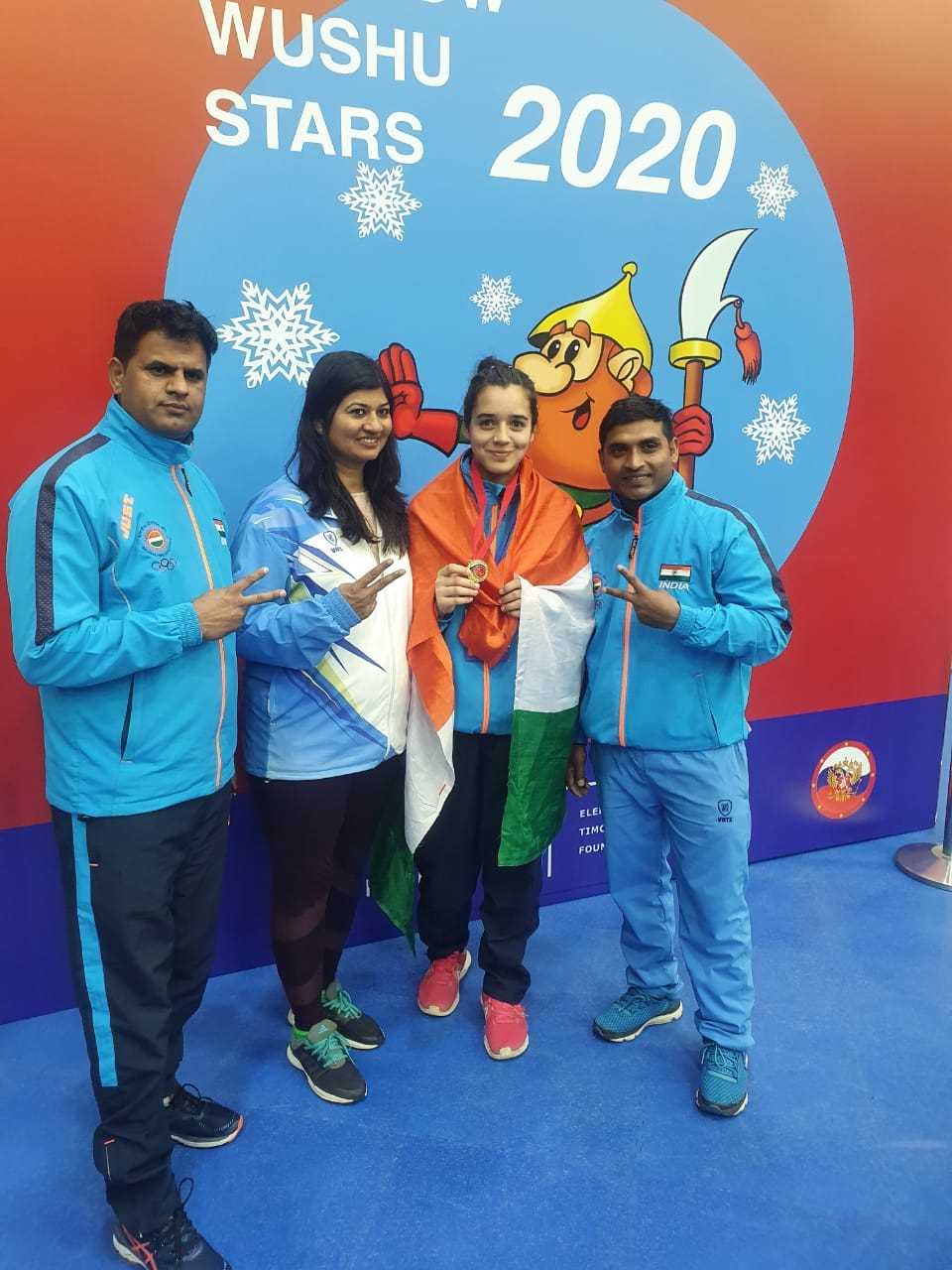
Munazeh Gazi secured Gold medal in the Moscow Wushu stars Wushu championship at Moscow from 25th to 29th February 2020. She defeated Kazak player in the final in 60kg weight category. Earlier she defeated russian player in the semi finals.
The Indian Wushu team Secured 6 Gold, 6 Silver and 3 Bronze medals in the championship. The team was sent by the sports authority of at Cost to government.
Prior to participation, the Wushu Association of India organized 45 days Wushu coaching camp at Chandigarh.
Munazeh Gazi from Srinagar has secured number of medals at national level and last year she made the country and state proud by winning Silver medal in the 10th Asian wushu championship at Brunie.
Rajesh Choudhary of Jammu and Kashmir working in CRPF also secured Silver medal In the championship. He lost to Russia in the Semi finals. He is working with CRPF.
The office bearers of Wushu Association of JK congratulated both the medalists of the UT of JK.
Vijay Saraf, President congratulated both the players especially Munazah Gazi for securing Gold in the championship. He also congratulated indian team for the remarkable performance
The CEO of Wushu Association of J&K Kuldeep Handoo congratulates both the players and the indian team for bringing laurels for the country.
He congratulated District Srinagar wushu Association headed by Sh.Sadat Nasir Wani ,Maqsood Rather and also the coaches Rameez and Irfan for the OUTSTANDING performance
source: http://www.brighterkashmir.com / Brighter Kashmir / Home / by Brighter Kashmir Sports Desk, Srinagar / February 29th, 2020
Students of Kendriya Vidyalaya in Chikkodi in Belagavi district have won an award instituted by the Union government for their electronics project.
Students Shreeraksha, Md. Owais and Lakshmi have designed a home security system, home appliance control and mobile phone detector project. They demonstrated this working model at the District Institute of Education and Training and won the Inspire-MANAK Award that carries a prize of ₹ 10,000.
Kendriya Vidyalaya principal Sudhir Sharma has congratulated the work experience teacher Ravi Singh who worked with the students in the project.
Kendriya Vidyalaya Chikkodi students have won the first, second and third places at the district level in India’s online science competition, Vidyarthi Vigyan Manthan.
source: http://www.thehindu.com / The Hindu / Home> News> States> Karnataka / by Special Correspondent / Belagavi – February 28th, 2020
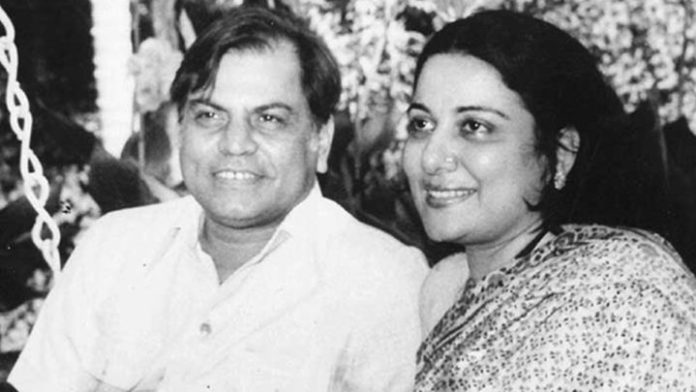
Nearly seven decades after her parents “lived” the love-story of their youth through an exchange of letters, their doting daughter has now published those communication in a book form.
The letters were written by legendary Maharashtra political leader and former Chief Minister and Union Minister, Abdul Rahman Antulay to his home-maker wife Nargis – during their “bethrothal” of four years when she was just 14 and he was all mature at 28 – and also later on after their marriage in May 1959.
Eldest daughter Neelam Mushtaq Antulay had to carry out some major jobs before she could finally compile and create an Urdu and a Hindi book – “Banaam Nargis (‘To Nargis’)”.
First she had to convince her mother to part with them and later painstakingly sift through hundreds of pages of great emotional churning.
“Banaam Nargis” will be released on Saturday at a mega-event by Nationalist Congress President Sharad Pawar and Leader of Opposition in Rajya Sabha Ghulam Nabi Azad, while Chief Minister Uddhav Thackeray will rename the prestigious Anjuman-I-Islam law college in south Mumbai as “Barrister A. R. Antulay College of Law”.
“‘Banaam Nargis’, a collection of entirely personal letters written from a loving boy to his beloved fiance during the conservative era, were more than merely love-letters,” said Neelam.
“I remember from my childhood, how my mother, who treasured a majority of these handwritten letters, (with a fountain pen) — would quietly take them out, read, again and again with a myriad emotions lighting or clouding her face, even after he passed away in December 2014,” Neelam told IANS in a free-wheeling chat on Friday.
She remembers a well known Urdu book, “Zer-e-Lab” – a collection of letters written to renowned Urdu poet Jan Nisar Akhtar — father of equally distinguished son, Javed Akhtar – by his teacher wife, Safiya.
“This got me thinking… Why not highlight my Abbu’s letters to my Ammi? But it took me mountainous efforts to convince my mother before she finally relented over two years ago.
“Today, I consider it my humble tribute to my parents…” Neelam said.
After Nargis parted with her “treasure”, Neelam got down to reading them — around 300 — and many more which she kept aside without even reading, as they were ‘intimately personal’ though her Ammi now had no reservations!
“The letters are clear, concise, to the point.. he wrote prolifically, mostly daily, at times twice daily and posted them… From his bachelor home in Mumbai and Raigad to her parents’ home in Bhiwandi (then called Bhimdi, Thane), unveiling a different era of their lives…,” Neelam says with a heavy heart.
To a query, she points out that “of course, there was a lot of romance” but there was also a lot more.
“He shared with her practically everything… His joys and disappointments, achievements or failures, the highlights or downsides of his blooming legal career after he returned as barrister from Lincoln’s Inn, London, his maiden speech in public life with luminaries like Pandit Jawaharlal Nehru and others present… It opened up a whole new world of my father which I never knew,” said Neelam.
In his inimitable style, Antulay would recount many incidents, anecdotes with references to the then prevalent social, cultural and political events and conveyed a lot more than what he wrote of what was in his heart and mind.
“He ‘lived’ his life with his love (Nargis) through these letters… These pages provide rare glimpses into history… I now feel there was something magical about them…
“Though during their engagement, my mother was too young and many things were beyond her comprehension coming from a highly qualified barrister, but today I understand why she keeps opening the trove to read them again and again,” says Neelam with a smile.
However, Neelam said that her mother was very less “reciprocal” and barely may have replied averaging to 10 per cent – probably one for every 10 letters from her besotted husband!
“But he was never offended and both enjoyed their life, loved their children and brought us all up with dedication and care… Surprisingly, my mother revealed that one day, she destroyed all the letters she had written to him!” said Neelam.
Surprisingly, she is the first member of the family allowed by Nargis to read the letters, described by an editor as “pearls of words and wisdom”.
No other family members – Neelam’s politician husband Mushtaq, sister Shabnam and her husband Justice Amjad Sayed, television personality and upcoming politician brother Naved Antulay, and youngest sister Mubeena and her businessman husband Ejaz Sayed – were allowed access to them.
The earliest of the letters were written by Antulay on 20-10-1957 from ‘Bambai’ (Bombay, now Mumbai) to ‘Bhimdi’, and the last of it was penned by him to Nargis on 22-10-1961 to ‘Bambai’ from London where he was part of a Congress Party delegation.
“I have mostly tried to transliterate the letters in Hindi to retain the special flavour… They are best read in Urdu, followed by Hindi, but any suggestions to translate them in English would kill their very essence,” she laughed.
Neelam is confident that most people “will fall in love with my parents” and learn a lot about life after reading these letters in ‘Banaam Nargis’. (IANS)
source: http://www.indianewengland.com / India New England News / Home> Books / byQuaid Najmi / February 21st, 2020
(This story was first published on 10 November 2017. It has been republished from The Quint’sarchives to mark Maulana Azad’s death anniversary.)
“I am an essential element, which has gone into building India. I can never surrender this claim.”
These were the famous words uttered by Maulana Abul Kalam Azad, when he stared at the daunting prospect of Partition. On his birth anniversary, we remember his contribution to the country.
source: http://www.youtube.com / The Quint
Azad was among the many Muslim leaders in India who opposed the Partition of Unified India into Pakistan and Hindustan. As the leader of the All India Congress Committee in 1946, he put forth a Cabinet Mission proposal that advocated a federal structure of government, with autonomy for states. Though the proposal did face a great deal of skepticism, the Working Committee passed it, with even Jinnah agreeing to it for ‘the greater good of Indian Muslims’.
This proposal was certainly considered a breakthrough, as Jinnah and Azad had never enjoyed very good relations, predominantly owing to their opposing stances on Partition. Where one batted for Hindu-Muslim unity under a larger India, the other was vehement on the creation of two separate states. But their souring relations never stopped Azad from attempting to convince Jinnah to consider a ‘unified India’.
For instance, when Jinnah’s clamour for Pakistan grew louder, Azad is known to have sent a telegram insisting on the perils of a two-state ideology. Jinnah is said to have insulted Azad in his response, calling him Congress’ ‘show boy President’.
Don’t you feel that the Congress has made you a show boy President to hoodwink non-Congress parties and other countries of the world? You represent neither Muslims nor Hindus.
Having failed at getting Jinnah to reconsider, Azad then unsuccessfully tried to convince the Congress leaders to wait till a solution could be found. But even Patel, who earlier backed Azad’s proposal, was now vehemently pro-partition. Azad in his autobiography later writes that the party agreed to the Partition as “blindness of Congress leaders to facts, and their anger and frustration clouded their vision.”
According to Azad, as he writes in his autobiography, Nehru too contributed to angering the Muslims, by committing two mistakes which ultimately drove Jinnah to lose faith in the proposal and go through with partition.
The first was when Nehru refused to take two Muslim League leaders as Cabinet Ministers in the UP elections of 1937. The second mistake was when after taking over as the President of the Congress in 1946, he indicated that the earlier Cabinet Mission proposal could be changed, which culminated in Jinnah insisting on the formation of Pakistan.
Maulana had not only opposed Partition as an Indian leader, but also as a Muslim. He was, in fact, of the opinion, that the two-state policy will only “create more problems than solve”.
And true to his word, even today the relations between the two countries are strained at best, despite their shared history.
source: http://www.thequint.com / The Quint / Home> News Videos / November 10th, 2017 / and February 22nd, 2020
The voters of Nurpur Bedi area set an example by electing Congress candidate Ravena Begum, a Muslim woman, as panchayat samiti member from Takhatgarh zone. She belongs to the lone Muslim family comprising of four voters in the zone.
ROBINSINGH@TRIBUNE.COM
Ropar:
The voters of Nurpur Bedi area set an example by electing Congress candidate Ravena Begum, a Muslim woman, as panchayat samiti member from Takhatgarh zone.
She belongs to the lone Muslim family comprising of four voters in the zone.
Surinder Kaur, sister of AAP local MLA Amarjit Singh Sandoa, who contested as an Independent candidate, finished third by getting 631 votes.
Ravena, who was polled 851 votes, defeated her nearest rival Anju Bala of the BJP, who got 811 votes. Congress leader Brinder Singh Dhillon, who had contested the Assembly elections from Ropar, said the victory proved that the Congress was a secular party.
Speaker Rana KP Singh said Ravena was a hardworking party activist and people voted for her in recognition of her work. / TNS
source: http://www.tribuneindia.com / The Tribune / Home> Punjab / September 21st, 2018
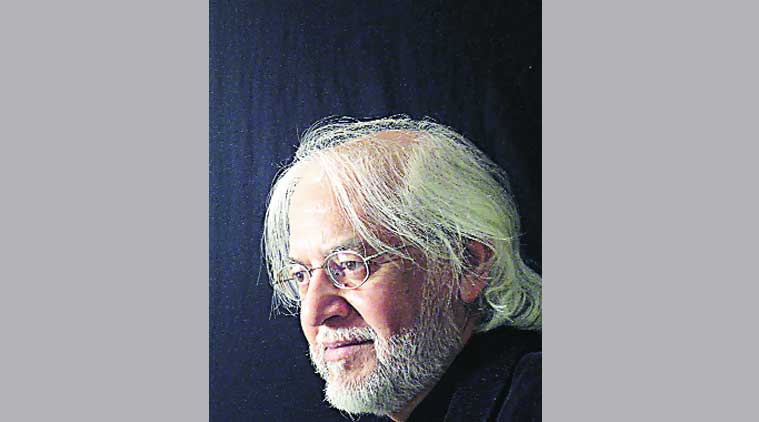
Architect, poet, professor H Masud Taj is on an India tour to talk about Sinan, Istanbul’s foremost architect, who has arguably built more than any other architect in documented history.
H Masud Taj ( Source: Noah Taj)
H Masud Taj, Adjunct Professor at Carleton University in Canada, was mentored in architecture by Hassan Fathy and in calligraphy by David Hosbrough. His talk on “Sinan:Architect at the Centre of the World” in Delhi drizzled with anecdotes of Ottoman empire’s most celebrated builder, and how history and politics were fertile soil for some of Istanbul’s lasting monuments. Excerpts from an interview:
Where did your love for calligraphy and poetry develop?
In Bombay, at home by the sea with its tidal rhythms, where my father had a divine hand that remains without a tremor even in his 90s and because my mother tongue is Urdu, the most poetic of Indian languages (besides being a descendant of the classical Urdu poet, Ameer Meenai). With a father who was a shayar a mother who tore the last page of Urdu novels to replace it with her own version, with storytellers and musicians for sisters, it just had to happen. And when it did, I was 13 years old, far from home, and far from my mother tongue, in Ooty in a school, grounded on JD Krishnamurti with a sprinkling of Aurobindo, where clouds would descend valleys, enter classrooms and blur categories.
You taught architecture simultaneously at Sir JJ College of Architecture, Rizvi College and Pillai college in Mumbai
Yes, while running an architectural practice in Bombay and consultancy in Delhi besides being a fortnightly op-ed architectural columnist. Now I teach in Canada, practice in India and research in-between in Europe and Turkey. For instance this year the University’s Faculty of Public Affairs, showcased the research and photography I did while reading medieval buildings and Don Quixote, in Toledo, Spain.
In your next book on the Seven Muslim Wonders & the Making of the Modern World, which are the sites you will be exploring?
Those that I have visited in Agra, Cairo, Cordoba, Granada, Isfahan, Istanbul and Mecca. If you add Jerusalem that is eight but one of them is latent in all others just as the sound of alif is latent in all letters of Arabic.
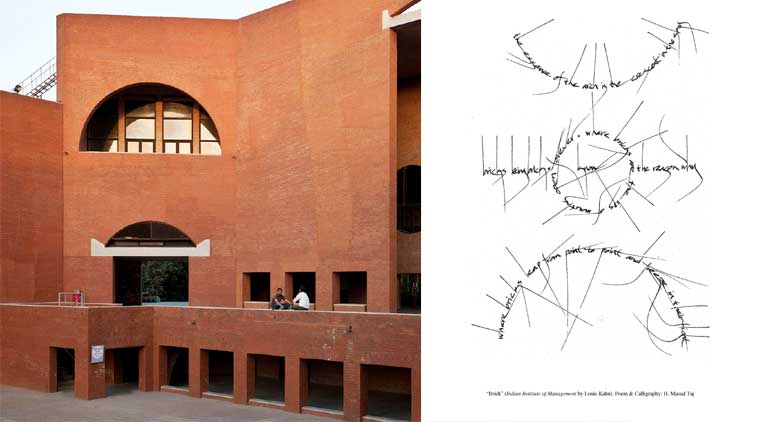
Louis Kahn’s IIM-A building and the poem that Taj wrote, inspired by the building
And where do you see the intersections?
Seven mnemonic monuments embody civilizational ideas. Buildings are books that someone forgot to burn; they await a reading and then paradigms begin to shift and you see the world anew and hopefully the reader will too. For instance, satellite images show that the original Taj Mahal complex extended much further at both ends: across the Yamuna to the royal Mughal garden with a reflecting pool that reveals why the Mughals called it Rouza-e-Munnawara: The Illuminated Tomb (Taj Mahal is a misnomer). However, the real action of the complex was at the other end: the quadrant bazaar as a node of the global Muslim network of an ‘ethically driven commerce’, of poet merchants and Sufi merchant brotherhoods.
What prompted this book?
Many things but the final straw was Jerry Pinto saying I was offering “forever the promise of beauty”. He inscribed that in my copy of his incredible Em and the Big Hoom. He was right.
And when will it be launched?
Ship building is easy; it is the ocean that takes a while.
You were inspired by Louis Kahn’s Indian Institute of Management building in Ahmedabad. You even wrote a poem in calligraphy about it.
As a student, I was at CEPT in Ahmedabad for a month, participating in a workshop designing shells upside down. In the evenings, I’d sprawl on the IIM lawns. Once at dusk, above several storeys of brick arches, right on axis, was the upturned crescent. That’s when the Brick Poemoccurred. Decades later when I began to study Sinan in Turkey, I understood what that poem really meant; poets can lag behind the curve of their poems. I’ll be giving a talk at CEPT and that’s when after more than three decades the Brick Poemwill return to its site.
You have known and been with the legendary Egyptian architect Hassan Fathy and wrote a book on the elusive Indian architect Nari Gandi, apprentice to Frank Lloyd Wright. What were your learnings from and with them that you bring to your work, as a teacher and an architect?
Buildings are prophecies if they are mainstream; or conversations. Gandhi was trapped in his quest for absolute freedom. He excelled as a conversationalist; but did not influence mainstream. Fathy’s prophecies were at mainstream’s edge, yet conversed with the surroundings. Choose between an escapee and an escape-artist.
What does your long poem, which was written while staying in all those houses of Gandhi, say? Could quote a few lines. Courtyard is silence To talk of the courtyard Is to break the spell.
You co-authored a book of poems, Alphabestiary, in which each letter of the alphabet is associated with an animal, such as Ant, Bull, Cat, Dragon, etc. What were you influenced by?
The animal fables of Panchatantra, Aesop Fables; Ibn Arabi arguing for animal rights in the 12th century; the 7th-century father-of-kitten Abu Hurairah. Mostly when we decided to call our son Nuh in Urdu, Nuhh in Arabic, Noah in English, Noé in French. Soon after, Dragonflyfluttered in (its now on YouTube) with a host of animals in its wake turning the oral poet into a one-man travelling zoo. Alphabestiaryis a thin slice, yet featured at the International Festival of Authors in Toronto.
Who, from the past, do you think looks over your shoulder when you write?
Ameer Meenai, and hopefully he can detect Urdu’s fragrance in my English.
Taj has lectured at Nashik, Pune and Delhi and Goa. His talks in Ahmedabad and Mumbai are on July 22 and 24 respectively.
source: http://www.indianexpress.com / The Indian Express / Home> Lifestyle / by Shiny Varghese / September 28th, 2015
Rahil Azam turned swimming coach for young co-stars Jared Savaille and Hirva Trivedi.
Rahil Azam with Dil Jaise Dhadke Dhadakne Do co-stars Jared Albert Savillie and Hirva Trivedi.
Rahil Azam and Shruti Sheth-starrer Dil Jaise Dhadke Dhadakne Do will premiere on Star Plus on February 29. Actor Rahil Azam of Hatim fame plays the role of Gurudev in the show. The actor who was last seen in a negative role in Colors TV Tu Aashiqui recently turned mentor for his little co-stars Jared Savaille and Hirva Trivedi who play Yug and Iti, for an underwater scene.
Rahil donned the hat of a swimming coach for Yug and Iti for an important sequence in the show. The actor was quite impressed with Jared and Hirva and just wishes that their hard work pays off.
Talking about turning mentors to his young co-stars, Rahil Azam said, “I have been very fond of Yug and Iti, who I feel put in a lot of effort in order to deliver a flawless act, But what’s more interesting is that they sportingly take any challenges that come their way. Recently we were shooting a high-octane sequence where Iti to get drowned in deep river water and Yug enters as a Knight in shining armour to save her. Since this scene required perfect supervision, required the kids to be comfortable with water and know swimming, I decided to turn a coach to them and train them for the same. It was really a great experience and I really hope all our hard work pays off.”
Dil Jaise Dhadke Dhadakne Do will air on Star Plus from February 29 at 7 pm.
source: http://www.indiatoday.in / India Today / Home> News> Television> Soaps / by India Today Web Desk, New Delhi / February 27th, 2020

![“Muhammad Ali Khan, the Nawab of Arcot and the Carnatic” (1770), Tilly Kettle, in the V&A, London [Photo by Jamie Barras]](http://www.mpositive.in/wp-content/uploads/2020/03/NawabMPOs02mar2020.jpg)
![Present Prince of Arcot Nawab Mohammed Abdul Ali [ TCN photo]](http://www.mpositive.in/wp-content/uploads/2020/03/Nawab02MPOs02mar2020.jpg)