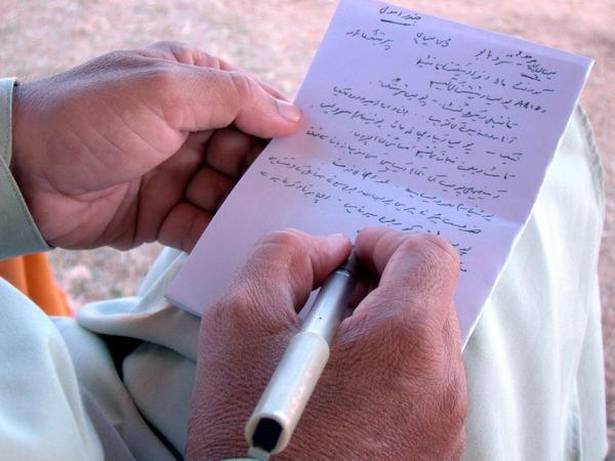
Poems reflect the fate of calamity victims at Dasara

Madikeri, (Kodagu) , KARNATAKA :

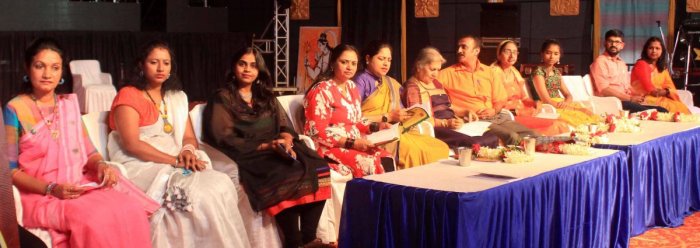
Poets of various languages take part in the Dasara multilingual poets' meet in Madikeri on Friday.
Poets of various languages take part in the Dasara multilingual poets’ meet in Madikeri on Friday.

The agony of flood-affected people in Kodagu echoed during the multi-lingual poets’ meet held as a part of Madikeri Dasara Janotsava, at ‘Kala Sambhrama Vedike’ on Friday.

More than 60 poets recited their poems in Kodava, Arebhashe, Tulu, Telugu, Marathi, Beary, Hindi, Havyaka and English languages. Every poem communicated a meaningful message to the people.

The heritage of Kodagu was also part of many poems. Madikeri Dasara was also reflected in some of the works.

Ranjitha Cariappa, M A Rubina, K Girija, Manju Gopinathan and Allaranda Vittal, H G Savitri were among the poets. Inaugurating the poets’ meet, Deputy Commissioner Annies Kanmani Joy said that the poem is an effective way to communicate the emotions.

Senior Civil Judge Noorunnisa recited a poem on the occasion.

Writer Shobha Subbaiah presided over the meet.

District Superintendent of Police Dr Suman D Pennekar, Poets’ meet committee President Chi Na Somesh and Madikeri Dasara Committee Working President Robin Devaiah were present.

source: http://www.deccanherald.com / Deccan Herald / Home> State> Mangaluru / by DH News Service, Madikeri / October 04th, 2019

Fastest Growing ‘Women Qazis’ In India Ask Muslim Men, ‘Have You Read The Quran’ Why Are You Partial With Us?

Hyderabad, TELANGANA :
WomenQazisMPOs04oct2019

Newly trained women Islamic clerics, or Qazis, have started work in towns across India, offering an invaluable support system to Muslim women, and inviting opposition from orthodox circles.

Iqra’s world fell apart in six months. In her telling, it began, as it often does, with marriage. The 23-year-old’s marriage to Ali was an exchange programme of sorts. Ali was her cousin, son of her khaala, her mother’s sister. In turn, Iqra’s brother married the same khaala’s daughter. Her khaala also became her mother-in-law. Such marriage between first cousins is commonplace among Muslims in South Asia.

Two months later, Iqra’s sister-in-law ran away from home. Her parents had apparently forced her into the marriage against her wishes.

The sister-in-law’s flight to freedom imprisoned Iqra. Her mother-in-law, upset with her own daughter’s running away, took out the anger on Iqra. “Khaala would abuse me at every chance she would get. She would give me gaalis till I would break down. She was angry with her daughter, and she would direct it at me,” she said.

One day, her husband asked her to go back to her parental home. “He told me he would come to take me back when his mother calmed down a little,” Iqra said.

Soon thereafter, Iqra found out she was pregnant. She called her husband to give him the ‘good news’. He sounded happy too. Her husband and her mother-in-law soon took her to a doctor who gave her a medicine. The doctor told her that since she needs to avoid sex, she should continue staying with her parents.

A few weeks later, Iqra had a miscarriage. “I don’t know if they had a hand in this, but my husband never came back to take me home. He stopped taking my calls and responding to my messages,” she said.

As she dealt with the trauma of the miscarriage and the betrayal, two burqa-clad women emerged as her support system. It is in their office, in Jaipur’s busy Johri Bazaar, that Iqra related her harrowing story to #KhabarLive.

The women, who are present this day, are 45-year-old Jahan Ara and 43-year-old Afroz Begum. They are Rajasthan’s first women qazis, or clerics, social and religious adjudicators in Islam, mediating in family disputes.

“She had already filed a case with the police before she came to us,” said Ara, “So we couldn’t interfere in the matter between the families. Otherwise, we could have called her husband and her in-laws and told them it wasn’t the right way to treat their bride.”

Muslim, Woman, Qazi
The job of a qazi has been an exclusive male preserve till recently in India, as it is in most parts of the world. In recent years, activists and organisations within the Muslim world have pushed for the inclusion of women as qazis, and pushing against patriarchy and orthodoxy, more women have taken to the vocation in recent years.

It was only in April this year that Jahan Ara and Afroz Begum received their Qaziyat certificates, after completing their two-year training from Darul Uloom-i-Niswan in Mumbai, an institute established by the social organization Bharatiya Muslim Mahila Andolan. They graduated along with thirteen other women, who went on to become qazis in Maharashtra, Gujarat, Rajasthan, Madhya Pradesh, Tamil Nadu, Karnataka, Bihar, West Bengal and Odisha.

Every day, they see people like Iqra, who seek advice and adjudication, at the office of the BMMA in Johri Bazar. Nishat Hussain, the BMMA’s Rajasthan convener, set this office up ten years ago.

“We have ourselves seen women being subjected to violence since childhood. My father used to beat my mother,” says Jahan Ara. “There would be no one to help her. The male qazis, whose role as an Islamic judge is to counsel and help, always support the men. They will just say it’s ‘Allah’s choice’. No, it’s not. And we need to tell women in our community that the Holy Quran does not differentiate between a man and a woman.”

Jahan Ara, who grew up in Jaipur, went through an abusive marriage for years before she finally decided to leave her husband about 10 years ago. After the divorce, she says, her husband didn’t let her meet their children, paid her no alimony, and refused to give her the customary 15 grams of gold Muslim men must pay their wives if the marriage ends. “The local qazi refused to help me get my rights,” she says.

She knew she had to change her situation. She started working with a women’s rights organization and went on to start a Madrassa for the children in her locality. “I started thinking what is the right kind of Islam, the one that’s taught in the Quran or the one we were practicing?” she says. That led her to enroll for the course to become a woman qazi.

Jahan Ara and Begum have faced a lot of opposition from male qazis and other members of the Muslim community. Lately, things have begun to change. “The other day a qazi came and congratulated Jahan Ara for the work she’s doing. This is progress. Gradually, society will start accepting that women can be empowered,” said Nishat Hussain.

When Men Fear Women
“The role of a qazi is marriage, divorce and intervention against injustice. Male qazis have a certain world view–they want us to believe the husband has more rights. But the Quran doesn’t say so. Women becoming qazis will change that patriarchal mindset,” says Zakia Soman, one of the BMMA’s founding members.

According to her, triple talaq (the controversial Islamic practice of instant divorce) has ruined a lot of women’s lives. It is unconstitutional, she says, and not valid as per the Quran. “We no longer need to accept the treatment that’s been meted out to us for decades,” she said.

Qazi Afroz Begum echoes her words. The 43-year-old says that though there’s support from her family, her husband and her five sons, it’s still a long way before Rajasthan starts accepting women as qazis. She says unlike the male qazis, who simply indulge in “dukandaari” (business), they will follow the requirements of Muslim personal law that are often overlooked.

The women qazis need to be given a month’s notice for a nikah. They will then check all the documents–the bride and the groom’s qualifications, proof of income, medical reports and divorce certificates, if any, before they approve of the marriage. “Until women know what their rights are, how will they demand them?” asks Qazi Afroz.

As Afroz explains how they are going to bring about change, Jahan Ara receives a call. “Aap kal tashrif layenge? (Will you come tomorrow?)” she asks in a curt manner.

It was a man they have just sent a notice to. His wife came complaining to the women qazis one day of his alcoholism. Most nights, she said, he doesn’t return home. She suspected multiple affairs. “We sent him a notice, and now he’s scared,” says Jahan Ara.

Durdana Khan, 29, a local reporter in Jaipur, says it’s due to the constant support from these two women over the last year that she’s no longer scared of anyone. Durdana was married to a well-to-do family in Jodhpur in 2008. Six months into her marriage, her father-in-law started making sexual advances towards her. “He would keep touching me and would ask me to visit his room,” she said. When she complained to her husband, his response was, “Deal with it. This happens in our family.” Durdana was shell-shocked, and tried to run away several times. But each time, her husband and his family members would find her and beat her up. In 2012, her husband finally agreed to give her talaq (divorce).

“Allah has never wanted us, women, to live in deprivation. Men and women are same in the eyes of Allah. So why should we have to tolerate the subjugation of men?” Durdana asks. The 29-year old’s plight did not end with the divorce. After she returned to Jaipur to stay with her parents, her brothers started harassing her and their father, scared that they will lose their share of the property. Ara and Begum helped her resolve the property dispute, negotiating with her family members.

“A male qazi, more often than not, grants property rights to the sons alone. We are trying to change that,” she says.

The women qazis have also set up a team of about 15-20 women who work in different parts of Jaipur and its outskirts. “Every leader is responsible for their area. When they find a case of violence, they report it to us. We then approach the victim and help her,” she said.

Waiting For The First Nikah
Arbitrating disputes of property and marriage is the easy part. The difficult part is conducting marriages. Since they received their certificates only in April, they are yet to be approached by anyone to perform a nikah.

Safia Akhtar, 61, the only woman qazi from Bhopal who graduated with Jahan Ara and Afroz Begum, says that none of them have performed a nikah yet because men feel women should be under ‘purdah’ and cannot go to a mosque where the ceremony usually takes place for the groom. “Muslim marriages are male-dominated events. Now that we have our qazi certificates, they are asking us how will we conduct it in a room full of men.”

Safia says she constantly receives death threats from men. “Someone just informed me I’ll be removed from Islam for being a qazi,” she says. But the 61-year-old isn’t scared. “They want me to shut up, but I won’t. If they can prove I am wrong, I’ll leave Islam myself,” she says.

32-year-old Nasreen, who has recently become the first woman qazi in Karnataka, says it’s mostly the women who come to her with cases. “A lot of people don’t want to accept that I am a qazi. They constantly ask me how a woman could be a qazi. And my response to them is, ‘Have you read the Quran?” Nasreen says only women qazis can understand the discrimination a woman faces in the community. “Men usually don’t come to us, and that says a lot about their mentality,” said 35-year-old Aslam Banu, the woman qazi from Odisha.

About a year ago, when news of the country’s first 15 female qazis was announced, the All India Muslim Personal Law Board did not approve of the idea, declaring that female qazis were not permitted in Islam and could not be appointed. Tahir Mahmood, a former member of the Law Commission of India, which oversees adjudication over Muslim personal law, disagreed with the AIMPLB, as did the Darul Uloom Deoband, the influential Islamic school in Deoband, UP.

UnIslamic?
Khalid Usmani, Rajasthan’s chief qazi, also thinks women qazis are un-Islamic. “If I tell you I am Lord Raam, will you believe it?” he asks. Usmani says women qazis don’t know anything about Quran or Islamic laws. “How can women be qazis? They are not meant to do all this. They have a role in society, and they should let men perform their roles,” he said. The chief qazi says that people have ‘rejected’ these women as qazis. “They can’t go to a mosque. It’s not allowed in Islam. They are just fooling people. And that is why people don’t go to them either,” he said.

Whatever you might think of Usmani’s views, he’s definitely wrong about the last part. People certainly go to them. The Jaipur office of Ara and Begum is never empty. There are women who come to them to register cases against their husband for domestic violence, some come with property disputes, and others to save their marriages when the husbands have uttered triple talaq. Some women come just to sit and listen, to learn how they could stand on their own two feet after their husbands have left them.

People used to go to Aisha, Prophet Muhammad’s wife, for advice and guidance.
The chief qazi’s views on the subject don’t find universal acceptance. Akhtarul Wasey, who has taught Islamic studies at Jamia Millia Islamia, and is now the President of Maulana Azad University in Jodhpur, says the Quran doesn’t say anything to prevent women from becoming qazis. “Our holy book doesn’t differentiate between men and women. Whoever’s calling the appointment of female qazis un-Islamic, is wrong,” he says.

Wasey says people used to go to Aisha, Prophet Muhammad’s wife, for advice and guidance. “In fact, we attribute one-third of the Sharia law to Aisha. If Aisha could do it, then why can’t women be qazis? This is what I would like to ask Usmani saab.”

According to him, if women are educated and know Islamic laws and the Constitution, nothing can stop them from becoming Islamic judges. “Forget nikah, there are so many other things that a qazi does, and a woman can do all of those,” he says.

“One day women will even become Muftis and teach the Quran,” says Qazi Afroz, “We know it’s a long journey.” #KhabarLive

source: http://www.hydnews.net / Khabar Live Hyd / Home / by Dr. Fazalullah Shaikh / October 04th, 2019
Meet nonagenarian SM Miskeen, the oldest ever to earn a PhD in Tamil Nadu

Thiruvarur, TAMIL NADU :

Miskeen, who still practices as a chartered accountant in Thiruvarur, did his research on cheque fraud and fines concerning loan repayments.

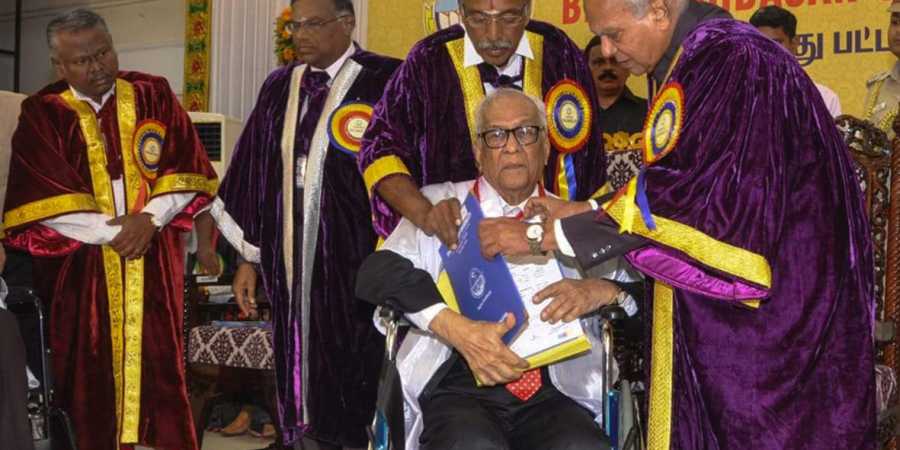
SM Miskeen receiving PhD from the governor of Tamil Nadu on Tuesday (Photo|EPS)

Tiruchi :

With a doctorate at 91, he proved that age is just a number. Nonagenarian SM Miskeen from a village in Thiruvarur village, who earned his PhD on Tuesday, received the certificate from the governor of Tamil Nadu at Bharatidasan University.

Miskeen, who still practices as a chartered accountant in Thiruvarur, did his research on cheque fraud and fines concerning loan repayments.

A chartered accountant with an active clientele, a lifetime Lions Club member who started the first eye hospital in Thiruvarur through the organisation, and an educationalist who brought the first-ever women’s college – all of these show an eventful timeline Miskeen has crafted over the years.

Miskeen was born in the hamlet of Koothanallur in Thiruvarur district in 1928. After finishing primary schooling in his village, Miseek was moved to Madras for secondary schooling. “My father believed that education was very important and moved with me to Chennai where he set up shop,” said Miskeen.

Later he completed his college at Loyola in Chennai in 1950 with a B. Com. This was followed by a three-year stint handling his family business in Vietnam.

Miskeen said he did not want to continue in Vietnam and came back to India to pursue CA, which he completed in 3 years.

In 1960, Lion’s Club International had introduced a scheme to establish eye hospitals to eliminate reversible blindness. Miskeen, who joined the organisation in 1968, gradually became the club’s Multi Council Chairman of South India. He established an eye hospital in Thiruvarur and treated over 10 lakh persons with cataract free of cost. He founded RA College for Women in 1999. At present about 2000 girls, mostly from economically backward backgrounds, are studying in the college.

While speaking about the research, he said: “Many are unaware about the penalty in cheque dishonouring. This research analysis would create awareness about it and prevent such offences among individuals, small firms and even corporates as those involved in cheque bouncing cases may be awarded up to two years in jail and fined twice the amount involved.” He said such cases were in great numbers at many high courts and even the supreme court.

Miskeen studied over 400 check dishonouring cases across India for his analysis. He took up the research in 2014 under the guidance of Dr. Issac Francis Gnanasekar from St. Jospeh’s college.

source: http://www.newindianexpress.com / The New Indian Express / Home> Good News / by Express News Service / Ocotber 01st, 2019

India’s blind judokas win 19 medals at Commonwealth Judo Championships

INDIA :

JudokasMPOs01oct2019

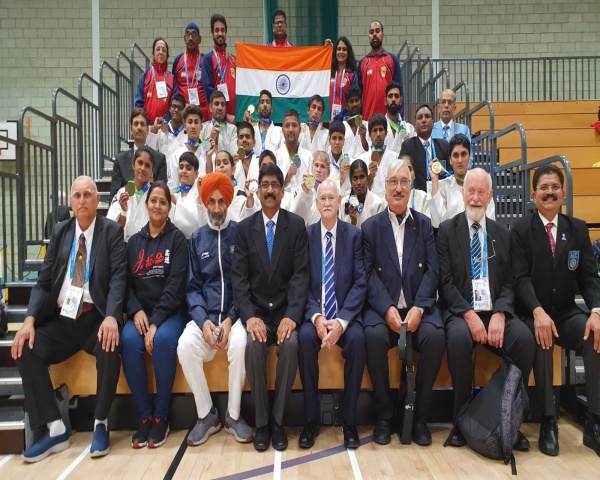
Visually impaired judokas of India made a clean sweep at the 16th edition of the Commonwealth Judo Championships held in the United Kingdom winning seven gold medals.

The Indian national anthem could be heard 19 times at the University of Wolverhampton Sports Centre in Walsall, United Kingdom, venue of the Commonwealth Judo Championships as India’s visually impaired judokas made a clean sweep walking away with seven gold, seven silver and five bronze medals.

Nineteen members of the 20- strong Indian contingent won medals at the event, making it a day to remember.

The names of the medal-winners in each category were as follows:

  • Gold – Kusum, Poonam Sharma, M. Manoharan, Karmpal, Kapil Parmar, Swati Sharma and Subhashini.
  • Silver – Syed Ahtram Hussain Naqvi, Kokila, Muthulakshmi, Monu, Ramesh, Sonali and Mohit.
  • Bronze – Rohit, Buddhadeb Jana, Sarita Choure, Renuka, and Ajay Birajdar.

The other countries taking part in the event were England, Wales, Scotland and South Africa. Scotland, England and Wales also won gold medals, but India was far ahead of the rest. The performance has made the Indian Blind and Para Judo Association, which manages visually impaired judo in India since 2010, very proud.

We are very happy to have made a clean sweep at the Commonwealth Judo Championships. I really hope that the experience and exposure that the players have got will help them play better in the future. Also, the confidence that the team gets after a performance like this, is unparalleled. – Munawar Anzar, General Secretary, Indian Blind and Para Judo Association

Aaesha MunawarJoint Secretary of the association, told NewzHook that given the challenges faced by people with disabilities in India, their success was truly remarkable. “Compared to the kind of support that non-disabled sportspersons get, para sports gets nothing”, said Munawar. “We have to beg and borrow for everything and when you cast a glance at the support other countries give, the contrast is glaring”.

Over the years the number of visually impaired judokas in India has grown. There are now about 700 visually impaired judokas playing at the national level, about 45% of them girls. The maximum participation is seen from the states of Tamil Nadu, Haryana and Uttar Pradesh. Judo, says Munawar, gives them the opportunity to empower themselves, but convincing families and blind schools to send students for judo training is hard.

“We have girls as young as 10 taking part and its great to see that but the challenges are many. We want to make their parents proud and help the judokas improve their levels”. The association hopes to send a team to the Tokyo 2020 Paralympics and all efforts are currently geared towards that.

source: http://www.newzhook.com / Newz Hook / Home> Stories / September 2019

Hyderabad-based doctor wins Bhatnagar Award for contributions in science and technology

Hyderabad, TELANGANA :

The list of awardees was announced on Thursday. This is the fourth Bhatnagar award for LVPEI, which is the only eye institute to win the award.

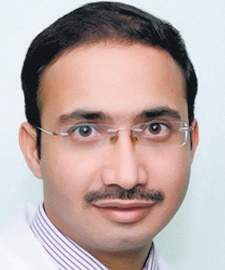
Dr Mohammad Javed Ali of the Hyderabad-based LV Prasad Eye Institute. ( FIle Photo )

Hyderabad :

Dr Mohammad Javed Ali of the Hyderabad-based LV Prasad Eye Institute (LVPEI) has won the coveted ‘Shanti Swarup Bhatnagar Award’ in the ‘Medical Sciences’ category for his outstanding contributions in science and technology this year.

Javed currently heads the Govindram Seksaria Institute of Dacryology at LVPEI and is a senior Humboldt scientist at Friedrich-Alexander University, Nuremberg, Germany.

The list of awardees was announced on Thursday. This is the fourth Bhatnagar award for LVPEI, which is the only eye institute to win the award. This science award is presented annually by the CSIR and is considered as the highest multidisciplinary science award in India.

Another reward for research

Among his several awards, Dr Javed has received The Experienced Researcher – Senior Alexander Von Humboldt Fellowship Award, which is one of the pinnacle awards given out for research

source: http://www.newindianexpress.com / The New Indian Express / Home> Cities> Hyderabad / by Express News Service / September 28th, 2019

How Budha Ismail Jam, a Gujarati fisherman, challenged multinationals in a US Court

Tragadi Village (Mandvi Taluk, Kachchh District), GUJARAT :

BudhaIsmail01MPOs30sept2019

In 2005/06, when coal plants were set up in Kutch District of Gujarat district, locals were promised employment. The project, set up by Adani and Tata Groups and backed by international financial institutions, was considered ‘efficient’ and aimed at selling power to other states too.

More than a decade later, locals continue to count the ecological costs of these plants.

Tragadi, one of the villages, is home to fishermen who realised that their catch has decreased dramatically after the plants were set up, while the village of Navinal, which was rich in horticulture and agricultural produce, saw damaged date palms and other fruits and reduction in farming.

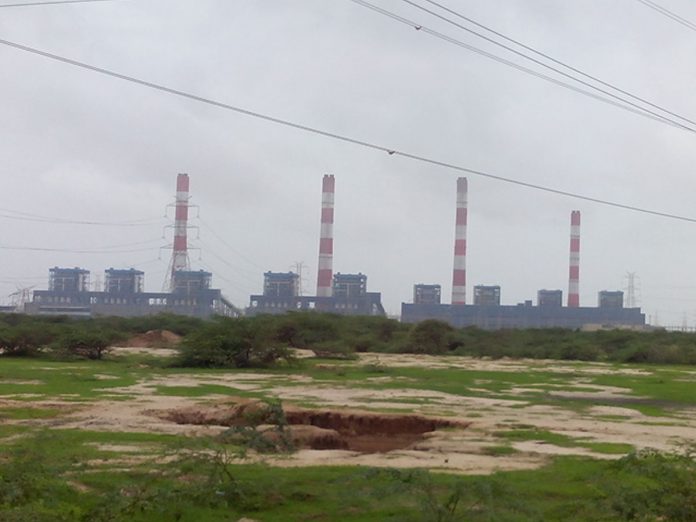
Adani Power started the region’s first coal-fired power plant. The village of Navinal is about 8 km from the Adani Mundra plant. The Tata Mundra “ultra mega power project,” built by the Tata Group is also nearby.

The heated wastewater released from the plants containing saline, from the outflow channel of the plant, released in the sea waters at the rate of 600 million litres per hour, was badly affecting marine resources.

Apart from this, huge amounts of sand were deposited near wells used for drinking water, turning them saline and non-potable.

The coal dust and fly ash and the groundwater now contaminated with saline water have made farming difficult and many people have given up growing crops.

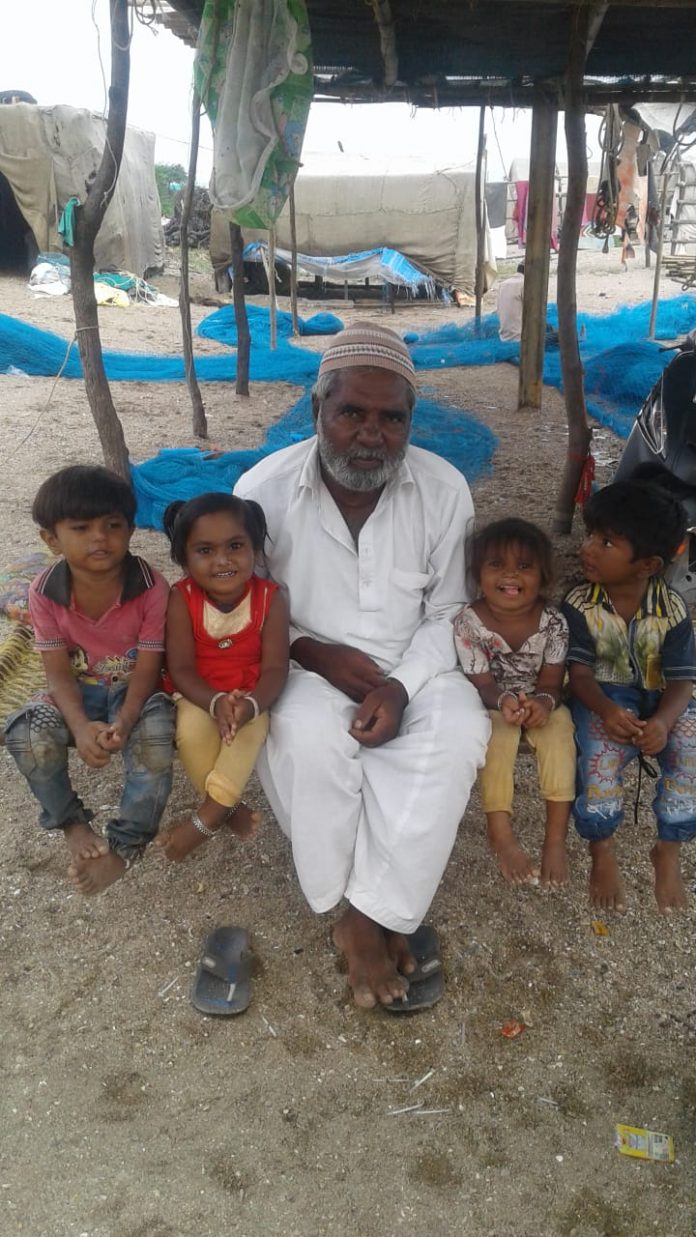
And this is when Budha Ismail Jam, a fisherman from Tragadi, and the people of Navinal came together to form MASS (Machimar Adhikhar Sangharsh Sanghathan) in 2010 and act collectively to make accountable the powers behind their woes.

In a conversation with TwoCircles.net, Jam explained how their lives had been impacted after the power plants were set up. “Earlier, I and my sons used to catch plenty of fish within a short distance of just 2 kilometres with just one fishing boat. But gradually our catch decreased and we had to sail at least 12 kilometres to catch fish. And since one boat was not enough, I had to avail a loan and buy 3 more fishing boats.”

“Today, our catch from the 4 boats equals the catch of one boat before the power plant was set up,” he explained.

They first complained to the companies about the damage to marine life and demanded that the companies switch to a closed-cycle cooling system instead of the open cooling system that required 3 times more water. But the company refused to comply.

Then, the people had a series of meetings with the whole community and the leaders approached a Delhi-based NGO called Centre for Financial Accountability’. The executive director of this NGO, Joe Athialy, helped the fishermen and farmers moved the complaint advisor ombudsman of IFC (International Finance Corporation). The ombudsman conducted an internal audit and submitted its report in 2012 and the CRP submitted its report in 2015 but nothing changed.

The Role of the International Finance Corporation

The IFC, which has its headquarters in the United States, has partially funded the TATA power project. The entire project costs $4.14 billion and the IFC has funded $450 million, while the remaining was funded by Asian Development Bank and other agencies.

IFC, which is a member of the World Bank Group, focuses on financing private sector developmental projects in poor and developing countries. The mission of IFC is to “carry out investment and advisory activities with the intent to not harm people and the environment.”

However while investing in the TATA Mundra Plant; they went against their mission causing damage to the environment, livelihood and health of the people.

Jam, also the leader of the fishermen community which is mostly Muslim, told TwoCircles.net, “due to the water contamination, many people here keep falling sick frequently”.

The Suit in the US court

Jam, Bharat Patel from the Fishing Union and Joe Athialy sent a petition signed by 30,000 signatories to the World Bank President asking them to withdraw the funds to the TATA project due to the environmental violations caused by the plant. They even wrote to Indian tribunals that worked on environmental issues.

They tasted brief victory when the nearby plants were halted. But operations resumed when the plant got environmental clearance a year later.

But after their petition reached the World Bank, their story became known in other parts of the world and soon activist lawyers from EarthRights International came to their village and met the aggrieved fishermen.

And thus in 2015 began the Jam et al v. International Finance Corporation trial. EarthRights International (ERI), an NGO which works extensively in defense of human rights and the environment, supported Jam and the others in suing the IFC in the Federal District Court for the District of Columbia claiming damages and injunctive relief for the harm caused due to air, water and land pollution by the power plant financed by IFC.

IFC claimed immunity because groups like the World Bank were exempt from prosecution under the US International Organisation Immunities Act (IOIA), 1945. And in 2016 the court agreed that IFC enjoys ‘absolute immunity’ and dismissed the case.

But Jam and his team did not give up. They appealed again in the court of Appeals (which is like High Court) for the District of Columbia Circuit where again IFC won because the order of the district was upheld.

Just when things were becoming bleak, Stanford Supreme Court Litigation Clinic, a law school which offers hands-on legal experience in Supreme Court litigations, offered to help the litigants Jam, Patel, Earthrights International to move the Supreme Court of US in 2018.

Mundra thermal power station ( Photo from Wikipedia)

TwoCircles.net also spoke to Joe Athialy, who had attended the proceedings at Washington on behalf of the litigants back home and he explained, “We understood the importance of our case being heard in the Supreme Court when we learnt that out of 7,000 cases, the Supreme Court agrees to hear only 150 cases. And we were lucky our case was one among these. Here, all the 9 judges sit for all the cases unlike in India.”

“But in our case one judge, who was in the Appeals court, excused himself and the other 8 judges heard the case.”

He also explained that there were a lot of people present in the courtroom and that the entire proceedings were completed very fast.

And then came the verdict this year in February 2019, wherein the Supreme Court, ruled in favour of Jam and others and ruled that even International organisations can be sued and that they do not enjoy absolute immunity.

This was a landmark judgment and a huge victory, not just for the plaintiffs from India but to all the people who think that international organisations are not above the law.

On winning the suit Joe Athialy told TwoCircles.net, “This is a big deal not just for the people of Mundra but for multiple reasons because this is the first time in the world, a case against the World Bank has come to this level, this is the first time the immunity of the world bank is challenged. And this allows people anywhere in the world to sue the World Bank if there has been damage to the environment and lives of the people.”

“We believe this is another step towards holding these institutions accountable,” he added. “Now the case has been sent to the district court for further litigation.”

Apart from this case against the IFC, Jam, Patel and Joe have also written to the other financial institutions that have funded this project like ADB. They have also written to the pollution control board in India.

“We also wrote to the Indian Banks through whom the project is operating. But none of the banks has even responded”, Athilay said. “At least international banks respond. They don’t even have such policies”.

Jam says, “I am happy that our efforts have paid off and we have won the case. But I have asked for compensation for the losses we have incurred in our livelihood and I hope we will be given compensation.”

“I was offered money for not fighting the case but I stood my ground because I was not thinking of just myself but all the fishermen community,” he said proudly. But in a sad tone he added, “Earlier when our fish business was good, I had many dreams for my grandchildren. But today we are not earning half of what we did before and I don’t give much thought to my dreams.”

However, he hopes for better days if the courts order the power plant to stop the open cooling system then the wastewater outflow will be reduced and things might improve slightly better.

source: http://www.twocircles.net / TwoCircles.net / Home> Lead Story> TCN Positive / by Nikhat Faima, TwoCircles.net / September 28th, 2019

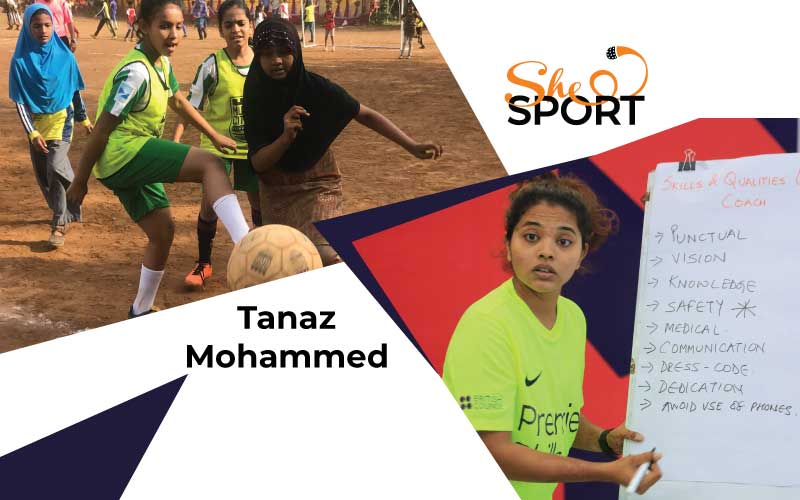
Meet Tanaz Mohammed: A Hockey Player Who Is A Football Coach

Mumbai, MAHARASHTRA :

TanazMohammed01MPOs29sept2019

Tanaz Mohammed was just seven when she fell in love with sports. Before choosing football, Tanaz initially dabbled with playing track and field and even hockey. Thus it is not a surprise that the multifaceted sportsperson is a national level hockey player and a district-level footballer.

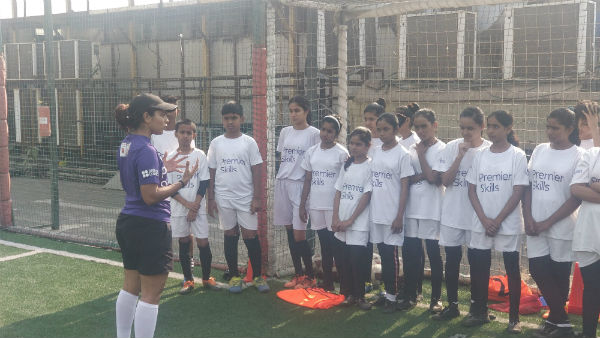
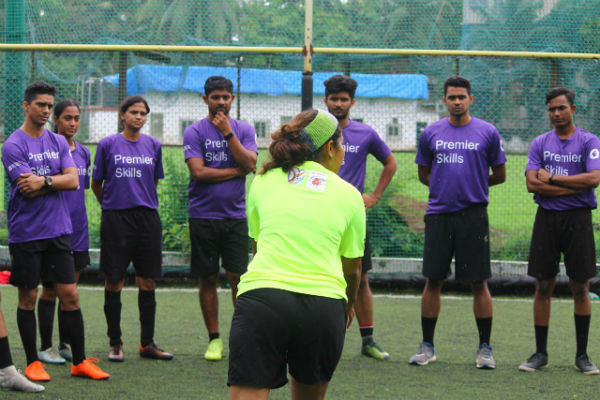
Growing up in a middle-class Muslim family, Tanaz was still finding it hard to choose just one sport. Not knowing what the future might have in store for her, she even enrolled herself in Sports Management for post-graduation program. Finishing the course as a Gold Medallist from her batch really did the rest. A new chapter in her life began when she received an offer from the ISL Franchise, Mumbai City Football Club for an internship in 2017. She accepted the offer, and today Tanaz is a grassroots development officer with the club. The Mumbaikar also is a Premier Skills-qualified Level One coach and educator, who is an advocate of women and girls’ rights in the industry. Today Tanaz, 26, is breaking the barriers by teaching hockey and football to kids and also working as a basic fitness trainer for Under-6 children.

In a candid chat with SheThePeople.TV, she speaks about playing an important role in encouraging women and girls to participate in football , especially to those belonging from the Muslim community. Excerpts of the interview.

You are a hockey player and a football coach. When did you realise that you wanted to pursue a future in football?

I was a shy kid, only into books, and it was a surprise to me and my family to know that I have had these talents inside me hidden somewhere. Because of my performance in science, my mother always thought that I’ll become a doctor in future. That’s something we both laugh about till today. It was a sure thing that I was not going to mend any bones. Ultimately, I ended up breaking a few!

Tanaz Mohammed — a grassroots development officer with Mumbai City Football Club, a Premier Skills-qualified Level One coach and educator

My journey into sports started at the age of seven. Our school was conducting selection for interschool road races and to my own surprise, I decided to give it a try. I won and qualified for it too. My parents were a little shocked to see this change in me but they didn’t hesitate in letting me choose my own path. So I started as a track and field athlete and ended up playing in a hockey team for the school. I liked this sport instantly. Those initial months of hockey training made me realize that this was where I wanted to be. I gradually evolved from a shy, bookish and timid girl, to a confident and compact sporty one.

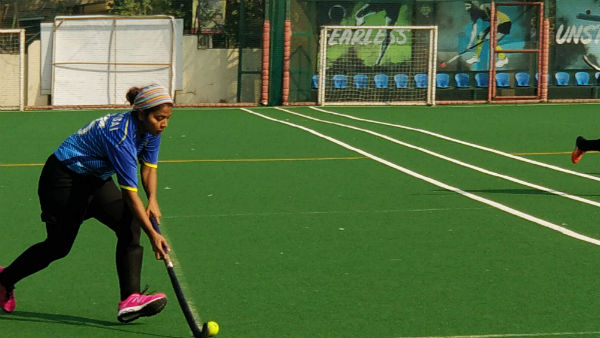
I went on to play hockey during my entire school and college life. I played at national level. I was also selected for a Pre Junior India Camp Training. I played international for a club called Friends United which was started by Mahindras. My own journey into sports made me realize that I was meant to be here, always!

Who is your biggest inspiration?

My inspiration is my mother!

She had to give up her profession for a while after my birth. But I saw her getting back to it with so much more power. She is a homemaker and a teacher. If she can handle it so well, why can’t I and that’s my driving force, my mother.

The amount of effort and sleepless nights that she has put in to help me achieve my dream is what inspires me to love both the sports. If she being a homemaker can do this and help me become what I am, I aim to do the same for the other kids and girls out there.

From hockey to football to becoming a trainer for children in hockey. Tell us in details about the journey. What inspired you to become a coach?

Till my graduation, I was completely into sports and also managing my studies. While I still love playing Football, Hockey remained my primary passion, a cocoon you can say.

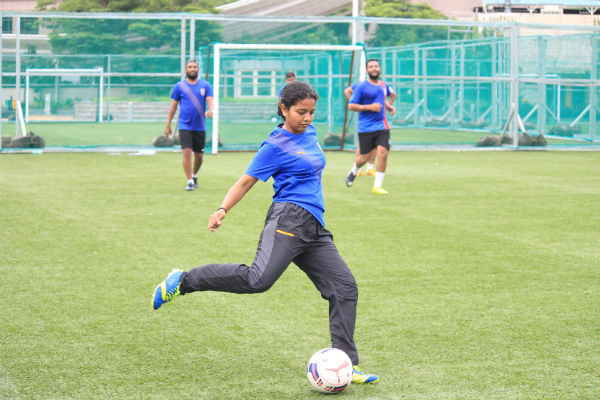
Tanaz Mohammed in action

After completing my graduation I had to decide on a career. I tried multiple jobs, some not related to sports but I tried them anyway. Then, one day, I figured out about the sports management and without any second thought, I decided to jump headlong into it. It took me a while to explain and make my parents understand where I was heading to but then the road was way clearer.

I got myself into the management studies and along with it I continued playing hockey at the national level.

I always gave equal importance to sports and studies as I knew that I had to be dedicated to get through this journey and there is no alternative to hardwork.

I was the Gold Medalist and was also named as Student Of The Year at International Institute of Sports Management (2015-2016). I was then offered an internship at Mumbai City FC. I knew that I was shifting from hockey to football, but I also knew that if I work hard and commit myself to the fullest I will be able to bring in a change.

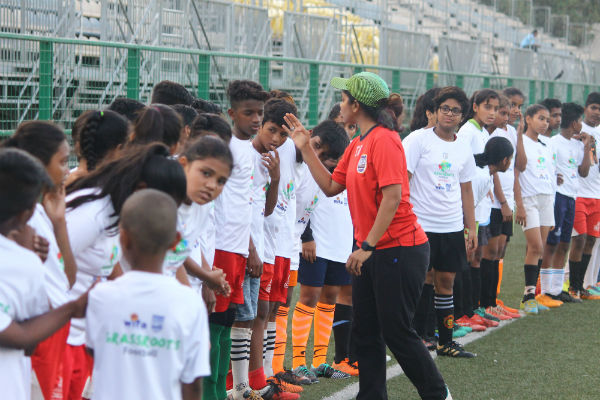
I went through a three-year commitment with Premier Skills which helped me become a coach first and then I successfully became a Head Coach Educator, where now I can train and certify other coaches into Community Coaching of Football.

My vision was clear: I wanted young girls to feel empowered so that they grow up to become strong women. And so I got into grassroots coaching in Football.

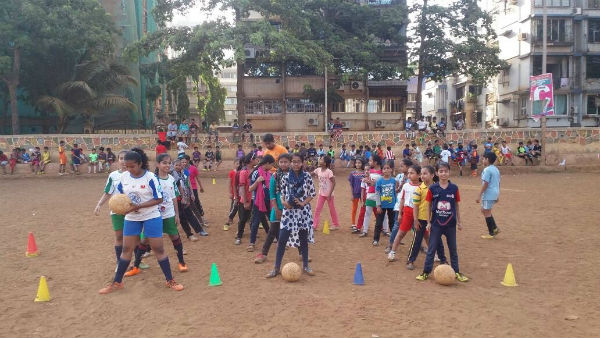
I can happily and proudly say that I gave exposure to around 500 girls from Muslim Community who belong to a traditional background. I made them and their parents realise that football can be played while wearing a Hijab too, all you need is your foot to play

Those girls are now into football . The schools in that locality have started their own girls’ football teams and they participate in various tournaments. As a result of this, their mothers are also feeling inspired and now they train beside their daughters. This, personally, has been a great achievement for me.

TanazMohammed04MPOs29sept2019

I decided to become a hockey coach as I wanted to give back to the game through which I got my own identity.

The career you have chosen leads you to many injuries and roadblocks. What inspires you every day?

I can say that playing sports is what I love and this is what I am. It took me sometime to realise it but now that I have I am passionately in love with it. All roadblocks and injuries seem small in front of my goal.

TanazMohammed05MPOs29sept2019

You are one of the few female footballers in India who made a career in the game. What does that feel like?

No doubt it’s a great feeling, but along with it comes big responsibilities. There are little girls and kids out there looking up to me and learning from me. I need to make sure every single day that my work and hard work are towards the development of sports and those kids.

How did your life change with sports?

My life has changed exceptionally. From a shy kid to a professional woman addressing a crowd of hundreds, sports has made me who I am today. I am confident and unstoppable.

TanazMohammed06MPOs29sept2019

What did you learn from it?

Sports taught me one important lesson: It’s okay to fail, it’s okay to keep trying, what is not okay, is to stop. We need to keep going on and listen to that little voice inside our head, that voice knows what’s best for us. People will criticise and say a lot of negative stuff, you need to do what you think is best for you to achieve that goal.

I have given exposure to around 1500 kids, and trained around 110 coaches. My aim is to work towards gender equality too, because I feel we need to start respecting each other not as women and men but as humans.

What are your biggest personal challenges?

I guess ego, I can feel that sometimes!

People look at me with a doubt that she’s a woman and how can she do it or they question my work. But all I do is smile and tell myself let your work talk and that’s what I have been doing and will continue to do so

TanazMohammed07MPOs29sept2019

How is the sports scene in India for women and girls? Why isn’t it popular among women here?

There are a lot of opportunities out there and women need to come out and make the most of it. The awareness among women is still developing. We now see so many women out on field organising leagues and tournaments, we see so many women winning medals and making us proud. Women often stop themselves from reaching high by self-made barriers, they need to take that one brave step and get rid of those cages.

As a woman, I completely understand that we do face a lot of roadblocks but again it depends on us, how much we let them affect us. Do we just stop or we dare?

Feature Image Credit: Tanaz Mohammed

source: http://www.shethepeople.tv / SheThePeople / Home / by Ria Das / September 26th, 2019

Urdu not a foreign language, says Panjab University’s Urdu Department

PUNJAB :

From its glorious status during the Nizami Deccan, Urdu has few takers today.

PU’s Urdu Dept. objects to being clubbed with foreign tongues

The Panjab University’s Urdu Department has objected to its proposed merger with other foreign tongues, asserting that Urdu is not a foreign language  but an Indian one like Hindi and Punjabi.

The university recently proposed making the Urdu Department part of the School of Foreign Languages to be set up after merging departments of Russian, French, German, Chinese and Tibetan languages, said Urdu Department coordinator Ali Abbas on Saturday.

“Urdu was born, nurtured and cultured in India during the first two decades of the 13th century by Amir Khusrau. From that moment onward, Urdu and Hindi languages have not looked back. Not only this, even Punjabi language was put on the path of development by Baba Farid Ganj Shakar,” said Mr. Abbas in a letter to the PU’s Dean University Instructions (DUI). A “wrong impression” is being created by certain elements that Urdu is a foreign language”, said Mr. Abbas, asserting that “it is far from the truth”.

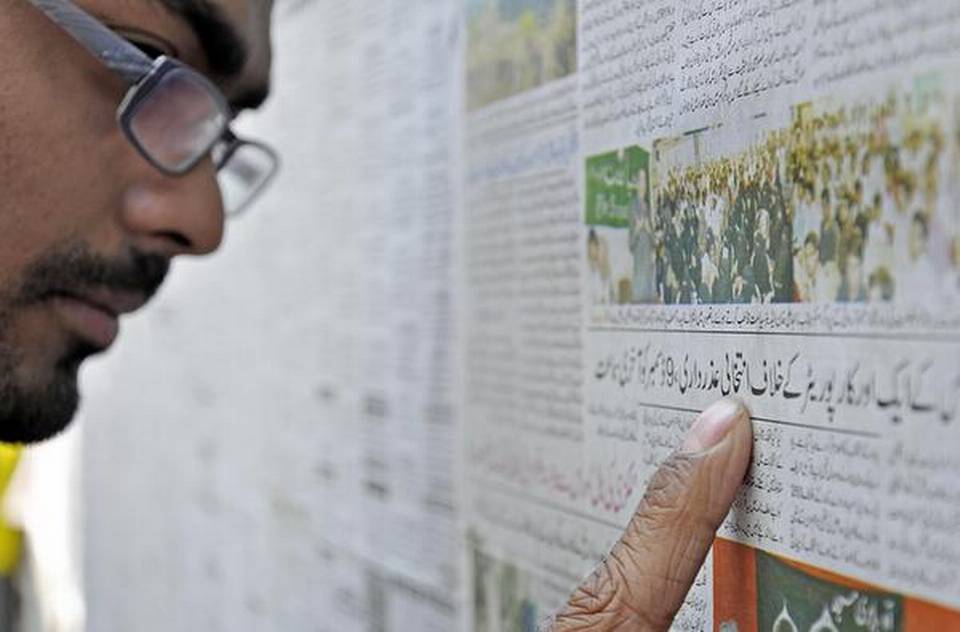
The Urdu script. The photo is for representative purpose only. | Photo Credit: S. Harpal Singh

Urdu, Punjabi and Hindi are the three main languages of India which were later accorded the status of State language at different times, the letter stated.

The Urdu Department raised the objection after the PU authorities recently proposed to merge small departments with less than six faculty members with each other to form one single school or centre, as per new norms laid down by the National Assessment and Accreditation Council (NAAC).

As per PU’s proposal, the merger is aimed at enhancing “academic performance by sharing infrastructure and human resources of various smaller departments”.

Mr. Abbas has, however, suggested bringing the departments of Hindi, Urdu and Punjabi under one umbrella of the department of Indian languages. “… or the Urdu Department may be allowed to function independently as per the present arrangements,” he wrote.

Final call tomorrow

Several other departments are also being merged. A 15-member panel will take a final call on the proposed mergers on September 30.

Before Partition, the Urdu Department was a major department of the then University of Punjab, Lahore, which was set up in 1882.

It was introduced in Panjab University, Chandigarh, in 1976.

source: http://www.thehindu.com / The Hindu / Home> News> National / by PTI / Chandigarh – September 29th, 2019

Tripura youth, who ran away from home at 16, earns global glory

TRIPURA / Bengaluru, KARNATAKA  :

When Farukh Ahmed ran away from his hometown in Tripura at the age of 16, little did he know that he would develop an interest in baking and that would take him towards the path of success.

Farukh Ahmed being mentored by Dr Avin Thaliath

Bengaluru :

When Farukh Ahmed ran away from his hometown in Tripura at the age of 16, little did he know that he would develop an interest in baking and that would take him towards the path of success. On August 29, the 21-year-old secured a medallion of excellence for his performance at World Skills 2019 held in Kazan, Russia, where he finished fifth. “I was quite nervous while performing at World Skills.

The aim was to secure gold. Irrespective of the result, the platform gave me a new-found recognition and confidence which I am grateful for and this has really changed things for the better,” he says. Adding to this was his mentor, Dr Avin Thaliath, co-founder and director of Academics, Lavonne Academy of Baking Science and Pastry Arts, who says, “He started from scratch and ended up being recognised on a global platform. He is simply brilliant.”

Struggling from a very young age, Ahmed ended up boarding a train headed towards Bengaluru when he left home, simply because he failed to clear his exams and the fear of confronting his father was looming large. After he arrived in the city in 2014, Ahmed spent the next few months taking shelter on the streets until he was confronted by a steward from a baking academy. Convinced with the fact of initiating a much-needed change, Ahmed went ahead and took up a role with the housekeeping team at Lavonne Academy.

During his tenure, Ahmed gained a sense of interest towards baking. He would further spend time in helping out bakers and grasp the most minute pieces of learning, including long nights after his shifts, to familiarise himself with the field. Taking note of the enthusiasm was Thaliath. Ahmed was given the opportunity to grow and sharpen his skill under Thalia. “Ahmed is extraordinary in every sense, probably the most dedicated student I have ever guided,” says Thaliath.

Under Thailath’s guidance, Ahmed went on to participate at national platforms where he could showcase his skill with finesse and improve on the shortcomings.Currently a supervisor at Lavonne Academy, Ahmed looks forward to further sharpening his skill. “I have had a tough start earlier. I want to work and grow, and the amount of support I have received from my trainer has been crucial. I plan to stay here under his guidance,” he adds.

source:  http://www.newindianexpress.com / The New Indian Express / Home> Cities> Bengaluru / by Muneef Khan /  Express News Service / September 11th, 2019

World Athletics C’ships: Jabir reaches 400m hurdles semi-finals, long jumper Sreeshankar disappoints

KERALA :

Jabir finished third in Heat 1 with a timing of 49.62 seconds to qualify for the semi-finals to be held on Saturday.

Long jumper M Sreeshankar failed to reach the final after a disappointing performance while 400m hurdler M P Jabir made it to the semifinals on the opening day of the World Athletics Championships here on Friday.

Another 400m hurdler Dharun Ayyasamy, the national record holder, tumbled after the last hurdle in his heat and failed to qualify for the semifinals.

Kicking off India’s campaign, 20-year-old Sreeshankar could only produce a best jump of 7.62m from his three attempts in the qualification B to finish 22nd overall. His effort was well below his season’s best of 8.00m, which he had produced only last month in Patiala.

Later in the day, Jabir finished third in Heat 1 and 11th overall in men’s 400m hurdle with a time of 49.62 seconds to qualify for the semifinals to be held on Saturday. He has a season’s and personal best of 49.13.

Ayyasamy could only clock 50.55 as he lost precious time after hitting the final hurdle. He finished sixth in Heat 5 and 27th overall to miss out of the semifinals.

Ayyasamy, who had recovered from an injury recently, has a personal and season’s best of 48.80.

The first four in each of the five heats and the next four fastest qualify for the 400m hurdles semifinals.

source: http://www.scroll.in / Scroll.in / Home> World Athletics / by Press Trust of India / September 27th, 2019