Curtain-raiser event for the 2019 INRC saw Ilyas take victory after Mascarenhas was handed a penalty.
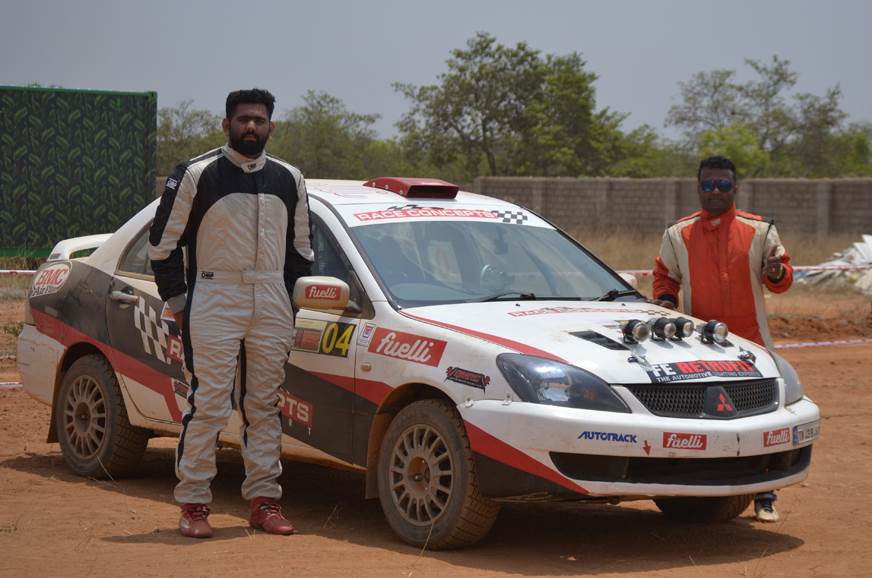
The Sprint de Bengaluru 2019 took place over the weekend, acting as a non-championship, curtain-raiser event for the upcoming 2019 season of the Indian National Rally Championship. It was Kerala’s Younus Ilyas who took top honours at the event, after Bengaluru’s Dean Mascarenhas was handed a penalty.
Ilyas, along with navigator Harish Gowda, set the pace early on and held a 10 second lead at the end of the first day. But on the second day, Mascarenhas, who was driving a stock car in the INRC 3 category, started eating into Ilyas’ advantage. After completing the first two stages of the day just behind Ilyas, he managed to win the next two stages at the LG Champions County track, gaining nine and eight seconds on each stage.
However, Mascarenhas was then handed a six-minute penalty for reaching the starting point late on Saturday. This dropped him down to the bottom of the standings, handing victory to Ilyas.
“It was just bad luck,” lamented Mascarenhas. “My car didn’t start so I got delayed. I am, however, very happy with the way I drove and I am looking forward to a good season.”
“It was a great outing. And I loved being out here! The stages were interesting and were challenging at times. But I am really glad to have come out on top,” said Ilyas.
Dhruva Chandrashekar and navigator Musa Sherif took an understated 2nd place in the overall INRC category, taking victory in the INRC 3 category in the process. Sanjay Agarwal and navigator Smitha N rounded up the top three in the overall standings.
The event also featured a separate ladies class that was won by Shivani Pruthvi.
RESULTS:
INRC Overall: 1. Younus Ilyas / Harish KN; 2. Dhruva Chandrashekar / Musa Sherif; 3. Sanjay Agarwal / Smitha N
INRC 1: Suhem Kabeer / J. Jeevarathinam; 2. Lokesh Gowda / D Uday Kumar
Oscar-winning composer A.R. Rahman has created India’s Marvel anthem for the release of “Avengers: Endgame”
Oscar-winning composer A.R. Rahman has created India’s Marvel anthem for the release of “Avengers: Endgame”.
Oscar-winning composer A.R. Rahman has created India’s Marvel anthem for the release of “Avengers: Endgame”. It will come out in Hindi, Tamil and Telugu.
Marvel India has teamed up with Rahman for the track, which will be released on April 1, according to a statement.
“Being surrounded by Marvel fans in my own family, there was too much pressure to come with something really satisfying and apt for ‘Avengers: Endgame’. I hope Marvel aficionados and music lovers enjoy the track,” said Rahman.
There is much anticipation for “Avengers: Endgame”, especially after the success of “Avengers: Infinity War”
“‘Avengers: Endgame’ is not just a movie, it’s an emotional journey for fans everywhere in India. An original composition by Oscar winner A.R. Rahman was the perfect way to celebrate the love for Marvel among fans in the country.
“This is our small way of thanking the fans here for their extraordinary support”, said Bikram Duggal, Head – Studios, Marvel India.
Kevin Feige has produced the movie, directed by Anthony and Joe Russo. The movie will release in India on April 26 in English, Hindi, Tamil and Telugu.
source: http://www.news18.c0m / News 18 / Home> News18> Movies / by IANS / March 25th, 2019
He was one of the two Indian athletes who were expelled from the 2018 Gold Coast Commonwealth Games.
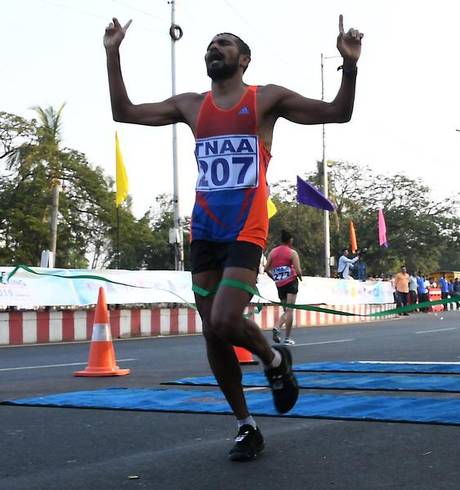
National record holder K.T. Irfan on Sunday became the first Indian from athletics to qualify for the next year’s Olympics while finishing fourth in the 20 km event of the Asian Race Walking Championships in Nomi, Japan.
The 29-year-old Irfan clocked 1 hour 20 minutes and 57 seconds to better the Tokyo Olympics qualification standard of 1 hour 21 minutes. The Olympics qualification period for race walk events and marathon race has begun from January 1 this year and will run till May 31, 2020. The Olympics qualification period for all other athletics events will start from May 1 this year and will run till June 29, 2020.
No other Indian from athletics has so far qualified for Tokyo Olympics. Irfan, who has a personal best as well as national record of 1:20:21 which he did during his 10th place finish in 2012 Olympics, also qualified for this year’s World Championships (September 27-October 6) in Doha, Qatar as he bettered the qualifying mark of 1:22:30.
The Kerala race walker had won the 20 km event in the National Open Race Walk Championships in Chennai last month with a time of 1:26:18.
He was one of the two Indian athletes who were expelled from the 2018 Gold Coast Commonwealth Games for not adhering to the ‘no needle policy’ of the Games. He was disqualified in the 20 km race walk event of the 2018 Asian Games after receiving his third warning for “loss of contact.”
Japan’s Toshikazu Yamanishi won the 20 km race walk event with an impressive time of 1:17:15 while Kazakhstan’s Georgiy Sheiko and Korea’s Byeongkwang Choe were second and third in 1:20:21 and 1:20:40 respectively.
The Asian and World record in men’s 20 km race walk stands in the name of Japanese Yusuke Suzuki who clocked 1:16:36 in the 2015 edition of the same championships in Nomi.
Two other Indians, Devinder Singh and Ganapathi Krishnan also qualified for the World Championships as they clocked 1:21:22 and 1:22:12 respectively. They had finished second and fifth in the Chennai National Race Walk Championships with timings of 1:26:19 and 1:26:43.
In the women’s 20 km race walk event, Soumya Baby finished fourth with a timing of 1:36:08, well outside Olympics qualifying standard of 1:31:00 and World Championships qualifying standard of 1:33:30.
source: http://www.thehindu.com / The Hindu / Home> Sport> Athletics / by PTI / New Delhi – March 17th, 2019
Ali has joined the BSP, but the Gowdas still look up to him for counsel on important decisions
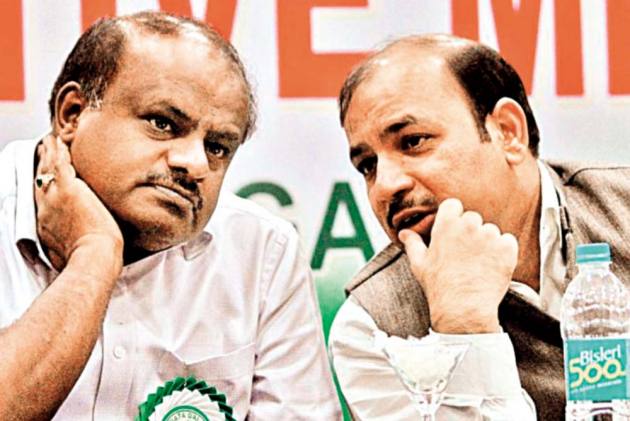
Last May, a crowd milled around Janata Dal (Secular) supremo H. D. Deve Gowda’s home in Bangalore where the needle—after a nail-biting end to the state elections—had finally come to rest. Gowda, and his son H.D. Kumaraswamy, were the men of the moment. And, a tumultuous week later, the father-son duo were at the centre of a political panoply that set the tone for what’s now the key word in the 2019 election season—alliance.
Therefore, it was with some surprise that many received news of Gowda’s pointsman in Delhi, Kunwar Danish Ali, joining the BSP. Ali, party insiders say, has been one of Gowda’s aides for long. He’d been visible this past year as the JD(S) opened up a hotline with Rahul Gandhi. “The love and affection he gave to me is incomparable. That will continue,” Ali tells Outlook, explaining that his move would enable him to contest elections in home-state UP, something he couldn’t have done on a JD(S) ticket. “It was also his wish that I should enter the Lok Sabha,” says Ali. “Nobody can break my relationship with Gowda and Kumaraswamy.”
Gowda and Mayawati had a pre-poll seat-sharing pact for the 2018 Karnataka elections—Ali, again, was instrumental in making that happen. Among Gowda’s longstanding lieutenants is Y.S.V. Datta, a former party legislator who was for long its spokesman. But, as a party insider put it, “if Gowda wants grassroots information, he’ll go to his old friends in (hometown) Paduvalahippe. And, just as easily seek out experts if he wants advice”.
The Gowda family, despite its internal power wrangles, is closely-knit, observers say. While Kumaraswamy is the party’s face, his elder brother Revanna manages the family’s pocketborough of Hassan. Besides, there are siblings and their spouses with varied professional backgrounds (former bureaucrat, surgeon etc) who stay away from the limelight.
Kumaraswamy’s inner circle comprised a clutch of five-six former party legislators, including Zameer Ahmed Khan, Chaluvarayaswamy, and H.C. Balkrishna. It was a coterie that had stood by him in 2006 when he had made a dramatic bid to seize power and become Karnataka CM, defying his father. But that circle had fallen out. “The situation was different. Now, it’s him and Gowdaji,” says a party leader. These days, for political decisions, Kumaraswamy relies on two-three cabinet ministers. On occasion, Congress leader D.K. Shivakumar too advises him.
source: http://www.outlookindia.com / Outlook / Home> Magazine> National / by Ajay Sukumaran / March 21st, 2019
Never for a moment could he take his eyes off the handle, because enjoying the vistas would mean falling…
Muhamed Musadhiq
Thiruvananthapuram :
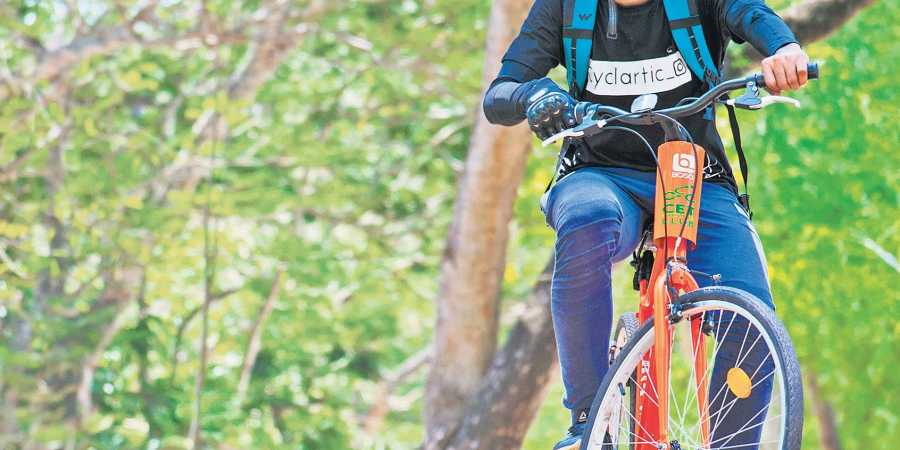
“All I could see was the handle and the front wheel,” says Muhamed Musadhiq, after a 504 km journey on a cycle that turns left if you turn the handle right. All day long, during the six-day ride, he had his eyes fixated on the handle and the wheel, riding at a pace below 25kmph. Never for a moment could he take his eyes off the handle, because enjoying the vistas would mean falling. Manoeuvring this cycle is not a leisurely, easy breezy task, but a very demanding one. Because the cycle has a mind of its own, acting in contrary to the brain’s command.
‘Brain Cycle. Abnormal Cycle. Keep Distance’, so reads the warning note plastered on Musadhiq’s cycle. It has been several months since he remodelled the cycle and crafted a brain cycle out of it. But then, riding it still needed one to be careful enough. “At first the note was plastered for fun, but then after a few falls, I knew there was indeed a need to keep distance,” chuckles the final year mechanical engineering student.
He rode all the way from Kozhikode to Thiruvananthapuram along with his college mates attached to the College of Engineering, Thiruvananthapuram as part of promoting cycling across the state. Through the ride, he was also attempting a Guinness World Record in riding the max distance in the brain cycle. “Till now, no one has attempted the ride in the brain cycle. So it is a new event I am attempting,” says Musadhiq.
According to Musadhiq, the mechanics implemented in the cycle is simple.It was during the tech fest of his college that Musadhiq put forth this cycle, arguably the first in India to be made. “I am not aware of anyone who has made the brain cycle in India. At first, I made it for fun. But after making this, someone had to ride this. And that forced me to learn to ride the cycle,” he recalls. The result was numerous falls. “Oh, I fell a countless number of times. It might look simple from the outside. But to ride it is challenging. You have to train your brain accordingly,” he says.
His cycle is the connoisseur of all eyes, wherever he goes. Having introduced the cycle at various colleges, his aim is to popularise the art of cycling amongst the public. There are also plans to set up brain training centres in schools and colleges using the brain cycle to popularise cycling among the younger generation.
He has even put forth a challenge- ride 10 metres in the cycle and it will fetch you Rs 500. More than 2000 people have attempted the challenge, but none has won it.
“There are no tricks to ride the brain cycle, but practice,” says Musadhiq. “At one point I hope I will reach a state where I can ride the cycle at the same leisurely pace I do on a normal cycle,” he adds.
source: http://www.newindianexpress.com / The New Indian Express / Home> Cities> Thiruvananthapuram / by Aathira Haridas / Express News Service / March 08th, 2019
The urs of Mughal emperor Shahjahan will be observed at the historic Taj Mahal for three days from April 2 next. Entry into Taj Mahal will be free for visitors after noon on April 2 and 3 while it will be free for the entire day on April 4.
Lakhs of devotees will throng the 17th century monument during the three-day event and will pay homage at the graves of Shahjahan and his wife Mumtaz, in whose memory the Taj Mahal was built.
On the last day, a ‘saptrangi chadar’ (multi-coloured bedsheet ) will be offered at the graves as part of a ritual. Sandalwood powder will be sprinkled on the grave too.
The urs of the Mughal king Shahjahan is celebrated on the 25, 26 and 27th day of Rajab, which falls of April 2, 3 and 4.
The Shahjahan urs committee will meet here on March 8 to decide on the arrangement and preparation to be made for the urs.
Officials said that a notification was issued by the ASI on the urs of Shahjahan. The administration will prepare a fool proof strategy to ensure full security to devotees attending the urs.
source: http://www.dailypioneer.com / The Pioneer / Home> State Editions> Lucknow / by PNS, Lucknow / March 06th, 2019
For World Wildlife Day on March 3, photographers speak of what attracts them to the wilderness
March 3 is World Wildlife day, as declared by the United Nations. A day dedicated to celebrate and raise awareness of the world’s wild fauna and flora.” Images go a long way to celebrate wildlife and foster love and concern for it.
But for the wildlife shows on TV, most of us haven’t seen animals in the wild. The beauty of the wilderness would have been lost to us had it not been for the photographers who spend enormous amount of time in waiting patiently to capture that one shot that will make us fall in love with nature and the jungle. Wildlife is a subject of interest to many photographers because they feel it is their way of capturing the beauty in their most natural mood and habitat.
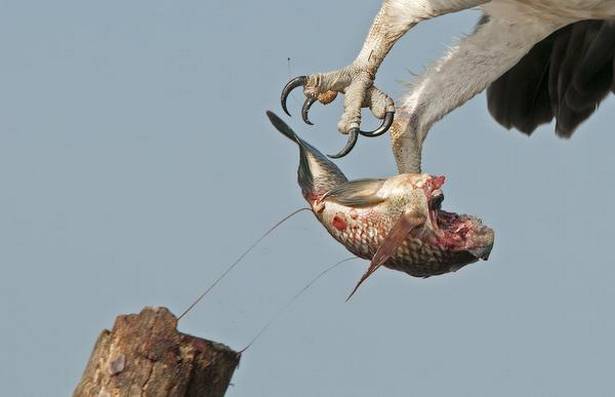
An eagle flies away with her next meal, a piece of fresh fish | Photo Credit: MASOOD HUSSAIN
Phani Krishna Ravi of Hyderabad Birding Pals, feels birds don’t bother humans if we just let them be. “It is the pattern that we need to learn. Wild birds have a pattern for everything — for eating, breeding, nesting and resting. Understanding their pattern needs patience. The process of understanding actually brings us peace of mind. To be a part of the wild, we need to sync with it. That is when we can understand them better and work to protect them.”
This year’s theme for World Wildlife Day 2019 is: ‘Life Below Water: For people and planet.’ Overfishing, acidification and pollution threaten life below water. The battle to clean our rivers and oceans is a long one. Activities are taking baby steps beginning with a ban on plastic straws, sunscreen lotions and finding the best solution to save marine lives.
Many examples of sea clean up and conservation of marine life can be seen the world over. A few efforts have paid dividends; a good example of this is the return of the sea turtles to Versova beach. The Versova cleanup came to be known as ‘world’s largest beach clean-up project’ by the United Nations. The beach’s dramatic transformation soon saw return of the sea turtles to the beach after 20 years. Naturally that news and videos went viral.
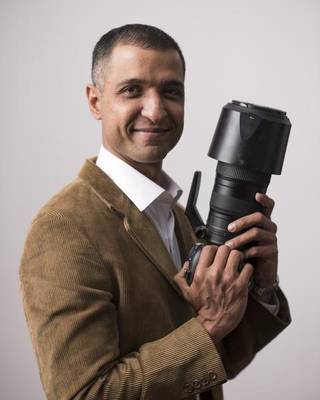
Does that mean we can overlook our forests this year? Are things any different on land? With shrinking habitats, our wild animals are an endangered lot and sanctuaries are the only spaces that provide them with a safe haven. ? Masood Hussain interest in wildlife photography stems from his dissatisfaction with his pictures when he was shooting people, places and festival moods. “I was only repeating what others have already done, I wanted different,” he says.
He adds, “Wild animals need their space. In the wild you can see them in their element. It’s very different from what one sees in a zoo. The wild is their natural habitat, they aren’t used to cages and small confinements. After going to the wild for photos, I feel sick if I don’t go back and spend a few days there; it is my medicine. When I go to the jungle I go with preconceived ideas of my shots. I go with the wish to capture a bird or an animal in a particular place. The only way to achieve that is to sit patiently and come back with an almost-there shot. The photo gives joy no doubt, but it also makes viewers want to be a part of it, to take care of it. It makes me happy when I see people enthusiastic about going to witness the wild. When one sees an animal in its natural habitat a sense of responsibility for their conservation comes in, it a natural thing to happen.”
Masood cannot pick a favourite photo from his own collection because each photo comes with a story to narrate.
Every photographer who goes to the wild says its beauty is fascinating and not even the hardships they face in the wild can stop them.
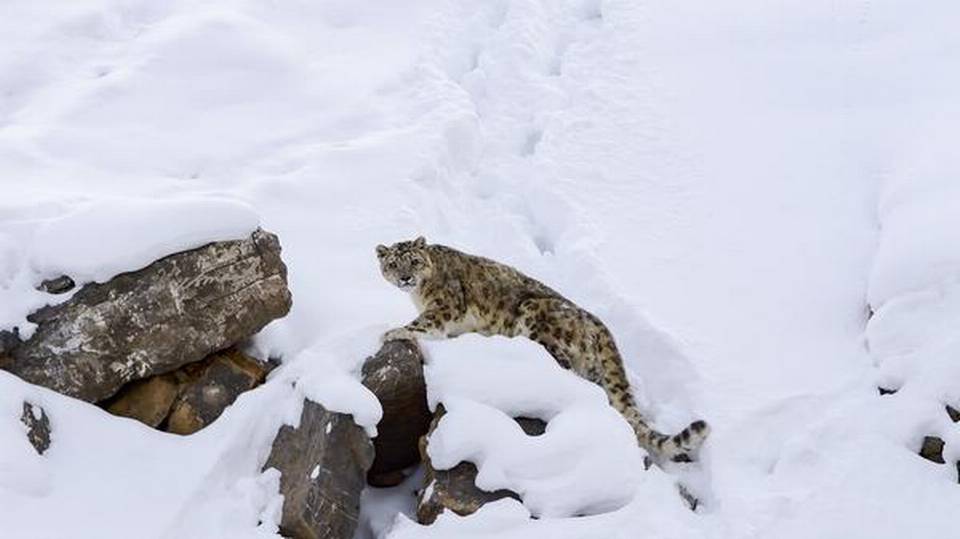
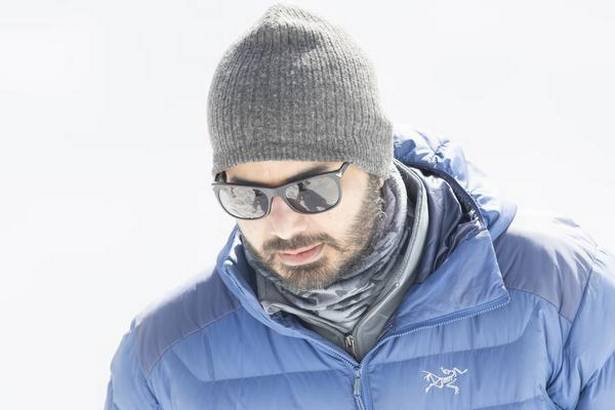
Professional wildlife and nature photographer Ismail Shariff who just returned from an expedition to photograph snow leopards at Spiti in Himachal Pradesh says, “When you are scouting for a snow leopard in the vast mountains and huge gorges of Kibber, completely disconnected with everyone but the ones around you, there is a sense of attainment, which get extrapolated when you actually see one. While sitting at the top of the mountain ridges surrounded and covered in all white, its not just about the fauna around you, but the feeling of calmness and satisfaction to the soul, for just being there. It’s an unexplainable feeling to be associated with such pure nature.”
source: http://www.thehindu.com / The Hindu / Home> Sci-Tech> Environment > World Wildlife Day / by Prabalika M. Borah / March 01st, 2019
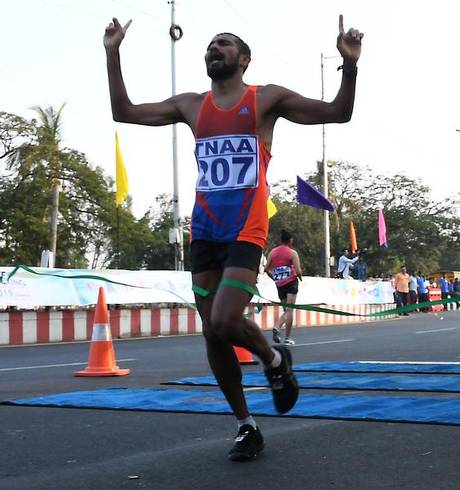
Walking to glory: K.T. Irfan began the new season on a confident note.
Both nowhere near their personal best
Olympian race walker K.T. Irfan had the worst possible year of his career in 2018.
He was ejected from the Gold Coast Commwealth Games village after his roommate was found with a syringe in his bag, a few days after the race. And in the subsequent Jakarta Asian Games, he was disqualified.
The 29-year-old from Kerala, who holds the National record, however, began the new season on a confident note by winning the men’s 20K gold in the sixth Open National race walk championships here on Saturday in a time of one hour 26 minutes and 18 seconds.
It was a far cry from his personal best of 1:20.21 at the 2012 London Olympics.
B. Soumya (Kerala) coasted to a relatively easy victory in the women’s 20K category in a time of 1:40.25. Priyanka finished second in 1:41.20.
Soumya was behind Priyanka and Karamjit Kaur in the first 11 laps and after that she took control of the proceedings.
Soumya couldn’t come anywhere close to her National record of 1:31.28 set in Delhi last year in the same event.
Warnings
Karamjit was handed three warnings and was asked to start from the pit lane.
She did not want to continue as she thought she had already lost a lot of time.
“There was some problem with the road. And also I missed the services of [Russian] coach Alexander Artsybashev,” said Soumya. It is learnt that Alexander will soon join the team in the camp.
In the top bunch, which included Sandeep Kumar, Chandan Singh, Devender Singh and Ganapathi Krishnan, Irfan was trailing for most part of the race.
He picked up speed in the last 1km to breast the tape one second ahead of Devender.
“It feels great but I am not happy with the timing.
“It was partly due to the humid weather conditions and the sloped roads,” said Irfan.
Unable to make the qualification grade for the Doha World Championships in September-October, both Irfan and Soumya said they will definitely make the grade in the Asian championships to be held in Nomi (Japan) next month.
Compared to the previous five editions, the Chennai event saw the poorest time recorded by the winners.
From the desk of Sunday magazine to a celebrated chef now on Netflix’s Chef’s Table, Asma Khan’s story is one of strength, confidence and ambition
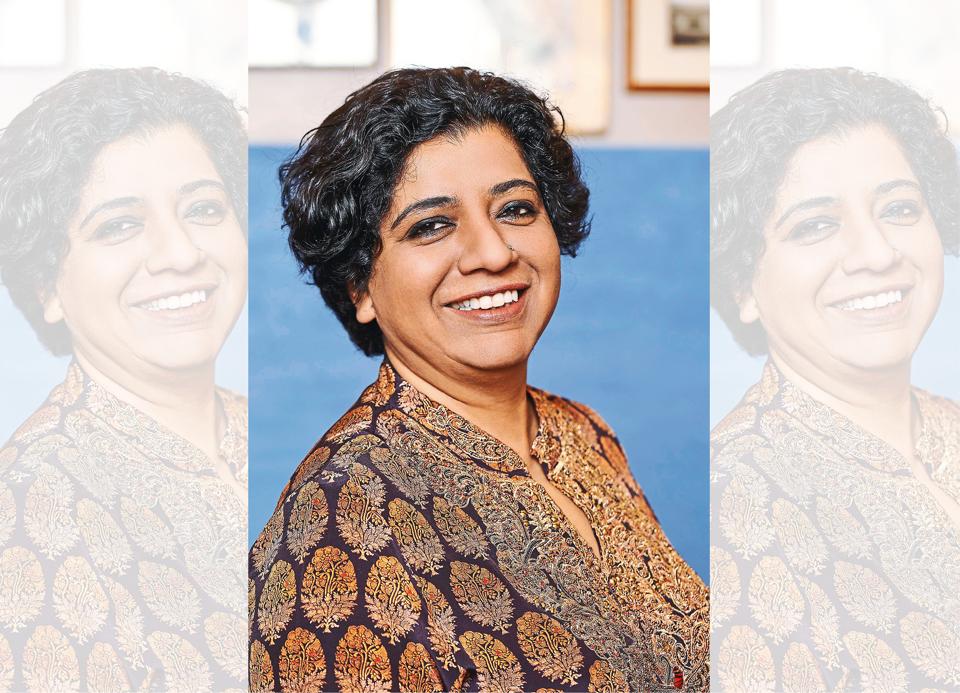
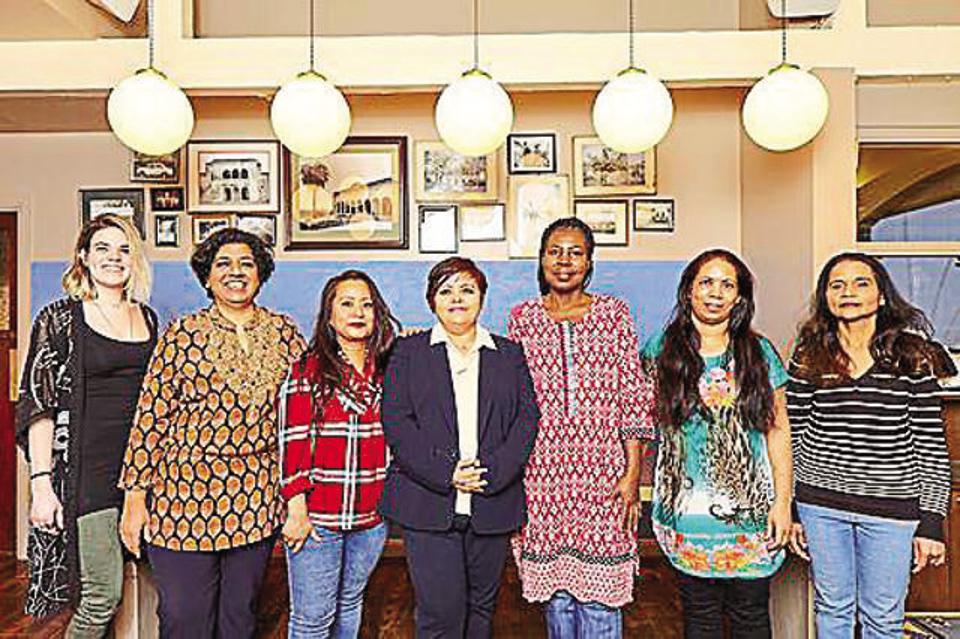
The first British chef to make it to Chef’s Table, Asma Khan is also opening all-women kitchens in conflict zones in Syria(Ming Tang-Evans)
It is a funny feeling when a colleague from decades ago becomes a success in a totally different field. And it feels even stranger when you find yourself writing a profile of somebody you once knew as a sub-editor.
In 1990, when I edited Sunday magazine, a young girl came to see me to ask if she could try her hand at journalism. She worked at Lintas, the ad agency, she said, and wanted to do something different but not entirely unrelated.
I hired her on the spot and all of us in the office thought she was very bright and articulate. Then, a few months later, she announced that she was getting married, resigned from her position and went off to live in Cambridge with her new husband.
And that, I thought, was the last I would hear of Asma Khan.
Wrong, very wrong.
A few years ago, she sent me an email. She was now a chef in London, she wrote. Not only did she organise private dinners at home but she was also running a pop-up in a pub in Soho. Why didn’t I drop in and try her food?
I had to search my memory to remember Asma (time to be candid!) and when I asked old colleagues from the Sunday days, they said that they found it hard to believe that she was now a chef.
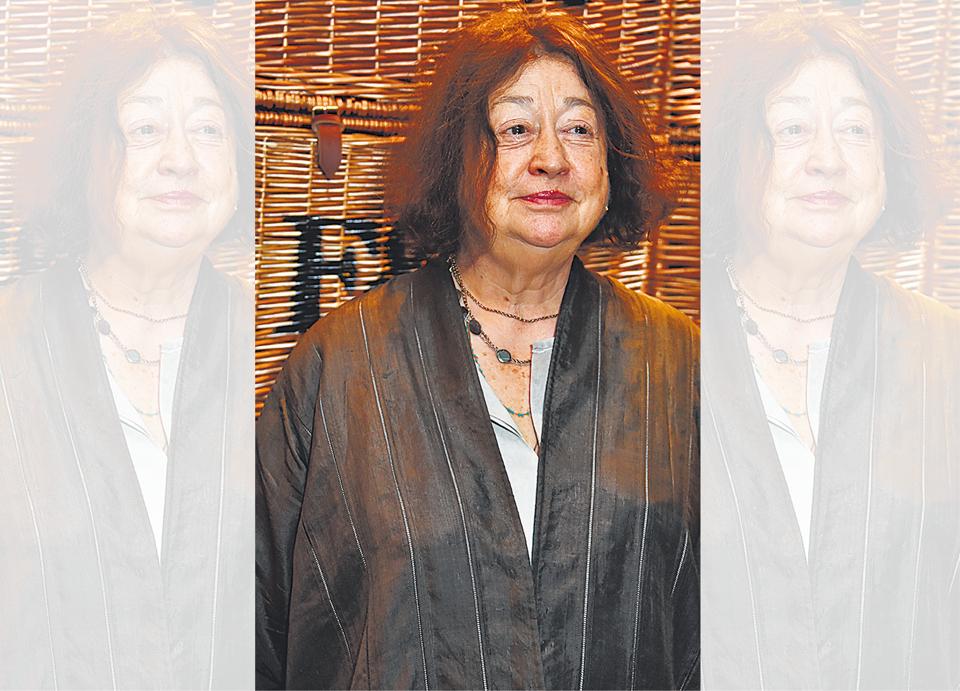
Then, in 2015, my friend Fay Maschler, London’s most influential critic, wrote about Asma’s pop-up. It was an unqualified rave review and she rated Asma’s little restaurant serving Kosha Mangsho and Kathi rolls ahead of most of London’s fancy Indian places.
The day the review came out, there was a line outside the pub where Asma ran her pop-up. It began raining but the people still continued queuing. Asma and her cooks were stunned. But like good Indians, they felt bad for the crowds. So they made little bowls of rice with dal and distributed them for free to those lining up. The gesture did not go unnoticed and every night after that, the small restaurant was packed. It became the cool place to go for people who wanted real Indian food.
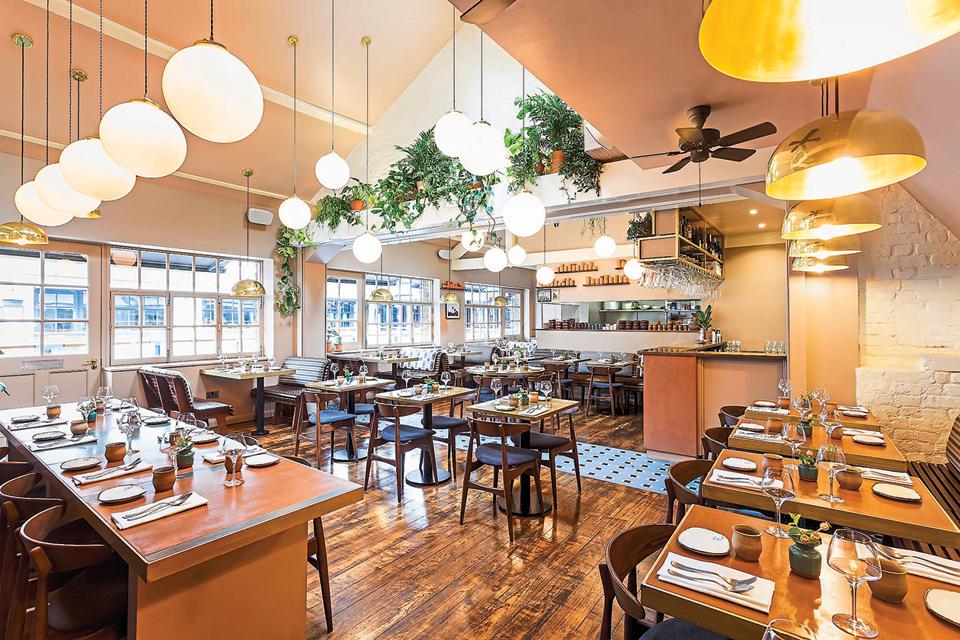
“Fay Maschler changed my life,” says Asma now. And indeed, the changes have been dramatic. A year and a half ago, the owners of Kingly Court, a new development off Carnaby Street in the centre of London, offered her a dream deal on a site for a full-fledged restaurant. The restaurant opened to glowing reviews and became a symbol of the new London. Nigella Lawson came. Sadiq Khan, the Mayor of London, praised it. And Asma appeared on the list of the 100 most influential people in food in the UK.
Fay Maschler, London’s most influential critic, discovered Asma
But a few months ago, Asma received her biggest accolade yet. The Netflix series Chef’s Table has featured some of the world’s greatest chefs. It has the power to turn a chef’s life around. Gaggan Anand says that even more than all the honours and awards he has earned (two stars from Michelin, number one restaurant in Asia for an unprecedented four years in a row etc.), it is Chef’s Table that made people from all over the world fly in to Bangkok to eat at his restaurant.
There has been much heartburn in the UK that no British chef has ever made it to Chef’s Table.
So when Netflix announced that it had finally selected a British chef, there was much anticipation. To everyone’s surprise, they chose Asma.
The show airs later this month and as I told Asma, her life will never be the same again. She will soon be one of the world’s most celebrated chefs, the best known Indian chef in the UK and perhaps globally, with the exception of Gaggan.
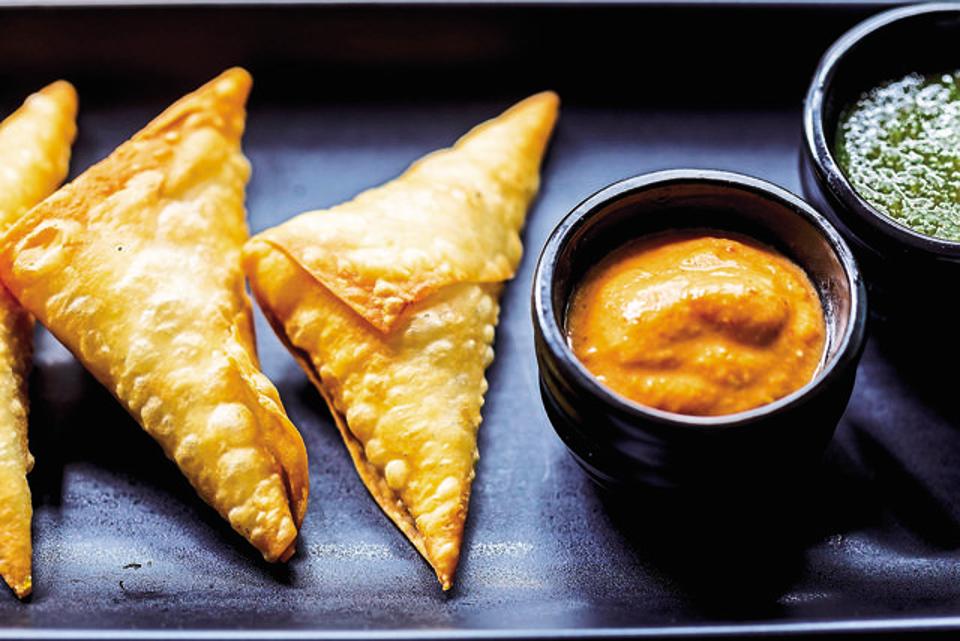
Chicken samosas served with spicy sesame and red chillies chutney, and tamarind chutney ( Ming Tang-Evans )
As wonderful as all this is, a little voice inside my head kept asking, “How did Asma, the same old Asma from the Sunday desk end up becoming one of the great chefs to be featured on Chef’s Table? Had she been a secret cook all along even as she laboured over copy? Had she worked at some of the world’s best restaurants? Had she reinvented classic Indian dishes?”
The answer: none of the above.
The Asma story is so incredible that if you made a movie with this plot, you would be accused of asking too much of the viewer. Suspension of disbelief is okay, but Asma’s life takes us far beyond that.
Darjeeling Express started as a dinner for 12 guests at home and is now a hugely successful restaurant ( Ming Tang-Evans )
She was born in Calcutta to a family with roots in nawabi culture (what we would call landed gentry, I guess). She had a standard middle-class upbringing (La Martiniere and Loreto) before going out to work (Lintas and then Sunday). Her parents introduced her to Mushtaq, a brilliant Bangladeshi economist who was a don at Sidney Sussex College in Cambridge. Asma and Mushtaq had, what was for all practical purposes, an arranged marriage and she moved to Cambridge.
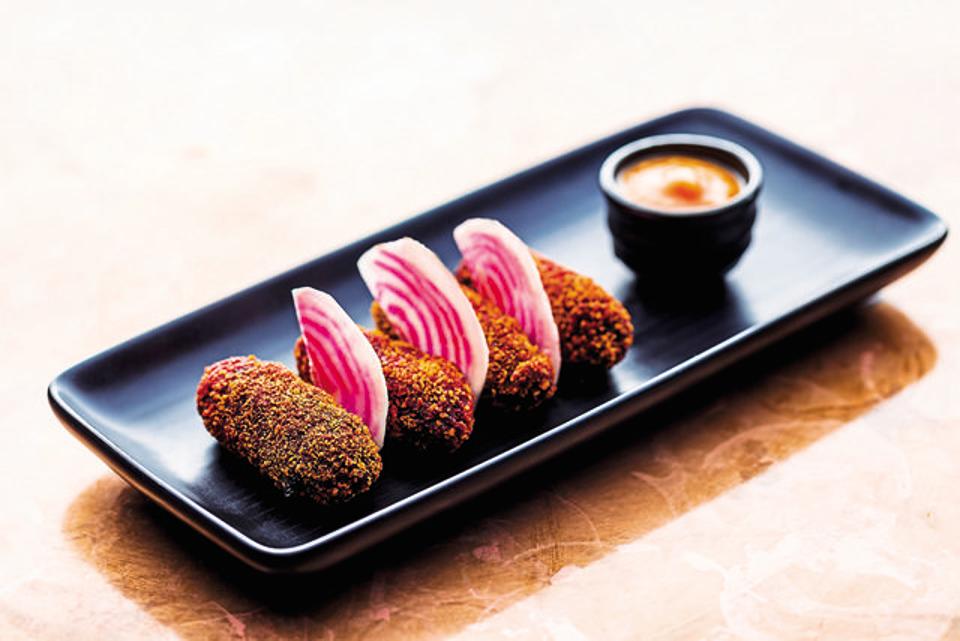
Beetroot chops, Bengali spiced croquettes made with British beetroots ( Ming Tang-Evans )
She was miserable. “I thought the Quran had it wrong when it described hell,” she recalls. “Hell was Cambridge.” She hated the cold, the greyness, the drab English environment (especially after the sights, smells and sounds of Calcutta).
Asma’s book, a collection of authentic Indian recipes
Though her mother had run a catering business in Calcutta, Asma did not know how to cook. She could read copy, she could give clever headlines. But she had no kitchen experience. Fortunately Mushtaq had no interest in food.
So she turned to studying. She got a law degree, and then decided to do a PhD in law. By then, Mushtaq had shifted to the School of Oriental and African Studies in London so she applied to King’s College at London University. She talked the dons at King’s into letting her go directly to a doctorate without a Masters.
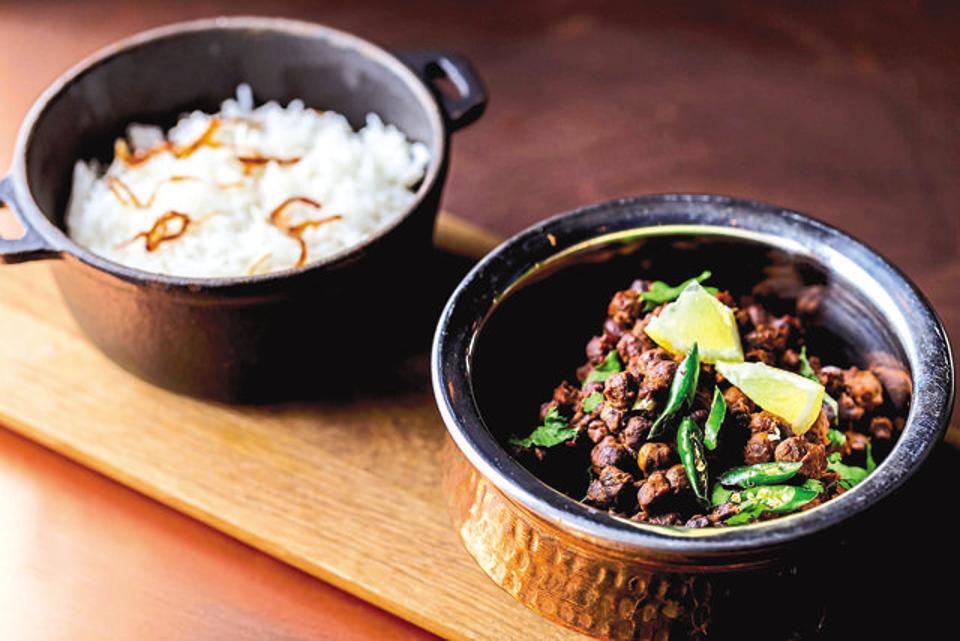
Black chickpeas (kaala channa) cooked with ginger and dried red chilies at Darjeeling Express ( Ming Tang-Evans )
She chose, for her thesis, a subject that was as far removed from Calcutta as possible: how the UK handles the separation of Church and State. But even as she was discussing whether the British monarch should be ‘defender of the faith’, a hitherto undiscovered cooking gene deep inside her reasserted itself.
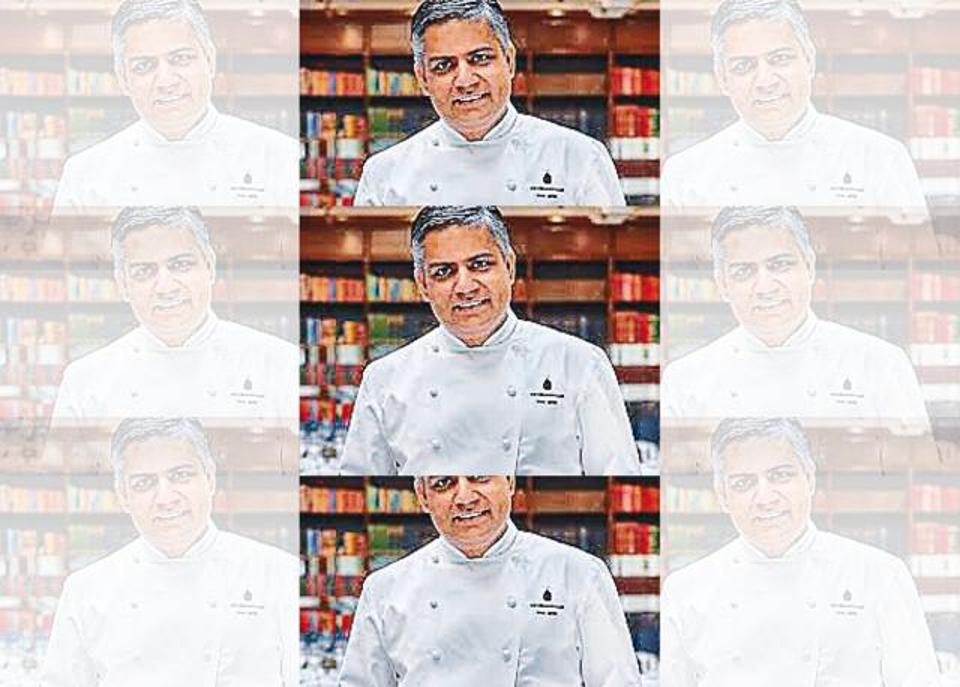
Chef Vivek Singh offered Asma a pop-up at Cinnamon Club
She began to make the food of her ancestors, going back to old family recipes. Eventually, cooking became such an obsession that she started hosting pop-up dinners. Her husband disapproved of the idea so she cooked the dinners when he was travelling. (“We cleared up the house so well,” she laughs “that usko pata hi nahi chala!”)
But her two children, who were not happy with having the house taken over by strangers, complained to their father and soon the jig was up.
Asma is nothing if not super confident, so she called such famous London chefs as Cyrus Todiwala and Vivek Singh to her house for dinner to try her biryani. Even though none of them knew her, they came anyway. They were kind and encouraging. Vivek Singh was so impressed that he offered her a pop-up at his The Cinnamon Club restaurant. She took her all-women team of cooks and won over the all-male Cinnamon Club kitchen team. (“I will always be grateful to Vivek for that,” she says.)
The all-women kitchen team at Darjeeling Express, London
That gave her the credibility to do a full-time pop-up. Word of her skills got out. Fay discovered her. And the rest is the stuff Chef’s Table episodes are made of.
Now, with the success of Darjeeling Express, Asma is well-known in London. People make much of her nearly all-women team. (My wife, who came to lunch at Darjeeling Express with me, loved the female energy; she was sold on the restaurant even before the first dish arrived.) Asma is overtly political, speaking out about sexual harassment in restaurant kitchens, breaking the conspiracy of silence that women in the business have gone along with and has become a symbol of the success that Asian women can find if they overcome prejudice and their own apprehensions.
But ultimately, I judge chefs by their food not by their stories. And Asma’s was terrific. We had puchkas, Bihari phulkis (like pakoras), Kosha Mangsho, a Calcutta mutton chaap, kaalachanna, chicken samosas, beetroot chops and so much more. None of it was molecular or clever, clever. It was just excellent.
You will hear more about Asma in the months ahead.
After Gaggan, she is Kolkata’s second contribution to the global food world.
And you will hear about her in non-food contexts. She is opening all-women kitchens in conflict zones in Syria. As she says, “I don’t want to be remembered as a great chef. I want women to come to my grave and say ‘she changed my life’; that’s what matters.”
She is not short on confidence and ambition, our Asma. And I have a feeling that she will end up being the most successful person to ever emerge from the offices of Sunday magazine!
From HT Brunch, February 24, 2019 / Follow us on twitter.com/HTBrunch /Connect with us on facebook.com/hindustantimesbrunch
source: http://www.hindustantimes.com / Hindustan Times / Home> Brunch / by Vir Sangvi, Hindustan Times / February 24th, 2019
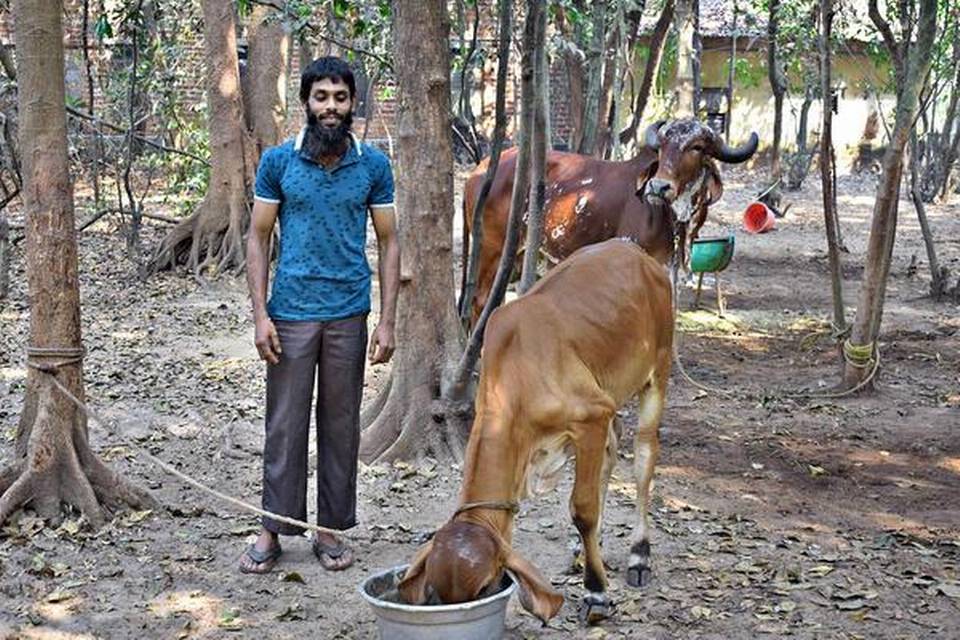
Mohammed Irshad Abideen tending the indigenous breed of cattle in his farm at Uppinakote village in Udupi district.
23 head of cattle are being reared in a farm house near Udupi
Three generations of a family have been conserving and breeding indigenous breeds of cattle here. The family has 23 head of cattle of Gir, Sahiwal, Red Sindhi, and Ongole breeds at Uppinakote village, about 18 km from Udupi. They are being reared in the farm house of 36-year-old Mohammed Irshad Abideen. His younger brothers, Naushad Ahmed, Mumshad Alam, and Sheik Mudassar, are supporting him in running the farm house.
Explaining their love for native breeds of cattle, Mr. Abideen said his grandfather Hanif Shah Saheb used to rear Malnad Gidda. His father, Jainulla Abideen, who used to rear Jersey and HF breeds for some time, later shifted to Malnad Gidda, Punganur, and Sahiwal breeds.
Mr. Abideen was engaged in helping his father ever since he completed his second year pre-university course. However, the family’s interest in indigenous cattle took a leap when Mr. Ahmed, who works as an engineer in Saudi Arabia, had gone to attend a bull show in Brazil about nine years ago.
“Naushad saw that most of the bulls were from India. We then decided to rear and breed only indigenous breeds of cattle,” he said.
More longevity
“The indigenous breeds of cattle are less prone to ailments, have more longevity, and provide better quality of milk,” said Sheik Mudassar.
“A Sahiwal cow gives 16 to 19 litres of milk daily, while a Red Sindhi gives 15 to 16 litres, and a Gir cow 13 to 15 litres of milk. I sell them at ₹70 a litre. Many people come to buy the milk as it is good for health,” said Mr. Abideen.
The breeding of indigenous cattle is lucrative. “We sell a male calf for ₹30,000 and a female for ₹50,000. We make a profit of ₹15 lakh to ₹20 lakh a year,” he said. The family grows corn and grass for their cattle on 2.5 acres of land taken on lease.
Many come to his farm seeking guidance. “We guide them in rearing and breeding of cows. We want our indigenous cattle breeds to thrive,” he said. Sultan, the Ongole bull, reared here, bagged the champion trophy at the Cattle Mela held at Sindhanur in Raichur district in January.
source: http://www.thehindu.com / The Hindu / Home> News> States> Karnataka / by Ganesh Prabhu / Uppinakote (Udupi District) / March 14th, 2019