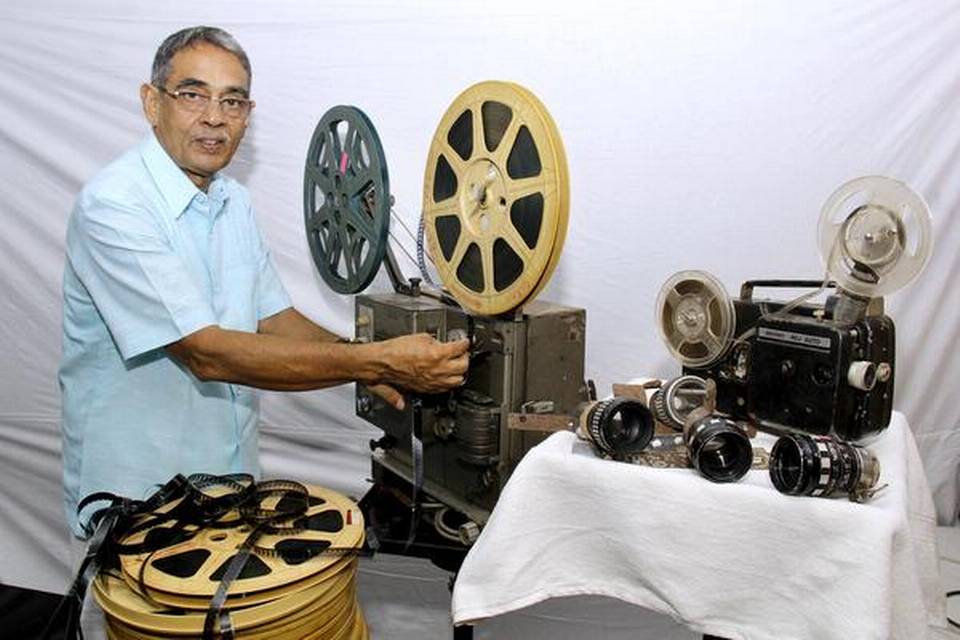
The REEL collector: Poonam Rahim owns the largest collection of Malayalam film prints

Thrissur, KERALA :

PoonamRahim01MPOs27nov2018

With possibly the largest collection of Malayalam film prints, Poonam Rahim played a vital role in Kerala’s unique film distribution market

For those of us who grew up in the 70s and 80s, POONAM RAHIM 16 MM (and a telephone number) was a familiar sight, blazing out from all imaginable surfaces.

It was seen on crumbled walls, electric posts, sides of KSRTC buses and even on heaps of waste. And no one knew what the words meant.

Until they saw a 16 mm film screening at their local festival ground. The projector spluttering the light beam, which carried the images of Prem Nazir and Sheela and Sathyan and Sarada on to the white cloth stretched out in front. The name appeared on the print, ‘Contact Poonam Rahim for 16 mm projectors and film screening.’

It will not be hyperbole to say that it was Poonam Rahim, the Cinema Man of Thrissur, who brought cinema out into the open ground from the confines of the theatres. The 16 mm revolution that he had sparked off in Kerala during the 1970s created a unique distributing market for the films that is still very much alive. And, down the years, Rahim has become the owner of one of the largest collections of Malayalam film prints.

______________________________

Unique advertisement
  • For advertisement- the stencil images- Rahim used to employ a team of four persons. They would travel on a jeep seeking out the dirtiest corners and junk heaps for painting the stencils. And the logic – “No one would bother to overwrite in such corners!”
  • It was those stenciled ads which established his 16 mm projectors in the mindscape of Malayalis, Rahim believes.

______________________________

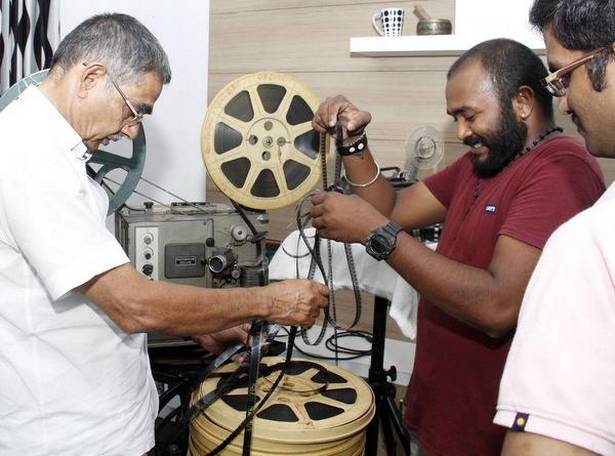
More than 400 original prints are stacked up along the shelves in his storehouse in Thrissur. Researchers on Malayalam cinema seek him out. Those who want to screen footage from the old black and white films also approach him. He provides footage of old films to be used in the production of new movies, like in Blessy’s Mammotty-starrer Kazhcha, that told the story of a 16 mm film operator.

And he can rattle off the complete history of Malayalam film industry right from the 60s in a jiffy. No wonder, as he was smitten by the film bug at a very young age.
PoonamRahim02MPOs27nov2018

Born in Kattoor, near Irinjalakuda in Thrissur district, Rahim’s school days were mostly spent lapping up the latest films that were released in Irinjalakuda’s two theatres – Pioneer and Konni. As his academic records plunged, the familypacked him off to his father who was running a provision store in Bhilai.

Rahim soon realised that he was not cut out to run a provision store. The world of films drew him on. And in no time the young boy formed a tie-up with the local distributor of Malayalam films. KT Abdulla was a relative of the famed producer TK Pareekutty of Chandrathara Films.

At first, the boy took the film boxes to cities like Korba, Chappa, Bilaspur, Jagdishpur and so on. Soon he started direct distribution rather than pay rent to Abdulla. And he named his enterprise as ‘Poonam Films.’ It was a random pick, as ‘Poonam’ was a popular name in North India.

As his very orthodox father never approved of cinema, Rahim was almost thrown out of the provision store.Rahim took a train to Chennai, the film capital of south India, armed only with the address of Bharat Film Corporation, one of the largest film distribution companies there. He had found the address on the film boxes.

Chennai did not open too many doors.

_____________________________

Chase Films
  • In the 1900s, continuity of action across successive shots was achieved and the first close-up shot was introduced.Most films of this period were what came to be called “chase films.” The first feature length multi-reel film was a 1906 Australian production.

____________________________

Then Rahim had that life changing encounter, with a Marwari film distributor who offered the print and distribution rights in Kerala of Arappavan, the Sathyan-starrer Malayalam film directed by K Shankar. Paying ₹ 2,000 for the print and six posters along with the distribution rights for Kerala, Rahim boarded the train to Thrissur, where he had no contacts. Within no time, Rahim opened his office in Everest Hotel, which was a kind of hub for film distributors. Most of the rooms in that hotel were, however, rented by Kathaprasangam artistes, Rahim noticed, who would be camping there during their December – March season.

“Kathaprasangam artistes were stars in those days. Even average performers had a rate of ₹700 per show, while for stars like Aryad Gopi, it was ₹1000. I’d get a commission of ₹50.” Soon he became a full-fledged agent for Kathaprasangam.

Kathaprasangam quickly gave way to professional drama. “Drama was in high demand and the companies could not meet the demand. Often I’d to arrange two shows of the same play on the same day in different venues. Suppose the first show started at 8 pm, the second show would be scheduled at 10 pm. Naturally, the second show would be delayed as the troupe took time to travel. However, people would wait patiently as this was the only source entertainment available and was a big event. But we needed a stop-gap entertainment.”

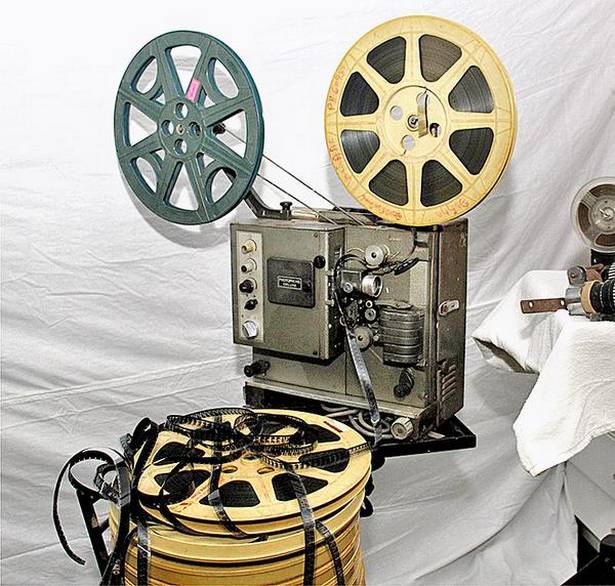
It was into this vacant lot that Rahim brought in the film screenings. He offered free film screenings, which made both the organisers and the audience happy. Soon, Rahim purchased his first set of projectors. Janakshakti Films, a people’s venture into film production that had Left leanings, was on the verge of closing down and Rahim bought out their three projectors and 11 film prints for ₹30,000. The films included John Abraham’s Agraharathil Kazhuthai, PA Bakker’s Kabaninadi ChuvannappolEkakini, and some commercial hits like Kalliyankattu Neeli, and Ramanan.
PoonamRahim03MPOs27nov2018

Rahim used commercial hits for the festival grounds. Horror stories like that of Neeli, and the sentimental ones like Ramanan were big hits with the women. At a time when going to the theatre was a costly affair , these free screenings were quite successful. As the demand for the film screenings started to outdo that of drama, Rahim began to charge.

“Soon some 106 film operators sprang up all over Kerala. We would rent out prints to them, besides holding our own screenings. With the profits, I’d buy the next print,” Rahim recalled.

Slowly the nature of the entertainment industry changed. But Rahim was far-sighted and stepped in with the changing times. He started renting out the projectors, moving from 16 mm to overhead projectors and to LCD projectors, running one of Kerala’s leading projector rentals. He works with major festivals including the International Theatre Festival of Kerala (ITFoK).

At his Thrissur home is his precious collection of the projectors and various related equipment that Rahim takes out only for the benefit of the researchers. The rare collection of more than 400 film prints line up the shelves. “The last print I collected was that of Manassinakkare, he points out. And he does not have a website, or Facebook page. “People who need me, come in search of me,” says the 68-year-old quite confidently.

source: http://www.thehindu.com / The Hindu / Home> Entertainment> Movies / by Reun Ramanath / November 24th, 2018
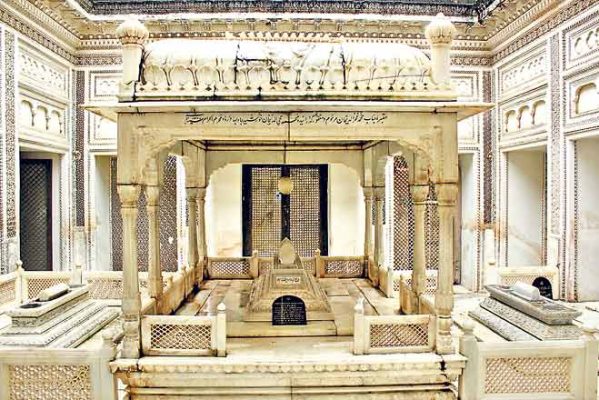
Spectacular beauty of a serene mausoleum

Hyderabad, TELANGANA :

The Paigah Tombs not only symbolise the nobility’s love for magnificient edifices but also represent different styles of architecture.

PaigahTombMPOs26nov2018

Tucked away in the quiet bylanes of the Phisal Banda suburb near Owaisi Hospital, Santosh Nagar, is an architectural marvel, a serene mausoleum which is the final resting abode of erstwhile Hyderabad’s celebrated nobility – The Paigahs. The word Paigah, which means pomp and rank in Persian, was a title given by the second Asaf Jahi Nizam of Hyderabad to the estate of Abul Fateh Khan Taig Jung Bahadur in appreciation of the royal services rendered by him. He was also conferred with the title of Shams-ul-Umra, which gives the tombs their name.

Although the Paigahs were noted and rewarded for their contribution as army officers, ministers and aristocrats, Sir Viqar-ul-Umra is popularly remembered as the man behind one of the finest masterpieces of Hyderabadi architecture – the Falaknuma Palace. Legend has it that the 6th Nizam Mahboob Ali Khan loved the palace so much that Viqar-ul-Umra gifted it to him.

One such masterpiece symbolising the Paigahs’ love for architectural edifices are the Paigah Tombs. The spectacular beauty of the mausoleum is said to have earned it a title of the Taj Mahal of South India among connoisseurs of art and architecture. The Paigah Tombs also include a mosque where prayers are held every day.

The Paigah Tombs were constructed in the late 17th century, and later it was made a family maqbara by his son Fakhruddin Khan Amir-e-Kabir – I. Later, some additions were also made by Sir Viqar-ul-Umra, Sir Asman Jah and Sir Khurshid Jah. The tombs are magnificent structures decorated in stucco work and represented the Mughal, Greek, Persian, Asaf Jahi, Rajasthani and Deccani style of architectures.

PaigahTomb02MPOs26nov2018

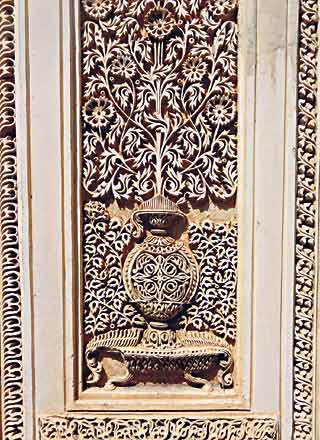
The geometric designs in the Paigah Tombs are unique and the perforated screens are examples of the finest craftsmanship. Some screens have flowers and motifs of fruits; others have serpents, drums, and vases.

There is a great amount of effort put into the detailing of the walls, arches, pillars and even of the graves. Floral and geometric patterns are characteristic of medieval Islamic architecture.

The most striking element of the Paigah Tombs is the intricately carved teakwood doors as entrance to each tomb. The carving of the doors is so fine and so regal it only makes one wonder the way art was encouraged and appreciated in the Asaf Jahi era.

The tomb of wife of Khursheed Jah is the most beautiful of the tombs with exquisite marble inlay work. One can still see the hollows in the marble carvings where precious gems were once encrusted on the grave.

Nawab Bashir-ud-Daulah’s grave stands out with a beautifully carved marble chowkhandi which is adorned by a carved mysterious green stone. Legend has it that the lighting doesn’t strike the place where it is placed.

The Paigah Tombs are under the care of the Department of Archaeology and Museums. As one of the most marvellous symbols of Hyderabad’s rich culture and royal heritage, the Paigah Tombs deserve nothing less than the government’s attention to ensure that it is not just preserved and valued but also promoted and highlighted.

Historian Dr Anand Raj Varma says, “I don’t see much improvement and restoration taking place at the Paigah Tombs; it is in the same state for years now. If you see the entrance, it’s in a very shabby state. There is no significant deterioration but there is also no tourist attraction or promotion of Paigah Tombs either. Most people don’t even know that the Paigah Tombs are located there.”

However, says the historian, the contribution of Rahmatullah, the caretaker of the Paigah Tombs, is appreciable as he keeps it going thanks to his passion and love for the Paigah family and the tombs. “The Tourism Department or the government should take this up as a project. It is the heritage which connects us our past and to our present. It is our treasure, heritage our virasat, and it should be protected,” he adds.

Mohammed Safiullah, managing trustee of The Deccan Heritage Trust, says, “The Paigah Tombs are in desperate need for restoration as the structure is in a dilapidated state and deteriorating. Some places have grown moss all over.  The government should invest in the restoration of the Paigah Tombs because there is a scope of return on investment. Once proper restoration work is done, there will be easily about a 1,000 visitors every day.”

A nominal entry ticket would become a means for generating revenue which would help in future maintenance. Simple things like a cafeteria, a souvenir shop and proper toilets could make it more tourist-friendly.

(The writer is a heritage enthusiast)

source: http://www.telanganatoday.com / Telangana Today / Home> SundayScape> Telangana Diaries / by M D Taher Hussain / November 25th, 2018

A crafts teacher spreads communal harmony in Hubballi

Jamjhandi, Bagalkot District , KARNATAKA :

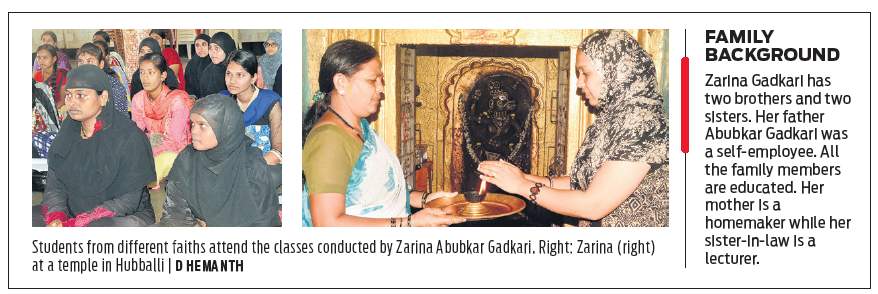
The 25-year-old crafts teacher, who follows the Muslim faith, conducts daily classes on Hindu epics and prayers for her students, many of whom hail from Muslim families, in Old Hubballi area.

Hubballi :

Zarina Abubkar Gadkari is quietly practising what most people only preach — spreading communal harmony. The 25-year-old crafts teacher, who follows the Muslim faith, conducts daily classes on Hindu epics and prayers for her students, many of whom hail from Muslim families, in Old Hubballi area.

Zarina, a teacher at Spoorthi Rural Skill Development Training Centre, which provides free training to women in craft-making and sewing, conducts her spirituality class on the premises every evening. She does not charge anything for the lessons, which include Sanskrit verses, songs and stories from the Ramayana and the Mahabharata, and hymns on gods such as Ganesha and Hanuman.

Hailing from Jamkhandi in Bagalkot district, Zarina started learning devotional songs and shlokas after getting inspired through the Ramayana and Mahabharata serials on television. When she joined the training centre as a craft teacher, she also started singing and teaching them to students.
”It’s a wonderful feeling to recite the shlokas,” she says. “Sanskrit words never seemed difficult to me while I was learning them, and my family members gave me big moral support,” adds Zarina, who performs namaz every day, and also visits the church and reads the Bible.

ZarinaMPOs26nov2018

“When I go to Bengaluru, I visit St Mary’s Basilica in Shivaji Nagar. It is one of my favourite places, and my family members also visit it with me,” she says, adding that such gestures from her family lend her huge moral support.

“We live in a country where communal harmony is everything, and each of us must work hard to achieve it,” she says.

The number of students in her classes has only increased over time, and they love every minute of it.
“I have been attending the classes of Zarina madam for over six months and she is a role model for many,” says Nasereen Attar, a student. “We never faced any restrictions in our homes about attending classes related to Hinduism. In fact, our parents encourage us to learn new things,” she adds.

Most students hail her as a motivating figure. “Her way of teaching and her commitment to religious harmony, besides her reciting of Sanskrit verses, left me stunned,” Shynaz Nadaf, another student, says. “It’s surprising to see Zarina madam perform namaz and as well as have darshan at temples,” Shreya M pitches in.

Zarina’s endeavour is praised by her colleagues too. “Her work shows that attachment to a religion is no hindrance to good work. She is a good human being,” says Mukthambika Narebol, a co-worker at the institute.

Zarina was introduced to the Ramayana and Mahabharata through teleserials by her parents when she was a child. She got interested in reciting the mantras and shlokas when she started teaching at the Spoorthi centre, where daily prayers are conducted.

“I also practised other verses like the Hanuman Chalisa and Gayatri Mantra. Initially, I faced problems in pronunciation but within 2-3 months I was able to recite them well in Sanskrit,” says Zarina, who draws a lot of strength from her family.

While her father Abubkar Gadkari is self-employed, her two brothers and two sisters are well-educated too, and her sister-in-law is a lecturer.

Zarina feels that the task of uniting people of different faiths has assumed greater significance today. “We live in the world’s largest democratic and secular country where all religions exist together. But in recent times, society has seen changes after the social media took the front seat,” she says.

Greater onus rests on the youth to build a cohesive society, adds Zarina. “Several young lives are going waste by getting involved in violence triggered by communal hate. We must also educate women about the ill-effects of religious divide, and bring awareness about nation-building activities,” she says, admitting that the task, however, is far from being easy.

source: http://www.newindianexpress.com / The New Indian Express / Home> States> Karnataka / by Kiran Balannanavar / Express News Service / November 25th, 2018

Choosing to shed victimhood

Kottayam, KERALA :

MariamMPOs25nov2018

Mariam Rauf urges schools to include personal safety education in syllabus

As an impressionable child, Mariam Rauf — a 22-year-old life skills and English language educator from Kottayam — never knew what paedophilia was. It took her many more years to realise that she herself had been one of its victims.

Abused on multiple occasions between the age of 3 and 14, the ordeals surely left an imprint on her.

Confused, ashamed, and lost for years on end, she eventually managed to pull herself up and is now busy training children and adults about personal safety.

Driven by her own experiences of abuse as a child, Mariam has now kick-started a campaign to include personal safety education in schools. She feels this is achievable as there is a strong intent on the part of the government to clamp down on child abuse. It is unlikely to affect academics either as it may need only a couple of sessions in a year.

Online petition

As part of the initiative, she has also chosen to shed her right to anonymity and launched an online petition on Change.org, which opens up on her ordeal and makes an appeal to the State government to introduce compulsory training in Personal Safety Education (PSE) for students, parents, teachers, and staff of all government schools.

The petition is addressed to Education Minister C. Ravindranath and the Kerala State Commission for Protection of Child Rights (KeSCPCR).

“About 38,200 people, who have endorsed my petition thus far, believe it is possible. By realising it, I can save at least one child from undergoing what I had to face,” she says.

According to Mariam, personal safety education for children is about making them aware of their body and empowering them to express their discomfort in case of physical transgressions.

“For most of us, personal safety of our children is limited to the ‘Stranger-Danger’ equation, while the actual threat can come from even inside the family. All people can do their part by recognising the physical and emotional signs shown by a child who is being abused and the signs that an adult is abusing a child,” she said.

source: http://www.thehindu.com / The Hindu / Home> News> States> Kerala / by U. Hiran / Kottayam – November 20th, 2018

Rajasthan Assembly Elections 2018: BSP’s prize catch in dargah town

Ajmer, RAJASTHAN :

Syed Ammad Chishti
Syed Ammad Chishti

In Ajmer North, party fields Ammad Chishti from the Khadim community, which traces its descent to Khwaja Fakhruddin Gurdezi, who accompanied Khwaja Gharib Nawaz on his move to Ajmer around the year 1190.

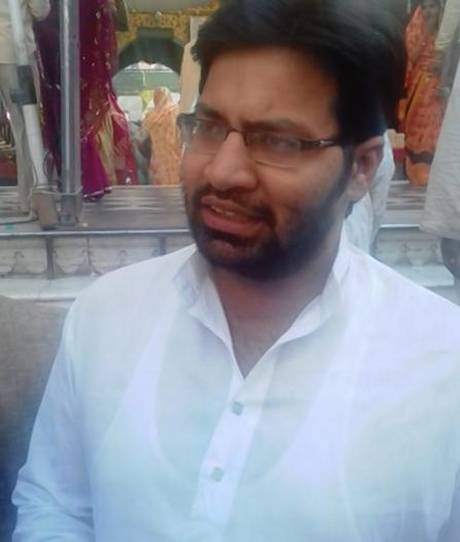
At first glance, Syed Ammad Chishti looks like an urban professional, juggling career and family. But the 26-year-old is the second member of the Khadim community here to contest an Assembly election.

The community of nearly 800 families occupies a prominent position in the hierarchy of the famed 13th century dargah of Sufi mystic Khwaja Moinuddin Chishti here. It traces its descent to Khwaja Fakhruddin Gurdezi, who accompanied Khwaja Gharib Nawaz on his move to Ajmer around the year 1190.

As the custodians of the monument, the Khadims have unrivalled access to the inner sanctum and perform all the rituals and ceremonies at the tomb.

Religious service

As Khwaja Gurdezi was the Khadim-e-Khas (chief attendant) of Khwaja Gharib Nawaz, Khadims consider it their religious obligation to serve the tomb and receive all offerings.

The Mughal emperors, Hindu kings and later the British government had liberally granted jagirs (land grants), honours and rewards to Khadims.

Almost no Khadim family migrated to Pakistan during Partition, staying back to protect the shrine from pillage and plunder.

Abysmal conditions

Mr. Chishti, the youngest municipal councillor of the Ajmer Municipal Corporation, is contesting on Bahujan Samaj Party ticket in the Ajmer North constituency, where the historical dargah is situated.

“I represent the hopes and aspirations of not just the Khadims but all the people residing here,” he told The Hindu.

Syed M. Ayas Maharaj was the first Khadim to contest an Assembly election.

He won on Congress ticket in 1980, defeating Ramzan Khan of the nascent BJP by a margin of 2,825 votes.

Mr. Chishti points to the “pathetic condition” of the dargah area in the foothills of Taragarh, and the BJP government’s alleged neglect.

“We are supplied water once in three days in this area with a high population density. Pipelines from the Bisalpur dam were laid for Ajmer, but the water has been diverted to Jaipur,” he says.

It is not just the 45,000-strong Muslim electorate in Ajmer North that Mr. Chishti is banking upon. “Education Minister Vasudev Devnani has been elected thrice from here. Look what he has done, other than distorting history and changing the school curriculum. People are fed up,” he says.

Mr. Chishti says he will reach out to all the communities, let they be Sindhi, Vaish or Brahmin, with the promise of better living conditions and good governance.

Mr. Chishti, father of a two-year-old boy, says his political ambitions are rooted in his desire to bring about a change.

It was his father, Shamim Chishti, who had introduced the BSP in the dargah area. The young man went to Lucknow to meet party supremo Mayawati with a request for ticket. “Mayawatiji encouraged me to work for people’s welfare. She may address a public meeting in Ajmer on November 28,” he says.

Justice denied

Though Mr. Chishti does not mention it, there is an underlying bitterness among the Khadims over the government’s failure to punish the perpetrators of the 2007 blast at the dargah, in which three persons were killed.

Though the National Investigation Agency Special Court in Jaipur convicted two RSS functionaries in 2017, the Rajasthan High Court suspended their life sentences and released them on bail.

While Wahid Angara Shah, secretary of the Anjuman Khuddam Syedzadgan, a Khadims’ representative body, says politics should be kept out of dargah affairs, Anjuman member Sarwar Chishti, who had lodged the complaint in the blast case, alleges that the NIA had weakened the case after the change of government at the Centre in 2014.

source: http://www.thehindu.com / The Hindu / Home> Elections> Rajasthan 2018 / by Mohammed Iqbal / Ajmer – November 23rd, 2018

Rajasthan Assembly Elections 2018: An entrepreneur’s political foray

Mumbai, MAHARASHTRA / Sikar, RAJASTHAN :

Wahid Chowhan
Wahid Chowhan

In Sikar, a new party finds new nominee

Two decades after taking an initiative for promotion of girls’ education in his native town, a Mumbai-based entrepreneur is testing his fortunes in the Assembly election in the Sikar constituency in the Shekhawati region of Rajasthan .

The Excellence Knowledge City for Girls, established by Wahid Chowhan, has made the dusty district of Sikar one of the educationally advanced ones in the State.

Mr. Chowhan, 70, has been fielded here by the Rashtriya Loktantrik Party, which was floated by Hanuman Beniwal, Independent MLA, recently. Mr. Beniwal wants to create a third front in the State, where the BJP and the Congress have been elected alternately since 1993.

Mr. Chowhan’s college offers free tuition, books and uniforms to girls, and the curriculum is a mix of madrasa teaching and mainstream subjects.

It is probably the first institution which has introduced Sanskrit along with Urdu and Arabic as the languages taught.

While seeking votes, Mr. Chowhan speaks of the difficulties he had faced when he started the college. The local people had suspected that he wanted to corrupt the minds of innocent Muslims or he intended to set up a five-star hotel.

“From the earlier imbalance of girls being deprived of education, we have now reached the opposite extreme. Girls are now highly educated compared with boys,” he says.

The initiative has given an impetus to girls’ education in Sikar. “No girl, especially in the minority communities, stays at home. With higher education, they are all moving up the social ladder,” social activist Ashfaq Kayamkhani says.

Open to both Muslim and Hindu girls, the college offers education in mainstream subjects from science and humanities to business administration. Muslim girls can opt for the madrasa curriculum.

Mr. Chowhan is pitted against Ratan Jaldhari, MLA and BJP candidate, and Rajendra Pareek of the Congress, who was defeated in 2013.

source: http://www.thehindu.com / The Hindu / Home> Elections> Rajasthan / by Mohammed Iqbal / Sikar – November 24th, 2018

Anti-dowry drive: Thousands of Indian Muslims return millions to bride families

JHARKHAND :

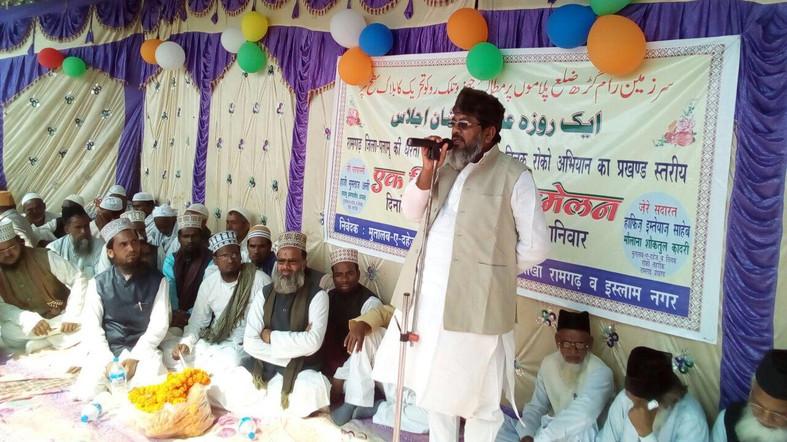
Haji Mumtaz Ali addressing anti-dowry campaign in India’s Jharkhand state. (Supplied)

A man in India has launched a massive campaign against dowry, one of the biggest social evils claiming hundreds of lives every year in the country. Such is the impact of the campaign that close to 1,000 Muslim families have now returned dowry to the bride families, expressing regret over their conduct in public and vowing not to repeat it in future.

The credit to this unique campaign straightway goes to Haji Mumtaz Ali who has launched the campaign in the eastern Indian state of Jharkhand. The success of the campaign is underlined from the fact that villages after villages are joining it every day, openly taking an oath not to accept dowry in future.

Initially, the campaign was started in Palamu district but now it has gone beyond its boundary and spread to several others districts as well. But what’s further fascinating about it is that the campaign is not limited to any particular community only as the Hindus too have lent a wholehearted support to this campaign, joining the anti-dowry rallies in large numbers.

“I am happy to inform you that what started as a silent campaign against this social evil two years back has now turned out to be the mass movement. Now it’s not limited to any particular area or the community only but Hindus too are joining us in large numbers,” said Ali who happens to be the brainchild of the campaign.

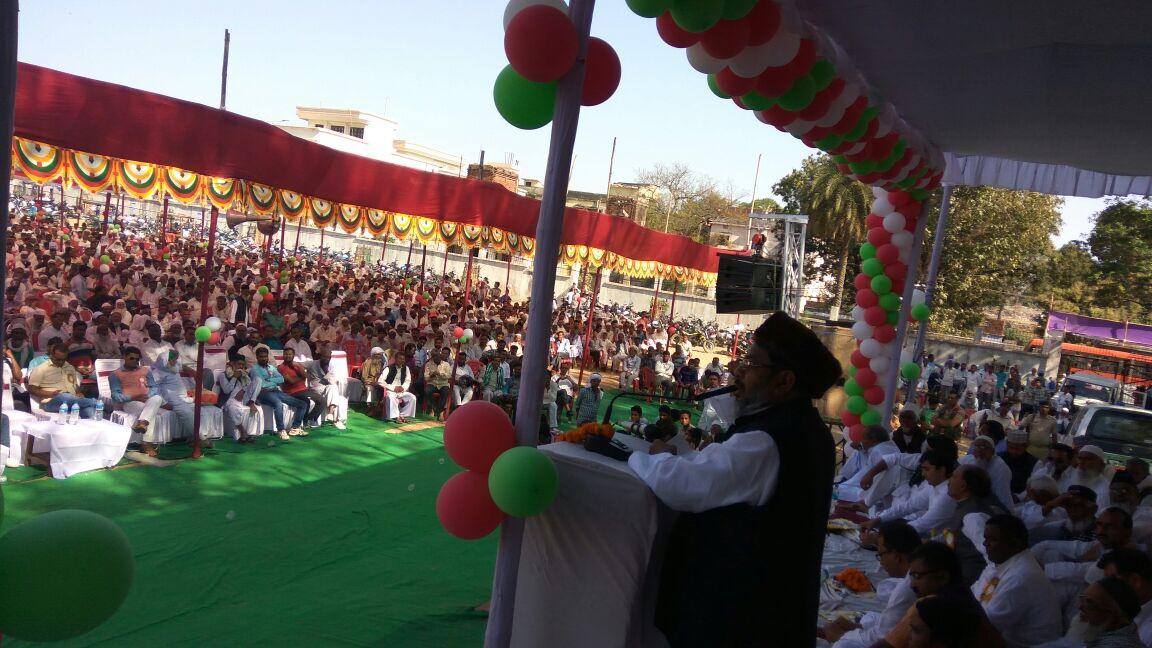
The peak of the campaign was when the Muslim villagers began returning dowries years after they had taken them at the time of their son’s wedding. (Supplied)

Rs 60 million returned

The peak of the campaign was when the Muslim villagers began returning dowries years after they had taken them at the time of their son’s wedding. According to Ali, close to 1,000 Muslim families have returned dowries worth Rs 60 million to the brides’ families so far, impressed by his appeals to give up dowry.

One of them was Nizamuddin Ansari who returned Rs 40,000 to the bride families. “I regret about taking dowry from my daughter-in-law’s families but feel proud to return it now,” Ansari told an anti-dowry meeting held in Palamu recently.

However, the campaign didn’t reach at this level all of a sudden. Ali had to work hard, day and nights for months during which he held more than 100 such meetings and rallies in entire Palamu division to convince his community members not to take dowry, braving sweltering heat and chilling winter.

But what compelled him to launch the campaign? “I saw many families getting destroyed under the impact of dowry although it was not initially prevalent in Muslim families. I came across many poor families selling their ancestral properties or taking loans on high interest to arrange money to solemnize wedding of their daughters”.

“What was terrible this money was being wasted on arranging decoration, DJ, orchestra and various types of dishes; it was not being used for important works! So I decided to launch a campaign in the society, sooner the better,” Ali said, in a telephonic interview on Thursday.

“I was aware of the economic status of my co-villagers. I knew their financial background just wouldn’t permit them for lavish wedding. They were doing so just because they had taken dowry from the brides’ families. So it was necessary to alert them,” he said.

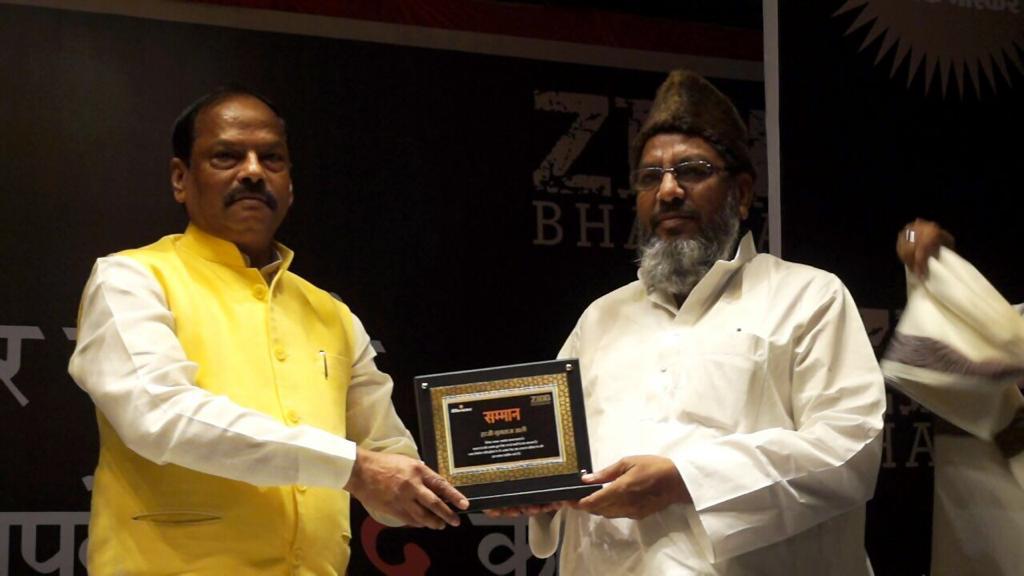
Haji Mumtaz Ali being honoured by Jharkahnd Chief Minister Raghubar Das. (Supplied)

Crowds of villagers

Eventually, Ali launched the campaign in April 2016 but got encouraged to focus on it after seeing huge crowds of villagers attending his each rally and meeting.

“I told the Muslim villagers to fear from the almighty and swear in the name of Allah not to take dowry in future and this ultimately clicked,” Ali revealed, describing his campaign as a “huge success”. Recently, Ali was honored by Jharkhand chief minister Raghubar Das for his campaign against dowry.

Ali is happy to tell that villagers are now opting for “dowry-less” marriages. “Now, the general masses have taken over my campaign. This indicates the success of my campaign, Ali remarked, with his voice exhibiting satisfaction and delight.

Dowry has been claimed hundreds of lives every year in India. As per an official report, a total of 24,771 dowry deaths were reported in India in between 2012 and 2014 with Uttar Pradesh taking the lead with a maximum of 7,048 deaths. This information was given to the Lok Sabha in a written reply by federal minister for Women and Child Development Ministry Maneka Gandhi in April 2016.

The minister further told the House that India recorded 348,000 cases of cruelty by husband or his relatives during this period with the West Bengal topping the chart with 61,259 such cases, followed by Rajasthan (44,3111) and Andhra Pradesh (34,835), as per the National Crime Records Bureau data.

source: http://www.english.alarabiya.net / Al Arabiya – English / Home> Features / by Manoj Chaurasian / Special To Al Arabiya English / November 08th, 2018

Mamata gives Kolkata its first Muslim mayor since independence

Kolkata, WEST BENGAL :

Firhard Hakim, a state minister, is all set to take up the additional role.

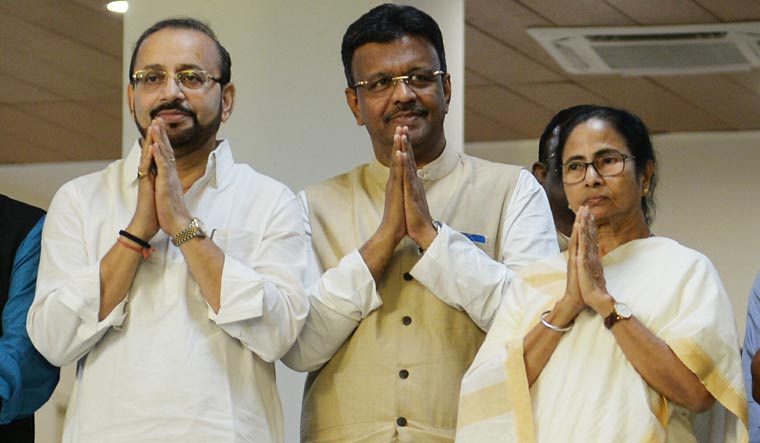
Firhard Hakim and Atin Ghosh along with West Bengal Chief Minister Mamata Banerjee | Salil Bera

For the first time since independence, a Muslim face is all set to become the mayor of Kolkata. Firhard Hakim, the municipal affairs and urban development minister of West Bengal, is all set to take up the additional role of the mayor of the 94-years-old corporation. Chief Minister Mamata Banerjee has also decided to change the deputy mayor by replacing incumbent Iqbal Ahmad with Atin Ghosh, a Member Mayor-in-Council (MMiC).

It was a role reversal in Kolkata corporation as Banerjee had earlier chosen a Hindu mayor and a  Muslim deputy mayor. Syed Muhammad Usman, a Bengal Praja Party member, was the last Muslim mayor of Kolkata in undivided Bengal which had comprised of West Bengal and East Bengal (now Bangladesh). The party was formed by A.K. Fazlul Huqe, who later became the home minister of Pakistan and then the governor of East Pakistan (now Bangladesh)

Hakim is known to be very close to Banerjee and her nephew Abhishek.

A meeting of the corporation councilors was called on Wednesday evening to get Hakim elected. Interestingly, Sovan Chatterjee, who resigned as mayor earlier in the day, has not been invited despite being a councilor.

Chatterjee was very careful while addressing the media shortly after sending his resignation to the corporation chairperson through his personal security staffers. He did not lash out at Banerjee, but hinted at many things

Terming his association with Banerjee for last 40 years as an emotional one, Chatterjee said, “That full moon looks like a burnt chapati today.”

When asked about his future plan of action in politics, Chatterjee said that he continues to be a member and MLA of Trinamool Congress.

“But I would have no hesitation if Mamata di asked me to resign from both,” said he. Replying to a question on whether he would be joining the Bharatiya Janata Party, as such speculation is in the air, Chatterjee said he would not respond to every other rumour.

“You would come to know what would be my future course of action at an appropriate moment,” he said.

Differences between Banerjee and Chatterjee were evident from the words of the latter, who said that instead of resigning on his own, “an instruction was sent to me to resign from the state cabinet”.

“For the last 40 years, whatever she asked me to do, I did all of them even without applying my mind. I am such a follower of her,” Chatterjee said.

After Mukul Roy, he is the second political heavyweight in Trinamool Congress who has distanced himself from Banerjee.

Chatterjee also denied reports that his relation with a college teacher was the reason behind his resignation from the ministry and as the mayor.

“In fact, I am totally in the dark on what the reason was,” said he.

Sources, however, said that Chatterjee would not jump off the TMC boat immediately. He will wait and watch before finalising the future course of action.

source: http://www.theweek.in / The Week / Home> News / by Rabi Banerjee / November 22nd, 2018

Young Kashmiri plays the rabab back into the limelight

Srinagar, JAMMU & KASHMIR :

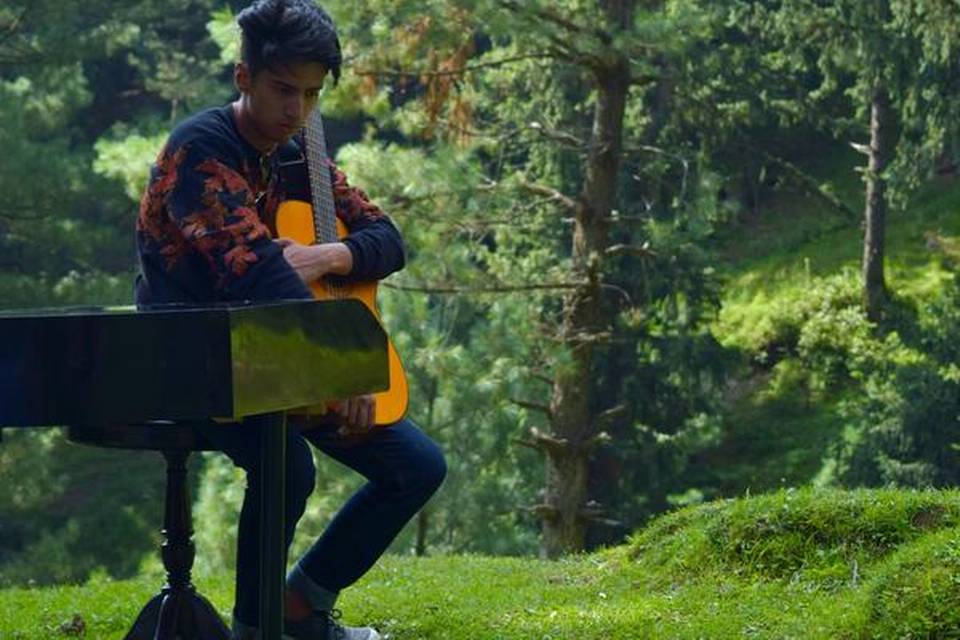
SafyanMalikMPOs23nov2018

Sufyan Malik’s 45-second video finds receptive new audiences for the fading soul of the region’s folk music

A 19-year-old Srinagar boy, enabled by social media platforms, is infusing new life into what is considered the soul of Kashmir’s folk music — the rabab, a long-necked lute.

Sufyan Malik’s 45-second video, shot on a mobile phone against the backdrop of the heavy snowfall witnessed on November 3, has stormed the internet, with over 4 lakh views and counting.

“I came for a short vacation to Kashmir. As my parents left home in the morning, my friend and I decided to shoot the video with snowfall as the backdrop. Initially, I played it for my friends in Pune, to show them snow. To my surprise, the tune of a local song, ‘Janaat-e-Kashmir’, on the rabab, became an instant rage on Internet,” Mr. Malik, a student of engineering at Pune’s MIT College, told The Hindu.

Mr. Malik shot the video 18 times because his hands fingers in the cold weather. “There was no electricity to warm my hands. I had to match the speed. It was hard to play three beats down and one beat up. Finally, we did it,” said Mr. Malik, a resident of Srinagar’s Nowshera area.

The effort paid off as the video attracted 1.54 lakh views on Twitter in just a couple of days, with more views on Facebook and Instagram in the weeks that followed. From politicians like National Conference’s (NC) Nasir Sogami to activist Shehla Rashid Shora, the young player earned plaudits from across the spectrum in the Valley and outside.

“Snow and the rabab probably reflect our identity. People felt an immediate connection. I have pledged to play the rabab all my life. I will do my Masters in composition to enable the survival of the rabab,” said Mr. Malik, the son of a doctor mother and a hotelier, Wahid Malik, who support their son’s efforts.

The makers and listeners of the rabab are both fast dwindling in Kashmir. In north Kashmir, only two families continue with the trade of crafting the rabab, from the dozens of just a few decades ago.

Seen in many variants across central Asia, the rabab arrived in Kashmir from Afghanistan many centuries ago. “Compared to the seven strings of the Afghan rabab, the Kashmiri version has 22 strings, with two strings crafted out of goat gut through an elaborate process. It’s these two strings that create its mesmerising echo,” Mr. Malik said.

Soul-stirring

Ghulam Muhammad Ganai, 63, from Ganderbal’s Kangan area, is among the few instrumentalists left from the old school. “I play the rabab only in Sufi mehfils (night-long devotional gatherings). The word ‘rabab’ comes from rooh(soul) and bab (expression). It should stir the soul. Only those who are nearer to god value the instrument. Around 15 of us are left now,” said Mr. Ganai.

However, young players like Mr. Malik are bringing the instrument back into mainstream culture. “I played the rabab for a musical fusion called ‘Firdous X-He is a pirate’ based on the theme song of [the film] Pirates of Caribbean and the theme music of [TV show] Game of Thrones in 2017. It was an instant hit here,” he said.

On June 28 2018, Mr. Malik played the rabab at The Hilton hotel in Los Angeles. “Many Kashmiri-origin people in the audience wanted to have a workshop for their kids after the show. After the hits we produced in 2017, at least 50 students registered to learn to play the rabab at the Delhi Public School (DPS) in Srinagar,” said Mr. Malik.

source: http://www.thehindu.com / The Hindu / Home> News> States> Other States / by Peerzada Ashiq / Srinagar – November 21st, 2018

J&K artists weave life back into the antique shawl

JAMMU & KASHMIR :

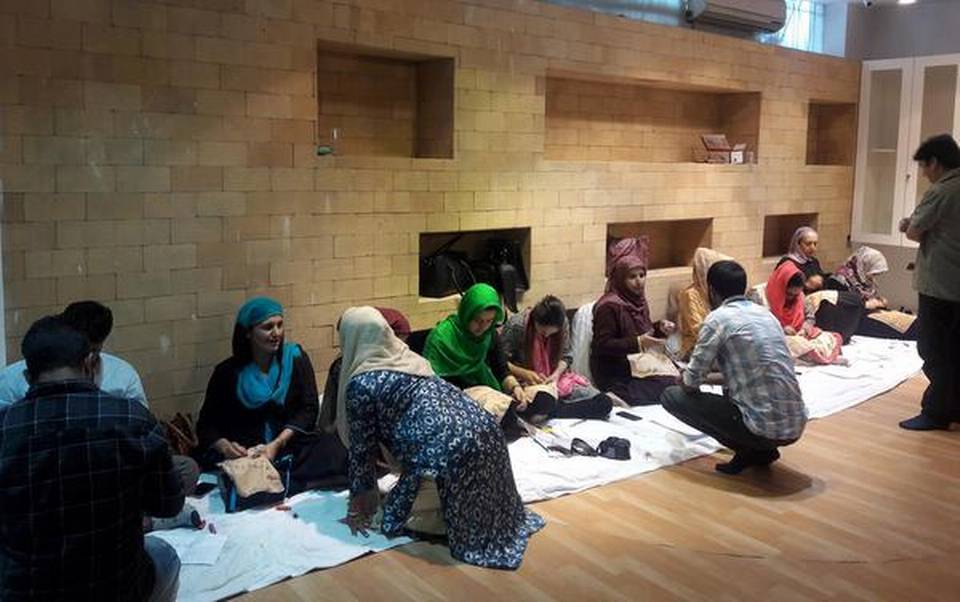
Silken touch: Experts display the skill at the special event at Srinagar’s SPS Museum. | Photo Credit: The Hindu

Workshop to revive Valley’s vanishing breed of master darners

Once sought after by Mughal emperors for their finesse, Kashmir’s master darners, known as rafugars, have become an endangered species. The Jammu & Kashmir government is now making efforts to revive this dwindling breed of craftsmen whose rare ability to repair expensive antique shawls is in great demand across the country and abroad.

J&K’s Department of Archives, Archaeology and Museums and the Indian National Trust for Art and Cultural Heritage (INTACH) have decided to identify and expose these traditional Valley darners to the market.

Toward this end, at least 25 master darners and embroidery artists have been invited to exhibit their skills at a six-day workshop, organised from September 17-22, at Srinagar’s SPS Museum. Two masters from Uttar Pradesh’s Najibabad are among those sharing their knowledge.

J&K’s Handicraft Department says, of the 56 traditional skills (such as wood-carving), only 26 are practised today. One indicator of the decline: a post for ‘Darner Instructor’ in the department has been lying vacant for many years.

Rafugari survives

“Among the surviving skills is rafugari, which is also dying. Darners from Kashmir once impressed the Mughal emperors, who hired them to keep their shatoosh and pashmina shawls intact,” said Saleem Beg of INTACH’s J&K chapter. The workshop, Mr. Beg said, was aimed at transmitting the art to the next generation. The museum has displayed 63 rare shawls, many dating back to 1893, including one with a map of Srinagar on it.

“The darners will understand the artwork that our artists had mastered in the past. They should be able to identify problems and suggest methods of restoration. This exercise will help them hone their skills,” Mr. Beg said.

Master darner Muhammad Rafiq Kozghar, in his mid-50s, has been repairing antique shawls and sarees for 40 years now. “I picked up the skill from three teachers in Srinagar. All of them have passed away. I am the only student alive, taking it forward. Darning requires fine hands and eyesight. A darner dies once his eyesight fails him,” said Mr. Kozghar, who works in Delhi.

Mr. Beg said that there was great potential for textile conservation in Srinagar. “We need to upgrade the skills of the existing rafugars and needle work artisans to create a market for textile conservation,” he added.

source: http://www.thehindu.com / The Hindu / Home> News> States> Other States / by Peerzada Aashiq / Srinagar – September 20th, 2018