Lucknow: Now, ‘water gateway’ to Chattar Manzil unearthed

Lucknow, UTTAR PRADESH :

Slice of history: Nawabs probably used fish-shaped boats for transport in 17th century, says historian.

The ongoing excavation work at Chattar Manzil reached another level on Monday as workers unearthed a ‘water gateway’ leading to this iconic structure.

The UP Rajkiya Nirman Nigam (UPRNN), the construction agency engaged in the restoration of the structure, termed it one of the major discoveries so far.

Officials said workers engaged in the excavation stumbled upon a ‘cylindrical structure’ that was lying buried for years.

On clearing the debris, it was found that the structure made of lakhauri bricks was a tunnel, which connects the over 200-year-old Chattar Manzil to river Gomti, flowing just a few metres away.

“This tunnel is around nine metres beneath the ground,” said Nitin Kohli, the contractor supervising the excavation work.

The task is being performed under the supervision of a high-powered committee comprising Archaeological Survey of India (ASI), Abdul Kalam Technical University (AKTU), State Archaeology Department and officials of the civil engineering department, IIT BHU.

Experts said once they are done with the excavation work, they would explore details like the total length of the tunnel and where it leads to.

Officials said the discovery of the tunnel would unravel another chapter from the history of Chattar Manzil and Kothi Farhatbaksh.

The tunnel would also demystify myths and folklore about the Nawabs using water boats to sail within the palace complex, they added.

However, historians have a different take on this tunnel.

PC Sarkar, a noted historian, said: “The structure seems more of a water gate than a tunnel.”

He said some old timers who have been to Kothi Farhatbaksh (Lakhi Pera), residence of major general Claude Martin, had mentioned the structural uniqueness of the twin structures. “In fact, it is on record that the structures were easily approachable from the northern (river Gomti) side by boat also,” added Sarkar.

“After Nawab Saadat Ali Khan bought the fortress-like structure, it was remodelled into a palace-like structure. However, the river side entrance remained the principal one, with the Nawab adding pavilions in the middle of the river itself,” he said.

He said Gomti was the main channel of transport – the nawabs used barges (boats) of various shapes and sizes, some looking like fishes, crocodiles, for transport in the 17th century. The famous ‘More Pankh’ boats were in vogue during that era, said Sarkar.

He said ‘water gates’ may sound unique now, but they were common in the olden days.

The Lucknow Residency too had a ‘water gate’. But it became defunct when Gomti changed its course and more means of road transport came up, he said.

source: http://www.hindustantimes.com / Hindustan Times / Home> Lucknow / by Oliver Fredrick, Hindustan Times,Lucknow / November 20th, 2018

The mystery of the two saints

Hyderabad, TELANGANA :

The structure lies in neglect | Photo Credit: Serish Nanisetti

Forgotten and vandalised tombs show the sorry state of heritage

The tip came last week. “There are these maqbaras in Balapur. One of them is double-storied, like that of Jamsheed Quli Qutb Shah. They must belong to someone important. We could climb up and the decoration is largely intact,” said P N Praveen, who teaches architecture. He sent a location map. A satellite map showed a square open area with two round structures.

The location turned out to be beyond the Barkas area in Old City. Beyond the shanty town of Rohingya refugee camps is the open area where the two domes pierce the sky. If shouts and laughter echo from one side where children gather to play cricket, on another side a Greater Hyderabad Municipal Corporation vehicle comes to dump garbage from the surrounding areas. “I make four or five trips per day,” says the driver of the garbage tipper. When the garbage reaches a certain height, he sets the heap alight. The fire and smoke envelop the area.

The two domes are raised on a square platform. The small, low and squat, more ornate dome would easily fit into the landscape of the Qutb Shahi tombs complex at the foothills of Golconda Fort. The other one appears to be double-storied, but with something amiss with the symmetry. “It lacks a defined parapet with battlements,” says Prashant Banerjee, a conservation architect after seeing a photograph.

“These tombs belong to the Qutb Shahi era. Two Sufi saints Bhole Shah and Bhale Shah are buried here. Over time people have vandalised and removed all signs of the graves but they are buried inside the tombs,” said Muhammad Shareef, who is secretary of the Roushan Ud Dowla Masjid, that abuts the tombs. A sign painted in Telugu speaks about the property being under the care of the Waqf Board. How these two tombs slipped out of the net of the memory of the city is anybody’s guess. The tombs are from a layer of history which hasn’t got much attention from historians.

Golconda/Hyderabad has been attacked multiple times. After Aurangzeb’s final conquest, he oversaw its sack by staying put near the eastern side of Charminar. All the glorious palaces draped with glazed enamel tiles with seven colours were pulled down in the hunt for the fabled treasure.

One of the Qutb Shahi palaces was a seven-storied one which was a marvel for even a well-heeled traveller like Jean Baptiste Tavernier. Now, nothing of that era remains, save the four ceremonial arches, the Charminar and the fountain in the royal piazza. Later, Hyderabad was subjected to a series of raids by the Marathas. The sacking, the raids, the unsettled conditions meant that the once grand city and its surrounding areas slipped into a state where people were only bothered about saving their life and limb. Not surprisingly, religious and spiritual monuments survived intact and in some cases emerged grander and more powerful. But how these two tombs in Balapur, despite being associated with Sufi Saints, slipped into disuse and became a den for vagabonds remains a mystery.

source: http://www.thehindu.com / The Hindu / Home> News> Cities> Hyderabad> Living Hyderabad / by Serish Nanisetti / November 17th, 2018

How India’s 1st Muslim Woman Teacher Started a ‘Beti Padhao’ Movement in 19th Century

Pune, MAHARASHTRA :

Working in tandem with Savitribai Phule, Fatima had to not only take on high caste Hindus but also faced fierce opposition from orthodox Muslims who opposed the idea of equal education for all.

Are you in favour of education for girls? To even ask this question in today’s socio-political milieu seems ridiculous, considering that this is not only enshrined in our Constitution but supported by mainstream public discourse.

There are numerous government programmes and schemes dedicated to the education of the girl child, irrespective of class, caste or religion. Admittedly, there are parts of this country where this idea and subsequent socio-economic progress is actively discouraged. However, more than 150 years ago, it wasn’t even a part of the mainstream socio-political discourse, and in fact, those pushing for it were met with intense hostility and social boycott.

Those with even a cursory knowledge of the history behind education in India will have heard of Savitribai Phule, who valiantly fought against the oppressive hierarchies of caste and gender to challenge untouchability and educate girls, among other critical social interventions.

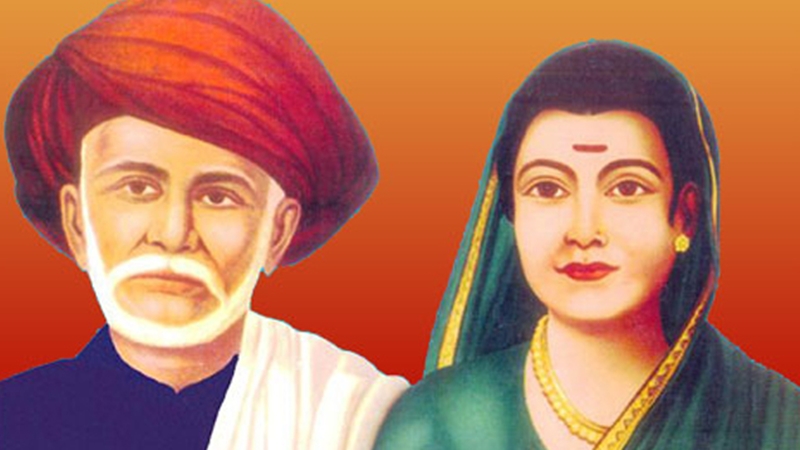
Along with her husband Jyotirao Phule, they fought against caste discrimination, the scourge of untouchability and worked towards the emancipation of women and reform of Hindu family life in present-day Maharashtra during the 19th century. They were among India’s first major social reformers.

Jyotiba and Savitribai Phule (Source: Free Press Journal)

But how many people know about the Muslim woman who made Savitribai’s bid for girl education possible? Not many, one would argue, and that isn’t their fault considering little is known about her life history.

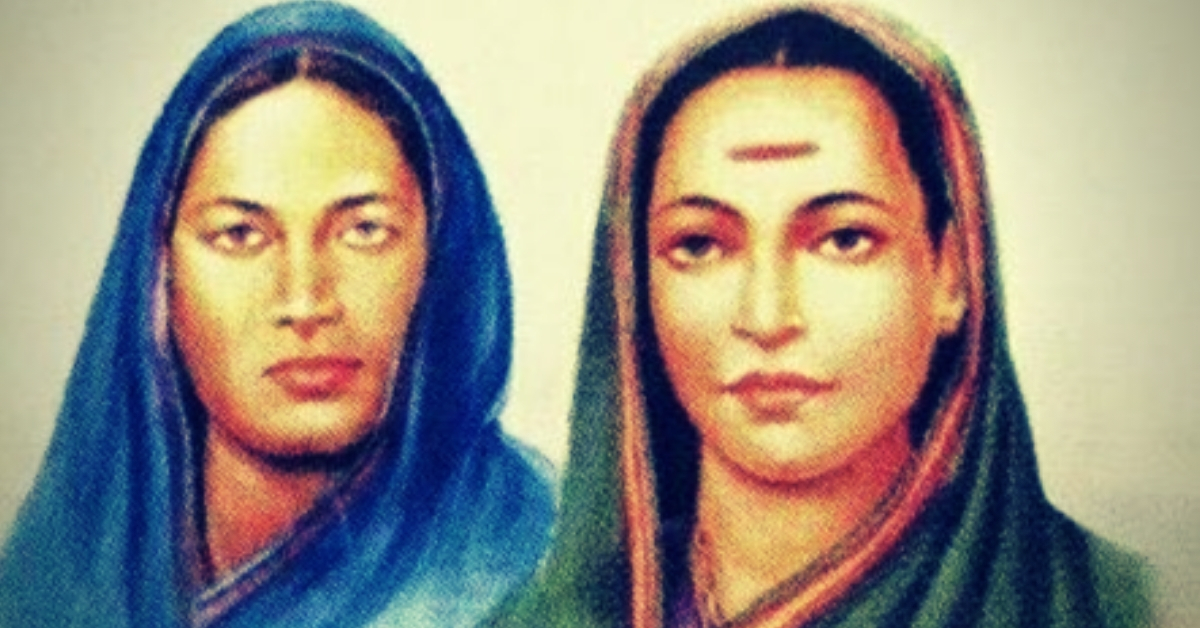
What we do know is her name was Fatima Sheikh, and she is widely recognised as the first woman Muslim teacher in India, who also worked with Savitribai to establish the first school for girls at her own house, alongside her brother Usman Sheikh in 1848.

The story begins with the Phule couple attempting to educate members of the lower caste communities, particularly their women, at their home in Pune.

Considering that education at the time was the preserve of only upper caste men, the very thought of educating women and lower castes was anathema, and the Phule couple were given the choice of either stopping work or leaving their home. They chose the latter but were offered refuge by Fatima and Usman at their home in the Ganj Peth area of Pune (then referred to as Poona).

At a time when everyone including their own kin abandoned these social reformers, Fatima and Usman not only gave them an opportunity to rekindle their ambition to uplift those on the margins but also sheltered them. At the Sheikh household, Fatima helped Savitribai to set up the first school for girls in Pune called the ‘Indigenous Library.’

According to archives from the era, it was Usman (inspired by the Phules) who encouraged his sister to not just educate herself but also spread its gospel to all members of society.

Fatima Sheikh (left) and Savitribai Phule. (Source: Twitter/Tanvir Salim)

Not only was Fatima risking the wrath of caste Hindus, but also orthodox Muslims, as both groups at the time were deeply opposed to the idea of equal access to education. Nonetheless, this didn’t deter Fatima, who not only undertook training alongside Savitribai but also soon after began teaching others.

“Defying all norms, Fatima and Savitribai set up the school and even went to a training institute, to become professional teachers,” says this account from Feminism in India. They were soon joined by social reformer Saguna Bai, who helped Savitribai open another school and would subsequently go onto chart her own education movement for the marginalised.

Through her time with Savitribai, Fatima had taught in all the five schools that the social reformer couple had opened, and continued to do so until 1856 when Savitribai was afflicted by illness and was compelled to move back to her mother’s house. We don’t know much about her life post-1856.

“When Fatima and Savitribai started going to schools which were established by Jyotiba, people from upper caste community used to harass and abuse them. They were stone pelted and sometimes cow dung was thrown at them as it was unimaginable for the upper-caste community to see lower castes of the society getting educated. Fatima Sheikh and Savitribai didn’t pay attention to these hindrances and continued their work,” writes Siddhant Mohan, editor of Two Circles. Aside from such hostility, there are even reports that some had attempted to take their lives.

Despite the challenges before Fatima, she maintained her pursuit of approaching every household in her neighbourhood and community, asking families and encouraging them to give their girls a shot at a decent education, irrespective of faith.

Having said that, there isn’t too much historical or archival material to ascertain what happened to Fatima after 1856, and even the question of when she was born remains up for debate although her birth anniversary is celebrated across social media forums on January 9. With no real male figure in Fatima’s life aside from her brother, there are indications that she went against the norm of marriage and subsequent patriarchy and orthodoxy she would have to endure. Nonetheless, her work with Savitribai isn’t disputed, and one can only imagine the kind of resistance she faced.

Last April, members of the depressed classes celebrated Dalit History month, and on that occasion an internet archive Dalit History said:

“The friendship between Fatima and Savitri was one of respect, compassion and synergy. Throughout their time together, Savitri would often mention her in her letters to Jyotirao with affection and concern. Their friendship lives today in the form of the work they have done in creating both foundation will and actual structures for the upliftment of the marginalised.”

Today, every educated Indian woman owes a debt of gratitude to Savitribai Phule and Fatima Sheikh.
Today, every educated Indian woman owes a debt of gratitude
to Savitribai Phule and Fatima Sheikh.

Fortunately, there have been attempts to recognise her work and contribution. Aside from her association with the Phules, the Maharashtra State Bureau of Textbook Production and Curriculum Research took cognisance of her contribution in their textbooks in 2014.

Fatima Sheikh played a crucial role in ensuring that children, irrespective of gender, caste or religion, had access to education, and the results are there for everyone to see.

(Edited by Gayatri Mishra)

source: http://www.thebetterindia.com / The Better India / Home> Education> History> Women / by Rinchen Norbuwangchuk / September 19th, 2018

62nd National Shotgun championship: Asab bags gold

Meerut, UTTAR PRADESH :

Mohd. Asab and Ahvar Rizvi pipped the reigning World champion Ankur Mittal to win the double trap gold and silver in the 62nd National Shotgun championship on Sunday.

Asab shot 134 to beat Ahvar by one point, while Ankur shot 128, following scores of 23 and 24 in the second and fifth rounds. No finals were held as the event has been taken off the Olympics.

The results: Double trap: Men: 1. Mohd. Asab 134; 2. Ahvar Rizvi 133; 3. Ankur Mittal 129.

Junior men: 1. Ahvar Rizvi 133; 2. Shardul Vihan 120; 3. Vinay Pratap Singh 118.

Women: 1. Prabsukhman Kaur 84; 2. Shalini Yashwant 75; 3. Anam Basit 73.

Junior women: 1. Pravjot Kaur Panesar 66; 2. Anushka Singh Bhati 64; 3. Hitasha 60.

Veterans: 1. Yadavendra Singh 91; 2. DV Seetharama Rao 88; 3. Mohd. Yaqoob 78.

source: http://www.thehindu.com / The Hindu / Home> Sport> Other Sports / by Sports Bureau / Jaipur, November 18th, 2018

A tale of gutsy women boxers

Kolkata, WEST BENGAL :

MaryKomMPOs19nov2018

It’s a chilly winter evening. A group of young women, mostly teenagers, is getting ready to enter a makeshift boxing ring at the Kidderpore School of Physical Culture, located in a non-descript courtyard in Kolkata’s Ekbalpore. Before putting on their boxing gloves, they opted for a rigorous warm-up session. There are around 17 young Muslim women boxers enrolled at the Kidderpore school. They all train under their coach, Cheena Bhai (aka Mehrajuddin Ahmed). Cheena Bhai’s students mainly come from underprivileged backgrounds, fighting stereotypes and social conventions. Ask them, who their role model is and they would sing in unison, Mary Kom.  They say Mary is truly a living legend. This year, Mary had once again silenced her critics by winning a gold in women’s 45-48 kg category at the Commonwealth Games in Gold Coast, Australia. Last November, when Mary Kom claimed her fifth Asian Championships gold in Vietnam, it was hailed as one of the greatest comebacks in Indian sports. The Padma Shri and Padma Bhushan awardee was also nominated to the Rajya Sabha. The celebrated pugilist, who had to bear the brunt of racism during her journey to the top, has time and again proved that she is made of no mean mettle. A native of Manipur, Mary rose from extreme poverty to become a five-time world amateur boxing champion. Motherhood too did not deter her from scaling heights of success in a demanding sport.

The eldest of four siblings, Mary, was born to farm labourer parents. She started working at the fields from a young age to fend for her big family. In 1998, when Manipuri boxer Dingko Singh won a Gold at the Asian Games, an inspired Mary decided to take up boxing and travelled to Imphal to request coach, M. Narjit Singh at Manipur State Boxing to train her. In 2000, she won the Best Boxer Award at the First State Level Invitation at the women’s boxing championship in Manipur and there was no looking back. She went on to win National Championships five times from 2000 to 2005. Mary won the AIBA (International Boxing Association) world boxing championship thrice in 2002, 2005 and 2006, and came second in 2001.
SimiParveen01Nov192018

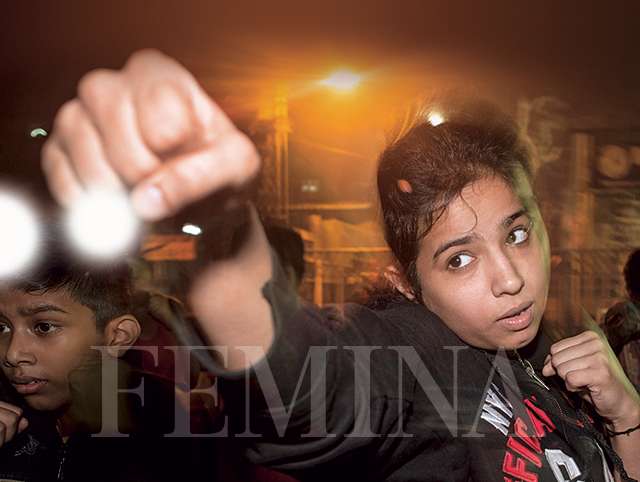
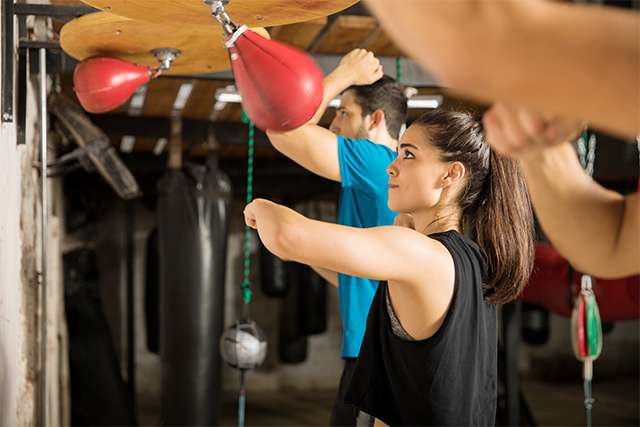
Like her peers, Simi Parveen, 19, worships Mary Kom as well. Slim and attractive, Simi feels more at home in track pants, shorts and boxing gloves. The soft-spoken arts student, who is the youngest of eight siblings living with their parents in Kolkata’s Ekbalpore area, is an up-and-coming boxer who loves the power and the punches the game offers. She is loath to call herself a ‘burqa boxer’ because she says there are no constraints on her boxing career even as she belongs to a fairly conservative family. Her parents support her in every possible way. She represented West Bengal and won a bronze medal at a women’s boxing national held in Patna in 2012. But her career hit a hurdle, thanks to the suspension of the Indian Boxing Federation by AIBA (International Boxing Association) in 2012 and subsequent internecine squabbles in the country’s boxing bodies. No boxing national was being held in the next few years following suspension. Simi is practising hard so that she can play more and more nationals in future. Needless to say, she hopes to become as big as her favourite boxer, Mary Kom, some day and make her family as well as her country proud of her.
SimiParveen02Nov192018

“Women are ideal for the game of boxing – they have the patience and killer instinct,” says Asit Banerjee, director of Competition Boxing 35th National Games, Indian Olympic Association. He says that the Sports Authority of India is very keen on maintaining domestic boxing competitions and related activities. Banerjee says that women boxing started in India way back in 2000. As per an unofficial estimate, there are about 150 women boxers, hailing from all communities, in Bengal. Statistics regarding Muslim women boxers are hard to come by. “In the late 90s, there were a couple of Muslim women boxers in my club, but now more and more girls are coming forward,” says Mehrajuddin, adding that they have to overcome a lot of hurdles from their relatives and parents to learn the game

Razia Shabnam, 37
RaziaShabnamMPOs19nov2018

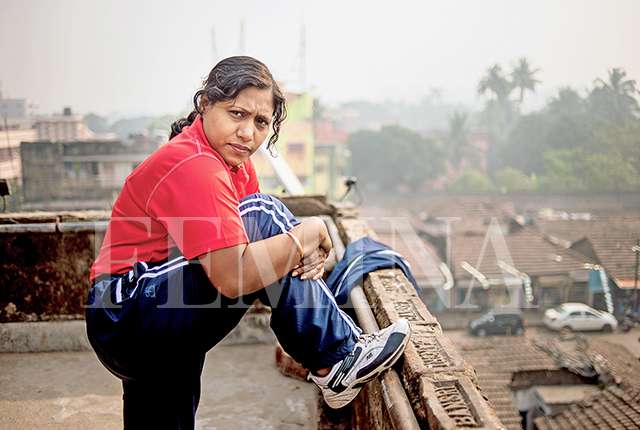
It’s a dingy lane that leads to boxer Razia Shabnam’s house in Kolkata’s Ekbalpore. Shiny, green festoons welcome you into the narrow path. If you ask bystanders about the exact location of Shabnam’s house, they will, in all probability, draw a blank. But ask them about referee/boxer Shabnam’s coordinates and they will immediately point to a rundown grey-black threestoreyed building right at the T-junction of the malodorous lane. Shabnam lives with her husband, a fitness expert who sells mobile phones, and her two sons, aged eight and two.

Shabnam, who started learning boxing in 1997 when she was just a first-year arts student at a Calcutta University college, is now a coach, handling local and national teams, and a referee, supervising matches at the state and national level. She has even refereed matches that have featured Mary Kom. She has great admiration for Mary, whom she has seen grow as a boxer from her early days. But Shabnam was clear about her mission in life — she wanted to be a coach who could train men and women to fetch gold medals for India in international meets. Shabnam was the first Muslim woman from her neighbourhood to become a graduate and then a boxer. “There was hardly any woman boxer, from any community for that matter, from Bengal in those days,” recalls 37-year-old Shabnam, who learnt boxing in local clubs in Ekbalpore and Rashbehari Avenue. “I was good in sports and used to watch my brother learn boxing. I was encouraged to join the sport by Asit da (Banerjee).” Although her father supported her decision, her mother had reservations about boxing becoming a hindrance to marriage. After three years of rigorous training, when she finally became a certified coach, she had to put up with “jealous” male boxing coaches. “I had just three years of experience and how could I become a coach when most of my male colleagues were mere players?” says Shabnam. “So they heckled me in every possible way.” But she was unfazed.

In 2003, she coached a team from Bengal that participated in the National Games held in Hyderabad. “I was just 48 kg. Most of my team members were men and older than me. But I had no problem making them listen to me,” laughs Shabnam. She stresses that more than her community, it’s the gender discrimination prevalent in society and sports that is an obstacle to Muslim women boxers. But the situation is changing. “Women in north India get more financial support from their states — our state lacks infrastructure for women boxers.” But the situation is changing as more and more women boxers are joining the sports. “Women in North India have a bigger advantage as they get more financial support from their states – our state lacks infrastructure for women boxers,” says Shabnam, adding that many of her peers have quit boxing because of paucity of funding and social pressure. Shabnam is bent on continuing her mission. She trains young people through NGOs as well. “I do my best to convince parents to let their daughters join boxing as it’s the safest sport for women,” says Shabnam.

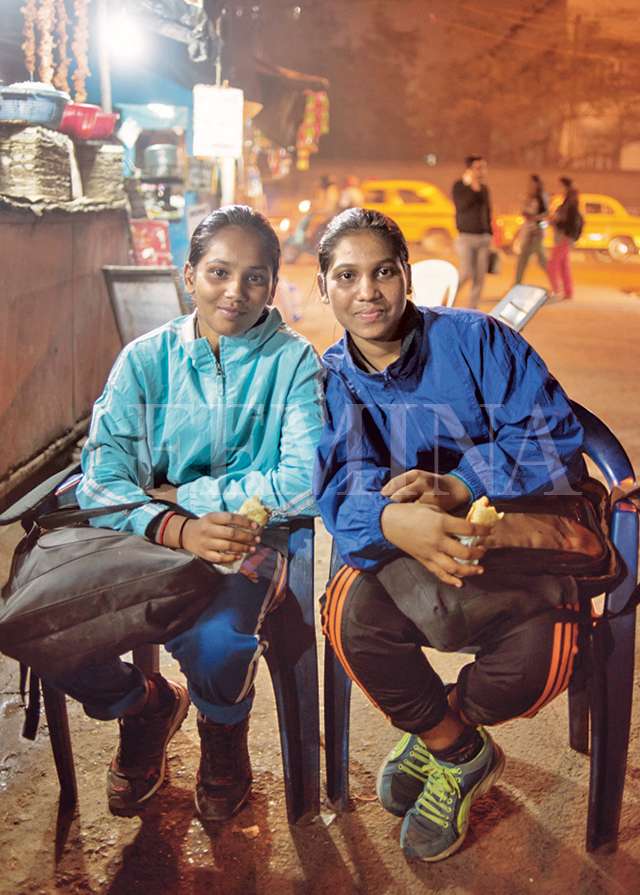
Ajmera, 19, and Kashmera Khatun, 16
AjmeranKashmeraMPOs19nov2018

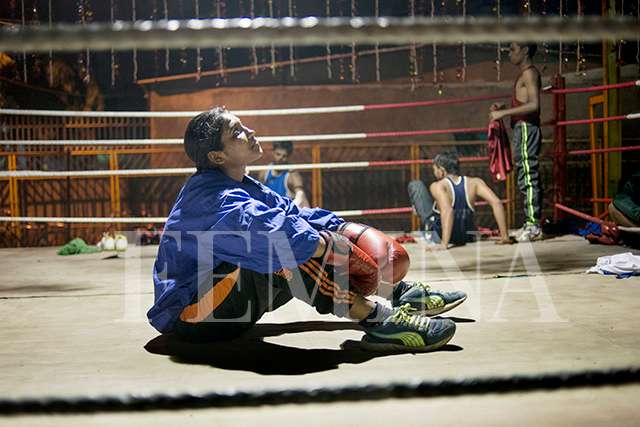
You can call boxers Ajmera, 19, and her younger sister, Kashmera, 16, Venus and Serena Williams of their neighbourhood in Canning – their sporting prowess is well known in the area. They want to participate in the Olympics some day. Of course, it has never been easy for them. They have to overcome insurmountable odds to make their boxing dreams come true. Both sisters commute for about two hours every day to reach their training club in Kidderpore. “We walk from our home to the nearest railway station and then it takes one-and-a-half hours to reach Kolkata. It’s quite an ordeal for us,” says Ajmera, who has won five golds at state and national levels so far. But this is nothing compared to the odds they have to fight at home. “Our aunt is strictly against us taking up boxing as a career. She and our other relatives object to our wearing shorts in the boxing arena saying that Muslim girls shouldn’t do this,” says Kashmera. Things came to such a pass that Ajmera had to report mental torture by her aunt to police. Even, they add, men in their neighbourhood taunt them for being boxers.
KashmeraKhatun19nov2018

“But we make it amply clear to them that they better not mess with us!” says Kashmera. Their father is a fish seller in the Kidderpore market. Funds constraint is a big hurdle to their dreams. They don’t even have enough funds to buy boxing gloves. Ajmera, who started learning the sport in 2009, has already played at the national level. She wants to be a graduate in order to secure a job in the sports quota so that she can continue being a boxer.

Sarita Khatun, 19
SaritaKhatunMPOs19nov2018

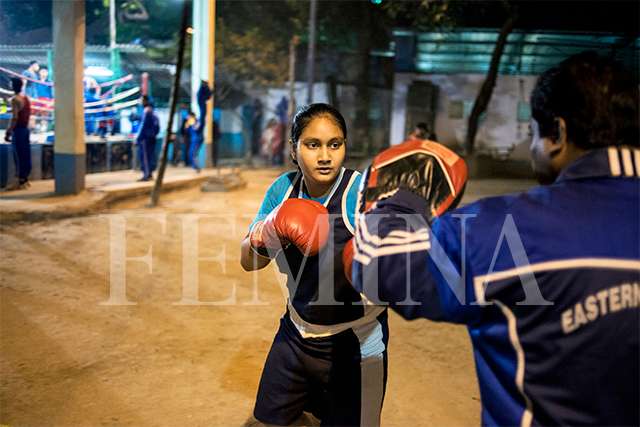
Sarita has had to face many hardships due to her love for boxing. Her father is a mason in Nungi, about an hour from Kolkata. Sarita, 19, loved sports and watched her elder brother learn boxing at a local club when she was just a child. Club officials noticed a spark in her and encouraged her to take up the sport. But her father was not convinced. He warmed up to the idea of his daughter taking up boxing as a profession only when she won a gold medal at a state level championship held in collaboration with the Indian Olympic Association. She was in Std 7 at that time. After that, there was no looking back. She has so far won nine medals, including a bronze at a national meet in 2012. “My relatives say that since I am a Muslim girl, I shouldn’t be a boxer,” says Sarita. But her mother supports her passion – in fact. it’s mainly because of her that she is being able to train under boxing coaches and make every effort to fulfil her dreams. She accompanies her to training sessions and tournaments. She runs from pillar to post to arrange for funds for her daughter, so that she can get gloves, uniform, shoes and a proper diet. Sarita is studying for her board exams this year. “I am not really interested in academics; I am totally focused on the game,” she says. She strongly feels that boxing is an ideal game for women since it helps them stay fit and build a career.

Sabina Yasmeen, 16
SabinaYasmeenMPOs19nov2018

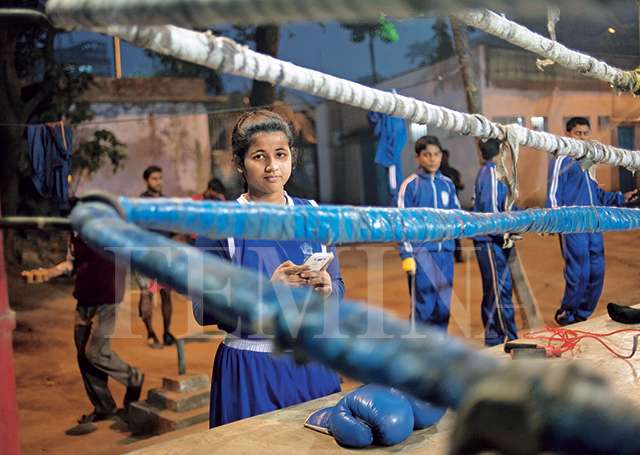
Sabina, 16, has so far won three gold medals at district, state and national level championships. She trains at a local club near Botanical Gardens in Kolkata. Her father, Sheikh Mansur Ali, who is in government service, has six daughters – Sabina is the youngest. Sabina’s elder sisters play football – in fact, one of them plays for the national team. Her father wanted to be a sportsman, but couldn’t fulfil his dream. So he wants his daughters to devote themselves completely to sports. The family originally hails from Bagnan, about a couple of hours from Kolkata. But Mansur was forced to shift to Shibpur, Howrah because his neighbours were heckling his daughters for playing football and other sports. When his daughters practised at local clubs, they had to bear a lot of adverse comments from their peers as well. “Our relatives and neighbours in Bagnan were quite miffed with the fact that we wore shorts and showed such a strong interest in sports. They were contsntly making an issue of it,” says Sabina, who lives with her parents and sisters in a one-bedroom flat in a government residential building in Shibpur. But, of course, barbs and taunts are hardly going to make her break her steely resolve. Sabina wants to be a coach. Quitting the game for marriage is – good for her – clearly not on her agenda.
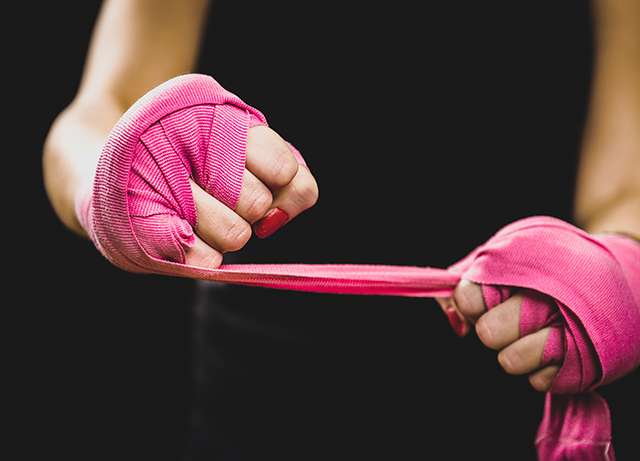
SabinaYasmeen02MPOs19nov2018

Kolkata Boxers Photo: Arindam Mukherjee

source: http://www.femina.in / Femina / Home> Achievers / by Hemchhaya De / may 08th, 2018

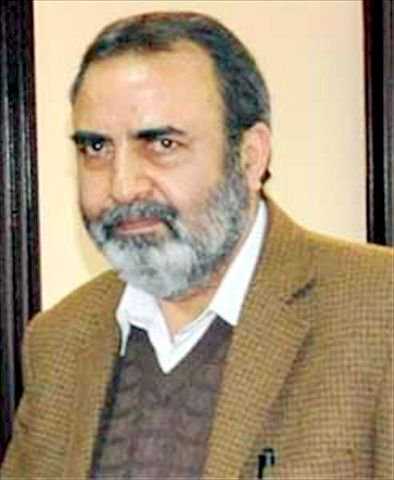
Former J&K chief secretary Iqbal Khanday passes away

Srinagar, JAMMU & KASHMIR :

IqbalKhandayMPOs19nov2018

Srinagar :

Former Jammu and Kashmir chief secretary Iqbal Khanday passed away on Monday morning. According to reports the former bureaucrat was suffering from cancer.

Khanday, a 1978 batch IAS officer, held various positions in the state government before before his retirement in 2015.

He became Chief Secretary of the state in 2013 during National Conference-Congress Government headed by then Chief Minister Omar Abdullah.

Before he had held a various positions in different capacities.

Governor Satya Pal Malik, his Advisors BB Vyas/K Vijay Kumar/Khurshid Ahmad Ganai & KK Sharma, Chief Secy BVR Subrahmanyam and Administrative Secretaries have expressed profound grief over the demise of Khanday.

source: http://www.risingkashmir.com / Rising Kashmir / Home / by Rising Kashmir News / / Srinagar, November 19th, 2018

Madhya Pradesh Assembly Elections 2018: For BJP’s lone Muslim candidate, it’s much more than an electoral battle

Bhopal, MADHYA PRADESH :

Fatima Rasool Siddique

Fatima Rasool Siddique is the daughter of Congress leader Rasool Siddique.

Fatima Rasool Siddique is the BJP candidate for the Bhopal (North) Assembly seat, earlier held by her father, Rasool Siddique, who as two-time Minister in the 1980s and 1990s was a true-blue Congress leader and a friend of the late Madhavrao Scindia. She is pitted against Arif Aqueel of the Congress, the man who defeated, and then replaced, her father in that seat, a fact that lends a piquancy to the contest.

As a daughter and politician, she has many scores to settle in this election, and has been attracting attention not just for these reasons but also the fact that she is the only Muslim candidate put up by the BJP in Madhya Pradesh .  For Ms. Siddique, who lost her father when just a child, the Congress became a distant comfort, as the years and her own youth ensured that there could be no passing on of her father’s mantle to her. “The Congress of the past no longer exists in any case. Where are the leaders like Shyama Charan Shukla,” she says.

Even so, her decision to join the BJP and contest on its ticket must be a surprise to those around her? Not really, she replies. “I was approached in the 2013 polls too, but I had some reservations and couldn’t make up my mind on time,” she says. “This time around, there was no hesitation, as I have seen the warm-hearted kindness of Chief Minister Shivraj Singh Chouhan especially towards the girl child.”

Raising her political stock, Mr. Chouhan accompanied her to the Collectorate as she filed her nomination papers.

The BJP is hardly a natural home for the daughter of a Congress man, that too a Muslim, but Ms. Siddique says no one puts any questions on her choice of party. “Most people walk up to me and say how my father had helped them as Minister with jobs, water pumps, hospital admissions, etc.,” she says. On triple talaq, Ms. Siddique maintains a diplomatic line. “Islam is clear on divorce. It should be the last option and preservation of the family should be the first priority,” she says. With a Congress pedigree in the largely majoritarian BJP, Ms. Siddique will need those diplomatic skills.

source: http://www.thehindu.com / The Hindu / Home> Elections> Madhya Pradesh 2018 / by Nistula Hebbar / Bhopal – November 16th, 2018

Meet Rafia Rahim, First Woman Radio Jockey In Kashmir’s Budgam

Charari Sharief, Budgam District , JAMMU & KASHMIR :

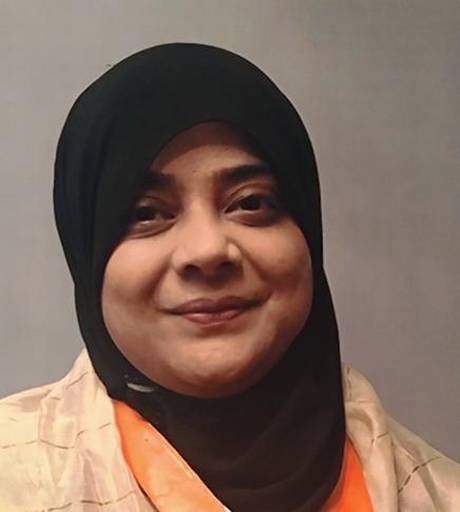
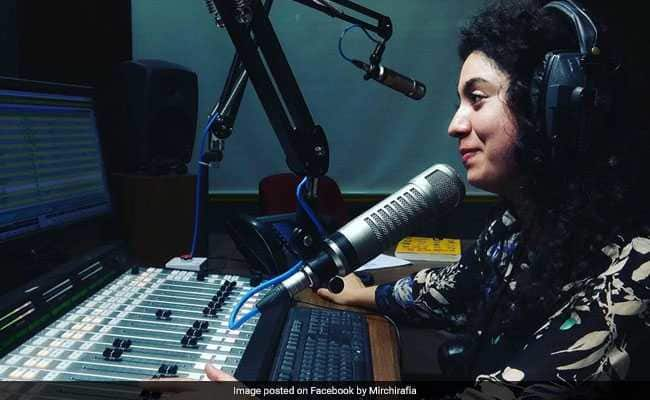
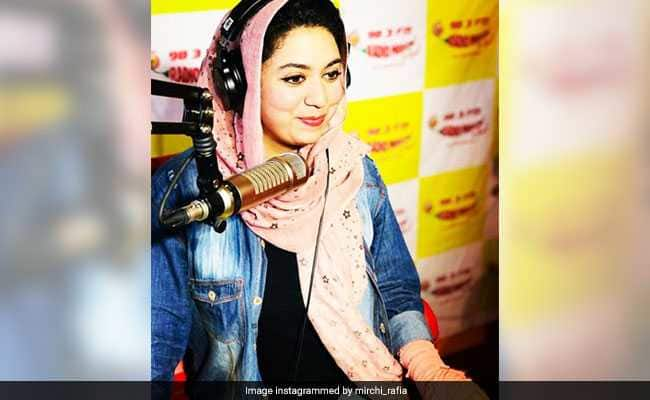
Rafia Rahim, the first woman RJ in Kashmir’s Budgam, has become a household name in the Valley after she hosted various local programs on the radio station.

Rafia Rahim studied in the University of Kashmir.

Srinagar :

Like a positive ray of sunshine, 24-year-old Rafia Rahim has become the first woman radio jockey from Kashmir’s Budgam district. She lives in Charari Sharief town and has now become a household name after she hosted various local programs on the radio station.

Rafia, who has become the first woman radio jockey on a private radio station, is a 2016 pass out from the Media Education and Research Centre in the University of Kashmir.

Rafia Rahim lives in Charari Sharief town.

Long before she enrolled in the journalism programme at the University of Kashmir, Rafia Rahim hosted Good Morning Jammu and Kashmir on Doordarshan, a show that comprises debates on social issues.

Rafia Rahim joined a local English daily as a paid intern. Later, after going through an audition, she got selected for the said radio station as an RJ.

“In February, I got selected for Radio Jockeying. I received proper training in Chandigarh from the radio station. With my program, I try to entertain people and take away all their tensions, sadness and tiredness,” she said, adding that she wants to entertain the Kashmiri audience.

“It feels nice when people recognise me due to my work. I feel very grateful,” she added.

source: http://www.ndtv.com / NDTV / Home> Sections> All India / by ANI / November 16th, 2018

Waheed: Award will bring recognition to Unani medicine

Hyderabad, TELANGANA :

Mohammed Abdul Waheed

Medicine for vitiligo awaiting US FDA clearance, says doctor who was selected for Padma Shri

Hyderabad :

Dr.Mohammed Abdul Waheed, a Unani doctor well known for his research work and 35 years of experience in clinical management of vitiligo, is an elated man after being selected for the Padma Shri award.

“This will bring recognition to Unani medicine. I am really thankful to Government of India. God is great,” he said. Sharing his happiness, the Padma Shri awardee in the field of medicine told The Hindu that importantly it would help in bringing global recognition to Unani medicine.

Dr. Waheed, who graduated in Unani medicine and Surgery from Osmania University in 1978, was the former head of Central Research Institute of Unani Medicine under the Department of Ayush, Government of India. With expertise in phase II and phase III clinical trials, he had treated over two lakh vitiligo patients. “We are working for globalisation of Unani medicine. A drug dossier for vitiligo has been submitted to USFDA by the Central Council for Research in Unani Medicine. If approved the medicine could be globally utilised to treat and manage vitiligo,” he said. Recipient of several prestigious awards for his research including the AIIMS’s Best Scientist Award, he Dr.Waheed developed 17 Unani formulations for the effective management of vitiligo. and also coordinated multi-centric clinical trials of Unani medicines on Diabetes, Hypertension and Hepatitis.

Finding treatment for vitiligo mainly caused by autoimmune disorder — that affects one % of world and three to four % of Indian population — was close to his heart as the condition caused social discomfort and depression to patients, he said.

source: http://www.thehindu.com / The Hindu / Home> News> Cities> Hyderabad / by M.L. Melly Maitreyi / January 26th, 2017