Tag Archives: Ghulam Qadir

One-Pillar mosque in Gujarat is a repository of history and design marvel

Rander Town (Durat City), GUJARAT :
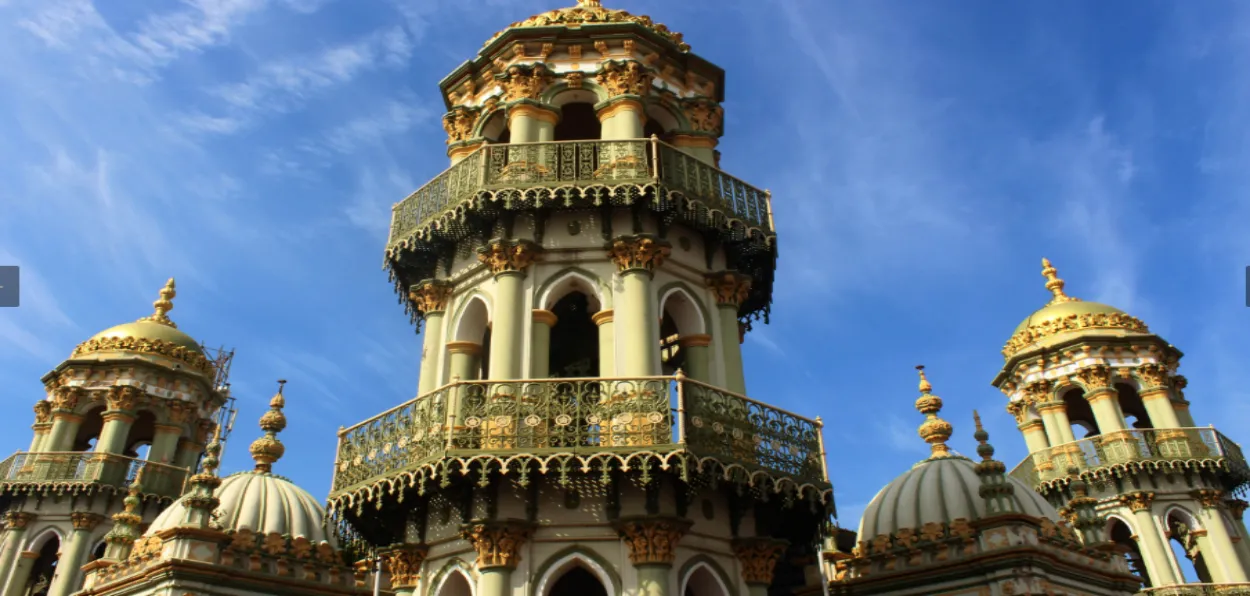
Masjid Quwwat e Islam

In Rander township of Durat city in Gujarat, there is an architectural marvel — a One Pillar Mosque called “Masjid-e-Quwwat-e-Islam.” This mosque upends the tradition of art associated with Muslims.

It’s not just a place of worship, but a unique fusion of history, culture, and architecture.

The quarter of the city where this mosque is located was once a major commercial centre of Surat. In ancient times, local merchants traded with Africa, Arab countries, and Burma. Around 1225 AD, Arab merchants from Kufa (Iraq) settled here. With their arrival began a fusion culture, and this influence is still visible.

The mosque, built in the 1800s, is a blend of architectural styles. It incorporates elements of Arabic, Mughal, Portuguese, and Dutch architecture.

The most striking aspect of the mosque is its structural design. It rests entirely on a single pillar. Four arches emerge from a pillar in the basement, and three minarets stand out, each 50 feet high. The entire mosque’s mezzanine and floor rest on this pillar.
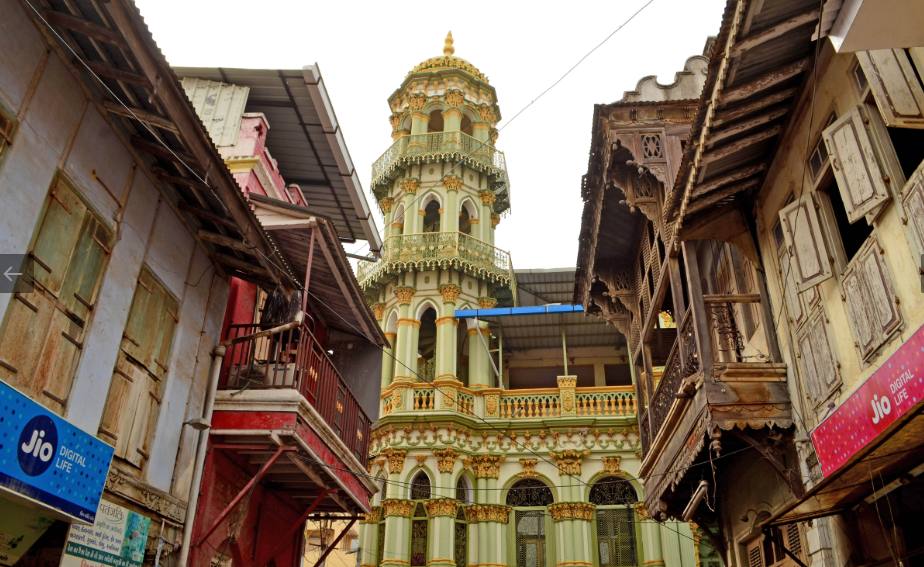
Rander’s historical significance extends beyond trade. The region has also been home to Jain and Parsi communities. The port of Rander predated the port of Surat. Jain merchants traded with various countries here in the 1200s. Arab merchants arrived in 1225 and established their own place of worship.

According to Dr. Surendra Vyas, a renowned architect and archaeologist from Surat, “The first mosque in Gujarat was built in Rander.”

In his book, Dawn of Islamic Architecture in Gujarat, Dr Vyas states that approximately 1,300 years ago, two Arab traders came to Rander and built only a qibla (Facing towards Macca) wall. It had no minaret or a hauz-e-wuzu Tank for ablution). All the traders would gather in front of this wall and worship Allah. The graves of these two traders, inscribed with Arabic inscriptions, still stand in a nearby cemetery.

This mosque is also important in the folk life of Rander. Walking through it one can see glimpses of the ancient trading lifestyle. There are also Jain temples in the mosque and surrounding settlements, demonstrating that Rander has been a melting pot of religions and cultures.

According to Dr. Vyas, the study of over 70 mosques and buildings in Gujarat spanned three years. brought out details of the architectural techniques and art of the Rander mosque.
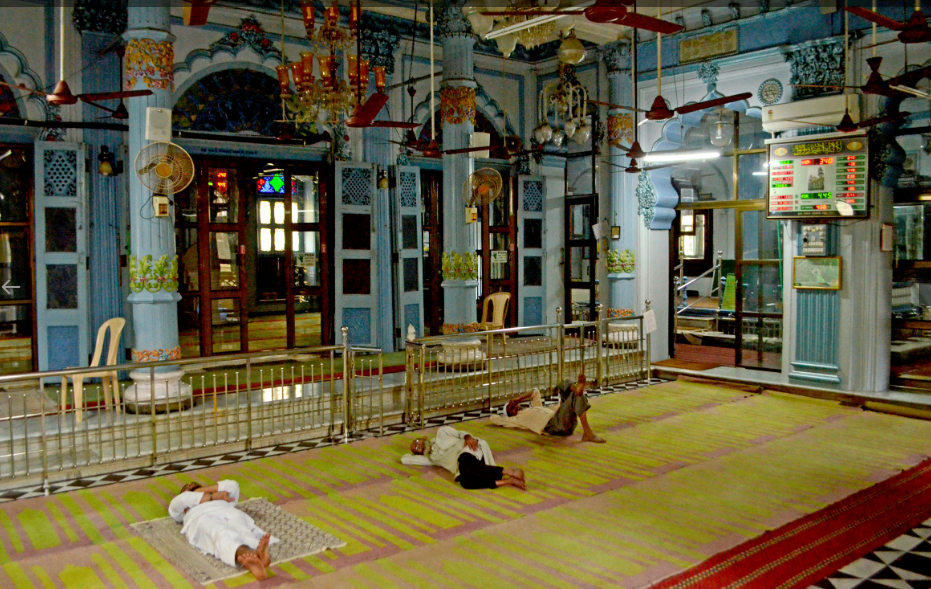
The mosque’s western wall, called the Qibla wall, faces the direction of Mecca. This wall remains an important part of the mosque’s design. Initially, there were no set times for prayer. People gathered by standing on high mounds or using booms. Later, the call to prayer began to be made from a minaret, and people began to pray at set times.

This single-pillar mosque design is significant not only for its architecture but also for its social and commercial history. It demonstrates how organised and modern the people of Rander were. Supporting such a massive structure on a single pillar is a unique architectural achievement.

Walking through the streets of Rander, you realise that it was not only a place of worship but also a cultural centre.

Traders from various countries visited here and conducted trade as well as religious rituals. Thus, the mosque strengthened Rander not only religiously but also socially and economically.

The streets surrounding the mosque are filled with stories of history. Rander’s port and trade activities remain important from a tourism and cultural perspective. Arab traders mingled with local society, sharing their art, culture, and trading experiences with the local community. As a result, mosques, temples, and other architectural structures can be seen in Rander today.
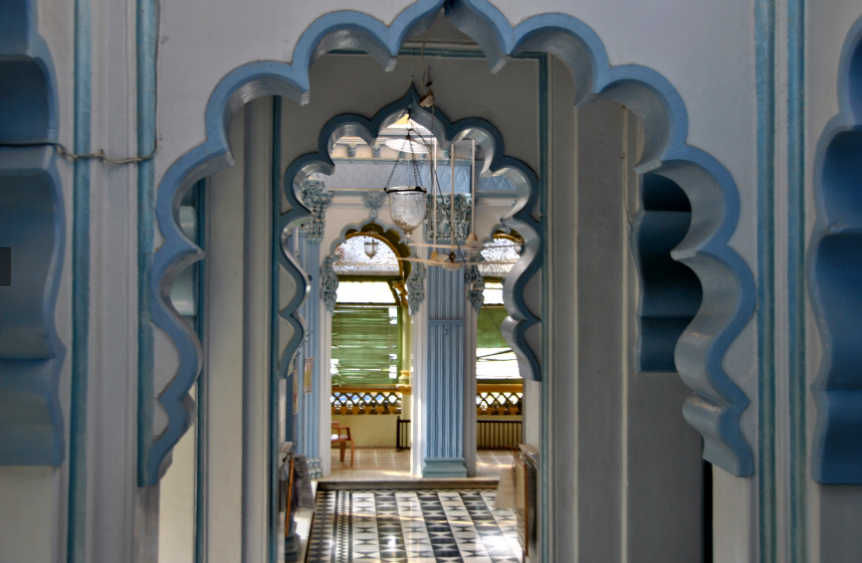
According to Dr Vyas, “There is an interesting reason behind the absence of a minaret at Rander. It is possible that this mosque was built as a private place of worship, so facilities like a hauz-e-wuzu and a minaret were not required. Water was available due to the presence of a pond or lake nearby.

From a modern perspective, this mosque is nothing short of a miracle. Standing on a single pillar for so long, it amazes every visitor.

source: youtube.com

source: http://www.awazthevoice.in / Awaz, The Voice / Home> Stories / by Ghulam Qadir / March 24th, 2026
Spread your wings and the world watches you fly – Babar Ali Chaggatta

Tehsil Mahore, Baddar Village(Gulabgarh), (Reasi District), Jammu, JAMMU & KASHMIR :

If someone decides to change the same conditions and backwardness about which you keep crying your whole life, then surely his name will be Babar Ali Chagatta. 

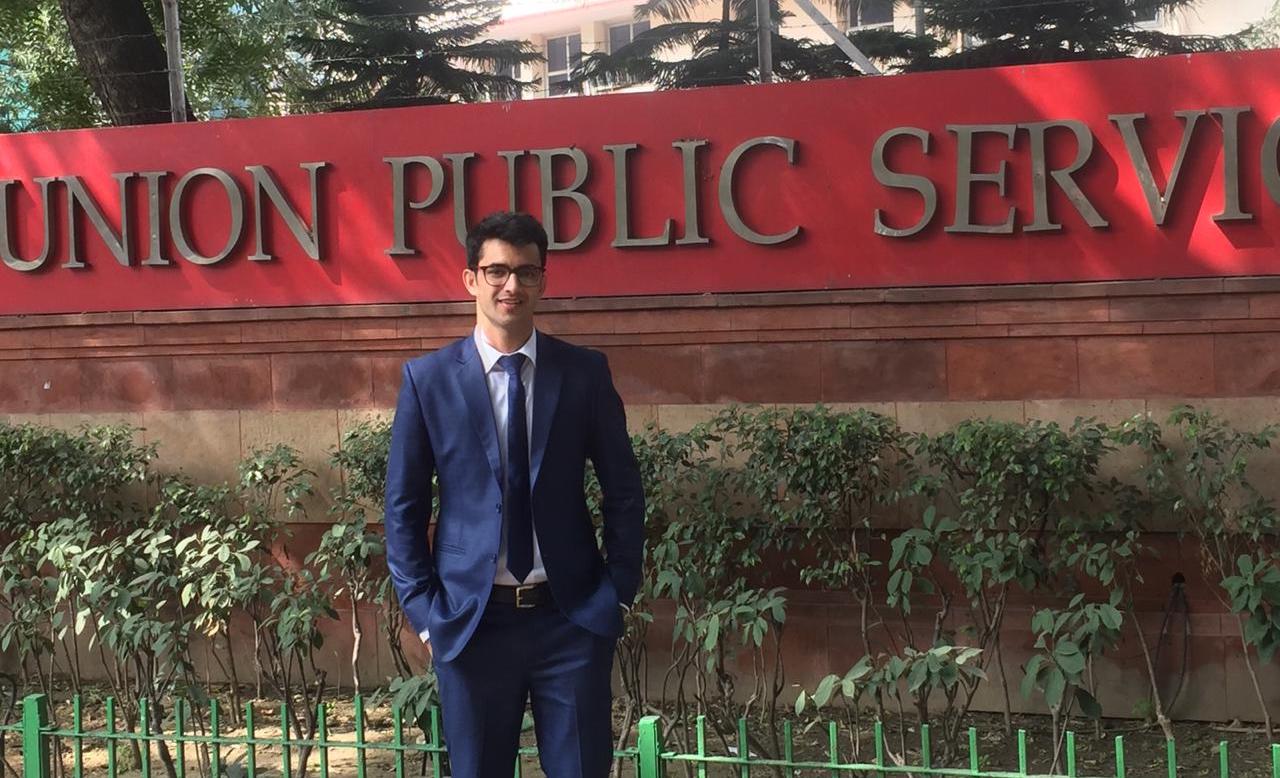
Babar Chagatta has achieved great success in the UPSC Civil Services Examination this year. His rank is 364th. According to Babar, he may get IPS at this rank, but he wants to become an IAS. Therefore, he has started preparing to become an IAS once again.

24-year-old Babar is from Tehsil Mahore and village Baddar (Gulabgarh) of District Reasi in Jammu region of the state of Jammu and Kashmir. This area is considered to be the most backward area of ​​Jammu, which is still deprived of many basic facilities. 

Babar says that a paved road has not yet reached my village. Till one and a half to two years ago, my village remained in darkness because electricity had not reached there. Now my village has been illuminated by electric light.

Babar studied till 5th standard while living in the village. In the sixth class, he went to Jawahar Navodaya Vidyalaya, where he studied till 12th standard. He scored 90% in 10th standard and 86% in 12th standard. Then he went to Aligarh for further studies and obtained BA Honours degree in Political Science from AMU in the year 2014. After this, Babar took admission in the Political Science Department of Jamia Millia Islamia, Delhi to obtain MA degree. However, he could not complete this course due to his desire to join the civil service.

When and why did you think of joining the civil service? 

In response to this, Babar says, when I was about to go to the sixth class, my father introduced me to the civil service. When I went to Navodaya, I saw an IAS officer for the first time in the school’s annual program. His words also inspired me a lot. Also, the backwardness of the area especially inspired me to become an IAS and remove the misery and backwardness of my village. In this way, it was always in my mind that I can change the condition of this village by becoming an IAS.

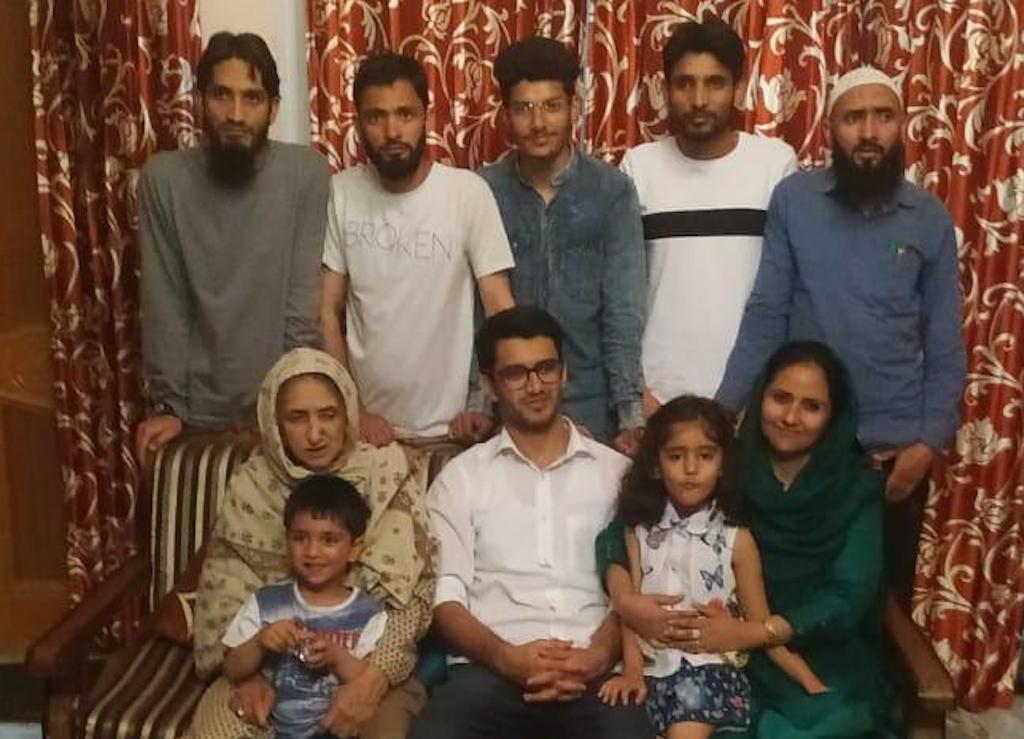
Let us tell you that Babar’s father Ghulam Qadir was an officer in the forest department in Jammu. When Babar was in the 9th class, he left this world forever. Amma Ghulam Fatima is a homemaker. Babar is the youngest among five brothers. He also has a younger sister. All his brothers are in government jobs. 

Babar started his preparation in 2015. When he felt that MA classes were becoming an obstacle in his preparation, he left MA studies. He achieved this success in the third attempt. He wrote Mains in the first attempt. But in the second attempt, he failed in the prelims itself. Babar says that he was a little disappointed but this time I had decided that I must fulfill my childhood dreams and my father’s wish. All the things I remembered about my father kept inspiring me. 

Which subject did you choose for this exam and why? 

In response to this Babar says, I chose Political Science. The reason is that I have done my graduation in this subject and I am also very interested in International Relations. 

He says that in the last 4-5 years the results of Political Science have been very good. Now this subject has become very scoring. 

How and where did you prepare for the exam? 

On this Babar says, I did not take any coaching. I stayed in the residential coaching of Jamia Millia Islamia. However, I did not attend many classes there either. I focused more on self study. On being asked that your name is also in the list of Zakat Foundation, Babar says that after passing the mains, I went there for a mock interview. 

What message would you like to give to those preparing for civil services?  

On this question, Babar says that, first of all you have to always be ready that no matter what the result is, never lose hope. If you are ready for this, then first of all look at its syllabus and try to understand it in a better way. Then definitely look at the papers of the last few years. From there you will understand what UPSC wants from you. Although UPSC does not have a fixed pattern, every year something or the other changes.

The second important thing is that you must be honest for this. You cannot prepare for this under pressure from anyone. The most important thing is that you yourself should be interested in it. That is, self-motivation is very important. If it is clear why you want to join the civil service, then no one can stop you from being successful.  

He further says that initially read NCERT thoroughly. Along with this, you have to read the newspaper every day. Always keep yourself updated. Do as many test series as possible. Most of the study material is available online. There is a lot of material here, but you should not get confused, rather you have to read smartly by being selective. 

Babar likes playing cricket and watching issue based films. He says that even while staying in Jamia, he never forgot to play cricket every Saturday-Sunday. He also likes watching films. When asked which film he has watched, he says that ‘Stree’ is my last film. This film not only entertains people but also gives the message of what a woman wants from the society. Babar likes Shahrukh Khan a lot. On the other hand, he gets a little shy when asked about his favourite actress. Then he says that he definitely likes Priyanka Chopra’s acting a little bit.

Babar says that my father is my ideal. I wish he were here, he would have patted me on the back for my success. Babar wants to give credit to his entire family for this success. He especially wants to thank his mother, because she always filled Babar with courage and passion. 

Babar, while giving his message to the youth of the country, especially the youth of his community, says that if you really want to come into the mainstream, then you should definitely think about joining the civil service. What is needed is that instead of cursing the system, you should come into the system and understand it and work accordingly or change yourself. There is also a need to connect those who have become successful with the society. 

Apart from this, Babar wants to give his message to the youth of his community through this verse of Shakeel Azmi –

Spreading out the wings the world watches the flight 

What does one see in the sky while sitting on the ground? 

If you have got beauty then protect this beauty 

Walk carefully, the whole world is watching you… 

source: http://www.beyondheadlines.in / Beyond Headlines / Home> India> Real Heroes / by Afroz Alam Sahil, Beyond Headlines / April 20th, 2019

The Blinding of a Mughal emperor

DELHI :

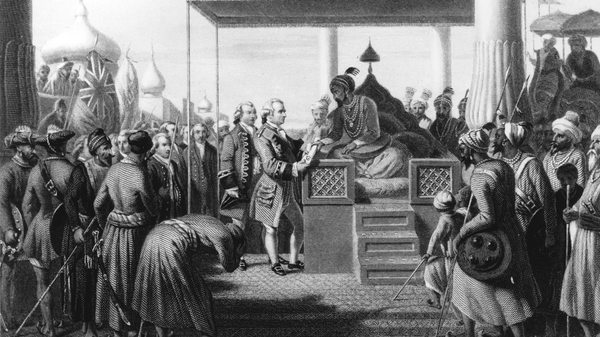
A sketch showing Robert Clive receiving, from Shah Alam II, the decree conferring on the East India Company the right to receive Bengal’s revenues.

  • The reign of Shah Alam, one the last Mughal emperors, was upturned by the Rohilla chief Ghulam Qadir
  • The vengeful treatment of the emperor caused such outrage that even the Afghan king offered to send aid

In August 1788, the Red Fort in Delhi witnessed what one observer would recall as the most “unspeakable and indescribable” crimes. As in the previous year, the Rohilla chief, Ghulam Qadir, had descended on the Mughal capital, threatening to unleash chaos. While his last attempt had been aborted, thanks to Begum Samru, a dancing girl turned princess, nobody rode to Shah Alam II’s rescue on this occasion. In fact, the officer in charge of the fort, despite orders to the contrary, threw open its gates, and 2,000 of Ghulam Qadir’s troops quickly took charge of the premises. Secure, the warlord made his way to the audience hall. And there, as William Dalrymple recounts in his splendid new book, The Anarchy, he “sat down on the cushions of the imperial throne”, blowing smoke from a pipe into the face of the badshah of Hindustan.

Shah Alam had not had a particularly glorious career, but even with its general turbulence, this was unprecedented. It was decades since the empire of the Mughals had begun to unravel, but while the emperors had been reduced to ciphers, their dignity had never been so insolently offended. Shah Alam had tried in vain to reclaim power for the crown: For over a decade, he was not even in control of his capital, and, during his peregrinations, was forced (after military defeat) to grant governorship of the empire’s richest province to the East India Company (EIC). In 1772, he finally returned to Delhi, his general Najaf Khan bringing order to the surrounding regions. When the latter died, the Marathas stepped in to supply protection. For all his outward marks of authority, though, this came at the cost of giving free rein to Shivaji’s political heirs. As the contemporary chronicler Prem Kishor wrote, “The king (had) abandoned his sovereignty and taken up the ways of beggary.”

As a man, Shah Alam was not, to be clear, all incompetence, but, as scion of the Mughals, he inspired little support. He was a poet of talent, writing verses in languages as diverse as Braj Bhasha and Persian. EIC officer Col Polier described him as “a good and benevolent man” so far as his private characteristics went, but acknowledged that he was not by any stretch a “great king”. The English governor Warren Hastings, who refused to remit even the share of Bengal revenues that were due to the emperor, was more blunt: Shah Alam was merely a “wretched King of shreds and patches”.

And, as Dalrymple reminds us, while others in theory paid homage to the crown, Tipu Sultan discarded even this pretence. Those who bowed before Shah Alam, announced Mysore’s sultan, “act through ignorance, since the real condition of the so-called Emperor is…(that he is) the servant of (the Marathas) at the monthly wages of 15,000″.

And yet for all this contempt, Ghulam Qadir’s actions in 1788 sent shockwaves down the entire subcontinent: As the colonial-era historian W. Francklin wrote, to this man “it was reserved to…add the last outrage to the miseries of a long and most unfortunate reign”. The sequence of events that confirmed the Rohilla as one of the worst villains of the 18th century is chilling. Soon after taking charge of the Red Fort, Ghulam Qadir had Shah Alam locked up, planting in his place another prince on the throne. But what the trespasser really wanted was gold, not empty titles and grants of land, and none of the coin heaped before him satisfied the demand. Old begums were dispossessed of their jewels, and even the officer who opened the fort gates paid up—threatened that he would be drowned in excrement, the latter surrendered his own money to escape this revolting fate.

Furious, Ghulam Qadir turned on the imperial family, which for all its bloody intrigues had never quite experienced what he now decided to unleash. Princes of royal blood, including sons and grandsons of Shah Alam, were dressed in drag and made to dance for the Rohilla troops. The emperor’s daughters were stripped, raped and humiliated. Even Malika-i-Zamani, the formidable widow of a previous emperor, Dalrymple writes, was left naked in the hot sun after failing to deliver to Ghulam Qadir the riches he believed she possessed. And finally, bringing to his presence Shah Alam himself, the “ferocious ruffian” had the emperor blinded. In some accounts, in fact, he sits himself on Shah Alam’s chest, scooping out the old man’s eyes with a dagger.

Theories abound on Ghulam Qadir’s diabolical ferocity. His father had rebelled several times against Delhi, and, after defeating him, Shah Alam had taken Ghulam Qadir, then eight or 10 years old, hostage. One apocryphal tale says that after seeing the uncommonly handsome boy, the emperor had him castrated, often making him dance in women’s clothes. In an account left behind by a disgruntled Mughal prince, there is a suggestion of something beyond a regular relationship between Shah Alam and the Rohilla boy. Even as the emperor described Ghulam Qadir as his “special son”, wishing him great happiness in his poems, this contemporary noted that the boy suffered from ubnah, or “an itching in his behind”, hinting that he was made to serve as the emperor’s catamite. This, more than mere ambition or greed, it is believed, explains the horrors Ghulam Qadir let loose in 1788 on Shah Alam and his children.

But the act was for the Rohilla a death sentence. The treatment of the emperor caused such outrage that aid was offered even from Kabul. The Maratha general, Mahadji Scindia, led a large force to Delhi, and while Ghulam Qadir escaped, he was cornered and captured in Mathura very soon. Placed in a cage, his ears, nose, lips and feet were cut off, one by one, each of these circulated in the Red Fort by the emperor. And finally, the story goes, Shah Alam, in whose reign the Mughals lost their final vestiges of power, received one last box, holding within it Ghulam Qadir’s eyes.

Medium Rare is a column on society, politics and history. Manu S. Pillai is the author of The Ivory Throne (2015) and Rebel Sultans (2018)

source: http://www.livemint.com / Live Mint / Home / by Manu S. Pillai / August 30th, 2019