Tag Archives: Indian Muslims in Green Energy

Sustainability is a way of life, says Dr Samiullah Khan

Chennai, TAMIL NADU / Dubai, U.A.E :
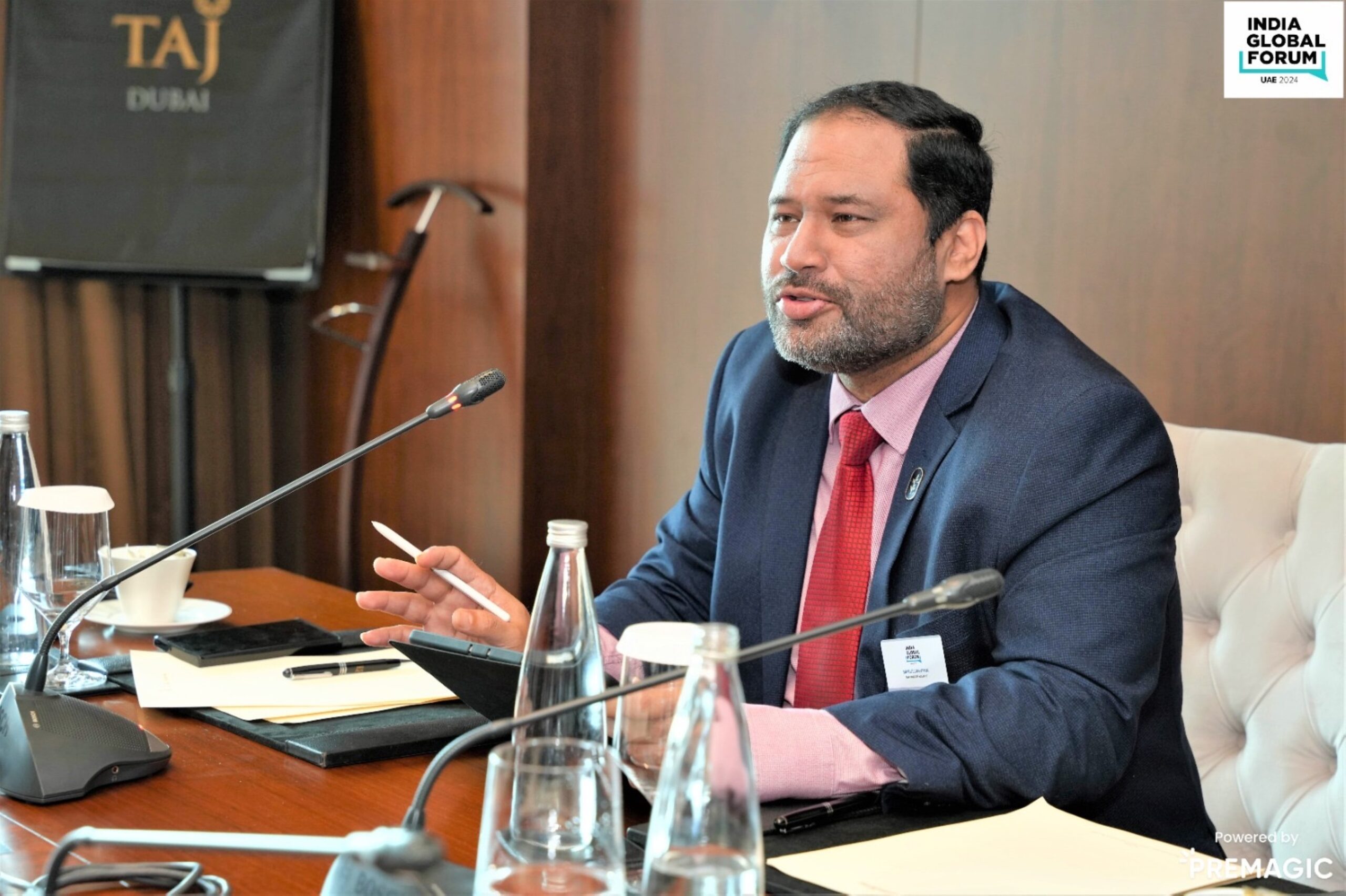
Dr. Samiullah Khan

Sustainability is no longer a choice—it’s a way of life. This is an exciting field to explore. With AI, blockchain, IOT and other advanced technologies, we have the tools to build a truly sustainable future, stated by Dr. Samiullah Khan, one of the most influential voices in the UAE’s sustainability movement and Chief Sustainability Officer at Fakhruddin Holdings Dubai. Talking to Gulf Today, he said, “As the world intensifies efforts to combat climate change, sustainability has become more than just a buzzword – it’s a global imperative.”

Dr Khan also known as Dr Sam is a key figure in sustainability summits and discussions, often the first to evaluate innovative sustainability solutions that promise a greener future. For many, sustainability is a practice. For him, it’s second nature – ingrained since childhood in Chennai, India. “Wasting even a grain of rice was unacceptable in our home. Extra food was either shared with those in need or fed to cows, whose dung was used as manure in our garden,” he recalled.

These early lessons shaped his understanding of sustainability and the circular economy. His passion for technology and the environment led him to prestigious institutions such as Anna University, Cambridge University, MIT, Delft and Harvard.

His career began with Tata Motors, where he became among the youngest engineer to lead international operations into Bangladesh and Saudi Arabia and growing Tata’s market share to an impressive 96 per cent in the school bus sector.

After an illustrious 17 years with Tata and five years at SRM University, Sam found his true calling in 2015 as CEO of World Islands, He introduced air-to-water technology, harnessing humidity in the deserts of Dubai to generate clean drinking water, using Solar power – an innovation that gained significant traction in the desert landscape.

Recognised among the 100 Iconic Indians by the Indian Embassy in the UAE, Dr Sam soon became a leading advocate for sustainability, collaborating with individuals, private sector and government, notably with Marwan Bin Jassim Al Sarkal and playing a pivotal role in the “Dubai Can” initiative under the vision of Crown Prince of Dubai Sheikh Hamdan Bin Mohammed Bin Rashid Al Maktoum in initiatives to eliminate plastic bottles in Dubai.

As a Championing Green Innovation post COVID, Dr Khan focused on air quality, energy conservation, water purity, food security, waste management and circular economy.

Under his leadership, Smart Air Handling Units (S.A.H.U.) are being introduced to improve indoor air quality and reduce energy consumption by up to 40% compared to traditional HVAC systems.

The other initiatives included a centralised, organic mineral-enriched hydrogenated, Ionised, Alkaline drinking water system is being developed for healthier hydration as well as a radiant-cooled greenhouse café with hydroponics is being explored to boost UAE’s food security and comprehensive waste management and recycling systems, including composting, are being implemented.

source: http://www.gulftoday.ae / Gulf Today / Home> News / by Jamil Khan, Senior Reporter / June 17th, 2025
A Physics Project: Two 11th Graders Build Affordable Electric-Powered Car

Bicholim Town, GOA:

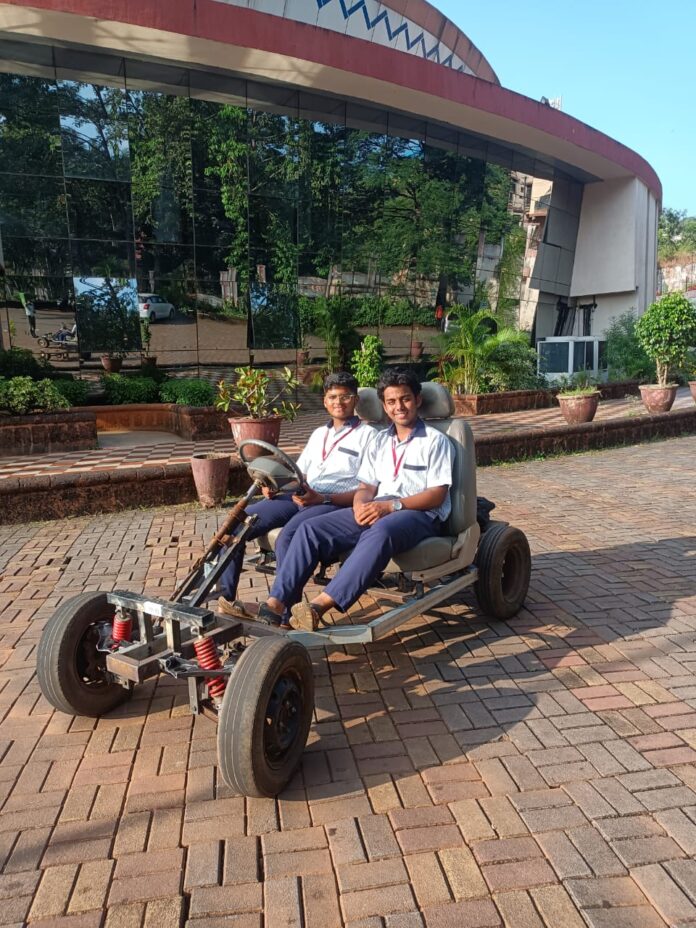
Mohammad Sehab Beig and Muhammad Shaan Sheikh with their car

Mohammad Sehab Beig and Muhammad Shaan Sheikh, two classmates from Shantadurga Higher Secondary School in Goa’s Bicholim town, were assigned a 20-mark physics assignment for 11th grade. The two youngsters, together with their friend Moun Mamlekar, a commerce student, worked for a month to develop an electric car powered by a lead acid battery.

The car gained attention when it was displayed at Delhi’s Ravindra Bhavan as part of ‘The Western India Science Fair Competition’. The electric car is powered by a lead acid battery rather than a lithium battery, which reduces its cost significantly.

From a Physics Project To Developing an EV

Sheikh and Beig had been friends since childhood and used to repair remote-controlled cars when they broke down, so when their physics teacher, Deviya Gaonkar, assigned them a physics project to build something innovative worth 20 points, the boys seized the opportunity to demonstrate their talent for building things. 

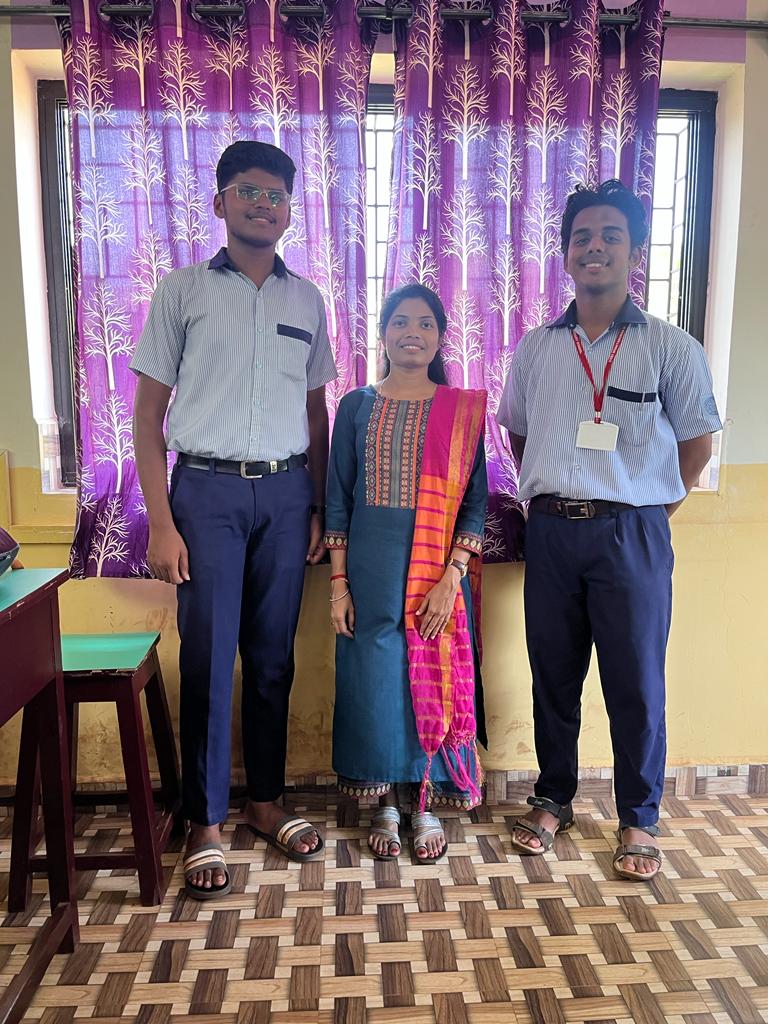
Shaan & Sehab with their teacher Deviya Gaonkar

“When our teacher assigned us the project and specified that we may design anything related to physics, our initial goal was to build an engine, but we later decided not to limit ourselves to just engines. So, taking a step forward, we decided to build an entire car,” Sheikh told Two Circles.

The motive for developing an electric car aligns with the growing demand for sustainable transportation options, as electric vehicles dramatically reduce air pollution and greenhouse gas emissions, thereby addressing environmental concerns.

Mamlekar, whose family owns an automobile garage, assisted Sheikh and Beig with the technical aspects of the project. 

They showed the model to their teacher, Goankar, and after receiving a positive response, they began collecting the parts and materials required to build the car. 

Specifications of the Electric Car

After working tirelessly for a month, the duo completed the automobile, which includes a brushless DC motor that converts electrical energy into mechanical energy and a 48-volt lead-acid battery system connected in series with four 12-volt batteries. Its standout feature is its strong load-bearing capacity, which can support up to one tonne of weight. 

Charging the vehicle is achieved by connecting it to a power source compatible with the lead-acid battery setup. While charging periods may be longer than with advanced lithium-ion batteries, the lead-acid configuration remains a practical option. In terms of speed, the automobile can reach a maximum of 60-70 kilometers per hour, demonstrating its ability to cover moderate distances efficiently, making it suitable for diverse urban and suburban commuting needs. 

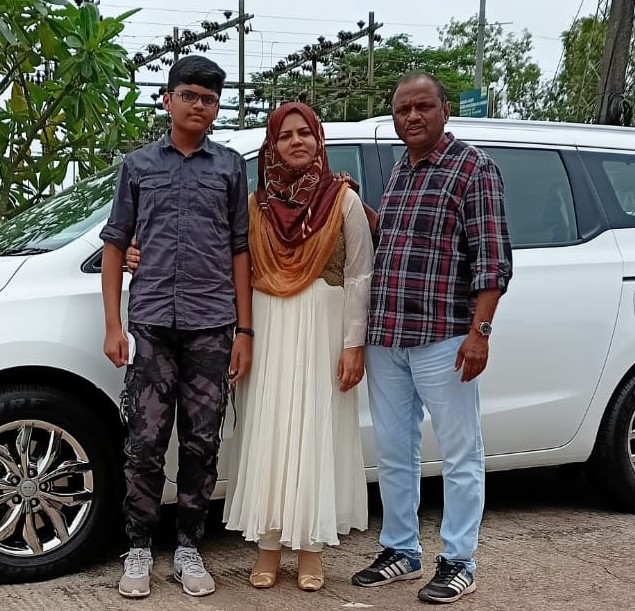
Shaan with his family

Hindrances Along the Way

Building the electric car was a difficult endeavour, and they faced discouragement from others. Gaonkar, their physics teacher, stated that many people discouraged them from building the car, but they persevered and completed it. 

The two spent over INR 70,000 on making the car, which they received from their parents and several well-wishers. 

They have also attempted to raise funds to upgrade their automobile to ones that can be auto-charged while in motion but have had little success. The project is only two alternators away from being self-sufficient in terms of charging.

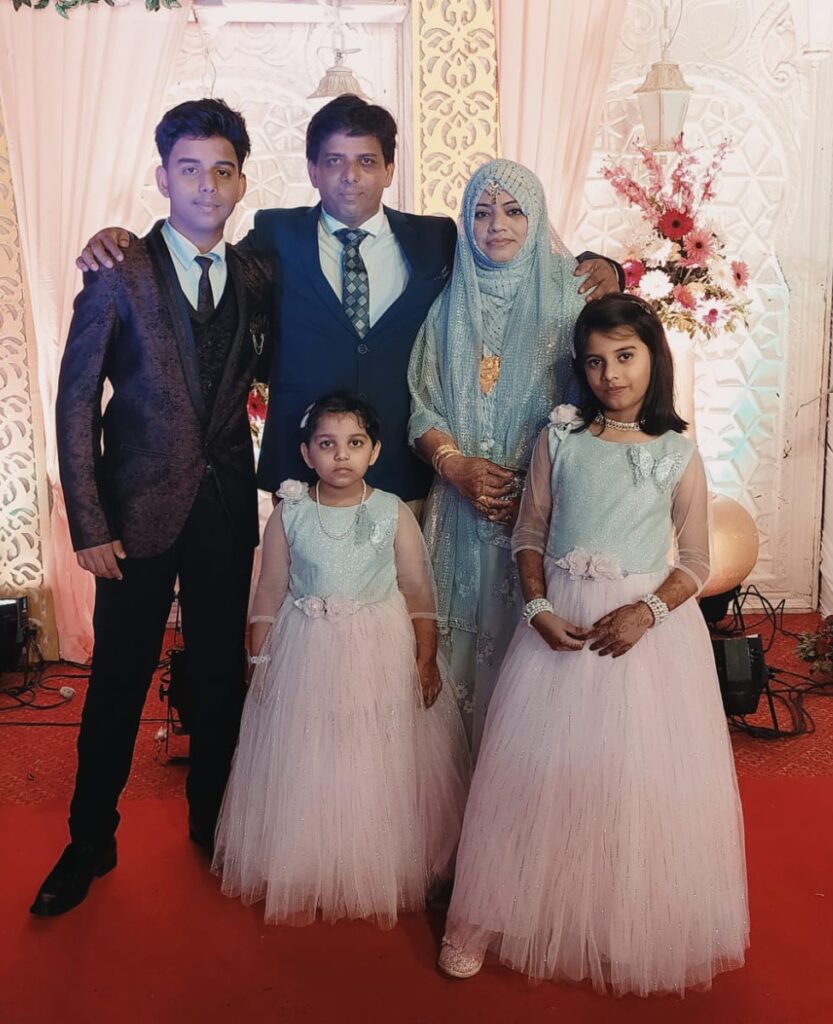
Sehab with his family

‘Parents Have Always Been a Huge Support’

Sheikh’s mother is a chemist, and his father is a businessman; both are very supportive of their son’s project. 

Beig’s mother, Mubina Beig, who runs a pre-primary school in town, helped them in finding spare parts for the car. 

“My parents have always been a huge support when it comes to my inclination towards experimenting with things,” he stated.

A Career in Innovation

This is not the duo’s first innovative design. Sheikh created a small solar vehicle a few years ago, while Beig made a generator in fifth grade and a hydraulic crane in eighth grade.

Speaking about their goals, Beig stated that he wants to pursue a career in science and research to enhance his curiosity and innovative tendencies, whilst Sheikh is interested in a career that allows him to blend science and compassion to contribute to the well-being of others.

They intend to submit their design to vehicle manufacturers. “If a compelling proposition arises, we are open to collaboration,” Sheikh said.

Imran Inamdar is an independent reporter based in Goa, India.

source: http://www.twocircles.net / TwoCircles.net / Home> India News / by Imran Inamdar, TwoCircles.net / January 16th, 2024