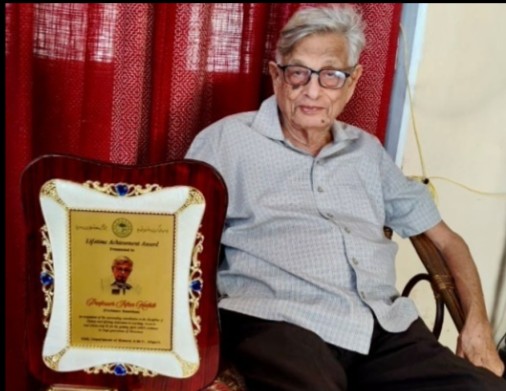
Irfan Habib, Professor Emeritus at Aligarh Muslim University (AMU), is a doyen of historical research. Speaking with Eram Agha, Habib discussed challenges like religious fundamentalism facing researchers, the Wendy Doniger controversy — plus AAP and BJP in upcoming polls:
What are challenges in writing history, with fundamentalist forces ready to react?
Well, a primary challenge is the information one would like to have about the past is often missing, partly because historians of an earlier time had a different, more restricted view of history — documents regarding poor peoples’ concerns have not survived. Many matters of their interest were not recorded at all. The major problem for historians is how to fill such gaps.
On the other hand, since all kinds of influences are at work in societies, one cannot confine one’s attention to a locality or country alone — we have to relate the history of one country to others. For instance, we need to explore the relation between modern Indian history and the development of capitalism in Western Europe.
We cannot be like Subalterns who simply concentrate on local communities and forget the larger picture.
Can fundamentalist censorship be dismissed?
Well, religion has been a factor in historical change. Historians need to be careful and rational in assessing religious influences in history.
But it’s not possible to agree with Edward Said when he argues that persons outside any religion or culture cannot study that area. On the contrary, religious history should be subjected to a purely scientific approach — indeed, a refreshingly sceptical attitude towards religious texts might be more desirable than blind belief.
Wendy Doniger tried. Her book was pulped by its publishers. Your thoughts?
The publishers should not have surrendered in the manner they did. They should have waited for court orders before taking any such step.
You’re identified with AMU — what role should an identity-based university play today?
AMU is a university in a poor country, running with generous public financing — it’s important for AMU, as for any other university, to ensure that it offers modern scientific and secular teaching. All marks of identity must subordinate themselves to modern, democratic, secular values.
AMU was established to cater to Muslims but not exclusively for them, and not at the cost of proper education. In the 1950s and 60s, AMU was one of India’s advanced universities — today, partly due to the minority status campaign, it’s lost some of that repute. The religious atmosphere too has grown visibly with official support. That must put off others.
Upcoming polls are considered pivotal in India’s political history — your analysis?
Well, 10 years earlier, BJP was rejected — now, it’ll be interesting to see the reverse of the verdict of 2004. That seems to be the main thing this time.
Personally, for me, it’ll be sad if the Left does not recover.
Can AAP generate enthusiasm amongst Muslims?
The reaction of Muslims will not be different from others because AAP is appealing on an anti-corruption cause and thus securing support. Muslims are being addressed the same way as others.
But AAP will be tested on positive programmes — it has to frame an industrial and labour policy, rules on GM crops, land reforms, etc. Questions like these will arise soon.
A clean government is alright — but it should also be a good government.
source: http://www.timesofindia.indiatimes.com / The Times of India / Home> Opinion> Interview / by Eram Agha / March 31st, 2014