Tag Archives: Muslims of Jammu & Kashmir

Almost Jailed, Now a Future Doctor: How a Kashmiri Teen Escaped PSA to Clear NEET

Khumrail Village (Kupwara District) , JAMMU & KASHMIR :

Nineteen-year-old Zubair-ul-Islam Bhat had every reason to give up. A teenager from the remote village of Khumrail in north Kashmir’s Kupwara district, he found himself in police custody last year, dangerously close to being booked under the harsh Public Safety Act (PSA) – a move that could have shattered his future. But fate had other plans.

Given a second chance, he did not waste a moment. He buried himself in his books, held onto hope and has now cleared National Eligibility cum Entrance Test (NEET), a national-level medical entrance examination.

Zubair was granted a second chance by the Jammu and Kashmir Police, who ultimately decided not to book him under the stringent PSA. Seizing the opportunity, he focused on his studies and went on to excel in NEET, the results of which were announced on June 14.

Just nine months ago, the 19-year-old was in police custody. He had been arrested in September on suspicion of using a VPN and engaging in what authorities deemed suspicious phone activity. A PSA dossier was even prepared. His future hung by a thread – until Sajad Lone, the chairman of the People’s Conference, stepped in.

Sharing the story on social media, Lone recalled how Zubair’s family had reached out to him in desperation.

“I was convinced Zubair is special. The Kupwara SSP was understandably cautious. I personally assured them of Zubair’s good conduct. We had multiple discussions, often disagreeing, but eventually, the SSP called back and said, ‘I am convinced Zubair needs a chance.’ And he was released,” Lone wrote.

Zubair said that he was arrested after police discovered he had been using a VPN. “I was kept in custody for two days. I explained that I used VPNs for studying, gaming and saving data. They checked my phone but found nothing incriminating. Once Lone Sahib got involved, I was released,” he added.

This was his second attempt at NEET, and he scored 535 out of 720.

A proud Lone later posted Zubair’s pictures on X (formerly Twitter) and congratulated him, writing, “He is much more than a young boy who cracked NEET. I share a special bond with him. From the depths of despair a year ago, Zubair has bounced back and will soon begin a career in medicine. I don’t know what it was, but I just knew Zubair had to be given a chance. I believed he had the potential to excel academically and build a bright future.”

Lone also thanked the Kupwara SSP, saying, “His decision to release Zubair means he has added a doctor to society. I would never have spoken publicly about this, but Zubair’s journey is a story of hope, love, and compassion. Perhaps there’s a message in all this—a message I hope our decision-makers hear. My thanks also go to @OfficeOfLG J&K. Without the consent of senior officials, this would not have been possible. In Kashmir, true victory lies in love and compassion.”

source: http://www.twocircles.net / TwoCircles.net / Home> Education / by TCN News / June 23rd, 2025
Deaf-Mute Kashmiri Girl Handwrites Entire Quran, Inspires Nation with Unwavering Faith

Batara Gawalo Village,(Bhalesa, Doda District), JAMMU & KASHMIR :

In the serene, mountainous terrain of Bhalesa in Jammu and Kashmir’s Doda district, where life flows gently with nature, a remarkable tale of faith and perseverance has emerged — one that is touching hearts across the country, reported the Chenab Times.

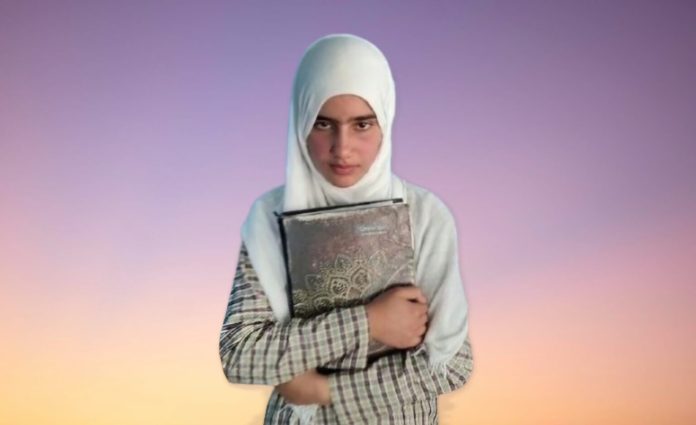
Mavish Arif, a 16-year-old Class 10 student from the remote village of Batara Gawalo, has achieved an extraordinary spiritual milestone: she has handwritten the entire Quran Sharif. What makes her achievement even more awe-inspiring is that Mavish was born deaf and mute.

In a world consumed by distractions and noise, Mavish’s silent journey of devotion speaks volumes. Over a span of nine months, without any formal guidance or assistance, she meticulously copied the Quran from start to finish, line by line, in the solitude of her home. Her determination, fueled by a deep spiritual purpose, astonished not only her family but the entire region.

Her parents, emotional and proud, shared how she immersed herself in this divine task, refusing help — not out of pride, but from an unwavering sense of purpose. Her days were spent absorbed in transcription, her hands speaking the language her voice could not.

This self-motivated act of worship, especially by a differently-abled young girl, has been hailed as unprecedented by local educators and scholars. Her school, Government Girls Higher Secondary School in Gandoh, has quietly supported her, and its principal, Mr. Ajeet Singh, expressed deep admiration:

“Mavish may be unable to speak, but her actions have roared louder than words. She has become a role model not just for students but for our entire community.”

The villagers of Bhalesa are united in pride and joy. Elders, neighbours, and teachers alike see her as a symbol of unwavering focus in a world that too often celebrates superficiality.

“In today’s time, when goals are often fleeting and attention is short-lived, this girl’s devotion is a lesson in spiritual resilience for all of us,” shared one elder.

Despite limited resources and geographical isolation, Mavish’s story radiates with spiritual brilliance and personal triumph. Her journey is not just a personal achievement, but a beacon of hope and inspiration for the entire nation.

Without uttering a word, Mavish Arif has etched a legacy — not just on paper, but deep in the hearts of everyone who learns of her devotion. Her story is one of faith, fortitude, and the silent strength of a pure soul on a sacred mission.

source: http://www.radiancenews.com / Radiance News / Home> Latest News> Markers of Excellence / by Radiance News Bureau / June 06th, 2025

A Kashmiri Muslim countered Pak narrative in UNSC in 1965 war

JAMMU & KASHMIR :

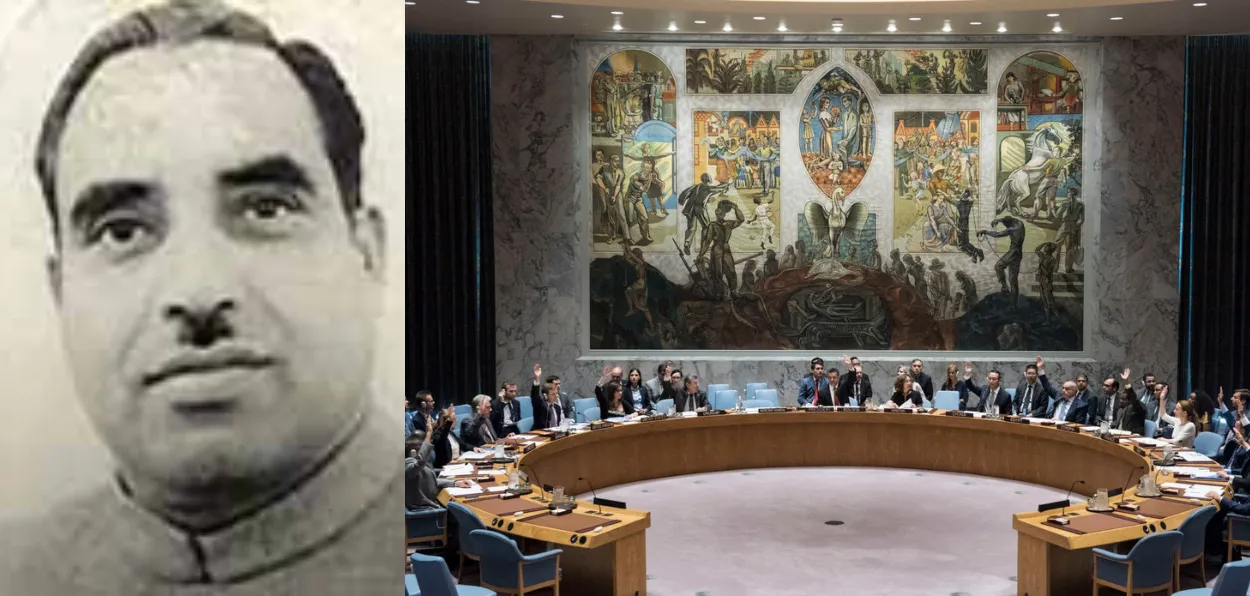
Syed Mir Qasim, former Chief minister of J&K and UN Security Council in session (file)

Since its formation in 1947, Pakistan has tried to portray India as a Hindu country where Muslims are second-class citizens. Each time Pakistan launched an armed attack against India, it was to ‘help’ the Indian Muslims. Not given to learning lessons, Pakistan looked the other way when the Indian Muslims countered its narrative.

In the 1965 war, Pakistan attacked India “to help Muslims in general and Kashmiri Muslims in particular,’ and the propaganda was counter by two Indian Muslims.

Syed Mir Qasim, a Congress leader who later became the chief minister of J&K, represented India at the UN General Assembly during the 1965 war. He declared, “Perhaps I should mention that I belong to the majority community of Muslims in my home State of Kashmir; in our country, unlike Pakistan, we do not believe that religious distinctions should impinge upon political life. I have played a small part in the political life of our State from the days of princely rule. It is for these reasons that it is my duty, on behalf of our delegation, to set the record straight on the various statements made by the Foreign Minister of Pakistan.”

Indian Army Officers in front of a captured Pakistani tank in the 1965 war

Qasim told the Assembly that a Plebiscite in Kashmir was out of the question. He categorically told the world that the Pakistani claim that Kashmir was acceded to India because of a pact signed by the ruler was wrong. India accepted the accession only after the National Conference, the most popular political organisation in Kashmir, asked the Indian leadership to do so. The Indian leadership was convinced that the ordinary Kashmiris wanted to be part of India. He further told the Assembly that much before the Indian Army reached Kashmir in 1947, it was the local Kashmiri Muslim militia that had resisted the invasion.

On the issue of the Plebiscite, Qasim said, “Referring to my statement that there was no binding commitment on the part of India to hold a plebiscite in Jammu and Kashmir, the representative of Pakistan said: “What an extraordinary statement to come and make to this Assembly?” Was this an extraordinary statement? Let us examine the facts. I can do no better than to quote our late Prime Minister, Jawaharlal Nehru, whom the representative of Pakistan does not wish to forget. When proposals for a plebiscite were submitted to the Government of India by the United Nations Commission, the late Prime Minister made it clear that he was accepting the proposal only on certain conditions.”

He added, “Need I remind the representatives that apart from ratifying the accession to India, apart from supporting the political party which stands for irrevocable association and complete integration with India, apart from reaffirming their wishes at periodic elections, the people of Jammu and Kashmir have twice within eighteen years given their answer in blood to Pakistan. Thus, there is no justification for any further ascertainment of the wishes of the people. The Government of India has made its position clear on this point, and I hereby reiterate it. There will be no plebiscite.”

A Muslim representing India at the General Assembly to call out the lies of Pakistan frustrated the Pakistani representative at the Assembly. He said, “Finally, the representative of India and I find this is a peculiar weakness in Muslims who come to represent or plead India’s case at the bar of international opinion – finds himself, and I sympathize with him, in the position of having to be more Catholic than the Pope.”

Qasim gave a befitting reply when he said, “We Muslims of India are quite used to these cheap jibes. We understand the reason, or rather the frustration behind such insulting remarks, not only from the representatives of Pakistan who speak at the United Nations, but also, more so, from the founders and leaders of Pakistan. The frustrations are there because the founders and leaders of Pakistan failed in their efforts to persuade the great nationalist Muslim leaders of India to accept their favourite theory that religion determines nationality.”

Another Muslim, Mohammedali Currim Chagla, represented India at the Security Council to counter Pakistan’s claim. He told the Security Council (SC), “Pakistan has pretended to show a great solicitude for the Muslims living in India, and the Foreign Minister of Pakistan has stated that hundreds of thousands of Indian Muslims have been pushed out into East Pakistan. When Pakistan talks of the Muslim minority, it gives one the impression that we are dealing with a few thousand or a few hundred of thousands of people in a large country tucked away in some far corner and surrounded by a large mass of Hindu population.

“Now let me inform the Council that Muslims are not a minority in the ordinary sense of the term. They constitute 50 million of the population of India. India is the third largest Muslim State in the world, the first being Indonesia and the second being Pakistan. They are sons of the soil, they are Indian by race, and they enjoy all the rights of citizenship. Every office is open to them, and in fact, many of them hold the highest offices in the land.

“Our civilization is a synthesis of many diverse cultures, and the Muslim contribution is one of the most significant. Ours is a secular State and an egalitarian society where everyone enjoys equal rights and equal opportunities, and equal protection of the law. We have no official religion. Hindus, Muslims, Christians, Buddhists, Sikhs, Parsis, and others have full freedom of worship, and fundamental rights under the Constitution are guaranteed to every citizen. We have no first-class and second-class citizenship.”

Chagla also told the world that India has every right to use its armed forces against Pakistan’s aggression and should redraw the LoC to control infiltration from the other side of the border.

In 2025, when India is again under attack from Pakistan and their propaganda machinery is spreading lies that Indian Muslims are not loyal to their country, they should turn the pages of history to know that these were the Indian Muslims who countered their propaganda during the 1965 war.  

source: http://www.awazthevoice.in / Awaz, The Voice / Home> Stories / by Saquib Salim / May 08th, 2025

Kashmir: Muneeb Bhat, Haris Mir realised their ‘yeh dil mange more’ dream by clearing UPSC

Anantnag District / Kupwara District : JAMMU & KASHMIR :

Two out of 12 aspirants from Jammu and Kashmir who qualified for the UPSC Civil Services 2024 have followed their passion for “Yeh Dil Mange More” (My heart wants more) and improved their rankings in the administrative services for which they had already qualified.

The duo is Mohammad Muneeb Bhat from Anantnag district of South Kashmir (AIR 131) who is already serving the J&K government after clearing the JK Public Service Commission examination; and Mohammad Haris Mir, AIR 314 from Kupwara district of North Kashmir.

Haris Mir hit the All India rank of 345 in the UPSC Civil Services examinations of 2023 and has improved his rankings.

Interestingly, a woman – Iram Choudhary from Rajouri district of Jammu region – is the topper from the UT with AIR 40.

Mohammad Muneeb Bhat, son of the government teachers from Anantnag town of South Kashmir, had set his goal of joining the civil services while pursuing his Civil Engineering degree at the Lovely Professional University in Punjab.

He told Awaz-The Voice that he started preparing for the coveted UPSC exam soon after completing his Engineering degree. He took the exam in 2017. “The motivation for civil services came from those already qualified persons from J&K like Shah Faesal (2009) and Athar Aamir Khan (2016), though there has been a considerable number of UPSC qualifiers over the past about two decades.

“I continued to achieve the goal” till my success in the last attempt this year”, Bhat said. He stayed in Delhi to attend different institutions including the Residential Coaching Academy (RCA) at the Jamia Millia Islamia.

While preparing for the UPSC examination, Mohamad Muneeb Bhat qualified for the J&K (UT) PSC examination in 2023 and was allocated the J&K Police Services. He is presently undergoing probation with the UT government.

His father, Mohammad Ashraf Bhat retired as a Zonal Education Officer (ZEO) last year, while his mother recently retired from service.

Mohammad Haris Mir qualified for the UPSC with AIR 345 last year but made yet another attempt to achieve a higher rank. He was allotted Revenue Services ((IRS) and is presently undergoing probation at the National Academy of Direct Taxes (NADT) in Nagpur.

“To achieve a higher rank, I prepared during my probation”, Mohammad Haris Mir told Awaz The Voice from Nagpur. “The motivation (to achieve a higher rank) was like any other aspirant and the hard work has been fruitful”, he said.

As it’s permitted, Haris took leave fromn the Lal Bahadur Shastri National Academy of Administration (LBSNAA), Mussoorie, to prepare for the mains of the 2024 examinination and later joined the  Uttarakhand, and took leave to prepare for mains of the Civil services 2024. He later joined NADT at Nagpur.

Mohammad Haris was also motivated by the success of senior bureaucrats like Shah Faesal and Athar Amir. He qualified for the UPSC on the first attempt last year.

Though his father is a doctor, Haris opted for the humanities. Hailing from a remote area of Handwara in the border district of Kupwara, Dr Mir had shifted to Srinagar as he was posted in the Oncology Department at the SKIMS Hospital, Soura in Srinagar.

After completing the XII examination, Haris, 26, joined the 5-year degree course in Law, B A, LL.B from the Jamia Millia Islamia, Delhi. Though Jamia Millia Islamia offers free coaching to students from minority communities for the UPSC examinations (Residential Coaching Academy) Haris preferred to prepare without joining coaching classes. “Soon after completing his Law degree, I began to prepare through self-study for the UPSC examination….it was a full year of studies involving hard work, which led me to clear the examination in the first attempt”, he told Awaz-the Voice

source: http://www.awazthevoice.in / Awaz, The Voice / Home> Stories / by Ehsan Fazili, Srinagar / April 30th, 2025

Kashmir’s first-ever historic feat: RISE student secures All India Rank 152 in JEE Main 2025

Srinagar, JAMMU & KASHMIR :

Toiyeb has been officially recognized as the State Topper of Jammu & Kashmir, with his name listed on the JEE website’s official state toppers list.

Kashmir’s first-ever historic feat: RISE student secures All India Rank 152 in JEE Main 2025

Srinagar :

In a monumental academic breakthrough for Jammu & Kashmir, Toiyeb Ashiq, a student of RISE, has scripted history by securing All India Rank 152 in JEE Main 2025. This is the highest rank ever achieved by any student from Kashmir in the prestigious national-level engineering entrance exam — a moment of immense pride for the region and a landmark achievement in Kashmir’s academic journey.

In addition to his outstanding overall rank, Toiyeb has been officially recognized as the State Topper of Jammu & Kashmir, with his name listed on the JEE website’s official state toppers list. What makes this feat even more remarkable is that he also scored a perfect 100 out of 100 in Mathematics, a testament to his exceptional analytical skills and deep conceptual understanding. This likely places him among the top scorers in the subject across the entire country.

Toiyeb’s journey with RISE began in Class 10, when he joined the institute’s intensive three-year program. His academic brilliance shone through early on when he emerged as the CBSE Class 10 Board Topper in 2023. Since then, he has shown unwavering commitment to academic excellence, combining intelligence with hard work, and ambition with humility.

RISEis an educational institution based in Srinagar with a mission to uplift the academic aspirations of Kashmiri youth founded by three IITians Mubeen Masudi, Imbesat Ahmad and Salman Shahid. What started as a modest initiative has now become a powerhouse of talent development — producing IITians, doctors, and scholars. RISE has played a pivotal role in transforming the academic landscape of the Valley by providing top-quality coaching, mentorship, and exposure to national-level opportunities.

Despite the overwhelming praise and admiration pouring in, Toiyeb remains remarkably grounded and laser-focused on his next goal. “I am happy, but this is just a step,” he said modestly after the results. “My full focus is on the JEE Advanced exam coming next month.”

His mentors at RISE believe that this is just the beginning of his journey.

Salman Shahid, Co-founder of RISE, and a graduate from IIT Kharagpur said, “Toiyeb’s achievement is not just a rank — it is a message to every student in Kashmir that with hard work, the right guidance, and belief in yourself, nothing is impossible. He represents the future we believe in: brilliant, hardworking Kashmiri youth reaching the highest levels of academic success. This is a historic moment not just for RISE, but for the entire Valley.”

This achievement is not only a personal milestone for Toiyeb, but a defining moment for the entire education community in Jammu & Kashmir. It signals a shift — from limited access and opportunity to national-level competitiveness and success.

source: http://www.greaterkashmir.com / Greater Kashmir / Home> Education / by GK Web Desk / April 19th, 2025

Pulwama in the news again, for Simrah who scored 99.39 percentile in JEE

Pulwama (Kashmir), JAMMU & KASHMIR :

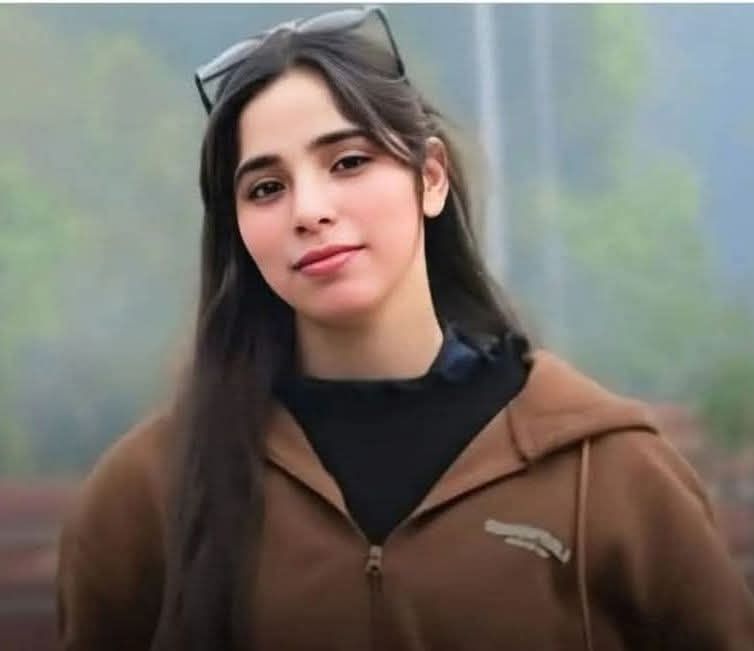
Simrah Mir, a Kashmiri student, beat the odds to score 99.39 percentile in JEE Mains, inspiring countless students.

Simrah Mir, a JEE topper from Kashmir. | Photo by Special Arrangement

She comes from a region where resilience is a way of life. When Simrah spoke over the phone, her voice exuded conviction which only comes with a sense of achievement.

“At one point, I felt like giving up,” she began. Yet even her recall of desperation was in an unwavering tone.

Hailing from Kashmir’s Pulwama, a town often making the headlines for more negative than positive news, Simrah Mir has given a reason for the region to shine bright. Defying all odds stacked up against her, this young woman has brought immense joy and pride to the valley by scoring 99.39 percentile in the recently concluded JEE Mains this year.

Simrah’s is not just a personal victory but may well be an inspiration for countless students across Kashmir. Simrah, a student of a local government school, attended RISE coaching classes in Srinagar for JEE.

RISE is a coaching institute in Srinagar started by three former IITians: Salman Shahid and Imbesat Ahmad, both alumni of IIT Kharagpur, and Mubeen Masudi of IIT Bombay. Mubeen is a Kashmiri, says Mr. Shahid. “We started our institute in 2015 since we wanted to do something for Kashmir. When we started out, only a handful enrolled in our classes. Today, every year, some three to four students from our institute go to IIT and 70 to 80 students go to NIT. Twenty percent of these students are girls,” says Mr Shahid.

In an interview with The Hindu, Simrah spoke about her challenges, triumphs, and her fresh optimism for the road ahead.

She says: “At times, there were internet shutdowns, and many times it was a fearful environment at my hometown. My parents sheltered me from everything, even from what happening around our near vicinity. Then I moved to Srinagar. It was difficult to travel up and down daily from Pulwama every day for the coaching classes. It’s a long distance.”

Unlike many students who set their sights on JEE early on, Simrah’s decision to pursue engineering evolved over time. “It was a big step. Initially, I didn’t know much about JEE. I joined the RISE Institute, and there I got to know about the exam and started looking at engineering as a career. Later, I faced difficulties in my preparation. I felt like giving up, but my parents constantly supported and motivated me,” she continued.

What kept you motivated? What were the reactions of your parents, friends, and teachers to your preparations?

 Initially, when I was searching for an interest, my parents and relatives were pushing me towards medicine. I didn’t like Biology and I’m not interested in Medicine. From an early age, I was interested in Physics and Mathematics; I wanted to know about the subjects. I studied by myself. I used to read books other than my textbooks. Physics and Maths interested me.
Later on, I decided that it is a stream for me. I decided I had to take Mathematics and Physics as a career.

Any obstacles or resistance you came across while preparing for JEE? Did you ever think about what would happen if you didn’t get selected?

 There were definitely moments of doubt. And I used to have them often. As I said, I felt like giving up. JEE is a tough exam. I did think about what would happen if I didn’t get selected. But every time I felt low, my parents supported me. That helped me stay focused and push through the tough times.

I recently spoke to some people in Assam and learned that language, infrastructure, and cultural barriers can be obstacles in education. Did you face any challenges like that?

 Shifting to Srinagar was a big deal for me. I’m from Pulwama, and it was getting difficult. There were no coaching classes specifically for JEE preparations

I did think of going to Delhi or another State initially because there are good institutes there. But then I realised it might not be beneficial for me. I have never lived alone, and I felt like I should be close to my parents.

In Kashmir, students usually prefer medicine and becoming doctors, especially girls. It’s rare for a girl to take engineering as a career.

Did your school play any role in your success? Did they provide career counselling or extra classes for JEE aspirants?

 There was enough career counselling but no extra classes specifically for JEE aspirants. Most students in my school focused on board exams.

Nobody actually introduced the subject to me. I was inquisitive. There were some other students too who were genuinely interested to study and were inquisitive like me.

Which branch of engineering attracts you the most? And why? And have you thought about any specific college you would like to join?

 I have not thought about it. Of course, I want to go to the best college. I want to go to IIT.

Personally, I want to take Computer Science Engineering, but I don’t know exactly what will happen in the future. I haven’t researched much yet. It also depends on my rank and how I perform in the JEE Advanced exam.

What do you wish to become eventually?

 As of now, my goal is to pursue Computer Science Engineering. I would see where my passion takes me eventually.

What advice and tips you would want to give to JEE aspirants from your region?

 In Kashmir, many students, especially girls, hesitate to choose engineering because it’s not the common path. But if you genuinely enjoy Mathematics and Physics, you should give it a chance. It’s important to be practical.

JEE is tough, and there will be challenges. But if you take it step by step and stay disciplined, you can do it.

source: http://www.thehindu.com / The Hindu / Home> Education / by Mantasha Ahmed / February 15th, 2025

International kho kho girl Nazia Bibi brings cheers to her tribe, J&K

Kalakappar Village (Nagrota Tehsil), JAMMU & KASHMIR :

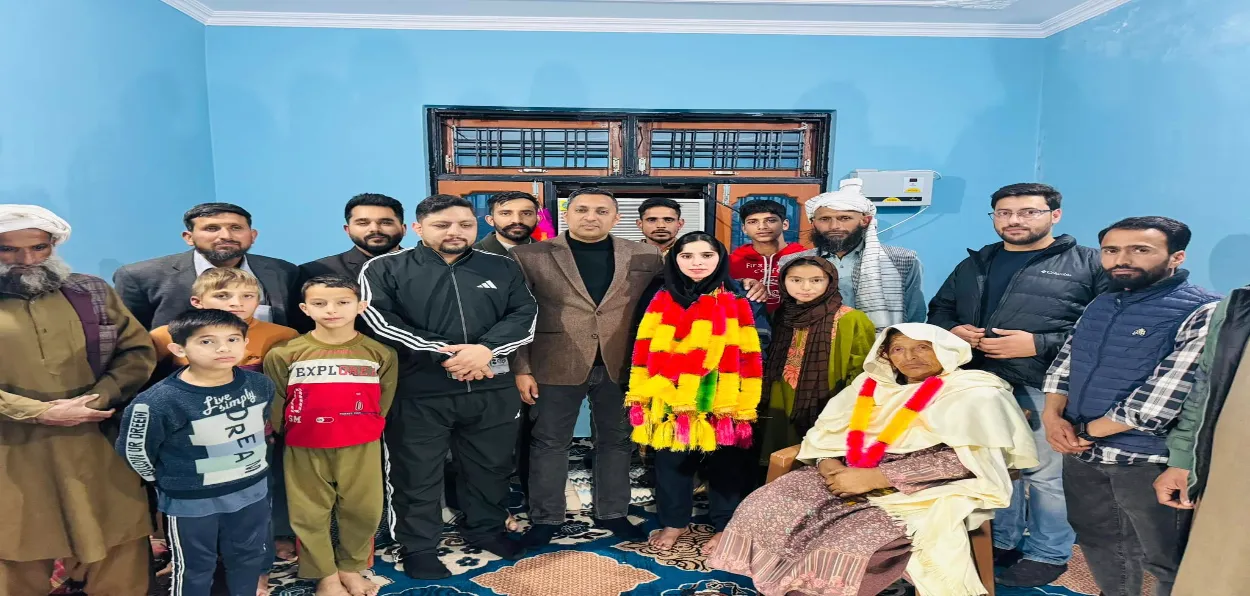
Heavily garlanded Nazia Bibi with her family including her grandmother, and visitors at her home

Weeks after the nomadic Gujjar-Bakerwal community of Jammu and Kashmir plunged into a state of shock as 17 tribesmen, women and children died of a mysterious disease in village Budhaal in Rajouri, a young woman has brought cheers to and restored the pride of the community.

Nazia Bibi, a 21-year-old college student has become the first athlete from J&K to win gold in the International Kho Kho championship. Nazia, who hails from village Kalakappar of tehsil Nagrota on the outskirts of Jammu city, is a member of the Indian women’s Kho Kho team which recently lifted the maiden World Cup in Delhi by trouncing Nepal in a convincing victory.

Nazia Bibi also became one of the few tribal women from J&K to reach the international level in sports.

Her achievement is more important given the fact that the Gujjar-Bakerwal community is backward and also conservative in its outlook for women.

However, Nazia today doesn’t hold any grudges against her family for asking her to stop playing because of society’s disapproval.

International Kho Kho player Nazia Bibi

“I can understand when my family asked him to stop playing since people made uncharitable comments and fun of me because I didn’t wear a conventional dress while practicing. I had my Chachu (Uncle) Master Iqbal who is a teacher to fall back upon. I would explain to him my problems in pursuing Kho Kho and he, in turn, convinced my father,” she said.

Her father Sabar Ali is an unlettered person and earns his livelihood by rearing cattle – sheep and goat. Nazia has a sister and two brothers and the family lives in a two-room house in the village.

A BA fifth-semester student of the Padma Shri Padma Sachdev Govt College for Women Gandhi Nagar, Jammu, Nazia says lifting the gold cup for India was her proudest moment and brought her struggle to a logical and happy end.

“Today, at 21, I am overwhelmed as so many people are coming to congratulate me. It’s too much for me to handle,” she says in a video interview to a local channel.

Nazia is amused to see her relatives and neighbours announcing that they would encourage their children to play sports as well.

“One person’s struggle can open opportunities for so many,” she said.

Nazia was invited by the LG Manoj Sinha to the Raj Bhawan for a meeting. The DIG of Jammu felicitated her for her achievement.

Advocate Zulkarnain Choudhary, a community activist said Nazia should be given a decent job of the rank of a gazette officer by the J&K government, as is done in other cases.

Nazia however says her struggle and achievement must bring focus on better infrastructure for sports. “We don’t have good stadiums or coaching family in Jammu. Practicing in an open field and on mats indoors are so different,” Nazia said.

Nazia Bibi with LG Manoj Sinha and officials of the Kho Kho association

As a promising athlete, she says she was encouraged by her teachers in the local school and also by the J&K Kho Kho association officials.

“I continued playing kho kho because it doesn’t require expensive tools and sports kits. However, my skill was honed in the national camps for which I was selected. Also, a team game requires you to bring sharp skills to the table.”

Nazia said she practices three hours at home and for 7-8 hours in the camps. “Joining the preparatory camp for the International Kho Kho competition was very helpful. It brings discipline in an athlete and also makes one realize of competition.”

An international gold medal in hand though Nazia wants to forget her struggle against society’s attitude. She said, “Even I felt uncomfortable with the tracksuit and uncovered hair because we, as tribal women, are conditioned to conservative dressing.”

Her father Sabar Ali says, “I am an illiterate person. I would get upset with people making jokes about my daughter’s dress and her sports. Today, the same people are coming to congratulate us and I am so happy.”

Sabar Ali and his five brothers live close by in the village and have unity. Advocate Choudhary who visited the 2-room house of Nazia told Awaz-the Voice, “They are a simple and pure united family. I don’t think they fully understand the scope of their daughter’s achievements.”

Fighting society in pursuing one’s passion is not so easy for women.

Nazia says at one stage she had decided to give up. As luck would have it Nazia was playing for India and the team won gold unmindful of the celebrations of her brother’s wedding back home.

source: http://www.awazthevoice.in / Awaz, The Voice / Home> Stories / by Aasha Khosa, New Delhi / February 04th, 2025

Small Acts, Big Rewards: Kifayatullah Malik’s Quest to Empower Underprivileged

Lawaypora Village (Bandipora), JAMMU & KASHMIR :

Bandipora, Kashmir:

Growing up in Lawaypora, a small village in bandipora, Kifayatullah was the first child in his family to attend school. His father is a farmer. Kifayatullah soon realized that many children in his community were deprived of this basic right.

Kifayatullah Malik told TCN, “My desire to serve the community was sparked by the difficulties and hardships I encountered during my school days. I was driven to social work by a dream that no other child should experience the hardships I endured”.

Kifayatullah Malik, 25, is a mountaineer, young leader, and social worker. He graduated from the University of Kashmir with a master’s degree in social work. As a committed social worker, he advocates for Underprivileged people, especially women, children, and youth.

Children in hilly regions are encouraged to play sports and go to school by Kifayatullah. Additionally, he gathers used textbooks and gives them to students in need.

In remote areas such as Ketson, Dakhi, Dangarnar, Chinchar, he has set up awareness camps on topics including drug misuse, environmental sustainability, and women’s empowerment. His efforts in social forestry and tree planting are also worth mentioning.

He mentioned the lack of finance as the main obstacle, adding that I primarily rely on crowd-funding to carry out my purpose.

Kifayatullah Malik is currently the district coordinator for REACHA (Research and Extension Association for Conservation of Horticulture and Agro-forestry), which works to increase economic opportunities, enhance education, and close the digital divide in underprivileged areas of J&K. In addition, he has served under “Bal Raksha Bharat,” an organization that is vital to improving rural communities’ access to healthcare, education, and livelihood.

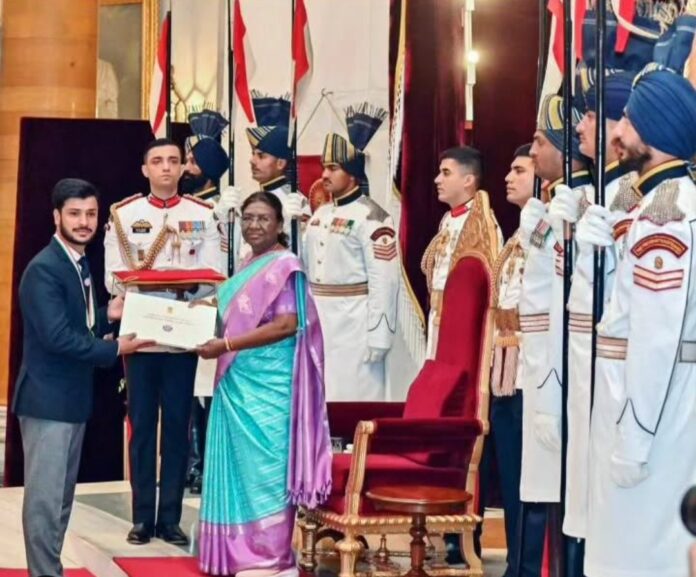
President Draupadi Murmu presented him with the esteemed President’s Award for Social Work and Community Welfare in 2021-22. Other honors that Kifayatullah has received include the Best Forest Friend Award for planting trees from the Jammu and Kashmir Social Forestry Department, the Ambassador of Humanity Award 2024, the Global Human Rights Award, the ADG’s Appreciation Award 2019, and the award for social work in 2024.

Kifayatullah Malik says, having millions is not necessary to make a difference. A small act of kindness can have a significant impact. Simple actions like providing guidance to a child, giving someone a book or a pen, feeding a poor family can bring great rewards. Try it and see the positive change you can create!

source: http://www.twocircles.net / TwoCircles.net / Home> India News> TCN Positive / by TCN News / February 07th, 2025

PADMA SHRI : Farooq Ahmad Mir’s 60 years of artistry earn Padma Shri

Srinagar, JAMMU & KASHMIR :

Mir was among 139 Padma awardees announced on Saturday, making him one of only two Padma Shri awardees from Jammu and Kashmir this year

Farooq Ahmad Mir’s 60 years of artistry earn Padma Shri

Srinagar :

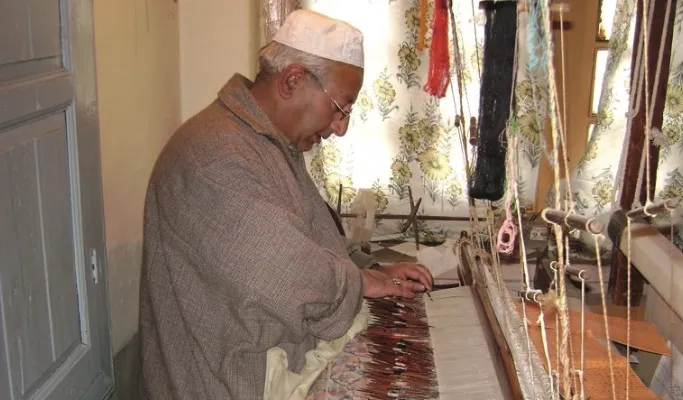
In a heartfelt tribute to the art of craftsmanship, Farooq Ahmad Mir, a master shawl weaver from Srinagar, was conferred the prestigious Padma Shri award on January 25. At 73 years old, Mir embodies the spirit of dedication, having devoted over six decades to a craft that intertwines patience with artistry.

Mir was among 139 Padma awardees announced on Saturday, making him one of only two Padma Shri awardees from Jammu and Kashmir this year.

Starting his journey at the tender age of 10, Mir’s story resonates through generations. “Pashmina artisans require patience, much like education. It teaches us about the intricate nuances of our craft,” he reflects, drawing parallels between learning and weaving. Hailing from a lineage of artisans, Mir has not only preserved but revitalised the Kani shawl tradition, once favored by Mughal, Afghan, Sikh, and Dogra rulers.

Mir’s influence extends beyond his family; he has painstakingly taught the art of Kani shawl weaving to over many individuals in Srinagar’s old city.

“In a world where modern careers are alluring, many aspiring artisans are deterred by societal perceptions and a lack of patience for traditional craft,” he notes. Yet, Mir’s commitment to his heritage has inspired not only his children, skilled weavers in their own right, but countless young men and women in his community.

“Your work should speak for itself,” Mir shares humbly when asked about his relative anonymity in a world that often celebrates flashy accolades over dedication. His contributions, however, haven’t gone unnoticed. He has received multiple national and state awards, including recognition from Prime Minister Narendra Modi himself.

The exquisite Kani shawls, woven using cane needles rather than shuttles, can take between four to eighteen months to create. However, the beauty of this art form is in jeopardy. As younger generations lean towards more modern occupations, the skills required to produce these heirlooms risk fading away. Mir’s tireless efforts aim to ensure this heritage is not lost.

Born into a weaver’s family in Srinagar, Mir’s start was modest. Despite barriers to formal education, he channeled his passion into honing his skills, becoming one of the finest artisans in Kashmir. Alongside his successful weaving career, he managed to educate his siblings and inspire a new wave of artisans dedicated to preserving Kani shawl weaving.

In an age driven by industrialisation, the importance of handmade products is gaining renewed appreciation globally. Mir stands as a pioneer in safeguarding this cultural legacy, instilling pride in his craft and ensuring its continuation across generations. His handcrafted Kani shawls have not only found a place in the hearts of locals but also captured the attention of international clientele, including the Ambani family and major corporations like Tata and Aditya Birla Group.

Farooq Ahmad Mir’s journey exemplifies resilience and dedication. As an unsung hero of the Kani shawl tradition, he reminds us that true artistry thrives in the shadows, waiting for the right moment to emerge into the light.

Director Handicrafts and Handloom, Mussarat Islam in a tweet on social media extended heartfelt congratulations to Farooq Ahmad Mir on being awarded #PadmaShri 2025 for his significant contributions to Kani Shawl weaving and the preservation of Jammu and Kashmir’s rich cultural heritage.

source: http://www.greaterkashmir.com / Greater Kashmir / Home> Business / by Mukeet Akmali (headline edited) / January 26th, 2025

Jailed Kashmiri journalist Irfan Mehraj honoured with human rights journalism award

JAMMU & KASHMIR :

Irfan Mehraj

Srinagar :

Jailed Kashmiri journalist Irfan Mehraj, who is currently incarcerated under draconian charges, has been honored with the Human Rights and Religious Freedom Journalism Award for 2024.

Mehraj, who won in the Best Video Story category for his impactful work on the heroin epidemic in Kashmir, shared the award with Akanksha Saxena and Khalid Khan of Deutsche Welle, reported Freepress Kashmir.

The awards, organised by the Indian American Muslim Council, a Washington, D.C.-based advocacy group, were presented at a ceremony in Chicago, Illinois. This year, the competition received over 210 entries across four categories.

The prestigious award for ‘Best Video Story on Human Rights and Religious Freedom’ was jointly won, with the top honour going to the three journalists from Deutsche Welle for their impactful documentary, “On Drugs – Kashmir’s Heroin Epidemic.”

The piece stresses upon the growing heroin crisis in Kashmir and lives of people ravaged by addiction in the region.

According to a Human Rights Watch statement issued earlier, said, “While on a professional assignment on 20 March 2023, Mehraj was summoned for questioning and detained by the National Investigation Agency (NIA) of India in Srinagar under provisions of the Indian Penal Code and the Unlawful Activities (Prevention) Act.”

Irfan has been booked under the draconian UAPA. According to the NIA, Irfan was previously summoned to Delhi in a case related to “NGO terror funding”. The NIA in its press note claimed he was a “close associate” of the Kashmiri human rights defender Khurram Parvez.

In June 2023, United Nations experts expressed serious concerns regarding the charges against and arrest of Mehraj and Parvez, stating that their continued detention is ‘designed to delegitimize their human rights work and obstruct monitoring of the human rights situation in Indian-administered Jammu and Kashmir.’

On 7 March 2024, UN experts sounded the alarm on the “harassment and prolonged detention of human rights defenders and journalists” in the country. ( With Agencies Inputs )

source: http://www.muslimmirror.com / Muslim Mirror / Home> Indian Muslim>Media / August 28th, 2024