Tag Archives: Shabbir Ansari

The Inspirational Journey of Shabbir Ahmad Ansari Unveiled in ‘Mandal Nama’

Mumbai, MAHARASHTRA :
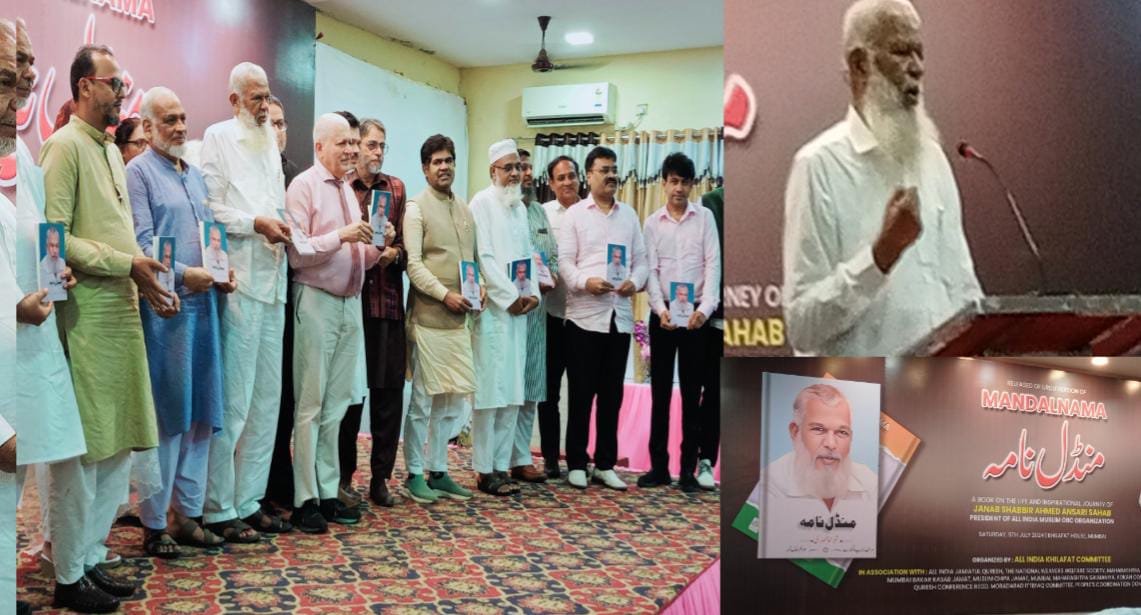
The July 6th 2024, witnessed a gala release of the prestigious book “Mandal Nama” (Urdu version) at Mumbai’s historic Khilafat House. It is a non-fiction autobiography covering the life and inspirational journey of long-time social activist – Shabbir Ahmad Ansari – the founding President of the All India Muslim OBC Organization. This significant event drew many distinguished guests from within Maharashtra and beyond, each bringing their unique perspective and reverence for the work and life of Shabbir Sahab.

The 200-page paperback book was originally compiled in Marathi by Dilip Waghmare and translated in Urdu by Malik Akbar. It is a book on a living legend who has been a standing hero from zero by his perseverance, commitment and hardworking against all odds.

Among the dignitaries were Dr. Zahir Kazi, President of Anjuman-I-Islam and Padma Shri awardee; veteran journalist and Maharashtra MLC Kapil Patil, Mohammad Wajihuddin, Senior Assistant Editor of The Times of India, Mumbai; Sarfaraz Arzoo, Editor of Hindustan Urdu newspaper; Maulana Mahmood Daryabadi, general secretary of All India Ulama Council; Maulana Mohammad Burhanuddin Qasmi, Director of Markazul Ma’arif Education and Research Centre and Editor of Eastern Crescent along with so many others, especially, OBC leaders and activists from across India. The hall at Khilafat House, Byculla, Mumbai was at its full capacity with academia, journalists and social activists who came together to appreciate and recognise the marvelous contribution made by Shabir Ahmad Ansari for Muslim OBCs and this Nation. These luminaries who are highly respected personalities in their fields of work, graced the occasion and shared their invaluable insights on the book and the remarkable struggles of Shabbir Sahab.

The speakers highlighted the importance of Shabbir Sahab’s mission, emphasizing how he tirelessly worked day in and day out for the community, enduring numerous challenges along the way. They stressed that if this mission is not carried forward, it risks being buried with Shabbir Ansari himself. Shabbir Ahmad Ansari is not merely a name; he represents an Anjuman and a revolution. Despite facing various adversities and betrayals, he persevered and continued to advance his cause.

The event also acknowledged the crucial support provided to Muslim OBC Movement by MLC Kapil Patil and Dilip Kumar, two personalities instrumental in Shabbir Sahab’s mission. They stood by him unwaveringly, enabling him to confront politicians and overcome deceit from within his own ranks.

“Shabbir Bhai’s steadfastness led to a moment where even politicians had to concede to his demands and paved ways for Muslim OBC Reservation in Maharashtra,” echoed by almost all speakers..

“Mandal Nama” is not just a book; it is a testament to Shabbir Ahmad Ansari’s enduring legacy and a call to action for future generations to uphold and advance his mission. This is a book for all fiction and non-fiction readers. A story of a man who stood alone for a greater social cause, struggled and succeeded in his lifetime. “Shabbir Ahmad Ansari and Muslim OBC movement in Maharashtra is so fascinating-story in academic perspective that it should be a research topic in a Central University in India” opined by Maulana Burhanuddin Qasmi.

source: http://www.easterncrescent.net / Eastern Crescent / Home> Book Review> EC Exclusive / by Mohammad Toukir Rahman / July 07th, 2024
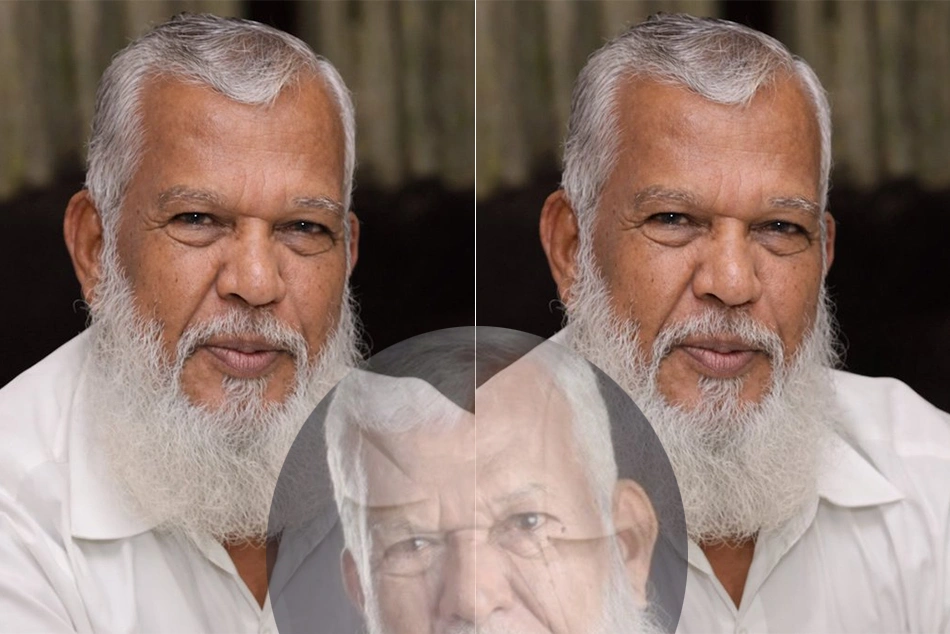
Shabbir Ansari: A Beacon of Equality and Justice No More

Jalna City, MAHARASHTRA :

Remembering Shabbir Ansari today is not merely an act of mourning, it is a call to continue the struggle he devoted his life to — a struggle against both caste and communalism, against invisibility and exclusion.

The news of Shabbir Ansari’s passing brings back, with striking clarity, my first and only meeting with him — an encounter that left a deep and lasting impression on my understanding of Indian society, politics, and the unfinished struggle for equality.

It was in the aftermath of the Bhagalpur riots of 1989, a moment that convinced me that communal polarization would dominate India’s political landscape for decades to come. In the early 1990s, during a visit to Mumbai, I found myself in the company of Shabbir Ansari at the SNDT University quarters in Bandra. He was preparing to leave the next morning to meet Prime Minister V.P. Singh.

What I assumed would be a brief exchange turned into a night-long conversation that fundamentally challenged my assumptions. When I asked why he was meeting the Prime Minister, Shabbir Bhai explained that he wanted to press for the inclusion of backward sections among Muslims within the Mandal Commission framework. I responded, rather naively, that Islam did not recognize caste. With patience and clarity, he unfolded before me the lived reality of inequality within Muslim society — an inequality that mirrored, in many ways, the entrenched hierarchies of the subcontinent.

That night, sleep became impossible. What Shabbir Ansari articulated was not merely a political demand, but a moral and social truth: that caste, as Dr. B.R. Ambedkar warned, has a stubborn persistence across religions. His insight forced a rethinking of simplistic narratives about equality and exposed the layered marginalization faced by Pasmanda Muslims.

Shabbir Ansari was not content with theory. His politics was rooted in the lived experiences of the most deprived — particularly the Muslim weaver communities scattered across regions like Malegaon, Bhiwandi, and Burhanpur, many of whom had already suffered displacement since 1857, and continued to bear the brunt of recurring communal violence. His work sought to bring these invisible communities into the center of democratic discourse.

In the years since that meeting, the patterns he warned about have only deepened — communal polarization, the instrumental use of backward communities in majoritarian politics, and the systematic exclusion of minorities from representation. Yet, Shabbir Ansari’s life stands as a counterpoint to this trajectory: a lifelong effort to build solidarities among the marginalized and to assert dignity, representation, and justice.

His work resonates with that of others like Ali Anwar Ansari, who documented the condition of Pasmanda Muslims in detail. But Shabbir Bhai’s contribution was not just intellectual — it was organizational, persistent, and deeply humane. He dedicated his life to ensuring that backward Muslims, often erased even within minority narratives, could claim their rightful place as equal citizens.

Remembering him today is not merely an act of mourning. It is a call to continue the struggle he devoted his life to — a struggle against both caste and communalism, against invisibility and exclusion.

The most meaningful tribute to Shabbir Ansari would be to carry forward his unfinished mission: to build an India where equality is not proclaimed in abstraction, but realized in the lives of those who have long been denied it.

[The writer, Dr. Suresh Khairnar, is Ex-President of Rashtra Seva Dal.]

source: http://www.ummid.com / Ummid.com / Home> Obituary / by Dr Suresh Khairnar / March 25th, 2026