Aluva (Ernakulam District), KERALA :
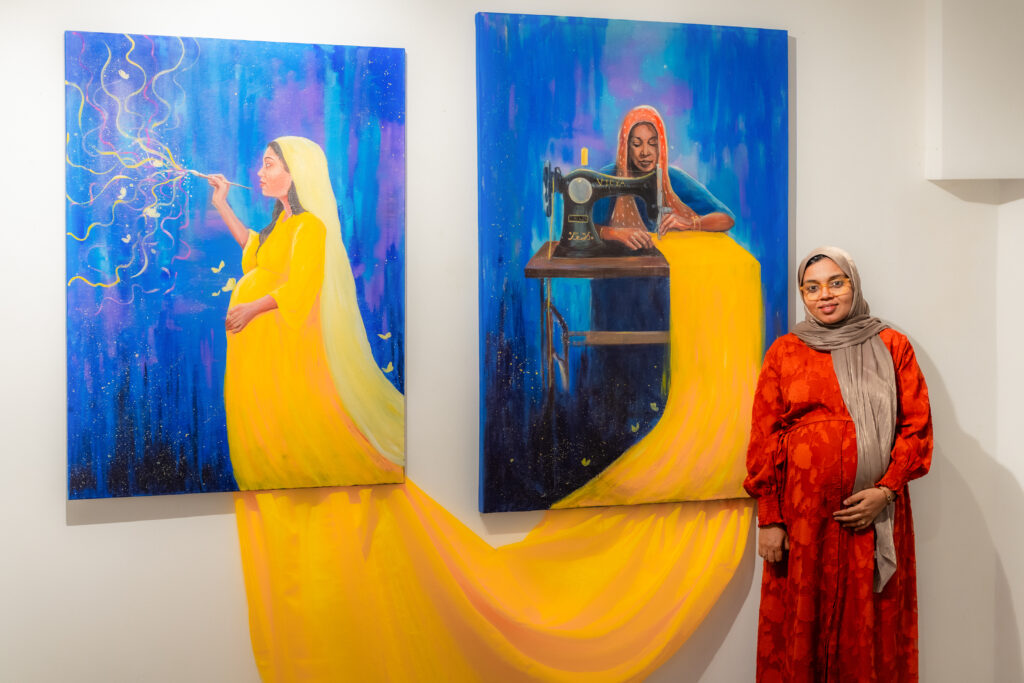
Kerala artist Shabna Sumayya’s exhibition BECOMING 4.0: Yesterday’s Dreams explores memory, womanhood, and resistance, using deeply personal stories, especially her mother’s labour and generational experiences, to reflect on identity, survival, and the possibility of healing across generations.
From Aluva in Kerala’s Ernakulam district, Shabna Sumayya has quietly shaped a body of work that moves between painting, illustration, and writing with rare coherence. Her fourth solo exhibition, BECOMING 4.0, Yesterday’s Dreams, presented at the G. Sankara Kurup Memorial Museum, Kochi, from 29 January to 1 February, stood as both a culmination and a continuation, an exploration of memory, resistance, and the slow, ongoing process of becoming.
Across mediums, her work is anchored in lived experience. Memory forms the quiet backbone of her practice. Her art expands outward, touching upon resistance, womanhood, survival, and the negotiations that shape identity every day. For her, identity is not fixed; it is something worked through within families, communities, and systems marked by patriarchy and inequality. Her canvases reflect this fluidity. Women appear not as symbols, but as thinking, enduring presences who occupy space with dignity. Fields of yellow meet deep blues and reds. Survival itself becomes a language.
Women at the Centre
When asked why women, with their struggles, aspirations, and unspoken negotiations, consistently inhabit her canvases, Shabna answers with clarity. She paints what she has known most closely. The everyday lives of women are not distant subjects; they are realities she has observed and lived alongside. While she acknowledges that men, too, face hardship, she points out that women often carry additional burdens shaped by patriarchy. Survival becomes a form of resistance. It is from this vantage point that she thinks and creates. She does not exclude men from her work, but her instinct, her emotional gravity, returns to women, and she believes it likely always will. Her commitment extends beyond gender. From the beginning, she has been attentive to marginalised lives more broadly, minorities, oppressed communities, and those whose struggles are often overlooked. Contemporary events that disturb her, news that lingers in the mind, personal conflicts that leave marks, all of these enter the canvas.
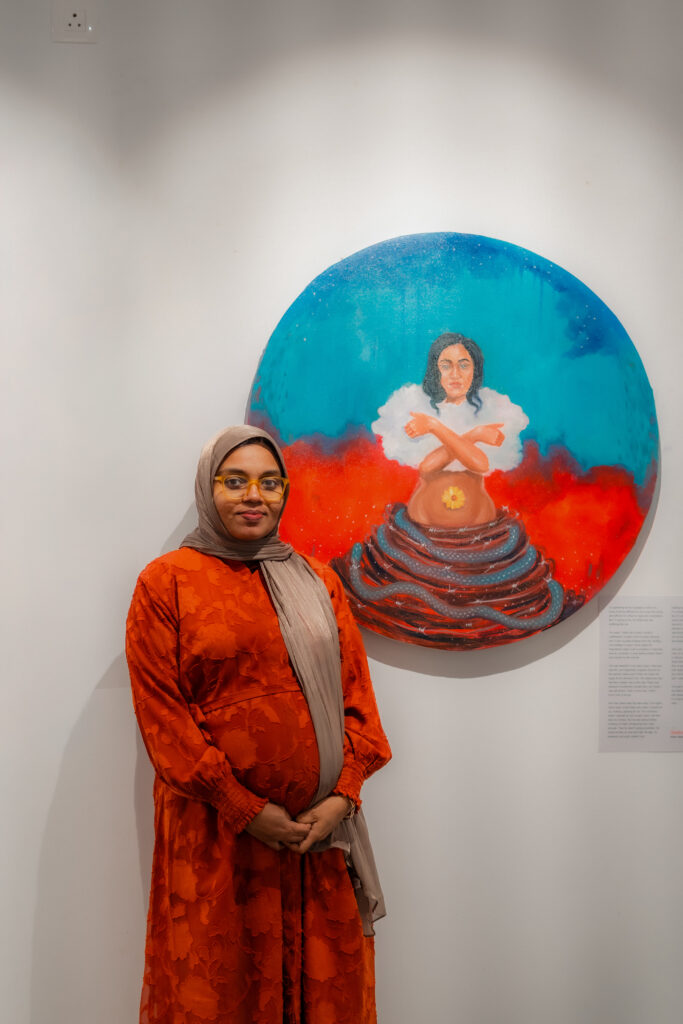
For Shabna, art does not sit apart from life; it absorbs it. She hopes her work generates conversation. Many of the subjects she paints are the very ones people avoid, the difficult, the inconvenient, the quietly endured. Her desire is that viewers not only look, but speak; that they recognise themselves; that they feel permitted to open up. Silence, she suggests, is not neutral; it can be interrupted.
The Thread of Yesterday’s Dreams
One of the most resonant bodies of work in her recent exhibition emerged from an image she has long held onto: a photograph of her mother at a sewing machine. Her mother stitched for a living. That repetitive, skilled, necessary act becomes, in Shabna’s hands, a site of quiet defiance. The mother’s labour feeds not only a household, but a future. Stitching becomes a metaphor for repair, continuity, and endurance. The series, conceived around the idea of Yesterday’s Dreams, began to take shape in 2023. The earliest image in what would become the companion pieces was her mother. From there, she sought a bridge. A cradle appeared as the first connective gesture. Gradually, the narrative unfolded further, extending into the artist’s own body and presence. Two canvases, joined by fabric, materialised as companion works, mother and daughter tethered across time. What began as a literal thread transforms into something more enduring: lineage, intimate and unbroken.
The response to Yesterday’s Dreams has been deeply moving for her. One painting, in particular, drew unexpected attention. Coming from a lower middle-class background, she began to notice how many viewers shared similar histories. Messages arrived saying the image reminded them of their own mothers. The personal had become collective. That recognition, familiar and shared, surprised her.
In a recent Instagram caption, she writes: “I have told her now, and I hope she knows: my war against the past is over. I am choosing to live the dream we once manifested. Also, I feel like I have somehow broken the generational trauma too.” The words carry both defiance and tenderness. When asked whether such healing is truly possible for many women, she responds with measured clarity. Early wounds, misunderstandings, and conflicts, she says, do not vanish overnight. But as both children and parents grow, something shifts. Realising that parents, too, are evolving can soften the weight of earlier conflicts. What once felt rigid begins to melt. She considers herself fortunate to have parents capable of such growth and speaks of them with pride.
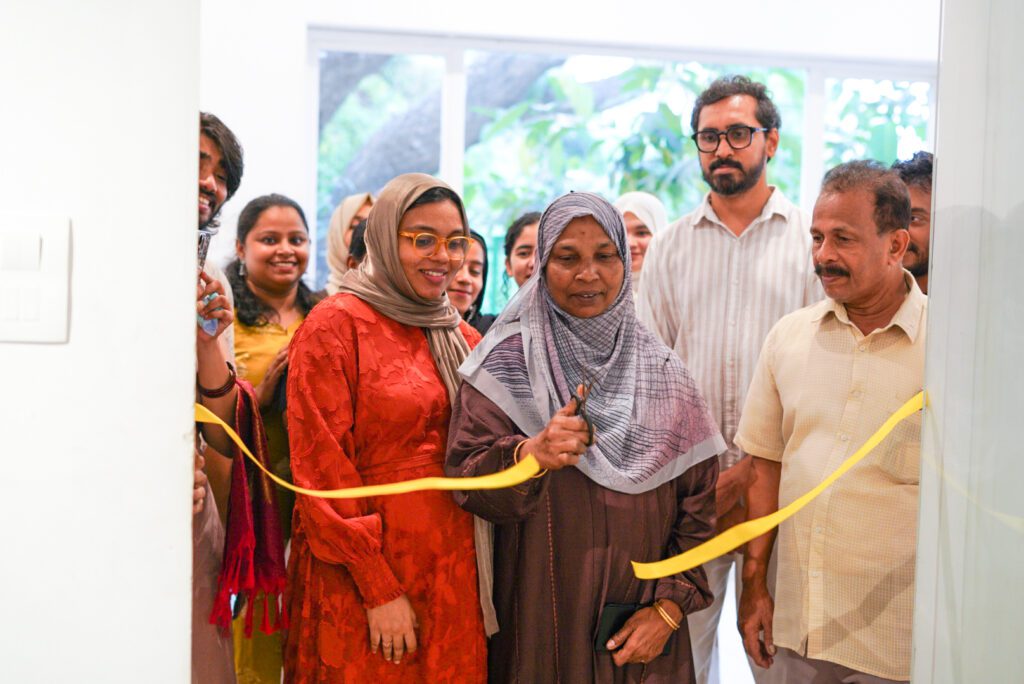
Shabna Sumayya’s mother’s response to the exhibition reflected this quiet evolution. Haju, reserved by nature, approached the painting, and even inaugurated the show, with shyness. Facing a crowd was not easy.
Her mother’s response to the exhibition reflected this quiet evolution. Haju, reserved by nature, approached the painting, and even inaugurated the show, with shyness. Facing a crowd was not easy. Yet after witnessing the appreciation and hearing the messages people shared, hesitation gave way to happiness. When Shabna read aloud the words visitors had written, her mother listened with visible joy. In that space between mother and daughter, between private history and public recognition, art bridged memory and becoming. And it is right there that Shabna Sumayya locates the possibility of breaking cycles.
source: http://www.maktoobmedia.com / MaktoobMedia.com / Home> Literature / by Ashika N / March 04th, 2026