Jashn-e-Rekhta to be held at Zabeel Park from January 27-28
After enchanting audiences in India for eight years and making its international debut in London just three months ago, the celebrated literary fest, Jashn-e-Rekhta, is poised to captivate Dubai.
A celebration of the quintessential spirit of the Urdu language, the cultural extravaganza promises two days filled with luminaries from the Urdu literary world, presenting an engaging blend of poetry, talk shows, ghazals (songs), and storytelling.
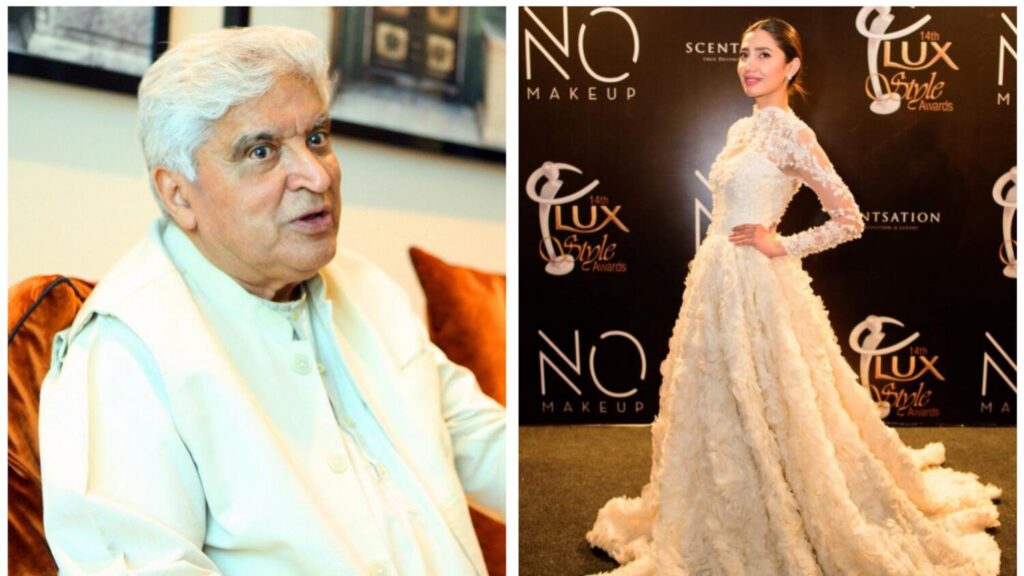
Commencing at Zabeel Park at 1.30 pm on January 27, the festival kicks off with a thought-provoking panel discussion titled ‘Urdu Tehzeeb aur Rishton ki Lazzat Ki Lazzat’, (The Delight of Urdu Culture and Relationships.) Renowned Bollywood lyricist and poet Javed Akhtar, along with Pakistani human rights activist Arfa Sayeda Zehra, will engage in conversation with Adeel Hasmi.
It will be followed by ‘Dozakh’ (Hell), a stage rendition of Ismat Chughtai’s Urdu play (2.30pm – 4pm), and a soul-stirring Sufi concert, ‘Naghmo’n ki Maseehaii’ by Ustad Shafqat Ali Khan (4.30 pm – 6 pm). The evening’s highlight will be ‘Raqs-e-Naa Tammam,’ portraying the life of the legendary singer Noor Jehan, presented by Shinjini Kulkarni, Danish Iqbal, and their troupe, starting at 7.15 pm.
A must-not-miss event of the evening is ‘Shab-e Rafta,’ (Night of departure) an enchanting session of Sufi music scheduled from 9pm to 11pm.
The final day features a compelling talk show (1.30pm – 2.30pm) with Pakistan’s film industry’s iconic couple, Sameena Peerzada and Usmaan Peerzada, who, having been married for 48 years and together for 50 years, share their journey through numerous challenges. This will be followed by ‘Kahaani se Kirdaar Tak’ (2.30pm – 3.30pm), an interactive session featuring Pakistani actress Mahira Khan and veteran Indian actress Shabana Azmi, in conversation with the renowned Indian filmmaker and actor Shekhar Kapur.
Next on the agenda is ‘Main Koi Aisa Geet Gaau’n,’ (I will sing a song like this) (4pm-6pm), a masterpiece project entwining poetry, songs, narration, and music, featuring Javed Akhtar, Meiyang Chang, and Jahnvi Shrimankar with a live band.
The pinnacle of the literary fest is the grand international mushaira (poetic symposiums) titled ‘Gehan aur Dhoop,’ showcasing acclaimed poets such as Anwar Shaoor, Farhat Ehsad, Zehra Nigah, Shakeel Azmi, Abbas Tabish, among others.
Initially set to take place at the same venue in Dubai in February 2019, Jashn-e-Rekhta faced an unexpected last-minute cancellation. However, it was revived and now promises a celebration embodying the spirit of Urdu featuring poetic mastery, talk shows, soulful ghazals, and captivating storytelling, adding another layer to the city’s already vibrant cultural tapestry.
Sanjiv Saraf, founder of Rekhta Foundation, a not-for-profit organisation dedicated to the preservation and promotion of Urdu, said that the UAE, especially Dubai, is a global events destination, and its cosmopolitan character has broadened the scope of Urdu as a popular medium of speech. “In choosing Dubai, we embrace the city’s thriving Urdu-speaking community, a testament to the rich demographic diversity in the heart of the UAE. In the current geopolitical climate, Jashn-e-Rekhta in Dubai stands out as a beacon of cultural unity, transcending political divides and fostering connections through the universal language of poetry and shared cultural heritage.”
Dubai is presently witnessing an Urdu Renaissance, hosting more mushairas (poetic symposiums) than any other place on the globe. Organisers affirm that Jashn-e-Rekhta, held under the patronage of Sheikh Nahyan Bin Mubarak Al Nayhan, Minister of Tolerance and Co-existence, guarantees a rich cultural fusion, weaving the essence of the Urdu language, its literature, and culture into the cosmopolitan fabric of the UAE for the very first time.
Anticipating a turnout of 15,000, including visitors from India and Pakistan, the festival will also offer diverse culinary delights at Aiwan-e-Zaiqa Food Bazaar, curated to bring you the flavours of Indian, Pakistani, Arabic, and other cuisines. Furthermore, participants will have the opportunity to explore Rekhta’s Urdu Bazaar, showcasing stalls with a variety of art, handicrafts, merchandise, books, and more.
Tickets, including the Zabeel Park entry fee, are priced at Dh75 and can be purchased on Platinum list.
source: http://www.khaleejtimes.com / Khaleej Times / Home> Lifestyle> Arts & Culture / by Mazhar Farooqui / January 02nd, 2024
Govandi’s Daughter Makes the Country Proud by Pursuing MBBS
Mumbai:
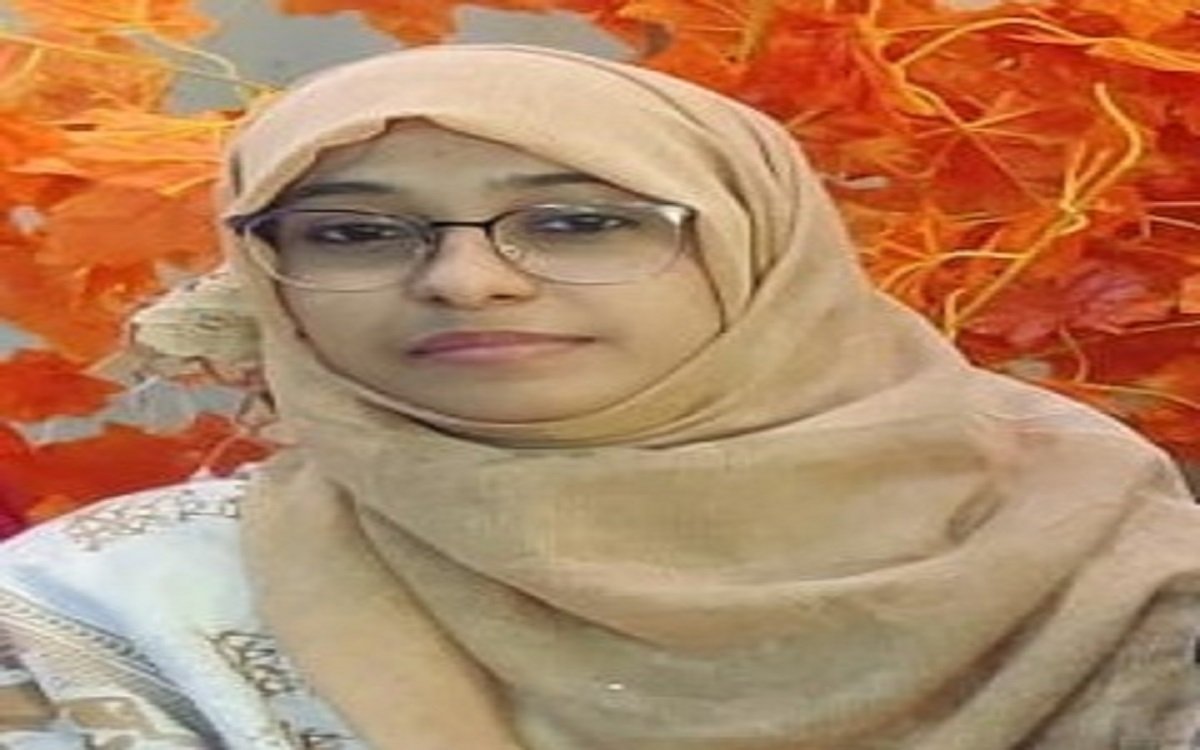
In the heart of Govandi, an area grappling with challenges like limited access to education and rising crime, a remarkable tale of triumph emerges. Khan Sadia Kawsar, a resident of this humble locality, is defying odds by pursuing her dream of becoming a doctor, thus becoming a shining example for the aspiring youth of her community.
Despite the dearth of quality educational institutions in Govandi, Khan Sadia Kawsar’s journey stands out as an inspiration. A local official highlighted the prevalent issues, noting that the area often makes headlines for crime-related incidents, with little attention from politicians or concrete initiatives from religious leaders to address the root causes. The suggestion to uplift Govandi’s image centers around establishing better educational institutions and providing improved training for the younger generation.
Khan Sadia Kawsar, a second-year MBBS student, is the daughter of Hafiz Alauddin Sahib, a respected figure in the community and a dedicated honey trader. Despite the challenges, Hafiz Alauddin spared no effort in providing religious education to his children. An accomplished computer engineer himself, he played a pivotal role in guiding Sadia towards her academic pursuits.
Sadia’s academic prowess became evident early on, consistently scoring high marks in school. Her remarkable achievement of securing 98.5% in the twelfth examination from the Govt.Jr.College in B. Kothakota, Andhra Pradesh, paved the way for her current pursuit of a medical degree at the Fathima Institute of Medical Sciences in Kadapa.
Khan Sadia Kawsar’s journey symbolises the triumph of determination and hard work. Her success challenges societal stereotypes, proving that with determination, even the daughter of a humble businessman can achieve great heights. Hafiz Alauddin Khan, reflecting on the challenges he faced to support his children’s education, emphasised the importance of unwavering faith in God and the merit of one’s children.
Originally from Basti district, Uttar Pradesh, Hafiz Alauddin Khan is not only a devoted father but also a prominent scholar and supporter of religious institutions. Along with his contributions to organisations like Darul Uloom Deoband and Jamiat Ulema, he maintained a focus on his small honey business, always expressing gratitude for Almighty’sblessings.
Hafiz Alauddin’s advice to parents echoes a belief in the inherent merit of their children. He advocates trust in God and encouragement of the youths, emphasising that success is destined for those who persevere.
In the face of societal challenges and limited opportunities, Khan Sadia Kawsar’s journey serves as a guiding light, illuminating a path of hope and possibility for the new generation in Govandi and beyond.
source: http://www.clarionindia.net / Clarion India / Home> Editor’s Pick> Features> Indian Muslim / by Mohammad Alamullah, Clarion India / December 18th, 2023
Chhatwan Village (Keotiranway Tehsil, Dharbhanga District),BIHAR:
Photo: Afrin’s success in securing the Special Survey Law Officer position reflects her dedication and hard work. The achievement has illuminated her family’s name, adding to the legacy left by her grandfather.
The festive atmosphere in her village is palpable as the news of Afrin's success spread, making her not only a source of pride for her family but also an inspiration for the younger generation in the region.
Darbhanga:
In an impressive performance, a Muslim girl from Chhatwan village in Keotiranway Tehsil of Bihar’s Darbhanga District, has excelled in the online Computer Based Test (CBT) conducted by the Bihar Joint Entrance Competitive Examination Board for the coveted position of Special Survey Law Officer in the state’s Revenue and Land Reforms Department.
Shagufta Afrin, hailing from a family with a strong academic background, secured an impressive 283rd rank out of 1947 in the examination, specifically in the General Khatoon quota for the Special Survey Law Officer position.
Daughter of Muhammad Shahabuddin Rizvi, an engineer, and Nuzhat Parveen from Chhatwan village in the Keoti assembly constituency, Afrin has made her parents proud. Her success story is on the lips of all and sundry in the village and its neighbouring areas.
The festive atmosphere in her village is palpable as the news of Afrin’s success spread, making her not only a source of pride for her family but also an inspiration for the younger generation in the region. The achievement is particularly significant as it brings recognition to the entire region.
Afrin’s grandfather, the late Muhammad Zubair, served as a joint director of agriculture, and her late grandmother was a dedicated housewife.
Afrin diligently prepared for the competitive exams after completing her civil engineering degree from Delhi.
Afrin’s success in securing the Special Survey Law Officer position reflects her dedication and hard work. The achievement has illuminated her family’s name, adding to the legacy left by her grandfather.
She attributes her success to the unwavering support of her parents. Her younger brother, Aman Rizvi, is pursuing MBBS, while her younger sister, Shumaila Rizvi, is currently in Grade 8.
Numerous well-wishers, including local leaders and activists, have congratulated and extended their good wishes to Afrin.
Prominent personalities such as Muhammad Shamim, Heera Seth, Mukhya Fateh Ahmed, Muhammad Mustafa, Faiz Muhammad, Sajjad Alam, Sagheer Alam, Phool Babu, Iftikhar Ahmed , Muhammad Aslam Khan, and Sagheer Najam have joined in celebrating Afrin’s success and have offered prayers for her continued bright future.
Afrin’s achievement not only symbolises personal success but also serves as a beacon of hope and inspiration for the community, showcasing the potential for excellence.
source: http://www.clarionindia.net / Clarion India / Home / by Team Clarion / December 23rd, 2023
Her work pinpoints the sources of aerosols and their role in driving regional climate change in India, besides equipping the Ministry of Environment with the right knowledge regarding policymaking.
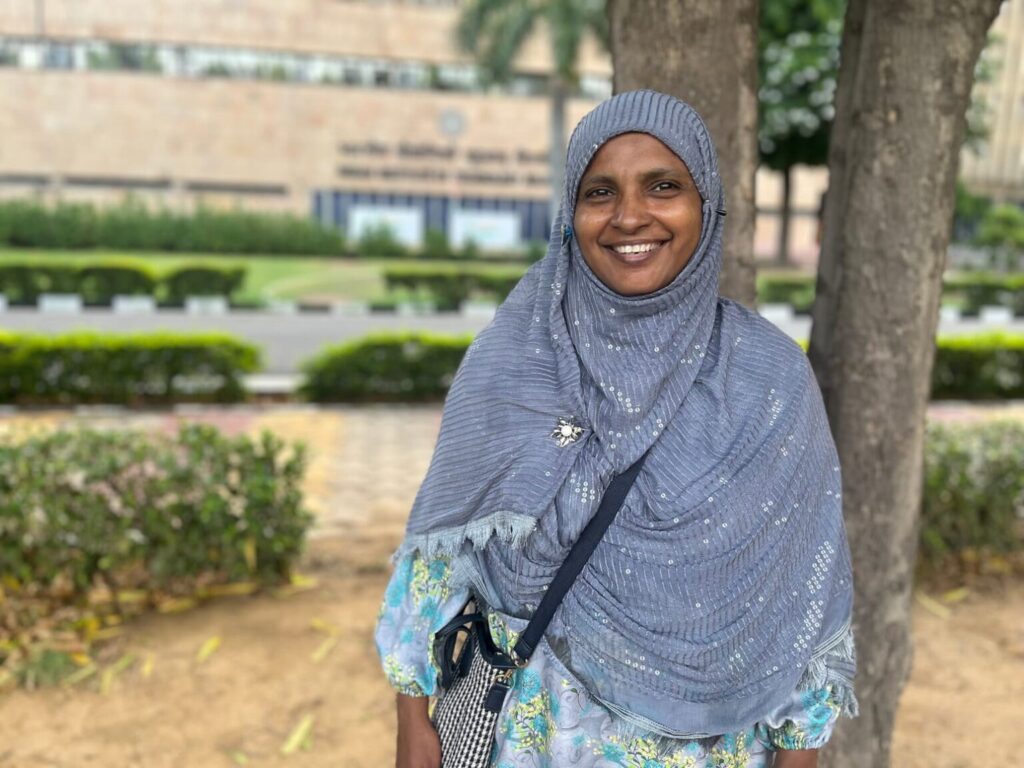
Dr Gazala Habib never imagined she would be a scientist one day. She recalls entertaining the idea of becoming one while watching the 1969 Bollywood spy thriller Yakeen at her home in Raipur, Chhattisgarh, but the moment was short-lived.
In the movie, Dharmendra plays a swashbuckling scientist who battles everything from enemy agents to his own doppelganger as part of a secret mission to save the country. “As much as I wanted to be like him, I also knew that it was out of the question. I came from a small town and a very conservative background, and had not heard of any woman scientist growing up,” says Dr Habib, now 49.
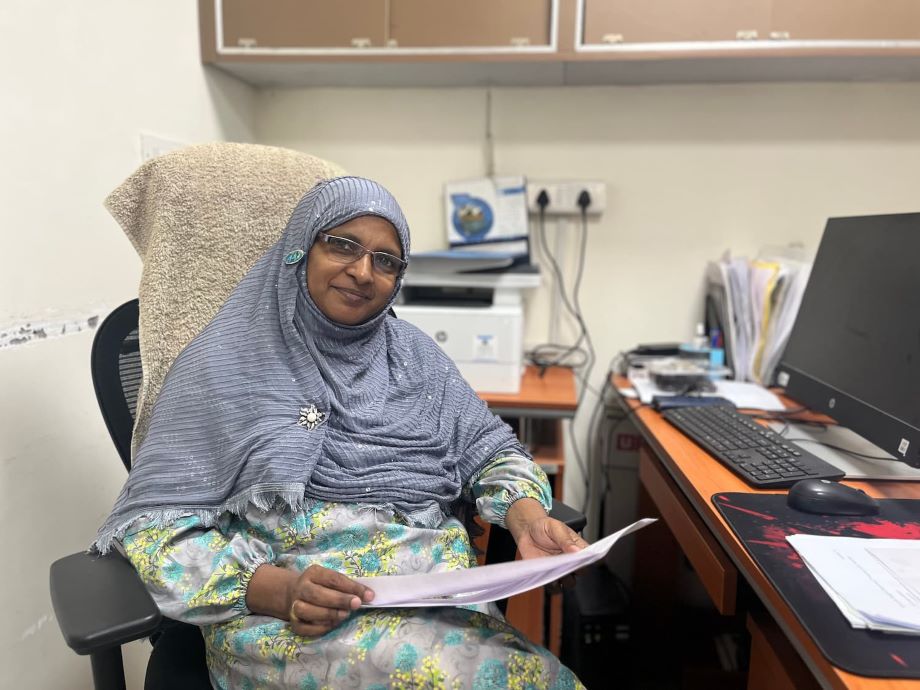
Eventually, Dr Habib did get to live her childhood dream. A professor at the Department of Civil Engineering of the Indian Institute of Technology Delhi (IIT Delhi), her work focuses on measuring air pollutants, particularly aerosols, in ambient air using innovative equipment and approaches.
Dr Habib set up and heads the Aerosol Research and Characterization Laboratory at IIT Delhi
She also set up and heads the Aerosol Research and Characterization Laboratory at IIT Delhi, which undertakes cutting-edge research on sources of aerosols and their impacts on human health. “We strive to fill up the significant gaps in our understanding of personal exposure to particulate matter [PM] in urban areas. This will assist policymakers to better measure the impacts and inform policy initiatives,” she explains.
Dr Habib says only limited studies on PM have been conducted in India, and that too mostly at one or two locations. “None of them provide an overarching assessment of human exposure in an urban context — integrating a variety of typical exposures across a typical day, and being useful in comparing different types of exposures throughout a person’s daily activity,” she details.
Much of the work has been carried out as part of the Emissions Inventory Building Activity under the National Carbonaceous Aerosols Programme-Carbonaceous Aerosol Emissions, Source Apportionment and Climate Impacts (NCAP-COALESCE), a multi-institutional research and capacity building initiative funded by the Ministry of Environment, Forests and Climate Change. Dr Habib is the project incharge and coordinator in IIT Delhi for this programme.
“India does not have a uniform emissions inventory system [to measure total emissions from each pollutant from each sector]. The work under NCAP-COALESCE aims at equipping the Ministry of Environment with the right knowledge to aid sound decision-making on pollution policy,” she says.
To that end, Dr Habib and a team of researchers have developed a Versatile Source Sampling System (VS3), which will measure emissions and help monitor pollutants. The compact unit allows air to be drawn through a preweighed filter at a known rate, thus collecting particles in the air on its surface. The filter is weighed again to determine the mass of particles collected, and by dividing the mass by the total volume of air, the particle concentrations can be measured.
In comparison with other air monitoring equipment, VS3 is more sophisticated, sensitive and capable of measuring emissions, particularly small particulate matter, from a variety of sources such as residential cooking stove, open biomass burning, brick kilns and vehicles. While the technology was developed in IIT Delhi, Dr Habib says it is being used across NCAP-COALESCE partner institutions to understand complexities related to carbonaceous aerosols.
Challenging the traditional mindset
By her own admission, Dr Habib’s journey into the scientific world was not easy. “My father was a telephone operator, and my mother a primary school teacher. I am one of the eight siblings. We did not have luxuries, but my parents, especially my father, prioritised our education,” she says.
Her parents were strict about school, but their expectations relaxed a bit when time for enrolling in college arrived. “There were people in my family who were like, ladkiyon ko zyada padhane ki zaroorat nai hai [there is no need to educate girls much]. At one point, my father also contemplated the idea of my marriage after BSc,” she says.
“They expected my brothers to do engineering, and thought I should do a science degree and start preparing for IAS. But I felt that my brother was more admired by my parents because he was inclined towards engineering. He is 10 minutes older than me, and I thought to myself, if he can do it, why not me?” she adds.
With a little help from her brother, she managed to convince her parents to study engineering. Later, she gained admission to Bachelors of Engineering at the National Institute of Technology, Raipur. Subsequently, she pursued MTech in environmental engineering from Visvesvaraya National Institute of Technology, Nagpur.
Dr Habib’s earliest memories revolve around working with a large group to identify carcinogenic compounds present in emissions generated from burning crop waste in rural India
Rigours of research
Dr Habib believes destiny defined the trajectory of her career. “I was contemplating about PhD, when a junior directed me to a vacancy at IIT Bombay. I managed to apply just in time,” she says.
There were only two vacancies, and on account of a particularly gruelling panel interview, she recalls putting down her chances of selection as next to nil. However, she got selected. Her PhD mentor was Chandra Venkatraman, a Professor of Chemical Engineering and Climate Studies at IIT Bombay, who Dr Habib says “changed her way of thinking”.
“I was very shy and conventional. I remember telling her that I had never travelled alone. I told her I am not the girl who can go out and measure pollution,” she recalls. Venkatraman laid her apprehensions to rest, and Dr Habib eventually joined her mentor to work on a project analysing emissions from residential fuel sources.
The five years at IIT Bombay groomed Dr Habib to become the scientist she is today.
“I remember I started work in January and she immediately put my name up for speaking at an international conference in October. I was from a Hindi medium background, and did not even know English! She taught me to make my first PowerPoint presentation and my first Excel sheet. She taught me not only science, but also communication. Whatever I am today, it is because of her,” says Dr Habib.
Dr Habib’s earliest memories revolve around working with a large group to identify carcinogenic compounds present in emissions generated from burning crop waste in rural India
Her earliest memories revolve around working with a large group to identify carcinogenic compounds present in emissions generated from burning crop waste in rural India. “I learnt a lot from this group about how to collect samples, what kind of machines to use and how to use them,” she says. This was soon followed by her first international trip to France, where she got to work with Olivier Boucher, Director of Research, French National Centre for Scientific Research.
The coursework was demanding, and added to that was the pressure to get married. “I think the rush to get women married is also why a large number of them end up dropping out of PhDs or giving up their careers,” she adds. After consulting Prof Venkatraman, Dr Habib decided to get married only after finishing her PhD, a promise she ended up keeping.
The rigours of research eventually got to her and she remembers a point in her PhD when she became depressed. Her time at the University of Illinois, and then University of San Diego, for postdoctoral work, worsened things. “I felt lonely during my US stint, but rediscovered myself after frequenting a mosque based on a colleague’s advice,” she says.
Entry into academic sphere
In June 2008, Dr Habib joined IIT Delhi as an assistant professor. In November the same year, she got married.She was regularised in her post in 2010, and promoted as an associate professor in 2018. In March this year, she became a professor.
In the last 15 years, she has provided valuable data that helps understand air pollution better. For example, her team measured the impact of PM 10 and 2.5 particle concentration on mortality rates to assess that the numbers attributable to PM 2.5 particle concentration in Ghaziabad was 70% higher than Delhi.
“Exposure to PM has been recognised as a well known human health risk factor, however, its quantification for various regions, including India, is still not well established. In the last few years, we have undertaken many studies to help quantify this data by studying the impact of pollutants on different organs, including heart and lungs, as well as different demographic populations,” she says.
With respect to Delhi’s pollution problem, she says, “In the winters, we cannot stop talking about stubble burning in Punjab and Haryana. If you read the source apportionment papers from Delhi, you will find that pollution due to stubble burning lasts only a few days. The long-term problem that we should be solving is suspension of dust from roads. From a personal exposure perspective, vehicles account for 20 to 30% of PM 2.5 concentration,” she says.
She believes having a policy on effectively managing crop waste is the need of the hour. “In a paper we recently submitted to Nature, we discovered that despite the Pradhan Mantri Ujjwala Yojana, a majority of rural households still use fuel dung for energy. If they use crop waste for biogas generation in addition to cow dung, there is no need of pushing LPG down their throats. It will cost less also,” she adds.
Dr Habib thinks funding needs should be simplified and freed from the shackles of bureaucracy for the research to contribute more effectively to policy. Also, India should follow an integrated approach and make the data publicly available. “What we need is a network programme that brings scientists under one umbrella, gives them standard equipment, procedure and a common goal,” she says.
“Source apportionment studies are being done in India by state Pollution Control Pollution Boards (PCBs) and Central PCB in non-attainment cities, but there is no national network. Every state is following its own rules — so methodologies, data analysis and data curation methods are different. Therefore, you cannot compare data from two cities,” she adds.
At present, Dr Habib’s focus is on setting up a state-of-the-art laboratory where all kinds of devices related to air pollution safety and monitoring can be evaluated for their performance
State-of-the-art laboratory
At present, Dr Habib’s focus is on setting up a state-of-the-art laboratory where all kinds of devices related to air pollution safety (like air purifiers, masks) and monitoring can be evaluated for their performance. “We have just received a grant from the Department of Science and Technology under SATHI [Sophisticated Analytical and Technical Help Institutes]. The laboratory will be developed at IIT Delhi’s Sonipat campus. At present, gate number 3 of IIT Delhi has such a facility,” she says.
Dr Habib swears by the support of her husband, her 13-year-old son and 11-year-old daughter. “There are creches and day care centres on campus now, but they were not available when I had children. I do not think I would have been able to manage it all without my husband,” she says.
She believes that for more girls to study sciences and mathematics in India, discrimination needs to end. “When you put differences in their minds from the beginning, they start believing they are weak,” she says, adding that true equality can be gauged from the representation women receive. “I am still the only woman in the room in most conferences. This needs to change.”
“I never thought I would be able to do this. I had this epiphany a couple of times that I wanted to be a scientist, but the guidance came from somewhere, somehow. It was all god’s plan I say, because I never planned this,” she sums up.
source: http://www.rukhmabai.com / Rukhmabai Initiatives / Home / by Shikha Sharma / August 28th, 2023
Manzoor Khan, 72, a resident of Lari village in Ramgarh district, holds the license for the Ramnavmi procession in accordance with a local tradition of giving such licences to a Muslim.
Chitarpur is a sensitive area of Ramgarh district and adjacent to village Lari, but the area has set an example of communal harmony because of the tradition of giving a licence to a Muslim. Earlier, the licence was issued in the name of Manzoor Khan’s father late Ismayal Khan. After his death, Manzoor Khan took up the task and during the last few years, the licence has been issued in his name.
“I apply to Rajrappa police station for the licence and the deputy superintendent of police’s office issues it. At first we organise a meeting of villagers and they give the work to me. At once, the licence is issued for two and a half panchayats,” he said.
He said, “Once only a single Muslim family of my forefathers was living in Lari village and so the villagers used to select my father for taking the Ramnavmi procession licence. I celebrate all Hindu festivals with the villagers.”
The license of the Ramnavmi procession in the area is issued in his name and he leads the procession not only for Ramnavmi but also for other religious festivals like Durga Puja, Kali Puja. He has always maintained a record of communal harmony. The tradition to get Ramnavmi Procession in the name of a Muslim community man has kicked off years ago.
The story and work of Manzoor Khan are famous throughout Jharkhand. Some time ago, he had to face a little problem from both the Hindu and Muslim communities but with the help of one God belief, he managed everything.
This year the Ramnavmi procession with a grand celebration will be organised at Lari. Manzoor is busy again with lots of enthusiasm. The entire village has worn a Ramnavmi loot and he is the leader of the entire program. All villagers are supporting him. A few Muslims are also busy with him celebrating this memorable festival. Mahaveeri flags are waving and Festival songs are being played in the village.
“As long as I am alive I will organize the procession. I hope my sons will also follow this tradition of their forefathers. They are busy with me to celebrate Ramnavmi in the village,” he added.
source: http://www.lagatar24.com / Lagatar / Home / by Manoj Sinha / March 29th, 2023
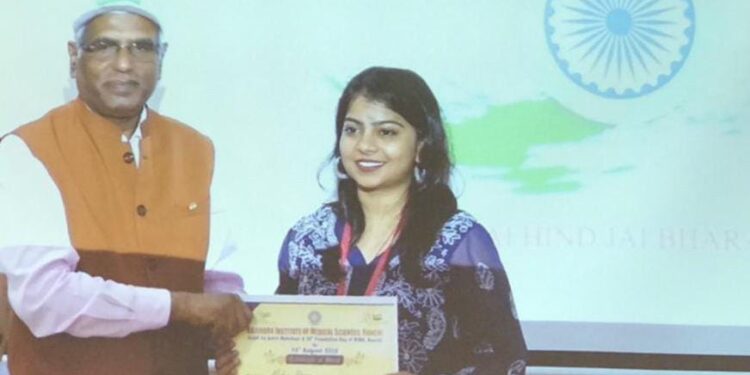
Shahina Khanam, a resident of Hesla on Ramgarh-Argadda road, will be awarded a gold medal for being a topper for four years in BDS.
The medal will be awarded by Governor CP Radhakrishnan at the convocation ceremony of Ranchi University on May 2.
Topper Shahina Khanam is the sister of Rinkle Khan, the town vice president of AJSU. The family members are very happy with the news of getting the gold medal and there is an atmosphere of happiness in their house.
Shahina Khanam’s mother, father, brother, sister and other people distributed sweets.
AJSU Nagar Vice President Rinkle Khan said that earlier education was neglected in Muslim society. But now the Muslim society is also rapidly increasing its step towards education.
source: http://www.lagatar24.com / Lagatar / Home / by Manoj Sinha / April 26th, 2023
Dwindling number of artists, status of caste-based occupation and scarce government support through schemes and training camps affect its progress
Usta Kala Artists
Bikaner, Rajasthan:
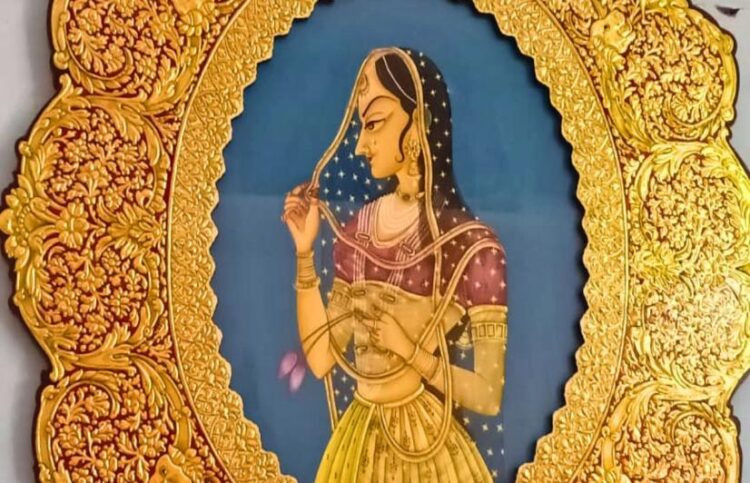
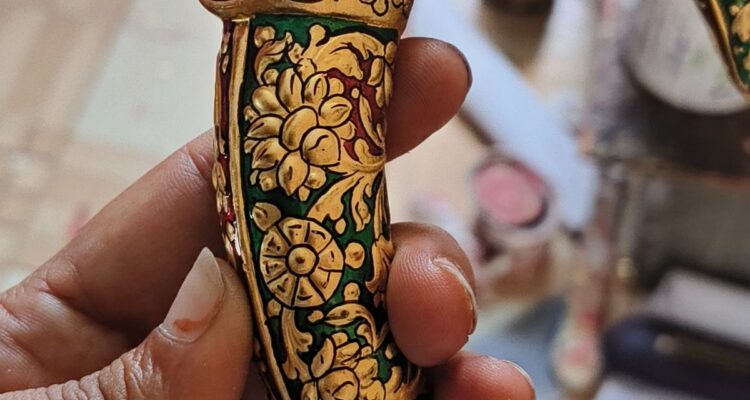
Sitting cross-legged at his workshop in Rajasthan’s Bikaner, Shaukat Ali Usta (52) is engrossed in laying warq (fine slivers of gold) on a wooden frame. His work involves not only acquired skill, but also loads of patience. The intricate designs that he has laid out on camel leather-embossed exhibits have not only won him a national award instituted by the Ministry of Textiles, but also many valuable customers over the last 30 years.
Shaukat learnt the art from Mohammed Hanif Usta, a disciple of Hisamuddin Usta, a doyen in this field. Despite Bikaner Usta Kala receiving the Geographical Indications (GI) tag last month, getting more artists into this profession has become an arduous task.
Usta kala flourished in the Mughal courts, before Raja Rai Singh, the sixth ruler of Bikaner, patronised it and welcomed artists from Iran, belonging to the Muslim community, to the city famed for its camels. No wonder their work involving gold meenakari and munawwat was done on camel skin. Nowadays, wood, mirror and marble also form the raw materials. Glass jars, wooden boxes, wall paintings and gift items with usta work are quite popular. There are big works like bandanwars (work on doors) too.
Usta kala in Bikaner’s Bhanda Shah Jain temple is almost 400 years old. Anup Mahal in Junagarh Fort, Jain mansions, mosques, Rampuria Haveli, Ajmer Sharif Dargah, Jama Masjid of Delhi, Neelkanth Mahadev Temple in Nepal, and mosques of Sri Lanka and Saudi Arabia are fine examples of workmanship.
However, by 1967, Hisamuddin Usta was the only usta artist left in the country. When Munna Lal Goyal became Bikaner Collector in 1976, he exhorted Hisamuddin to impart lessons to others. This led to the launch of Camel Hide Training Centre. Mohammed Hanif Usta soon became Hisamuddin’s disciple and started learning the nuances of the art.
While Hisamuddin received Padma Shri Award in 1986, Hanif was honoured with the President’s Award in 1993 for his miniature work on marble. The latter had decorated the walls of Anup Mahal and Nizamuddin Dargah.
During Bill Clinton’s official visit to India in 2000, Hanif and 14 other artists got a chance to meet the then US President. Looking at his marble exhibit, Clinton said he wanted that in the White House. However, Hanif replied that he would not sell the work that fetched him a national award to anyone.
Hisamuddin’s other disciples Mohammad Asgar Usta and Ajmal Hussain Usta have received state awards for their commendable works. His grandson Mohammad Jameel Usta has been working for the promotion of the art through innovative experiments. He has also been a member of the Rajasthan Lalit Kala Akademi.
Thanks to Hisamuddin and his disciples, the number of usta artists has increased. However, it is still not satisfactory as only less than 70 artists are present in the field.
Usta Kala of Bikaner city of Rajasthan has got Geographical Indication (GI) certification (Photo sourced by Dr Mudita Popli, 101Reporters)
An ailing art
Usta artists admitted that lack of skilled people was a reason for the art not making much progress, despite having all the necessary ingredients to flourish. Usta artists are well-off and there is no dearth of work. The income of artists depends on how many pieces they can complete in a month, their worthiness and selling prices. Some pieces can fetch Rs 7,000, while some others Rs 50,000.
There are more opportunities now as new works are commissioned and renovations are carried out on a regular basis at various places, including Delhi Airport, Jain temples and buildings outside the country. The artists also benefit from handicrafts fairs organised at Pragati Maidan in New Delhi and other big cities.
However, lack of skilled manpower eventually means a shortage of talented teachers. The art has been confined to a particular caste and that too to only Bikaner. This has had a negative impact on its growth. As for women in this field, Shaukat said, “I believe use of purdah makes it difficult for women to do this art.” He added that some Hindu women have entered the field, but their numbers are negligible.
Another important aspect is the time taken to complete a piece. Showing a bandanwar he did, Shaukat said it took around three months to complete, and it will be priced at above Rs 50,000. Such long periods of work put off the youth, who are keen on getting educated and entering other professions.
Not just that, it takes at least three to five years to master the art. The lack of proper publicity and government efforts to train people also hamper the art.
The much-needed fillip
The GI tag is the first step to protect usta kala. Bikaner District Industries Centre (DIC) General Manager Manju Nain Godara and NABARD officer Ramesh Tambiya agreed that duplication of usta artworks has been an issue. However, the GI tag will curb the issue as the names and details of the usta artists will be mentioned on their artworks, which can be scanned to check authenticity.
Tambiya, Assistant General Manager, NABARD, Bikaner, told 101Reporters that the GI tag will boost employment opportunities in the area and will give the art a place in the international market.
However, Shaukat believed that merely getting a GI tag will not protect and promote usta kala. “The art will survive only if it is propagated in a complete manner,” claimed the artist, who has made efforts in collaboration with Prayas Welfare Institute, Bikaner, to get the GI certification. Godara, NABARD and the Department for Promotion of Industry and Internal Trade, Ministry of Commerce and Industry, New Delhi, also played important roles in making it a reality.
For the art to be propagated in a complete manner, there should be schemes to promote it. Godara told 101Reporters that no such scheme was being run to help the craft. “For the last four years, I have been striving to get GI certification for usta kala. Now, we will make further efforts to encourage the artists,” she said.
Asked about training camps for artists, Godara said, “The DIC’s mandate is to run government schemes only. Earlier, we used to organise such camps under the aegis of Rajasthan Small Industries Corporation Limited. At present, the National Institute of Fashion Technology, Jodhpur, runs them. USTTAD, a skill upgradation scheme of the Ministry of Minority Affairs, also aids the artists. The NABARD finances it. However, the duration of the camps is short. If a course is designed by the Centre or state government for usta kala, then the DIC can play an important role in it.”
Godara informed that the DIC will display usta works at an exhibition of GI products to be held in Jammu and Kashmir in the first week of October. “We always try to provide artists with information about various fairs and exhibitions, so that they can participate,” she claimed.
Ajmal Hussain Usta, aged around 60, has 40 years of experience in the field. He told 101Reporters that the government was not doing things right. “We do not get full information about schemes. The dissemination of information given on the website of the Union Textile Ministry’s Handicrafts Department is negligible among our artists.”
An Usta Kala article (Photo sourced by Dr Mudita Popli, 101Reporters)
“Like music, usta kala cannot be learnt completely by attending a training camp of only two or three months. It needs constant practice to attain perfection,” Ajmal said. While echoing his views, Shaukat said, “We need to connect with the youth. Only a few have come to learn the art as it is limited only to Usta families. There is also a misconception that it is very expensive to learn.”
Ajmal felt the Camel Hide Training Centre should hold its training sessions more regularly. That apart, the Central and state governments should try to link usta with the tourism department initiatives.
Artisan cards
Artisan cards are issued by the Centre to handicraft artists aged above 18 years on application, so that they could travel in trains free of cost to attend government fairs. They also get free stalls at fairs to exhibit their works. Using the card, they can also participate in art related marketing schemes of the Central and state governments.
According to Shaukat, the true expansion of usta kala is possible by providing artisan cards, a rightful place to capable artists and by properly implementing schemes meant for them.
Usta artist Naveen Acharya (30) said the government training camps should be able to attract young and energetic learners who want to learn the art fully. “Only a few women are present in this field. Through my interactions, I have known that they all have learnt the work with great difficulty,” he said.
Chanchal Suthar (24) told 101Reporters that her artisan card was issued recently and that she wished to get more training. Deepika Shrimali (35), who has studied Master of Fine Arts course, said she learnt usta kala from a guest lecturer. “It is not possible to gain professional knowledge in a short time. If an usta course is launched, many students of Bikaner will become proficient in the art,” she added.
(Dr Mudita Popli is a Rajasthan-based freelance journalist and a member of 101Reporters, a pan-India network of grassroots reporters.)
source: http://www.lagatar24.com / Lagatar / Home> National & International / by Dr Mudita Popli / October 05th, 2023
Leading English, Urdu, and Hindi news portals in the country have come together to establish a national-level joint platform officially named “Cogito Media Foundation.” The announcement took place at the Millat Times office in Batla House, Delhi. The foundation aims to unite digital media platforms at various levels and enhance journalistic values and responsibility.
At the launch, journalists highlighted the importance of collective responsibility among digital media platforms to safeguard press freedom and uphold journalistic values. Cogito Media Foundation intends to facilitate training for journalists at the district and block levels, establish a self-regulatory system, and address legal issues faced by journalists and media institutions. The foundation also plans to launch campaigns for public awareness to solve financial challenges faced by media organizations.
Journalists associated with Cogito Media Foundation expressed concerns about the current state of journalism, emphasizing the need to shift focus from political turmoil to addressing the real problems faced by marginalized communities, including Muslims, Dalits, women, and tribals. They called for strengthening journalism that represents the neglected narratives of these sections and contributes to societal development, health, education, economy, and social bonds.
Cogito Media Foundation comprises 16 digital media organizations, including Millat Times, Maktoob Media, Muslim Mirror, The Cognate, The Observer Post, Haque Media, Nous Network, Baseerat Online, Stories Karvan, Clarion India, Asia Times, Milli Digest, Insaaf Times, Journo Mirror, and Khabar Adda.
The foundation has invited other media organizations to join the initiative by filling out an online form. Additionally, plans for a detailed program with new members and a major media conclave in the capital are underway, with details to be released soon.
Online Form for Joining: https://forms.gle/qHw2cfDsXtQxmbRaA
source: http://www.thecognate.com / The Cognate / Home> News / by The Cognate News Desk / January 04th, 2024
The UAE-Indian business council has been established on the first anniversary of the Comprehensive Economic Partnership Agreement (CEPA) deal signed by India and the United Arab Emirates. The formation of the council is aimed at increasing investment and bilateral trade between the two countries.
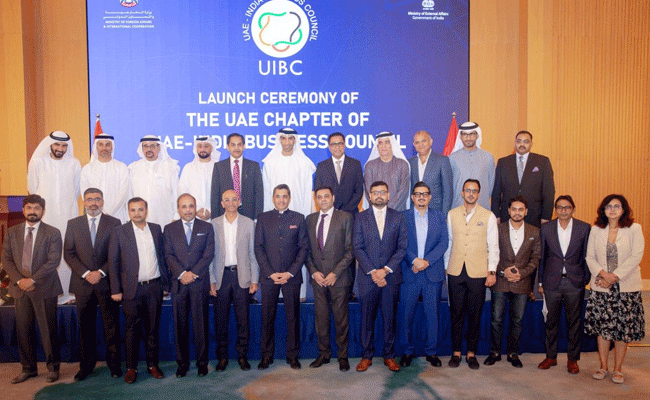
The UAE India Business Council – UAE Chapter (UIBC-UC) was launched in Dubai by Dr. Thani bin Ahmed Al Zeyoudi, UAE Minister of State for Foreign Trade, in the presence of Ambassador of India to the UAE Sunjay Sudhir, Consul General of India in Dubai Dr. Aman Puri and founding members of the UBIC-UC.
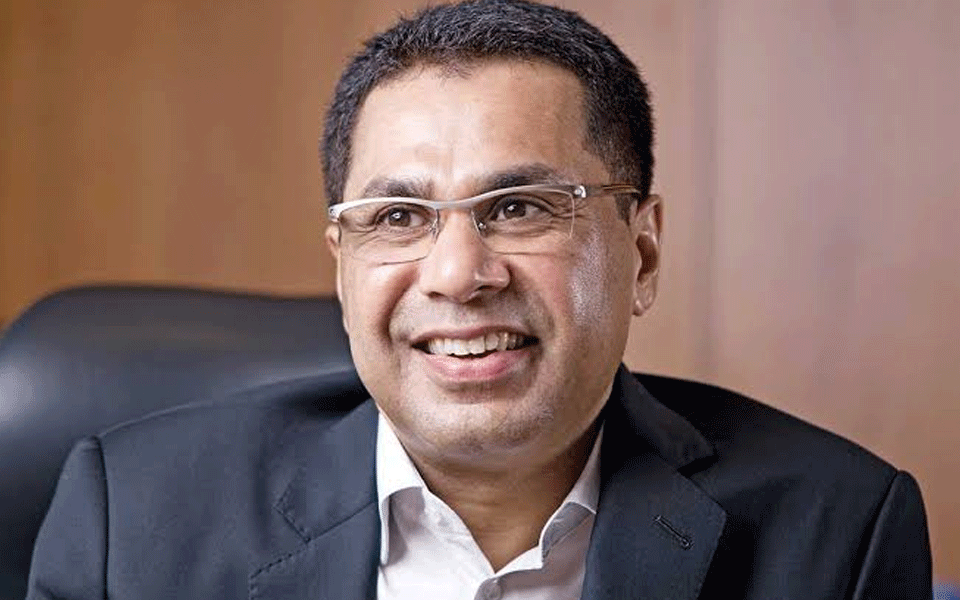
(Faizal Kottikollon)
NRI businessman Faizal Kottikollon was appointed as the chairman of the council. Faizal Kottikollon said the main purpose of the council was to build trust.
“In the past, several UAE companies have taken some poor decisions while investing in India because they were not confident to invest large amount of money,” he said. “We will act as a channel partner and a bridge. The basis of any business is trust. When you develop trust, everything becomes easier.” He was quoted as saying by Khaleej Times.
With both countries growing rapidly, Faizal, who is the chairman of KEF Holdings, said this council was the need of the hour. “UAE has become the centre of the world after Covid,” he said. “India has got so much knowledge, but we need a lot of capital. UAE got a significant amount of capital. So, if you can marry these two things, it’s a powerhouse. What this council does is identifying projects in both the countries and bring investment through this channel.”
Faizal confirmed that there are several projects already in the pipeline. “We are very confident that there’ll be three large investments coming into India soon,” he said. “We will announce the details in due course of time, but I can assure you that it is indeed a very exciting time.”
“This is a very significant thing,” said Sunjay Sudhir. “We want to bring together their experience of doing business in both countries so as to further lubricate the investment and business corridor between both countries. They will discuss ideas on how to further generate trade and investment opportunities.”
The founding members of the UIBC-UC from the UAE side are Mubadala, Wizz Financial, DP World, Emaar, Emirates airline and Emirates NBD. From the Indian side, conglomerates such as Tata, Reliance, and Adani are represented, as well as tech innovators like OLA, Zerodha, Udaan, and EaseMyTrip, along with prominent Indian entrepreneur-led corporations based in the UAE such as KEF Holdings, Buimerc Corporation, Apparel Group, EFS and Lulu Financial.
Siddharth Balachandran, executive chairman and CEO of Buimerc Corporation Ltd said the UIBC-UC will further strengthen the growth of India-UAE relationship. “To channelise the various investments, we need channels like these,” he said. “It will add a layer of credibility and give investors a channel to verify investment opportunities.”
Rizwan Soomar, CEO & MD (India Subcontinent) at DP World, will serve as the Co-Chairman of UIBC-UC. Major General (Retd.) Sharafuddin Sharaf, who serves as the Chairman of the UIBC India Chapter, will also hold the position of Vice Chairman of UIBC-UC.
The council will have its office in Abu Dhabi and will be a pan-UAE body focusing on promoting trade and investment relations between the UAE and India. Membership to UIBC-UC will be by invitation only, and institutional members will be invited over time.
An India chapter of the business council was established in New Delhi in 2015 by Sheikh Abdullah bin Zayed Al Nahyan, UAE Minister for Foreign Affairs and International Cooperation, and the late Sushma Swaraj, who was then Minister of External Affairs of India, during the 11th Session of the India-UAE Joint Commission Meeting.
source: http://www.english.varthabharati.in / Vartha Bharati / Home> Gulf / by Vartha Bharati / February 18th, 2023
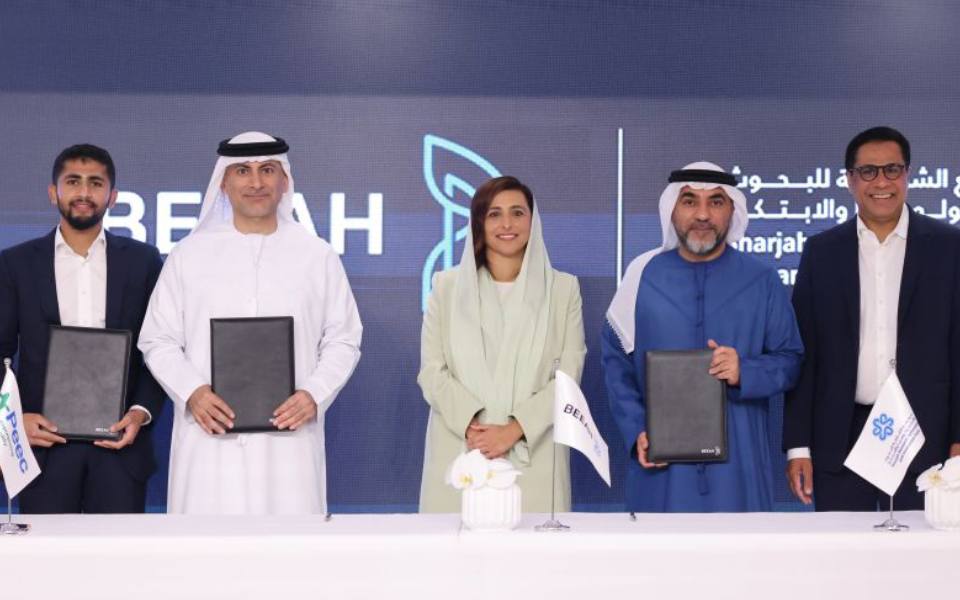
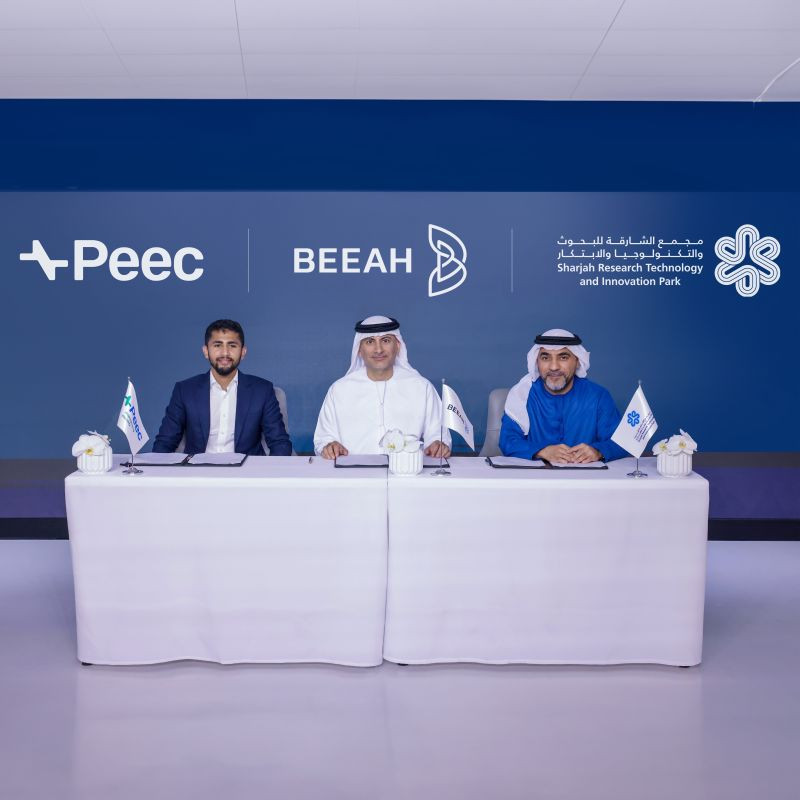
In a groundbreaking move toward sustainable transportation, BEEAH has officially entered into a strategic partnership with Peec Mobility and the Sharjah Research, Technology and Innovation Park (SRTIP).
The collaboration aims to revolutionize local electric vehicle production by repurposing end-of-life petrol vehicles, fostering recycling practices to support a circular economy, and driving research and skill development in the burgeoning field of sustainable mobility.
The partnership agreement, signed at the BEEAH Headquarters, saw the participation of key figures, including Her Excellency Sheikha Bodour bint Sultan Al Qasimi, President of the American University of Sharjah and Chairperson of SRTIP; Khaled Al Huraimel, Group CEO of BEEAH; Zach Faizal, Founder of Peec Mobility; and HE Hussain Al Mahmoudi, CEO of SRTIP.
Zach Faizal’s brainchild, Peec Mobility, has been at the forefront of innovation since its inception in 2022. The Dubai-based startup specializes in the repurposing of retired petrol vehicles, seamlessly transforming them into electric vehicles with a remarkable 30% cost reduction and an 80% decrease in manufacturing time compared to the production of new electric vehicles.
Faizal, a 24-year-old entrepreneur, envisions Peec Mobility’s technology as a game-changer for the region. He emphasizes that their re-engineering process offers a more cost-effective, quicker, and environmentally friendly transition to electric mobility than investing in entirely new electric vehicles.
“Today, re-engineering is quicker, smoother, and greener than buying new EVs, and proves cost-efficient,” Faizal stated during the announcement. “Peec’s vehicles are aimed to be priced at 30 per cent to 50 per cent lower with the volumes we’re looking at, thus solving the affordability challenge in the sector,” he added.
Peec Mobility’s focus extends beyond individual cars, with ambitious plans to repurpose entire fleets of ICE buses, cars, and trucks on UAE roads. Faizal believes in the efficacy of reusing existing vehicles, stating that “waste is minimized, and a new life cycle begins.”
The partnership seeks to support Sharjah’s transition to sustainable mobility while minimizing the environmental impact of the production and repurposing processes. The overarching goal is to contribute to national and global objectives for zero-waste, circularity, sustainable transport, and decarbonization.
Zach Faizal expressed his commitment to the cause, stating, “Conversion is the most pragmatic route to Net-Zero. Once we succeed with our business strategy here, we will take it to other countries to redefine the used-car market.”
As part of the collaboration, Peec Mobility and its partners plan to unveil the first lineup of repurposed mid-sized sedans and buses at the UN Climate Change Conference, showcasing the innovative technology and commitment to sustainable practices.
With the support of the government, Peec Mobility aims to implement the conversion at scale, creating a replicable model not only for the UAE but potentially for other countries. Faizal proposes a policy to repurpose 5.0% of existing vehicles on the road annually for the next seven years, aligning with the UAE’s Net Zero goal.
As of now, Peec Mobility is on track to introduce at least 500 repurposed EVs on Dubai roads by 2024, offering a tangible solution to the affordability challenge associated with electric vehicles.
Zach Faizal is the son of Faizal Kottikollon and Shabana Faizal, a well-known Indian entrepreneur couple based in the UAE. The couple is not only known for their business endeavors but also for their philanthropic contributions.
Shabana hails from Mangaluru in the Karnataka state of India. She is the only daughter of prominent businessman and socio-religious leader Late B Ahmed Haji Mohiudeen who founded the prestigious BA Group of Businesses in Thumbay near Mangaluru.
source: http://www.english.varthabharati.in / Vartha Bharati / Home> Gulf / by Vartha Bharati / December 13th, 2023