All posts by mpositiveone@gmail.com

Nasreen Shaikh: The Rise Of A New Star

Araria, BIHAR / Shakarpur, NEW DELHI:

By winning the prestigious Arjuna Award, the 25-year-old India women’s kho kho team captain has brought joy to her struggling father, who dedicated himself body and soul to fuel her passion.
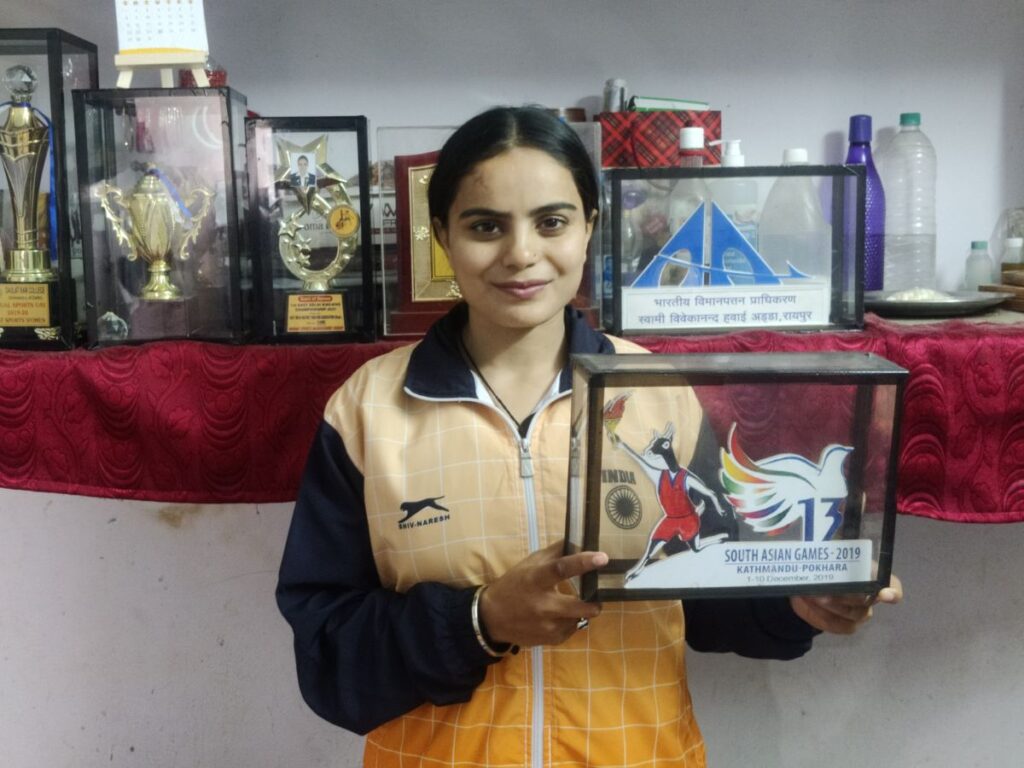
Nasreen Shaikh, a 25-year-old from Shakurpur, will walk down the iconic Durbar Hall of Rashtrapati Bhavan on January 9, to collect the Arjuna Award in Kho Kho, a sport that is not considered mainstream since it isn’t part of Commonwealth, Asian or Olympic Games.

She will become only the second kho kho player to win the National Sports Award in the last 25 years – the other being Sarika Kale Sudhakar in 2020 – after the indigenous sport became irrelevant at the turn of the century and struggled for recognition with the Union sports ministry backing Olympic sports heavily to eye medals in the quadrennial international multi-sports events.

“Kho Kho has changed my life. I have been able to support my struggling father,” said Nasreen as she flipped through a file looking for documents for police verification required to be sent to authorities ahead of the Arjuna Awards ceremony.

Nasreen’s father, Mohammed Ghafoor, came to Delhi in 1980 from Araria in Bihar, polished utensils for a living, worked as thekedaar (contractor) before losses forced him to try his luck at weekly markets. The father of 11 doesn’t rest even a single day and sets up shop in morning and evening all seven days of the week. He sells his wares – mostly utensils — in patri bazaar (roadside weekly markets) in Inderlok, Inderpuri, Minto Road, Patel Nagar, Ranjit Nagar, Karampura, Nangloi, Tri Nagar, Kishan Ganj, Shastri Nagar among other places.

“Generally, people focus on one market a day but I have been taking my wares to two bazaars every day for the last many years since household expenses are huge. I had to bring up kids (seven daughters and four sons) and also fuel Nasreen’s passion,” says Ghafoor.

“I worked a lot for her. It was my responsibility to provide her with the diet. She requires [protein] powders, chana, peanuts, nuts and almonds. I’d go to Lahori Gate to fetch all this and it would cost 5,000-6,000 rupees every time,” explains Ghafoor.

Nasreen is extremely grateful to her father, who is chuffed to see her daughter win the Arjuna Award. 

“He even stopped visiting his hometown as it would set him back by a good amount. He made many sacrifices.”

There was also some resistance to her taking up the sport, especially kho kho, but when Nasreen began earning accolades and people around her saw prospects, all of that subsided and she started getting acknowledged in the family and among relatives.
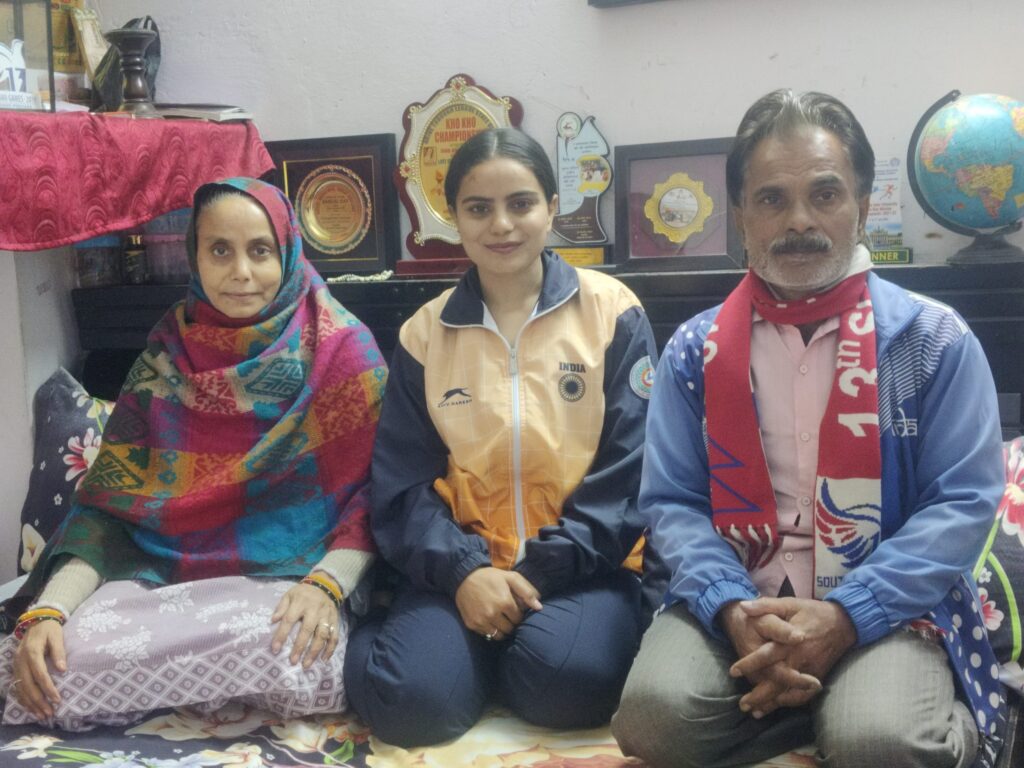
(R to L) Mohammed Gafoor, Nasreen Shaikh and her mother

Hard Worker : 

Nasreen’s father Mohammed Ghafoor) sets up shop all seven days of the week in patri bazaars to help fund her daughter’s training. To Nasreen’s right is her mother

“She was committed right from the start and I thought she should be given a chance,”adds Ghafoor. 

Nasreen started playing kho-kho when she was in third standard at the Government Senior Secondary School in Kohat Enclave. She was also a very good athlete, winning gold medals in 100m and 200m sprints at school level. By the sixth standard, she was participating in the school nationals as well as the nationals in kho kho. 

“Since we were financially vulnerable, I couldn’t play any sport that involved equipment. So, I had to pick kho kho and athletics,” says Nasreen, who graduated from Delhi University’s Daulat Ram College with BA (Pass) degree and is now doing M.P.Ed. (Masters in Physical Education) from Lovely Professional University in Punjab. She also completed B.P.Ed. (Bachelors in Physical Education) from the same university before this.

The big moment for Nasreen came in 2019 when she became captain of the Indian kho kho team for the South Asian Games. India won gold under her captaincy. She has so far competed in 50 national events and six international events. Even though the sport isn’t popular, still it is played in 38 countries.

While KKFI has started Ultimate Kho Kho, a franchise-based tournament that provides a platform for youngsters to earn and play, it is restricted only to male players. There are talks of having a women’s league on similar lines too but getting sponsors remains a struggle.

A few months after the high of becoming the national captain, her family struggled through Covid as her father had to sit at home without work. Kho Kho Federation of India, the governing body of the sport, chipped in with Rs 1 lakh and DYWA, an organisation based out of Delhi-6 also gave her Rs 50,000, to help her wade through the difficult time.

She worked on a stipend with Airports Authority of India (AAI).

“The stipend helped my family. But it had to end last year since the support is for only junior players,” says Nasreen, who is currently looking for a job and is hopeful that the Arjuna Award will help her land one.

“The sport has grown. It used to be considered a gali-kucha game. Earlier, we used to put money from our pocket for even travelling but now we are getting something back. Mittal sir (Sudhanshu Mittal, the president of the federation), announces cash prizes after tournaments and that helps. Prime Minister Narendra Modi backed the sport too in one of his speeches and it has boosted our confidence, given us recognition,” she adds.  

Nasreen’s success has already inspired her two younger sisters to take up the sport. The four older ones are married and settled as home-makers.

The 18-year-old sister is studying at LPU in Punjab while the youngest, who is 14 years old, is studying in a school in Delhi.

“They both want to play kho kho.”

Her younger brother even gave up studies to cut down on their household expenses and ensure that Nasreen is left with as much money as possible for her training. 

When at home, Nasreen leaves her home in hijab every morning on a scooty that she purchased recently and goes to a park in a different neighbourhood to work on her fitness.

“It (Hijab) is a norm here in our locality. But I take it off at the park during workout,” she adds.

The morning session is dedicated to endurance and fitness. She works out between 5 am and 8 am in the park before returning home. 

“You need athleticism, endurance, stamina, and flexibility in this game. Everything. That is also a reason why I got hooked to it. If we play this game and become good players, we can participate in other games too like I participated in athletics.”

She works on kho kho skills in the evening session from 4 pm to 8 pm. 

The set-up at LPU, she says, has helped her in training immensely.

While the Arjuna Award will be a feather in her cap and give her recognition, there is every likelihood that she will be celebrated as a star athlete in years to come. For the KKFI is planning biopic on her on the lines of those made on MS Dhoni and MC Mary Kom. 
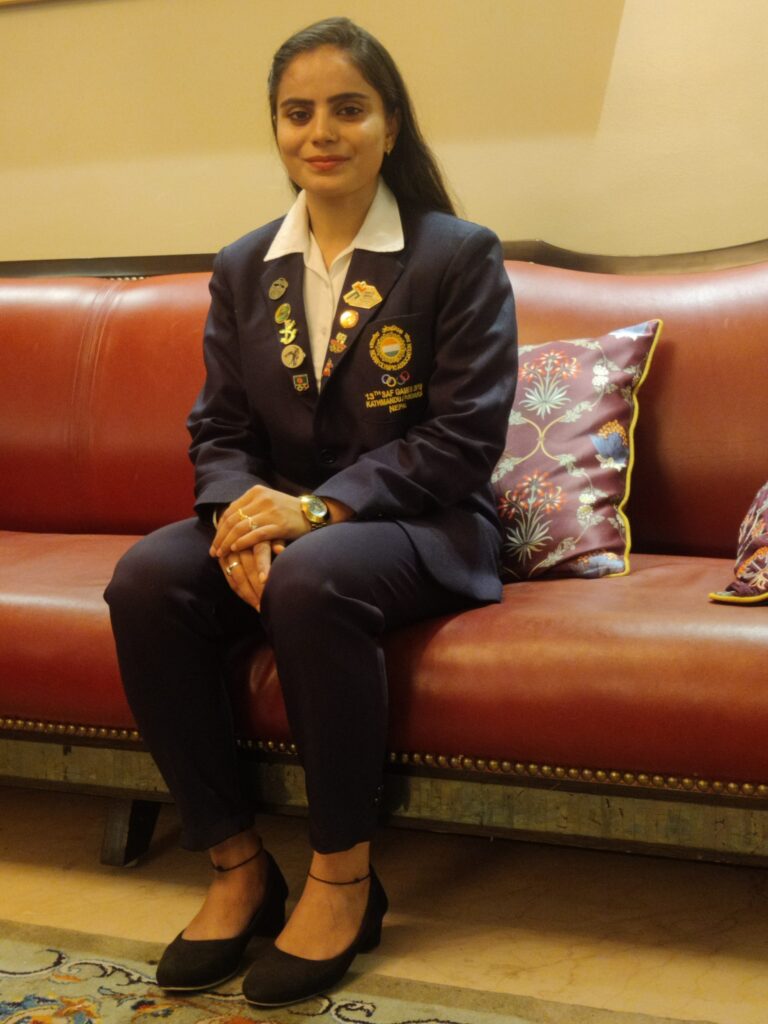
Special Player : 

Nasreen Shaikh is the second kho kho player to win Arjuna Award in the last 25 years

“We are making a biopic on her. The plan is still in a nascent stage and we are working out the details like who will write the script, and who will direct the film among other things. She could play the protagonist herself or we could hire another actor to play her,” said Mittal, the KKFI President to Patriot.

source: http://www.thepatriot.in / The Patriot / Home> Delhi NCR / by Khurram Habib / January 09th, 2024

Telangana boxer Hussamuddin nominated for Arjuna Award

Nizamabad, TELANGANA:

Hussamuddin is a two-time bronze medal winner from Commonwealth Games from 2018 Gold Cost and 2022 Birmingham

Telangana boxer Hussamuddin nominated for Arjuna Award
Mohammad Hussamuddin

Hyderabad: 

Telangana boxer from Nizamabad Mohammed Hussamuddin on Wednesday has been nominated for the Arjuna Award while shuttlers Satwiksairaj Rankireddy and Chirag Shetty duo were selected for the Major Dhyan Chand Khel Ratna Award.

Hussamuddin is a two-time bronze medal winner from Commonwealth Games from 2018 Gold Cost and 2022 Birmingham. He also won bronze each at World Championships in 2023 and Asian Championships in 2022.

Other sportspersons to be nominated for the Arjuna Award include men’s hockey players Krishan Bahadur Pathak and Sushila Chanu, archers Ojas Pravin Deotale and Aditi Gopichand Swami, chess player R Vaishali, golfer Diksha Dagar, shooter Aishwary Pratap Singh Tomar, wrestler Antim Panghal, Asian Games silver medallist wushu player Naorem Roshibina Devi and paddler Ayhika Mukherjee among others.

source: http://www.telanganatoday.com / Telangana Today / Home> News / Telangana Today / December 13th, 2023

Indian cricketer Mohammed Shami receives Arjuna Award

Sahaspur Village , Amroha, UTTAR PRADESH / Kolkata, WEST BENGAL:

Mohammed Shami
 Mohammed Shami

New Delhi: 

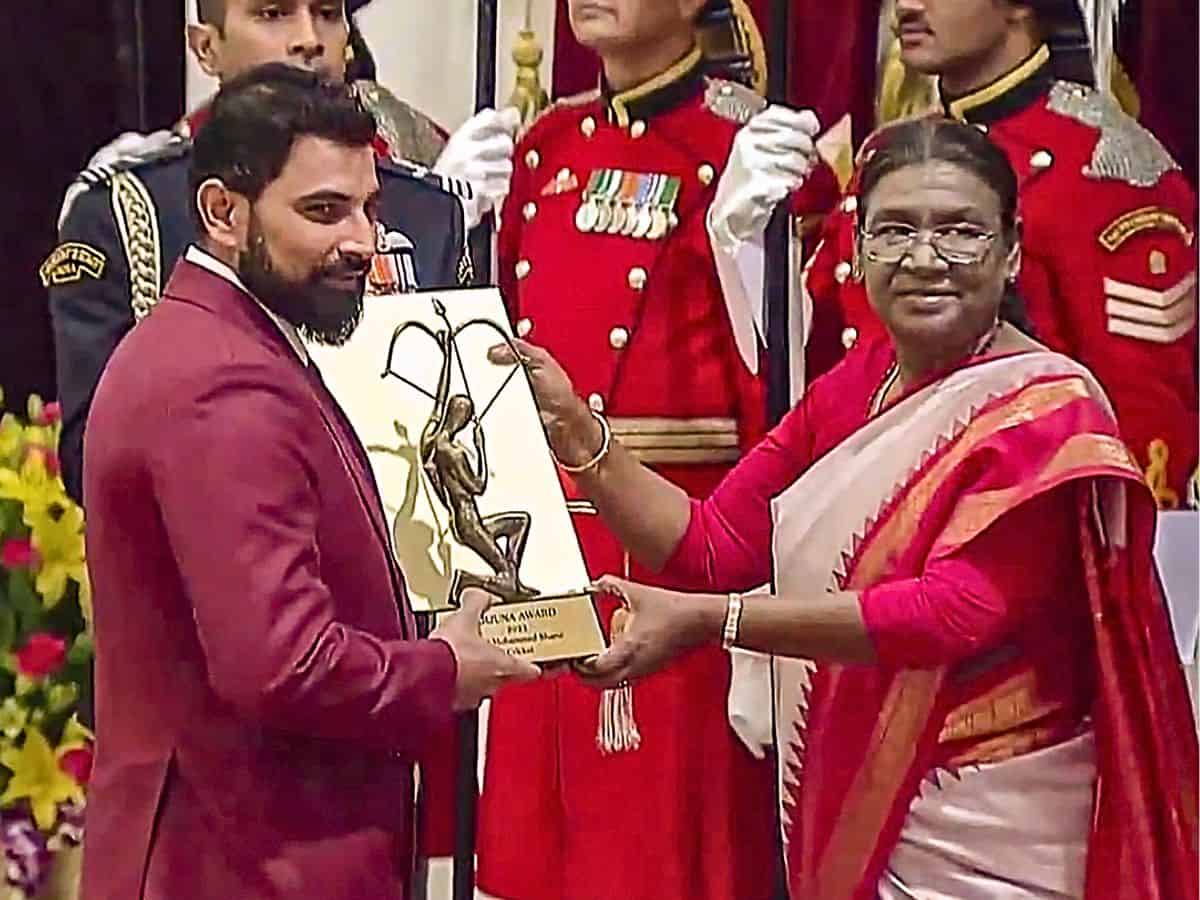
Indian cricketer Mohammed Shami was on Tuesday conferred with the Arjuna Award by President Droupadi Murmu in a regal ceremony. In the ceremony, other best-performing athletes were also conferred with the national sports awards by the President.

Shuttlers Chirag Shetty and Satwiksairaj Rankireddy were presented the coveted Major Dhyan Chand Khel Ratna award for a breakout 2023, during which they won their maiden Asian Games gold — a first for India in badminton –, while also clinching the Asian Championships title and the Indonesia Open Super 1000 title.

The awards ceremony, usually held on August 29 to commemorate the birth anniversary of hockey legend Major Dhyan Chand, was deferred because of the Hangzhou Asian Games from September 23 till October 8 last year.

An atmosphere of gaiety pervaded the Rashtrapati Bhawan as 26 athletes and para-athletes were conferred the Arjuna Awards.

Also receiving a huge round of applause was the newly-crowned chess Grandmaster R. Vaishali, the elder sister of precocious chess talent R. Praggnanandhaa.

Vaishali was honoured for becoming the third woman from the country after Koneru Humpy and Dronavalli Harika to turn GM.

Pistol shooting sensation, 19-year-old Esha Singh, was among the notable absentees as she is competing in the Asian Olympic Qualifiers in Jakarta.

Apart from Mohammed Shami, other sporting bigwigs who were chosen for the Arjuna award this year were wrestler Antim Panghal, a former junior world champion and bronze-winner at the senior event last year, boxer Mohammad Hussamuddin (bronze-winner at last year’s world championship), and para archer Sheetal Devi.

Among the notable Dronacharya awardees this year is chess coach RB Ramesh, who has groomed Praggnanandhaa.

While the Khel Ratna comes with a cash prize of Rs 25 lakh, the Arjuna and Dronacharya awards include a cash prize of Rs 15 lakh.

Recipients of 2023 awards

Major Dhyan Chand Khel Ratna Award for 2023: Chirag Shetty and Satwik Sairaj Rankireddy (badminton).

Arjuna Awards:

Ojas Pravin Deotale (archery), Aditi Gopichand Swami (archery), Murali Sreeshankar (athletics), Parul Chaudhary (athletics), Mohammad Hussamuddin (boxing), R Vaishali (chess), Mohammed Shami (cricket), Anush Agarwalla (equestrian), Divyakriti Singh (equestrian dressage), Diksha Dagar (golf), Krishan Bahadur Pathak (hockey), Sushila Chanu (hockey), Pawan Kumar (kabaddi), Ritu Negi (kabaddi), Nasreen (kho-kho), Pinki (lawn bowls), Aishwary Pratap Singh Tomar (shooting), Esha Singh (shooting), Harinder Pal Singh Sandhu (squash), Ayhika Mukherjee (table tennis), Sunil Kumar (wrestling), Antim Panghal (wrestling), Naorem Roshibina Devi (wushu), Sheetal Devi (para archery), Illuri Ajay Kumar Reddy (blind cricket), Prachi Yadav (para canoeing).

Dronacharya Award (regular category) for outstanding coaches: Lalit Kumar (wrestling), RB Ramesh (chess), Mahaveer Prasad Saini (para athletics), Shivendra Singh (hockey), Ganesh Prabhakar Devrukhkar (mallakhamb).

Dronacharya Award (life-time category) for outstanding coaches: Jaskirat Singh Grewal (golf), Bhaskaran E (kabaddi), Jayanta Kumar Pushilal (table tennis).

Dhyan Chand Award for lifetime achievement: Manjusha Kanwar (badminton), Vineet Kumar Sharma (hockey), Kavitha Selvaraj (kabaddi).

Maulana Abul Kalam Azad (MAKA) Trophy 2023: Guru Nanak Dev University, Amritsar (overall winner university); Lovely Professional University, Punjab (1st runner -up), Kurukshetra University, Kurukshetra (2nd runner-up).

Mohammed Shami may miss two Tests against England: Reports

Meanwhile, Mohammad Shami is likely to miss the first two matches of the upcoming five-Test series against England, set to commence on January 25, as the pacer is yet to resume bowling following an ankle injury, say reports.

He has not started bowling, and he will need to go to the National Cricket Academy (NCA) to demonstrate his fitness, according to Indian Express report.

Mohammed Shami was included in the Test squad against South Africa but his availability was subject to fitness. The BCCI later in a press release stated that Shami has not been cleared by the Medical Team and the fast bowler was ruled out of the two Tests.

With inputs from agencies

source: http://www.siasat.com / The Siasat Daily / Home> News> Sports / by Sameer Khan / January 09th, 2023

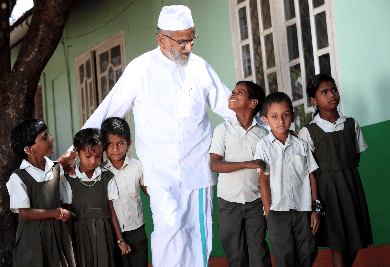
MA Mohammed Jamal, ‘beloved godfather of orphans’ passes away at 83

KERALA:

MA Mohammed Jamal, the revered godfather to thousands of orphans and general secretary of Wayanad Muslim Orphanage (WMO) in Kerala’s Wayanad district, passed away on Thursday, 21 December.

Having dedicated his life to the orphanage since 1967, Jamal transformed the lives of numerous orphans.

Initially a member of the Indian Union Muslim League, he assumed leadership of the orphanage in 1987 following the passing of veteran Muslim leader Abdul Rahman Bafaqui Thangal.

Over 400 students, with WMO’s financial support, pursue higher studies nationwide after leaving the orphanage, and many expressed their grief on social media following the death of “Jamaluppa,” the name they used to call him.

Jamal, also a Kerala state committee member of the Indian Union Muslim League, was 83.

His demise leaves a significant void at the helm of the 19 institutes providing religious and moral education to approximately 9000 students in Wayanad.

In recognition of his philanthropic endeavors, Jamal received prestigious awards, including the Kerala Mappila Kala Academy’s first Sharifa Fatima Award in 2006, the Indira Gandhi Sadbhavana Award for Best Education Worker in 2008, the KSTU’s first Shihab Thangal Award for Best Social Worker in 2011, and the Quaid-E-Millath Foundation’s Quaid-E-Millath Award.

source: http://www.maktoobmedia.com / Maktoob Media / Home> India / by Maktoob Staff / December 21st, 2023

An Academic Expedition: Exploring the world with Dr. Abu Saleh Shariff

Bengaluru, KARNATAKA / Washington, U.S. A / MAHARASHTRA :

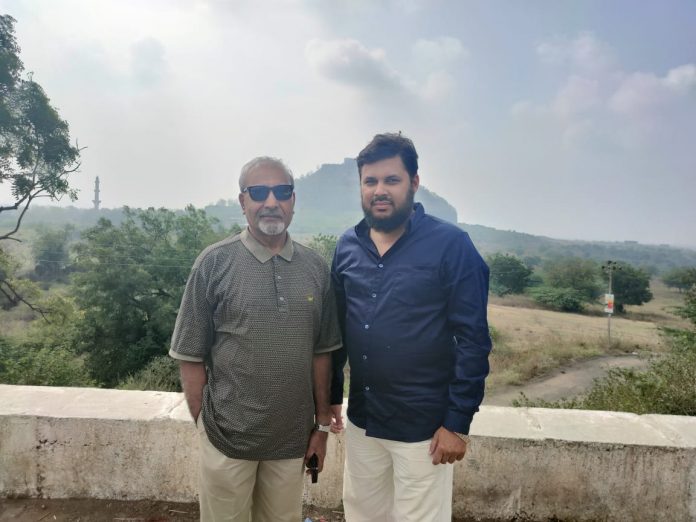
Dr. Abu Saleh Shariff with the writer.

One serene morning, Ex-Member of Parliament Mr. Hussain Dalwai’s call broke the tranquility of my routine. His voice, firm yet inviting, conveyed an unexpected assignment, “You have to organize a program for Dr. Abu Saleh Shariff, the Member Secretary to the Sachar Committee.”

This revelation marked the beginning of a new chapter in my life, as it was the first occasion I would meet Dr. Shariff and immerse myself in his profound insights on equal opportunities in education.


The program unfolded smoothly, and I was engrossed in Dr. Shariff’s enlightening discourse. As the event concluded, Mr. Dalwai approached me with a proposition that sparked a surge of excitement within me. “You’re accompanying Dr. Shariff on his tour to Aurangabad,” he stated. My response was nothing short of an enthusiastic ‘yes’, buoyed by the thrilling prospect of learning from such a distinguished individual.


With anticipation brimming in my heart, I approached Dr. Shariff. “I am the one who will be joining you on your journey to Aurangabad,” I announced. He gazed at me with a knowing look and responded, “You’re unaware of my daily routines and what traveling with me entails.” His words hinted at the unfolding of an enlightening adventure, one that promised to be as challenging as it was rewarding.


Unfamiliar with Dr. Shariff’s research approach and his perspectives on nature’s mysteries, my mind p quest to understand his methodology in social research and his knack for connecting with influential figures, including politicians from various ideologies. Despite his close interactions with political leaders, he remained apolitical, a neutral observer committed to his research.


I was intrigued by his ability to navigate the complex landscape of national research. How did he formulate the right questions, and what guided his decisions on what to include or exclude in his report? In a nation as diverse and vast as ours, these choices were crucial in shaping a comprehensive understanding of our society. This journey with Dr. Shariff promised to offer insights into these intricate processes.


As our train journey began, Dr. Shariff started talking about his trip to Bryce Canyon, a breathtaking place in the US. He didn’t just tell me about it; he encouraged me to look it up and learn more. This was his way of getting me to think and explore.

When we talked about my studies, every time I tried to explain something, he would interrupt with a friendly joke and a big smile, saying, “I am not such a foolish.” He was playful, but there was a lesson there. He was showing me how to think deeply and understand things better.
He even made a joke about how long I would be traveling with him. When I said maybe three days or more, he just smiled and said, “Oh, it depends on how much I benefit you.” He was being funny, but he was also teaching me to look for the value in things and think ahead.


Throughout our time together, it was clear that Dr. Shariff thought differently. He wasn’t just talking; he was always teaching and helping me see things in new ways. His humor and smart way of thinking showed me how to look deeper into everything and always think a step ahead.
Dr. Shariff had a unique routine; he woke up early for long walks, not in the bustling streets of the city, but in its quieter outskirts. He preferred places rich in natural beauty or historical significance – old forts, hill tracks, or sites where nature met history. That day, he expressed a desire to visit Daulatabad Fort, but not through its main entrance. Instead, he sought a more adventurous path.


We hired a local driver, asking to be taken to the fort’s rear, intending to ascend through the natural trails. Observing my knee pain, I initially hesitated. Yet, seeing Dr. Shariff’s enthusiasm, I gathered my courage and agreed, “Yes, I am with you to climb the fort from the forest side.” In my mind, it was more than just a physical challenge; it was a metaphor for overcoming fears and obstacles in my social and political journey. With Dr. Shariff leading the way, I was ready to face this challenge, hoping to learn from his resilience and adaptability in the face of life’s unexpected turns.
As I busied myself taking photos, Dr. Shariff observed my efforts and remarked, “You have much to learn about photography.” He then took it upon himself to teach me. Under his guidance, I learned about framing, contrast, and the context of a good photograph. It was an enlightening experience; he showed me how to capture not just images, but the essence and story behind them.


His lessons went beyond the technicalities of photography. He taught me to see the world through different lenses – metaphorically and literally. It was about capturing the broader context in our vision, understanding the nuances that lay beyond what meets the eye. He linked this to researching nature, whether it was geology, sociology, or the behavior of people.


With each snapshot, I learned to observe and think deeper, understanding that every picture held layers of meaning and stories waiting to be told. Dr. Shariff’s teachings were transforming the way I viewed the world, urging me to look beyond the obvious and delve into the deeper context of everything around me.


During our return from the fort, we realized we had lost our way. Confused, we tried to remember the path we took to reach the top. That’s when Dr. Sharif stepped in. He revealed that on our way up, he had discreetly marked certain reference points, something I hadn’t noticed.


As we retraced our steps, Dr. Sharif pointed out these markers – subtle hints and landmarks he had mentally noted earlier. His foresight was a lesson for me. He explained that, like in our journey, when conducting research or undertaking significant projects, it’s crucial to remember our path. He emphasized the importance of being aware of our starting point, understanding what we need to gather from our endeavor, and knowing how to return to the base with newfound knowledge.

This experience with Dr. Sharif taught me a valuable lesson about mindfulness and strategy, not just in adventures but in all aspects of life and work. It was about keeping track of our journey, both literally and metaphorically, to ensure we can always find our way back, enriched by our experiences.

Our next destination was the ancient Ajanta Caves. Dr. Shariff encouraged me to delve into its rich historical tapestry, comparing it with the history of the Petra temple. In these magnificent places, he shared a profound thought: he sought the divine in natural wonders and historical marvels, where the art of humans and the art of God intersect. It was here that his research found its true meaning.

This revelation was enlightening. I realized that research wasn’t just an academic skill; it was a habit, a constant pursuit, practiced day and night. This journey unveiled the real Abu Saleh to me – a man who didn’t just author the Sachar report but deeply studied socio-economic patterns and human behavior. His predictions of future events and strategies to combat potential crises were not mere coincidences. They were the results of his continuous struggle and practice, honed over years of dedicated research.

This understanding reshaped my perspective on research. It was no longer just a profession or a duty; it was a way of life, a lens through which to view and understand the world in its entirety.

As our journey reached its conclusion and we headed back to Mumbai, the experiences I had shared with Dr. Abu Saleh Shariff had forged not just a strong bond but also plans for future collaborations in writing and research.

Throughout this enlightening journey, I had been privy to a world beyond the public programs, exploring various minority groups with different mindsets and lifestyles. Each interaction, each conversation with Dr. Shariff, was a lesson in itself. His innate curiosity inspired me to delve deeper into every subject, his humor and wisdom a constant reminder to look beyond the obvious.

His approach to life and research, blending academic rigor with a deep understanding of human nature, reshaped my perspective. The lessons in critical thinking, strategic planning, and the importance of observation have been invaluable. They have taught me to appreciate the complexity of research and life, encouraging me to seek out the deeper meaning in every experience.

As we planned joint articles and research projects, I realized that my journey with Dr. Shariff was more than just a physical travel; it was a transformative intellectual and personal adventure. It was an exploration that extended beyond academic confines, enriching my understanding of the world and leaving me with insights that would guide my future endeavors in research and beyond.

I owe a heartfelt thanks to Mr. Hussain Dalwai, former Member of Parliament and my mentor, for orchestrating this enlightening journey with Dr. Abu Saleh Shariff. His invaluable guidance and mentorship have profoundly shaped my professional path and personal growth. Mr. Dalwai’s vision and support have been pivotal in this transformative experience, and for that, I am eternally grateful. His impact on my journey is deeply cherished and will always be remembered with immense respect.

source: http://www.muslimmirror.com / Muslim Mirror / Home> Positive Story / by Dr Danish Lambe / January 07th, 2023

A mahal called farangi: A story from another time, of another Lucknow almost forgotten

Lucknow, UTTAR PRADESH:

The Telegraph visits the haveli where the Khilafat and Non-Cooperation movements came to be mergedThe Telegraph visits the haveli where the Khilafat and Non-Cooperation movements came to be merged.

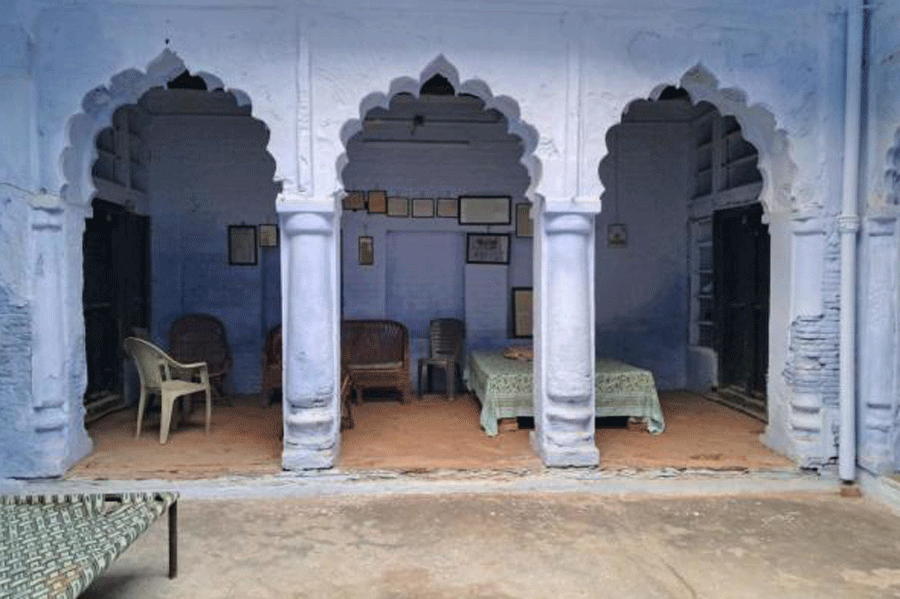
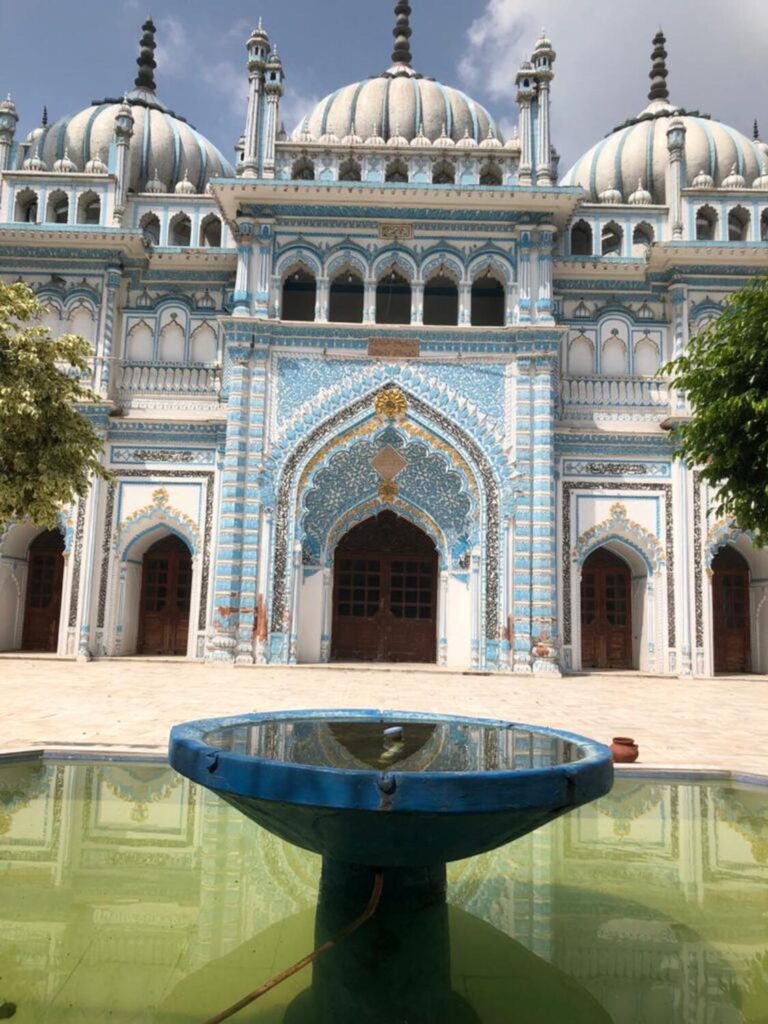
Farangi Mahal in Lucknow. / Photo courtesy: Adnan Abdul Wali

Stepping into Farangi Mahal in Lucknow after skirting rows of low-priced chikankari salwar kameez shops and their steady din is somewhat like stepping into the stillness of a forest after having left a busy city. Only, Farangi Mahal is anything but a forest. It is a cluster of buildings that hold within them a bit of history that has been almost forgotten, as the past often is in India, obscured by new settlements or construction, or billboards, if not demolished altogether.

In Farangi Mahal the past is difficult to see also because of the turn Indian politics has taken.

I am part of a group from Calcutta visiting Lucknow last October.

Inside Farangi Mahal, located in the old neighbourhood of Chowk, we enter its elegant and serene courtyard. The lime-and-mortar white exterior is tinged with a blue, peeling off in places. The afternoon sun slants down on the pillared arches and the exposed bricks but does not take away from the fragile beauty of the structure.

Adnan Abdul Wali, a member of the family that owns the house, the Farangi Mahalis, ushers us into the courtyard. His Urdu and Hindi are as impeccable as his courtesy. He is a direct descendant of Maulana Abdul Bari Farangi Mahali, who was a leader of the Khilafat Movement.

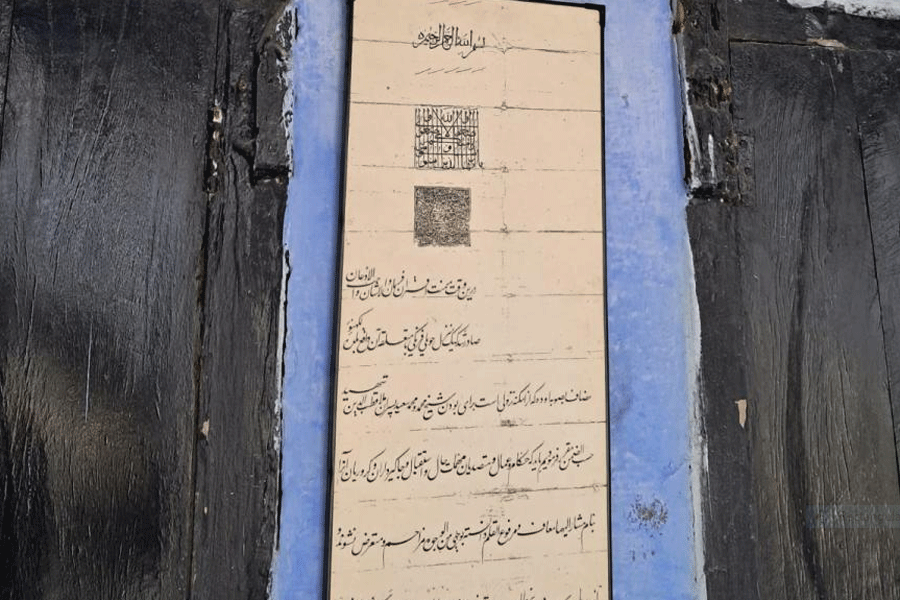
Farangi Mahal’s story, however, goes back beyond the nawabs and the British. It was occupied by French merchants during the rule of Mughal emperor Aurangzeb and that is how it got its name. The merchants, owing to some offence, lost the property and Aurangzeb gave it to Abdul Bari’s ancestors, who needed a safe haven.

The farman issued by Mughal emperor Aurangzeb decreeing that Bari’s ancestors could live here / Photo courtesy: Adnan Abdul Wali

“The Khilafat movement started from here,” says Wali. Farangi Mahal is where the idea of joining the Khilafat Movement and the Non-Cooperation Movement was born and Abdul Bari was the architect of the plan. It was a glorious moment of Hindu-Muslim unity in Indian history and Lucknow played its part in it.

Abdul Bari, an eminent religious scholar who belonged to the tradition of highly respected scholars from his family, was also an astute politician. He had travelled across many Muslim countries and was acutely aware of the impact of British imperialism on the Islamic world.

In March 1919 came the Rowlatt Act, which was to be followed by the horrors of the Jallianwala Bagh massacre in April 1919, one of the events that would lead Mahatma Gandhi to launch the Non-Cooperation Movement. Before that happened, a large number of Muslims in India were already disturbed by the threat of the dismemberment of the Ottoman Empire in Turkey following World War I and the jeopardised future of the Caliph, the Ottoman head of state, who is nominally the supreme religious and political leader of Sunni Muslims across the world. Turkey had been defeated by the Allied Forces, which included the British.

Adnan Abdul Wali, a direct descendant of Abdul Bari and the family that owns the house. / Photo courtesy: Adnan Abdul Wali

Abdul Bari was convinced that in India, Muslims needed to be made aware that the fate of the Ottoman Empire was their religious concern — and the articulation of the Khilafat (Caliphate) cause needed a larger, national platform.

From around 1919, Abdul Bari was raising support in the countryside, says Francis Robinson, a historian who specialises in Islam in South Asia. Abdul Bari had founded a newspaper for the purpose. But more importantly, he wanted to woo Gandhi to the Khilafat struggle.

Gandhi came to stay in Farangi Mahal for the first time in March 1919 and within six months, Abdul Bari had won him over, says Robinson. This also led to a period of a very special friendship between the two men, which was rooted not only in a common political cause but also shared spiritual beliefs and a love for mysticism, as embodied in Sufi philosophy.

Politically, the campaign for Khilafat and Gandhi’s stamp on it saw Abdul Bari reaching the height of his influence during 1919 and 1920.

Abdul Bari and his Farangi Mahal relatives, with the help of the lawyer Chaudhri Khaliquzzaman, drew up the constitution of the All-India Central Khilafat Committee, says Robinson. “He devoted enormous effort first to persuade the Khilafat Committee to adopt non-cooperation as a policy and second, at the Allahabad meetings in June (1920), in persuading the committee to accept Gandhi as chair of the group that was to put non-cooperation into action,” adds Robinson.

From then on till September 1920, Abdul Bari successfully campaigned to organise a significant Muslim presence at the Calcutta Special Congress, which was held from September 4 to 9, 1920. The session passed the resolution of the Non-Cooperation Movement with a demand for Swaraj. The Khilafat Committee and the Congress came together with non-cooperation as the common goal.

After March 1919, Gandhi stayed at Farangi Mahal three times, recounts Wali proudly. Other leaders such as Jawaharlal Nehru, Maulana Abul Kalam Azad and Sarojini Naidu stayed here as well. During Gandhi’s second visit, in September 1919, Muslims in the area abstained from cow slaughter during Bakrid as a mark of respect to Gandhi and appreciation for his support to the Khilafat cause. “Abdul Bari had requested Muslim families to make the gesture,” says Wali.

This was somewhat different from the recent celebration of November 25 as No Non-Veg Day by the BJP government in Uttar Pradesh. The announcement was made to honour the birth anniversary of Sadhu T.L. Vaswani and slaughterhouses and meat shops were required to remain closed that day. There is a world of difference between giving up meat voluntarily and being forced to do so, as there is between non-violence and violence. But such distinctions perhaps do not make much sense anymore in Lucknow, once the capital of nawab-ruled Oudh, now ruled by the BJP with Yogi Adityanath at its helm. Like the No Non-Veg Day, the city has several streets and institutions named after lesser-known Hindu saints.

Abdul Bari is said to have introduced Gandhi to the sufi saint Bakhtiyar Kaki, disciple and successor to Moinuddin Chishti. Three days before his death, Gandhi delivered his last public address at the shrine of Bakhtiyar Kaki in Mehrauli.

Abdul Bari had earlier invited Gandhi to Ajmer, where Chishti is enshrined. At Ajmer Sharif Dargah, Gandhi is said to have experienced his first qawwali on Chishti. It was there that he asked Abdul Bari about Bakhtiyar Kaki. He had first visited Ajmer Sharif in 1921 and would visit it again.

In 1922, after the Chauri Chaura incident, Gandhi withdrew the Non-Cooperation Movement. Abdul Bari did not relent; he was not sparing of Gandhi either, says Robinson, but one has to remember his politics was primarily religious in inspiration. His influence declined steadily from this time and he died in 1926, a disappointed man, according to Robinson.

His name is often seen missing now from the roll call of prominent Khilafat leaders.

And yet Abdul Bari was not only a politician but also an eminent educator, Wali reminds. His ancestors had established a madrasah that became well-known all over the Islamic world and had introduced a syllabus, Dars-e-Nazami, which became a much-respected system of learning.

As a revered teacher in his family tradition, Abdul Bari introduced major changes to the curriculum by stressing the learning of Western sciences and discouraging rote learning.

Wali breaks down. It is very difficult to reconcile the present with the past, he says. Lucknow was never a utopia; communal riots had broken out here around the time of Gandhi’s visits to Farangi Mahal. But now the very fabric of society has changed, he feels. He reads from an Urdu book, and though the meaning of the words remains elusive, the music lingers. Farangi Mahal, with Wali bent over his book, look almost unreal.

But Farangi Mahal still stands, held up by its ancient, sturdy, flat bricks, and memory. Some things stay.

source: http://www.telegraphindia.com / The Telegraph Online / Home> Culture / by Chandrima S Bhattacharya / January 07th, 2024

‘Saqib’: The ‘Star’ Urdu Poet and His ‘Garden of Life’

Akabarabad (Agra) / Lucknow, UTTAR PRADESH:

'Saqib': The 'Star' Urdu Poet and His 'Garden of Life'

THERE is something rather endearing about a poet, whose most-quoted couplet is the deceptively simple, gently self-deprecating summation of his literary journey: “Bada shauq se sun raha tha zamana / Ham hi so gaye dastaan kehte kehte”.

If this sounds vaguely familiar to old Hindi film fans, it is because film director-producer S.U. (Samiullah) Sunny (‘Mela’, 1948; ‘Kohinoor’, 1960; and ‘Palki’, 1967, among others) was so impressed with it that he used it as a recited motto at the start of his films.

There are, fortunately, many more such lyrical gems by this gifted representative of Urdu poetry’s Lucknow school. Mirza Zakir Hussain Qizilbash ‘Saqib Lakhnavi’ (1869-1946) stands out primarily known for his ability to exalt the small things of life in polished language and make them near-proverbs.

“Jis shakhs ke jeete ji poochha na gaya ‘Saqib’/Us shakhs ke marne par utthe hain qalam kitne”, “Umeed o na-umeedi ka bahm hona wohi jaane/Ke jis ne kishtiyon ko doobhte dekha hai saahil se”, and “Mushkil-e-ishq mein lazim hai tahammul ‘Saqib’/Baat bigdi huyi banti nahin ghabrane se” are some examples.

‘Saqib’ also served as an example of the pervasive and encompassing inclusiveness of the Lucknow School. Born in Akabarabad (Agra) in January 1869, in a family that came to India from Iran during the Mughal era and was fairly prominent in Akbar’s reign, he, after initial schooling in St John’s College there, moved to Lucknow with his father and settled there.

And it was here that, ‘Saqib’ (Arabic for shining star) became the very model of a Lakhnavi shayar. Courteous and refined in demeanour, genial and convivial in temperament, adept in his craft, he was content with a life of even pace and adequate comfort so long as it was intellectually stimulating enough, and neither fame nor fortune tempted him to change.

In dire straits financially when young, he tried his hand at various jobs, including business – where major losses ended the experiment, before finally ending up in Calcutta, where he became the personal secretary of the Iranian consul. This steady job did solve most of his financial issues, but this life was not much to his taste.

When the Raja of Mahmudabad (in Sitapur, adjoining Lucknow), one of the biggest feudal estates in erstwhile Avadh, offered him a post, he took it up with alacrity and held it till his death in Lucknow in November 1946.

Taking up poetry when 15 or 16, ‘Saqib’ soon became so accomplished that several doubters tried to test him by giving him ‘misras’ (one line of a sher) to make into a couplet, or a particular metre or rhyme to construct into a ghazal. He came through all these tests with flying colours, leaving all of them awestruck at his innate talent.

Part of the neo-classical tradition, his poetry generally echoes its ethos.

This could be encompass the capriciousness of the beloved (which no Urdu poet, let alone the Lucknow school, could ever refrain from portraying) in “Kaha tak jafa husn-waalon ki sahte/Jawaani jo rehti to phir ham na rahte”, the inevitable wait for love, “Aadhi se ziadah shab-e-gham kat chuka hoon/Ab bhi agar aa jao to yeh raat badi hai” or its intoxicating nature, “Deedah dost teri chashm-numaai ki qasam/Main to samjha tha ke dar khul gaya maikhaane ka”.

Even complaints of love were typically Lakhnavi school hyperbole: “Us ke sunne ke liye jamaa huya hai mahshar/Rah gaya tha jo fasana meri rusvai ka”, or for that matter, “Bala se ho paamal sara zamana/

Na aaye tumhen paaon rakhna sambhal kar”.

Pain was another element he used, usually to evoke empathy – “Halat mere zakhmon ki sunne mein maza kya hai/Is ko wohi samjhenge jin logon ne dekha hai”, “Sunne waale ro diye sun kar mareez-e-gham ka haal/Dekhne waale taras kha kar dua dene lage”, or even, “Kis nazar se aap ne dekha dil-e-Majruh ko/Za?hm jo kuch bhar chale the phir hawa dene lage”.

‘Saqib’ also used the ‘tavern’ motif to good effect: “Janchte hai voh mera haal dil-e-naalae gham/Tu bhi toote huye sheeshe (wine goblet) ki sada ho jaata”, or “Dida-e-dost teri chasm-numai ki qasam/Main to samjha tha ki dar khul gaya maikhane ka” or

He had a fine sense of rhythm too: “Kya jaane pahal ki hai kisne wohi mahroom hai/Main hoon ke tadapta hoon dil hain ke dhadakta hai” or “Kis munh se zaban karti izhar-e-pareshani/Jab tumne meri halat soorat se na pehchani”, “Dard se ek aah bhi karne nahi dete mujhe/Maut hai asan magar marne nahi dete mujhe” and, especially “Rote rote sham huyi kab tak ashk bahayengi/Behte behte thamte hai darya aankhen bhi tham jayengi”.

However, his most favoured trope, perhaps due to his Persian antecedents, was of the “bagh” or “chaman”, as a representation of life, but for him, it was not always the paradise as the old Persians had envisaged it to be. For him, it was ostensibly a haven but more frequently a place embroiled in turmoil or otherwise threatened by forces, internal and external.

“Bu-e-gul phoolon mein rehti thi magar rah na saki/Main to kanton mein raha aur pareshan na hua” or “Baghban ne aag di jab aashiyane ko mere/Jin pe takiya tha wahi patte hawa dene lage” or “Dil apna khauf-e-asiri se mutmain kab tha/Rahe chaman mein magar ashiyan bana na sake” and several more.

In fact, ‘Saqib’, in this penchant, seemed a bit prescient – though unconsciously- in foretelling the rise of the unconscionable horrors (beginning to erupt from 1946) that would rage with greater intensity in 1947 to ravage the “garden”. Thankfully, he passed away before he could see all this.

“Kahne ko musht-e-par ki aseeri to thi magar/Khamosh ho gaya hai chaman bolta huya”, he had said – in what could have an unintended epitaph.

However, some apt advice was: “Ae chaman waalo chaman mein yun guzara chahiye/Baghban bhi khush rahe raazi rahe sayyad bhi”. Too bad, it went unheeded in that tumultuous era.

— IANS

source: http://www.clarionindia.net / Clarion India / Home> Culture> India> Indian Muslims / by Vikas Datta / May 15th, 2023

Dr. Syed Sehrish Gets Coveted PM’s Award for Excellence in Public Administration- 2022

JAMMU & KASHMIR:

Dr. Syed Sehrish Gets Coveted PM's Award for Excellence in Public  Administration- 2022 - The Global Kashmir

Award has been Conferred in Category of Aspirational Districts Prog; Becomes 1st DC of B’la to Win the Prestigious Title

Baramulla :

Bringing laurels for the UT of Jammu and Kashmir in general and for district Baramulla in particular, Deputy Commissioner Baramulla Dr Syed Sehrish Asgar has achieved the coveted Prime Minister’s Award for Excellence in Public Administration-2022, India’s highest award in civil services.

Dr Sehrish has been selected for this prestigious achievement in the category of Aspirational Districts programme as she has brought transformative changes in the identified parameters envisaged in the said programme.

As per reports, key aspects for Aspirational District Programme in Baramulla for which the Deputy Commissioner was awarded by the Prime Minister include establishment of Birth Waiting Wards in Primary Health Centres, Community Health Centres, Upgradation of diagnostic services at all delivery points and Poshan Tracker Tabs for all Anganwadi workers.

The Deputy Commissioner supported farmers through mechanism, plant protection, nursery strengthening, robust root stocks, quality planning material etc and organized marketing facility established at Sopore which is the second largest Fruit Mandi in Asia.

Severe Acute Malnutrition has been reduced in the district to 0.01 percent from 3 percent and Moderate Acute Malnutrition to 0.039 percent from 11.93 percent. A two-year paramedical diploma course has been introduced for 300 border area students to fill up the critical gap in the health sector.

Under financial inclusion, 56,215 PM Jan Dhan Yojana accounts have been opened in Baramulla district.Meanwhile, various stakeholders including Lieutenant Governor have extended their warm appreciations and felicitations to Dr. Syed Sehrish for this achievement besides earning accolades from several other quarters.

(Source: GNS)

source: http://www.globaltoday.in / Global Today / Home> English> Kashmir> News / April 18th, 2023

Dubai: Indian expat chronicles hometown’s history in new book

Amroha, UTTAR PRADESH / Dubai, U.A.E.:

It is the first detailed account of the Indian city of Amroha in English.

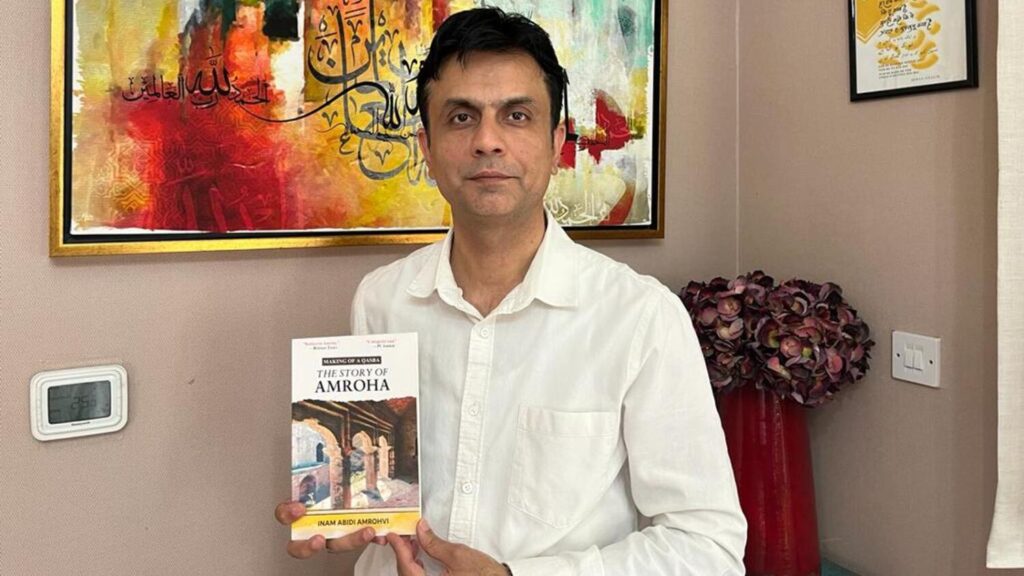
Supplied photo


Inam Abidi, a Dubai resident since 2006, wears two hats with equal passion — one as a cloud consultant by profession, and the other as a writer at heart.

His journey as an author reached its culmination earlier this year with the publication of his first book, Making of a Qasba: The Story of Amroha. This achievement marked the realisation of a long-held dream that had been nurtured since his college days.

The book, painstakingly researched over three years, stands as the first comprehensive historical account of the city of Amroha presented in the English language.

Amroha, Inam’s hometown, is situated in the northern Indian state of Uttar Pradesh, renowned for its association with luminaries like Kamal Amrohvi, Jaun Elia, Sadequain, and Jai Krishna Agarwal.

The Qasba of Amroha holds a distinguished status as a prominent Sufi centre, steeped in history and tradition.

Inam said the idea of the book first struck him 2015 when he was researching for an article about Amroha, with the intention of acquainting his children with their ancestral heritage.

“I looked up everywhere, but couldn’t find much in English,” he recalled. “It was then that I recognised the significant gap in English accounts detailing the city’s rich history. This realisation spurred me to delve into the project of writing a book.”

Over the years, Inam made multiple visits to Amroha, which his family had left in the 1970s when they moved to Lucknow. He engaged in meetings with individuals well-acquainted with the city’s heritage, scoured through a multitude of books in various languages including Urdu, Persian, Hindi, and English, and examined numerous YouTube videos.

Along this journey, he encountered a variety of people, from a former senior government official who initially believed he was co-writing the book and subsequently ceased communication when he learned otherwise, to a rickshaw puller who went out of his way to capture images of historical sites within the city and shared them with Inam.

Regarding the most gratifying part of his experience, Inam shared, “I stumbled upon a rare painting of Amroha and became curious about the artist behind it. It turned out he was also a resident of Lucknow. Meeting Jai Krishna Agarwal, a renowned Indian printmaker from Amroha, was a privilege. Despite being in his 80s, he had vivid memories of the city to share with me.”

In the world of historical accounts, Inam knew controversies were common. He stated, “As a researcher, one grapples with conflicting accounts and the biases of the ruling elite. It’s also challenging to assess past events with contemporary knowledge.”

Inam’s perspective on technology and history is insightful. He believes that technology streamlines the present and prepares us for the future, while history teaches us invaluable lessons from the past.

One aspect that tinges Inam’s achievement with sadness is the loss of his father, who passed away a year before the book’s publication. He reflected, “My father would have been elated.”

source: http://www.khaleejtimes.com / Khaleej Times / Home> Lifestyle> Books / by Mazhar Farooqui / October 27th, 2023

Dubai expat publishes book on UAE’s contributions to Urdu language

INDIA / Dubai, U.A.E:

Ulfat, who has also authored a travelogue, a poetry collection, and a novel, says it was important for him to preserve rich heritage of language.

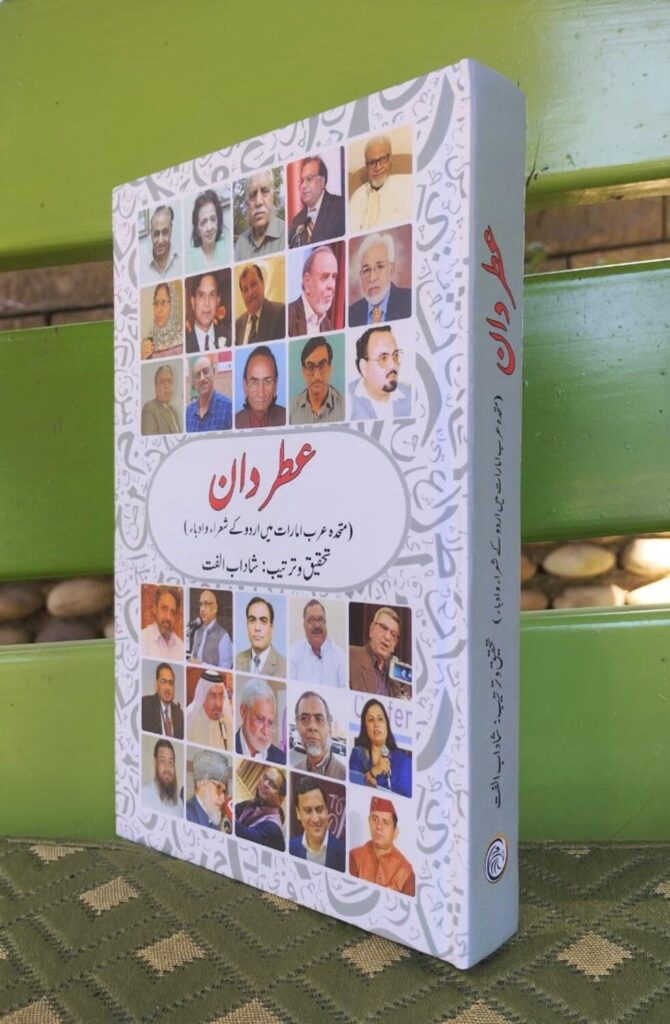
The Sharjah International Book Fair (SIBF) saw the launch of a remarkable book titled ‘Itrdaan,’ offering an intriguing exploration of the history of Urdu literature in the UAE.

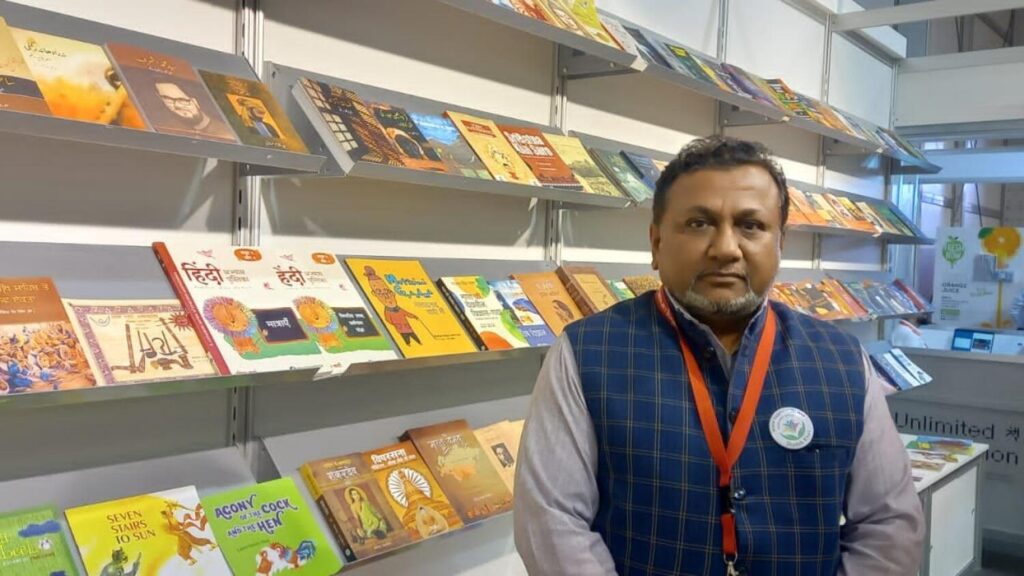
Authored by Shadab Ulfat, an Indian expatriate, the 326-page book sheds light on the significant contributions of over 180 UAE-based individuals to the Urdu language, which ranks as the 10th most widely spoken language globally.

‘Itrdaan,’ a term that translates to “fragrance” in English, is structured into three distinct sections. The first section delves into the pivotal role played by individuals from earlier times in shaping Urdu literature in the country. The second section spotlights the present-day contributors to Urdu literature in the region, while the third part introduces the new and promising voices in the UAE’s Urdu literary scene.

Ulfat expressed his inspiration for this work, saying, “I was deeply moved by our elders, who would fondly reminisce about the bygone days of Urdu when we gathered together. Their stories motivated me to embark on a two-year journey to immortalise their memories and invaluable contributions within the pages of this book.” Ulfat, who has also authored a travelogue, a poetry collection, and a novel, said it was important for him to preserve this rich heritage.

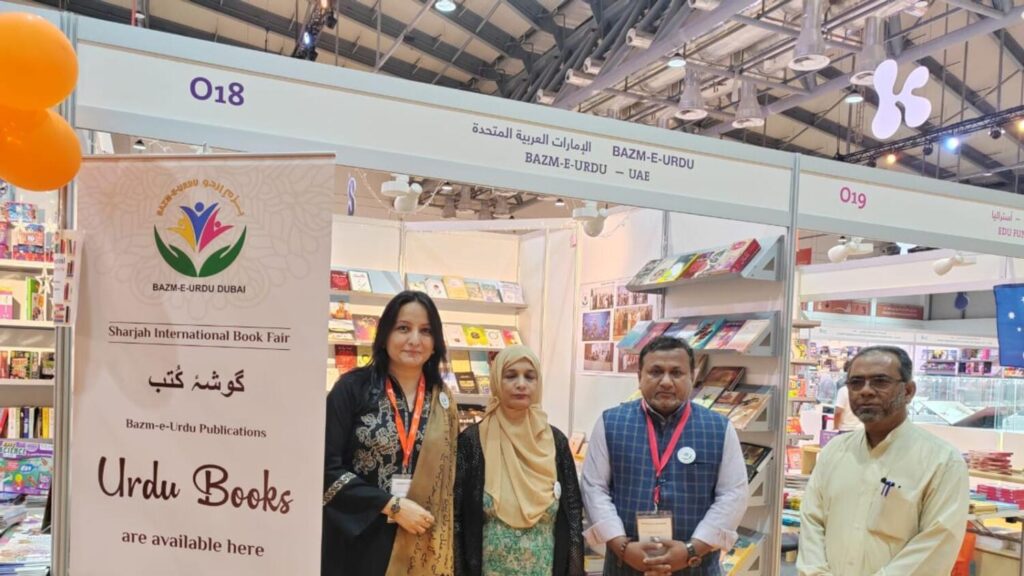
The publishing process, including the book launch, was managed by Bazm e Urdu, a Dubai-based organisation dedicated to promoting Urdu language and literature in the country.

Bazm e Urdu has been closely collaborating with the Sharjah Book Authority (SBA) and SIBF for several years. They have organised events for schools during the Sharjah Children’s Reading Festival (SCRF) and hosted celebrity talk shows and book launches during SIBF. However, this marks the first time they have a stall of their own at the fair.

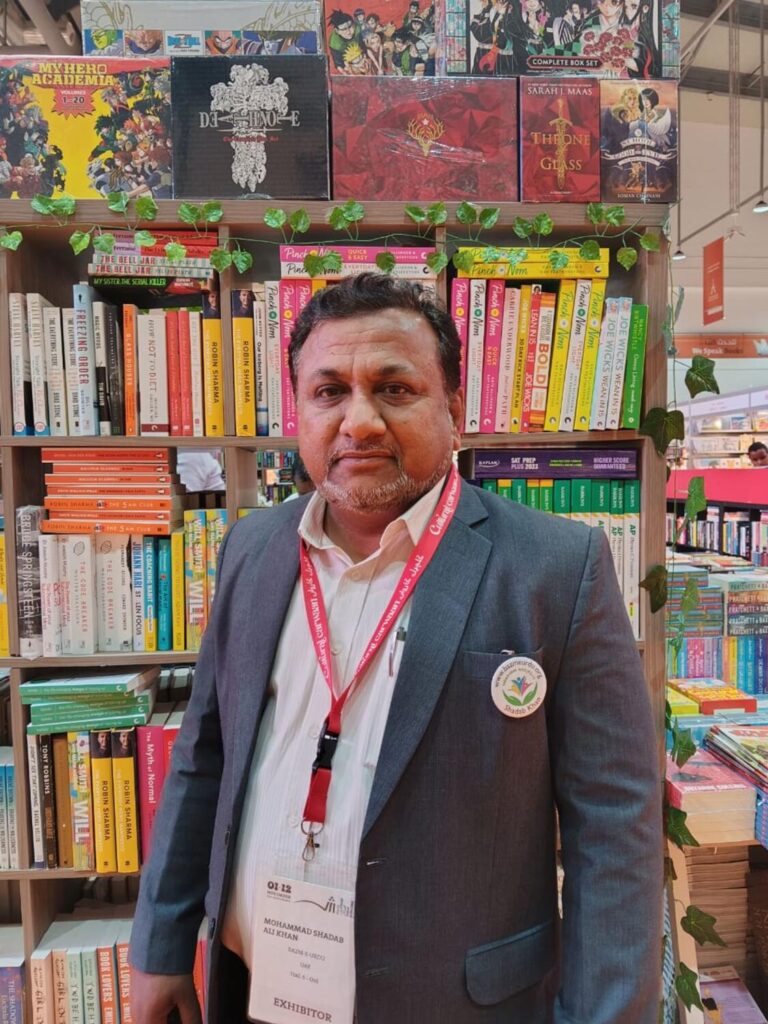
Rehan Khan, the founder and general secretary of Bazm e Urdu, mentioned that ‘Itrdaan’ can be found at the ‘Gosha-e-Kutub’ Stall at SIBF, where it shares space with 500 other Urdu titles by renowned authors and esteemed publishing houses. The collection caters to readers of all ages, encompassing poetry, prose, biographies, historical fiction, and even Urdu translations or adaptations of the record-breaking Harry Potter series.

Khan stressed that their aim is to rekindle and promote love for the Urdu language, uniting people across all barriers of age, race, and religion. The Sharjah International Book Fair runs at Expo Centre Sharjah until November 11.

source: http://www.khaleejtimes.com / Khaleej Times / Home> UAE / by Mazhar Farooqui / November 06th, 2023