All posts by mpositiveone@gmail.com

Asian Games 2023 boxing: Nikhat Zareen settles for bronze; Parveen Hooda secures Paris 2024 Olympic quota

Hyderabad, TELANGANA:

India’s Nikhat Zareen bowed out in the women’s 50kg semi-final after losing 3:2 to Thailand’s Chuthamat Raksat. Parveen Hooda is assured a medal in the women’s 57kg.
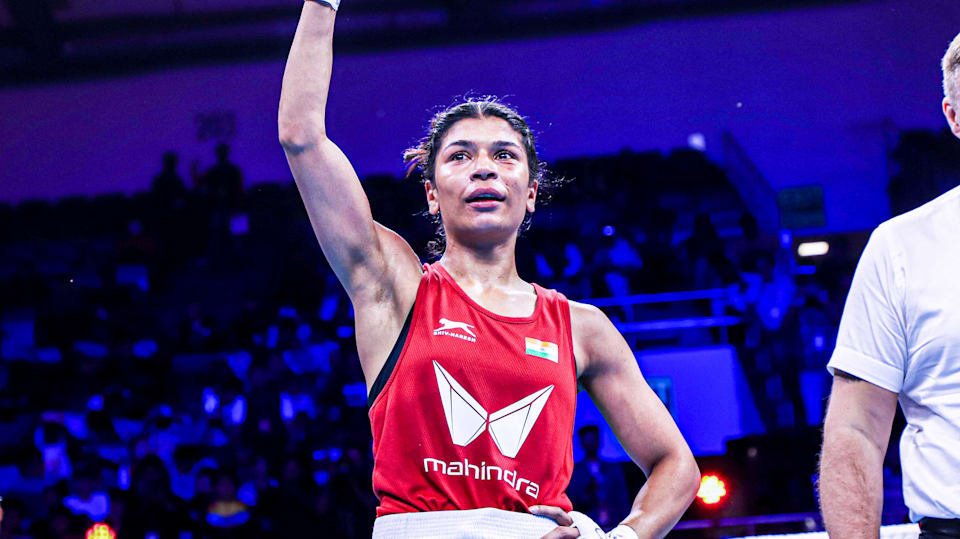
Nikhat Zareen 
(Boxing Federation of India (BFI))

Two-time world champion Nikhat Zareen finished her campaign in the women’s 50kg event with a bronze medal at the Asian Games 2023 boxing tournament in Hangzhou, the People’s Republic of China.

Nikhat Zareen lost her semi-final bout against Thailand’s Chuthamat Raksat by a 3:2 split decision. Zareen and Raksat faced each other in the quarter-finals of the world championships earlier this year and the Indian boxer had come out on top then.

In Hangzhou, both Nikhat Zareen and Chuthamat Raksat started the bout cautiously, the two only able to land soft punches with measured jabs. In the final round, the Thai boxer managed some decisive hooks to take control and won the bout by the barest of margins.

“My experience was great. I had very good bouts in these Asian Games,” Nikhat said. “Today, unfortunately, I couldn’t win the semi-final match against Thailand. But it’s fine, I will take this as a learning lesson.

“I’ll definitely come back stronger. I’ll learn from my mistakes from this competition, and I definitely look forward to that.”

Earlier in the day, Parveen Hooda made it to the women’s 57kg semi-finals by defeating Sitora Turdibekova of Uzbekistan by unanimous decision. The 23-year-old Indian boxer, by virtue of making the top four, secured a maiden Asian Games medal as well as a quota for the Paris 2024 Olympics next year.

However, as National Olympic Committees have the exclusive authority for the representation of their respective countries at the Olympic Games, athletes’ participation at the Paris Games depends on their NOC selecting them to represent their delegation at Paris 2024.

Boxing at the Asian Games 2023 is also a Paris 2024 Olympics qualifier event. In men’s events, the gold and silver medallists in each of the seven weight divisions will be issued a quota to Paris 2024. In the women’s categories, four quotas will be on offer for all categories other than the 66kg and 75kg, for which there will be two berths on offer like men’s.

Parveen Hooda will face Chinese Taipei’s Lin Yu Ting in the semi-finals on Wednesday.

Meanwhile, Jasmine Lamboria missed out on a medal after she lost by RSC (referee stops count) in the women’s 60kg quarters against Ungyong Won of the Democratic People’s Republic of Korea. The Indian boxer endured three standing counts in a space of one minute before the referee stopped the bout.

source: http://www.olympics.com / Olympics.com / Home / by Anurag Peesara / October 01st, 2023

Mohammed- The Maulana Football Coach

Patna, BIHAR / DELHI:

In a small suburb in the Islam-dominated Jamia in Delhi, Mohammed Ameen manages to live a life which breaks norms and is still happy. . .

Football, as a game, has broken a lot of barrier in terms of religion and war. It is a well-documented fact that the Nigerian Civil War was stopped to watch Pele and his team play in the 1960s. If the game could stop a war, one can imagine its power over the other earthly, trivial matters.

Khel Now Football caught up with Mohammed Ameen, who originates from Patna but is currently staying in Delhi. Ameen is a Maulana, a person associated with formal qualification following study at a madrassa or darul uloom. Ameen comes across as a noble Muslim, who would go about his work and would lead a sedentary life in a city job.

Astonishingly, Ameen breaks the cliché. The middle-aged man is a sports coordinator for CEQUIN, an NGO which works on a variety of issues affecting women and girls such as violence, leadership, economic empowerment and other social benefits. You must be wondering that why are we writing these stories; but there’s a common link: FOOTBALL.

Football Is My Religion I Jamia I Mohammed-The Maulana Coach 

Ameen trains girls in and around his area and said, “I train both the junior and senior girls equally hard. I want to see the senior girls mature in a way that they can train the next line of girls in the years to come,” says Ameen, who earns meagerly.

“Football is a team game, and the girls forget their stress while playing,” adds the gaffer. “There energy on the pitch brings a change in the community and shows a new door to the girls in the area. I’m working in the Jamia area and there are various challenges in the work I’m trying to do.”

One of them, he says, is the fact that he’s a Maulana. “People in general and parents in particular usually say that I’m a Maulana and I teach girls to play football, which adds a poor connotation to the notion. I usually stay silent, and they get my answer.”

Talking on our special segment called ‘Football is my Religion’, Ameen concludes with a brilliant message. “Football is played all around the world by white, black, men and women equally. There is no religious division in the game, and it should be that way forever. It connects people like nothing else.”

source: http:www.khelnow.com / Khel Now / Home / by Punit Tripathi / April 17th, 2017

The Awe-Inspiring Wildlife Drawings of Shaikh Zain ud-Din

Patna, BIHAR (BRITISH INDIA) :

An 18th-century album of India’s flora and fauna showcases the startling work of an overlooked master.

Bird
Shaikh Zain ud-Din’s Brahminy Starling with Two Antheraea Moths, Caterpillar, and Cocoon on an Indian Jujube Tree was originally part of an album commissioned by his British patrons. © Minneapolis Institute of Art

In the late 1770s, a British colonial official named Sir Elijah Impey and his wife, Lady Mary, commissioned the Indian artist Shaikh Zain ud-Din to catalog a private menagerie, including various bird species, the couple had assembled at their home in Calcutta. Using paper and watercolors from England, Zain ud-Din, a Muslim from the city of Patna, modeled his work after English botanical illustration, but he also brought to the job his training in the ornate Mughal artistic tradition—and his own distinctive style. Today critics praise the quality of the colors and the composition, in which a bright, simple background offsets the keenly wrought details of plants and animals. “Everything is incredibly precise and beautifully observant,” says Xavier Bray, director of London’s Wallace Collection, which this month mounts the first UK exhibition of works by Indian artists commissioned by officers of the British East India Company.

The expat aristocrats who patronized Zain ud-Din and his fellow artists had been sent abroad to help manage their country’s growing empire, but once there many, like the Impeys, fell in love with the subcontinent, as well as its flora and fauna. “These paintings,” Bray says, “were made into albums to be leafed through back home, on a rainy day, drinking Earl Grey tea.”

History failed to record much about Zain ud-Din’s life beyond his watercolors for the Impeys. But the new show, which includes 99 paintings of nature studies, portraits and landscapes by 18 artists, makes an argument that he and his contemporaries should be recognized on their own merits, as some of India’s greatest painters. “Anything with a colonial air about it is now considered politically incorrect,” Bray says. “But what we’re trying to do is bring back these extraordinary artists who have been almost completely forgotten.”

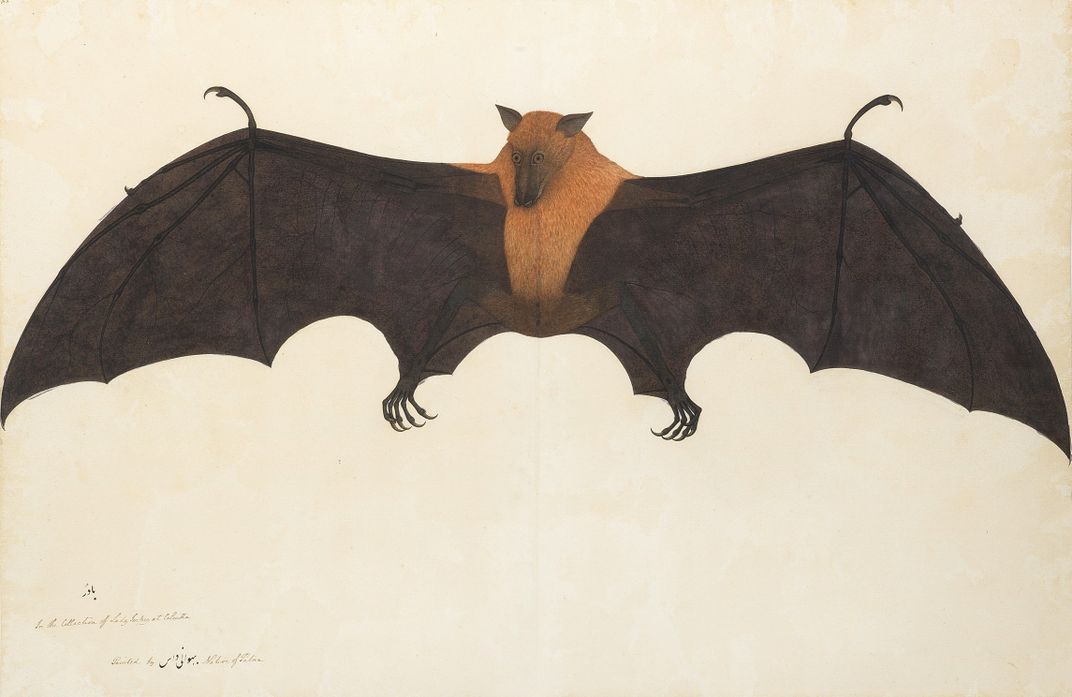
Bat
A Great Indian Fruit Bat, or Flying Fox (pteropus giganteus), by Bhawani Das, Calcutta, c. 1778-1782. Courtesy Private Collection
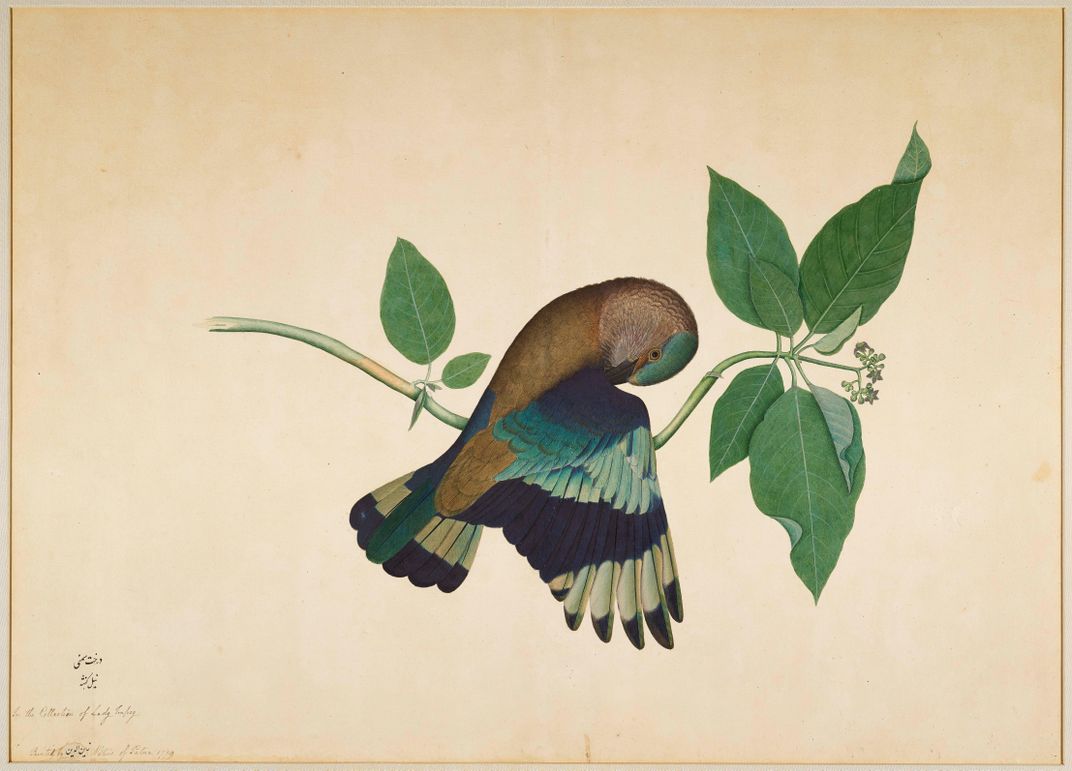
2nd bird - Indian Roller
Indian Roller on Sandalwood Branch, by Shaikh Zain ud-Din, Impey Album, Calcutta, 1780. © Minneapolis Institute of Art
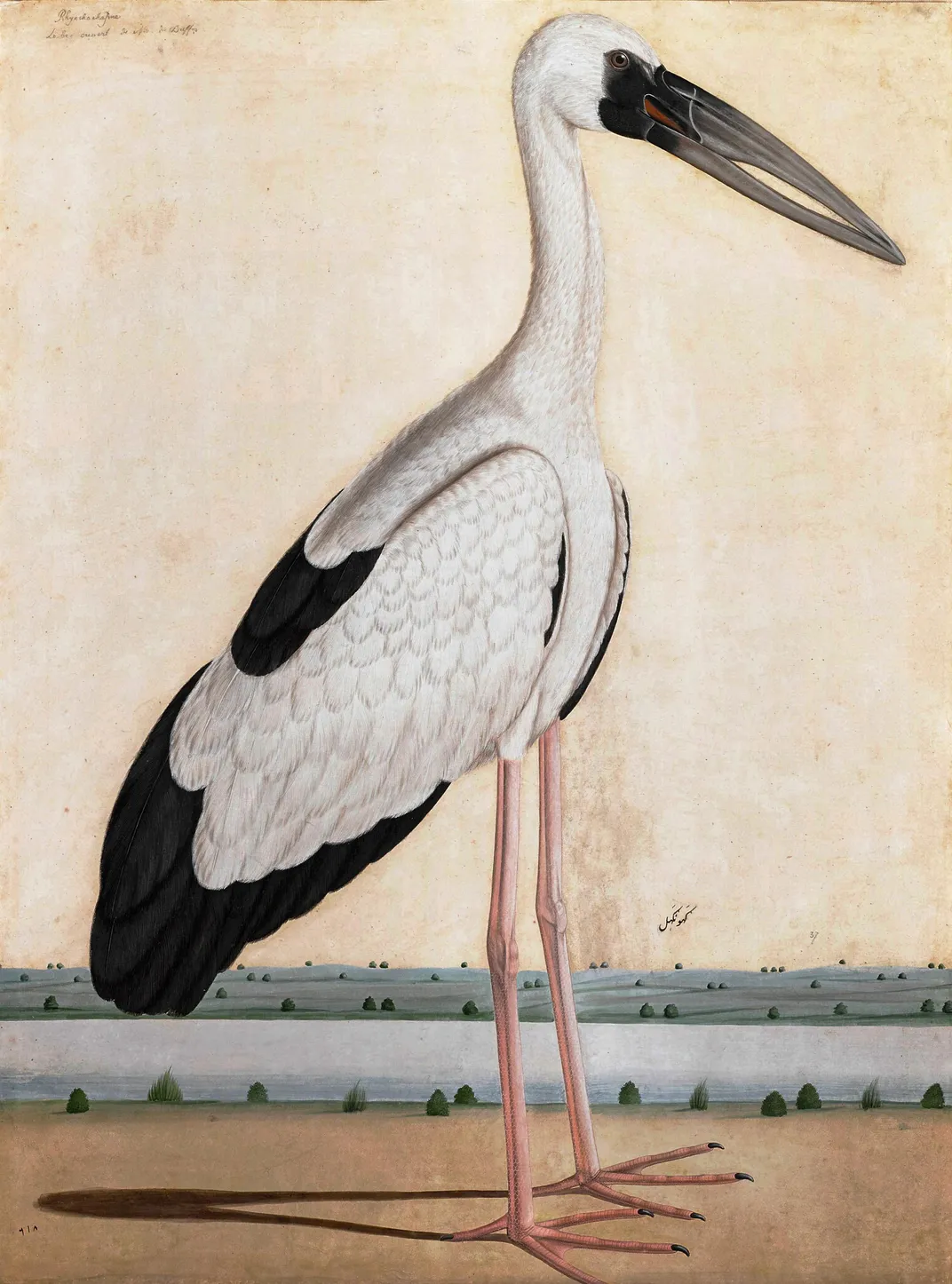
Stork
Asian Openbill Stork in a Landscape, by unknown artist, Lucknow, c. 1780. Courtesy Private Collection (Photo: Margaret Nimkin)
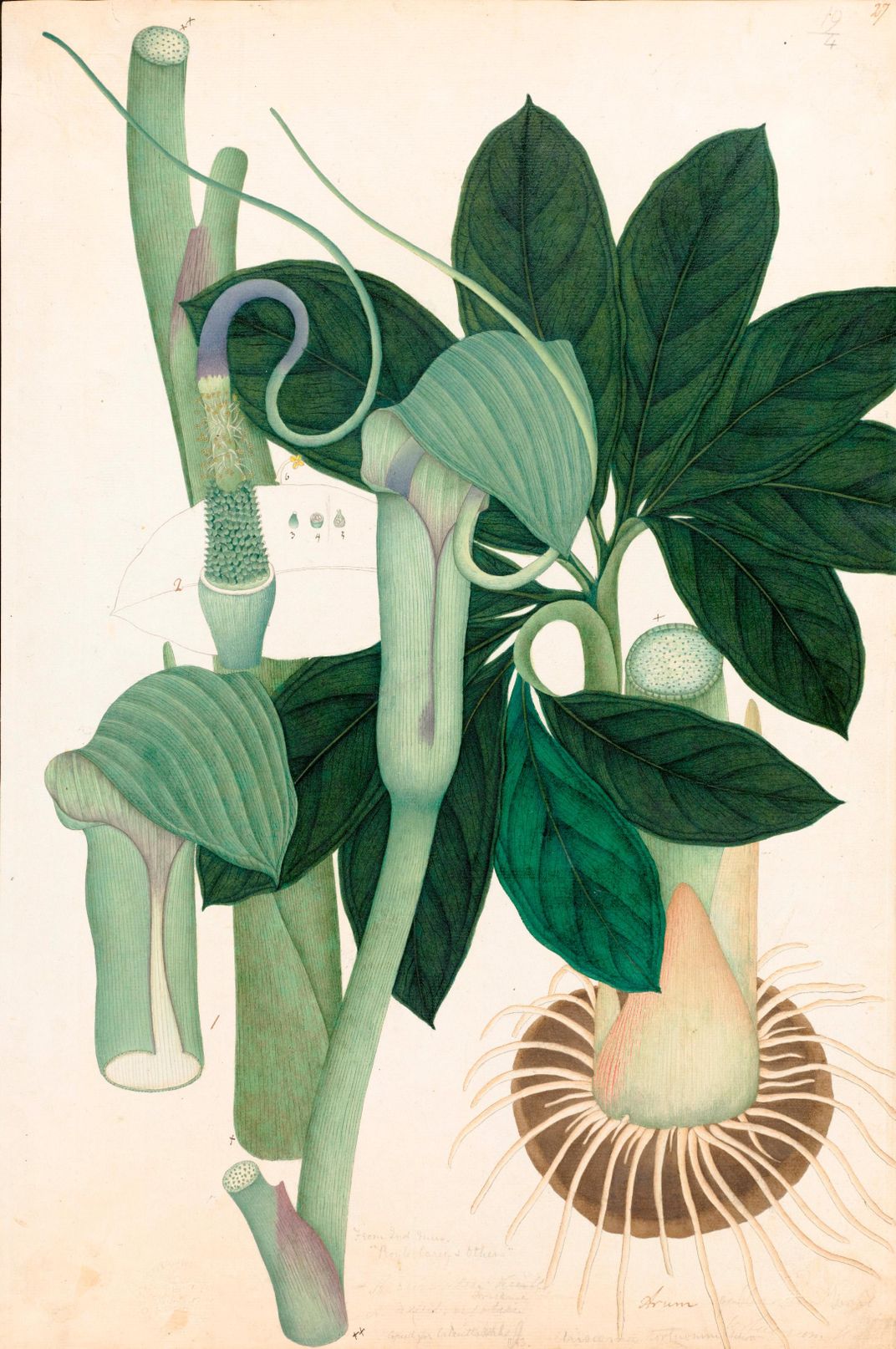
arum
Arum tortuosum (now Arisaema tortuosum, family Araceae), by Vishnupersaud, c. 1821. © The Board of Trustees of the Royal Botanic Gardens, Kew

source: http://www.smithsonianmag.com / Smithsonian Magazine / Home> Arts & Culture / by Amy Crawford, Contributing Writer / December 2019

IIT Kanpur professors Bushra, Nitin awarded INSA Fellowship for 2023-24

Kanpur, UTTAR PRADESH:

Professor Bushra Ateeq is Special Senior Fellow, and teaches at the Department of Biological Sciences and Bio-Engineering (BSBE) of the IIT Kanpur.

IIT Kanpur professors Bushra, Nitin awarded INSA Fellowship for 2023-24

Kanpur: 

Two professors of the Indian Institute of Technology (IIT) Kanpur, Bushra Ateeq and Nitin Saxena, have been awarded with the prestigious Indian National Science Academy (INSA) Fellowship for the year 2023-24.

Professor Bushra Ateeq is Special Senior Fellow, and teaches at the Department of Biological Sciences and Bio-Engineering (BSBE) of the IIT Kanpur.

Professor Nitin Saxena, Founding Coordinator of the Center for Developing Intelligent Systems (CDIS) at IIT Kanpur, is from the Computer Science and Engineering Department of the institutions.

“I am delighted to share that two distinguished members of our faculty, Prof. Bushra Ateeq from the Department of Biological Sciences & Bioengineering, and Prof. Nitin Saxena from the Department of Computer Science & Engineering, have been honoured with the prestigious Fellowship of the Indian National Science Academy (INSA) for the year 2023-24”, Director IIT Kanpur, Abhay Karandika, wrote on social media platform X, earlier known as Twitter.

“The INSA Fellowship recognizes the research of scientists from diverse fields and supports them to further their research with necessary assistance”, he added.

Professor Bushra Ateeq

Dr. Bushra Ateeq joined Department of Biological Sciences and Bio-Engineering (BSBE) at the IIT Kanpur in February 2013. She was trained as a postdoctoral fellow in Dr. Arul Chinnaiyan’s group at Michigan Center for Translational Pathology, University of Michigan. Prof Bushra also served there as a Research Investigator (Junior Faculty) before joining IIT Kanpur.

Prior to this, she was a postdoctoral trainee in Dr. Shafaat Rabbani’s group at McGill University, Montreal. She served a brief stint as a Research Associate at All India Institute of Medical Sciences, New Delhi and National Institute of Immunology, New Delhi. She received her Ph.D. from Aligarh Muslim University (AMU).

Dr. Ateeq is primarily interested in exploring the genetic and epigenetic changes that initiate cancer and its progression by employing novel strategies and approaches. Her overarching goal is to explore the molecular events that drive cancer and facilitate the process of acquiring resistance towards chemotherapeutic drugs, in hopes that these discoveries can lead to the development of more effective therapies against specific causative pathways or alterations.

Professor Nitin Saxena

Professor Saxena has completed Bachelors in Computer Science from IIT Kanpur in 2002 and completed PhD under Manindra Agrawal in 2006. His interest area is Computational Complexity Theory, Algebra, Geometry and Number Theory.

Professor Saxena is a visiting Graduate Student in Princeton University (2003-2004) and National University of Singapore (2004-2005); a postdoc at CWI, Amsterdam (2006-2008) and a Bonn Junior Fellow (W2 Professor) at Hausdorff Center for Mathematics, Bonn (2008-2013).

source: http://www.ummid.com/ Ummid.com / Home> Education & Career / by Ummid.com news network / September 18th, 2023

Descendants of Rasoolullah are half Indians by blood

SAUDI ARABIA / INDIA :

Al-Masjid-al-Haram
Al-Masjid-al-Haram

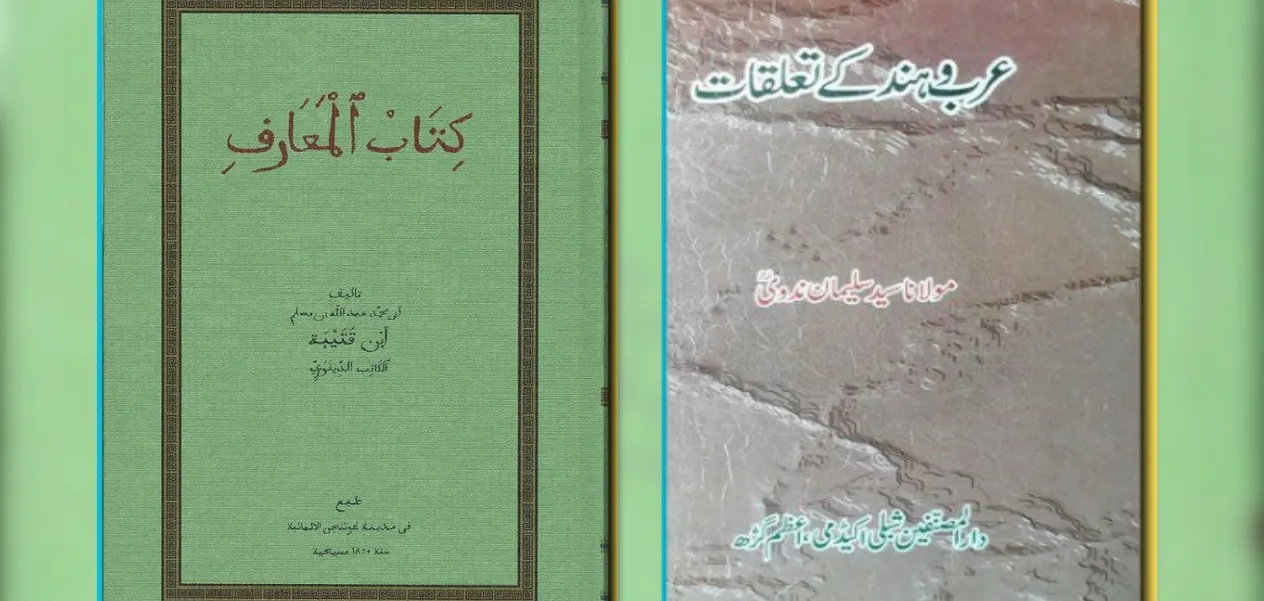
Imam Hussain was the grandson of the Messenger of Allah and Imam Zainul Abidin was his son. According to historical accounts in reliable texts the mother of Imam Zainul Abidin was a Sindhi woman. Imam Ibn Qutiba in Kitab al-Ma’arif, provided detailed information on this fact.

The Muslims refer to Imam Hussain descendants as Sayyid. Despite the fact that Sayyid’s were described as being half Indian by renowned Indian researcher Syed Sulaiman Nadvi in his book on Arab-Indian Relations. He claimed that Sayyids have always been half Indian, while other Muslims may or may not be half Indians.

This is possibly the reason why the Prophet Mohammad claimed in a hadith that he received cold breezes from India. (Mustadrak Al-Haakim Hadith 4053.) and Hazrat Ali also (RA) added,

 قال علي بن أبي طالب: أطيب ريح في الأرض الهند، أهبط بها آدم

عليه الصلاة والسلام فعلق شجرها من ريح الجنة

India is the land of best wind,  Saydana Adam was sent to India, where He also planted the fragrant Paradise plant.’ This close bond between India and The Prophet is not limited to this; in one of his hadiths, the Prophet said that Adam (peace be upon him) was sent to Indian region.

According to Syed Sulaiman Nadvi, when Hazrat Adam descended from the sky and was brought to India, which was described as paradise.

History is full of instances of such connections. Examples include Hazrat Uthman bin Abi Al-As Thaqafi, Hazrat Huqam bin Abi Al-As, Hazrat Mughira, Hazrat Rabi'ah bin Ziyad, Hazrat Abdullah Ansari, Hazrat Umair bin Usman, and Hazrat Asim bin Umar, among others, who travelled to India to spread Prophet Mohammad’s teachings.

Kitaab Ul Ma’arif and Arab-o-Hind Ke Ta’alluqaat

After Hazrat Umar was elected as a Caliph, a close friend of the Prophet, he asked a traveller about what he thought of India.

The traveller responded as follows

: بحر ھا در و جبلھا یا قوت و شجرھاعطر (he said Indian mountains are rubies, its rivers are pearls,and its trees are fragrances.)

According to a legend, there were many Indian settlers in the Arab region at the time the Prophet declared his Naboovat (Prophethood), and Indians were well settled there even at that time. Indian swords were famous in Arabia even prior to the time of the Prophet.

In addition to the sword, a variety of Indian commodities were discovered in Arabia, and they were there in such large quantities that Syed Sulaiman Nadvi noted that the port of Abla, which is close to Basra, received such a large quantity of Indian goods that the local Arabs thought Abla was a miniature version of India.

Teak wood, swords, cotton and silk cloth, lemons, oranges,bananas, cinnamon, cloves, rubies, pearls, and other items were among the exports from India to Arabia.

The writings of Qazi Athar Mubarakpuri, Syed Sulaiman Nadvi, Akbar Ali Khan Qadri, Gustave Le Bon, and others are testimonials of good relationship between Indians and Arabs during the time of the Prophet.

This is likely the reason that Ibn Qutiba, as opposed to other historians, claimed that Hazrat Zain Albidin’s mother was an Indian.Many Sufis in India during this time worked to spread the teachings of the God-sent Messenger and his Indian associates. They arrived in India made themselves at home and benefited from the lessons of the Sahaba.

The Hindu religious texts examined by Al-Bairuni in Kitab Al-Hind more than a thousand years ago reveal that they are remarkably similar to Islamic teachings.The religious practises of the people of India, according to a sizable group of Sufis and academics, are remarkably comparable to the Messenger of Allah’s description of Wehdat (oneness of god). For this reason, Islam is still the major faith in India today.

source: http://www.awazthevoice.in / Awaz, The Voice / Home> Story / by Sayyed Taleef Haider, New Delhi / September 29th, 2023

Fouzia Tarannum: AIR 31, managed to clear the exam while working as an IRS

Udupi, KARNATAKA:

Background: 

Fouzia Tarannum started her preparation for UPSC in December 2010. She quit her job as a Business Analyst with Tata Consultancy Services Ltd. In CSE 2011, she cleared with AIR of 307, thereby joining the IRS (IT). The attempt in 2012 didn’t see any improvement in her rank/service.

Her preparation journey: Once posted she started feeling the difference in service – IAS and IRS. She felt that she should try one last time for her dream service and give one last attempt. A few weeks before 2014 prelims she jumped into preparation mode.

What made her successful this time? She reread the standard books, along with the sources available online. She feels that a big part of the improvement in rank to AIR 31 this year was due to her growth as a person, becoming more mature, having seen more of this world and a creeping sense of practicality and realism in approach, compared to an over-idealistic one earlier.

Her advice:  She advises that UPSC is actually looking for more rounded personalities with problem solving approach and an analytical mind. The UPSC journey should be looked at in this light, and not merely reading of books.

How difficult it was to prepare with her job? She felt a deep sense of duty and responsibility towards her work that she doesn’t compromise on her present work while giving this attempt. She had to be more than justifying the salary that she was taking home.

Though it was tiring at times, but she made sure that at office, she would concentrate on work, and at home on preparation efforts.

How did she balance both? The balance came from management of time. There will never be enough time; rather we have to make time for everything. She took no leave before prelims, took 30 days leave before mains and 5 days leave for interview.

How did she plan her studies? She studied for atleast 2 hours a day, on working days – depending on her work day either early morning or late night – August to December 2014. She also managed to take a few Fridays off after the prelims results, so as to get 3 days of continuous studies.

She finished weekly newspapers that she piled up and studied for about 4 hours a day, on weekends and holidays.

How did she manage her different subjects? She focused on revising her strong areas (economy, geography, etc.) and re-prepared her weak areas (history, culture, sociology, etc.) along with preparing for the newly introduced topics.

She focused on current events and ensured that she remained updated with GS.

Optional Subjects: she chose Sociology as optional because it takes lesser time to prepare in comparison and enjoyed reading this subject, though she had never studied this subject academically.

Her tips for Ethics- GS Paper 4: She just read a few solved papers and looked up definitions on all the terms used in the syllabus and made short notes. She suggests that one must give true answers to most situational questions/case studies.

Did she practice writing answers? She says she couldn’t practise writing due to lack of time and also feels that if she had practised, she could have scored better.

Tips to write answers: She gave many examples in her answers, and tried to keep them interesting to whoever was to read them.

Time Management: There is a dire need for short, productive periods of reading through the day. For instance, she read the news feeds after returning from lunch at office, watched news/saved videos while travelling to and from office, etc. Such reading of 15 minutes in short bursts 4-5 times a day really adds up and contributes immensely to our efforts.

Whenever she felt low in her studies: She use to take up a subject that she liked and enjoyed when she would feel depressed. This really helps make our efforts more productive. She suggests one should be judicious in the time one allots to various “sub-subjects”.

Writing style: She feels short, to the point, bullet points, covering as many dimensions and aspects as possible is the best way to write answers. She didn’t focus much on word limits, for some answers she looked for more space and for some she just jotted down half a page. She suggests interlinking of topics and use of diagrams/charts. She also underlined important points while writing.

Her suggestion: A lot of resources are available online, one must have a look and settle for what works best and not waste time on internet unnecessarily.

Do not lose focus and never lose faith. Stay consistent in your efforts. Believe in yourself! Don’t forget to keep learning and to keep improving!

Though a certain amount of luck is required, hard work does pay!

She says- “I have not studied in big “Ivy League” institutions, nor do I have any civil servants in my family. I come from a very simple, ordinary, loving household, where education has never been very important”.

source: http://www.civilsdaily.com / Civils Daily / by Root

A student at the age of 92, Salima Khan is new Internet sensation

Bulandshahr, UTTAR PRADESH: 

A student at the age of 92, Salima Khan is new Internet sensation
Salima Khan is seen with Dr Pratibha Sharma and her great-grand daughter-in-law

Salima Khan is a new Internet sensation who enrolled herself in Chawli Primary School in Bulandshahr at the age of 92, becoming an inspiration to many. 

Bulandshahr (Uttar Pradesh): 

Remember Swara Bhaskar’s much acclaimed film “Nil Battey Sannata” released in 2016 where the ace actress goes back to school, attending class right with her daughter much to her dismay?

The plot is “recreated” in real life in Bulandshahr, Uttar Pradesh though for a different reason where a Muslim woman in a video is seen sitting in a classroom with her great-grand daughter-in-law.

Salima Khan is a new Internet sensation who enrolled herself in Chawli Primary School in Bulandshahr at the age of 92, becoming an inspiration to many.

The immediate reason behind Salima Khan’s inspiring endeavour at this age is to receive pension given to elderly citizens under the Indira Gandhi National Old Age Pension Scheme (IGNOAPS).

The government under this scheme gives a monthly pension of Rs. 200 to elderly citizens of 60 to 79 years and Rs. 500 thereafter.

“Amma used to come to me with a request to help her in getting pension. I promised her help provided she come to school every day for at least half an hour and learn something”, the Headmistress told media.

Despite facing a number of age-related issues, including hearing loss and weak eyesight, Salima Khan started coming to school and attend classes.

“Salima is a regular student and is never absent. She is attending the school since the last ten months. In this period, she has learnt a lot of things”, Dr Sharma said.

“Even at this age the interest and dedication with which Salima Khan learns is motivatinf for other students”, she added.

Salima who was unable to recognise letters is now able to write her name with fare fluency and can also confidently count up to 100.

Acha lagta hai padhna. School aana bahut badhiya lagta hai. (I like to study and attend school)”, 92-year-old Salima Khan said in the video now going viral.

Inspired by Salima Khan, as many as 25 other women of the village, including her daughter-in-laws, have decided to go to school.

source: http://www.ummid.com / Ummid.com / Home> Education & Career / by ummid.com news network / September 29th, 2023

Kashmir’s 10th topper Farhana wants to become a doctor to carry forward legacy

Srinagar /Bijbehara (Anantnag District), JAMMU & KASHMIR:

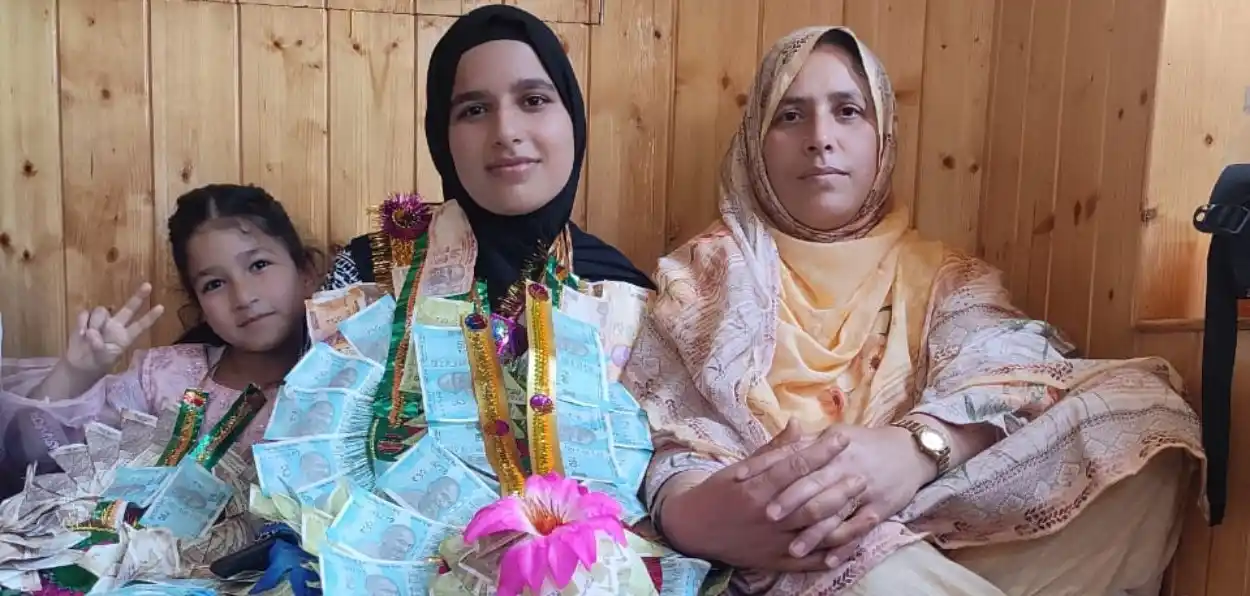
Farhana Imtiyaz with her mother and sister

In a heartening development, two Kashmiri girls – Sadaf Mushtaq and Farhana Imtiyaz Makroo – have topped the 10th class examination conducted by the J&K Board of Secondary Education (BOSE) by scoring 498 out of 500 marks.

While their achievements are similar their stories run on two different tracks.

While Sadaf comes from Srinagar’s well-off family, Farhana who is from south Kashmir’s small town of Bijbehara, (Anantnag district) has faced many challenges in life.

Farhana Imtiyaz told Awaz-the Voice on the phone from her home in Bijbehara that she had lost her father when she was in eighth standard. “My mother never let me and my siblings feel the pinch of economic deprivation this tragedy brought us,” she said.

Her mother Lateefa Akhtar has been supporting the family with her meagre income of Rs 5,000. She works with Anganwari (Integrated Child Development Services, ICDS) in her town.

No wonder Farhana hero-worships her mother. “She never lost hope and courage nor did she allow us, the children, to feel depressed. We continued to focus on our education.” Her elder brother is preparing for his medical entrance examination and has joined a coaching centre in Srinagar while her younger sister is in school.

 Farhana has excelled in academics throughout her schooling.

Farhana said she believes in “the power of consistency and determination; these two have been the guiding principles in my studies. Nothing is impossible as long as one is persistent and focused.”

Inspired by her late father, who was an Ayurvedic doctor and had a clinic in the town Farhana says she wants to become a doctor and “carry forward his legacy.”

She says her father was a generous practitioner and would give medicines and offer treatment to the poor free of cost.

She wants to qualify for both the NEET (National Eligibility cum Entrance Test) and AIIMS (All India Institute of Medical Sciences) examinations for the MBBS course so that she can join the best Medical College.

Farhana says she believes that one’s financial circumstances should never hinder one’s pursuit of education and dreams.

Farhana with her younger sister

Farhana says her Mamu (maternal uncle) Mushtaq Ahmed Wani has been another source of her strength. “Her uncle had given the family’s apple orchard to her family for using the proceeds of harvest for their needs.

She said her uncle’s support saw the family through difficult times. Farhana expressed her gratitude to her Mamu, and his contribution to making her dreams come true is immense.

In her pursuit of excellence, Farhana advises aspiring students to display consistency in their studies. She firmly believes that unnecessary breaks and interruptions can impede one’s path to achieving excellent results.

Farhana emphasizes the importance of maintaining a steady focus and dedicating oneself to continuous learning and improvement. She encourages students to set clear goals, develop effective study habits, and remain committed to their educational journey.

His generosity and belief in her potential have alleviated the financial burdens that could have hindered her progress. Farhana expresses her heartfelt gratitude to her maternal uncle, recognizing his invaluable contribution to making her dreams a reality.

Her advice to those seeking to emulate her is: consistency and regular study are important; one must do proper time management and make daily study a compulsive habit.

source: http://www.awazthevoice.in / Awaz, The Voice / Home> Story / by Mehak Banday, New Delhi / July 01st, 2023

NRI entrepreneur Nasir Syed honored at NKN Media’s UAE Business Leaders award ceremony

Moodbidri (Dakshina Kannada) KARNATAKA / Dubai, U.A.E:

Dubai :

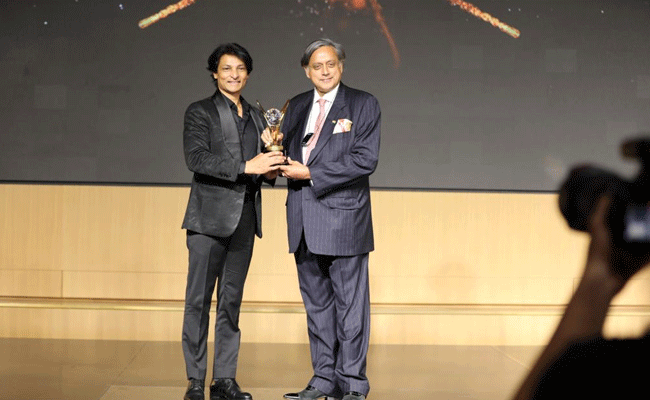
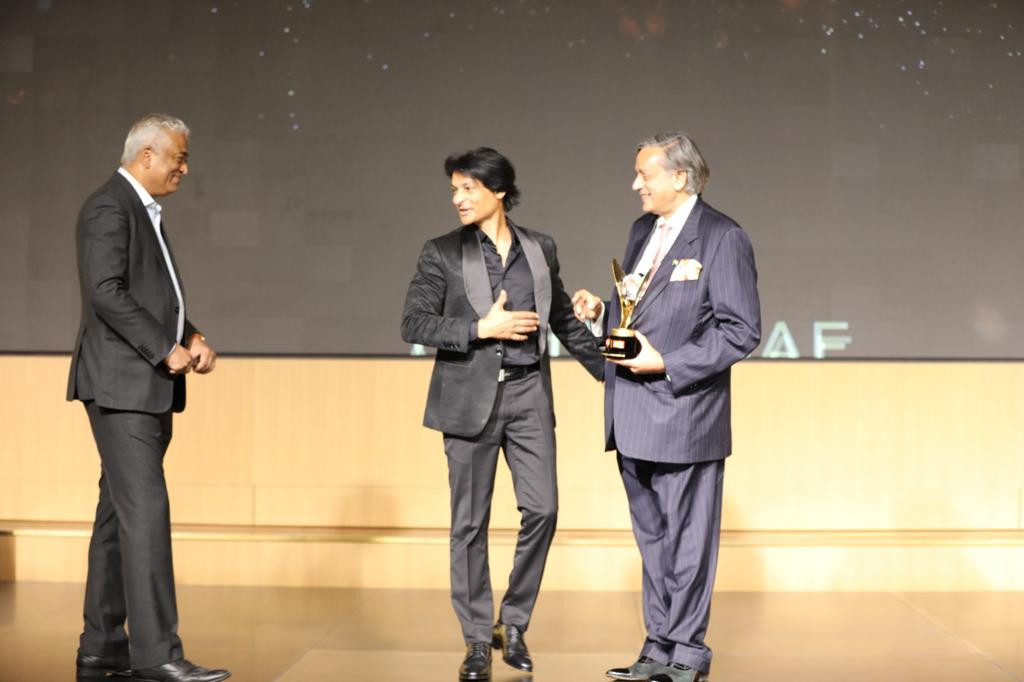
In a ceremony held at Taj Exotica, The Palm, Dubai, NRI entrepreneur Nasir Syed was honored with Business Icon award by NKN Media, celebrating the success stories of Indian business leaders in the UAE.

The event, boasting 16 icons from diverse industries, was graced by the presence of Dr. Shashi Tharoor, former Minister of State for External Affairs and acclaimed author, who handed over the award to Nasir Syed.

Nasir Syed, a prominent figure hailing from Moodbidri and the son of Syed Mohidin from Dakshina Kannada, has established himself as a renowned entrepreneur and international superbike rider in the UAE. He is the founder and CMD of Creative House Scaffolding.

The prestigious event was organized in collaboration with India Today Group, one of India’s leading media houses. The ceremony was broadcasted on India’s prominent news channels, Aaj Tak and India Today TV. The award aimed to celebrate visionary leaders and recognize their significant impact on the UAE’s business landscape and community.

Renowned actors and influencers, including Vivek Oberoi and Salman Yusuff Khan, shared exclusive video messages with their dedicated fan base, expressing their anticipation for the event.

In addition to these messages, India’s leading news anchor, Rajdeep Sardesai, graced the occasion with his presence.

The ceremony served as a platform to showcase the inspiring journeys and remarkable accomplishments of these business icons. Engaging 30-minute episodes highlighting their stories will be broadcasted, allowing viewers to gain insights into the experiences and achievements of these influential personalities.

source: http://www.english.varthabharati.in / Vartha Bharati / Home> Business / by Vartha Bharati / September 30th, 2023

CM inaugurates ‘Beary Souharda Bhavan,’ promises to increase minority allocation to Rs 10,000 Crore

Mangaluru, KARNATAKA:

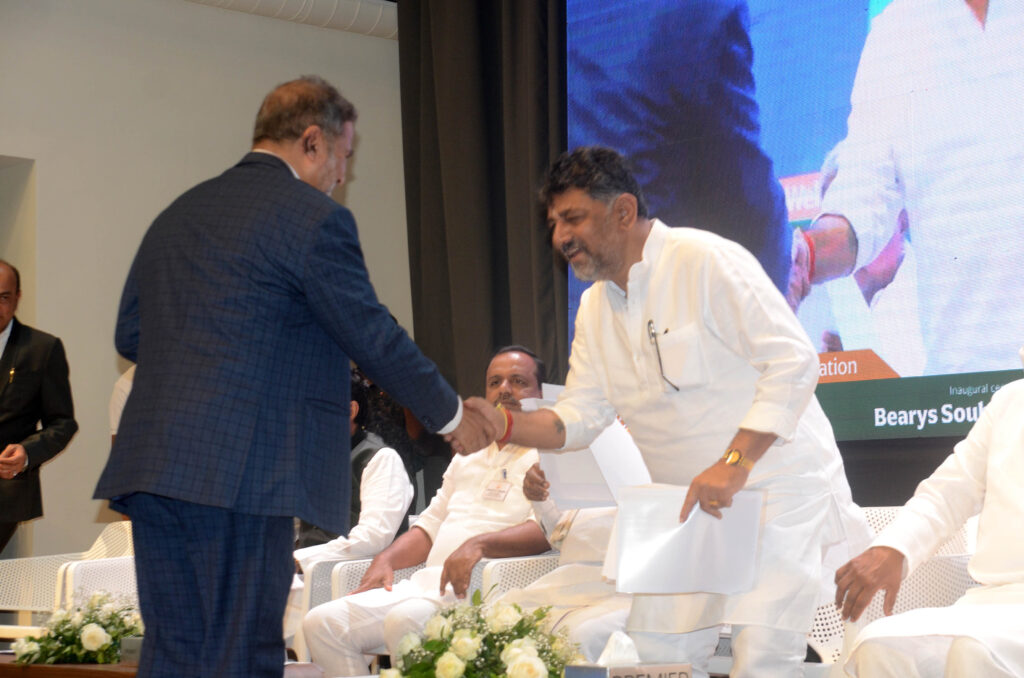
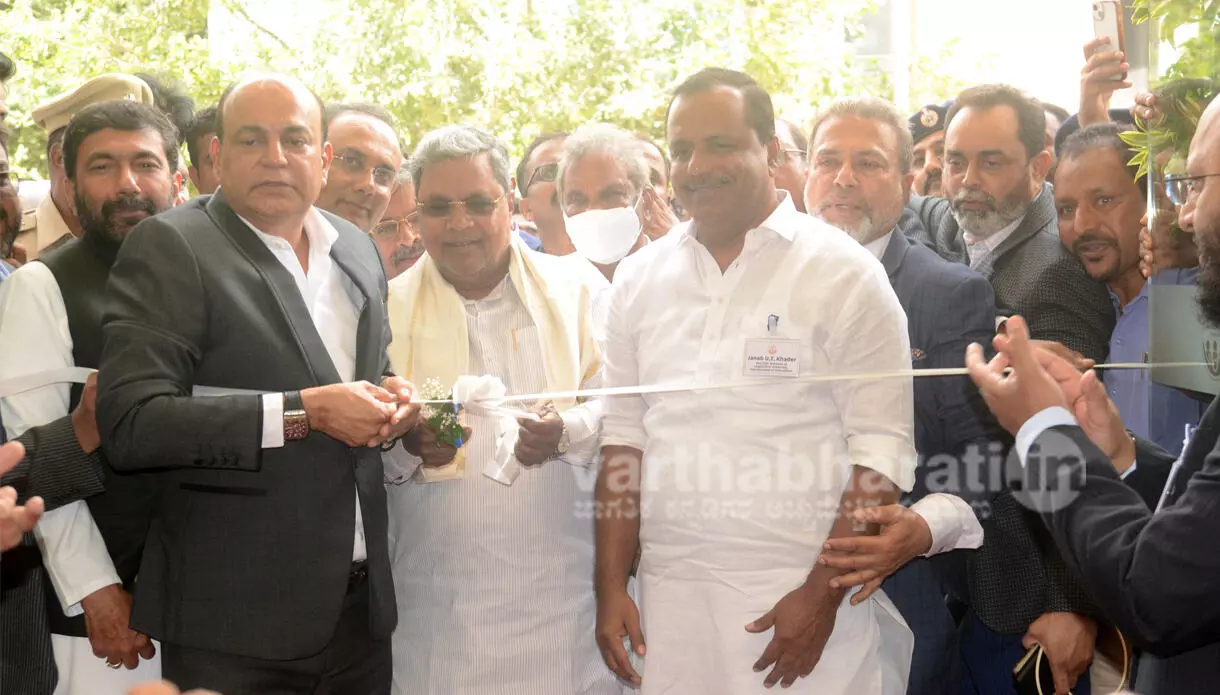
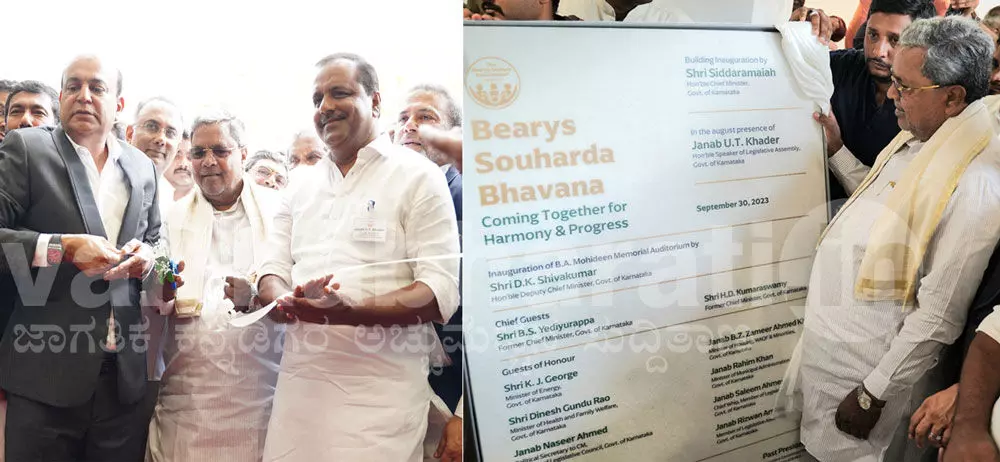
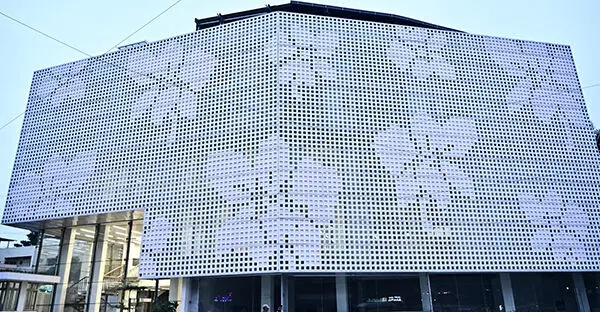
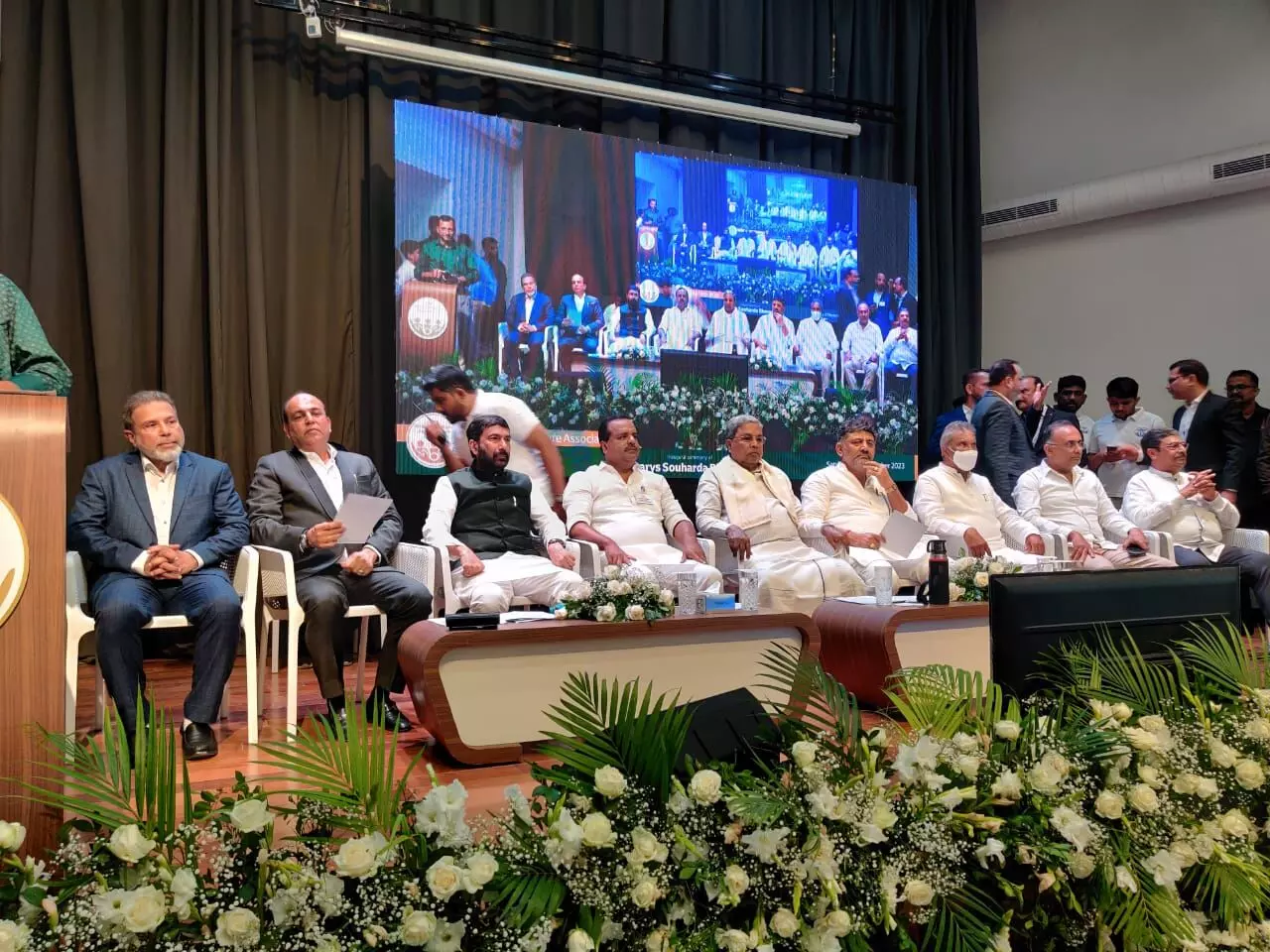
CM, DyCM and other prominent leaders grace the inaugral ceremony of the ‘Bearys Souharda Bhavan’.

Bengaluru:

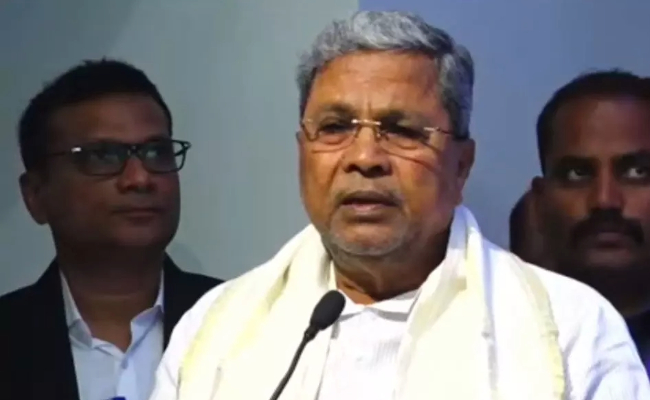
Chief Minister Siddaramaiah announced on Saturday that the state government has earmarked Rs 3,150 crores for the development of minority communities, with Rs 10,000 crores to be gradually reserved for this purpose in upcoming budgets. He made this announcement during his address at the inaugural ceremony of ‘Beary Souharda Bhavan’ here at HBR Layout.

The Chief Minister, accompanied by Deputy Chief Minister D.K. Shivakumar and other prominent leaders, inaugurated the Souharda Bhavan and the B.A. Mohideen Memorial Auditorium.

In his speech, Siddaramaiah emphasized the equal distribution of the state’s wealth among all its citizens, stating that “equal justice will be served, and no one can be treated unfairly.” He expressed pride in laying the foundation stone for Beary Souharda Bhavan and inaugurating it, highlighting its inclusivity by being open to people of all backgrounds.

Highlighting the important role played by harmony to achieve peace and progress in a country, he asserted that attaining peace and progress in a country or society is not possible without having harmony and equality among diverse cultures.

Stressing on creating harmony in the society, he stated, “Those who sow mistrust and hatred towards each other will be the primary reason for the downfall of this country. BA Mohideen was an exemplary personality with true secular values, who believed in friendship.”

He further assured strict action against those who disturb the peace in the society, emphasizing that individuals from all castes and religions are entitled to exercise their constitutional rights.

Beary community’s contribution to peace and development immense: D.K Shivakumar

Speaking at the ceremony, Deputy Chief Minister D.K Shivakumar commended the Beary Community as having contributed a lot to the development of peace, harmony and educational institutions in the state. He also thanked the Beary community for its support to the Congress party in the recent Vidhana Sabha Polls.

Acknowledging the community’s positive impact on Kannada language, he added that, “the Beary speaking community has made memorable contributions to Kannada literature, culture and language is immense. While girls wear jewelry to look beautiful, the beary speaking community has made Kannada beautiful” he said.

Meanwhile, he also recalled the contribution made by the community towards the temples of the Dakshina Kannada district, and also acknowledged that it was Bappa Beary who constructed the Shri Durgaparameshwari Temple in Mulki.

Shivakumar also stressed on generating employment in hometown and asserted that instead of heading to foreign countries or the gulf one should stress on creating jobs in the hometown, the exit of talent will prove harmful for the development of the state.

Encouraging people of Mangaluru, he cited the coastal city as the investors’ paradise and that the people should generate employment locally and remove the stigma of the city being called as the laboratory of communal riots.

Speaking about the requests made by the beary community for the grants, Shivakumar assured of all possible assistance within the framework of the law.

“Increase Muslim representation in the state cabinet”

Speaking at the inaugural ceremony, Syed Muhammad Beary, President of the Bearys Group and Beary Souharda Bhavan Building committee, urged an increase in Muslim representation in the state cabinet. Simultaneously, he also suggested giving ministerial positions to three people of the community including speaker U.T Khader.

In response to Syed Beary’s remarks, D.K Shivakumar noted during his address that, “You requested that UT Khader, who holds the position of a speaker, be considered for a ministerial role. He currently occupies a higher position above ours. SM Krishna and Jagdish Shettar were also speakers.”

Syed Beary also mentioned that the state government initially allocated a 30,000 sq ft plot of land. However, for some reasons, only 12,000 sq ft of land was allotted, and they have fully utilized it for the construction of this building.

Beary expressed hope that the government would allocate the remaining 18,000 sq ft of land for the construction of another building on the same model and hostel facilities for men.

B.A. Mohideen’s dream inspired the construction of this building, which has been named ‘Beary Souharda Bhavan’ in accordance with his suggestion. Syed Beary expressed, “This Bhavan will serve the community well, in line with the aspirations of B.A. Mohideen, who sparked an educational revolution amongst the Beary Muslims.”

The ceremony was attended by Speaker U.T. Khader, Energy Minister K.J. George, Health and Family Welfare Minister Dinesh Gundu Rao, Chief Minister’s Political Secretary Naseer Ahmed, Legislative Council Ruling Party Chief Whip Salim Ahmed, Umar Teekay, G.A. Bawa along with many other distinguished guests.

President of Bearys Welfare Association, Bengaluru and Member of Legislative Council B.M. Farooq presided over the event.

source: http://www.english.varthabharati.in / Vartha Bharati / Home> Karnataka / by Vartha Bharati / September 30th, 2023