All posts by mpositiveone@gmail.com

Indian varsity’s Applied Islamics course to offer inter-disciplinary perspective

Mangaluru, KARNATAKA:
Applied Islamics is the brainchild of celebrated thinker, Islamic scholar and author of more than 15 books. (Supplied)
Yenepoya University had earlier established a Chair in Islamic Studies and Research. (Supplied)

A first-of-its-kind Post Graduate Diploma course in Applied Islamics has been launched in India offering students Islamic Knowledge integrated with knowledge of English, computer sciences and current affairs.

Yenepoya University, which runs several institutions including medical, dental, management and other degree colleges and schools, had established a Chair in Islamic Studies and Research.

The Chair is meant to enrich academic resources of the university system for a deeper reflection on critical issues and to promote thinking on all issues connected with knowledge generation and inter-disciplinary perspective.

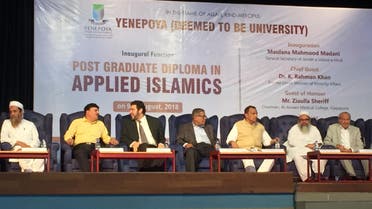
Inaugurating the course in the sprawling university campus of Mangalore, Moulana Mahmood Madani, renowned scholar and General Secretary of Jamiat-e-Ulama-e-Hind, New Delhi, said that the course has practical relevance to life and stressed that Islam is meant for the welfare of the whole humanity.

Applied Islamics is the brainchild of internationally celebrated thinker, Islamic scholar and author of more than 15 books, Dr. Javed Jamil. His ultimate aim is to establish an International Centre for Applied Islamics.
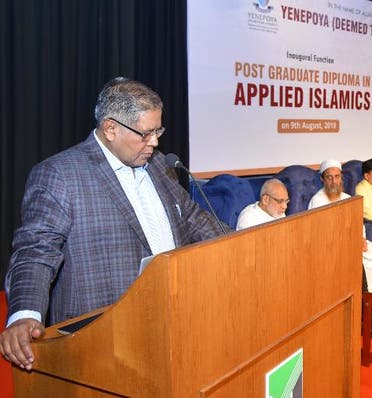
Rahman Khan, former Minister of Minority Affairs, lauded the holistic vision behind the course. (Supplied)

International programs

He believes that Applied Islamics will revolutionize the ambit and scope of Islamic studies, which will have an impact on many international policies and programs.

Introducing the course Dr. Javed Jamil said that the principles of Islam can be applied to fields like Health Sciences, Social Sciences and National Sciences for the benefit of the whole world.

Speaking to Al Arabiya English Online, Dr. Jamil, who is a renowned thinker and writer and head of the Chair in Islamic Studies and Research, at the University, said: “Applied Islamics refers to ‘the study of the application of Islamic Principles in the modern fields of knowledge like law, natural sciences, health sciences, social sciences and philosophy”.

“It encompasses the analysis of the modern theories in different fields in the light of Islamic principles and the development of the alternative terminologies, definitions, methodologies, indices, programs, policies, models and paradigms consistent with Islamic teachings,” he said.
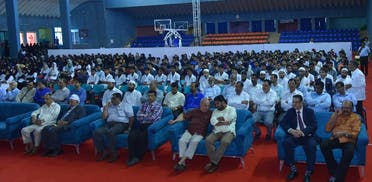
The course structure will comprise subjects covering a wide gamut of Islamic and worldly knowledge. (Supplied)

Course details

The one-year long course is open for graduates and also to Aalim and Faazil and other courses of Islamic institutions if recognized as equivalent to BA by competent authorities with a minimum percentage in Bachelors Course or equivalent of 45 percent for General and 40 percent for reserved categories.

The course structure will comprise subjects covering a wide gamut of Islamic and worldly knowledge including Modern World Order: Philosophy, Forces, Objectives and Impact, Systematic Study of Quran, Philosophy, Constitution, Islamic system, Islamic Paradigm of Health, Islamic Economics, Islamic political structure, Islamic Legal System, Islamic Social System, Islam and Natural Sciences, Empowerment of Indian Muslims, Interfaith and national and international harmony, and Epistemology and Ontology: Islamic Perspective.

Dr, Javed Jamil said that the Postgraduate Diploma in Applied Islamics is a unique program designed to develop students’ knowledge of the key areas of Islamic Studies, especially from the point of view of the application of Islamic principles in different fields.

“Students will examine the key teachings of Islam as a religion and a civilization that has come in contact with other cultures and civilizations. They will also explore other areas such as Islamic Economics, Islamic Law (Civil and Criminal), Islam and Health, Islamic Social System, women and Islam, Islamic core sources and Islamic ethics as well as major scientific contributions of Muslim scientists and thinkers,” he said.
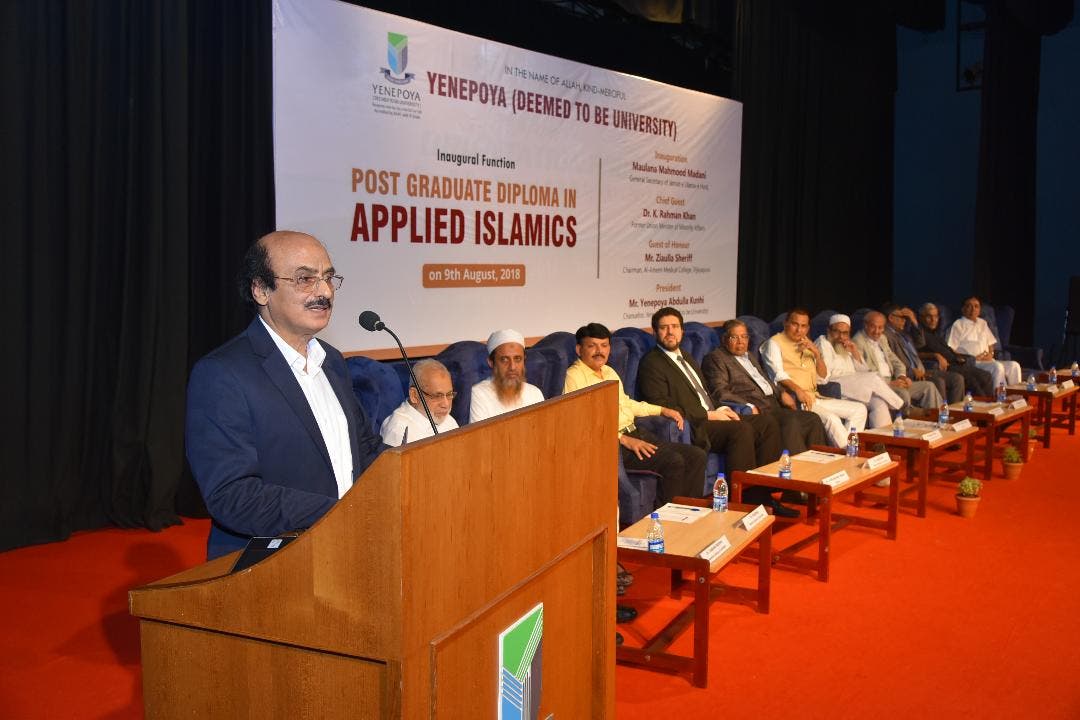
Dr, Javed Jamil said that the Postgraduate Diploma in Applied Islamics is a unique program designed to develop students’ knowledge of the key areas of Islamic Studies. (Supplied)

Career prospects

With more and more people now evincing interest in pursuing higher Islamic Studies, courses like PG in Applied Islamics is a boon. According to Dr Javed Jamil, such people are in great demand in western countries as well as in the Arab world where teachers with knowledge of Islam along with the knowledge of English, Computer Sciences and some understanding of the current affairs are preferred.

With the rising popularity of Islamic finance and banking, they can join finance sectors. Traditional Madrasas will also be taking greater interest in people having knowledge of Applied Islamics.

The subject of Applied Islamics is expected to gain rapid popularity and more and more institutions will be starting courses in the subject. They may also go to higher Islamic Studies pursuing Masters and PhD programs.

There are also those looking to pursue these courses, especially part time/online course, just for the sake of knowledge without any career objectives.

http://www.english.alarabiya.net / AlArabiya News / Home> Features / by Aftab Alam Kola / August 10th, 2018
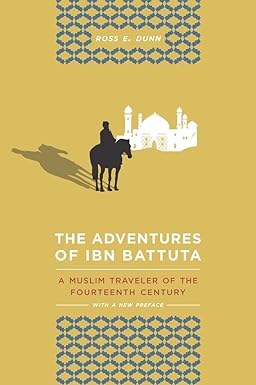
The book that retraces Arab traveler Ibn Battuta’s tryst with India

INDIA:

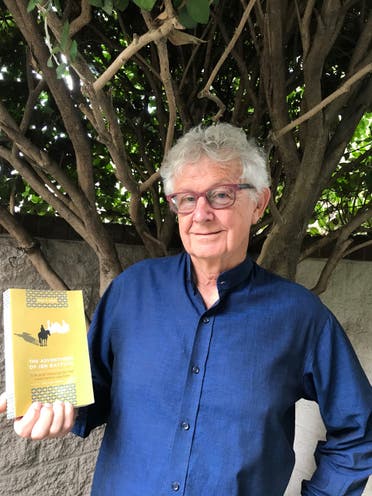
Ross Dunn authored book is into its third edition. / pix: amazon.in

A visit in February 2018 to India’s Kozhikode (Calicut) – an important town in the itinerary of celebrity traveler Ibn Battuta – inspired American historian Ross Dunn to look back on the lives and times of the Arab traveler.

His book, The Adventures of Ibn Battuta, a Muslim Traveler of the Fourteenth Century (University of California Press), which is into its third edition, was a product of this endeavor.

Impressed by Malabar’s reference, Ross Dunn visited Kozhikode in February this year. (Supplied)

Reconnecting with the past

The Professor Emeritus of History, San Diego State University, United States, who is engaged in retracing a few pockets of Ibn Battuta’s journeys believes that the traveler’s accounts help us recreate our past.

Talking to Al Arabiya English, Ross Dunn, also author of many books, minces no words in saying that the Rihla – whose formal title is A Gift to the Observers Concerning the Curiosities of the Cities and the Marvels Encountered in Travels – is of huge documentary value.

This is partly because it illuminates the values, customs, and partly because it records observations of nearly every conceivable facet of life in Muslim, and in some measure, non-Muslim societies.

The eminent professor armed with a PhD degree in African and Islamic history from the University of Wisconsin, is planning to revisit Kozhikode for a conference titled, Travel, Trade, Tradition, and Trajectories, which will focus mainly on Indian Ocean history at the Ibn Battuta International Center for Intercultural and Civilizational Studies from December 4-8, 2018”.

Showering lavish praises on Ibn Battuta’s travels, Ross Dunn said: “The subjects of his lively and sometimes critical commentary include religion, education, state politics, royal ceremony, law, warfare, gender relations, slavery, trade, agriculture, cuisine, manufacturing, geography, transport, and the achievements and failings of numerous jurists, theologians, monarchs, and governors.

The Rihla is the only surviving eye-witness account of the Maldive Islands, Sudanic West Africa, and several other regions as they were in the fourteenth century.”

Ross’ book on Ibn Battuta has appeared in three editions and a fourth is being planned. (Supplied)

Tryst with Malabar

Ibn Battuta’s travels took him to Spain, Russia, Turkey, Persia, India, China and all the Arab lands. The richest towns of all were along the Malabar coast, the main source of the pepper that commanded such high prices in the markets of China, Alexandria and Venice but also of the teak used for building ship.

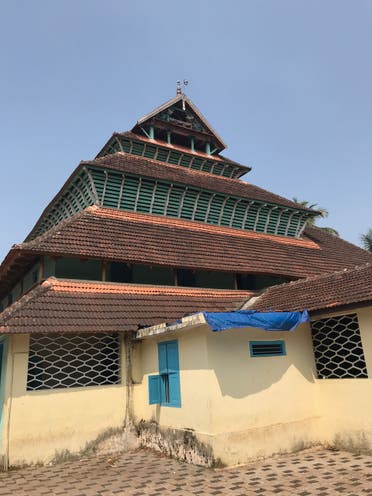
Impressed by Malabar’s reference, Ross Dunn visited Kozhikode in February this year and was wowed by the place. Reminiscing about his visit, the historian cum author narrates: “I visited Miskhal and Muchundi mosques. I was especially interested in the Miskhal masjid because Nakhuda Miskhal, the mosque’s benefactor, lived in Ibn Battuta’s time”.

Miskhal, named Mithqal in the Rihla, was one of the great merchant entrepreneurs of the long-distance Indian Ocean sea trade. “In this town too” Ibn Battuta writes, “lives the famous ship owner Mithqal, who possesses vast wealth and many ships for his trade with India, China, al-Yaman, and Fars.”

Ibn Battuta, who probably visited Kozhikode in 1342, does not mention the mosque, and I have not determined whether it was built before or after his arrival.”

Ross’ book on Ibn Battuta has appeared in three editions and a fourth is being planned. Reason enough for the professor to visit a few more of the great traveler’s destinations.

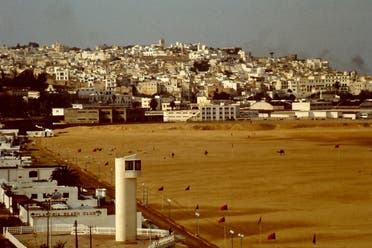
The old city of Tangier, Ibn Battuta’s birthplace. (Supplied)

Ruins of Tughlaqabad

Explains Ross, “Last February my wife and I visited New Delhi briefly, though not long enough for me to spend substantial time exploring the ruins of Tughlaqabad, the area in southern Greater Delhi where Ibn Battuta served as a judge and administrator in the government of Muhammad ibn Tughlaq, Sultan of Delhi”.

But what needs to be done to retrace the journey of Ibn Battuta for the modern world to know about his travel experiences? In the preface to the third edition of The Adventures, Ross describes some of the ways in which the great voyager has become better known in recent years.

“I am aware that millions of American school children learn about him because he is included in probably all the leading world history textbooks. There are a number of scholarly works about him, also children’s books and a few films,” he writes.

According to him, Tim Mackintosh-Smith, the English travel writer and Arabist who lives in Yemen, has written a wonderful three-volume account of his own expeditions to trace Ibn Battuta’s footsteps.

“About a decade ago I participated as a consultant in a Franco-Moroccan project to produce a feature-length movie about the traveler. I made three trips to Morocco in connection with this endeavor, but it has yet to come to fruition owing mainly to the large financing that would be required,” he says.

http://www.english.alarabiya.net / AlArabiya News / Home> Features / by Aftab Alam Kola / September 14th, 2018

Hadhramis present a slice of Yemen in India’s Hyderabad

Hyderabad, TELANGANA:

Hadhramis of Yemen have migrated for centuries in large numbers. (Supplied)

Can you believe that there is a large settlement of Yemeni descent people in India’s Hyderabad? Barkas, about 4 kms from the iconic Charminar, presents a slice of Yemen.

Here, a large number of Arabs from Yemen, called Hadhramis, have settled down having migrated from their country of origin for many generations.

Most of them were employed in the Nizam government. Barkas was home to the former employees of Nizams, the sovereigns of the erstwhile princely state of Hyderabad. The colony originally used to serve as the Military Barracks of the former ruler of Hyderabad – the Nizam.

Men with Arabian facial features clad in Yemeni lungis (wraparound kilt) or Futah ambling around the colony’s narrow lanes is a regular sight that intrigue outsiders.

History records that Hadhramis of Yemen have migrated for centuries in large numbers, establishing a diaspora that extends around the Indian Ocean, Saudi Arabia and the other Gulf states.

The Hadhramaut region, one of the southern governorates of Yemen, today has around 1.5 million inhabitants. Though migration began during the 3rd Hijri century (eighth century in the Gregorian calendar) but Hyderabad connection is of not that old. A good number of Hadramis had already migrated on India’s West Coast in the ninth century AD.

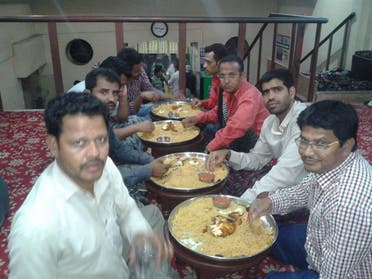
a typical mandi restaurant owned by Hadrami in Barkaas, Hyderabad. (Supplied)

World War II

According to Salam Bin Juman Bamraan, of Yemeni origin, who lives in Barkas, “My father Juman Saleh Bamraan took the ship to Mumbai in 1942 during the World War II since the situation in Yemen was not conducive for living.

“When my father came to Hyderabad the Nizam of Hyderabad was kind enough to give him a job. My father married a local Muslim woman and thus we integrated into the Hyderabadi community. Our language at home was Arabic until recently but after my father died we converse in Deccani Urdu.” Though Salam did go to Kuwait for work but did not return to Yemen.

Yemen served as a trans-shipment center for luxury goods — particularly spices — originating in India and points farther east and also as a Haj route for pilgrims coming from India.

So, migration was happening to and fro. There were thousands of traders from India doing business in Yemen, mainly Aden and Sana.

Dhirubhai Ambani, the founder of the now famous Reliance Group, also started his career as a trader in Aden and his famous son Mukesh Ambani, Reliance Industries Limited chairman, was also born in Aden.

Hadhramis of Yemen have migrated for centuries in large numbers. (Supplied)

300,000 strong Diaspora

These age-old ties between India and Yemen are reflected now by the presence of nearly 300,000 strong Yemeni-origin Diaspora in India and a vibrant Indian-origin Diaspora in Yemen.

Besides India, almost all Arabs in Southeast Asia and India trace their ancestry to Hadhramaut.

Five and six generations after their forefathers made Hyderabad their homes, many have retained their culture and traits. The members of this well-knit community are now integrated in Hyderabad. Homecomings had already begun dropping off in the 1970s as Yemen became more politically disturbed.

A documentary by Adam Sawab, a Yemeni student who did journalism from Osmania University titled ‘Barkas – A Small Yemen in India’ as part of his course shed light on Hadhramis living in Hyderabad’s Barkas.

The documentary reported that Barkas is a habitat for mainly members of the Chaush community, who are direct descendants of the Hadhrami – military men in the Hadhramaut region in Yemen, there are 52 Yemeni tribes in Hyderabad.

According to Salam Bin Bamraan says his father Juman Saleh Bamraan took the ship to Mumbai in 1942. (Supplied)

Settled tribesmen

Some of the Yemeni tribes settled here are those of al-Saadi, al-Nahdi, al-Yamani, Barabaa, al-Amoodi, al-Saqqaf, Bamraan, al-Aidroos, al-Saadi among others.

“During the time of the Nizam’s rule, the Arab population here increased and slowly settled mainly in the Army barracks, now Barkas, on the outskirts of the city,” Adam stated in his documentary.

Sheikh Mohammed Azzan Jabari, whose grandfather came from Yemen in 1940 and was employed in Nizam’s army, says that their culture is of mixed origin with strands from Arabs and local.

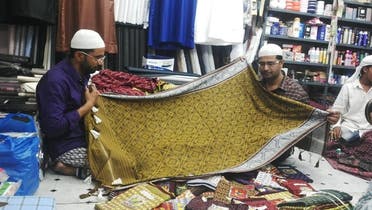
Having his own textiles business in Barkas, he says, “We are into third generation. Our weddings still encompass elements of Arabic traditions like nikah is performed in Barkas’ jame masjid and we play the duff which is a Yemeni custom. We still relish Yemeni traditional breakfasts items like mandi, fuul (a dish made of cooked fava beans), hareesa (savory porridge), etc and mandi, kabsa as meals. I think Barkas is home to more than 60,000 Yemeni descent people.”

So, if you want to experience Yemeni culture with a plateful of mandi (as the area is teeming with restaurants selling delectable mandi) head to Hyderabad’s Barkas locality.

Yemenis in their traditional attire in the Barkas community of Hyderabad. (Supplied)

source: http://www.english.alarabiya. net / AlArabiya News / Home> Features / by Aftab Husain Kola / December 13th, 2018

Kayalpattinam, a Women Dominated Model Town

Kayalpattinam, TAMIL NADU:

A small coastal town in south eastern Tamil Nadu, which has produced gems like Dr. K.V.S Habeeb Mohammed, the famous Tamil preacher, is a model in other respects too. Predominantly a women dominated town, with no cinema hall, no wine shop and even there is no police station. Almost zero crime rate but high literacy…

Dr. K.V.S Habeeb Mohammed

A small coastal town in south eastern Tamil Nadu, which has produced gems like Dr. K.V.S Habeeb Mohammed, the famous Tamil preacher, is a model in other respects too. Predominantly a women dominated town, with no cinema hall, no wine shop and even there is no police station. Almost zero crime rate but high literacy rate and God-fearing atmosphere are prominently visible features of the town. Travelers and explorers like Marco Polo and Ibn Battuta have mentioned in their diaries and famous documentarist and filmmaker Benoy K Bhel has also captured Kayalpattinam in his lenses.

Kayalpattinam is one of the coastal towns that had trade relations with Egypt and Arabia since long time. Obviously these became the entry points of Islam in India in the early times itself. Islam has left a lasting impact on this trade town. Rich Muslim traditions, Sufi heritage and centuries-old Arab connections are visible prominently. Kayalpattinam’s contribution to the Islamic spirituality and culture of the region is immense and invaluable. It has produced several religious scholars, great spiritual masters and offered a great space for local and international traders through several centuries. Kayalpattinam has contributed much to the Tamil literature.

Of the forty thousand population there are 1177 females for every 1000 males. The Arab lineage is evident in their features: complexion, physical features and culture. The town has about 30 mosques, one in each street. Madrasas and educational institutions especially imparting education to women like Aroosul Jannah Women’s Islamic college, Ayisha Siddiqua women’s Islamic college, Al Kulliyathun Nasuhiyya women’s Islamic college, Muaskarur Rahman Women’s Islamic college, are few names worth mentioning. Maqbara, tomb of Kazi Syed Alauddin, is another notable place. There are separate lanes for women to pass by, separate counters for them at shops.

The son of Kayalpattinam Dr. K.V.S. Habeeb Mohammed is a famous paediatrician, renowned speaker and author of more than 50 books. His TV talks, lectures and interfaith debates are valuable contribution to the harmony in the entire Tamil population. He is presently based in Chennai.

source: http://www.radianceweekly.net / Radiance Viewsweekly / Home> Miscellaneous / by Mohammed Atherulla Shariff / September 12th, 2023

Newsmakers

INDIA:

OMAR FAROOK KHATANI, an officer of M.P. state administrative service, has been elected president of the state administrative officers association by a large margin in the elections held in Bhopal recently. The cadre strength of this association is 700 consisting of additional, joint and deputy collectors. Khatani is presently posted as chief executive officer, M.P. Wakf Board Bhopal. He has held important portfolios during his career including secretary, M.P. state Minorities Commission.

PROF NARGIS JAHAN, who is associated with the department of Persian in Delhi University for a long time, has now been appointed head of the Persian department in this University. She also served as teacher in Delhi’s Zakir Husain College, Kamla Nehru College and Saint Stephen’s College. She has authored many books including Human Right in Urdu Literature, Sa’di-e Hind’ (English) Farsi Vyakaran aur Anuwaad’ (Hindi).

PROF MIRZA SAMAR BAIG presently incharge of the department of political science at Aligarh Muslim University has been appointed as Member Incharge of the Department of Public Relations by AMU vice chancellor in place of Dr Faizan Mustafa who was recently appointed as Registrar of this university. Dr Samar Baig is a prominent writer whose research articles on politics are published in important Indian and foreign journals. During the cold war period he had worked as research analyst on India’s foreign policy towards USA and USSR. 

PROF SHIRIN MUSAVI, Head of Department of History in Aligarh Muslim University, has been appointed by the Union ministry of human resources development as a Member of Indian Council of Historical Research (ICHR) in consideration of her valuable services and contribution in the filed of history. She will be the Member of ICHR for 3 years. 

Aligarh Muslim University has conferred PhD and M Phil degrees on the following students:
PhD: RAEES HASAN (Hindi), NIHAAL NAZIM (Urdu), MOHAMMAD IRFAN (Theology), SHAHROZ ALAM, MOHD QAISAR ALAM and S HASAN QAID (Economics) and MA’ARIFUR RAHMAN (Sanskrit). 
M.Phil: (Ms) SARITA SHARMA and SYED ABDUL MOINUDDIN (Mathematics). 

Well-known fiction writer, poet and educationist, DR GHAZANFAR ALI, who is also the principal of Urdu Teaching and Research Centre, Lucknow has been entrusted with the additional charge of director of National Council for the Promotion of Sindhi Language by the Union ministry of human resources development. He has taken over the charge of his new assignment in the Council’s head office in Vadodra, (Baroda). 

RAMZAN ALI appears to have set up a record in hair-cut of 210 women by continuously standing and working for 24 hours. Though his name is already entered three times in Limca Book of Records for hair cutting, this time he wants to get his name entered in Guinness Book of World Records for his feat of 210 haircuts in 24 hours. It is to be seen if his ambition is fulfilled and Guinness Book acknowledges it. 

PROF AKHTARUL WASEY, renowned scholar of Islam who is also Dean of the Faculty of Humanities and Languages and director of Zakir Husain Institute of Islamic Studies at Jamia Millia Islamia, Delhi was unanimously elected president of the Managing Committee of Ajmer’s Khwaja Moinuddin Chishti’s Dargah. He is associated with the Dargah Committee since 1995 as its member. Syed Abdul Bari was elected vice president of the Dargah Committee.

GHULAM NABI KHAYAL, Sahitya Akademi award-winning veteran Kashmiri writer and journalist, was elected as the President of Kashmir Writers Association. Amin Kamil (Padma Shree) and Prof G N Firaq (Sahitya Akademi awardee) were elected as patrons of the Association.

The Governor of Uttar Pradesh, in his capacity as Chancellor of Agra University, has nominated 

PROFESSOR MOHAMMAD ZAHID of the Department of Urdu, Aligarh Muslim University as member of the Executive Council of Dr BR Ambedkar University, Agra. Dr. Zahid has had a brilliant academic record. He has authored a number of books and research papers. He also served as a member of the Academic Council of AMU. «

source: http://www.milligazette.com / The Milli Gazette / Home> Milli Gazette Online / 16-31 May 2005

18-year-old Kerala’s 1st DGCA-licensed woman drone pilot

Malappuram, KERALA:

It was her father, who after recognising the immense potential of drones in surveying, encouraged Rinsha to learn the skill.

Rinsha flying a drone

Kasargod: 

There are many 18-year-olds who decide to take a break just after finishing higher secondary education and before taking up higher studies. And of them, most opt to spend their time relaxing. However, Rinsha Pattakal of Malappuram is built differently. Unlike many of her peers, the 18-year-old decided to use her free time to learn a skill. And in doing so, she created history.

Thanks to her dedication, Rinsha became the first woman from the state to receive a licence from the Directorate General of Civil Aviation (DGCA) for flying drones weighing up to 25kg. It was while she was waiting for admission to BTech in Civil Engineering that Rinsha decided to take up drone flying lessons. 

The rigorous training she underwent at ASAP Kerala Community Skill Park in Kasaragod, the sole DGCA-approved drone-flying training centre in Kerala, paved the way for her historic achievement. Rinsha also credits Autonomous Unmanned Aerial Systems Pvt Ltd, an organisation in Ernakulam that provides training to aspiring drone pilots in collaboration with ASAP, for her success. 

It was her father, who after recognising the immense potential of drones in surveying, encouraged Rinsha to learn the skill. The sole woman student in the ASAP’s first-ever drone flying training batch, Rinsha has set a shining example for young women across the country with her achievement.

The comprehensive 96-hour executive programme in small-category drone piloting, which also includes a five-day DGCA Licensing training, can be successfully completed within 16 days.  The course includes specialised training in 3D mapping, unmanned aerial vehicle (UAV) survey, UAV assembly and programming, and aerial cinematography, equipping students with a wide range of skills to excel in the dynamic drone industry. “Drones are revolutionising various fields and have diverse uses such as aerial surveillance, rescue operations, traffic monitoring, weather monitoring, firefighting, drone photography, videography, agriculture, and delivery services,” Rinsha said.

In India, the DGCA Drone Remote Pilot Certificate is now a mandatory requirement for operating drones. The course at ASAP Kerala offers in-depth knowledge of drone flying rules and regulations, ensuring responsible and safe operations. Aspiring pilots above 18 years of age, who have passed Class X and possess a valid passport, are eligible to enrol in the course.

ASAP officials said Rinsha’s achievement serves as an inspiration to all and showcases Kerala’s progressive spirit. “The accomplishment not only empowers women in the field of aviation but also propels the state towards embracing cutting-edge technologies,” said an official.

source: http://www.newindianexpress.com / The New Indian Express / Home> Good News / by Pooja Nair / Express News Service / July 28th, 2023

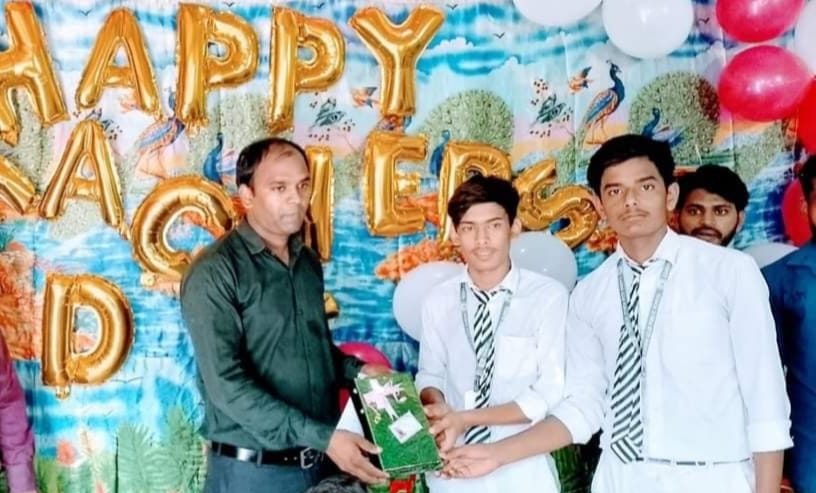
Shoukat Ali: A Beacon of Hope on Teacher’s Day

Shergati, BIHAR:

Shoukat Ali is more than just a teacher; he is a social activist and a symbol of hope for many. His story embodies the profound impact that education and dedication can have on individuals and communities.

As we celebrate Teacher’s Day on the 5th of September, we are reminded of the countless educators who have dedicated their lives to shaping young minds and illuminating the path to a brighter future. Among these remarkable individuals, Shoukat Ali, the founder of the HOPE Foundation, shines as a beacon of hope in the world of education.

Shoukat Ali’s journey into teaching began in the slums, where he and his friends started educating underprivileged children. They founded the HOPE Foundation with a mission to provide quality education to these children. For Shoukat, education is not just a profession; it’s a lifelong commitment deeply rooted in his childhood. He recognized the importance of education early on and began teaching children in his community for free during his student days. His passion for teaching only grew stronger as he pursued higher education abroad.

With the unwavering support of his friends, Shoukat Ali’s dream took shape, and the HOPE Foundation was born. This organization’s primary focus is on creating awareness about education in remote and underserved areas, igniting the torch of knowledge and development. The dedication of his friends, who share his commitment, added strength to the foundation.

Today, the HOPE Foundation stands as a shining example of self-sustainability, with every member contributing from their income. The organization’s reach extends to slum-dwelling children across four Indian states, including Uttar Pradesh, Bihar, and West Bengal. Beyond traditional education, the foundation conducts career counseling programs for college students, spreading the message of hope and ambition.

Umran collaborates with such passionate teachers to reach the right to good education for underrepresented and marginalized communities and help them in every possible way. Looking ahead, the HOPE Foundation has ambitious plans, including introducing computer education to young girls in rural areas, equipping them with essential digital skills, and boosting their confidence. Additionally, a library for students preparing for competitive exams is in the pipeline.

The HOPE Foundation’s impact transcends education; they’ve undertaken significant work in health camps, afforestation, and disaster relief efforts. During the COVID-19 pandemic, the organization distributed essential supplies to people in various districts, exemplifying their commitment to the welfare of society.

As we celebrate Teacher’s Day, Shoukat Ali’s journey serves as a reminder of the transformative power of education and the incredible impact teachers can have on their students and communities. His dedication and tireless efforts have brought hope and opportunity to countless young minds.

In this celebration of educators, let us recognize and honor individuals like Shoukat Ali, who, through their unwavering commitment to education, inspire us all to reach for the stars, no matter where we come from. Happy Teacher’s Day!

source: http://www.umran.org.in / Umran.org.in / Home> Blog / September 03rd, 2023

Service most noble

KUWAIT / Kozhikode, KERALA:

Sana and Jassim have started a chapter of the Robin Hood Army in Kozhikode, who collect excess food and distributes among the hungry.

Sana and Jassim with their family

We all have advised our children not to waste food. We have also expressed dismay over the amount of food that gets wasted at restaurants and parties. What else? Is that all we can do? Then, meet this couple who has moved from Kuwait. They are collecting surplus food from restaurants and catering services, and donating it to the underprivileged people in Kozhikode.

Fret not anymore, if you have excess food after a function at your home or if you ordered a little too much while having dinner at a restaurant. Because Sana and Jassim’s green veiled volunteers from the newly started chapter of Robin Hood Army in Kozhikode are one phone call away. They will rush to your place to collect the food and deliver it to the needy.

In less than two months, the Robin Hood Army has fed 4,959 people in just 54 drives. A zero-fund worldwide organisation started by Neel Ghose and Anand Sinha on August 26, 2014, the Robin Hood Army is functioning in 133 cities in 13 countries. Its vision is to eliminate hunger. “More than 40 per cent of cooked food in the world is directly going to the dustbin and I believe that every religion emphasises that we shouldn’t unnecessarily waste food,” says Sana.

Sana, mother of three and hailing from Mumbai, had always wanted to dedicate her life to social service and was looking for the right NGOs to work with, when she found out about the services of RHA and applied to be their volunteer in Kozhikode.

“My vision is to make Kozhikode as a zero food wastage city and reach to each and every needy person out there – be it the need for food, education or social awareness, myself and my army will be there,” she says.

From professionals including lawyers and teachers to wheelchair-bound people, they have 45 volunteers at present. Specialised in health coaching and nutrition, Sana Jassim’s husband Mohammed Jassim personally arrives at restaurants and other venues to taste and check the quality of the food before it is donated. He had been working in Kuwait for 40 years in an oil company before he moved to Kozhikode last year.

“Our main purpose is to end wastage of food. This is a nonprofit service. Everyone who commits to volunteer will have to meet their own expenses such as fuel for the transport,” Jassim’s adds.

Presently, Sana and her team including her husband are preparing to start RHA chapters in hyper local areas such as Balussery, Wayanad, Malappuram etc. There will also be educational training for the local kids and their mothers on the beach areas as Sana thinks that even though Kerala is 100 percent literate, the quality of education offered to the underprivileged needs to be improved.

source: http://www.deccanchronicle.com / Deccan Chronicle / Home> Lifestye / by Fathima Shareef, Deccan Chronicle / April 06th, 2019

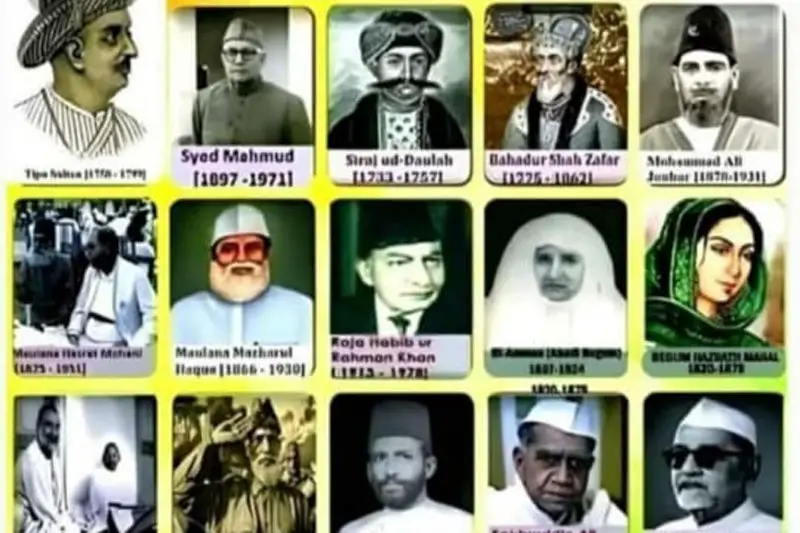
Sabhi ka khoon hai shamil yaha ki mitti me: Muslim Freedom Fighters of India

INDIA:

Uncover the remarkable contributions of Muslim freedom Fighters of India to fight for freedom from British colonial rule.

In present times, Indian Muslims find themselves subjected to demonization and unwarranted questioning of their patriotism. Communal elements seek to manipulate history by intentionally excluding Muslims and disseminating false propaganda against them through social media. The vital contributions and sacrifices made by Indian Muslims in the struggle for India’s freedom from British colonial rule are systematically obscured. However, a closer examination of history reveals that not only did Indian Muslims play an essential role in the freedom movement, but they also made significant sacrifices for the cause of anti-colonial nationalism.

Indian Muslims: Unveiling Their Crucial Role

According to a report by the Milli Chronicle, the names of 95,300 freedom fighters are etched on the India Gate in Delhi, and remarkably, 61,945 of these names belong to Muslims, signifying that 65% of these brave individuals were Muslims. The significance of this statistic is eloquently captured by the renowned writer Mr. Kushwant Singh, who boldly states that the story of Indian freedom is etched in the blood of Muslims, emphasizing their disproportionately larger contribution to the struggle, considering their smaller population percentage.

Profiles of Courage: Muslim Freedom Fighters

The annals of history are adorned with the stories of Muslim freedom fighters who put their lives on the line to liberate India from the shackles of British oppression. These individuals, driven by an unwavering determination to secure their homeland’s independence, demonstrated exceptional courage and resilience.

Sultan Haidar Ali Salabat Jung: The First Freedom Fighter


   Sultan Haidar Ali, father of Tipu Sultan, pioneered the fight against British colonial forces. A secular leader, he united both Hindus and Muslims in his quest for freedom, although his efforts were eventually betrayed.

Tipu Sultan: A Trailblazer in Battle


   Son of India’s first freedom fighter Haider Ali, Tipu Sultan pioneered the use of iron-cased rockets, utilizing them effectively to defeat British forces in several historic battles over two decades.

Shaheed Ashfaqullah Khan: A Martyr’s Legacy


   Member of the Hindustan Republican Association (HRA), Ashfaqullah Khan paid the ultimate price for India’s freedom. Notable for his daring attacks on British government trains, his sacrifice remains etched in history.

Maulana Abul Kalam Azad: A Beacon of Unity


   Maulana Azad, a key leader in the anti-colonial nationalist movement, became the youngest President of the Indian National Congress. He rallied Hindus and Muslims alike against British oppression and launched Urdu Weekly Al-Hilal to expose British misrule.

Maulana Hasrat Mohani: Champion of Change

Mohani’s powerful Urdu speeches incited Indians to stand up against British rule. His unyielding spirit saw him arrested and jailed, but his impact on India’s fight for freedom remained profound.

Khan Abdul Ghaffar Khan: The Frontier Gandhi


   A pivotal figure in the Khilafat movement, Khan Abdul Ghaffar Khan established the Khudai Khitmatgars, promoting peace and unity. Jailed for 13 years by the British, his dedication was unwavering.

Sirajud Daula: Battling Against Betrayal


   The last Nawab of Bengal, Sirajud Daula, fought valiantly against British forces. Despite betrayal, he remained a symbol of resistance against British rule.

Vakkom Majeed: Courage Amidst Oppression


   Vakkom Majeed’s resilience during the Quit India movement earned him repeated jail terms, highlighting his unwavering commitment to India’s freedom.

Fazl-e-Huq Khairabadi: Life in Exile


   Sentenced to life in the notorious Kalapani jail on Andaman, Fazl-e-Huq Khairabadi continued his fight for freedom despite insurmountable odds.

Badruddin Tayabji: Founding the INC


    Badruddin Tyabji and Qamruddin Tyabji were instrumental in establishing the Indian National Congress (INC). Badruddin’s wife, Suraiya Tayabji, designed the present Indian flag.

Shah Nawaz Khan: A Triumphant Act


    Major of Azad Hind Force, Shah Nawaz Khan was the first to hoist the tricolor at the Red Fort, symbolizing India’s victorious struggle against British imperialism.

Barrister Saifuddin Kitchlew: A Voice for Justice


    Jailed for 14 years by the British for protesting against the Jallianwala Bagh massacre and the Rowlatt Acts, Kitchlew’s opposition to the two-nation theory set him apart.

Bakht Khan: A Gallant Defender


    Bakht Khan’s courageous defense against the British in Delhi, Bengal, and Lucknow showcased his unwavering dedication to India’s freedom.

Titu Mir: Bengali Rebel


    Titu Mir’s armed resistance against British colonial authorities exemplified his determination to free India from British rule.

Syed Ahmad Barelvi: Organizing Resistance


    Syed Ahmad Barelvi’s efforts in uniting native armies against the British from Delhi to Kabul showcased his strategic prowess.

Zain-ul-Abideen: INA Officer’s Patriotic Slogan


    Zain-ul-Abideen, an officer of the Indian National Army (INA), coined the iconic patriotic slogan “Jai Hind.”

Empowering Women in the Freedom Struggle

The fight for India’s freedom was not limited to men; several Muslim women also contributed significantly to the struggle.

Begum Hazrat Mahal: A Rebel Leader


   Rebelling against the British in 1857, Begum Hazrat Mahal seized control of Lucknow from British forces, showcasing her leadership and courage.

Surayya Tyabji: Designing India’s Flag


   Wife of freedom fighter Badruddin Tayyabji, Surayya Tyabji designed the Indian flag that we proudly hoist today.

Abadi Bano Begum: A Pioneer in Politics


   Abadi Bano Begum, known as Bi Amma, actively participated in politics, matching her male counterparts in the Indian National Movement. Her sons went on to become prominent leaders.

Azizan: A Warrior’s Spirit


   Azizan organized a battalion of warrior women, displaying her remarkable skill in the art of war and refusing to yield to British pressure.

A Timeless Legacy

The contributions and sacrifices of Indian Muslims in the fight against British colonialism are immeasurable. While recounting the names of every Muslim freedom fighter may be an impossible feat, their collective impact remains undeniable. The fact that many chose to remain in India underscores their deep-rooted connection to the land. Despite attempts to distort history, India will forever be the cherished home of its Muslim citizens.

Conclusion

Urdu poet Rahat Indori’s words,

“Sabhi ka khoon hai shamil yaha ki mitti me,

Kisi ke baap ka Hindustaan thodi hai,”

encapsulate the essence of Muslim Freedom Fighters of India’ unyielding commitment to their homeland. The sacrifices and contributions of Indian Muslims in the struggle for independence stand as a testament to their unwavering dedication and indomitable spirit. Their stories deserve to be acknowledged and celebrated, inspiring future generations to honor the diverse tapestry of individuals who fought for a free and united India.

source: http://www.munsifdaily.com / The Munsif Daily / Home> News> Indai> Pan India / by Munsif Web Desk / August 18th, 2023

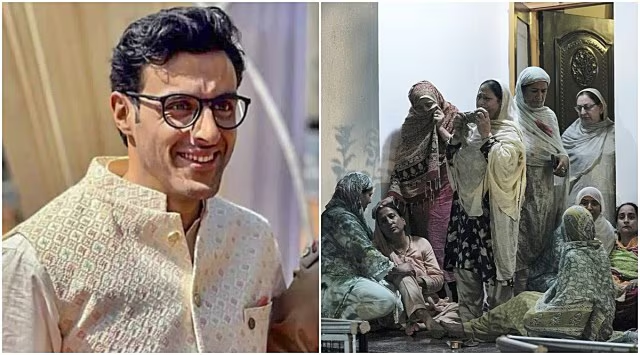
Son of former DIG, the Dy. Suptd. of Police (DSP) of J&K Police Humayun Bhat a cop who died in Anantnag terror attack ‘always led from the front’

Srinagar, JAMMU & KASHMIR:

Officials familiar with the operation said that the terrain in the particular area is difficult and “militants fired from a height upon the approaching party”.

Kashmir gunfight
Family members mourn the death of DSP of J&K Police Humayun Bhat , who was killed in a gunfight with terrorists in Anantnag district, during his funeral at his residence in Srinagar on Wednesday.(PTI Photo)

As friends and relatives crowded through the gates of Deputy Superintendent of Police Humayun Bhat’s house, distraught family members could barely say a word through their sobs. The 2018 batch J&K Police officer, who wished to carry forward the tradition of the uniform in the family, was killed along with two officers of the Indian Army as their search party was hit by a volley of terrorist gunfire in the Gadool forest in Anantnag.

Bhat’s father, Ghulam Hassan Bhat, served in the J&K Police until his retirement as DIG Central Kashmir in 2018.

An officer who spent his probation year with him described him as an eager and humble officer. “He was always eager to learn, a friend to all his colleagues. He always led his team and yesterday too he did the same,” said the officer.

Officials familiar with the operation said that the terrain in the particular area is difficult and “militants fired from a height upon the approaching party”.

Another officer who served with Bhat at Srinagar said, “He was an exceptional police officer. I remember when he joined the team, I was greatly impressed by his interest in learning practical policing. He was a dedicated team member, always ready to contribute.”

He said that Bhat was the proud son of a retired police officer and “found great joy in carrying on his father’s legacy by wearing the khaki”. “Gone too soon, his absence leaves a void that words can’t express, and our hearts ache with the loss of such a promising officer,” the officer said.

Bhat studied at Srinagar’s Burn Hall School and trained as an engineer at SSM college of engineering in North Kashmir. The family, originally from Pulwama, had been living in Srinagar for many years. He is survived by his parents, a brother, his wife and a son, who is just over a month old.

After joining the force in 2018, Bhat was posted at Srinagar, then at Pattan in North Kashmir, and he was on his third posting, as Sub Divisional Police Officer (SDPO) at Kokernag, Anantnag.

A senior officer he worked with in the early days of his career described him as brave and compassionate. “His father is one of the most outstanding professionals, a man of principle, and Humayun had those same values. He was passionate about the uniform and never brought his father’s rank into his own professional dealings.” He added that his loss at a time when things are relatively calmer in the Valley “makes this immensely difficult to reconcile with”.

A family friend described Bhat as an “extraordinary officer” and added that he was courageous, conscientious and down to earth. “Similar to his father, his qualities of head and heart endeared him to everyone who came in contact with him. His martyrdom is an irreparable loss to all of us who knew him and his father.”

source: http://www.indianexpress.com / The Indian Express / Home> News> India / by Naveed Iqbal, Srinagar (headline edited) / September 14th, 2023