All posts by mpositiveone@gmail.com

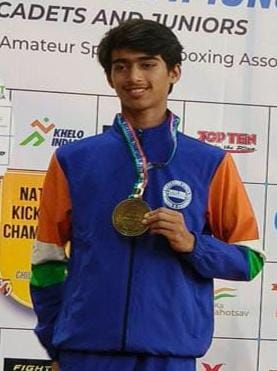
15-year-old Yusha Ayman of Bhatkal Clinches Gold at National Kickboxing Championship, Secures Spot to Represent India in Uzbekistan

Bhatkal, KARNATAKA:

Bhatkal: 

Yusha Ayman Chamundi, a 15-year-old prodigy trained under the guidance of Team Alliance Martial Arts Academy in Bhatkal, has achieved a remarkable feat by clinching the gold medal in the Junior Level Kickboxing National Championship, presented by the Wako India Kickboxing Federation in Ranchi, Jharkhand.

Yusha’s victory has not only earned him the prestigious gold medal but has also secured his position to represent India at the forthcoming international level. Notably, the international kickboxing championship is slated to take place in Uzbekistan next month, scheduled for September.

Currently pursuing his SSLC studies at the esteemed Anand Ashram Convent School in Bhatkal, Yusha’s journey to this achievement began with a triumph at the District Level Kickboxing event held in Bhatkal. His stellar performance continued as he clinched a gold medal at the State Level Kickboxing (Junior Level, Under 57 kg) competition in Mysore on July 16. The young talent’s remarkable consistency propelled him to the national level, where he stood out among competitors from 24 states in the championship held in Ranchi from August 23 to 27.

In an impressive display of his skills, Yusha navigated through the rounds with finesse. Notably, he conquered Maharashtra, Telangana, and Rajasthan in the initial stages and emerged victorious against Haryana in the final, securing the illustrious gold medal. This exceptional feat has not only illuminated Bhatkal and Uttara Kannada but has also brought Karnataka into the limelight.

Beyond kickboxing, Yusha boasts proficiency in volleyball and kabaddi, frequently showcasing his talents in school-level competitions. His achievements extend to the realm of karate, where he has consistently excelled. As he continues to juggle sports and studies, Yusha’s aspirations reach beyond the arena – he envisions becoming a Chartered Accountant after completing his matriculation.

Yusha’s dedication to martial arts traces back to his early years, fueled by a passion that led him to join Alliance Martial Arts Academy under the guidance of Mohammed Ismail and Mohammed Shammas. His late uncle, Athar Armar, also played a pivotal role in nurturing his martial arts skills.
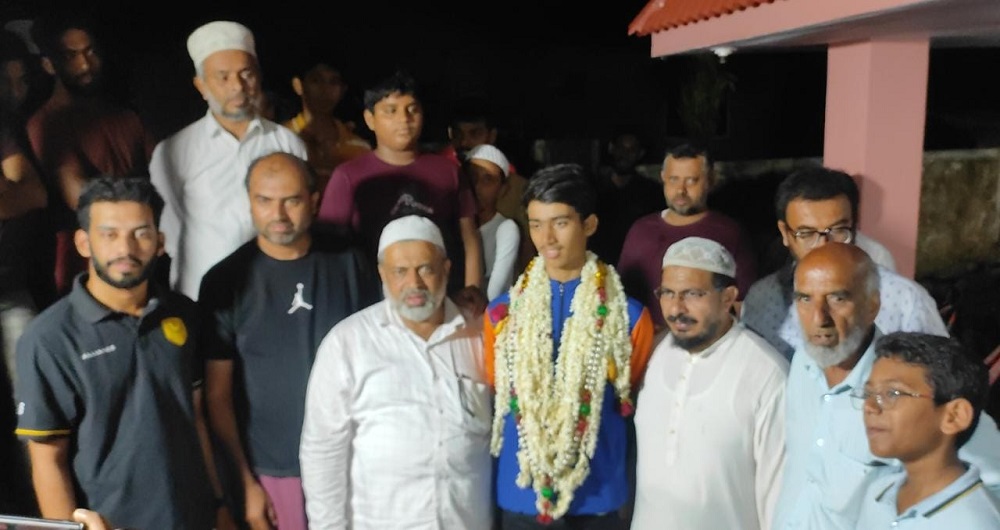
As Yusha returned home to Bhatkal from Ranchi, he was greeted with exuberance by his community. The youth of Madina Colony and Mohiuddin Street, his residential areas, warmly welcomed him, adorning him with garlands in a jubilant celebration of his achievement. Friends, family, and well-wishers filled his home, expressing their pride and admiration.

Azizur Rahman Ruknuddin Nadvi, President of Bhatkal Muslim Youth Federation, joined the chorus of congratulations, offering floral garlands to Yusha and extending his good wishes to both him and his family.

source: http://www.sahilonline.com / Sahil Online / Home> Coastal News> Featured News> Sports News / by S O News Service / headline edited / by IG Bhatkal / August 31st, 2023
Saudi Arabia’s Global NRIs Youth Club fetes Indian expat, Hyderabad’s Hafiz Abdullah Abdul Mateen Usmani, the First Prize Winner of Annual Qur’an contest

Hyderabad, TELANGANA / SAUDI ARABIA :

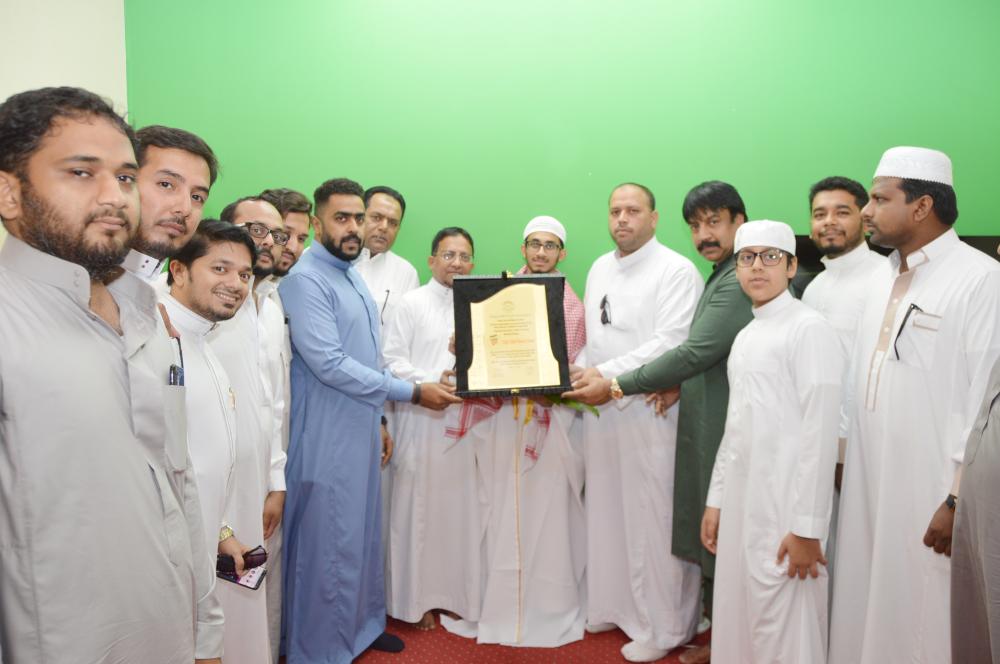
Global NRI Official presenting a memento to Hafiz Abdullah Abdul Mateen Usmani, presented by Azmat Ali Emran and Syed Abdul Hadi / SG Photo by Abdul Rahman M Baig

Jeddah:

Hafiz Abdullah Abdul Mateen Usmani, winner of the annual Qur’an memorization contest organized by Jamiat Khairokum Li Tahfizul Qur’an Kareem (Khairokum Qur’an Memorization Society) for Makkah region, was recently felicitated by the Global NRIs Youth Club here.

Abdullah Usmani won the first prize from among 1,000 participants out of which 13 candidates were bracketed in the category of those securing between 95 and 99 marks. In the ensuing round involving the 13 finalists of the competition, he was declared the winner.

Abdullah Usmani was presented a car by Jeddah Governor Prince Mishaal Bin Majed.

Jamia Al Khairiya Li Tahfiz-ul-Qur’an Kareem is a semi government institution and center established for the students to memorize and recite the Holy Qur’an. It holds the competition every year to encourage students and other participants.

Hafiz Abdullah Usmani is an Indian and belongs to the city of Hyderabad in Telangana state.

Syed Abdul Hadi, vice president of Global NRIs Youth Club, presented a Mishla’h (an adornment cloak wore by men) to Hafiz Abdullah Usmani as a token of appreciation. It was followed by a memento presented by Azmat Ali Emran, president of the club. Bouquets were presented to the contest winner by Fysal Ali, Farhan Baig and Syed Khaja Viqaruddin.

Speaking to Saudi Gazette, Hafiz Abdullah Usmani said: “It took me four years to memorize the Holy Qur’an. I was 11 years old when I started the memorization.”

He is also the alumnus of IISJ from the batch of 2017. Initially he was admitted to Muaz Bin Jabal School where he memorized about one/sixth of the Qur’an. Later he got enrolled in Dar Ul Furqan School from where he completed his memorization of the Holy Qur’an while learning Tajweed. He completed the memorization of the Qur’an four years back. It was last year when the Masjid Al-Aziziyah officials advised him to appear for the Qur’an memorization contest.

Hafiz Abdullah Usmani took the opportunity and appeared from Masjid Al-Aziziyah under the supervision of Sheikh Hamza Rayyan, imam and khateeb of the mosque.

Abdullah Usmani continued with his worldly pursuits along with his Qur’an memorization and took an open school examination from 6th to 8th standard from IISJ. He became a regular student of IISJ from 9th standard after completing his Qur’an memorization.

Initially, he started memorizing of Holy Qur’an on the instructions of his mother. Later after getting admitted in Muaz Bin Jabal School he gained interest in memorizing and was very much motivated by seeing his peers doing so.

While memorizing the Qur’an, he got a chance to meet Sheikh Ayman Rushdi Suwaid, and learned Tajweed from him. He is known to be the Sheikh Ul Tajweed in Jeddah. In his early days of memorizing Qur’an, he used to listen to the Qirat of Sheikh Abdurrehman Al-Sudais and learned the ayats (verses) of the Qur’an that made him memorize the Qur’an faster.

Talking about his future plans, Abdullah Usmani said he would like to learn more Arabic, Islamic history and Qur’an. He said he was interested in pursuing advance accounting courses and build his career. He also has plans to lead Taraweeh prayers during Ramadan in any of the mosques of Jeddah.

Listening to the recitation of Sheikh Meshary Alafasy, Sheikh Mohammed Ayub and Sheikh Al-Sudais helped him learn the correct pronunciation and also helped him in the memorization process.

Speaking to Saudi Gazette, the award winner’s father, Abdul Mateen Usmani, said: “I would first thank and express my gratitude to Almighty Allah for the honor bestowed on my son.”

In this context, he said, efforts of Jamia Tahfiz-ul-Quran was exceptional. “This prize is more than a hundred billion dollar for me. I have not even dreamt that my son Abdullah will be winning the first prize.”

He said all his children initially received their early education having British curriculum. “Me and my wife decided that we will invest money on good education for our children. All my children were enrolled in Al-Waha International School for their primary education. It was my wife’s plan that we will encourage Abdullah to be a Hafiz. So after completing 5th standard, we removed Abdullah from the school and admitted him in the institute for Qur’an memorization. I was a little reluctant but my wife played a major role in making my son Hafiz.

“I advise all unmarried as well as married people not to waste or kill their time by watching movies and TV serials and spoil their future but instead focus on their education both for the deen (religion) and duniya (world). Even the Prophet (peace be upon him) said that one should give priority to the Seerah of anbiya (prophets).”

He said his wife started attending religious classes with other women in our neighborhood soon after she landed in Jeddah. She sacrificed her sleeping hours during daytime to attend these classes.

“It’s the parents responsibility to mold their children as they want. One can lay the right foundation from the word go,” he said.

Speaking to Saudi Gazette, Azmat Ali Emran, president of Global NRIs Youth Club said: “It’s an honor for our club to be the first to felicitate Hafiz Abdullah Abdul Mateen Usmani.”

Syed Abdul Hadi, vice president, said: “Abdullah made the Indians and specially the people of Hyderabad very proud by winning this award. I would like to thank Allah the Almighty and also congratulate his parents on behalf of Global NRIs Youth Club.”

source: http://www.saudigazette.com.sa / Saudi Gazette / Home / by Abdul Rahiman M Baig, Saudi Gazette / Headline edited / September 18th, 2018

‘Muslim women fly planes, serve in police and armed forces, write books and create art’

Lucknow, UTTAR PRADESH:

Lucknow :

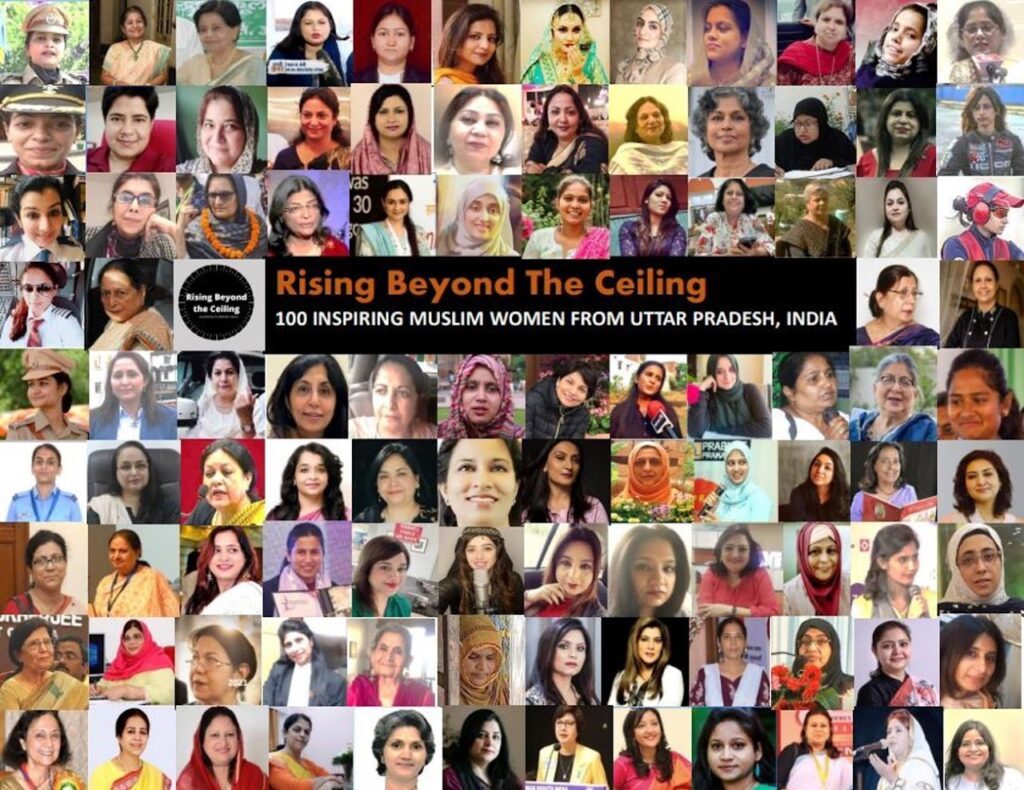
Muslim women are not a monolith, says Dr Farah Usmani, the founder and honorary editor of the “Rising Beyond The Ceiling” (RBTC), an initiative born out of frustration with the stereotypical narrative surrounding Muslim women in India. RBTC is preparing a directory of Muslim women who have excelled in different fields.

However, millions of Indian women, who identify themselves as Muslim, reach across spectra of ethnicities and languages, states and union territories, do not look the same or sound the same and contribute towards nation building in a variety of ways, says Dr Usmani adding that the compendium is under finalisation.

Member, UP Sunni Central Waqf Board, Sabiha Ahmad, who is busy preparing the list of prominent Muslim women in Uttar Pradesh, said, “The organisation is in the process of preparing a directory of such Muslim women who hold certain positions in social, corporate and professional workspace.”

She says the women spotlighted here from Uttar Pradesh do many things—they fly planes, serve in police and armed forces, they are skeet shooters and bike riders, write books and poetry, create art, play snooker and tennis, administer and govern, espouse social issues, serve as lawyers, scientists and doctors, are entrepreneurs and corporate professionals and are substantive contributors to the progress of the country.

Recently an online international meeting was organised in which the issue was discussed at length.

Veteran politician Mohsina Kidwai; vice chancellor, Era University, Lucknow, prof Farzana Mahdi; writer Sabeeha Anwar; artist Dr Farzana Shahabuddin and Samreen Ahmad were prominent among those who attended the virtual event.

Ahmad further says there is a myth surrounding Muslim women in India that they are highly conservative, prefer to stay home, not at par in education with women of other communities.

“Rising Beyond the Ceiling (RBTC), a non-profit organisation focused on supporting and promoting Indian Muslim women and their leadership and contributions in their respective fields, is working to bust this myth,” says Ahmad, who is also incharge, RBTC UP 100 .

RBTC UP 100 is a congregation of 100 women representing 22 million (2.2 crore) Muslim women from UP.

It is working under the leadership of Dr Farah Usmani, the founder and honorary editor of RBTC initiative who is also serving at United Nations Population Fund (UNFPA) headquarters in New York as director-1 level.

“The stories of these Indian Muslim women are for all women and girls to draw inspiration, role model them and thus become mentors in their own districts and neighbourhoods thereby become inspirations themselves for future generations,” Ahmad adds.

source: http://www.hindustantimes.com / Hindustan Times / Home / by HT Correspondent, Lucknow / September 22nd, 2021

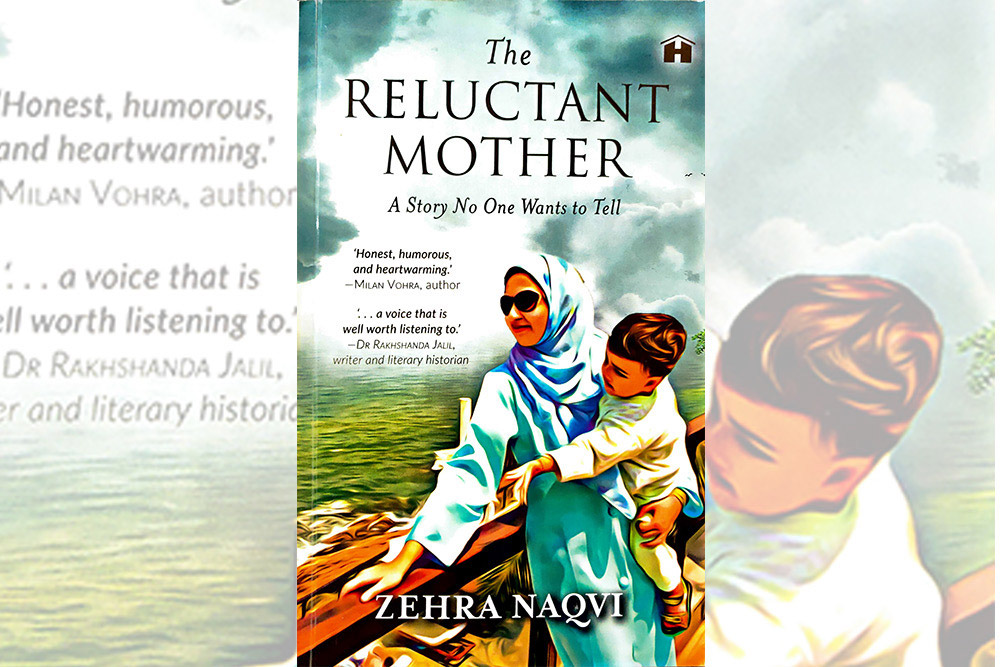
Book Review | The Reluctant Mother: A Story No One Wants To Tell

INDIA:

A promising author, Zehra Naqvi, nuancedly articulates how the multi-layered and complicated processes with its intense emotional pressure leave mothers completely burned up in her book, ‘The Reluctant Mother: A Story No One Wants to Tell’.

Much -revered and almost deific motherhood sprouted by religious injunctions, social practices, cultural prescripts, and ethnic sensibilities – goes well beyond its well-defined boundary – being a place where all love begins and ends. Motherhood symbolizes self-effacement and denial.

The status of the hyped-up emotional and domestic pivot of the family pleasantly prods a mother to relinquish her existence to her offspring. These popular assumptions offer a deceptive and naive simplistic view of a far more complex and intriguing relationship between a mother and child than we perceive

The idolized representation of motherhood has a long tradition in literature, but it did not mirror in some highly acclaimed literary texts such as Hamlet, Madame Bovary and Lolita. Queen Gertrude, Emma Bovary and Charlotte Haze present a repugnant image of a mother who poses a constant psychotic and physical threat to the children.

The mothers, refusing to stick to subservient roles stipulated by the society, fire the imagination of non-conformist authors. These sorts of mothers continue to subvert the dominant narrative of the world that mocks normativity and moral policing.

Here Christina Crawford’s memoir, “Mommie Dearest” (1978), comes forth that tears apart all that is traditionally associated with motherhood. Her mother, Joan Crawford, emerges as the grandmama of all socially ambitious and figure conscious women who find pregnancy, birth and rearing too exasperating.

Indian cultural ethos adores motherhood, and hardly any authors treat it with disdain by equating it with “motherdom”. A promising author, Zehra Naqvi, nuancedly articulates how the multi-layered and complicated processes with its intense emotional pressure leave mothers completely burned up in her book, “The Reluctant Mother: A Story No One Wants to Tell” (Hayhouse,2021). Far from a misery memoir, the book written in a diary format narrates a tantalizing and equally agonizing story of pregnancy, birth, and motherhood.

Contrary to popular perception, her reluctance is not restricted to the early days of motherhood, but it seems to be a festering emotional wound that refuses to heal. Not overly dramatized but reasonably pitched entries of the diary covering four years provide a shifting glimpse into harrowing and fascinating maternal experiences.

Zehra’s observations, wrapped in lucent prose, are funny and bittersweet. She seeks to upend the dominant notion that hardly recognizes a mother more than the deliverer of the child. The author who joined the company of prominent Muslim female English writers such as Rakshanda Jaleel, Rana Safavi, Ainee Zaidi, Nazia Erum, Sami Rafique, Ghazala Wahab, Reema Ahmad, Tarana Khan, Huma Khalil, Saba Bashir and the like, astutely refutes that only function of the mother is to breed.

Diary writing closely resembles fiction as intense creative outpourings spruce it up. It is a less formal and intimate medium of stitching up a warm and immediate rapport with the reader. Zehra’s intriguing, placid and tearing entries set a pulsating debate on the nature of the life of desire, individual space, possessiveness and socially bred sense of sacrifice.

At the onset of motherhood, the author hardly feels exulted; contrarily, it produces annoyance and irritation instead of euphoria. The moment of ecstasy leaves her completely downcast:

“I had always seen in movies that women break into tears of joy and men swing their wives up in their arms on kerning that they have a new life coming. I do break into tears. But they are tears of shock, of dread, of dismay.

And they are the tears of wrath- wrath that I unleash on the man that I love the most in the world. Wrath of having my dreams washed over, having my carefully magical universe destroyed. “. p13.

For her, marriage is not meant for procreation or extending the family. It is an intense companionship through which both can explore the unrealized potential of their lives. The child adds an extra presence to intimate companionship. It sounds selfish, but it affirms Jean-Paul Sartre who defines hell as the presence of the other.

The author, after initial reluctance, gets herself prepared for caring, but it cannot be taken for love. She has a point here, but love does not happen in a vacuum and caring is the place where it is born.

Nuancedly written divergent entries make it clear that Zehra strives to perform different but equally significant roles with the same sense of devotion and impeccability. To abandon one role is an affront to womanhood as her epilogue reads,” I am not a mother above everything else. I am a mother along with everything else that I am . It is an integral part of me. And I should not have to denounce all other parts to acknowledge this one.”

It is a refreshing and insightful read that spells out new contours of motherhood in graphic prose with occasional sloppiness. Zehra deserves accolades for not regurgitating the traditional aspects of motherhood.

(Shafey Kidwaiis a bilingual critic and teaches miscommunication at Aligarh Muslim university.)

source: http://www.outlookindia.com / Outlook / Home> National / by Shafey Kidwai / December 25th, 2021

The First Cigarette

Delhi / Calcutta, BRITISH INDIA:

The 1860s and 70s were a difficult time for the old and noble families of Delhi. The changes ushered in after the rising of 1857 had precipitated the decline of the city that had begun with the invasion of Nadir Shah over a century ago. The grandeur of the old Mughal capital was gone and with it disappeared the wealth and commerce. This was the era of Mirza Asadullah Khan Ghalib and his poetry of decrepitude and nostalgic longing. Old merchant families were particularly badly hit.

The Ellahies were just such an old family of Delhi merchants. By the 1870s it was being run by Hajee Karam Ellahie. The writing was however, on the wall and the family realized that opportunities in Delhi were dwindling. Karam’s much younger brother, Bukhsh, an ambitious young man therefore decided that he would not sit around waiting for the decline to be complete. Rather he would take on the challenges of the new era head on.

If Delhi was in decline, the new capital of the British, Calcutta, had been growing rapidly over the same period. By the second half of the nineteenth century it was a city bursting with opportunities, ideas and wealth. Young Bukhsh decided the best way to approach the new age was to move to Calcutta. In 1878 he joined an old Muslim firm in Calcutta as a young apprentice hoping to pick up enough skills to survive in the new order.

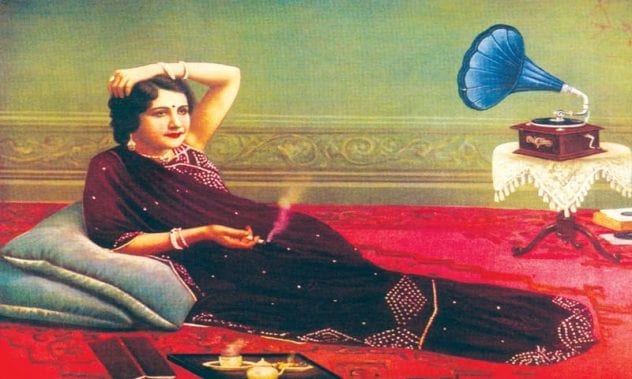
Gauhar Jaan in a Cigarette Advertisement

During his time in the city, Ellahie also keenly observed his fellow denizens closely. Amongst the new fashions that caught his eye was the habit of smoking cigarettes. The British army had picked up the habit during the Crimean War in the mid-1850s from their Turkish rivals. Unbeknownst to Ellahie precisely around the 1880s, when he was apprenticing in Calcutta, a new cigarette-rolling machine was making it faster and cheaper to produce cigarettes commercially.

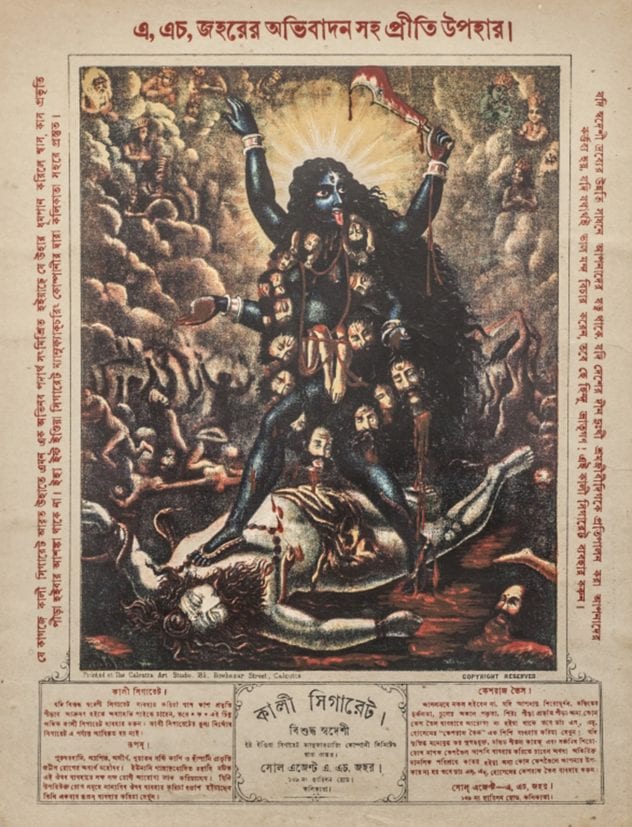
A shrewd businessman, Bukhsh soon asked his older brother to lend him some capital to start a business importing tobacco to make cigarettes. In 1885, with his brother’s loan, Bukhsh set up Bukhsh Ellahie & Co. Apart from new production techniques he also adopted new advertising techniques to popularize the new trend in the city. Cashing in on the growing celebrity of the Hindustani classical singer, Gauhar Jaan, Bukhsh Ellahie launched a brand of local cigarettes called the ‘Gauhar be Baha’. he also distributed free cigarettes to the army as a precocious new promotional tool.

The brand and the business were an enormous success. Before the century ended, Bukhsh was one of the richest men in the city. So complete was Bukhsh Ellahie’s domination of the local market that when foreign firms such as Wills and ATC first came to India, they had to enter into partnerships with Ellahie and depend upon the latter’s distribution networks.

Bukhsh Ellahie & Co Offices

Until 1901 the firm of Bukhsh Ellahie therefore remained the sole agents for the major foreign tobacco companies. It was only in 1901 that E.J. Parrish, the manager of ATC’s Indian operations eliminated Ellahie’s sole agency and instead set up its own distribution depot at 95, Clive Street, Calcutta, with its own devoted staff. While the partnership flourished however, Ellahie innovated once more and advertised the partnership using yet another then still fairly new commodity, i.e. matchboxes.

Matchbox label issued by Bukhsh Ellahie & Co. advertising their partnership with British American Tobacco.

Bukhsh Ellahie & Co. were, as they themselves would later advertise, unquestionably the “Pioneer of the Tobacco Trade in India”. Yet, their mercantile portfolio were not limited to tobacco, or indeed matches. Ellahie was a general merchant and dealt in a wide variety of goods. He was also an official supplier for the Indian Army, thereby acquiring a large and lucrative captive market. Above all, they were one of the first local firms to recognize the importance of foreign trade and worked hard to develop international trading partnerships.

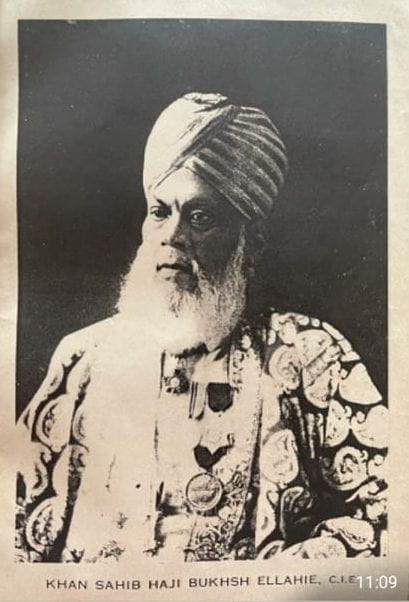
In time, Hajee Bukhsh Ellahie became members of both the Bengal and Punjab Chambers of Commerce and was honored by the British government, first with the title of Khan Bahadur and later, with the Companion of the Indian Empire (C.I.E.). He also became a well-known philanthropist and built or sustained several charitable institutions in his adopted city, Calcutta. On Chitpur Road he built a Musafirkhana or a Traveler’s Lodge. He also founded an orphanage and an association for the burial of indigent Muslims.

Khan Bahadur Haji Bukhsh Ellahie

Notwithstanding recent awareness of the unhealthfulness of smoking, Calcuttans continue to smoke in large numbers today. A recent survey found the city is the highest consumer of cigarettes in all of India. Few of these modern smokers however, have ever heard of Bukhsh Ellahie. His once legendary fame and wealth have, alas, disappeared from public memory like the smoke from his Gauhar cigarettes.

Posted in: Businesses PastCalcutta By GaslightGaslit Glamour

source: http://www.web.sas.upenn.edu / Calcutta by Gaslight / by Projit Bihari Mukharji / August 09th, 2018

EDUCATION : Educators Of Empathy: Lubna And Azeem’s Mission For Madrasa Students

Bengaluru, KARNATAKA:

Azeem Azeez and Lubna Afza at a madrasa

In the heart of Bangalore, where diversity thrives and stories of perseverance resonate, two remarkable individuals, Lubna Afza and Azeem Azeez, are rewriting the narrative of education and hope through their initiative, “Our English School.”

This inspiring journey began with two distinct backgrounds converging in a shared mission to make a difference. Lubna Afza, an advocate, and Azeem Azeez, a social activist, embarked on a remarkable endeavor to provide education to madrasa students and differently-abled children.

In 2015, Lubna Afza endured a heart-wrenching series of tragedies that would break anyone’s spirit. She lost her father, mother, niece, and brother-in-law in a tragic road accident in Saudi Arabia. The same day, her husband divorced her, leaving her in a state of emotional despair. Struggling with the loss of her family and her marriage, Lubna spiraled into severe depression. Her sole source of strength was her 8-year-old son, who sometimes had to step into the role of caregiver during her darkest moments.

Azeem Azeez, a seasoned community activist, had spent years volunteering at government schools and organizing scholarship camps for disadvantaged children. It was during the COVID-19 pandemic that fate brought Azeem and Lubna together as they volunteered at an NGO. This serendipitous encounter led to a shared dream of making a positive impact on society.

Their journey took a significant turn when Azeem introduced Lubna to the world of madrasas. Together, they embarked on a mission to provide quality education to madrasa students, starting with their work at a madrasa in Varthur. The bond they formed with these students ignited a fire within them to do more.

Their vision took a leap forward when they stumbled upon “Our English School,” a historic institution in Jayanagar established in 1965. The school had fallen on hard times due to the pandemic, and its owners were considering selling it. Azeem and Lubna made a bold decision to purchase the school’s license, envisioning a brighter future for it.

However, challenges remained. The pandemic forced them to adapt, and “Our English School” became a mobile school, reaching students across three madrasas in Bangalore. Under Lubna and Azeem’s leadership, the school began offering English, Hindi, Kannada, Maths, and Science courses to students pursuing Hifz or Aalim programs, impacting the lives of over 200 madrasa students.

For Lubna, this endeavor became her lifeline, giving her a renewed sense of purpose after enduring immense personal hardships. However, a crucial hurdle looms ahead. To maintain their school license, they must establish a physical school, a financial burden they are unable to bear alone.

Lubna, Azeem, and the dedicated teachers they have assembled are passionate about their transformative work but need support to secure a permanent space. They have exhausted their life savings and are now reaching out to the community for assistance, appealing for funds or space to establish a proper school.

The need for their services is evident as this year, over a thousand students are eagerly waiting to enroll in “Our English School.” These aspiring students are a testament to the impact Lubna and Azeem’s initiative has had on the community.

“Our English School” has become a beacon of hope for many madrasa students seeking a well-rounded education. It symbolizes the resilience of individuals like Lubna and Azeem, who are determined to make a difference despite facing adversity.

To contribute to their mission or learn more about “Our English School,” please visit www.ourenglishschool.org.

source: http://www.thecognate.com / The Cognate / Home> Education / by Shaik Zakeer Hussain / September 04th, 2023

Reviving greeting cards

Bengaluru, KARNATAKA:

In an era where digital communication has taken center stage, the sentimental value of greeting cards has faded into obscurity.

There was a time when these tangible tokens of affection held immense significance, fostering connections across distances.

Research reveals that receiving a physical card can elevate recipients’ mental well-being, fostering a sense of connection and alleviating feelings of isolation.

The process of meticulously selecting and sending a card communicates thoughtfulness and care, reinforcing the recipient’s sense of self-worth. Contrasting the fleeting nature of digital messages, a greeting card evokes profound emotional responses.

The limbic system, governing behavior, emotions, and emotional memory, plays a pivotal role in triggering these reactions. Research underscores that the emotional impact of a physical card surpasses that of its digital counterparts.

Amidst this evolving landscape, Sharief Ayesha, an entrepreneur from Bengaluru, has embarked on a passionate mission to rekindle the importance of greeting cards.

Through her entrepreneural set up called Yaay Cards, she says she attempts to preserve a cherished tradition by revitalizing the act of conveying emotions through physical cards.

For Sharief Ayesha, sending greeting cards embodies a vessel of emotions, a bridge of connection, and a repository of memories.

She says, “The rewards of sending cards stretch beyond mere nostalgia. It will remain a time-honored practice”.

Sharief Ayesha has made cards for actors like Salman Khan, Nikhil Chinappa, singer Edward Maya. Sonu Sood and Bhaskar Rao (police-turnedpolitian) etc.

source: http://www.newstrail.com / Newstrail / Home / by Afra Afzal Sait / September 01st, 2023

Anwar Basha Unopposed Nominee for Karnataka Waqf Board Chairman’s Position

Chitradurga, KARNATAKA:

Bangalore:

Anwar Basha has emerged as the sole candidate for the Karnataka Waqf Board chairman’s position, which had been left vacant following Shafi Saadi’s resignation. The nomination papers, submitted by Anwar Basha, who hails from Chitradurga district, were the only ones received by election authorities.

The unexpected development has caught the attention of political circles and residents alike. Anwar Basha’s unopposed nomination suggests a level of consensus and support within the relevant political factions.

Shafi Saadi, the former chairman, had resigned from his post earlier this year. Since then, the position had remained vacant, leading to speculation about who would fill the void. Anwar Basha’s decision to step forward as the sole candidate has now resolved this uncertainty.

While the election authorities have yet to officially announce Anwar Basha’s selection, it is widely expected that he will assume the chairman’s role unopposed. The official announcement regarding his confirmation is scheduled to be made tomorrow, and it is anticipated that the transition will proceed smoothly.

Anwar Basha is known for his background in the Chitradurga district, where he has been actively involved in various community and political activities. His nomination and imminent appointment as chairman signal the potential for new leadership in Bangalore, and many are eager to see how he will address the challenges and opportunities facing the Waqf department.

source: http://www.thehindustangazette.com / The Hindustan Gazette / Home> News> National> Karnataka / by Nihal Mohammed / September 04th, 2023

UPSC: Mohammad Hussain, who had failed in his first four attempts, sat in a mosque and cried out to Allah before succeeding in his fifth attempt

Wadi Bundar, Mumbai, MAHARASHTRA:

Syed Mohammad Hussain said Failing in four attempts disappointed me, but it did not let me break down. I worked hard and cracked the UPSC exam.


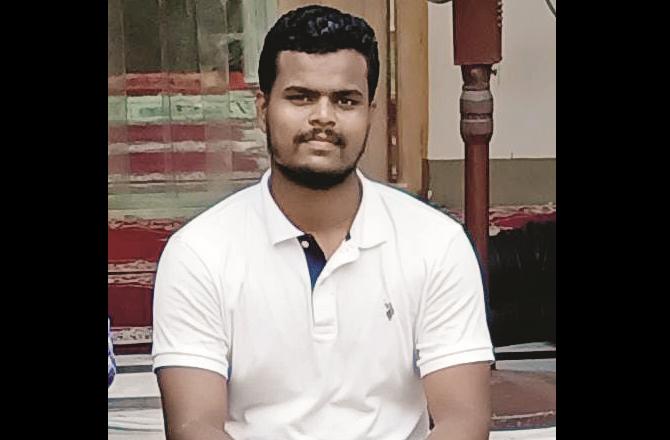
Hussain, a resident of Sholapur Lane, Wadi Bandar, Mumbai, has secured the 570th rank in the UPSC Exam 2022.


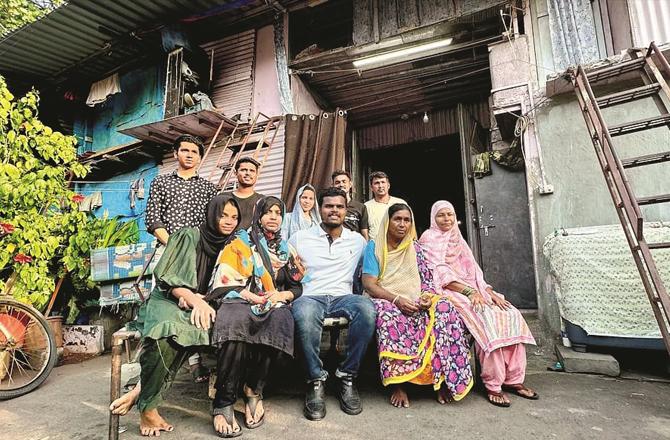
Success for Hussain was full of struggles and hard work. Hussain lives in a small shanty on the roadside adjacent to the Wadi Bandar Majgaon Dock area. It is the hub of godowns; loading and unloading heavy vehicles is routine here. When I reached Wadi Bandar, Hussain met me enthusiastically and immediately reminded me by saying, Sir, I promised that this time I would definitely give you an interview opportunity.” Now that it has been fulfilled, I remembered that meeting in my flashback. After a while, Hussain got busy between some TV channels and YouTubers and then said, “Sir, we sit at a place nearby; the house is small; people will keep coming to meet me; we will not be focused.” We reached the nearby Jafar Sulaiman Hostel. Hussain said, Sir, the complete preparation of my 5th attempt has been done at this place.

On a question about the journey from primary to graduation, Hussain replied that he studied from 1st to 5th standard at Khwaja Shia Asana Ashri School, then joined St. Joseph High School Dongri in 6th standard, from where he passed the 10th exam in 2012 with 61% marks. Later, I passed 12th Commerce in 2014 from Anjuman Islam Alana Junior College in Vermont with 72%, joined Elphinstone College for graduation, and completed my B.Com. in 2017 with 86%.


Hussain reveals the story of how the idea of doing UPSC came to his mind. My father is illiterate; his childhood was spent in an area that was once considered a hotbed of crime. My father had dreamed of making us government officers by giving higher education to my siblings. He was a member of the Mohalla committee, so he used to participate in the programmes organised by the police station. When I was a school-going boy, I had the opportunity to visit government offices. Then I got inspired by the officers, and the idea of becoming an officer came into my mind at an early age. After graduation, I decided to pursue a career in competitive exams. My father wished that if the situation in the area were to change, I would have to prove myself.

Not having much career awareness, I moved from Mumbai to Pune based on whatever I had learned by myself. There I took admitted to Unique Academy and started regular civil service studies. Alhamdulillah I qualified for the preliminary exam on my first attempt in 2018 after only eight months of preparation, but failed the main exam due to my lack of experience in studying.

Meanwhile, I came to know about Jamia Residential Coaching Academy. I cleared its entrance and went to Delhi, where I learned a lot from seniors. Appeared for the 2019 prelims but didn’t qualify. The reason was that I focused all my attention on the main study. As I had no experience studying, it was a big lesson for me.

Unfortunately, due to the Corona lockdown, I returned to Mumbai. Here, then, CEO Maqsood Khan Sahib gave me an opportunity to prepare in Haj House. With all the facilities near my home, I worked hard and qualified for the 2020 and 2021 prelims, respectively, but failed again in the mains. Due to some unavoidable circumstances, senior students left the Hajj House. It was a sign of great sorrow for me.

At the same time, with the efforts of Maqsood Khan sb., a centre for the preparation of the civil service examination was started at the Jafar Sulaiman Musafir Khana hostel. I was very happy that Allah provided us with the means. It was impossible to study with uniformity among all the members of the house. After joining Jafar Sulaiman Hostel along with my own studies, I started coaching other students as well. Alhamdulillah, ever since this centre was established, students have been achieving success in one or another examination. The full credit goes to Maqsood Khan Sahib and his teammate, who laid the foundation of this centre in times of need. Despite very limited resources and a lack of facilities, doing my studies here has been quite fruitful for me. Having qualified in three out of the four attempts in the prelims, I was very disappointed with the continuous failure in the mains but did not let myself break down.

One day, I sat in the courtyard of the mosque in Jafar Suleman Musafirkhana and wept before Allah. I did introspection on myself and found out my weaknesses, strengths, and the reasons behind my failure. In the end, I stood up with determination by committing myself, “Now the next journey will be for success.” Then I qualified for the May 2022 preliminary exams. This encouraged me. The main exam took place in September 2022. Alhamdulillah, I had success in that too. In preparation for the interview, I went to Jamia RCA Delhi, where I got training and guidance from seniors. Through hard work and continuous mock interviews, I gained confidence and appeared for the interview in February 2023. Alhamdulillah, I succeeded with a 570 rank on my 5th attempt. Due to the support of my parents, relatives, friends, Haj House, Jamia RCA, Jafar Sulaiman Musafir Khana Civil Service Centre, and especially Maqsood Ahmad Khan Sb.

Mohammad Hussain said in a message to the students: The civil service exam takes time. It’s a test of patience and requires hard work with comprehensive planning, concentration, a positive attitude, and consistency. Sometimes you have to go through a lot of stress and pressure. I would like to tell the students that success is not within their realm and takes time.” It’s a test of patience and requires hard work with comprehensive planning, concentration, a positive attitude, and consistency. Sometimes you have to go through a lot of stress and pressure. I would like to tell the students that success is not within their realm.” It’s a test of patience and requires hard work with comprehensive planning, concentration, a positive attitude, and consistency. Sometimes you have to go through a lot of stress and pressure. I would like to tell the students that success is not within their realm. Everyone has a share in it. Meet the professionals with whom you want to make your career, get full knowledge of the field, and work hard.

Interviewer Akhlaque Sk (career counsellor)  can be reached at sakhlaque@ymail.com.

source: http://www.thehindustangazette.com / The Hindustan Gazette / Home> News> Education / by Shaikh Akhlaque / May 28th, 2023

Inside The Tablighi Jamaat: A Book Review

INDIA:

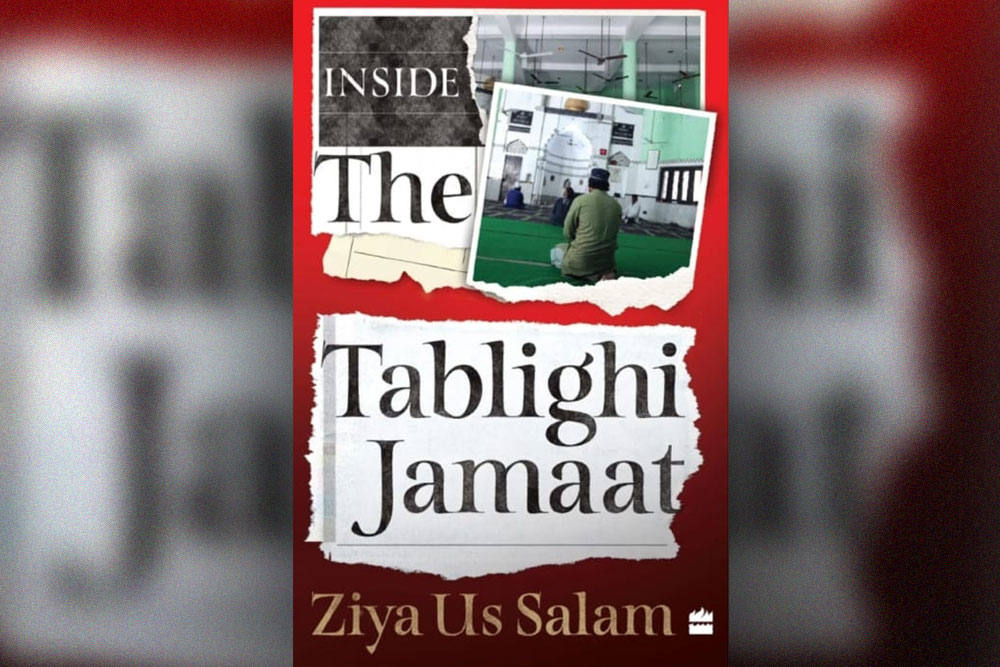
As Tablighis came under the scanner of the government post lockdown in India for allegedly ‘ spreading the coronavirus intentionally’, journalist and noted author, Ziya Us Salam pens down a topical book on the history and evolution of this Jamaat. The book is being published by Harper Collins India.

Cover Page of The Book : Inside The Tablighi Jamaat 

A book such as Inside the Tablighi Jamaat is an important intervention to understand the historical continuity of a contemporary phenomenon, more so in the context the controversy involving the movement and its headquarters popularly known as Markaz. Tablighi Jamaat has been in existence for almost one hundred years but it preferred a life of quietude till such time it was made the focus of sustained media attention in the month of April for its congregation in the context of the pandemic.

Many would have preferred to remain quiet on the issue but Ziya us Salam chose to dig out material from the history and place them and the movement in the contemporary context. Devoting twenty four chapters and 260 pages to unravel the layers of the existence of the movement must be viewed with as much seriousness as the book deserves. The scholarly community as well as an interested reader would find mist evaporating from the body and the movement that were initiated about a hundred years ago.

The clarion call of the movement has been to invite the Muslims to become better Muslims and follow the prescribed rituals of Islam. But in the course of doing so it moved in the direction of revivalism in personal life of a member of Jamaati and then spreading out to those who would come under its influence through personal contacts in the course of conducting Chilla whether for three days or forty days or a year. The very fact that the Jamaatis would invite their contacts to live a life of piety as modeled during the times of the Prophet Muhammad and his companions.

For the purpose of helping a new entrant to the charmed circle of the Jamaatis, a book consisting of several volumes known as Fazail-i-Amal was compiled, generally believed to have been done in good faith preaching lessons from the Islamic scholarship and traditions. Among the jamaatis the book evokes tremendous respect and acceptability. As a matter of matter of fact in their circle the book attracts much greater attention than any other book. It is believed that for a Jamaati there is no word beyond Fazail-i-Amal. But the author is not quite impressed as his scholarly scrutiny of the movement takes him to argue, “In other words, Fazail-i-Amal introduces a lot that is biddah (a practice not approved in Islam) based on hearsay. The stories and anecdotes might seem attractive to a layman, but they do not always pass the crucible with scholars of Islam.” (p.102)

An overwhelming emphasis on the good conduct and personal piety does not create conditions of bringing about social reforms within the community of believers. For instance it has opened the door of the Jamaat on women without laying emphasis on social reforms leading to an ideological and cultural climate of gender equality. The Tablighi Jamaat has been shying away from the question of women performing namaz in masjids. The author has highlighted instances where tablighi controlled masjids have been openly hostile to the idea of men and women performing namaz simultaneously. Precedents from the instructions by Hazrat Umar are invoked while a reference to Surah Tauba talking about men and women going for prayers in a masjid is ignored.

The author explains has argued that the tablighis rarely engage themselves in issues which social and political bearings. This benign neglect of contemporary issues such as Tripple Talaq or the issue of Babri Masjid judgement etc. is borne out of their understanding of the movement that it must not get involved in the worldly affairs. This reclusive approach has helps the movement to keep itself away from the gaze of public and the government of the day. However, the fact remains that values imbibed on social plane have bearings in personal life too as it become hard to maintain a distinction between the two. Seen in this perspective, life of an average tablighi is reflective of the larger values they inculcate in the course of their interactions within the organization.

However, such an approach has borne them fruits of a different kind. Their apolitical nature and tendencies to avoid getting involved in contentious issues have gained them access to far off land in the Western hemisphere. They have significant bases in countries such as the UK and USA in a significant way. They have managed to penetrate certain African nations such as South Africa and others without difficulty. However, South-east Asian nations such Indonesia and Malysia have proved to be fertile grounds for the expansion of the Tablighi work. But in the Central Asian countries a similar luck eluded the movement as many regimes suspected it for spreading too much religious mindedness and making masjids as centers of their activities.

While the author has subjected the tablighi movement to scrutiny in a number of ways especially as regards gender justice in spiritual spaces he emerges a trenchant critic of the movement as regards the leadership issues. He raises the issue of absence of democratic values within the oragnisation as no member of the organization has risen to the leadership position due to the stranglehold of the family since the time of Maulana Ilyas. There is a dedicated chapter, ‘All in the Family’ and has argued, “Right from the 1920s to 2020 not a single president has come from outside the family.” (p.138)

The most interesting aspect of the book is its journey into the past to explore historical dimensions of the Tablighi Jamaat and return to the contemporary to examine the continuity and digressions and adjustments. Attempts to locate its genesis take the readers to 1920s when the Shudhi movement under the aegis of the Arya smamaj, especially it’s leader Swami Shradhanand was launched. Culturally vulnerable groups were targeted. Much like the Ghar Wapsi campaigns in recent years.

The author has cleverly used his skills of navigating between the popular and academic language format, which makes the book immensely readable. While it is a book on Tablighi Jamaat, it quietly introduces myriad dimensions of the Islamic religious traditions to the readers.

 ( Views are personal) 

The Reviewer, Prof. Rizwan Qaiser teaches History at Jamia Millia Islamia. 

The Author , Ziya Us Salam writes for Frontline Magazine. 

source: http://www.outlookindia.com / Outlook / Home> Books / by Rizwan Qaiser / September 29th, 2020