All posts by mpositiveone@gmail.com

Invigorating the spirits: In search of India’s lost coffee culture

INDIA:

Traders from the Middle East introduced the beverage to the Mughal empire but the British made tea the subcontinent’s preferred drink.
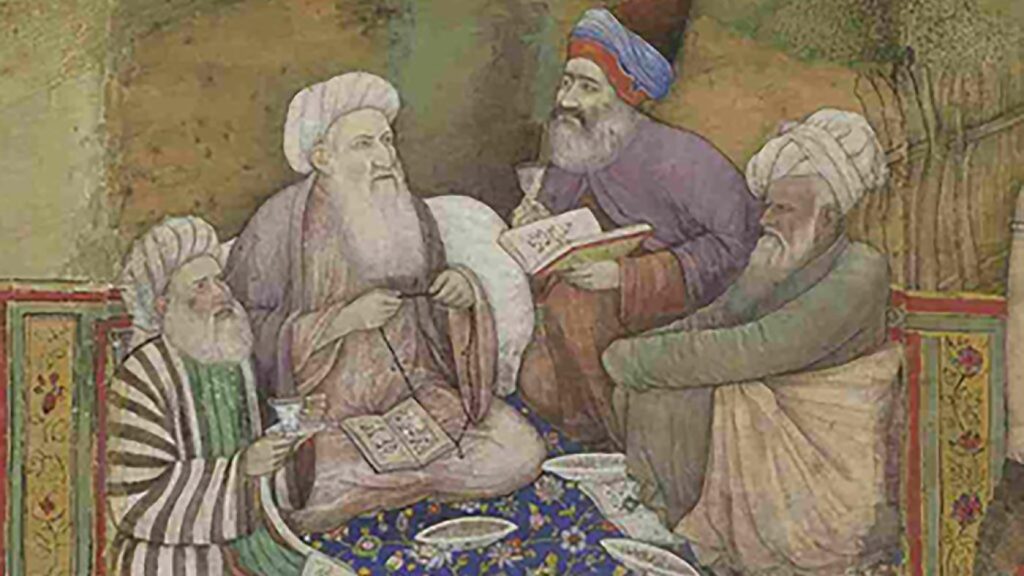
Mughal men drink an unidentified beverage in a 17th century painting later recreated as a drawing by Rembrandt (Public domain)

The sun sets behind regal yet dilapidated Mughal mansions and the magnificent dome of the Jama Masjid as the call for the evening prayer fills the auburn sky in Old Delhi.

Chandni Chowk’s bustling streets reverberate with the sound of honking cycle rickshaws navigating the serpentine lanes.

The sunset marks the beginning of business hours in the neighbourhood, which emerged during Mughal emperor Shah Jahan’s rule; a pocket within the once spectacular walled city of Shahjahanabad, founded in 1648.

Immersed in the soundscape, one’s senses are drawn to the aroma of food being prepared, complemented by the unmistakable scent of masala chai – the Indianversion of spiced tea.

Tea stalls, resembling busy beehives, draw Delhiites patiently waiting for their daily dose of evening tea –  some having travelled from the far ends of the city to satisfy their craving.

Tea is without a doubt a national obsession in India. However, the incredible popularity of the drink in the subcontinent is less than two centuries old and only came about as a result of British rule in the region.

It may come as a surprise, but before the arrival of the British, it was coffee that Indians preferred.

Sufis and merchants

Coffee was brought over from the Horn of Africa to Yemenat some point in the 15th century and later spread north into the Near East and then to Europe by the 16th century.

The beverage also spread eastwards, and India’s Mughal elite was quick to adopt it as their beverage of choice.

While the Mughal Emperor Jahangir had a penchant for wine – preferring the Shiraz variety – both Hindu and Muslim nobility in his court freely indulged in coffee.

Edward Terry, a chaplain with the English embassy at Jahangir’s court, mentions that members of the court were captivated by the then-novel qualities of coffee, believing it could “invigorate the spirits, aid digestion, and purify the blood”.

The coffee bean was brought to the subcontinent by Arab and Turkic traders who had strong trade ties with the Mughal Empire.

They not only brought coffee, but also other items, including silk, tobacco, cotton, spices, gemstones, and more from the Middle East, Central Asia, Persia, and Turkey.
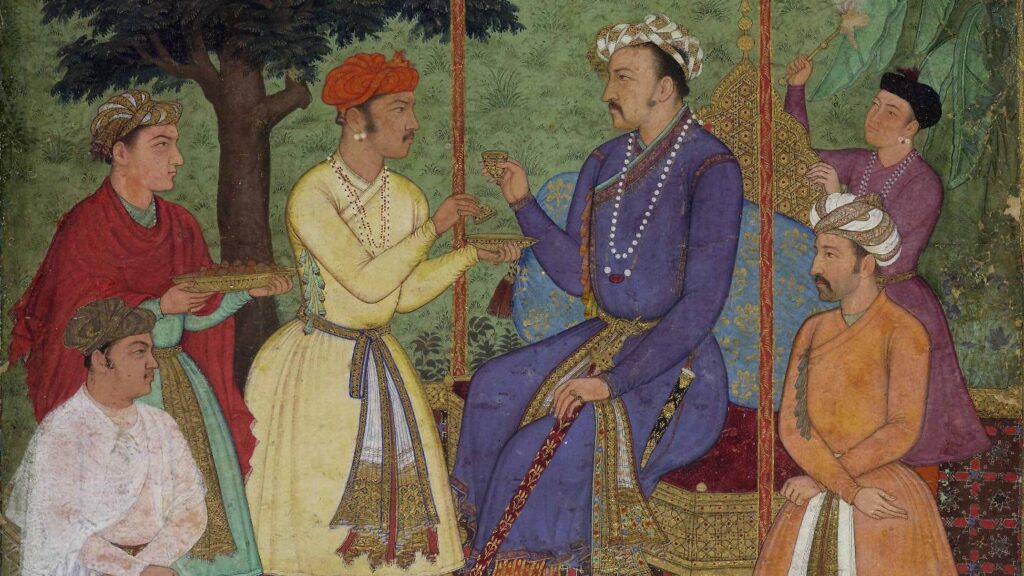
By the time Shah Jahan ascended to the Mughal throne, interest in coffee had grown exponentially across Indian society (Public domain)

Such goods would reach the farthest corners of India, including the easternmost region of Bengal. By the time Jahangir’s son, Shah Jahan, ascended to the throne (1628-1658), interest in coffee had spread across society.

Coffee was considered a healthy drink, an indicator of social mobility, and an integral part of Delhi’s elite social life.

Like Terry, another contemporary European visitor, the German adventurer Johan Albrecht de Mandelslo, wroteabout his travels in the east through Persia and Indian cities, such as Surat, Ahmedabad, Agra, and Lahore in a memoir titled The Voyages and Travels of J Albert de Mandelslo.
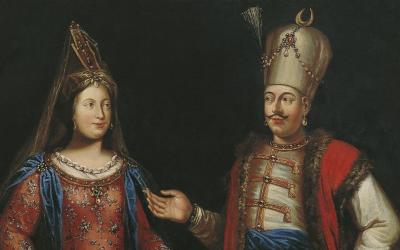
A painting titled ‘The Ottoman Sultan and His Haseki’ by an unnamed artist (Wikimedia)

In 1638, Mandelslo describes kahwa (coffee) being drunk to counter the heat and keep oneself cool.

In his workTravels in The Mogul Empire (1656-1668), Francois Bernier, a French physician, also refers to the large amount of coffee imported from Turkey.

Besides its use in social settings and supposed effects to ward off heat, the drink also had a religious purpose for the subcontinent’s ascetics.

Like their brethren in the Middle East and Central Asia, India’s Sufis consumed coffee before their night-long reverential rituals known as dhikr (the remembrance of God).

Legend has it that a revered Sufi saint named Baba Budhan carried back seven coffee beans in the folds of his robe on his way back from Mecca in 1670, planting the seeds for Indian-origin coffee cultivation in a place called Chikmagalur.

While this story may or may not be true, today the Baba Budhangiri hill and mountain range in the Indian state of Karnataka bears his name and remains a significant centre for coffee production, as well as housing a shrine dedicated to the Sufi saint.

In another variation of the legend, shared by the government’s Indian Coffee Board, the Sufi saint travels to Mochain Yemen and manages to smuggle out the beans discreetly despite strict laws on their export.

Culture of consumption

From the 16th century onwards, India became host to a cafe culture influenced by the one emerging in the Islamic empires to the west, particularly cities such as Damascus, Aleppo, Cairo, and Istanbul.

The nascent coffee culture found expression in Shahjahanabad’s own “qahwakhanas”, or coffee houses.

In her essay Spilling the Beans: The Islamic History of Coffee, food historian Neha Vermani describes the coffee served at the Arab Serai, which was “famous for preparing sticky sweet coffee”.
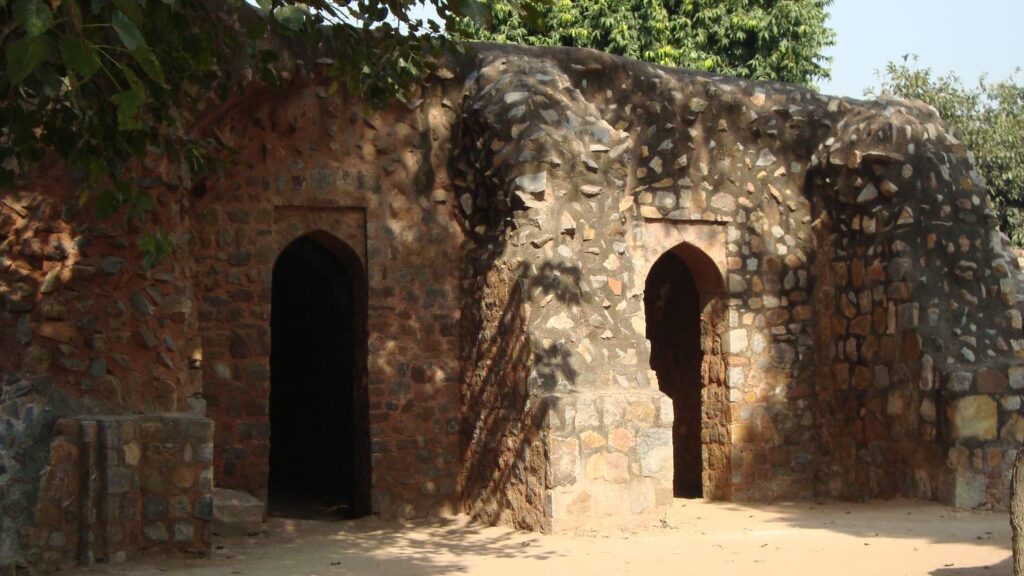
The Arab Serai became known for its sticky sweet coffee (Wikimedia)

The Serai, which was commissioned in 1560 by Hamida Banu, the wife of Mughal Emperor Humayun, still stands today as part of a Unesco heritage site ; the wider complex of Humayun’s tomb.

Historians say it was used as an inn by Arab religious scholars who accompanied the royal on her pilgrimage to Mecca and that it was also used to house craftsmen from the Middle East who were working for the Mughals.

Historian Stephen Blake in his 1991 workShahjhanabad: The Sovereign City in Mughal India 1639-1739 describes coffee houses as places where poets, storytellers, orators, and those “invigorated by their spirits” congregated.

Blake described how vibrant these coffee houses were, their milieu of poetry recitals, storytelling and debates, long hours of playing board games, and how these activities impacted the cultural life of the walled city.

Coffee houses of Shahjhanabad, like those of Isfahan and Istanbul, accelerated the rise of a culture of consumption and a thriving food culture, with residents frequenting snack sellers offering savouries, naanwais baking bread, and halwais specialising in confectionery.

This is a legacy that continues to be felt in Old Delhi’s Shahjahanabad area to this day.

While Blake’s descriptions paint a picture, there are no extant visual depictions of the interiors of these establishments, and unlike their Ottoman or Safavid counterparts, there are no miniatures or Orientalist artworks depicting what they would have looked like.

Rembrandt depictedMughal men drinking something very closely resembling coffee but the Dutch artist does not identify the contents of their cup, and never visited India. But his images were inspired by Mughal paintings brought over to the Netherlands by Dutch traders.

The man who swore by his Turkish coffee

Provincial courts sought to replicate the ambience of Shahjahanabad and embraced the cafe culture on offer there. Among them, none cherished coffee more than Alivardi Khan, the Nawab Nazim of Bengal.

Khan was of Arab and Turkman descent and ruled Bengal from 1740-1756. Known as a diligent ruler, coffee and food were the two biggest pleasures of his life.

Seir Mutaqherin or the Review of Modern Times, written by one of the prominent historians of the time, Syed Gholam Hussein Khan, offers a fascinating description of Alivardi Khan’s routine.
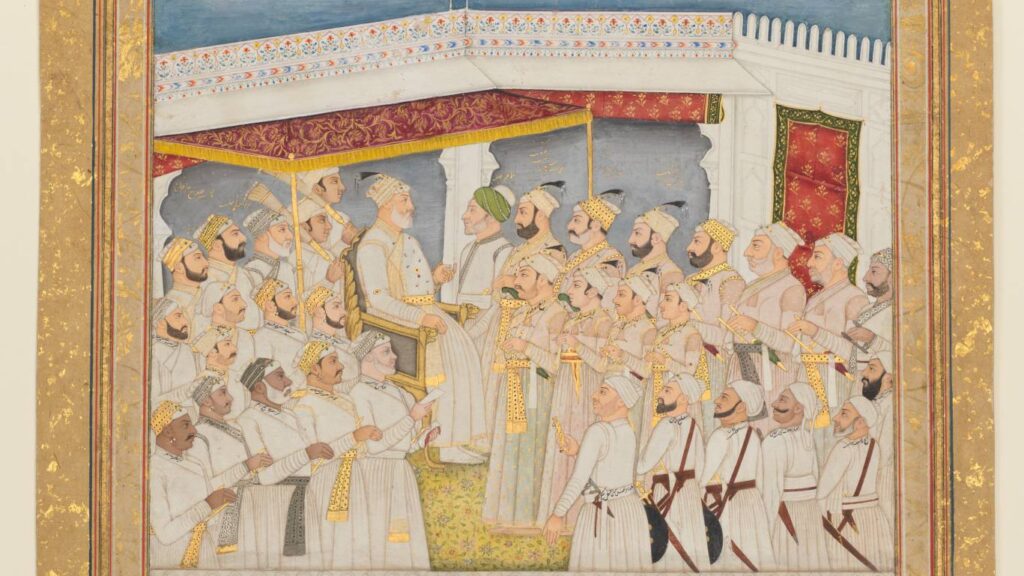
Alivardi Khan, seen here on his throne, liked the finer things in life, including coffee (Metropolitan Museum of Art/Public domain)

He writes: “He always rose two hours before daylight; and after having gone through evacuations and ablutions, he performed some devotions of supererogation and at daybreak, he said his prayers of divine precepts, and then drank coffee with choice friends.

After that he amused himself with a full hour of conversation, hearing verses, reading poetry or listening to some pleasing story.”

This morning routine was followed by a bespoke Persian dish prepared by the nawab’s personal chef.

Khan’s portrayal presents Nawab as a man of fine taste, who valued the luxuries of courtly life as much as effective governance.

A connoisseur of exquisite food, witty conversations, and premium Turkish coffee, Khan went to great lengths to acquire the best coffee beans, importing them from the Ottoman Empire and bringing them all the way to Murshidabad, his capital.
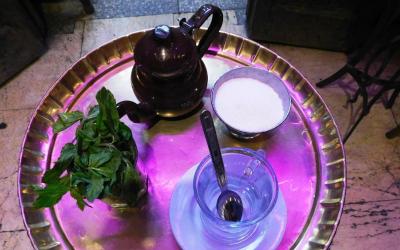
The coffeehouse ‘is a social space created and shaped by the people themselves’ (MEE)

He believed in nothing but the best for his court. Not only were his coffee beans imported, but his kitchen staff also hailed from places renowned for their culinary excellence, such as Persia, Turkey, and Central Asia.

The royal household employed a diverse range of professionals, including storytellers, painters, coffee makers, ice makers, and hakims (physicians).

Tea has been grown in India since the 19th century (Wikipedia)

Khan personally handpicked his baristas (qahwachi-bashi), who brought along their specialised coffee-making equipment.

The descriptions paint a vivid picture of courtly culture, a world of opulence, artistry, and a profound affinity with caffeine.

It is puzzling, therefore, to pinpoint exactly when Mughal coffee culture vanished from pre-colonial Bengal, but it likely lasted until at least 1757.

Siraj ud-Daulah, Khan’s grandson and successor, could not live up to his grandfather’s legacy, and faced with threats from the British, the courtly culture swiftly dissipated, along with Bengal’s fortunes.

When Bengal lost the decisive Battle of Plassey in 1757, the East India Company took control of the region, and slowly coffee vanished from public consumption and consciousness.

Tea farming takes over

The rise of the East India Company, which was the primary agent of British control in India, marked the end of the subcontinent’s dominant coffee culture.

Britain’s penchant for tea began in the late 17th century and China was its main supplier.

Lizzy Collingham writesin her book Curry: A Tale of Cooks and Conquerors that between 1811 and 1819 “70,426,244 pounds” out of a total of “72,168,541” pounds of imports from China were associated with the tea trade.

She remarks that Britain, therefore, had an “interest in finding an alternative source for tea”.
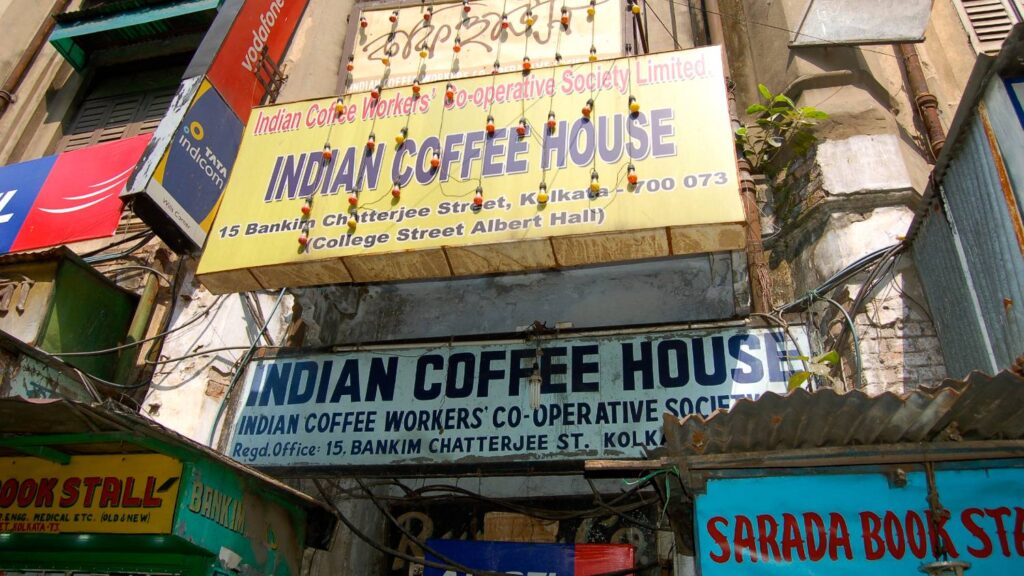
The Indian Coffee House is run by Indian worker’s cooperatives and is open to all (Wikipedia)

With its fertile soils and appropriate weather conditions, India was the perfect spot.

In February of 1834, then Governor General William Bentick appointed a committee to look into India’s potential as a place to set up the East India Company’s own tea production unit.

In the native Indian population, they found not only workers who would cultivate and harvest the leaves but also consumers of the beverage.

As coffee production became overshadowed by tea farming, Indian tastes also shifted to the latter.

Further consolidating the decline of Indian cafe culture was the British ban on Indians visiting coffee houses, which were barred to all but Europeans.

Nevertheless, reports of the death of coffee in India were premature.

Regardless of British influence on local culture, the subcontinent was not immune to global trends.

The Indian historian and author, AR Venkatachalapthy, writes in his 2006 book In Those Days There was No Coffee: Writings in Cultural History that there was no escaping the physical effects or symbolism of coffee in late 19th century British India.

“Drinking coffee, it appears, was no simple quotidian affair. Much like history, the nation-state, or even the novel, coffee too was the sign of the modern,” he writes.

Enthusiasm for coffee grew at the turn of the 20th century, and the same book quotes adverts for coffee in south India in the 1890s: “Coffee is the elixir that drives away weariness. Coffee gives vigour and energy.”

This energy and vigour were first reflected in the east, in the colonial city of Calcutta (present-day Kolkata) where the first Indian-run coffee shop, named Indian Coffee House, opened in 1876.

pix09

Turning into a chain in the 1890s, by the first half of the new century the name Indian Coffee House would be adopted by a growing network of 400 coffee houses run by Indian workers’ cooperatives, with only Indian-origin coffee.

These were the people’s coffee houses where any Indian could walk in without being discriminated against on the basis of their race.

Today, the ambience of the Indian Coffee House reminds one of the inclusivity of coffee shops in historic Shahjhanabad.

The chain is one of many Indians can visit, with others including the Bengaluru-based Coffee Day Global, which now has more than 500 outlets in the country despite only opening its first in 1996.

Six years later Starbucks entered India’s voluminous urban market and the rules of the brew changed forever in the subcontinent.

source: http://www.middleeasteye.com / Middle East Eye / Home> Discover> Food & Drink / by Nilosree Biswas, New Delhi / June 05th, 2023
Small planet named ‘5718 Pattazhy’, after Kerala scientist Dr. Sainudeen Pattazhy

KERALA:

A minor planet in the solar system, which earlier bore just the number 5718 CD4, has now been named after Kollam based scientist, Dr Sainudeen Pattazhy, reports Ramesh Babu.

Pattazhy was surprised when a representative of the Jet Propulsion Laboratory, run by the space agency NASA, telephoned him on Wednesday evening. “I’m not a space scientist and initially thought someone was pulling my leg,” he told Hindustan Times. “But the official explained that my name was chosen after going through my research papers.”

Pattazhy, who teaches zoology at a local college, has carried out pioneering research on many environment related issues such as the phenomenon of ‘red rain’ —which occurred in Kerala in 2001—the control of mosquitoes, the eco biology of ‘sacred groves’, and the health hazards posed by mobile phone towers.

Pattazhy’s suggestions on the health hazards posed by mobile towers are still pending with the Union Ministry of Environment. According to him, the radiation would affect people residing within 300 metres of the towers.

The minor planet — to be henceforth known as ‘5718 Pattazhy’ — was discovered by US-based space scientist Dr R Rajmohan in 1989. There are around 400,000 ‘minor planets’ or asteroids in the solar system, of which 185,685 have well defined orbits and have been allotted numbers by the International Astronomical Union (IAU). Around 14,000 of them have been given names.

“It seems the discoverer of the planet forwarded my name after going through my work,” said Pattazhy, adding that he had no idea why he was chosen.

source: http://www.hindustantimes.com / Hindustan Times / Home> India News / by Ramesh Babu, Thiruvananthapuram (headline edited) / May 02nd, 2008

UAE: Indian expat wins Rs 4 lakh, to donate to Odisha train crash victims

Jaspur, ODISHA / Abu Dhabi, UAE :

The winner of the game Sahajan Mohammad who hails from Jaspur town of Odisha works as a chef at a hotel in Abu Dhabi.

Abu Dhabi:

A 28-year-old United Arab Emirates (UAE)-based Indian expatriate won the grand prize of Dirhams 20,000 (Rs 4,48,927) in Dream Island’s scratch card game.

The winner of the game Sahajan Mohammad who hails from Jaspur town of Odisha works as a chef at a hotel in Abu Dhabi.

Mohammad has tried his luck at different raffle draws in the past to no avail.

On June 7, he purchased scratch cards through an ongoing promotion and won a free ticket.

Mohammad has decided to contribute a portion of his winnings towards assisting the victims of a tragic train accident that took place in his hometown. The accident killed at least 288 people and injured more than 1,000 people.

He will also use the prize money for construction expenses and some for his relatives who are in need and struggling for their livelihood.

“I am flying home on June 25. I have become a father now. I will be meeting my baby girl. She has brought this luck,” an elated Mohammad told Khaleej Times.

About Dream Island

Dream Island, the UAE’s gaming platform rewards players with the chance to win cash prizes by playing a selection of games.

With each play charged between Dirhams 10 and Dirhams 50, participants have the chance to win prizes of different sizes – the largest being Dirhams 10 million.

The rules and prizes of different Dream Island games vary, as do the prize amounts.

source: http://www.siasat.com / The Siasat Daily / Home> News> Middle East> UAE / by Sakina Fatima / June 10th, 2023

Mansoor Ali Khan appointed secretary of AICC

Bengaluru, KARNATAKA:

New Delhi: 

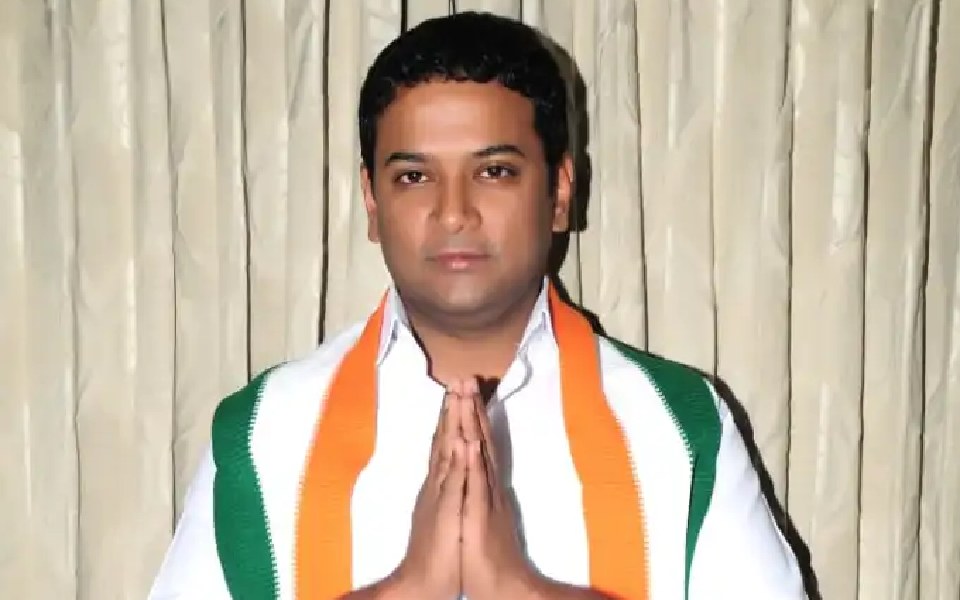
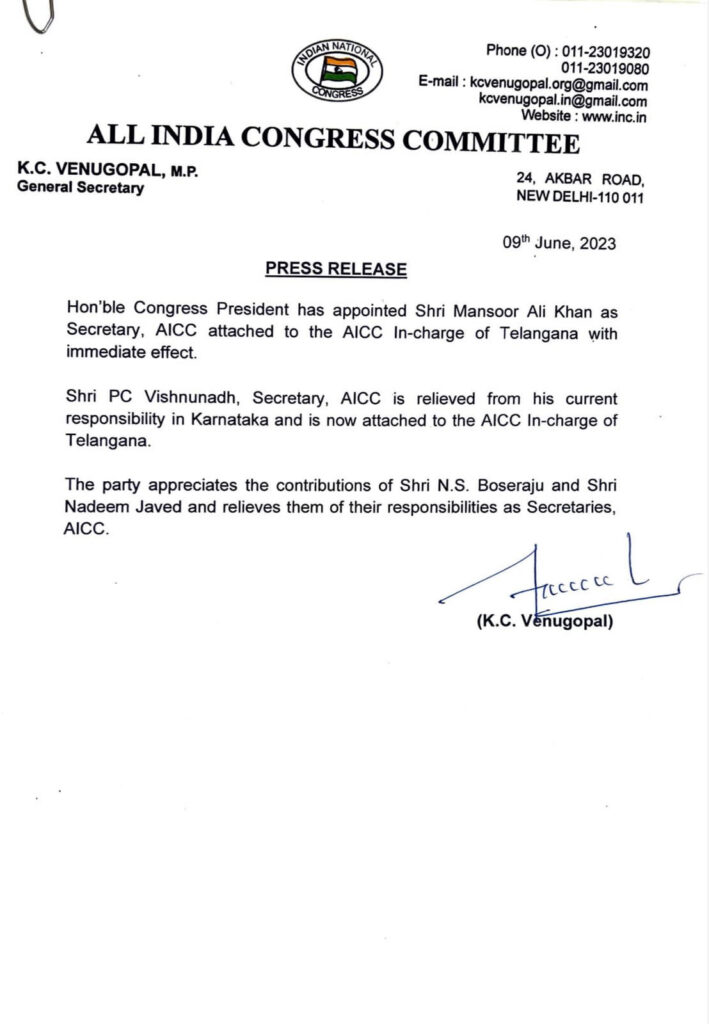
In a significant development, Congress President Mallikarjun Kharge has appointed Mansoor Ali Khan as the Secretary of the All India Congress Committee (AICC) attached to the AICC In-charge of Telangana.

The appointment is effective immediately, according to the release.

Simultaneously, PC Vishnunadh, who previously served as the Secretary of AICC in Karnataka, has been relieved from his current responsibilities and has now been attached to the AICC In-charge of Telangana.

While relieving, both N.S Boseraju and Nadeem Javed from their responsibilities as Secretaries, AICC, The All India Congress Committee appreciated contributions of both the leader during their tenure as Secretaries of AICC.

source: http://www.english.varthabharati.in / Vartha Bharati / Home> India / by Vartha Bharati / June 09th, 2023

‘Memory Khan’ trains teachers in Mind Mapping and Memory Skills at MS workshop

Hyderabad, TELANGANA:

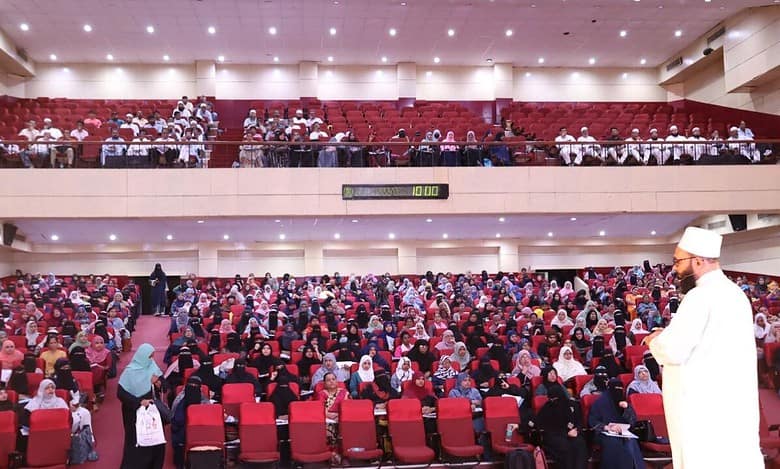
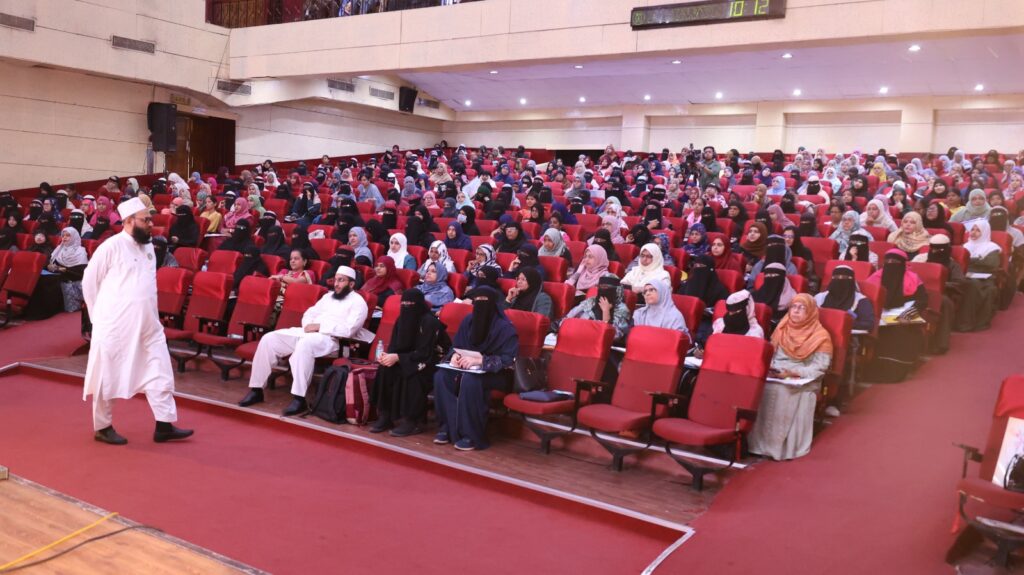
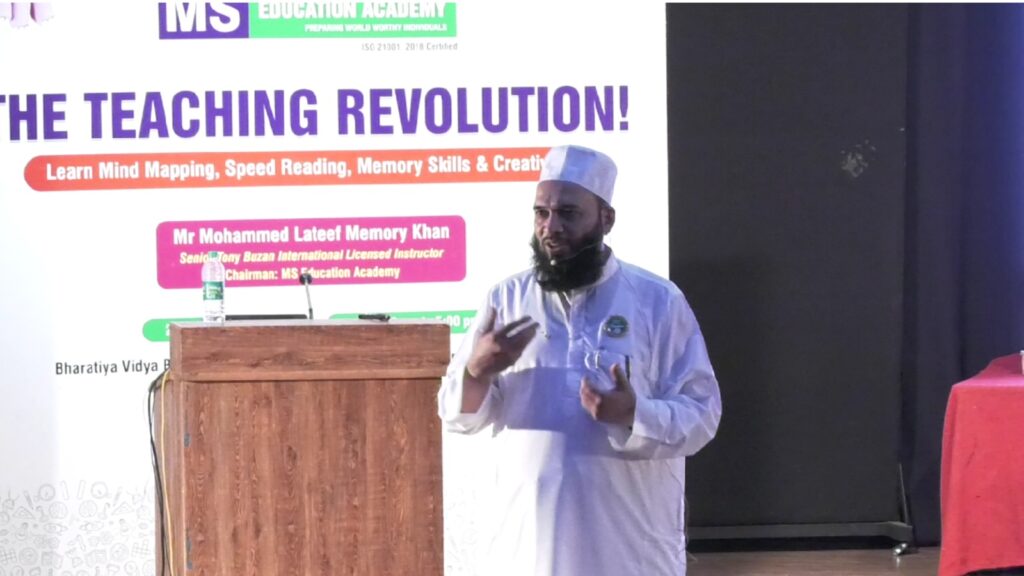
Renowned expert Mohammad Lateef Khan, Chairman of MS Education Academy, conducted the training sessions.

MS workshop

Hyderabad:

MS Education Academy organises a three-day workshop on mind mapping, memory skills, and speed reading for 650 teachers at Bharatiya Vidya Bhavan. Renowned expert Mohammad Lateef Khan, Chairman of MS Education Academy, conducted the training sessions. Khan, who received formal training from Tony Buzan, a world-renowned expert in mind mapping and memory management, is one of the few licensed instructors in Tony Buzan Mind Mapping, Memory Skills, and Speed Reading.

Following the completion of the workshop, Khan expressed confidence in transferring these techniques to the students after equipping the teachers with enhanced mental abilities. He highlighted the rarity of the skills being taught, emphasizing the changing world and the importance of utilizing the brain effectively in the era of artificial intelligence.

Khan shared his gratitude for the opportunity to provide this training to teachers, mentioning his extensive travel and coursework to acquire knowledge in mind mapping, memory skills, speed reading, and creativity. His goal is to impart these opportunities to the entire MS staff across all schools, ultimately benefiting all MS students.

The three-day workshop was designed to engage participants throughout the day. Initially, the staff members were unaware of what they would learn, but their interest and energy levels increased as the workshop progressed. Khan noted their enthusiasm, suggesting that they were eager to apply their newfound knowledge to enhance the mental abilities of the students. He emphasized the importance of thinking in defining an individual’s identity and expressed the desire for students to develop higher thinking skills and excel in facing new challenges. Khan highlighted the need for organized teaching and a comprehensive curriculum to achieve these goals.

With gratitude to Allah, Khan mentioned the development of a comprehensive curriculum on memory skills and mind mapping within MS Education Academy. He expressed optimism that this curriculum would lead to improved academic results and extraordinary achievements among students.

Lateef Khan expressed his appreciation for the rare acquisition and training of these skills, acknowledging the conferred title of “Memory Khan” by the Indian Islamic Cultural Centre (IICC) on November 26, 2017. The title and certificate were awarded to Khan by the chief guest, Suresh Parbhane, Union Minister for Commerce and Industry, at the conclusion of a week-long memory workshop at the Indian Islamic Cultural Centre.

The workshop concluded with the participants enriched and inspired to apply their learnings in the classroom, fostering an environment of enhanced mental abilities and academic excellence among MS Education Academy students.

source: http://www.siasat.com / The Siasat Daily / Home> News> Hyderabad / by Zahed Farooqui / June 06th, 2023

Hyderabadi shooter Shafat Ali Khan receives lifetime achievement award

Hyderabad, TELANGANA:

In the past, services of the Hyderabadi shooter have been sought by several state governments to eliminate man-eating wild animals.

Hyderabadi shooter Shafat Ali Khan receives lifetime award

Hyderabad:

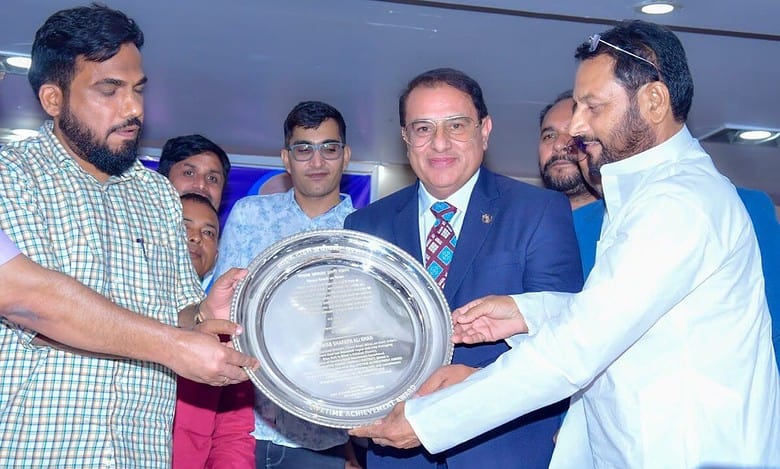
Renowned shooter from Hyderabad, Nawab Shafat Ali Khan has received ‘Lifetime Achievement Award’ from Bihar Government.

In recognition of his remarkable feat of shooting down ten thousand ‘Blue Bulls’ that were ravaging agricultural fields and causing significant crop losses for impoverished farmers, the Bihar Government has bestowed the prestigious “Lifetime Achievement” award upon the Hyderabadi shooter.

Over the course of the past year, the relentless raids by Blue Bulls have wreaked havoc on fields, posing a severe threat to farmers. To tackle this menace, the Bihar Government enlisted the expertise of Nawab Shafat Ali Khan, who successfully eliminated ten thousand bulls, bringing immense relief to the struggling farmers.

On Monday, District Magistrate cum Collector Yashpal Meena, IAS, of Vaishali, presented the award to Nawab Shafat Ali Khan in a formal ceremony.

In the past, the services of the Hyderabadi shooter have been sought by several state governments to eliminate man-eating wild animals.

source: http://www.siasat.com / The Siasat Daily / Home> News> Hyderabad / by Sameer Khan / June 06th, 2023

“Young Trailblazer Maryam Mirza Ignites a Reading Revolution with 31 Mohalla Libraries in Aurangabad”

Aurangabad, MAHARASHTRA:

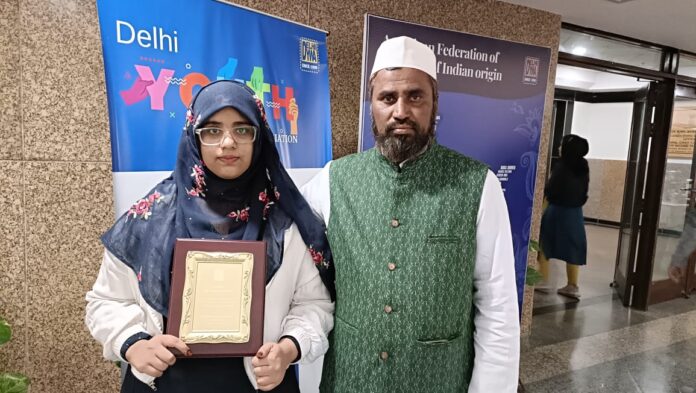
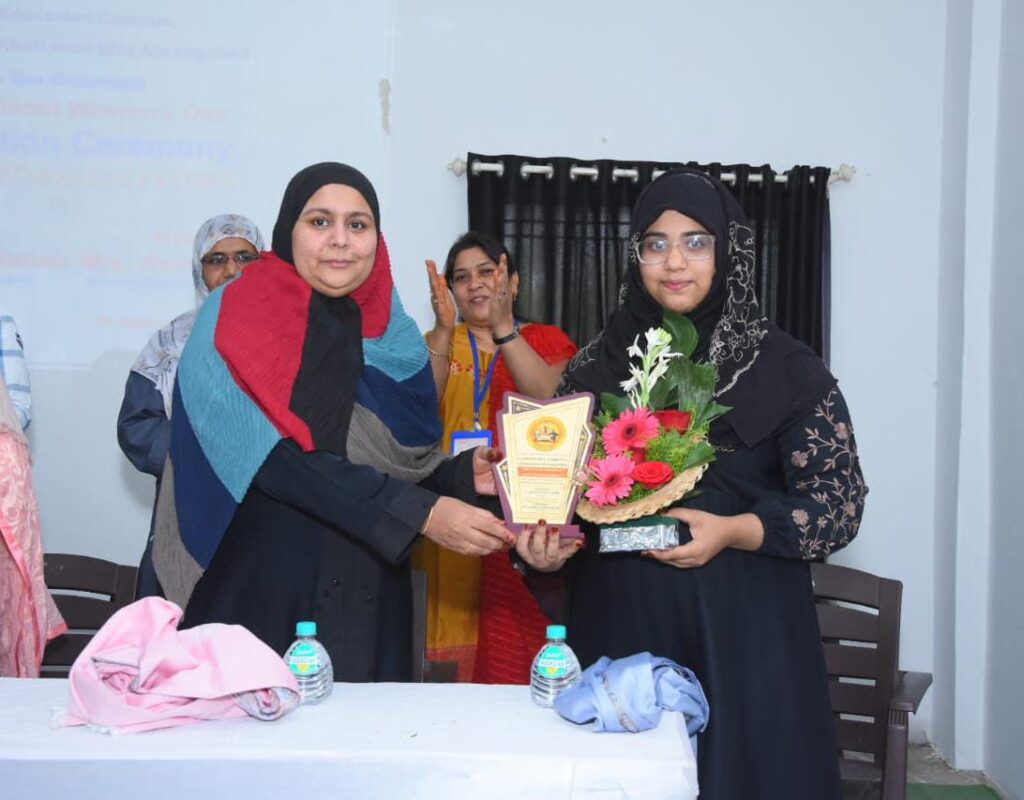
Maryam with her father after receiving the award

Books have been Maryam’s passion ever since she learnt to read. She turned her passion into a mission of starting a library for children with the books from her own collection.

Two years ago, Maryam had amassed nearly 150 books of her own when she started her very first library in the balcony of their home in Baijipura called Dr APJ Abdul Kalaam Library.

How it began

It was during the lockdown, with no school or homework to occupy her time, that she noticed many idle children in her neighborhood. Inspired by this observation, Maryam approached her father, Mirza Abdul Qayyum, who runs the popular bookstore called Mirza World Book House.

The first library in the balcony of Maryam’s house

Mirza, being an avid reader himself, readily agreed to support his daughter’s idea. Mirza is also affiliated with the Read and Learn Foundation (RLF), a movement dedicated to promoting reading habits, particularly among children. Starting a library for children aligned perfectly with the foundation’s objectives.

Thus, Maryam and her father gathered around 300 books, including donations, and set up the first library named Dr APJ Abdul Kalam Library, located in the balcony of their home in Baijipura. The library inauguration was attended by local children, and from that day forward, they began visiting the library, borrowing books, and returning them within a week.

More libraries for more children

The library was a hit and soon Maryam and her father were thinking of starting another library in another locality. Thus, the second library was started under the aegis of RLF in Rahemaniya colony with another 300 books. Here also the response was good.

Seeing the enthusiasm of the little girls and boys, Maryam resolved to have more libraries and her father assured her that he would support her. Maryam wanted to reach out to the children dwelling in slums. Her aim was to have at least 10 libraries for that year.

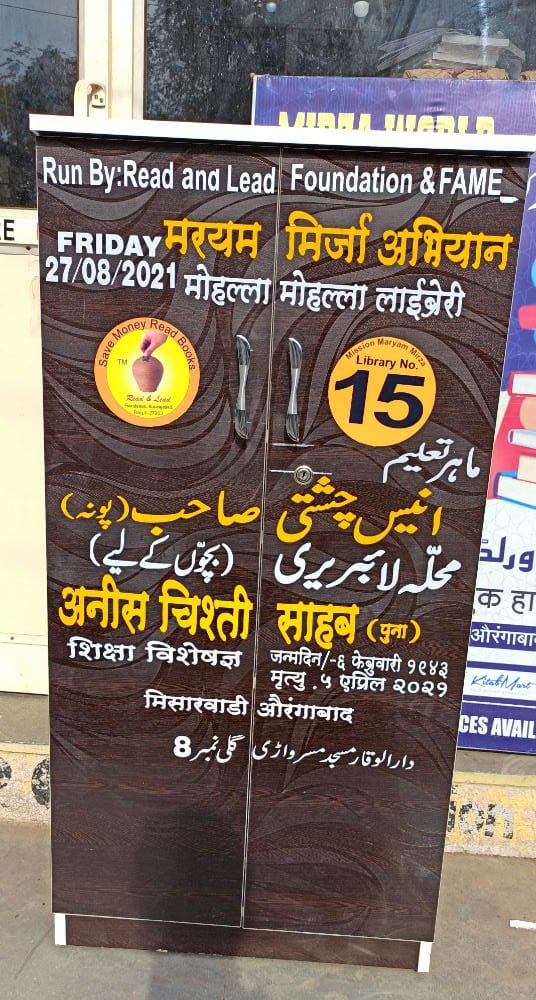
Supporting her were her elder sisters too who, like, were students in college. Maryam started collecting funds from the people to set up the Mohalla libraries. The neighbours and other donors began contributing with small amounts and with each Rs.5000/- collected, Maryam purchased a cupboard, books and some stationery to maintain the records of the library.

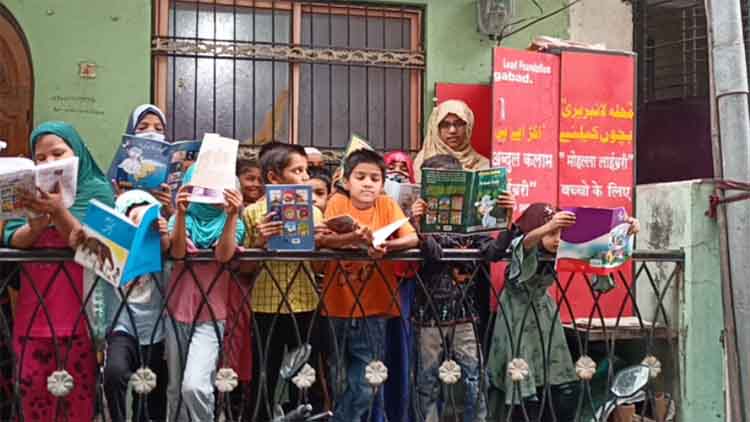
Some of the places where the libraries have been set up are the anganwadi centre of the mohalla, a place in the school yard, a mosque, or a room in the house of a generous well-wisher. In a span of 14 months Maryam had 31 libraries functioning including one in her own school.

“In some localities we needed to put in more work”, shared Maryam with Twocircles.net. “Sometimes the people of the locality were not very responsive to the idea of having a library. They did not see any use to having a mohalla library. We motivated them by explaining the importance of reading and how it develops the personality of their children”.

While in some areas the people were very cooperative, they offered space to run the library and even offered cool drinking water to the children who come to read in the library.

Managing the libraries

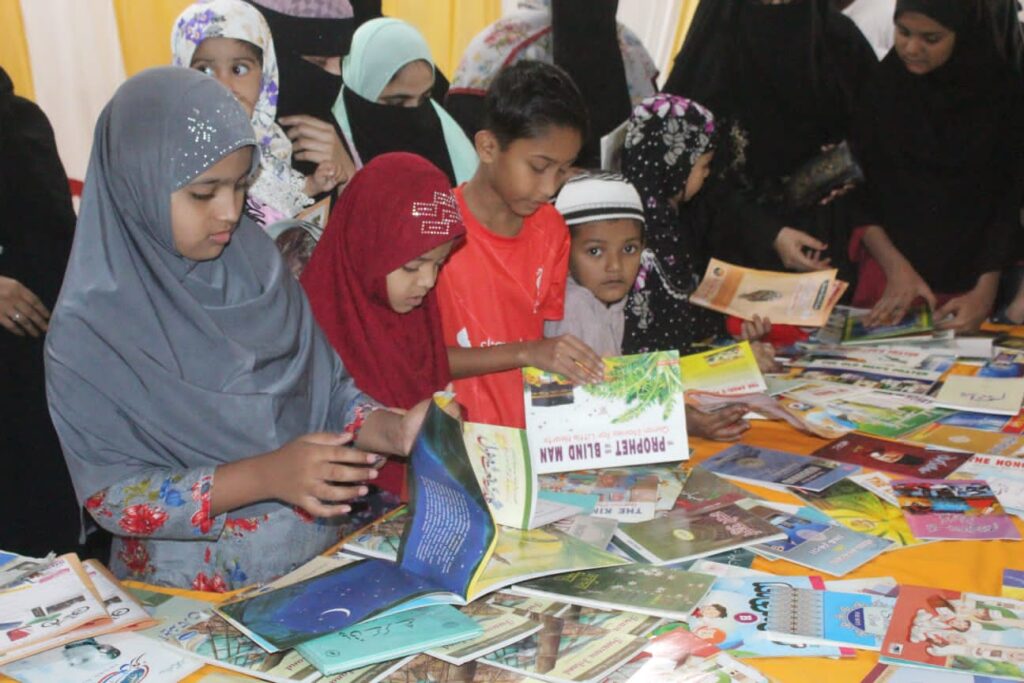
There are nearly 30 children who are involved in the day-to-day functioning of the libraries in different Mohallas. The library is open for an hour daily in the evenings offering books in English, Hindi, Urdu, and Marathi.

There are books of general knowledge, adventure stories, and biographies of historical figures.

“The USP (unique selling proposition/ point) of these libraries is that Urdu and Marathi – the two regional languages are getting readers, apart from encouraging the reading habit in children.” Says Maryam’s father, Mirza Abdul Qayyum Nadvi

felicitated by her school teachers

The children take their responsibilities seriously, ensuring that borrowed books are returned on time and in good condition. Their dedication has impressed not only the adults but also the neighbors, who sometimes assist the children in maintaining the libraries. Additionally, Maryam and her father conduct awareness campaigns on various topics such as educating girls and eradicating child labor.

Maryam aims to establish 50 libraries by the end of 2023. The mohalla libraries are named after Urdu writers, poets and other well-known personalities. Some libraries are named after the parents of the generous donors who sponsor a complete library.

Her efforts have inspired similar initiatives in other towns surrounding Aurangabad, such as Jalna, Beed, Jalgaon, and Ahmednagar.

Receiving the FAME Award in Aurangabad

Recognition and awards

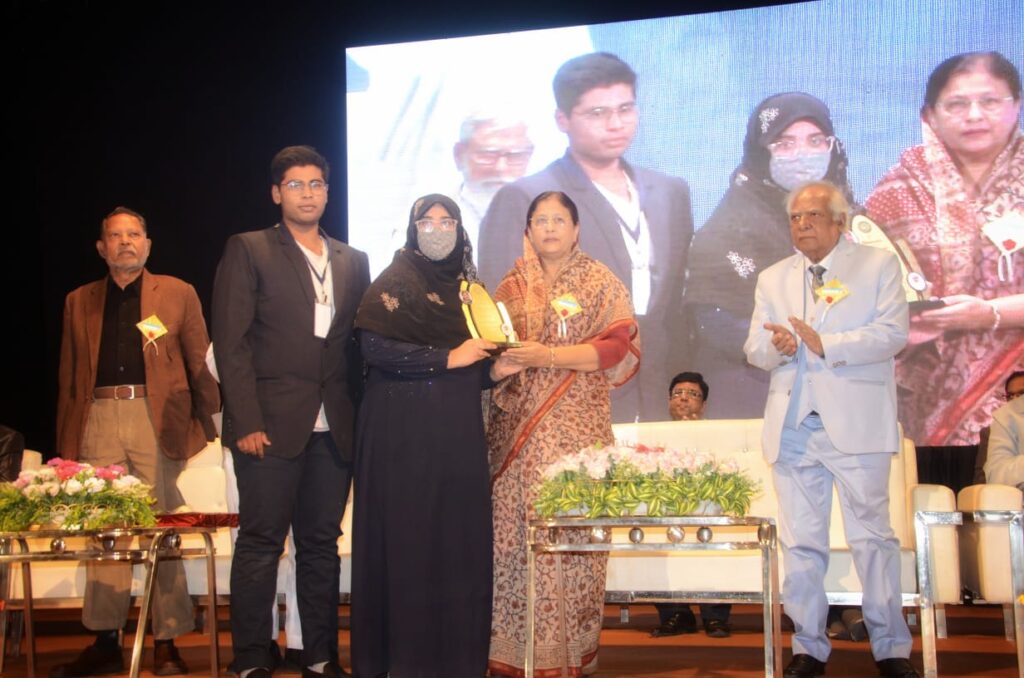
Maryam’s remarkable achievements have not gone unnoticed. In 2022, she was honored by the American Federation of Muslims Indian (AFMI) Origin, The award was presented to her in New Delhi at the hands of the former Lieutenant Governor of Delhi, Najeeb Jung.

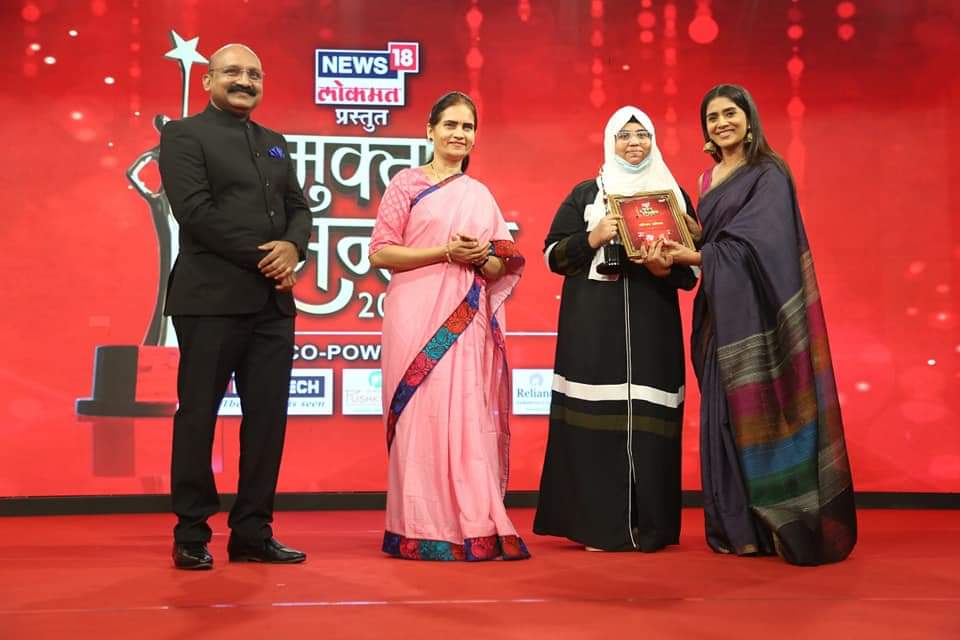
In May 2023, she received the Mukta Samman from News 18 Lokmat in Mumbai.

At the awards ceremony Maryam quoted Safdar Hashmi’s poem ‘Kitabein’ to a thundering applause.

Receiving the Mukta samman award in Mumbai

Despite the recognition and accolades, Maryam remains grounded, acknowledging that her father’s bookstore has greatly benefited from her library project, as most of the books are purchased from there.

Looking ahead, Maryam aspires to become a neurosurgeon. Her favourite books are the Harry Potter series. And when she is not reading, she likes drawing and colouring.

source: http://www.twocircles.net / TwoCircles.net / Home> Children / by Nikhat Fatima, TwoCircles.net / May 31st, 2023

AIMPLB Poll: Maulana Rahmani Elected President, Maulana Mujaddidi as Secretary-General

NEW DELHI :

New Delhi:

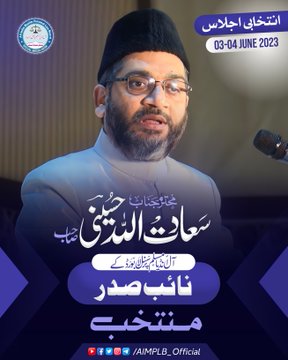
A top Islamic scholar – Maulana Khalid Saifullah Rahmani – was elected fifth president of the All India Muslim Personal Law Board (AIMPLB), with Jamaat-e-Islami Hind president Syed Sadatullah Husaini and Gulbarga-based Maulana Khusro Hussaini as vice-presidents.

Maulana Khalid Saifullah replaced Maulana Rabey Hasani Nadawi who passed away in April this year.

Image
Image

Maulana Fadl al-Rahim Mujaddidi has been elected as the General Secretary. He will be supported by secretaries – Maulana Umrain Mahfouz Rahmani, Maulana Syed Bilal Hussaini Sahib, Maulana Yasin Ali Usmani Sahib, and Maulana Ahmed Faisal Rahmani.

The board elections took place in the town of Mhow near Indore during the board’s executive committee meeting on June 3 and 4.

Maulana Khalid Saifullah was elected unanimously. There are 251 members of the board, including 51 executive members.

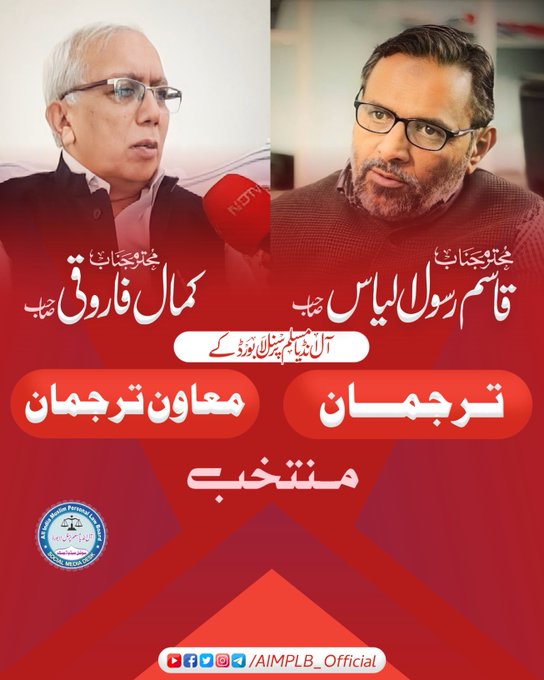
Welfare Party of India (WPI) president Dr. Syed Qasim Rasool Ilyas  has been elected as the spokesperson and Kamal Farooqui, a practicing chartered accountant and former chairman of Delhi Minorities Commission, has been elected as deputy spokesperson.

Image

Maulana Khalid Saifullah Rahmani was elected through consensus. A proposal was mooted by Hazrat Maulana Muhammad Sufyan Qasmi Sahib of Darul Uloom, Deoband, and subsequently supported by Maulana Shahid Hosni and Maulana Syed Mahmood Madani. All members unanimously voted for Moulana Rahmani.

After Wali Rahmani’s death, Moulana Khalid Rahmani was appointed as the interim general secretary of the All India Muslim Personal Law Board. He is also a member of the Legal Council of the All India Muslim Personal Law Board and serves as the general secretary of the Islamic Fiqh Academy in New Delhi.

He regularly contributes as a columnist for the Friday edition of Munsif and holds the position of editor for the Islamic juristic quarterly journal – Behs-o-Nazar – which was originally founded by Mujahidul Islam Qasmi.

Born in 1956 in Darbhanga district in Bihar, he has a rich educational background in Islamic studies and is renowned for his insightful teachings on various aspects of Sharia law. He began his education at home and then spent two years at Madrasa Qasimul Uloom Hussainia. He pursued further studies at Jamia Rahmani in Munger, where he earned his degree.

He was enrolled in the Dawra-e-Hadith program at Darul Uloom Deoband where he focused on the study of Hadith within the Dars-e-Nizami curriculum. He successfully completed his studies and graduated from Darul Uloom Deoband in the year 1395 AH (according to the Islamic calendar) or 1975 as per Gregorian calendar. Later, he specialized in Islamic law and jurisprudence at Amarat-e-Sharia in Patna.

He has been a student of Anzar Shah Kashmiri, Mahmud Hasan Gangohi, and Muhammad Salim Qasmi, and also benefited from the guidance of his uncle Mujahidul Islam Qasmi.

Established in 1973, AIMPLB serves as an authoritative body responsible for interpreting and implementing Muslim personal law in India. It comprises distinguished scholars, jurists, and community leaders who work collectively to uphold and protect the rights of Muslims in matters pertaining to marriage, divorce, inheritance, and other aspects of personal and family law.

source: http://www.indiatomorrow.net / India Tomorrow / Home> Breaking News / by admin india tomorrow / June 06th, 2023

Ghazal singers Ahmed Hussain, Mohammad Hussain awarded Padma Shri

RAJASTHAN:

Rajasthan: Ghazal singers Ahmed Hussain, Mohammad Hussain awarded Padma Shri
Ghazal singers Ahmed Hussain and Mohammad Hussain (Photo/ANI)

Jaipur, RAJASTHAN (ANI):

Ghazal singers Ahmed Hussain and Mohammad Hussain of Jaipur will be awarded Padma Shri in the field of arts.

Hussain brothers have thanked the central and state government for this honour.

In conversation with ANI, the Hussain brothers extended their greetings to the people on Republic Day and Basant Panchami.

Ahmed Hussain said, ” those interested in this field should not be in a hurry to create a platform, do not care about the echo of applause. If someone gets trapped in the trap of publicity and money, then he drifts away from his art.”

He said, “get an education from the one whom you consider a guru in the field.”

The brothers further said, “we are thankful to the central and state government for the award.” He said that after being named for the Padma Shri award, now our responsibilities have also increased. We should never look back.

The recipients of this year’s Padma awards were announced on Wednesday evening, on the eve of the 74th Republic Day.

On the eve of the 74th Republic Day on Wednesday, Padma award winners were announced by the Central Government. (ANI)

source: http://www.theprint.in / The Print / Home> India / by ANI / January 27th, 2023

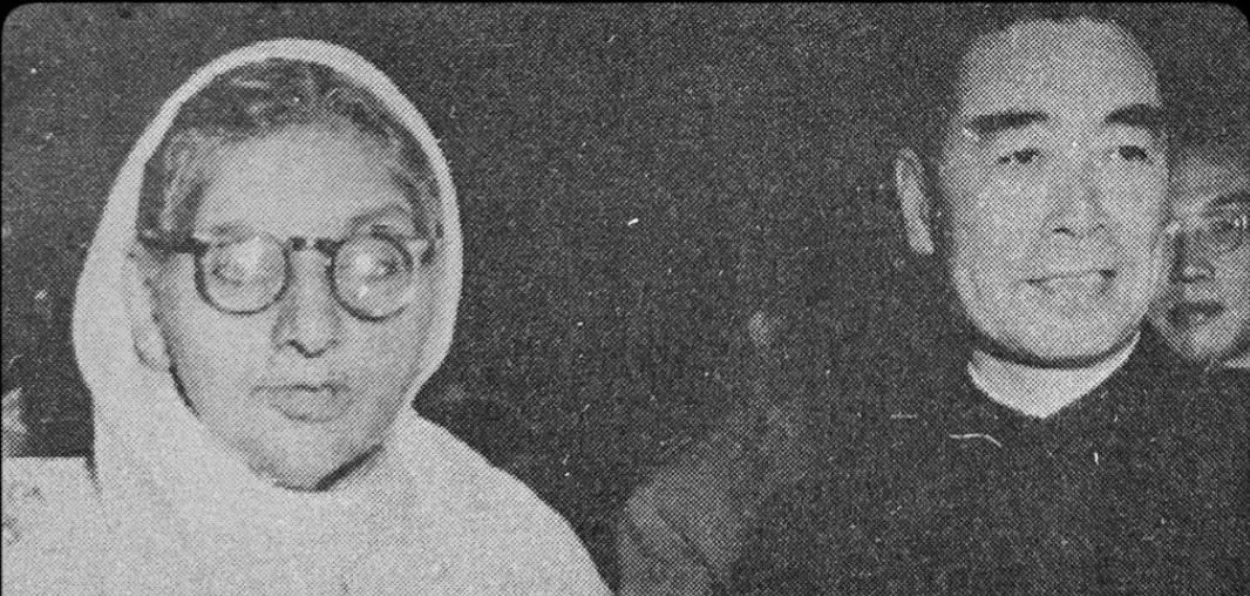
Saadat Bano was more than the wife of Saifuddin Kitchlew

Amritsar, PUNJAB:

Sadaat Bano Kitchlew with a foreigner (Courtesy Heritage Times)

Qudsia Bano once remarked that in a family led by a towering personality, the other members will always remain dwarfs. She failed to add that if the other family member is a woman, her stature will diminish further.

This is so true about many women including Saadat Bano, who was the wife of the well-known freedom fighter Saifuddin Kitchlew. It was against his arrest that the people were protesting at Jallianwala Bagh in Amritsar when Dyer fired upon them, killing 379 and injuring more than 1200 people. Not many would remember Saddat Bano since our patriarchal society teaches us “Saadat was married to Saifuddin” and not that “Saifuddin was the husband of Saadat”.

Seldom do we find any mention of Saadat Bano in our history textbooks as an independent woman or for her work.

Should Saadat be only remembered as the wife of a great man? Especially when she was a published writer and women’s rights activist even before she married Kitchlew. She was an excellent orator on social and political issues.

Born in 1893 in Amritsar, Saadat was home-tutored in Urdu, Persian, and English. At a very young age, she started writing in leading magazines of the early 20th century like Deccan Review, Tehzeeb e Niswaan, and Khatoon. With a series of articles by the title of Hurriyat e Niswaan (Freedom of Women) published in Tehzeeb e Niswaan at 16, she became one of the leading women thinkers in India. Her writings were not limited to women’s issues; she wrote about the educational reforms of Sir Syed Ahmad Khan, the politics of Maulana Abul Kalam Azad, fashion, etc.

Years before marrying the Cambridge-educated  Saifuddin Kitchlew in 1915, she also had a name as a poet. She composed poems on nationalism and humanism. One of the couplets from a poem, “Pyare watan ke naam pe jaaun nisaar main, Ujde chaman mai dekhun Ilahi bahaar main” (I wish to sacrifice my life for my country and bring back its lost glory), bears testimony to her emotions.

After her marriage at the age of 22, she became more active in public life. Saifuddin was a prominent leader. After her marriage to a leading nationalist leader, Sadaar could write without fear. When Lala Lajpat Rai returned to Punjab after a long exile, Saadat welcomed him with an emotional poem. She wrote, “even when thousands are oblivious of the national duty, Lajpat has kept the honour of the nation”.

In 1919, Saifuddin was jailed for agitating against the Rowlatt Act. People organised a public meeting at Jallianwala Bagh to register a protest against it. What happened at Jalianwalla Bagh is history, but not many know that Saadat was supposed to be there addressing the protesters. People had gathered to listen to Saadar but she could not reach the venue in time.When Saifuddin was in jail, Saadat addressed meetings, met political leaders, attended Congress sessions, wrote in newspapers, and participated in All India Women Conference activities. She was a good orator. 

Saadat along with Saifuddin was one of the most severe critics of Jinnah’s demand for Pakistan. When most of the Muslims from Amritsar fled to Pakistan the couple left Delhi. After India gained freedom, Sadaat remained active with Women’s organisations and Peace Conference till her last day – 18 August 1970.     

source: http://www.awazthevoice.in / Awaz, The Voice / Home> Stories / by Saquib Salim / May 21st, 2023