All posts by mpositiveone@gmail.com

Mazdoor Kitchen: A melange of love, salt and labour

NEW DELHI:

Nida Ansari, is a Delhi based development practitioner and consultant with over 12 years of experience in working with national and international non-profit foundations, grassroots organisations and funding agencies in the field of youth centric development, organisational development, agency and ending violence, community development and social entrepreneurship. She describes herself as a community campaigner, and an ‘Arctivist’ with a decade of experience of designing, facilitating and leading large scale national programs and campaigns.

She is also the co-founder of Mazdoor Kitchen, and has been closely involved with many grassroots initiatives, public campaigns associated with food security, public health, education and rights-based movements with workers, farmers, women and marginalised communities.

Q. How did the idea of the Kitchen come to be?

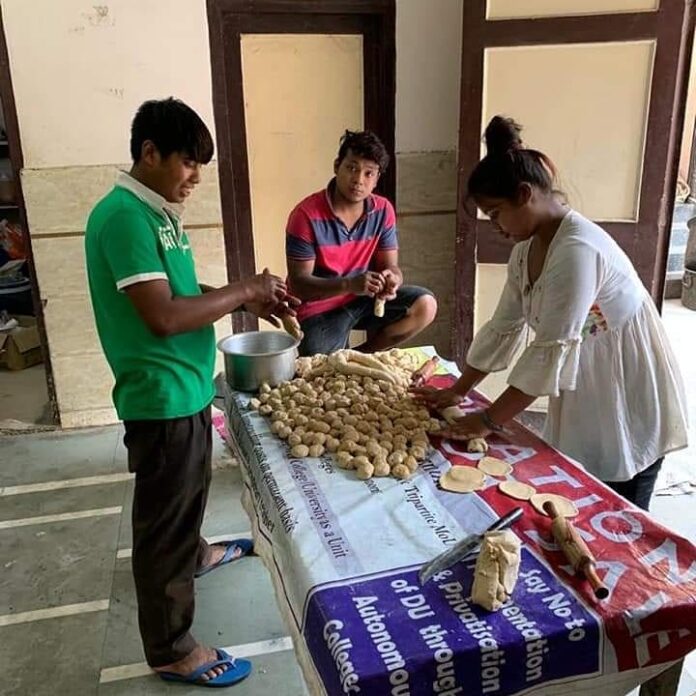
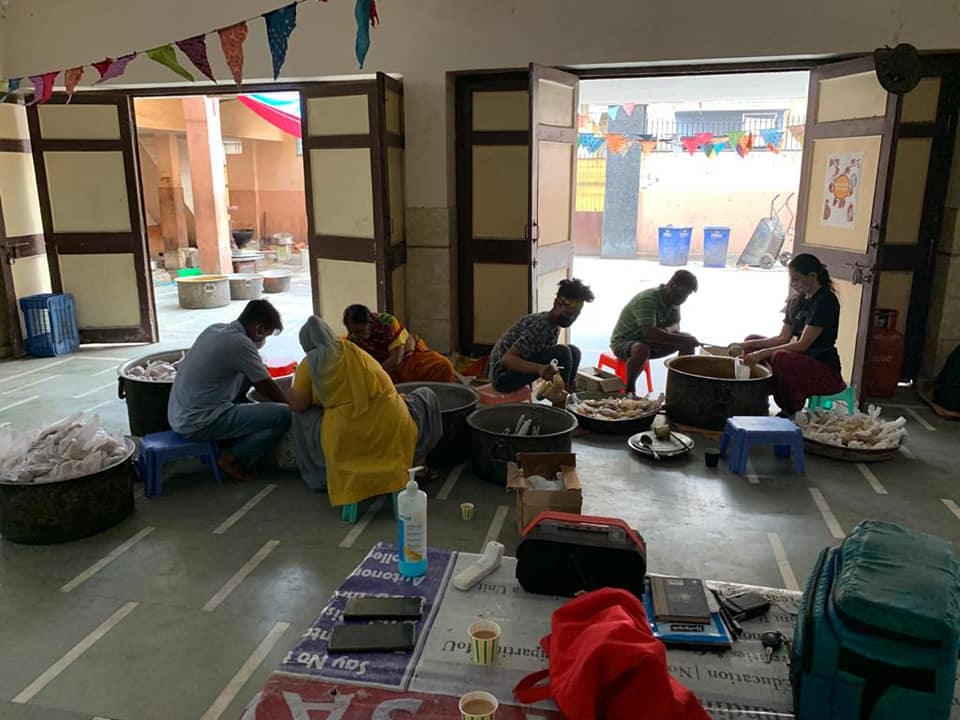
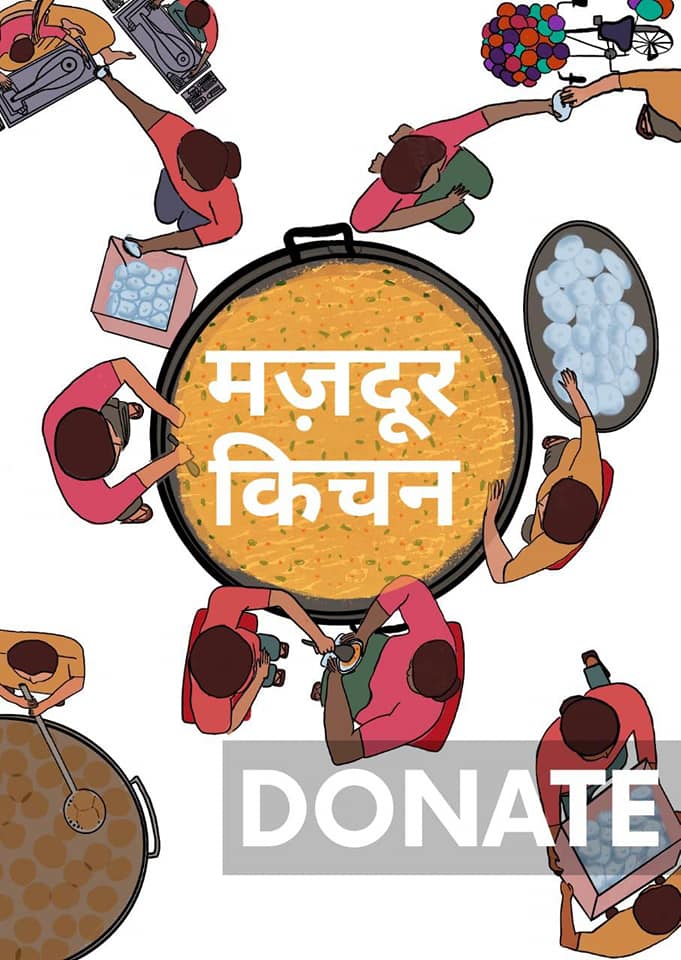
ND: Mazdoor Kitchen is a citizen run voluntary initiative, working to provide meals and subsistence to daily wage workers in North Delhi. Run by a dedicated team of volunteers comprising professors, students, artists and people from the community itself, it has been providing meals and ration kits to hundreds of people across north Delhi, ever since the beginning of the lockdown since May 2020.
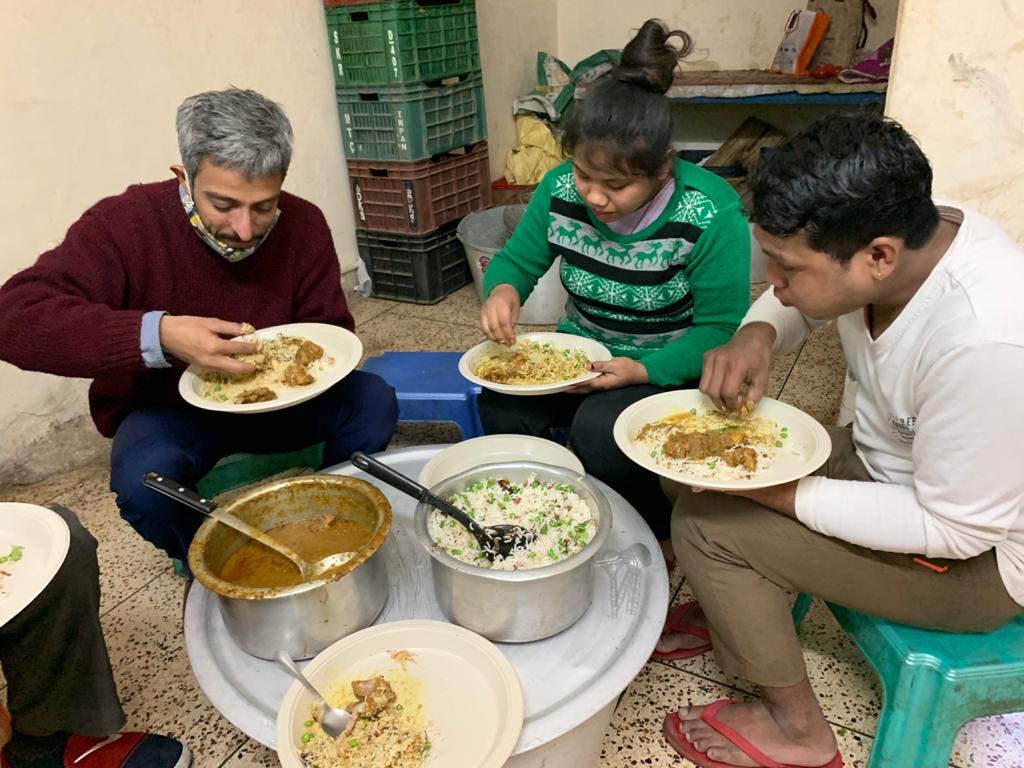
In March, my parents – Delhi University professor Nandita Narain and her husband Rashid Ansari, a martial arts instructor and performing arts practitioner-director, joined a collective of teachers in North Delhi to start ‘Mazdoor Dhaba’ (workers’ café). It had 3 community kitchens running under its banner in North Delhi, from the garage of the Principal’s house in St. Stephens College. I remember my mother, Nandita saying , “I’d heard from many of my colleagues that this isn’t something we, at the age of 60+ years, should be doing. But we felt that even if there is risk involved, we want to take that risk; after all, when there are wars, people who volunteer, go to the frontiers to support wounded and war-affected people. And if they can do that, then the risk is surely not greater for us.”

By July, the lockdown in Delhi had ended and many in the group felt the need to shift operations away from cooking to other relief work. But my parents decided to venture out independently and started ‘Mazdoor Kitchen’ (a citizen-run voluntary workers’ kitchen) in Jawahar Nagar, Malka Ganj- as they felt there was still a need to support people with food and rations. I recalled what my father said to me in 2020 – when hoards of migrant workers walked back to their homes, on feet –  “how can I be comfortable sitting in the confines of my home, eating a hot meal, when there are people on the road who have to travel thousands of kilometres just to be safe and alive?’,”

Q. In what capacity are you associated with MK? Pls describe the team and their responsibilities.

ND: I have been associated with MK right from the beginning supporting my parents, raising funds, running the crowdfunding campaigns and building collaborations with many grassroots groups, CSRs, partners, voluntary groups.
Q. What are the pros and cons of running an independent, voluntary citizen run initiative?

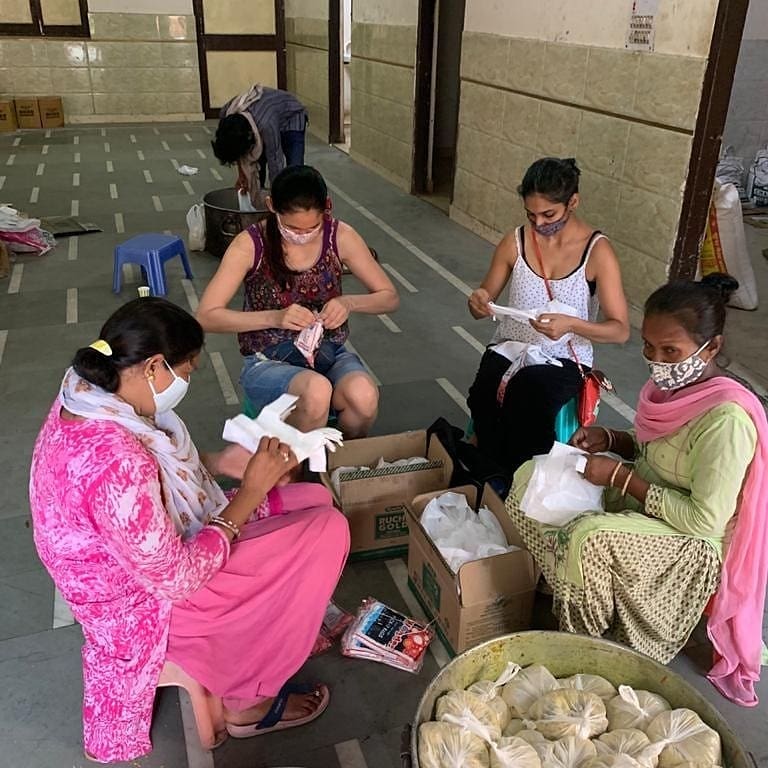
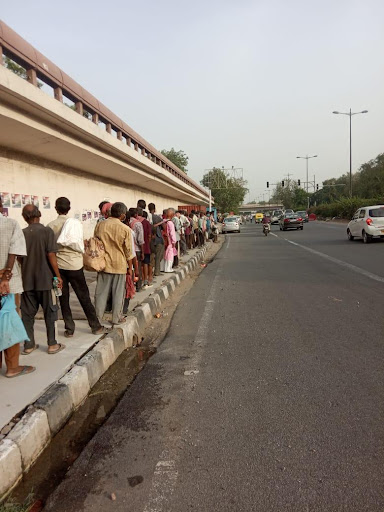
ND: The 500 meals, ration kits and monthly rations that we’re able to support people with, is the pros. These meals are distributed to individuals and marginalised communities, who do not have the socio-economic means to feed themselves. Cooked meals are given in North Delhi across- Nigambodh Ghat – Monastery market road, behind geeta mandir, north delhi. These areas have a growing population of displaced vulnerable people, living on the streets – homeless, beggars, daily wage workers, migrants, rickshaw drivers, rag pickers etc. For some of these folks, the cooked meal packet that they get from Mazdoor kitchen, is their only source of food in the day.

For many migrant families, these cooked meals allow them to save some of their meagre daily earnings, which they can then put to use for other purposes of everyday living like medicines, rations , education of their children and deal with inflation.  We have also been able to generate livelihood, medical and education support through direct reliefs/ cash transfers to different families, individuals from marginalised socio-economic communities. We’ve also been able to support disaster responses to support groups during floods, and extreme hunger through kits, ration, blankets, clothes, medicines and other relief material across the country.
We’ve been able to demonstrate how a community owned – and run kitchen can benefit countless people and bring people together. But there have been a host of challenges – running a community kitchen is not easy! From being a small team, to managing with small budgets and the constant challenge of raising more funds, persuading people to donate – in face of the widespread belief that ‘since the pandemic is now over, people in the community are alright. ‘ This is a complete mismatch with reality, because poverty, unemployment, rising expenses and cost of basic living all remain a stark reality and crisis for those on the margins.

The country has been witnessing unending cycles of migration and now, reverse migration of workers who found no support in the cities and now, find no sources of income in the villages too. Most who have lost employment as industries stand devastated by the economic repercussions of the virus and the safety concerns brought about by physical proximity, will not see opportunities open up for months to come. The need to continue the work of the kitchen remains urgent. Several beneficiaries of the initiative have no other source of income or subsistence.

Q. Apart from cooking daily meals, what are the other issues MK deals with?

ND: While the initiative was born in the middle of the pandemic, as a response to the urgent need of the hour, over the last few years it has developed deeper relationships with the local communities it serves in slum colonies of Kingsway Camp, Pul Bangash, Bahadurgarh Road, Azad Market, Roop Nagar, and Patel Chest, Nigambodh Ghat. Many working-class people and migrants who had travelled back to the cities hunting for jobs depend on that one meal a day that the kitchen provides. In the heightened phases of Covid till 2021 they fed up to 800+ people daily in different communities and supplied dry ration kits, blankets, and gas cylinders, even relief material and clothes in the areas. Currently the kitchen runs daily and feeds people with up to 500 meals in a day, and supports 20-70 families with ration kits in a month.
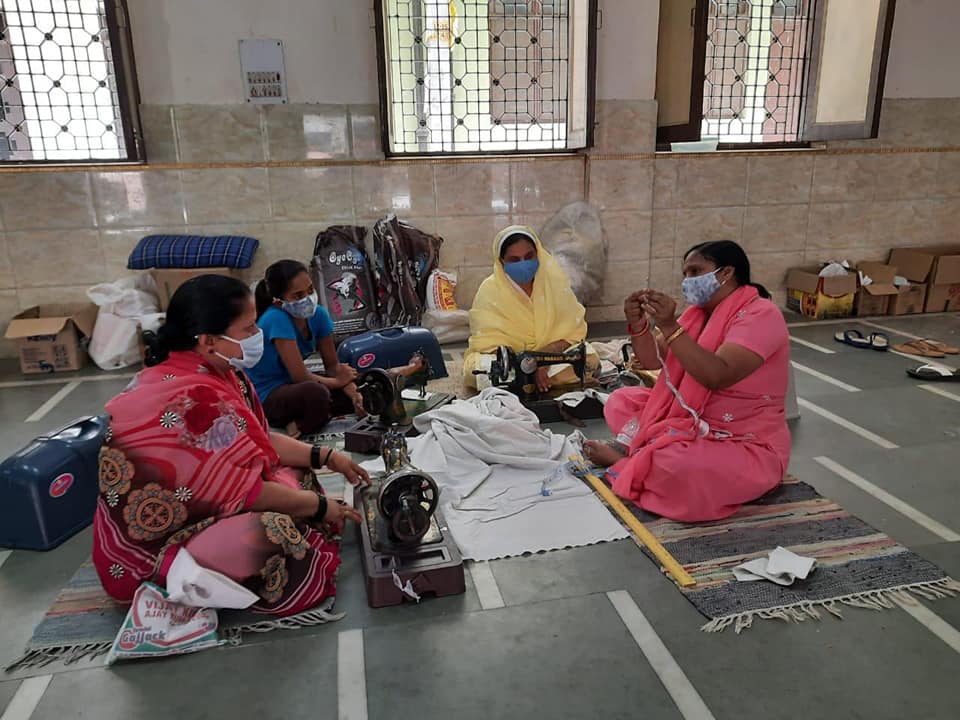
Through a sustained effort, the initiative has also developed a keen relationship with members of the community. We also give monthly ration kits to families, medical relief and gas subsidies, Aside from food and ration, we’ve has also started a ‘livelihoods initiative’ , under which local community members (women) have been making and distributing thousands of masks and other small vendors like balloon sellers and food carts have been able to restart their businesses with small funds, Our relief efforts have included helping those struck by natural disasters with material or monetary support, supporting students from underprivileged communities pay their college fees, rickshaw pullers procure a new rickshaw if needed and medical fees.

Q. Would you like to share an incident that personally left a deep impact on you?

ND: In 2020-21, a migrant worker, who received daily meals from MK, from bada hindu rao- Bulla, a daily wage labourer from Bihar, had an accident and his spine was dislocated. He was admitted into Safdarjung hospital and had an operation on his spine. Bulla was living alone in Delhi, in shanties on the streets, and after hearing about his accident his family had just come to Delhi. His time in the hospital was dismal and scary to say the least, as none of the family members were literate and struggled to engage with a chaotic hospital system. Our team, including my parents, visited the hospital- and talked to the floor doc, name of the unit head etc. Bulla has had one surgery, doesn’t require another, but was paralysed from the waist down, with physiotherapy after the stitches are opened, might regain mobility in maybe six months, maybe longer, maybe never! Our team, along with the help of good folks like Ankit Jhamb of Aao Khilayein, were able to facilitate Bulla’s discharge from the hospital to a rented accommodation that we managed to procure and furnish in time for him to get there, including a much-needed air mattress.We tried to provide all the necessary things required for day to day living, and what is needed for his medical care too. We have engaged a day nurse, Raj Rani, to come and do his dressing etc. every alternate day. His recovery is going to be long, arduous and difficult. We and more importantly, Bulla and his family, needed all the help that they could get. While initial surgery costs have been taken off by the hospital, we knew that supporting a family who has no source of income ( as bulla was the main bread earner), rented accommodation for 6 months, food, medical expenses, nurse for day care, physiotherapy- will cost anything from 2.5-3 lacs in total. We were able to raise the funds to pay off Rajrani who was a compounder in a hospital and would go and do his physiotherapy every day. But eventually the trauma from his accidents were too grave – and he passed away. For me – this was a mirror image of the shattered socio-economic structure of our society – it felt futile and overwhelming, just how deep this structural inequality goes. I had the same feeling in 2022 when I started hearing about more and more migrant suicides. It made me more resolute to keep trying to do whatever bit we can, no matter how small the impact.
Q. Have you come across issues of caste purity and untouchability with respect to the menu?

ND: While distributing food we have by and large not come across caste purity and untouchability with respect to our food. All the 400+ people we feed, love our meals, they wait for us graciously. In the middle when we were shut for a week, while shifting to a new place – when we went back the 1st day so many of them came howling to us – ‘ where were you? had you forgotten about us ? ‘ Many people distribute food near nigambodh ghat, but often it is baasa, waste food. My father had told me, “The other day I had people take 2-3 meals from me; they sat on the pavement and ate those meals, telling me how hungry they were. We give the food packets to them in their hands and we ask them to take care. We give them as many meals as they ask for, as long as we have it. We try to ensure that everyone who’s standing in the line gets food. I don’t differentiate between a rag picker or a drunkard or someone who’s dressed well. I don’t question anyone; I just give them food.”

Q. Do you see MK as a long term venture especially when the State is refusing to perform its basic duties of providing food and shelter?

ND: While it is constantly challenging to raise enough funds to sustain the kitchen – we are always trying. In a country like ours, if communities were to go an extra mile, support their own local vulnerable populations just around their homes – the 80% of this country on the margins would not be as vulnerable as they are right now. Why can;t we have a community owned, run, funded and employed community kitchen in every mohalla ? Despite everything, we are trying to continue this initiative as long as we can.  My father says, “This might be just a drop in the ocean, but it is a regular consistent drop,”. My mother said to me once – ” ” There was this idea amongst friends that this sort of work doesn’t really bring about any social transformation. You are just doing charity. You are just filling in where the government should be doing it. But I don’t even see it as charity. I see myself as a beneficiary of this inequality. The fact that I have got a public funded education, there is a debt of gratitude. There is a debt. On my soul, or psyche or whatever you call it. And that is a debt that I cannot repay in one lifetime. ”
Q. Anything else you’d like to share?

ND: I would like to thank the supporters and funders of this initiative and would appeal to more people for funding. Because of them MK has been running for almost 3 years, supporting people from marginalised communities with cooked food, ration and financial assistance. I have never been prouder of our small team of 10 community members which keeps the kitchen going. With 1 in 4 suicides in India being of a migrant worker, the need for food, rations and financial assistance for marginalised communities is still very dire.

We are currently running out of funds and may only be able to sustain till the end of the year. To keep the kitchen running till 2025 and beyond, we need support to raise funds.

.To see daily updates of our work and help support our initiative, you can visit www.instagram.com/mazdoorkitchen

Aatika is a fellow at the SEEDS-TCN mentorship program

source: http://www.twocircles.net / TwoCircles.net / Home> Dalit / by Aatika S, TwoCircles.net / June 19th, 2023
Mansoor Ali takes charge as the Commissioner of Mangaluru Urban Development Authority

Mangaluru, KARNATAKA:

Mansoor Ali

Mangaluru: 

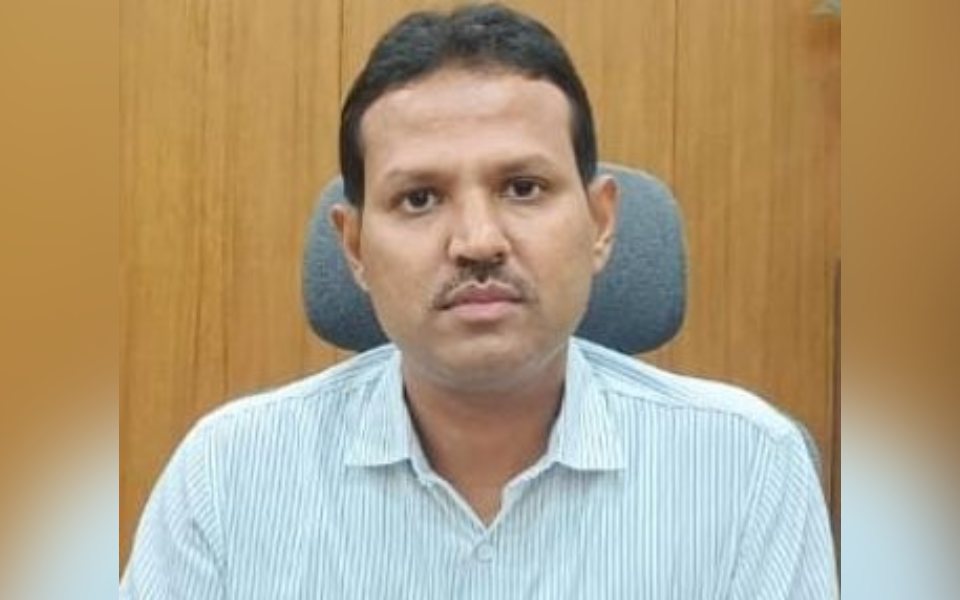
In a latest development, Mansoor Ali took charge as the Commissioner of Mangaluru Urban Development Authority (MUDA) on Wednesday.

Meanwhile, The Mangaluru Urban Development Authority (MUDA) earlier in the day announced in a press release, that the public can directly contact the authority during office hours to discuss their grievances and any matters falling within the authority’s jurisdiction.

source: http://www.varthabharati.in / Vartha Bharati / Home> Karavali / June 21st, 2023

How businessman Manzoor Wangnoo restored Khushal Sar Lake of Kashmir

Srinagar, JAMMU & KASHMIR:

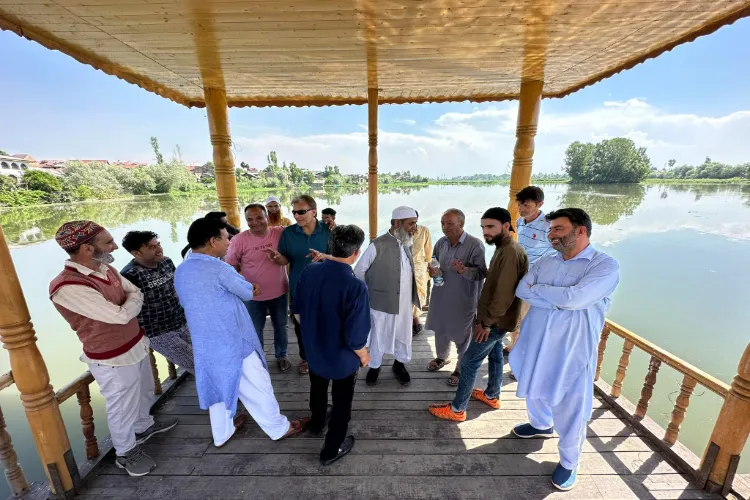
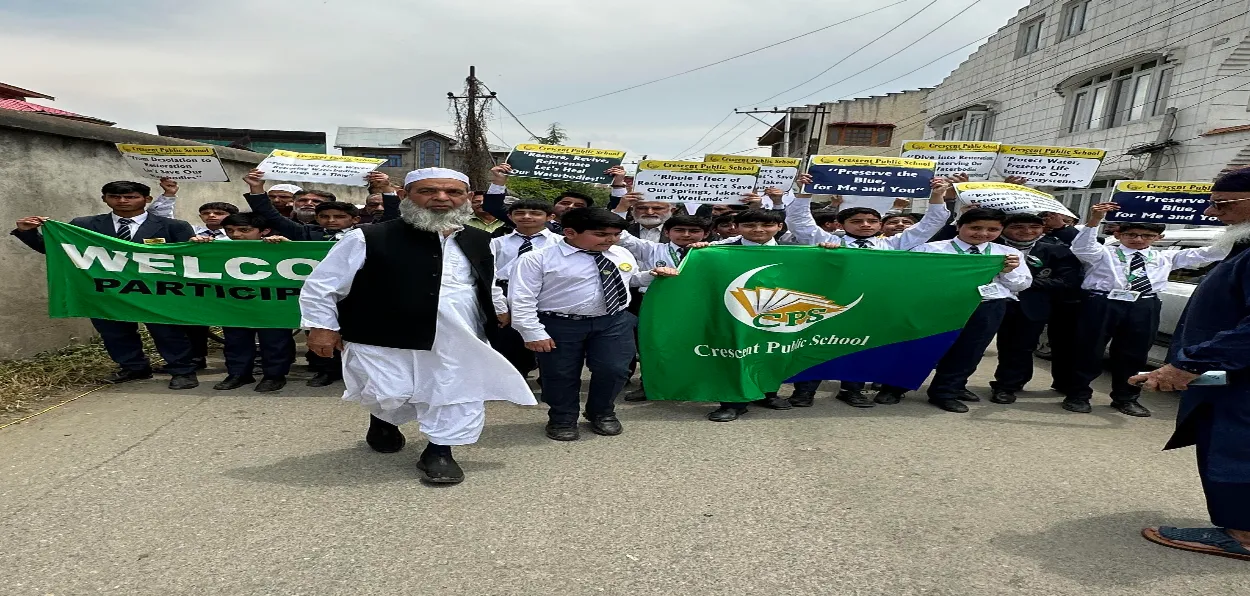
Manzoor Wangnoo leading school Children during an environmental campaign in Srinagar

About two and a half years ago when Manzoor Ahmad Wangnoo, a prominent businessman of Kashmir  was asked by the anchor during a television show that he must say in 20 seconds what inspired him to work for saving and restoring Kashmir’s water bodies, he replied “Ehsaas”.

His reply explained how realization and concern on seeing the water bodies of the Valley shrink and gets degraded due to human greed and official negligence became the key to his massive efforts to awaken the public and undertaking the work to restore the Lakes to health.

He remembers visiting the 1.6 km by 0.6 km Khushal Sar Lake located on Srinagar outskirts in February 2021 for the first time. “It was in bad shape, choked with solid waste and smelling foul”, he told Awaz-the Voice at his office in Kashmir Mahal Resorts in the Nishat area overlooking the Dal lake.

“When I told the residents that it needs efforts to clean up the lake, they laughed”, he said, as he was accompanied by his team of volunteers of the Nigeen Lake Conservation Organisation (NLCO), established in 2000. He remember his three counsins – Latief, Riyaz and Muzaffar also joining him from the beginning of his campaign. 

NLCO started with cleaning up the Nigeen Lake, and is currently focused on Khushal Sar, Manzoor Wangnoo recalled the oft-quoted couplet from India’s 20th century famous Urdu poet, Majrooh Sultanpuri (Asrar-ul-Hassan Khan): Meein akela hi chalaa thaa janibe manzil magar’; Loag Saath aatey gaye aur karwaan banta gaya”.“That actually happened”, he said.  The target of cleaning Khushal Sar was completed in 100 days under the “Mission Ehsaas” (phase 1), which began on February 21, 2021. With the help of SMC (Srinagar Municipal Corporation) and other agencies, NLCO removed “3000 truckloads of muck from the Lake till date”, Wangnoo said.

Wangnoo with local resident at Gilsur bridge

“Now this (Khushal Sar) is not a dustbin”, he said and appealed to the Government to provide a drainage system and demarcation on the lake peripheries. The traditional navigational route, Zadibal-Sazgaripora in the lake was restored in phase 2 of “Mission Ehsaas” last year. Wangnoo said that the lake was orphaned and had been neglected for the past 30 years.

Without the efforts of the Lake Conservation and Management Authority (LCMA), which keeps Nallah Amir Khan clean, the restoration work of Khushal Sar and Gilsar would not have been possible, Manzoor Wangnoo said. The authorities have prevented solid waste from flowing into the twin water bodies. He also praised successive Divisional Commissioners for supporting his work.

He called for a “competent authority” to take responsibility of the lake’s conservation, though J&K Lake Conservation and Management Authority (LCMA) looks after Dal Lake. “It (Khushal Sar) needs complete attention”, Manzoor Wangnoo told Awaz-the Voice, as phase 3 of clearing the muck began earlier this year.

“The mission received an encouraging response”, Wangnoo said and referred to its mention by Prime Minister Narendra Modi in his Mann Ki Baat last year. Lt Governor, Manoj Sinha also expressed his “gratitude” to Wangnoo at least on three occasions in the last two years. “The idea of cleaning the Khushal Sar was of a prominent businessman of Srinagar city, Manzoor Ahmad, and the cleaning process was started with the help of the administration coupled with the efforts of the locals. It is a great example of public participation,” Sinha commented on one occasion.

“People in the vicinity (of Khushal Sar) have started to realize the importance of the conservation of the water body. Administration lent its support for the cause, especially SMC has been there to collect the waste from day one”, he commented.

The restoration of choked Khushal Sar to its pristine glory is not the first venture undertaken by Manzoor Ahmad Wangnoo, who has established his business in carpet and Kashmir handicrafts over the last nearly five decades. The 70 years old businessman, who was educated at Tyndale Biscoe School and S P College, Srinagar, learned the trade from his father in his early childhood.

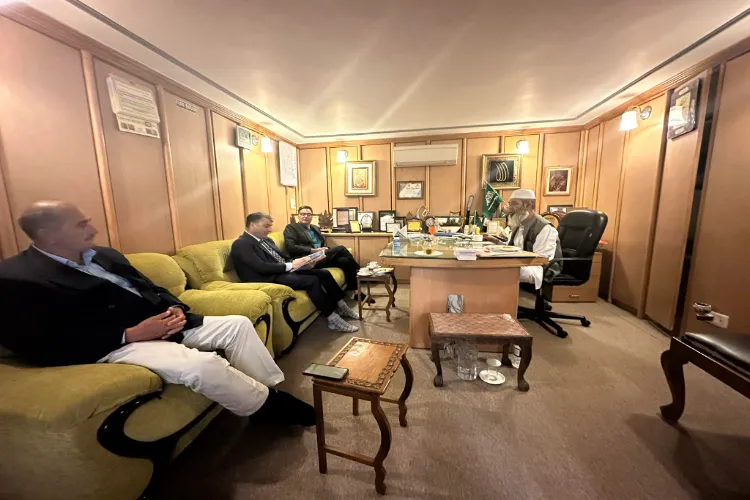
Wangnoo in his office

As a businessman over the decades, what concerned him was the need “to create awareness regarding environment and saving water bodies of Kashmir, endangered by pollution”. Thus, he constituted a local NGO, Nigeen Lake’s Conservation (NLCO) in 2000 for the restoration of water bodies. “I took the challenge to restore the glory of the lake with the active participation of peoples… it aims to save the (Nigeen) lake from becoming a cesspool”, he said.

“This is our (team’s) identity wherever we go with efforts of saving the environment”, the devout Muslim pointing towards his white round cap, commented. “NLCO has taken on the role of a watchdog organization, to check vandalism, create awareness about the importance of conservation of water bodies in particular and the environment in general”.

Speaking of challenges, Manzoor Wangnoo said “land mafia and encroachers tried their best to stop us. But when three people, administration and NGOs – join hands everything becomes possible.”

After several years there was a sea change in the Nigeen Lake as “the people became aware of the importance of the pollution-free lake”, he said. Wangnoo has also contributed to helping the 2005 quake-hit people of Uri and Tangdhar by constituting Kashmir Welfare Trust and in the education sector by setting up Bilaliya Educational Institute.

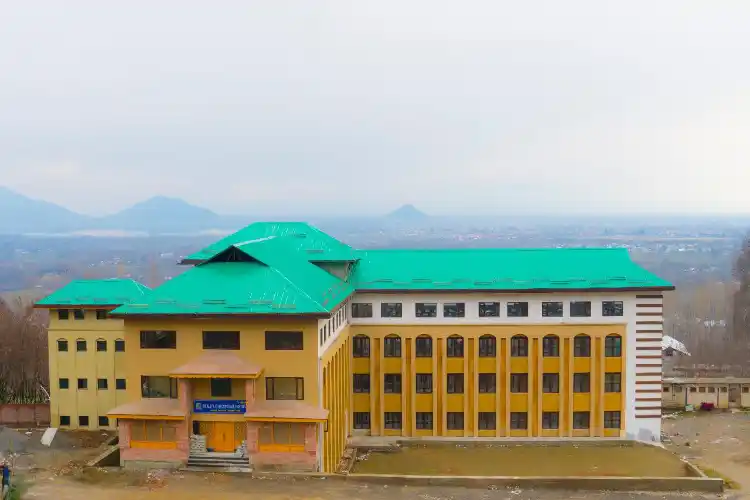
Educational Institute, Srinagar

Nigeen Lake is connected via a narrow strait flowing beneath the Ashai Bagh bridge on the Lal Chowk-Rainawari-Hazratbal road. It is further connected to Khushal Sar and Gilsar through Nallah Amir Khan.

While he was continuing with his mission “to help enrich the quality of life of the community and preserve ecological balance and heritage through a strong environment conscience”, the October 2005 earthquake posed another challenge to him.

With the support of the concerned persons to deliver, he initiated the relief measures in the quake-hit areas of North Kashmir, which led to the formation of Kashmir Welfare Trust (KWT), an NGO to undertake the relief operations. The KWT, which initiated with the adoption of 69 earthquake victims from Tangdhar in 2005 has set up the Bilaliya Educational Institute in Srinagar where 1900 boys and girls are today enrolled. Also, it’s one of the leading schools in Srinagar.

He proudly says that some of the students of the school have shown excellent results with scoring distinction in the board examinations.

It Trust has also contributed to the relief and rehabilitation of the 2014 floods in Kashmir.

source: http://www.awazthevoice.in / Awaz The Voice / Home> Stories / by Ehsan Fazili, Srinagar / June 26th, 2023

Capt Sami Ara, First Muslim Kashmiri Female Pilot with CPL wants youth to aim for sky

Sumbal (Bandipura District), JAMMU & KASHMIR:

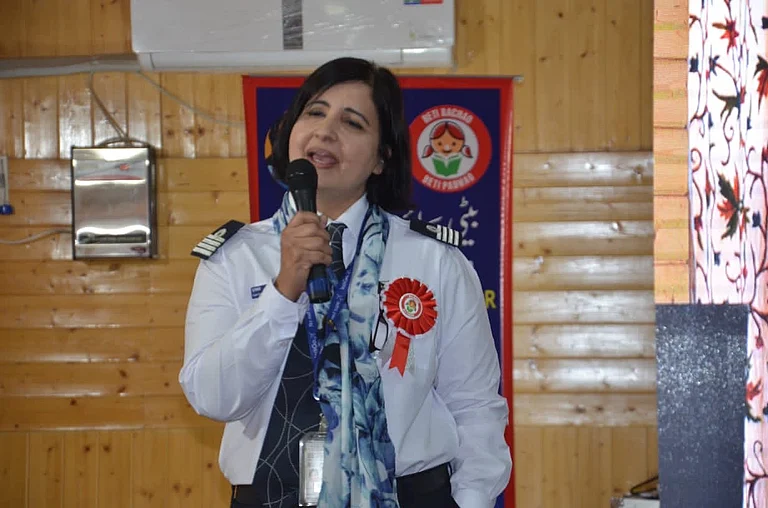
Capt Sami Ara, the first Muslim woman pilot of Kashmir to have a commercial pilot license (CPL), wants Kashmiri youth to aim higher.

Photo: Twitter/ @capt_samiara

Speaking at the conclusion of a two-day career counseling conclave for girl students at the mini-secretariat here, Ara, who hails from north Kashmir’s Bandipora district, said, “Hailing from a far-flung place like Sumbal, if I can fly a plane, students here are capable of achieving better heights.”

Also known as Sami Surury, Ara said, “The students studying in government schools are as capable as those studying in private schools but they need to aim higher and remain firm till they actualise their dreams.”

Urging parents to repose trust in their children, she said, “They should not restrict their children and stop them from actualising their dreams or else their confidence will be shattered.”

Talking of her own struggles, Ara said: “Since my childhood, I wanted to do something different, something good and something big. I wanted to qualify IAS or IPS but become a pilot by chance.”

Ara received her early education from a government school in her village.

She started her career by issuing air tickets at Srinagar Airport and later become a cabin crew.

Ara received her CPL after training for three months in the southern US state of Texas in 1994 and finally started flying as a co-pilot in 2004.

Expressing her love for her hometown, she said, “I love Bandipora, I keep returning here, and will continue to do so in future to talk to and to inspire more students till the time I see scores of Sami Aras coming out of this place.”

source: http://www.greaterkashmir.com / Greater Kashmir / Home> Editor’s Pick / by Owais Farooqi (headline edited) / November 06th, 2020

MS felicitates successful NEET candidates

Hyderabad, TELANGANA:

Six students from MS achieved scores above 600 marks in this year’s NEET examination.

MS felicitates successful NEET candidates

Hyderabad: 

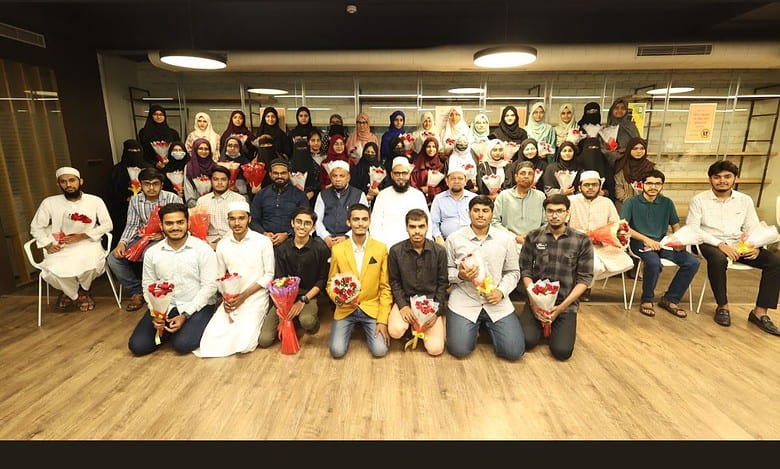
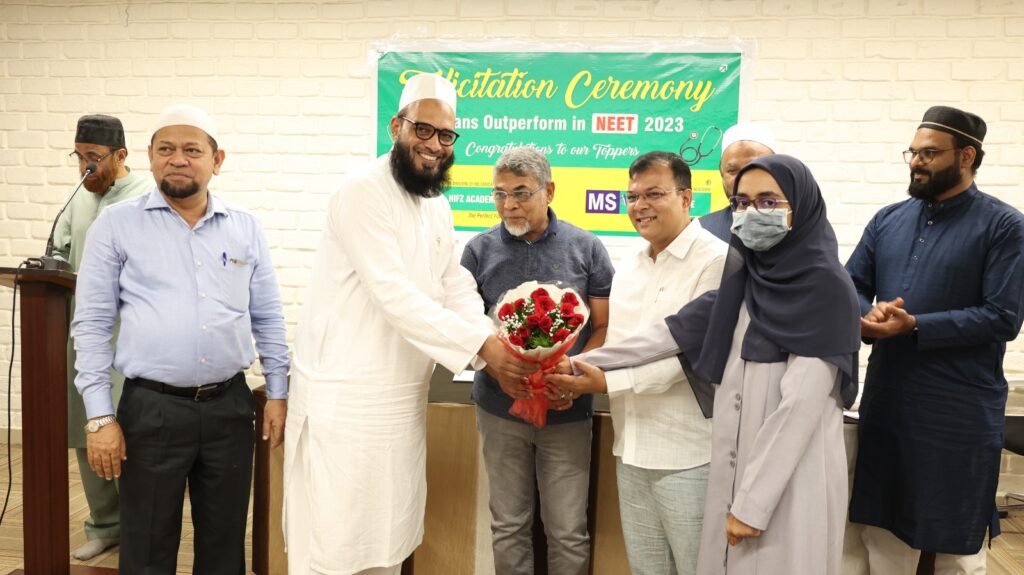
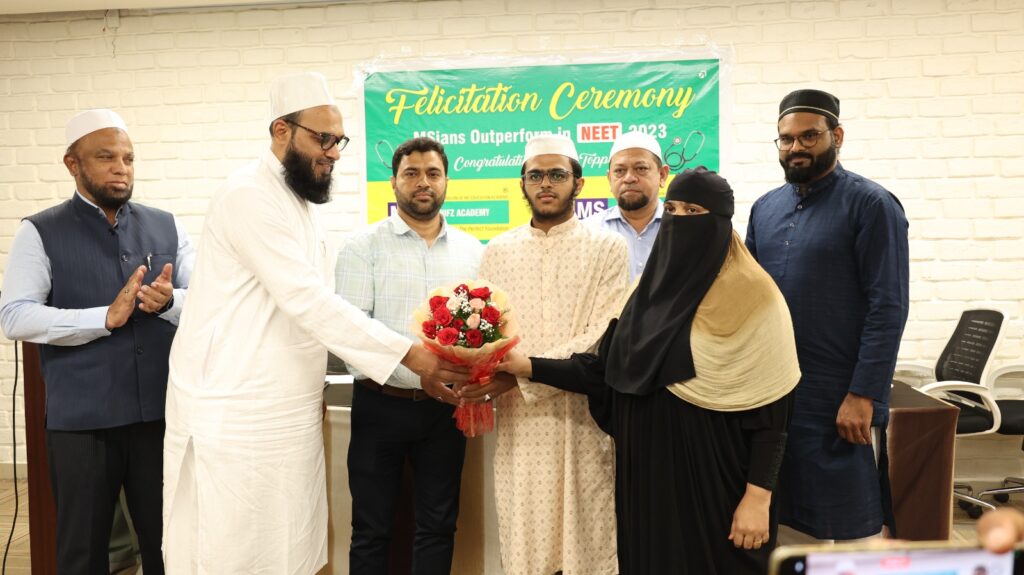
The MS Education Academy has organized a felicitation ceremony to honour the successful candidates of the NEET 2023 batch.

Mohammed Lateef Khan, addressing the ceremony, expressed his delight and announced that this year, approximately 169 candidates are expected to secure free seats in MBBS. He emphasized the academy’s mission and vision for 2036, aiming to produce 10,000 doctors dedicated to serving the country and the Muslim community. These doctors will be committed to providing exceptional healthcare and making the well-being of the people their primary goal.

Khan expressed his gratitude to Allah Almighty and proudly stated that 1,763 students from the MS Education Academy have been admitted to MBBS programs. Many of them have also pursued MD degrees and are currently serving both within the country and abroad. He extended his heartfelt congratulations to the NEET-qualified students and their parents, emphasizing that these students are valuable assets to the community. He expressed his hope that their service to the people would contribute to a better world for themselves and their parents.

It is worth noting that six students from MS achieved scores above 600 marks in this year’s NEET examination. Hafiz Abdul Rahim Shukoor secured the top position with 670/720 marks, followed by Syed Abdul Basith Rehan with 665/720 marks in the second position. Shabana secured the third position with 650/720 marks, and Muhammad Abdul Malik, son of Muhammad Abdul Hameed, obtained the fourth position in MS with 647/720 marks. Amara Fatima bint Mohammad Rahman brought great honor to MS, her family, and the country by scoring 624/720 marks. Notably, Amara Fatima is the granddaughter of Mohammad Osman Ali, the younger brother of State Home Minister Mohammad Mahmood Ali.

At the beginning of the event, Mohammad Ghousuddin, the Director of MS Education Academy, warmly welcomed the students and eloquently described the educational journey of MS. He proudly mentioned that the academy, which started with just two rooms in 1991, has now expanded to 106 educational institutions nationwide. These institutions collectively accommodate more than 30,000 students and employ over 3,000 teachers.

Mohammed Lateef Khan assured the community that MS students would strive to become achievers with perfect scores of 720/720 in the future.

During the felicitation ceremony, Mr. Mohammad Anwar Ahmed and Dr. Muhammad Moazzam Hussain, Trustees of MS Education Academy, provided insightful guidance to the students. Mufti Shakeel, the imam and khateeb of the Spanish Mosque (Masjid Iqbal-ud-Daula) in Begumpet, received special recognition during the event. It is worth mentioning that his fourth daughter achieved impressive marks in NEET, joining her siblings in the prestigious accomplishment of securing free MBBS seats through MS Education Academy.

source: http://www.siasat.com / The Siasat Daily / Home> News> Hyderabad / by Zahed Farooqui / June 15th, 2023

Muslim coaching institutes shine in NEET 2023

INDIA:

Muslim coaching institutes have witnessed remarkable triumph in facilitating students’ admission to Government Medical Colleges in the NEET (National Eligibility cum Entrance Test) 2023 examination. Notable among these institutions are the Association of Muslim Doctors and Talent Zone Academy, Shaheen Group, Rahmani 30, and Al Ameen Mission.

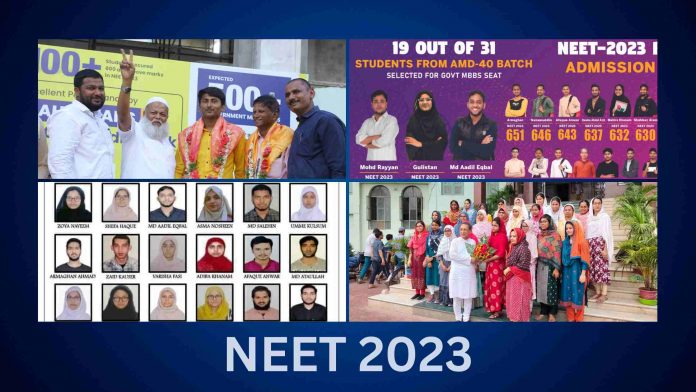
Through a joint initiative led by the Talent Zone Academy in New Delhi and the Association of Muslim Doctors, a commendable achievement was accomplished. Out of the total 31 students enrolled in the program, an impressive count of 19 students successfully secured their admission in government medical colleges.

The primary objective of forming this association was to unite Muslim doctors and create an organized body that adhered to moral values and the fundamental teachings of Islam.

As part of their initiatives, the Association of Muslim Doctors (AMD) collaborated with Talent Zone Academy to launch the AMD 40 program. This educational initiative provided education and support to students aspiring to pursue a medical career.

The Association of Muslim Doctors is an organization comprising individuals who share a common purpose. In 2009, a group of young Muslim doctors from Bihar, India, came together with the aim of establishing a registered body. Their inaugural meeting took place on February 20th, 2009, in Hajipur. Approximately 35 doctors participated in this gathering, operating under the banner of the Islamic Medical Association of India (IMAI)

Waseem Javed, founder and director of the Talent Zone Academy, while talking to Muslim Mirror said that the academy’s “focus is on guiding students towards a successful future in the fields of medicine and engineering, by providing a comprehensive curriculum that is designed to help them develop the skills and knowledge they need to succeed in competitive environments.”

“Moving forward, there are plans to sustain the program and expand its reach to benefit more deserving students. The experience gained from this program will serve as a foundation for future endeavors in providing quality education and support to aspiring medical professionals,” he said. 

Ashhar Ehtesham, manager of the academy called the program a successful “collaboration between the Association of Muslim Doctors and Talent Zone Academy”

“The students received food and accommodation from AMD, while TZA focused on providing education. The campus located in Delhi served as the teaching venue for the students,” he said.

“Although the majority of participants were Muslims the program was inclusive and not specific to any particular religious group,” Ehtesham added.

The Shaheen Group of Institutions, situated in Bidar, Karnataka, has celebrated the achievement of having more than 500 students qualifying for admission this year.

Dr Abdul Qadeer, founder of Shaheen Group of Institutions, said “In the upcoming NEET 2023, we anticipate over 500 MBBS seats for the students. I extend my heartfelt congratulations to the successful candidates and their parents on this remarkable achievement.”

“Additionally, our attention is directed towards facilitating the integration of Hafiz individuals into contemporary education. We have established centres that offer lodging, meals, and excellent educational opportunities to support them,” Dr Qadeer said.

Dr Qadeer added that “an impressive number of 80 Huffaz have successfully cleared the NEET 2022 examination, and we have high hopes for even more qualifying in future exams.”

Maulana Mohammad Wali Rahmani’s coaching institute, Rahmani 30, experienced impressive results with 41 students achieving outstanding scores surpassing 600 marks in the NEET 2023 exam.

Likewise, the Al Ameen Mission, a residential educational institute based in Kolkata, has seen more than 600 of its students securing admissions in diverse courses this year.

These outstanding results underscore the effectiveness and dedication of these Muslim coaching institutes in preparing students for their medical aspirations, paving the way for a bright future in the field of healthcare.

source: http://www.muslimmirror.com / Muslim Mirror / Home> Education> Indian Muslim> Positive Story / by Ubair Ul Hameed / June 15th, 2023

Over 600 students from Al-Ameen Mission excel in NEET 2023

Howrah District, WEST BENGAL:

Over 600 students from West Bengal’s Al-Ameen Mission, spanning across 70 branches, achieved remarkable success by excelling in the National Eligibility-cum-Entrance Test (NEET) 2023.

This year’s topper from Al-Ameen is Ariful Haque, who achieved a score of 682 out of 720 in the NEET examination. He secured a rank of 1339 at the All India level.

Among the girls, Suhana Sultwa emerged as the topper, securing a score of 675 out of 720 in the examination. She obtained a rank of 2260 at the All India level.

A total of 494 boys, accounting for 79% of the qualified candidates, and 132 girls, making up 21% of the qualified candidates, have successfully passed the examination this year.

As per Al-Ameen’s data, out of the successful candidates, 27% (167 students) belong to poor and below-poverty line (BPL) families, 35% (218 students) come from the lower-middle-income group, and 38% (241 students) are from the middle and upper-middle-income group.

In the previous year, more than 500 students from Al-Ameen Coaching Academy successfully cleared the NEET examination and secured admissions into different medical colleges.

Al-Ameen Mission, established by M. Nurul Islam, is a renowned organization based in Howrah, West Bengal. It has an impressive track record of producing more than 3500 doctors (MBBS & BDS) and 3000 engineers, along with numerous researchers, administrative officers, teachers, and professors.

Operating across 20 districts in West Bengal, Al-Ameen Mission runs 70 coaching institutes. It provides education to approximately 17,000 residential students and employs a dedicated team of over 3000 teachers and non-teaching staff. The primary campus of Al-Ameen Mission is located in the Howrah district of West Bengal, specifically at Khalatpur (Udaynarayanpur).

source: http://www.muslimmirror.com / Muslim Mirror / Home> Education> Indian Muslim> Positive Story / by Muslim Mirror Staff / June 18th, 2023

AMU M.Tech student Sami Saud develops portable single lead ECG device

Aligarh, UTTAR PRADESH:

The AMU student, Sami Saud, said that by capturing ECG readings remotely, the device wirelessly transmits the data to a cloud-based platform.

Aligarh: 

In a novel development, Sami Saud, a final-year M.Tech. student at the Department of Computer Engineering, Aligarh Muslim University (AMU) has developed a portable single lead ECG device as a part of his dissertation.

Sami, who is working on his dissertation under the supervision of Prof. M. Sarosh Umar, worked on the device in collaboration with the industry expert, Arif Shouqi from Google.

He said that the device promises to transform the landscape of remote cardiac healthcare with accuracy records, boasting an awe-inspiring 99 per cent precision compared to traditional medical-grade ECG machines.

“The gadget demonstrates the immense potential of computer engineering in tackling real-world challenges and the functionality of this groundbreaking device is both ingenious and straightforward,” he said.

Sami said that by capturing ECG readings remotely, the device wirelessly transmits the data to a cloud-based platform. On this digital frontier, advanced machine learning algorithms work tirelessly to classify heart conditions and predict the likelihood of heart attacks based on the acquired data. Early detection and proactive management of cardiac issues are now within reach.

Sleek, Portable Design

The portable ECG device embodies usability and convenience, and with its sleek and portable design, it adapts seamlessly to any healthcare environment, making it a versatile asset for hospitals and home monitoring. Through the wireless Bluetooth connectivity, users can access their ECG results in real-time on their mobile or laptop devices. Sustainability and cost-effectiveness have been embedded into the very fabric of this groundbreaking invention.

The device’s rechargeable capability eliminates the need for wasteful disposable batteries, while its impressive 9-day battery life ensures extended usage without constant recharging.

This achievement underscores the transformative power of computer engineering in addressing critical challenges in the medical domain.

Sami’s father, Saud Saghir, is also an alumnus of Aligarh Muslim University.

source: http://www.ummid.com / Ummid.com / Home> Science & Technology / by IANS / June 13th, 2023

Karnataka: Bidar MLA Rahim Khan Takes Oath As Cabinet Minister In Siddaramaiah Govt

Bidar, KARNATAKA:

Bidar MLA Rahim Khan, who emerged victorious in the recently held Karnataka Assembly Elections, took oath as a cabinet minister in the Siddaramaiah government on Saturday. The swearing-in ceremony was held at Raj Bhavan in Bengaluru, where Khan pledged his commitment to serving the people of Karnataka.

Rahim Khan, a two-time MLA, secured a resounding victory by defeating JD(S)’s Suryakanth Nagamarpalli with a margin of 10,780 votes. His triumph in the elections solidified his position as one of the prominent representatives of the Congress party in the region. Today, he joined the ranks of 24 Congress MLAs who were sworn in as cabinet ministers in the newly elected Karnataka government.

Nine Muslim representatives all from Congress party had won the election in the Karnataka assembly elections, despite multiple political parties fielding Muslim candidates in the elections.

Congress had fielded 15 Muslim candidates, while Janata Dal (Secular) and Aam Aadmi Party (AAP) fielded 21 and 15 Muslim candidates, respectively. The Social Democratic Party of India (SDPI) had fielded 11 Muslim candidates, and All India Majlis-e-Ittehadul Muslimeen (AIMIM) had fielded 1 Muslim candidate.

Among the victorious Muslim MLAs, BZ Zameer Ahmed Khan, a five-time MLA from Chamrajpet, was earlier inducted as a cabinet minister on the same day Congress leader Siddaramaiah was sworn in as the Chief Minister of Karnataka.

Additionally, the Congress party appointed former Karnataka Minister and Mangaluru MLA UT Khader as the Speaker of the Karnataka Legislative Assembly. UT Khader made history by becoming the first Muslim to hold this prestigious position in the state’s legislative history. He was elected unopposed as the opposition BJP and JD(S) did not field their candidates. 

source: http://www.thecognate.com / The Cognate / Home> News / by Shaik Zakeer Hussain / May 27th, 2023

Ayesha, Hussain’s UPSC success stories inspire community

Mumbai, MAHARASHTRA:

Ayesha had started preparing for the UPSC in her 12th grade, when a professor spotted her as a potential candidate. He made a case for it to her and her parents and convinced them.

Mumbai: Anjuman-I-Islam President, Dr Zahir I. Kazi felicitates Sayyed M. Hussain (Alumni – A.I’s Allana Jr. College of Science & Commerce, CST) All India ranking 570 and Kazi Ayesha Ibrahim, All India ranking 586, for successfully qualifying UPSC Exam 2023, at Anjuman-I-Islam’s Ahmed Zakaria Hall, CST, in Mumbai on Friday, 26 May 2023. (Photo by Bhushan Koyande)

Mumbai:

Two success stories coming out of the UPSC exams this year, Kazi Ayesha Ibrahim (rank 586) and Sayyed M Hussain (rank 570) have broken through the stereotypes and have emerged as a hope and inspiration for their community.

Ayesha had started preparing for the UPSC in her 12th grade, when a professor spotted her as a potential candidate. He made a case for it to her and her parents and convinced them.

Then came the years-long struggle, starting in 2017. “It takes a lot of hard work, there’s no doubt about that. But it is possible to study for 15 to 16 hours a day. I’ve done it,” said Ayesha.

Despite being a Muslim woman and stereotyped at every turn, she stuck to her books, using the disadvantages her way to study more and get better.

“My parents have always emphasised gaining knowledge. And there is no better match for gaining knowledge than the UPSC, with the diverse subjects we have to learn,” she said.

“What happens to girls is that many of them have a lack of exposure. All my sources of information were only from books,” said Ayesha.

Ayesha also lost the support of her institute after the prelims due to a change in administration, leaving her to study alone in the confines of her home, without any outside guidance.

She will be attempting the UPSC exam again, hoping to get a rank fit to get her into the Indian Foreign Services (IFS). In the meantime, she will accept the post she is offered.

After the results were released on Tuesday, Ayesha was felicitated for the achievement along with Hussain at an event organised by the Anjuman-I-Islami, of which Hussain is a former student.

Hussain, too, has a long history of struggle that ended in his scoring the 570th rank. He got through the prelims exam four times, only to fail in the main exam. He was fifth time lucky.

“It was very difficult at first. I repeated my mistakes,” he said. “Then I started teaching others for the exam, making some money so I could support myself and my family. That helped me.”

The son of a dock worker, who earns ₹18,000 a month, he said, “I’ve seen my dad struggle in the hot sun for 18 hours a day, so I found my situation easy.”

The journey was a lot more emotionally fraught for him than financial, dissuading him with every failure. But he persevered. “I am satisfied with my results, but now that I’ve gotten so much love from so many people, I wish I’d studied a little more.”

Hussain recounts a story of a call he received from a fellow resident of his area, Dongri, resounding with hope that he too could pass the exams after a few failures. His success has inspired the community.

source: http://www.hindustantimes.com / Hindustan Tims / Home> Cities> Mumbai News / by HT Correspondent / May 27th, 2023