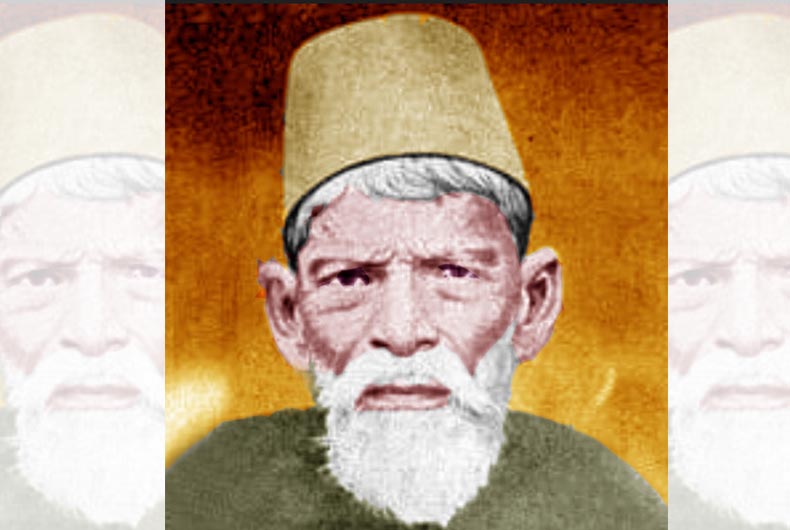
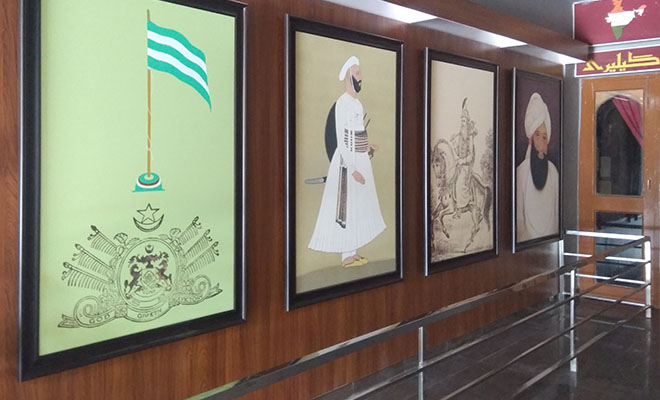
Moulvi Allavuddin was sent to cellular jail in Andaman on June 28, 1859.
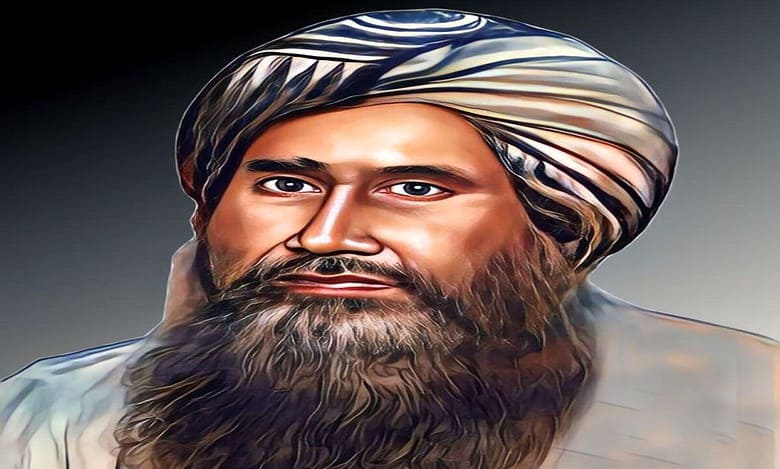
Moulvi Syed Allavuddin
Moulvi Syed Allavuddin who was a spiritual leader used to exhort the people of Nizam State, one of the strongest princely states of South India, to rebel against the British hegemony. He stood at the forefront of the direct fight against the British Government.
Moulvi Syed Allavuddin was a native of Hyderabad, the capital of the erstwhile Nizam princely state. He intensified his rebellious activities soon after the First war of Independence of India was started in 1857.
A rebellion started in Aurangabad which was part of Nizam State. The rebels who took part in the revolutionary activities in Aurangabad, escaped arrest and came to Hyderabad. They were arrested by the Nizam state police and kept in jail. The people and prominent citizens of Nizam state were angry when Nizam rejected their plea to release the arrested rebels. They met in Mecca Masjid on July 17, 1857, and decided to attack the British Residency in Hyderabad.
That afternoon at 4 pm about five hundred people led by Moulvi Allavuddin and another revolutionary leader Patan Turrebaz Khan marched ahead from Sultan Bazar with war cries to attack the British Residency, a symbol of British Supremacy. Nizam Nawab, being a friend of the British, informed the English officers of the imminent attack. The armies of the English and the Nizam moved strategically and confronted the attackers with additional forces.
Firing continued between the two sides throughout the night. The rebels retreated as the enemy forces gained an upper hand. The angry armies of the British and the Nizam cracked down on the people of Hyderabad. An award of four thousand rupees was announced on the head of Moulvi Syed Allavuddin.
Moulvi went underground. After taking shelter for one and half years from his close friend named Peer Mohammed, he started consultations with freedom fighters and revolutionaries like Syed Bhikkoo, Syed Lal, and Mohammed Ali to put an end to the hegemony of the British on his land and people. At last British forces arrested and sent Moulvi Allavuddin to the cellular jail in Andaman on June 28, 1859.
After leading a miserable life of 25 years as a prisoner, Moulvi Syed Allavuddin passed away in 1884.
source: http://www.siasat.com / The Siasat Daily / Home> News> India / by Syed Naseer Khan / April 03rd, 2023
“I dedicated my second life to specially-abled people; especially helping the wheel-chair bound cricketers make their careers. Nowadays they are the talk of the town; they are scoring runs and playing well,” Ghazal Khan, CEO of Divyang Cricket Control Board of India (DCCBI), says.
Ghazal Khan, 28, from Agra, Uttar Pradesh, is the youngest woman in the world to be involved in the promotion of wheelchair cricket. She is also the Vice Chairperson of the International Council of Wheelchair Cricket and the Secretary of International Affairs of the International Cricket Council for the Physically Challenged.
Ghazal Khan narrated an incident from her childhood that changed the course of her life,
At the age of 21, Ghazal had a close shave with death. “On 22 December 2015 when I was preparing for the examination of the second semester of the MBA my blood pressure suddenly fell. I was riding a scooter when it happened. I fainted and fell off it. I opened my eyes after 9 days in the ICU of a hospital in Agra.”
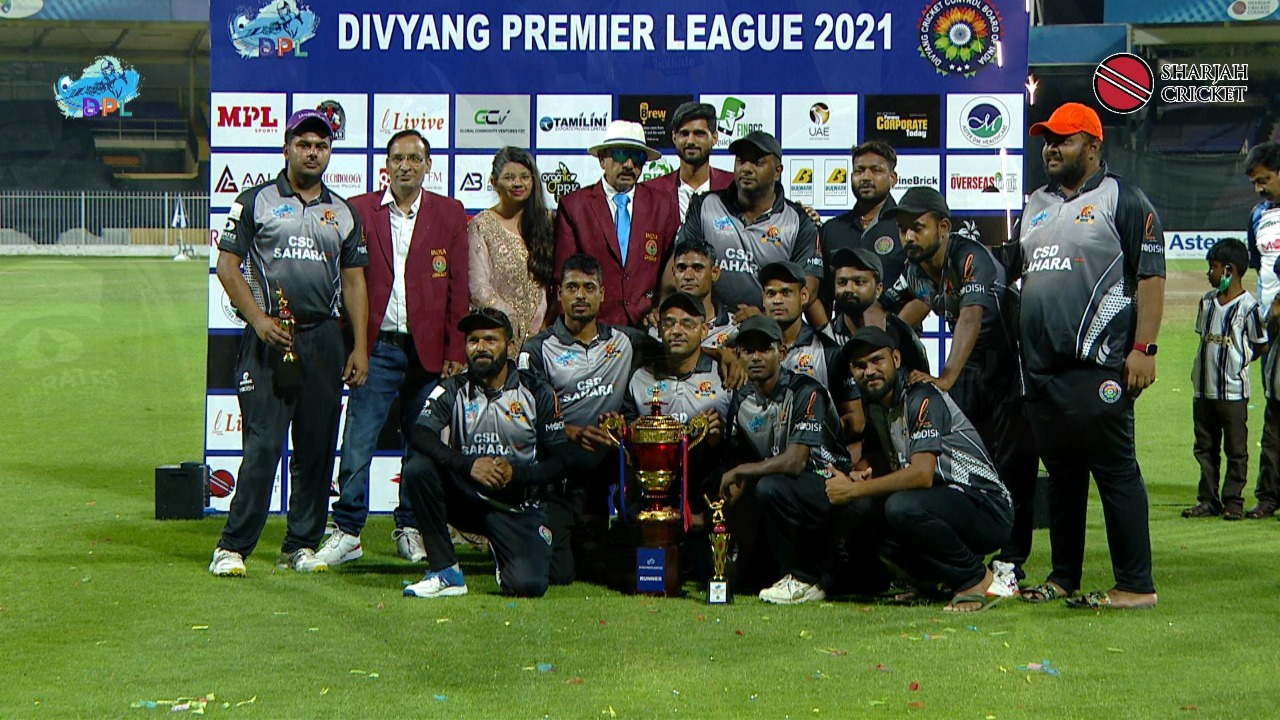
Ghazal Khan with the winning team after a tournament
Ghazal spent 20 days in the ICU. He was told that she was in critical condition and on a ventilator for 2 days. Doctors had declared her almost dead and given her only a 2% chance of survival.
“I was reborn on December 24 that year on my birthday. I had been in a coma for 9 days. My face was sewn up to close the injuries. I lost the beauty of my face. When I looked in the mirror, I couldn’t recognize myself.”
After this experience, Ghazal wondered why she survived even after doctors had given her a 2 percent chance.
“I asked myself, why did He (Allah) save me..? During this period, I received several calls from disabled cricketers from my father’s association.”
Ghazal Khan with her father Haroon Rashid (right) and another official
Ghazal’s father Haroon Rashid was a famous pacer of the Indian team. He too met with a mishap and had to give up cricket on doctors’ advice.
He founded the Divyang Cricket Control Board of India (DCCBI) to enable cricketers facing disabilities to pursue their interests. He is the general secretary of the Board and Ghazal the CEO.
Ghazal says, “I volunteered to help them during the first Asia Cup in 2015. It also helped me develop a good relationship with disabled cricketers.
“I realized that I had lost the beauty of my face, but they lost their body parts and yet they are very happy and thankful to the almighty. So, why should I be ashamed of my ugly face?
“I realized that Allah has saved me for a reason; I decided to prepare for UPSC civil services examination and become an IFS officer.
“I was sure of cracking the examination on the first attempt. However, I day before my preliminary exam, I fought with my fiancé. Thereafter I became depressed and was diagnosed with severe clinical depression.
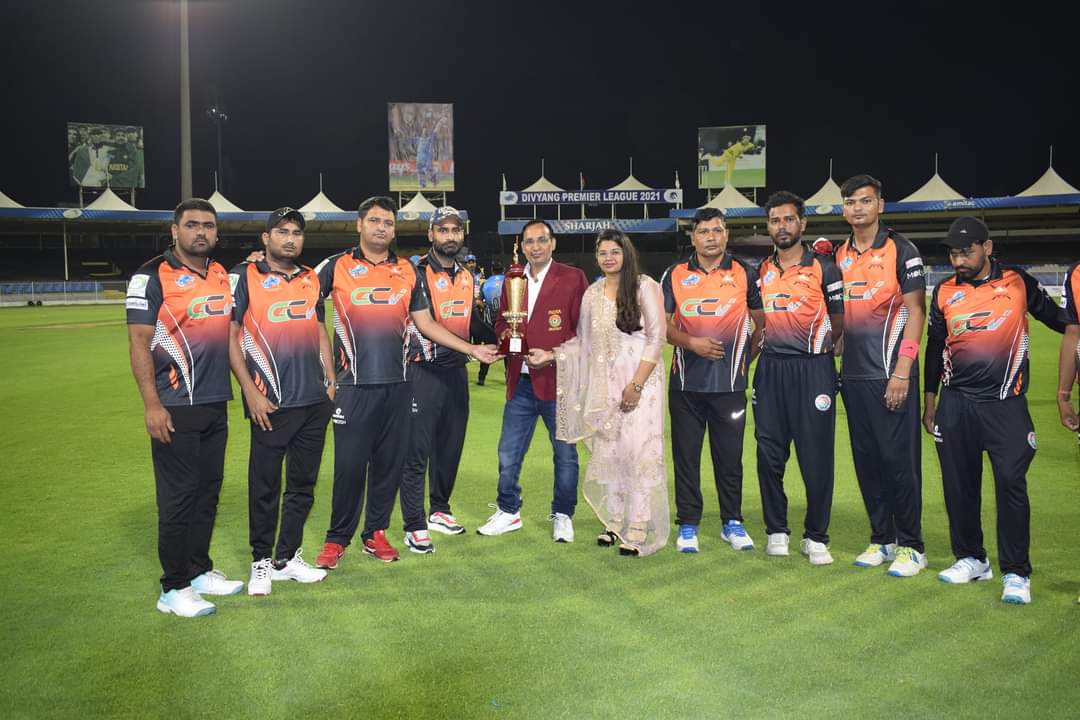
Ghazal Khan posing with officials and the winning team
“Suddenly I behaved like a child of 8-9 years’; had a loss of memory. Biologically, I was 23 but mentally I was 8 years old. I had lost all senses.
“One day while playing with the wheelchair cricketers before the IWPL tournament, a miracle happened. I felt normal. It was a pleasant shock for my family.”
Ghazal decided to work for the disabled cricketers. “This was the moment when I realized why Allah saved me. From that day till now I have given all my time and energy to Divyangjan’s cricket.
Ghazal is also Vice President of the International Council for Wheelchair Cricket (ICWC) and is secretary, International Affairs in the International Council for the Physically Challenged Cricket (ICPCC).
Almost four years ago she launched the Divyang Premier League DPL T-20.
Ghazal says she aims to elevate disabled cricketers to the status of others. Due to her efforts, on the lines of IPL, the Divyang Premier League IPL was played between 6 teams in 2021 at the Sharjah International Cricket Stadium in Dubai.
Ghazal Khan with players
She gives the credit for her success to her father.
Ghazal Khan said she is also influenced by Prime Minister Narendra Modi. She was impressed by Modi’s remarks in o address ‘Mann Ki Baat’ on December 27, 2015, which said that physically challenged people have a divine ability and for this, they should be called Divyangjan and not disabled.
Ghazal Khan recently received the Global Excellence Award from the Samarth Seva Sansthan of Rajasthan. Last year she received the Icons of Asia Award.
Ghazal Khan told Awaz-The Voice that she is also planning to work for women’s disability cricket, improving the commentary of the game and setting up a sports business industry.
source: http://www.awazthevoice.in / Awaz, The Voice / Home> Story / by Onika Maheshwari, New Delhi / March 29th, 2023
The Kabul-born packed a punch with his bat and was also a handy left-arm orthodox bowler and was instrumental in India defeating England 2-0 in the historic five-match Test series in 1961-62
Salim Durani Twitter/@RaviShastriOfc
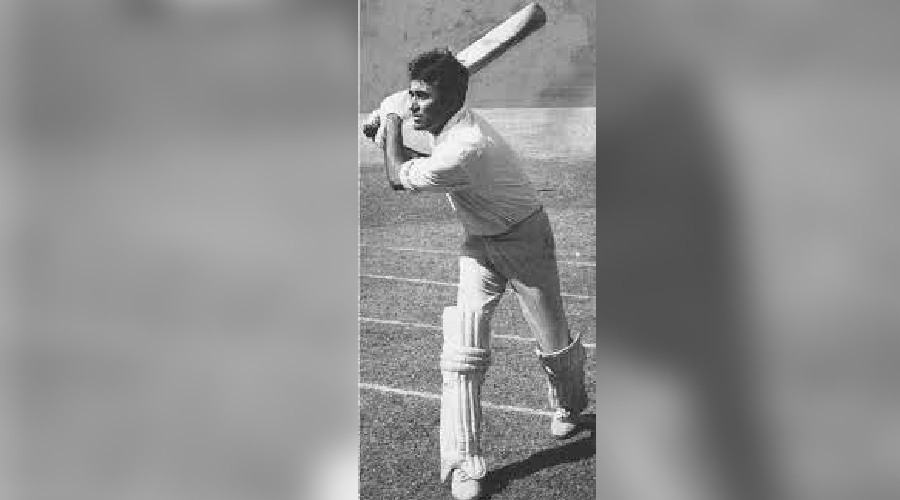
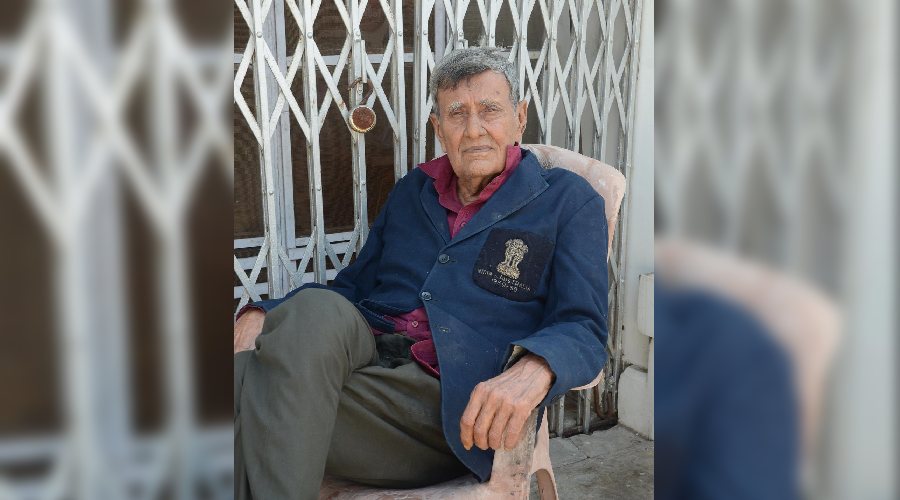
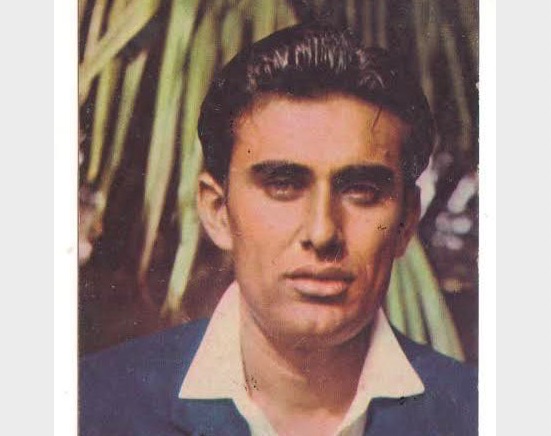
Salim Durani, the debonair India cricketer of the 1960s with a movie-star looks, a puckish sense of humour, and a penchant for hitting monstrous sixes on demand, died on Sunday.
He was 88.
His death was confirmed by sources close to the family.
He had been living with his younger brother, Jahangir Durani, in Jamnagar, Gujarat.
Salim Durani Twitter/ @ThakurArunS
Durani had undergone a proximal femoral nail surgery after he broke his thigh bone in a fall in January this year.
The Kabul-born Durani, who packed a punch with his bat and was also a handy left-arm orthodox bowler, played 29 Tests and was instrumental in India defeating England 2-0 in the historic five-match Test series in 1961-62, picking up eight and 10 wickets in the team’s victories at Calcutta and Madras respectively.
Durani, known for his fine dressing style and swagger, scored just one century though he had seven fifties in the 50 innings he played for the country, scoring 1,202 runs.
A decade after the epic triumph against England, he played a key role in helping India to victory against the West Indies in Port of Spain, dismissing both Clive Lloyd and Sir Garfield Sobers.
The star cricketer also dabbled in Bollywood, starring opposite renowned actor Praveen Babi in the movie Charitra in 1973.
Durani made his Test debut against Australia at in the beginning of 1960 at Mumbai’s Brabourne Stadium, and played his last international match — then only restricted to the traditional, five-day format — against England in February 1973. The venue was again the place where he had started his international career.
The stylish cricketer aggregated 8,545 runs at 33.37 in first-class cricket and hit 14 hundreds.
A joy to watch when in full flow, Durani had the ability to demolish any bowling attack on his day, though it was as a bowler he had first made his mark for the Indian team.
India’s first Arjuna Award winner in cricket, Durani was a tall man and could get the ball to lift and turn on any surface with a bit of help.
A fascinating character, the cricketer shared a special relation with the crowd, who once expressed their ire after he was dropped from the team for a match in Kanpur, and carried banners and placards that read ‘No Durani, no test!’.
In domestic circuit, Durani represented Gujarat, Rajasthan and Saurashtra during a career that spanned two decades and a half.
Except for the headline, this story has not been edited by The Telegraph Online staff and has been published from a syndicated feed.
source: http://www.telegraphindia.com / The Telegraph, Online / Home> Sports> Cricket / by PTI / April 02nd, 2023
Describing him as an institution, Prime Minister Narendra Modi on Sunday mourned the death of cricketing legend Salim Durani, who passed away at his house in Jamnagar, Gujarat, at the age of 88.
“Salim Durani Ji was a cricketing legend, an institution in himself. He made a key contribution to India’s rise in the world of cricket. On and off the field, he was known for his style. Pained by his demise. Condolences to his family and friends. May his soul rest in peace,” the PM tweeted.
“Salim Durani Ji had a very old and strong association with Gujarat. He played for Saurashtra and Gujarat for a few years. He also made Gujarat his home. I have had the opportunity to interact with him and was deeply impressed by his multifaceted persona. He will surely be missed,” he added.
Paying his last respects to the legend, Former cricketer VVS Laxman wrote: “India’s first Arjuna Award winning cricketer and a man who hit sixes on public demand, Salim Durani.” Former India all-rounder and head coach Ravi Shastri described him as one of the most colorful cricketers of India.
The Kabul-born cricketer was renowned for his slow left-arm orthodox and hitting skill as a batter.
Durani would be remembered for his outstanding performance in the series victory against England in 1961-62, when he picked up eight and 10 wickets in Kolkata and Chennai. He also played a key role in India’s victory against the West Indies in Port of Spain where he dismissed both Clive Lloyd and Sir Garfield Sobers. He had 75 wickets in total in his kitty. He scored just one century though he had seven fifties in the 29 tests he played, scoring 1,202 runs.
Known for his swag and fine dressing sense, the star cricketer also tried his luck in Bollywood, starring opposite Praveen Babi in 1973 film, Charitra.
source: http://www.odishabytes.com / Odisha Bytes / Home> Featured / by OB Bureau / April 02nd, 2023
“The Dargah (Ajmer Sharif) is undoubtedly a danger-center….the sedition is more or less confined to the Dargah and that it is very difficult to get evidence of what goes on there.” The Above excerpt is from a secret report submitted to the British Government by Intelligence officials in 1922.
A common man may not think that the Dargahs, shrines, and Sufi centers were at the forefront of the Indian Freedom Struggle. For reasons unknown, most people believe that Ajmer Dargah played no, or little, role in the struggle. The fact is that it acted as a center of nationalist activities so much so that the British Government snooped over the activities in Dargah.
The official committee which was formed after Jallianwala Bagh Massacre in its findings pointed out that the Indians were planning a popular uprising against the British. The plan was discussed by nationalists at the Urs under the leadership of Maulana Abdul Bari Firangimahli.
The spies regularly updated the government on the nationalist activities in the Dragah. In 1920 they reported that more than 5,000 people attended a meeting at Idgah which was addressed by Lala Chand Karan who asked people to fight the British because they promote cow slaughter, massacred people in Punjab, and cause disunity between Muslims and Hindus. The same report notes that the Pesh Imam of the Ajmer Dargah prayed for the defeat of the British after which Maulvi Moinuddin asked people to renounce the titles bestowed upon them by foreign rulers.
Another report from 1921 notes that anti-British speeches were being delivered at the Dargah during Friday prayers.
In 1922, intelligence officers again reported that Urs at the Dargah would be an occasion where the nationalists would be meeting to discuss nationalist ideas.
An intelligence report from 1922 contains the most explosive information. The report claimed that Muslims and Hindus in Rajputana had taken an oath of allegiance with Maulvi Moinuddin of Ajmer. Under his instructions, they were preparing for a war against the British.
An armed militant organisation Jamiat ul-Thaba was founded and arms had been procured from different places in the country. Jamiat ul-Thaba passed a resolution and declared that the British were enemies of religion, nation, and country and that revenge would be taken from them.
75 years have passed since Independence and most of us are unaware of the role of Ajmer Dargah in winning this independence.
source: http://www.awazthevoice.in / Awaz, The Voice / Home> Story / by Saquib Salim / April 02nd, 2023
‘Akbar Allahabadi’ does not enjoy the place he deserves in the pantheon of Urdu poets.
His verse still figures in familiar poetry: “Ham aah bhi karte hain to ho jate hain badnaam..”, can be found embellishing a popular qawwali like “Jhoom barabar jhoom sharabi“, and is an optimum example of devastating use of wit and satire to deliver a social message in an era of “clash of civilisations”.
Yet, ‘Akbar Allahabadi’ does not enjoy the place he deserves in the pantheon of Urdu poets.
Called “Lisan-ul-Asr” (‘Voice of the Time’) in his heyday, he is not entirely unknown due to ghazals like “Duniya mein hoon, duniya ka talabgar nahi hoon…”, as rendered by the immortal K.L. Saigal, and “Hangama kyun barpa, thodi si jo pi li hain..”, performed by Ghulam Ali, with that line reflecting Descartes’ ‘cogito ergo sum’ (“… har saans ye kahti hai ham hai to Khuda bhi hai“), as well as many more couplets on a range of issues and themes.
Take “Falsafi ko bahs ke andar Khuda milta nahi/Dor ko suljha raha hai aur sira milta nahi“, or the rather sarcastic “Chorh ‘literature’ ko apni, ‘history’ ko bhool ja/Sheikh-o-masjid se ta’alluq tark kar ‘school’ ja/Char din ki zindagi hai koft se kya fayda/Kha ‘double-roti’, ‘clerki’ kar, khushi se phul ja”, or this “compliment” on lawyers: “Paida hua vakil to Shaitan ne kaha/Lo aaj ham bhi sahib-e-aulaad ho gaye“.
These can also serve to showcase the bundle of contradictions that Syed Akbar Hussain Rizvi ‘Akbar Allahabadi’ (1846-1921), a government servant, lawyer, and judge (rising to a district judge and in line in elevation to the high court before he resigned in 1903 on the grounds of ill-health) was in his life, thought, and poetry.
An early beneficiary of Western education himself (in the mid-1850s) and sending his son abroad to study, he deplored Indians flocking to it as a sign of their modernism, questioned and attacked colonial rule and its impact though he was part of its structure for most of his life and did admire the British, mocked lawyers though being one himself before rising to a high post in the judiciary, was deeply religious but made it one of the targets for his satire, and vouched for traditional culture but struck a new trend by using English words in Urdu poetry.
And then, he was a staunch supporter of Mahatma Gandhi, even writing the ‘Gandhi Nama’ in his support and while deeply religious, was never a fanatic and opposed all attempts to drive a wedge between Hindus and Muslims.
In an article on the poet, author and literary critic Shamsur Rehman Farooqui opines that it is possible that ‘Akbar’ was conscious of the contradiction, and “perhaps this sense of duality” made his “denunciatory voice so much more vehement, his disavowal of Western and British mores and systems so much more passionate.
Certainly, he knew that no one could really swim against the current, but the tragedy according to him was that those who swam with the current too were drowned”.
The general tenor has been to represent ‘Akbar’ as a reactionary holdout against progress and moderrnism, conservative in social mores and customs, especially on the issues of ‘parda’ and female education (“Be parda kal jo aai nazar chand bibiyan/’Akbar’ zameen mein ghairat-e-qaumi se gadh gaya/Pucha jo main ne aap ka parda voh kya huya/Kehne lage ki aql pe mardon ke padh gaya”) and then terming his unique style — satire, verging on sarcasm — as a “non-serious” and “dated” poetry.
But, this is rather unjustified. ‘Akbar’ was no reactionary but rather conscious of how the slavish and blind imitation of Western mores, habits, and education was going to sit only superficially on most Indians — with current times proving his case. He was not opposed to progress — but plumped for a more independent and reasoned adoption of attitudes and world-view of the modern, enlightened world, represented by the British.
And then, ‘Akbar’ plumped for Indians not to hanker for jobs in the colonial structure but instead, go in for business and trade so the country could rise. As he wrote: “Europe mein go hai jang ki quwwat badhi huyi/Lekin fuzun hai is se tijarat badhi huyi/Mumkin nahi laga sake do tope har jagah/Dekho magar ‘Pears’ ka hai ‘soap’ har jagah.
Let’s see more of his poetry, where he displays himself as a master wordsmith, be it being playfully romantic: “Jo kaha maine ki pyar aata hai mujh to tum par/Hans ke kehne laga aur aap ko aata kya hai”, mock heroic: “‘Akbar’ dabe nahi kisi Sultan ke fauj se/Lekin shaheed ho gaye biwi ke nauj se”, or trenchantly satirical: “Qadardano ki tabiyat ka ajab rang hain aaj/Bulbolon koi huyi hasrat ki woh ullu na huye”.
Then, take the master ‘deconstructions’ of the tropes of separation or union from the beloved: “Vasl ho ya firaq ho ‘Akbar’/Jagna raat bhar musibat hai”, or “Aai hogi kisi ko hijr mein maut/Mujh ko to neend bhi nahi aati”.
There is the tongue-in-cheek look at relationships: “Ta’alluq ashiq-o-mashuq ka to lutf rakhta hai/Mazze ab woh kahan baaqi rahe biwi-miyam ho kar”, and on ‘modern’ life: “Mai bhi hotel mein piyo chanda bhi do masjid mein/Sheikh bhi khush rahe Shaitan bhi bezar na ho”.
Like lawyers, he complimented the modern medical profession too:
“Inko kya kaam hai muravvat se apni rukh se yeh munh na morhenge/Jaan shyad farishte chorh bhi den doctor fees ko na chorhenge”.
There was a brilliant evocation of the slowness of British moves to home rule: “Reform ka shor hai, magar asar uska hain gayab/Plateon ka sadaa sunta hoon, magar khaana nahi aata”, or of electoral politics:
“Rahman ke farishte go hai bahut muqaddas/Shaitan ki jaanib lekin majority hai”.
And then, there is advice:
“Jab gham huya charha li do bottalen ikatthi/Mullah ki daurh masjid ‘Akbar’ ki daurh bhatti” and homage to his hometown: “Kuch Allahabad mein samaan nahi bahbud ke/Yaan dhara kya hai baa-juz ‘Akbar’ ke aur amrud ke”.
‘Akbar’ can be accused of many things, but never of being boring!
source: http://www.ummid.com / Ummid.com / Home> Life & Style / by Vikas Datta, IANS / April 01st, 2023
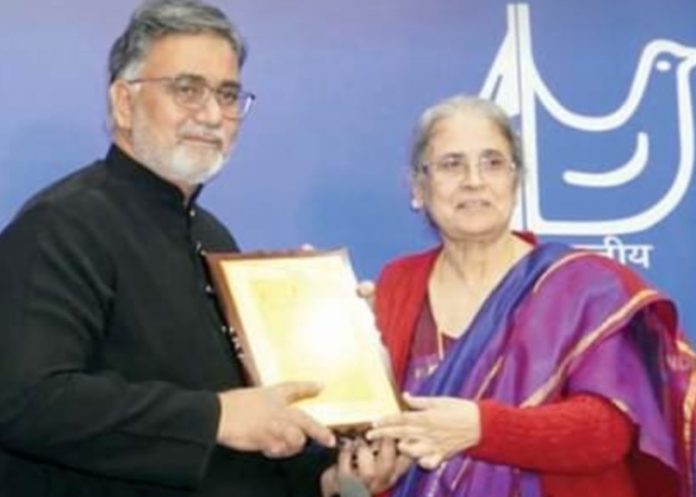
Fazil Hussain Parvez receiving Press Council of India (PCI) award of Excellence in Journalism from Justice Ranjana Prakash Desai.
New Delhi:
Noted journalist and editor of Urdu weekly “Gawah” from Hyderabad, Dr. Syed Fazil Hussain Parvez became the first Urdu journalist to win the prestigious National Award for Excellence in Journalism from the Press Council of India. He was honoured with the award at a ceremony held in the Constitution Club on February 26.
After receiving the award, he said he was humbled by this award and its reward for his hard work. Urdu journalism in India has a brighter future, but it depends on the sincerity and work of Urdu journalists, he added.
Dr. Parvez is a well-known journalist from Hyderabad, Telangana, who has achieved recognition internationally. He is the Chief Editor, Publisher, and Proprietor of “GAWAH Urdu Weekly,” the oldest and most prestigious Urdu News Tabloid in South India, as well as the Managing Partner of “Media Plus,” a renowned communications and public relations firm with a global clientele based in Hyderabad, India. He holds a Doctor of Philosophy (Ph.D.) in journalism, and a Telangana University research scholar is currently working on a Ph.D. on his contributions to Urdu journalism and media.
On receiving the award, he was felicitated at Institute of Objective Studies here on March 2 and a discussion on the future of Urdu journalism was also held. Lauding his contributions to Urdu journalism, speakers hoped that the young Urdu journalists would emulate Dr Parvez in their profession. Veteran journalist Anjum Naeem said that Dr. Parvez was the first Urdu journalist who was honoured with the award.
President of the Urdu Media Association, Dr. Muzaffar Husain Ghazali, said that Dr. Pavez re-produced the writings of unknown journalists and introduced them through his newspaper. That was the reason why he was chosen for the PCI’s national award for excellence in journalism. He was the first Urdu journalist to receive the prestigious award.
Ahmed Javed, a senior journalist, noted that Dr. Parvez was one of the journalists who rose from the ranks to the top. The aforementioned award, according to him, was established in 2015 to honor Rajaram Mohan Roy, a notable social reformer. Nobody could survive without effort, so struggle was the natural order of things. He pointed out that the media was a business venture that needed significant upfront investment and a healthy market. It is important to conduct a case study on Syed Fazil Husain. There were many obstacles in today’s world, but there were always people like Fazil Husain to meet them.
Senior journalist Suhail Anjum, Shafi Ayub, DrAzeem Akhtar, Abrar Rahmani and others also spoke on the occasion.
In his address, Dr. Parvez said that if the future of Urdu journalism was not very bright, he noted, it was also not completely hopeless. Every party needed the media to connect with voters. He requested the Urdu journalists to inform the owners of the newspapers that they did not control their destiny. He offered a suggestion for a corpus to help journalists as his final point.
In the light of the experiences of his practical life, he could safely conclude that the opportunities in Urdu and its journalism had also increased. Urdu newspapers published from Hyderabad were a link between non-resident Indians and the country and its society. NRI boys were seeking the help of Urdu newspapers for matrimonial alliance with Indian girls. NRIs subscribed to Urdu newspapers in their homes as a good omen and accessed them on websites. He opined out that a journalist has to grapple with odd situations. If it were not true then the owners of the widely circulated Hindi daily, Jagran would not have purchased the leading Urdu newspaper, the Roznama Inquilab. Referring to the artificial intelligence, he said that one could easily access a 500-page article from the website within no time. Every institution needed a spokesperson to reach out to the people, he said.
He said that journalism is being taught in madrasas in Hyderabad. The madrasa managed by Maulana Khalid Saifullah Rahmani, general secretary of the All India Muslim Personal Law Board, was performing admirably in this regard.
Dr Parvez interviewed five Prime Ministers of India including Rajiv Gandhi, V.P.Singh, H.D.Deve Gowda, Inder Kumar Gujral and Dr Manmohan Singh and President of India APJ Abdul Kalam. He also interviewed prominent personalities including many sportsmen, and diplomats and visited several countries including USA and UK.
source: http://www.muslimmirror.com / Muslim Mirror / Home> Indian Muslim> Media> Positive Story / by Abuazeem / March 02nd, 2023
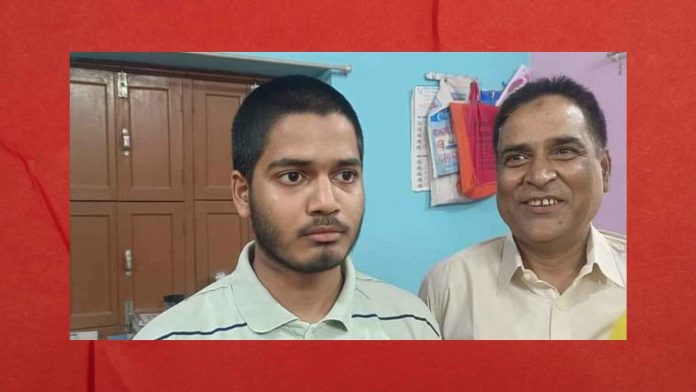
Mohammad Rumman Ashraf from Islamia High School, Sheikhpura topped the Bihar matric exam by securing 489 (97.8℅) marks| Photo: Twitter
A Muslim student, Mohammad Rumman Ashraf from Islamia High School, Sheikhpura topped the Bihar School Examination Board (BSEB) has released the BSEB 10th Result 2023 by Bihar Education Minister by securing 489 (97.8℅) marks.
Dr Chandra Shekhar, the state’s minister of education, announced the result though a press conference that started at 1:15 PM. Around 16 lakh BSEB Class 10 students’ results have been released this year. A total of 81.04 % of students passed.
The Bihar Board officials have chosen to award prizes this year, and as a result, the first-place finisher will receive a cash prize of Rs. 1 lakh, while the second and third-place finishers will each receive cash prizes of Rs. 75,000 and Rs. 90,000.
(Developing Story)
source: http://www.muslimmirror.com / Muslim Mirror / Home> Education> Indian Muslim> Positive Story / by Muslim Mirror Staff / March 31st, 2023
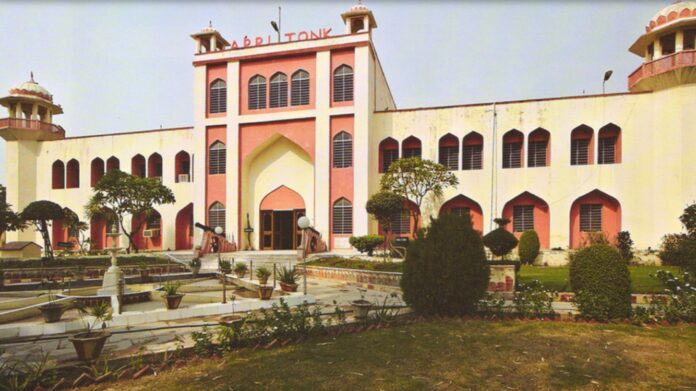
A repository of historic Islamic manuscripts, documents, books and rare artefacts is crying for attention at the Rajasthan Government’s Maulana Abul Kalam Azad Arabic & Persian Research Institute (APRI) in Tonk. A significant project for the conservation and digitisation of manuscripts has come to a standstill following a change of guard at the institute.
Tonk, situated 103 km south of Jaipur, was the only Muslim princely state in the erstwhile Rajputana before Independence. It was considered a major centre of art and culture, as the Nawabs patronised the scholars and invited them to inhabit the town. As a result, many poets, artists and historians came to live in Tonk and made it a hub of intellectuals and professionals. In addition, the Islamic religious preachers established a culture of Quranic sermons and teachings in the town.
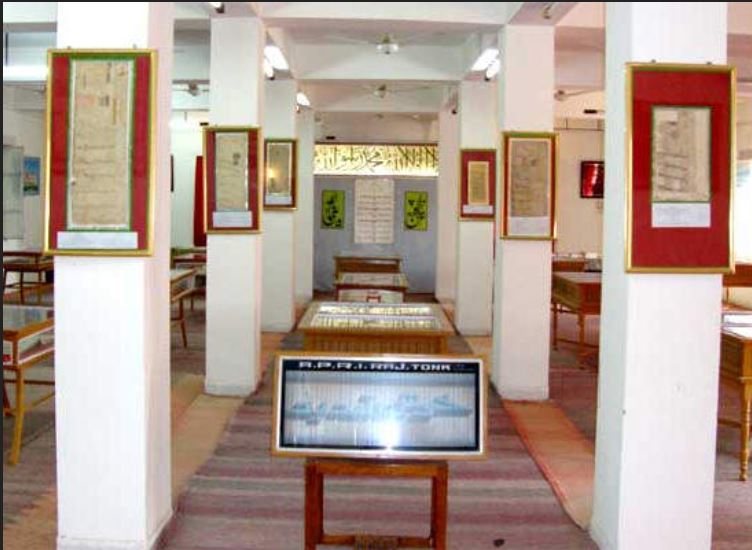
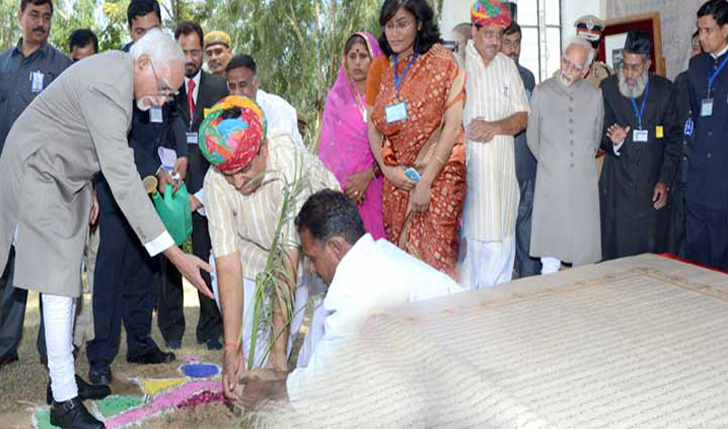
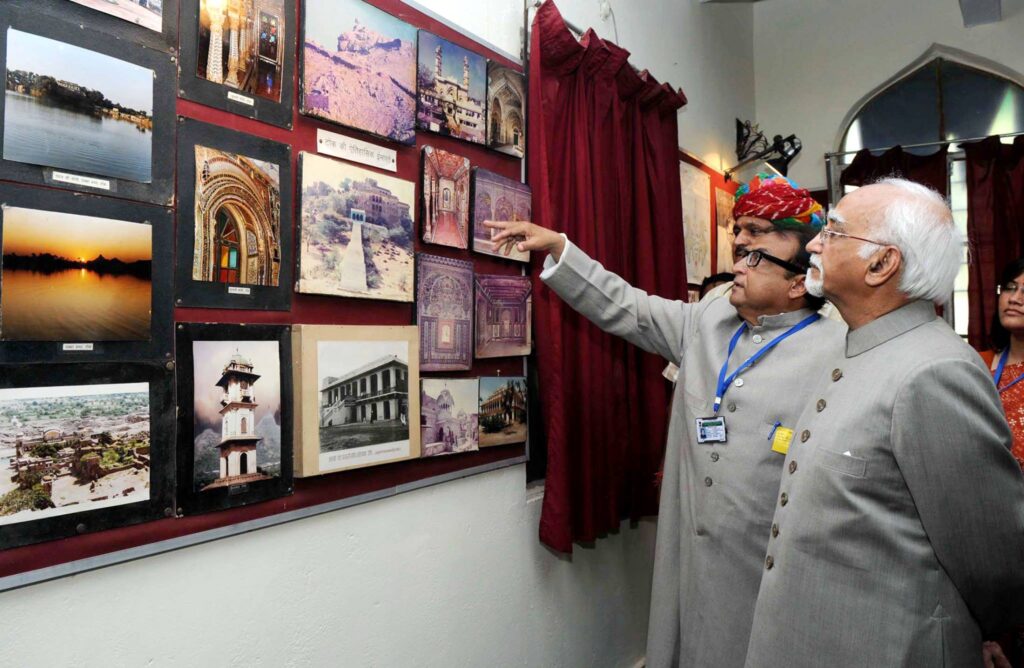
The APRI, established as an independent Directorate of the Rajasthan Government in 1978, boasts of a rare collection of historiography, orientology and Islamic studies and has over 8,000 hand-written volumes. Researchers from India and abroad have been visiting the institute to study manuscripts belonging to the medieval period. Besides, prominent people, such as the Vice-Presidents, Governors and Union Ministers, have visited the institute and seen its rich collection.
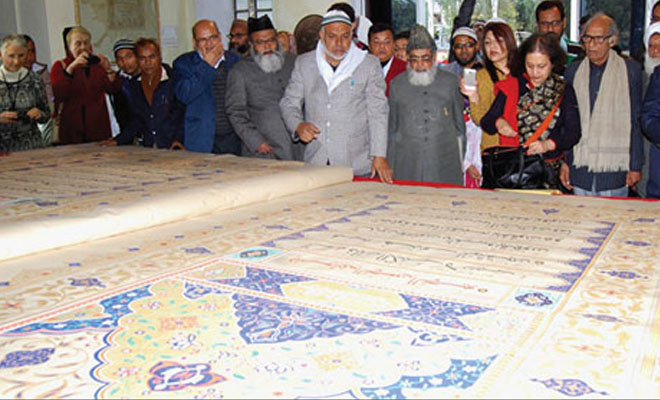
In the treasure trove of historical books, the main attractions include a 17th-century copy of the Holy Quran in bold Naksh calligraphy, autographed by Mughal Emperor Aurangzeb, Hamail Shareef (commentary on the Holy Quran) of 11th century and Unwan-ul-Sharaf of 19th century, comprising five subjects with a single running text. The APRI also has the world’s largest copy of the Holy Quran, prepared in Tonk in 2014.
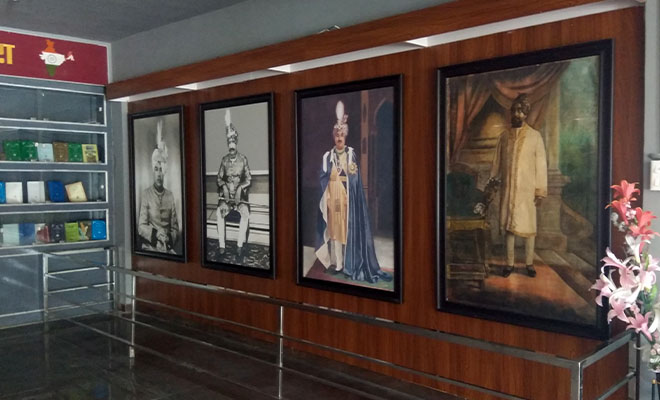
Most of the rare books and manuscripts in the institute are those shifted from the Saeedia Library of the erstwhile Tonk princely state after 1961 when it was established as the district office of the Rajasthan Oriental Research Institute. The books were collected by Mohammed Ali Khan, the third Nawab of Tonk, who was deposed by the British and exiled to Varanasi.
The collection of books in the APRI may be ranked equal to those in the famous Raza Library in Uttar Pradesh’s Rampur and Khuda Baksh Oriental Library in Patna. The copies of famous books of the Mughal era, Shahjahannama and Tuzuk-i-Jahangiri, are also in its collection. In addition, the institute has about one lakh judgements of Tonk’s Adalat Sharah Shareef (canonical courts), which have been published in several volumes. Besides, there are documents related to Rajasthan’s political and cultural history with special reference to the Tonk state.
The project for the conservation and digitisation of these books and manuscripts was launched four years ago, but it slowed down during the covid pandemic. It picked up pace after the pandemic when the task was assigned to the Patna-based Heritage Consortium in view of the expertise required to deal with the fragility of papers and ink used in the books. A 20-member team was engaged in testing the material of books and their treatment with the appropriate chemical elements.
The local youths were also given a fortnight-long training to join the conservation work with the de-acidification of papers, consolidation of ink, flattening of folios and stitching and binding of books. As a result, the team working at the institute completed the preservation of 80,000 folios after a sluggish pace during the pandemic. In the tedious work, the experts could conserve only 10% of the APRI’s collection, but they also preserved the threads and glue used in the books for research in future.
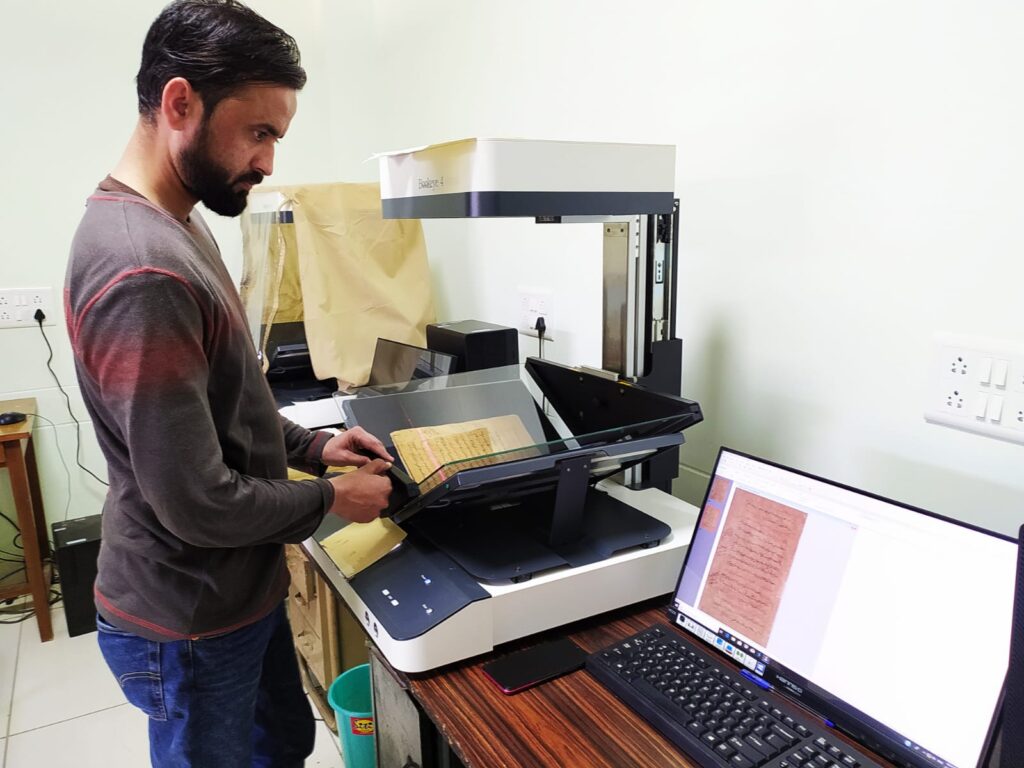
The digitisation project in the institute adopted the meta data format prescribed by the National Mission for Manuscripts and the National Archives of India. The digitisation was carried out by the APRI staff with the state-of-the-art scanners, while the State Government-owned Rajcomp Info Services Limited was also involved in the exercise.
All of these activities have reached a standstill with the recent change of guards at the institute. Syed Sadiq Ali, the new Director of APRI, who took over on February 22, said the State Government’s Art & Culture Department had appointed a Curator to review the conservation and digitisation work and decide on its continuation. The move followed the appointment of a committee on the project in December 2022, when the Director’s post was vacant.
Even as the art and culture experts have expressed concern over the conservation project having been halted, the APRI is organising a series of events, seminars and festivals to promote the Khattati (calligraphy) art and Chaar Bayt (four stanzas) performances. Ali, a retired Associate Professor in Urdu Department at the Government Post-Graduate College, Tonk, has evinced interest in holding the events regularly.
A five-day calligraphy art festival, organised from March 15 to 19, witnessed the participation of a large number of experts and different days were devoted to Chaart Bayt, Mushaira, Ghazal rendition and Qawwali singing. Similarly, a three-day seminar on Insaniyat Ka Paigham (message of humanity) was organised between March 15 and 17 with the participation of 40 experts from across the country. These events elicited a huge response and witnessed the enthusiastic participation of students, researchers and the public.
Ali pointed out that the international researchers also regularly visited the institute since he took over as the Director. They included a research team from France and individual researchers on Islamic manuscripts from Jordan and Iran. Ali said the classes in Arabic and Persian languages, which were stopped earlier, would be restarted, an extension lecture series would be organised during the Rajasthan Mahotsav in March-end, and all the vacancies in the APRI would be filled up shortly.
Former Vice-President Mohammed hamid Ansari at APRI, Tonk
The institute also plans to establish a museum on its premises to display rare manuscripts and artefacts in different sections. Chief Minister Ashok Gehlot announced the construction of a Publication and Museum Block in the APRI while replying to the debate on the Finance and Appropriation Bill in the State Assembly on March 17.
Former Vice-President Mohammed Hamid Ansari during his visit to APRI, Tonk.
source: http://www.indiatomorrow.net / India Tomorrow / Home> Education / by India Tomorrow Correspondent / March 27th, 2023
Aliya Mir has been honoured with the wildlife conservation award by Jammu and Kashmir, becoming the first woman in the Union Territory for her conservation efforts in the region.
Aliya Mir is also Kashmir’s first woman who works for the charity Wildlife SOS organisation which is part of the Wildlife Rescue Team.
Lt. Manoj Sinha facilitated her with the wildlife honour. The eminent sociologist Aliya Mir was awarded at the World Forestry Day celebrations organized by the Jammu and Kashmir Collective Forests.
After being honoured, Aliya said that she was feeling very happy to receive this honour.
“I am thrilled to have been selected for this honour.” I am thankful to all the people who trusted me every step of the way and helped me get to this point,” Aliya said.
Aliya was awarded the award for her achievements in all aspects of wildlife conservation including bear rescue in Kashmir, rescue and release of wild animals, injured animal care, and wildlife.
Aliya Mir is Kashmir’s first woman wildlife rescuer who is performing her duties as Head of an Education System in the Wildlife SOS Program.
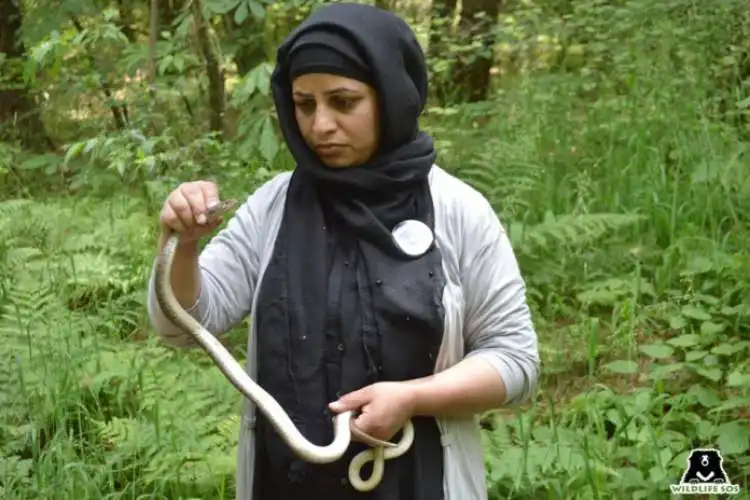
Aliya has rescued many wild animals, including birds, Asiatic black bears, and Himalayan brown bears, but is best known for catching snakes. She rescued snakes from corridors, cars, lawns, gardens, and bus rooms in offices and other establishments and released them back into the wild.
Aliya grabbed the headlines for an hour-long when she led the Wildlife SOS team to hunt down a Levantine viper, a venomous snake, from the then chief minister’s regional residence.
According to this, the Viper snake weighed about 2 kg and it is the largest animal biting in a group of wild animals.
Similarly, the video of Aliya rescuing a snake trapped in a scooter in Jahangir Chowk has also gone viral on social media.
source: http://www.awazthevoice.in / Awaz, The Voice / Home / by ANI /posted by Aasha Khosa / March 26th, 2023
.webp)
.jpeg)
.jpeg)
.webp)