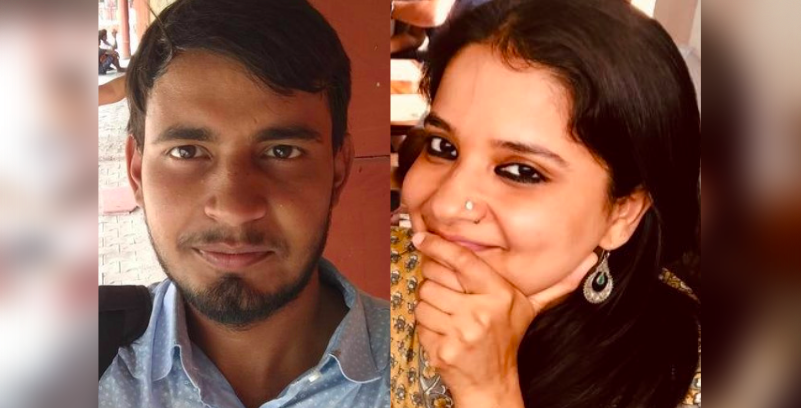
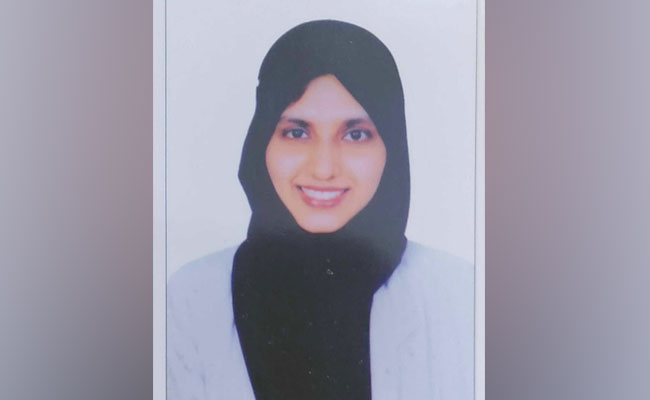
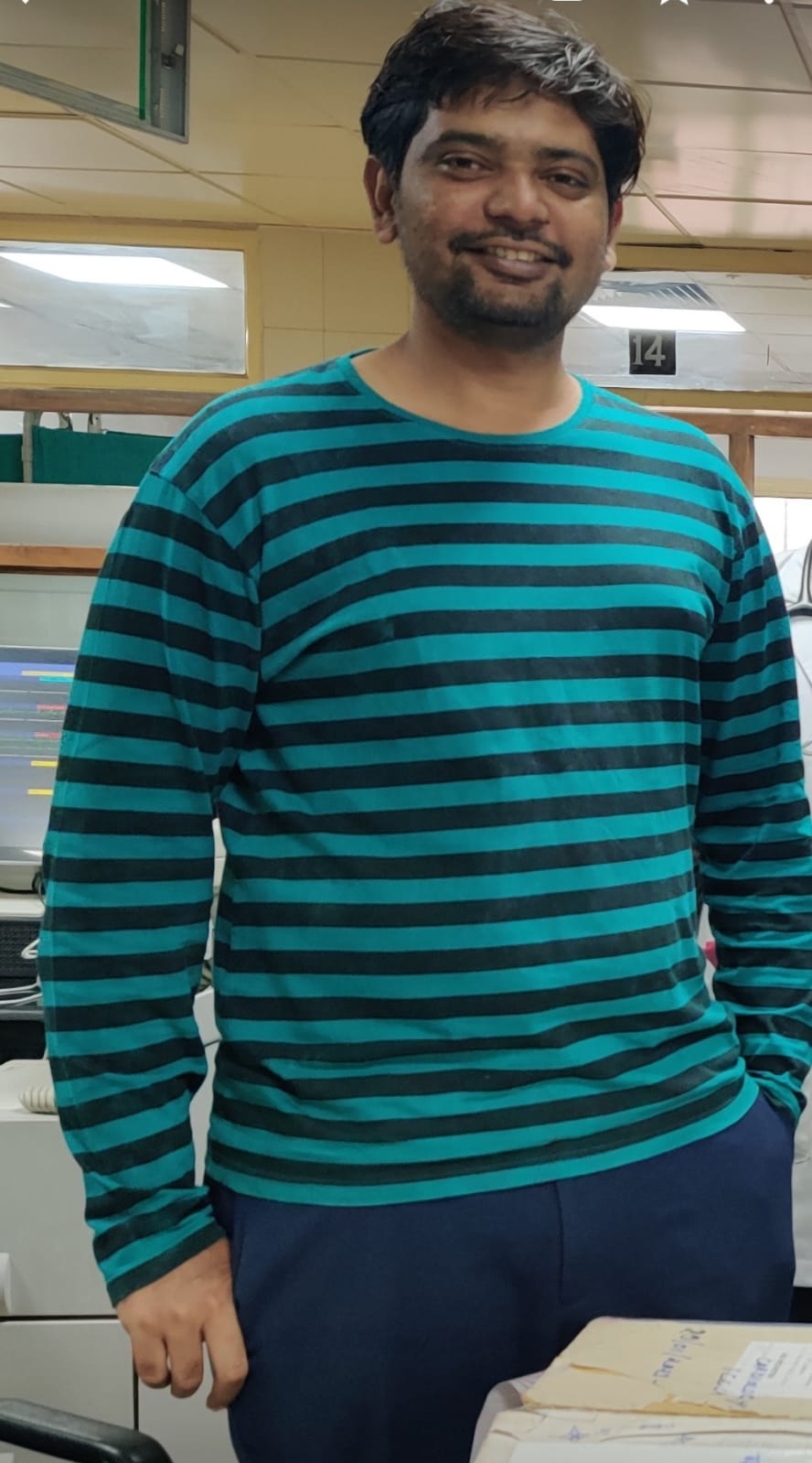
Both journalists have won in the Government and Politics category. While Mishra’s piece has won in ‘digital’, Pasha’s is the ‘broadcast’ division winner.
Dheeraj Mishra (left) and Seemi Pasha.
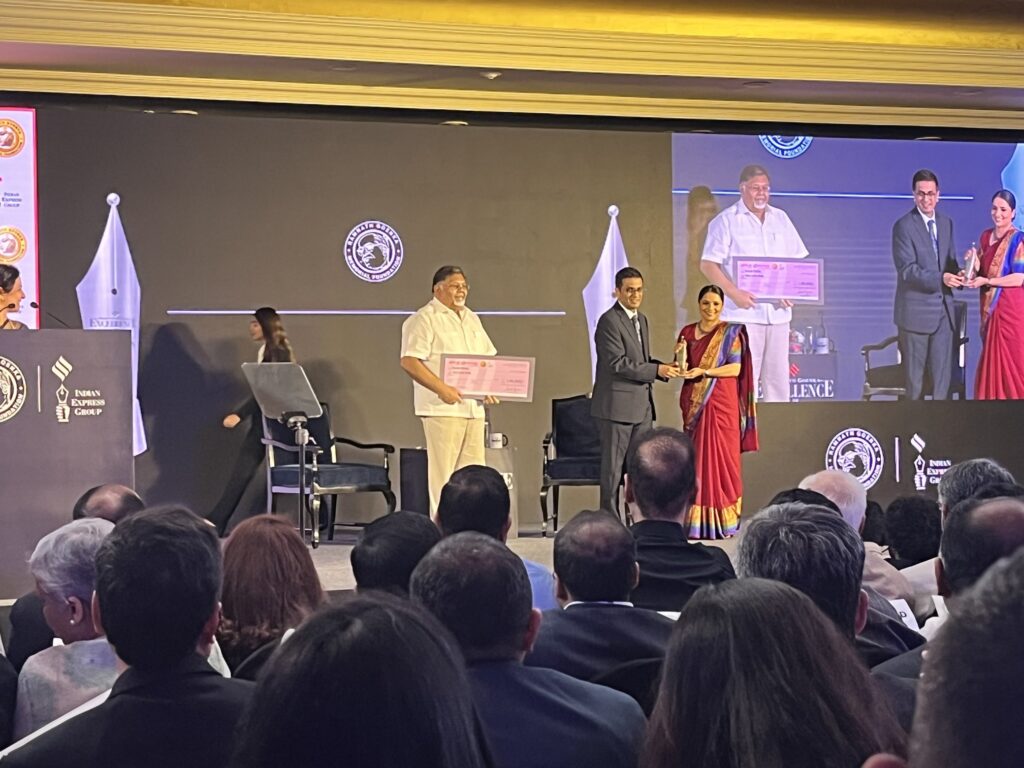
Note: This article was originally published on December 29, 2021, when the awards were announced, and was republished on March 22, 2023, when Chief Justice of India (CJI) D.Y. Chandrachud handed them out.
New Delhi:
Journalists Dheeraj Mishra and Seemi Pasha have won the Ramnath Goenka Award in the Government and Politics category for reports which were published in TheWire, in the ‘digital media’ and ‘broadcast media’ divisions respectively.
Established in 2006, the Ramnath Goenka Excellence in Journalism Awards, is one of the most prestigious honours for journalists in India.
Dheeraj Mishra’s report focused on MPs’ unusually high expenses while travelling, for which he filed “30 to 35 RTIs in each ministry,” tackling enormous data.
It found that violating the guidelines prescribed for streamlining parliamentary committee study tours and cutting down expenses, members of the Lok Sabha and Rajya Sabha have spent crores of taxpayers money on frequent outstation tours.
“The story had a noticeable impact as the Lok Sabha Secretariat issued instructions to sharply curtail [such] expenditure,” the IndianExpress noted in its announcement of the award.
twitter.com/seemi_pasha
Seemi Pasha’s video delved into Jamia Nagar, which in late 2019, developed into a neighbourhood attracting communal hatred from those opposed to the protests against the Citizenship Amendment Act. The otherness of the area was heightened with a brutal police crackdown on students of Jamia Millia Islamia in December 2019.
Even as stories of police brutality on students of Jamia Millia Islamia continue to unravel, the blame is being slowly being shifted to outsiders or locals residing in nearby areas of Batla House, Shaheen Bagh, Zakir Nagar – localities which are loosely referred to as Okhla or Jamia Nagar, the documentary found.
Titled Inside Jamia Nagar, the documentary sought answers for essential social questions. “This is a prominent Muslim ghetto in south Delhi and a place that is often viewed with suspicion. But why is that? What kind of people live here?” it asked.
source: http://www.thewire.in / The Wire / Home> Media / by The Wire Staff /edited by an additional picture via twitter / March 22nd, 2023
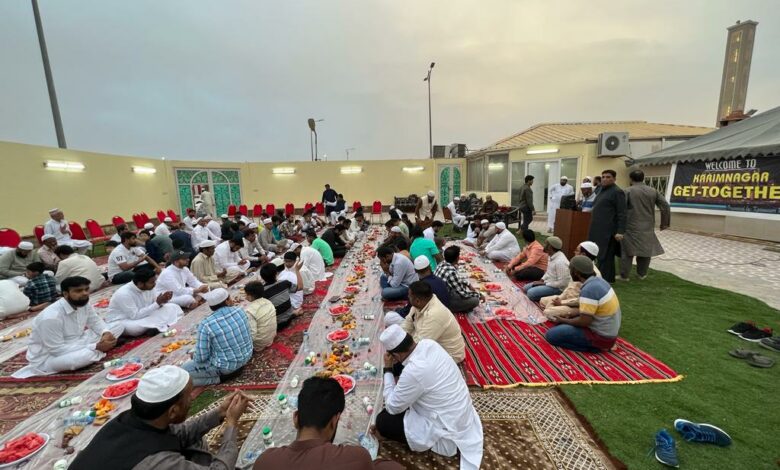
Karimnagar Committee held an annual Iftar party on Friday at a resort on the outskirts of Riyadh.
Jeddah:
In a world of constant connection through social media and cell phones, many expatriates have likely found themselves still feeling disconnected from those around them. Many NRIs don’t even know the people who are from the same niegbourhoods living abroad along with them.
Connecting with compatriots from the homeland not only strengthens bonds within the community in alien land but also renders service to them in rain or shine, this is the concept of the Karimnagar Committee.
Riyadh-based Karimnagar Committee, an expatriate organization that looks after NRIs from Karimnagar town of Telangana is one of the sincere and old organizations in the Saudi capital that has been serving the needs of Karimnagar NRIs for over two decades.
Interestingly it’s the maiden community organization of the Karimnagar NRIs not only in Saudi Arabia but the rest of the Gulf countries yet maintains a low profile and is far away from any publicity.
Karimnagar Committee as it is widely known among the NRIs hailing from the town and working primarily in Riyadh.
In fact, it was the one that facilitated employment opportunities for scores of newly arriving Karimnagar youth in search of green pastures. It imparted job orientation skills among youth before being recruited thus making it dearer to many youngsters in the town.
Only the “Karimnagar” tag is a criterion to find shared accommodation in Hara for unemployed youth of the town.
Ramzan Packs, an initiative kickstarted 20 years ago saw numerous beneficiaries from low income families in need during the holy month of Ramadan.
Karimnagar Committee holds its annual Iftar gathering in a sheer spiritual environment away from so-called leaders and officials. This is the only gathering that enthusiastic Karimnagaris come together, according to organisers.
In a joyful Ramadan atmosphere, the Karimnagar Committee held an annual Iftar party on Friday at a resort on the outskirts of Riyadh, in which it was keen on meeting all Karimnagaris as one family around Dastarkhwan or Iftar mats.
source: http://www.siasat.com / The Siasat Daily / Home> News> Middle East / by Irfan Mohammed / April 09th, 2023
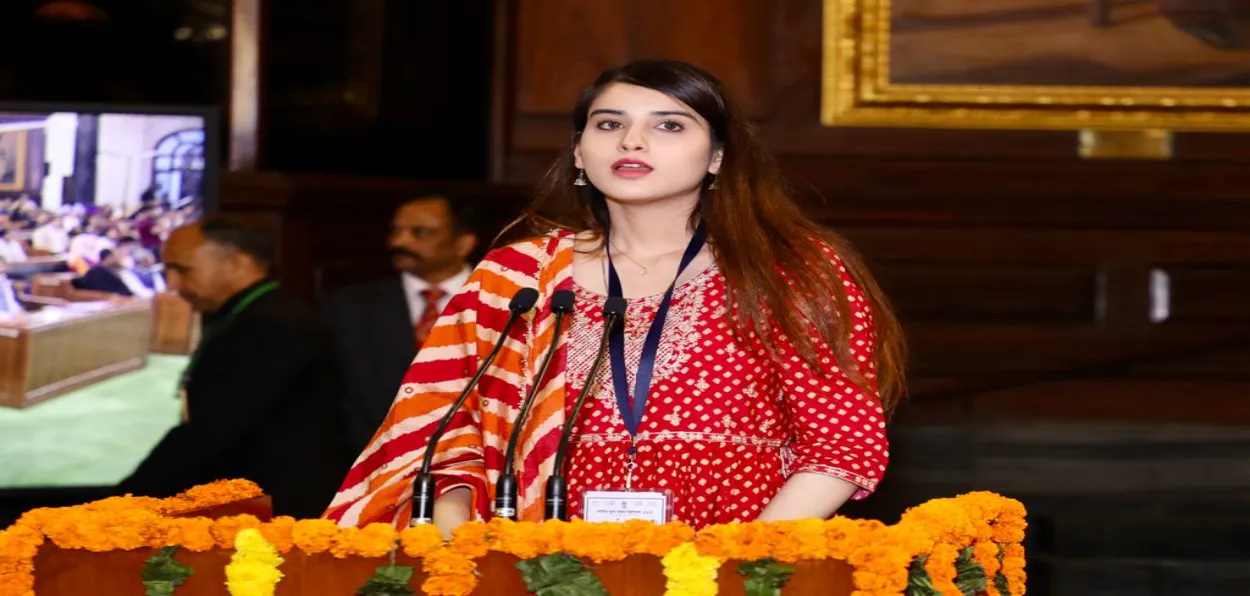
Mahira Khan in Parliament House delivering her speech in the Youth parliament
Mahira Khan, a winner in the recent National Youth Parliament debate, is getting international recognition for her grand oration. Her diplomat style speech on the theme ‘Peacebuilding and Reconciliation: Ushering in an era of no war’, earned her an invitation from a school in Saudi Arabia.
Her speech in the Central Hall of Parliament was an instant hit and was uploaded by Sansad TV and many Indian news channels. Mahira began her speech with Hindi poetry and concluded in Urdu.
Like 28 participants from different States, Mahira delivered her speech on two consecutive days – the competition speech on the first day and the winners’ speech for dignitaries the following day.
By the time she landed in Mecca with her family a couple of days later for Umrah, she was already a star on social media.
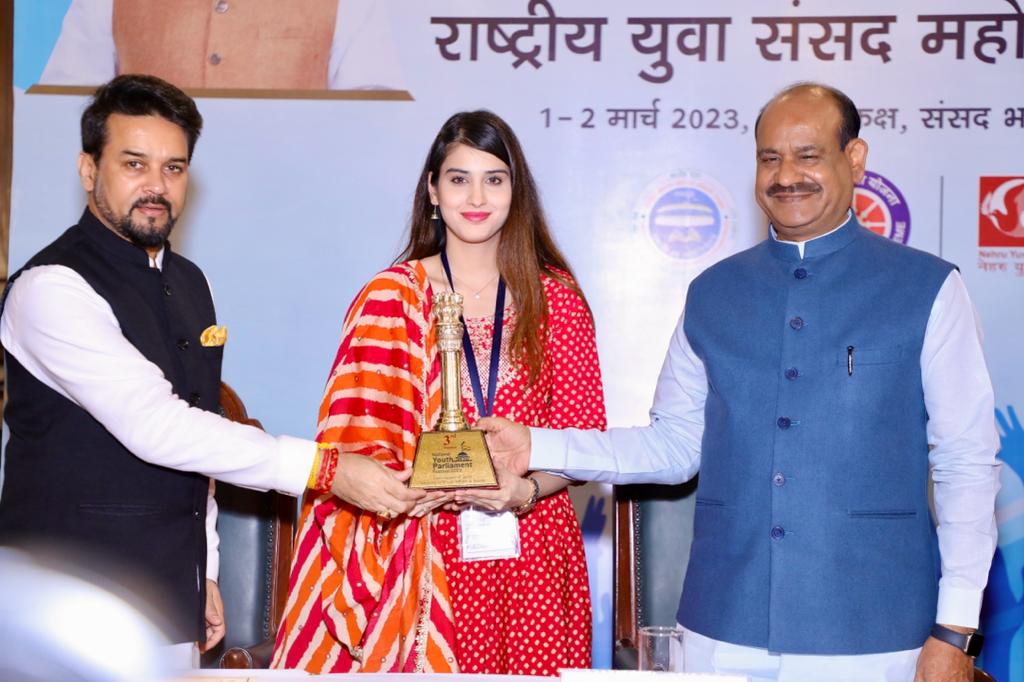
Mahira Khan receiving the trophy from Lok Sabha Speaker Om Birla and Union Minister Anurag Thakur
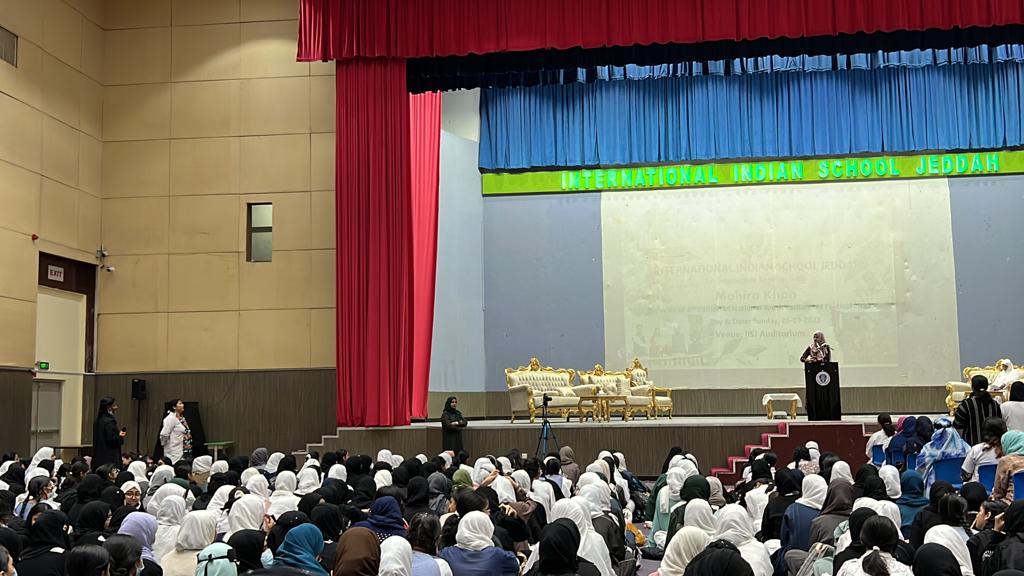
This soft-spoken 24-year-old lady from Chhattisgarh was pleasantly surprised when she received a call from Dr. Muzaffar Hassan, Principal of International Indian School, Jeddah to address a gathering of 1000 senior students. She addressed them on the theme ‘How making mistakes can make you more confident.’
In Jeddah, her speech at the National Youth Parliament was replayed for the benefit of the students. She interacted with the students and it was followed by pre-Ramazan lunch. Dr.Hassan noticed Mahira on social media and decided to invite her and her family.
In conversations with Awaz-the Voice, from Raipur and later Dammam, she said, “Whatever I say now has more value. People listen to me very attentively.’’
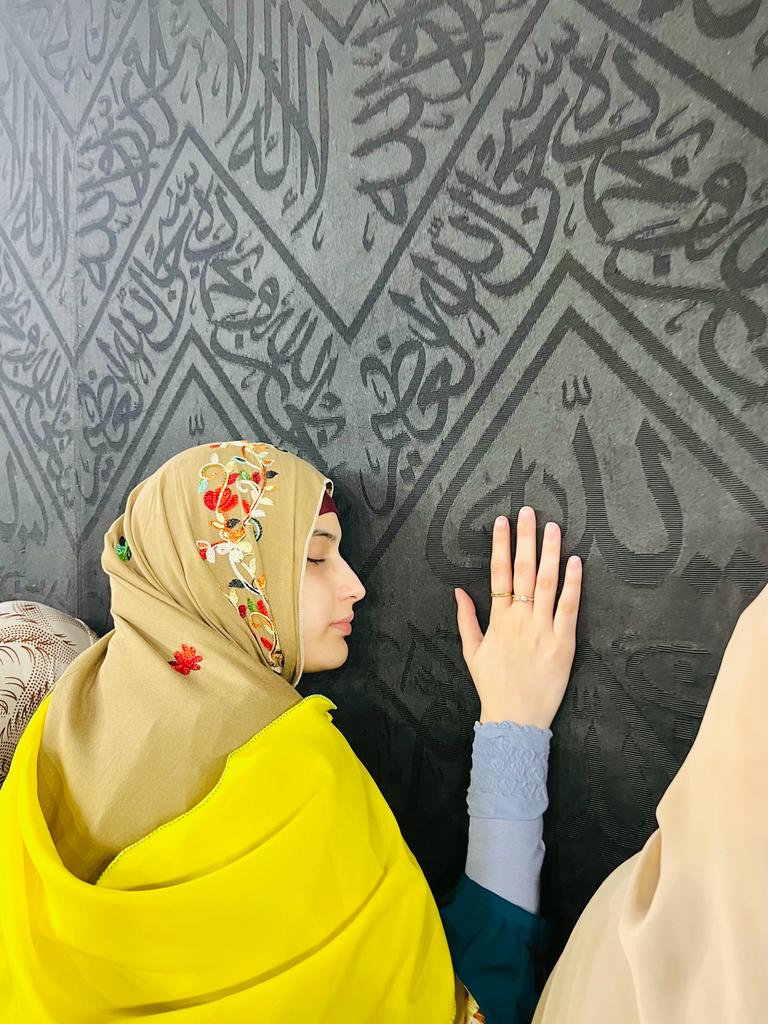
But what was an extraordinary experience was her visit with her parents and siblings to Kabah, Islam’s holiest shrine in Mecca. “It was a surreal experience. I cannot describe it. I felt an extraordinary spiritual power. My family also felt that it was an experience of a lifetime. It was an invitation from Allah. So, we are very grateful. And I feel like giving back much more than I have got.”
Mahira Khan addressing students in a Jeddah School
This star orator was overwhelmed by her visit to Kabah.She told this correspondent that she is feeling a sense of enlightenment and serenity.
A perfect example of beauty and brains, Mahira says that she wrote the speech in a single sitting but kept updating it. “I departed from the written script when I spoke. This is the second time I was contesting. Selection is not easy. One has to win at the district level. Only those participants who get the first and the second position make it to the State level. Then, at the state level, one has to get the first, second, or third position to get a chance to represent the state in the Central Hall of Parliament. The 29 speakers who assemble there are selected from two lakh speakers,’’she explained.
When Mahira flew back to Raipur with a trophy, a certificate, and prize money of Rs one lakh, she was received at the airport by her parents and two school teachers.
She says, “I want to go to schools, colleges, and communities to teach them how to develop communication skills.’’
In 2020, Mahira also secured a position in an inter-university festival.
Her participation in the National Youth Parliament in 2022 was a learning experience. “I understood that to produce good content for a short-duration speech, it is important to get perspective and research well. My speech was only five minutes and 45 seconds. Last time, I spoke on the topic’ Patriotism and nation building. This year, the theme was ‘Ideas for a better tomorrow- India for the world’. So, I decided to understand the viewpoint of some of my classmates from Jamia and also my friend, Barkha Soni in Bhillai.’’
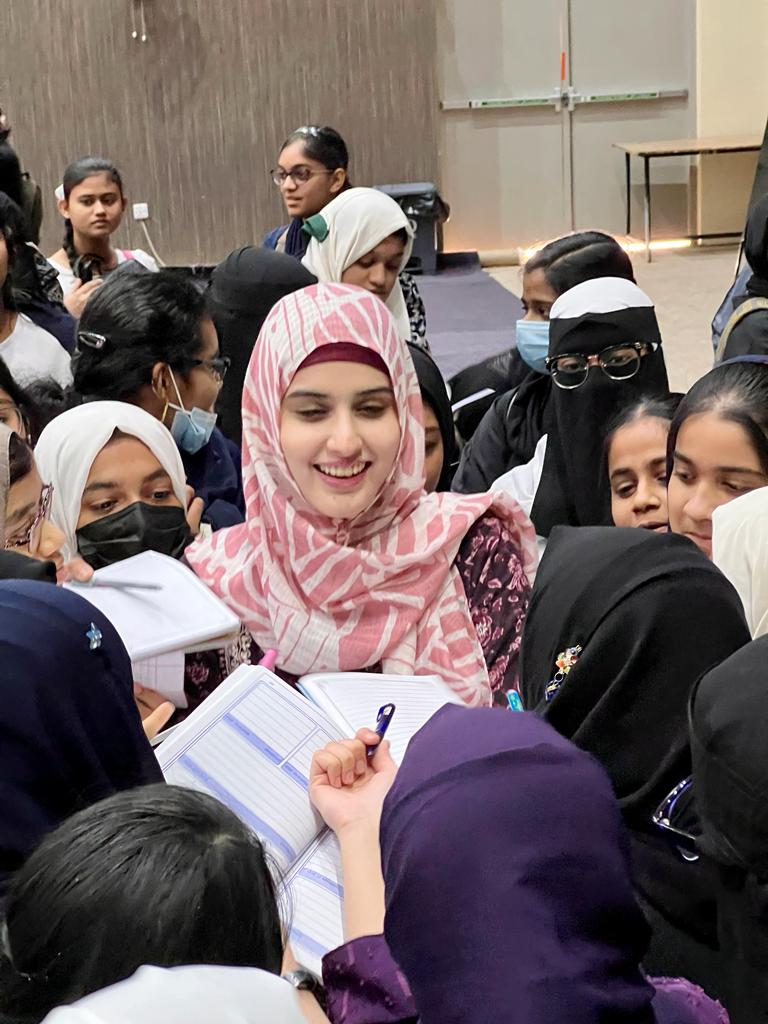
Mahira Khan interacting with students in Jeddah
Mahira who is awaiting the results of her postgraduate course in Mass Communication from Jamia Millia Islamia is grateful to her friend Barkha Soni who gave her meaningful lines of her poem, for her speech. Mahira used two lines of Barkha’s poem as the opening line. “Jab jab dehla vishw hamaara aur jab jab bemaqsad khoon baha, Cheen, Roos, Japan sabhi ne, Bharat ko ek doot kaha’.Mahira says, “After I got the prize, I went to meet Barkha in her father’s office in Bhilai to thank her.’’
Mahira has been offered a corporate communication job in a private company and her training is likely to start in May-June.
An avid reader, Mahira says, “I am very concerned about children and youth who are neither reading nor writing but just sitting with mobile phones.’’
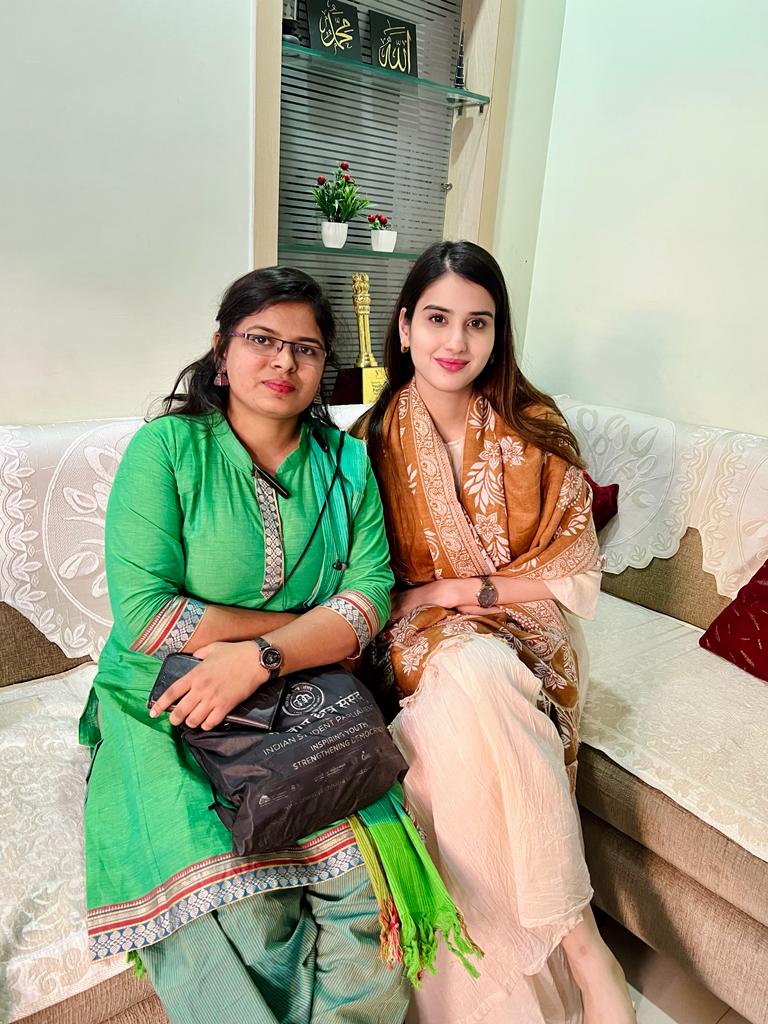
Mahira Khan with her friend Barkha Soni
Apart from Shah Rukh Khan’s films, she likes watching fantasy and animated films. Her favourite film is ‘The Lion King.’
Born and raised in Raipur, Mahira has clear views on nationalism. “We may make big statements but all we need to do is take small steps. Even clearing garbage or helping the poorest of the poor is nationalism. We can be responsible citizens and can try and pass on skills.’’
Mahira studied in DPS, Raipur till Class XII.
In her hour of glory, Mahira misses her paternal grandmother who died of cancer. She remembers her bed-ridden grandmother telling her after she did not win last year: “Mahira is anyway a winner for me. I have won because of her blessings.”
Mahira Khan in Kabba
Her father is in the construction business while her mother is a homemaker.
Mahira says her habit of jotting down important ideas and lines in a diary also helped her end her speech in Urdu which read, “Bade chalo, Bade chalo, Yahi nadai waqt hai, ye Kainath yeh zameen, yeh kehkahsa ka raasta, Issi pe gaamzaan raho’’
Mahira adeed the line, ‘aman ki raah par chalo.”
She said that she chose to use Urdu as the language does not get the recognition it deserves.
She also likes to give credit to her maternal grandfather, Syed Mahfooz Ali Madni, a retired railway man who kindled her interest in Urdu. “He is the one who gave me my name Mahera from the word ‘Maher’ in Urdu. He lives in Raipur and he is always encouraging us to use Urdu. My siblings and I had a Maulana who would come to our house to teach us how to read the Quran. He taught us Arabic but my father also requested him to teach us Urdu. ‘’
Mahira says, “We did not have Urdu in school or college. My father would make sure that we wrote one page in Urdu from an Urdu book every day. This was the only way we can preserve our language. We are trying to save our legacy in our own way.’’
The family is now heading back to India after spending nearly three weeks in Saudi Arabia where they also have relatives.
source: http://www.awazthevoice.in / Awaz, The Voice / Home> Story / by Tripti Nath, New Delhi / April 07th, 2023
DeoraBandhauli Village (Darbhanga District), BIHAR / Mumbai, MAHARASHTRA:
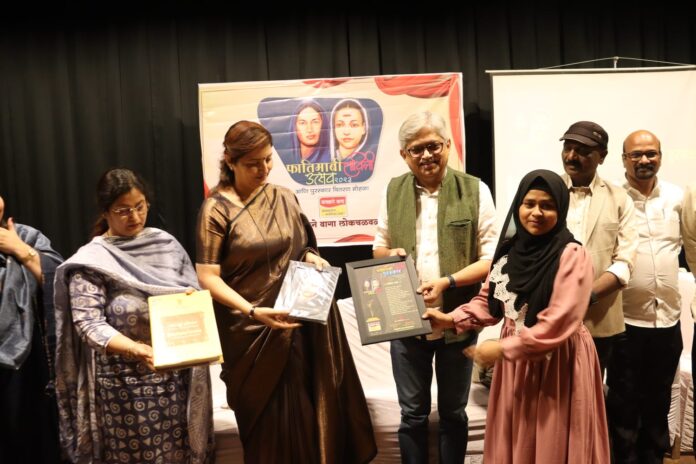
Sadiya Shaikh receiving the Savitri Bai-Fatima Bi Award
Born in Bihar, Sadiya’s family shifted to Mumbai when she was 4 years old. Sadiya, eldest of her 5 siblings has recently been awarded with the Fatima Bi Savitri Bai Award in 2023 for her contribution to society towards education and community upliftment.
At the age of 21, Sadiya’s tremendous efforts towards social work has won her accolades from both regional and national institutions. She is a recipient of the ‘All India Women Achievers Award 2021 organised by Twell TV and Tanishq in Karnataka’s Mysore; part of 100 inspiring women featured at the Global Women Inspiration Awards and Conclave 2021; and ‘Humanitarian Excellence Award’ by ICan Foundation and the more recent Fatima Bi Savitri Bai Award 2023.
Her journey in activism
“Savitri Bai Phule and Fatima Begum have done huge work in the field of education to be such icons. My work in comparison is just a small baby step,” says Sadiya smilingly as she recounts how she was informed of her most recent honour. One morning she got a call from an organisation named ‘kaide ne vagya’ (walk with the constitution) asking her to send her details. Much later she got to know that this organisation identifies 5 young achievers ever year who overcome stereotypes and make a difference in the society. And thus, along with 4 others Sadiya was selected to receive the prestigious Fatima Bi Savitri Bai Award that commenced in the year 2017.
Presently working for international child rights and advocacy group, KidsRights.org, Sadiya’s journey in activism began with the anti-CAA protests in 2019. She had a lot of friends from all faiths till the Citizenship Amendment Bill was passed. When people came out in protest against the Act, she noticed that her friends had all backed out and did not join in the protest.
“I realised we have to fight our own battles and stand up for our rights. It was then that reality hit me that I was living in a dream world,” she recalled. Thus began her journey as a social activist. She got actively involved in organising peaceful protests, supporting groups in advocacy and using her education to empower masses. “People around us have tried to demotivate me, some even told my father not to give me so much of liberty or else I will never get good alliances for marriage,” she added. However, that didn’t deter her from pursuing her path and joining youth activists from different cities in the country to work for bigger causes.
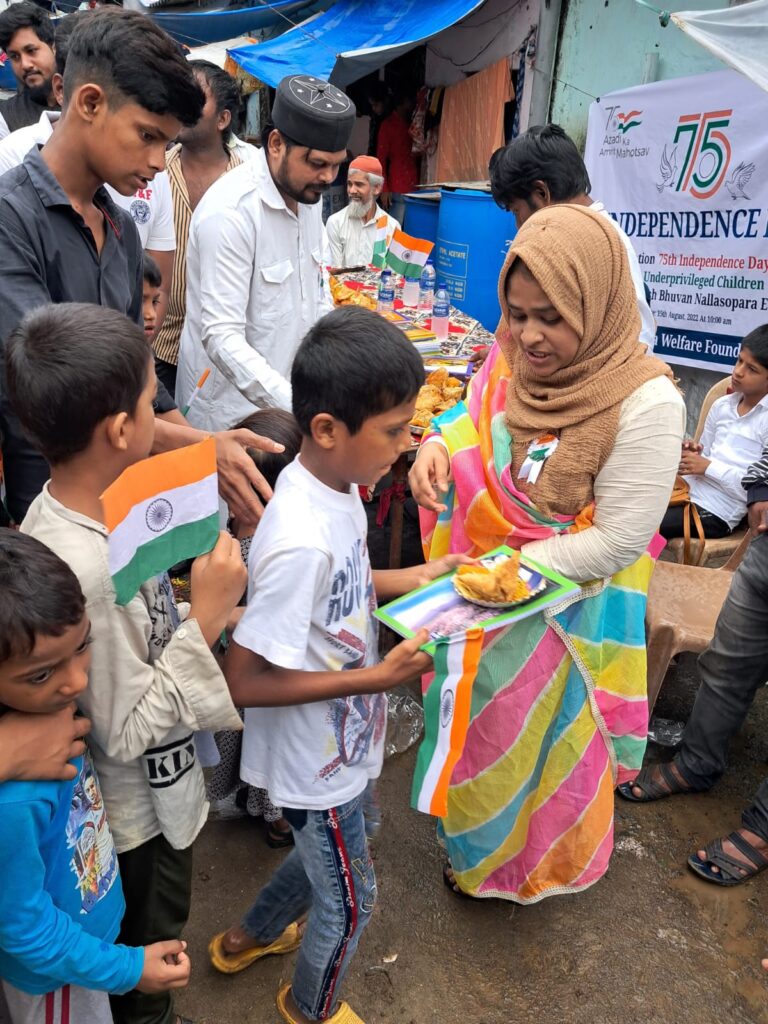
Her first notable work across different communities was when Sadiya helped flood-affected victims in Darbhanga in 2020. This was when she had started ‘Rehnuma Welfare Foundation’ with help from her father, who runs a small leather goods manufacturing unit in Dharavi. The foundation is aimed at stopping child marriages and child labour while paving way for women empowerment from marginalised communities.
“They even mocked him, asking things like do you want your daughter to contest the elections?” but her father did not bother about any outside influence or lack of support. Instead, he accompanied her everywhere she went – conferences, protests, or workshops.
“He accompanied me to Shaheen Bagh, Karnataka and other places,” she said with pride while talking to TwoCircles.net.
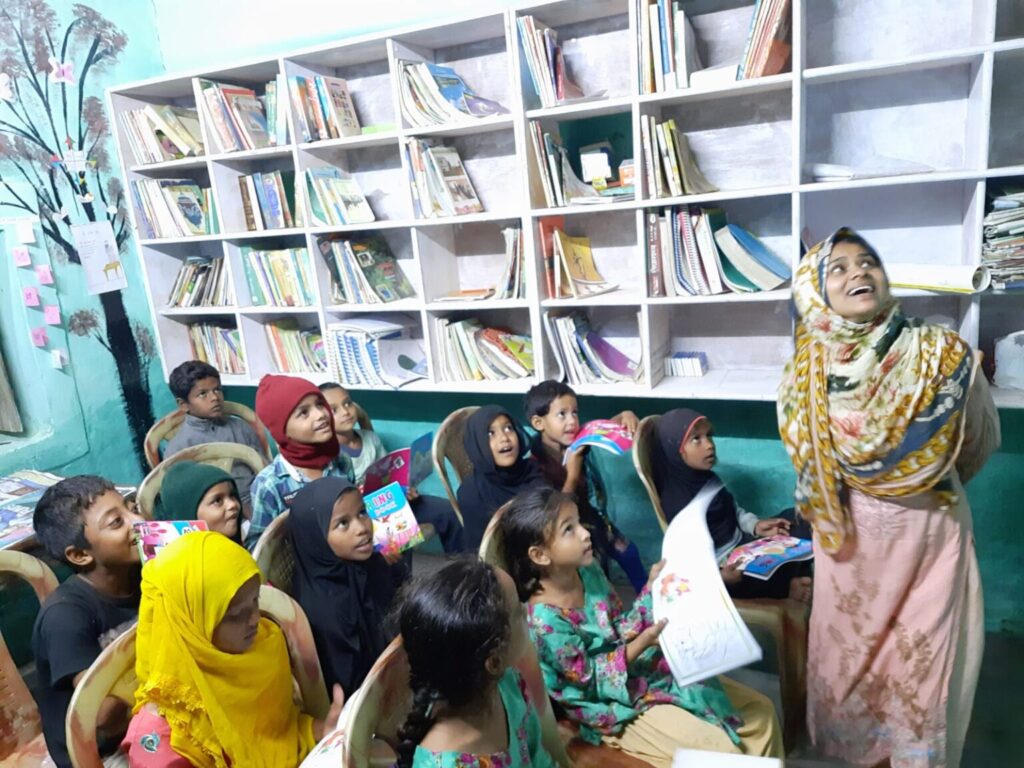
Community library
Sadiya hails from Darbhanga district of Deora Bandhauli village in Bihar. This is where her journey as an emerging community leader began. Looking at poverty and inaccessibility of resources, she started a community library for the children of her village called ‘Maulana Azad Library.’ This library houses Bihar School Board and NCERT books from classes I to XII which are issued free of cost to the needy children. There are other books on history, literature, social sciences, etc. that can be borrowed for reading. The children nearby are also helped with their studies at the library which is being managed by Sadiya’s cousin who is pursuing her postgraduation.
Her library has gained a lot of reputation in the surrounding villages as well. Sadiya says her dream is to equip this library with computers and internet facility so the children in the village can access these facilities as well.
The road ahead
“I will continue to work for child welfare and education with renewed energy and inspiration with support from donors, well-wishers and parents,” says a determined Sadiya. Currently pursuing her Masters in Sociology, Sadiya is the eldest among her five siblings – three sisters and a brother with progeria genetic disorder. This emboldens her to work harder and bear the family’s responsibility along with her father.
“I am humbled by these honours as they motivate me to work harder to change the lives of many young children and women from my country India,” she shares when asked about what she feels about winning such big achievements at 21. Sadiya was recently honoured with ‘Emerging Social Work Leader 2021’ at the Asia World Model United conference.
When asked about her future plans, Sadiya says that her focus besides her fulltime postgraduate degree lies on developing more community libraries in other villages and improving education of girls as they suffer the most in underprivileged backgrounds. Her key takeaway from Shaheen Bagh protests was “women can fight to retain the secular fabric of India, end communalism and defeat fascist forces.”
“Muslims, especially women should work on improving their lives at all levels especially education in which we are lagging behind,” Sadiya feels. Motivated by this, she plans on establishing a school for girls with support from funds at ‘Rehnuma Welfare Foundation’ in villages. At present, the organisation is mainly funded and managed by her sisters who are also studying. Therefore, she wants the encouragement of her supporters, donors and parents to make them proud.
Her message to aspiring women leaders is “to be politically, socially aware to raise questions where there is injustice. We should keep the interests of the nation at heart and work towards building a harmonious and peaceful environment.”
source: http://www.twocircles.net / TwoCircles.net / Home> Education / by Nikhat Fatima , TwoCircles.net / April 05th, 2023
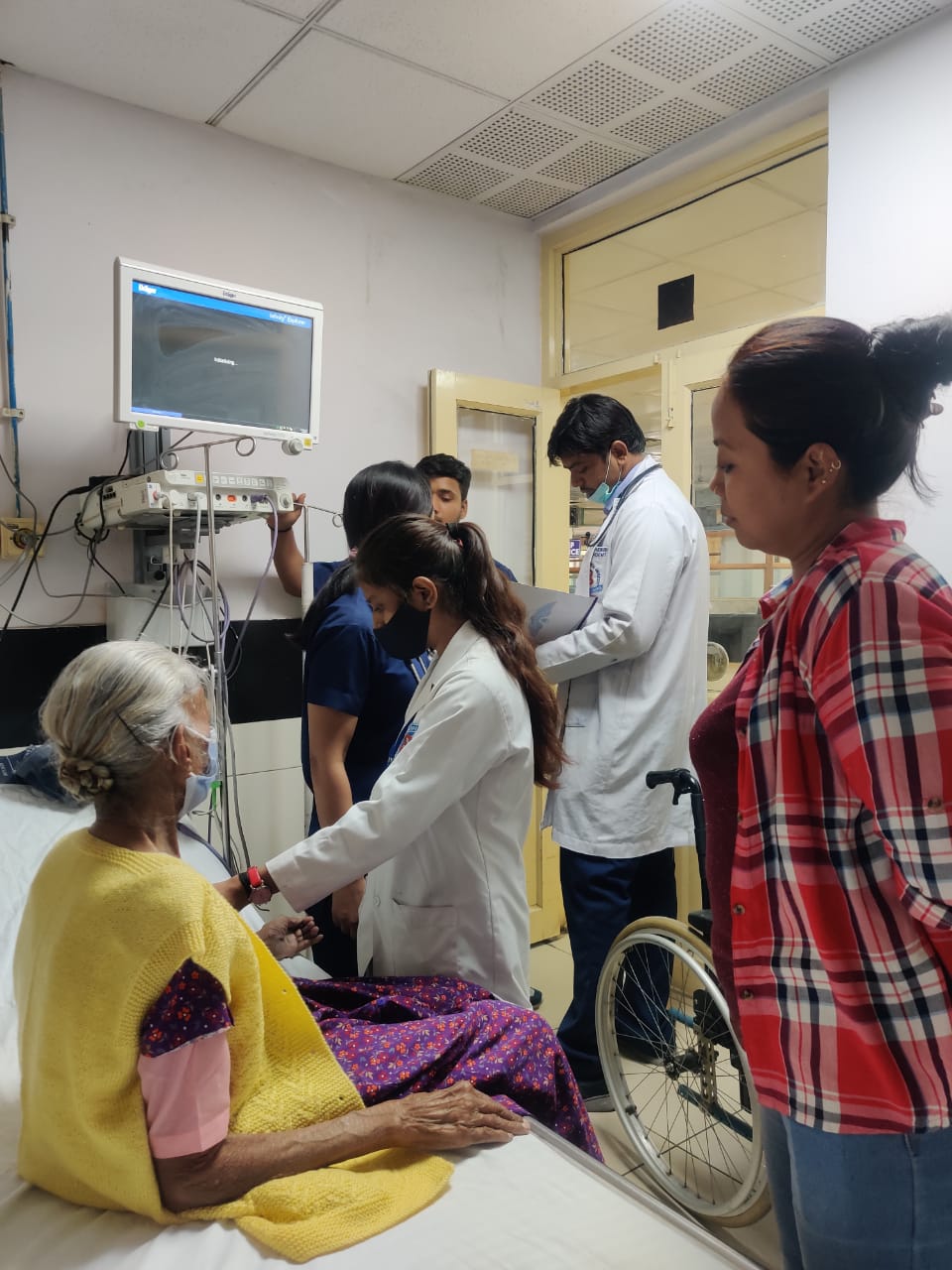
Dr Shaikh Yunus in the I.C.U of King George’s Medical University, Lucknow
Dr Shaikh Yonus, a Senior Resident in the Cardiology department of the prestigious King George’s Medical University, Lucknow, is the first Muslim doctor from the Jalna district of Central Maharashtra. He completed his MBBS degree in 2015.
This is no small accomplishment for this cheerful 34-year-old doctor who studied in a village school till Class X. His father even borrowed money to fund his medical education.
Shaikh grew up sowing cotton with his father Khudbuddin and elder brother Aslam in their four-acre land in Dadhegaon in Jalna district.
As a schoolboy, he remembers his relatives insisting that he be sent to a Madrasa along with their children. But Shaikh wanted to attend a regular school and his father respected his wish. He was always drawn to the science stream and chose his career path when he was in Class X.
Shaikh says that in his backward village of 800 people there was hardly anyone holding a high post. “Thankfully, my seniors in school had become career-minded and some become teachers. They inspired me to focus on my ambition.’’
Shaikh struggled against all odds and cracked the Medical college entrance test.
Dr. Yunus says, “It was a huge struggle. My father who passed away in August 2022, at the age of 62, was a cotton farmer. Because of the challenges that cotton farmers face in Maharashtra, he was on the brink of starvation. We are four siblings – two brothers, and two sisters. In 2008, my father’s annual income was Rs 30,000. It was difficult for him to pay Rs 3000 for my monthly room rent and living expenses for a year and annual fee of Rs 12,000 for professional coaching in Aurangabad for entrance examination of the medical college.”
Shaikh’s coaching cost Rs 50,000 per year. His father even took a loan of Rs 30,000 to fund his coaching.
This promising cardiologist says students in the village aspiring to study after Class X had to move out. So did Yunus. He then began studying in Ambad Taluk, 20 kilometres away from home, for Class XI and XII.
Although Shaikh managed to get an annual minority scholarship of Rs 25,000 for his six-year MBBS course in Government Medical College, Nagpur, he still had to depend on his father for Rs 3000 every month to meet his living expenses.
Looking back at his struggle, he says, “My father had limited means. Saving money to marry my sisters and having to set aside Rs 2000 for my fee was a huge challenge but he never let it bother me. The annual fee for MBBS was Rs 18,000. The annual hostel fee was Rs 4000. The remaining amount was spent on buying books. I still had to depend on Rs 2000 every month from my father. I could hardly afford to travel to my village. I was homesick but meeting my family members was a luxury. So, once in six months, I would take a 16-hour long journey by train to meet my family.’’
Shaikh’s first earning came after the final year of MBBS at Government Medical College in Nagpur. “During the year-long internship, the government was paying us Rs 6000 a month. After this, I appeared in the NEET examination for MD in Medicine. I got 104th rank in the country. There were only 26 seats for MD in Medicine in Maharashtra. “I got a chance to pursue MD for three years in Government Medical College in Miraj near Pune. I completed MD in 2020,’’ he recalls.
The competition for DM (Doctorate in Medicine) is even more difficult. Out of the 3,000 students who apply for DM in Cardiology every year, only one-tenth get through. KGMU admits only eight students every year after a nationwide selection. Dr Shaikh is among the eight doctors who was selected for DM in Cardiology in KGMU.
Dr Yunus is the only doctor in his extended family. “My father studied till class X but he stood behind me like a rock. He was determined to do whatever he could to help me fulfil my dreams. My sisters who are now married, studied only till Class IV or V. My mother, Shaheen is a homemaker. She too hardly studied. My elder brother did his postgraduation in Hindi from Dr Baba Saheb Ambedkar University in Aurangabad but was not able to find a job. So, he took to cotton cultivation.’’
Although Dr Yunus is satisfied that his hard work helped him crack the examination, he deeply regrets that he was not able to save his father’s life last year. “I was on I.C.U. duty when I got a call from my family that my father was unwell. When I made a video call to the doctor who was attending to him in a private hospital, 50 km from my village home, I realized that he was critical. He had pneumonia. I specialize in treating these diseases but I could not save his life. This is a lifelong regret.’’
Dr Shaikh Yunus (in the lab coat) going through the records of a patient in KGMU, Lucknow
Like most of his colleagues, Dr Yunus who is in the second year of DM, has unbelievable duties in the Cardiology department of KGMU. “The disease burden is huge and the number of patient consultations and admissions is huge. There have been times when my colleagues and I have come for duty on Sunday and left on Friday. On an average, we see 400 patients in OPD (Monday to Saturday) and 200 in emergency who are coming from all over the country and even Bhutan, Nepal and Saudi Arabia.’’
He also wishes that more young students from Jalna district would join the medical stream and become doctors. “ It has been eight years from the time I finished my MBBS but so far, I have come across only two students from my district who were enrolled for MBBS courses in private universities in China or Russia. Only those students who are unable to crack the competitive examination in India, go there. I know how I have studied. I would sleep only five hours. ‘’
In February 2022, Dr. Yunus married Mahjabin, his junior who is now a surgical gynecologist in Bans-Bareilly in Uttar Pradesh. Dr. Yunus’ family who attended the wedding in Bareilly is extremely proud that their son and daughter-in-law are doctors. “ I first accompanied them on the train from Jalna to Delhi. That was the first time they saw the national capital. In so many years, that was the first time that they travelled outside the State. They enjoyed visiting Uttar Pradesh also. It was a 26-hour long journey.’’
Mahjabin who is working at Ram Manohar Lohia Institute of Medical Sciences in Lucknow is deeply appreciative of Dr Yunus’ struggle. “ When I visited my in-laws after my marriage and after my father-in-law’s demise, I felt that they were very proud of the fact that both of us are doctors.’’
Dr. Yunus’s elder brother Aslam Shaikh is very proud of him. Aslam told this correspondent over the phone from his village “Other than my brother, no student from Jalna district has been able to get selected in competitive examination to enroll in MBBS.”
Aslam earns Rs 60,000 a year from cotton cultivation and supports a family of five. “I send my son, Arhaan Aslam Shaikh, 12 km away to study in an English medium school. My daughter, Jiya is only two and a half years old. I want them to become doctors like my brother and his wife. ”
After becoming a specialist, Dr Yunus has not forgotten his roots. He tends to his father’s farmland whenever he visits home. Ths doctor’s heart beats for the farmers of India.
source: http://www.awazthevoice.in / Awaz, The Voice / Home> Story / by Tripti Nath, Lucknow / March 24th, 2023
Shah Rasheed Ahmed Quadri is engaged in the field of Bidri Ware handicrafts and is known for introducing the Phooljhadi design.
Image: Twitter/@rashtrapatibhvn
New Delhi:
President Droupadi Murmu on Wednesday, presented the Padma Shri award to renowned craftsman Shah Rasheed Ahmed Quadri for Art.
The master craftsman is engaged in the field of Bidri Ware handicrafts and is known for introducing the Phooljhadi design.
Quadri has invented many Bidri Ware articles and has trained hundreds of artists in the field.
” Quadri has repeatedly raised concerns regarding Indian art due to the lack of marketing. He has also requested the government to provide an appropriate market and platform to artists so that they can create and develop their art “
Notably, Quadri is among the eight personalities from Karnataka to receive the prestigious Padma award this year.
Who is Shah Rasheed Ahmed Quadri?
Shah Rasheed Ahmed Quadri started learning this ancient art when he was just 10 years old against the wish of his father Shah Mustafa Quadri who was also a Bidriware craftsman. The 68-year-old artist is a third-generation artisan from his family. Apart from introducing the Phooljhadi design, Rasheed Quadri has also reintroduced sheet-work, which was popular during Bahmani empire.
Before winning the Padma award, Quadri has already won the State Award in 1984, National Award in 1988, District Karnataka Rajyotsava Award in 1996, and The Great Indian Achievers’ Award in the year 2004.
The artisan has also exhibited and demonstrated the ‘Bidri’ craft across many countries, including USA, Netherlands, Spain, Bahrain and Oman.
All you need to know about the Padma Awards
Padma Awards are presented in three categories including Padma Vibhushan, Padma Bhushan, and Padma Shri to honour people for their notable work in different disciplines and fields like art, social work, literature and education, public affairs, etc.
The Padma Shri is the fourth highest civil honour in India. While the Padma Shri is bestowed on those with distinguishing contributions in any field, the Padma Bhushan is granted to those who have had distinguishing contributions of a high order. The Padma Vibhushan is the highest of all and is awarded to those with exceptionally distinguished services.
Bharat Ratna is considered to be the highest civilian award of country. Notably, the award has not been bestowed to any single person since 2019. The last Bharat Ratna was awarded to Nanaji Deshmukh (Posthumous), Bhupen Hazarika (Posthumous) and former President of India Pranab Mukherjee.
source: http://www.republicworld.com / Republic World / Home> English News> India News> General News / by Mahima Joshi / April 06th, 2023
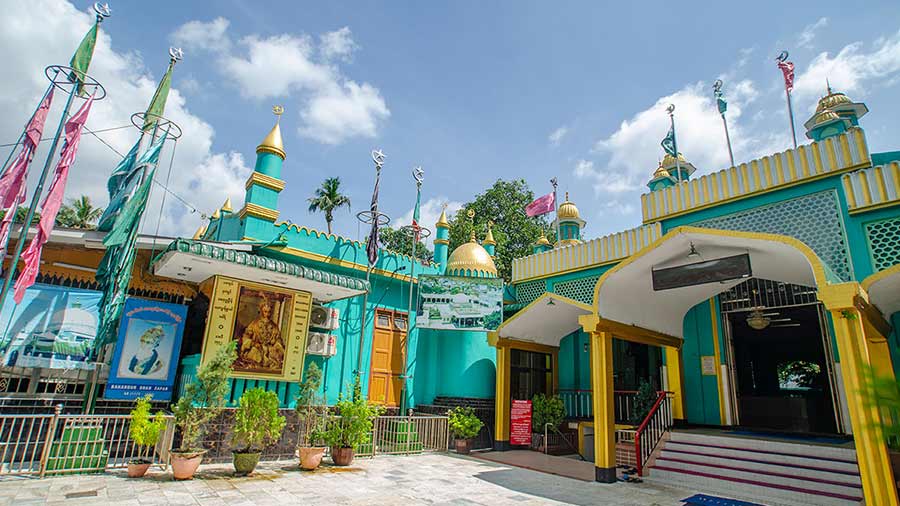
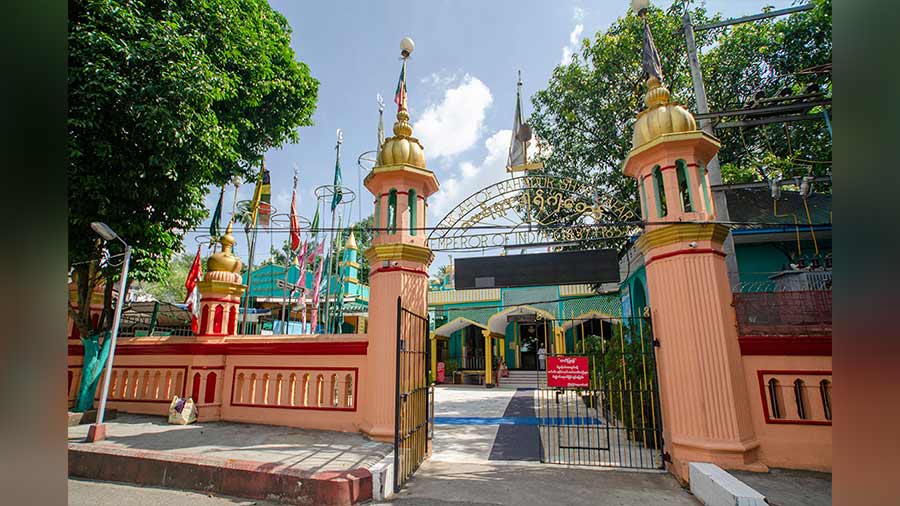
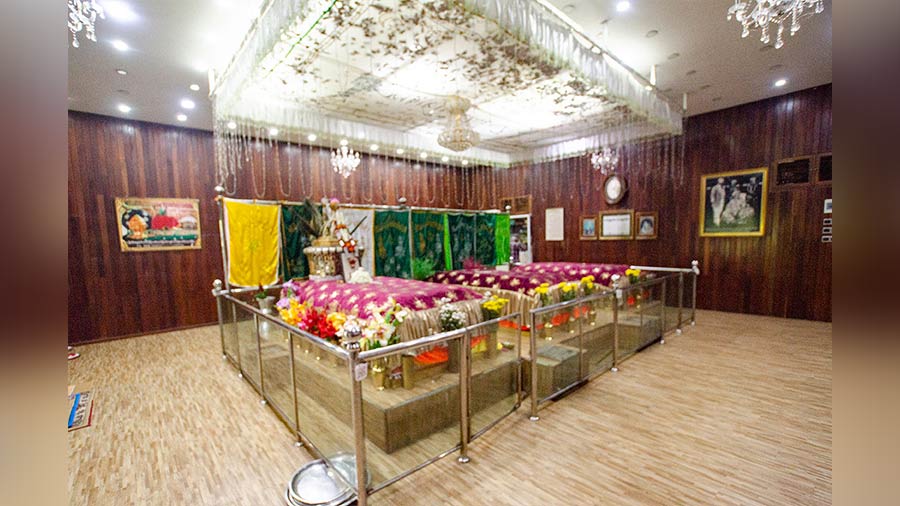
Close to the Shwedagon Pagoda in Myanmar, this dargah is the last tribute to the Mughal ruler and poet.
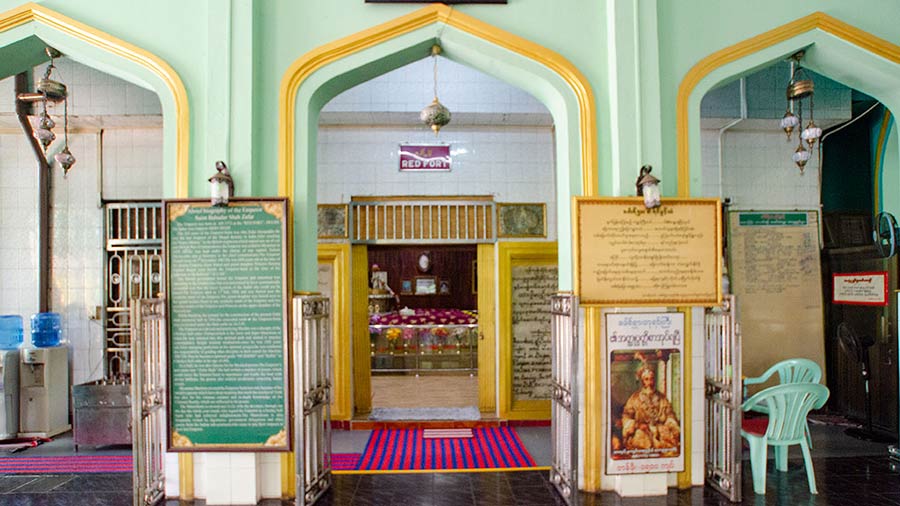
The main hall at the Dargah of Bahadur Shah Zafar Photos: Subhadip Mukherjee
Myanmar (Burma) has some uncanny ties with India when it comes to the freedom struggle. Netaji Subhas Chandra Bose was imprisoned in Mandalay and the last Mughal emperor Bahadur Shah Zafar, who was also imprisoned, later died in Yangon (Rangoon).
If one visits Yangon, then one must visit the Dargah of Bahadur Shah Zafar. It is an irony of sorts when one thinks of the last Mughal emperor not being able to spend the last days of his life in a country where his ancestors once ruled. For the British, Bahadur Shah Zafar was more like a threat; they were constantly worried that he could be used as a proxy leader for another attempt at a revolt in India.
The Dargah of Bahadur Shah Zafar in Yangon
After being arrested from Humayun’s Tomb during the Sepoy Mutiny on September 19, 1857, he was spared the death sentence and negotiated a life in exile instead. They thought it was better to have him sent to exile in Myanmar, and considering his health, they were almost certain that he would never set foot in India again. Bahadur Shah Zafar left Delhi along with his wife, two sons, and some close support staff on October 7, 1858.
More than a rebellious ruler, Bahadur Shah was more into poetry and that’s exactly how he spent the sunset years of his life in Myanmar. The British were paranoid and even prevented him from getting supplies of pen and paper fearing that he would pass messages to his supporters back in India.
Life in Yangon
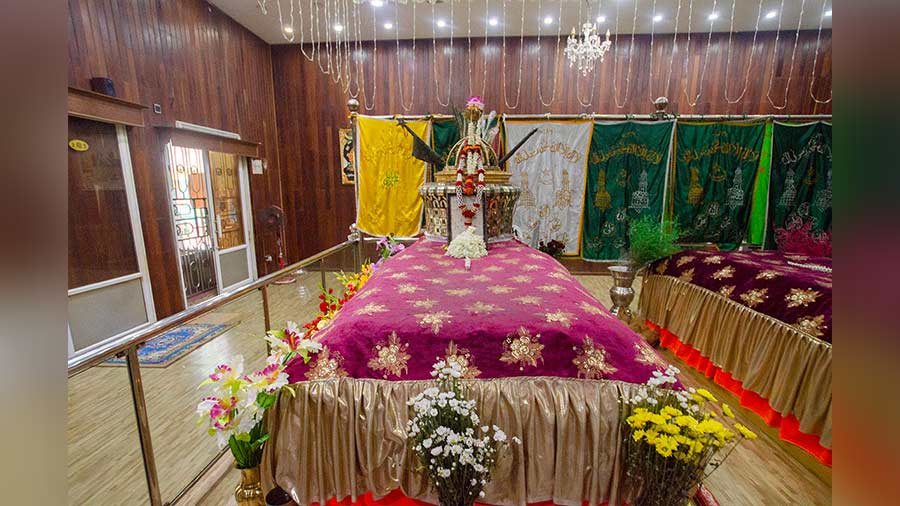
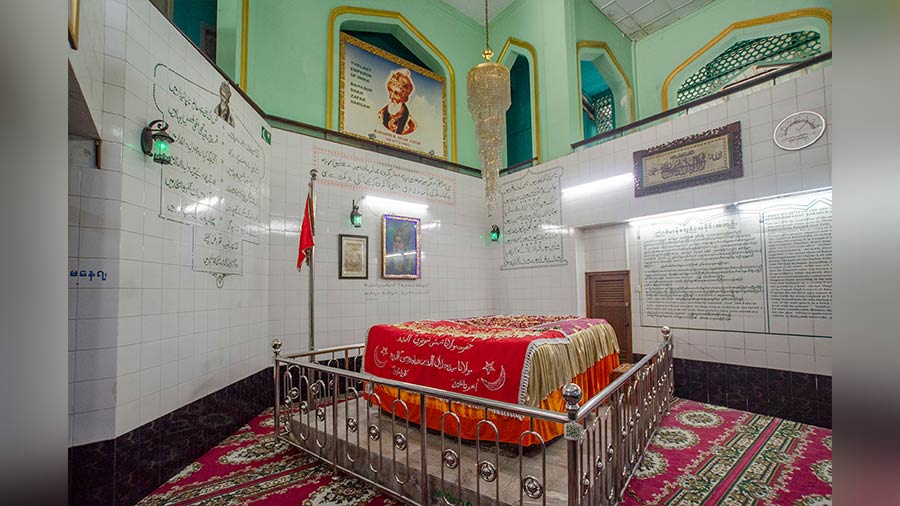
Room next to the main hall, housing the tombs
He lived in a small wooden house that was located very near Shwedagon Pagoda. If you are visiting Yangon, then you’ll find Shwedagon Pagoda as one of the major landmarks in the city. His life was miserable out here with a very limited supply of food and without any pen and paper. So, as a last-ditch attempt, he started using charcoal and scribbled poetry on the wall of his home.
His life came to an end at the age of 87 on November 7, 1862. By then, he was completely bedridden and unable to eat or drink. A very unfortunate end to the last Mughal emperor of India.
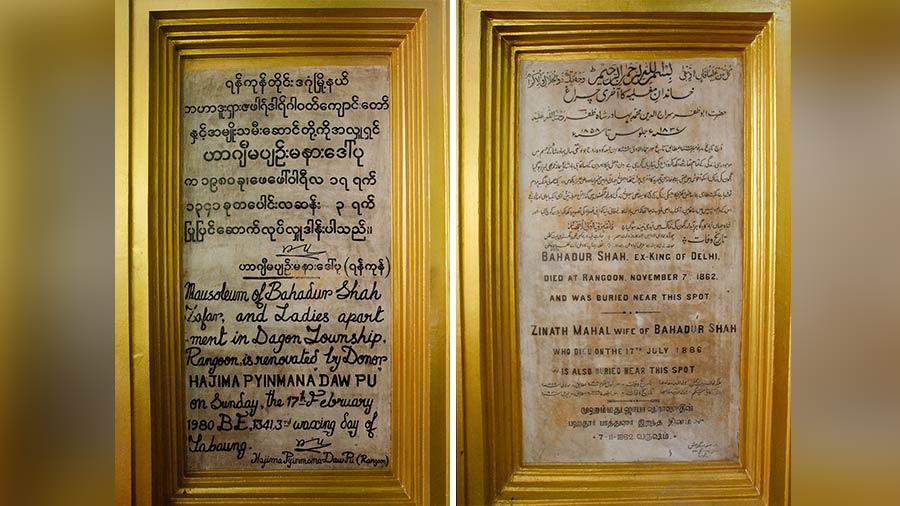
Memorial plaques inside the dargah
Even after his death, the British were paranoid and hurriedly buried him without giving him the last respect that he deserved as the last emperor. Just a small plaque was placed on top of the grave and the rest was kept as simple as possible. This was purposely done to prevent his followers from making this place into a pilgrimage spot.
Four years later, his wife also passed away in Yangon and was buried right next to him.
The Lost Grave
The Lost Grave
With time, people simply forgot about this grave just exactly as the British wanted. To make matters more complicated no official records were kept as to the exact place where he was buried.
The discovery of the grave happened by chance in the year 1991 during an expansion work of a prayer hall that was being carried out by labourers. Two graves were found with small inscriptions on top of them. While one had the name Bahadur Shah Zafar, the one next to it was that of his wife Zinat Mahal.
Further excavation was carried out on the two graves and upon opening up the grave of Bahadur Shah Zafar, the skeletal remains were found wrapped in a silk shroud.
Interiors of Bahadur Shah Zafar Memorial Hall at the dargah
After this discovery and realising the importance of the grave, it was decided to restore and renovate the graves and the surrounding area. With support from the local community, the local government, and further support from the Government of India, a permanent structure was constructed over these two graves. A dargah was constructed at this very spot making it fit for the last Mughal emperor.
Dargah of Bahadur Shah Zafar
Original grave of Bahadur Shah Zafar at the basement
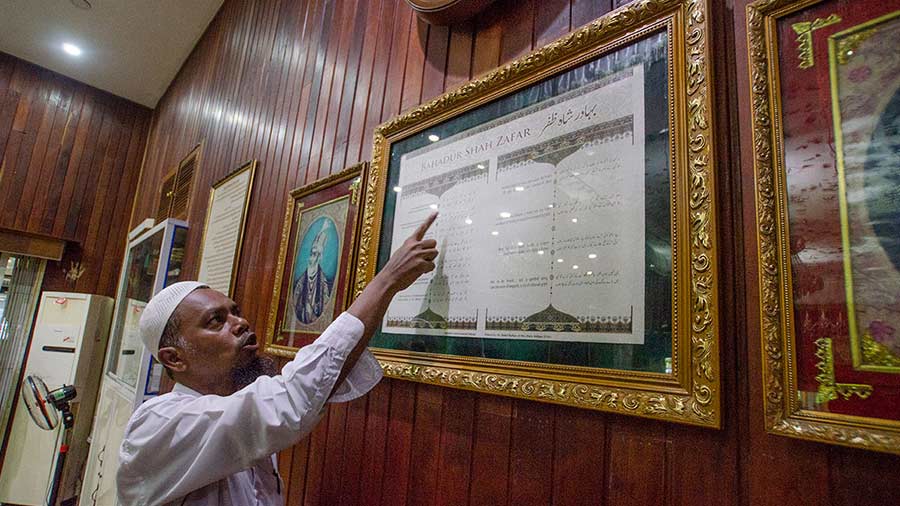
The dargah has two levels, the top level has a large prayer hall and a room with three decorated tombs. These tombs are that of Bahadur Shah Zafar, Zinat Mahal, and his granddaughter Raunaq Zamani. The surrounding walls in this room have only three known photographs of the emperor and poetry written by him lamenting his life in exile.
Kitnaa hai badnaseeb ‘Zafar’ dafn ke liye do gaz zamin bhi na mili kuu-e-yaar mein
Bahadur Shah Zafar
There is however another secret to this place. There is a room located in the basement of the dargah. This is the room where the original grave of Bahadur Shah Zafar was located when it was discovered. The grave now has been converted into a decorated tomb. This is the very place where the last Mughal emperor was buried and was thought would be forgotten. But as luck would have it, it is now somewhat fit for an emperor. It’s sad that Bahadur Shah Zafar could never return to the country he once ruled. He remained in exile even after he died in Myanmar.
The Kolkata Connection
A representative from the Dargah reading poetry written by Bahadur Shah Zafar
Bahadur Shah Zafar along with his wife Zinat Mahal were also accompanied by their two sons Jawan Bakht and Jamshed Bakht. His sons never left Burma and settled there and ultimately died there only. Jamshed Bakht had two sons. One of his sons, Mirza Bedar Bakht, came back to India and settled in Kolkata. He married Sultana Begum with whom he had five daughters. Mirza Bedar Bakht had a very quiet life living in a slum and earning by sharpening knives and scissors. He died in the year 1980 in this very city and was buried here in Kolkata.
Working for more than a decade in the book retail and publishing industry, Subhadip Mukherjee is an IT professional who is into blogging for over 15 years. He is also a globetrotter, heritage lover and a photography enthusiast.
source: http://www.telegraphindia.com / The Telegraph Online / Home> My Kolkata> Historical Landmark / by Subhadip Mukherjee / April 03rd, 2023
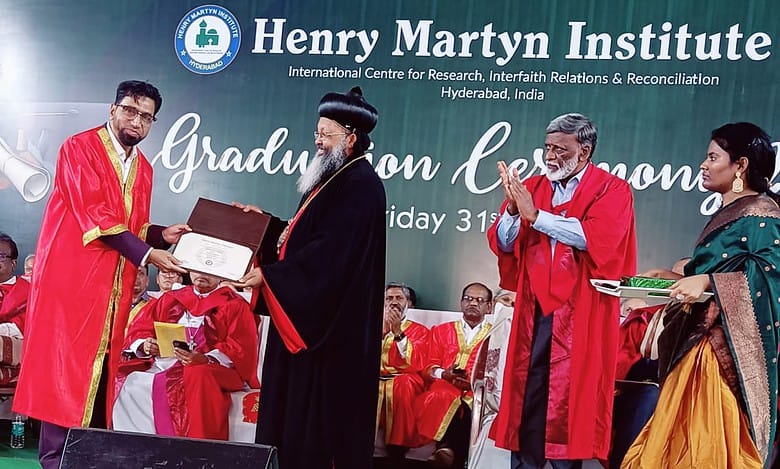
Prof Mohd. Mahmood Siddiqui, Officer on Special Duty (OSD)-II and Dean, School of Education & Training, Maulana Azad National Urdu University (MANUU) was conferred upon with Honoris Causa (a degree awarded without examination as a mark of esteem to an achiever) by Henry Martyn Institute in Hyderabad.
Prof Siddiqui received this honour at graduation ceremony of Henry Martyn Institute (HMI) held on March 31.
Rev. Dr. T. Samuel Packiam, Director, HMI introduced Prof. Mohd Mahmood Siddiqui as an able and dynamic teacher involved in social and welfare activities. The honorary degree is being conferred in recognition of his services in promoting communal harmony and national unity.
Prof. Siddiqui has also been honored in the past with several awards, including the Unsung Hero Award from the American Institute.
Prof Syed Ainul Hasan, Vice-Chancellor congratulated Prof. Mahmood Siddiqui on receiving the honour.
source: http://www.siasat.com / The Siasat Daily / Home> News> Hyderabad / by Siasat News Desk / April 03rd, 2023
Former national discus throw champion Tayabun Nisha traced her childhood friend Julekha to return a gold ring the latter had lost in school back in 1967.
Tayabun Nisha (left) and Julekha
Guwahati :
When these two friends met after five decades, one paid off a debt never asked for and acted like the champion that she is.
Former national discus throw champion Tayabun Nisha felt heavy at the burden of an almost weightless finger ring of her friend Julekha, lost way back in 1967 at their Dhai Ali Girls’ High School in Assam’s Sivasagar.
More than 55 years later, Tayabun traced Julekha and arranged a reunion to reclaim those golden years that far outweigh the little ring. She gave her friend an envelope containing Rs 12,000 – the value of the ring.
“We were possibly students of class 7 or 8. Julekha was from an affluent family and she would come to school wearing gold jewellery. One day, she lost her finger ring in the class,” Tayabun, the first Assamese woman athlete to represent India in several international events, said recalling the incident.
“I used to go to school early to play games in the field. Those days, we had to clean our classroom. So, while cleaning it the next morning, I found the ring Julekha lost. However, I didn’t return it for the fear that I might be accused of stealing it and took it home. In due course, my father died and we faced a lot of financial difficulties. Perhaps, it was then that the ring was sold off by my family,” Tayabun said.
As time rolled by, the two friends lost contacts with each other and Tayabun landed a job in the railways in the sports quota but she was mentally disturbed all along.
“I used to think that since I cannot return that very ring to her, I will give her its value when I meet her. I thought I can expiate that way,” Tayabun, who has retired from service, said.
“But I had no idea about her whereabouts. So, I sought the help of my sister. After talking to a whole lot of people, she learnt where Julekha lives. Once I got her number, I called her up to say I would visit her. When I met her (on Tuesday), I told her everything. She initially refused to accept the value that I gave for the ring,” Tayabun said.
She said she would not have got the peace of mind if she had failed to locate Julekha and pay off the debt.
The softspoken Julekha was equally overjoyed to meet Tayabun after decades. “I feel happy that she came. I almost forgot her but she remembered me,” Julekha said.
source: http://www.newindianexpress.com / The New Indian Express / Home> Good News / by Prasanta Mazumdar / Express News Service / March 24th, 2023