All posts by mpositiveone@gmail.com

Mohsin Jamal: The Majaz ‘echo’ of Lucknow is no more!

Lucknow, UTTAR PRADESH :
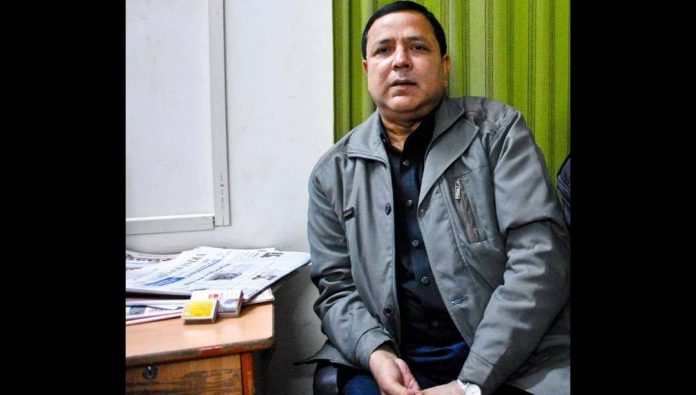
Who is interested to know the story of Mohsin Jamal? A gentleman who was a La Majaz and a La Sahir-rolled into one! It is certainly very unbecoming of me to contain my emotional expel, to write on a friend whom I had met around 25 years back, probably in 1997-98, and never found him to be emotionally or socially fatigued. Welcome to the world of Mohsin Jamal, someone who never had a watch or a calendar in his hamlet and was buried at Aishbagh cemetery, on July 28, 2022.

I very vividly remember, Mohsin Jamal, who was a journalist, writer, and always ‘updated’ into the world news, as once he had got a three-phase electricity, and a generator, all installed, for he wanted to see every moment of the last rites of Princess Diana. He would never let his eye slip any detail, perhaps, he was quite hitched to the departed-soul, as he himself was the one who did not find-his-love, and remained a bachelor throughout his life.

He was a virtual encyclopedia of Urdu poetry, for he remembered more than the proverbial ‘a lakh shairs’ (poetic renditions) of Asrar-ul-Haq ‘Majaz’, Raghupat Sahay ‘Firaq’, Abdul Hayee ‘Sahir’, Shabbir Hasan Khan ‘Josh’, Abdul Hameed ‘Adam’, Ahsan Danish, Faiz Ahmed ‘Faiz’, Parveen Shakir, Jan Nisar ‘Akhter’, Riaz Khairadabi, Khumar Barabankavi, Jaun Elia apart from the stalwarts like Ghalib, Sauda, Meer, Zauq, Aatish, Nasikh, Wali etc. Never there was a moment when he would not come-up with a ‘proportionate or an appropriate’ shair for any occasion. Apart from all that, what also made him was his cigarette smoking, which he never smoked till its last fag, his voice was always modulated like a professional anchor, which was God-gifted, and his sentences were always synchronized like that of newspaper-headlines. He had every prowess to impress anyone, let alone at times, even hypnotize!

His persona had everything which inculcated his cultural ethos; he was ceaselessly help a struggler in the field of media, music or into writing. He would never see the sun rise, his day started at 5 pm and he would retire back home always deeply post-midnight. He was very fond of dressing, most often a spotless white shirt, grey pants, shining always shoes, Ambedkerite glasses, pockets always loaded with wads of US Dollars, yes, Dollars, and a puffing cigarette is what was his cover-story, to hundreds of  friend/associates he had in Lucknow.  Never in my association with him for over a quarter of a decade did I dwell to unravel as to what he would do for his living! The question was simply out of place, for he never exuded on it. He would move always on his chartered-rickshaw! Was a darling of everyone in any function, and would, make himself overshadow anyone on any given occasion.

The veritable ease with which he would shorten sentences by his ‘dropping-words’ was always a feast to the ears. His rendezvous with theater, arts, music, voice-over, play-back singing etc made him a dynamic presence into what is called as a ‘world-of-finer-aspects’. His knack for music could not be tapped for he knew personal histories of films, songs, musicians, singers etc from Bombay. He had an impeccable memory and would delve hours on the making of films like Mughal-e-Azam, Baiju Bawra, Sita Aur Gita, Bobby etc. There were quite a few cinema stars, who knew him personally and some even often make long-distance-calls, before the advent of cell-phones, to listen from him endlessly the-‘shairs’, which was his forte.  His zest encompassed Marsiye, Manqabat, Musaddas, but he was shy-enough, to get them recorded in audio form or for Youtube. Had it was done, it was to be a treasure trove, as certainly it was to be a recipe for any budding actor or a cinema-vérité. He would narrate scene after scene from Agha Hashr Kashmiri, in accordance to characters and their vile. Where? At Sarwar hotel, his favourite pastime, ay Lal Khan ka Hata, , to the rapt attention of his friends who constituted doctors, engineers, editors, lecturers, academicians, businessmen all alike. Obviously, he was always the host.

He would regale ceaselessly his gatherings at Nazeerabad, who would flock around him, not always for his poetic-exuberance but for his versatile genius in colloquial accents. He was perhaps the last of the genre who would quote Asmat Chugtai, Saadat Hasan Manto, Rajender Singh Bedi, Ali Sardar Jafri etc, on their almost unknown aspects, always much to the awe of even research scholars. He would bring the gatherings ‘alive to thrive’ on his incessant quotations from Ameer Meenai, Momin Khan Monin.

I on many occasions would carry him finally to Pioneer, the spot in Lucknow which remained opened 24X7. He would always syntax it from the words of Akbar Allahabadi, “ Ghar se aayi hai Khabar Kal hai Chehleum Unka/ Pioneer likhta hai ki beemaar ka haal ach_cha hai ( Family informs that the 40th day of the dead is the next day/ Pioneer nevertheless tell the ill is still better) in the famous retort of the poet towards the end of the British rule and Pioneer’s biased reporting to it.  We would sit there until the wee hours as then I would drop him home. Once we ended up having 27 teas together, as he enamored the lines “Us se paimaan-e-wafa baandh rahi hai bulkul/ Kal na pehchan sakegi gul-e-tar ki soorat” (The nightingale is swearing by the flower/ will not be able to figure it out tomorrow as the flower will be worn-out after tears)

There are hordes of ‘listeners and moaners’ who are now no more to listen or see Mohsin Jamal. One of his friend,  Himanshu Bajpayee, who is now a Daastan Go, of international acclaim, says that he could not see Majaz but ‘Mohsin Bhai’ lessened the pain, for he fathomed Majaz  to the full-potential. Mohsin Bhai, therefore from now on, will remain out of the purview of people’s gaze, but will forever live in the heart of ‘everyone’ into which he kindled the fire of Majaz and would never let it flicker, until he himself flickered to it. “Haqq Magh.firat kare ajab Azaad mard tha” (May God bless the fearless-independent man) he would sometime requiem for himself.

Lucknow remained a bit same after Majaz, for Mohsin Jamal, inherited the echo, but will it now remain the same? May be yes or may be even no. Long-live Mohsin Bhai.

**

The writer is a former UP State Information Commissioner and writes on politics.  

source: http://www.muslimmirror.com / Muslim Mirror / Home> Literature> Obituary / by Haider Abbas / August 14th, 2022
74-YO Kashmiri Farmer Grows Exotic Pears, Goes From Earning Rs 4K to Rs 25 Lakh/Year

Bharova Village (Bhaderwah District) , JAMMU & KASHMIR:

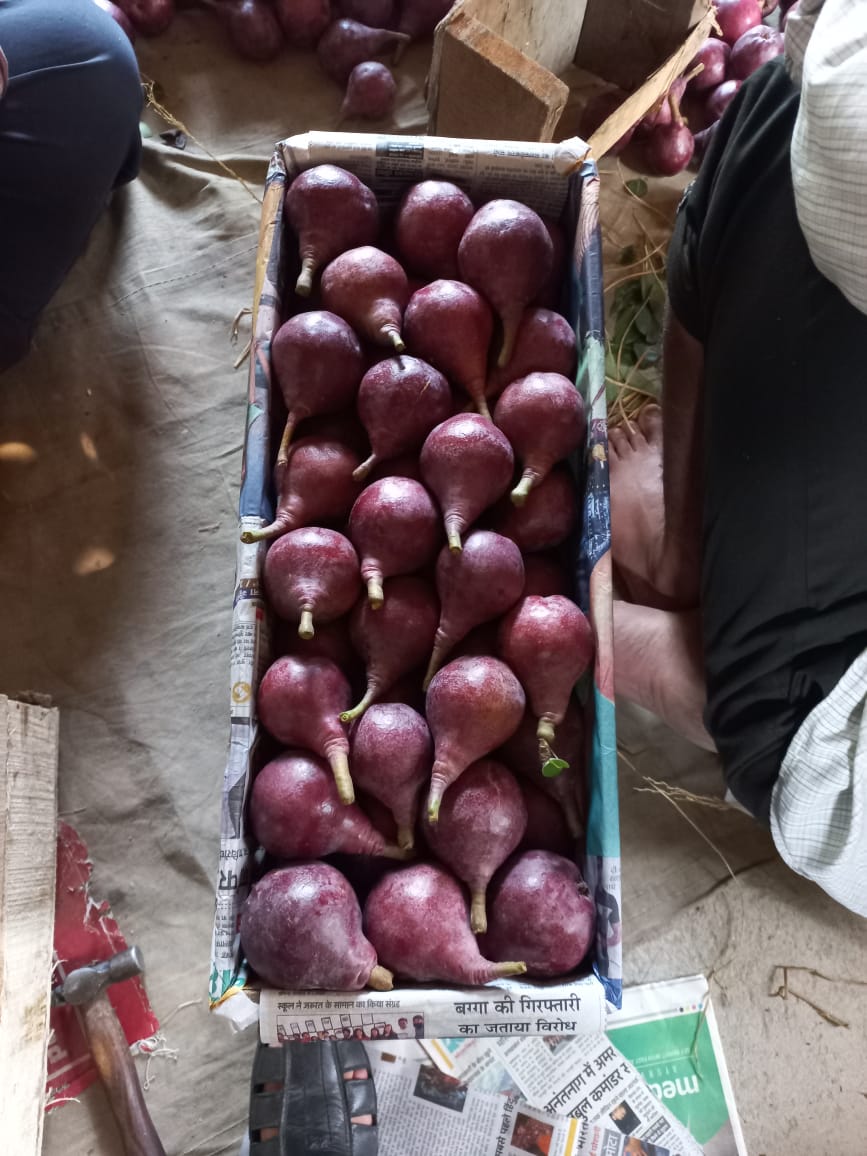
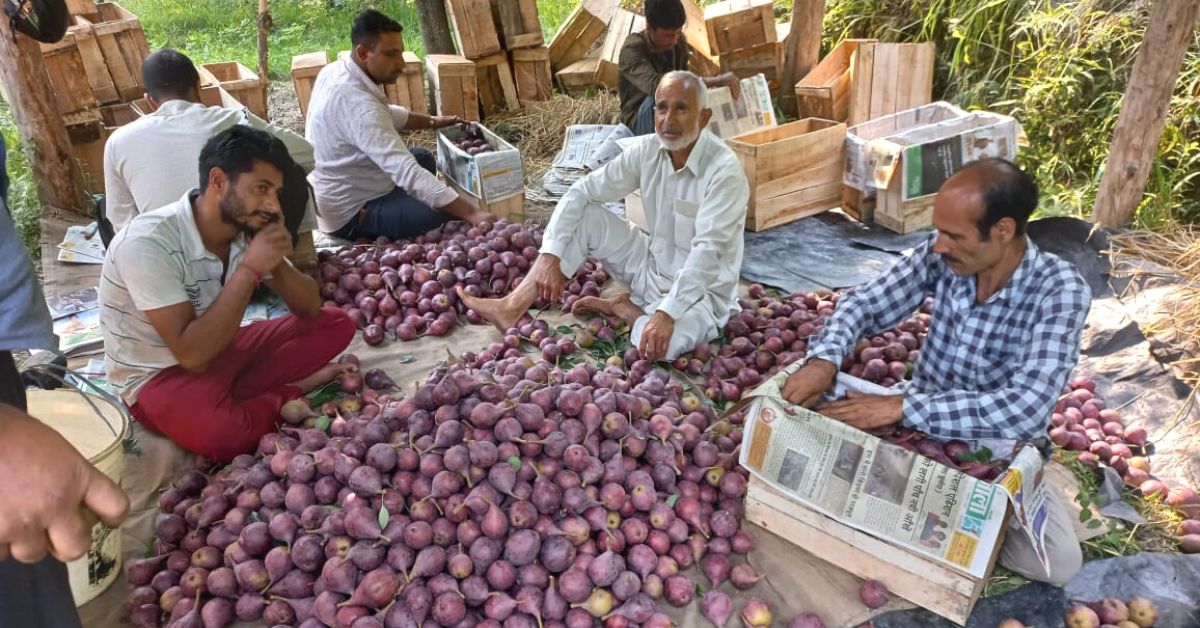
Haji Mohammad Shafi Sheikh from Kashmir quit his job as a contractor in a forest corporation to grow exotic red pears that now fetch him more than Rs 25 lakh a year.

Kashmiri red pears

In 1980, Haji Mohammad Shafi Sheikh, a contractor in a forest corporation, was on a routine visit to Kashmir. He was scheduled to meet his younger brother Abdul Rashid Sheikh and cousin Ghulam Nabi, who was pursuing a degree in Engineering at Srinagar’s Engineering College.

The trio decided to explore a few of the tourist destinations. They started their journey with Nishat, a picturesque area of Srinagar, which houses the famed Mughal Garden, home to mighty Chinars.

A road on the outskirts took them to a beautiful garden of green pears, where Shafi and the others spent hours relishing and enquiring about the fruit. 

Their interest in the garden grew to the extent that Shafi embarked on a mission to grow a similar orchard in his native village Bharova in Bhaderwah.

Bharova was still oblivious to the existence of these fruits, given its topography and the fact that locals only cultivated maize and fodder to feed their animals.

“The entire area of Bahrova is hilly and maize was the only crop being grown by farmers because of the drought-prone conditions. People were not financially stable due to which they couldn’t explore other options over maize to earn a livelihood,” Shafi says.

In the same year, he took a few saplings of pears and walnuts home and sowed them adjacent to his house to track their growth. 

“Surprisingly, plants grew normally and within a few years started bearing fruits. It was very much encouraging for me and my interest grew to sow more plants to give an idea to the people about the scope of horticulture in my area,” Shafi says.

The 74-year-old now annually harvests 3,000 boxes of exotic red pears enough to fetch him more than Rs 25 lakh. “The maize which I grew in my fields would fetch me only Rs 4,000 per annum. Often we suffered crop failures and farmers were becoming poorer. But now, farmers of my area are financially stable,” he says.

Apart from pears and apples, Shafi also harvests 15-20 quintals of walnuts annually.

Horticulture Sheikh of Bhaderwah

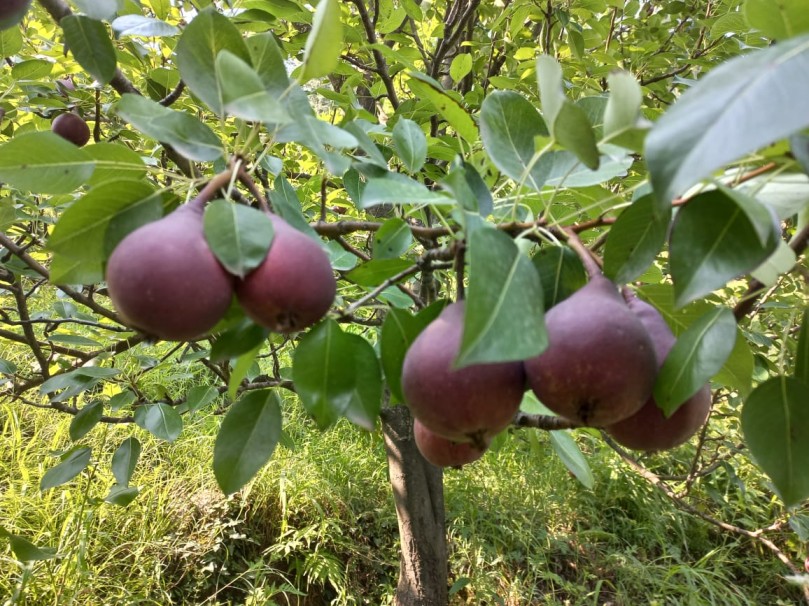
Exotic red pears grown by Shafi Sheikh

The journey of growing pears on land which was confined to just fodder and maize a few decades before was not easy for Shafi. It was indeed a work of patience and determination for him, who would take the help of experts to have disease-free produce.

“In 1993 when I saw my pears growing, I left my job immediately and devoted my entire time to horticulture. I always had a hope that my efforts will change the fate of the people of my village,” he says.

After reaping benefits from his efforts, Shafi finally decided to completely abandon the custom of growing maize in 2002 and shifted to horticulture, despite opposition from his neighbours and family. “It was a very difficult decision for me and people would often question me for giving up maize cultivation. The initial years were full of hardships as plants needed years to bear fruits,” he says.

Growing native pears and walnuts didn’t satisfy his appetite and Shafi finally sought help from Sher-i- Kashmir University of Agriculture Science and Technology Jammu to grow exotic red pears, which he only had heard about till then.

“Seeing my commitment and desire to expand my orchard scientifically during a routine visit by a team of scientists from Krishi Vigyan Kendra, one of the scientists, Dr Vikas Tandon, who is a professor at SKUAST Jammu handed me a few Italian pear seedlings, which was a significant turning point in my path,” he says.

After successfully growing red pears, he grafted green pears plants with red pear fruits to grow high-quality fruits in his orchard. “Now I have some 250 red pear trees and apart from them, I grow green pears, apples and other variety of fruits. For research, I visited Himachal Pradesh and other states to learn technicalities growing exotic fruits in my orchard,” he says.

He is hoping his production increases in the coming years as scores of his plants are ready to bear fruits. “I keep on experimenting with my orchards. From spraying quality pesticides to timely de-weeding, my production will increase in coming years,” he says.

A ray of hope for Bhaderwah farmers

Red Italian pears

Seeing Shafi’s hard work bearing fruits, his younger brother Abdul Rashid too has shifted to horticulture and has over 2,500 trees of pears in his orchards. His cousin Ghulam Nabi too followed his path and grew pears on his land to get better returns.

“I feel happy that my village is gradually progressing. I can now see a lot of growers, who are dedicated to growing pears and other fruits in our village,” he says.

Not just Bharova, adjacent villages like Khalo and Shanatra too are gaining recognition for growing exotic Italian red pears. These three villages grow nearly 1.5 metric tonnes of red pears annually.

Many farmers are getting inspired by his efforts and taking of horticulture in the hilly district of Bhaderwah. “Our district was only known for its breathtaking landscape a few decades before. Now, with the efforts of Shafi Sahab, we are growing quality exotic pears, which are very unique and have a huge demand in the market,” says Abdul Sattar, a framer.

Today, 165 households from the villages of Bharova, Khalo, and Shanatra have shifted to cultivating fruits, particularly Italian pears, taking their cue from Shafi. 

Horticulture, an employment generator

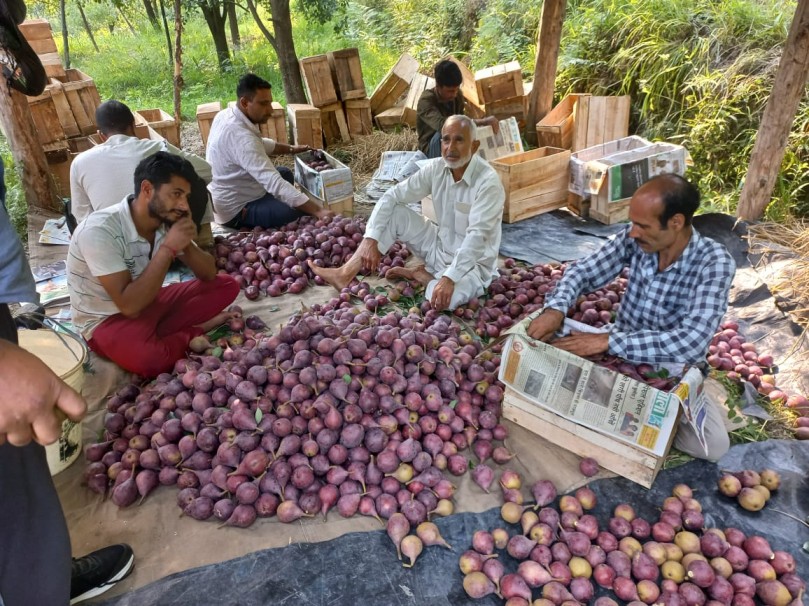
Haji Mohammad Shafi Sheikh with his red pear produce
Haji Mohammad Shafi Sheikh now helps other farmers in the region with practising horticulture.

Ever since Shafi took this initiative, the fate of the village has changed. Horticulture has been the employment provider to the village as more youth associate themselves with the growing pears.

During the season he employs almost 25 people in his orchards, who look after spraying, pruning and harvesting of pears. “Initially I had four boys who would look after my orchards. Now almost 25 boys remain associated with me during harvest season,” he says.

Fifty-year-old Krishan Lal, a resident of village  Khalu in Bahderwah has been working for over 15 years with Shafi as a packer. He has been earning a decent livelihood and says, “I was working as a farmer before and my earnings were not enough. Now I earn some Rs 30,000 during the season at Shafi sahab’s garden.”

Shashi, a 35-year-old man too has been associated with the trade of red pears. “Horticulture has a great scope in Bhaderwah and scores of the youth are getting employed in this sector,” he says.

Edited by Yoshita Rao

source: http://www.thebetterindia.com / The Better India / Home> English> Agriculture / by Firdous Hassan / August 10th, 2022

Mohammed Yasin, A Calligrapher and Painter Par Excellence, is No More

Mogalgidda (Mahbubnagar District) / Hyderabaad, TELANGANA :

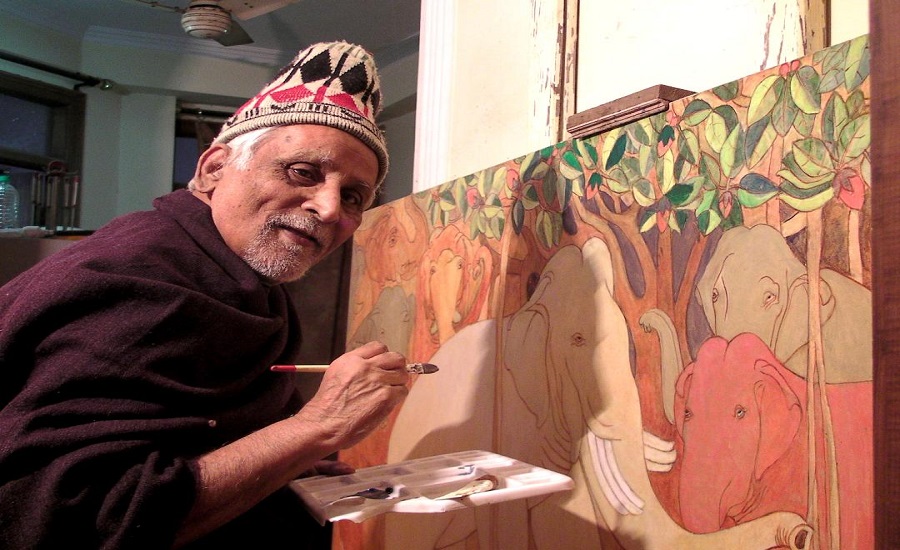
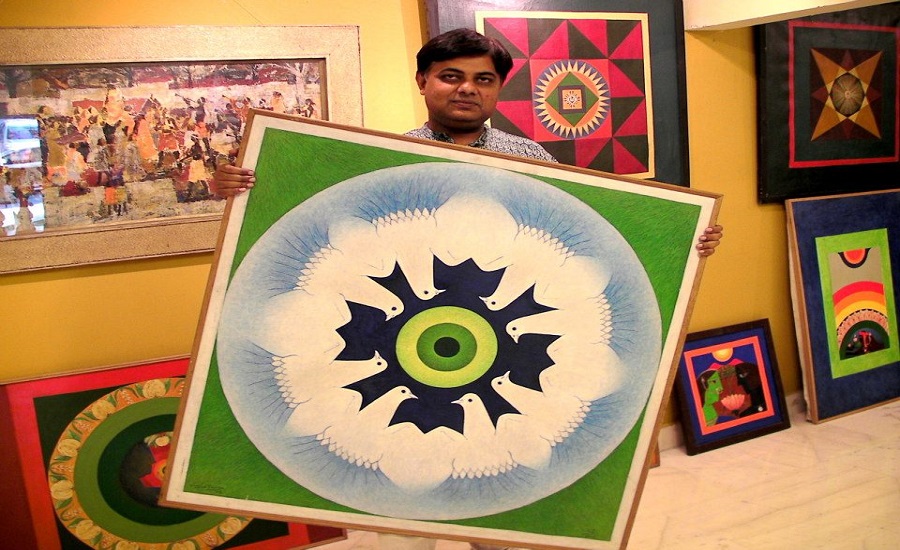
Mohammed Yasin, veteran painter and one of the best calligraphers in the subcontinent.

OBITUARY

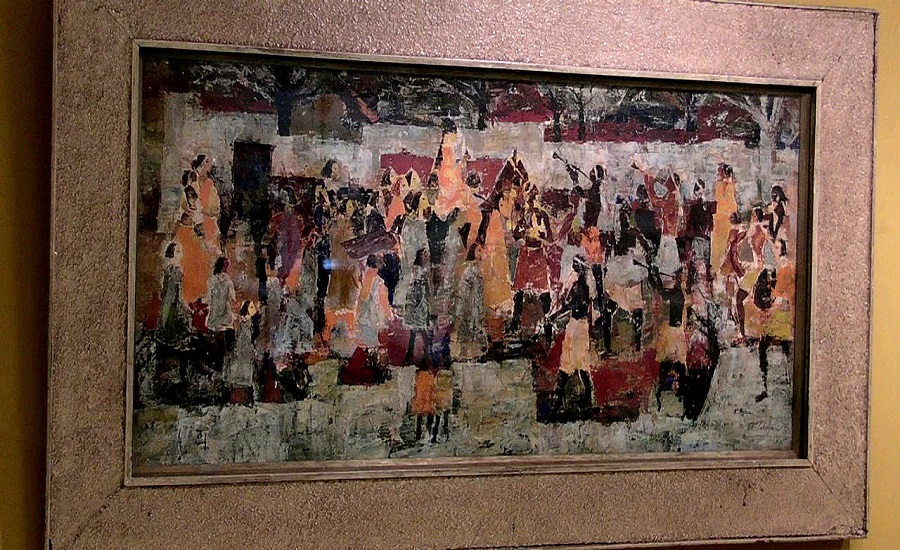
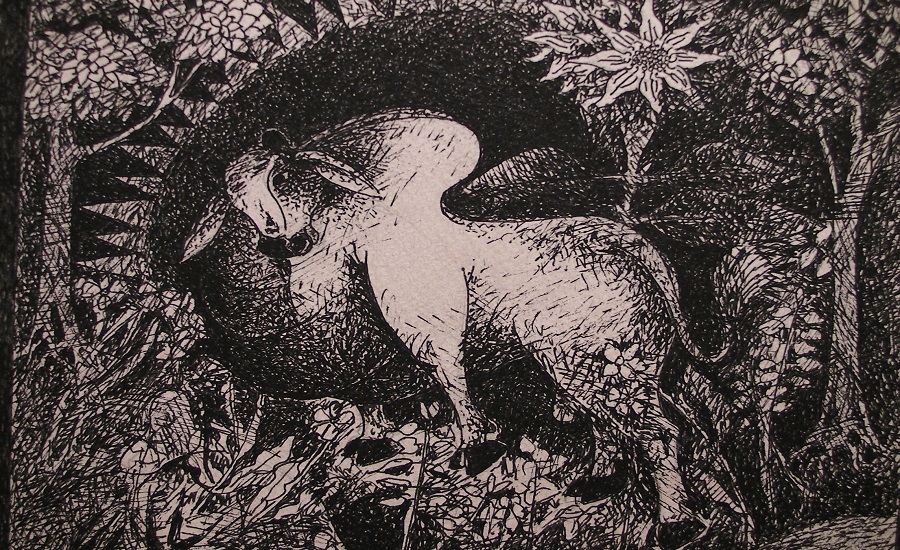
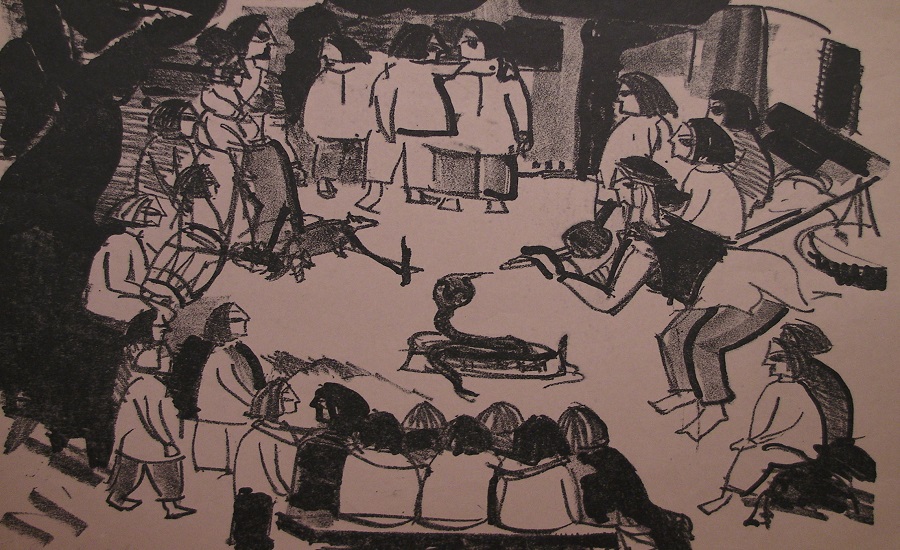
Yasin’s early works have explored all available mediums from lithography, etching, aquatint, engraving, dry point, serigraphy, mezzotint water colours, oils, gouache and egg tempera.

“85-year-old veteran artist Mohammed Yasin’s character impresses as a person and his characteristics as an artist. Perhaps the distinction is unreal, for, in his case, it is the same integrity that reveals itself in the structure of life and in self-expression through art.”

These were the words said a few years ago by a noted art critic for Mohammed Yasin, veteran painter and one of the best calligraphers in the subcontinent, who passed away on August 19.

Yasin was born in Mogalgidda, a village near Shadnagar, 30 km from Hyderabad. As a young school boy, he felt an aptitude for Art when he was just 14 years old. After passing his elementary and intermediate drawing examinations, he moved to Hyderabad city with his family members from his birthplace Mogalgidda.

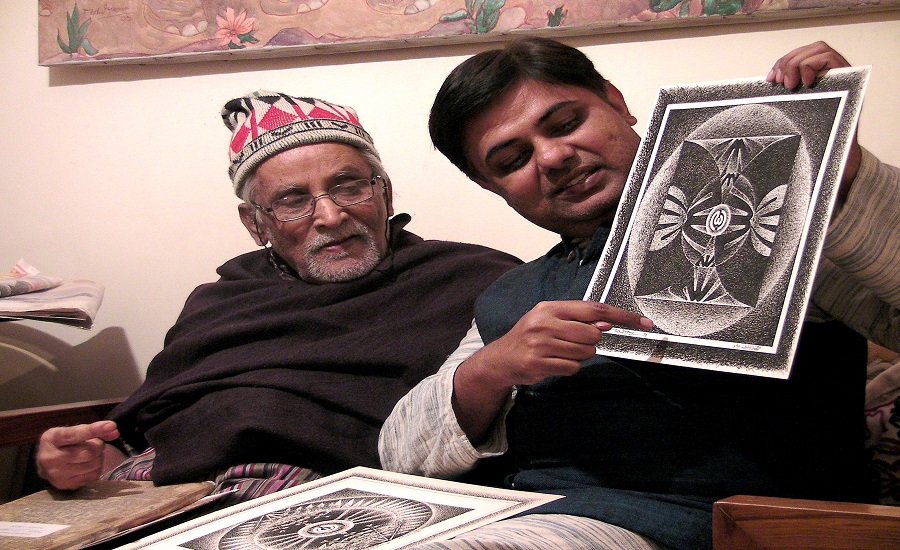
Showcasing art work.

Though quiet in his demeanour, Yasin has had seriously tragic experiences. His father passed away when he was only 14 months old. He was brought up under his mother’s care and guidance. He had to grow up with many hardships. While as a boy, he was affected by tuberculosis of the spine which has left a limp which necessitates the use of a stick to aid in walking. But through a sustained musing, he has won an inner serenity.

Art works displayed in an art gallery

His most important contribution goes to the art of calligraphy. He chose to work in an abstract symbolic manner. Geometrical elements like the circle within the square, concentric circles, etc. comprise the basic structure emphasizing a symmetrical arrangement and abstract formal values–calm and quiet but they are, nevertheless, active fields. They seem to be deeply influenced by the Buddhist art. They generate impulses of colour and focus attention on the symbolic images they contain.

The use of circle, square, triangle adds to his innovation a transparency, a water colour. The orthodox prohibition of representational figuration in art made the Islamic tradition turn to calligraphy. Yasin has brought to this tradition a modernist love of abstraction and monumental geometricism.

His early works have explored all available mediums from lithography, etching, aquatint, engraving, dry point, serigraphy, mezzotint water colours, oils, gouache and egg tempera.

His works are very poetic and also dramatic; actually they are calligraphic in nature. Tantric symbolism, Sufi mysticism, echoes of the miniature schools, shades of thankas and pictorialised Arabic Calligraphy are all inspirations which could be identified in Yasin’s work.


Aseem Asha Usman is founding director of Aseem ASHA Foundation, and has been documenting the life and works of the veteran calligrapher and painter.

source: http://www.clarionindia.net / Clarion India / Home / by Aseem Asha Usman / August 20th, 2020

Pir of Pagaro of Sindh sacrificed for India’s Freedom

SIND, BRITISH INDIA :

Pir Pagaro of Sindh
Pir Pagaro of Sindh

Indians and other historians have either tried to whitewash the revolutionary movements for freedom or presented these as disjointed localised efforts.

Even the largest movement of Azad Hind Fauj led by Netaji Subhas Chandra Bose has been narrated in a staggered manner and an episodial manner like the battle of Burma (Mayanmar) and the battle of Imphal. The picture thus presented is of an army fighting at a frontier with no support elsewhere. This history needs to be revisited.

In 1930, Sayyid Sibghatullah Shah Al-Rashidi called Pir of Pagaro, a Muslim Saint from Sindh with a huge following, was arrested by the British Government for ‘creating disturbances’. He was accused of instigating anti-colonial feelings among his followers known as ‘Hurs’ (literally meaning free). The decision to send him to a prison away from Sindh rather shaped this anti-colonial Muslim saint into a nationalist revolutionary. 

In the Bengal hail, he met several revolutionaries and realised that what he had experienced in his area was the same being experienced by others. He understood that British colonialism was destroying the nation and Hindu-Muslim unity was the only weapon to fight them.

From the prison, he started preaching nationalist messages. Sarah F. D. Ansari of the University of London in her book Sufi Saints and State Power: The Pirs of Sind, 1843 – 1947, writes, “messages strongly coloured with a radical nationalist tinge were smuggled out in the form of notes written in the margins and between the lines of books and magazines. They condemned the British for treating ‘Indians like donkeys’, loading them down with ‘England’s burdens’, and pointed out that the only reason why the British were able to rule over 300,000,000 people was that Indians were ‘cowards’.”

In 1936, when he returned to his seat at Khairpur in Sindh, Pir of Pagaro had turned a revolutionary.

He started establishing links with revolutionary leaders of Bengal as well as those living in Europe, especially Germany. He started inviting Congress leadership to his area and organise Hindu-Muslim unity meetings. We must keep in mind that it was 1938 and Subhas Chandra Bose was the President of Congress. Unsurprisingly when Subhas formed Forward Bloc after his famous differences with Mahatma Gandhi, Pir of Pagaro asked his followers to back Forward Bloc and denounced the stand of Congress. 

In 1939, the centuries-old Hindu-Muslim unity of Sindh was severely shattered over the Manzilgah mosque dispute and the riots that followed. Pir of Pagaro ordered his large following of armed followers known as ‘ghazis’ to save Hindus from the Muslim fanatics. Sarah F. D. Ansari writes, “In his newspaper, the Pir-jo-Goth Gazette, he (Pir of Pagaro) called for Hindu-Muslim unity: ‘My forefathers’, he wrote, ‘treated Hindus and Muslims alike as a sacred trust. The same is my principle . .. Allah is the same as Parmatma, though with different names. I will be happy when I see temples and mosques together with only a wall dividing them and everyone [worshipping] according to their rights so that no one may have a grievance against the other’. In a similar vein, he denounced the Hindu Sabha and the Muslim League as divisive communal movements. Only when Hindus and Muslims combined would ‘peace . . . be achieved and satanic deeds . . . stopped’: Indians had to be ‘national minded’ and regard India as a country which belonged to all its inhabitants.”

An intelligence report dated October 1940 says, “Pir of Bharchundi is not liked by the Pir Pagaro, who disrespected the Pir of Bharchundi and sent him away from his ‘Kot’ when the Pir of Bharchundi last visited the Pir Pagaro… the reason for such treatment of the Pir to the Pir of Bharchundi was that the Pir of Bharchundi would not assist in getting the murderers of Hindus arrested.” 

It further says, “Pir Pagaro has won great sympathy of the Hindus.” Sarah also points out how the Pir came out in support of a Muslim man’s right, who had earlier converted into Islam from Hinduism, to reconvert into Hinduism. “

Another intelligence report noted that Pir of Pagaro has enlisted at least 6,000 militants to fight with an oath to die for the cause. These militants were called ghazis. Ghazis had paraded and displayed their military skills in front of him during his visits to Jaisalmer and Jodhpur as well. The nationwide presence was a threat for the British. The report further noted, “the Pir was renewing his contacts with terrorists (terrorists was a term used by the English for revolutionaries) who had been in prison along with him in Bengal. His visits to Calcutta (Kolkata) were, it is said, performed for no other reason.”

The British apprehension was not wrong. Pir Pagaro had contacts with Bengali revolutionaries and Subhas. If Subhas raised an army on Eastern Front, Pir of Pagaro raised another on the Western Front. An intelligence report from 1941 noted, “He (Pir of Pagaro) has got his electric plant and radio set at which he and his followers hear Hindustani programs from Germany and then spread the German news in the villages which has a disquieting effect on the local people.” The report also pointed out that “the villainous activities of the Pir and his growing contempt of authority are becoming a byword throughout India”.

Pir of Pagaro was running an independent government in that region of Sindh with the help of his militia. The British Government arrested him in Karachi on the pretext of holding talks with him. His ghazis would not stop and kept attacking the British infrastructure. They were so much feared that the Legislative Assembly members did not want their names to become public for voting in favour of an act against Hurs (followers of Pir of Pagaro).

Sarah notes, “The level of fear which existed in Sind at the time even inside the Legislature was reflected in the session being held in camera. Members of the Assembly were not prepared to vote openly in favour of the act ‘lest they were marked down for the Pir’s future vengeance’.” The fear was not unfounded as soon after Ghazis killed the son of Hidayatullah, one of the tallest Sindh leaders in that Legislative Assembly, by derailing a train. 

It did not take much time and within weeks Martial Law was declared. The British had to open a war front at the time of World War II. Sarah writes, “The area north of Sanghar and the Thar desert (Rajasthan) were thoroughly reconnoitered from the air; paratroopers and bombs were used against bands of armed men. Hur villages were raided, wells stopped up and their cattle herded into other districts.” On the other hand, the Pir was being tortured to ask his followers to put down their weapons. 

Did the nationalists concede defeat? No. The Pir of Pagaro, Sibghatullah, embraced martyrdom at the gallows on 20 March 1943, after a sham of a court trial. Hurs kept fighting the British till 1946 even after their Pir was gone. 

source: http://www.awazthevoice.in / Awaz, The Voice / Home> Culture / by Saquib Alim / July 23rd, 2022

These youngsters want to make Hyderabad the hub of robotics

Hyderabad, TELANGANA :

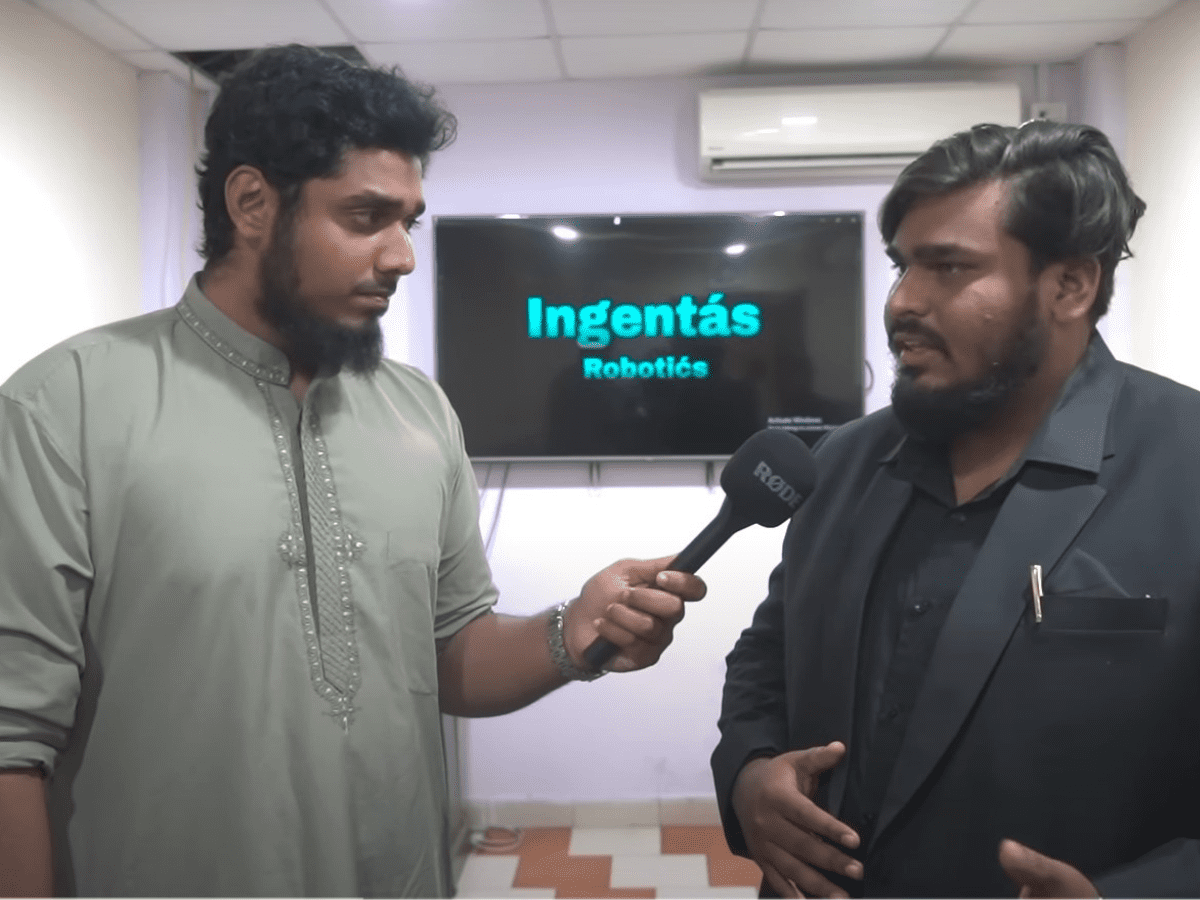
Ingentas is teaching people everything from basic batteries, jumper wires, buzzers, and sensors to the robotic arm, NASA’s Mars rover, and A.I.-driven drones.

Hyderabad: 

Realizing that any type of access to learning robotics and artificial intelligence is not available to most people, Ingentas started off in 2021 with its vision to empower local communities by teaching them technologies that will be more relevant in the future. It’s a first-of-its-kind workshop in Hyderabad, completely run by engineering graduates and students that aims to make the city a hub of robotics.

Tahami Mundewadi, who has been in the field of robotics for the last four years is the founder and CEO of Ingentas. Speaking to Siasat.com, he said that joining the Robotics club at Muffakham Jah College of Engineering (MJCET) helped him learn and grow more in the pursuit of his passion.

“Everything from a vacuum cleaner to the robotic arm used to build cars, all are based on robotics and artificial intelligence, we are living in an interesting time where even surgeries are being performed by robots,” Mundewadi remarked.

He further added that the world is moving at a very fast pace in this direction and that we have to be in this race and compete with the others.w

Ingentas is teaching people everything from basic batteries, jumper wires, buzzers, and sensors to the robotic arm, NASA’s Mars rover, and A.I.-driven drones.

Mundewadi stated, “you don’t necessarily have to be an engineering student to learn robotics, anything with passion can come.”

Furthermore, the CEO of Ingentas added that he believes that in 50 years everything will be based on robotics. “And to make anything mainstream in society we have to begin from the school level and that’s why we have classes from third-grade level all the way to advanced post-graduate level,” he remarked.

source: http://www.siasat.com / The Siasat Daily / Home> News> Hyderabad / by Usama Hazari / August 06th, 2022

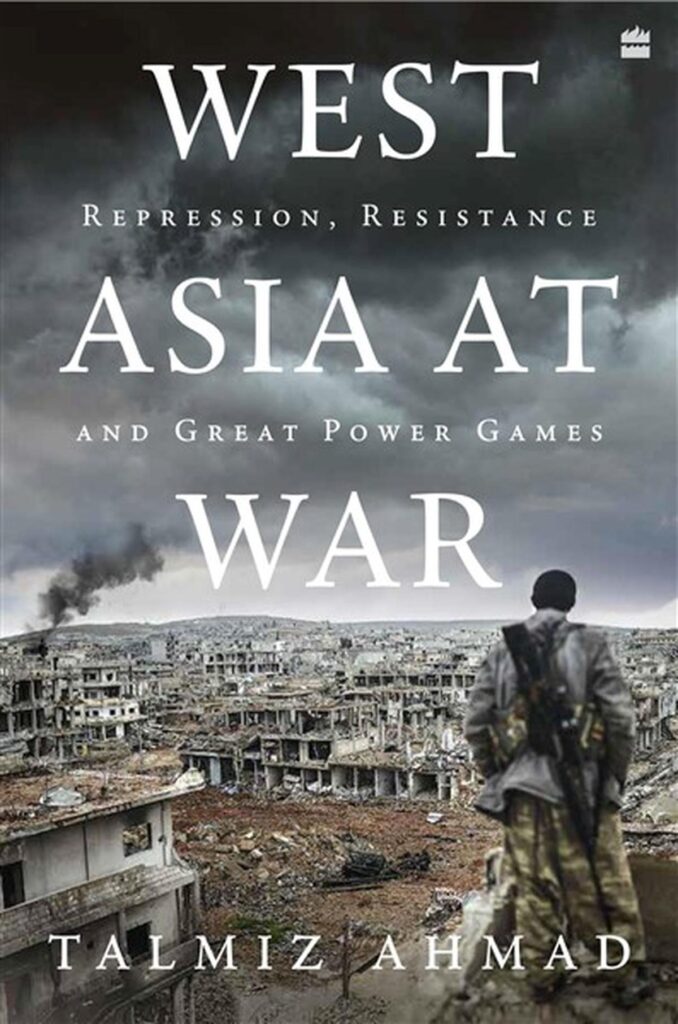
Talmiz Ahmad’s West Asia at War review: Beyond Dubai’s riches

INDIA :

A veteran diplomat Talmiz Ahmad provides a rare non-Western narrative of complex undercurrents in West Asia, where inequality, politics over oil and regional rivalries are fuelling tensions

West Asia is a strategically critical region faced with confrontation and conflict amid growing economic prosperity. In his latest book,  West Asia at War, Talmiz Ahmad, a former ambassador, brings out the diverse political, religious, military, socio-economic and cultural forces shaping the region. His long diplomatic career with postings there and wide-angled view from the headquarters gave him uncommon insights, which he pieces together in this book providing a rare non-Western view of complex undercurrents.

The exhaustive work traces the origins of the troubled region to the 17th century when Britain and France fiercely fought with each other over resources and zealously guarded their colonial empires. The new states that emerged in the wake of the Ottoman Empire’s fall also fell prey to this contestation. The discovery of large quantities of hydrocarbons at the beginning of the 20th century proved to be the region’s nemesis as it exposed it to outside competition and a rivalry between superpowers.

Internal bickering

Ahmad elaborates on the rise of Arab nationalism after World War II, tracing developments leading to the nationalisation of the Suez Canal by Gamal Abdel Nasser.

He explains how regional rivalries destroyed West Asia from within. The two major Arab powers, Egypt and Saudi Arabia, representing different ideological trends — revolutionary and conservative — played against each other. Further, the Saudi-Iran rivalry deepened Sunni-Shia hostilities. In a bid to fortify its standing in the region, Saudi Arabia’s call for ‘global jihad’ unwittingly propped up Osama bin Laden and Mullah Omar, with disastrous consequences. The Palestine cause unified the Arab world, but the constant internal bickering and feuding weakened their collective resolve for Palestine.

Gulf monarchies and the Muslim Brotherhood fiercely competed for the domination of political Islam. The massive oil revenues strengthened authoritarian regimes, whose economic control often conflated with people’s livelihood issues. With about 66% of 400 million Arabs redundantly poor and 10% controlling 61% of the wealth, the region is one of the most unequal in the world. Beyond the dazzle of Dubai, Doha and Riyadh, the author observes, is pervasive poverty, inequality and injustice that are alienating people and making them susceptible to fundamentalism, drugs, terrorism and extremism, further fuelling tensions within.

Ahmad rips apart the U.S. policy towards West Asia that is anchored in the influential ‘Israeli lobby’. Its twin objectives of securing oil flows and guaranteeing the security of Israel at the cost of Iran are deeply flawed and the much-maligned Iraqi WMD (weapons of mass destruction) programme is grossly exaggerated, he writes. The causal linkage to 9/11 and the injustice meted out to Palestine by Israel, backed by the U.S., are two examples of short-sighted policies which led to Islamophobia and fomented the fictitious idea of a ‘clash of civilisations’ as a living reality in the West.

India’s stand

The evolution of India’s policy towards West Asia is put in context by Ahmad. India’s leadership viewed the Palestine issue and the Suez crisis within the framework of the Arab nationalist struggle against British imperialism. Their common commitment to liberation movements drew them naturally to the Non-Aligned Movement. However, some perceptible changes in the approach in the last two decades stem from India’s newfound confidence as an emerging economy with the ability to buy large supplies of Gulf oil. India’s de-hyphenation of its relations between Palestine and Israel is pragmatic as well as in sync with the changing dynamics in the region. Closer ties with Israel also brought India the backing of the U.S. on several fronts. The strategic depth that our relations attained is attributed to Prime Minister Narendra Modi, who took a personal interest through frequent travels to the region to build solid economic partnerships as well as to secure the interests of our strong resident community.

The ongoing geo-political churn in the region is insightfully covered. Bahrain, Sudan, Morocco and the UAE seeking cautious normalisation of relations with Israel would have a salutary effect on both the regional stability and the survival of Israel. The realisation that Israel’s subversive activities against Iran could neither effect regime change nor completely disrupt its nuclear programme should prompt a dialogue between them.

The Shia-Sunni sectarian binary used for mobilising hostility and rancour is also losing steam. This apart, the author underlines that the prospect of a stable and prosperous West Asia is contingent on real internal reform that goes beyond optics and palliatives.

The perception that disengagement of the U.S. from the affairs of the region would have significant implications for itself and the security of West Asia is indisputable. China-Russia working in tandem and Iran-Turkey aligning their positions pose a serious challenge to U.S. hegemony in the region.

All Gulf countries have upgraded their economic relations with China. Ahmad underscores the point that while India is a natural partner of many in the region, it needs to be diplomatically agile to manage the challenges arising out of these new alignments in West Asia.

West Asia at War; Talmiz Ahmad, HarperCollins, ₹799.

The reviewer is an Indian Foreign Service Officer.

source: http://www.thehindu.com / The Hindu / Home> Books> Reviews> Politics / byDammu Ravi / July 23rd, 2022

Hyderabad’s Zubair emerge champion at National Motorcycle Racing Championship

Hyderabad, TELANGANA :

Hyderabad’s Zubair emerge champion at National Motorcycle Racing Championship
Hyderabad racers Rajender Beedani, Md Samrul Zubair, Jayanth Prathipati and Rahil Shett with their trophies.

Chennai: 

Md Samrul Zubar of team ‘Race’ists’ Hyderabad won the Race-2 of Stock upto 165cc category of the Madras International Circuit, hosted by MRF MMSC FMSCI Indian National Motorcycle Racing Championship in Chennai on Sunday.

Zubair had to start the race from the 21st position followed by a crash in Race-1. He started the race with a fantastic launch of the line and displayed phenomenal composure till the end of the race without any miscalculated moves.

“I started the race from 21st position and had only one thing in my mind, to win the race. I determined myself to be patient without losing my nerve and keep gaining positions. I had an extremely tough fight with Sarvesh and Kayan of team Sparks Racing and Aldrin from Chennai. I made sure my every overtake was precise and clean so that I could finish the race firmly in first position,” Zubair said.

Another racer from Hyderabad, Rahil Shetty of team Gusto Racing India secured second and first positions in the Race-1 and Race-2 of the Petronas TVS One Make Apache RR310 Open category respectively. He managed to finish in fifth in the Race-2 of Pro-stock 301-400cc category making it the only KTM machine to finish in top five.

Janagaon’s racer Rajender Beedani of team Idemitsu Honda Racing India finished second in the Race-2 of Honda One Make CBR 150 NSF category. He gave his best despite the weight disadvantage he has compared to the fellow riders and made sure to stay put in the fight without losing his composure.

source: http://www.telanganatoday.com / Telangana Today / Home> Sports> Hyderabad / by Telangana Today / August 07th, 2022

India’s Mohammed Ibrahim qualifies for Sim Racing World Cup final

INDIA :

India's Mohammed Ibrahim qualifies for Sim Racing World Cup final
Mohammed Ibrahim. (Photo- ESFI)

New Delhi [India], August 6 (ANI):

India’s Mohammed Ibrahim secured his place in the final of the first-ever Sim Racing World Cup by finishing second in the Asian Continental Qualifiers.

Ibrahim ended the race impressively with a lap time of 1:33.575 behind Thailand’s Thanathip Tanalapanan, who grabbed the top position after completing the race in 1:33.561.

India’s other participating driver, Davlish Singh, on the other hand, secured the sixth position with a lap time of 1:34.026 at the Qualifiers which saw the participation of 14 top drivers from across Asia, competing for two available spots in the final.

Both Ibrahim and Davlish had won the NESC22 (Simracing), the Indian National Qualifiers which were held in a hybrid mode at Esports Federation of India (ESFI)’s multiplex partner INOX’s Megaplex, Malad, Mumbai.

“Since my childhood, I have been fascinated with racing cars, which developed into a passion for motorsports. It is a surreal feeling to qualify for the grand final of the SRWC. I feel glad to have carried the momentum in the qualifiers after winning the NESC and hope to do so in Monaco as well. It is going to be a challenging experience to compete with the best sim racing drivers from all over the world.” said the jubilant Ibrahim, who already has titles of the Isolation E Championship, McLaren Logitech G Challenge, US F4 Kcr Championship and Ultimate E Championship to his name.

“I will be working on a few minor things to improve my gameplay and perform at the highest level to make my country proud in the finals. Racing is my goal and vision, wish to excel in both Sim as well as on Real Motorsports, and always look for opportunities and support.” said the jubilant Ibrahim, who already has titles of the Isolation E Championship, McLaren Logitech G Challenge, US F4 Kcr Championship and Ultimate E Championship to his name,” he added.

Interestingly, Ibrahim’s finish was also the fifth fastest, globally. Apart from Tanalapanan, only David Toth of Hungary (1:33.197), Slovenia’s Jernej Simonic (1:33.329) and Spain’s Pedro Sanchez (1:33.336), who qualified from the European continent, recorded less time than Ibrahim.

The Continental Qualifiers saw drivers from 39 countries, divided into 5 continents. The final will take place in Monaco from October 23 to 24 as Ibrahim among 12 top drivers will fight for the title.

“Ibrahim has made the entire country proud by making sure India is one of the countries that contests in the inaugural Sim Racing World Cup final. Both Ibrahim and Davlish performed brilliantly against the top drivers from the Asia region. This is a huge achievement for the sim racing community and another step towards further growth of Esports in India. Everyone at ESFI wishes him the best of luck to win the championship.” said Lokesh Suji, Director of Esports Federation of India and Vice President of the Asian Esports Federation.

The first-ever Sim Racing World Cup will be organised by the International Esports Federation in association with Monaco Esports Federation. The tournament features one of the world’s most popular sim racing titles, Assetto Corsa. (ANI)

This report is auto-generated from ANI news service. ThePrint holds no responsibility for its content.

source: http://www.theprint.in / The Print / Home> Sport / ANI / August 06th, 2022

Indian women’s hockey team wins bronze at CWG 2022

JHARKHAND / INDIA :

Indian women's hockey team
Indian women’s hockey team

Salima Tete’s goal gave India the lead and they led 1-0 at halftime, paving the way for an entertaining second half.

Birmingham: 

The Indian women’s hockey team beat defending champions New Zealand 2-1 in a shootout to win the bronze medal and finish its campaign at the Commonwealth Games on a high note here on Sunday.

Leading 1-0, India conceded a penalty corner with less than 30 seconds to go for the final hooter, as the match went into a shootout after Olivia Merry’s equaliser.

India though held their nerves in the shootout to emerge winners.

Coming off their heartbreaking loss to Australia in a controversial semifinal, India showed the intent to wrap up their campaign with a win and earn a podium finish.

Salima Tete’s goal gave the Indian women’s hockey team the lead and they led 1-0 at halftime, paving the way for an entertaining second half.

Neha Goyal almost doubled the lead after the break, but good defending by New Zealand prevented the Indians from consolidating their position.

New Zealand has had to do a lot of defending and they’ve done quite well to remain disciplined until that Tete’s goal.

source: http://www.eastmojo.com / East Mojo / Home> News / by Press Trust of India / August 07th, 2022

CWG 2022: Indian boxer Mohammed Hussamuddin claims bronze in Men’s 57kg final

Hyderabad, TELANGANA / INDIA :

CWG 2022: Indian boxer Mohammed Hussamuddin claims bronze in Men’s 57kg final

Birmingham: 

Indian pugilist Mohammed Hussamuddin claimed the bronze medal in the Men’s 57kg Featherweight category at the ongoing Commonwealth Games 2022 on Saturday.

The 28-year-old suffered a 4-1 defeat against Ghana’s Joseph Commey men’s featherweight category semi-finals bout. With this medal, he became India’s 13 bronze medallist at the Commonwealth Games 2022.

Hussamuddin also won the bronze medal at Gold Coast 2018, making this his second bronze in a row at the CWG.

Earlier, Jaismine Lamboriya clinched the bronze medal in the women’s 60 kg Lightweight category after losing to England’s Gemma Paige at the ongoing Commonwealth Games 2022 on Saturday.

The English boxer won the match as a split decision worked in the Brit’s favour, to seal her slot in the final of the event with a 3-2 win over the Indian.

source: http://www.telanganatoday.com / Telangana Today / Home> Others> Sports> CWG 2022 / by IANS / August 07th, 2022