All posts by mpositiveone@gmail.com

Tongue of pearls: Mutribi al-Asamm Samarqandi’s ‘Conversations with Emperor Jahangir’

DELHI :

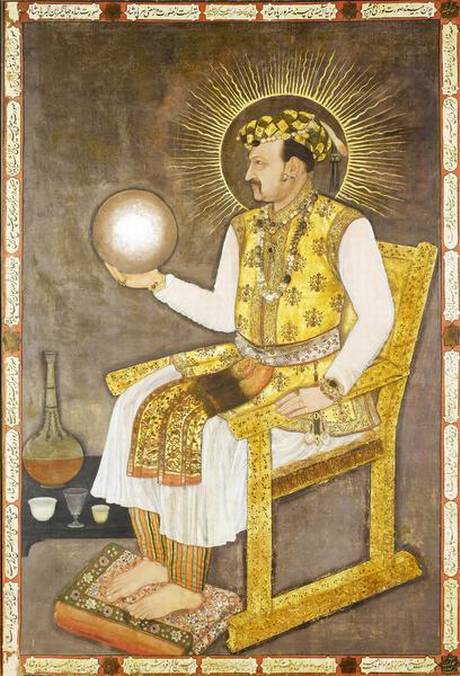
Emperor Jahangir’s inquisitive mind is revealed in his conversations with Mutribi al-Asamm Samarqandi

The 18 decades of the Great Mughals (1526-1707) produced some first-rate literature.

Many fine books came from the rulers themselves, steeped in a tradition of high culture that required them to be literate. The Baburnama, the first memoir/ autobiography of the subcontinent, is as readable today and as modestly written as Julius Caesar’s books (Cicero said of Caesar’s prose that it is unadorned, like a classical statue). The Tuzuk of Jahangir is filled with bombast, vanity and anger, but it is so honest and has so much detail, particularly on the side of his interests as a naturalist, that it is a work of the highest order.

And then there are the works that are smaller but sparkling, like little jewels. One such is the life of Humayun by his sister, Babur’s daughter and Akbar’s aunt, Gulbadan Begum. Written in Persian, as opposed to the Chagatai Turk that Babur wrote in, it is clear and direct, and as thorough a portrayal of Babur and Humayun as what they produced themselves. The story we know of Babur circumambulating the bed of a very ill Humayun and asking, in pagan fashion, to be taken instead of him, is from her book.

Courtly manners

The work we are looking at this time is from a lesser noble, a traveller from Samarqand called Mutribi al-Asamm, who spent time in Jahangir’s court. It is available in translation as Conversations with Emperor Jahangir. The Mughals loved having people over from their ancestral lands, which they would never see again, and lavished them with gifts and honours. Mutribi came to India (Jahangir was based in Lahore) roughly 400 years ago in 1627, when he was 70 and the emperor 58, only a few months away from his death.

Mutribi’s writing reveals a lot about the flowery manner of the court. He visits Jahangir a month after arriving in India and the emperor asks why he has waited this long. Mutribi refers to himself in the text as the “incompetent narrator” and Jahangir as possessing “a tongue of pearls”. At that first meeting, Jahangir gives him a thousand rupees and Noor Jahan (“may her chastity be preserved”) another five hundred, possibly the equivalent of crores in our time.

At their next meeting, Jahangir inquires about the hue of the black stone from which his ancestor Timur’s sepulchre is made in Samarqand. The emperor produces stones which Mutribi compares unfavourably to the original (“it is so bright you can see your face in it”).

Lord bountiful

The transactional manner of the exchanges is apparent from another meeting in which Jahangir asks Mutribi which of the Iraqi thoroughbred horses on display he would like to be given. Mutribi says, “whichever is more expensive,” possibly to make the emperor feel that he is being generous rather than his supplicant greedy. Again, when Jahangir offers him a choice of saddle — velvet or broadcloth — the answer is velvet, because it is more expensive. Jahangir says velvet gets wet easily, to which Mutribi says that the monsoon is far off. The two meet 24 times in two months before Mutribi returns. Towards the end, the following conversation is held:

“The pleasantness of Samarqand was being discussed. The Emperor asked me, ‘Is Samarqand spelled with a ‘q’ or with a ‘k’?’

‘Either way is correct,’ I replied. ‘In Tabari’s history and several other books it is referred to as Samarkand, but in popular usage it has become known as Samarqand. Some say that the name comes from Samar and Qamar, two slaves of Alexander the Great who built the city which was then named for them. Their graves are situated in the main market square of Samarqand.”’

Then Jahangir inquires about an ancestral tomb, asking how much it requires to be maintained. ‘“If you want to do it properly, 10,000 rupees,’ I [Mutribi] said, ‘otherwise 5,000 rupees just to keep it going.’

‘If 10,000 rupees will maintain it,’ he said, ‘then we have decided that in accordance with your information we will send 10,000 rupees, in order that that blessed station be maintained.’

I said, ‘O God, as long as the Sun and the Moon shall be, may Jahangir son of Akbar remain King.’”

Aakar Patel is a columnist and translator of Urdu and Gujarati non-fiction works.

source: http://www.thehindu.com / The Hindu / Home> Books / by Aakar Patel / November 13th, 2021
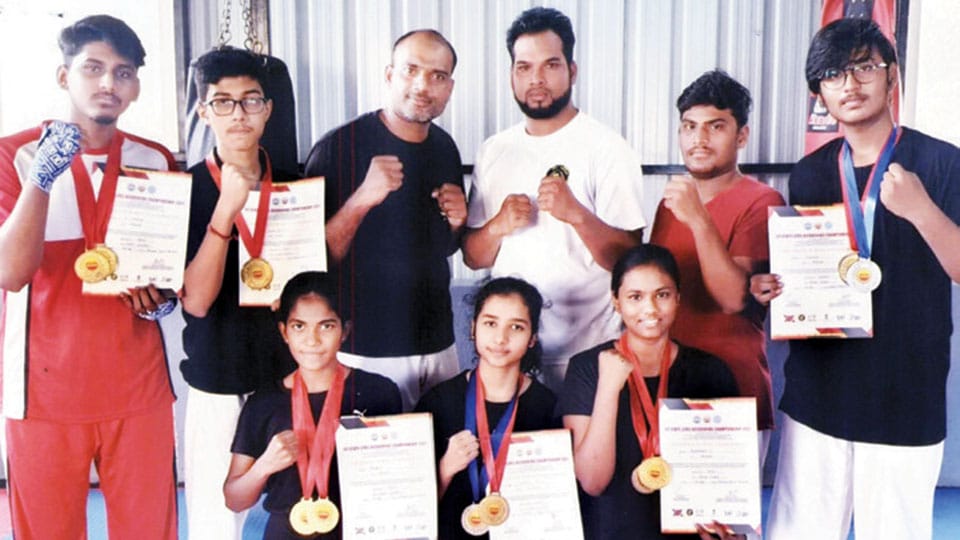
Medal-Winners Of State & Natl. Kickboxing Championship

Mysuru, KARNATAKA :

The students of IKA Karate Academy, Mysuru, have excelled at the 1st State-level Kickboxing Championship organised by Karnataka Kickboxing Sports Association at Yoga Hall, University of Mysore (UoM), recently and have been selected to take part in the national-level event to held in Pune.

Seen in the picture are (kneeling from left) S. Pooja (2 Gold Medals in Point Fight and Light Contact event – 18 years – 52 kg Category), Tasbiya Taskin (Gold – Light Contact and Silver – Point Fight – 15 years – 52 kg) and Keerthana (2 Gold Medals – Point Fight and Light Contact – 16 years – 64 kg);

Standing from left: T. Chanukya (2 Gold Medals – Light Contact and Point Fight – 17 years – 78 kg), Dhiraj (Gold – Light Contact – 15 years – 47 kg), Abdul Waseem (Senior Instructor and Head Coach of IKA), Mohamed Saqeebur Rahman (Senior Instructor and Head Coach of IKA), Lali Vishnu (Asst. Instructor and Coach of IKA) and Nikilesh (Gold – Light Contact and Silver – Point Fight – 15 years – 78 kg). T. Chanukya (standing extreme left) has also secured Silver medal in Light Contact category at the WAKO India National Kickboxing Championship organised by WAKO India Kickboxing Federation in Goa. [WAKO – World Association of Kickboxing Organisations]

source: http://www.starofmysore.com / Star of Mysore / Home> Photo News / November 10th, 2021

Quality, passion holds key to success: Srinagar’s famous pickle maker

Srinagar, JAMMU & KASHMIR :

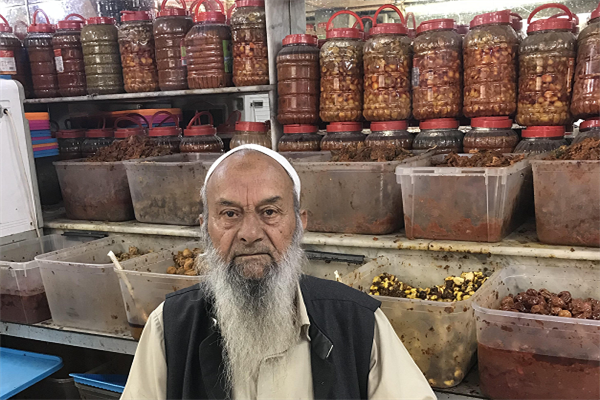
As one steps into “Senoo Kashmir Pickles’ in Habba kadal area of old city of Srinagar, the aroma of pickles tantalizes visitors to taste the delicacies.

Established in 1990, the outlet is a one-stop shop for pickle lovers.Ghulam Qadir Seeno, owner of the shop, sits and enjoys tea while customers move around the store to look for their favourite variety.

Popularly known as ‘pickle king of Kashmir’ Senoo specializes in making almost 100 different varieties of mouth-watering pickles.He is credited for introducing new varieties of pickles in Kashmir. He makes pickles from apricot, amla, garlic and lemons. Pickles made from mutton, chicken and fish are also available in his shop.“You can’t find apricot pickles anywhere in Kashmir. I have pickles of Kebab and Rista. Nowhere in Kashmir will you find such varieties,” he says proudly.

The shelves of the shop are packed with containers filled with dry and wet, sweet and sour pickles.

Talking about the health benefits of pickles he says, “Pickles if consumed in the right amount, are good for digestion. Some are beneficial in curing stress and depression, which is common these days among people.”Also there are pickles of fruits like mango, cherry and seeds like carom (Ajwain) available in his shop. “Ajwain is helpful in reducing acidity. Garlic is known to be good for heart patients and fights cholesterol and respiratory problems,” he adds.

The pickles at Senoo’s have enticed the taste buds of one and all. People from faraway places come and relish the pickles from his shop.

Imran Shafi, a customer, says that Senoo’s pickles are one of the important things he carries with him to Mumbai. “My friends and colleagues wait for the pickles. It is the first thing they ask for when I go back to Mumbai.”

Usually Seeno gets a good number of customers but during Ramzan and wedding seasons, the demand for pickles usually spikes up.The reason behind the huge number of customers, Senoo says, is the purity and usage of quality spices in the making of pickles. “The pickles are prepared in refined oil and cleanliness of the utensils and surroundings is taken care of properly.”“No preservatives and adulterants are used. Superior quality of spices and other ingredients are used in preparing the colorful delicacies.”

Another customer, Sadiya Wani says, “I get stomach pain whenever I used to have pickles but I never felt any such thing with Seeno’s pickles. He is not only known for quality pickles but for warmness with which he deals with his customers.”  

Ghulam Qadir Seeno says quality and passion towards his work is the reason that once just a small shop is now famous across Kashmir. “Customers keep coming and that gives me a lot of satisfaction.”He says during peak of the pandemic he had to throw out a huge quantity of pickles. “Due to lockdown and fear of Coronavirus, people would not visit my shop and the pickles had spoiled so I threw it away because I didn’t want to play with people’s health. Their trust is what I have earned in my life.”

Seeno lost three family members to the conflict. “There was a time when things looked very tough but it is my passion and hard work which kept me going.”

The septuagenarian is helped by younger son in his business, whom he sees will continue his legacy. 

source: http://www.risingkashmir.com / Rising Kashmir / Home / by Insha Latief Khan / October 15th, 2021

Meet Rafiq, once a tea vendor, now professor at Kannur University

Echome Village (Panamaram Panchayat), KERALA :

Rafiq Ibrahim has beaten heavy odds to earn a doctorate, spurred by a love of reading, reports M A Rajeev Kumar

Rafiq Ibrahim

Wayanad :

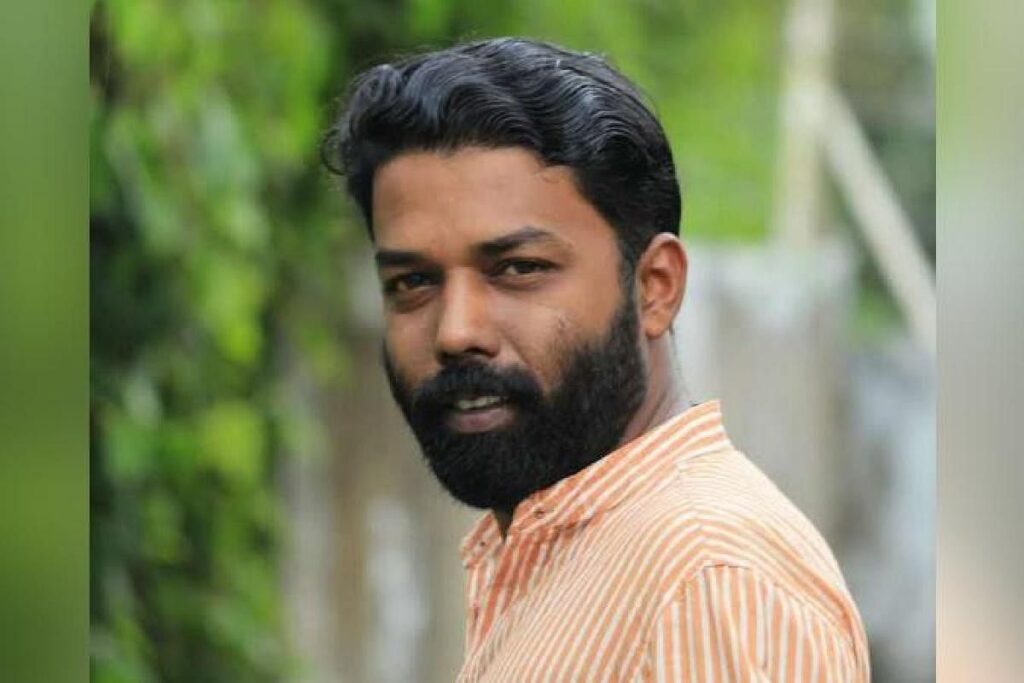
Rafiq Ibrahim used to call Echome, in Panamaram panchayat, a dead village. “During my childhood, I watched with amazement how time stood still there, almost oblivious of the world outside,” says the 34-year-old. 

The son of a tea-shop owner, Rafiq had a difficult childhood, and at times stared at poverty too. But he persevered to get better at life. He sold tea, went as a cleaner in jeeps and worked in a hotel. At one point, he even had to discontinue his studies. Through all that, he kept reading books, and managed to earn a doctorate. On November 6, Rafiq joined the Nileshwar campus of the Kannur University as an assistant professor in the Malayalam department.

“I am not a hero,” Rafiq says. “But the reality should not go unaddressed, as there are thousands of underprivileged people like me.”  Like his father, Ibrahim, his mother, Nabeesa, too did not attend school. Though the conditions at home were not too conducive for studies, both Rafiq and his older sister, Bushara, passed the SSLC examinations. “Though I had a first class, my first thought was to try some manual jobs in the area. Once out of school, boys would work in a jeep as a driver or a cleaner, and girls would be married off. That was how it was in Echome,” he says.

Caught in debt, however, his father had to sell the tea shop and the income of the family dried up. So he went to a friend in Mysuru, at 19, and became a tea vendor. He had joined a BSc course then, and completed the first-year examinations. But he was pulled down by typhoid and had to return home. “As the condition at home remained the same, I went to Wandoor in Malappuram district where I got a job in a hotel at the bus stand,” he recalls. 

Rafiq started reading books and magazines at the book shops there during his free time. “I found that reading keeps me happy, and took a liking to the ideas expressed by great writers,” he says. However, Rafiq lost his job yet again as the hotel eventually had to be closed down after the authorities decided to renovate the bus stand. “During my journey back home, I read an article by Sunil P Ilayidom about politics of identity and class. That instilled a spark in me,”  he says.

Rafiq then worked as a salesman at a footwear shop in Kalpetta. He worked there for two years, and the situation improved as his sister got a teaching job in a parallel college. Encouraged by his friends, he joined the BA Economics course under Calicut University. “During that period, I read plenty of books at the district library in Kalpetta,” he says.

Later, he attempted the entrance examination for the MA Malayalam course at the Sree Sankara Sanskrit University in Kalady with the sole aim of meeting his idol, Sunil P Ilayidom, who was the head of the Malayalam department. “I enjoyed every moment there, and the atmosphere helped me change my outlook as a student and human being,” he says. 

From there, things became a lot easier for Rafiq, going on to complete his MPhil, and earning a doctorate in ‘literary form and cultural history’ under the guidance of Ilayidom. Rafiq says his life is an example of generosity changing fortunes. “All that people require to come up in life is a helping hand at the right time.”

source: http://www.newindianexpress.com / The New Indian Express / Home> Good News / by M A Rajeev Kumar, Express News Service / November 14th, 2021

Ornithologist Salim Ali’s Forgotten Radio-casts Now Come ‘Alive’ in Book

Mumbai, MAHARASHTRA :

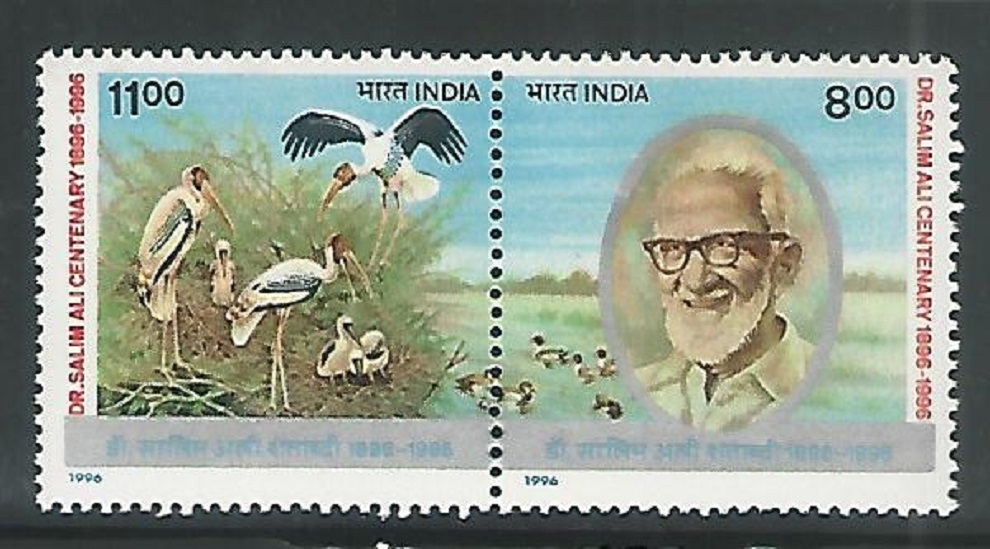
Ornithologist Dr. Salim Ali’s forgotten radio-casts now come ‘alive’ in a book. /
In memory of Ornithologist Dr Salim Moizuddin Ali.

Dr Salim Moizuddin A. Ali (November 12, 1896-June 20, 1987) was the first Indian to conduct systematic bird surveys across undivided India and even later, and then penned several bird books which popularised ornithology in the sub-continent.

Mumbai :

In a unique initiative, the forgotten radio broadcasts of legendary ornithologist, the late Dr Salim Ali have been compiled and brought ‘alive’ in a book form, which will be released on November 12, marking the 125th birth anniversary of the ‘Birdman of India’.

Dr Salim Moizuddin A. Ali (November 12, 1896-June 20, 1987) was the first Indian to conduct systematic bird surveys across undivided India and even later, and then penned several bird books which popularised ornithology in the sub-continent.

The book — “Words For Birds” — edited by renowned author Tara Gandhi, comprises all the 35 broadcasts of Dr Ali on All India Radio (AIR) — from British India to Independent 1980s — probably unheard of by most people in the current century.

“I had worked with Dr Salim Ali for long… I have even worked on his other papers and documents and I came across these broadcasts that are well-preserved by BNHS,” the book editor Gandhi told IANS briefly, as the book awaits official release.

It will be unveiled as part of the ongoing 125th birth anniversary celebrations of the great ornithologist conferred with the Padma Vibhushan (1976), at the Bombay Natural History Society (BNHS, founded 1883), said Education Officer Raju Kasambe.

The 35 talks that comprise “Words For Birds” were broadcast over 45 years, between 1941-1985, revealing Dr Ali’s exceptional skills both as an oral communicator and a passionate bird propagandist.

“The object of these talks is really to interest listeners, in the first instance for the healthy pleasure and satisfaction bird watching affords rather than for its intrinsic scientific possibilities,” the ornithologist had said of his radio transmissions.

The enthralling radiocasts, in a story-telling style, cover a wide range — bird habits and habitats, risks they face, the crucial role of avian in nature’s cyclic processes, how they benefit agriculture, unseen or little understood contributions to the economy, etc.

On his passion, Dr Ali said how 50 years ago bird watching in India was nowhere as popular, or indeed respectable, as it has become now, and in his younger days he would time and again fall in with persons who left him with a feeling, as they withdrew, that they were inwardly tapping a pitying finger on their foreheads.

“Their first glimpse of me very often was, it is true, of a distinctly shabby khaki-clad individual of the garage mechanic type, wandering leisurely and rather aimlessly about the countryside and surreptitiously peeping into bushes, and holes in tree-trunks and earth banks…” said the legend modestly.

Though he had focussed mainly on birds in his radio talks, it is evident that he was interested in all forms of wildlife and contemporary conservation issues, too, with each talk reading like a short essay, and the reader can even glance randomly through it to be immensely educated and entertained.

Dr Ali’s best-sellers from his massive collection include “Book Of Indian Birds” and the monumental 10-volume “Handbook of the Birds of India and Pakistan” (co-authored with S. Dillon Ripley), “The Birds of Kutch”, “Indian Hill Birds”, “Birds of Kerala”, “The Birds of Sikkim”, and his autobiography, “The Fall of a Sparrow”.

The book editor Gandhi was guided by Dr Ali for MSc (Field Ornithology), and she works for biodiversity conservation, conducts surveys to document birds and other wildlife in India.

Besides scientific and popular articles on nature and ecology, she has penned several books like “Birds, Wild Animals and Agriculture: Conflict and Coexistence in India” and edited the two-volume “A Bird’s Eye View: The Collected Essays and Shorter Writings of Salim Ali”.

Published by Black Kite and Hachette, “Words For Birds” (256 pg/Rs.599) will soon be available from BNHS and Amazon platforms. — IANS

source: http://www.clarionindia.net / Clarion India / Home> India> Life> Books / November 05th, 2021

Poverty couldn’t rob of their dream to become doctors, thanks to Al- Ameen Mission

Khalpur (Topsia) / and Bojdahara (Bankura) / Howrah, WEST BENGAL:

Md Hossain  studied under street light once; he will be a doctor via Al-Ameen.

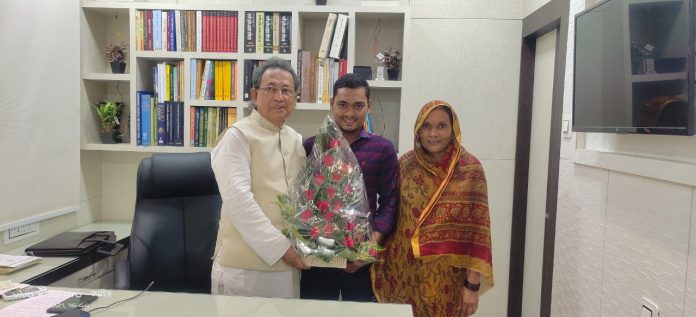
Md Hossain has proved that to be successful, poverty or any other hindrance do not matter. Overcoming all difficulties in the way, he has cracked the medical entrance examination (NEET) this year; merit being the only arsenal he has. His mother, Akhtari Begam, on hearing the news, bursts into tears. So did his mentor Uma Chakraborty. The General Secretary of Al-Ameen Mission, M. Nurul Islam has expressed great satisfaction.

Hossain comes from Khalpar slum, adjacent to G.J Khan Road, Topsia. The lackluster slum lies at the backyard of the posh Science City. Dire poverty engulfs every family of the neighbourhood. Almost all the families earn livlihood from leather industry; even children are not spared. They are anemic, lacking vitality. Md Hossain, grew up in this sort of circumstance. His family is big; seven brothers and sisters, parents. Mohammad Sahabuddin, his father, cannot work as he is old now. A tiny rented space adjacent to a Club Room in the G.J Khan Road; the nine souls huddle inside. The income of his eldest brother, Mohammad Aftab cannot meet the expense of the family. The minimum rent curtails usage of electricity. Hossain had to study under the street light. A volunteer of a non governmental organisation, Uma Chakraborty saw this. She understood that this talented boy would go a long way.

She contacted M. Nurul Islam and convinced him about this meritorious student. He admitted Hossain in the Paikpari campus in class V with minimum monthly fees. Hossain, at that time, vowed to become a doctor and serve the society. So began his journey. In the Madhyamik examination, he scored 94.70% marks. Then he moved to Khalisani branch and secured 84.20% marks in the Higher Secondary examination. He took coaching for the NEET from Uluberia campus. His All India Rank is 22,227 and the score sheet is 592 out of 720 marks. Hossain’s dream to become a doctor is taking shape now. Reacting to his successful journey, tears ran down from his mother’s cheeks. She expressed her gratitude to M. Nurul Islam and Uma Chakraborty. But for these two persons, this would have been impossible to achieve, she said.

Mohammad Hossain too did not forget his past. The architects for his achievement are M.Nurul Islam, Uma Chakraborty and Piyali Chowdhury, one of the organisers of the NGO. He also said, he is very satisfied with the result and want to serve the poorer section of the society. Naturally, Nurul Islam too is very happy. He said, Al-Ameen Mission was established mainly to nurture the minority Muslim community and bring them into the mainstream education system. Many boys and girls from remote parts of Bengal have become doctors and engineers through the Mission. Mohammad is one of them. He has cracked the Medical Entrance examination. We are overwhelmed by his success.

Asmatara Mondal lives in Bogdahara, Bankura. According to her, with Al-Ameen’s constant support, her mission has been accomplished. Her NEET score is 569 with rank 34384 (AIR).

Her mother, Manwara Mondal is no more. Her father, Rahamat Ali Mondal, a small farmer, with much difficulty raised nine of his children- six daughters and three sons. Asmatara dreamt of being a doctor while she was studying in her village school. The concrete step towards fulfilling her goal came in 2017, when she was admitted to Al-Ameen Mission and passed out H.S from the Medinipur campus. She came to the Khalatpur campus to take coaching for NEET preparation. Last year, when a lockdown was imposed, she had to leave the campus. But the preparation continued. For NEET 2020, Asmatara got her examination centre in a school located in Howrah- a long distance from where she lived. While she started for the destination at the dead of night, her car had a breakdown in Tarakeswar. To cut the long story short, the Mission took the initiative to take her to the exam centre by a car. Her NEET score was 457. Again she came to the Mission for preparation during the lockdown in November last year. With a couple of other students she started the preparation. But again there was a lockdown and she was compelled to return to her home. Through the Zoom meeting, she remained in contact with Mission authorities. Now that the dream has been fulfilled, Asmatara says categorically, without Al-Ameen Mission this would have been impossible to achieve. Minimum fees, maximum care- that is what one gets here.

My brother Robial Mondal had also helped me. Presently, he too is preparing to take NEET from the Mission. Hard work is the key to success. Indeed, all out effort and the blessings of Allah makes all the difference.

source: http://www.muslimmirror.com / Muslim Mirror / Home> Indian Muslim> Positive Story / by Muslim Mirror Network / November 08th, 2021

City Shooters Shine At B’luru Championship

Mysuru, KARNATAKA :

Mysore/Mysuru:

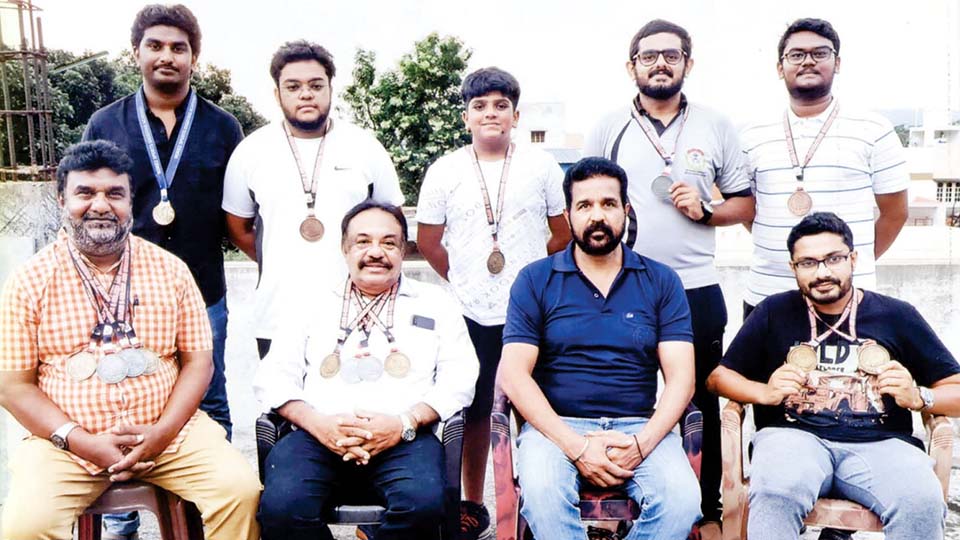
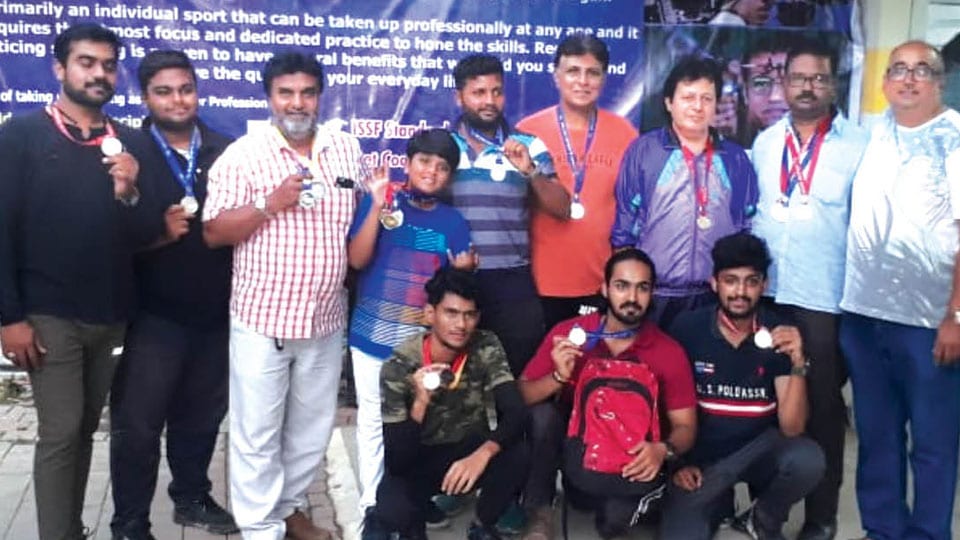
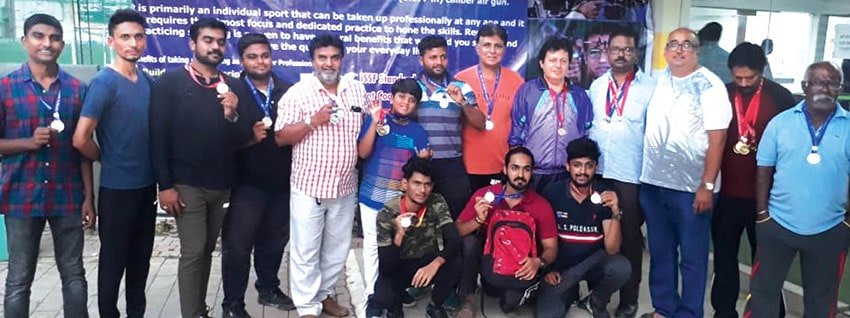
The Pistol and Rifle shooters of Mysore District Rifle Association (MDRA) in Ramakrishnanagar have won numerous medals at the Arjun and Golden Ace Shooting Championship-2021, held at Bengaluru recently. 

Over 400 shooters from Karnataka and Tamil Nadu participated in the contest in which Mysuru shooters have won 6 Gold, 4 Silver and 2 Bronze Medals.

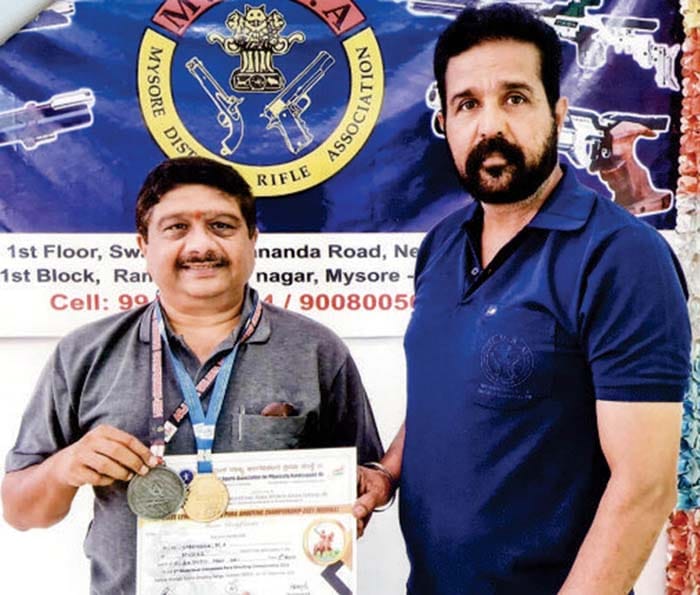
Shooter Ishtiaq Ahmed excelled in the Open Sight event with 3 Gold and 1 Silver while Shooter M.S Nagendra won an Individual Silver in 10m Pistol ISSF (The International Shooting Sport Federation) event. He had also won a Gold in the 1st State Para Shooting Competition-2021 held at Hubballi in September.

Medal winners are as follows: 

Pistol: 10m pistol Under 14 –  Nishanth P. Jamadagni (Gold); 10m pistol Para Senior – M.S. Nagendra (Silver); 10m pistol Veteran –  Isthaiq Ahmed (Gold); 10m pistol Senior Team –  Manjesh Mandanna, Nishanth Jamadagni and Vinod Ram (Silver); 10m pistol Veteran Team – Ateeq Ahmed, Isthaiq Ahmed and  Antony (Gold).

Peep Sight Rifle: 10m Rifle Veteran – Ateeq Ahmed (Silver).

Peep Sight Rifle: 10m Rifle Veteran – Ateeq Ahmed (Silver).

Open Sight Rifle: 10m OS Rifle Veteran –  L. Shiju (Gold); 10m OS Rifle Senior – L. Shiju (Bronze); 10m OS Rifle Para Senior – Ishraq Ahmed (Gold).

10m OS Rifle Senior Team – L. Shiju, Ramesh Babu and Ishthaiq Ahmed (Gold); 10m OS Veteran Team- L. Shiju, Isthaiq Ahmed, and Ateeq Ahmed (Gold); 10m OS Rifle Junior Team- Razzaq Ahmed, Mohammed Arabi and M.S. Vignesh (Bronze). 

source: http://www.starofmysore.com / Star of Mysore / Home> News / October 17th, 2021

Open Shooting Competition At Bengaluru: 26 Medal Haul For Mysuru

Mysuru, KARNATAKA :

A group of 14 shooters from Mysuru took part in the Open Shooting Competition organised by Arjun Sports Shooting Academy in Bengaluru recently and won a total of 26 medals in the contest.

The medal-winning shooters are as follows:

Nishanth P. Jamadagni – 2 gold medals (1 individual and 1 team event) and 4 silver (2 individual and 2 team events); L. Shiju – 4 gold medals (2 individual and 2 team events); G. Krishna Rajendra – 1 silver (individual) and 2 gold (team); C. Ramesh Babu – 1 gold (team); A. Rahul – 1 silver (team); K.S. Sarvesh – 1 gold (team); K. Kishore – 1 bronze (individual) and 1 gold (team); Farman Pasha – 1 silver (team); Baban Khan – 1 gold (team); Joel Rex Nirmal Joel Kanmoni – 1 silver (team); Waseem Khan – 1 silver (team); Ateeq Ahmed – 1 bronze (individual) and 1 silver (team); Mohammed Arabi – 1 silver (team) and Mohameed Fuzail Khalander – 1 silver (team).

source: http://www.starofmysore.com / Star of Mysore / Home> Sports / September 09th, 2019

Mysuru Shooting Academy Shines At Bengaluru Championship

Mysuru, KARNATAKA :

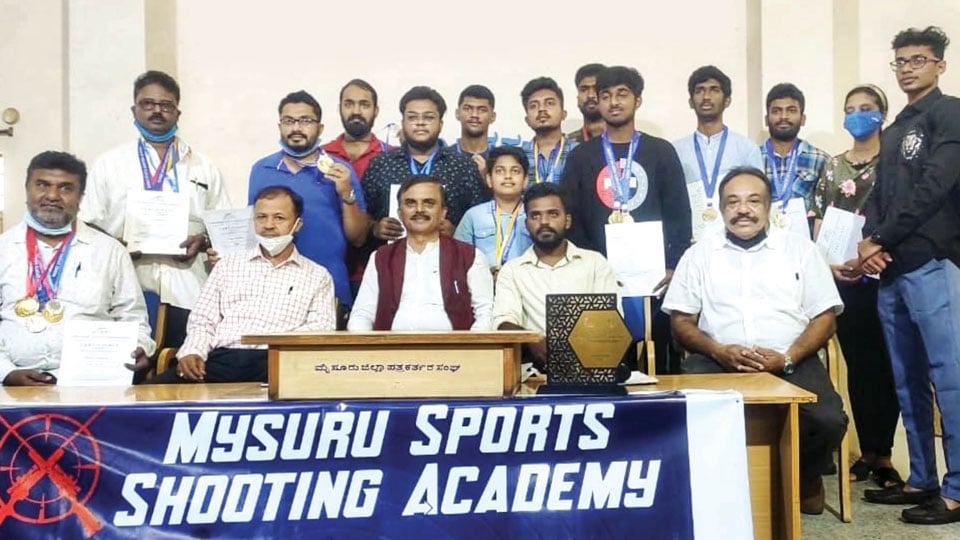
Mysuru Sports Shooting Academy has bagged more than 50 medals in ‘Roriez Sports Shooting Championship’ and ‘Arjun & Golden Ace Sports Shooting Championship’ held at Bengaluru recently, said MSSA President Ravindraswamy at a press meet held at Patrakarthara Bhavan in city recently.

In all, 21 shooters from the Academy had taken part in different categories and the medal winners are as follows:

Atheeq Ahmed – 5 gold and 1 silver in Open Sight Veteran Category; Krishna Rajendra – 6 gold, 2 silver and 4 bronze in Open Sight and Peep Sight Veteran Category; Baban Khan (Najeebulla) – 3 gold, 1 silver and 1 bronze in Open Sight Veteran Category; Vaseem – 1 bronze in Peep Sight Veteran Team; Syed Ishraq – 1 gold in Open Sight Para Event; A. Rahul – 1 silver in Open Sight Men Team; Syed Razzaq – 2 silver medals in Junior and Youth Team; Kishore – 1 silver in Open Sight Men Team; Rithik – 1 gold and 1 bronze in Open Sight Junior Men Category; Rajesh – 1 gold in Junior Men Team and 1 silver in Junior Individual; Sagar Mandanna – 2 gold medals in Individual and Team in Open Sight Youth Men; Likith – 1 gold in Junior Open Sight Team; P.R. Shashank – 2 gold medals – Individual and Team in Junior Category; Nihal Manoj – 1 gold and 1 bronze in Open Sight Youth Category; A. Harshitha Bai – 2 gold medals – Individual and Team in Open Sight Women (Highest scorer in Roriez Sports Shooting Championship – Women Category); Adarsh – 1 gold and 4 silver in Open Sight Men Event; P.  Amogh – 1 gold, 1 silver and 1 bronze in Open Sight Men Category; Keerthan – 1 bronze in Pistol Youth Category; Prajna – 4 gold and 1 silver (Highest scorer in Arjun and Golden Ace Sports Shooting Championship); Cheathana Obu Lakshmi – 1 gold in Women Team; K.B.  Nachappa – 1 gold and 2 silver medals in Open Sight Junior Men; Pranav – 1 silver in Open Sight Youth Men Team; Tanushree – 1 gold and 1 bronze in Open Sight Junior Women; Chandan – 1 gold and 1 silver in Open Sight Men Team.

Chief guest Sundresh felicitated the winners. MSSA Secretary H.S. Vivek was also present on the occasion.

source: http://www.starofmysore.com / Star of Mysore / Home> Sports News / November 09th, 2021

J&K constable shot dead by militants in Srinagar

Srinagar, JAMMU & KASHMIR :

“Today at about 2015hrs Srinagar Police received information about a terror crime incident at S.D Colony Batamaloo area of Srinagar. Senior police officers reached the terror crime spot,” police said in a statement.

A Jammu and Kashmir Police constable was shot dead by suspected militants in Srinagar on Sunday night – the latest in a string of terror-related killings in the Valley despite high security alert.

Police said militants fired at 29-year-old Tawseef Ahmad Wani at SD Colony in Batamaloo neighbourhood of Srinagar. He was immediately taken to the nearby SMHS hospital, where he succumbed to his injuries.

“Preliminary investigation has revealed that terrorists fired upon one police personnel… In this terror incident, he (Wani) had sustained grievous bullet injuries and was shifted to nearby hospital for the treatment, where he succumbed to his injuries and attained martyrdom.”

The National Conference the attack. “Unequivocally condemn the cowardly & dastardly attack on 29-year-old policeman in Batmaloo, Srinagar in which he lost his life… Our hearts go out to his family and friends at this time of grief,” the party tweeted.

The incident comes close on the heels of a series of attacks against civilians in the Valley. In October, at least 12 civilians, mostly migrant workers and those from the minority community, were killed in multiple militant attacks in Kashmir.

source: http://www.indianexpress.com / The Indian Express / Home> India / by Express News Service, Srinagar / November 08th, 2021