All posts by mpositiveone@gmail.com

‘Azim Premji: The Man Beyond the Billions’ review: The making of an entrepreneur and a philanthropist

Bengaluru, KARNATAKA / Mumbai, MAHARASHTRA :
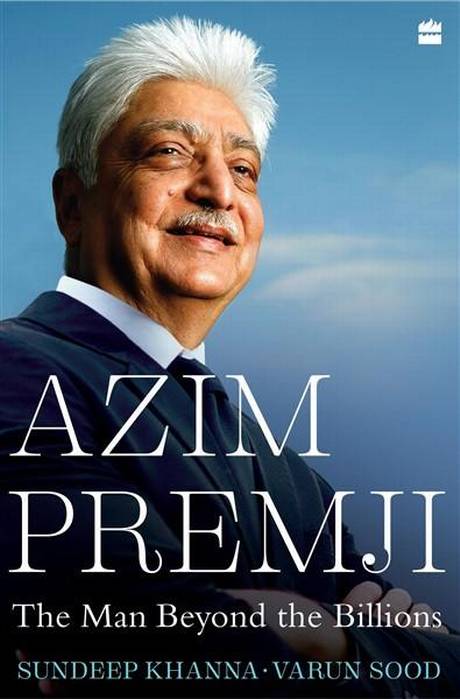
How Azim Premji expanded his business from vegetable oils to info-tech and put his money where his heart is

The story of a person can be inspiring. The authors have chosen their subject well, for, everyone knows of Azim Premji, but few truly know what makes the man.

A book about such a person, if well-written, may possibly inspire the reader into action. In this case, soon after you read the book, it’s difficult not to look up the Azim Premji Foundation website, to see if it had any volunteering opportunities, even if you have done nothing like it before!

In chronicling any life, it is easy to get mired down with mind-numbing detail that comes your way if you are sifting through 50-odd years’ worth of the protagonist’s hits and misses. The authors have done well to stick to the most interesting parts of Premji’s life. Two things stand out across events and across time: his integrity and a penchant for frugality.

Zest for austerity

His insistence on paying for personal calls made on his office phone is legendary. His friends know of his love for cars but also about his unwillingness to spend fanciful amounts on one.

He once wanted to buy a Fiat that was registered in Wipro’s name. He got the finance department involved in the discussion as he wanted to play by the rules and pay for the purchase. But with depreciation, the car’s value was zero to the company. The transaction did not go through.

At one point, his friends were agog with excitement at his purchase of a Mercedes, but it was… hold your breath… a second-hand one!

At another time, when his team was preparing to welcome clients on a visit to headquarters, and took Premji over the arrangements that included meals from a five-star hotel, he quipped, “If our cafeteria is good enough for our employees, it should be good enough for clients too!”

It’s probably the same zest for austerity that had him pleased while on a U.S. visit, when two of his senior-most executives bought lunch for the three of them at a Burger King outlet for less than $7.50! And, this was a man who didn’t bat an eyelid when an employee of the vegetable oils business lost ₹25 lakh in a year in a trading position.

A long journey

The book chronicles the journey of Wipro from the time the Premjis put down roots in Mumbai. It throws light on the man’s spirit of entrepreneurship, as the company cautiously experimented with opportunities — expanding from vegetable oils to engineering products, computer hardware, tech services and consumer care and lighting. It also does not shy away from some of Wipro’s missteps such as the investment in financial services, a business which withered away despite the group’s entry into the space after much thought and preparation.

His management style

While doing justice to the man’s talent for perseverance, the authors have touched upon his management style that many say cramped some CEOs under his chairmanship. His taking over as CEO in 2005 after the abrupt exit of Vivek Paul, said to have been primed for the post, or his decision to have a joint CEO structure soon after, at a time when competitors were blazing ahead, had raised eyebrows in the world of IT services at the time.

The reader may get the sense that the authors occasionally sound deferential when talking about the man or his family. But, it’s difficult not to be overawed by someone who has never sold a single share in his company but who chose to give away $21 billion worth of wealth to his foundation, leaving his two sons with shares valued at about ₹65 crore. How can one give away so much wealth and still, on the morning the news about the latest transfer to the foundation breaks, irritably ask an employee — who speaks of congratulatory messages overwhelming social media — “What’s all the fuss about?” ?

This book is a must-read for anyone who can read English.

Azim Premji: The Man Beyond the Billions; Sundeep Khanna, Varun Sood, HarperCollins, ₹699.

bharatkumar.k@thehindu.co.in

source: http://www.thehindu.com / The Hindu / Home> Books> Reviews> Profile / by K Bharat Kumar / January 16th, 2021
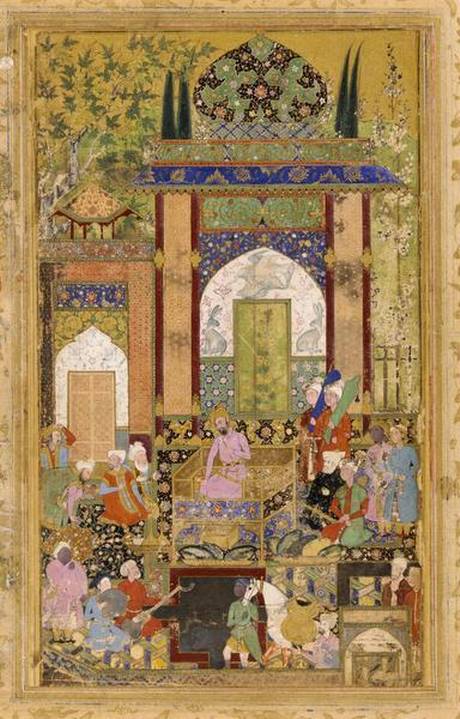

The learned emperor: ‘Baburnama’

INDIA :

Resplendent: ‘Babur receives a courtier’ (1589) by Farrukh Baig.   | Photo Credit: Wiki Commons

Babur was a sensitive memoirist with the rare ability to distance himself from his writing

Babur’s memoir did not have a name but is referred to as Baburnama or Tuzuk-e-Baburi. It is the first autobiography from the subcontinent and one of the first in the world. Babur came from two different cultures, of which one was literate and aspired to high culture. This was his father’s ancestral family, which was Timurid. His mother came from the nomadic Mongols, who weren’t literate. Babur describes his maternal uncles in his memoir.

The Timurids had a tradition of poetry, hawking, music, and, of course, war. Babur was from a family of minor nobles who had inherited the governorship of Ferghana. His autobiography begins with a description of the geography and tells us that his father, Umar Shaikh Mirza, died in an accident when he was 39 and Babur 12. The young Babur struggled to hold on to his inheritance, losing several battles, including one in Ferghana, which he had to give up to the victor.

Babur describes these decades of his life in an unemotional and direct way: he hardly valorises his own achievements. Like the great Caesar, whose books on his wars in Gaul and against Pompey may as well have been written by a non-partisan observer, Babur has the ability to distance himself from his life.

Keen naturalist

Babur’s life turns when he is found to be the only living heir to the throne of Kabul. He takes it and turns his eyes to India. For 20 years, he campaigns against India, being held back at the borders each time.

Then, as we know, he defeated the Lodi dynasty (introducing firearms to the subcontinent for the first time) and captured north India in 1526 after a decisive battle at Panipat. Babur died four years later, spending much of this time travelling across India and writing his memoir in the afternoons.

These paragraphs show how much of a keen naturalist he was. “The elephant, which the Hindustanis call hathi, is one of the wild animals peculiar to Hindustan. It inhabits the western borders of the Kalpi country… the elephant is an immense animal and very sagacious. If people speak to it, it understands. If they command anything from it, it does it. Its value is according to its size — the larger it is, the higher the price. On some islands an elephant is rumoured to be as tall as 20 or 30 feet, but here it is not more than 10 feet. It eats and drinks entirely with its trunk. If it loses the trunk, it cannot live. It has two great teeth (tusks) in its upper jaw, one on each side of the trunk. By setting these against trees and walls, it is able to bring them down; with these it fights and does whatever hard tasks fall to it. These teeth are called ivory and are highly valued by Hindustanis.’

‘Like a goat, the elephant has no skin hair. It is relied on to accompany every troop of their armies. It crosses rivers with great ease, carrying a mass of baggage, and three or four can drag without trouble a special piece of artillery that takes four or five hundred men to haul. But its stomach is large. One elephant eats as much as a dozen camels.

Elegant and clean

Babur’s book was not freely available till a British amateur linguist named Annette Susannah Beveridge translated it. She taught herself the particular version of Turkish that Babur wrote in (later Mughals wrote in Farsi) and published it in four volumes from 1912 to 1922.

At the time of the first British census a century and a quarter ago, India was 4% literate. Most Indians even today don’t have four generations of literacy: in fact, the proportion of those of us who can claim to have had great-grandparents who could write is tiny. Babur came from a tradition that already had centuries of literacy.

His is elegant and clean writing of the sort that one would expect from a very literate and sensitive person. Babur’s daughter, Gulbadan Begum, sister of Humayun and aunt of Akbar, also wrote a lovely memoir in which she describes her father’s attention to detail which he passed on to his family.

These two works, along with Jahangir’s autobiography, are some of the best material available on the Mughals. It’s a shame that these books are not taught in India’s schools today.

Aakar Patel is a columnist and translator of Urdu and Gujarati non-fiction works.

source: http://www.thehindu.com / The Hindu / Home> Books – Leather Bound / by Aakar Patel / January 16th, 2020

500K trout ova dispatched from Kashmir to 3 other states for rearing

Kokernag (KASHMIR), JAMMU & KASHMIR :

From Asia’s largest trout farm in south Kashmir’s Kokernag, 500,000 trout ova were dispatched to Arunachal Pradesh, Nagaland and Uttarakhand for rearing

Representational image. (REUTERS)

Brown and rainbow trouts are cold water fish introduced in Kashmir over 100 years ago.

The chief trout farming project officer at Kokernag, Mohammad Muzaffar Bazaz, said that 500,000 trout ova were dispatched from the farm to Arunachal Pradesh, Nagaland and Bhimtal in Uttarakhand where the directorate of cold water research centre has been established by Indian Council of the Agriculture Research.

Bazaz said that the 500,00 trout ova were airlifted so the progeny reach the respective destinations safe and unharmed.

“Our staff at the farm worked overnight so these trout ova reach the respective destinations undamaged. The facilities were provided by the principal secretary of the animal husbandry department through the PMMSY scheme.”

Spread over 20 hectares, the farm was set up 36 years ago with support from the European Economic Committee. It started with a single hatchery which has now been upgraded to three hatcheries that supply millions of eyed ova and seeds to beneficiaries, including private fish farmers.

Bazaz said that Kashmir has two types of fisheries, warm and cold water. “For trout culture, the temperature shouldn’t exceed 20 degrees Celsius. Brown trouts are in abundance in the upper reaches,” he says.

Kashmir is also known as an anglers’ paradise—tourists, particularly foreigners, head for high-altitude water bodies as brown trout is found in high-altitude lakes and streams.

source: http://www.hindustantimes.com / Hindustan Times / Home> India News / by Mir Ehsan / January 18th, 2021

A role model for Muslim girls already, this DSP now prepares for UPSC Exams

Ballia, UTTAR PRADESH / Indore, MADHYA PRADESH :

Shabera Ansari, a resident of Indore, is posted as DSP (Women’s Cell) at Dewas in Madhya Pradesh.

New Delhi: 

Parents in middle-class Muslim families generally believe that their children would hardly get a government job. Hence, they find it better to engage them in some work rather than letting them pursuing studies. But a young woman from a middle-class family has busted such myths by becoming the Deputy Superintendent of Police.

Shabera Ansari, a resident of Indore, is posted as DSP (Women’s Cell) at Dewas in Madhya Pradesh and her father is posted as a Sub-Inspector at a police station in Indore.

Shabera said she had a normal childhood and there were never big dreams to pursue. When she went to college, at the age of 19, marriage proposals started coming in but fire in the belly to do something egged her on. Finally, she joined the police forces and became a DSP. Currently, she said, she is preparing for civil services exams.

The young woman said that soon after passing her out of a government school in Indore, she enrolled in a college and started preparing for Union Public Service Commission (UPSC) examinations along with her regular studies.

From SI to becoming DSP

She was selected as Sub-Inspector in 2013, and in 2018 posted as Trainee DSP in Sidhi.

Shabera’s family originally hails from Ballia in Uttar Pradesh, but settled down in Indore about 30 years ago due to his father’s job in state police.

“I was an average student in school and also failed in Mathematics once,” she told IANS with a chuckle.

“A marriage proposal came when I was just 19. I was scared and decided to do something. I started my journey and never looked back. I started preparation for the state government services during college and tasted success in the first attempt… I have continued studying ever since,” she said with confidence.

Shabera further added:

“My mother always supported me. Initially, it was not clear if I will opt to join the police, though there was always an interest since my father is in police service.”

A Successful Journey

Surprisingly, Shabera is the first woman in her family to crack state civil service exam and has now become an inspiration for her community.

Many times, she was honoured as chief guest in various functions, including school programmes where she interact with children who are always curious to know about her journey.

“I always try to encourage children and motivate them to do something in life,” Shabera said.

“Little children seem very fond of taking selfies with me,” she smiled.

She said:

“I often do counselling of children of Muslim families, especially boys. I tell everyone to trust themselves and study seriously; hardwork will definitely change things.”

Shabera said she also got to learn a lot from her father. It could be a coincidence that Shabera was incharge of a police station during lockdown where her father was posted.

In fact, her father had gone for some work to Uttar Pradesh when the lockdown was imposed and he got stuck. Shabera tried to somehow bring her father back but to no avail. Eventually, the police authorities issued direction that he could do duty from wherever he was stuck.

She said that she had many times gone out on patrol duty at night with her father. However, once back home, she used to cook for him.

She said that her father respects her as an officer but Shabera has to many times remind him that she is an officer at office not at home.

source: http://www.ummid.com / Ummid.com / Home> Life & Style / by Mohammad Suaib / IANS / January 17th, 2021

Behind Punjab government’s nod to restore Malerkotla palace, ‘last wish’ of 97-yr-old Begum

PUNJAB :

The Punjab Cabinet had given its nod for the acquisition, conservation and use of the palace for tourism on Monday.

Begum Munawwar-ul-Nisa. (Express Photo)

After decades of neglect, 150-year-old Mubarak Manzil Palace of Malerkotla will soon be a protected monument and restored and renovated by the Punjab government, thanks to Begum Munawwar-ul-Nisa, the wife of last Nawab of Malerkotla, who has handed over the private property to the government.

The Punjab Cabinet had given its nod for the acquisition, conservation and use of the palace for tourism on Monday.

Begum Nisa, a princess, is the successor of Nawab Sher Mohammad Khan of Malerkotla, who holds a special place in Punjab’s history. He had vehemently raised his voice against the execution of the younger Sahibzadas of Guru Gobind Singh, Baba Zorawar Singh and Baba Fateh Singh, in the court of the Subedar of Sirhind, Wazir Khan, in 1705.

The 97-year-old Begum Nisa, speaking to The Indian Express  on a conference phone call through former Aam Aadmi Party (AAP) leader Arshad Dali, said, I have handed over the palace to the government. Meri akhiri ichchha, aap keh sakte ho, yahi hai ke main iss mahal ko pehle ki tarah jagmagata chorr kar jayun. (My last wish, you can say, is to see the palace return to its pristine glory before I die).” Begum Nisa has no child or legal heir.

Dali has become a bridge between the government and the Begum, who wanted the government to acquire the palace. “She was worried that after her the palace would be usurped by private parties. Now it will become a government’s possession. After all, there is the important history of this place. Guru Gobind Singh had presented a sword to Nawab Sher Mohammad Sahib as a mark of honour for his support for his sons.”

Sanjay Kumar, Administrative Secretary, Tourism Government of Punjab, told The Indian Express that the government would soon initiate the process of declaring the palace a protected monument of the state. “We will declare it a protected monument after inviting objections. It will be a protected monument under the state’s Act. After that, we will start conserving and renovating the palace. We have accepted the Begum’s precondition that we should allow her to stay in the palace during her lifetime. After that, none of her successors will be allowed to stake claim on the property. It will be Punjab government’s property.”

He said that the government had offered Rs 3 crore to the Begum, “She had been apprehensive that the palace of such historical importance would be lost if there is no taker.”

About the condition of the palace, Sanjay Kumar said, “I can say it is not good. Roof of several rooms has collapsed and the entrance is also in bad shape.”

Begum Nisa had been living in penury for many years. The valuables in the palace were sold off over the years. Former Cabinet Minister Navjot Singh Sidhu had once visited her and presented her with some pieces of furniture.

Begum Nisa had written to the state government that she is the sole owner, and has absolute rights to alienate the property to any person, including state or Tourism & Cultural Affairs Department.

The palace is spread over an area of 32,400 sq ft. There are several cases involving it going on in several courts.

The expected financial liability involved in purchase of this proposed protected monument and likely financial implications arising out of existing court cases is around Rs 5 crore. The government has got the land price evaluated.

source: http://www.indianexpress.com / The Indian Experss / Home> India / by Kanchan Vasdev, Chandigarh / January 13th, 2021

Sweet scent of tradition: Attars bring the past forward in India

xxxx

Natural fragrances are a big hit in India. Photo: Special Arrangement/THE HINDU  

These natural fragrances have a cult following that seems to defy their low-profile marketing

For several years now, Hassan Siddiqui has never had a day that did not include perfumes in it. “I have around 600-700 bottles of attars and around 300 Western scents. The costliest one in my collection is a 10-ml bottle of pure Oudh attar that costs ₹46,000. Yes, it’s like an addiction, but of the good kind,” he laughs, over a phone interview.

The 26-year-old Siddiqui is one of many aroma enthusiasts trying to highlight India’s thriving indigenous fragrance industry through social media. Though he is based in Bahraich, a small town near Lucknow in Uttar Pradesh, Siddiqui reaches a global audience through his YouTube channel Perfume Review India. It offers a mix of product trials, interviews with perfumiers and explainers on fragrance usage and terminology in Hindi/Urdu, to its 17,800-plus subscribers.

Hassan Siddiqui educates customers about the latest attars through his YouTube channel Perfume Review India. Photo: Special Arrangement/THE HINDU  

Siddiqui wants to increase awareness about the role natural fragrances play in Indian culture. His focus is on attar or ittar, a broad term that refers to scents using essential oils derived from botanical sources via steam or hydro-distillation, a method credited to the Persian physician Ibn Sina (also known as Avicenna in Europe).

Many of India’s traditional attar manufacturers rely on Ibn Sina’s extraction techniques, and are masters at creating not just floral scents, but also edible flavouring from natural sources.

Over a thousand enterprises are reportedly involved in the Indian perfume industry, estimated to be worth 500 million USD in a global market of $24 billion. Besides natural plant extracts, perfume manufacturers use chemicals and synthetic additives.

Even though imported alcohol-based perfumes have a more visible presence in the Indian market, attars too are holding their own. As India grows 31 of the 300 naturally fragrant raw materials required for perfume manufacture, it is an important supplier of essential oils like mint, jasmine, sandalwood, tuberose and spices in the global market.

Traditional production

The domestic natural fragrance market is dominated by Kannauj, a town in Uttar Pradesh known as the perfume capital of India. “We have been using the same hydro-distillation technique since 1896, when my great grandfather Sheikh Mohamed Ayub established the perfumery,” says Saad Akhir, of Kannauj’s family-run business Syed Mohamed Ayub Mohamed Yaqub Perfumers.

The ancient technique starts with the plucking of flowers early in the day. The petals alone are mixed with water and poured into copper stills known as deg and sealed with a mixture of clay and cotton. A bamboo pipe doubling as a condenser (chonga) connects the deg to the copper receiver (whose mouth has been covered with cloth or bhapka) placed in a cooling chamber filled with water.

An earthen oven (bhatti) fuelled by wood and dung cakes ‘cooks’ the petals until the distillate is obtained from the vapour in two separate rounds. Both the bhatti and the water in the cooling tank are constantly monitored to maintain an even temperature.

Kannauj is known for attar shamama, a dense, woody scent said to be invented by Sheikh Mohamed Ayub, that is used in the base of most perfume blends by designer houses in France and UK. “Ironically,” says Siddiqui, “they are sold back to India, at a considerably high price, and our people are unaware of this.”

Patronised by the Mughals and the other princely states with Turkish links, attar makers and sellers were once an integral part of the Indian cityscape, as can be seen from the remnants of street names like ‘Attar Mohalla’ and ‘Gandhakaarar Theru’ in southern India.

Vishwas Vijayvergiya of Sugandh Co, Lucknow. The manufacturing unit which uses the ‘deg-bhapka’ system of hydro-distillation can be seen in the background. Photo: Special Arrangement/THE HINDU  

“The credit for patronising perfumes in Lucknow goes to the Nawabs of Oudh, particularly to Nawab Wajid Ali Shah,” says Vishwas Vijayvergiya, whose family runs Sugandh Co in Lucknow. Apart from distillate extracts of agarwood, sandalwood and flowers, India also pioneered the art and science of making incense, an elixir that perfumes spaces through the combustion of fragrant materials with aromas permeating through smoke, he adds.

Keeping it natural

The lockdown briefly affected production of base oils until restrictions were eased in September. “Even though our exports have stopped due to the pandemic regulations, we are still manufacturing for our domestic customers,” says Mohamed Sadathullah of Hameed and Co Perfumers in Hyderabad.

______________________________________

Plan B for lockdown

  • The pandemic-induced slowdown has made many perfume companies diversify their product base. While Lucknow’s Sugandh Co still has artisanal winter fragrances this year like Azeemah, Utsav, Hayaa and Kausar, it has also looked into chemical sanitisers. “Like all other sectors, the perfumes sector came to a standstill during the lockdown. However because fragrance is such an integrated part of all everyday life, we continued manufacturing industrial perfumery compounds for the hand-sanitiser and soap industries as soon as the lockdown was eased,” says company executive Vishwas Vijayvergiya.
  • Adds Rahul George, of ARI Fragrances, Bengaluru, that creates signature aromas for corporate spaces, “Before the lockdown, nearly 80% of our clients were IT companies, who have all started working for home since March. So we are focusing now on manufacturing for pharma and hospitals. We are hoping to launch products related to women’s personal hygiene and a fragrance for pets.”

______________________________________

“We make perfumes with a sandalwood base, and also blends from attars bought from Kannauj, like henna, rose, and amber. We make oudh from the wood (agarwood, aloe wood) that grows in Assam. The wood chips are cooked to extract the oil from it. All our sandal-based perfumes are made without chemical additives and alcohol,” he says.

Cities like Delhi, Hyderabad and Lucknow are also popular for attar shopping tours, which give visitors a whiff of history with an ittar-saaz or perfumier creating a customised attar using different compounds.

Rose petals being prepared for the ‘deg’ in Sugandh Co, Lucknow. Photo: Special Arrangement/THE HINDU  

“We can recreate most of the French, Italian and American scents with the help of the ingredients here, because the base note is more or less the same,” claims Saadathullah.

Measured in tolas (12 ml = 1 tola), the attar is sold in quaint craft glass bottles that add to the Oriental mystique of the perfume.

YouTuber Siddiqui, who launched his own perfume brand recently, says that he has come across some expert aroma replicators on his tours. In one of his videos on unusual attars, Siddiqui reviews products that smell like ‘Johnson’s Baby’, mud, and Lucknowi biryani. “I feel we should do more to showcase our attars effectively. The manufacturers have not even entered into influencer marketing, though this industry is thriving,” he says.

He points out the image problem attars seem to have, in general. “Expensive attars, which typically sell for ₹1,000 per 10ml, are packaged in ₹3 glass bottles with cheaper applicator sticks. Besides this, customers need to be educated on the right time of the year, and day, to use these natural scents. A winter-time perfume like musk can turn out to be very smelly in summer.”

source: http://www.thehindu.com / The Hindu / Home> Life & Style / by Nahla Nainar / Chennai – December 29th, 2020

Amitabh Bachchan reveals Meena Kumari danced around fountains with real rose water in Kamal Amrohi’s Pakeezah

UTTAR PRADESH / Mumbai, MAHARASHTRA :

Praising Kamal Amrohi’s iconic film Pakeezah, KBC host Amitabh Bachchan revealed that the filmmaker used rose water for the fountains in a scene that had Meena Kumari’s dance sequence.

Meena Kumari dances in a sequence from Pakeezah.(YouTube)

Bollywood actor Amitabh Bacchan has revealed that legendary filmmaker Kamal Amrohi used real rose water in all the fountains installed on the sets of his iconic movie, Pakeezah. Amitabh was speaking on his popular game show, Kaun Banega Crorepati.

Contestant Afseen Naaz, an assistant professor at a Bilaspur university faced a question about the meaning of the Urdu word, Pakeezah. Host Amitabh fondly remembered the iconic film and praised the stars, as well as the filmmaker of the Meena Kumari-Raaj Kumar-starrer.

Talking about a scene that featured Meena’s dance in front of a fountain, similar to the fountain at the Taj Mahal, Amitabh revealed that Kamal wanted the scene in a certain way. And, to ensure it, he used rose water for the fountains.

According to Meghnad Desai’s book Pakeezah, Meena Kumari charged just a token amount of Re 1 for her role in the Kamal Amrohi-classic. It turned out to be her last film. She died battling liver cirrhosis just a few weeks after the film released.

Written, directed and produced by Kamal, Pakeezah released in 1972 and also featured Ashok Kumar and Nadira in lead roles. It took 16 years for the film to complete and remains a cult rromance to date.

Recently, Amitabh hit 45 million followers on Twitter and shared a throwback picture with his father Harivansh Rai Bachchan, thanking his fans. He wrote, “The caption informs of 45 million on Twitter .. thank you Jasmine, but the picture says a lot more… Its the moment I came home surviving death after the ‘Coolie’ accident ..Its the first time ever I saw my Father breaking down! A concerned little Abhishek looks on!”.

source: http://www.hindustantimes.com / Hindustan Times / Home> Entertainment> TV / by HT Entertainment Desk / January 12th, 2021

Playing with Pride

KERALA / Bengaluru, KARNATAKA :

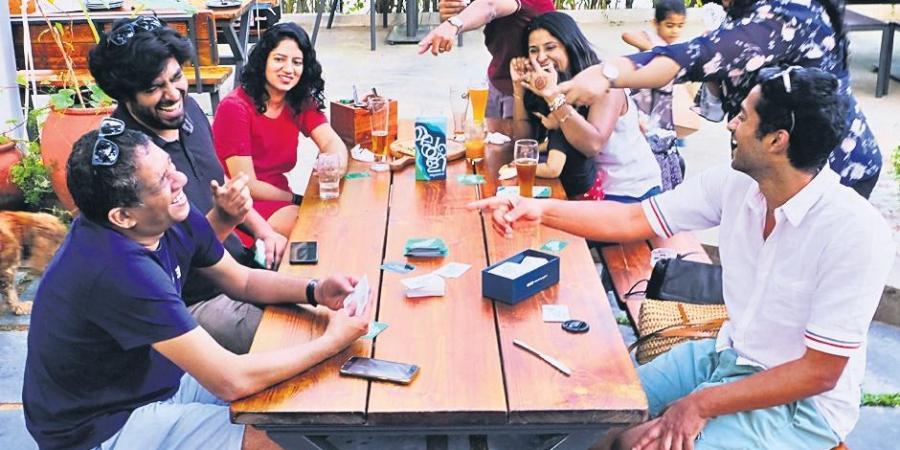
This new card game created by two Bengaluru-based women, who hail from Kerala, celebrates Malayali culture, Mollywood and more.

The game needs at least four players and can be played by anyone aged 18 and above

Bengaluru :

You may take a Malayali out of Kerala but you can’t take the love for Malayalam pop culture out of a Malayali. Or so it seems from this new game developed by two Bengaluru- based women who hail from God’s own country. Called Malayali Aano, the new game by Sona Zainab Harris and Rose Mary Jacob is a cardbased game that draws heavily from Malayali pop culture, popular phrases, movie characters, food, stereotypes and other such trivia.

Those who have played the popular party game Cards Against Humanity need no introduction to the rules of Malayali Aano, whose tagline is: ‘A party game for devil’s own people’. It consists of 500 cards, of which 100 have questions on them while 400 have statements, movie dialogues, or phrases that could work as an answer. One player picks a question card, others throw the quirkiest answers from the 10 they possess into a pile. The player that poses the question reads out each question- answer pair, laughter ensues and the most creative or whackiest answer wins.

A minimum of four players is mandatory, with more being merrily encouraged. “Each statement in the answer card is iconic in its own way but when set to the context of another question, it can incite a laughter riot. Since we’ve picked out trivia from the 1980s to now, the nostalgia factor is high as well.

Any player aged between 18 and 45 will find something to remind them of their childhood, adolescence, first romance, parental relations or their connection to Kerala,” says Harris, the founder and creative director of Backflip Design Studio. But it is not just fun and games.

It also helps bring up important conversations. “When you hear certain dialogues – for example, ‘You are just a woman’ from the film The King – you don’t think much in the context of the plot. But isolating such things and using it in the game makes people see that it could be problematic too. Humour can help break barriers with topics like sexism, classism, misogyny, etc,” says Jacob, who is also the founder and curator of the popup My Cup of Tea.

The two women took a month to develop the content of the game. It makes use of, what Jacob and Harris refer to as, a “Manglish” script. There is also a leaflet with a QR code that can be scanned to understand the translation and reference of the answer cards. The game is meant for those aged 18 and above, with some players even finding it to be an effective ice breaker with their parents.

“One player told us he never thought he would talk to his father about the topics included in the game. But they had a good laugh about it, so it can help different generations bond better too,” says Harris.

source: http://www.newindianexpress.com / The New Indian Express / Home> Cities> Bengaluru / by Simran Ahuja / December 29th, 2020

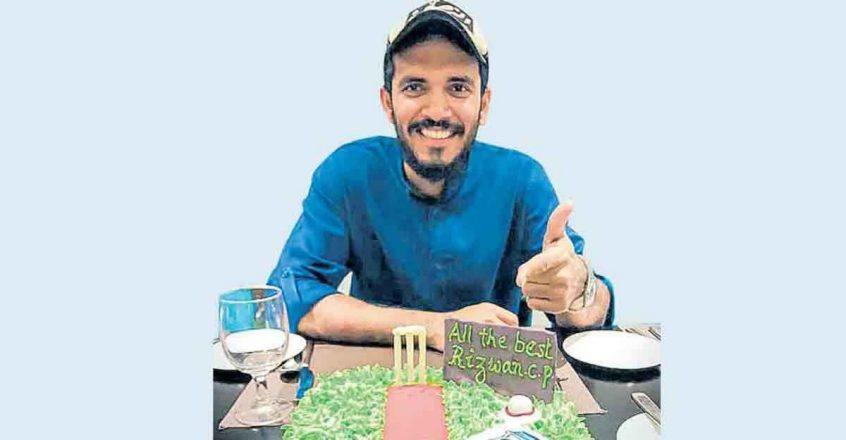
Meet Rizwan, first Malayali to score ODI hundred

Sondarapally Village (Thalassery), KERALA / Sharjah , UAE :

C P Rizwan won the man-of-the-match award his 109 against Ireland in the first ODI on Friday

Kannur:

The story of C P Rizwan, who on Friday became the first Keralite to score a One-Day International (ODI) century representing any country, bears testimony to the fact that if you strive hard and stay focussed, you will ultimately realise your dreams. 

The 32-year-old hailing from Thalassery, the cradle of cricket in Kerala, never gave up and never lost hope, even when his career hit a roadblock. 

Growing up at Saidar Pally, a small village near Thalassery, Rizwan’s childhood mostly revolved around playing cricket with his friends in the locality. The youngster was gifted with the qualities that make a batsman successful at the top level and had the potential to become a future star.

He went on to represent Kerala in the junior levels and captained the U-25 state team. Although his performance in age-group categories was rewarded with a place in the senior side which included the likes of Sanju Samson and Sachin Baby, he was never given a chance in the playing eleven. 

As it was frustrating sitting on the bench, he moved to the UAE in 2014 and landed a job in Sharjah. He continued to play cricket there and was able to catch the attention of the local cricket fraternity with consistent performances in domestic tournaments. In 2018, Rizwan completed the four years required for him to be eligible to play for the UAE and was duly included in the national team.

Rizwan celebrates his hundred against Ireland

An electrical engineering graduate from the Cochin University of Science and Technology, Rizwan made his debut for the UAE on January 26, 2019, in an ODI against Nepal. The Emirates Cricket Board offered him a one-year central contract last month in recognition of his excellent batting against against the USA and Zimbabwe. Apart from him, two other Keralites – Basil Hameed and Alishan Sharafu – also made it to the squad.

On Friday, Rizwan made history when he guided the UAE to a six-wicket win over Ireland in the first ODI of the four-match series in Abu Dhabi by scoring 109 off 136 balls. The splendid knock, which earned him the man-of-the-match award, was laced with nine boundaries and a six. He shared a fourth-wicket partnership of 184 with Lahore-born Muhammed Usman, who made an unbeaten 102, and made short work of the 269-run target set by Ireland.

Centurions Rizwan and Muhammed Usman after the first one-dayer against Ireland

Born on April 19, 1988, to M P Abdul Rouf and C P Nasreen of Poovathankandy, Rizwan studied at the St Joseph’s Higher Secondary School in Thalassery and played for the local Students Cricket Club  and the Kochi-based Cordiant Sports Foundation in his formative years. 

The right-hander, who bats at No. 3, has so far scored 288 runs from 10 ODIs at an average of 32. 

He is currently employed with the Eastern International LLC in Sharjah.

source: http://www.onmanorama.com / OnManorama / Home> Sports / by G. Dinesh Kumar / January 09th, 2021

In Kalaburagi, where India recorded its first Covid death: ‘Inshallah, a new life is set to join us… Pray all can be with families’

Kalaburagi, KARNATAKA :

Hamid Faisal Siddiqui, 49, has taken over as qazi of the mosque after his father’s demise and says they have started to put the dark days behind them.

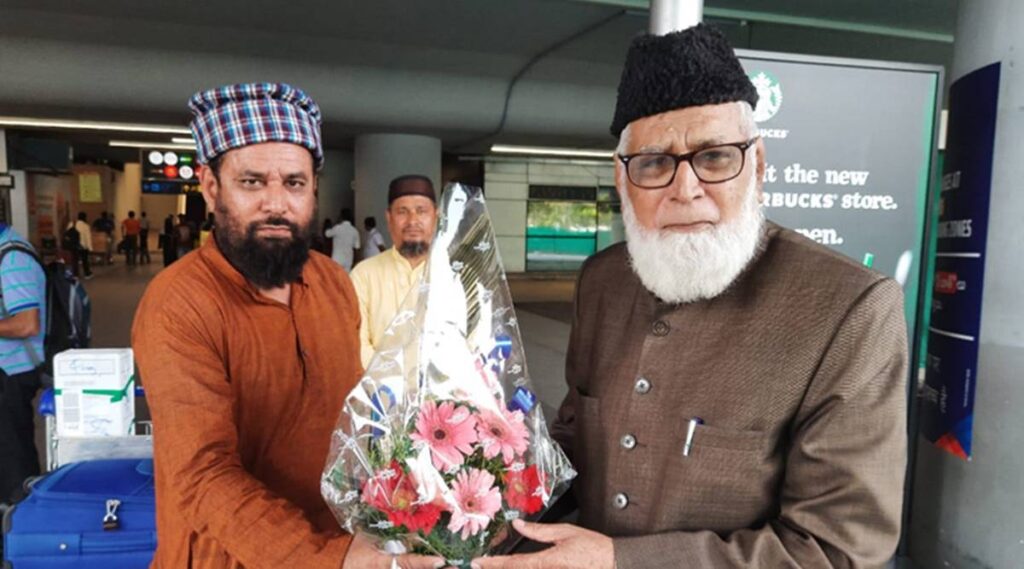
Hamid recieves his father Muhammad Husain Siddiqui at Hyderabad airport in March, 2020.

Hamid Faisal Siddiqui, 49, still breaks down talking about the death of his father on March 10, becoming India’s first casualty linked to Covid-19, especially because of what followed. “I wish and pray every day that none in this world, not even my enemies, is put through the situation my family had to face. Amidst the grief, we battled blame.”

Muhammad Husain Siddiqui, 76, an Islamic scholar who was the qazi of the biggest mosque in Kalaburagi, had gone for a pilgrimage to Saudi Arabia, followed by a month-long stay with his younger son, a dentist, in Jeddah. On his return on March 6, Hamid recalls, his father was fine. However, by the next night, he had begun feeling unwell. With his fever and cough worsening, the family took him to a hospital in the town on March 9. After 12 hours of observation, he was referred to a private super-specialty hospital in Hyderabad. He was being taken by road in an ambulance to be tested for the coronavirus  when he died.

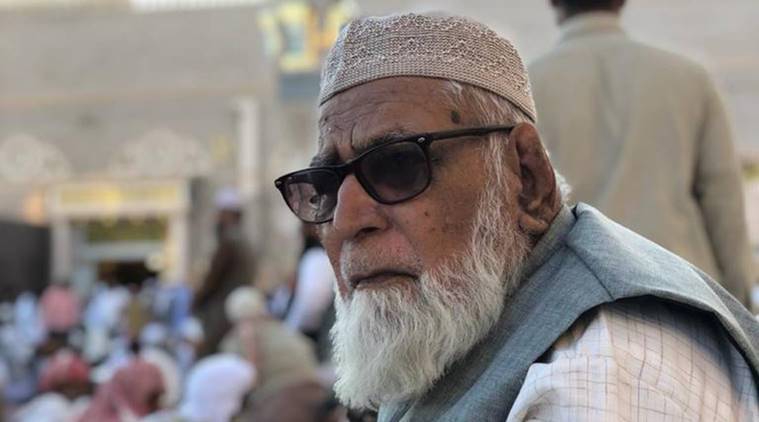
Muhammad Husain Siddiqui at Saudi Arabia pilgrimage.

Still, the joint family never suspected Covid, as the pandemic  was till then no more than a curiosity, happening in faraway China. It was after Siddiqui passed away that the doctors told the family he had died of the coronavirus. Later, Siddiqui’s 45-year-old daughter and the family doctor also tested positive, but recovered.

“People were scared to meet us, some turned away on seeing us. Such was the stigma attached to the pandemic. Very few visited us to even offer solace,” Hamid, who has eight siblings, sobs.

While the dark days that followed seemed endless, Hamid says they have started to put them behind. As elder son, he has taken over as qazi of the mosque. What helped was the family’s decision to take on their Covid status head-on. “We encouraged others to wear a mask and follow all social distancing norms, saying this was the best way to survive this turbulent period.”

A few days from now, the Siddiquis hope to finally and firmly put the shadow of 2020 behind. “Inshallah, we will be blessed with a new life by the early half of the new year,” Hamid says, adding, “Our solemn request to the Almighty continues to be that the entire world moves out of this phase to become a happy place for all. People should soon get a chance to be with their loved ones whenever and wherever they wish to be.”

source: http://www.indianexpress.com / The Indian Express / Home> Cities> Bangalore / by Ralph Alex Arakal / Bengaluru – January 01st, 2021