All posts by mpositiveone@gmail.com

Let’s talk about how Tablighi Jamaat turned Covid hate against Muslims around

NEW DELHI :

After all those days of hate, there was redemption for Tablighi Jamaat in the end. Some say it was in keeping with what Quran teaches.
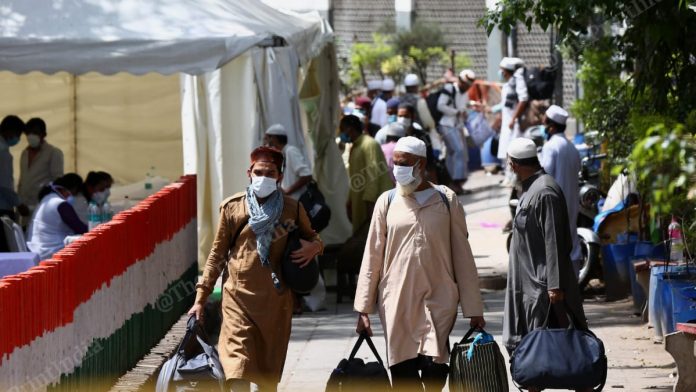
Nearly 4,000, including foreigners, had attended the Tablighi Jamaat event in Delhi (representational image) | Photo : Suraj Singh Bisht | ThePrint


Elisabeth Kubler-Ross’s seminal work, Death and Dying, describes the five distinct stages of grief: denial, anger, bargaining, depression and acceptance. While the Swiss-American psychiatrist was speaking about the series of emotions terminally ill patients go through, the first of the five stages that she postulated possibly holds true for a section of India’s people when the country was trying to come to terms with COVID-19 in the initial days of the pandemic.

The spread of the virus in the early months had then exposed the country’s second-largest religious group to a vulnerability born out of denial. Indiscretion and reckless behaviour by members of the Tablighi Jamaat had purportedly led to a spurt in coronavirus-positive cases, not only in Delhi but also in many other parts of the country.

An international gathering of Tablighis — preachers or a society to spread the faith —had taken place in New Delhi’s Nizamuddin area in March 2020, drawing hundreds of foreign nationals from Thailand, Nepal, Myanmar, Indonesia, Bangladesh, Malaysia, Sri Lanka and Kyrgyzstan. Despite a government order prohibiting large gatherings, more than 4,500 people had assembled at the Tablighi Jamaat Markaz (headquarters).

Media reports had quoted government sources as saying that since 1 January 2020, over 2,000 foreigners from 70 countries had arrived in India to participate in Jamaat activities. As the Covid-19 lockdown came into force on 25 March 2020, over 1,000 were left stranded in Nizamuddin.

Within days, a state of panic had set in as reports of Covid-19 deaths and positive cases started coming in from various parts of the country. By early April, private television news channels had begun insisting that over 30 per cent of the corona-positive cases had the “Tablighi Virus.”

Political factors were at play too. The country was already in ferment over the Citizenship Amendment Act and the National Register of Citizens.

The Tablighis’ state of alleged ignorance was dubbed a “Himalayan” blunder as a heavy dose of media onslaught, Islamophobia and blame game followed. As Najmul Hoda, a Chennai-based IPS officer, lamented on his Facebook wall, Covid-19 looked like a common cold in comparison to the plague of communal hatred.

Tablighi virus, Corona Jihad, stories of discrimination, Quran, divine injunction, Muslim society, deadly virus, Covid-19, Muslim clergy, Indian Muslims, social distancing, community prayers, letter of appreciation.

Political factors were at play too. The country was already in ferment over the Citizenship Amendment Act and the National Register of Citizens. Shaheen Bagh and its women protesters were making international headlines and the February 2020 riots in Delhi had deepened the sectarian divide, exacerbating religious tensions. It was in this situation that the Tablighi Jamaat held its congregation. According to data shared by Equality Labs (a digital human rights group) with TIME magazine, the hashtag ‘Corona Jihad’ appeared nearly 300,000 times.

The online attack became more and more vicious as reports of people leaving for different parts of the country from the Markaz poured in. For days, “Tablighi virus” and “Corona Jihad” trended on Twitter. Our entire focus shifted from fighting and containing COVID-19 to fighting the Tablighis and the Muslims, who the general population started equating as one and the same. Those were the initial days of our COVID-stricken lives, unsure of what awaited us and we were quick to blame the Markaz for all our misery.

The usual practice of portraying Muslims as the other came into play, as did indulging in victimhood.

In the midst of this Islamophobic onslaught, many articles and tweets expressed fears of a Muslim apartheid. The usual practice of portraying Muslims as the other came into play, as did indulging in victimhood.

“Social media, as ever, remained truculent and toxic. Generally speaking, Muslims continue to use social media space to indulge in their victimhood addiction,” observed Najmul Hoda.

While the community needed to address the elephant in the room and could not be absolved of its responsibility for wrongful acts by the Tablighis, the polarised discourse that was unleashed in mainstream media impacted the psyche of the general population. Most Muslims came out against the Jamaat, but the entire community was still clubbed together and labelled the “Superspreader”.

But the way the Tablighi Jamaat’s role and, by extension, of the entire Muslim population’s involvement in the spread of the virus was covered by the mainstream media, it suddenly felt that Covid-19 had a religion.

The Tablighis were guilty for sure for the congregation of thousands of people despite the prohibitory orders, and of not reporting cases, but the wave of hatred failed to see that the Tablighi Jamaat is not the sole representative of India’s 170 million Muslims and its actions should not be linked with the larger community. It is also pertinent to note that the Tablighi Jamaat preaches a narrow interpretation of Islam to some sections of Muslim society.

But the way the Tablighi Jamaat’s role and, by extension, of the entire Muslim population’s involvement in the spread of the virus was covered by the mainstream media, it suddenly felt that COVID-19 had a religion.

Soon, stories of discrimination against the poorer sections among Muslims started coming out. NDTV reported how vendors in Mahoba district of Uttar Pradesh were allegedly targeted and stopped from selling vegetables by people who accused them of being members of the Tablighi Jamaat and of spreading the coronavirus.

Old sociological problems, such as overcrowded ghettos, lack of hygiene and low levels of awareness, became handy tools again to stigmatise the community.

The Bharatiya Janata Party (BJP) MLA from Deoria in Uttar Pradesh, Suresh Tiwari, warned people against buying vegetables from Muslims. The defiant leader was later asked to explain his comment by his party chief.

A video shared widely on Facebook and on Twitter purportedly showed Muslims intentionally sneezing on each other. It was later debunked by the fact-checking website AltNews.

Tablighi virus, Corona Jihad, stories of discrimination, Quran, divine injunction, Muslim society, deadly virus, Covid-19, Muslim clergy, Indian Muslims, social distancing, community prayers, letter of appreciation

Several video clips purportedly showing COVID-positive members of the Tablighi Jamaat misbehaving with hospital staff and other patients found space on prime-time debates. Old sociological problems, such as overcrowded ghettos, lack of hygiene and low levels of awareness, became handy tools again to stigmatise the community.

The reaction from the community was at times defiant, while some took to social media to counter the hate being peddled with tweets that were either equally toxic or full of self-pity.

A closer look at the role the Muslim clergy played reveals a far more constructive engagement than what has been projected by the mainstream media.

It was at this point that the Muslim clergy, intellectuals and other community leaders stepped in. On 2 April, seven signatories — Dr. Zafarul Islam Khan, Chairman, Delhi Minorities Commission; Prof. Akhtarul Wasey, President, Maulana Azad University, Jodhpur; Prof. Mohsin Usmani Nadwi, President, Human Welfare Society; Prof. A.R. Kidwai, Director, K.A. Nizami Center for Quranic studies, AMU; Masoom Moradabadi, Secretary, All India Urdu Editors Conference; Zaheeruddin Ali Khan, Managing Editor, Daily Siasat, Hyderabad, and Prof. Iqtedar Mohd. Khan, Deptt. Islamic Studies, Jamia Millia Islamia, Delhi — issued an appeal to the government to take into consideration the “genuine constraints faced by certain people.” They argued that it was not a time to find fault. “Any attempt to give it a sectarian twist would weaken our battle against the deadly virus,” they said.

A closer look at the role the Muslim clergy played reveals a far more constructive engagement than what has been projected by the mainstream media. As early as 6 March, Maulana Khalid Rasheed Firangimahli, Lucknow-based Imam, Eidgah, had asked mosque-going Muslims to take preventive measures against Covid-19, and told them to avoid congregations and coughing and sneezing in public.

Firangimahli was among many religious heads across the country who issued fatwas saying that the fight against the coronavirus was a religious obligation.

A broad consensus that was worked out decided against special Eid prayers at Eidgahs and at mosques, etc. Islamic seminaries, such as the Darul Uloom, Nadwa and Deoband, issued fatwas asking the faithful to offer Eid prayers at home.

A major challenge came during the month-long period of Ramadan — that began in the last week of April — in terms of enforcing social distancing and avoiding guests at the breaking of fast (iftar) and at community prayers (tarahwih), etc. But enforcing a sense of discipline among 170 million people sharply divided on sectarian and linguistic lines was done with remarkable ease and voluntary compliance.

As Ramadan is closely followed by Eid, suspension of the customary Eid prayer posed another hurdle. However, a broad consensus that was worked out decided against special Eid prayers at Eidgahs (where special Eid prayers are held) and at mosques, etc. Islamic seminaries, such as the Darul Uloom, Nadwa and Deoband, issued fatwas asking the faithful to offer Eid prayers at home.

The results were so good that Uttar Pradesh Chief Minister Yogi Adityanath called up Firangimahli in Lucknow and congratulated him, saying that Eid prayers throughout the state had been observed without any incident of the virus spreading. The state government also issued a letter of appreciation.

Those members of the Tablighi Jamaat who had tested positive for the virus, and have since been cured, came forward in huge numbers to donate their blood plasma — containing anti-viral antibodies — and helped cure many affected people.

Eid ul-Fitr 2020 saw the largest ever participation of women in family prayers. That prompted Najmul Huda, the IPS officer, to say “thanks” to the virus for bringing gender equality to every Muslim home. “May it get institutionalised. Corona, I can’t really say thank you to you, but it’s thanks to you,” he wrote .

There were other positives too. Charity acted as a great succor as appeals were issued to channelise Ramadan and Eid shopping for the needy. Maulana Naeem Ur Rahman Siddiqui, secretary of the Islamic Centre of India, claims that zakat — or charity — saw a rise of over 50 per cent as compared to the previous year.

Not to forget, the redemption and acknowledgement that came after all those days of hate. If the members of the Tablighi Jamaat were guilty of ignorance in the initial phase of the pandemic, they turned adversity they had wrought upon themselves into opportunity in the form of penance. Those who had tested positive for the virus, and have since been cured, came forward in huge numbers to donate their blood plasma — containing anti-viral antibodies — and helped cure many affected people.

Some say it was in keeping with what the Quran teaches — that divine injunction is not for returning evil with good, but with the best. It says: “Good and evil are not equal. Repel (evil) with what is best, and you will see that the one you had mutual enmity with, will become the closest of friends.” (41:34)

Rasheed Kidwai is Visiting Fellow at Observer Research Foundation (ORF). He tracks politics and governance in India. Naghma is Senior Fellow at ORF. She tracks India’s neighbourhood — Pakistan and China — alongside other geopolitical developments in the region. Views are personal.

This article was first published by ORF.

source: http://www.theprint.in / The Print / Home> Opinion / by Rasheed Kidwai and Naghma Sahar / July 12th, 2020
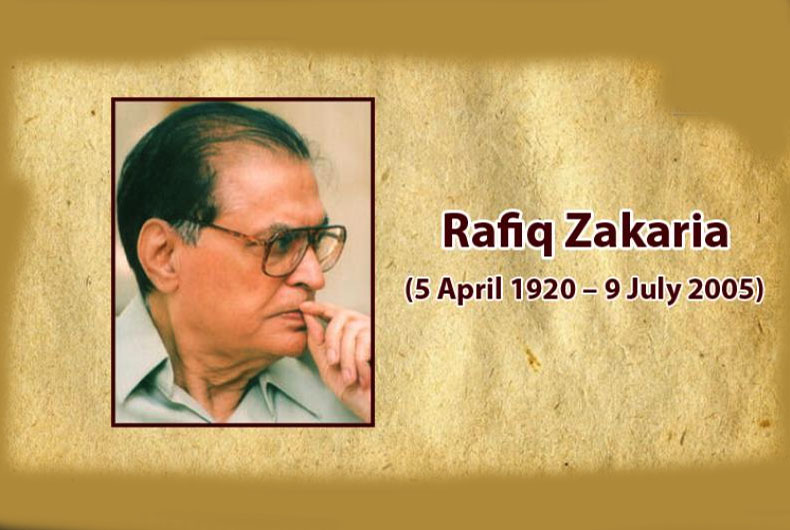
Dr Rafiq Zakaria: A Patriot, Politician and Scholar

Mumbai, MAHARASHTRA :

Sadly today there is no one of Dr Zakaria’s caliber, scholarship and forceful articulation to bat for Indian Muslims

One evening in the late 1990s, as a cub reporter working for The Asian Age, founded and then edited by eminent journalist M J Akbar, I landed at the iconic Nehru Centre in Mumbai. It was a lecture by Samuel Huntington, the famous American scholar who had stirred a huge controversy with his Clash of Civilizations hypothesis. After Huntington’s speech, Dr Zakaria spoke and, while acknowledging the renowned scholar’s debt in mentoring the Zakarias’ son the famous author and journalist Fareed Zakaria, Dr Zakaria disagreed with Huntington’s hypothesis and attacked him for spreading fear among the peace-loving section of the world community.

That was the first time I saw Dr Zakaria. Subsequently, I attended a screening of a documentary made by a British channel on the eve of 50 years of India’s Independence in 1997. The documentary, complained Zakaria, had truncated version of his interview and post-screeing Dr Zakaria was understandably disturbed and livid. In my excitement to have got a “hot” story about a leading Islamic scholar like Dr Zakaria trashing a documentary by a British channel I reported it in the paper but wrongly said that it was produced by the BBC. Next day the BBC sent a letter to my editor denying its ownership. It was a huge embarrassment for me, the editor and the paper and, the then resident editor, rapped me for such a lapse and carelessness while reporting. To my pleasant surprise Dr Zakaria didn’t pull me up, forgetting and forgiving with a remark that it was a misreporting.

Dr Zakarai and his wife Madam Fatma Zakaria were very close to M J Akbar, and he could have got me fired for the blunder that I had committed. But Dr Zakaria saw it as a minor mistake on the part of a young, fledgling reporter and didn’t make it into a big issue. I fell in love with the scholar-politician for his magnanimity and sense of justice.

For the next one decade or so I remained immensely close to the Zakarias. Hardly a week passed when I didn’t call doctor sahib or he didn’t inquire about my progress as a journalist. I can’t remember the number of times I quoted him for stories or interviewed him for The Asian Age or The India Express, the paper I left in 2005 to join The Times of India. He was happy that I joined TOI, the newspaper he had contributed to for decades. Sadly, he didn’t live long to see my works in TOI, except the first story which announced my arrival to the Times. It was about Sare Jahan Se Accha completing a century and doctor sahib, as always, was effusive in his praise for me for this front-page story which in a way also announced my arrival to the Times of India.

I cannot forget a note that he wrote on one of his books he gifted me. Seated at his spacious study at the Cuffe Parade House in South Mumbai, in long hand, doctor sahib wrote:

“To Mohammed Wajihuddin for whose bright future I am genuinely concerned.”

It was a big compliment for me. I felt adopted by the Zakarias who showered unreserved love and affection on me. There was no artificiality in doctor sahib’s expression of concern and love for a boy who had arrived in the city from the backwaters of Bihar without a godfather. After his passing away, I missed him a lot and miss him every day, every moment.

Dr Rafiq Zakaria: An Impressive Journey

Dr Zakaria belonged to a generation which had not only witnessed the horrors of partition but had deeply felt pained at the vivisection of India into Islamic Pakisan and Secular India. Son of a maulvi in Nala Sopara, Zakaria scaled the height of scholarship and politics mainly because of his love for reading and a drive to excel.

A brilliant student, he devoured books on history, fiction, law, religion and everything between them. He had befriended Bernard Shaw, heard Harold Laski and met Bapu the Mahtma who always remained a paragon of truth and non-violence to Zakaria. Even as a student, both in Bombay and in London, he wrote for some leading newspapers of the day. An argumentative mind, he would not take things on their face value. He would question the status quo and side with the victims.

A patriot to the core, Zakaria never lost hope in the Hindu-Muslim unity and never forgave Mohammed Ali Jinnah for formulating the Two-Nation Theory which caused immeasurable damage to the sub-continent’s Muslims. In his autobiographical book The Price of Partition, the release function of which I had the fortune to attend, he has detailed the circumstances leading to the partition of India. He would often quote the famous Urdu couplet about the disaster that partition brought: Lamhon ne khata ki thi/sadiyon ne saza payee.

Dr Zakaria’s views about Muhammad Ali Jinnah

In his lucid prose which, as Zakaria confesses in almost all his books that he authored, was fine-tuned by the veteran editor and his better half Madam Fatma, Zakaria has quoted several interesting anecdotes about Jinnah whom his supporters called Quaid-e-Azam (the leader) but who actually misled the sub-continent’s Muslims. The pork-eating Jinnah who loved his whisky had nothing to do with the genuine concerns of the Muslims. He was authoritarian, egotist and desperate to see his dream of carving out Pakistan, the so-called Pure land for Muslims. One of the anecdotes in Zakaria’s immensely readable book goes like this:

“Jinnah had started reorganizing the League after the assembly elections in 1937; he was on an enticing spree. Hasrat Mohani, who was a firebrand, went to see Jinnah on some urgent work at his bungalow. He had not taken an appointment. It was after dusk; Jinnah was enjoying his peg of whisky. He called Mohani to his room and thinking then that he was more a revolutionary than an orthodox Muslim, offered him a drink. Mohani, somewhat baffled, said that he wished he had as little fear of God as Jinnah had. Jinnah retorted: “No, Maulana! You are wrong. I have more faith in His mercy than you have.”

Dr Rafiq Zakaria: A Successful Politician

He was a successful politician who even represented India at the United States to counter the arguments of Zulfiqar Ali Bhutto, then Pakistan’s foreign minister and later the Prime Minister, on the dispute over Kashmir. Besides, Zakaria was a passionate scholar of Islam. His seminal work Muhammad and the Quran, written in response to Salman Rushdie’s The Satanic Verses, is a labour of love for which Muslims will be eternally indebted to him. About the huge positive response this book received from noted scholars from across the world, Dr Zakaria once told me:

“After reading this book, a big Pakistani Maulana said, “Mujhe nahim maloom Dr Zakaria ne kitni neki or aur kitne gunah kiye hain lekin main gawahi deta hoon key eh kitab unki bakhshayesh ka zariya banegi. [Truly, if nothing else, at least this book will inshallah help our late doctor sahib find a place in jannah.]

Dr Rafiq Zakaria’s love for Allama Iqbal

His love for the poet-philosopher Allama Iqbal was immense. He defended Iqbal like few in India did. His book on Allama Iqbal, penned to prove that Iqbal was wrongly credited with fathering the idea of Pakistan, is testimony to Zakaria’s love and respect for Iqabl who was undoubtedly a great poet but a failed politician. Dr Zakaria never failed to quote the famous line from Iqbal’s Naya Shivala –Pather ki moorton mein samjha hai tu khuda hai/khake watan ka mujhko har zarra devta hai–whenever he needed to show Iqbal or other Indian Muslims as nationalists.

One thing that is of great relevance to us today is Dr Zakaria’s unshakeable faith in Kashmir’s accession to India. He had even penned a poem on Kashmir, expressing his love for the valley and why it needed to be with India. He justifiably believed that, if Kashmir secedes from India, it will not only be ruinous for the Kashmiris, but Muslims in the rest of India will have to pay heavily for this crime. As anti-Muslim hysteria grips parts of India in the aftermath of the recent terror attack on the Amarnath Yatri, Dr Zakaria’s fears only seem true. It is in the interest of Indian Muslims that Kashmir remains an integral part of India.

Sadly today there is no one of Dr Zakaria’s caliber, scholarship and forceful articulation to bat for Indian Muslims either in the media or in the corridors of power, the two arenas that are increasingly getting poisoned. As majotarianism marches ahead, threatening to turn the secular India into a Hindu rashtra, the absence of a patriot, politician and scholar like Zakaria is greatly felt.

(The author, a journalist with The Times of India, presented this paper at the one-day seminar on Dr Rafiq Zakaria on July 15, 2017 at Aurangabad. The article is reproduced here with the permission of the writer on the occasion of the 15th death anniversary of Dr Rafiq Zakari on July 9.)

source: http://www.ummid.com / Ummid.com / Home> India> Views & Analysis / by Mohammed Wajihuddin / July 17th, 2020

AMU declares Class XII result – Syed Quayem Mehdi, Maryam Latif secure 1st Rank

Aligarh, UTTAR PRADESH :

The Aligarh Muslim University declared the result of its Senior Secondary School Certificate Examination Part-II (Class XII), 2020, on Thursday.

A total of 2448 students appeared in the examinations with 2406 students passing the examination. A total of 98.28% students have cleared the Class XII examinations.

Controller of Examinations, Mr M U Zuberi, while declaring the result, informed that 2212 students passed their Class XII Examinations with First Division while 192 students were placed in the second division. Result of only two students was in the third division.

Amongst the boys, Syed Quayem Mehdi scored highest 484 marks out of 500 while Maryam Latif scored 483 marks among girls.

Vice-Chancellor Prof Tariq Mansoor lauded the efforts of the students. He emphasised that the hard work of students should be appreciated for excelling in the examinations in these turbulent times. He has also wished them all success in their future endeavours.

source: http://www.amu.ac.in / Aligarh Muslim University / Home> AMU News / Public Relations Office, Aligarh Muslim University / July 16th, 2020

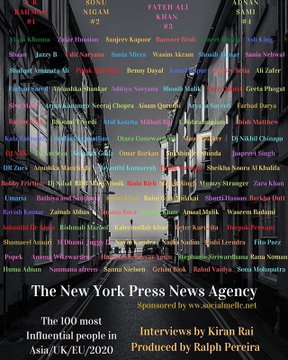
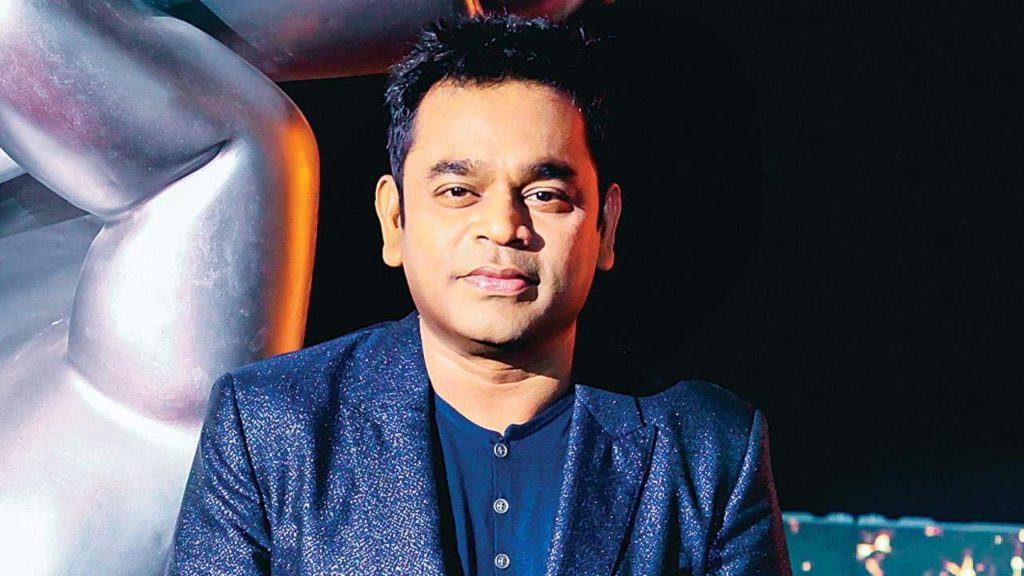
A.R. Rahman named the most influential person in Asia, Shruti Haasan also honored

A.R. Rahman has been named the most influential person in Asia by the New York Press News Agency. The others in the list of 100 include Shruti Haasan, Benny Dayal, Sania Mirza, Saina Nehwal and Wasim Akram.

The Isaipuyal’s current release ‘Dil Bechara’ touted as the last movie of Sushant Singh Rajput is streaming on Disney Plus Hotstar. His upcoming films include Mani Ratnam’s multistarrer ‘Ponniyin Selvan’, Vikram’s ‘Cobra’, Sivakarthikeyan’s ‘Ayalaan’ and Dhanush’s Bollywood venture ‘Atrangi De’.

The multifaceted Shruti Haasan who is currently starring in ‘Laabam’ with Vijay Sethupathi has posted a video on her social media page expressing her thanks for the recognition. She has written “I’m so honored to be voted one of the 100 most influential people in Asia 2020. Interviewed by Kiran Rai @kiran_rai99. Talking about a whole bunch of fun things !! Stay tuned”.

source: http://www.indiaglitz.com / IndiaGlitz / Home> Tamil > Cinema News / July 16th, 2020

First woman moves Supreme Court over triple talaq law

KERALA :

The law was passed in July 2019 after intense debates in both the lower and upper houses of the Parliament, with opposition parties stating that the law targeted the Muslim community even as the centre asserted that the law would help achieve gender justice for Muslim women.

In August 2017, a five-judge bench of the Supreme Court had declared the practice of talaq-e-biddat (a heretical form of divorce based on a husband pronouncing divorce thrice in quick succession) as unconstitutional.

A Kerala lawyer has moved the Supreme Court against a law that criminalises the practice of granting instant divorce becoming the first Muslim woman to do so since Parliament passed the legislation in 2019.

Noorbeena Rasheed on July 6 challenged the Protection of Rights on Marriage Act, which provides for a three-year punishment for talaq-e-biddat, a practise also referred to as Triple Talaq, which is practised among a small section of Muslims in the country. “The protection of women cannot be achieved by incarceration of husbands,” her petition stated.

Issuing a notice to the Centre, a bench of three justices led by N V Ramana on Monday admitted Rasheed’s petition, which will be heard with nine similar pleas challenging the law’s validity. The other petitioners include organisations like Jamiat Ulama-i-Hind, All India Muslim Personal Law Board, Muslim Advocates Association, and two individuals. The petitions have called the law disproportionate as well as excessive and stringent and sought that the court hold it unconstitutional. A date for hearing these petitions has not been listed as yet.

The law was passed in July 2019 after intense debates in both the lower and upper houses of the Parliament, with opposition parties stating that the law targeted the Muslim community even as the centre asserted that the law would help achieve gender justice for Muslim women.

Rasheed’s petition questions provisions of the law including one which allows relatives of the women to file complaints. The petition stated that this provision could potentially destroy marital relationships in case of false complaint. “This provision is highly detrimental not only to the wife but also to the marital relationship.”

Her petition also sought clarification from the Centre on the assessment that underlies incarcerating Muslim men for divorcing women. “Welfare-oriented legislation would promote amicable resolution of matrimonial disputes rather than criminalise marital discord, particularly criminalisation of only one community…the intent behind the Act is not abolition of triple talaq [instant divorce] but punishment of Muslim husbands,” her petition said.

Rasheed’s lawyer, Zulfikar Ali, said they want to highlight how the law will be detrimental to the interests of Muslim women, which it seeks to protect.” He added Rasheed is also the national general secretary of the Indian Union Women’s League, which he described as the country’s largest Muslim women organisation affiliated to the Kerala-based Indian Union Muslim League (IUML). IUML has three members in Parliament’s lower House, or Lok Sabha.

In August 2017, a five-judge bench of the Supreme Court had declared the practice of talaq-e-biddat (a heretical form of divorce based on a husband pronouncing divorce thrice in quick succession) as unconstitutional. The practice is banned in most Muslim countries including Pakistan.

The verdict came on a petition of five Muslim women, including lead petitioner Shayara Bano, who were abandoned after their husbands pronounced instant divorce.

The Centre initially issued an ordinance after the verdict to criminalise the practice of triple talaq for the want of majority in Parliament’s upper house, or Rajya Sabha, before bringing the law.

The law makes the practice a cognisable offence. An offence of such a nature allows the police to carry out arrests without a warrant. Serious crimes such as theft, rape, and murder are also cognisable offences.

In its petition, Jamiat-Ulama-I-Hind has said there are graver offences like rioting and bribery under the Indian Penal Code for which there is a lesser punishment than instant divorce.

source: http://www.hindustantimes.com / Hindustan Times / Home> India News / by Abraham Thomas, Hindustan Times, New Delhi / July 08th, 2020

NRIs and local Hyderabadis form task force to fight coronavirus

Hyderabad, TELANGANA :

Asif Sohail, the coordinator of this initiative

Hyderabad:

A city-level task force of medical experts, philanthropists, social activists and Medical College Alumnus Association has been set up to fight against the coronavirus pandemic.

The task force monitored by Mohammed Asif Hussain Sohail, Chairman of Sakina Foundation and President of Telangana Parents Association For Child Rights and Safety. This force also includes a group of 25 national and international organisations, Doctors Association and doctors from other countries like Dr. Aslam of America whose roots are in Hyderabad. They have come together on a single platform to combat coronavirus.

This programme has been named as ‘Hyderabad COVID Task Force.’

Member of Hyderabad COVID Task Force, Mohd Asif Hussain Sohail said, “The idea of setting up the task force was conceptualised seeing the pain and sufferings of the Hyderabadis for medical treatment, ration and food especially funerals. The Task Force aims to serve the people who are facing difficulties during the pandemic. Hyderabad Covid Task Force is going to conduct awareness on Covid-19 pandemic in colonies particularly in the city’s slums. They will provide aid to COVID-19 patients for the medical treatment, food for patients and their attendants in hospitals. It will also help the family also organise final rides, land for the burial, final ablution and even for the other community people of the deceased persons died to COVID-19,” Asif Hussain told Siasat.com.

As a large number of people in the city are also being suffering from a viral fever which has created panic among them and they are going for COVID-19 tests. In this situation the Hyderabad COVID Task Force team is undertaking the awareness programmes, counselling for corona patients, checking peoples’ medical need and etc. in each locality with volunteers and also providing online consultations with doctors and giving a medication,” said Asif Sohail.

“Each organisation had at least 50 volunteers who are working in various parts of city. Under this, the Sakina foundation is working on a pilot project which identifies the poor and needy people, their health issues and helps them with food, medication, and funerals for their deceased ones,” he added

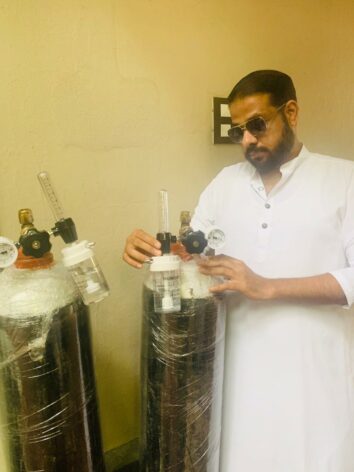
He also said that he is also supplying free Oxygen cylinders with Pulse oximeters for suspected carriers and positive cases under home isolation care by providing PPE (Personal Protection Equipment) among the deceased members during the funeral.

The organisation remains connected through a zoom call with Dr. Aslam from USA, who initiated and coordinated with other doctors, philanthropists and organisations from the USA — including DAAME (Deccan Alumni Association Middle East), DAA (Deccan College of Medical Science Alumni Association) and etc.

Asif Sohail coordinated all the doctors, NGOs, activists, and philanthropists based in Hyderabad.

source: http://www.siasat.com / The Siasat Daily / Home> News> Hyderabad / by Mohammad Hussain / July 10th, 2020

MP 10th Topper List 2020: Five Muslims Among Top Ten

MADHYA PRADESH :

A total of 360 students from different schools of Madhya Pradesh have been included in MP 10th Merit List 2020 based on their score.

MP Board Toppers and Merit List 2020 Class 10: 

As many as five Muslim students from different districts of Madhya Pradesh figured in the Madhya Pradesh Class 10th Merit List 2020 released Saturday.

A total of 360 students from different schools of Madhya Pradesh have been included in MP 10th Merit List 2020 based on their score.

Securing 100% marks in the MP 10th board exam, as many as 15 students have jointly shared the 1st rank in the state merit list.

Two students have bagged the 2nd rank scoring 99.75% marks and a total of 22 students have bagged the 3rd rank by scoring 99.67% in the Madhya Pradesh List of Top Ten students of Class 10 Matric board exam 2020.

List of Muslim Toppers

Five Muslims who have figured in the list of Top Ten are Burhanuddin Mansoor Merchant, Aadil Azad Khan, Yasin Iqbal Khan, Haaris Khan Mohammad and Mahak Zaheer Khan.

Burhanuddin Mansoor Merchant of Don Bosco Academy Airajpur scored 298 out of the total 300 marks and bagged 5th rank.

On the other hand, Aadil Azad Khan of Govt School Juniya Datiya, Yasin Iqbal Khan of Gyan Jyoti High School Nainpur Mandla and Haaris Khan Mohammad Pearl Public Convent School Sagar have got 297 marks and got the 7th rank.

Mahak Zaheer Khan, a girl student of Venkatesh Public High School Arihant Nagar Khargon, shared the 9th rank in the MP Toppers list of class 10. She scored 296 out of the total 300 marks.

MP Class 10th Pass Percentage 2020

Around 10.5 lakh students had appeared in the Madhya Pradesh Board of Secondary Education (MPBSE) Vyapam Class 10 exams. Madhya Pradesh Board of Secondary Education (MPBSE) declared the Class 10 Matric HSC result 2020 today.

The state recorded an overall pass percentage of 62.84 percent in Class 10 board exam 2020. This is less than by about 1% as compared to 2019 when the pass percentage was 63.89.

Abhinav Sharma, Lakshadeep Dhakar and Pawan Bhargav and 12 other students have scored 100% to jointly share the 1st position in Madhya Pradesh board Class 10 HSC 2020 exams result of which was declared today.

Other students who scored cent per cent marks and bagged the 1st position are Priyanshu Raghuvanshi, Chatur Kumar Tripathi, Hariom Patidar, Rajnandini Saxena, Siddharth Singh Shekhawat, Harsh Pratap Singh, Kavita Lodhi, Muskan Malviya.

Sonam Patel and Sandhya Thakur have bagged the second rank in MP Board 10th 2020 exam. They scored 99.75% marks. A total of 22 students have bagged the third rank by scoring 99.67%.

MP Class 10 Pass Percentage 2019

The Madhya Pradesh board class 10 in 2019 was declared on May 15. The state had recorded an overall pass percentage of 63.89 in Class 10 board exam 2019.

Gagan Dikshit and Ayushman Tamkarkar scoring 499 out of the total 500 had jointly bagged the 1st position in Madhya Pradesh board Class HSC 2019 Merit List.

Dipendra Kumar Ahirwar came 2nd with 497 marks whereas 06 students scored 496 marks to bag the 3rd position. As many as 10 students have bagged the 4th position in the merit list with a score of 495.

source: http://www.ummid.com / Ummid.com / Home> Education & Career / by ummid.com News Network / July 04th, 2020

Sadaqt Ashram, Patna : Mazharul Haque’s gift to the Nation

Patna, BIHAR :

Attitude of the British government towards India after the First World War, where the Indians backed the British war efforts in hope of better treatment, exacerbated the already suppressed Indian feelings. The Rowlatt bill, satyagraha in its opposition, Jallianwala massacre, and brutal suppression of the satyagraha led Mahatma Gandhi to call for Non-Cooperation movement coupled with Khilafat movement. 

Gandhi urged his followers, through Young India, on 11 August, 1920, to ‘formulate an education system completely independent of government control’. Only then, in his view, non-cooperation holds any real meaning.

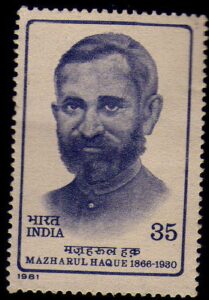
Mazharul Haque was the first in Bihar to respond to Gandhi’s call of developing indigenous education system. On 22 November, 1920 Haque opened a National School in Patna with Dr. Harnandan Lal Nandkeoliyar as its principal. But, the moment of glory was yet to arrive.

Mazharul Haque

On 11 December, 1920, One Hundred & Ten (110) students of Bihar Engineering School (B.E.S) boycotted classes and with all their belongings, with raised flags of ‘Free B.E.S’ marched to Sikandar Manzil, residence of Mazharul Haque, at Fraser Road in Patna. Students urged Haque to lead them into the non-cooperation movement. Haque left his house with 103 students, since seven (7) were taken by their parents to home, for an orchard in a rather scantily populated area on Patna- Danapur road. The orchard was a property of Khairu Mian, who donated it to the students without any hesitation. Haque, with the help of the students, made huts with straws, woods and leaves. The orchard, where now 103 students and Mazharul Haque were living, was named Sadaqat Ashram.

Sadaqt is a Persian/ Urdu word for truth while Ashram is a Sanskrit/ Hindi word for Abode. So, the place was Abode of Truth.

Now all the residents of Ashram were studying and spinning Charkha (cotton spinning wheel) and the ashram became a focal point of nationalist activities in Bihar.

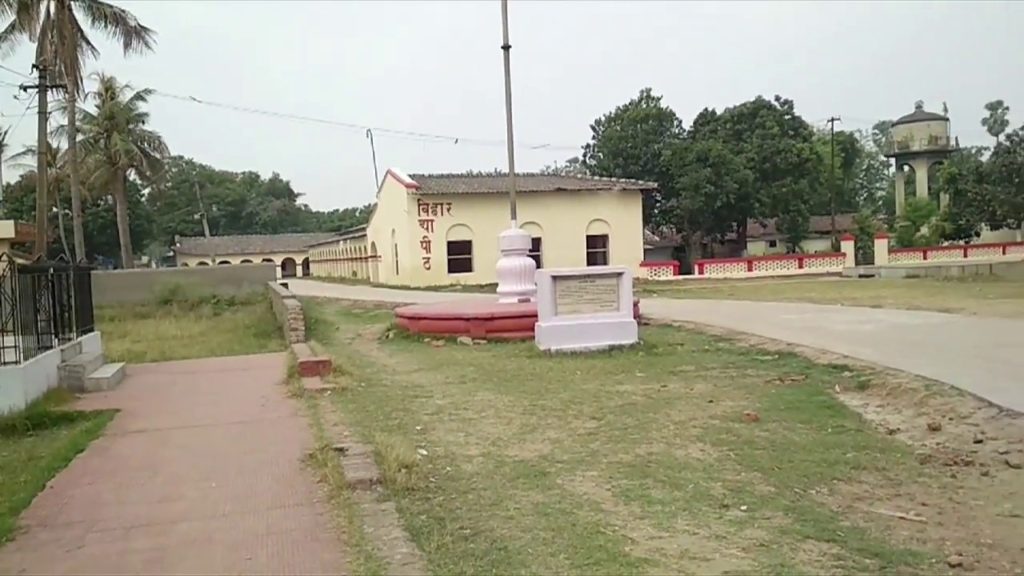
Mahatma Gandhi, in December, emphasised upon having a Bihar Vidyapith to oversee all the nationalist education and coordinate National Schools running in Patna. Dr. Rajendra Prasad and other Congress leaders were unable to raise enough funds to secure land for Vidyapith in Patna. When the difficulty was put in front of Haque, he immediately started construction of a building, with his personal funds, at the Ashram site.  

 On 6 February, 1921, Mahatma Gandhi, Kasturba Gandhi and Mohammad Ali arrived in Patna, by Punjab Mail, to formally inaugurate the Bihar Vidyapith (Bihar University). At the inauguration Gandhi said that without the efforts of Mazharul Haque it would have been impossible to open a National College at Patna. It was only because of Haque that Gandhi was inaugurating the Vidyapith.

Mazharul Haque was chosen as the Chancellor, Braj Kishore Prasad as the Vice Chancellor and Rajendra Prasad as the registrar of the newly formed Bihar Vidyapith.

Sadaqat Ashram did not stop at this. In September, 1921, Mazharul Haque started printing newspapers, journals and books from the Ashram. An English weekly The Motherland and an Urdu daily Sheristan were two prominent newspapers published from the Ashram. Apart from these, books like Tufan-e-Nuh, Khilafat and England, etc., were also published from the Ashram press. 

Mazharul Haque set an example by renouncing his lavish lifestyle to live in Sadaqat Ashram with the students. Mahatma Gandhi wrote about Haque, “The Sadaqat Ashram near Patna is a fruit of his (Mazharul Haque’s) constructive labour. Though he did not live in it for as long as he had intended, his conception of the Ashram made it possible for the Bihar Vidyapith to find a permanent habitation. It may yet prove a cement to bind the two communities together.”  

Later, Rajendra Prasad lived at Sadaqat Ashram after retirement, Jayprakash Narain launched his movement from here and presently it serves as the Bihar Congress headquarters. 

With the Sadaqat Ashram, the legacy of Mazharul Haque remains alive.        

(Author is a well known historian)

source: http://www.heritagetimes.in / Heritage Times / Home> Bihar / by Saquib Salim / July 08th, 2020

Visually impaired Haroon scripts history, scores full A+

Malappuram, KERALA :

First to write SSLC exams using computers, Haroon is an inspiration for the new generation of visually impaired students

Photo: ANI

Malappuram : 

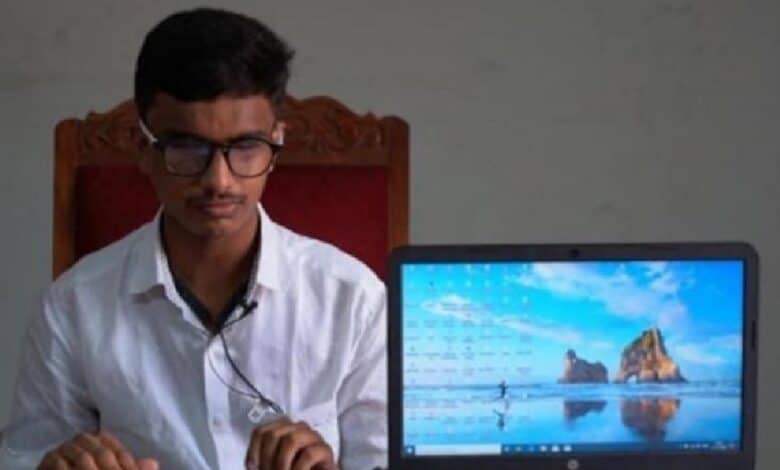
Haroon Kareem T K, a tenth-grade visually impaired student of Mankada Government Higher Secondary School and the first student in Kerala to write all Secondary School Leaving Certificate (SSLC) examinations using a computer, has scored A plus in all subjects.

Haroon’s fight to secure permission to use computers instead of the conventional scribe system was reported by ANI, following which state Education Minister C Raveendranath had issued a special order to permit him to take SSLC examination on computer.

Speaking to ANI, Haroon said that if he had used a scribe and scored all A plus then the credit would have been given to the scribe and all his efforts would be seen as ‘little’.

“By using a computer provided by the authorities, I am happy that I kept my self-pride high. Writing all subjects using a computer is not an easy task as language subjects are diverse,” he said.

Haroon’s all A plus is an inspiration for the new generation of visually impaired students who are efficient and technologically advanced.

Back in February, at first, the education department had denied his request to write the exam citing the SCERT, however, after the intervention of Raveendranath things moved away from the conventional methods of using braille or a scribe. Raveendranath had intervened in the matter after the boy reached out to him on Facebook and later met him in his office. Haroon had met Kerala speaker P Sreeramakrishnan and he facilitated a meeting with Education Minister”I am using computers to do all my class tasks and term and annual examinations since Class 8.

For visually impaired there are technologies available for onscreen reading and using various tools like Imfty editor and Dolphin Easy Reader. I am able to make the best use of the technology,” Haroon had said while speaking to ANI.

Ram Kamal of Chakshumathi, an NGO that works with print disabled kids in Kerala and works in the direction of promoting assistive technology to overcome their educational challenges was of the view that this decision of education minister will help many other visually impaired students in Kerala.”The India Government and NCERT are well in sync with the latest assistive technologies for the visually impaired and print disabled.

They modified their rules in favour of using computers officially since 2013. Karthik Swayne, the first Indian visually impaired student at Stanford University, US was one of the first beneficiaries of the rule in 2012. But in Kerala, the SCERT examination guidelines are outdated, ” he had said.

Source: ANI

source: http://www.siasat.com / The Siasat Daily / Home> Education and Career / by Safoora / source: ANI / July 02nd, 2020

Mosque near Mumbai serves as free Oxygen centre for COVID Patients

MAHARASHTRA :

Bhiwandi (Thane):

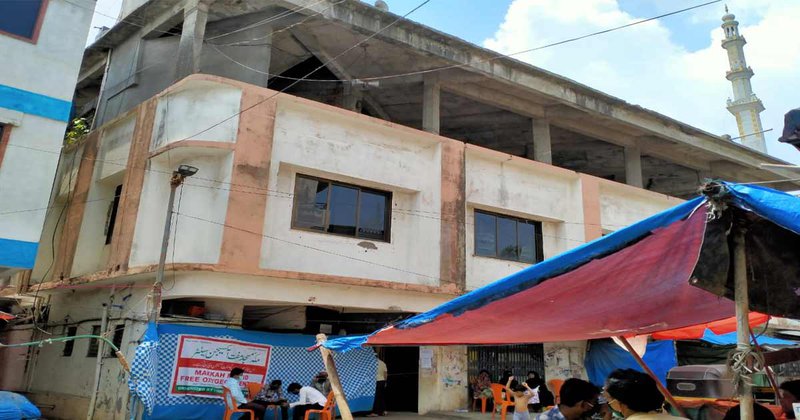
In a unique initiative, a mosque in Bhiwandi town in the suburbs of Mumbai has been converted to a makeshift facility providing oxygen free-of-cost to those diagnosed with COVID-19.

The facility was set up by the local chapter of Jamaat-e-Islami Hind (JIH), Movement for Peace and Justice as well as Shanti Nagar Trust at Makkah Masjid in Shanti Nagar area in East Bhiwandi, which has recently seen a spike in COVID cases. The facility currently has five beds with oxygen cylinders attached with them to assist the patients facing difficulty in breathing. Additionally, JIH has also started a free-of-cost service to provide oxygen cylinders to patients at their homes.

Bhiwandi-Nizampur area has recently recorded an acute surge in Coronavirus outbreak with more than 1,332 positive cases and 88 deaths. It also has one of the highest mortality rates of 5.26% across the state. The sudden rise in infectious disease has put a strain on the city’s healthcare system, which lacks adequate treatment and quarantine facilities for the patients. The local civic body has imposed a lockdown in the entire town till July 3.

“Bhiwandi-Nizampur has been hit the hardest by Coronavirus. It’s a very congested city, resulting in the rapid spread of the disease. As it is, the city has a poor health infrastructure, and now even several general practitioners have shut their clinics due to fear of infection. A vast majority of people in the city lack awareness about the disease and are unable to afford treatment. Hence, we decided to start this facility to do our bit in these trying circumstances,” said Ausaf Ahmed Falahi, president, JIH Bhiwandi.

So far more than 70 patients have benefited from this facility, while an additional eight patients have been provided 15 cylinders at their homes. People from all the religions and caste have been availing the facility.

“Khidmat-e-khalq (Service to humanity) is one of the basic tenets of Islam. A mosque is not merely a place of worship. Rather, its’s supposed to be a community centre working for the welfare of the people living in its vicinity. Makkah Masjid was shut to the worshippers and was lying idle due to the pandemic and the lockdown. Hence, we decided to use some of the premises of the mosque to help those who can’t avail treatment facilities elsewhere,” said Qaiser Mirza of Shanti Nagar Trust, which runs the mosque. (PR by Jamaat-e- Islami, Hind , Maharashtra)/

source: http://www.milligazette.com / The Milli Gazette / Home> News> Community News / June 25th, 2020′