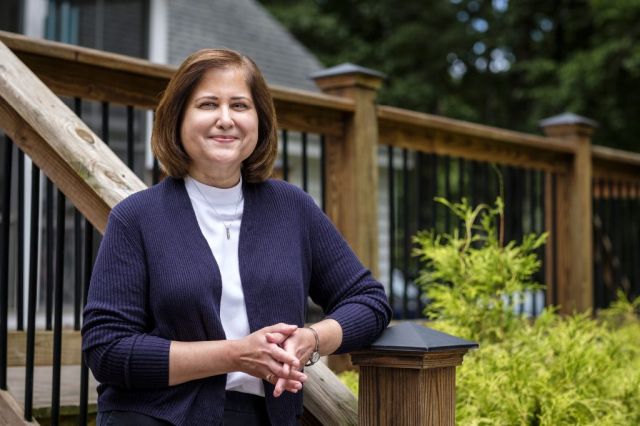
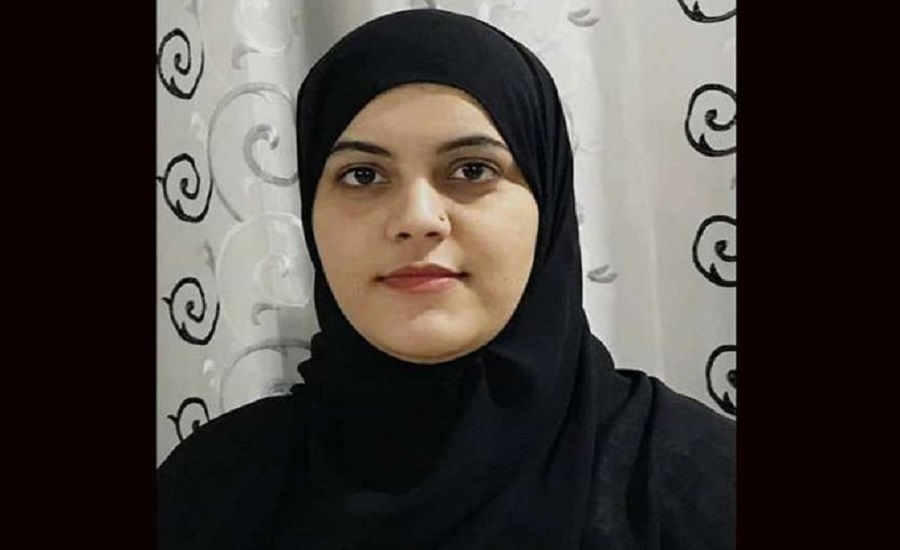
Ghazala Hashmi, who made history by becoming first Muslim woman to be elected to Virginia State Senate, hails from a family of educationists in Hyderabad.
Migrating to the United States with her family when she was just four, the Indian-American scored a stunning victory over sitting Republican Senator Glen Sturtevant.
The 55-year-old, a Democrat, was elected from Virginia’s 10th Senate District to become the first Muslim-American woman to serve in the State Senate.
A former literature professor and former director of the Center for Excellence in Teaching & Learning at Reynolds Community College, Richmond, she served as an educator for more than two decades.
Hashmi dedicated her win to her supporters with a tweet saying it belonged to all those who believed in the need for “progressive change in Virginia”.
“This victory, is not mine alone. It belongs to all of you who believed that we needed to make progressive change here in Virginia, for all of you who felt that you haven’t had a voice and believed in me to be yours in the General Assembly,” she tweeted.
In another tweet, she also admired the state’s willingness to make the change. “Today we sent a message that the status quo is no longer accepted,” wrote Hashmi, whose campaign focused on education, healthcare, gun violence prevention and environmental protection.
Hashmi was born in 1964 in a highly-educated family. Her parents Zia Hashmi and Tanveer Hashmi obtained higher education degrees from reputed institutions.
Zia Hashmi did MA and LLB from Aligarh Muslim University, where he was also the president of Student Union in early 1950s. Tanveer Hashmi is an alumnus of Osmania University’s Kothi Women’s College. She did BA and B.Ed.
Zia Hashmi later did PhD in International Relations from University of South Carolina. He retired as the Director of Centre for International Studies at the same university.
According to Ghazala Hashmi’s relatives, she was a bright student right from her school days. She earned a bachelor’s degree from Georgia Southern University and a PhD from Emory University in Atlanta.
Her elder brother Dr Sohail Hashmi, who did PhD in International Relations from Harvard University is a Professor at Massachusetts while younger sister Dr. Saira Ali Khan is a physician based in Florida.
Hashmi shifted to Virginia in early 1990s with her husband Azhar Rafeeq, who is Associate Professor in School of Medicine, Virginia Commonwealth University.
The couple has two daughters. Elder one, Yasmin, who has done Masters in Public Health Administration, is working in Washington while Noor is doing Engineering.
source: http://www.mangalorean.com / Mangalorean.com / Home> Agency News / by IANS / November 08th, 2019
For 35 years, the activist dedicated his life to building a movement for justice. Unfortunately, Bhopal appears set to forget his contributions.
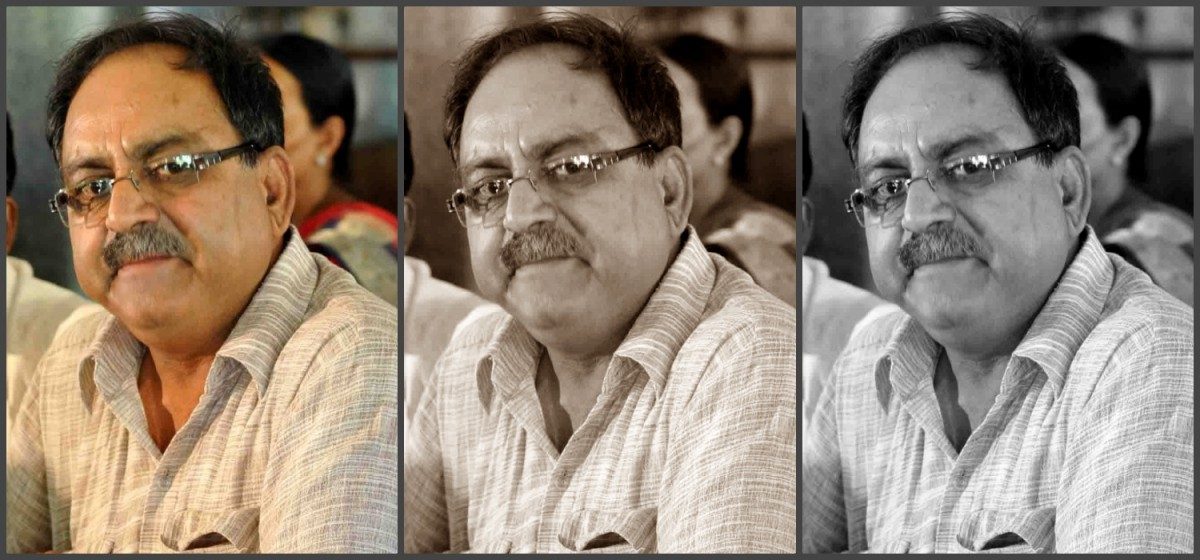
Abdul Jabbar. Photo: Facebook
India can learn a lot from Abdul Jabbar’s glorious struggle for justice for the dead and the survivors of the Bhopal gas tragedy.
At a violent time like this, when governments cannot tolerate even dissent on social media, the most indefatigable fighter for the victims can be a lodestar to all those who wish for an equitable society.
Jabbar Bhai, as he was fondly addressed, died of multiple ailments on November 12 in a Bhopal hospital, but his legacy endures. His evolution, through a 35-year-long struggle from a hand pump fitter to a tenacious strategist, is unparalleled in independent India’s history of people’s movements.
His strategy was essentially premised on eight pillars: secularism, empowerment of women, emphasis on self-employment through skill development, regular interactions with co-fighters, spreading education about mass struggles, frequent judicial recourse through public-spirited lawyers, street agitations, joining similar people’s movements and an uncompromisingly adversarial stance against the government, regardless of ideology. An overboard public relations exercise was anathema to him, though Jabbar would go all out to help journalists who sought his help.
His organisation, the Bhopal Gas Peedit Mahila Udyog Sangthan, metamorphosed from an assorted group of women to a well-organised fighting force. This was an extremely daunting task, which Jabbar Bhai himself was initially clueless about. But his undiminished righteous rage over the killing of innocent people in the world’s worst industrial disaster steeled his will to fight an epic battle through thick and thin.
How this came about is an inspiring story, which began the day the Union Carbide factory spewed 40 tons of poisonous MIC gas. On the night of December 2-3, 1984, Abdul Jabbar was asleep at his home in Rajendra Nagar when the deadly gas leaked.
The poisonous gas from the Union Carbide pesticide factory killed 8,000 people in its immediate aftermath, and nearly 25,000 over the next few decades. It also left over 1,50,000 people suffering with respiratory, hormonal and psychological illnesses.
When the strong smell emanating from the carbide plant made its way into Jabbar’s house, he took his mother, started his scooter and drove for almost 40 km to get her to a safe place. They left Bhopal for Abdullah Ganj. However, his escape proved futile. He soon lost his mother, father and an elder brother to the after-effects of this disaster. His own lungs and eyesight were substantially damaged. When he returned, an apocalypse was awaiting him on streets – dead bodies were strewn everywhere.
Then 28 years old, Jabbar was a changed man when he reached home. Keeping personal losses aside, he started taking the injured to the local government hospital for treatment. He also volunteered to take dead bodies for their post-mortem. The deeper he plunged himself into voluntary service, the more his anger surged.
He would later recall, “I started this campaign from my locality when I witnessed injustice around me. Politicians who were beneficiaries of carbide corruption were not coming forward to help us. So we the victims had to take matters in our own hands.”
Nearly three years later, in 1987, he started the Bhopal Gas Peedit Mahila Udyog Sangathan (Bhopal Gas Female Victims’ Association), an advocacy group for victims, survivors and their families. He led demonstrations seeking not merely allowances and compensation, particularly for widows who lost their husbands in the disaster, but also employment opportunities.
His first campaign slogan was the famous “Khairat nahi, rozgar chahiye (We don’t require charity, we want jobs)”. The slogan turned into a war cry as the organisation swelled.
Jabbar did not wait for the government to provide jobs to the women in his organisation. He succeeded in setting up tailoring centres where about 2,300 women learnt how to make zardozi strips and bags. He helped them fight lawyers, doctors, bureaucrats and the police. Soon enough, Jabbar’s organisation included nearly 30,000 survivors, predominantly women, in Bhopal.
The members began to gather every Tuesday and Saturday at Bhopal’s Yaadgaar-i-Shahjahani Park, a historic site where the battle against British colonial rulers was staged in 1942.
In 1988, Jabbar moved the Supreme Court urging it to order interim relief to the survivors until they get their final compensation. The next year, the Centre settled with the Union Carbide for $470 million or Rs 7,200 crore, and the Supreme Court endorsed the agreement. The gas victims were outraged at the meagre amount. They felt cheated. It took a decade-long legal and street battles by Jabbar’s organisation before the apex court ordered the government of the day to disburse a further Rs 1,503 crore and admitted that there were over 5,70,000 claimants to be compensated. Earlier, only one lakh claimants were recognised.
His relentless fight since his first victory in the Supreme Court is well documented. Nearly all judicial interventions and mass agitations that have resulted in the gas victims getting compensation, houses and hospitals and the perpetrators being prosecuted bear an indelible imprint of Jabbar’s fighting spirit. For more than three decades, he went around conducting protests and filing court petitions, seeking greater medical rehabilitation for victims and the prosecution of local Union Carbide officials.
In the past three months, a severely diabetic Jabbar, suffering multiple heart ailments, moved from one hospital to another.
He circulated a WhatsApp message days before his death, saying a super speciality hospital like the Bhopal Memorial Hospital (BMHRC) had failed to treat him because they did not have the facilities. He called it “shameful”. As his condition worsened, and gangrene set in, the Madhya Pradesh government prepared to airlift him and take him to Mumbai’s Asian Heart Institute for treatment, but he died before that.
He would often stress that the fight for justice was important not just for Bhopal but for all of India.
His noble worldview was reflected in the way he painstakingly educated women in his organisation, on a wide range of topics: conflicts in the Middle East, Adivasi and Dalit rights movements including the Narmada Bachao Andola, and so on.
Jabbar’s ideals, though, were not limited to the organisation.
During the saffron surge in the last several years, our conversations would be more about India’s social fabric being torn apart than the plight of gas victims. He would admit that his struggle had been losing steam, because people in Bhopal have become dangerously polarised along communal lines.
He would lament that even citizens who benefited from his agitations for compensation and hospitals have turned apathetic to the plight of others who are deprived.
“They appear to have convinced themselves that fight for justice is over now that victims have been distributed money. A majority of Bhopal’s Hindus betray an impression that since potential beneficiaries of my fight are largely Muslims, why should they bother too much about it all.” He sounded equally bitter about the Muslim community’s apparent unwillingness to change with the changing times.
Jabbar had complaints about the media too, which he thought shamelessly endorsed the majoritarian view. He would blame the public and media apathy for the system ignoring gas victims, particularly the poor.
His grouse was not without basis. In the 15 years of Bharatiya Janata Party rule in Madhya Pradesh, gas victims got a raw deal. At one time, a move was afoot to wind up the gas relief and rehabilitation department altogether. The hospitals run for gas victims do not have enough staff or equipment.
Ironically, Jabbar Bhai’s cynicism about the media, system and society as a whole was proven right during his illness and eventual death. He was virtually shunted out of the hospital that came up due to his PIL in the Supreme Court. Reduced to penury due to two months of treatment in hospitals, he was forced to do what he had never done all his life: seek government help. The help was promised, but came too late.
For someone who sacrificed his entire life for the dignified rehabilitation of half a million gas victims, Abdul Jabbar’s last journey was a grim reminder of the Bhopal’s ungratefulness to his long struggle.
Barely a few hundred people turned up for his funeral. Barring his journalist and activist friends and some politicians, the graveyard looked like a Muslim gathering. Worse, his woman comrades, who fought with him shoulder to shoulder all these years, were told to stay away from the last rites. The grieving fighters gathered at Abdul Jabbar’s ramshackle two-room house and stayed put.
The departed soul would not have been pleased with what happened at his home on that day.
Undivided Madhya Pradesh saw the birth of three memorable people’s movements – the Chhattisgarh Mukti Morcha of late Shankar Guha Niyogi, Narmada Bachao Andolan of Medha Patkar and the third led by Abdul Jabbar.
Jabbar’s was different in the sense that unlike the other two, the warrior of Bhopal had taken on the might of a giant multinational in an urban milieu.
Jabbar also had to contend with myriad complex socio-economic and political obstacles. Complex relations between Hindus and Muslims in the city was unique to Jabbar’s fight. Plus, his agitation had to deal with a substantial middle class, which had no qualms lapping up the fruits of Jabbar’s labour and then abandoning him when he needed their support for treatment for the poor.
Rakesh Dixit is a Bhopal-based journalist.
source: http://www.thewire.in / The Wire / Home> Rights / by Rakesh Dixit / November 17th, 2019
Madhya Pradesh has registered an overall Pass Percentage of 76.31 in Class 12 HSSC 2019 examination
MP Board Class 12th Result 2019:
Arya Jain of Science stream and Vivek Gupta of Commerce have topped the Madhya Pradesh board Class 12 Inter HSSC 2019 exam while Falak Naaz and Irfan Mansuri are among the toppers list containing the names of 70 girls and 47 boys.
Arya Jain, a student of Science (Maths) stream, scored 486 marks to share the 1st rank with Vivek Gupta of Commerce stream.
Irfan Mansuri – a student of Science Biology group, scored 474 marks to bag the 3rd position. Falak Naaz of Humanities scored 471 marks and bagged the 4th rank in MP board Class 12 HSSC 2019 Merit List.
Madhya Pradesh Board of School Education (MPBSE) has declared Higher Secondary School Certificate (HSSC) Class 12 Intermediate results today i.e. Wednesday May 15, 2019 on its official website mpresults.nic.in. Madhya Pradesh has registered an overall Pass Percentage of 76.31 in Class 12 HSSC 2019 examination.
Direct link to check MP board Class 12 HSSC Result 2019
Click here to go official MPBSE official website: mpresults.nic.in.
Click on ‘HSSC (Class 12th) Exam Result 2019’.
Enter roll number and name.
Click on “Submit”.
The results will be displayed on the screen.
Save the results and take a print out for further reference.
The students can check their MP Board Class 10 or HSC results 2019 along with Class 12th HSSC Vocational Exam 2019 on the official website www.mpresults.nic.in, mpbse.mponline.gov.in, mpbse.nic.in, ExamResults.net, MPEducation.net indiaresults.com results.mpeducation.net, knowyourresult.com.
Students can also check their result via mobile by downloading “Know your result” app or visiting mpmobile.gov.in.
The Madhya Pradesh board Class 10 HSC 2019 exam began on March 01 and ended on March 27, 2019. On the other hand MP Board Class 12 exam HSSC 2019 commenced from March 02 and ended on April 02, 2019.
In 2018, MP board Class 10 and Class 12 results were announced on May 14. The overall pass percentage of Class 10 in 2018 was 66%. Harshvardhan Parmar and Anamika have shared the first rank in 2018 Class 10 board exam..
The overall pass percentage of Class 12th in 2018 was 68%. Shivani Pawar of Arts stream bagged the first rank in Class 12th examination in 2018. The commerce stream topper was Ayushi dhengula and Lalit Panchauri topped from the science stream in 2018.
source: http://www.ummid.com / Ummid.com / Home> India> Education & Careers / by ummid.com news network / May 15th, 2019
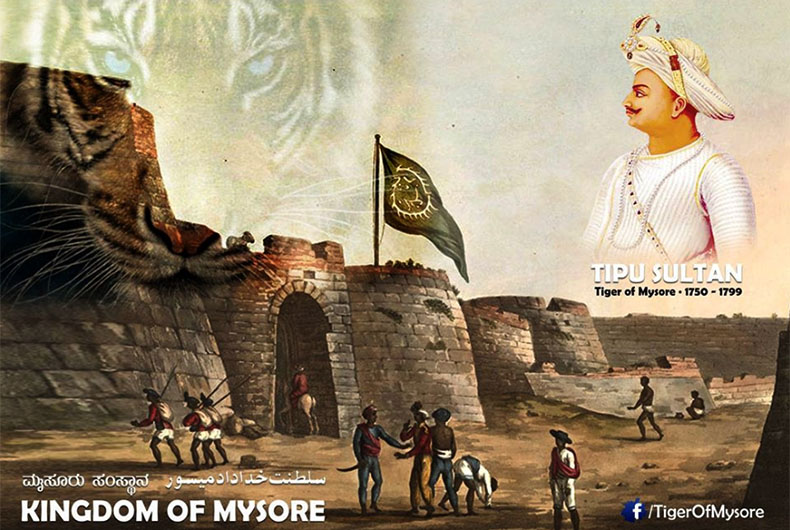
Tipu Sultan was born on November 20, 1750 and died on May 4, 1799 fighting with the Colonial forces
New Delhi:
Twitter users on Wednesday paid rich tributes to Tipu Sultan on his birth anniversary, with many posting the quotes of the King of the erstwhile Kingdom of Mysore as also pictures of his prized possessions with hashtags #Tipusultan, #SherEHindTipuSultan, #TipuJayanti and #TigerOfMysore.
As many as 3,143 tweets were posted by Twitterati on Tipu Sultan.
Vanchit Bahujan Aghadi leader Prakash Ambedkar wrote: “Tipu Sultan, the king of Mysore, will always be known for his valour and his continuous resistance against the British rule”.
“A tribute to the first freedom fighter of India on his birth anniversary”, the grandson of Dr BR Ambedkar wrote.
Another Twitter user wrote: “Tipu Sultan was the only Indian ruler who understood the dangers the British posed to India, and fought four wars to oust them from India – in that sense he could be called the first freedom fighter in the subcontinent”.
One user posted a quote attributed to Tipu Sultan: “One day’s life of a lion is preferable to hundred years of a jackal”.
Many Twitter users also hailed his liking for advanced technology.
“Tipu Sultan was fascinated by science & technology, got gun-makers, engineers, clockmakers & other experts from France to Mysore, then set up a manufacturing of bronze cannons, ammunition & muskets to ‘Make in Mysore’. Basically the first who worked for MakeinIndia”, (sic) wrote one user.
Make in India is a type of Swadeshi movement covering 25 sectors of the Indian economy. It was launched by the Government of India on 25 September 2014 to encourage companies to manufacture their products in India and enthuse with dedicated investments into manufacturing.
Tipu Sultan was born on November 20, 1750 and died on May 4, 1799 fighting with the Colonial forces.
source: http://www.ummid.com / Ummid.com / Home> India / by Ummid.com with inputs from IANS / November 20th, 2019
Chief Justice of India SA Bobde conferred Gold medal and other title to Azmat Hayat Amanullah
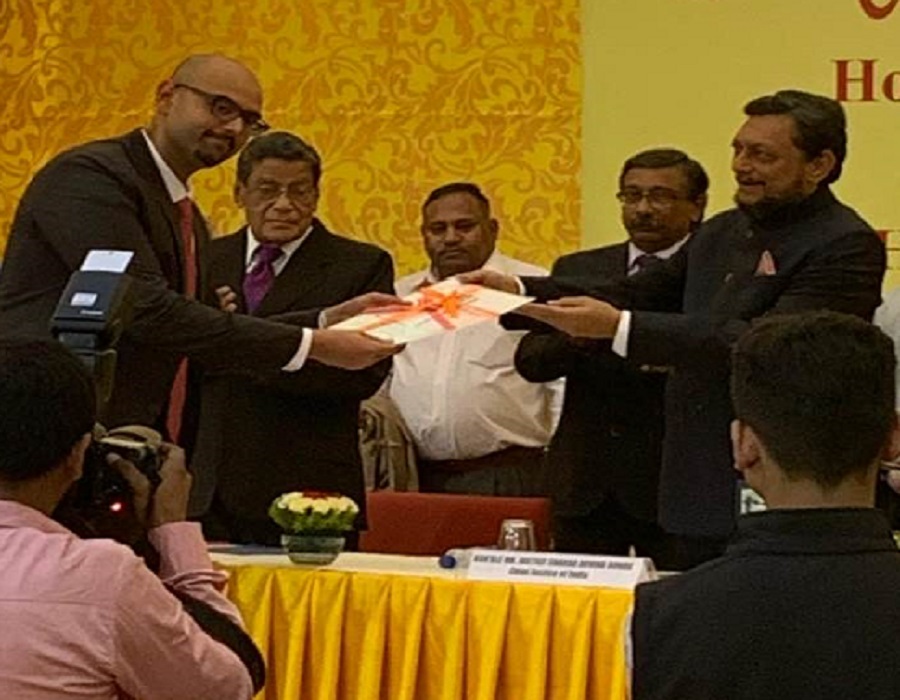
Chief Justice of India SA Bobde honouring Azmat Hayat Amanullah as topper of the Supreme Court Advocates-on-Record examination 2018.
New Delhi :
Chief Justice of India SA Bobde on Tuesday conferred gold medal and other title to Azmat Hayat Amanullah as topper of the Supreme Court Advocates-on-Record examination 2018.
Azmat is grandson of late IFS, parliamentarian and author Syed Shahabuddin. He is son of former IAS officer Afzal Amanullah and Parveen Amanullah, former minister of Bihar.
At a program held on the occasion of Constitution Day on Nov 26, Azmat received the award from CJI.
“With the infinite grace of God, my son Azmat got the first place in the examination of advocates-on-record, from Chief Justice of India, on the occasion of Constitution Day,” Parveen Amanullah posted on Facebook.
Azmat has obtained his law degree from Indian Law School, Pune. He has expertise in laws related to land, service matters, consumer, property, labour, employment, industrial disputes and workmen compensation.
The Advocates-on-Record exam is conducted by the Supreme Court.
source: http://www.caravandaily.com / Caravan / Home> India> Indian Muslims / by Caravan News / November 28th, 2019
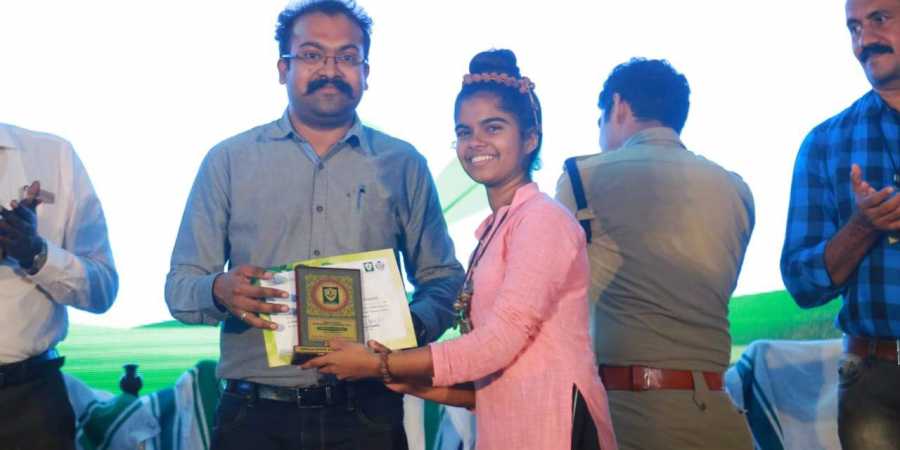
An ardent apiculturist, Jodha was presented with a horse named Aman Chand by her mother Amiya Taj who is also a horse rider.
Oli Aman Jodha
Thiruvananthapuram :
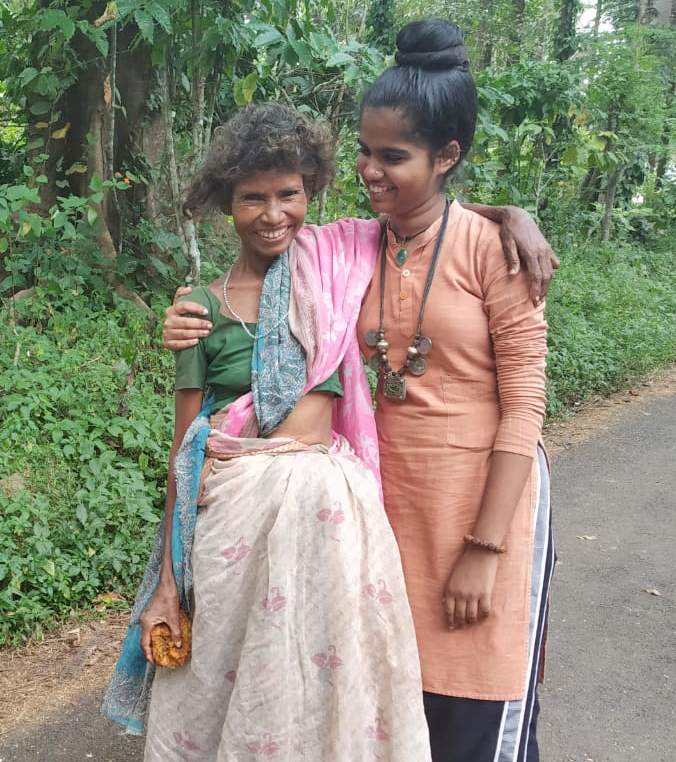
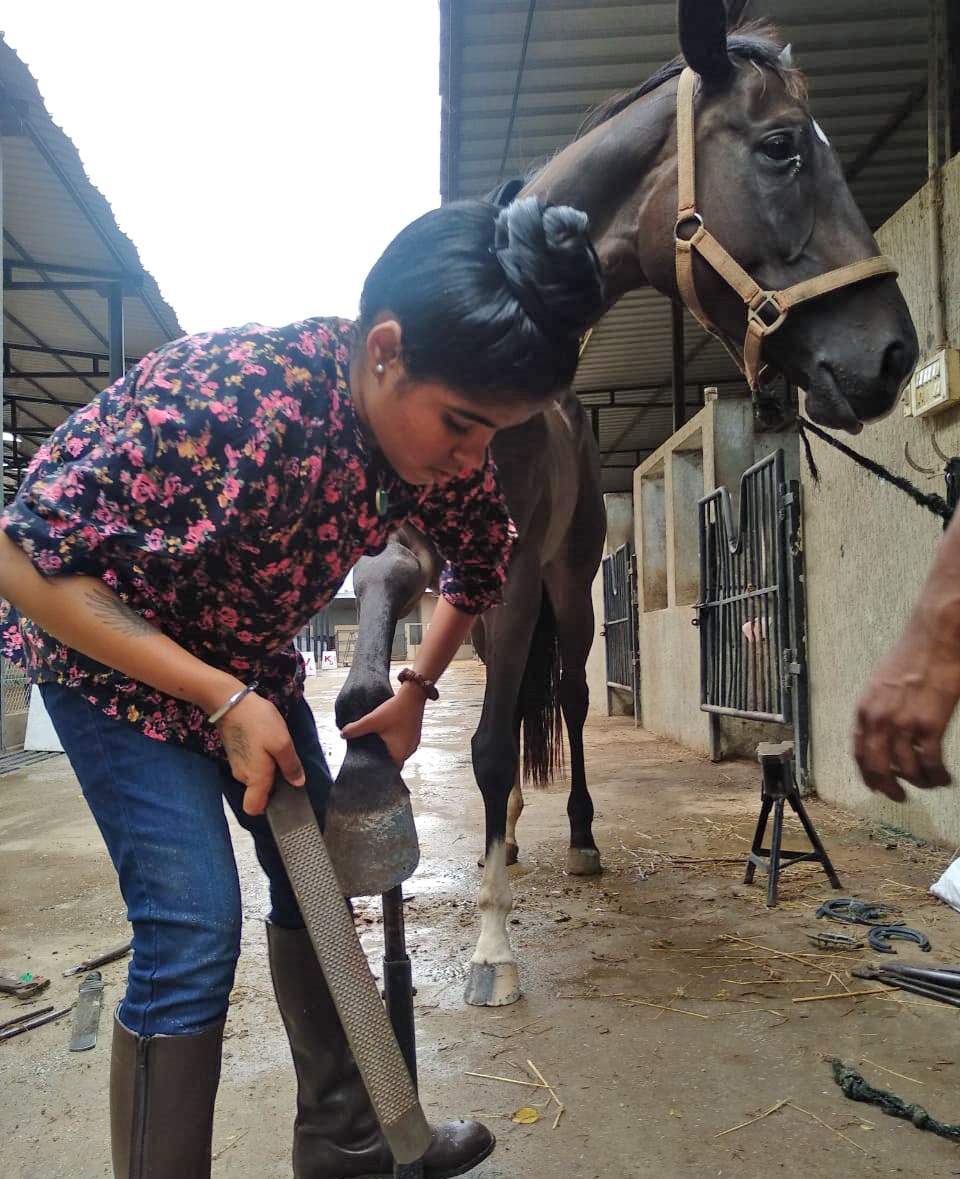
Breaking gender barrier is not uncommon these days. But Oli Aman Jodha has set a new milestone by becoming arguably the first woman farrier in the country. She is just 14. Jodha, who hails from an orthodox Muslim family from North Kerala, has been leading a nomadic life for the past few years because of her love of horses and bees.
An ardent apiculturist, Jodha was presented with a horse named Aman Chand by her mother Amiya Taj who is also a horse rider. Though riding has been her passion, an incident of fixing a horse shoe on Aman by an amateur farrier drew Oli to the profession.
Right after the farrier from Tamil Nadu fixed the shoe on her horse’s hoof, there was profuse bleeding.
Following this, the next time Aman needed a horseshoe, Oli tried fixing the shoe with the help of family friend Sukumaran, a forest guard at Kallar in Ootty. She was just nine at the time. Later, her mother sent her to Nepal where she trained in fixing horseshoe under the tutelage of farrier Thaj at Kohalpur.
In the meantime, a national award came Oli’s way for her expertise in apiculture and even got an invitation to be the resource person in apiculture at Swaminathan Research Foundation, Wayanad, and National Institute of Rural Development and Panchayati Raj, Hyderabad. Her stay in Hyderabad opened a new vista for her in fixing horse shoes as the place has a plenty of horses.
“In the peak time, I used to fix shoes on around 20 horses a month. I have done this in Tamil Nadu, Karnataka, Gujarat, Andhra Pradesh and Rajasthan. A farrier’s focus would always be on ensuring that the shoe perfectly matches the horse’s hoof,” she said.
It’s not an easy task to prepare a custom-made shoe. The farrier must have a sound knowledge of forging and basics of metallurgy.
Oli used to shape the metal with the help of an anvil, hammer, nipper, cutter and tongs like a blacksmith. She also has to bear some of the horse’s weight while fixing the shoe. In the case of oxen, the shoeing can be done by holding the animal to the ground, but it is done on horses in standing position. And if the farrier makes a wrong move or is in the wrong place, he/she can get trodden on easily. All the factors make the profession challenging, especially for women.
Oli has had her share of rough life at this young age. She is a class 1 dropout and had to continue her studies till class 8 through open education. Now, she is planning to write her class 10 exams. She is looked after by her mother after her father left the family. She doesn’t even have a permanent house to reside.
Future plans
Oli wants to be an equine veterinarian and is ready to tread an extra mile to achieve the dream. Not many Indian universities offer equine veterinarian course. But she is hopeful of God bringing luck in her life.
source: http://www.newindianexpress.com / The New Indian Express / Home> States> Kerala / by Dhinesh Kulkarni / Express News Service / November 12th, 2019
Late Kushwant Singh’s account of the Mahatma’s last days, and pride in Indian Islam
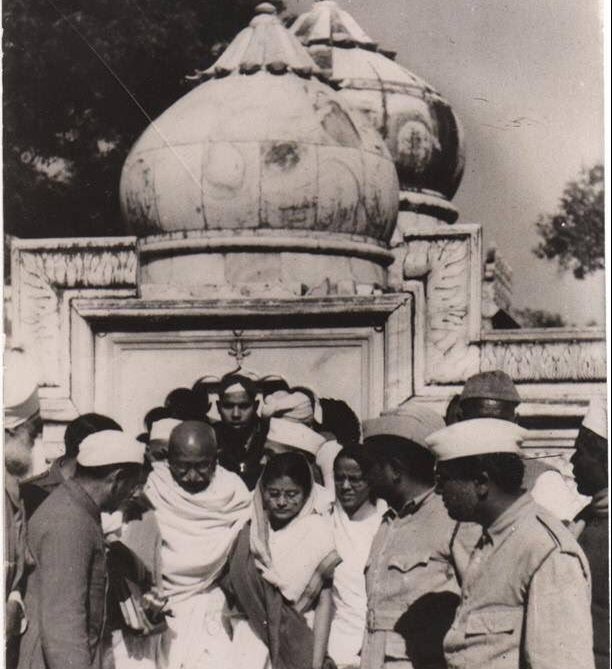
Mahatma Gandhi at a prayer meeting at the shrine of Qutbuddin Bakhtiyar Kaki
Hyderabad (Rahnuma) :
India’s most celebrated writer and former Member of Parliament, the late Kushwant Singh wrote in his book, published as “Notes on The Great Indian Circus”; “ It should be remembered that Mahatma Gandhi who conducted daily prayers where he was, did not go into temples and the last time he went to a place of worship was at the tomb of Qutubuddin Bakhtiyar Kaki.”
Born in 1173 AD, Khwaja Qutub Uddin Bakhtiyar Kaki was the most renowned Sufi mystic, saint and scholar of the Chishti order in the Indian subcontinent.
His mausoleum was the first dargah of a prominent Muslim in Delhi. He was a disciple and the intellectual successor of Moinuddin Chishti of Ajmer as head of the Chishti order. Delhi’s Qutb Minar, is said to have been dedicated to him.
Qutbuddin Bakhtiyar Kaki had a tremendous influence on Islam in India. As he continued, and developed the traditional ideas of Monism (non-dualism, Wahdat ul-Wujud, Advaita Vedanta), universal brotherhood and generosity.
His dargah located adjacent to Zafar Mahal in Mehrauli is the oldest dargah in Delhi.
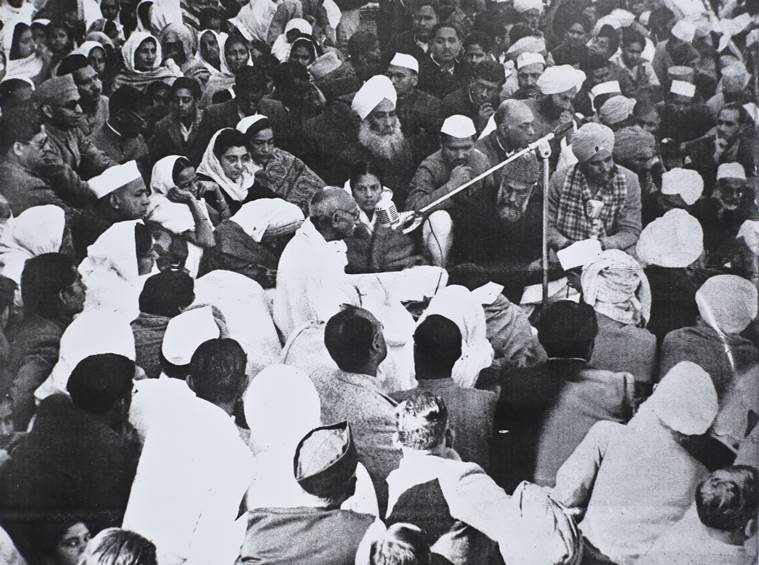
Three days before he was shot and martyred, on January 27th, 1948, Mahatma Gandhi held his last public address at the shrine of Muslim sage Qutbuddin Bakhtiyar Kaki in Mehrauli.
The Partition caused an eruption of violence in Delhi which was refusing to abate. Delhi was overflowing with refugees, and people were afraid to leave their homes. During the annual Urs held at the dargah, a tradition observed for centuries – there were only a few Muslims present to mark the occasion.
In this perilous circumstance, Mahatma Gandhi held a prayer meeting at the shrine of Qutbuddin Bakhtiyar Kaki.
In his other book, “The Novel”, Kushwant Singh described the incident in the following manner: “ Gandhi bows to Kaki’s Tomb. The Mussalmans accompanying him request to, utter our Fateha. So the Mahatma raises his hand and recites: In the name of Allah the beneficent and the merciful.”
According to Singh, it was here that Mahatma Gandhi met Maulana Jamal Miyan Firangi Mahali (the son of Maulana Abdul Bari Firangi Mahali, whom Gandhi referred to as his brother), who recounted the entire meet to an Urdu newspaper upon his return to the city of Lucknow.
“ Maulana Jamal asked Gandhi how he knew Hazrat Bakhtiyar Kaki to which the latter replied, it was in fact, his father Maulana Bari who had introduced him to the great Sufi saint as the disciple of Hazrat Moinuddin Chishti Gareeb Nawaz of Ajmer “ recalled Adnan Abdul Wali Firangi Mahali, the great-grandson of Moulana Bari, referring to the reported incident.
Explaining the incident further, Gandhi had told Jamal how he was invited by Moulana Bari from Ahmedabad to Ajmer, in March 1922, where the Mahatma had his first experience with sitting in an authentic Chisti Qawwali.
“ The Ghazal being sung was composed by Maulana Mohammad Ali Jauhar and the Bihar secretary of the Khilafat Committee, Dr. Syed Mahmood was translating it to Gandhiji from Urdu to English, ” said Adnan. In awe of what unfolded before him during the event, Mahatma Gandhi enquired from Moulana Bari about Moinuddin Chishti’s intellectual successor Bakhtiyar Kaki. The Mahatma was apprised cordially on the life of Bakhtiyar Kaki by Moulana Bari.
Later in the year 1948, when Mahatma Gandhi visited Bakhtiyar Kaki’s shrine, the annual Urs celebrations that had been called off owing to rampant rioting were reinstated.
Marking the occasion, the Sikh brethren had performed Qawwali at the shrine under Mahatma Gandhi’s guidance.
Mahatma Gandhi’s endeavor for peace and harmony was his last fast-unto-death, signaling the riots to cease.
With pressure mounting from all sections of society to call off his fast, he laid down five conditions, of which the return of Kaki’s shrine to Muslims and that it be repaired by Hindus and Sikhs together was one.
Mahatma Gandhi at the shrine of Qutbuddin Bakhtiyar Kaki
Rafi Adeen is a Contributing Editor for The Rahnuma Daily (TheRahnuma.com), the online English daily edition of The Rahnuma-E-Deccan Daily (ReDD), India’s oldest Urdu daily print newspaper. He can be contacted at rafi@therahnuma.com
source: http://www.therahnuma.com / The Rahnuma Daily / Home / by Rafi Adeen / November 13th, 2019
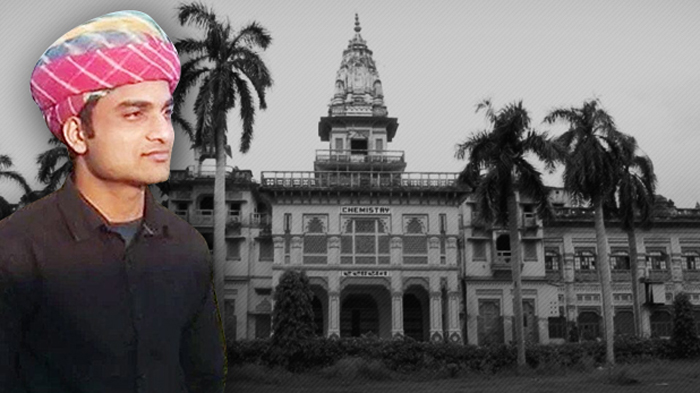
Firoz Khan and Banaras Hindu University. Courtesy: tv9bharatvarsh.com
Kolkata:
At a time when faculty members both present and past have even written to the President of India, Ram Nath Kovind, requesting him to intervene and stall the appointment of Dr Feroze Khan in Banaras Hindu University (BHU)’s Sanskrit Dharam Vidya Vigyaan department, West Bengal seems to embracing its Sanskrit professors hailing from the ‘other’ community, comfortably.
Going by a loose headcount there are at least 30 Muslim professors in West Bengal, teaching Sanskrit. Around 14 were recruited last year through College Service Commission and 12 this year. The most recent recruitment being of Ramzal Ali at the Sanskrit department of Ramkrishna Mission Vidyamandir, Belur. Speaking to eNewsroom, regarding his recruitment, he said, “I am in a state of shock with so many calls being made to me, seeking my comment. A Muslim learning Sanskrit is nothing new. There is a history to it. In every Sanskrit department across the state, you will find at least one Muslim student. Muslim Sanskrit teachers in Bengal, is also not rare.”
Perhaps Ali has a point. For, Dr Shaikh Sabir Ali, a gold medalist in Sanskrit from the University of Calcutta has been teaching the language for almost a decade now. Dr Ali, at present, teaches Sanskrit at the West Bengal State University, Barasat. According to him, Sanskrit, as a language is beyond Vedas and Upanishads.
Speaking from experience Ali said, “Every batch has at least one Muslim student in the Department of Sanskrit. In Kolkata, I presume, Rabindra Bharati University has a huge number of Sanskrit students.” Dr Ali is also a topper from Ramkrisha Mission Vidyamandir.
He said, “There is more to this language, apart from the Vedas, Purans and Upanishads. This language has a rich literature and grammar too. It was these two that attracted me as a child. Luckily, my teachers encouraged me to take up this language for my higher studies. You, see one can’t make people take up a language simply based on one’s religion. History is a witness to many Muslims mastering this language.”
Speaking from experience Ali said, “Every batch has at least one Muslim student in the Department of Sanskrit. In Kolkata, I presume, Rabindra Bharati University has a huge number of Sanskrit students.” Dr Ali is also a topper from Ramkrisha Mission Vidyamandir.
Rakibul Sk, assistant professor at SBS government college said, “I have never been discriminated on the basis of my religion, neither while I was mastering Sanskrit, nor while teaching it. I would like to add that while I hail from a small place like Jangipur, my place of birth has taught me that there is no religious attachment to any language. Hence, when I took up Sanskrit for my higher education, the Hindu neighbours of mine never raised an eyebrow. On the contrary, they were quite happy. The teachers who guided me to reach this position are all Hindus. It’s sad that today, we are discussing all this from a religious perspective.”
Adding to the experiences of Muslim Sanskrit teachers in Bengal, Rakibul Sk, assistant professor at SBS government college said, “I have never been discriminated on the basis of my religion, neither while I was mastering Sanskrit, nor while teaching it. I would like to add that while I hail from a small place like Jangipur, my place of birth has taught me that there is no religious attachment to any language. Hence, when I took up Sanskrit for my higher education, the Hindu neighbours of mine never raised an eyebrow. On the contrary, they were quite happy. The teachers who guided me to reach this position are all Hindus. It’s sad that today, we are discussing all this from a religious perspective.”
However, on being asked about the faculty members writing to the President of India, Ali, said, “I don’t want to open up a new controversy. But let me be very clear, there is a particular department of Sanskrit, which is accessible only to the Brahmin. Even Hindus from other sect are not allowed to enter that domain, so the question of a Muslim being appointed in that domain can be quite challenging. As per my knowledge, Dr Feroze Khan has been appointed in the Sanskrit Dharam Vidya Vigyaan department, which is the domain that I just talked about. I don’t want to get into a further debate, but I guess, his recruitment in the literature department wouldn’t have caused this huge controversy.”
Given the new twist in the story, it would be interesting to see President Kovind’s call on the letter written by the faculty members of BHU, seeking his intervention to stall Khan‘s recruitment, especially when earlier this year, he had awarded Padma Sri for Literature and Education to Sanskrit Scholar Mohammad Hanif Khan Shastri.
source: http://www.enewsroom.in / E News Room / Home> Let there be light / by Shabina Akhtar / November 27th, 2019
Ahmedabad-born Indian woman Conservative nominee for UK poll
London (IANS) :
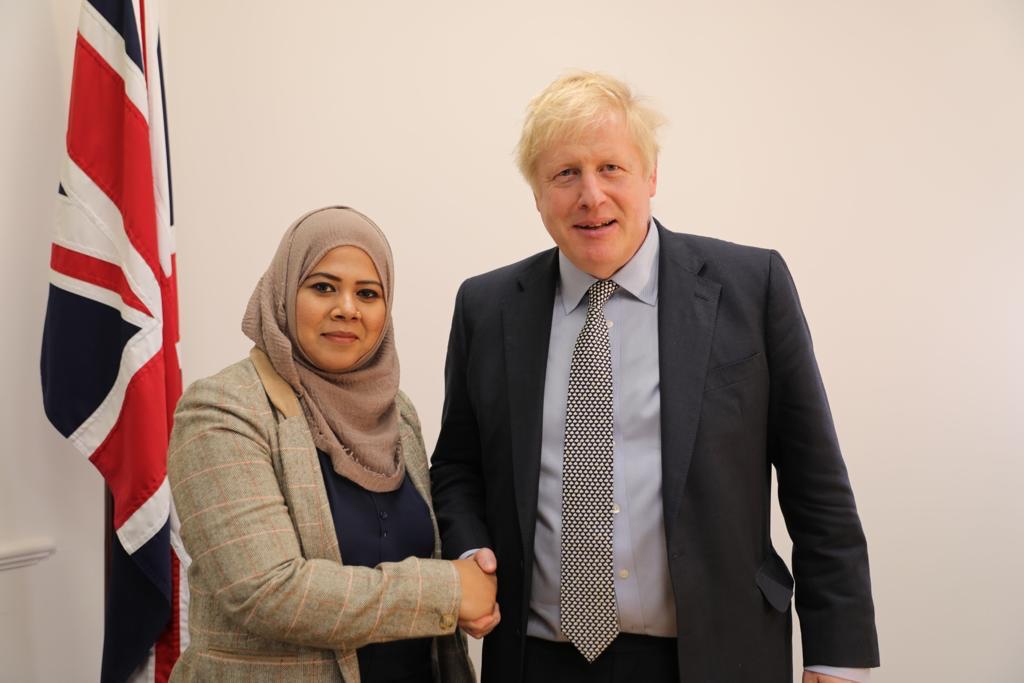
Indian origin Tamkeen Shaikh, born and raised in Ahmedabad, has been selected as the Conservative Party candidate for the Barking constituency for the December 12 UK elections.
“Delighted to be selected as the Conservative Party Candidate for Barking. Hard work begins now! #BlueBarking,” Shaikh, who studied and worked as a journalist in India before coming to the UK, tweeted on being named candidate.
A staunch supporter of Prime Minister Boris Johnson and Brexit, Shaikh left home 14 years ago for a Masters in media and management in the UK.
Married with two children, Shaikh is now working in the education sector.
She says: “The reason I have joined politics and particularly the Conservative Party is, it’s the best way to contribute to the society and the party believes in creating opportunities for business and innovation.
“Here the Parliament is pushing to have 50:50 representation of men and women and are encouraging women on a wider scale to get involved in politics. If elected my priority is to draw more investments in school, social enterprise, youth engagement, building family homes and care for the elderly.”
“The mantra that has worked for me is ato be consistent and persistent’ that will lead you to achieve your goals. Indians are a large economical contributors in UK and continue to do so. Indian community has integrated well within the community and are making huge progress in all sectors,” she adds.
“Like the majority of Barking residents, I voted Leave and I want to get Brexit done.
“You only have to look at the epidemic of fly-tipping, the state of Barking Station and our failing high streets to realise the Labour Party is failing us. We deserve better than Labour. I live in Barking, my children go to a local school and so I understand the needs of local people.
“We need an MP who will fight for more investment in our schools, improved care for the elderly and to give young people things to occupy them to keep them off the streets and give them a better future.
“I want to see a thriving high street that will benefit social enterprises and small businesses, providing jobs for residents. I am your local candidate representing the local people of Barking and I will get Brexit done,” she promised.
source: http://www.therahnuma.com / The Rahnuma Daily / Home> World / by IANS / November 26th, 2019
In the 55-member urban local body, Congress has 35 members and BJP 3 besides 17 Independents.
Jaipur :
Samrin of Congress party has been elected as chairperson of the Makrana Nagar Parishad in Nagaur district of Rajasthan.
The Makrana Nagar Parishad in Nagaur district of Rajasthan on Tuesday elected one of its youngest members – 26-year-old Samrin of Congress party – as its chairperson.
Samrin, who won from Ward 32, is a graduate and daughter of district Congress president Zakir Hussain Gaisawat. She was elected as Chairperson unopposed.
In the 55-member urban local body, Congress has 35 members and BJP 3 besides 17 Independents. The elections for the parishad were held earlier this month. In all, there are 40 Muslim councillors in the house, most of them from Congress.
For the post of chairperson, there were four candidates, including one from Congress, in the fray. All were women candidates. Three of them were Independents and withdrew their nominations before voting.
It was first time that Congress has won majority in this local body.
Muslim Members of Makrana Nagar Parishad in Nagaur district
Name
Age
Party
Rabban Ahmed
39
Congress
Abdul Sattar
45
Congress
Mahadi Hasan
55
Congress
Shokat Ali
63
Congress
Rubina Bano
30
Congress
Shabnam Bano
33
Congress
Shabana
40
Congress
Rukhsana Bano
36
Congress
Islamuddin
39
Congress
Mohammad Aslam
54
Independent
Mohammad Adil
25
Congress
Najma Begum
40
Congress
Shahida
46
Congress
Shahida Begum
60
Congress
Niaz Mohammad
53
Congress
Shahnawaz
31
Congress
Farooq Ahmed
54
Independent
A Halim
38
Congress
Shahnaj Begum
33
Congress
Mumtaz Bano
38
Independent
Samrin
26
Congress
Farooque Ahmed
46
Congress
Faruk Ahmed
62
Congress
Parveen Begum
57
Congress
Iftekharuddin
64
Congress
Mohd Irshad
32
Congress
Jiaba Kausar
27
Congress
Zaida
48
Congress
Mohd Iqbal
33
Independent
Sirajuddin
36
Independent
Nasim
66
Independent
Saddam Hussain
26
Independent
M Aziz
38
Congress
Mohammad Khalik
26
Congress
Salam Bhati
60
Congress
Hajan Zubeda
54
Congress
Mohammad Madani
39
Congress
A Kayyum
44
Congress
Mohammad Afzal
39
Congress
Munifa Begum
40
Congress
source: http://www.caravandaily.com / Caravan / Home> Big Story / by Caravan News / November 26th, 2019