All posts by mpositiveone@gmail.com

Breaking taboos

Kuwarpur Baghel (Hardoi District), UTTAR PRADESH :

ShikohZaidiMPOs26nov2019

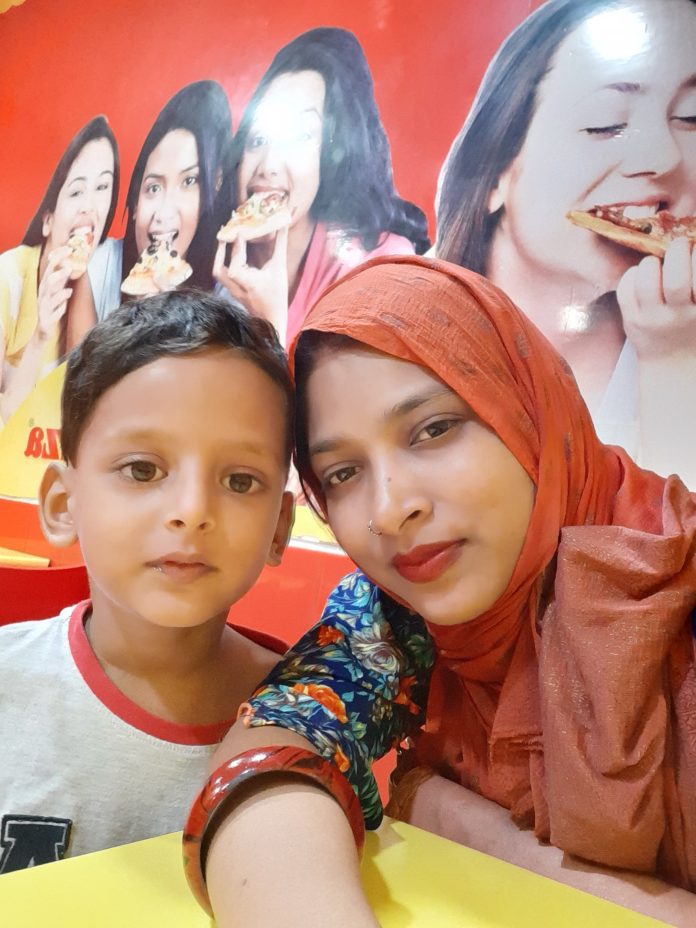
Shikoh Zaidi is helping women in her village by providing easy access to their basic hygiene needs

Shikoh Zaidi, a 16-year-old girl from Kuwarpur Baghel in Hardoi district of central Uttar Pradesh, has started a social initiative to break taboos around menstruation and spread awareness about menstrual hygiene, in her village. She was inspired by Deepa Narayan’s book on gender inequality titled Chup, which talks about an average Indian woman’s struggle in a patriarchal society.

Encouraged by her teachers at VidyaGyan, a school that offers free education to meritorious underprivileged students in Uttar Pradesh, Zaidi was inspired to do something to improve the lives of women in her own village.

SPECIAL ARRANGEMENT | Photo Credit: SPECIAL ARRANGEMENT

“The conservative outlook of my village doesn’t allow for a space where one can talk openly about these issues. However, with my father’s assistance, I was able to organise a campaign by writing slogans and collecting short videos around menstrual health and hygiene. My father and I went door-to- door to invite women and girls to create awareness,” says Zaidi.

“When I first demonstrated the use of sanitary napkins, they giggled and were amazed at the sheer sight of them. Some women were completely ignorant about this basic product. By the third screening, I noticed that women were engaging with me and clarifying their queries as well. Some girls had even started using it,” she adds.

No help

However, many women in the village cannot afford these products. “I wrote to the district magistrate to make free sanitary pads available to the women in our village. But, the authorities failed to keep their promises. Panchayat officials were also of no help,” laments Zaidi.

Many women are still using cloth and rags because free pads are only available in a shop that is 20 km away.

Nonetheless, Zaidi is creating awareness on methods to maintain hygiene and cleanliness during menstruation with the available resources. “I am planning to make a self-help group and install a sanitary pad making machine which will not only help in solving this issue but also provide employment to people in the village,” she says.

source: http://www.thehindu.com / The Hindu / Home> Initiative – Education / by Neha Rupeja / November 27th, 2019

Amid BHU row, Belur college appoints Muslim teacher in Sanskrit department

Belur,Howrah City,  WEST BENGAL :

Ramzan Ali, who joined Ramkrishna Mission Vidyamandira in Belur following nine years of experience at a north Bengal college, said he was overwhelmed by the warm welcome extended to him.

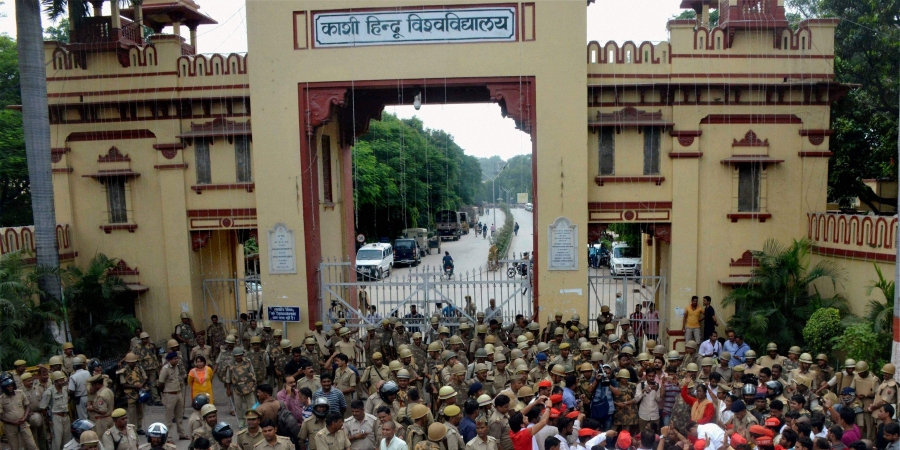
Banaras Hindu University (File photo | PTI)

Kolkata :

At a time when students of the Banaras Hindu University in Uttar Pradesh are up in arms over the religious identity of one of its Sanskrit teachers, a college, on the outskirts of Bengal capital, has appointed a Muslim man as an assistant professor to teach the subject.

Ramzan Ali, who joined Ramkrishna Mission Vidyamandira in Belur following nine years of experience at a north Bengal college, said he was overwhelmed by the warm welcome extended to him by the students and faculty members.

“I was welcomed by principal Swami Shastrajnandaji Maharaj, and everyone. Maharaj told me that my religious identity was not important, what mattered was my grasp over the language, my indepth knowledge and my ability to share it with the students,” Ali, who joined the Belur college on Tuesday, told PTI.

Asked about the Banaras Hindu University (BHU) agitation, he said, “I believe Sanskrit embodies India’s inclusiveness, its rich culture.

Don’t forget Sanskrit is the mother of all languages.

How can anyone bar people from other religions from learning and teaching Sanskrit?” A section of students at BHU has been demonstrating against the appointment of Feroz Khan as the assistant professor of the varsity’s Sanskrit department.

Although the BHU authorities backed him, Khan has not been able to take classes.

Ali, who is in his early 40s, asserted that he had never faced any discrimination as a Sanskrit teacher.

“I never felt that I was out of place or unwanted while studying or teaching Sanskrit. Here, at the Belur college, the management has arranged for my accommodation and ensured that I do not face any inconvenience,” the assistant professor maintained.

A student of the Sanskrit department at Ramkrishna Mission Vidyamandira said he was looking forward to attending Ali’s classes.

It is “unfair” to question the religious identity of a teacher, he said.

“Ali sir has just joined So far, I haven’t had the opportunity to attend any of his classes. I am looking forward to it,” the student added.

The principal of the college could not be contacted for his comment.

‘Tipu rocket’ gallery opened without any formal inauguration in Karnataka

Shivamogga, KARNATAKA :

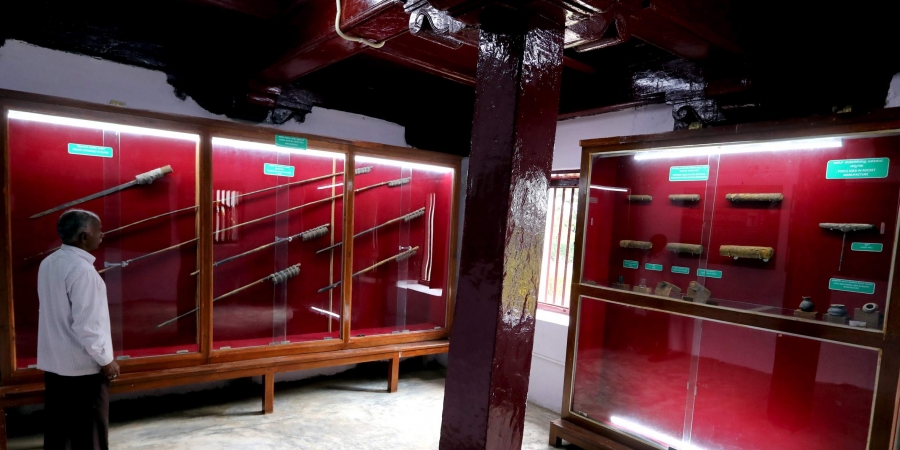
The museum has a large cache of 1,700 such rockets that were recovered from an old well at Nagara village in Hosanagar taluk last year.

An image of the 'Tipu rockets.'
An image of the ‘Tipu rockets.’

Shivamogga :

A dedicated gallery housing metal cased rockets used during Tipu Sultan period (18th century) has been opened in Shivamogga city. However, it was thrown open to the public without a formal inauguration by people’s representatives, which according to sources, is due to the recent controversy surrounding the ruler.

The gallery was opened to the public on the first day of the Heritage Week on November 21.

The gallery has been set up at the Shivappa Nayaka Palace which is also a museum. It is the first and largest gallery having the “Tipu rockets” or “Mysore rockets” in the world.

While the Royal Artillery Museum, Woolwich Arsenal in London, is home to a collection of two such rockets, three pieces are at the government museum in Bengaluru. There was no dedicated gallery for the rockets until the one in Shivamogga opened.

The museum has a large cache of 1,700 such rockets that were recovered from an old well at Nagara village in Hosanagar taluk last year. However, only 15 are kept in the gallery owing to lack of space.

The length of the rockets now housed at Shivappa Nayaka Museum ranges from 190 mm to 260 mm and the diameter ranges from 33 mm to 65 mm. While the lightest specimen weighs 372 g, the highest one weighs 1.75 kg.

History buffs throng museum to see ‘rockets’

Sources in the Archeology, Museums and Heritage Department told TNIE that a formal inauguration was not done to “avoid any further controversy.” Earlier, the BJP State government had decided not to celebrate Tipu Jayanti at the government level and is thinking of removing lessons related to the ruler from textbooks.

History enthusiast Ajay Kumar Sharma said, “The department also avoided naming the gallery as Tipu Rockets Gallery but played safe by naming it as Mysore Rockets Gallery. There is also an argument that similar rockets were used by the Marathas. However, thorough carbon dating needs to be done to determine the period. Though it is not clear who invented these rockets, it is said that they were used during the period of Hyder Ali and his son Tipu Sultan.”

‘World’s first metal cased rockets’

Information put up at the gallery states that Mysore in the 18th century was the greatest threat to the development of the British colonial enterprise in India. The British fought them at every step. It was in this series of wars that England and the wider world was introduced to a new weapon of war – The Mysore metal cased rocket. The instant bamboo stick or sword blade attached to the rocket passed through a man’s body.

It resumed its initial speed and destroyed 10 or 20 men until the combustible matter with which it was charged was spent.

“Mysore was the first state in the world to have moved to the next stage of rocket development from wooden firework rockets to metal war rockets successfully,” the information reads. Though there was no formal inauguration, the gallery has already attracted history buffs who are visiting the gallery each day.

source: http://www.newindianexpress.com / The New Indian Express / Home> States> Karnataka / by Marx Tejaswi / Express News Service / November 23rd, 2019

Actor, writer, comrade Shaukat Kaifi passes away

Hyderabad, TELANGANA / Mumbai, MAHARASHTRA :

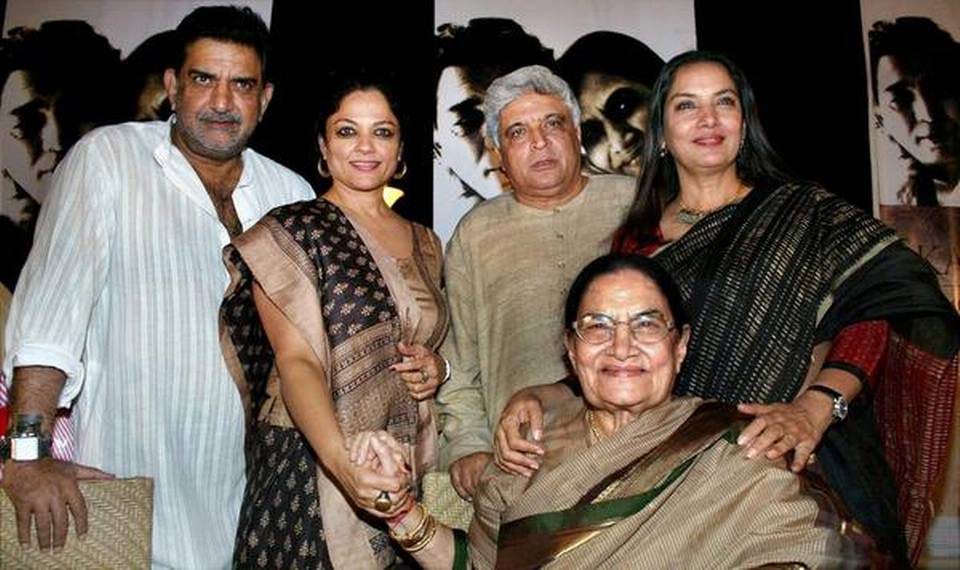
Shaukat Kaifi with her daughter actor Shabana Azmi, lyricist Javed Akhtar, Tanvi and Baba Azmi. File | Photo Credit: PTI

In the world of films she is best known for her work in M.S. Sathyu’s Garm Hava, Muzaffar Ali’s Umrao Jaan and Sagar Sathadi’s Bazaar.

Veteran theatre and film actor and writer Shaukat Kaifi is no more. According to a family source she was in her 90s and ailing for a long while and passed away on Friday evening at her Juhu home in the arms of her daughter, actor Shabana Azmi.

Shaukat Aapa, as she was called, along with her husband, Urdu poet and film lyricist, Kaifi Azmi  had been the leading light of the Indian People’s Theatre Association (IPTA) and the Progressive Writers Association, the cultural wings of the Communist Party of India (CPI).

In the world of films she is best known for her work in M.S. Sathyu’s Garm Hava, Muzaffar Ali’s Umrao Jaan and Sagar Sathadi’s Bazaar.

Shaukat Kaifi’s memoirs , Kaifi and I had been turned into a theatrical rendition Kaifa aur Main with Shabana and Javed Akhtar reading the parts of Shaukat and Kaifi respectively.

She is survived by her daughter Shabana, son and noted cinematographer Baba Azmi, daughter in law actor Tanvi Azmi and son-in-law, poet, writer and lyricist Javed Akhtar. She has passed away even as the year-long Kaifi centenary events roll on.

source: http://www.thehindu.com / The Hindu / Home> Entertainment> Movies / by Special Correspondent / Mumbai – November 22nd, 2019

24 Hours In Life Of Rofikul Islam: Quack-Quack, Hoot-Hoot — Of Ducks And Owls

ASSAM  :

Rofikul Islam is a professional wildlife guard and much in demand for his amazing knowledge of birds and animals. Delhi’s Deputy Chief Minister Manish Sisodia is among his top clients.

RofikulIslamMPOs22nov2019

Quack! The gander gives away the nest’s position behind an arbour of foliage. Mrs White-Winged Duck responds with a quick quack-quack. Rofikul Islam raises an arm, winks at his team. And they, finger on trigger, behold Assam’s state bird—so elusive and endangered that perhaps only 200 pairs rem­ain in the wild on this planet—with unabashed sideways glances of looky-loos. They go click, click, click. But the light is low; the sun has just yawned out on this island in the Jia Bhoroli, the livewire of Nameri national park straddling Assam and Arunachal Pradesh.

____________________________________

Will he stop prying into Mr and Mrs DUck’s private moments? He won’t.

____________________________________

Rofikul, a professional wildlife guide with AllIndiaBirdingTours, has prepared well for the sortie. This morning is a long trek—boating, fording, and pushing their trusty legs to their limits. Waking up to a burst of tweets, retweets, pa-chip-chip-pa-tip (sounds like potato chip and dip?), breakfast is hearty in the camp. “By noon, the team logs nearly 80 species of birds,” says Rofikul, a Kaziranga nat­ive who turned 30 this November. Growing up near the fam­ous park helped him hone a guide’s primary asset: like telling a Crested Kingfisher from a finch by their calls. Booked through the year, his adventures are on unplumbed land—jungles on the Assam plains, in the Northeast’s hills and snowcapped Sikkimese mountains. His guest list? Long and impressive; includes Delhi deputy CM Manish Sisodia.

Back to camp, lunch,  another exp­edition (short; sundown gathers pace), tea/cookies/Maggi, and it’s almost time for dinner around a bonfire. The thatch-and-bamboo cottages, the snug beds wait invitingly. But the guardian owl is on his nightly run. Hoot hoot! Everything screeeeeee-s to a halt.

source: http://www.outlookindia.com / Outlook / Home> Magazine> National / by Rituparna Kakoty / November 21st, 2019

Bushra Arshad creates history; busts all myths; clears UPSC

Saurikh Village (Kannauj), UTTAR PRADESH :

BushraArshad01MPOs22nov2019

Bushra Arshad is being lavished with praise for achieving 6th rank in UPPCS, after the results were recently announced, and for being selected as SDM. This girl from Saurikh village is the only Muslim participant to become SDM in UPPSC-2017. She is the same Bushra Arshad who scored 277th rank in UPSC, results of which were announced in July, and subsequently was selected for the IRS, but she was not satisfied with her achievement.

She is not satisfied even with her latest achievement shows her grit and passion to achieve her dream of being in top 20 in IAS. The reality, however, seems that Bushra is fond of breaking the myths and proving the stereotypes wrong.

Her family, relatives, and husband all believe that she will not settle for anything less. They have a good reason for their belief: If a village girl, married with kids, after four surgeries and overcoming the pain of those surgeries, could score such a high rank in one of the prestigious exams and stamp her presence, then everything is possible for her.

Bushra smiles and reacts: Though we could find exemplary achievements from persons faced with each of those obstacles, my facing every one of those hurdles, probably, resulted in my being strong-willed in my quest.

Bushra’s father is a farmer and her mother is a housewife. A lone brother and a sister are also well-educated.  Both parents are graduates. But Bushra, in her mother Shama’s words, is definitely the “Extra-ordinary” one, packed with talent and way better than us.

Bushra graduated at the age of seventeen and a half. She had an MBA degree before she turned 20. She completed her studies up to class XII from Kannauj and went to Kanpur for graduation.

BushraArshad02MPOs22nov2019

Bushra says that she wanted to give the UPSC exam right away, but couldn’t since she didn’t meet the minimum age requirement. Her mother says that Bushra was admitted directly into the second class at the age of four and a half years. She adds “She already had learned so much at home itself that she never came even second (in her class).” She says Bushra is habituated to be a topper. My multi-talented daughter topped in everything”.

““Make this girl a collector” was the constant advice of anyone and everyone who visited us to my Abbu and Ammi,” says Bushra. “It got me fixated. (Again) Since I did not meet the minimum age requirement of UPSC, I prepared and appeared for JRF test.”

She cleared JRF in her first attempt and achieved a Ph.D. in Distress Management from AMU and that’s how the title “Doctor” got associated with her name. Right after that, she married Asmar Hussain. A little while later Engineer Asmar Hussain and Bushra moved to Saudi Arabia. Asmar started his studies at Jazan University, while Bushra obtained a high-ranking position. Leaving a well-placed position and an excellent package that came along with it, Bushra returned to India along with her husband.

Bushra says, “There was only one reason for our return to India, limitless love and ‘patriotism’, I often used to contemplate that the knowledge that I gained in my country through its residents, the skills born from that knowledge ought to benefit the same citizens, and that is their right.”

Her husband, Asmar Hussain, says that after this he took up a job at Coal India, they had two children. His wife underwent four major surgeries. It has been ten years since, but her desire to become a collector from within egged her constantly.

Bushra adds: “I did my job honestly. I did my duty as a mother. I also performed the responsibilities of a wife without neglecting my husband. I did not use the excuse of constant pain after surgeries to set me back and now I am appointed a deputy collector.”

Asmar Hussain, who is pursuing a Ph.D. from AMU, is a resident of Aligarh. He says that Bushra sits in the front seat of the car as a habit. Once she sets her sight on something, she achieves it at all costs.

Mohammad Akmal, a youth from Kannauj, says, “In four months, this is the second news that a girl from Saurikh has made history.Four months ago, this same girl did wonders. Bushra’s success proves that  excuses are for weak-willed people. She is truly an example of positivity and she is the talk of Kannauj ”.

source: http://www.twocircles.net / TwoCirlcles.net / Home> Indian Muslim> Lead Story> TCN Positive / by Aas Mohammed Kaif , TwoCircles.net / October 29th, 2019

Faith no barrier

Srinagar, JAMMU & KASHMIR :

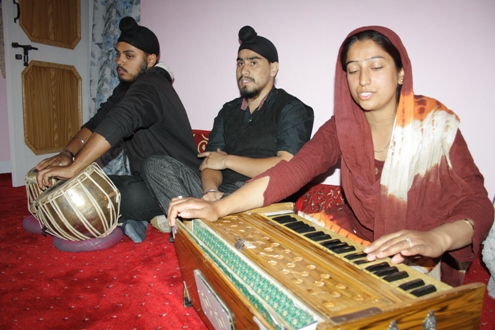
A Muslim woman is taking Sikh boys and girls in Srinagar closer to their religion by teaching them kirtan singing. Tasleema Langoo is a regular at Gurduwaras and finds applause even in the Golden Temple. Shazia Yousuf reports.
TasleemaLangoo01MPOs22nov2019

As she recited a shabad from Guru Granth Sahib at the Golden Temple Amritsar, almost everyone was engrossed in the melody of the kirtan. As soon as she finished, an old woman came towards her, almost crying, kissed her hands and hugged her.

“Now you are the voice of Sikh women. You have done what no girl could do, you are the honour of your Sikh community now.” The old woman said while taking off her golden earrings and gifting these to her.

She didn’t know the girl she was praising was a Kashmiri Muslim.

It is a three year old incident, but Tasleema Langoo’s association with kirtan is almost two decades old. The 26-year-old from Shaheed Gunj Srinagar has been teaching Kirtan to Sikh boys and girls since she was 14. She is perhaps the only kirtan tutor for the community in Srinagar.

She comes from a family of musicians. Her great grandfather sang for Maharaja Pratap singh, her grandfather Ghulam Qadir Langoo was a court singer of Maharaja Hari Singh. Her uncles and aunts have worked as musicians with Radio Kashmir. Tasleema’s father Abdul Majeed Langoo teaches music at Women’s college MA road.

Tasleema was five or six years old when some Sikh girls approached her father for learning music for religious purposes. “They were my father’s students from college. They would call him Langoo Veerji and wanted to learn harmonium and tabla from him for kirtan singing. I was the youngest daughter and would follow him like his shadow, watching and observing him,” Tasleema says while composing a shabad for her students at her Alochi Bagh residence where the family has recently moved in.

Every morning, Sikh girls would come with a shabad from Guru Granth Sahib and Tasleema’s father would compose it for them, “I would sing with them. Though there was music in every room of our house, but kirtan would excite me most,” she says.

It went on for many years. The students kept changing. And Tasleema’s love for kirtan compositions kept growing. She insisted on joining her father’s class where she would help his students in playing instruments who in turn would write shabads in Urdu (Arabic script) for her, “I was first hesitant, I thought it is disrespecting to sing something we don’t believe or mean. But she loved and respected it more than them,” says Tasleema’s father Majeed.

The class swelled with every day. It was now Tasleema who would sing to the compositions of his father for the students. “They were thrilled to hear her mesmerising voice that they couldn’t find in their community for years. Even the parents of students would come to listen,” says Majeed.

In 1998, when Tasleema was in 8th standard, she decided to start her own coaching class. “By now I was fully trained. The only difficulty was reading Granth Sahib in Punjabi. My father got a Urdu version from Amritsar for me,” she says. Tasleema says, she would start her day with morning prayers (Namaz) and recitation from Quran. “Then I would open Granth Sahib, memorise a new shabad and compose with the help of my father, for my students.”

In 2000, Tasleema left her studies after high school. The same year she gave her first performance in a gurdwara. Tasleema sang in the Gurdwara at Lal Chowk Srinagar on the invitation of a Sikh family. “First not many people were attentive, but when I sang, they were all humming and praising in Punjabi language.” She could hardly understand their words and kept pleading the family not to reveal her Muslim identity.

But when they came to know of her Muslim identity, she earned many blessings. More and more invitations for kirtan darbars followed. “There are two to three invitations in a month. On Sundays I sing in Chatti Padshahi Gurdwara. I sang in many kirtan darbars outside the state. People invite me to sing at Baisakhi and other festivals,” she says.

In 2001, a known singer Harjinder Singh spotted her in Chatti Padshahi gurdwara and advised her to go to Radio Kashmir. She went for an audition, qualified, and began singing kirtans for Radio Kashmir.

Afterwards, late Ghulam Nabi Sheikh encouraged her to go for Kashmiri auditions too. She did and thus began to sing in Kashmiri too for the radio.

Most of her time, however is spent in teaching. She has taught more than 200 Sikh boys and girls. At present she has 15 students. She charges Rs 300 each. And what about her neighbours and relatives. How did they react?

“Our home in Shaheed Gunj was adjacent to mosque. Once I was singing loudly with my students when the mosque imam entered our house. I was ready for a reprimand, but to my surprise, he gave his blessings and told me that I was doing a wonderful job by maintaining communal harmony at a time when our place needed it most,” she says.

Tasleema, however, gave in to her apprehensions in testing times. After the Chattisinghpora Massacre in which 36 Sikhs were killed by unidentified assailants, she stopped her classes. However she could not keep herself away for long and resumed her classes.

For the small Sikh community of Kashmir, she is a saviour of their traditions. “You cannot imagine what she is for our community. It is she who teaches us verses from our holy book every day,” says her student Supinder Singh of Bemina, a postgraduate student at University of Kashmir.

“We never feel she is different from us, she absorbs herself in every verse,” says another student, Manpreet Singh, an engineering graduate.

In 2007, when her magical voice reverberated in the Golden Temple,  Sikh religious leader, Harbans Singh visited her house to thank him. “He told me, ‘you are doing us a favour’ and he gave me some money as well,” she says.

source: http://www.kashmirlife.net / Kashmir Life / Home> Faith> Music / by Shazia Yousuf, Kashmir Life / June 27th, 2010
Six Muslims, five of them female, crack Rajasthan Judicial Services exam

RAJASTHAN :

Mayank Pratap Singh from Jaipur is set to become the youngest judge in India

JudicialMPOs22nov2019

Jaipur:

A total of 06 Muslims have cleared the Rajasthan Judicial Services (RJS) exams result of which was announced Wednesday. Five of the six Muslims who cleared the coveted exam are female.

Youngest Judge In India

According to the result of Civil Judge Cadre 2018 under the Rajasthan Judicial Service Rules, 2010 declared early in the morning Wednesday 197 candidates successfully cleared the exam. Of them 127 are women.

Mayank Pratap Singh from Jaipur who has also cracked the Rajasthan judicial services 2018 exam at just 21 years of age, will be the youngest judge in India.

Muslims in the list

The six Muslims in the list of successful candidates are Sania Manihar, Sajida, Sana, Huma Khohri, Shehnaz Khan and Faisal Khan.

Sajida who belongs to Jodhpur secured 37th, Sana Hakim Khan bagged the 130th position, Huma Khohri 136 and Shehnaaz Khan got 143rd rank. The lone Muslim man in the list Faisal Khan got the 107th rank.

This is the first time five Muslim females have cleared the Civil Judge exam.

In the top ten, eight are women. Only the topper and the 10th ranker are men.

Selected candidates will join the service as a judicial magistrate after a two-year probation period.

The original age requirement for appearing in the judicial services exam was 23 years, which was reduced to 21 years by the Rajasthan High Court this year.

source: http://www.ummid.com / Ummid.com / Home> India> Education & Career / by ummid.com News Network / November 22nd, 2019

Akil Kureshi sworn in as new chief justice of Tripura High Court

GUJARAT :

Justice Kureshi has succeeded Chief Justice Sanjoy Karol, who has been appointed as Chief Justice of the High Court of Patna.

Akil Kureshi, who once sent Amit Shah in police custody, sworn in as new chief justice of Tripura HC

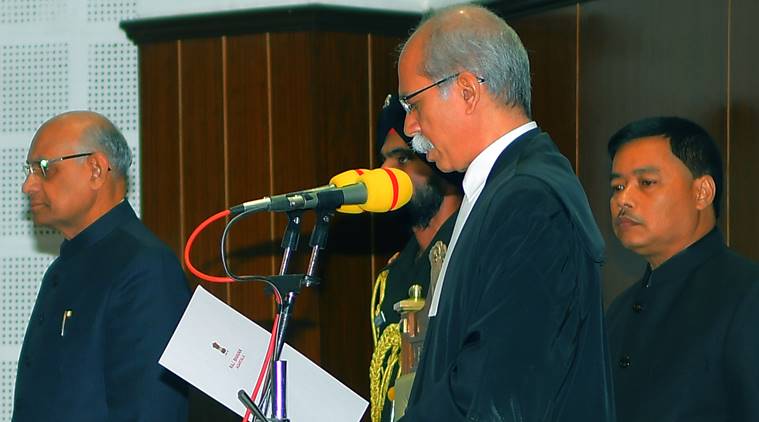
Newly appointed Chief Justice of the High Court of Tripura, Justice Akil Abdulhamid Kureshi being administered the oath of office and secrecy by Governor Ramesh Bais during at ‘Durbar Hall’ of Old Raj Bhawan in Agartala on Saturday. (ANI Photo)

Justice Akil Abdulhamid Kureshi was sworn in as the new Chief Justice of the High Court of Tripura on Saturday. He was previously serving with the Gujarat High Court.

Governor Ramesh Bais administered the oath of office and secrecy to Kureshi at Old Raj Bhawan in Agartala. He has assumed office as the 5th Chief Justice of Tripura High Court. The oath-taking ceremony was held at 11 AM in the presence of Chief Minister Biplab Kumar Deb, Deputy Chief Minister Jishnu Devvarman, cabinet ministers, Tripura High Court Justices Subhashish Talapatra, Arindam Lodh and others.

Justice Kureshi has succeeded Chief Justice Sanjoy Karol, who was has been appointed as Chief Justice of the High Court of Patna.

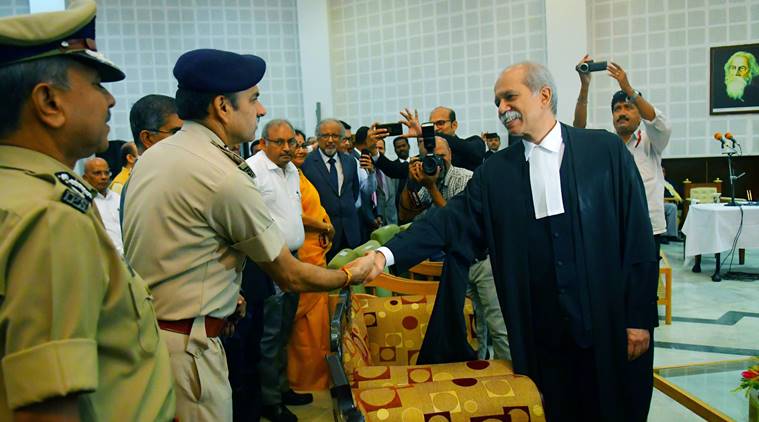
Justice Akil Abdulhamid Kureshi interacting with different officials of Tripura, during the oath-taking ceremony held at ‘Durbar Hall’ of Old Raj Bhawan in Agartala on Saturday. (ANI Photo)

In 2010, Justice Kureshi had sent incumbent Union Home Minister Amit Shah in police custody in connection with the Sohrabuddin Sheikh encounter case. A Special CBI Court had later discharged Shah from the case due to lack of evidence in 2014.

Earlier, the Supreme Court Collegium had recommended Justice Kureshi, who was the senior-most judge from Gujarat High Court, for appointment as Chief Justice of the Madhya Pradesh High Court. However, the Collegium later revised its recommendation with the modification that Justice AA Kureshi might be appointed as Chief Justice the High Court of Tripura.

The High Court of Tripura was established in 2013 with Deepak Gupta as its first Chief Justice. Previously, trials of High Court cases from the state were held at Agartala Bench of the Gauhati  High Court.

source: http://www.indianexpress.com / The Indian Express / Home> North East India / by Debraj Deb / Agartala – November 16th, 2019

Book Negates Stereotype Image of Muslim Women

Nizamuddin Basti, NEW DELHI :

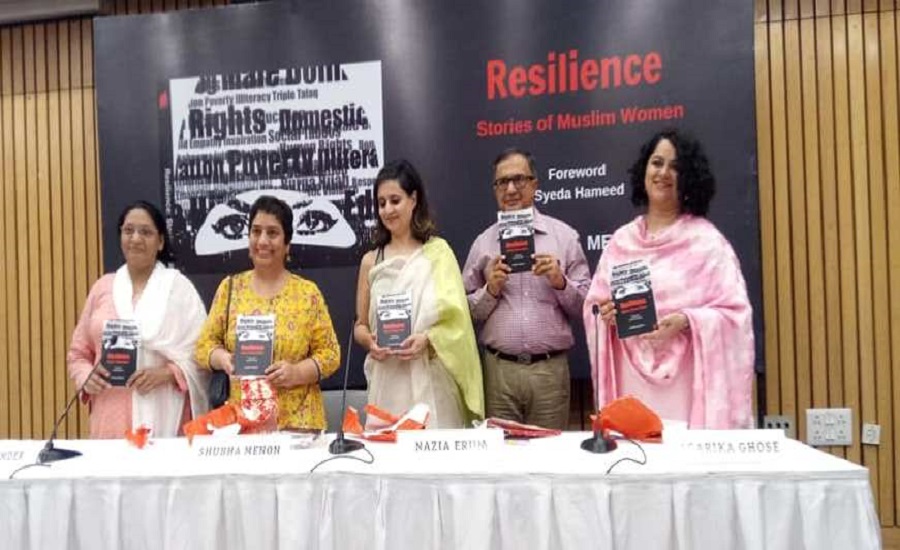
The book “Resilience: Stories of Muslim Women” was released by noted journalist and author Sagarika Ghose at a function at the India International Center, New Delhi on Wednesday. — Photo: Caravan Daily

‘Resilience: Stories of Muslim women’ released in New Delhi

New Delhi :

At a time when her stereotypes as meek and submissive entity are used by a political class to further its agenda, a new book catches Muslim woman in her multidimensional persona and in the process blasts many a myth surrounding her. In each of the varied fields of human endeavour, these Muslim women have come out in flying colours.

The book “Resilience: Stories of Muslim Women” was released by noted journalist and author Sagarika Ghose at a function at the India International Center here on Wednesday in the presence of many woman activists.

Speaking on the occasion, Ghose said the book negated the stereotype image of Muslim women as it illustrates that no matter what the economic impediments or social taboo, given the means and empathy Muslim women could also scale the height of success.

The book explores the lives of 11 resilient Muslim women who fought against all odds and got the opportunity to study in a tiny adult education centre. She congratulated these women and lamented in the scientific age woman have to face many odds and discrimination in every community.

The book release ceremony was followed by a discussion on the condition of women moderated by Nazia Erum, author and media advocacy head of Amnesty International India.

Social activist Shabnam Hashmi, the spirit behind the success of these women, said the book is like fresh air in the present political environment of the country in an oblique reference to the Modi Government’s push for enacting controversial Triple Talaq law which seeks to criminalise a civil matter like marriage.

She claimed stereotypical images of Muslim women are being used to further marginalise the minority community.

In early 1980, we started teaching the Nizamuddin Basti girls but it was a bumpy journey as girls had to struggle against severe hostility from the Basti residents whom Muslim girls going to study was “ anti-Islam or anti-Deen”, she added.

Shubha Menon, author, who documented the life of girls and women of Nizamuddin Basti, Delhi, said these were mostly dropouts or had not studied at all. She said she was touched by their stories and decided to bring the brighter side of the Muslim women.

On the occasion, many of these women narrated their stories of struggles.

Farida, who is a daughter of a Maulvi attached to Tablighi Jamaat, said she fought patriarchy, gender bias, poverty, and triple talaq to become a graduate.  She said there was no discrimination on the basis of gender at home as her father loved her much but did not in favour of sending her to school.  She told she was made to wear a burqa at 9, married off at 13 abandoned with two children at 16.

Farida, who now runs an NGO, has a sister Syeda whose story is also the same. “Both the sisters married to two brothers, unpaid labour in their matrimonial home, sloggers, beaten at the whims of a cruel matriarch, bearing children and hardship in one go. Their father, a Maulvi of Tablighi Jamaat, caught between the demands of his fellow Jamaatis and love for his daughters. The two sisters return home with meager belongings plus four pairs of mouths to feed. Then from rock bottom poverty, they extricate themselves. Their horizon widens and they rise and thanks to Seher Study Centre”.

Ayesha said she not only fought for her education but brought up her son to be an MBA and her daughter a Master in Science.  Mussarrat, who now works for an international NGO, told that her grandmother kept her locked at home.

Other women Asma, Ishrat, Parveen, Shahjahan, Farhat, Parveen,  and Najma’s stories are similar but not identical.

Shabnam said the mentors of Seher Study Centre in the Basti; teaching, counselling, chatting, encouraging the oppressed girls to break out of their fetters and manacles and ultimately from their cloisters.

From verbal threats to lathis, they not only bore them but spun them around to give great leverage to the girls they were grooming, she said.

The book, which chronicles the stories of successful women, also highlights the Markaz versus the Dargah which is another contradiction of the Basti. Stories of the Dargah dot the entire book. For example, Nizamuddin’s disdain for power is a poignant anecdote. Rulers of the Sultanate, Tughlaqs and Khiljis were not permitted to enter the Pir’s Khanqah. The Saint’s priority was not to pay obeisance to the ruler but to feed the poor and indigent no matter of what faith or of what caste while the Markaz propagates orthodox Islam. The author does not deride one practice at the cost of the other. Their parallel existence may occasionally clash but seldom becomes a major eruption.

She makes the reader a partner in her adventure as a reader is taken through the winding gulleys, narrow stairs, tottering houses, all the time surrounded by a mass of humanity; namely Muslims who live and breathe Nizamuddin. There is a constellation of girls who were transformed by the Seher Adult Education Centre. The stories unfold one by one.

The author Menon concludes that Seher comes out as a unique experiment, which not only transformed all those women who studied there but their future generations as well.

source: http://www.caravandaily.com / Caravan Daily / Home> Books / by Abdul Bari Masoud, Caravan Daily / August 29th, 2019