All posts by mpositiveone@gmail.com

The Wire’s Arfa Khanum Sherwani and Faiyaz Ahmad Wajeeh Win Red Ink Awards 2019

NEW DELHI :

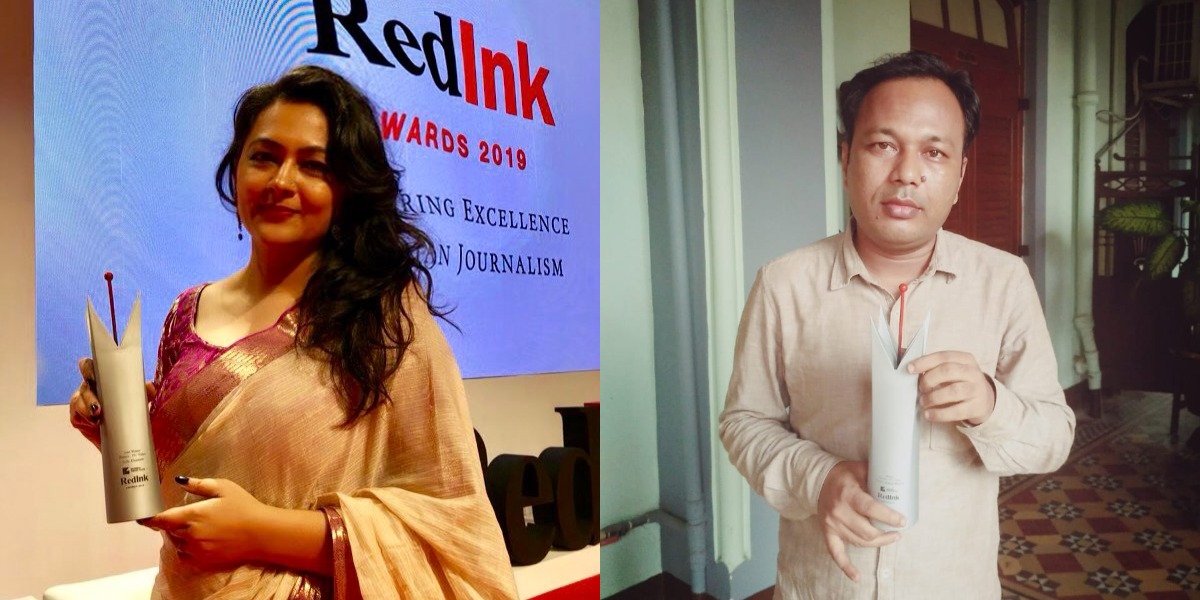
The Wire's Arfa Khanum Sherwani and Faiyaz Ahmad Wajeeh. Photo: The Wire
The Wire’s Arfa Khanum Sherwani and Faiyaz Ahmad Wajeeh. Photo: The Wire

While Sherwani won in the Politics (TV) category for her interview with Sri Sri Ravi Shankar, Wajeeh was declared winner of the Arts (TV) category for his story on a bookstore.

New Delhi:

The Wire‘s Arfa Khanum Sherwani and Faiyaz Ahmad Wajeeh bagged the prestigious Red Ink Awards on Friday. While Sherwani won in the Politics (TV) category for her interview with Sri Sri Ravi Shankar of The Art of Living foundation, Wajeeh was declared winner of the Arts (TV) category for his video on a bookstore that brought together Urdu’s literary greats.

Sherwani’s interview with Ravi Shankar was on his comments on the Ayodhya land dispute case in March 2018, when he said if the Ram mandir issue is not resolved “we will have a Syria in India”. While Sherwani pressed him on the issue, the interview was ended abruptly by members of his team. The video was produced by Akhil Kumar, while the camera was handled by Moniza Hafizee and editing by Asad Ali.

Wajeeh’s story was on 88-year old Shahid Ali Khan’s lifelong passion for Urdu literature. His journey with Maktaba Jamia, a publishing house and bookstore, took him from Delhi to Mumbai in 1957, where he befriended renowned Urdu writers and poets like Sahir Ludhianvi, Jan Nisar Akhtar, Meena Kumari and Jagan Nath Azad. He now runs the Nai Kitab publishing house in Delhi.

The video was produced by Hina Fathima, who also handled the camera. The video was narrated by Yasmeen Rashidi, while the poetry was translated by Meenakshi Tewari.

Apart from the two winners, The Wire‘s Kabir Agarwal, Jahnavi Sen and Ishita Mishra also received special mentions for their stories. Agarwal’s four-part series on Swach Bharat and its implementation in Uttar Pradesh received a special mention in the Health and Wellness category. Read the four parts here .

Jahnavi Sen’s story on the failure of the government to recognise and rehabilitate manual scavengers received a special mention in the Human Rights category. Ishita Mishra’s story on the BJP’s efforts to monitor the stories published in the media also received a special mention, in the Politics category.

The Red Ink Awards for Excellence in Journalism are announced annually by the Mumbai Press Club and recognise meritorious work in TV, print and digital formats. Awards are presented in various categories such as politics, crime, health and wellness, business, environment, human rights, photography, science and innovation, entertainment and lifestyle, and sports as well as a category called ‘Mumbai Star Reporter’. It is the only awards instituted by a professional body.

The Journalist of the Year Award went to former Tribune journalist Rachna Khaira for her expose on the functioning of the Unique Identification Authority of Indian (UIDAI) and its Aadhaar data cache. Lifetime achievement awards were given to former Maharashtra Times journalist Dinu Ranadiv and Mumbai Mirror‘s former photo editor Sebastian D’Souza.

source: http://www.thewire.in / The Wire / Home> Media / by The Wire Staff / June 29th, 2019

Two lakh Indian Muslims to perform Haj without subsidy this year: Naqvi

NEW DELHI :

MukhtarMPOs05jul2019

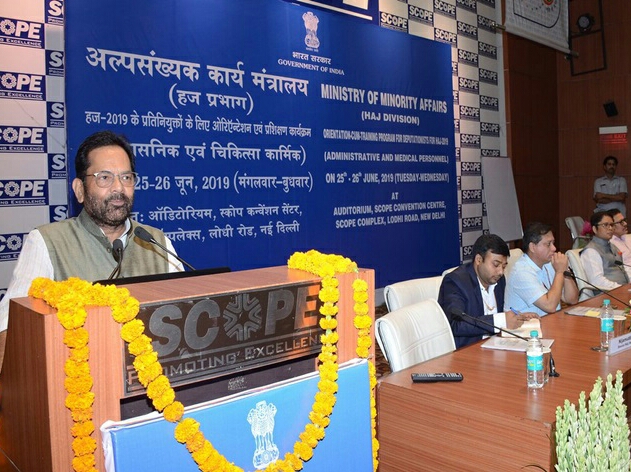
Minority Affairs Minister Mukhtar Abbas Naqvi has said that a record number of two lakh Indian Muslims will go to Haj this year without any subsidy.

Mr Naqvi said this while inaugurating a two-day ‘orientation-cum-training programme’ for Haj 2019 deputationists in New Delhi yesterday. He said, nearly 48 per cent of the pilgrims are women.

The Minister said, even after removal of Haj subsidy, there is no unnecessary financial burden on the Haj pilgrims. He said the Central Government has taken effective steps to ensure safety and better facilities of the pilgrims.

Mr Naqvi emphasised that no negligence will be tolerated in this regard. He added that a total of 620 Haj coordinators, Assistant Haj Officers, Haj Assistants, Doctors and Paramedics have been deployed in Saudi Arabia to assist the pilgrims.

The Minister also informed that the number of women Haj pilgrims going without Mehram this year is double in comparison to last year. A total of 2,340 Muslim women from India will go for Haj without Mehram this year while 1180 women had performed Haj last year without Mehram.

source: http://www.thenorthlines.com / The NorthLines / Home> Latest News / June 26th, 2019

Islamic history expert Prof. Ibrahim Kutty is dead

Kaloor (Kochi), KERALA :

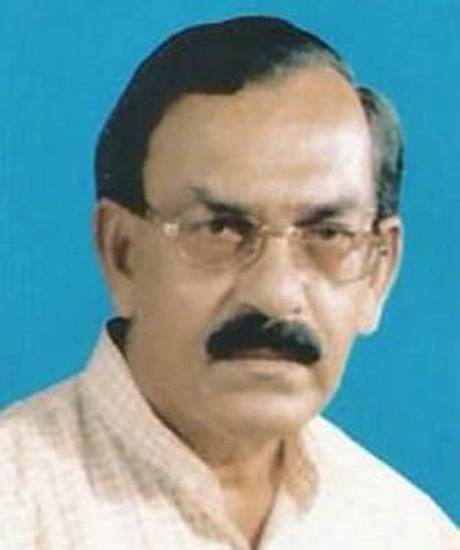
P. A. Ibrahimkutty
P. A. Ibrahimkutty

Islamic history expert Prof. P.A. Ibrahim Kutty, 71, a prominent presence in the city’s cultural and literary circles, passed away on Wednesday.

He was the vice president of Kerala History Association and treasurer of Samastha Kerala Sahitya Parishad. His body, kept at his house Nilofer on SRM Road at Kaloor, will be buried at the Kaloor Thottathumpady Juma Masjid on Thursday.

Born in 1948 at Mala, Prof. Ibhahim Kutty had his education in Maharaja’s College, Aligarh Muslim University and Ernakulam Law College.

He had retired as Head of Islamic History Department from the Maharaja’s College in 2001. He was a member of boards in various universities and was the chairman of the Islamic Studies Board in Kerala University, Calicut University and Mahatma Gandhi University.

He is survived by his wife Razia, daughter of former Mayor A.A. Kochunni Master.

source: http://www.thehindu.com / The Hindu / Home> News> Cities> Kochi / by Special Correspondent / Kochi – July 04th, 2019

The artist who decided to go abstract in the symmetrical world of ajrakh

Ajrakhpur (Kutch ), GUJARAT :

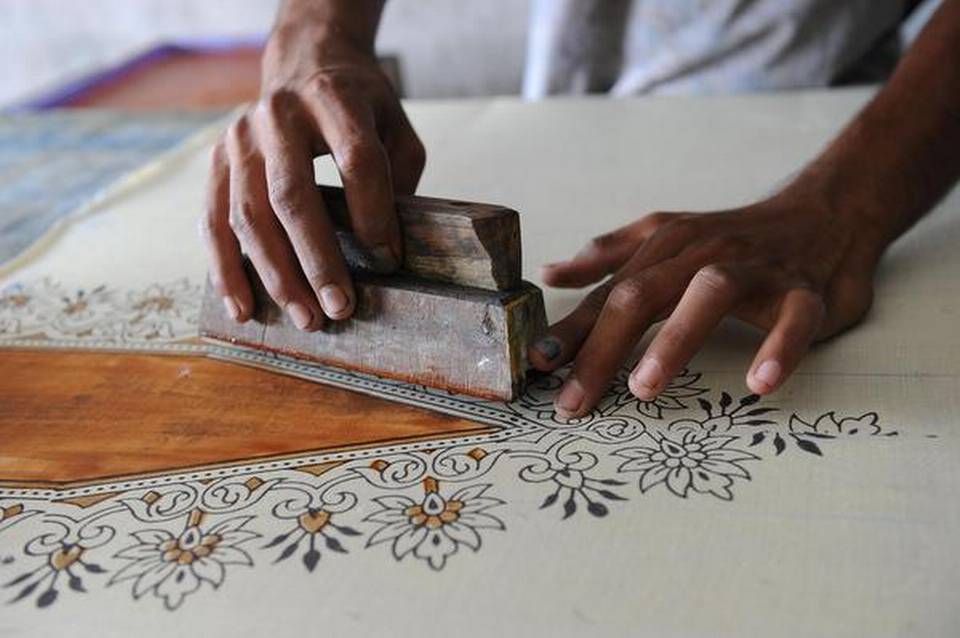
An artisan works on one of Khatri’s unique asymmetrical designs. | Photo Credit: Vijay Soneji

Khalid Amin Khatri’s favourite theme is clouds floating atop mountains

He grew up in a world of symmetry. The perfectly synchronised movement of wooden blocks from a plate of colour onto long stretches of cloth, and the accompanying sound of a regular, dull beat, are deeply ingrained in Khalid Amin Khatri.

This is, after all, Ajrakhpur, in the Kutch region of Gujarat , and he was born the son of generations of ajrakh printers. Khatri, however, was bored by the regularity. He wanted to capture his imagination on a piece of cloth, to bring the clouds and the mountains, shrines and monuments down to his canvas.

So that’s what he did.

Khatri, 26, calls himself an artist — more than an artisan. A step away from the traditional ajrakh block-printing that relies on uniformity of design, Khatri’s work is dominated by asymmetricity. But it’s more than that. “Each of my creations has a theme,” he tells us, as he unfolds piece after piece, each hand crafted, each guided by a theme. Unlike the traditional form that mostly prints floral motifs and geometrical designs, Khatri’s designs are guided by his imagination. His favourite theme, for example, is clouds floating atop mountains.

Different strokes

Showing us one such piece — it has a river, flowers, bushes, and yes, clouds and mountains — Khatri recalls a time, not even 10 years ago, when other artisans in his village would look at him with dismay. “‘Why are you hell-bent on destroying the art form,’ they would ask,” he says, smiling. “But I didn’t care. I always knew if I was going to do Ajrakh, I would do something different.”

Khatri was a child when the 2001 Bhuj earthquake destroyed their village, Dhamadka, and the entire community of artisans moved to Ajrakhpur. Most villagers went back to their craft, but Khatri’s father, Amin Khatri, stopped working on ajrakh and instead opened a grocery shop.

He did not however discourage his son from learning the art form in his uncle’s workshop. But traditional ajrakh could not capture the boy’s interest, and he ran away to Mumbai. He was just a teenager and he had found himself a job as a telemarketer.

“I lasted just six months there,” he smiles sheepishly. “I decided to come back to my world — but to innovate and leave my mark.” In 2010, his uncle, Dr. Ismail Khatri, encouraged him to study textile design at Kala Raksha Vidyalaya.

During the one-year course, one theme caught Khatri’s fancy: concept design. “Concept development was completely new to me. We were taught how to develop a theme; it was aligned to what I wanted to do,” he says.

Dargah on cloth

Khatri’s first finished product as a student was a black stole on which he made mountains and clouds. “A lady from the U.S. had come to see our products and when she saw my creation, she said my talent was qudrati, that I was a natural, like M.F. Husain. I didn’t even know who Husain was then,” he says. The stole sold for ₹50,000.

Since then, Khatri’s visually arresting work has gained widespread popularity, both among Ajrakhpur’s regular customers and new buyers. His work is unusual, for instance, a stole with a vivid image of Mumbai’s Haji Ali Dargah, complete with the half-submerged road leading to it. Or the white Rann of Kutch printed on a scarf. He also does a lot of abstract work, both on silk — modal, mashroo, etc. — and on cotton.

“I spend a lot of time on each piece and make sure it is unique. I take at least two hours to print a two-metre piece of cloth, when traditional ajrakh block-printing would have taken 10 minutes,” he says.

He gets wooden blocks made for every design and theme, and uses paper to cover portions of the cloth in order to break the symmetry; he hand-paints some as well. This means that unlike the traditional six metre long ajrakh prints, he usually does stoles, scarves and dupattas. “But I recently got an order for a cotton sari and I did that,” he says.

Khatri has travelled across the country for exhibitions and his wares are displayed at fashion shows. A lot of his orders come from overseas. “These,” he says, showing a pile of abstract art stoles on his bed at home, “are ready to be shipped to a textile designer and collector in the U.S.”

Khatri’s work was exhibited at the V&A Museum in London. And he is renowned enough for students from design schools like the National Institute of Fashion Technology (NIFT) and M.S. University (Vadodara) to visit him for learning.

Asked about his future plans, Khatri looks up for a second and then smiles. “I don’t think too much about the future. I enjoy doing what I do. Like, right now, I want to work on a piece that celebrates Delhi, its monuments and landmarks,” he says. His father, who now helps him in his workshop, nods approvingly.

The author is a Gujarat-based freelance journalist.

source: http://www.thehindu.com / The Hindu / Home> Sunday Magazine>  Focus> Society / by Azera Parveen Rahman / June 29th, 2019

Miyah Poetry Weaves a World of Suffering and Humiliation in Contemporary Assam

ASSAM :

The genre has given new life to the literary landscape of the northeastern state.

Miyah poetry gives us a peep into how it is to live in the Char Chapori or riverine geographies in Assam. Photo: Kinshuk Kashyap/Flickr (CC BY 2.0)

For Richard Rorty, there are two kinds of writers largely – those who strive for ‘private perfection’ and those who are collectively engaged with efforts to make our institutions ‘more just and less cruel’. I wish to draw from his seminal work Contingency, Irony and Solidarity to critically think about the ongoing debate about Miyah poetry. It might come across as a highly unusual reference, but I do believe that there are interesting parallels.

Miyah poetry as a genre is multilingual and encompasses a world of suffering and humiliation of a group of people whose life-world has passed through numerous political claims and counterclaims. My first introduction to Miyah poetry was through an article  written by the talented poet and translator Shalim M. Hussain. I was deeply moved reading his account of the word Miyah and how this subaltern group of committed poets are trying to create something beautiful through protest and celebration of life. Hussain shared with us this beautiful poem of Maulana Bande Ali written in 1939:

“Neither charuwa, nor pamua 
I am an Asomiya. 
Of Assam’s earth and air 
I am an equal claimant.”

This one is seen as the first wave of poems, followed by a series of poems in the 1980s mostly written in Assamese by the likes of Khabir Ahmed and Dr Hafiz Ahmed. Hussain notes in a recent article that the new wave of poems has been more explorative and has moved beyond protest and resistance. This new generation is committed to writing a total history of their being.

If one follows Miyah poetry closely, it has always attempted to enrich our understanding of the cultural and political landscape of Assam. It gives us a peep into how it is to live in the Char Chapori or riverine geographies in Assam. It teaches and asks us to be ‘more just and less cruel’. These groups of poets also share a love for Assamese culture and society. In their humble effort, they seek to beautify the cultural landscape of Assam. And to remember Jyoti Prasad Agarwala, their contribution brings light (puhor) to our society.

Criticism of Miyah poetry

The recent debate about Miyah poetry  questions its very existence and need. This discomfort and criticism mirror the condition of Assamese civil and literary class/society which is deeply rooted in the hegemony of Assamese language, its form and one that guards its boundaries. It cannot digest a new discourse emerging from the within which reflects our own condition of culture. It fails to give freedom even for artistic and aesthetic expression, like it does to any critical intellectual pursuit. The ‘otherisation’ that Bangla speakers of the state face is precisely a product of this Assamese hegemony and the ‘class condition’ in the state.

Criticisms about Miyah poetry suffer from a ‘liberal irony’. For Rorty, such a condition and being is one where people hope for a decrease in suffering and hope that humiliation shall end one day. They indulge in discussions involving concerns about whether it is right to deliver innocents to the torturer if they let go more people instead. In Assam, there is a considerable section who thinks that something good may come out of the National Register of Citizens (NRC) process. This something good is indeed a discourse of ‘private perfection’ where there are many sacrificial lambs being created. Such ironists are far greater in number. In essence, they determine a hierarchy of responsibility, which is indeed an irony.

For Rorty, it is a liberal utopia that irony is hostile for democracy and human solidarity at once. In essence, criticism of criticism is the only way out of the present milieu. However, it doesn’t threaten human solidarity itself. Solidarity for him is not only possible by enquiry, perhaps even criticism, but also, through imagination. Solidarity can be created by highlighting the pain and suffering of people that are not familiar or who you know.

To agree with Rorty again, one needs to think of human beings as ‘one of us’ and not as ‘them,’ write about the ‘other’ as ‘us’ and ‘redescribe’ and re-visit who we are. In other words, we ought to write not only about others but also of the capabilities of love and evil one carry. In the process, we create more vocabularies to understand our everyday life. It makes us better, not worse off.

Need for a cultural revolution

It struck a chord with me and I have come to admire the poems, its discourse and have shared them with numerous friends and acquaintances. Recently, when Miyah poetry is being put in a pickle by a few writers, one should always remember that being in Assam, the world of beauty and its articulation is not lost on us. The cultural icon of Assam, Jyoti Prasad Agarwala believed that any culture ought to have a revolution (biplab) in society whenever there is a threat to our cultural mores.

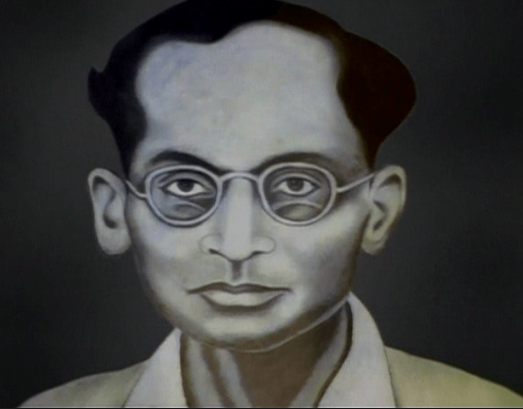
Jyoti Prasad Agarwala. Photo: YouTube

Our culture, and I use ‘our’ with much discomfort and keeping in mind the syncretism that we find in Assam theoretically and the ‘otherisation’ that is rife, requires a biplab – for Assamese political and cultural landscape have become narrow and selfish. Our social boundaries are more rigid than before. In Agarwala’s words, we have an unholy presence of anti-cultural (duskriti) in our society that asks us to become divisive. It is, thus, imperative that we need a revolution, a cultural one as Agarwala articulated.

Miyah poetry, of which there is no gatekeeper as Hussain empathically puts it, gives new vocabularies to a culture that comes out of a ‘lifetime of oppression’. A new grammar of suffering and humiliation is being written through these poems that tell us not to walk those paths that treat people with disdain and humiliation.

Like the contribution of Henry James and Nabokov, it shows us the limits of our culture and the ‘cruelty we are capable of’. Miyah poetry, in fact, creates a meta-vocabulary of our everyday life, of possible ways of knowing and feeling.

Why Assam should embrace Miyah poetry

This genre of poetry has given new life to the literary landscape of Assam. It creates new grounds for solidarity and takes us to a world unknown – of suffering, othering and humiliation. Assamese society ought to embrace it, not brush it aside as unnecessary and describe it as reactionary. Brushing them aside also means forgoing the possibility of solidarity. It is time to move beyond ‘private perfection’ and think of human solidarity outside the gaze of liberal irony. People who engage in art and intellectual pursuit ought to extend their love, not silence, and certainly not hollow criticism.

Perhaps, Miyah poetry needs to accept the politics it carries or its potential, although, Hussain notes that ‘they are least bothered about politics’. The history of Miya poetry suggests that in many ways, it essentialises Char Chapori settlements as only Miyah settlements, however, the history of permanent settlement in riverine areas of 90 odd tributaries of the mighty Brahmaputra suggest that there are other river people (nadiyal) who share the same precarity, perhaps not the intensity of social othering.

A complete history of Char Chapori ought to appreciate that heterogeneity of Char Chapori scapes and how it is home to the other margins of Assam – the Mishings and the Kaibartas (a lower-caste group), among others, who are the first permanent settlers of these areas. As non-colonising settlers of these geographies, there are many commonalities that these communities share.

At the moment, there is no solidarity among these communities as such, but as Rorty suggests, solidarity can be created. It can be created from the shared lived experiences, of being marginalised through religion and caste and the productive activities that they are engaged with. Hussain notes in the FirstPost article that ‘Miyah poetry has done its job’, however, borrowing Hafiz Ahmed’s words: I beg to state that it has, in fact, began.

Suraj Gogoi is a doctoral student in sociology at National University of Singapore and tweets @char_chapori.

source: http://www.thewire.in / The Wire / Home> Culture / by Suraj Gogoi / July 03rd, 2019

From Kannur orphanage to Kollam Collector’s office

Thalassery, KERALA :

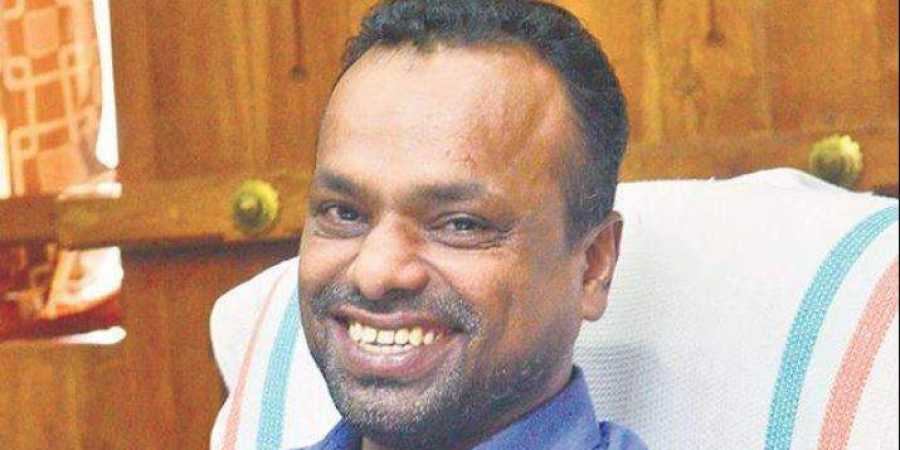
For Abdul Nasar, it was a long journey from an orphanage to the District Collector’s office.

Abdul Nasar
Abdul Nasar

Kollam :

For Abdul Nasar, it was a long journey from an orphanage to the District Collector’s office. The Thalassery man who assumed office as Kollam Collector the other day had lived the hard ways of life, spent childhood in an orphanage and came up to the top fighting all odds in life. Tragedy befell his family when Abdul was just 5. His father Abdul Khadar passed away, leaving his mother Manjumma Hajjumma alone to fend for six kids. The financial crisis pushed Manjumma to send her youngest son Abdul to an orphanage in Thalassery.

He spent the next 13 years at the orphanage. He had worked as a supplier and cleaner in hotels during his school days to fund his education. While pursuing his BA in English Literature at Government Brennen College, Thalassery, Abdul also worked as a telephone operator and a newspaper boy. After his graduation, he worked as a health inspector in Kerala Health Department and then as an upper primary teacher at a school in his village, and finally, after his preparations, he cracked the PSC exam for the post of deputy collector.

He passed the prelims in 2002 and mains in 2004. In 2006, he was appointed deputy collector. During his stint as the State Entrance Exam Commissioner, he was able to convert the exams into an online format. And in October 2017, he was elevated as an IAS officer.

Abdul is all praise for his mother whose hard work is behind all his achievements. “It was her hard work that made me the person I am today,” said the 49-year-old. He also appreciated the support he had received from his wife MK Ruksana, a higher secondary teacher. The couple has three children – Nayeema, an engineering graduate; Nuamul Haq, BBA student; and Inamul Haq, who studies in Class VIII.

source: http://www.newindianexpress.com / The New Indian Express / Home> States> Kerala / by Express News Service / July 04th, 2019

Kerala MLA Muhsin marries UP student

Karakkad (Pattambi), KERALA  :

The Nikah between Muhammad Muhsin and Shafaq Qassim was a strictly family-and-friends event

Palakkad:

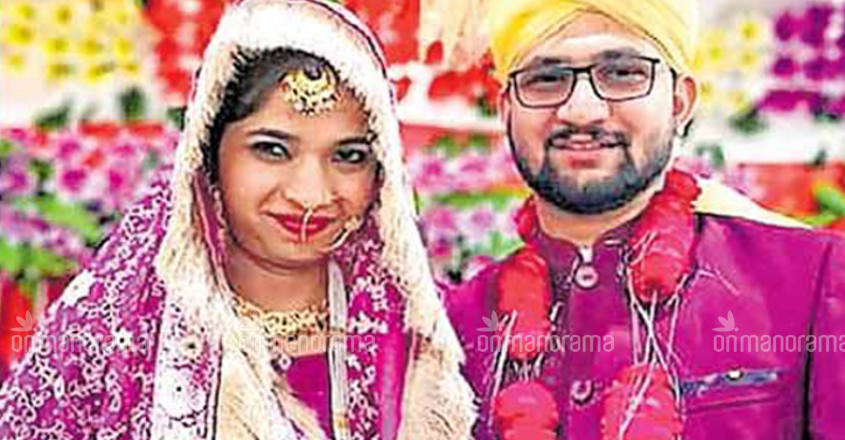
Pattambi’s young MLA Muhammad Muhsin has married a student from Uttar Pradesh’s Balrampur. The wedding was held in the bride’s hometown.

The Nikah was a strictly family-and-friends event as the bride, Shafaq Qassim, has to fly out to Europe on December 31 for studies leading to a PhD.

Shafaq, who has completed her M Phil from the Jamia Millia University in Delhi, has worked at the National Physical Laboratory there for sometime.

Muhsin and Shafaq knew each other for the last year-and-a-half.

Muhsin, who was a firebrand leader at the Jawaharlal Nehru University in Delhi, is an MLA of the CPI. The bride’s family, however, are Samajwadi Party supporters and they have contributed MLAs to that party.

Muhsin is the son of Puthenpeediyakkal Abubaker Haji and Jameela Begum of Karakkad, Pattambi.

source: http://www.english.manoramaonline.com / OnManorama / Home> News> Kerala / by OnManorama Correspondent / December 23rd, 2018

When covering up becomes rebellion

INDIA :

CoveringMPOs30jun2019

  • Many young Muslim women are becoming the first in their families to take to the hijab
  • For these women, taking to the hijab is a matter of self expression and choice

_____________________________________________________________________

Ten years ago in Bengaluru, inside one of those cookie- cutter 2-BHKs built in bulk next to colleges for students to escape hostel restrictions, as I was contemplating booze, boys, and cutting sleeves off my clothes, something very different was happening in the other room. My flatmate Sanaa Hyder was considering taking to the hijab.

Hyder and I had little in common—except that we were in the same BA course, and that we both came from Muslim families. She had grown up on American TV and music in the NRI alleys of Riyadh while my adolescence had been spent on pirated VCDs of Bollywood films in provincial Ranchi. Much of our relationship was about me ridiculing her lack of knowledge of desi culture, and she correcting my pronunciation of the English words I had read but never heard in small-town north India. So when conversations in Christ College’s hip food courts drifted to Pink Floyd or Sylvia Plath, as they often did, Hyder—in her sweatshirt, jeans and colourful Converse shoes—was way more at home than I would ever be.

In the scale of conservative-to-modern that I had been trained to rank women on, I had not slotted Hyder as the “purdah type”. Neither had her family, it turned out. When she went back to Saudi Arabia for the semester break and told one of the elders about her decision to wear the hijab in public, their first response was: “Are you trying to teach religion to us?”

India’s popular culture has constantly caricatured the burqa as a garment of oppression or ridicule. If a Muslim woman dons it, she is oppressed. If a non-Muslim hero wears it on screen (probably to disguise himself), it is funny. But what is our imagination of the hijab? In the 10 years since I lived with Sanaa, I crossed paths with several young women who took to the headscarf. These women grew up wearing Western attire, were urban, educated, had successful careers, and did not fit into popular stereotypes of the “oppressed Muslim woman”. No one else in their families wore the hijab.

“Where I come from, where I grew up, the friends I had—it wasn’t considered okay to wear it. It was like taking a step backward,” says Tasneem Pocketwala, a 26-year-old writer from Mumbai. Wearing jeans was second nature till she took to the rida (a kind of hijab that members of the Bohri community wear) after she finished her bachelor’s at St Xavier’s, Mumbai. “Even though I grew up in a religious family, the understanding was that it didn’t have to translate to our clothes.”

For Asma Chandragiri, a 24-year-old who converted from Hinduism to Islam and married a Muslim while studying psychology in Delhi’s Ambedkar University, the issue was even more complicated. It meant upsetting her family, which had not come to terms with her becoming a Muslim. “I would walk out of my home and once I would enter the bus, I would clumsily wrap the shawl around myself.”

So what made these women take to the hijab?

In that Bengaluru apartment, while Hyder and I were seemingly going in opposite directions—she towards greater religiosity and me away from it—the processes enabling our respective journeys were similar: being away from our families for the first time, having the time to read and think for ourselves, and studying a humanities course that encouraged us to worry about the world and our place in it. All this, and good internet connection.

Several women I interviewed for this article said they took up the hijab because they wanted to inhabit Islam and the teachings of the Quran “fully”. This was distinct from their parents’ generation, which had been okay with following religion to the extent that their social upbringing had shaped them to.

The journeys of these women reveal a personal and textual relationship with religion, made possible by education, access to information, and a certain level of empowerment or privilege enabling choices. Pocketwala found encouragement in a YouTube community of immigrants in the West talking about #MyHijabStory.

Safina Khan Soudagar, a writer from Goa, was studying in St Xavier’s Mapusa when she was gifted a translated Quran by a friend. She immersed herself in it, recognizing that she had only read it in Arabic without understanding it. There was no one day when she decided to “take to” the hijab. It was an organic, visceral process.

“I always loved scarves. Even for college, one probably hung on my bag tied in a knot. Because of pollution, when I used to travel on a bike to college, I used to put a scarf around me. Eventually, I stopped taking it off right after I got off the vehicle. So till my class I would keep the scarf tied on. And then, very gradually, I started accepting the covering. And one day, I didn’t take off my scarf in class.” When I met her at a café in Panaji a few months ago, she told me she had felt much more confident since because “I know that people are going to look at my work, they won’t look at my outer appearance. It empowers you to do whatever you want. With the hijab, everything is possible.”

Chandragiri’s initial struggle was with how to look good in a hijab. “Earlier, I used to wear the skimpiest of clothes. But the more I learnt about the reasons for the hijab and why we cover ourselves, I realized it’s to take this pressure off women.”

Being Dalit, Chandragiri had gone to the university named after B.R. Ambedkar, hoping for an ideal liberal space, but the lack of awareness about caste disappointed her. Disillusioned, she found solace in Ambedkarite groups initially but moved on to find promise of social justice in ideas in the Quran.

In a world where women are forced to constantly worry about how to hold their bodies—what to wear, how attractive to look—so that it doesn’t come in the way of how people perceive their worth, the hijab can be both a godsend and, sometimes, an extra hurdle.

A few years before she took to it, Chandragiri thought the women who wore the hijab were stupid. “I never realized that it was a bias I had until it happened to me. I had to work extra hard to get my point across because of the assumption that people who wear the hijab are not thinking for themselves. Because they don’t fit into the standard of what liberated women should look like according to Western standards. Because, you know, a strong woman is supposed to be one who doesn’t care about anything.”

Soudagar has had to pay the price for being a hijabi. In December, she was due to appear for the National Eligibility Test (NET), an entrance exam for college- and university-level lectureship. She was in the queue leading up to the examination hall when a male official asked her to take off her headscarf. Shocked, she tried to argue with the officials at the venue that she had given the same exam twice in her hijab, while a long queue full of people behind her stared on.

When she asked why, she was told they needed to see her ears because it was a computerized exam. When she offered to retie the hijab in a washroom so her ears were visible, she was told she would have to sit without the scarf for the entire exam anyway. Humiliated and flustered, she walked out. Standing outside, she checked the NET website for rules regarding covering the head and found none. A week later, she moved the Goa Human Rights Commission for violation of the right to religion. The case is yet to be heard.

“Why didn’t you take it off ?” men commented on her social media post about the incident. “Anyway you aren’t wearing the whole thing.” Soudagar said men from different religions, and even Muslim men from other countries, slut-shamed her. “How can you do that, right? I put on the scarf because I respect my modesty. I respect my religion,” she explains, exasperated. “But you cannot decide someone else’s hijab, somebody’s pace of religion with their lord. You don’t have the right.”

While Hyder’s immediate family came around to accepting her hijab soon enough, relatives in Aligarh still find it hard to digest, with comments like “Look, the dog is barking at you because of your hijab!” Hyder shrugs, “I am doing this to please God, not people.”

Regardless of what hijabi women say, however, they are often asked if they are oppressed: “Even if it is choice, isn’t it inherently patriarchal?”

In a world that is intrinsically patriarchal, the female body has been pierced by the male gaze to such an extent that it is impossible to retrieve its pre-objectified self.

I, like many other feminist women I know, tried to reclaim my body by freeing my skin of (some) cloth, hoping that men would get used to it eventually. We take loud pride in our liberation. But we make sure we hide ourselves and take cover in shrugs and stoles when we are not feeling as safe.

We Instagram our body hair but also wax, we go on diets, we marry, cook for our fathers, we talk about unrealistic beauty standards and use make-up. Why, then, is the question of oppression reserved only for women who choose to wear a scarf?

Pocketwala says she felt the most liberated when she was able to choose to cover herself.

In a deeply sexist world, there can’t be anything inherently feminist or oppressive about letting men see our bodies, just like there isn’t anything inherently feminist or oppressive in deciding to cover ourselves.

As I write this, women in Iran are being sentenced for protesting against the hijab—in March, a human rights activist got 38 years and 148 lashes—and France’s Muslim women await the next “secular” law that will decide how they should carry their bodies. So the stories of Indian women who chose to take on the hijab cannot answer every question about choice and oppression in the man’s world that we live in.

What these women’s stories can show, however, is that while religiosity is often conflated with conformism, it could be rebellion as well; it shows religious practice can go against the norms and expectations of the society people grow up in.

Mostly, however, the stories of Soudagar, Chandragiri, Pocketwala and Hyder should show us that young Muslim women are quite capable of thinking for themselves.

source: http://www.livemint.com / LiveMint / Home> Explore / by Shireen Azam / May 12th, 2019
‘It is the story of India itself’: Abdullah Khan on a debut novel that was 20 years in the making

Patna, BIHAR :

An interview with the author of ‘Patna Blues’, a novel about a lower-middle class Muslim family in small-town Bihar.

AbdullahKhanMPOs30jun2019

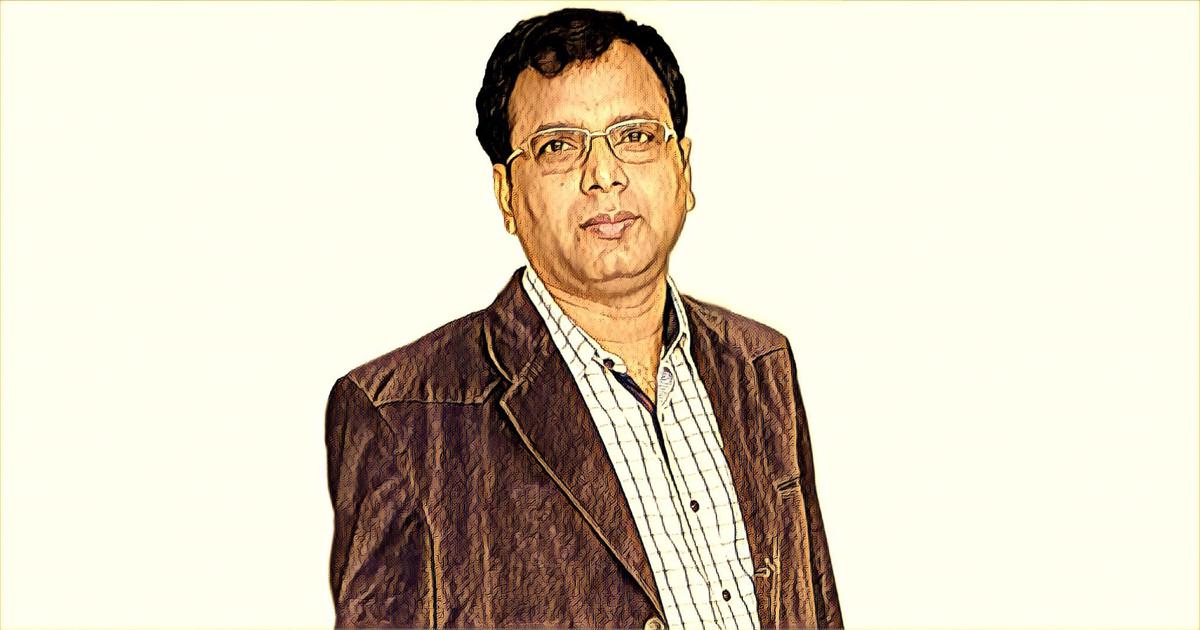
Abdullah Khan is a banker by profession and a poet-storyteller at heart. Born and raised in Bihar, Khan’s fiction carries evocative descriptions of his roots. His debut novel Patna Blues is a coming-of-age story set in Patna and other places in Bihar in the 1990s. In an interview with Scroll.in Khan talks about his first novel, his inspirations, his poetry, and Bihar.

You started writing Patna Blues as “The Remains of a Dream”. I had the opportunity to read parts of this novel when you posted some chapters on your blog, way back in 2010. How was the journey from 2010 till 2018, from starting to write the novel as “The Remains of the Dream” to seeing it published as Patna Blues?
Actually, I started writing this novel in 1997 just after Arundhati Roy won the Booker Prize. And the excerpts you read in 2010 were from probably the third draft of my novel. Initially, it was a romantic drama mostly focussing on Arif’s love life. Then, on the basis of the feedback I received from my writer friends and a couple of literary agents to whom I had submitted my manuscript for possible representation, I rewrote the entire thing making a lot of changes in the plot and in the characters.

Once the final draft was ready, I started sending my queries to British and American literary agents. And, after collecting more than 200 rejection slips, I decided to submit the manuscript to Indian publishers. I was lucky that my novel landed first on Renu Agal’s table at Juggernaut Books and she could connect with the story. Renu asked me to make certain changes in my manuscript which I immediately did. Then she recommended Patna Blues to senior editor Sivapriya who also liked this story about a small town and, finally, my book found a home.

Now, in its present avatar, Patna Blues is a culturally insightful coming-of-age novel with political undertones. It is actually three stories in one. One is simply the story of a boy: Arif, the central character, who deals with love, lust, and ambitions as he goes through the painful process of growing up. The second too is Arif’s story, but it is also the story of a Muslim boy in particular, and this flows into a larger narrative of being a Muslim in post-Babri India, with its own challenges and anxieties. The third is the story of India itself, not the India that exists in the cities, but the India of villages and small towns.

Who or what inspired the character of Arif Khan and how much of Abdullah Khan is there in Arif Khan?
Arif is a fictional character and is not inspired by anyone in particular. Unlike Arif, I was never interested in the civil services. But, yes, the moral values of Arif are quite similar to those of mine. And, like Arif, I also lived in police colonies in Patna and Darbhanga.

The story of Arif Khan’s family seems to be a story of several families in Bihar and Jharkhand, not only Muslim families. Was it one particular family that gave you the insights to create this one or was it what you observed in several families? Is there an issue (or many issues) you wish to highlight through your portrayal of Arif Khan’s family?
Arif’s family is a typical lower middle class Bihari family and their problems are not different from the other families of the same class. Since I also come from a similar background, it was easy for me to create such a fictional family. Some of the incidents portrayed in my novel, however, are inspired by real life stories. For example, Arif’s sister’s marriage to a man double her age was inspired by a real event. It had happened in Darbhanga. I was barely 12-13 years old at that time. In my neighbourhood, a girl was married off to a man who was no match for her only because her father was not willing to spend too much money on her wedding.

The characters of Arif’s mother and grandmother are inspired by my own mother and grandmother.

The whole novel is very atmospheric. Be it the description of Patna city or the villages in north Bihar or the description of the 1990s – the time period in which a major part of your novel is set – or the politics of the time (and place), you have given a no holds barred description of everything, even of the film magazine Priya. Thank you for re-igniting our memories. Is there a particular memory from those times that made your writing so evocative? Something you would like to share?
Thank you very much for your kind words. I didn’t plan it. Since the story is mostly set in Bihar of the 1990s, I just tried to evoke a sense of time and place by mentioning the things which signify Bihar of the 1990s. And, it appears that, to an extent, I have succeeded in doing so.

One important feature of Patna Blues is the poetry/ghazals in Urdu that Arif and Sumitra compose. You yourself are a poet and the poetry and ghazals you have featured in Patna Blues are your original works. You have also written the screenplay and lyrics for a Hindi film, Viraam. What made you use your poetry in the novel? How do you think the book would have turned out had this poetry not been there?
The main characters of this novel, Arif and Sumitra, are interested in Urdu poetry, so it is obvious that they will use poetry in their conversations. Additionally, the use of poetry in my novel is not only for ornamental purposes but they have also been used as a narrative tool.

Since Arif and Sumitra are amateur poets, it would not have been appropriate if I had used the poetry of well-known poets. So I decided to use my own poems, for both Arif and Sumitra. I believe that this novel couldn’t have been written without using Urdu poetry.

My favourite character is Zakir, Arif Khan’s younger brother. But you have not really given him closure. Similarly, the character Maya Banerjee, Sumitra’s friend, too has not been given closure. Why? Can we expect to see their stories somewhere else? Are you planning a sequel to Patna Blues?
Zakir is one of my favourite characters too and his story is too big to be covered in this book. It needs a separate book. In fact, I have plans to write two sequels to Patna Blues. In Zakir’s Dilemma, I will give closure to Zakir’s story, which is going to be more intriguing and suspenseful than Patna Blues. The third book in the trilogy will be Sumitra’s Choice, which will be told from Sumitra’s POV.

As far as Maya Banerjee is concerned, as of now, I don’t know much about her except that she used to be Sumitra’s friend. But, in future, I’d certainly like to explore this character.

What are you writing right now? Is there a new book from you that we can look forward to
Right now, I am working on a novel titled Aslam, Orwell and a PornstarIt is about a man called Aslam who was born in the same house in Motihari, India, where George Orwell was born. The story is set in Motihari, India, and Los Angeles, USA, against the backdrop of contemporary political events.

Simultaneously, I am also working on a couple of story ideas for television and web.

source: http://www.scroll.in / Scroll.in / Home> Meet The Writer / by Hansa Sowvendra Shekhar / September 22nd, 2018

The Kos Minar – once showing the way but now becoming lost

Agra, UTTAR PRADESH  :

KosMinar01MPOs30jun2019

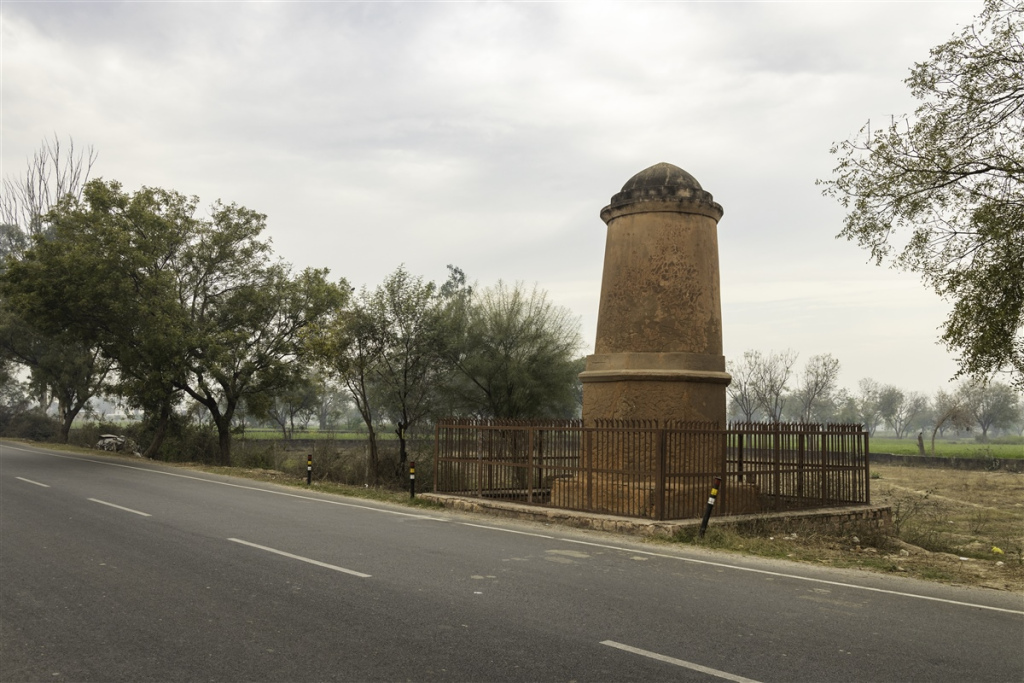
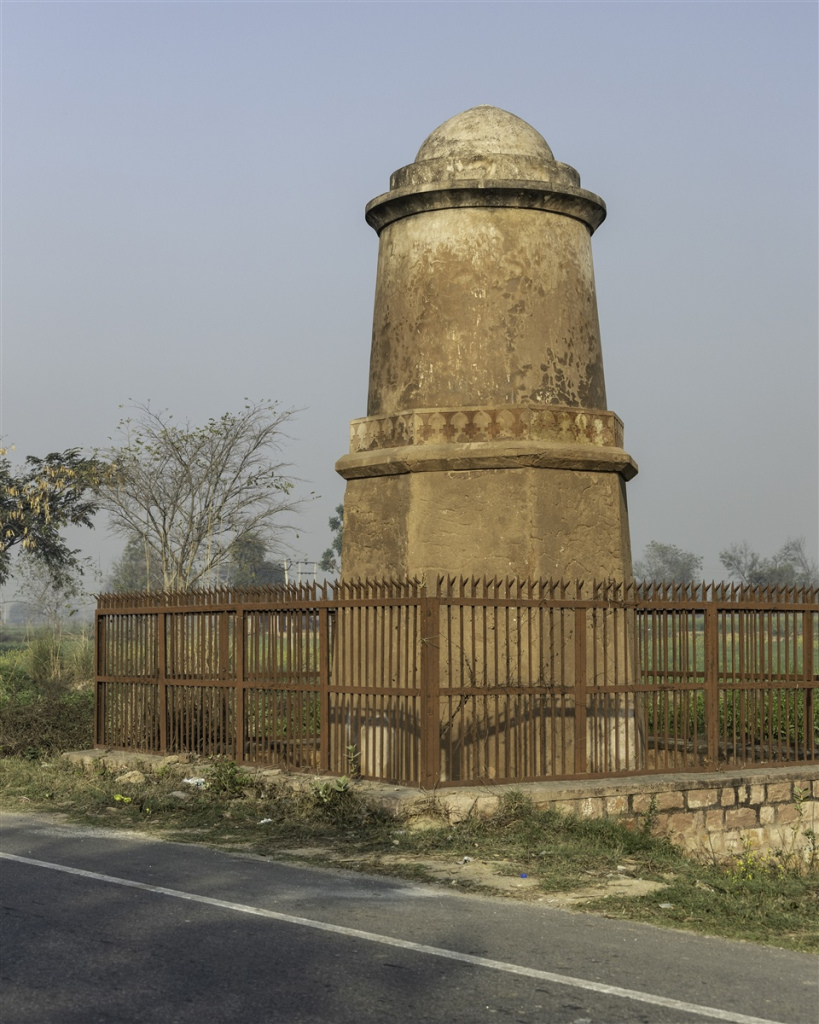
Anyone travelling on India’s road network in the north of the country may from time to time see a curious little structure standing in isolation by the side of the road. Seemingly unassociated with anything else around them, to the casual observer they can probably be best described as enlarged stone salt/pepper pots.

With all the astonishing monuments that still stand today in this amazing country, it would be all too easy to dismiss these humble little constructions as your car passes them by at speed. However, they have their own story to tell, and one for which we can draw so many parallels with life as we live it today in terms of travel and communication. They are also a type of monument that is slowly disappearing from the landscape of India, so they deserve a little time in the spotlight before it’s too late.

These monuments are known as Kos Minars. A Kos is an ancient Indian unit of distance representing approximately 3.22 kilometers (2 miles), and is 1/4 of a Yojana, a vedic measurement of distance. The use of Yojana scratches back to the ancient vedic texts, and was used by Ashoka in his Major Rock Edict No.13 to describe the distance between Patliputra and Babylone. Minar means ‘Pillar’, so the broad translation of Kos Minar is ‘Mile Pillar’, even though one kos is not strictly speaking an exact mile in measurement. Interestingly, elderly people in many rural areas of the Indian subcontinent still refer to distances from nearby areas in kos.

A Short History of the Kos Minar

The first recorded evidence in India of using something in the landscape to specifically denote distances and routes comes from the 3rd century BC. The Emperor Ashoka established routes linking his capital city of Pataliputra to Dhaka, Kabul, and Balkh, and landmarks in the form of mud pillars, trees and wells helped guide the travelers and provide a sense of how far they had traveled and how much further they had to go. In the majority of cases these landmarks were already pre-existing in the landscape, they were not created specifically for this purpose.

Kos Minar on NH21 near Sahara, between Agra and Fatehpur Sikri, Uttar Pradesh

In India the notion of purposely building structures to physically denote distances in the landscape was first adopted by the Mughal Emperor Babur during his short reign from 1526 to 1530. He ordered one of his central asian nobles, Chiqmaq Beg, to measure the road between his new capital Agra and Kabul in modern day Afghanistan, with the assistance of a royal clerk. He then ordered the raising of distance markers, each twelve yards high and topped with a superstructure having four openings, at every nine kos all along the measured route.

It is not clear how far the builders got with Babur’s instructions, but we do know that the Pashtun ruler Sher Shah Suri who ruled from 1540 to 1555 greatly expanded on this earlier plan. He paid great attention to the development of the road network in northern India, recognising them as arteries to the empire, and erected Kos Minars along the royal routes from Agra to Ajmer, Agra to Lahore, and Agra to Mandu. These three major routes, which were called Sadak-e-Azam, became later known as the Grand Trunk Road.

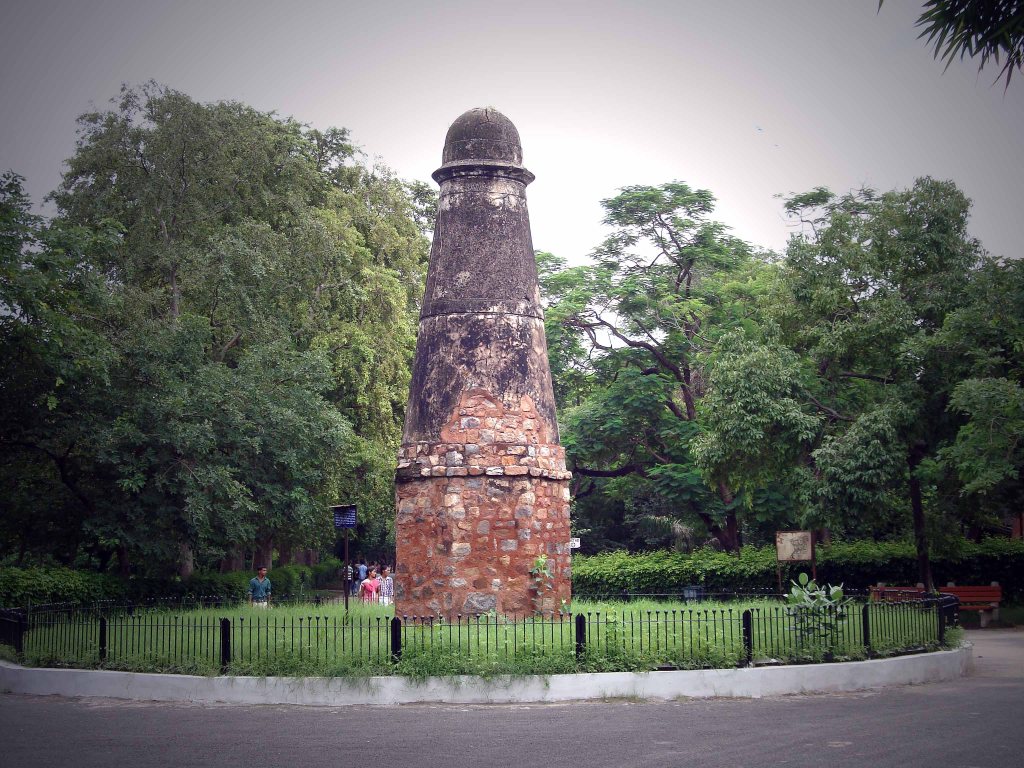
Kos Minar in Delhi Zoo. / (File is licensed under the Creative Commons Attribution-Share Alike 3.0. Source.
Kos Minar in Delhi Zoo. /
(File is licensed under the Creative Commons Attribution-Share Alike 3.0. Source.

Many of the Kos Minars you can see today can probably be attributed to the time of Akbar, who reigned from 1556 to 1605. Abul Fazl recorded in Akbar Nama (the official chronicle of the reign of Akbar) that in the year 1575 Akbar issued an order that, at every kos on the way from Agra to Ajmer, a pillar or a minar should be erected for the comfort of the travelers, so that the travelers who had lost their way might have a mark and a place to rest. Between 1615 and 1618, shortly after Akbar’s reign, early European travelers to India brought back detailed reports of the Kos Minars they had seen, most notably Richard Steel, John Crowther, and the ambassador of King James I, Sir Thomas Roe.

Subsequent Emperors Jahangir and Shah Jahan added to the network of Kos Minars, by now they were an institution. In 1619, Jahangir ordered Baqir Khan, the garrison commander of Multan, to erect Kos Minars from Agra to Lahore. Thirty four of these milestones still exist today in Punjab in varying states of preservation. It is estimated that between 600 and 1,000 minars were erected in total during the Mughal period, but of course today only a fraction of that number still exist.

Construction and Function

Kos Minars are round pillars around 30 feet high built on a masonry platform. They are completely solid with no stairs or internal rooms, and are mostly made of brick and once covered with lime plaster.

Whilst the features of a Kos Minar generally match each other they are not all identical, there are slight differences depending on location and time of construction/repair.

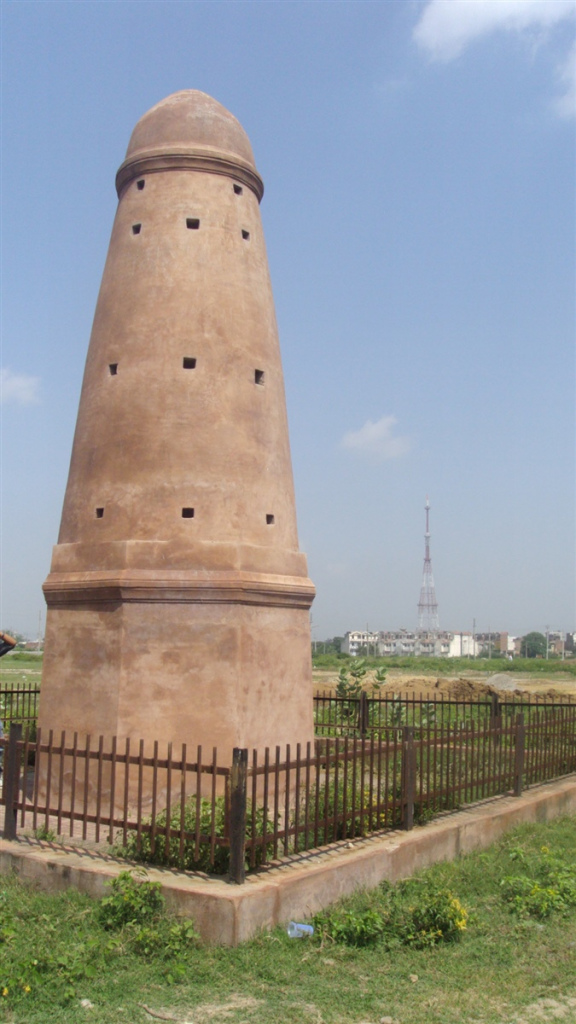
Kos Minar at Karnal, Haryana

Many of the Kos Minars you can see today stand in isolation, but that was not always the case. As the network of pillars expanded, so did associated structures to complement them and assist the traveler. Scholars believe there were three categories of Kos Minar along the major routes.

  • The first category is just a standalone Kos Minar with no supplementary infrastructure, erected purely for landmark identification.
  • The second category of Kos Minar had small associated contemporary buildings, offering limited facilities for the travelers.
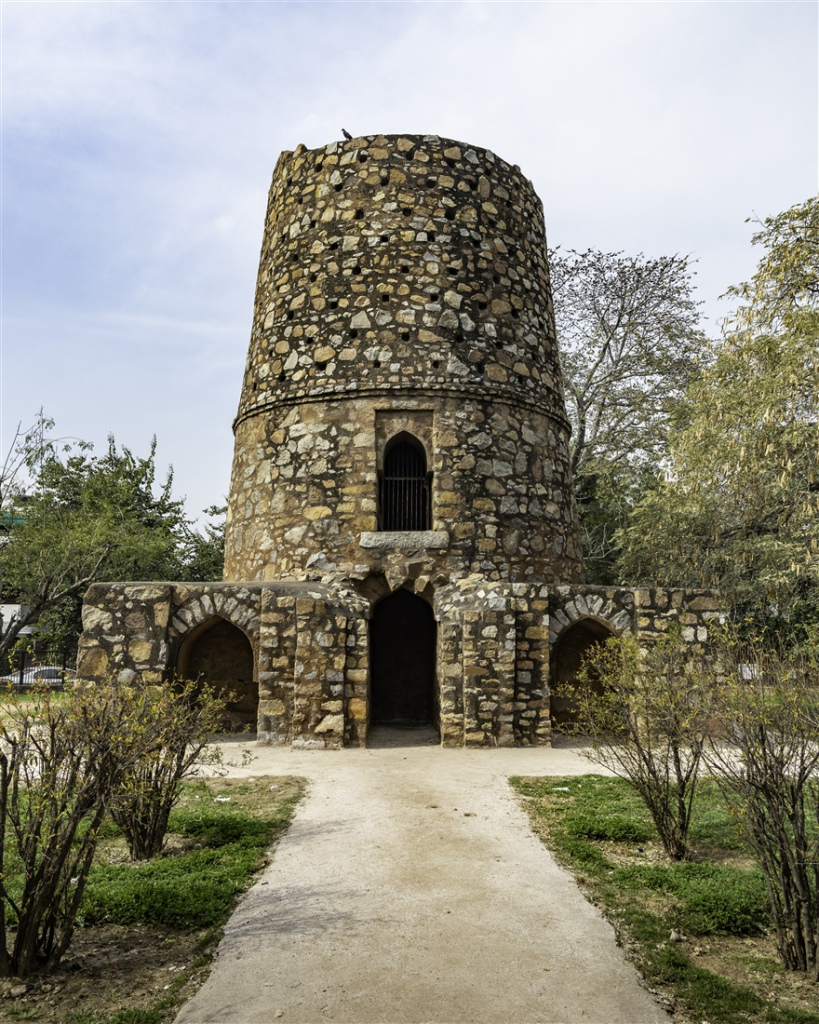
  • The third category of Kos Minar had substantial additional infrastructure such as sarais (inns), baolis (wells), mosques and other facilities to ensure the safety, security and well-being of the traveler. There is some speculation that Chor Minar in Delhi is one such example, although the passage of time may have blurred that fact and introduced folklore into the narrative for that monument. Throughout most of the world you can see this infrastructure in operation along the major roads of any given country. In the UK we call them “service stations”, which exist at fairly regular intervals along our extensive motorway network.


Chor Minar in the Hauz Khas district of Delhi. / Potentially an example of the third and most extensive type of Kos Minar

These structures not only served to assist the traveler from place to place, but were also instrumental in the day to day governance of the Mughal empire. Horses, riders and drummers were stationed at many of the Kos Minars, relaying royal messages at a much faster speed than would be possible with a single horse and rider from source to destination.

In addition to helping relay messages from place to place, Kos Minars may have also served as a hub of information themselves. Some scholars believe the plastered surface of the Minar would have been covered with information, not just about distances but also recent news and popular slogans. This method of distributing news, information and propaganda throughout an empire was not a new concept. The Roman emperor Caesar introduced a similar model where information he wanted to share with his people was posted daily on wooden boards in the Forum (center) of major cities in the Roman empire.

Today we have technology to help us communicate these things. You can post messages on someone’s “wall”, or provide information to a Facebook group (often geographically centric). For many people, social media began with the advent of Facebook, but this is a modern term that refers to a very old idea that people have been using for thousands of years.

Distribution and Preservation

The passage of time has not been kind to the Kos Minar. Of the approximately 1,000 that once existed in India there are now just 110 examples still standing, the highest concentration is in the state of Haryana, where 49 are to be found.

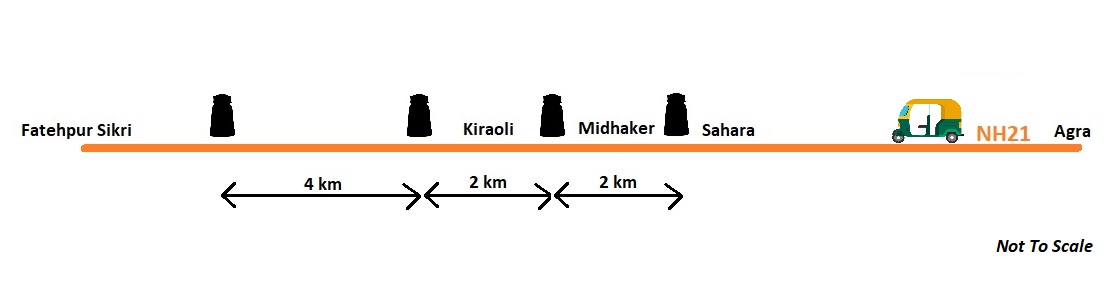
For those who are perhaps traveling to northern India to see the major tourist sites, there is a good stretch of them surviving by the side of NH21 between Agra and Fatehpur Sikri. Hopefully the map below will prove useful for that purpose (click on the image to view larger scale):

KosMinar06MPOs30jun2019

Heading away from Agra towards Fatehpur Sikri look out for the following four Kos Minars on the right-hand side of the road :

  • Kos Minar #1 : Just after the village of Sahara. This Kos Minar (ASI ref: N-UP-A33) is visible and marked on google maps, co-ordinates 27.154760, 77.886290.
  • Kos Minar #2 : This one (ASI ref: N-UP-A34) is 2 km further on just after the village of Midhaker, and is also visible on Google Maps but not marked, co-ordinates 27.151050, 77.860133.
  • Kos Minar #3 : (ASI ref: N-UP-A35) is 2 km further on towards Fatehpur Sikri after the village of Kiraoli.
  • Kos Minar #4 : The final one (ASI ref: N-UP-A36) is after a longer gap of 4 km (clearly we have lost one in middle of these last two).

Although all Kos Minars are now declared protected monuments by the ASI, they remain structures at great risk. What were once meant to show the way to others often now stand in near obscurity, isolated in zoos (Delhi), jungle, car parks, villages, slums, farmlands and even beside railway tracks. Others are being devoured by the rising skyline of rapid development in urban areas, being swallowed up and becoming almost invisible.

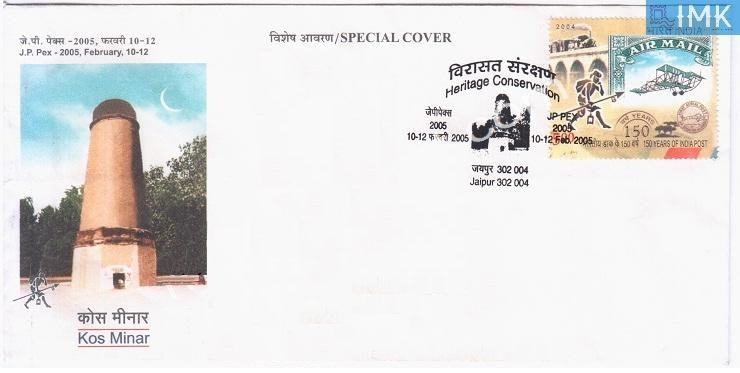
Attempts have been made to increase awareness, most recently in February 2005 when a first day cover was issued depicting a renovated Kos Minar as a symbol for Heritage Conservation.

KosMinar07MPOs30jun2019

I hope efforts continue to raise awareness of the Kos Minar, and hopefully ensure they no longer lose their way in the rapidly changing landscape on India.


Please ‘Like’ or add a comment if you enjoyed this blog post. If you’d like to be notified of any new content, just sign up by clicking the ‘Follow’ button.

If you’re interested in using any of my photography or articles please get in touch. I’m also available for any freelance work worldwide, my duffel bag is always packed ready to go…

KevinStandage1@gmail.com

source: http://www.kevinstandagephotography.wordpress.com / Kevin Standage / Home> Agra / by Kevin Standage Photography / May 20th, 2019