Not just Begum Hazrat Mahal and Rani Lakshmibai but dozens of women participated in active fighting against the British. Their stories are largely unrecorded.
Begum Hazrat Mahal
The primary cause of the Revolt was the annexation of Awadh by the British on the pretext of maladministration by Nawab Wajid Ali Shah. When the Revolt began, Begum Hazrat Mahal led her followers against the British while she ruled Awadh as regent. The longest resistance to the British was given by the Begum. She commanded the largest army of rebels in the Revolt, and rejected three offers of truce by the British, who even offered to return the kingdom to her husband under British suzerainty. She continued to fight for complete independence for as long as she could. When the British came out on top in the Revolt, she found asylum in Nepal, where she died in 1879.
Azizun Bai
But perhaps one of the most fascinating stories is that of the courtesan Azizun Bai of Kanpur. Kanpur saw fierce battles between the forces of Nana Sahib and Tatya Tope against the British.
Colonial and Indian historians have mentioned Azizun’s role during the battles of Kanpur. She had personally nothing to gain and no personal grudges, unlike many of the other women who had joined in the uprising. She was simply inspired by Nana Sahib.
Her memory is still alive among the people of Kanpur. She dressed in male attire like Lakshmibai and rode on horseback with the soldiers, armed with a brace of pistols. She was part of the procession the day the flag was raised in Kanpur to celebrate the initial victory of Nana Sahib.
Lata Singh writes in her article “Making the ‘Margin’ Visible” that Azizun was a favourite among the sepoys of the 2nd cavalry posted in Kanpur, and was particularly close to one of the soldiers, Shamsuddin. Her house was a meeting point of the sepoys. She also formed a group of women, who went around fearlessly cheering the men in arms, attended to their wounds, and distributed arms and ammunition. She made one of the gun batteries her headquarters for this work. During the entire period of the siege of Kanpur, she was with the soldiers, who she considered her friends, and she was always armed with pistols herself.
Asghari Begum
Not much is known about Asghari Begum. According to some sources, she was born in 1811, and was around 45 years old at the time of the Revolt. She is said to have played an important role in fighting the British in present day western Uttar Pradesh. She was eventually captured by the British in 1858, and supposedly burned alive.
Habiba
A woman called Habiba, supposedly from a Muslim Gujjar family, fought in several battles against the British in the Muzaffarnagar area. When the British won, she was hanged along with 11 other female rebels. She was supposedly only 25 years old at the time.
Other names of women of the Revolt are Rani Laxmibai of Jhansi, Rani Avantibai Lodhi of Ramgarh, Rani Jindan Kaur, Jhalkaribai, Uda Devi, Asha Devi, Bakhtavari, Bhagwati Devi Tyagi, Indra Kaur, Jamila Khan, Man Kaur, Rahimi, Raj Kaur, Shobha Devi, Umda. Some of these are only names, and not much else is known about them. Sadly, not much has been written about these other brave freedom fighters of 1857 and resources on them are scarce. One such resource is Shamsul Islam’s article ‘Hindu-Muslim Unity: Participation of Common People and Women in India’s First War Of Independence,’ which mentions the names of many women who are today only relegated to the pages of the 1857 records.
It is time India remembered, and saluted, these brave women.
Complied from pieces written by Bhaskar Chawla in vagabomb.com and Rana Safvi in thewire.in
source: http://www.milligazette.com / The Milli Gazette / Home> Online News> Family & Kids / Online published – October 31st, 2016 and – Print issue: October 16-31, 2016
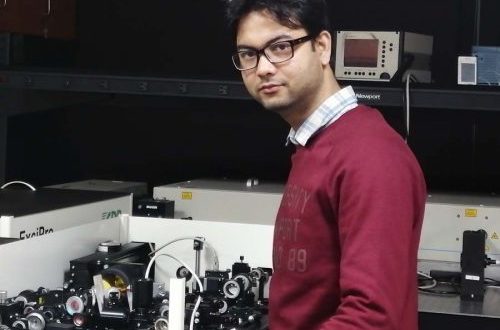
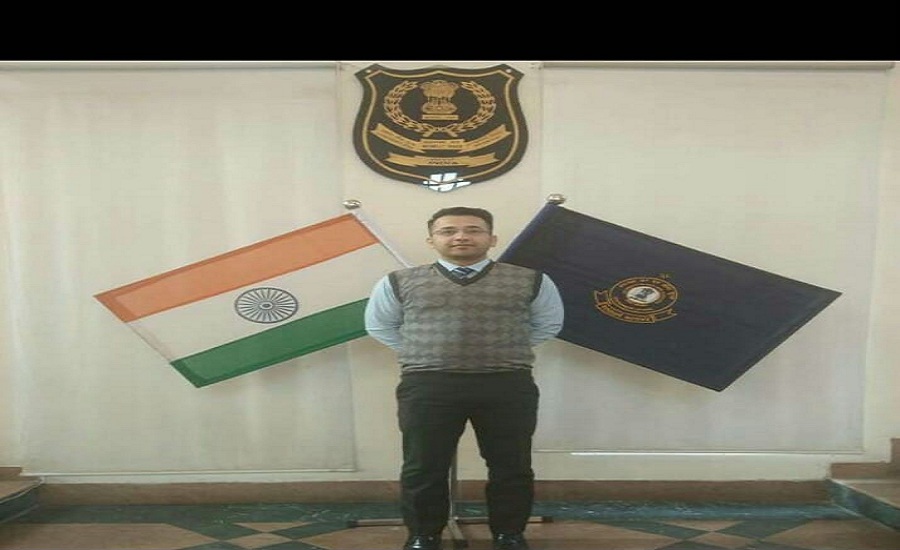
Mohammad Adnan, a research scholar in the Department of Physics at Indian Institute of Technology Delhi, has been selected to attend a high-profile annual gathering of Nobel Laureates and emerging scientists from around the world.
He is among 600 most qualified young scientists from around the globe to attend the 69th Lindau Nobel Laureate Meeting in Germany, which is dedicated to physics. Key topics are cosmology, laser physics and gravitational waves.
Adnan is currently a doctoral student under the supervision of Prof G. Vijaya Prakash, Nanophotonics Labs, Department of Physics, IIT Delhi. He was selected for his research on the emission properties of organic and inorganic materials.
Every year since 1951, Nobel Prize winners in chemistry, physics, physiology and Medicine gather at Lindau to discuss the issues of importance in their respective fields with students from around the world. Getting selected for the Lindau Nobel Laureate Meeting is recognition of a researcher’s work in his/her respective field.
According to the statement issued by the Council for the Lindau Nobel Laureate Meetings, the selected young scientists are outstanding undergraduates, PhD students and post-doctoral students under the age of 35, conducting research in the field of physics. They have successfully passed a multi-stage international selection process. About 140 science academies, universities, foundations and research-oriented companies contributed to the nominations.
Reacting to his selection, Adnan said that he is excited to attend the prestigious meeting, which will give him an opportunity to interact with so many Nobel laureates at one place.
Mohammad Adnan, who completed his schooling from Azamgarh, finished his B.Sc from Aligarh Muslim University and topped the M.Sc. examination in 2015. In February, this year, he also won the Newton-Bhabha Fellowship under which he will be visiting Cambridge University from July to November this year.
The Lindau meeting will be held from June 30 to July 5.
source: http://www.thecognate.com / The Cognate / Home> Inspiring Muslims / by Shaik Zaheer Hussain / March 20th, 2019
The Raja of Mahmudabad has been fighting to claim his inheritance since 1974, despite being branded ‘enemy’ under the Enemy Property Act.
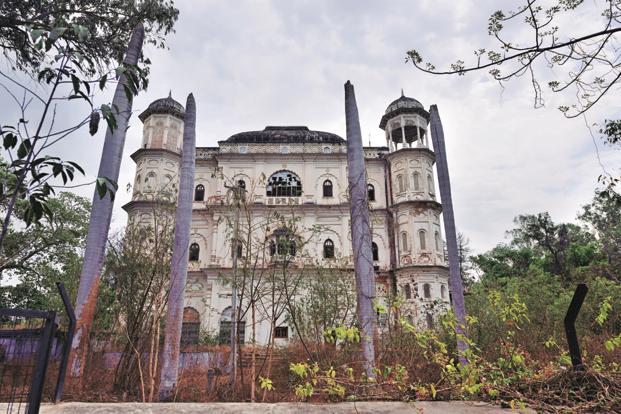
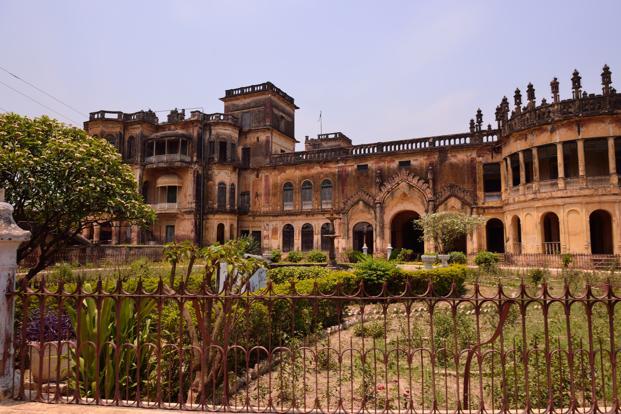
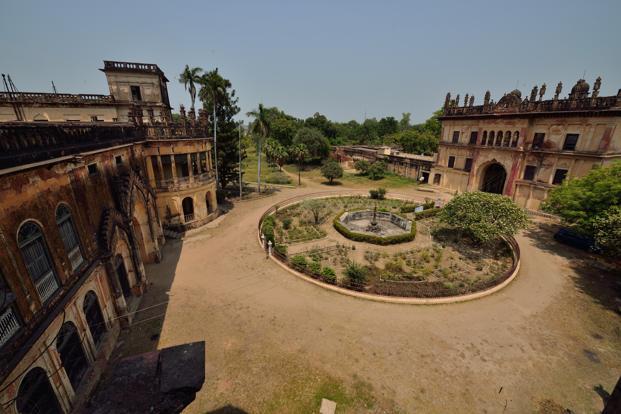
The Butler Palace in Lucknow, one of the ‘enemy properties’ of the Raja of Mahmudabad that is at stake in the court case against the Enemy Property Act. Photos: Pradeep Gaur/Mint
Mahmudabad/Lucknow/New Delhi:
At the entrance of Muqeem Manzil, the sprawling main hall of Mahmudabad Qila (fort), stands a guest table on which is perched a beautiful old world calendar bearing the Mahmudabad crest, two lions flanking a crown. The date card reads 23rd but none of my companions, local Waqf board members and the secretary to the present Raja, can tell me what the day, month or even year is. In many ways the old world calendar stuck on a particular date is an apt metaphor for the current state of the kingdom whose crest it bears.
Since 1974, Mohammad Amir Mohammad Khan, better known as the Raja of Mahmudabad, has been petitioning the government for the return of his properties but apart from a brief respite in 2005, the Raja’s heritage, spread across parts of Lucknow, Sitapur and Nainital, has been mired in litigation with him challenging the highest authority in India; the Indian government itself. It is a heritage that can be traced back to the 16th century and Emperor Akbar’s patronage, but today Khan has to struggle to not be labelled an enemy.
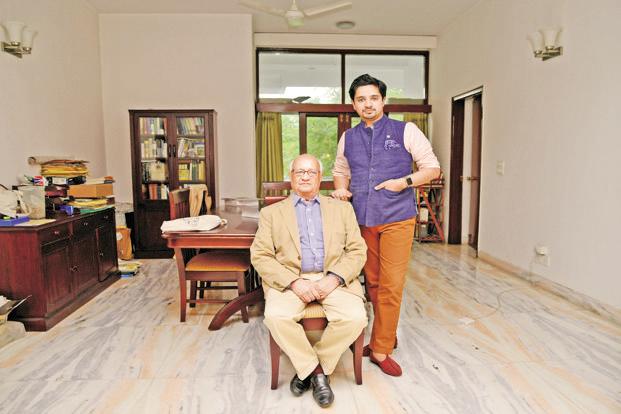
Raja Mohammad Amir Mohammad Khan with younger son Amir Khan.
In 1962 when war broke out between India and China, the government confiscated what it referred to as “enemy properties”, namely properties that belonged to a person or a country who or which was an enemy. This included not just Indian citizens of Chinese ethnicity but also those who had migrated to Pakistan during the partition. The same act was applicable during the 1965 India-Pakistan war. One of the people to migrate was a certain Mohammad Amir Ahmed Khan who had left India in 1947 but for Iraq. He eventually took Pakistani citizenship in 1957. This was the former Raja of Mahmudabad, father of Mohammad Khan, and by all accounts a close associate of Mohammed Ali Jinnah.
“I had just arrived in Cambridge to begin my undergraduate degree when our properties were taken over under the Defence of India Rules in 1965. In those days it took some time for news to travel from here to there and hence I learnt about it only a week after it had actually happened,” the Raja tells us.
An elegant man with just a hint of a British accent, the Raja peppers his conversation with quotes from classical Indian poetry to Western philosophers. Every question posed to him is an opportunity to share an anecdote from his family’s rich history which in modern times overlapped quite a bit with the birth of the nation.
He tells us how it was his uncle, his father’s younger brother, Maharaj Mohammed Amir Haider Khan, a barrister at law who practised in Bombay in the chambers of Sir Jamshedji Kanga, who explained just what the label enemy property meant, and why a huge chunk of his father’s inheritance had been taken over by the government. Interestingly both the Raja’s uncle, Haider Khan and his mother, Rani Kaniz Abid of Bilhera choose to stay on in India after partition and were Indian citizens.
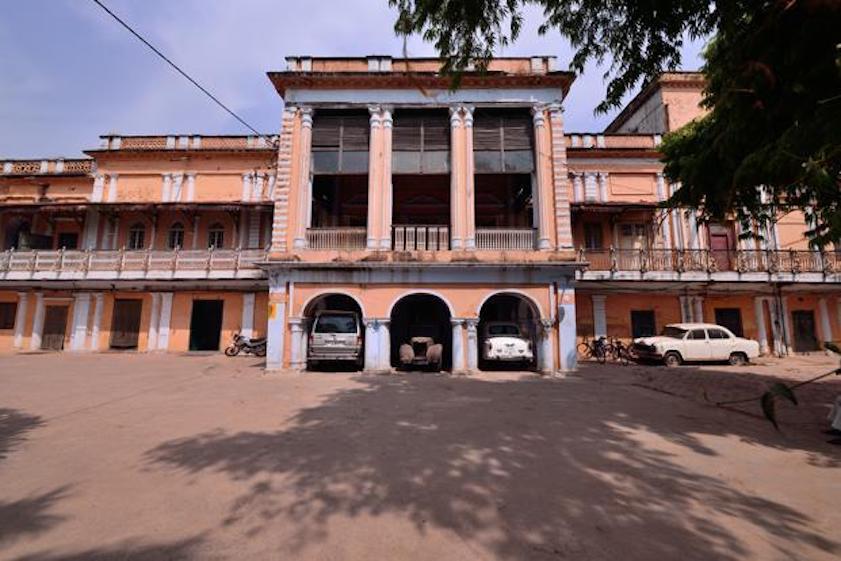
Mahmudabad Mansion in Lucknow.
The seized properties included Butler Palace, Mahmudabad Mansion, Lawrie Building and court in Lucknow’s Hazratganj. All these are prime real estate holdings, the court especially is a sprawling marketplace spread over 200,000 square feet.
Apart from these, the Mahmudabad estate’s holdings were spread over Sitapur, Nainital and of course in Mahmudabad itself. While some properties like those in commercial areas already had tenants staying, others were converted into government offices. In fact, Butler Palace situated smack bang in the middle of one of Lucknow’s toniest government colonies used to house the Indian Institute of Philosophical Research. “But it was the taking over of the Qila at Mahmudabad, the ancestral house, which is the venue of all our religious observances throughout the year for the entire community, where my mother actually lived and that was a big shock to me,” recalls the Raja.
The Qila in question is not just the family’s ancestral seat but also the religious and cultural hub of Mahmudabad, home to a large Shia community. Muharram, the first month of the Islamic calendar when the martyrdom of Imam Husain, the grandson of the Prophet, took place, is observed in all its solemnity by the community with the Qila and the shrines built by the Raja’s family as the focal venues.
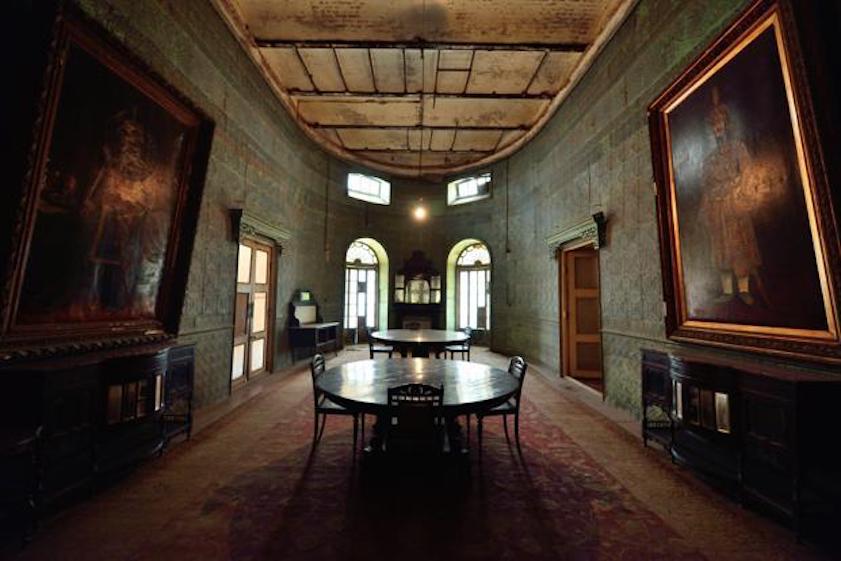
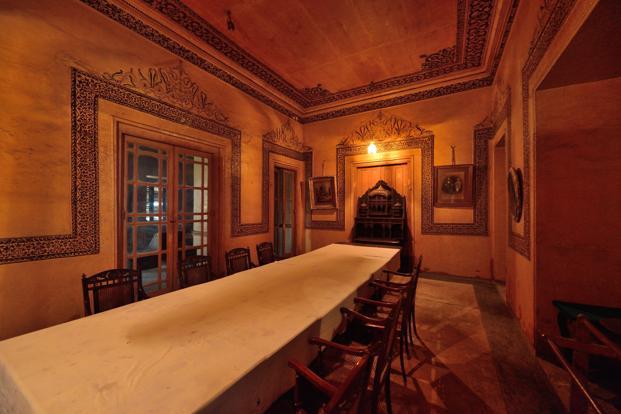
“It is a very important centre for Mahmudabad both culturally and socially. We have scholars who come from far and wide to preach, all local communities, irrespective of their faiths are involved when Muharram is observed. This has been the tradition here for years and nothing can change it,” Ali Mohammad, the Raja’s secretary, explains to us as we walk around the Qila. It is a magnificent structure with colonnaded arches where many rooms still retain their original furniture right down to the beautiful expansive Persian carpets. The Mahmudabad crest shows up everywhere even as portions of the Qila remain locked up, slowly crumbling under the weight of neglect.
The Mahmudabad Qila at Mahmudabad in Sitapur district of Uttar Pradesh.
The Qila was indeed taken over by the government in 1965 but since it is under the Waqf board, under an order of the court it was opened up again in eight months. “During those eight months, my mother, my father’s brother and his wife, who was also my mother’s sister, along with all the retainers, lived in the verandah, enduring what had come to pass. The government knew that substantial parts of the Qila are under the Waqf board and our observances have been taking place for centuries. A place like this could not be used against the disadvantage of the country,” reminisces the Raja.
It is still possible to catch a glimpse of how life would have been at the fort when the kingdom was at its peak. The number of families who live here has greatly diminished but they have all been in the service of the royal family for generations.
Muqeem Manzil, the entrance hall, leads to a library stacked with classics bound to make any book lover’s heart beat faster.
In Mahal Sarah, the ladies section of the fort, a group of women still sits everyday and painstakingly create beautiful chikan outfits under the label Qilasaaz which Vijaya Khan, Rani of Mahmudabad, oversees.
The Raja’s father died in London in 1973 where he moved soon after he took Pakistani citizenship, disillusioned as he was with his experience there.
The interiors of Mahmudabad Qila.
“He was a Shia in a Sunni country, he did not speak any local language and had no roots in the countryside. He had roots only amongst the urban immigrants,” explains the Raja who was 14 years of age when he found out that his father had taken Pakistani citizenship. “I was in school and the term was ending. When I came back, I was told my mother was very unwell. She had a seizure of a terrible sort when she had heard about my father’s citizenship. My father had never asked her to go to Pakistan. It was a foregone conclusion that she would not even countenance it.”
This is a narrative which is slightly at odds with what the current government is pushing with finance minister Arun Jaitley even insisting in a Rajya Sabha debate that the Raja’s father had “sent” his wife and son back to India to claim citizenship.
“I have documentary government proof that we were never anything other than Indians,” claims the Raja.
But why is the Raja’s nationality being discussed in Parliament? The answer to that lies in a process that started in 1974 when he came back to India from Cambridge and petitioned the government to return the properties to the family.
The Enemy Property Act, 1968, categorically defined enemy property as belonging to a citizen of a country which was an enemy and with the passing of the Raja, the properties were bequeathed to his son who was an Indian citizen. Section 18 of the 1968 Act also includes a provision of the properties being returned on a special or general order by the central government, “in such manner as may be prescribed to the owner thereof or to such other person as may be specified in the direction…”
The interiors of Mahmudabad Qila.
The then young Raja met Morarji Desai, the then prime minister, who assured him the file would be examined. The Raja also met Indira Gandhi, the matter was taken up by the Union cabinet and by the end of 1980 he was informed that the properties will be returned to him but then it was said that only 25% of the properties will be returned.
“I was asked to furnish proof that I was my father’s legal heir. A succession certificate was required. The district court in Lucknow in 1986 gave a decision in my favour,” he says.
But the 25% clause remained and it is this that took the Raja to the Bombay high court seeking a return of his property in 1997. In between, there was stint with politics as a two-time MLA from Mahmudabad from the Congress party even though his struggle for his inheritance continued.
The Bombay high court returned the Raja’s entire property to him but the government then took up the matter in Supreme Court. And in 2005, the apex court gave what became a landmark and eventually a very contentious judgement. Declaring that enemy property is only vested with the custodian and that the Raja is a bona fide citizen of the state and not an enemy as defined by the Act, all of the Raja’s properties were returned to him.
It is a day the Raja still remembers clearly because he says that is the day his pride in India and his belief in the nation was reinforced. “It made me proud. I felt an injustice had been reversed,” he recalls.
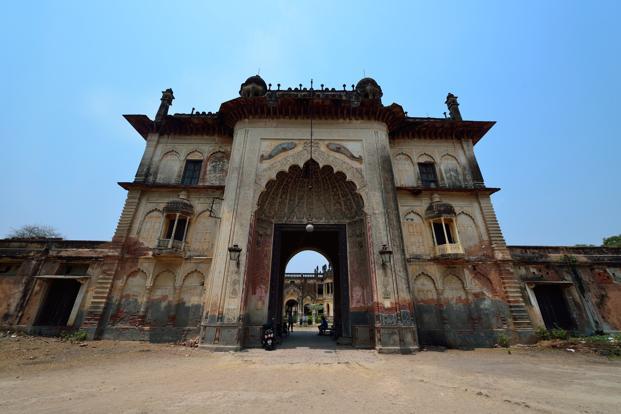
One of the gates of Mahmudabad Qila.
But this was just the beginning of another round of struggle. For while properties like the heritage hotel Metropole in Nainital and Butler Palace in Lucknow were returned to the Raja, the holdings in Lucknow’s prime commercial area were occupied by tenants, most of whom were paying a pittance. Halwasiya court, for instance, which is home to several high-end showrooms, was given out on rent by the Raja’s father on a 90-year lease for a paltry amount of Rs600. After several meetings, perusal of property records, it was decided that the lease will be honoured.
From top brands to iconic restaurants, a lot of big names in Hazratganj, just across the road from Halwasiya court, are housed in Mahmudabad properties and pay rents in the vicinity of Rs500-1,000 per month. In December of last year, the district administration decided to revise the rent of enemy properties. A Hindustan Times report cited a government official as saying that shops run out of enemy property, especially in Hazratganj, will now pay 30% of the market rate which comes to Rs330 per sq. metre. The money will go to the government.
But even as these properties were not returned, work on the others began in full swing. The restoration of Metropole Hotel was undertaken by the Raja’s wife while Butler Palace too was being reimagined in all its previous glory.
“We borrowed from banks, put in our own money, developed Waqf land…and then one fine morning in 2010 I heard that the government is issuing an ordinance that seeks to amend the Enemy Property Act,” he says. It was the Raja’s worst nightmare come true. Overnight his properties were taken back and it was 1965 for the family all over again.
The ordinance which was introduced by the United Progressive Alliance government reportedly amid fears that the Supreme Court judgement will open a Pandora’s box of claims from others across the country, sought to amend the 1968 Act. On 17 March 2017, the amendments to the Act were passed which expanded the definition of enemy from the 1968 Act to include citizens of India who are the legal heirs and successors of the enemy or enemy subject.
The Raja’s family lived in the Mahmudabad Qila before it was seized by the government and handed to the Waqf board.
The amendment also gave the government the right to sell the property, thereby implying that the owner of an enemy property was the state. In effect, all of the Raja’s properties were now the properties of the Indian government, laws of succession, Indian citizenship and the Supreme Court order notwithstanding.
“We fought 40 years for justice. We went to the government, we went to the court…we availed every recourse that is available to the citizen only to be told that it is retrospectively overturned. This is in the teeth of justice inequality,” says Khan, Rani of Mahmudabad.
The daughter of former foreign secretary Jagat Singh Mehta, Khan is a quiet woman who states her family’s disappointment and anger at the ordinance and the subsequent amendment in a definite manner. We are travelling in an ambassador from Lucknow to Mahmudabad as she tells us about the work that had started on all properties and just how cruelly they’ve been allowed to fall apart. Case in point is Butler Palace, which is almost in ruins. Grass as high as an adult’s waist impedes access to the building though it is no deterrent to the vandals who come here as evinced by the empty beer bottles one finds lying next to the gate. “To think there was a time when we would actually come here to have tea in the evening,” says Ali Mohammad, the Raja’s secretary, as he takes us for a walk around the properties in Lucknow.
Every member of the Raja’s family, be it his wife or two sons, is an independent authority on the Enemy Property Act and its amendment. The older son is a professor at Ashoka University who has written several editorials on the Act, while the younger son, who is pursuing his PhD, can discuss every amendment in the new Act threadbare.
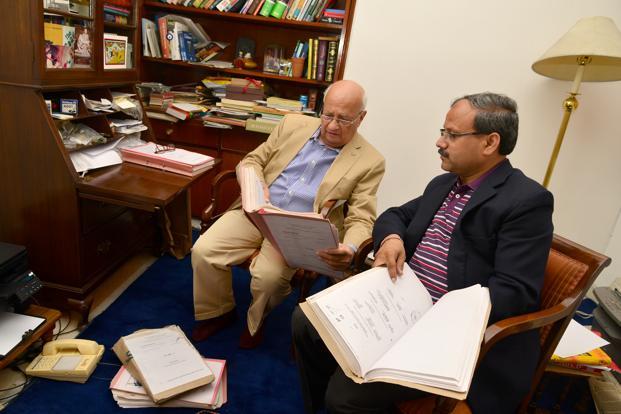
Raja Mohammad Amir Mohammad Khan (left) with the documents of his court case against the Enemy Property Act. Photo: Ramesh Pathania/Mint
There is a palpable sense of anger but what stings most is the usage of the word enemy. “Here I am, sitting next to you and I am an enemy. This Act has created deep distress, especially financial. The only thing we have is the benefit of education which enables us to realize that anger and cynicism are futile,” says Khan, Rani of Mahmudabad.
There is a palpable feeling that the ordinance and the subsequent amendments were brought in to target the family specifically though no one says so outright. In fact, the ruling party’s defence in Rajya Sabha during the debate for the passing of the bill centred mostly around the Raja’s case, with it being said that the former Raja, “who threw his weight behind the idea of a separate Muslim nation” sent his wife and son “back to become Indian citizens and claim Indian property”. Finance minister Jaitley also said that the Raja’s family had lost the title to the properties in 1965 so the question of inheriting these does not arise.
The Raja currently has a writ petition in the Supreme Court but the fate of it remains up in the air. Niraj Gupta, his advocate, worries about the powers vested in the custodian given that the office has come under the radar for some questionable deals. The former custodian of enemy property Dinesh Singh, an IRS officer, was recommended for criminal action by the Central Bureau of Investigation for helping a developer acquire an enemy property.
There have been several cases against enemy properties in Indian courts with few settlements being in the favour of the custodian of enemy property, as neither the rights of the legal heirs of the enemy or the duties of the custodian were ever clearly defined.
However, none of these cases have been as high-profile as that of the Raja of Mahmudabad’s given his family legacy, the association with Jinnah and the sheer magnitude of the real estate at stake. The amendment to the Act, however, removes all ambiguity vis-à-vis ownership while attempting to create a different class of citizens, the children of enemies. This is a clear violation of Article 14 of the Constitution which guarantees the right to equality and it is perhaps on this ground that the amendment can be challenged.
Till then the Raja, who in William Dalrymple’s Age of Kali, had said visiting Mahmudabad brings him “terrible bouts of gloom”, sits in his well-appointed living room in New Delhi waiting to see what new curve ball life throws at him.
“However, I will always be able to say that I did get justice in this country,” he concludes. The semblance of it, in the form of the 2005 Supreme Court judgement is perhaps the only victory he can savour from the fight that has taken over his entire life.
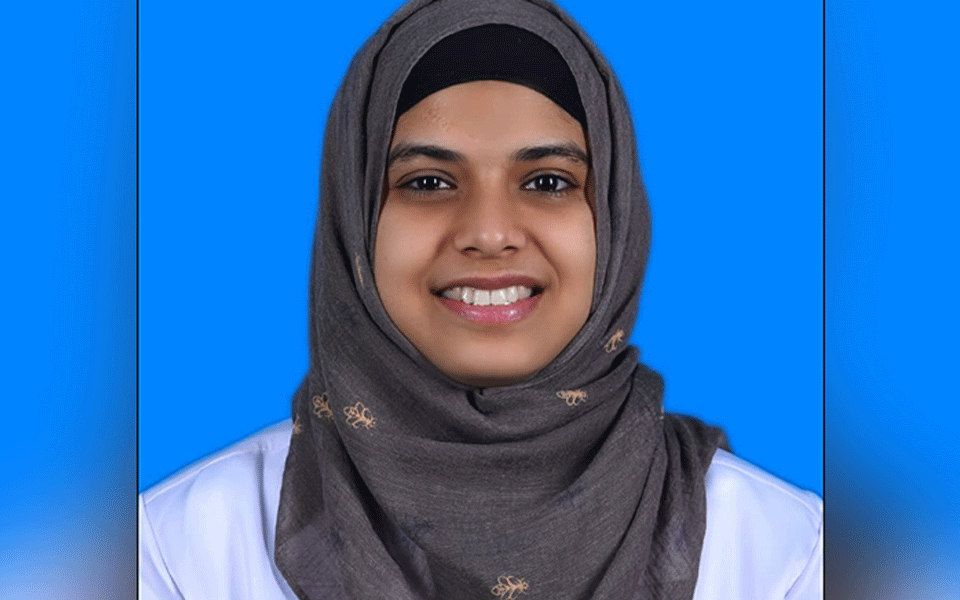
Dr. Salma Suhana, who is is currently pursuing Superspeciality Neurology at S S Institute of Medical Sciences and Research Centre, Davangere, has won the American Academy of Neurology’s prestigious 2019 International Scholarship Award.
She has been awarded the scholarship in recognition of her study on Cerebral Venous Thrombosis.
A native of Mangalore, Dr Salma completed her MBBS at Fr Muller Medical College and Hospital in Mangalore and has won two gold medals from the Rajiv Gandhi University of Health Sciences. She completed her MD at Kempegowda Institute of Medical Sciences in Bengaluru.
American Academy (AAN) of Neurology has invited her to participate in the annual meeting of international neurologists to be held in Philadelphia in the US in May 2019. She is one among 30 selected recipients of the prestigious honour from across the world.
source: http://www.thecognate.com / The Cognate / Home> Inspiring Muslims / by Shaik Zakeer Hussain / January 11th, 2019
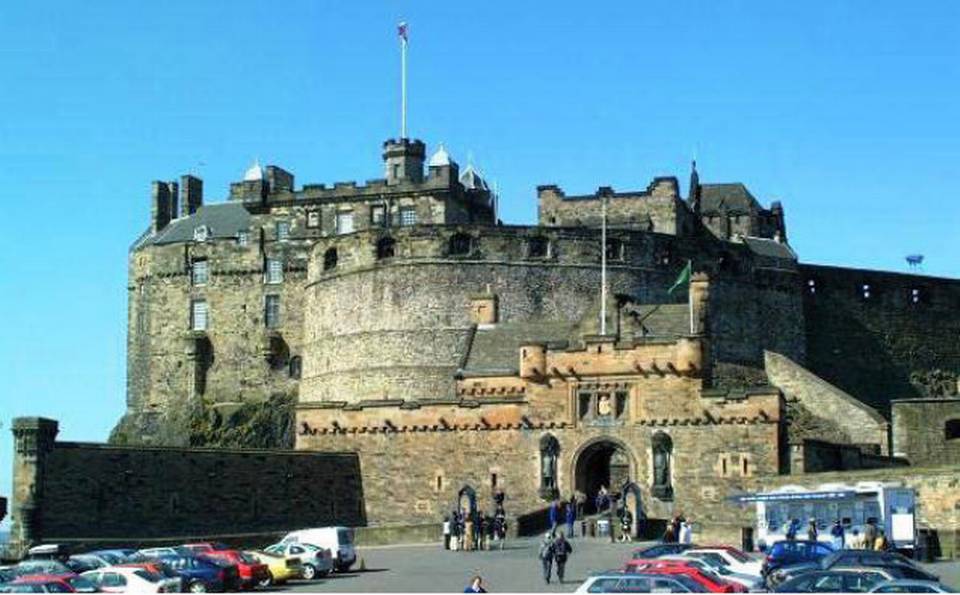
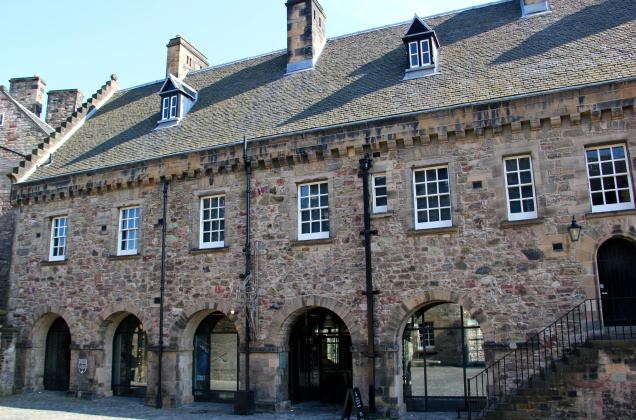
The view of the 12th century edifice at Edinburgh castle that houses the National War Museum.
The legend of Tipu Sultan is still alive in far away Scotland
It is an irony that Tipu sultan, the ‘Tiger of Mysore’, whose birth anniversary celebrations in India became a contentious issue recently, in Scotland whose soldiers and commanders fought for the dissemination of this great warrior king, the only Indian monarch to have died on the battlefield fighting the British, is cherished and commemorated in song, dance, drama, opera, in novel and in paintings. A wealth of personal effects and curiosities of Tipu Sultan have found way to numerous art galleries and museums in Scotland, particularly in its capital Edinburgh.
The participation of the Scots in the affairs of the East India Company began immediately after the unification of Scotland with England through an Act of Union in 1707. Since then Scottish people began coming to India as soldiers, generals, writers, administrators, traders, merchants and missionaries. But they excelled in their service as military generals and commanders. A separate Regiment of foot, the ‘75 Highlanders’ 75th .Highlanders was raised in Scotland to deal with Tipu Sultan. Scottish generals like Sir Hector Munro, Baillie, Beatson, Fraser, Gordon, Dunlop and others participated in the military operations against Tipu. The Scots, more than the English were in the forefront of the British forces in almost all the Mysore wars fought between 1760 and 1799.
After Tipu was finally dismembered by the British under the command of General Arthur Wellesley, the future Duke of Wellington, the images of Tipu Sultan as well as Srirangapatnam proliferated in Britain. No other Indian ruler, against whom the British fought and won, captured the imagination of the average Britisher at home, as much as that of Tipu Sultan. There were tales of mythical proportions in circulation about his valour, reckless energy and merciless acts of tortures meted to the captured British soldiers. It is said that British housewives used to threaten their weeping babies with the ‘arrival of Tipu’ to silence them
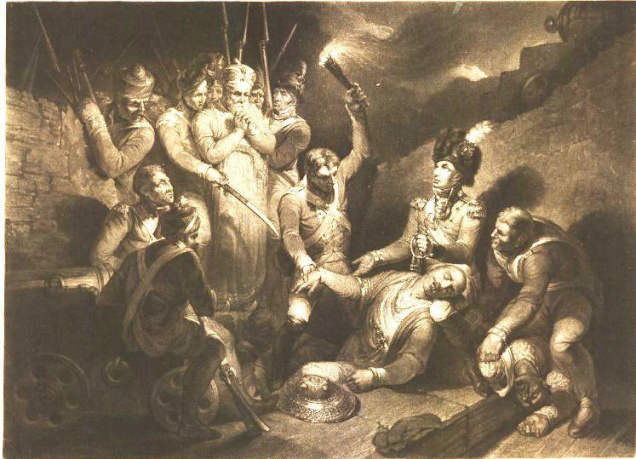
The images of Tipu Sultan and his capital, Srirangapatnam became subjects for paintings and art sketches throughout Britain. When Ker Porter’s Panorama a single large painting of Tipu Sultan was displayed in Edinburgh, there was euphoria among the Scots to have a glimpse of it. The celebrated British painters J.M.W. Turner and J.S. Cotman painted scenes of Srirangapatnam and other places in Mysore besides the portraits of Tipu. Sir David Willkie, the famous painter of the day was commissioned by the widow of Sir David Baird, and his poignant painting Discovering the body of Tipu Sahib on 4 May, 1799, was exhibited in 1838 in the Royal Academy of Arts in London. The Scottish General David Baird had spent several years in Srirangapatnam as a prisoner of Tipu before avenging in the final assault on Tipu.
Alexander Allen an artist of great repute travelled to India to personally see the hill forts in Mysore kingdom before he produced captivating sketches. William Darnell and Beckford also produced several sketches that survive even today. Holmes’ Select Views of Mysore, and Hunter’s Picturesque Scenery in the Kingdom of Mysore also evoked great enthusiasm in Britain. The Mysore wars offered exciting subjects and artists who never even visited India responded to the popular appeal of the Tiger of Mysore. As a result of such prolific paintings, the image of Tipu was so much etched in the collective memory of the Britishers that decades later, when Raja Ram Mohan Roy visited England, he had to confront hostile crowds as he was mistaken to be a descendant of Tipu Sultan. The head gear he wore was similar to the huge turban Tipu wore.
Returning soldiers of Scotland provided Sir Walter Scott with anecdotes for his novels on India. Several dramas and stage plays depicting Tipu and his fall were written and enacted at the Royal Corbug theatre in Edinburgh. Events at Srirangapatnam also appear in the writings of the novelists like Charles Dickens, Wilkes Collins and Jules Verne.
The remnants of Tipu Sultan’s dismantled throne, his numerous swords, daggers, bejewelled sword-belts, hukkas, ivory caskets, and several other artefacts were displayed in Glasgow and Edinburgh besides London.
Tiger in Museum:
In 1999, National Museum of Scotland, Edinburgh, as a part of the bi-centennial celebrations of Tipu’s death, held a special exhibition and decided to make Tipu’s Toy Tiger as a special exhibit along with several other Tipu’s memorabilia. But as the antique Toy Tiger was advised by exerts not to be moved from Victoria & Albert museum, fearing damage in the transit, a replica of it was made for the occasion.
The Toy Tiger is an awesome life size wooden toy seen devouring a European in military uniform. This impressive toy has cast a spell over generations of admirers since 1808 when it was first displayed in the Indian section of Kensington Museum now called Victoria & Albert Museum. The Toy in its body has a mechanical pipe organ hidden and by turning a handle, creates wailing shrieks and a loud roar. The design of this Toy Tiger is said to have been inspired by the death of the son of the Scottish General, Sir Hector Munro, a bête Notre of Tipu Sultan.
Tipu’s Memories at Edinburgh Castle:
The most significant of Tipu’s memories lay at the imposing castle in Edinburgh, Scotland’s capital. This historical castle, perched on a hillock with a commanding site, is a national symbol of Scotland. Inside the castle is located ‘National War Museum’in which the ‘the Battle Honors” of the Scottish Regiments are displayed. Here are seen numerous ornamental swords belonging to the several prominent Scottish Generals who saw action in the Mysore wars. Swords presented to Generals as souvenirs and medals are also on display What is surprising is the words, ‘Carnatic’, ‘Mysore’, and ‘Srirangapatnam’ carved in stone, are seen on the wall of this Museum indicating the importance the Scots bestowed on their combats during the wars against Tipu.
At the Edinburgh International Festival (EIF), held annually in August with several programmes of music, theatre, opera and dance, Tipu’s memories also come alive . The closing ceremony of the EIF held at the Castle is marked by spectacular display of fireworks. The scene is suddenly shrouded in darkness and bellowing smoke as rockets and explosives presents dramatic images of a big hill-fort under siege. This is an imitation of the Mysore wars when Scottish soldiers in India were familiar with such sights when deadly fires were showered on them from the impregnable forts like Nandidurg, Savandurg and Ootradurg in Tipu’s kingdom. It is said that four tons of explosives are used that evening for the celebration of such fireworks. Tipu Sultan, the ‘Tiger of Mysore’ must have died two centuries ago, but his enduring legend continues to be celebrated in far away Scotland with genuine nostalgia.
source: http://www.thehindu.com / The Hindu / Home> Friday Review / by K.S.S. Seshan / Hyderabad – March 17th, 2016
Athar Sahib was one of the best teachers ever produced by Aligarh. A man of simple tastes and habits, almost rustic in a way, he had a knack to deliver lectures which none could ever forget! Although trained as a historian, there was an expert lawyer hidden within him. He would build up the arguments as a lawyer would build up a case, slowly but surely, leaving you mesmerised and fully convinced and satisfied. There was no way that a contrary argument would germinate in your mind till his words would keep on resonating in your skull – they still do in my head even decades after having heard him Lecture! In fact there were moments, when as students, I would prefer him over that doyen of historians, Irfan Habib, who in our understanding during those days was hard to follow and understand!
I was quite fortunate to have come in his contact much before I had ever studied history: in school I, like others of my age, was studying Science. To study history was infra dig and only those who could not cope with science used to offer it. Athar chacha, as I knew him then as a school kid in standard IV or V, was a stocky sherwani clad serious – in fact, severe looking – visitor who every year would bring to Abba (my father) an earthen pot full of rasāwal, and sometimes even gurand ras. He we were informed by Abba, was a raīs from Pilakhna, a qasba near Aligarh. I knew no more about him, nor was I ever interested.
And then when on the insistence of Sir Ahmad (the father of Professor Tariq Ahmad), and the recommendations of Professor Zillur Rahman (son in law of Zakir Husain, and Professor of Physics) I took admission in BA (Hons) History and went to a class where Medieval India was taught, I found him to be the teacher (the others were Irfan Habib, Iqtidar Alam Khan and SP Gupta). But now he was wearing a white shirt over very loose pants, and horror of horrors, he refused to acknowledge that he ever knew me!
He would walk in dot on time, rain or scorching heat, order the door to be closed and stop the Lecture the moment bell was sounded: not a second more, not a second less. His timings such that you may set the clock! He would never smile, and had this habit of citing “Truly Yours”. [Once when we were in MA, one of my classmate who later was to become a daughter in law of Professor Nizami, thought that “Truly Yours” was a proper name of some historian! And she did enquire about him from Athar Sahib: and that was the only moment I found his mask fall!]
Each and every word he would utter in the class would sink in and till date when I teach, those words and sentences come back to me as if they were uttered yesterday.
He first taught us Delhi Sultanate. We named him Balban! And then in MA he taught us a course covering Jahangir to Aurangzeb. His dealing with Aurangzeb was spectacular: he would grow with him, age with him, the victory parts were taught in a manner as if Athar Sahib himself had won, and the defeats were dealt equally. When he taught Shivaji, you could make out the contempt which he had for him! His most elaborate lectures however were on the religious policy.
Although he had a very hard exterior, he was very soft inside. There is an episode which I remember. When I was going to join research under Irfan Sahib, the latter warned me not to sit for civil services but only do research. Athar Sahib remained quite. But later he called me to his room, locked the door, and then advised me not to listen to Irfan Sahib on this point and prepare for IAS!
Once in an exam he had asked questions which I and my best friend of that time, Amjad Afridi, had not prepared. Both of us attempted a question which had not been asked. Athar Sahib got confused and awarded the highest marks to us!
He wrote a large number of pathbreaking research papers, quite a few of them unparalleled till date. However I find his paper on Akbar and Islam and that on Passing of an empire outstanding. Most of his pathbreaking papers have- been posthumously been printed in a book form by the endeavours of Irfan Habib.
pix 02 – Book Cover
Entitled Mughal India Studies in Polity, Ideas, Society and Culture, this work has a preface by Irfan Sahib.
During his lifetime he had two important books published. His The Mughal Nobility Under Aurangzeb was published in 1966
Junaid Ahmed, a 27-year-old alumnus of the prestigious Aligarh Muslim University who completed his engineering from Sharda University
New Delhi :
Junaid Ahmed, a 27-year-old alumnus of the prestigious Aligarh Muslim University who completed his engineering from Sharda University, came third in the civil services final examination 2018, the results of which were declared on Friday evening.
Ahmed’s choice of subject was geography and he took guidance from the Zakat Foundation, an NGO working for community upliftment. Ahmed has been preparing for the exams since 2013.
“I have seen failure before and today, I am completely overwhelmed. This sense of achievement has come with the burden of responsibility,” Ahmed was quoted by News18 as saying. “And I now have to work for the people and make sure the schemes of the government reach beneficiaries.”
Ahmed’s father is a lawyer and his mother a homemaker. He studied in St Mary’s School in Bijnore district’s Nagina town in Uttar Pradesh. He has two sisters and a younger brother.
“I come from a middle-class background – every parent in India wants their child to become an IAS officer, my parents were no different. I was not so keen, but with time I realised I can do it and then prepared myself for it,” he said.
Ahmed said he would like to work towards ensuring that more people from his community appear for the exams. “Many Muslims don’t want to sit for these exams, they think the test would be biased against them,” he said. “Most importantly, their socio-economic condition is not good. I would do my best to inspire more of them and keep them motivated to sit for the exams. The only thing that matters is hard work and focus.”
Zafar Mahmood, founder of Zakat Foundation of India, said, “Junaid joined us at later levels of the UPSC – for the mains. His victory is good news for the efforts of community members – who laboured 10 years ago to make Muslims sit for the exams.”
“If we start looking from independence, until 10 years ago the community’s participation was only 2.5%. We made efforts and started getting results over the last two to three years and held civil services orientation programmes, among other things,” he said. “Now, we see a 5% jump in representation. The participation in exams has improved and so has the quality of aspirants.”
Kanishak Kataria, a B.Tech from IIT Bombay, topped the exam, followed by Akshat Jain, an engineering graduate from IIT Guwahati. Srushti Jayant Deshmukh secured the top spot among women. The top 25 candidates comprise 15 men and 10 women.
source: http://www.caravandaily.com / Caravan / Home> Editor’s Pick> India> Indian Muslim / by Caravan News / April 07th, 2019
Stories of kings and queens fascinate all children and we were no different.
We never grew tired of hearing Amma tell us stories about the Kashi Naresh (king of Banares) and her life in Ramnagar, in present-day Varanasi. Stories of how my seven-year-old aunt was on the lead elephant in the Ramlila celebrations, because the Kashi Naresh was studying in Mayo College; stories of her roza kushai (celebrations when a child fasts for the first time) which had a 16-year-old Bismillah Khan playing the shehnai; stories of my Nani, Begum Hameeda Khatoon attending state dinners in chiffon saris and brocade blouses with matching brocade shoes and a dash of Tangee, her favourite lipstick. We heard of Khan Bahadur Syed Ali Zamin, MBE, our teetotaller Nana raising the toast to the very senior British dignitaries who came with a glass of water! We heard of Nana ensuring that there was a constant supply of Ganga Jal for the young Kashi Naresh studying in Mayo College, since he could only use that pure water. We often heard stories from my grandmother of the jewels in the state treasury; Nana must have described the jewels to her—the keys to the treasury were kept with him and he discharged his duties with utmost integrity and honesty. Another story, and my favourite, was that Nana personally chose the piece of brocade and silk, which went from Benares as Queen Elizabeth’s wedding present.
The rulers of Benares appointed many of their dewans and other officers from the Syed family of Kajgaon, near Jaunpur… Benares State was the biggest employer of our family!
Our childhood was shaped by these stories of a land where the Ganges flowed and the Ganga Jamuni Tehzeeb, as our syncretic culture is referred to, flourished.
A land where there was a Brahmin king and a Muslim dewan!
The rulers of Benares appointed many of their dewans and other officers from the Syed family of Kajgaon, near Jaunpur. In fact, as my aunt says, back then Benares State was the biggest employer of our family!
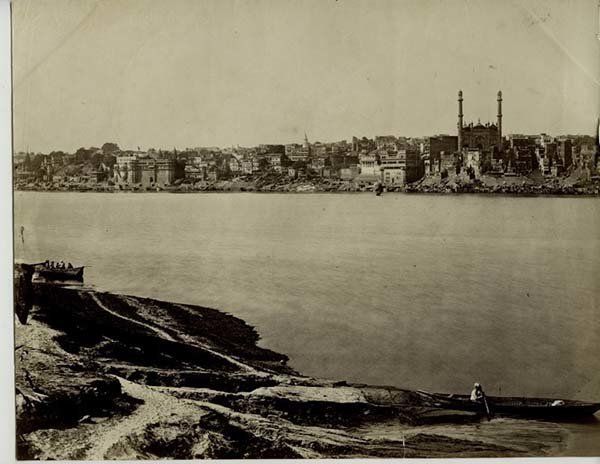
A VIEW OF THE GHATS OF BANARAS FROM RAMNAGAR, IN A PHOTO BY RUST, C.1880’S
Ramnagar, which is 18km from Varanasi, was the capital of the erstwhile princely state under the British Raj. Its history dates back to the ancient Kingdom of Kashi and its Brahmin rulers are said to be the incarnation of Shiva.
Mansa Ram Singh founded the Benares estate and in 1740 his son Balwant Singh became its first Raja. It became a princely state in 1911 under the British government.
Maharaja Ishwari Prasad Narayan Singh succeeded his uncle and ruled till his death in 1889.
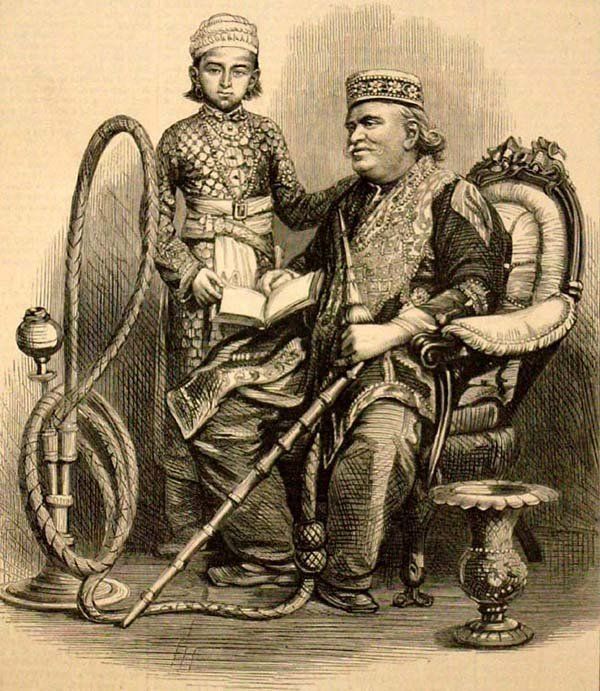
WWW.COLUMBIA.EDU “The Maharajah of Benares,” from the Illustrated London News, 1876
A family tradition begins
The first dewan from our family was my mother’s great-great-grandfather, Maulana Syed Gulshan Ali, a qualified mujtahid from Najaf in Iraq came in Maharaja Ishwari Prasad Narayan Singh’s reign.
AHMED ZAMIN / Maulana Syed Gulshan Ali
He advised and supported the king’s decision to not get involved in the 1857 Uprising and as chief minister and dewan he was instrumental in getting the estate, which had been confiscated by the British, restored to the Maharaja. According to the family lore, he had the idea of going to England to appeal to the Privy Council for the return of the confiscated land. He took three lakh rupees from the Maharaja and proceeded to the head office of the East India Company in Calcutta (now Kolkata). On the way, he met a British officer associated with Fort William in Calcutta where the head office of the East India Company was located. When the officer discovered that Maulana was a scholar he offered to help him in return for Urdu and Persian lessons. Upon finding out Maulana’s concern, he advised him that there was no need to go to England because the case could be pleaded from India. Maulana stayed in Calcutta for about a year teaching Urdu and Persian to the British officer
His detractors who had spread the rumours that Maulana sahib had decamped with the money were proved wrong when he returned and after deducting his nominal expenses handed over the remaining amount to the Maharaja.
Vignettes to cherish
My cousin Syed Naqi Hasan’s yet-to-be-published memoirs, My Nostalgic Journey, is a storehouse of information and family stories.
His uncle Khan Bahadur Syed Ahmed Hasan CIE was dewan and his grandfather, Syed Ali Sagheer (My Nana’s brother) was a collector in Gyanpur, one of the districts of Benares state. He heard these anecdotes from both our grandfathers and his uncle. Those were the days when elders sat in the courtyard surrounded by the youngsters and told them stories and anecdotes to ensure that family legacies, cultural traditions were carried on. Today’s TV, computers and smart phone have taken this away from us. Oral history will soon die a natural death.
Maharaja Ishwari Parasad Narayan Singh valued Maulana Gulshan Ali’s advice and loyalty so much that when Maulana died, he “wept bitterly and said, ‘Today my father has died.'”
He writes that Maharaja Ishwari Parasad Narayan Singh valued Maulana Gulshan Ali’s advice and loyalty so much that when Maulana died, “Maharaja Ishwari Parsad wept bitterly and said, ‘Today my father has died.'”
Later Maulana Gulshan Ali’s son Syed Ali Mohammad served as Naib Dewan.
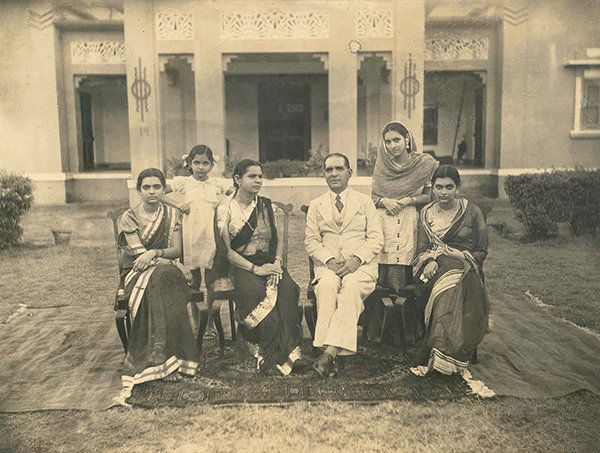
AHMED ZAMIN / My grandparents, mother and aunts in their Ramnagar house
My aunt reminisces that amongst the many privileges granted to Maulana and his family by the Maharaja, the most important one was that until the merger of Benares state with India, two white horses were kept in the royal capital of Ramnagar at the State’s expense, and were sent to Kajgaon to be used as Zuljanah (representation of Imam Hussain’s horse) in the Muharram processions.
My elders kept our family’s oral history intact and I share some here.
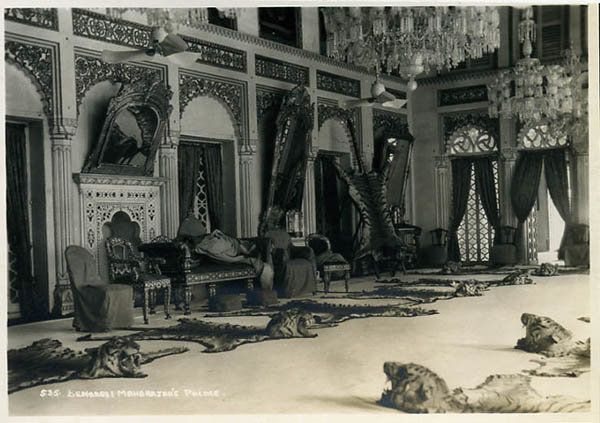
HTTP://WWW.COLUMBIA.EDU/ “Benares, Maharaja’s Palace,” a professional photo, 1930’s.
Maulana Syed Gulshan Ali’s extraordinary presence of mind and good judgment during the annexation of Awadh by the East India Company in 1856 is still talked about in our family. When the last Nawab of Awadh, Wajid Ali Shah, was deposed and exiled to Calcutta he halted on his way at Benares. It was customary to offer a nazrana usually in the form of gold coins to a visiting king, which the king sometimes doubled and returned to the giver. The dilemma was that not offering a nazrana meant ignoring the king. Offering gold coins was inappropriate because the king was in no position to double it. Maulana thought of presenting the king with tasbih and sajdigah made of khaak e pak or the dust of Karbala where Imam Hussain was martyred, which the Shias revere. It is priceless in terms of its symbolic value and yet not much in monetary terms, which would make giving something in return unnecessary. What could be a better nazrana for a Shia nawab!
His son Maharaja Prabhu Narayan Singh succeeded Maharaja Ishwari Prasad Narayan Singh in 1889 and was the first maharaja of the newly created princely state of Benares in 1911. He died in 1931, and was succeeded by his only son, Aditya Narayan Singh.
Maharaja Aditya Narayan Singh reigned for a very short time.
AHMED ZAMIN / My grandfather Khan Bahadur Syed Ali Zamin
My grandfather, Khan Bahadur Syed Ali Zamin, MBE joined as Chief Secretary of the State in 1939 and the Maharaja died shortly after that.
As the Maharaja was childless he adopted a distant cousin to succeed him. Vibhuti Narayan Singh, the last Maharaja of Benares, was a minor when Maharaja Aditya Narayan Singh died.
Nana [ensured] that there was a constant supply of Ganga Jal for the young Kashi Naresh studying in Mayo College, since he could only use that pure water.
In My Nostalgic Journey, my cousin Syed Naqi Hasan writes that on his deathbed Maharaja Aditya Narayan Singh summoned my grandfather and his adopted son and placed the hand of his son in Nana’s hand and said, “Syed Sahib, I am placing my son under your protection. Please protect him as well as the throne for him.” There were many claimants to the throne. Against all odds, Nana had Vibhuti Narayan Singh perform the funeral rites as required by the Hindu religion to establish his claim to the throne.
As Maharaj Kumar Vibhuti Narayan Singh, a minor, became the maharaja under regency Council of Administration was formed and C.R. Peters Esq was appointed its President and Nana as the Chief Minister was next in line of authority. Peters had to return to England in 1944 after a sudden illness, and Nana was named to act as President of the Council of Administration.
As the President of the Benares State, Nana was responsible not only for the well being of the state but also of his young charge.
Such was the level of comfort of the Maharaja Vibhuti Narayan Singh with our families that he maintained a friendship with the younger generation and decades later in1979, he stayed in the house of my cousin whose husband S.K.R. Zaidi who was the Chief Officer of Reserve Bank of India in Kanpur, rather than a hotel where he wasn’t sure of the purity of the environment. His young son was very keen on cricket and there was a test match between India and Australia in Green Park, Kanpur.
Their children Atiya and Abid Zaidi have fond memories of his charming manners and how the Maharaja floored the servants with his courtesies.
The Maharaja came with his full entourage and was given the lower floor of their huge house, with a kitchen where he could be comfortable.
Maharaja Vibhuti Narayan Singh ascended the throne, before reaching the full legal age on 11 July, 1947, approximately four months short of his 20th birthday. His ascension was speeded up in view of India’s imminent Independence. Charles Allen and Sharada Dwivedi in their book, Lives of the Indian Princes , quote the young Maharaja Vibhuti Narayan Singh as saying that he wanted to finish his education but was told by the political advisor to the Viceroy, Conrad Corfield, “If you waste a day you may not become a Maharaja.” He goes on to add that that the people of Benares were kind to him and how my grandfather, Syed Ali Zamin, who was presiding over the meeting of the Cabinet of Ministers stepped aside and asked him to preside over the meeting so that he “could play a leading part.”
He succeeded to the throne in July 1947 after becoming an adult, a month before India’s independence. The Council of Administration was dissolved after his ascension and the position of President was abolished. Nana became the Dewan.
End of an era
Maharaja Vibuti Narayan Singh signed the Instrument of Accession to India in Oct 1947, and Benares State was merged with the United Provinces now the Indian state of Uttar Pradesh.
In 1948 my grandfather suffered a heart attack while addressing a meeting in Ramnagar, the capital of Benares State, and had to be carried home on a stretcher. He took voluntary retirement from his position as Dewan because of ill health but after helping the young Maharaja to ensure a smooth merger of the state with India.
The last Muslim Dewan of Benares state passed away on 1 November, 1955 a few days before his birthday on the 5th of November.
The Muslim Dewans of Banares
source: http://www.huffingtonpost.in / HuffPost / Home> The Blog / by Rana Safvi / October 27th, 2016
State Sen. Mujtaba Mohammed (D) says Asian Americans should look to the example of African Americans and the civil rights movement.
ILLUSTRATION: DAMON DAHLEN/HUFFPOST; PHOTOS: MUJTABA MOHAMMED / “The African American community is a huge example of inspiration for people of color, for immigrants, to stake your claim for this country, that your voice matters,” says North Carolina state Sen. Mujtaba Mohammed (D).
Every week during May’s Asian Pacific American Heritage Month , HuffPost’s #UpNext Series will highlight Asian Americans who are on the rise in public service. This is part one.
Not every elected official jokes about disappointing their parents “because I ended up becoming a lawyer” or shares what they’ve learned from “Asian uncles,” but North Carolina state Sen. Mujtaba Mohammed does.
“Every Asian uncle talks about how they came with, like, $20 in their wallet,” the Democratic lawmaker told HuffPost, referring to how children of immigrants often grow up hearing their parents and family friends recount the hardships of adapting to the U.S. “My dad has that same stereotypical story that most Asian parents always tell their kids.”
At 33, Mohammed is North Carolina’s youngest state senator, representing parts of Charlotte in a region often seen as a monolith, yet home to the fastest growing Asian-American population in the U.S.
Elected last year after ousting an incumbent in the Democratic primary, Mohammed — like many of the record number of people of color who ran for office in 2018 — saw the election of President Donald Trump as “a huge motivating factor,” he said.
“Donald Trump came along in 2016, and I felt like I needed to step up and do more for our community. A lot of folks, at least in my age group and other kids I grew up around, they ended up becoming doctors and engineers. Political activism is something that’s not very important, unfortunately, sometimes in our community,” he said.
Born in Ohio to parents from Hyderabad, India, Mohammed grew up in Greenville, South Carolina, and Charlotte. His dad worked in retail while his mom raised him and his siblings.
Though his parents pushed him toward medicine and engineering, seeing those fields as markers of success, Mohammed credits their focus on family and community as inspiration for his career in public service.
He noted that in many Asian cultures, “it’s never about you, as opposed to the American individualism that we have,” he said. “It’s always about a team, it’s always about your family. You oftentimes have to make your own personal sacrifices for the good of the family. And that’s kind of how I’ve always, at least as an adult, tried to live my life. It’s part of the reason why I decided to run for office.”
Initially a biology major at the University of North Carolina at Charlotte, Mohammed switched to history and political science before going on to law school.
In diverging from the career paths of many of his doctor/engineer peers, he also saw similarities, envisioning “lawyers as social engineers,” he said. “You get to use the Constitution to protect some of the most vulnerable communities.”
Get involved, because nobody else is going to do it, because there’s not that many of us.”State Sen. Mujtaba Mohammed (D-N.C.)
Mohammed became an attorney at the Council for Children’s Rights in Charlotte, which provides legal services and representation for children, before working as an assistant public defender in Mecklenburg County’s Public Defender’s Office.
He served on the boards of some community nonprofits and as the vice chair of the Mecklenburg County Democratic Party, but he never really thought about running for public office until Trump’s election, when it all “ended up happening really fast.”
Reflecting on Trump’s presidency, he said it has been encouraging to see “so many people stepping up to run for office that look a lot like the people they represent, which is huge.”
Mohammed believes Asian Americans wanting to become more engaged in public service and activism should look to the example that African Americans set during the civil rights movement.
“They never immigrated here. They were forcefully brought to this country, and they had to fight for themselves,” he said. “The African American community is a huge example of inspiration for people of color, for immigrants, to stake your claim for this country, that your voice matters.”
In all fields where Asian Americans are underrepresented, it’s crucial for them “to be at the table” and “begin to write our own narrative,” Mohammed said, advising Asians “to get involved, because nobody else is going to do it, because there’s not that many of us.”
“It’s so important for our young people and our children to think outside of the box and, you know, practice law, go into journalism, get into acting or comedy, because we still don’t have people on television that look like us,” he said. “Don’t expect somebody else to come write your story for you.”
source: http://www.huffingtonpost.in / HuffPost / Home> Edition IN> News> Asian Voices / by Marina Fang, HuffPost / May 08th, 2019
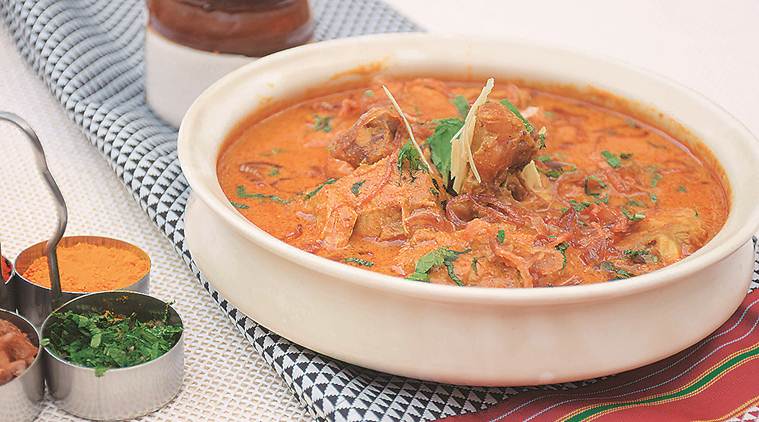
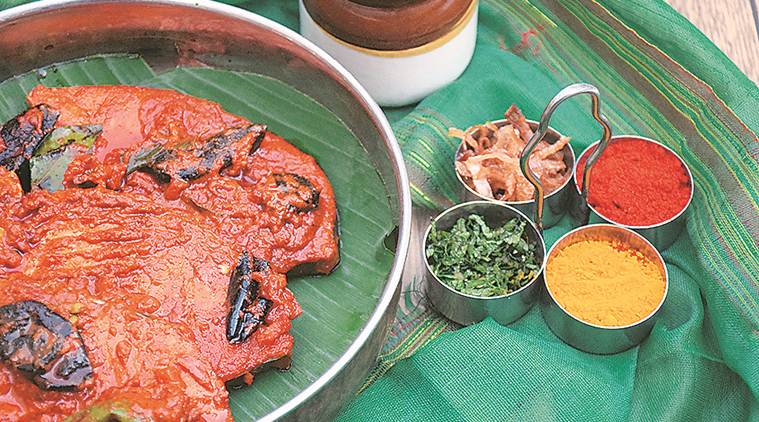
On the special menu are dishes such as Kelyachya Paanat (marinated bangda fish wrapped in banana leaves and cooked in an earthen pot), Akhni Gosht (sukha mutton in whole spices masala), Dum cha Mhaura (fish cooked on ‘dum’), Kombdi cha Salna (chicken gravy) and Chawrachi Roti (rice bhakris/rotis made of rice flour), among several others.
Kavtacho Bojar
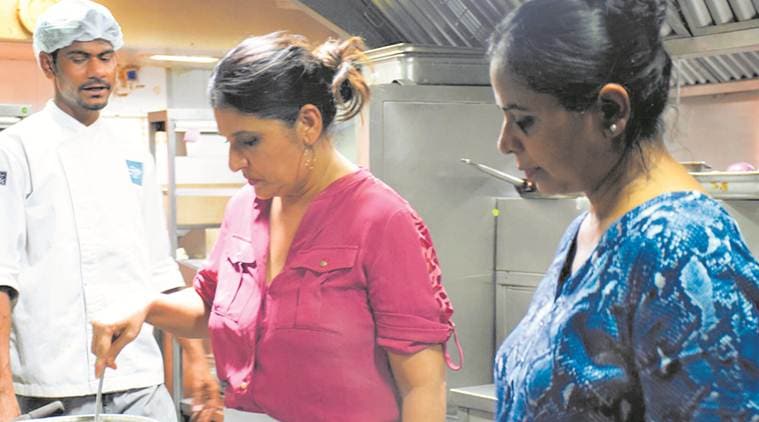
One of the earliest memories from Mumtaz Kazi and Sameera Gawandi’s childhood involves an annual trip to Harnai every summer. Today a popular tourist spot along the Konkan Coast in Ratnagiri district, it is the native village of the two cousins. They would join their grandmother at the grinding stone to prepare spices for the entire year, before the monsoons set in. What started out as a fun summer activity with cousins is today one of their biggest strengths. Associated with Authenticook, which organises pop-ups of regional cuisines at homes of locals-turned-chefs, Kazi and Gawandi are known in Mumbai for their Konkani Muslim food.
“The simple activity taught me how to grind in order to get the right consistency for masalas and gravies. As a result, I took to cooking at a very young age and it’s the one thing I do with all my passion,” admits Kazi. Along with Gawandi and in collaboration with Authenticook, she is currently hosting a Ramzan special pop-up of Konkani Muslim cuisine at the restaurant Neel – Tote of the Turf in Mahalaxmi. On till June 9, it will move to the restaurant’s property in Powai.
Kombdi cha Salna
On the special menu are dishes such as Kelyachya Paanat (marinated bangda fish wrapped in banana leaves and cooked in an earthen pot), Akhni Gosht (sukha mutton in whole spices masala), Dum cha Mhaura (fish cooked on ‘dum’), Kombdi cha Salna (chicken gravy) and Chawrachi Roti (rice bhakris/rotis made of rice flour), among several others. There is also a special vegetarian menu, which comprises dishes made using a variety of pulses — a common ingredient in the vegetarian Konkani Muslim fare.
Mumtaz Kazi (right) and Sameera Gawandi
Relatively unknown and mostly absent in Mumbai’s dining scene, the Konkani Muslim cuisine, say the two Andheri-based sisters, has certain Arab influences. “The use of kokum in curries, especially the fish preparations, is Konkani, whereas fennel in our food is something we take from the Arabic cuisine,” they say, adding that the Konkan coast was a popular halt for Arab traders back in the day. “The tradition of purchasing our spices from the Gulf was then continued by male members of our community as many of them took up jobs in that region. My father worked for many years in Kuwait. He would bring back spices for the entire family on every visit,” says Gawandi.
Dum cha Mhaura
Fennel, however, is a crucial element in the cuisine, and used in almost every dish. “We even grind the haldi powder along with roasted saunf; the mixture is called bada saunf and added even to simple dishes like daal. It lends a mild aroma and flavour to the otherwise-simple daal,” Kazi explains.
Apart from bada saunf, the community heavily relies on two other masalas — fish masala and mutton masala. They are both made using dried red chilli powder and dhaniya seeds but while the former, says Kazi, does not have haldi, the latter includes ground whole spices. “Then we have a cashew gravy too but that is for special occasions. Mostly, we use these two masalas, even to prepare our vegetarian dishes,” Kazi explains.
Since all coastal cuisines use rice as a staple, Konkani Muslims are no different. But apart from steamed rice and rice bhakris, they also abundantly consume khichdi, which is served along with sol kadi, which they call Soloni. Kazi says, “But sea food is a must. If not every then every other meal has some component of fish, including breakfast, where we serve roasted dry fish among other items. And during monsoons, when the fishing boats can no more tread into the sea, we have the small dried fish, fried with onions and chillies and served like a pickle or snack on the side.”
source: http://www.indianexpress.com / The Indian Express / Home> Lifestyle / by Dipti Nagpaul / June 06th, 2019