All posts by mpositiveone@gmail.com

Life after lynching: The widows of Nuh

Tapkan Village (Nuh District earlier called Mewat) , HARYANA :
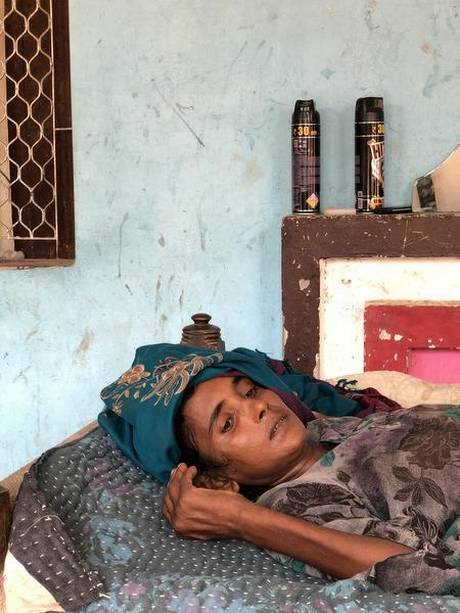
Asmeena, the widow of Rakbar Khan, a dairy farmer who was murdered last year. | Photo Credit: Namita Bhandare

Nuh is famous as India’s most backward district. It is also where Rakbar Khan and Pehlu Khan were lynched

Lying on a string cot beneath a row of pale green prayer beads that hangs from the wall, Asmeena Khan holds up a frail hand and says softly, “Please pray for me.”

There is no electricity and Asmeena cannot summon the strength to wave away the flies that settle on her face. She has been bedridden since being in a car accident four months ago. Her brother says the doctors have said she is paralysed from the waist down, and will never walk again.

Asmeena is the widow of Rakbar Khan, the dairy farmer who was killed by cow vigilantes on the night of July 20, 2018. After the murder of 28-year-old Rakbar, Asmeena, who has never been to school and is unsure even of her age, was left to raise her seven children. The eldest, 14-year-old Saahila, dropped out of school to help her mother with household chores and add to the family income by working as a daily wage labourer; four younger children were enrolled at a residential school in Aligarh run by a charitable society. The youngest two, aged six and three, have stayed with their mother in Tapkan village in Haryana’s Nuh district.

When the accident happened. Asmeena was on her way to visit her children in Aligarh in a taxi. A truck collided with the car she was in. The driver and a 19-year-old niece accompanying Asmeena were killed. Asmeena was first taken to the medical college in Nuh and then referred to a hospital in New Delhi, as her injuries were serious.

Bedridden and bereft

Four months later, she still lies on a cot in her parent’s home. Rakbar’s parents have refused to take her in, says her brother Irfan. But, reasons Asmeena, “Rakbar’s father is an old man who barely makes ends meet by keeping a few goats. Rakbar’s brothers add to his income, but he can barely feed himself.”

Asmeena got married when she was about 13. Three of her brothers work as drivers, two work in a poultry farm, and the youngest has dropped out of school and is learning to repair tyre punctures. Seventeen family members live in the two-room house at Tapkan. Two married sisters are visiting; they have come to find work as daily wage labourers, harvesting the ripened wheat in Nuh’s farms.

Nuh’s woes

Haryana’s Nuh district (earlier called Mewat), is just 75 km from Delhi and is part of the Gurgaon Parliamentary constituency. It is India’s ‘most backward district’, according to a 2018 ranking by Niti Aayog of 101 districts. The districts were graded on five parameters — health and nutrition, education, agriculture and water resources, financial inclusion and skill development, and basic infrastructure. Nuh came last.

The place has also seen some of the country’s most horrific hate crimes , tracked since 2012 by data journalism website IndiaSpend. In September 2016, a 20-year-old Muslim woman and her 14-year-old cousin were gang-raped and two other members of the family murdered by four men because the family had allegedly eaten beef.

A few days earlier, the Haryana Cow Welfare Commission chairman, Bhani Ram Mangla, had said the Haryana police would ‘check’ biryani dishes to ensure they don’t contain beef, which is banned in the State.

The Haryana Gauvansh Sanrakshan and Gausamvardhan Act of 2015 punishes anyone for possessing beef, or transporting / slaughtering cows, with up to 10 years in jail and a fine of up to ₹1 lakh. In Nuh, 792 such FIRs were registered between November 2015 and March 2019. In that period, 1,194 arrests were made.

But the lynchings seem to continue, despite a Supreme Court judgment last year that said “mob vigilantism and mob violence have to be prevented by the governments by taking strict action and by the vigil society who ought to report such incidents to the state machinery and the police instead of taking the law into their own hands.”

Rakbar was murdered when he was walking back with his friend Aslam from Alwar in Rajasthan after buying cattle. Confronted by a group of gau rakshaks near Lalawandi village, Aslam managed to run and hide, but Rakbar was severely beaten. The last photograph of him, shot in police custody, shows him alive. But a few hours later, his post-mortem report states, he died of internal injuries. In his statement to the police, Aslam said he heard the attackers name the local MLA, Gyan Dev Ahuja of the BJP, who is on record saying cow slaughter is a bigger crime than terrorism.

Left for dead

Like Rakbar, Umar Khan and two others, Tahir Khan and Javed, were transporting cows from Mewat to Bharatpur in Rajasthan on November 14, 2017. While Tahir and Javed were beaten, Umar was shot dead, and his body thrown near the railway tracks in the Ramgarh area of Alwar.

The most prominent of all lynching victims is Pehlu Khan, whose widow Jaibuna continues to live in their ramshackle house in Jaisinghpur in Nuh. The 55-year-old dairy farmer had gone to Jaipur to buy cows at a cattle fair. He was attacked on April 1, 2017 when he was returning home. Despite producing relevant documents, including a bill of sale, Pehlu and five others with him, including two of his sons, were beaten up by cow vigilantes near the Jaipur-Delhi national highway. Pehlu died of his injuries on April 3 that year.

He was buried in a cemetery close to his home. A simple stone slab, painted yellow, marks his name and the date of his death but says little of the circumstances of his death, or life.

In the background is a broken-down government school that seems to symbolise much of Nuh’s own predicament. Children walk home from school carrying small plates of rice with yoghurt, their mid-day meal, to share with families. Students study here until Class VIII, after which they must shift to a senior school some 10 km away. This is when many of the girls simply drop out.

On the day I meet Jaibuna, she is alone at home. Two daughters, studying in Class VIII, have taken time off school to earn some money harvesting wheat. The energetic voices of children reciting the alphabet punctuate our conversation.

Recorded death

Jaibuna says she learned of her husband’s death on social media. Somebody had video-taped the ghastly lynching and put it up on Facebook. She began watching, then one of her children took the phone away. “He was still alive,” she says. She still hasn’t seen the rest of the clip.

‘Justice’ is a big word for Jaibuna, who is just trying to get on with her life. An FIR was registered against six men. But a CID inquiry, which began after sustained protests by the family and civil society, said these men were not involved. In October 2018, witnesses for Pehlu, including his two sons and their lawyer, said they were shot at while going to court to record their statements. Police have dismissed the allegation as a ‘ploy’ to get the case transferred.

For a family that works for daily wages, it can be hard to keep track of court dates and hearings. Two sons work as truck drivers and one manages the half-acre patch of land on which they grow wheat, jowar and bajra. “Nobody from the government came to visit me after what happened,” says Jaibuna. “I will never get justice from this government.”

The family still owns a few goats and buffaloes. No cow has ever been bought since Pehlu Khan’s killing.

(With inputs from Mohd Arif)

The Delhi-based journalist writes on gender issues in India.

source: http://www.thehindu.com / The Hindu / Home> Society> Justice Denied / by Namita Bhandare / April 19th, 2019
INTERVIEW | Rahul’s candidature will help the UDF increase its seats: UDF Alappuzha candidate Shanimol Usman

Alappuzha, KERALA :

Former AICC secretary Shanimol Usman feels that the general polls in Kerala will be an evaluation of the misrule of the Pinarayi Vijayan-led LDF Government.

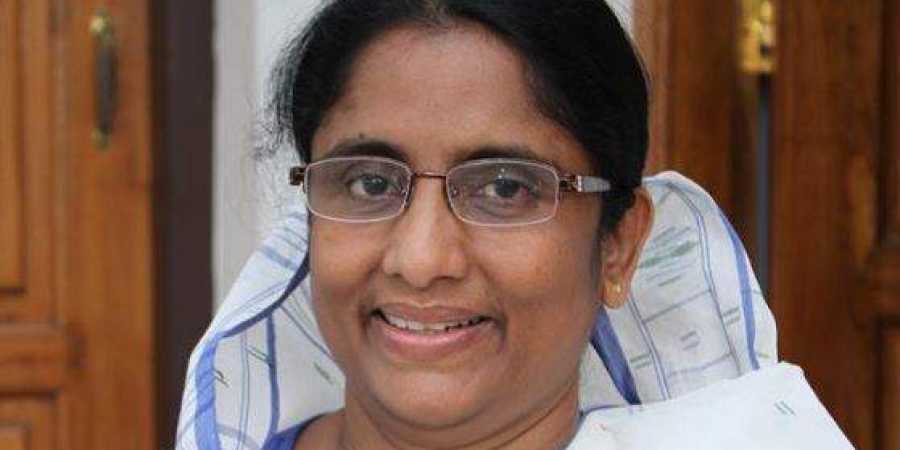
Shanimol Usman. (Photo | Facebook)

The Congress has fielded former AICC secretary Shanimol Usman in the party’s sitting seat of Alappuzha. Following the unexpected withdrawal of incumbent MP KC Venugopal from the fray the UDF entrusted her with the task of retaining her home constituency. In an interview to Express Principal Correspondent Biju E Paul, Shanimol said the LS polls in Kerala will be an evaluation of the misrule of the Pinarayi Vijayan-led LDF Government. Excerpts:

Q: Will Rahul Gandhi’s candidature in Wayanad bolster the prospects of the UDF candidates?

A: Definitely. The UDF winning all the 20 seats in Kerala is a possibility. It will boost the morale of the party workers across the state and help increase my victory margin in the constituency.

Q: Alappuzha is a sitting seat of the Congress. What are the targets of the Congress?

A: The UDF is aiming to increase the winning margin of KC Venugopal in Alappuzha in the 2014 election. The constituency has always been favourable to the UDF which won nine times in the last 13 Parliament elections. The wholehearted support of the fishermen and coastal people was the strength of the UDF in the previous polls. We will simply upset the LDF in the election.

Q: Will your delayed entry impact the poll outcome?

A: Like previous elections, the UDF declared its candidates after many rounds of discussions. It doesn’t affect the winnability of the UDF candidates. This time also, the delay happened and we will cover it through a systematic campaign. The organisational structure of the UDF is strong and active.

Q. What is UDF’s main poll plank?  

A: Pure politics is the campaign issue. The communal forces had gained an upper hand after the NDA Government led by Narendra Modi came to power at the Centre. Strong resentment is brewing among the public against the Centre. It is dividing people on communal lines. The LDF Government led by Pinarayi Vijayan divided people on issues like Sabarimala. They hurt people’s sentiments through unnecessary provocations.

Q: What is your opinion about the CPM-led LDF Government in the state?

A: The LDF Government is perpetuating criminal politics. The CBI probe into the Ariyil Shukkoor murder case revealed a CPM leader was behind it. It is again proved in the murder of Shuhaib and the murder of Youth Congress activists Sarath Lal and Kripesh at Kalliyot. The people of the state are fed up with the murder politics of the CPM and the election will be a judgement against the misrule of the CPM.

Q: What are the plans for the development of Alappuzha?

A: KC Venugopal had implemented development worth more than Rs 5,000 crore in the past 10 years in the form of roads, bridges, tourism sector and many more for the constituency. I will continue the development projects initiated by Venugopal. The UDF will implement projects to better the living condition of people of coastal areas, fishermen and coir workers.

Q. Will the stance of SNDP Yogam affect your poll prospects?

A: I will not comment about the stance of the SNDP. The UDF is keeping good relations with all organisations, including religious and social, especially SNDP Yogam. So, the members of these outfits will support me.

source: http://www.newindianexpress.com / The New Indian Express / Home> States> Kerala / by Biju E. Paul / Express News Service / April 04th, 2019

How chikankari crossed the road

Mumbai, MAHARASHTRA / NEW YORK, U.S.A :

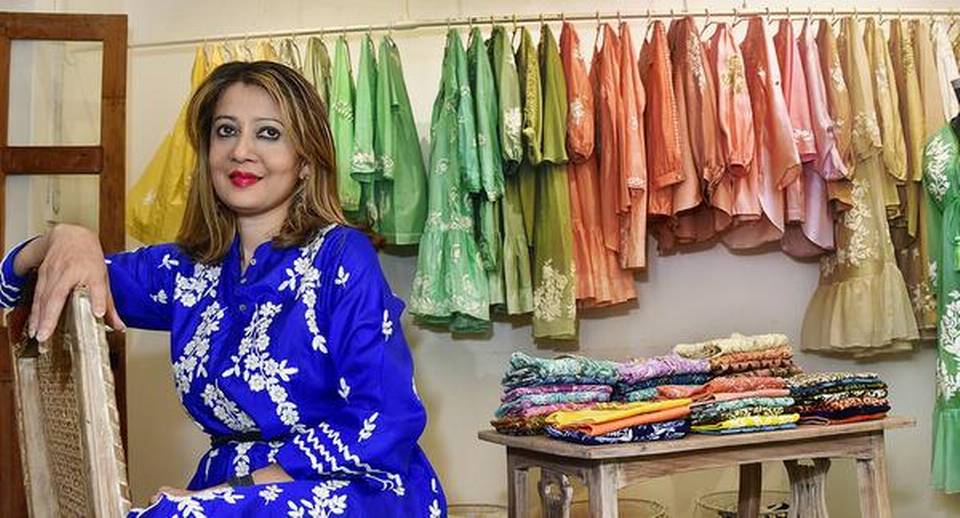
Hues of an art Farha Ansari and her designs / Murali KUmar K

From Hillary Clinton to Alia Bhatt, Ahilaya’s designs have invaded the wardrobes of celebrities

In the Bombay of the 1970s, when his daughters were young, Anwar Ansari started a hand-printed chikankari textile business called First Lucknowi, because he believed he was the first to start such a venture. Chikankari is a traditional embroidery style that originated in Lucknow. Anwar and his partners hired local artisans in Bombay and Lucknow to handcraft these designs on cotton, silk, chiffon and other fabric.

Almost half a century later, First Lucknowi is different yet, essentially, the same. Today, it goes by the name Ahilaya, named after the queen of the 18th Century Malwa kingdom, Rajmata Ahilyadevi Holkar.

Managed by Anwar’s daughters, Farha, Nagma and Sana, the number of employees has grown from 40 to 200 and its customer base has also increased. Many celebrities — Hillary Clinton, Ivanka Trump, Drew Barrymore, Anushka Sharma, Alia Bhatt among others — are among Ahilaya’s customers.

According to Farha, the chief reason for the brand’s longevity and success is, “We do everything and do not outsource anything.” “The materials have to be pure; there should not be any synthetic. We are stringent about that.”

The designs and raw material are couriered to the artisans in Lucknow and Mumbai, who in turn handcraft the clothes, she adds.

Farha, now lives in New York and oversees ‘Leaves of Grass’, an international offshoot of the family-run business. Though her sisters, Nagma and Sana, take care of the Indian affairs, Farha visits the Bengaluru store at least once a year. This visit is ritually followed by a meeting with craftsmen too.

“They feel happy when they learn that the clothes they make are worn by models and celebrities. We sometimes call them for photo shoots, order biryani and have a good time.”

The price range starts at Rs. 4,000. Farha says, exclusively handcrafted wear often costs more. Comparing synthetic and machine-made wear to handmade garments, according to her, “is like differentiating microwaved dinner from gourmet food. We also pay fair wages to our workers. If we reduce the price, we might not be able to do that.”

source: http://www.thehindu.com / The Hindu / Home> Features> MetroPlus / by Praveen Sudevan / April 16th, 2019

A field all to herself

Mumbai, MAHARASHTRA :

Non-profit Parcham has worked with authorities to create an exclusive sports ground for girls

Imagine an Indian city with open spaces full of girls playing, running, laughing… Imagine playgrounds spilling over with girls playing football, cricket and hockey. Imagine girls and their mothers in salwars , saris, tights, shorts and hijabs running across open fields chasing a ball, scoring goals, and loudly cheering. If you can imagine all this, you’re imagining a radically different Indian city! It’s different because girls don’t play. They certainly don’t play as much as boys. They definitely don’t dominate the playgrounds and maidans of our cities. Mostly they wait on the sidelines if they make it to the playground at all.

It’s a reality non-profit collectives such as Parcham, which uses football to engage with girls from marginalised communities in the Mumbai Metropolitan region, are working hard to create.

Their most recent initiative is the takeover of an empty plot of land adjacent to Mumbra’s Maulana Azad Stadium to create an exclusive sports ground for girls, the first of its kind in Maharashtra. “Parcham has been in dialogue with the Thane Municipal Corporation for a few years to create a safe space for women and girls to exercise their right to play,” says Sabah Khan, co-founder of Parcham. “Now that dream has been realised.”

Though the plot is yet to be levelled and cleared of construction debris, more than 100 girls and women recently staked claim to it by participating in the Third Fatima Bi Savitri Bai Football Tournament held at the new ground.

Image change for Mumbra

“Reserving a plot for girls to play is a big achievement for women who are minimally able to access public spaces,” says Salma Ansari, who trained in football with Parcham and now helps manage its football programme. “It’s also a major change in the image of Mumbra.” Like many Mumbra residents, Salma moved here with her family from Byculla after the 1992-93 Bombay riots. Since then, Mumbra has largely been perceived as a haphazardly-planned Muslim ghetto. “That Mumbra will now set the benchmark in working towards gender equality in public is revolutionary,” says Sabah.

This was part of Parcham’s goal when it initiated a football programme for 20 girls in Mumbra in 2012. “We wanted to make women visible in ways that were rarely seen, moving beyond narratives of victimhood reserved for Muslim girls,” explains Sabah. “We wanted women to visibly stake claim to public spaces; for girls to access playgrounds and have fun.”

The football programme now extends to 99 girls and includes the areas of Mankhurd, Bandra and Nerul.

The question that arises now is whether segregation of women from men is the only way to further women’s access to the public. In the current scenario, where any space in a building compound or open ground gets quickly overtaken by boys, it might be a viable short-term strategy.

“In our experience, when girls take the field, it’s like a mela — men hang around leering, staring, commenting, taking videos (that we ask them to delete),” says Salma. How do girls then develop the confidence to run freely, hold their bodies less rigidly and focus on developing game skills?

“While we maintain our claim to mainstream public spaces, till they accept a girl’s presence in the open field, till girls feel more confident, and their families more assured of their safety, a girls-only field may be a solution,” says Sabah. “Once the girls are hooked, it does not matter where they play; it’s only about making or saving a goal.” And in the end, that’s all that should matter.

As I wind up this Streetwise column, what better thought can I leave you with than that?

Sameera Khan is a Mumbai-based journalist, researcher and co-author,Why Loiter? Women & Risk on Mumbai Streets

Till girls’ presence in the open field is accepted and families are assured of their safety, a girls-only field may be a solution

source: http://www.thehindu.com / The Hindu / Home> Features> Metro Plus / by Sameera Khan / April 17th, 2019

On radio: Kargil valour

NEW DELHI :

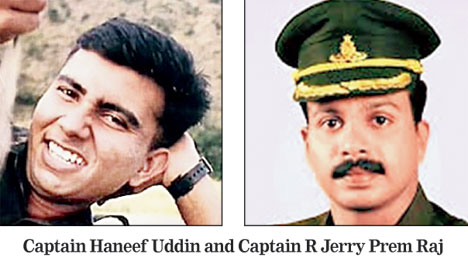
Captain Haneef Uddin was preparing to celebrate his 25th birthday at an altitude of 18,500 ft in Kargil when a bullet fell him in the summer of 1999.

CaptainHaneenuddinMPOs17apr2019

Calcutta:

Captain Haneef Uddin was preparing to celebrate his 25th birthday at an altitude of 18,500ft in Kargil when a bullet fell him in the summer of 1999.

The young officer’s story of valour remains at the centre of a 13-part series on little known heroes of the Kargil war on All India Radio’s FM Rainbow station that is played out at 3pm every Sunday.

On Kargil Vijay Diwas on Thursday, Major Akhil Pratap, an ex-army officer who has been hosting the series, will have family members of 13 such unsung heroes as guests for a live-chat on AIR.

“Kargil was one of those battles which witnessed many casualties. There are several faces whose stories have remained unheard and untold despite all the coverage by the media. I have tried to dust out some of those faces and present them to India,” said Akhil, who was last posted with the Rashtriya Rifles in Jammu and Kashmir in 2010.

“I believe this is the first time that AIR is hosting such a show on the occasion of Kargil Vijay Diwas.”

Born in Delhi, Captain Haneef was a service code officer attached to Rajputana Rifles and posted at Turtuk during the war. His body lay at the height for 46 days before it was handed over to his family.

The army later renamed a sub-sector in Kargil after Captain Haneef.

Apart from Captain Haneef, those feature in the radio series are Captain R Jerry Prem Raj from a small village in Venganoor near Thiruvananthapuram and several others who fell to bullets at Kargil.

“Each of these men had responded to the war-call differently. But they died almost the same way,” Akhil said.

Captain Prem Raj was with his wife on honeymoon in Ooty when a call came from his headquarters and he rushed to Drass.

On the intervening night of July 6 and 7, he was on duty as observation post officer, trying to locate enemy camps. A bullet first hit his shoulder. He fell down, stood up and fired back. A shower of bullets pierced Captain Prem Raj. The army has a hill to his dedication – the gun hill in the Drass sector.

Commissioned in June 1997, Haneef was doing his rounds braving the sub-zero temperature in Turtuk when he suddenly faced a shower of bullets from an altitude.

“Haneef’s parents didn’t seek anything, just his body. The government honoured him with Vir Chakra posthumously,” said Akhil.

Prem Raj, too, was honoured the same for taking bullets in the Drass sector two years after he was commissioned as an artillery officer.

“Prem Raj’s brother is an IAF person and elder to him by three years. Together, the two brothers had brought home several trophies and laurels. But when Prem Raj’s body arrived, his brother stood all alone,” said Akhil. “We want to share these stories with India.”

The Thursday’s live chat is scheduled for 8 am.

source: http://www.telegraphindia.com / The Telegraph, online edition / Home> West Bengal / by Kinsuk Basu in Calcutta / July 26th, 2018

Forgotten by govt, but not by people

PUNJAB / NEW DELHI :

THE TRIBUNE COMMEMORATES JALLIANWALA BAGH CENTENARY

DrSaifuddinKitchlewMPOs15apr2019

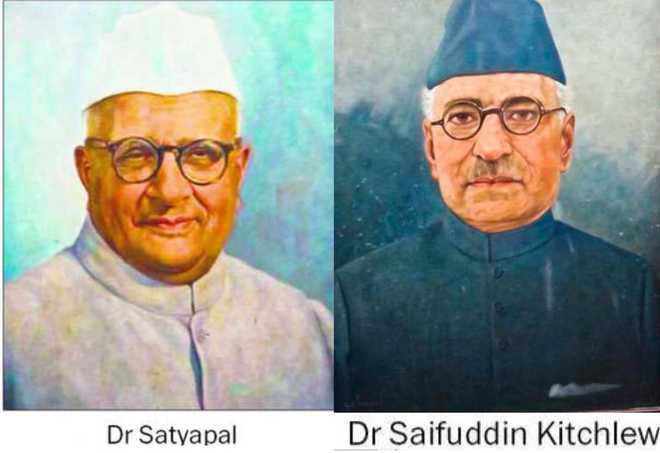
Dr Kitchlew & Dr Satyapal were towering freedom fighters, their arrest led to Jallianwala rally

Dr Saifuddin Kitchlew and Dr Satyapal — a hundred years after Jallianwala, these are the two names with which each conversation about the massacre starts in Amritsar. But in the past 100 years, the governments have rarely mentioned their names.

The meeting that was “dispersed” by General Dyer’s bullets had been called to protest Dr Kitchlew and Dr Satyapal’s arrest. The two towering leaders had emerged as great symbols of Hindu-Muslim unity during the April 6 hartal and, on April 9, people had raised slogans of ‘Kitchlew ji ki jai’ and ‘Satyapal ji ki jai’ during Ramnavami jaloos. It was the collective charm of both the leaders that the Hindus and Muslims were publicly drinking water from the same glass.

Dr Kitchlew’s father Azizudin, a prominent Kashmiri businessman dealing in embroidered shawls, had moved to Amritsar in the 19th century. He sent his son to England and Germany from where he obtained his PhD degree and also developed close ties with Jawaharl- al Nehru. “Kitchlew was widely admired in Amritsar and his picture would be seen hanging in almost every shop as a tribute to the sacrifices he made during the freedom struggle. Tall, fair-complexioned and mostly attired in white khadi, he was known for his unfailing courtesy and winsome smile,” historian Prof VN Datta, hailing from Amritsar, recalled in the preface of a book.

A few days before his death, Dr Kitchlew told Prof Datta that the trouble on April 10 in Amritsar could have been averted had he and Satyapal not been arrested. The government was absolutely despotic and never understood what the people felt and wanted, he said.

After Partition, Dr Kitchlew refused to move to Pakistan and decided to stay back in Amritsar. He, however, was forced to leave the city he loved the most and shift to Delhi after rioters burnt down his four-storey house and the family-owned Kitchlew Hosiery Factory in the heart of Amritsar.

During his last meeting with Dr Kitchlew in Delhi, Prof Datta saw a bare cot, old furniture and broken pieces of crockery eloquently speaking of the financial difficulties he was facing. Yet, there was no bitterness for anyone. “I manage to live because Jawahar sends me some briefs,” he would say.

The last tragic memories of Dr Kitchlew’s family were related to his youngest son Toufique, who spent his last days in penury. Before he passed away, he had expressed a desire to shift to Amritsar and the Punjab Government even annou-nced rent-free accommodation, but the address was never shared with him.

Dr Satyapal, on the other hand, became the Punjab Vidhan Sabha Speaker post-Partition. He had famously said: “I was never a rebel, but to revolt for righteousness is our religion and duty.” He completed his MBBS with a gold medal from Punjab University and became active in the freedom struggle.

Dr Shailja Goyal, a lecturer at DAV College, Jagraon, who has done her PhD on Dr Satyapal, says he was a man of rare integrity and character. She says he was vocal even about the wrongs within the Congress. “He was instrumental in organising the AICC session in Amritsar.” He died in 1954 and his two daughters moved abroad.

Darbari Lal, former Deputy Speaker of Punjab Assembly, says Dr Kitchlew was a powerful orator and his words would sway the masses. “Dr Kitchlew and Dr Satyapal are household names in Amritsar and will surely remain so.”

source: http://www.tribuneindia.com / The Tribune / Home> Punjab / by Vishav Bharti, Tribune News Service, Amritsar / April 13th, 2019

Meet the forgotten dhow men of Malabar

KERALA :

Malabar

A vivid piece of maritime history is hidden in the memories of the cooks and deckhands who once sailed off the Malabar coast

By noon, the sun would heat up the vast blue expanse through which they sailed at great risk to their lives. By evening, when salt and dirt clung to their bodies, the skies would turn crimson, symbolising streaks of revolt. Later, weather permitting, the shimmering stars would give them clues to the voyage that lay ahead through the inky waters of the Arabian Sea, often to the Persian Gulf. On the shore, they would unload the goods they had loaded on to the wooden dhows: timber, bamboo, coconuts, tapioca, tiles, salt, sugar, fertilizers. And sometimes, hidden among the cargo, people . Being smuggled to the far shores.

But even when they returned to their homes in Kerala,  none of the deckhands of the dhows wrote about their experiences; in fact they actively strove to forget this tempestuous period in their lives that ended when better transportation facilities arrived. It’s been nearly four decades since these traditional vessels with their distinctive masts set sail from the Malabar coast, either along the coastline or farther afield. But it’s only now that the world has begun to hear the stories of these intrepid men, an integral part of the maritime history of peninsular India.

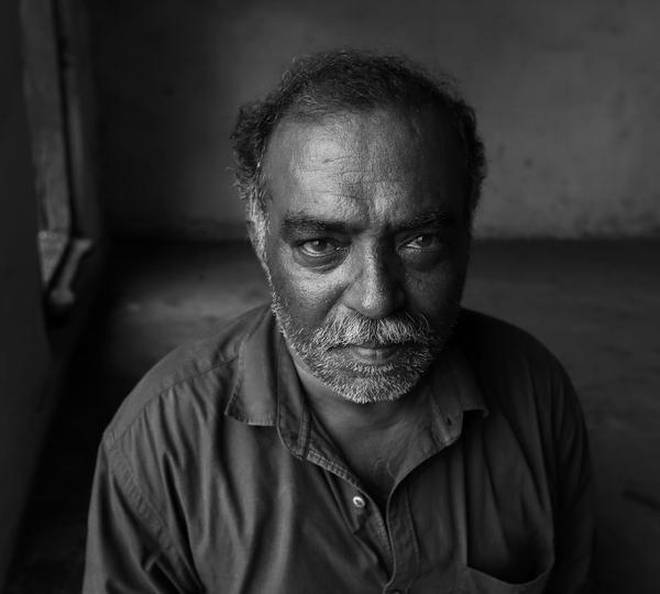
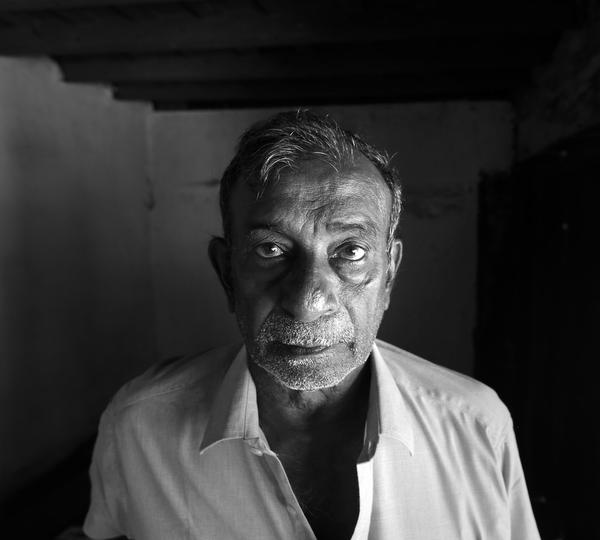
And this is thanks to a photo artist from Kerala’s port town of Kodungallur, around which scholars speculate the ancient Muziris harbour existed until destroyed by the 1341 calamity. K.R. Sunil’s photographs, a series titled ‘Manchukkar — The Seafarers of Malabar’, captures the faces of 34 deckhands. It was on show last month at URU Art Harbour in Kochi. Through them we learn of the misery of people caught in a vortex of exploitation and unshielded from nature’s furies.

Bare frames

The faces are stark, the frames bare. But every black-and-white image tells a story. Of how poverty forced pre-teen boys to pack themselves off in an uru or sailing vessel on long-distance voyages battling rough seas and uncertainty for weeks on end, and then return home — if lucky — only to set off on another strenuous voyage. Years would pass, the boys would turn into middle-aged men. Then, seen as worthy of nothing else, plagued by ill-health, they would be sent home, discarded like boats with rotten hulls.

T. Ibrahim is now 80 and lives an unremarkable life in Ponnani, a fishing town in Malappuram district. He considers himself fortunate to have lived this long. As a youth, he recalls how he once sailed a dhow laden with tiles and a dozen sailors that got caught in a storm on its way to Ratnagiri in Maharashtra. Ibrahim joined his panicked colleagues and began jettisoning cargo. The vessel sank nevertheless. “Some of them managed to get away on a lifeboat. Ibrahim and four others held on to a piece of wood and floated for two days,” says Sunil, recalling his meetings with Ibrahim.

Ibrahim's ...
Ibrahim’s …

The youngest in Sunil’s photo series is also called Ibrahim, or simply Umboocha. Now 53, the man from Kasargod, along the Karnataka border, had his final sailing trips on motorised dhows in the 1990s. Memories of manchu, as the boat is called in his part of Malabar, where people also speak Tulu and Kannada, still make him shudder. Their vessel once sank during a cyclone when they were bound for Iran. They roped together emptied cargo barrels and drifted on the improvised float for three days. Rescue came, but they landed in jail: all of them had lost their identity documents.

Siva Sankaran, also from Ponnani, remembers that his first trip on a dhow to Bombay took seven weeks instead of four days. Reason: bad weather. But tempests were just one part of the deckhands’ ordeal, says Sunil. From starvation to sexual exploitation to unhygienic conditions to taxing work hours, the voyages were invariably hellish. “Circus in the seas,” is how Abdul Rahiman, 68, recalls them. “One had to climb 50 feet up on swinging ropes to set the sail. You may have to do it deep in the night, when the boat is violently rolling,” Sunil quotes the sailor as recalling.

The artist’s first trip to Ponnani was in 2014, though it was only two and a half years ago that he turned his focus on these deckhands of yore. “As a child, I had heard a lot about Ponnani. We had country boats with merchandise travelling there from Kodungallur.” The town charmed him on his first visit and inspired several more. The next time he brought his camera along. A photo series from these trips was shown at the 2016 Kochi-Muziris Biennale.

Steeped in pathos

Then, four months before the biennale, Sunil stumbled upon an old man singing a song to his friends. “There was something curious about its lines and the tune steeped in pathos. I thought I should explore more,” he says.

This was T. Ibrahim and this wasn’t the only sailing song he knew. He had learnt several from Rasakh Haji, a merchant of essential oils who owned the boat in which Ibrahim was a deckhand. Haji had a talent for creating songs and had composed one about the dhow. They sailed together from Mumbai to Kerala and “the ditties seeped into Ibrahim too,” says Sunil.

Most deckhands began their careers as cooks (pandari) when they just 11 or 12 and were routinely sexually exploited. Those who moved up the ladder became deckhands or khalasi. The capable among them rose to become captains or srank.

Abdul Lathif thought himself lucky to become a deckhand at 17, but is now repulsed by the memories. “The boat’s woodwork was always infested with roaches and scorpions. You would see them floating even in the drinking water. We were covered with lice. The winter winds gave us mouth ulcers,” he trails off. “After unloading the goods, we would appy a mixture of oil, lime and ghee to the boat’s keel to prevent barnacles. The work was done standing in a slush of mud and human excrement.”

C.M. Ummar was a young man during the 70s when he crewed in dhows carrying people looking for work in West Asia. Illegally. “A couple of hundred job-seekers would be taken aboard along with the cargo. You’d hide them with a tarpaulin. And in the high seas, another boat would come to fetch them,” he recalls. “Sea-sick, they would sometimes plead to be taken back home. Getting them back was equally dangerous.”

Deaths weren’t uncommon — whether from falling from the mast or from disease. Hussain, 64, recalls a friend’s demise: “With a heavy heart we offered prayers, and buried him at sea with a rock tied to his body.”

The primary duty of Muhammad Koya, 81, was to smear kalpath, a mixture of coconut-fibre, cow-dung, sawdust and ghee, on the keel to plug gaps. “It involved holding one’s breath under water for long periods; the job affected Koya’s hearing,” notes Sunil, who is now in the process of making a documentary on this bit of “ignored history”.

Floating bodies

P. Ummar is 20 years younger than Koya, and recalls how armed pirates would sometimes rob their cargo. “Such encounters were common along the Maharashtra coast,” he says. Koran, now an oracle for the traditional Theyyam dance in Kasargod, talks of the dead bodies he saw floating near the Bombay port during his manchu days. He suspects this was from the smuggler-customs encounters.

Kochi, Kerala, 07/02/2019 : K K Khadher, from the series 'Manchookar - The seafarers of Malabar' by K R Sunil. Photo: Special arrangement
Kochi, Kerala, 07/02/2019 : K K Khadher, from the series ‘Manchookar – The seafarers of Malabar’ by K R Sunil. Photo: Special arrangement

K.K. Kadar talks of how seasoned sailors would read signs of impending danger in “unusual changes in the colour of seawater, the rising froth, intertwined sea-snakes, dead fish…. they were indicators for the crew to prepare themselves for eventualities,” he says. Today, he is a public worker, and preoccupied with the 80th anniversary of a historic beedi workers’ strike that had once been held in Ponnani.

T.V. Moideenkutty ...
T.V. Moideenkutty …

For T.V. Moideenkutty, too, life is calmer. The 54-year-old lives on the tranquil shore of Ponnani with his family in a tile-roof house. He started life as a cook in a dhow and then worked as a deckhand for eight years. At least it staved off poverty, he says, smoking a beedi.

Life on the dhow taught him a lesson: the value of drinking water. “I learned the word for water in many languages, especially before hitting ‘Hindistan’ during our Mumbai voyages,” he says, retying his mundu and tucking it in at the waist.

The lighthouse near Moideenkutty’s house stands tall with its gas flasher scanning the ocean. Standing outside URU gallery, I can see the sea dotted with gleaming new-age ships filled with crew and cargo heading out to harbours around the world.

The Delhi-based journalist is a keen follower of Kerala’s traditional performing arts.

source: http://www.thehindu.com / The Hindu> Voyager> Society / by Sreevalsan Thiyyadi / April 13th, 2019

Message from the martyrs of Jallianwala Bagh

DELHI / PUNJAB :

JalianwalaBaghMPOs13apr2019

They beckon all of us to give human freedom respect, human beings dignity, and human rights recognition

One hundred years ago, on April 12, a letter dropped into the British Raj’s postal system. The writer of the letter was a world-famous poet. That is not the only reason for the letter having been unusual. It was, by the political sights of the government of the times, seditionist. But luminously so.

The Raj’s censors must have been greatly tempted to see its contents; perhaps they did, spurred by the ruling ‘order’ of the day, the Rowlatt Act. Curbing, in the name of war-time discipline, every conceivable civil liberty, the Act enabled stricter control of the press, arrests without warrant, indefinite detention without trial. It empowered the police to search a place and arrest any person they disapproved of without warrant. Naturally, it outraged India, and both the writer and recipient of the letter.

Written on April 12, 1919, by Rabindranath Tagore to Mohandas K. Gandhi, it was about what its writer called “the great gift of freedom”. He said: “…India’s opportunity for winning it will come to her when she can prove that she is morally superior to the people who rule her by their right of conquest.”

‘Faith or the life in death’

Tagore knew, doubtless, that the phrase “morally superior” would strike a chord in Gandhi. As would the sentence that followed: “She must willingly accept her penance of suffering, the suffering which is the crown of the great. Armed with her utter faith in goodness, she must stand unabashed before the arrogance that scoffs at the power of spirit.” Tagore ended the letter, as a poet would, with a verse: “Give me the faith of the life in death, of the victory in defeat, of the power hidden in the frailness of beauty, of the dignity of pain that accepts hurt but disdains to return it.” Prose is ever the ‘doer’, poetry the ‘artist’. And so this letter and the line just cited cannot hope to compete with Tagore’s much-quoted poem ‘Where the mind is without fear…’. But taken for itself, this sentence has to rank among the greatest expressions in prose of truth’s protest against power. Certain words, poetic word-images, in that line are scorching: death, defeat, dignity, pain, hurt.

India had, only a few days earlier, seen all those five word-images at play in Delhi. As the scholar-lawyer Anil Nauriya has recently reminded us, on March 30, 1919, the Raj’s police fired at a gathering in Delhi protesting the Rowlatt Act on a call by Mahatma Gandhi for a nation-wide hartal. Nauriya lists among them Hindus, Sikhs, Muslims.

A sample: Abdul Ghani, b. 1894. Killed in bayonet charge by a British Army unit near the Town Hall, Delhi. Atam Prakash: Received bullet wound in firing by the police and died the same day. Chandra Bhan, b. 1889. Received bullet wound in firing by an Army unit and died the same day. Chet Ram: Received bullet wound in firing by the police and died the same day. Gopi Nath, b. 1889: Received bullet wound in firing by an Army unit and died the same day. Hashmatullah Khan: b. 1890: Received bullet wound in firing by an Army unit and died the same day. Mam Raj: Received bullet wound in firing by the police and died the same day. Radha Saran, b. 1897: Received bullet wound in firing by an Army unit and died the same day. Radhey Shyam, b. 1891: Received bullet wound in firing by an Army unit and died the same day. Ram Lal, b. 1886: Received bullet wound in firing by an Army unit and died the same day. Ram Saroop: Received bullet wound in firing by the police and died the same day. Ram Singh: b. 1891: Received bullet wound in firing by an Army unit and died the same day. Chander Mal: Received bullet wound in firing by the police and died the same day. Seva Ram: Received bullet wound in firing by the police and died the same day. Swattin, son of Abdul Karim: Received bullet wound in firing by the police and died the same day.

The Delhi firing was, as it were, a macabre rehearsal for what was to follow. And it was doubtless on Tagore’s mind when he wrote the letter to Gandhi. It was still in the post’s pipelines when, the next day, on April 13, 1919, his poetic vision was to find prescient corroboration. Sikhs, Hindus and Muslims gathered in Jallianwala Bagh, Amritsar, Punjab not to oppose Rowlatt but for a festival that marks the Sikh new year, Baisakhi. Its intent was totally un-political. But who is to say how arrogance will work?

On April 13, 1919

What followed is now part of the world’s annals of state-led crime. Troops under the command of Brigadier General (temporary rank) Reginald Dyer entered the garden, blocking the main entrance after them, took up position on a raised bank, and on Dyer’s orders fired on the crowd for some ten minutes, minutes that were an eternity. They stopped only when the ammunition supply was almost exhausted. Official sources themselves gave a figure of 379 identified dead, with approximately 1,100 wounded. In those ten minutes Amritsar became India. It embodied a nation’s death-defying dignity in pain, hurt.

Tagore was, at the time of the mowing down ‘Sir’ Rabindranath. And he had been a Nobel Laureate for Literature for six years. On May 30, 1919, Tagore picked up his pen, this time, not that of a Nobel Laureate but of a Knight of the British Empire, to write a letter to the Viceroy, Lord Chelmsford. “News of the sufferings,” he wrote, had “trickled through the gagged silence, reaching every corner of India”. He then said: “The time has come when badges of honour make our shame glaring in their incongruous context of humiliation… I for my part wish to stand, shorn of all special distinctions, by the side of my countrymen who, for their so-called insignificance, are liable to suffer a degradation not fit for human beings.” And he asked of the Viceroy, “relieve me of the title of knighthood”.

Solidarity with suffering, especially when it is spontaneous, takes many forms. One is sharing by renunciation. Tagore’s self-divestment of the title, then perhaps the most coveted, of ‘Sir’ was an act of spontaneous solidarity with the suffering of Delhi, of Amritsar. And it was a chastisement, in Tagore’s words, of the “arrogance that scoffs at the power of spirit”.

The martyrs of Jallianwala beckon this generation, all of us, including India and Indians, Pakistan and Pakistanis, Bangladesh and Bangladeshis, Myanmar and Myanmarese, not just Britain, to give human freedom respect, human beings dignity, human rights recognition. Looking around them at those slain — Hindu with Dalit among them, Sikh and Muslim — the martyrs of Jallianwala would want correction and atonement from those on the Indian subcontinent and beyond its boundaries, who today foment division, discord, disunity.

Enduring arrogance

They also beckon us to see that “arrogance of power” is not a colonial or imperial patent, nor “the power of spirit” an attribute of liberation struggles alone. Arrogance can occur under post-colonial, post-imperial, ‘independent’ skies and can — must — summon the power of spirit.

‘Rowlatt’ is a temperament that seeks domination, control, hegemony. It has the characteristics of the bully — strength and insecurity. Asia, Africa and Latin America have known that temperament in both the hubris of the external ruler, the hauteur of the one within. And they have seen peoples’ power dismantling both. Bowing to public opinion in India and in the U.K., the Raj repealed the Rowlatt Act, the Press Act, and 22 other laws in March 1922 – a victory of the people. The Rowlatt temperament is not a feature of governments alone. It works in society as well, keeping sections of it in a state of chronic enfeeblement. The Rowlatt temperament is also to be seen in corporate India seeking monopolist domination over its natural resources and public commons.

This centenary of India’s rebuffing of the Rowlatt Act’s scowl through what Tagore called “the power of spirit” is one to be cherished, celebrated and be inspired by.

Gopalkrishna Gandhi is a former administrator, diplomat and governor

source: http://www.thehindu.com / The Hindu / Home> Opinion> Lead / by Gopalkrishna Gandhi / April 13th, 2019

Welcome to the graveyard of rare books, also known as the Saulat Public Library, Rampur

Rampur, UTTAR PRADESH   :

Priceless editions of Urdu, Persian and English lie in neglect as no one cares to maintain a library that should have been a national treasure.

Daniel Jacobius Morgan

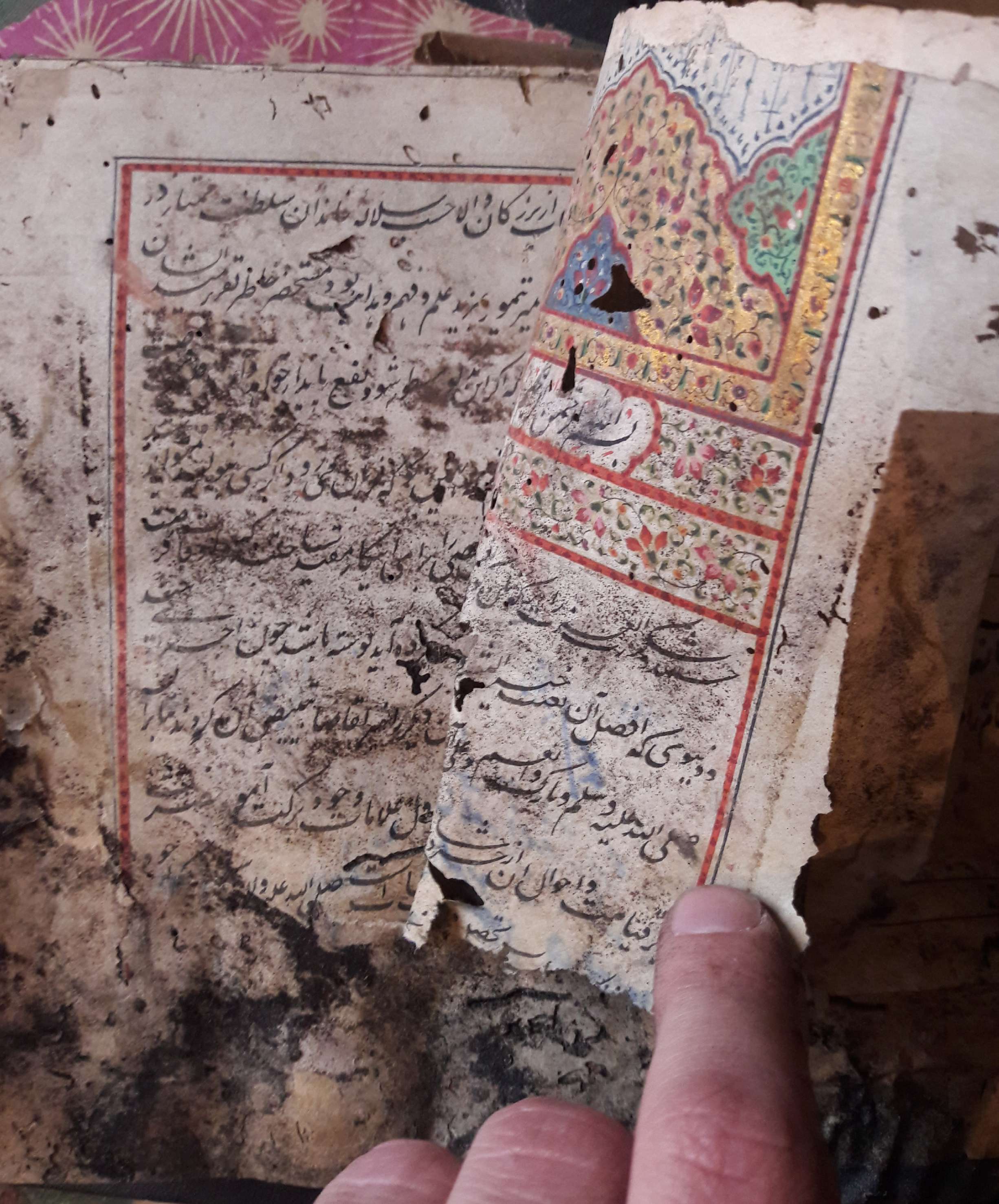
I have spent much of the past week digging through piles of books at the Saulat Public Library in the city of Rampur in Uttar Pradesh. I am looking for a single manuscript: Muhammad Sanaʾullah Panipati’s Khawass-i Hizb al-Bahr, an 18th century Persian commentary, written in Delhi, on the occult properties of a famous prayer formulae compiled by Abu al-Hasan al-Shadhili, the Maghribi mystic of the 13th century. It is, very likely, the only copy of the commentary in the world.

I know it is somewhere in the library because it appears in Abid Reza Bedar’s 1966 catalogue, but despite my excavations and those of Mazhar Muin Khan, the endlessly patient librarian, the manuscript remains hidden.

I am sure that Muhammad Sanaʾullah Panipati would have understood my search: just as words have occult sympathies with the material world, so too does this hidden manuscript exercise its power, drawing me to the library day after day although it remains unseen, buried beneath thick layers of dust, cobwebs and mouldering pages. As I dig through the stacks, I can’t help but call to mind the hadith qudsi: “I was a hidden treasure that loved to be known.”The disappearance of a single manuscript, though serious in itself, is part of a far larger problem at Saulat Library: one of India’s richest archives of Urdu, Persian and Arabic works, it has fallen into a state of absolute desuetude.

Reader's ticket
Reader’s ticket

Founded in 1934, the library was once an important centre of political and social life for North Indian Muslims. In its heyday, famous visitors included Khalid Sheldrake (the British pickle manufacturer turned king of Chinese “Islamistan”), Sayyid Hashimi Faridabadi (author of a famous Urdu history of Greece), Khwaja Hasan Nizami (the great Chishti Sufi of Delhi), and the Agha Khan.

Besides 25,000 Urdu printed books – including the only known first edition of Ghalib’s 1841 Urdu diwan – the library holds hundreds of irreplaceable manuscripts: eighteenth-century Afghan chronicles, works on occult science, personal diaries of Rampuri notables, volumes of Persian poetry, and richly-illuminated Qurʾāns. It also holds a complete run of Raja Ram Mohan Roy’s Persian newspaper Jam-i Jahan Numa, Muhammad ʿAli Jauhar’s Urdu-language Hamdard and English-language Comrade, as well as Sayyid Ahmad Khan’s Tahzib al-Akhlaq.

Since the partition, when many of its leading lights moved to Pakistan, it has undergone a process of steady decline. A further blow came with the abolition of the privy purse of the Rampuri royal family, the library’s major patrons.

The reading room with pictures of Hakim Ajmal Khan, Sayyid Ahmad Khan, Muhammad Ali and the first Nawab of Rampur

These days, residents of Rampur have barely heard its name. As I searched for it in the city’s narrow lanes, I kept being directed to its well-funded and illustrious sister library, the Raza Library, housed in the old Nawabi palace. Like its manuscripts, Saulat is hidden. To get there you have to walk through the winding streets that lead to the heart of the Chaku (knife) Bazaar to a small courtyard behind the city’s Jama Masjid (the congregational mosque). The library is up an unlit staircase behind a tailor’s shop. You really have to know where it is to get there.

The main reading room only has three walls now: the fourth collapsed in March 2013, and there is no money to replace it. All the books have now been moved into a single room where the electricity is intermittent at best and daylight comes in through a few holes in the ceiling. The library was already in poor condition when the wall fell. Since then the cataloguing system has broken down entirely.
External view with missing wall
The library’s one regular patron, a retired engineer who studied at Aligarh Muslim University, comes each morning to read the newspaper. He described the library as a “graveyard for books” (kitabon ka qabaristan). It is hard to disagree: the books are piled high on shelves, some strewn on the floor, torn and covered in dust so thick it looks like the set of a low-grade horror film.The sad irony is that the collection survived almost certain destruction once before. In the violence that accompanied partition in 1947, the managing committee of the library faced an enraged crowd who were marching through the city torching government buildings. Because the library is located in a former tehsil office, it was targeted for destruction. Forming a human chain, they passed thousands of books, manuscripts and newspapers from hand to hand across the courtyard that separates the library from the Jama Masjid (congregational mosque) some eighty metres away. But where fire and violence failed, ants and neglect are winning the day.I have come to Rampur to gather materials for my PhD dissertation on the history of eighteenth-century North Indian intellectual culture. For my task, the most precious manuscripts are often those that were never printed because they reveal much about fields of knowledge that were neglected with the coming of colonial rule. To see these irreplaceable texts crumbling before my eyes is heartbreaking.

A water-damaged Persian manuscript

Given the working conditions, Mazhar Muin’s daily enthusiasm for our thus far thankless search is remarkable. But without some urgent action to preserve or at least digitise the collection, the loss to India’s intellectual history will be immense. In the words of Ghalib:

“nāla-yi dil ne diye aurāq-i laḳht-i dil ba bād
yādgār-i nāla ek dīwān-i be-shīrāza thā”

“The heart’s lament threw the pages of the heart’s fragments to the wind
The memorial to the lament was a single unbound book.”

Neglected stacks
Neglected stacks

Alkazi: Saudi-Indian theater icon star attraction at Dammam fest

NEW DELHI :

AlKaziMPOs12apr2019

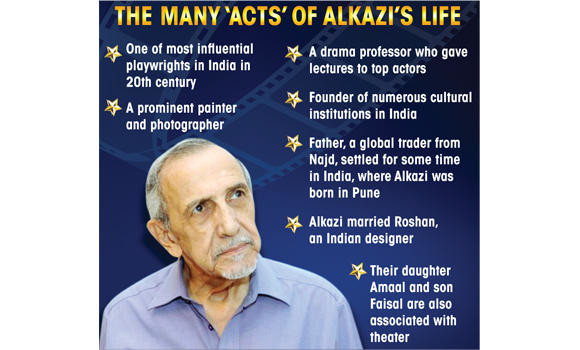
It is a classic case of believe it or not. Ebrahim Alkazi, the celebrated Indian theater director, has his roots in Unaiza in Qassim.
Alkazi’s businessman father, Hamad, came from Saudi Arabia and did business in India in the 1960s and 1970s. That was before the oil boom changed the face of Saudi Arabia.
Alkazi, now 90, went to St. Vincent’s High School in Pune and St. Xavier’s College, Mumbai. He went to London for training at the Royal Academy of Dramatic Art.
On Feb. 20, when Alkazi will be honored at the 2nd Saudi Film Festival in Dammam, it will be like a homecoming for the prodigal son.
“We want to honor pioneers in the field of theater,” said Ahmed Al-Mulla, director general of the festival. “And Alkazi is top on that list.”
Alkazi has played the role of a bridge between Indian and Arab cultures. “We consider him as a treasure and a maker of history. We want to present him as a role model to our Saudi youth,” said Al-Mulla.
He said a documentary on Alkazi will be screened during the opening ceremony, and a book is also being published illustrating his remarkable life and achievements.
Early on in his career, Alkazi got associated with the Bombay Progressive Artists Group, which included M.F. Husain, F.N. Souza, S.H. Raza, Akbar Padamsee, Tyeb Mehta, artists who were later to paint from his plays and design his sets.
As the director of the prestigious National School of Drama, Alkazi revolutionized Indian theater by the magnificence of his vision, and the meticulousness of his technical discipline. He trained many well-known film and theater actors and directors, including Om Puri, Naseeruddin Shah and Rohini Hattangadi. He also founded Art Heritage Gallery in Delhi.
Alkazi’s father spent his life trading between Pakistan, India, Turkey, Kuwait and Lebanon. He settled for some time in India, when his son Ebrahim was born in 1925 in Pune.
His daughter Amaal and son Faisal are also associated with theater.
Alkazi speaks highly about his father and takes immense pride in his Saudi roots and considers his early days in Pune as “the richest moments in my life.”

source: http://www.arabnews.com / Arab News / Home / Jeddah – February 18th, 2015