Education has empowered women and endowed them with a courage to move to the centre stage of life and it is reflected positively in every sphere, said Governor P Sathasivam.
TNIE Verve 2019 Award winners Shine Benaven, Fajeena Kareem, Thesnim Azeez, Chitra Gopinath and Vidya Vinod | T P sooraj
Kozhikode :
Education has empowered women and endowed them with a courage to move to the centre stage of life and it is reflected positively in every sphere, said Governor P Sathasivam. He was inaugurating the second edition of The New Indian Express (TNIE) ‘Verve Awards’ in association with Faizal & Shabana Foundation, at Hyson Heritage here on Sunday.
“Yet in the 21st century there are areas where women are still under-represented such as science, technology, engineering, design, social innovation, etc. We have to bridge the present gender divide in innovation and entrepreneurship sector,” he said.
Presenting the 2019 Verve Awards to five women icons of the Malabar region, the Governor said the winners should encourage girls, especially those from weaker sections of society to come forward.
“The theme for this year’s International Women’s Day was Think Equal, Build Smart, Innovate for Change. Undoubtedly, the theme signals the need for equality.But these five women have equaled or even outdone their male counterparts in the field,” he said.
To celebrate the power and outstanding achievements of women, TNIE group launched the Verve Awards in 2018 in connection with the International Women’s Day. The second edition of the awards were conferred to exemplary women who have carved a niche for themselves through their hardwork and perseverance and have become leading entrepreneurs.
The winners of the second edition of the awards were Chitra Gopinath, Managing Director of Edappal Hospitals Pvt Ltd since 1990 (Life Time Achievement Award), Shine Benaven, proprietress and Managing Partner of Kanate Originals (Innovation Award),Thesnim Azeez, Celebrity Chef, entrepreneur-founder of ‘Thesnim’s school of Recipe Plus’ (Inspiring Icon Award), Vidhya Vinod, entrepreneur, educationist, president and CEO of Study World Education Holding Group (Enterprising CEO), and Fajeena Kareem, Co-founder, chief evangelist and creative director of Kiora Amorez, The Diamond Boutique and Luxury Lounge (Emerging Brand Award).
The award distribution function was attended by The New Indian Express Senior Vice President Vignesh Kumar, Resident Editor (Kerala) Kiran Prakash, General Manager (Kerala) P Vishnu Kumar, and Assistant General Manager (Kozhikode) M Chandrasekharan.
The dais was shared by invited dignitaries such as Gokulam Gopalan, Chairman of Gokulam Group of Companies, and Dr Joseph Sebastian, Director of Faizal & Shabana Foundation.
Prominent business personalities and successful entrepreneurs across the state attended the function. Matria exclusive woman and child hospital, NS Payyoli Mixture, Metrends Shoes and Bags associated with TNIE in felicitating the woman achievers.
source: http://www.newindianexpress.com / The New Indian Express / Home> States> Kerala / by Express News Service / April 08th, 2019
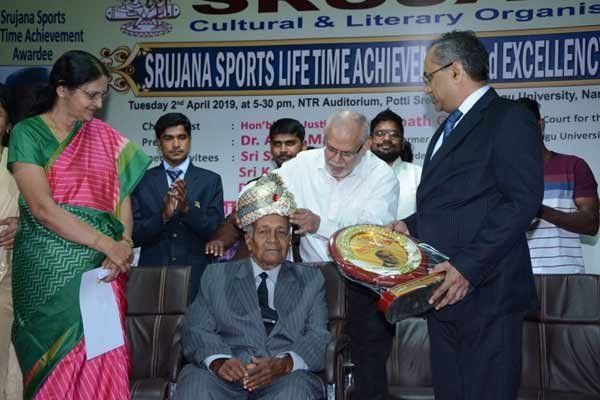
HONOUR: Veteran coach Mirza Rahmatullah Baig was felicitated by Srujana Cultural & Literary Organisation recently
Hyderabad:
Srujana Cultural & Literary Organisation honored former NIS and BCCI coach Mirza Rahmatullah Baig with a Lifetime Achievement Award at the Potti Sreeramulu Telugu University as part of its annual Sports Excellence awards.
The award was presented by Hon Justice of High Court of Telangana T. Amarnath Goud, Dronacharya awardee S.M. Arif and Dr. Avula Majulatha, former Vice Chancellor, P.S. Telugu University.
The 79-year-old Baig served the Board of Cricket Control of India as South Zone coach while on deputation from the Sports Authority of India during the period 1977-1983. He has been coaching for last 50 years and still continues to actively coach to this day. He is a qualified curator and umpire as well.
Baig started coaching in 1963 when he was employed with the Indian Navy. Till date he has coached over 35 internationals and 150 first class cricketers. He was one of the coaches who were involved in training Team India players before the 1983 World Cup. As the BCCI coach some of the cricketers he has trained are Kapil Dev, Md. Azharuddin, Venkatapathi Raju, Kirti Azad, Kiran More, M.S.K. Prasad, Ashish Kapoor, Sanjay Manjrekar, Raman Lamba, Ravi Shastri, Chandrakant Pandit, W.V. Raman, L. Sivaramakrishnan, Sadanand Vishwanath, Arshad Ayub, Bharath Arun, Lalchand Rajput, Navjyot Singh Sidhu, to name some. Cricketers such as VVS Laxman, Rahul Dravid, Robin Uthappa have sought his advise and expertise in the recent past.
There were also three categories of awards – Lifetime Achievement Award, Sports Excellence awards and Young Achievers. In sports excellence coaches such as P.G. Palguna (Football), V. Venkateshwara Rao (Rowing), K. Daniel (Cricket), Ramesh Goud (Karate), S. Swarnalatha (Gymnastics), B. Kameshwara Rao (Hockey), T. Jyotishwar (Kabaddi), Jitender Gupta (Roller Skating), Sandeep Kumar (Shooting were honored.
Shekhar Goud received a special award for adventure sports. Young achievers included Soumya (National football team captain), Nireekshan Reddy (kabaddi), Bhanu Prakash (shooting), Vishal Jadhav (gymnastics), T. Sunil (Rowing), Aryan Karra (Roller skating), T. Tarun Tej (Roller skating), Ameesha Mannut (Karate) and Preethi Gonda (Karate).
source: http://www.telanganatoday.com / Telangana Today / Home> Sport> Cricket / by Telangana Today / April 08th, 2019
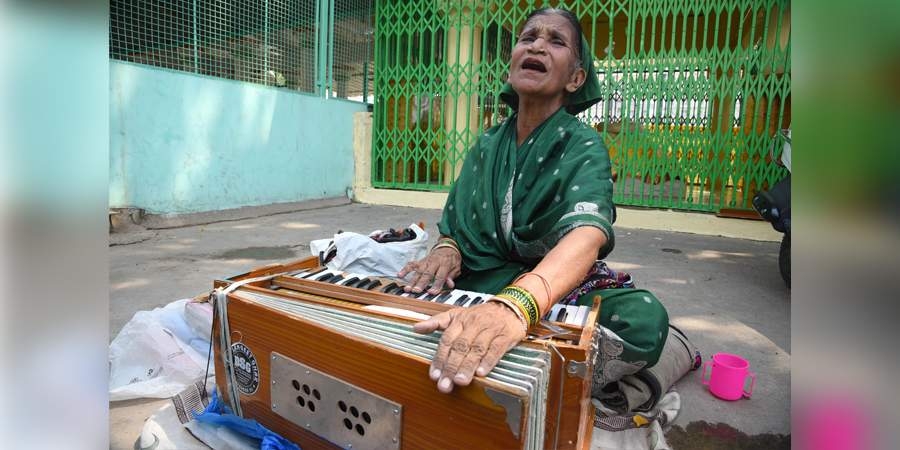
when Shahnaz Khanum sits outside the Hussain Shah Ali Dargah in Shaikpet with her harmonium, she is bound to touch a chord with her soulful singing.
Shahnaz Khanum (Photo | R Satish Babu, EPS)
Hyderabad :
Women are not allowed to sing inside dargahs, and that is why, Shahnaz Khanum sits outside the Hussain Shah Ali Dargah in Shaikpet with her harmonium. Since she finds keeping the pallu of her sari fixed on her head a bit irksome, she ties a green cloth around her head. She sings outside the dargah on Thursdays, Fridays and Sundays. She is always dressed in green when she performs.
It is unusual to see a woman who sings qawwalis. The mutawalli of the dargah informs that she was once allowed to sing inside the dargah, but had to be relocated when devotees raised objections.Now 65, Shahnaz speaks in a low, husky voice about the days she used to perform inside the dargah with her husband. It has been 23 years since her husband passed away and the family, which is full of accomplished singers, now lives hand to mouth.
“I was married at 11, and had my first child at 12. My husband and I belong to a family of singers. I never went to school, but started singing in Telugu, Urdu, Hindi, Marathi and even Tamil from a young age. My mother was my teacher and she used to teach me ghazals. She was a big fan of Begum Akhtar. My husband used to play many musical instruments including the tabla and harmonium. My association with this dargah goes back 40 years. In those days, we used to live beside the dargah so that we could perform here.”
When asked to sing her favourite qawwali, she deftly runs her bony fingers on the harmonium and breaks into the famous, ‘Mere Dil Mein Hain Yaad-e-Mohammed.’ Her voice has pathos and she is a tad out of breath. But again, she has been sitting outside in the summer sun for the last three hours.
Shahnaz continues reminiscing about the good old days and says, “Earlier, there used to be many qawwali competitions in which both men and women used to take part. I used to travel to various parts of South India to take part in these soirees. But now, these gatherings are not held often. Also, I had to stop performing after my husband’s death. I earn anything between `200– 600 per day. I need to do this for my grandchildren. One of them has haemophilia and she needs an injection that costs `6,000 every month.”
Her son, Qadir Ayaazi, sings qawwalis, ghazals and bhajans. He performs with his two brothers in various dargahs, and has also sung bhajans for Satyanarayana puja. He laments that getting work in the age of YouTube channels has become a Herculean task. “We do not know how to record and upload our performances. For recording, we need a studio and equipment which are costly. That is why, we do not have much visibility. Also, the competition is intense. There are plenty of other parties who agree to perform taking half the amount we charge. At the end of the day, we earn a pittance.”
Picking the thread of words from her son, Shahnaz says, “This vidya is of no use if there is no backing or platform. My dream is to educate all my grandchildren so that they can come out of this cycle of penury.”
If you want to help/contact Shahnaz for any programme, you can reach her at 9849365164.
kakoli_mukherjee@newindianexpress.com @KakoliMukherje2
source: http://www.newindianexpress.com / The New Indian Express / Home> Cities> Hyderabad / by Kakoli Mukherjee / April 04th, 2019
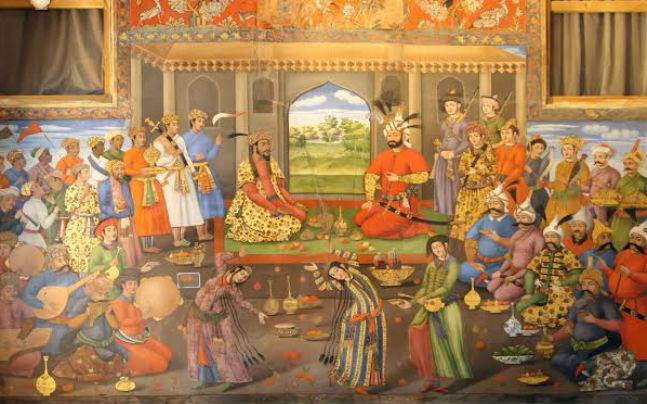
Most people know of this hierarchy but how much do we know of the women behind this great dynasty?
Mughal empire
The Mughal Empire (1526-1707) was established by Babur defeating Ibrahim Lodi in the First Battle of Panipat. His reign went on for four years (1526-1530). His successor was his son, Humayun. Then arrived Akbar, followed by his son Jahangir, followed by Shah Jahan, and the, the last great Mughal ruler– Aurangzeb.
Most people know of this hierarchy but how much do we know of the women behind this great dynasty?
Here’s a list to educate you about the same!
source: http://www.indiatoday.in / India Today / Home> News> Education Today> GK & Current Affairs> History / by India Today Web / New Delhi – May 06th, 2016
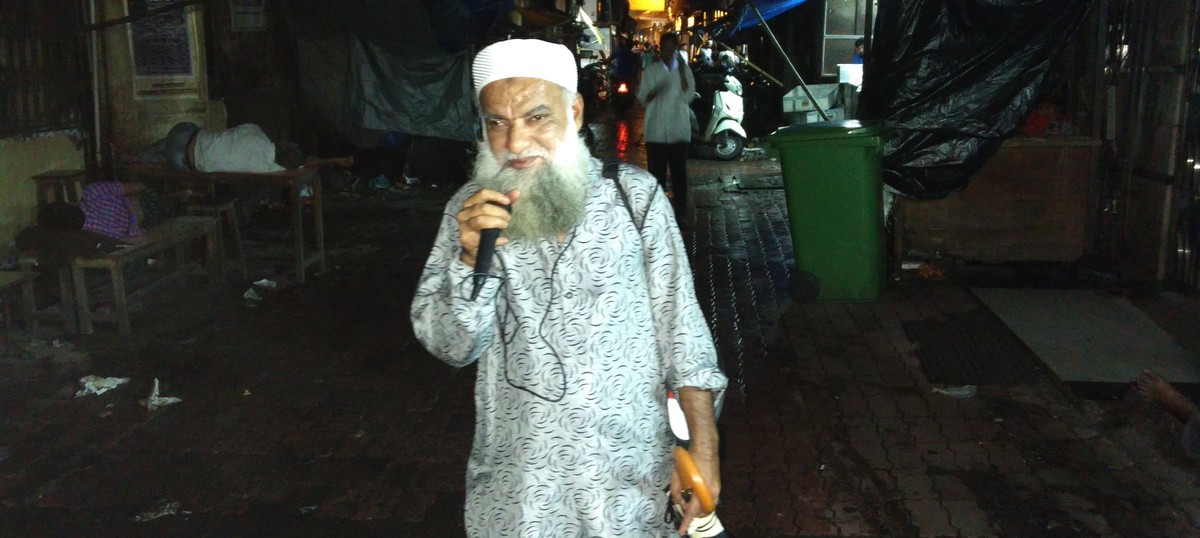
The 56-year-old walks seven kilometres, reminding residents to get up for the meal before the roza.
Photo Aakash Karkare
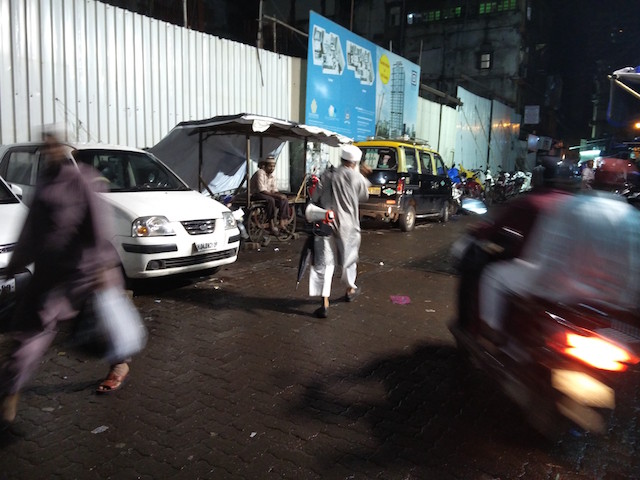
It’s 3 am in Mumbai. Much of the city that claims never to sleep is silent and resting, save for one corner in the south. Under the massive JJ Flyover, in an area called Mohammad Ali Road, the streets are humming and throbbing. All kinds of meats and sweets are being made at roadside stalls. Not a single restaurant is shuttered. Teenagers, sometimes four to a bike, whiz around. Little children play cricket in the traffic-free narrow lanes.
In this chaos resounds the call of Mohammed Farooq Qureshi Sheikh. “Neend se jaago, sehari ka waqt ho gaya. Zindagi ka kya bharosa? Ramzan mile ya na mile.” Wake up, it’s time for sehar. Who knows what life will bring? If we are able to get Ramzan, or not?
Credit: Aakash Karkare
For the last 18 years, during every Ramzan, Sheikh has made the same seven-kilometre trek from Shafai Masjid in Dongri to Dawoodbhoy Fazalbhoy High School in Chinch Bunder. The distance isn’t much, but Sheikh walks through every lane and by-lane, reminding the residents with his call to awaken for sehar (the meal eaten before the fasting for the day begins).
Along the way, passersby who know him, and call him Taj Bhai, stop to greet him. A few of them give him donations for his work. Children holler “Taj Bhai, chalu ho jao.” Taj Bhai, do your thing.
The 56-year-old finishes his walk by quarter past four, about 15 minutes before sunrise, so he can have his meal before the fasting begins. He chooses to avoid the area’s famed Ramzan delicacies, opting for a simple meal of milk and chapati. “At my age I can’t eat things like malpua,” he said.
A dying tradition
Sheikh is a practitioner of a Ramzan tradition that dates back ages, to a time before people had ready access to clocks and needed someone to tell them time. In Egypt, the practice is called Musaharaty and those who sustain it El Musaharaty. In Kashmir, they are given the name Sehar Khans.
Everywhere, alas, the custom is slowly dying out. The Sehar Khan, or the El Musaharaty, is becoming increasingly obsolete as people have begun relying on their mobile phones or alarm clocks to tell them time.
Sheikh calls himself a “sehariwalla” and while he says he hasn’t heard of the Sehar Khans of Kashmir, he does remember an “old man with a walking stick” who would come to his neighborhood when he was growing up. “Even then, the tradition of the sehariwallas was almost non-existent.”
Sheikh began his twilight Ramzan walks when he was in his mid-30s. His wife passed away when he was 22 and their son passed away soon after he was born. “In the beginning, I would walk up to the last floor in each building and call out to people. Now, I am too old to do that so I have this megaphone.”
He stays up all night, and at 3 am, he sets off from the office of the travel agency where he has worked for the past 15 years and where he lives in a corner. Sheikh says he got his first job when he was 16 at a printing press, after which he got by with odd jobs. Many of the employees at the travel agency have grown up seeing Taj Bhai do his nightly rounds.
Even in his old age, Sheikh keeps a brisk pace as he makes way through Mohammad Ali Road, chanting, “Neend se jaago, sehari ka waqt ho gaya…”
Saif Sathi, who has grown up in the area, feels Sheikh is still important. “There are so many people who don’t have anyone to wake them up,” said the 17-year-old. “People who sleep on the streets, for one thing. Even the local mosque has no one to wake them up. My family, too, relies on his call to awaken.”
But giving wake-up calls is not all Sheikh does. Last year, when the monsoon was late in arriving, he began going to the Kasaiwada area in Kurla to ask people to pray for rain. Even this year, because the rains didn’t come on time, he reminded people to pray for them. On occasion, when asked by local municipal councillors, he even announces government schemes. “A few years ago, they were distributing spectacles, so I announced that in the neighbourhood. More recently, I announced the government’s plan to conduct heart operations for free.”
According to Sheikh, there are still sehariwallas in the “poorer areas of the city who go around with daflis (tambourines)”. In Mumbai’s suburbs, in slums in Kurla or Nala Sopara, this tradition might still exist because not everyone there might have a phone, he believes.
But in the main city, he claims he “might be the only one still practising the profession”, although he adds a disclaimer. “I don’t keep up with what others are doing. All I can say for sure is that I am doing it.”
He plans to continue being a sehriwalla as long as he is “hale and hearty”, and is not very optimistic that future generations will continue in his footsteps. “Is there anyone in your generation who will stand and sing for an hour and a half?” he asked and laughed heartily.
source: http://www.scroll.in / Scroll.in / Home> Magazine> Traditional Touches / by Aakash Karkare / July 03rd, 2016
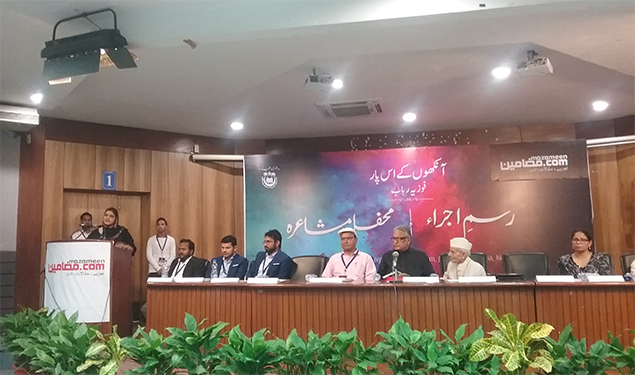
Mazameen.com, one of the largest websites of Urdu after Rekhta.org, in collaboration with Department of Urdu, Jamia Millia Islamia (JMI) organized a programme to launch Foziya Rabab’s first collection of poems “Aankhon Ke Us Paar” at the auditorium of the University’s Engineering Department here on Friday, 3 November, 2017.
Speaking on this occasion former Chairman of National Commission for Minority Educational Institutions Justice Suhail Ejaz Siddiqui likened the young poet from Ahmedabad with the famous poet Parveen Shakir (1952-1994) and extended his good wishes for her poetry to flourish in years to come. Renowned Urdu litterateur Gulzar Dehlvi maintained that Rabab was aware of the style of expression. “There is possibility of great creativity in her poetry,” said the nonagenarian poet.
Former Head of the Department of Urdu, JMI, Professor Khalid Mahmood appreciated the title Aankhon Ke Us Paar (Beyond the Horizons) in a philosophical note stating that the metaphor stood for wisdom and farsightedness.
He described the poem Mujhko to kuchh aur dikha hai aankhon ke us paar/Ek tilsam-e-hoshruba hai aankhon ke us paar as one of the finest poems of the collection.
Mahmood, who has also served as Vice Chairman of Delhi Urdu Academy, commended the feminine expression of emotions in her poetry stating that at times the changing mood in her narration took one by great surprise.
Urdu essayist and critic Kausar Mazhari said, “Foziya has tried to unfold women’s poetry which usually remains closed, but in so doing she has opened it a little more than required”. He called her a beautiful poet of romanticism with an amazing blend of simplicity and sincerity.
Head of the Department of Urdu, JMI, Prof Shehpar Rasool said, “The poet [Foziya] in Aankhon Ke Us Paar knows well what to say, when to say and how much to say”.
There is no feminism in Foziya’s poetry, rather it has an oriental household woman’s love for her man in which romanticism prevails because of the power of expression, remarked Dr Baran Farooqi.
About her own poetic journey Rabab said that her achievement was the result of the blessing of Allah and love of friends and well-wishers. “Playing around words is my profession; words which keep changing and which then take the shape of poetry.”
Words are the signs and symbols of life and carriers of truth and honesty, she added. She also read out some of her poems. Dr Adil Hayat presented a paper in which he termed Rabab’s poetry as the “poetry of love and separation”.
The book launch and discussion was followed by a mushaira in which over a dozen poets participated. These among others included Shehpar Rasool, Shakil Jamali, Tarannum Riyaz, Alok Shrivastav, Salim Saleem, Alina Itrat, Abdul Wahab Sukhan, Khalid Mubashshir, Kunwar Ranjit Singh, Poonam Yadav, Rehman Musawwir, Saurabh Shekhar, Tabish Mehdi, Urmila Madhav. Irfan Waheed and Khalid Saifullah Asari of mazameen.com also shared their views.
Moin Shadab beautifully compèred the mushaira whereas Dr Khalid Mubashshir moderated the book launch session.
A good number of literary persons including teachers and students from JMI and other institutions attended both the book release programme and the mushaira.
(A Delhi-based freelance journalist Manzar Imam can be contacted at manzarkhalil@gmail.com)
source: http://www.ummid.com / Ummid.com / Home> Life & Style / by Manzar Imam , ummid.com / November 13th, 2017
Taking up the challenging task of achieving unity and tolerance
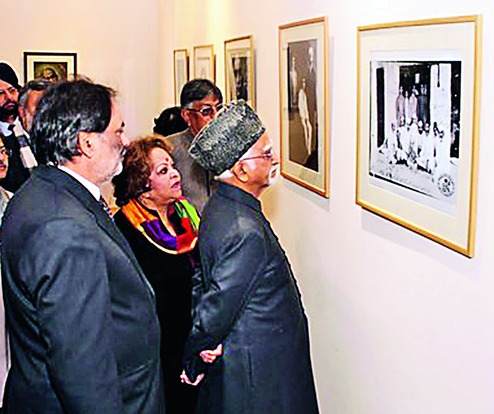
M.H. Ansari viewing an exhibition on Mukhtar Ahmad Ansari at the M.F. Hussain Art Gallery, 2015
Fifty-six is no age to die. Mukhtar Ahmad Ansari, MD, MS, with a tall reputation in London’s Lock Hospital and Charing Cross Hospital, and ‘free Doctor’ to uncountable poor in Delhi, was on a train bringing him back to his hometown, Delhi, from Mussoorie where he had gone to treat the Nawab of Rampur when, on May 10, 1936, a heart attack – his first and fatal – took him away. He was four years short of sixty.
Doctors are human and death’s sudden grasp comes to medical luminaries just as it comes to ordinary mortals. Ansari must have been in some disbelief at his heart’s capitulation. But his death shocked a whole world beyond himself, a world of grateful and trusting patients, former patients, friends, families of patients, countless Congress and Muslim League leaders who were his patients, some of them, and fellow freedom fighters, all. For he had been more, incredibly more, than the ‘good Doctor sahib‘. He had been, for over two decades, a political guide and pathfinder to all those who believed in India’s plural integrity and in India’s destiny as a leader of progressive causes globally.
The Balkan War in 1912 saw 32-year-old Ansari lead a medical team from India to Turkey to help wounded Turkish forces in what was not just a humanitarian act but one that formed lasting bonds, as the medical mission of the doctor, Dwarkanath Kotnis, to China in 1938 during the Sino-Japanese war was to do. The Kotnis Mission has been the subject of a film, Dr. Kotnis Ki Amar Kahani by V. Shantaram, for which K.A. Abbas wrote the script. A film has to come on Dr. Ansari Ki Amar Kahani about that mission’s work. Mrinal Sen could well have made such a film a decade ago but perhaps Javed Akhtar or Shyam Benegal will yet do it, for it cries out, filmographically and civilizationally, to be done.
M.A. Ansari’s life as such needs to be known, not for his sake – he is beyond the reach of recognition or neglect – but ours. Being invited to play a constructive political role in the formulation of the Lucknow Pact between the Congress and the Muslim League in 1916 and to preside over the Muslim League’s sessions in 1918 and 1920, Ansari emerged as a sturdy champion of the Khilafat Movement and Hindu-Muslim unity.
His commitment to that cause soon steered away from League politics, the separate electorates idea and all that was to lead to the demand for Pakistan. This resulted in his becoming inevitably, a general secretary of the Indian National Congress in 1920, 1922, 1926, 1929, 1931 and 1932 and in 1927, its president. A former president of the Muslim League becoming president of the Indian National Congress? Incredible, but incredible things did happen in Gandhi’s and Nehru’s India.
Drawing close to the Mahatma’s eclectic nationalism, Ansari became Gandhi’s ‘Delhi host’ in his old Delhi manor called ‘Darussalam’ and physician to members of Gandhi’s family, including his grandson, Rasik, son of Harilal Gandhi, who contracted typhoid in 1929 while on a visit to Delhi (from eating roadside jalebis, as Rasik himself explained) and in spite of Ansari’s valiant efforts, could not be saved. Gandhi was touring the North West Frontier at the time. Ansari sent him a telegram conveying the news. Gandhi steeled himself. “I loved the boy,” he wrote, “I had placed high hopes on him…” The trauma brought the doctor and the Mahatma closer to one another.
Ansari was instrumental in the founding of the Jamia Millia Islamia, and bringing to it a whole host of nationalists, Muslim and Hindu, to learn and to teach. In return for learning Urdu, Gandhi’s youngest son, Devadas, was recruited to teach the Jamia spinning. Ansari was Jamia’s chancellor when he died.
Liberation from mutual animosity and mistrust among Hindus and Muslims was for him a passion. Ansari was, to use an old-fashioned phrase, a man of God. He was also a man of Science. His being a man of science doubtless had something to do with his harbouring his eminently rational goal of wanting Hindus and Muslims to live in civilized amity, not conflict.
As it happened, on the very day Ansari died, Gandhi was meeting in the Nandi Hills, near Mysore, India’s most famous man of science, Chandrasekhara Venkata Raman. If a man of god can be a man of science, a man of science can be a man of god.
Raman to Gandhi: “The growing discoveries in the science of astronomy and physics seem to me to be further and further revelations of God. (But) Mahatmaji, religions cannot unite. (Only) Science offers the best opportunity for a complete fellowship. All men of science are brothers.”
Gandhi to Raman: “What about the converse? All who are not men of science are not brothers?” ( The Collected Works of Mahatma Gandhi, Volume 62, pages 387-9)
Within a few hours of this conversation, M.A. Ansari, man of science and of god, brother to all who came in contact with him personally, professionally or politically, lay dead in his railway coach.
Gandhi had gone to the Nandi Hills with Sardar Patel, among others, for a ‘health’ sojourn at Ansari’s behest. When the news reached him the next day, he was stunned. Penning a tribute for the Associate Press, he described him as “the poor man’s physician if he was also that of the Princes” and said, “His death will be mourned by thousands for whom he was their sole consolation and guide.” He added: “…He was my infallible guide on Hindu-Muslim questions. He and I were just planning an attack on the growing social evils.”
An attack on social evils. Strong words, scorching words. What was the biggest ‘social evil’ that Gandhi was exercised most about in 1936? Hindu-Muslim mistrust.
He needed a guide from among the Muslim community to tackle this. And, with Ansari, that guide was gone. At a loss to find a successor he turned first to Zakir Husain. “I ask, will you take Dr Ansari’s place?” On Zakir Sahib not agreeing, he turned then to Maulana Azad for that crucial assistance. It is entirely reasonable to suppose that had Ansari lived he would have played a defining role as a symbol, spokesman and strategist for Hindu-Muslim unity in the Constituent Assembly and then, very probably, in 1950, become president or vice-president of India. He would have been only 70, the age at which his grand-nephew, Mohammad Hamid Ansari, first became vice-president of India.
What was the main concern – ‘social evil’ – forcefully, passionately expressed in Vice-President Ansari’s farewell address to Rajya Sabha? The challenge to Hindu-Muslim unity, pluralism, not as mere ‘tolerance’ but in Netaji Subhash Chandra Bose’s words: cultural intimacy.
We know what Vice-President Ansari, descended from that great name in Indian pluralism – Dr M.A. Ansari – who rejected everything that led to Pakistan, has received by way of a ‘reward’.
Seventy five years after the Quit India Movement, 70 years after Independence, we the people of India, brothers and sisters in plural mutuality, must tell the shatterers of India’s unity, Hindu, Muslim and other: Quit, quit terrorizing India.
source: http://www.telegraphindia.com / The Telegraph, online editon / Home> Opinion / by Gopalkrishna Gandhi / August 22nd, 2017
President Kovind presents Shaurya Chakra to Irfan Ramzan Sheikh
President Ram Nath Kovind on Tuesday awarded Shaurya Chakra to 16-year-old Irfan Ramzan Sheikh, a young Kashmiri who took on three armed terrorists to fend off an attack on his family.
Sheikh was a 14-year-old boy when he fought terrorists and forced them to flee when they attacked his residence in Shopian district of Jammu and Kashmir two years ago.
“He exhibited courage and maturity and fought off militants, safeguarding the life of his father and other family members in Jammu & Kashmir,” a tweet by the Rashtrapati Bhavan said.
Shaurya Chakra is usually awarded to armed forces and para-military personnel for “gallantry otherwise in the face of the enemy”. Although Shaurya Chakra may be awarded to civilians as well as military personnel, it is very rare that a military honour is presented to someone who is not part of any security agency or armed forces.
It is third in order of precedence of peacetime gallantry awards and comes after the Ashoka Chakra and the Kirti Chakra.
Who is Irfan Ramzan Sheikh
Currently, studying in Class X, Irfan is a resident of Shopian district of Jammu and Kashmir. His father Mohammad Ramzan is an ex-sarpanch with affiliations to the People’s Democratic Party (PDP).
Sheikh aspires to become an Indian Police Service (IPS) officer and serve the country.
Indomitable courage
During the intervening night of October 16-17 of 2017, terrorists cordoned off the house of Sheikh. When Irfan, the eldest son of Mohammad Ramzan, opened the door, he found three terrorists in the verandah of the house armed with rifles and grenades.
_____
“Sensing that the militants could harm his family, he exhibited highest degree of courage and faced the militants for sometime so as to avoid their entry inside the house. In meantime, his father came out and the militants pounced on him, resulting in scuffle,” the citation for the award read.
The 14-year-old boy did not think for a moment for his own safety and pounced upon the terrorists for safeguarding the life of his father and other family members.
The terrorists also resorted to indiscriminate firing, resulting in severe injury to Sheikh’s father. He later succumbed.
However, Sheikh did not lose courage and continued to engage in scuffle with one of the terrorists, who resorted to indiscriminate firing resulting in severe injuries to terrorists as well.
On seeing one of their associates injured, the terrorists tried to flee. However, Sheikh chased them and they left the body of their fellow terrorist behind.
“Irfan Ramzan Sheikh exhibited the extraordinary show of bravery and maturity in such a small age,” the citation read.
(With PTI inputs)
source: http://www.dnaindia.com / DNA / Home> India / by DNA Web Team / March 21st, 2019
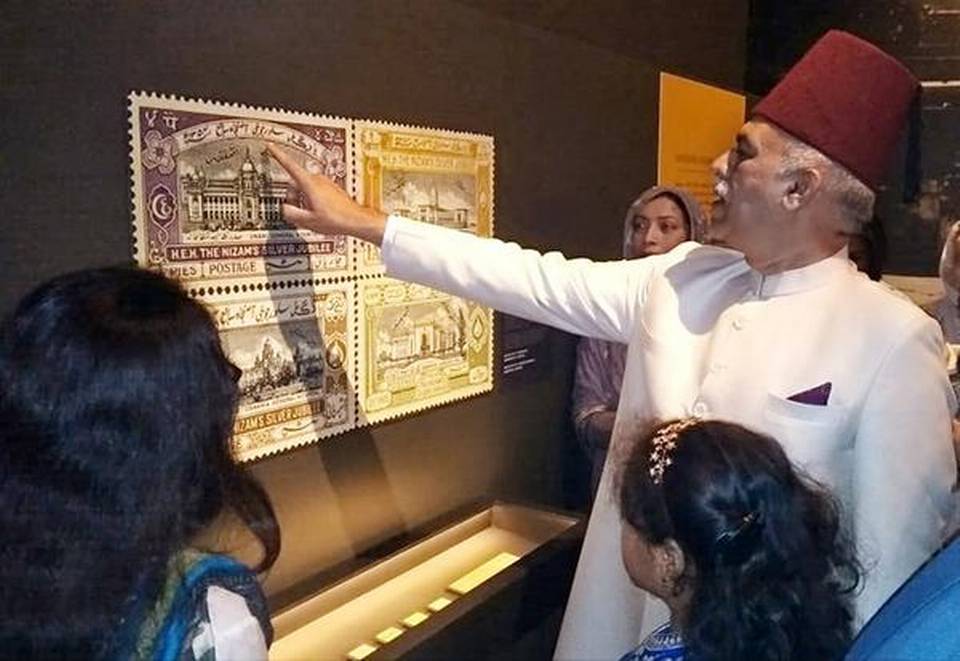
Nawab Najaf Ali Khan, a grandson of the seventh Nizam, at the exhibition in New Delhi recently.
Rare Nizam-era stamps from Ewari family’s philately collection exhibited in Delhi
An exhibition of postal stamps, envelopes, documents and photographs of the Nizam era held at New Delhi recently was a journey into the past not only for history lovers and inquisitive minds ready to peep into the bygone era at any given opportunity but also for descendants of the last and seventh Nizam, Mir Osman Ali Khan.
The exhibition with the theme of ‘Property of a Gentleman – Stamps from the Nizam of Hyderabad’s Dominions’ was organised jointly by The Gujral Foundation and Guli Art Foundation at Bikaner House from March 9 to 24 with the collection from the Ewari family. The kin of the seventh Nizam, including one of his grandsons Nawab Najaf Ali Khan, who visited the exhibition along with other family members, were all praise for the Ewari family for their prized collection.
Mr. Najaf Ali Khan said the collection comprised a selection of stamps originating from the erstwhile Hyderabad State during the Nizam’s rule. “The philately and other collection has a deep personal connect with Hyderabad,” he said, adding that the genesis of the expansive collection was the legacy of Nawab Iqbal Hussain Khan, the Post Master General in the Government of Nawab Mir Osman Ali Khan Bahadur Nizam VII.
First adhesive stamp
In all, the Ewari collection includes three million stamps from across the world, including the rare Penny Black, the first adhesive postage stamp in the world. It also featured every single stamp in the chronology of the senior most princely state of colonial India, Hyderabad. “The Asaf Jahi rule with Hyderabad as its headquarters issued its own stamps for almost 80 years from 1869 to 1949 till it joined the Indian Union,” Mr. Najaf Ali Khan explained. Against the present day advanced technology in communication, postage stamps were the indispensable remnants of the bygone era. The seemingly insignificant pieces of paper played an essential role as payment to help transfer messages, to facilitate revenue collection, taxation and other fiscal purposes, he noted.
Historic value
“Thanks to the organisers, who created such an ambience that immediately drew us in and we felt transported to the era of such royalty, it was a mesmerising experience. The dimly-lit huge landscapes of structural marvels of Hyderabad and custom-made lead boxes housing the stamps added to the beauty of the collection. We thank the Ewari family for preserving these priceless and alluring exhibits of historic value,” Mr. Najaf Ali Khan said.
source: http://www.thehindu.com / The Hindu / Home> News> Cities> Hyderabad / by B. Chandrasekhar / Hyderabad – April 01st, 2019
Khan, a computer science student was shortlisted in November last year based on his profile on a programming site.
A 21-year-old, non-IIT engineer from Mumbai, bagged a hefty Rs 1.2 core package at Google’s London office. Abdullah Khan, a student of Shree LR Tiwari Engineering College was called for an interview by Google. Following a couple of rounds of interviews, he was asked to appear for final screening at Google’s London office.
Khan, a computer science student was shortlisted in November last year based on his profile on a programming site. His salary is divided into the base salary of Rs 54.5 lakh per annum, 15 per cent bonus and stock options worth Rs 58.9 lakhs.
“I used to participate as it was fun. I did not even know that firms check programmers’ profile on such sites. I showed the email to my friend who knew someone who had received such an email in the past. I’m looking forward to joining their team. It will be an amazing learning experience for me, ” Khan told TOI.
The average salary offered to a non-IIT engineering graduate is 4 lakh per annum.
source: http://www.newindianexpress.com / The New Indian Express / Home> Cities> Mumbai / by Online Desk / March 29th, 2019