Tag Archives: Saba Khan – cofounder – Parcham

Saif Ali Khan’s sister Saba opens up about managing the family’s Rs 10 billion legacy

Bhopal, MADHYA PRADESH :

Saba recalled her father’s lessons in composure, fairness and thoughtful speech.
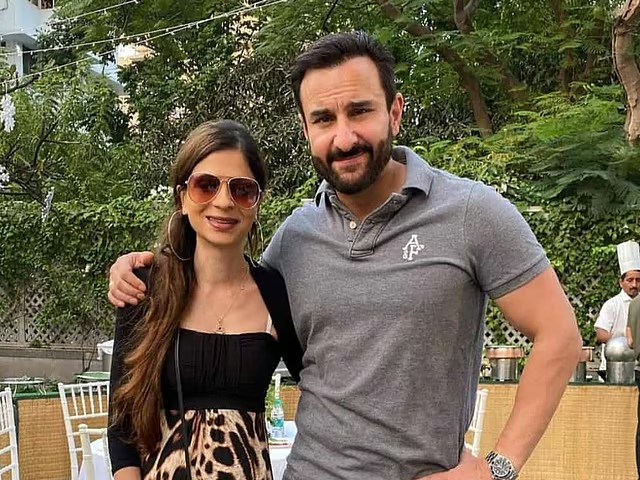
Saif Ali Khan and Saba share a bond rooted in family and memories. IANS

Dubai:

Saba Pataudi, sister of Bollywood actor Saif Ali Khan, has opened up about her responsibility for managing the Pataudi family’s legacy, revealing that her late father, former Indian cricket captain Mansoor Ali Khan Pataudi, entrusted her with the role.

Saba, the daughter of actor Sharmila Tagore and the late Mansoor Ali Khan Pataudi, oversees responsibilities connected to the family’s Bhopal estate and the Auqaf-e-Shahi trust. The family’s legacy has been estimated at more than Rs 10 billion.

In an interview, Saba explained that her father played a defining role in preparing her for the responsibility.

“Abba left that to me,” she said, reflecting on the trust her father placed in her and the lessons she continues to draw from him.

Lessons from her father

Saba recalled how her father taught her to remain composed, treat people fairly and choose her words carefully. She said those principles continue to guide her approach to managing the family’s affairs.

She also described her father as someone she continues to turn to spiritually, even after his death. His guidance, she said, helped her understand the responsibilities associated with the family’s heritage.

Mansoor Ali Khan Pataudi, popularly known as Tiger Pataudi, was one of India’s prominent cricketers and captained the national team. His marriage to Sharmila Tagore brought together two well-known families from Indian sport and cinema.

What does the family legacy involve?

Saba’s responsibilities extend beyond the management of a family estate. As the mutawalli of the Auqaf-e-Shahi trust, she oversees the trust’s properties and charitable responsibilities.

These include mosques and other properties linked to the family’s historical ties to Bhopal, as well as facilities for pilgrims visiting Makkah and Medina.

The reported valuation of more than Rs 10 billion relates to the wider family legacy and should not be interpreted as Saba’s personal wealth. Her role involves stewardship and management of the trust’s assets and responsibilities.

Saba has also discussed plans for initiatives benefiting women and girls, including a girls’ school and a hospital for women, subject to the resolution of pending legal matters involving family property.

A responsibility entrusted by her father
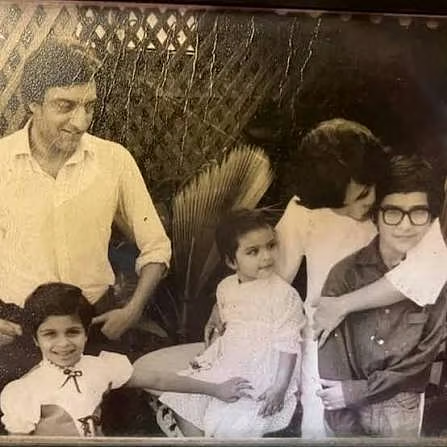
Saba’s reflections offer a glimpse into a side of the Pataudi family that extends beyond celebrity and cricket. While Saif Ali Khan and Soha Ali Khan are widely recognised for their careers in the entertainment industry, Saba has taken on responsibilities associated with preserving the family’s historical and charitable legacy.

For her, the role is closely tied to her father’s confidence in her abilities and the values he instilled in her. She continues to regard those lessons as central to carrying forward the responsibilities he entrusted to her.

source: http://www.gulfnews.com / Gulf News / Home> Entertainment> Bollywood / by Devadasan K P, Chief Visual Editor / October 14th, 2026

A field all to herself

Mumbai, MAHARASHTRA :

Non-profit Parcham has worked with authorities to create an exclusive sports ground for girls

Imagine an Indian city with open spaces full of girls playing, running, laughing… Imagine playgrounds spilling over with girls playing football, cricket and hockey. Imagine girls and their mothers in salwars , saris, tights, shorts and hijabs running across open fields chasing a ball, scoring goals, and loudly cheering. If you can imagine all this, you’re imagining a radically different Indian city! It’s different because girls don’t play. They certainly don’t play as much as boys. They definitely don’t dominate the playgrounds and maidans of our cities. Mostly they wait on the sidelines if they make it to the playground at all.

It’s a reality non-profit collectives such as Parcham, which uses football to engage with girls from marginalised communities in the Mumbai Metropolitan region, are working hard to create.

Their most recent initiative is the takeover of an empty plot of land adjacent to Mumbra’s Maulana Azad Stadium to create an exclusive sports ground for girls, the first of its kind in Maharashtra. “Parcham has been in dialogue with the Thane Municipal Corporation for a few years to create a safe space for women and girls to exercise their right to play,” says Sabah Khan, co-founder of Parcham. “Now that dream has been realised.”

Though the plot is yet to be levelled and cleared of construction debris, more than 100 girls and women recently staked claim to it by participating in the Third Fatima Bi Savitri Bai Football Tournament held at the new ground.

Image change for Mumbra

“Reserving a plot for girls to play is a big achievement for women who are minimally able to access public spaces,” says Salma Ansari, who trained in football with Parcham and now helps manage its football programme. “It’s also a major change in the image of Mumbra.” Like many Mumbra residents, Salma moved here with her family from Byculla after the 1992-93 Bombay riots. Since then, Mumbra has largely been perceived as a haphazardly-planned Muslim ghetto. “That Mumbra will now set the benchmark in working towards gender equality in public is revolutionary,” says Sabah.

This was part of Parcham’s goal when it initiated a football programme for 20 girls in Mumbra in 2012. “We wanted to make women visible in ways that were rarely seen, moving beyond narratives of victimhood reserved for Muslim girls,” explains Sabah. “We wanted women to visibly stake claim to public spaces; for girls to access playgrounds and have fun.”

The football programme now extends to 99 girls and includes the areas of Mankhurd, Bandra and Nerul.

The question that arises now is whether segregation of women from men is the only way to further women’s access to the public. In the current scenario, where any space in a building compound or open ground gets quickly overtaken by boys, it might be a viable short-term strategy.

“In our experience, when girls take the field, it’s like a mela — men hang around leering, staring, commenting, taking videos (that we ask them to delete),” says Salma. How do girls then develop the confidence to run freely, hold their bodies less rigidly and focus on developing game skills?

“While we maintain our claim to mainstream public spaces, till they accept a girl’s presence in the open field, till girls feel more confident, and their families more assured of their safety, a girls-only field may be a solution,” says Sabah. “Once the girls are hooked, it does not matter where they play; it’s only about making or saving a goal.” And in the end, that’s all that should matter.

As I wind up this Streetwise column, what better thought can I leave you with than that?

Sameera Khan is a Mumbai-based journalist, researcher and co-author,Why Loiter? Women & Risk on Mumbai Streets

Till girls’ presence in the open field is accepted and families are assured of their safety, a girls-only field may be a solution

source: http://www.thehindu.com / The Hindu / Home> Features> Metro Plus / by Sameera Khan / April 17th, 2019