Shopian District, South Kashmir, JAMMU & KASHMIR :
Police officers said that the policemen who were killed were guarding a minority picket, meant for security of a few Kashmiri pandit families in Zainapora area of Shopian.
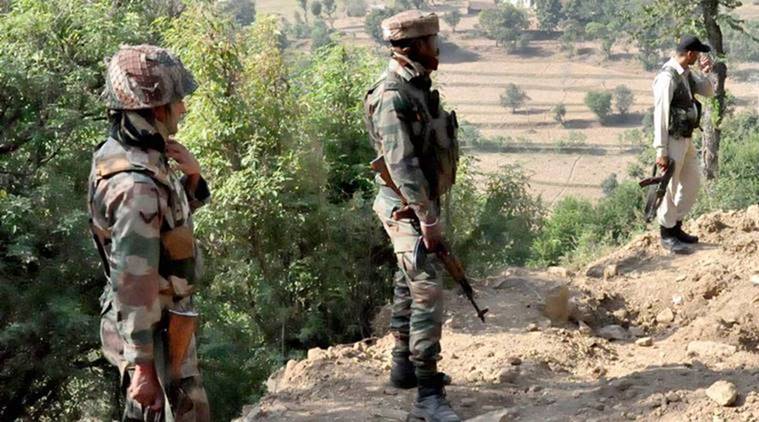
Three policemen were killed by militants in Shopian on Tuesday. (File photo)
Four Jammu and Kashmir policemen were killed in a militant attack on a police picket in South Kashmir’s Shopian district on Tuesday. The attack was the first one by militants in the Valley after they suffered several blows in multiple encounters over the last one month in South Kashmir.
Police officers said that the policemen who were killed were guarding a minority picket, meant for security of a few Kashmiri pandit families in Zainapora area of Shopian. Four weapons belonging to the policemen were also taken by the militants after the attack, officials said. The four policemen have been identified as Abdul Majeed, Mehraj-ud-din,Anees and Hameed-ul-lah.
Majeed was a selection grade constable and a resident of Gandebal district, Mehraj-ud-din was a resident of Bandipora district in North Kashmir, while as Anees and Hameed-ul-lah were residents of Kulgam and Anantnag districts of South Kashmir respectively, officials said.
“We pay rich tributes to our colleagues Abdul Majeed, Mehraj-ud-din, Anees and Hameed-ul-lah who were #martyred in a #terror attack at #Shopian today. Our thoughts and prayers are with the grieving families at this juncture. RIP,” the state police tweeted.
Shopian district has witnessed a spurt in violence in the last one month. Apart from multiple encounters between security forces and militants, over a dozen civilians were abducted from South Kashmir villages by militants and two of them were killed on suspicion of being informers. The state police has recently claimed that they eliminated the top militant leadership in South Kashmir.
About the militant attack on Tuesday, police sources told The Indian Express that a group of militants entered the guard post of the minority picket. The militants fired indiscriminately, killing three policemen on the spot and injuring one. The injured policeman succumbed on way to the hospital, a senior police officer said.
After the attack on Tuesday, militants also posted pictures of the weapons taken by them from the police picket.
Senior state police officers, however, told The Indian Express that they are verifying the pictures that have appeared on social media. A senior police officer in Shopian said that they suspect JeM militants for the attack.
The mainstream political parties in the Valley condemned the killing.
National Conference leader Omar Abdullah said, “State has been at the receiving end with deaths, whether of a civilian, a policeman or a militant, becoming order of the day over the past three decades.”
Former CM Mehbooba Mufti tweeted, “Strongly condemn attack on policemen in Shopian claiming 3 precious lives…. Solidarity with families of jawans .Relieved that no harm caused to any civilians in the minority pocket they guarded.”
source: http://www.indianexpress.com / The Indian Express / Home> India / by Adil Akhzer / Srinagar – December 12th, 2018
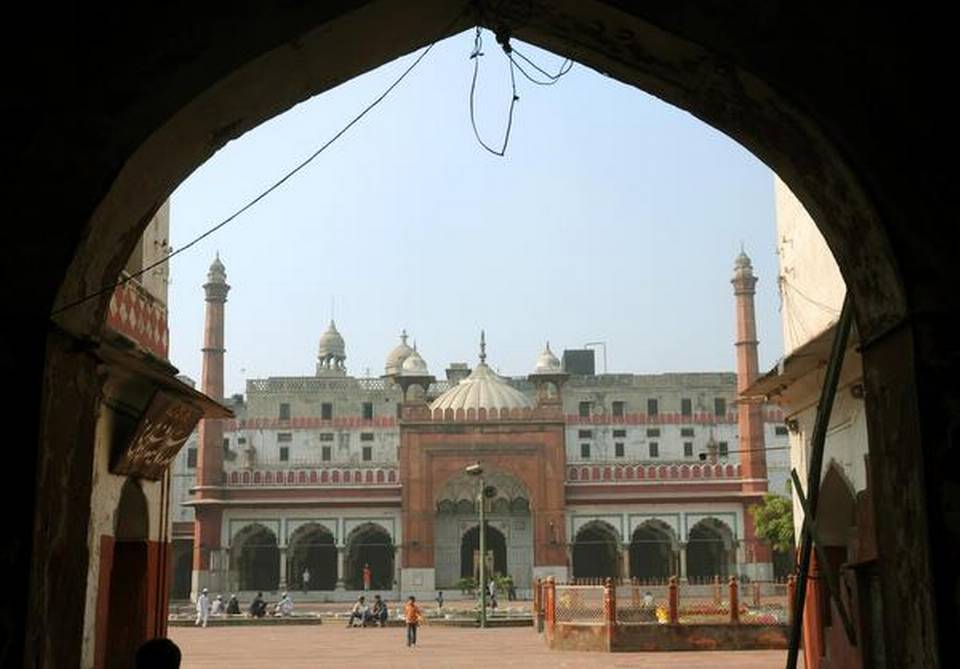
Grand design: A view of Fatehpuri Masjid | Photo Credit: V_V_Krishnan
From Haji Begum to Qudsia Begum, there is a a long list of women who contributed to the city’s grandeur
Women who patronised Delhi and converted it into a centre of art and culture, besides making it verdant and floral by laying parks and gardens, can be traced right from the time of Bega Begum or Haji Begum who built the beautiful tomb for her husband in Nizamuddin, which became the model for the Taj Mahal. After her, the daughters of Shah Jahan made it a paradisiacal city (just as Nur Jahan had done so earlier in Lahore and Kashmir). They were followed by Qudsia Begum and in recent times, in a small way though, by Lady Willingdon, Aruna Asaf Ali, Indira Gandhi and Sheila Dixit, among others. From the mid-17th century, the social and cultural fabric of Shahjahanabad has borne the stamp of women as during the Mughal era they acquired considerable wealth and influence. Much of what survives in Shahjahanabad reminds us of them and their contribution, compiled from different sources.
The imperial city was given overall shape under the supervision of Shah Jahan himself. His diktat determined the encircling of the city wall and the two main streets, running north-south and east-west, respectively at their junction of the palace complex (Red Fort) and the congregational Jama Masjid. “Within the limits of this centralised plan, it was mainly individual enterprise that led to the creation of commercial, religious, public spaces and homes.” Among the landmarks of the city were its mosques, three of which were commissioned by the wives of Shah Jahan after the death of Mumtaz Mahal – Akbarabadi, Fatehpuri and Sirhindi masjids named after the three. Akbarabadi Begum of Agra built a grand mosque to the south of Red Fort which was demolished by the British after the Revolt of 1857. Akbarabadi Begum was gifted a garden by Shah Jahan to the north-west of the city which came to be known as Aizzabad or Shalimar Bagh. The Begum then built a sarai within it. It was in this garden that the coronation of Aurangzeb took place on the July 31, 1658, after he had deposed Shah Jahan and also the place where Gen Ochterlony caught a chill that led to his death. Another wife of the emperor, Fatehpuri Begum built a mosque at the western end of the street that led from the Red Fort, which is known after her name. The Sirhindi Masjid, just outside the city wall, was built by the third wife, Sirhindi Begum.
Women of influence
Shah Jahan’s elder daughter, Jahanara commanded great influence and resources. She was well-educated and also had leanings towards Sufism. Jahanara’s wealth enabled her to patronise works of learning, like commentaries on Rumi’s Masnavi and for commissioning architectural projects, in which the pride of place was taken by the moonlight square, Chandni Chowk.
Mughal ladies who continued the tradition of Jahanara and Roshanara were Aurangzeb’s wife, Aurangabadi Begum who built a mosque near the Lahore Gate. The emperor’s two daughters, Zinat-un-Nissa and Zeb-un-Nissa, were also great patrons. Zeb-un-Nissa is the author of poems composed under the alias ‘Makhfi’. A skilled calligraphist, she patronised many writers, poets and learned men and commissioned several important books and tracts. She was buried in the Tees Hazari Bagh, inherited from Jahanara, but her tomb is hard to find.
Her sister Zinat-un-Nissa built a grand mosque beside the Yamuna in 1700 which is called Ghata Masjid now, her tomb, north of the mosque, was demolished in the aftermath of 1857 while the mosque was used as a bakery for British troops.
Story of Sunehri Masjid
Qudsia Begum laid Qudsia Bagh to the north of the city in 1748 whose grand buildings and a mosque were badly damaged during 1857. She also constructed Sunheri masjid near the southern gate of the Red Fort in 1751, whose dome were originally gilt-covered. A noted Shia, she constructed a number of buildings in Jorbagh, at the Dargah of Shah-e-Mardan, the shrine of the footprint of Hazrat Ali. Fakhr-ul-Masjid, near Kashmeri Gate, was built in 1728-29 by Kaniz Fatima in memory of her husband, Shujat Khan, a commander of Aurangzeb’s time who was killed during a military campaign in Kandhar.
Rabia Begum built a palatial house south of the Jama Masjid in the 18th Century. She was the wife of Muhammad Khan Bangash, the Governor of Farukkhabad, Agra and Allahabad. Rabia also commissioned a number of other structures, including Pul Bangash. Some buildings are named after unknown women such as Burhiyas’ (old women’s) mosques, two other anonymous ladies built Mir Afzal’s mosque in the Lal Kuan area in 1806. In fact, there were a large number of mosques and temples built by women at that time. These included three mosques, a Kali temple and several Shiva temples. Mubarak Begum, a dancing girl, built a mosque in Lal Kuan which came to be known as “Randi-ki-Maszid”. But now it is known after her name. She was the chief mistress of Gen Ochterlony. Better known than her and other 18th Century women was Begum Samru, a Kashmiri dancing girl of Chandni Chowk who had married the European military adventurer, Walter Reinhardt ‘Sombre’. His nick name, Sombre, or ‘dark’ was corrupted to Samru. After his death, his begum inherited the estate of Sardhana. She also successfully led military expectations and made astute political alliances.
Zinat Mahal was the wife of Bahadur Shah Zafar who became a powerful influence within the palace, and controlled a good deal of wealth. In 1846, she built a mansion in Lal Kuan Bazar. Her aim was to establish herself in the city, so that when the emperor died, her property and person would not be under the jurisdiction of the new emperor, who might be one of his older sons. So how can one overlook the contribution of women (royal or not) to Delhi’s grandeur?
source: http://www.thehindu.com / The Hindu / Home> Society> History & Culture / by R.V. Smith / December 10th, 2018
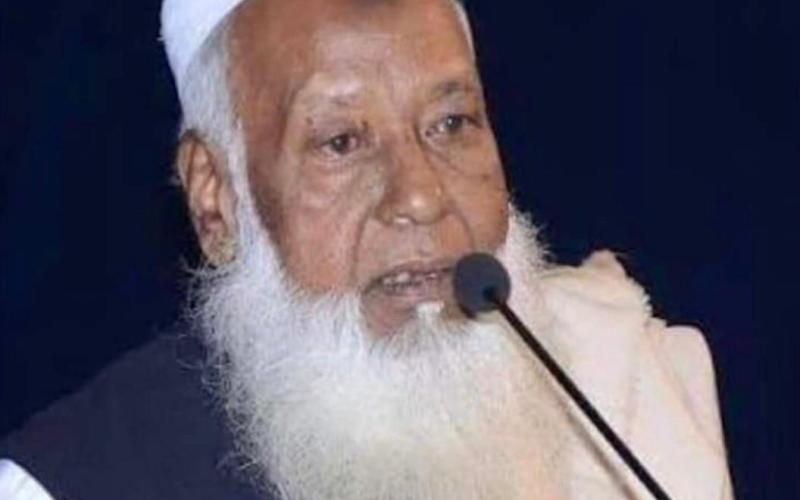
Noted Islamic scholar Maulana Mohammed Asrarul Haq Qasmi, who represented Kishanganj in Lok Sabha passed away today, i.e. on Friday, December 7, 2018 at 3:30 am. He suffered from heart attack. Earlier he was quite well. Yesterday evening he attended a programme at Darul Uloom Suffah founded by him at Kishanganj and addressed students and teachers.
Funeral prayer will be offered after Friday prayers at 3 pm at his home town Tarabari in Kishanganj, Bihar.
Maulana Qasmi is survived by 3 sons and 2 daughters.
He studied Fazil (M.A.) from Darul Uloom, Deoband, Uttar Pradesh.
Maulana set up 163 primary educational institutions and also established Milli girls schools in Kishanganj, Bihar which distributed relief material among the victims of Tsunami and flood in Bihar.
He was the secretary Jamiat Ulema-e-Hind, Member of All India Muslim personal law Board, Vice-President of All India Milli Council, President of All India Talimi wa Milli Foundation. He was also the state president of Jamiat Ulema-e-Hind.
source: http://www.siasat.com / The Siasat Daily / Home> India> News> Top Stories / by Rasia Hashmi / December 07th, 2018
He was a former vice chancellor of Jamia Millia Islamia university and wrote extensively on Partition and the history of Islam in South Asia.
Professor Mushirul Hasan | YouTube screengrab
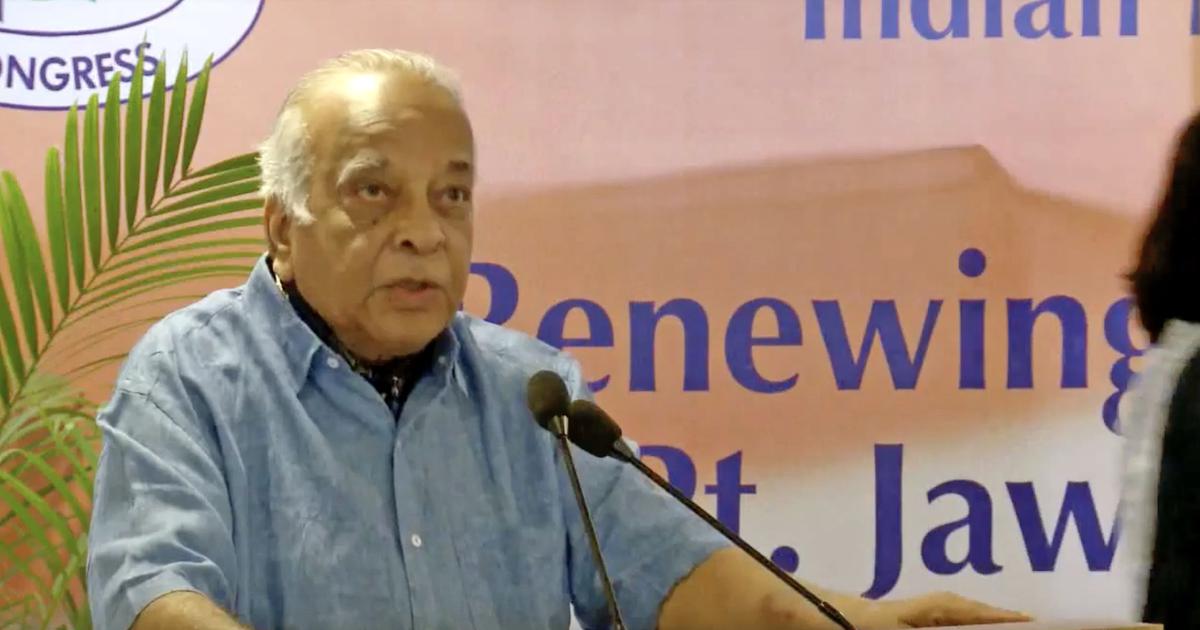
Historian Mushirul Hasan, a former vice chancellor of Jamia Millia Islamia university and director general of the National Archives of India, died on Monday morning. He was 71.
Academic Jayati Ghosh, who teaches at Jawaharlal Nehru University’s Centre for Economic Studies and Planning, said Hasan had been on dialysis for a number of years and had sustained head injuries in a car accident in 2014. Though he was badly injured, he made remarkable recovery, she added. “He had tremendous spirit but the last few months he had been very ill and was in and out of hospital,” Ghosh told Scroll.in.
Hasan was awarded the Padma Shri in 2007 for his extensive writings on Partition and the history of Islam in South Asia. He served as the pro vice chancellor of Jamia Millia Islamia between 1992 and 1996 and served as vice chancellor from 2004 to 2009.
Ghosh described Hasan as “a very proactive vice chancellor” and credited him with modernising Jamia Millia Islamia. “He also hired a lot of new faculty from varied backgrounds and was able to attract faculty from Delhi University and elsewhere,” she added. “He was anxious to fill the university with good people but faced some resistance and there were court cases. This is the period when Jamia Millia Islamia emerged as a quality institution and not just a minority one.”
Jayati Ghosh@Jayati1609
Prof. Mushirul Hasan, former VC, JMI, & former Director General, National Archives of India, passed away early morning today 10.12.2018. His namaz-e-Janaza shall be performed at 1.00 pm at Babul Ilm & 2.00 pm at Jamia Mosque and burial shall take place in Jamia graveyard.
Historian Syed Irfan Habib said Hasan was one of the most prolific historians of modern Indian history. “Saw him decline gradually over the past few years after the terrible accident,” he tweeted.
Ghosh said prayers for Hasan will be performed on Monday afternoon and he will be buried at the Jamia graveyard.
S lrfan Habib
✔@irfhabib
Extremely sad news. One of the most prolific historians of modern Indian history. Saw him decline gradually over the past few years after the terrible accident. RIP Mushir bhai.
atiya zaidi@atiyaz
Tragic news
Prof Mushirul Hasan has passed on.
His years of suffering has come to an end. Alwida Mushir Sb.
May you rest in peace
source: http://www.scroll.in / Scroll.in / Home> The Latest> Passing On / December 10th, 2018
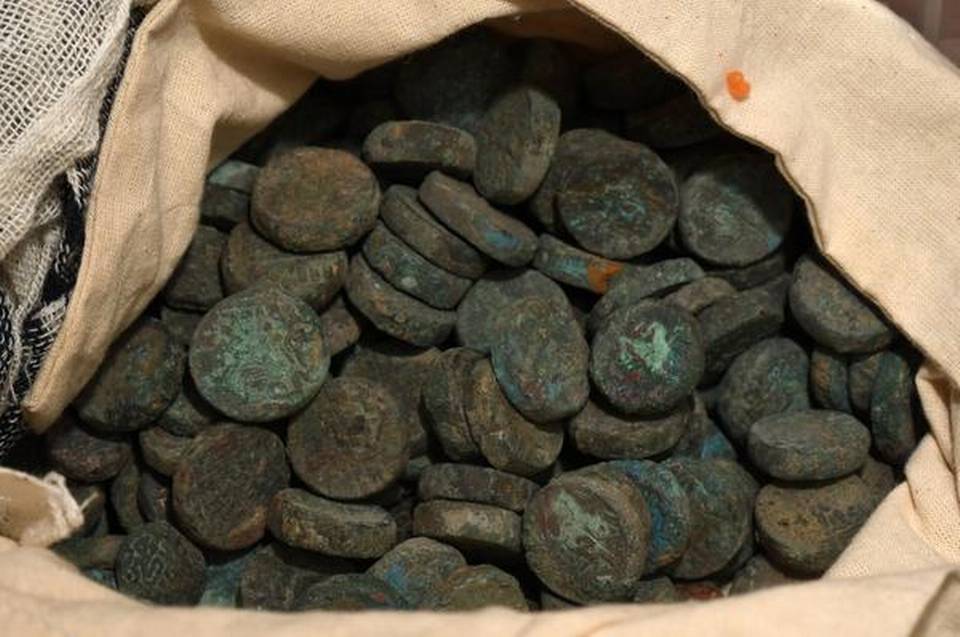
The style of writing on the coins indicates that they might be from the Lodi dynasty. Photo: V.V. Krishnan | Photo Credit: V.V. Krishnan
The discovery of over 250 copper coins at Khirki Mosque is expected to throw light on Delhi’s medieval period
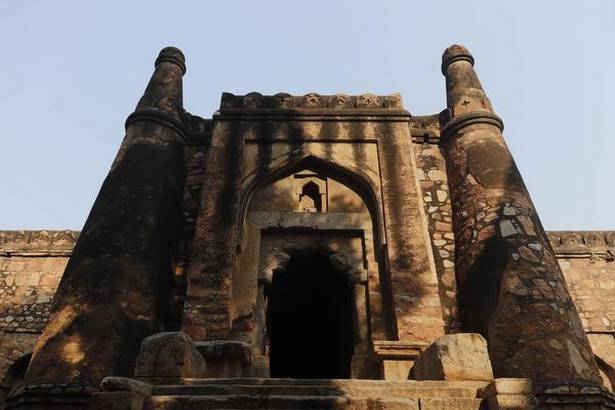
Khirki is crowded, with narrow roads and tall buildings bundled together like Lego bricks stacked precariously. Smack in the middle of this chaos is Khirki Mosque, a 14th century fortress-like structure built during the Tughlaq dynasty.
The mosque is fenced in by high compound walls and the uneven ground is lower than the houses that surround the structure. It is deathly quiet inside, with its myriad archways partially lit by Delhi’s smoggy sunlight. Standing there, it is easy to imagine a priest, or a trader, furtively hurrying along the walls of the mosque to find a spot to bury treasure.
Treasure is what the Archaeological Survey of India (ASI) found two months ago in this complex — a hoard of small copper coins vaguely resembling those bite-sized Britannia biscuits from the 90s.
Happy chance
A team from ASI’s conservation wing was levelling the ground in early September as part of ongoing conservation work when one of the workers’ pickaxes landed on a mud pot. Work was halted and ASI archaeologists were called.
The office was abuzz when they learned about the discovery, says N.K. Pathak, superintending archaeologist, ASI-Delhi circle. “As soon as the coins were discovered, there was a big halla. For archaeologists, discoveries like this are always exciting, no matter the value. Everyone said, Khazana mil gaya!” he says, laughing.
The style of writing on the coins indicates that they might be from the Lodi dynasty. | Photo Credit: V.V. Krishnan
The discovery of these coins is what those in the field call a ‘chance discovery’, as opposed to a planned dig. The mosque is also the site of an earlier discovery of 63 coins in 2003, which was also a chance discovery. There is a possibility that both sets of coins might be from the same era.
Preliminary investigations of the 254 coins reveal that they are from Delhi’s medieval period — 13th to 16th century — the latter part straddling the early modern period. Proper identification can happen only after they are cleaned and studied, says Pathak. “However, some of the coins belong to the reign of Islam Shah Suri.”
Inscriptions on the coins
Islam Shah Suri is the son of Sher Shah Suri, who founded the Sur dynasty and ruled Delhi for seven years from 1538 to 1545. “Most Islamic coins have inscriptions (what we call legends) on them — the name of the ruler and their father’s name. In this case, some of the coins had ‘Islam Shah Suri, son of Sher Shah Suri’ inscribed on them,” says Shahmoon Ahmad, Assistant Archaeologist, ASI-Lucknow circle, who will be studying the coins further.
Notably, it was Sher Shah who introduced the precursors to the modern rupee and paise — the silver rupaiya and the copper paisa. The gold coins issued by the Sur dynasty were called mohurs. “Discoveries of gold and silver coins are rather rare. Copper coins are not that much of a surprise,” says Pathak.
That’s because copper coins were reused by the general populace; the gold and the silver ones had to be re-minted with the names of current rulers, adds Ahmad.
He suspects that this might be true for this hoard as well. There are several paleographic indications — the style of writing — that indicate that some of the coins might be from the Lodi dynasty, which fell less than two decades before Islam Shah’s reign.
However, any discovery, even something as small as a copper coin hoard, is quite significant. “The monument is of the Tughlaq period, but the coins are from the Lodi and the Sur periods. Once we date the coins, we can establish that people used money regularly from the earliest date on the coin to the latest,” says Ahmad.
Interestingly, the fact that there are coins from two different dynasties might mean that this was not the hoard of a single person. “It could be the savings of one or two generations of a family,” he adds.
These coins can also establish other things. “They tell us this area was populated, the jurisdiction of the particular ruler, the prosperity of his rule, the money usage patterns, and so on,” says Pathak.
The coins also show that the mosque was in use during the reign of that particular ruler.
If they were indeed minted during the time of Islam Shah, it would mean the mosque was in use even 200 years after it was built.
Khirki’s secrets
More than half a millennium later, however, the Khirki Mosque is in bad shape. The buildings that flout ASI’s 100-metre-rule is the least of the concerns. There are broken pillars, loose bricks, decaying stones, a decades-old bat infestation, and more. The boundary wall around the monument came up only in 2003, according to an earlier report in The Hindu.
Conservation work, which began roughly mid-August, started with clearing the debris to bring the lower plinth of the monument to an even level, says deputy superintending archaeologist, Sanjay Kumar Singh. “It was also to make the movement of water on the ground smoother, especially in the monsoon. So work began with levelling the ground,” he says.
When the coins were found, the area around the discovery was carefully cordoned off, while all the debris and mud excavated so far were sieved thoroughly for more surprises from the past. “There is possibility to get anything, even pot shards, at any important site in Delhi. Workers, supervisors, and other staff are trained to be vigilant. We tell them this work is different from what the Public Works Department might do,” says Pathak.
Conservation work will go on for another six months, during which time the broken pillars and the decayed chajja stones will be replaced. “We will also undertake ‘pointing and underpinning’ work to fix the loose bricks and mortar. We will be using the lime mortar mix that was originally used,” adds Pathak.
Detailed information on the coins, however, will roll in before work on the monument is finished. “We will first send them to the science branch for cleaning, after which our numismatics branch will come in to decipher the writing. It will take three to four months,” says Pathak.
What are the possibilities of finding more antiquities here? “That’s just it,” he says. “You can never predict what you can find in Delhi and when. What is beneath the earth, you never know.”
janane.venkatraman@thehindu.co.in
source: http://www.thehindu.com / The Hindu / Home> Society> History & Culture / by Janane Venkatraman / December 08th, 2018
Mustajab Malik’s short film “Sir Syed Ahmed Khan” is quite relevant at a time when media circles are abuzz about a possible Bharat Ratna for him.
Many times adverse conditions bring out the best in a human being. So was the case with Sir Syed Ahmed Khan, a visionary and educationist, whose single greatest contribution among others to the posterity stands in the form of Aligarh Muslim University (AMU), the renowned centre of learning.
The 30-minute documentary “Sir Syed Ahmed Khan” is a part of the series “Charagh-e-Hind” directed by Mustajab Malik that traces his life highlighting several important aspects of his personality. “The objective of the series is to inspire the Muslim youth and enable them to change their mindset from ‘we have got nothing’ to ‘we must contribute’,” explains Mustajab, a veteran theatre person. Virendra Vashistha essays the role of Sir Syed and the script is written by Dr. Mohammad Aleem. Born on October 17, 1817 in Mughal nobility, Sir Syed after education joined the civil services. The First War of Independence in 1857, when he was munsif in Bijnor, had a profound impact on his life. Despite suffering personally as many of his family members were either killed or missing, he ensured protection to the women and children left by the British for safekeeping.
“Sir Syed was aware that the 1857 events reflected dissent on the part of Indians and that they were not well prepared for it,” comments historian, Prof. S.M. Azizuddin in the film. “An Essay “On The Causes Of The Indian Revolt” in 1859, the English translation of his discourse, was widely debated in the English Parliament leading many members to demand action against him.
Instead mourning the death of his loved ones, the educationist was deeply hurt by the repercussions on his community and nation. He decided to serve and provide hope in the time of despair. “When Muslims were being targeted and their confidence was at the lowest ebb, he stepped in to guide them in tune with the changing international environment,” remarks Dr. Khwaja Ekramuddin, an Urdu scholar, in the documentary. For achieving that Sir Syed identified knowledge and science as the prime tools and promoted Western style scientific education. He founded a modern madarsa in Moradabad and Ghazipur and the Scientific Society of Aligarh to instil scientific temper apart from having several scientific papers translated into Urdu.
Sir Syed’s meeting with Mirza Ghalib to write the foreword of his edition of Abul Fazl’s Ain-e Akbari, proved a turning point for him. The poet asked him to forget the past and concentrate on current developments and take into account the galloping progress in the West thereby turning him towards social reform.
During his stay in England for nearly two years from 1869 he visited several educational establishments and learning centres inspiring him to replicate them in India. This led to setting up Muhammadan Anglo-Oriental College in 1875. “Educating Muslims meant taking India forward,” comments Pradeep Saxsena, a Hindi scholar. In this cause he was helped by several Hindus in cash and kind. Besides seeking funds, Sir Syed also staged plays to espouse the cause. In 1920, 22 years after his death, it became AMU. The institution enrolled a large number of Hindu students and Babu Iswhari Prasad is among the first batch of graduates.
Sir Syed was swayed by all the British did. “He wanted their help and at the same time criticised them as proved by his essay on events of 1857. Besides he also rebutted the allegations made by Sir William Muir in his book “Life of Mahomet” in writing,” says Mustajab adding “he did not take to the streets protesting or led agitations and instead adopted the civilised method.”
The film highlights Sir Syed’s scholarship by informing the viewers of his 1846 book “Athar-al-Sanadid” which documents the Delhi monuments. “It was a first- of-its-kind attempt. In fact this authoritative work which cannot be ignored by anyone studying Delhi monuments,” comments Syed Ali Nadeem Rezavi, a historian shown in the documentary.
source: http://www.thehindu.com / The Hindu / Home> Friday Review / by S. Ravi / January 08th, 2015
City-based writer Rahman Abbas has won the Sahitya Akademi Award, 2018, for his Urdu novel, Rohzin.
Mr. Abbas’s novel is a love story set against the backdrop of the 2005 floods in Mumbai. The novel was published in 2016 and has been widely debated in India, Pakistan, the Middle East, Canada and Europe.
It begins on the day Mumbai was submerged on July 26, 2005, and is narrated with the use of mythology, legend, religion, magical realism, sexuality and sensuality. It has been translated into English and Hindi, and was published in German in February.
The 46-year-old writer, who has grown up in Mumbai, is a Konkani Muslim. He was educated in Urdu and has published seven books, four of which are novels.
source: http://www.thehindu.com / The Hindu / Home> News> Cities> Mumbai / by Special Correspondent / Mumbai – December 06th, 2018
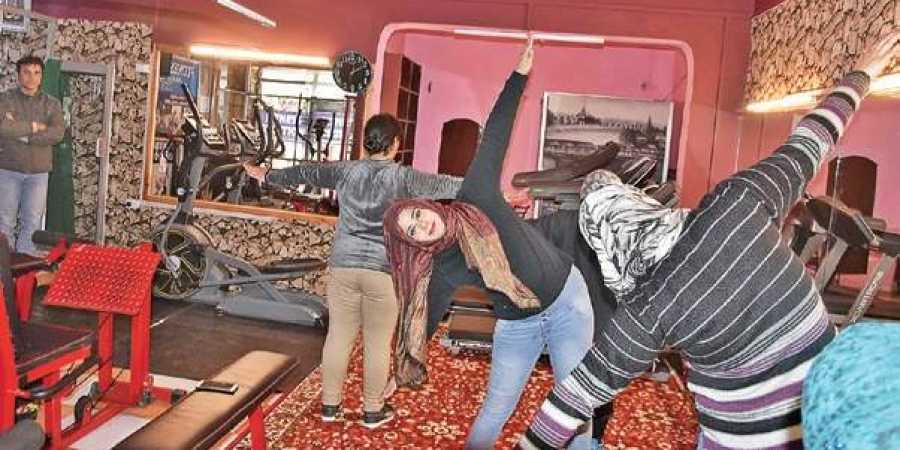
‘Fitness Solution’, located in the Khanyar area which is just a kilometre from the historic Jamia Masjid, an area rife with unrest, is the brainchild of Aaliya Farooq.
Aaliya Farooq (inset pic) said she picks up a lot of fitness tips on her visits to Delhi | ZAHOOR PUNJABI
Srinagar :
In the volatile downtown Srinagar, frequently in the news for protests and incidents of stone-pelting, a mother of two is creating ripples with her gym-cum-fitness centre for women.
‘Fitness Solution’, located in the Khanyar area which is just a kilometre from the historic Jamia Masjid, an area rife with unrest, is the brainchild of Aaliya Farooq. Being a fitness expert herself, Aaliya felt the need for an exclusive health centre for women as they did not go to gyms run by men.
“I took over this gym-cum-health club in 2012 after undergoing physical fitness training in Delhi. It was earlier being run by a male trainer. But after I took over, I trained the women myself,” she says.
Aaliya, who is not just the owner but also trains those who come to the centre, says they find it more comfortable to work out and discuss things with a woman. “They never hesitate in discussing any issue, which they could not have discussed with a male trainer.”
When Aaliya decided to take over the gym and run it for women, she had her family’s wholehearted support. “It has been because of their help that I have been able to run the gym,” says Aaliya, whose husband is also a fitness trainer.
The centre caters to women of every age group. “Young women, including students, office goers, housewives as well as old women have enrolled in my gym,” she said.
source: http://www.newindianexpress.com / The New Indian Express / Home> The Sunday Standard / by Fayaz Wani / December 02nd, 2018
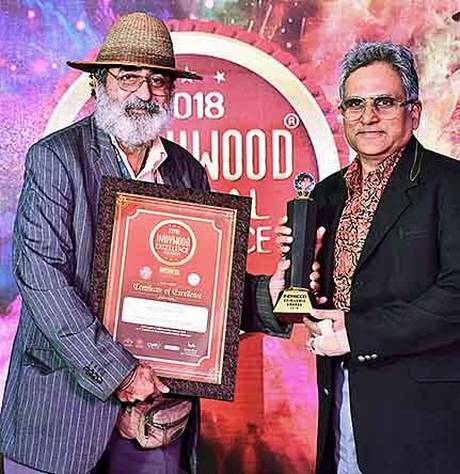
Personality of the year healthcare award being presented to Gauthamadas Udipi at the Indywood medical excellence awards in HITEX. | Photo Credit: K.V.S. GIRI
Twenty five medical practitioners were awarded Indywood medical excellence awards, which was organised as part of Indywood film carnival-2018.
The awards are meant for felicitating healthcare practitioners and organisations who offer healthcare services to the society.
Dr. Gauthamadas Udipi, Professor of Psychiatry was awarded the personality of the year in health care sector, this year.
Indywood’s life time achievement award was given to Dr. Kamini Rao (Golden Pioneer In Gynaecology), Dr. Mohan (Specialist Care Diabetologist) and Padma Shree Dr. Ahmed Ali(Surgical Wizard Of Gastroenterology).
The awards were presented by Mohammed Ibrahim Al Qahtani who is with Saudi Armaco,Saudi Arabia and Ravindra Arora, president of Bharat Cine and TV writer & TV writer association. Mr. Arora is also a committee member of Dada Saheb Phalke Academy, Western India film producers association.
Other awards which were presented during the day were in two categories including medical excellence among individual and organisations of medical excellence.
Winners in the organisations category included Apollo Remote Healthcare Services for largest telemedicine network, Maa ENT Hospital, best ENT care hospital, Grewal Eye Institute as best hospital for opthalmic care, Aster MIMS for excellence in patient care, Fathima Healthcare Group in best overseas healthcare insurance firm and Sai life sciences limited for being leading organisation in integrated CRO.
At the event, Mr. Arora congratulated all award winners and requested them to continue their services in the health care segment, “for that is important to build a healthy India”.
Indywood also awarded media excellence awards-2018.
source: http://www.thehindu.com / The Hindu / Home> News> Cities> Hyderabad / by Special Correspondent / Hyderabad – December 05th, 2018
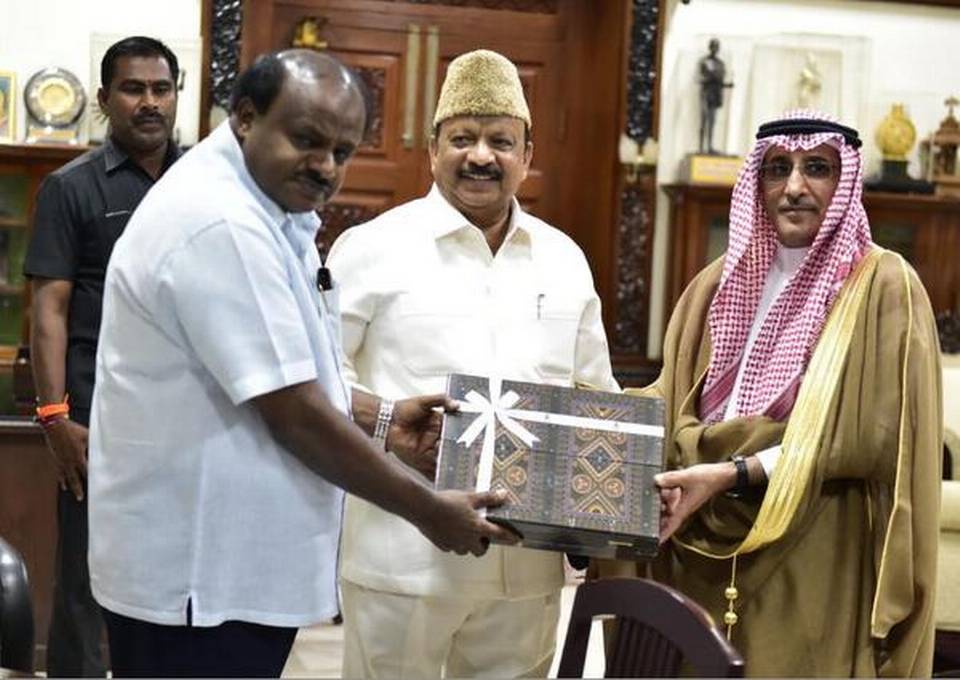
Saudi Arabia Ambassador to India Saud Mohammed Al-sati shared this information when he called on Chief Minister H.D. Kumaraswamy, along with Karnataka State Haj Committee Chairman and former Minister Roshan Baig, on Tuesday. | Photo Credit: the hindu
About a 100 years ago, a woman philanthropist from Bengaluru had set up a school for girls in Mecca, Saudi Arabia.
On Tuesday, many people in Bengaluru were in for a pleasant surprise when Saudi Arabia Ambassador to India Saud Mohammed Al-sati shared this information during a meeting with Chief Minister H.D. Kumaraswamy. The ambassador informed that they had all the records pertaining to the woman, named Saulath Unnisa, and expressed a desire to honour her family members if they could be located.
Karnataka State Haj Committee Chairman and former Minister Roshan Baig told The Hindu that they would try to trace the family. “These days, we take a five-and-a-half hours flight to Jeddah for Haj or Umra. But back then, pilgrims would have to take a ship from Bombay and sail for a fortnight to reach Mecca. It is a great contribution by the lady at that time,” he said.
Saudi consulate in city
Meanwhile, one of the long-standing demands of pilgrims and the large Kannadiga diaspora in Saudi Arabia for a consulate in Bengaluru could be fructifying shortly.
According to Mr. Baig, around 50,000 pilgrims travel from Karnataka annually for Haj and Umra. This is apart from a large number of people employed in Saudi Arabia.
The ambassador is learnt to have told Mr. Kumaraswamy that work on establishing the consulate is in progress, and it is waiting for approval from the Ministry of External Affairs. The ambassador said that the number of people seeking a visa to Saudi Arabia had doubled, and that it was the reason for opening a consulate. Currently, residents of Karnataka have to travel to Mumbai for the paperwork.
Mr. Kumaraswamy welcomed the move to open a consulate in Bengaluru, and also invited Saudi Arabian businessmen to invest in Bengaluru.
source: http://www.thehindu.com / The Hindu / Home> News> Cities> Bengaluru / by Special Correspondent / December 04th, 2018