All posts by mpositiveone@gmail.com

Meerut scissors struggle to cut through Chinese competition

Meerut, UTTAR PRADESH :

GI Tag Product Buyers demanding local high quality product at the price of Chinese scissors, say manufacturers.
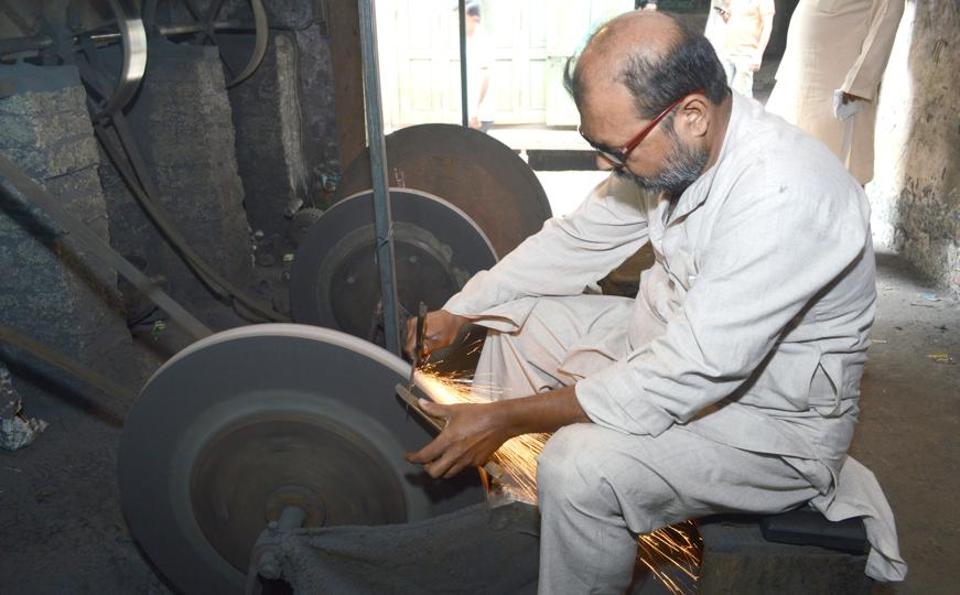
Sunil Sharma / HT Photo(“The cottage industry that used to manufacture around two lakh pieces a month, has declined to almost 40% of its size now.”)

The Meerut scissors are straining to cut through the intense competition being offered by low-cost Chinese scissors that are flooding the domestic market, say local businessmen. Despite being a WTO geographical indication (GI) registered product since 2013, the scissors are still to find the national and international recognition that is deserved, they say.

“Meerut scissors have a unique identity. For centuries, this was a popular product across the country. But the industry received a set back in the past one year with the imposition of 18% GST. That and the inflow of low-cost Chinese’s scissors in the domestic market badly impacted the sales, and there is no sign of improvement,” said Sharif Ahmad, a seventh generation craftsman and the owner of Asli Akhuji Scissors Works.

“The cottage industry that used to manufacture around two lakh pieces a month, has declined to almost 40% of its size now,” he added.

Octogenarian Saeed Ahmad, who has been running ‘Sheikh Scissors’ since 1965, agrees. “I have never seen such a bad condition of the industry in the past five decades. This is due to imposition of high tax and Chinese scissors flooding the market,” he said.

Manufacturer Farmanuddin said that many clients in South India cancelled orders for Meerut scissors over the past few months because of “escalated prices”. “We manufacture scissors ranging from size of 3 inches to 18 inches. They are priced from Re 1 to Rs 1,000. Our problem is that buyers have now started demanding our quality product at the price of Chinese scissors! We don’t know how to deal with this situation,” he said.

A 350-YEAR-OLD COTTAGE INDUSTRY

Scissors manufacturing is a 350-year-old cottage industry in Meerut.

A local blacksmith Akhunji is said to have combined two swords to cut leather in 1645 during the Mughal period, creating the first scissors in India.

“Since then, our family has been in the business,” said Sharif Ahmad who represents the seventh generation of the family. “Scissors manufacturing is still our family business. Gradually, the sizes and designs of the products changed. Today, our scissors are used for multipurpose cutting,” he said.

At present, Meerut has 225 small and medium scissors manufacturing units, out of which there are 30 registered units that feed only the domestic market. Although there are some vendors who cater to the overseas markets too, they don’t export directly.

More than 25,000 artisans and their families depend on this industry.

GI TAG IN 2013

Sharif Ahmad said the scissors manufacturers collected historic evidence for over two years to represent their case in front of the GI committee that examines documents before declaring a product GI certified.

Ahmad, who is also the vice president of the Meerut Scissors Manufacturers’ Special Purpose Vehicle — an association of scissors manufacturers — said that officials of the association worked hard to plead their case in front of the committee. “With our combined efforts, Meerut Scissors was certified as the country’s first GI scissors,” he said.

Association president Farmanuddin added, “We provided the GI committee with printed packing material, copy of Gazette and other evidences to support our claim that the scissors first originated here (in the country).”

However, he added that although it was a great achievement and a matter of pride for the city and the state, “very few people are aware of the Meerut scissors’ international status”.

Uttar Pradesh has only 20 GI products. Out of these, 15 are handicraft and two are agricultural products. Only three products from the state figure in the ‘manufactured’ category of GI products.

To recall, after the Meerut scissors received the GI tag, the then state government had established a scissors cluster at Lohia Nagar here in 2014. However, manufacturers assert that unless the issues of heavy taxation and competition from Chinese scissors were addressed, the industry would not revive.

GI PRODUCTS OF UP

  • Lucknow Chikan Craft (handicraft)
  • Mango Malihabadi Dussehri (agriculture)
  • Varanasi Glass Beads (handicraft)
  • Khurja Pottery (handicraft)
  • Saharanpur Wood Craft (handicraft)
  • Agra Durrie / Dari (handicraft)
  • Farrukhabad Cotton Print (handicraft)
  • Lucknow Zardozi (handicraft)
  • Banaras Brocades and Sarees (handicraft)
  • Meerut Scissors (manufactured)
  • Banaras Gulabi Meenakari Craft (handicraft)
  • Banaras Metal Repousse Craft (handicraft)
  • Varanasi Wooden Lacquer Ware & Toys (handicraft)
  • Mirzapur Handmade Dari (handicraft)
  • Nizamabad Black Pottery (handicraft)
  • Azara Ghansal Rice (agriculture)
  • Firozabad Glass (handicraft)
  • Kannauj Perfume (manufactured)
  • Kanpur Saddlery (manufactured)
  • Moradabad Metal Craft (handicraft)

INDIAN GI PRODUCTS IN ‘MANUFACTURED’ CATEGORY

  • Meerut Scissors
  • Mysore Agarbati
  • Coimbatore Wet Grinder
  • Mysore Sandalwood oil
  • Mysore Sandal Soap
  • Goa Feni
  • Nashik Valley Wine
  • Kannauj Perfume
  • Kanpur Saddlery

source: http://www.hindustantimes.com / Hindustan Times / Home> Cities> Lucknow / by S. Raju, Hindustan Times,Lucknow / July 09th, 2018

Meet the ‘mango man’ who has grown 300 varieties of mangoes on one tree

Malihabad (Lucknow District)  , UTTAR PRADESH :

HajiKalimullahKhanMPOs09jul2018

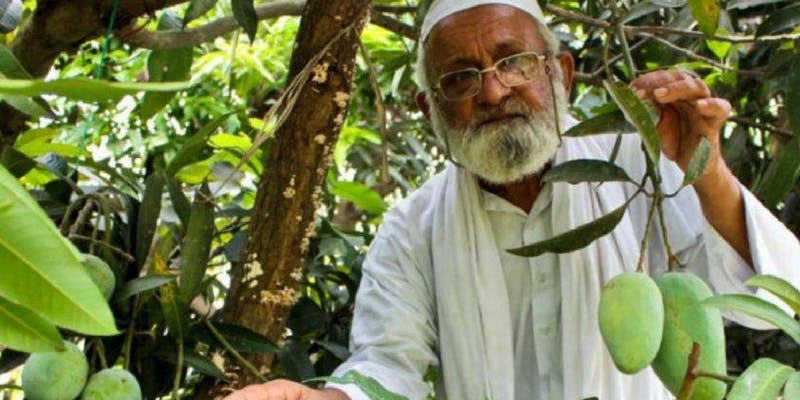
Last year, when newspapers and social media woke up to the news of a certain mango variety being dedicated to Prime Minister Narendra Modi, everyone’s attention shifted to 78-year-old “Mango crusader”. Hailing from Malihabad in Uttar Pradesh, Haji Kalimullah Khan is a mango cultivator who is either growing varieties of mangoes, experimenting with its flavors, naming a celebrity over each of the indigenous brands, or growing 300 varieties of mangoes on a single tree. Yes, you heard it right!

This sixth standard pass-out has pioneered the art of cultivating mangoes. He says,

Mango cultivation runs in our family, and we have been doing this for the past 300 years. Our ancestors in our rajwadas used to have huge mango orchards that grew beautiful hybrids. I cultivated a mango tree at the age of 17, which had seven varieties of mangoes in it, and all had different tastes and flavours.

Since then, I have been trying to grow new hybrids every year to show that it is possible to introduce newer varieties, he told NDTV.

Father of eight children, Kalimullah grabbed the headlines when he named a mango variety after Prime Minister Narendra Modi, and called it “NaMo Aam“. A hybrid of Kolkata’s Husn-e-Aara and Lucknow’s Dussehri, he plans to grow the variety at Modi’s hometown. In the past, he had dedicated mango varieties to yesteryear actor Nargis Dutt, Bollywood actor Aishwarya Rai Bachchan, Cricket prodigy Sachin Tendulkar, and Anarkali, the popular character in the movie “Mughal-e-Azam.”

Source: AmarUjala
Source: AmarUjala

“The ‘NaMo’ mango will remain even when we are gone and will remind people of Narendra Modi and his success. We wish to meet him once. We will be very happy if he visits us once and sees the ‘NaMo aam’ ripen, he told Zee News .

He also grows a certain breed of guava, which on ripening becomes as red as an apple. Kalimullah is also the recipient of the Padma Shri award

source: http://www.yourstory.com / YourStory / Home> Social Story> Think Change India / June 07th, 2018

KT Impact: Dubai honours Indian boy for using Eid money to send out green message

Dubai,  U.A.E :

(KT File / Kiran)
(KT File / Kiran)

Mohammed distributed hand-decorated reusable ‘World Cup’ bags to a number of groceries.

A 10-year-old Dubai student who turned his love for the World Cup into an innovative way to reduce plastic bag waste, has been honoured by the Dubai Municipality (DM).

Following the Khaleej Times article on June 25, ‘Boy uses football frenzy to send a message against plastic waste’, Abdulmajeed Abdulaziz Saifaie, director of waste management department, was keen to meet the boy behind the story , Faiz Mohammed. And during a meeting between the two on Tuesday, he named the youngster one of the municipality’s ‘Sustainability Ambassadors’.

Using his own Eid money, Mohammed distributed hand-decorated reusable bags to a number of groceries near his home in Karama, after he grew tired of seeing so many plastic bags being wasted on home deliveries.

His own investigations revealed that on average, each small grocery was using about 1,200 bags a month to deliver goods. To combat the excess wastage, he distributed the free tote bags in replace of plastic ones. And it was that smart and sustainable thinking that caught the attention of Saifaie.

“I was so proud and happy to see the story. If you keep doing what you’re doing, we will see big change. Going forward I want you to keep in close contact with my team and give more ideas to help tackle waste here in the UAE,” Saifaie told Mohammed.

The municipality’s Ambassador for Sustainability initiative was launched in 2013 with the aim to train students on how to carry out lectures and workshops on various environmental topics.

“The fact that this boy didn’t use that Eid money to buy a ball, toy, something for himself, is commendable. He has a good hobby. If his family and community keep encouraging that, he will have a good future and so will the environment.”

Discussing different ideas to work on together in the future, Mohammed said his plan is to scale up his reusable bags initiative to groceries across Dubai. Only this time, Saifaie told him that the DM will help fund his move.

“We will visit you at your school and speak to your fellow students to spread awareness about what you are doing. We spend millions per year to bring this idea of sustainable practice into students’ minds, but you are doing it on your own. We will support you. You do not need to take money from your own pocket anymore.”

Thanking the municipality for the opportunity, Mohammed said he felt honoured to be named a Sustainability Ambassador.

“I feel so glad to be here. It gives me much encouragement to meet the director of waste management. He has been telling me to continue in my path to help curb waste so I will keep urging friends, family and shop workers about the importance of using reusable bags in place of plastic ones.”

kelly@khaleejtimes.com

source: http://www.khaleejtimes.com / Khaleej Times / Home / by Kelly Clarke , Dubai / July 04th, 2018

Dine Like a Nawab of Bengal

BENGAL :

BengalNawab01MPOs08jul2018

Mir Qasim Ali Khan Bahadur was the Nawab of Bengal between 1760 and 1763. He is most famous for his dealings with the British: he was put on the throne through the intervention of the East India Company, but a few years later was defeated by their forces at the Battle of Buxar. This defeat marked the decline of the political power of the Nawabs of Bengal and was an important moment in East India Company imperial consolidation in Bengal.

All of this is important, of course, but I’m here to discuss a far more pressing question: what did the Nawab and his contemporaries eat?

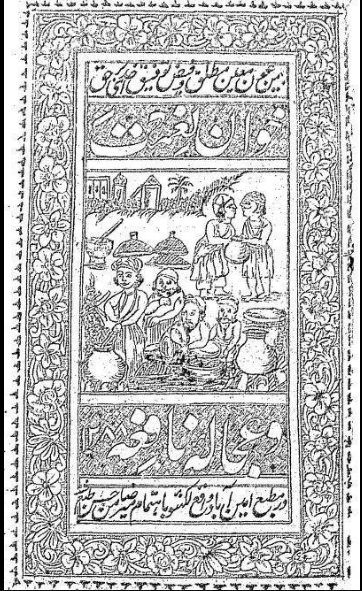
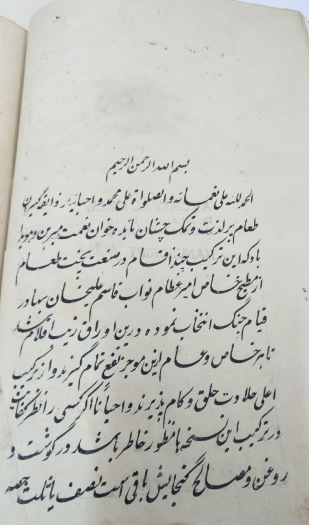
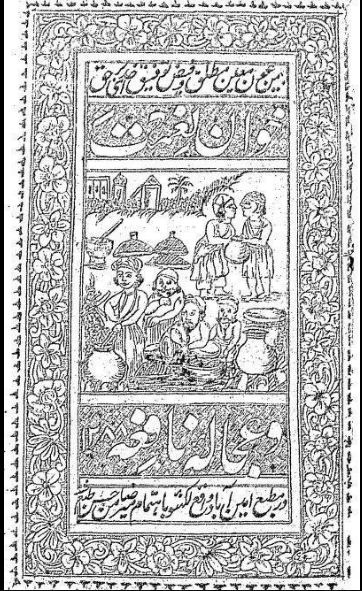
I encountered this manuscript, titled Khwan-e Nimat, “The Beneficent Table,” at the library of Jamia Millia Islamia here in Delhi. Composed in Persian, the text promises its readers a description of “the art of cooking from the private kitchen of the chef of Nawab Qasim Ali Khan Bahadur.”

BengalNawab02MPOs08jul2018

The text describes how the Nawab’s chef prepared fish kabab with rice, several types of meat kababs, fried eggs, sweets made with almonds, a few different types of pickles, pulao, khichri, qorma, various dals, mango jam, sheermal (a sweet bread), and on and on.

Although I originally encountered this work in manuscript form at Jamia, after some hunting I discovered that a lithographed version was printed in 1871 in Lucknow.

BengalNawab03MPOs08jul2018

The printing was done by a small press, but it means that there was at least some awareness of and interest in the text in the late nineteenth century, a century after the political power of the Nawabs of Bengal had waned. As such, it offers us insight into not only the culinary preferences of Mir Qasim and his court, but also the culinary interests and understanding of food history among North Indians in the high colonial era.

Over the course of my research I’ve stumbled on several cookbooks written in Persian and Urdu over the course of the eighteenth and nineteenth century, but I’ve found there is very little written on colonial-era traditions of writing about food in these languages. Many of the Indian food histories written on this period focus on the British adaptations of Indian cuisine, and exchanges between British and Indian cooks and palates. This text and its later publication tell an alternative (and I’d argue more interesting!) story: that of Indian interest in various local cuisines, and the desire of members of broader literate classes to know and perhaps try to prepare cuisines cooked by regional elites and leaders.

I’m craving fish today, so here’s a rough translation of how the Nawab’s chef prepared his fish kabab. Following these recipes is a bit of a challenge because most of the units of measurement appear to be regionally or temporally specific, and have changed significantly; many are not in any of the Urdu or Persian dictionaries I’ve consulted. I’ve therefore taken educated guesses based in large part on what I know about cooking, and the limited information I could find on the units used.

Ingredients:
Fish (type not specified, perhaps about 650 grams)
Butter (possibly referring to ghee; approximately 80 grams)
Onion (perhaps two-three)
Curd (approximately 15 grams)
Malai (approximately 20 grams)
Coriander (approximately 20 grams)
Black pepper (approximately 15 grams)
Gram (Chickpea) Flour (approximately 60 grams)
Pepper (mirch, presumably red?) (approximately 20 grams)
Cloves
ٓA pinch of lemon juice
A pinch of cardamom
Several pinches of salt

Cut the fish into chunks in the size of kababs and place them aside. Prepare the gram flour well (toast it?). After that, mix it together with the salt, pepper, crushed coriander, and some of the butter. Mix this into each kabab. Then finely chop up the onions, and fry them in some butter and then also mix the onions with some butter into the kababs. Then mix the lemon juice, cloves, and cardamom together. Drain the curd of water and strain the malai, and coat the kababs with these things. Then place these kababs in pot with the (cooked?) rice, and take the remaining spices and sprinkle them into with the rice and kababs. Roast/fry (prepare over a hot surface) and enjoy!

source: http://www.archivaldistractions.wordpress.com / Archival Distraction / by Amanda Lanzillo / July 07th, 2018

Dirty sands of time: Review of ‘The Night of Broken Glass’ by Feroz Rather

KASHMIR / Florida, U.S.A :

Underneath the violence, the festering heart of Kashmiri society

TheNightofTheBrokenglassMPOs08jul2018

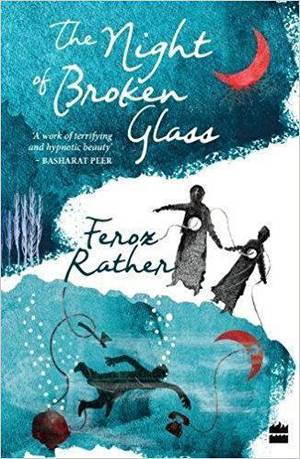
Fiction has the power to transform our perceptions about peoples and places. Feroz Rather’s The Night of Broken Glassis such a book; it hits you right in the gut. The author peeks into the dark, festering heart of Kashmiri society, while dramatising the spectacle of military violence. Recurring characters interconnect the 13 chapters/ short stories of the novel. Through these characters the author reveals the larger issues of religion, caste and gender that shape Kashmir.

The first story, ‘The Old Man in the Cottage’, is a disturbing tale of unfulfilled revenge, narrated by a man who seethes with an anger he has buried inside for 25 years. He broods and savours the idea of killing a policeman who tortured him along with Major S, a sadistic military man.

Major S’s presence hovers like a dark cloud over the lives of all the characters. After inflicting unthinkable violence on them he has to deal with his restive subconscious. ‘The Nightmares of Major S’ captures his internal chaos acutely and is probably the most powerful story.

The author pierces the blanket of violence that envelops the lives of these characters, and draws the reader’s attention to the internal contradictions of Kashmiri society. The mosque, for example, is a site of caste hierarchy, where Gulam, a lower-caste cobbler, is under great social pressure.

When two friends, Mohsin and Tariq, are incarcerated together, I was struck by the force of Tariq’s words: “Faith, my friend, is the consolation of the weak and foolish…”

Rather’s lyricism evokes the scarred landscape beautifully. His sense of place is so strong, it reminded me of Banville and Nabokov.

Rather is a poet at heart who has decided to engage with history, a sentiment reflected in the epigraph from the Polish poet Wislawa Szymborska: “History did not greet us with triumphal fanfares/ It flung dirty sand into our eyes.”

The writer is assistant editor with New York-based magazine Café Dissensus, and writes for several publications in India and Pakistan.

The Night of Broken Glass; Feroz Rather, Harper Collins, ₹399

source: http://www.thehindu.com / The Hindu / Home> Books / by Adil Bhat / July 07th, 2018

They dreamt big, and reaped bigger

Hyderabad, TELANGANA :

U.S. Consulate General selects two students from city to study abroad

It’s a dream come true for Md Mukram Ali, a trainee in refrigeration and air-conditioning course, and V. Sai Krishna Sruthi, a second year degree student at SGCSR College, Rajam, for they both have been selected by the U.S. Consulate General to pursue courses under Community College Initiative Programme (CCIP). They both study in institutes run by GMR Varalakshmi Foundation (GMRVF).

The programme supports students to study at an American community college for a year.

Ali, a resident of Shamshabad village, comes from a poor background. After his Intermediate, he joined the AC course offered by the Foundation. In U.S., he would pursue a course in heating, ventilation and air-conditioning at Northampton Community College, Bethlehem city, Pennsylvania State.

V. Sai Krishna Sruthi

Sruthi comes from a middle-class family from Vizianagaram in Andhra Pradesh. She is in her second year degree in BSc (Electronics) and would study computer information systems (CIS)/computer science (CS) at Bunker Hill Community College in Massachusetts, USA.

Students generally are chosen from underprivileged communities and after they apply, a telephonic interview is done followed by a test in English communication. The entire expense – fees, airfare, boarding and lodging, books and medical aid – would be borne by the U.S. government. They would also be paid a monthly stipend for incidental expenses, a press release said.

“We are happy that our students are breaking the barriers and making a mark for themselves on the global canvas of learning. We are also thankful to the U.S. government for providing a platform for students to expand their knowledge horizon,” said Meena Raghunathan, GMRVF director.

source: http://www.thehindu.com / The Hindu / Home> News> Cities> Hyderabad / by Special Correspondent / Hyderabad – July 06th,2018

At 98, Gandhi follower serves humanity

Nabarangpur, ODISHA : 

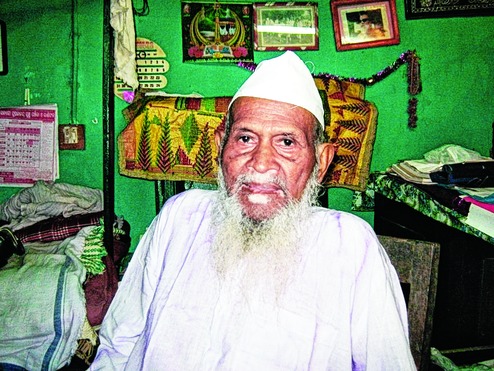
Mohammed Baji. Telegraph picture

Nabarangpur:

A devout follower of Mahatma Gandhi, he had actively taken part in the freedom struggle, and post-Independence lived only to realise the leader’s principles of serving humanity.

Now in his late 90’s, Mohammed Baji of Nabarangpur district is too frail to work. But, he still holds the Gandhian principles close to the heart. Influenced by Gandhi’s approach of non-violence in his schooldays, he had made up his mind to meet him. And his dream was fulfilled when he met Gandhi at the age of 21 in 1941 at Wardha Ashram. “We had no money. But, I had to meet Gandhi ji. So, I and one of my friends, Lakshman Sahu, cycled around 350km amid forests and hilly terrain to reach Raipur in Chhattisgarh. From there, we boarded a train for Wardha where I met Gandhiji,” said the 98-year-old freedom fighter.

“Gandhi ji asked me if I was a Satyagrahi. When I said I had pledged to be one, he asked me to face the British lathis and sacrifice my life for the nation,” he added.

Seven days later Baji returned to Nabarangpur with a changed mindset. He had performed individual Satyagraha in an anti-war protest outside the Nabarangpur masjid. He was sent to jail for six months in Koraput and fined Rs 50.

“Gandhi ji had asked me to take the slogan of non-violence among the masses. I, along with a group of about 30 people, walked to villages to spread Satyagraha and non-violence among the masses,” Baji said.

On August 25, 1942 during the Quit India movement, he was again jailed for 30 months. In 1945, he had been attacked and arrested at Soraguda during a peace march. Baji’s shoulder was badly damaged in the violence and he was shifted to Cuttack jail, where he was housed, along with Biju Patnaik. He was set free on August 12, 1947.

However, partition pained Baji. “I was against the partition of the country. We had fought for the Independence of a united India,” he said.

During the 1952 general elections, many of his colleagues, including the then chief minister, Sadashiv Tripathy, became MLAs. But, Baji believed in helping people in a different way. “Gandhi’s code was to serve the mankind and I don’t think we always need power and position for that,” said Baji, who remained a bachelor throughout the life.

Post-Independence, from 1955-67, he had been the adviser to the Koraput District Bhudan Board. He played a leading role to collect about four lakh acres and distribute among the landless. Though being a Muslim he had launched a movement against cow slaughtering. “I donated my 14 acres during the bhoodan movement,” Baji said. In 1968 he established an ashram at Bijapur to house the students of adivasi and harijan communities. It is now a high school for the tribal students, and each month Baji donates a certain percentage of his freedom fighter’s pension for school management.

“What hurts me is that people have forgotten Gandhi ji‘s principle. But, I still believe that the India that Gandhi had dreamt of will be realised one day,” he said.

source: http://www.telegraphindia.com / The Telegraph,Calcutta,India / Home> Odisha / by Priyadarshini Pattnaik / January 21st, 2018

Hyderabad man takes up noble initiative, serves food to the underprivileged daily

Hyderabad, TELANGANA :

Hyderabad man takes up noble initiative, serves food to the underprivileged daily

A man from Hyderabad is winning hearts across the city as he serves food to the underprivileged every day.

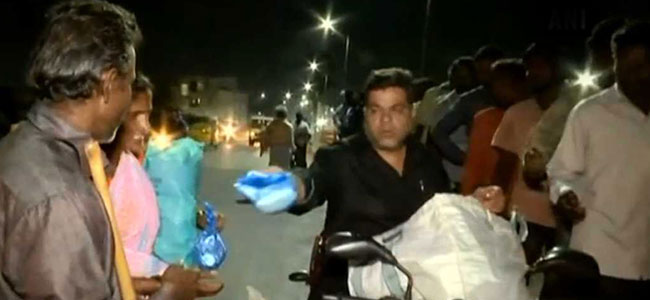
Hyder Moosvi, along with his team serve food to the needy and homeless every day. The team prepares 100 packets of food which are distributed to the homeless and the underprivileged on Dabeerpura Bridge.

Speaking to ANI, Mr Moosvi said, “We started this in 2015. Earlier we distributed food only 8 to 10 times a month, but from March 2017, we have started serving food daily.”

He further said that people from neighbouring localities such as Secunderabad, Kachiguda and Vijay Nagar come to the Dabeerpura Bridge for their food packets. The entire effort leads up to a monthly expenditure of Rs. 1.2 lakh with each food packet costing Rs 40 to prepare.

The noble initiative is surely winning him huge respect among the people of the city.

source: http://www.thehansindia.com / The Hans India / Home> Telangana / by Deepthi Reddy , The Hans India / July 03rd, 2018

Sabiha assures modern grave yards

Allahpur, Hyderabad, TELANGANA :

Sabiha assures modern grave yards

Allahpur:

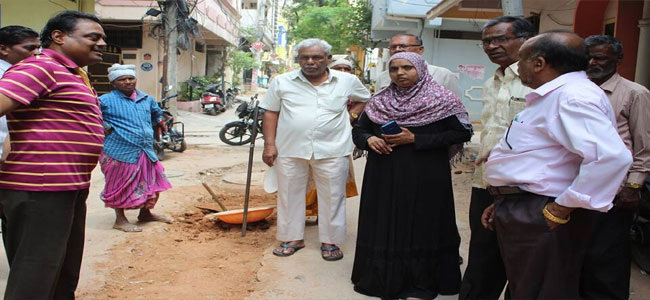
Corporator Sabiha Ghousuddin on Wednesday asked officials to modernise grave yards in the division. She along with assistant engineer Ranjith inaugurated CC road work at Radha Krishna Nagar.

Later, she visited Hindu grave yard at Rama Rao Nagar and asked the AE to construct water tank, laying tiles in ladies toilet and footpath.

Sabiha also visited Muslim grave yard. Ramarao Nagar Colony president Satyam, Radhakrishna Nagar president Kalyan, site engineer Harini, contractors Shanker and Venkatesh were present.

source: http://www.thehansindia.com / The Hans India / Home> Telangana / July 05th, 2018

TS First Muslim woman IAS Selectee Zeba Felicitated

Hyderabad, TELANGANA :

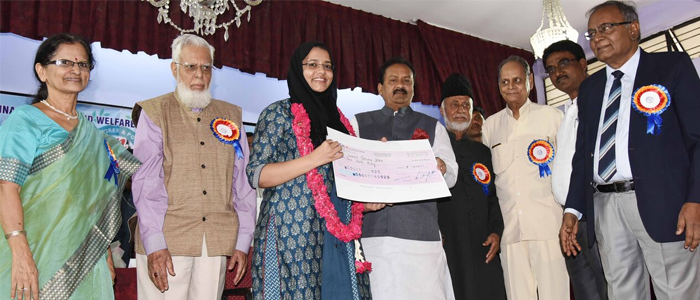
Madina Education and Welfare Society presents a cheque for Rs 1 lakh to the selectee

Nampally:

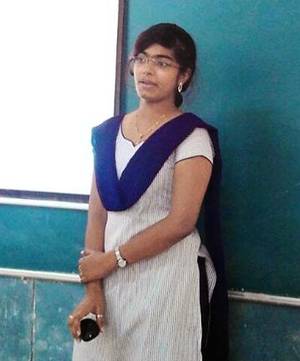
The first woman Muslim candidate in the State of Telangana, Jameel Fatima Zeba who made it to the Civil Services (IAS selectee) was felicitated by Madina Education and Welfare Society on Tuesday.

Mohammed Ali Shabbir, the leader of opposition in the Legislative Council was the chief guest on the occasion.

While congratulating her, Shabbir said that Zeba should be a role model for all Telangana girls to excel in studies, competitive exams and bag prestigious positions in bureaucracy.

“Every student should set a target and have a vision and commitment to achieve it,” he said.

Emphasising on the efforts made by his party with regard to education and employment, he recalled that the then Congress government had successfully implemented the 4% reservation for the Muslim Minorities under BC-E category.

“Till date about 30 lakh youth from the community had derived benefits in education and employment in both Telangana and Andhra Pradesh.  They included doctors, engineers and other professionals,” he added.

Later, the Cong leader presented the cheque of Rs 1 lakh to Zeba, on behalf of Madina Education and Welfare Society, as part of its support programme to candidates who make it the Civil Services by the society each year.

Zeba gave motivational speech to youngsters and shared her experience in achieving her goal, with a clear vision, dedication and hard work.

K M Arifuddin, secretary of the society, Justice Mohammed Ismail, Prof Ahmedullah Khan, Professor of  Law College and Ghulam Yazdani senior advocate also spoke on the occasion.