Muzaffar Assadi, Professor, Department of Studies in Political Science, University of Mysore, Manasagangotri, has been appointed as the Special Officer of Raichur University, Raichur.
The government has decided to carve out Raichur University from Gulbarga University, Kalaburagi, keeping in view the interest of students and academic scholars.
The notification issued by the government has directed Gulbarga University to provide office, salary, staff and vehicle for the Special officer.
Prof. Assadi obtained his doctoral degree from JNU, New Delhi. He hails from Dakshina Kannada district. He has published articles in several academic journals.
source: http://www.thehindu.com / The Hindu / Home> News> States> Karnataka / by Special Correspondent / Bengaluru – March 28th, 2018
This year, Sahitya Akademi’s ‘Annual Festival of Letters’ will feature a seminar on Oral and Tribal literature and Tribal poet meet. The Annual Festival of Letters is going to take place in New Delhi at Rabindra Bhavan from Monday, February 12 to 17, 2018.
This year the theme of the six-day long festival is ’70 Years of Indian Independence’. The festival will begin with the inauguration of the Akademi exhibition by Hindi writer Chitra Mudgal followed by the Sahitya Akademi Awards presentation ceremony.
The seminar on Oral and Tribal literature and Tribal poet meet will be held on February 13 and 14 and feature eminent writers and scholars from all over the country, including over 30 tribal poets.
The following tribal poets will take part in the seminar and reading session at the Akademi’s annual Festival of Letters: Arjun Singh Dhurve (Baiga), Rajkishore Nayak (Bathudi), Kuldeep Singh Bampal (Bhotia, Sudarshan Bhumij (Bhumij), Zohming Thanga (Bongchar), Kulin Patel (Dhodia), Colnat B. Marak (Garo), Rafiq Anjum (Gojri), Roop Singh Khusram (Gondi), Veera Rathod (Gormati), Rudra Narayan Panigrahi (Halbi), Kairasing Bandia (Ho), Riquoma Rq. Lalloo (Jayantia), On Teran (Karbi), Saroj Kerketta (Kharia), Minimon Laloo (Khasi), M. P. Rekha (Kodava), Bikas Ray Debbarma (Kokborok), Mahabir Oraon (Kurux), Deenabandhu Kanhar (Kui), Konchok Rigzen (Ladakhi), Kachyo Lepcha (Lepcha), Kalachand Mahali (Mahali), Th. Thumbu Maram (Maram, Dipok Kumar Doley (Missing), Puni Losii (Mao), Ashrita Tuti (Mundari), Jamuna Bini Tadar (Nyishi), N Vumsuan (Paite),Charu Mohan Rabha (Rabha), Rajesh Rathava (Rathavi), Aasim Sardar Tadavi (Tadavi), and Satyajit Toto (Toto).
The keynote address will be delivered by T.V. Kattimani, Vice-Chancellor, Indira Gandhi National Tribal University.
The six-day-long festival will witness participation of more than 250 writers and scholars from different parts of the country representing various languages.
“National seminar on ’70 Years of Indian Independence: Literary Portrayals’ and a seminar on Tribal and Oral Literature will feature eminent scholars and writers from all over the country. Apart from other regular features, we will have Indo-Israeli Writers’ Meet on the occasion of the 25th anniversary of the establishment of diplomatic relations between India and Israel,” said the Akademi’s Secretary K. Sreenivasarao while talking to media persons .
Importantly, three Muslim writers were selected among others representing 24 Indian languages for 2017 Sahitya Akademi award. Afsar Ahmed for his Bengali novel, “Sei NikhonjManusta”, Baig Ehsas for his Urdu short stories “Dakhma” and poet LateInqulab for his Tamil poetry “Kandhaal Naatkal” are among those honored with Sahitya Akademi award 2017.
Two more Muslims, Iqbal Nazki and Mahmood Ahmed Sahar were selected for Sahitya Akademi prize for translating Tamil novel “Chaivu Narkli” to Kashmiri “Araam Kursi” and Sanskrit poetry “Meghdootam” to “Kalidas ki Azeem Shairi” respectively.
On December 21, 2017, Sahitya Akademi had announced its annual awards in 24 languages.
source: http://www.twocircles.net / TwoCircles.net / Home> Adivasis / by Raqib Hameed Naik, TwoCircles.net / February 09th, 2018
General Bussy enjoyed an unassailable position in the Nizam’s court
If Pondicherry was a colonial trading pocket for the French, Hyderabad by the middle of the 18th century became their nerve centre of great political activity much before the British could establish their power in this part of the country.
The French were the first European power in Hyderabad state to have huge territorial gains when they were granted the Circars (present coastal Andhra) for their military support to the Nizam, thus becoming the forerunner for the Subsidiary Alliance the British replicated decades later.
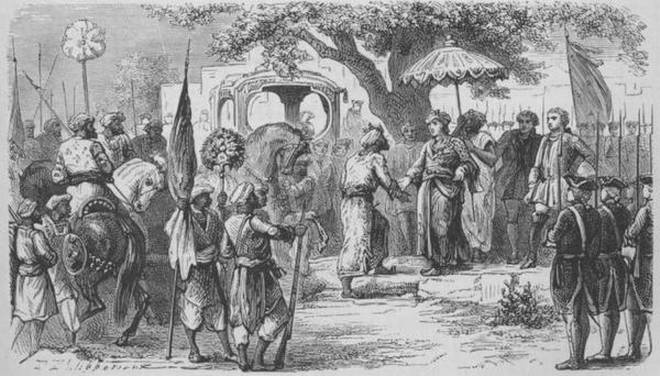
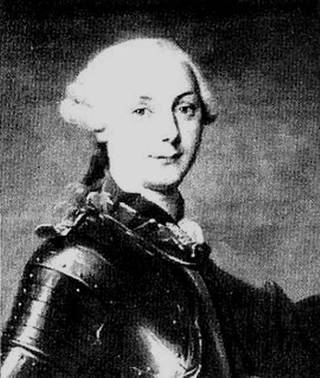
The architect of this French policy of Indirect Rule in Hyderabad was the indomitable General Bussy, the French commander, who at the express orders of Dupleix, the Governor of Pondicherry, arrived in Hyderabad in February, 1751 at the head of a strong French contingent. It was Bussy who declared Salabath Jung as the new Nizam, after the murder of Muzafar Jung. Bussy enjoyed an unassailable position in the Nizam’s court at Hyderabad.
War of succession
After the death of Nizam-ul-Mulk the first Asaf Jah, in May 1748, there was political turmoil in Hyderabad due to war of succession among his immediate descendants.
The Nizam had six sons and an equal number of daughters. Ghazi ud din, the first son was a representative of his father at the Imperial Mughal court in Delhi and was not inclined to be his father’s successor. The second son, Nasir Jung therefore proclaimed himself as the Nizam of Hyderabad. But an ambitious, Muzafar Jung, grandson of the dead Nizam, (son of his favorite daughter, Khairunnisa begum) claimed the throne for himself.
The French governor at Pondicherry, General Dupleix, saw an opportunity to fish in troubled waters at Hyderabad.
There was also a war of succession brewing at Arcot, where Chanda Sahib laid claims to the Nawabi as successor to his father-in-law, Anwar ud din, against the claims of Mohammad Ali, Anwar ud din’s son. Dupleix decided to side Chanda Sahib at Arcot and Muzafar at Hyderabad.
He asked Muzafar Jung to come to Arcot to first settle the dispute there, promising to make him the Nizam at Hyderabad later.
Muzafar and French armies under Dupleix defeated Anwar ud din in a battle at Ambur and Chanda Saheb was declared as Nawab of Arcot.
The British at Madras who wanted to arrest the growing French power, advised Nasir Jung, the Nizam to come to south to check Muzafar- Dupleix nexus. Nasir Jung accordingly went with his forces but when engaged in a fight, was killed in one of the minor skirmishes near Arcot on 25 December, 1750. Muzafar Jung immediately was declared the Nizam of Hyderabad by Dupleix.
Victorious Muzafar was taken in great pomp by Dupleix to Pondicherry where a grand Durbar for the new Nizam was held. Muzafar was toasted, feasted and entertained by the French General.
In return, Muzafar was so pleased that he made Dupleix as a jagirdar of Villianallur with a personal grant of 80 villages. He also conferred the title, “Subedar”, and the French governor was happy to be addressed as Dupleix Sahib. After a month of festivities, and French hospitality, Muzafar set out to Hyderabad accompanied by a strong French contingent sent for protection by Dupleix headed by his close confident and an able commander, General Bussy.
However, on way back to Hyderabad, Muzafar Jung, 38 days after becoming the Nizam, was treacherously murdered in a spine chilling melodrama. As the contingent came close to Cuddapah and entered Lakkireddypalle pass, Muzafar was assassinated on February 3, 1751, by the Nawab of Kurnool, who earlier supported him but was disillusioned when the new Nizam, he thought, was not keen to keep the promises made.
An astute diplomat that he was, Bussy continued his journey with his French armies to Hyderabad and made Salabath Jung, an younger brother of Nasir Jung as the new Nizam. The death of Muzafar and the march of French armies to Hyderabad through the territories carrying fire and thunder under Bussy, made him such an object of terror that even now in the Telugu States the mothers try to silence their crying babies with the arrival of “Booochi”, a corrupted version for Bussy!
Marquis de Bussy worked under Dupleix at Pondicherry for a long time. He married Marie, a step daughter of Dupleix. His arrival in Hyderabad marks a new era of French connections with Hyderabad and the northern Circars.
Bussy wanted to make use of the opportunity to the best of the French advantage as the new Nizam, Salabath Jung was at his mercy. He decided to stay back with his army to give protection to the Nizam. His army consisted of 900 European and 4000 of sepoys and was a strong instrument of war fare.
In order to meet the expenses for the maintenance of army, estimated at ₹21 lakhs a year, Bussy got the entire coastal Andhra, from Guntur to Srikakulam, which yielded an annual income of ₹31 lakhs. Masulipatam and Yanam were granted as personal jagirs to Bussy.
Charminar as home
When Bussy arrived in Hyderabad, as there was no immediate accommodation worthy of his position and importance, he decided to put up in the very Charminar, the majestic, sturdy and the “tallest structure in the entire city”, then. Huge curtains were tied on all sided making Charminar as his home.
Muhammad Quli Qutub Shah who built Charminar in 1591 must not have ever dreamt that it would one day serve as home to a French General, Bussy. When the beautiful Charmahal on the banks of Musi got readied, Bussy shifted there and Salabath Jung built Khilwath Mahal (part of Chowmahal palace complex) for his own stay. Charmahal, where Bussy finally shifted to, was a multi floored beautiful palace with cloth of gold used as door curtains, (Charmahal stood on the grounds where now the High court buildings are located.)
When the Seven Years War ( 1756- 73) broke out in Europe, the French and English armies in India also started to fight. Robert Clive buoyed by his stunning victory at Plassey in 1757, sent Col. Forde who with his armies occupied Northern Circars, held by the French.
Count de Lally, the French General who arrived from France to fight the English, on reaching Pondicherry, recalled Bussy from Hyderabad to make a combined attack on the British at Madras. However, in the battle at Wandiwash, the French armies were defeated and both Lally and Bussy were taken prisoners. They were let off later and Pondicherry was returned to the French.
The French influence in Hyderabad steeply declined on the departure of Bussy. His name is immortalised in the Hyderabad dominions for his participation in the famous Bobbili battle that took place in January, 1757.
Bussy supported Vijayarama Raju of Vizianagaram in vanquishing Bobbili. There is a street in Yanam today named after Bussy. He became the French governor at Pondicherry two years before he died in 1785. Thus, while Bussy’s rise in Hyderabad heralded the high watermark of French power in India, his withdrawal from here marked the collapse of its political power.
After the departure of Bussy from Hyderabad, the British with the tacit agreement with Shah Alam, the Mughal emperor, deposed Salabath in September and made his younger brother, Nizam Ali Khan as the new Nizam in 1762. Salabath Jung was imprisoned by the new Nizam in the fort at Bidar, and was killed a year later.
By recognizing Nizam Ali as Asaf Jah II, the Mughal emperor has derecognized the three predecessors, Nasir Jung, Muzafar Jung and Salabath Jung who all had violent deaths as the rulers, though between them they had a rule of 14 long years from the death of Nizam ul Mulk in 1748 up to the accession of Nizam Ali II in 1762. If those three Nizams were also counted, there were ten Nizams who ruled Hyderabad ; and the last Nizam, Osman Ali Khan must have been the X th Nizam and not the VII, as he is generally considered.
source: http://www.thehindu.com / The Hindu / Home> Society> History & Culture / by K S Seshan / March 24th, 2018
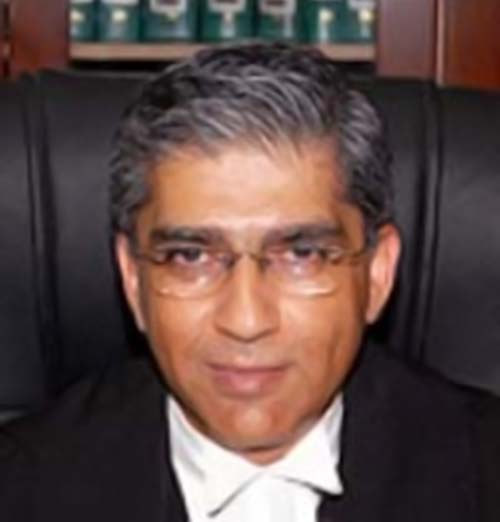
On March 14, Badar Durrez Ahmed completed his stint as the Chief Justice of Jammu and Kashmir. He has served since April 2017. Son of Dr Fakhruddin Ali Ahmed, former President of India (24 August 1974 – 11 February 1977), and Abida Begum, a lady from Haldoi, Ahmed was born in 1956.
His family is related to the royal family of Loharu and to the famous Urdu poet Mirza Ghalib. An economics lecturer in St Stephen’s College, Justice Ahmed was enrolled as an Advocate in 1980 with the Bar Council of Delhi and started practice in the Supreme Court of India and Delhi High Court. He was appointed a Judge of the Delhi High Court in December 2002. Prior to that, Ahmad was Secretary of Ghalib Institute, Delhi. He has been acting Chief Justice of Delhi High Court twice. To bid adieu to Justice Ahmed, a full Court farewell reference was held in the Chief Justice’s Court at High Court of Jammu and Kashmir, Jammu on March 15, 2018, were people were all praises for his intellect, etiquette and humble nature.
“In my experience here, I have found that the members of the bar at both places, Srinagar and Jammu, are extremely competent,” he said while thanking everyone present in the Full Court Reference.
He said advocates have an important role to play in Justice Delivery System (JDS). The role of advocates is not limited to mark your attendance in the court but the ultimate goal must be to make justice available to the common people and help judicial system to deliver it to the doorsteps of people.
Earlier, Ahmed in his tenure as Chief Justice, said the law enforcing agencies need to be extra cautious and sensitive in Jammu and Kashmir while dealing with the juveniles as the children in the state have been brought up in a very violent atmosphere that has affected their mental as well as the physical growth. He said the juveniles have to be treated differently and the one dealing with juveniles should have a great understanding and extra sensitive towards the children.
Stating that the children are the backbone of human civilization and shall shape its destiny in future, Ahmed said regardless of the political, economic or social philosophy of a government, welfare of the children is of the utmost importance and must be given top priority.
While identifying that in the disturbed socio-political climate of J&K, the problem is magnified; Ahmed stressed on the state government to adopt effective and proactive measures to, not only rehabilitate the juveniles who do come into conflict with law, but also prevent juveniles from coming into conflict with the law.
During his farewell speech, Ahmed expressed his gratitude and affection for the entire judicial system of the magnificently diverse state of J&K.
In his response to the reference stated in his address, Ahmed said that he is very proud of the fact that the introduction of paperless e-Courts in the High Court was facilitated in large measure by his colleagues on the Bench and welcomed by members of the bar. The fact that this Court is now a front-runner in the adoption and use of technology in the courtrooms is the result of a huge collaborative effort.
Justice Ramalingam Sudhakar has been appointed as acting Chief Justice of the Jammu & Kashmir High Court after the retirement of Justice Ahmed.
source: http://www.kashmirlife.net / Kashmir Life / Home> Personality / by Kashmir Life / March 22nd, 2018
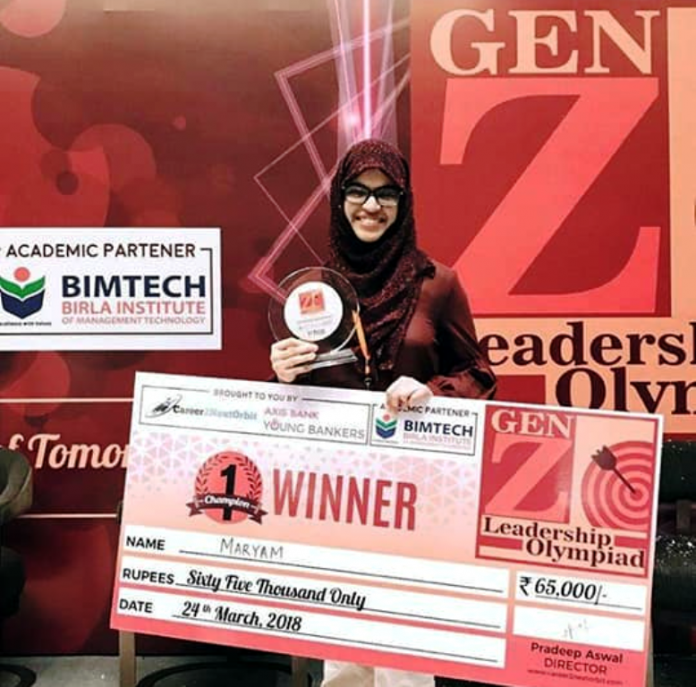
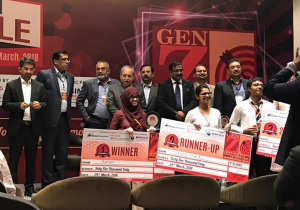
Nineteen-year-old Maryam Siddiqui, a first-year Bachelors in Architecture student of Jamia Millia Islamia, has brought laurels to the university by bagging top spot in the GenZ Leadership Olympiad.
The competition was organized by Career2NextOrbit.com and Axis Bank. The Grand Finale was held on March 24 at Pride Plaza Hotel, New Delhi.
The competition consists of two stages. As the first step of the process, the registered teams submitted a 3-minutes Vlog on any one of the 5 themes given by the organisers, followed by a telephonic interview.
Maryam, a resident of Delhi, was selected among the top 20 participants from all over India and called for the Grand Finale held at Pride Plaza Hotel, New Delhi where she competed for the second stage which includes Public Speaking (on-the-spot), Experiential Learning, and Case Study Analysis.
The jury comprising of Dr. P. K. Biswas (Director, IFMR Chennai), Dr. Gautam Sinha (Director, IIM Kashipur), Dharm Rakshit (Head-HR, Hero MotoCorp), and Malabika Bose (VP and Head-HR, Blackberry) declared Maryam as the winner among the 461 other teams.
She was given a cash prize of Rs. 65,000.
“There were hundreds of teams who were competing against me. I was single in my team whereas the other had up to three members,” Maryam told TwoCircles.net.
“But I was dedicated that I could do it. I gave my best and my efforts paid off” she added. She is looking to compete in more of these competitions and bring laurels to the university.
source: http://www.twocircles.net / TwoCircles.net / Home> Indian Muslim / by TwoCircle.net Staff Reporter / March 28th, 2018
Katlamari Village, Murshidabad District , WEST BENGAL :
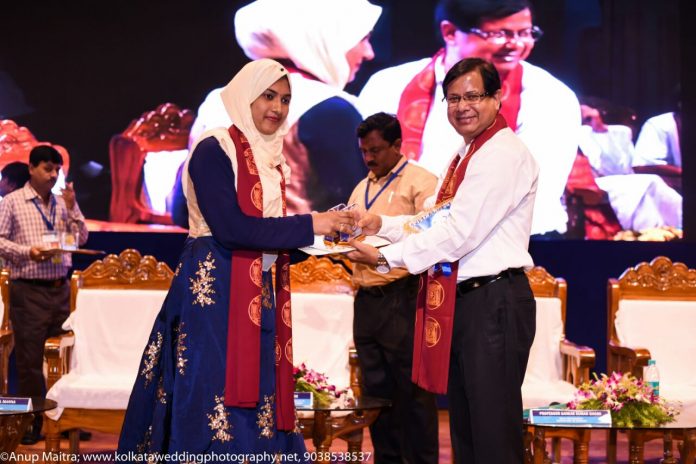
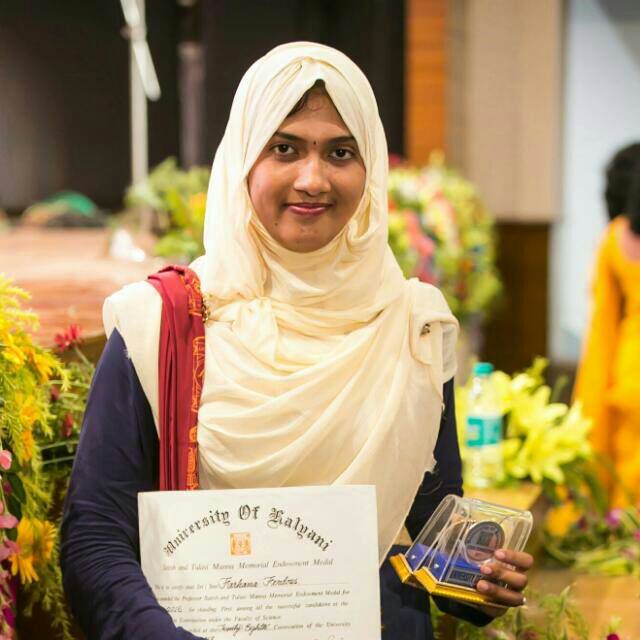
Farhana Firdous receiving her Medal and Certificate from the V.C of Kalyani University.
If our mainstream media is to be believed, nothing good happens near or at the India-Bangladesh border. Every now and then, an ‘expert’ will tell us how the border is witnessing illegal immigration, smuggling and other illegal activities. However, as usual, if you scratch the surface, the truth about the struggles of people living in these areas come out. And the story of Farhana Firdous, a 25-year-old resident of Murshidabad district, is a testimony of how adversity can spark the birth of an incredible talent. Despite much hardships and the daily struggles of being a Muslim woman who wants to study, Firdous has excelled and secured three medals for her Master’s degree in Physiology from the University of Kalyani, West Bengal, in its 28th Convocation held in September last year. Mind you, this is not the first time that she has won medals and given her career path, it is unlikely that this will be the last time her efforts are awarded.
Firdous scored 86.8% in her M.Sc degree that bagged her three medals from three different fields. She was rewarded with silver ‘Professor A.G Datta Endowment Medal’ for standing First Class First for her M.Sc degree, gold for ‘Mitali Memorial Medal’ for obtaining Highest Marks among the recipients of the same degree under the Faculty of Science and bronze ‘Satish and Tulsi Manna Memorial Endowment Medal’ for standing First among all the successful candidates at the Post Graduate Examination under the Faculty of Science.
In 2014, she bagged the fifth position among the undergraduate students of 49 colleges under Kalyani University scoring 67.8% marks. She got 82.4 % in her matriculation and 72% in 10+2 in Science stream.
Though it is a fact that she is really an intelligent student, her journey up to this success was never smooth and clear. The first and foremost drawback for her was opportunities from her very early life. She resides at a 2 k.m distance off from the Bangladesh border where people hardly get most of the social amenities. Her village, Katlamari under Raninagar police station of West Bengal’s Murshidabad district, is about 60 km from where she used to go to attend her tuitions at Baharampur, Islampur, Domkal localities because of the non-availability of tutors in her locality. The distance only increased when she took admission for her M.Sc degree at the University of Kalyani, about 200 km from her home after finishing her schooling at her locality and graduation from Baharampur Girls’ College in 2014.
While talking to TwoCircles.Net, Farhana shared her experiences of the journey. She sets out at 3.a.m from her home to attend her classes. She says, “ Most of the times and even till now, I had to get ready at around 3.a.m of night. I start first cycling to Sekhpara located 2 km from our village to take a bus to Baharampur. After that, I have to take a train to reach my university in order to attend my classes. Many times I missed the first class because of the non-availability of buses at Sekhpara.”
This problem, according to Firdous, is far bigger than the rebukes and rebuffs of the neighbours because of her being a woman coming from a Muslim family. But she kept her endeavour intact to pursue her higher studies and fulfil her dreams at a large.
Firdous says that all she has achieved is thanks to her family, which has always stood by her side in order to fulfil her dreams. In this regard, she says, “While my family supported me in the possible way, many rebukes and rebuffs my family and I had to listen from my localities for my womanhood. Marriage and social settlement were their prime concern that they wanted to impose upon my family and to me, but that was never a matter to introspect to my family until my success.”
Her mother, Nazmun Nesa Begum, a housewife, concurs: “I wish she secures a good career after such a toilsome journey through both social taboos and academic hardships.”
While Firdous says that many people have inspired her, her biggest source of inspiration was her late grandmother Nur Nahar Begum. Firdous’ father, Firoz Shahjahan, a contractual school teacher under Matriculation Seva Kendra Scheme, says, “ my mother was her sole strength to reach up to this position. She was the first to come forward to get Firdous admitted to the Kalyani University. Thanks to her blessings, she became the first woman in our family to earn a Master’s degree in Science.”
Among other names who inspired Farhana were her Professors- Dr Gautam Paul, Dr Subhasish Sahu, and Dr LakshmiKumari Lahiri. In fact, it was Dr Paul, Farhana shared, whose inspiration resulted in her success. TwoCircles.net managed to talk to Dr Paul who is the former Head of the Department of Physiology. He says, “She is a very intelligent and diligent girl. She illuminated us coming from one of the most socio-economically minority populated districts of India. I wish she keeps this trend of illuminating success up in her future and let us feel pride for her.”
For the time being, Farhana is preparing for NET Exam and wishes to pursue her research on Human Physiology in her PhD degree.
She now aspires to run a Career Counseling programme in her locality. Sharing her experiences, she said, “ I was not aware of different streams as a part of curricula and hence different lines for job markets until my coming into the university. I believe that if a student has knowledge on many things, he/she can easily choose his/her preference to follow as their career and it lacks among the students of my locality who are in their Matriculation or +2. So, I have a dream to organise frequent Career Counseling for all of them so that they can way out their career.” No matter what path she takes, it is clear that Firdous will continue to prove her doubters wrong.
source: http://www.twocircles.net / TwoCircles.net / Home> India News / by Mirza Mosaraf Hossain, TwoCircles.net / February 09th, 2018
Proving that school education is not the only way to success, artist Wajid Khan, whose studied up to Standard IV in the MP Board Examination, earns lakhs of rupees by selling his paintings.
Sharing his success story, he said, “I never enjoyed reading or writing, instead working with real objects and machines.” Born with a silver spoon, he had never imagined living on footpath.
“Unfortunately, when I could not clear Class V board examination, my parents kicked me out,” Khan said. He elaborated that his mother Roshanara had given him Rs 1300 and told him to become successful and make her proud.
Walking 13 km near the railway track from his village Songiri to Mandsaur railway station, he was scared and paranoid about being robbed. “Then, I saw the bright moon shinning ahead, and it was my silver lining,” Khan said.
Taking the first train from Mandsaur, he reached Ahmedabad. “I lived on footpath there and started a small business of buying and selling old clothes,” Khan said.
Investing his talent using scrap material, he tried to make something useful. “Finally, after a number of attempts, I was able to make a small replica of an iron,” Khan said.
His inventions caught attention of engineering students, who connected him to their guide Prof Anil Gupta. “Gupta suggested me to become artist and advised me to shift to Indore,” Khan said.
He explained that Indore is the ‘city of success’, where people accept new ideas and promote them. “Again, I was living on footpath in Indore, when someone gave me an opportunity to live in his store room as care taker,” Khan said.
With a small income and place to stay, he started working on his art work. “I had been visiting my hometown frequently then, and during one of the trips, I picked up a box of nails from there,” Khan said.
Using those nails, he decided to make a portrait of Gandhi. “I started making that painting with my helpers in 2007, which I completed in 2010,” Khan said.
The painting was sold for Rs 20 lakh. “Further, I invested in other paintings and continued making portraits of famous people,” Khan said.
After a few years, his parents arranged his marriage with Maryam Siddiqui, who was an artist as well. “My paintings got the missing detailing touch from Maryam,” Khan said.
Sharing his philosophy, Khan quoted the importance of doing what you love. “I did not study, but I did something that makes me happy, and that is why I am successful,” Khan said.
source: http://www.freepressjournal.in / The Free Press Journal / Home> Indore> Sunday Guest / by Tina Khatri / September 25th, 2016
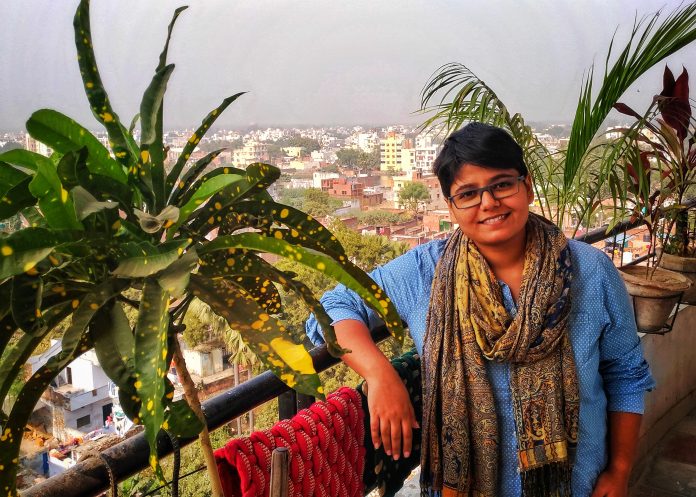
She lived through a tough childhood and now she is the voice for many young art aspirants who are willing to exhibit and sell their artworks but have no knowledge. Sana Sabah, a 27-year-old girl from Varanasi, is the CEO of “Shuruart or Shuru(A)rt”, a startup which she joined as an employee but soon went on to become the face of the organisation.
“It was 2015 when I heard about ‘Shuruart’ when it was about to start. I met Gaurav Tiwari for the same, so I was offered the role of content writer for the Shuruart,” said Sana about her role with the startup.
Sana Sabah’s actual role was to interview and profile young students-cum-artists studying and working at Banaras Hindu University. After spending a considerable amount of time with the artists, Sabah understood that it is not the profile one artist needs.
“I learnt it through our interviews that artists have been facing scarcity of exposure in the art world. They have been creating the artwork which is limited to their studios,” said Sabah, who realised her work during interviews of more than 50 artists from Varanasi.
This period saw Sabah progress from being an interviewer and content writer to become an art curator and art enthusiast, which has given exposure to around 90 young artists in just two years of time.
Born in 1990 in Varanasi, Sabah soon moved to the neighbouring city of Chunar. While she and her sister were in their primary education, the famous Chunar cement factory closed and her father lost his job. Despite many assurance from many government and non-government bodies, the financial condition of the family remained in distress.
Sabah said that for seven years, the family went through tough times. The family managed to get some help from Sabah’s maternal side, but as Sabah tells, “During all this, my parents had only one priority – the education of me and my sister.”
Sabah’s family couldn’t compromise on her education, so she relocated temporarily to Delhi for education until her parent settled somewhere. She spent two years in Delhi at her uncle’s residence and then she came back and started school at the Central Hindu Girls School, affiliated with BHU.
Soon after her High School, she chose commerce stream and started working in theatre groups of her college. It was her passion for writing which took her towards Mass Communications and Journalism for Masters in BHU.
Rejected from five jobs at corporate-driven news channels, Sabah moved towards various freelancing opportunities and later started working with Shuruart. “I was trained but I was not groomed enough to work in the corporate culture. After that when I started with Shuruart, I learnt the true purpose of my training and education.”
Before Sabah, Shuruart could manage to get only 10 to 15 artists on-board. But that number grew as soon as Sabah joined the organisation.
Shuruart oversees all the resources – besides ideas – required for a painting. Shuruart provides canvases and colours to the artists. Artists – who are the graduate and postgraduate students from the visual arts faculty of BHU – work around a theme and provide the completed artwork to the Sabah and her organisation.
After receiving the completed work, Shuruart stretches, frames and protects the paintings and makes those ready for various exhibitions and sales. “We do not charge a single penny to the artists, instead artists get definite and considerable cuts when someone buys their original artworks,” said Sabah.
For Sabah, it was a tough job to convince artists to submit their work. “They were influenced by the BHU faculty that we might steal their artworks, but I have been trying hard to convince them,” said Sabah.
Almost every artist working with Sabah and her organisation come from a marginal background. The parents of many of these artists have been working as labourers, small business owners and other similar professions. But with Shuruart and Sabah, the same artists are getting exposure and earning, if their paintings get picked up at a right price.
“The art culture is very important. In our very short period, we have seen many exhibitions where even organisers crave for funding. Moreover, they do not seem much interested in the art and its culture,” said Sabah. “So we tend to avoid exhibitions where organisers do not have any leaning towards arts,” she added.
Sabah thanked Craig Dicker, the cultural affairs officer at US Embassy, New Delhi, for his involvement in the cause which Shuruart believes. Dicker provided Shuruart with the first Delhi exhibition, which Sabah describes as a “turning point” in her and her organisation’s progress.
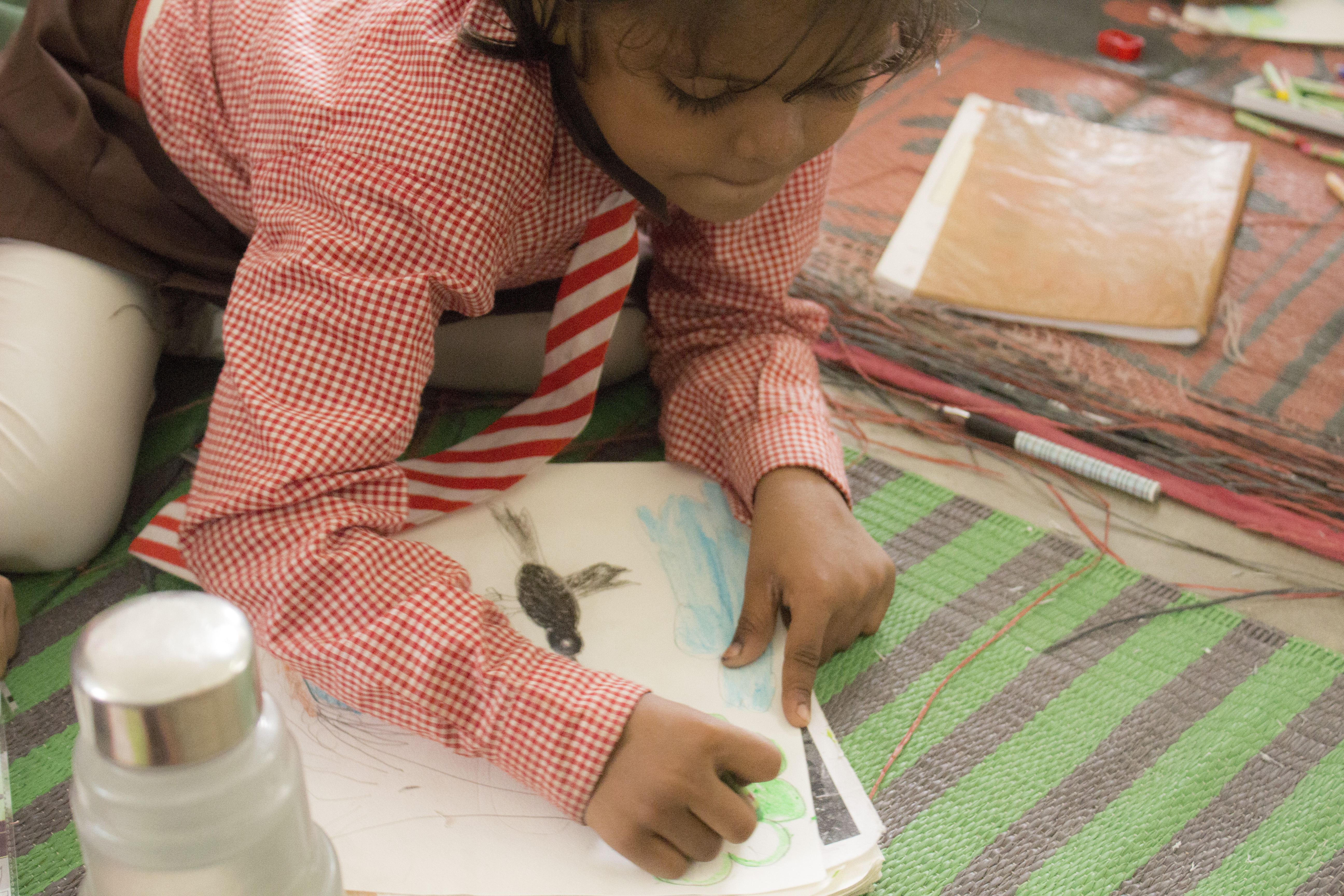
Another inspirational and ambitious project which Sabah’s team kick-started is “Let’s Start Art”, in which two of her team members Karishma and Sandeep go to Government Primary Schools of Varanasi and manage art workshops for children. “Art is the subject where government school put the least attention. So we take one of our artists to the schools and provide kids with papers and colours and some idea to draw something. The results are amazing,” said Sabah while talking about more than 70 workshop sessions conducted in five government schools of the city. “Kids ask us: When will we visit next time?” she says.
Working with Gaurav Tiwari, Neha Vashistha, Sandeep Verma and Karishma, being a Muslim has never been a problem for Sabah. “But being a woman has always been, people look differently towards me giving orders or conducting something,” said Sabah. “And one of the biggest achievement, for me, is that we have somehow succeeded in enhancing the women’s representation in the art field. Because women were always staying back for many reasons,” she added.
With little or no hope from the government in terms of funding, Sabah seeks proper funding – which these days is running through bootstrapping – and a proper revenue model for the arts and artisans. “Along with BHU, we are trying to get artists from Patna University also. We hope to increase the number of young artists and provide them exposure and income if we get some funding.”
source: http://www.twocircles.net / TwoCircles.net / Home> Indian Muslim / by Siddhant Mohan, TwoCircles.net / December 15th, 2017
Producer duo Siddharth Kumar Tewary and Rahul Kumar Tewary, who delivered a hit in the mythological show Mahabharat, have five shows on air, namely Razia Sultan, Yam Hai Hum, Manmarziyan, Suryaputra Karn and Begusarai. Known for an uncanny eye for talent, they have always tried to produce unique concepts for the small screen.
Now, they have expanded their work folio by associating with veteran writer-turnedproducer Saba Mumtaz. She has written several shows, including Yeh Rishta Kya Kehlata Hai, Sapney Suhaney Ladakpan Ke, Saraswatichandra, Bade Achhe Laggte Hai, Uttaran and Razia Sultan and co-produced Ek Boond Ishq in the past. The trio is set to produce a socio-romantic drama for Zee TV under the joint venture of Swastik Productions and Mumtaz Saba Productions.
Says Rahul, “Mumtaz Saba Productions is a partnership company between Swastik and Saba. It’s another creative production house, which functions independently of Swastik. It’s headed by Saba, who is talented and has a great body of work behind her. We have a lot of fresh concepts and will surely become a force to reckon with soon.”
source: http://www.timesofindia.indiatimes.com / The Times of India / Home> News> TV> News> Hindi / TNN / August 12th, 2015
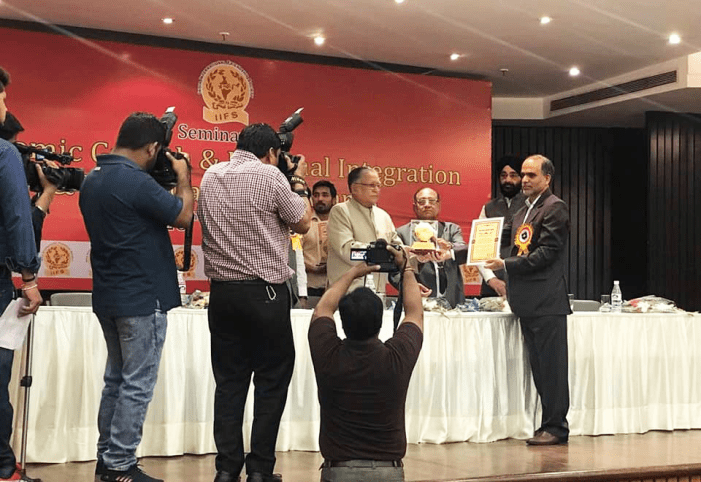
India International Friendship Society on Monday awarded Muhammad Shafi Zahid, Director Department of Archives, Archeology and Museums with ‘Rashtriya Gaurav Award’ at India International Centre, New Delhi.
The award was conferred to him for his contribution in the archeological studies and preservation of artifacts during his tenure in the Department, a statement said.
“The major archaeological discoveries were made during the time of Mohammad Shafi Zahid in early decades of 21st century AD. This young scholar, who had got training from M.S University Baroda (Gujarat and had a passion to explore the hidden treasures.
He excavated the Buddhist site at Letpora (Pulwama) in 2004, wherefrom, he exhumed a treasure of wonderful terracotta heads, busts and jewelry artifacts of early 8th century AD of Karkota Period.
This discovery was followed by another Buddhist site of Kushan era (100-400 AD) at Kotebal in south Kashmir (2005) where a magnificent terracotta tile pavement was exposed,” said the citation received by him.
The department was earlier headed by several learned historians and archaeologists including Prof P N Pushup, Fida Mohammad Hussnain, Dr. Sheikh Mohammad Iqbal and Mohammad Shafi Zahid.
The citation said that Zahid had made remarkable numismatic discoveries of ancient copper Coin hoards, (1500 coins) at Watnar Kokernag, (193coins) at Charari Sharef, Budgam and (850 coins) at Nunar Budgam, in the years 2011, 2014 and 2016 respectively.
“As such he brought to light the numismatic evidences of Hindu Rajas, Muslims sultans and Mughal Emperors of Jammu and Kashmir.
He also discovered a number of rare stone and bronze sculptures from the length and breadth of the state.
At Qasbiyar in District Pulwama, he recovered an exquisite Sculpture identified as Ek Mukh Linga of the 9th century AD.
The most outstanding sculpture discovery was made at Zurhama Kupwara in 2006 where from a treasure trove of rare bronze images of the 9th century AD, was recovered by him,” the citation reads.
“These all archaeological discoveries made by the archaeologist are housed and exhibited in this gallery of the museum. It is in place to mention here that the state archaeology is the main source for the archaeology and numismatic galleries of this museum.”
source: http://www.kashmirreader.com / Kashmir Reader / Home / by Reader Correspondent / March 27th,2018