All posts by mpositiveone@gmail.com

Premchand award to litterateur

Lucknow, UTTAR PRADESH :

Lucknow :

The Munshi Premchand Award-2016 for contribution in the field of literature was awarded to Ali Zamin Kazmi by the state government for his novel ‘Godan Ke Baad’ on Saturday.

A cash award of Rs 1lakh was also given to Kazmi.

“The Munshi Premchand award 2016 came as a surprise to me as I was not expecting it,” said Kazmi. He said youngsters should develop a love for books and literature.

source: http://www.timesofindia.indiatimes.com / The Times of India / News> City News> Lucknow News / March 25th, 2018

SC appoints Justice Jawad Rahim as Acting Chairperson of NGT

KARNATAKA  / NEW DELHI :

New Delhi :

The Supreme Court today appointed Justice Jawad Rahim, judicial member of National Green Tribunal (NGT), as the acting chairperson of the green panel.

A bench comprising Chief Justice Dipak Misra and justices A M Khanwilkar and D Y Chandrachud said that the new acting chairperson will discharge his duties until a regular appointment is made and will take part in selection process of other members of the NGT.

“Justice Rahim shall discharge the duties of Chairperson (of NGT) for all purposes, including participating in the selection process for filing up vacancies of members, until a regular appointment of a new Chairperson is made,” the bench said.

It, however, made it clear that this appointment is an “interim arrangement” and shall not be construed to be a final determination of the seniority between Justice Rahim and Justice R S Rathore by this court.

The order came on a plea of the NGT Bar Association that has said that due to the non-appointment of chairperson at NGT, the selection process to fill up vacancies has been stalled.

The bench was told that Justice Rahim and Justice Raghuvendra S Rathore are the judicial members of the NGT and both were appointed to the NGT on 12 January 2016.

The Centre, represented by Attorney General K K Venugopal, left to the apex court the issue of appointing the acting chairperson in view of the fact that both the judges were appointed in the NGT on same day.

The apex court noted that the Attorney General has indicated that the central government would abide by the interim arrangement that is made by the court, so as to facilitate the discharge of duties of the Chairperson until a regular appointment is made.

“The making of an interim arrangement is also necessitated in order to enable the acting Chairperson to participate in the selection process for filling up vacancies of members of the NGT,” it said.

SJK PPS MNL SJK RT RT

source: http://www.timesofindia.indiatimes.com / The Times of India / News> Business> Business India News / PTI / March 27th, 2018

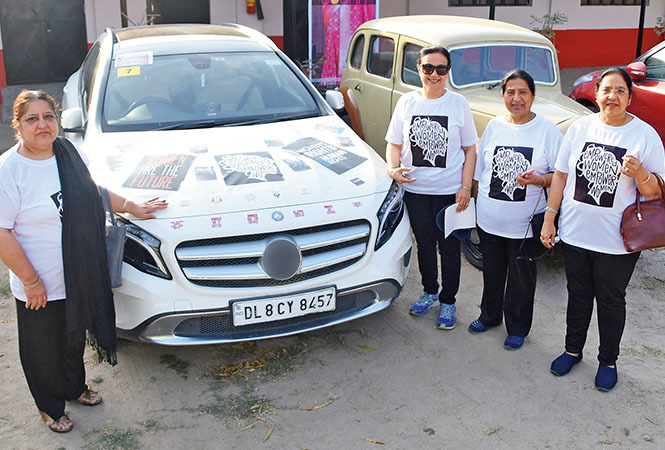
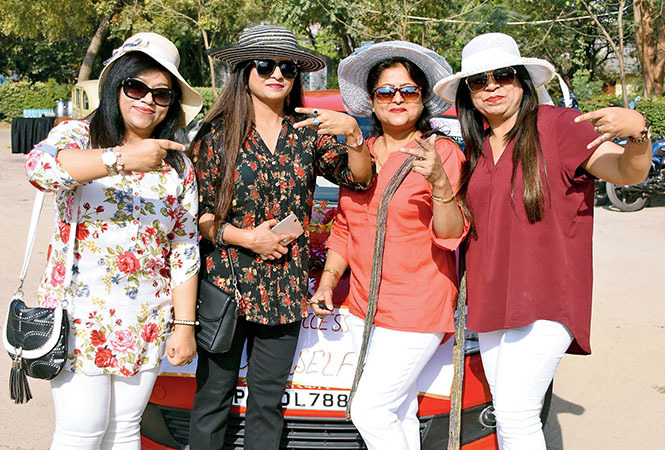
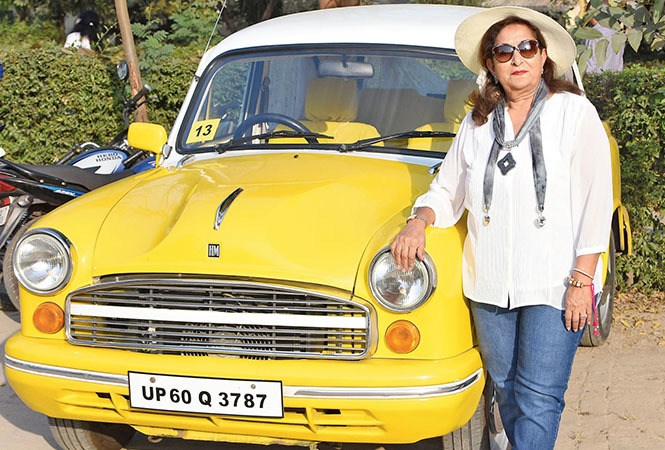
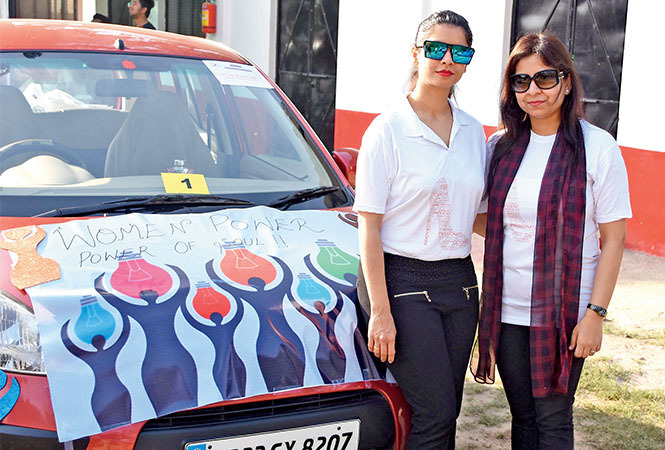
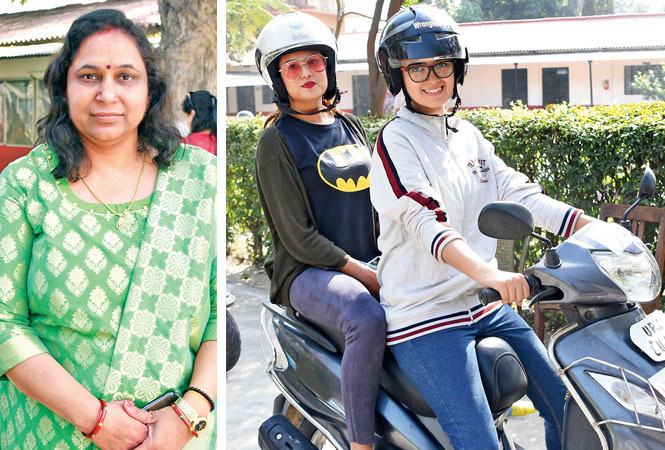
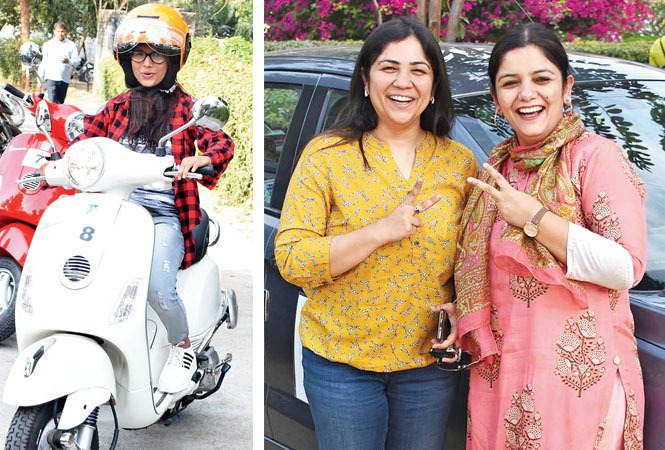
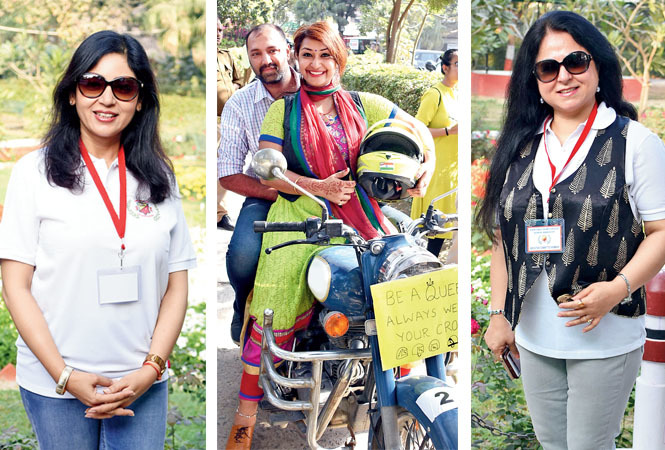
Women in Lucknow participate in car and two-wheeler rally

Lucknow, UTTAR PRADESH :

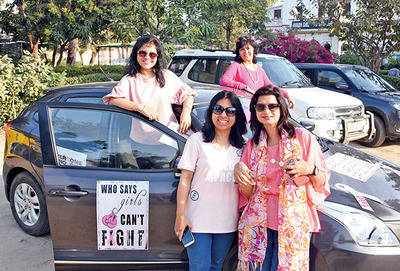
L-R) Neelima Gupta, Andrea Gomes Megrath, Jyoti Mishra and Purvi Singh ( BCCL/ Farhan Ahmad Siddiqui)

To promote the spirit of womanhood, a car and two-wheeler rally was organized at Awadh Girls’ Degree College, recently.

Organized by the alumnae association of the college, the rally was flagged off by Brijesh Pathak, cabinet minister, Law, Justice and Alternate Energy Resources, Namrata Pathak, former chairperson, UP Women’s Commission and a social activist, and Upma Chaturvedi, principal of the college. “It gives me a great pleasure to be a part of this event. I think talking about women empowerment will not help unless and until we incorporate it with events like these,” said Brijesh.

The rally started from the college campus and covered five major checkpoints in the city which were provided to the participants in the form of riddles.

(L-R) Neena, Meeti, Baby and Biba (BCCL/ Farhan Ahmad Siddiqui
(L-R) Saher Bano, Rana Khan, Sheeba Mushahid and Sabina Ahmad (BCCL/ Farhan Ahmad Siddiqui)
Shakun Prakash (BCCL/ Farhan Ahmad Siddiqui)
Dia Ahuja (L) and Vidhi Agarwal (BCCL/ Farhan Ahmad Siddiqui)
Namrata Pathak (R) Ria and Caroline (BCCL/ Farhan Ahmad Siddiqui)

The best part about the treasure hunt was that each participant had to click a selfie on the spots that they cover.
Several cars and bikes were decorated with various themes. While a few had pictures of Sridevi, giving her a tribute, others had several messages of women empowerment.

Farhana Khan (R) Shachi Singh and Simran (BCCL/ Farhan Ahmad Siddiqui)
Nidhi Praksh, Surya & Suparna Sarkar, Upma Chaturvedi (BCCL/ Farhan Ahmad

Finally, Priyanka Malik and Abeeha Rizvi bagged the first position in the car category while Suparna Sarkar bagged the first position in the two-wheeler category, and were felicitated by Major General Vinod Sharma and Namrata Pathak.

source: http://www.timesofindia.indiatimes.com / The Times of India / Home> News> Entertainment> Hindi> Events> Lucknow /  by Prachi Arya / TNN / March 22nd, 2018

Spastics Society director is ‘Bengalurean of the Year’

Bengaluru, KARNATAKA :

Namma Bengaluru Foundation presents awards for 2018

Rukmini Krishnaswamy, director of Spastics Society of Karnataka, has won the ‘Namma Bengalurean of the Year’ award given by the Namma Bengaluru Foundation, which is founded by Rajeev Chandrasekhar.

Sanjeev V. Dyamannanavar, an urban transport activist and one of the founders of Prajaa Raag, has been recognised as citizen of the year’, Rasheed Kappan, a senior journalist with Deccan Herald, as the mediaperson of the year, Dipika Bajpai, DCF, Bengaluru Urban, as government official of the year, Prashanth S.B., chairman of Nayonika Eye Care Charitable Trust, as social entrepreneur of the year, and Vidya Y., co-founder and trustee, Vision Empower, for her work to make education accessible to the visually impaired, as rising star of the year. These awards carry a purse of ₹2 lakh.

Citizen groups

The NBF also felicitated four citizen groups as ‘Champions of Namma Bengaluru – 2018’ for their work towards “reclaiming Bengaluru”, the theme of the awards this year. Friends of Lakes, a coalition of lake activists across the city, Save Pattandur Agrahara Lake and Save Kaggadasapura Lake, both local residents’ groups fighting to save and rejuvenate the lakes in their locality, and Project Vruksha Foundation, for its work on tree census, were the four citizen groups awarded on Sunday.

source: http://www.thehindu.com / The Hindu / Home> News> Cities> Bengaluru / by Staff Reporter / Bengaluru – March 26th, 2018

Doctors of Royapettah Hospital bring out a book on toxicology

Chennai, TAMIL NADU :

ToxicologyMPOs26mar2018

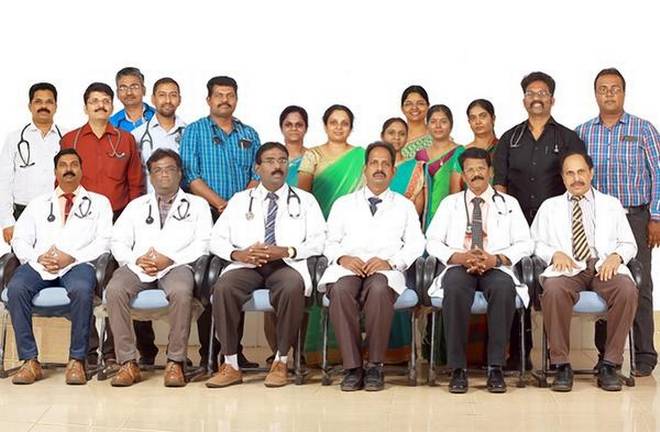
Doctors of the Department of Internal Medicine at Government Royapettah Hospital have brought out a book, Manual of Toxicology — An Indian Perspective, which, they say, will fill a lacunae in the knowledge about poisons.

“Most toxicology manuals are silent on many of the Indian posions, as they have been written from a western perspective. This book is based on our experience treating cases involving toxins,” says Dr. A. Shaik Sulaiman Meeran, one of the doctors who spearheaded this book project.

Dr. P. Paranthaman was the editor-in-chief. Dr. Sulaiman, Dr. A. Samuel Dinesh and Dr. D. Venkateswaralu served as associate editors and Dr. P. Raja as co-editor. The book has been brought out by Chess Educational Publishers.

Dr. Sulaiman says that knowing the sources of danger will prevent accidental ingesting of poisons or strikes by venomous reptiles and insects.

Knowing where to seek help will be a crucial factor in recovery.

He says snake bite cases from the southern suburbs, which include Tambaram and surrounding areas, parts of Old Mahabalipuram Road and East Coast Road are common. Anti-venom serum for treatment of bites by cobra, viper and krait is available. Government general hospitals have them.

Residents of semi-urban areas can face the problem of snake bikes, it is available in primary health centres, he says. Here is a word of caution. “Ninety percent of the sea snakes are poisonous and there is no anti-venom serum for them. Only supportive treatment can be given. Sea snakes are sometimes found near fishermen’s settlements. They get entangled in fishermen’s nets and are brought ashore. There is always a high possibility of finding them near fishermen’s hamlets on East Coast Road,” says Dr. Sulaiman.

source: http://www.thehindu.com / The Hindu / Home> News> Cities> Chennai / March 23rd, 2018

West Bengal Civil Services results declared, 40 Muslim candidates qualify

WEST BENGAL :

The son of a former ice-cream seller, Habibulla Laskar, is among the 40 Muslim students out of the total enlisted 321 candidates selected for appointment to the post of Joint Block Development Officer in the West Bengal Civil Service (Executive) examination, Group C. The results were published on Thursday, nearly two years after the completion of the Civil Service Exams.

The Preliminary exam was held in January 2016 and main exam was conducted in July 2016. The list of 40 Muslim candidates also includes four women. While 33 Muslim candidates are selected under the OBC A category, which comprises 90% of the Muslims, only one Muslim candidate, Md Masluddin Khan, was selected under the OBC B category which comprises 42 Muslim sects. This clearly shows that the State Government is willingly depriving the Muslims under the reservation schemes and this is not the first time when they have been discriminated despite their reservation policies under the maze of OBC A and OBC B.

The forty candidates along with others will be appointed in various positions under the State administrative hierarchies. Among the forty selected candidates, five Muslim candidates out of 35 total selected candidates were selected for the post of Joint Block Development Officer.

SK Mohammed Rizwanuzzaman, who was selected under the unreserved category, and Selim Habib Sardar, Samirul Islam, Habibulla Laskar, who are under OBC A reservation category, were chosen for the post of Joint Block Development Officer, under the Department of Panchayats & Rural Development. Tanbir Ali Biswas, who is under the unreserved category, and Sk Nasirul Amin, Toushif Hassan, Md Ahsan Qadri and Shoaib Siddique who were selected under OBC A category will work with the Department of Women and Child Development & Social Welfare.

The list of female Muslim candidates includes Rejwana Pervin, who is selected in the West Bengal Sub-Ordinate Land Revenue Service, Farah Salim and Fatema Kausar both as the Assistant Commercial Tax Officer. These three candidates were selected under the reserved categories, while Nilofer Yasmeen, another candidate, was the only Muslim woman selected under the unreserved category as the Assistant Commercial Tax Officer.

Habibullah Laskar from Belegachi village of Baruipur block in Bengal’s South 24 Parganas, prepared for only eight months for the exam. Speaking with TwoCircles.net, he said, “My father educated three of his children selling ice-creams in a cycle on the road. Only for the last four years, he left the job when my elder brother got a Government job. Today my whole family is very happy with my success” He added, “ I left a job in the corporate sector when the advertisement for the said exam came.” When he was asked how he managed to crack this competitive exam, he answered, “perseverance and persistence towards study are the sole keys to all success that I followed and wish to convey the same to those who are taking preparation for this exam”.

Another successful candidate, Rejwana Pervin, from Baruipur locality in South 24 Parganas, told TwoCircles.net, “My father is now a retired person and I am the elder daughter among his three children. Though I was called for the interview last year for the WBCS, I was not selected. It would have turned into anxiety and despair if I was not selected this time.”

Fahim Alam, from Kolkata, who was recruited last month in the West Bengal Audit and Accounts Service, and who is empanelled as the Assistant Commercial Tax Officer, said, “though I am already in a job, I am quite happy with the result as I was preparing for this for the last two years. But for the time being, I cannot decide which job I should take. I have to consult with my family members. ”

source: http://www.twocircles.net / TwoCircles.net / Home> India News / by Mirza Mosara Hossain, TwoCircles.net / March 16th, 2018

How Thumbay Moideen Became A Healthcare Billionaire In The U.A.E.

Mangaluru, KARNATAKA / UNITED ARAB EMIRATES :
ThumbayMPOs25mar2018

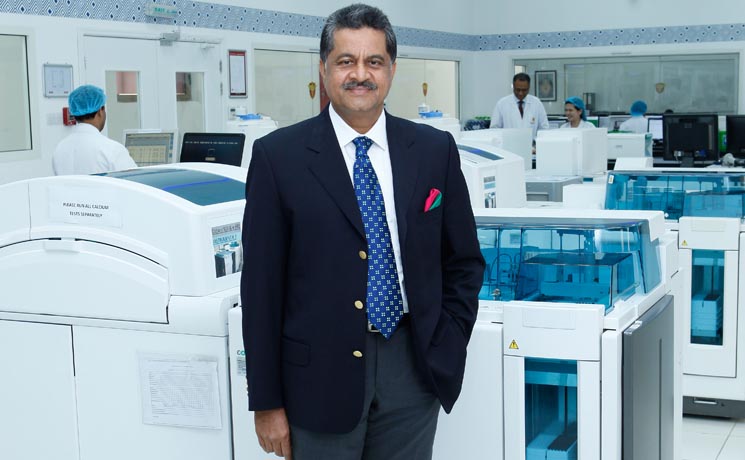
With the tinge of an Indian accent, a bespectacled professor rattled off medical terminology in English as students frantically took notes. Unfazed by the stench of embalming fluids, they examined the torso of a cadaver at Gulf Medical University (GMU) in Ajman, United Arab Emirates. Nothing unusual as far as anatomy classes go,  except that GMU is the only privately owned academic medical center in the U.A.E. It is part of a network of four pioneering teaching hospitals that now train 19% of doctors in the country and treat nearly 1,800 patients a day.

The founder is Thumbay Moideen, a 58-year-old former timber trader from Mangalore, a port city on the Arabian Sea in southern India. He is as surprised as anyone to find himself at the helm of a growing healthcare empire, Thumbay Group, which generated $700 million last year, up more than 20% from 2014. “It’s an unlikely tale,” says Moideen.
The career switch has made Moideen a billionaire, with a fortune FORBES MIDDLE EAST estimates at $1.8 billion, based on comparable publicly traded healthcare companies in the U.A.E. He says he’s Thumbay Group’s sole shareholder.

What began as an institution to teach aspiring medical professionals from India in the U.A.E.—Indians make up half of the country’s population, turned into training grounds for all expats, and includes a sizeable Arab student body. The university gets up to 6,000 applications a year for a total of 270 spots. Tuition ranges from $8,000 a year for a degree in physiotherapy to $32,000 annually for a medical degree—more than three times the cost of an MD at a government-run university. Other specialties include dentistry and pharmacy. Since 2003, over 2,000 students have graduated.

Healthy Choice

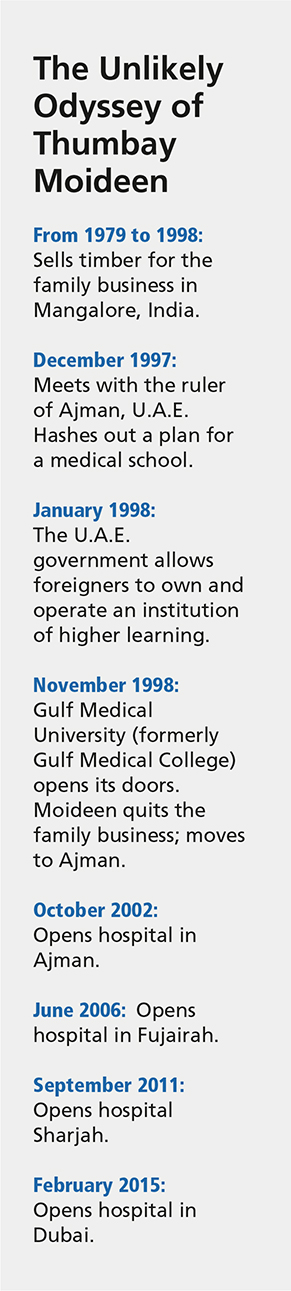
The tale of Moideen’s ascent into medical academia begins in December 1997.  Traveling from Mangalore to Tanzania, he made a stop in Ajman and paid a visit to a member of the royal family, Sheikh Majid bin Saeed Al Nuaimi, a family acquaintance.

Moideen was then working for his family’s timber and real estate company, BA Group Thumbay, a pillar of the Mangalore business community.  His father, Ahmed Hajee Moideen, formed the establishment in 1957. It imports wood from Malaysia, Papua New Guinea, Tanzania, Nigeria and Ghana, and processes them in its factories. After graduating with a degree in commerce from St. Aloysius College in Mangalore, Moideen joined the business in 1979, and traveled frequently.

Over dinner that December evening in Ajman, Sheikh Al Nuaimi asked him, “Can you think of a project which could have multiple effects on the economy of Ajman?” recalls Moideen.

Ajman is the smallest emirate in the U.A.E., and the royal family was on the hunt for new projects to help boost its economy.

“In those days, Ajman was like a village. There was nothing,” says Moideen.

He proposed expanding the family business in Ajman, but the Sheikh pushed for new ideas. Moideen told him the story of a medical university and affiliated hospital close to his hometown. Kasturba Medical College in Manipal began accepting medical students in 1969, and it built Kasturba Hospital. “The whole town grew around the college and it became world renowned,” says Moideen. In 2015, an India Today/Nielsen survey ranked Kasturba Medical College one of the top 10 medical schools in India—a feat in a country with more than 280 medical colleges.

Moideen thought their conversation was casual brainstorming, but the Sheikh immediately saw potential. Three days later, he brought up the idea of an academic medical center for Ajman with the Emirate’s ruler, Sheikh Humaid bin Rashid Al Nuaimi, who asked to see Moideen. He told the Emir that although it was an exciting idea, he didn’t have expertise in education or healthcare. The Emir persisted. “As we spoke, the ruler said, ‘you look like a smart chap, why don’t you try it? I’ll help you,’” recalls Moideen..

“It was a risky move, but I’m an adventurous fellow,” he says. It didn’t take him long to abandon his career in the family company in 1998, and immerse himself in the business of healthcare. “I was rushing between India and Ajman. I couldn’t keep up anymore and this was so much more exciting.”
OdyssesyThumbayMPOs25mar2018

His first move was to seek advice from Kasturba Medical College. Consultants from the school helped him draw a feasibility study. The only other medical schools in 1998 in the U.A.E. were Dubai Medical College, which is only open to women, and government-owned Al Ain University.

The Ministry of Higher Education didn’t allow expats to own a license for educational institutions, but a royal decree soon waived that requirement in January 1998. Moideen bought 25 acres of land from the government the following month, bankrolling the venture with an initial investment of nearly $41 million in bank loans and his own capital. In March, he began building the university and by the fall of that year, it started accepting students.

To his surprise, the school hardly got any Indian applicants. Arabs and expats from countries such as the U.K. and Germany enrolled. Gulf Medical University, which had only recruited Indian staff, quickly had to hire personnel from other nationalities.

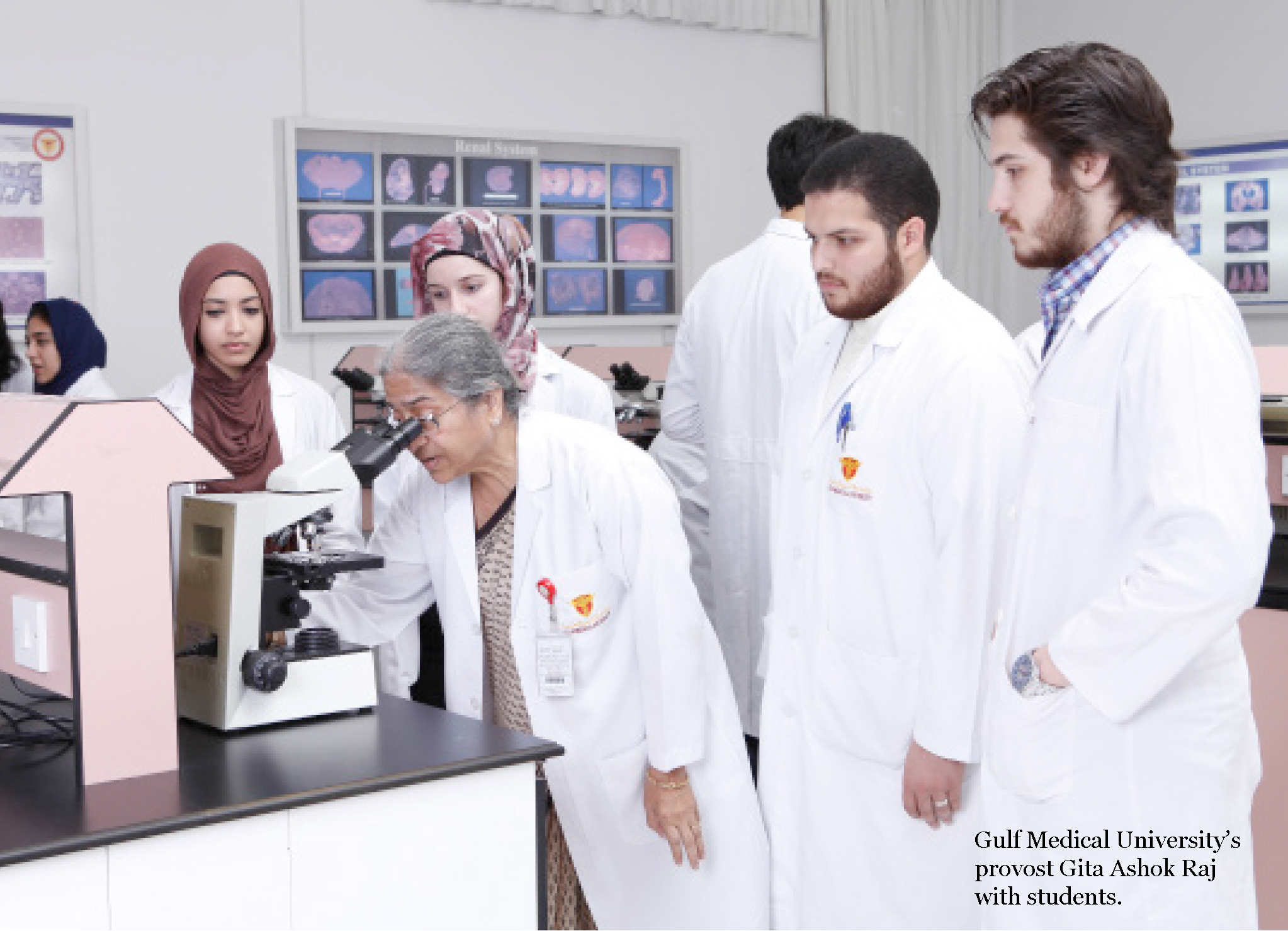
The student body is now made up of 36% Arabs, 32% Asians (including Indians, Pakistanis and Sri Lankans) and 22% Africans; the rest comes from Europe and the U.S. Gita Ashok Raj, a pathologist from Mangalore, oversees a faculty of 162 from 22 countries. Students straighten up when she walks down the university corridors.  “We have fast evolved from a college offering one full-time program to a full-fledged university offering 15 full-time programs,” she says.

To build the school’s reputation, Moideen began raising its profile by sponsoring conferences with top medical schools, such as Johns Hopkins, Mayo Clinic and Hamburg University. “We took the initiative 17 years ago and contacted these big universities,” he says. Early on, for example, GMU organized a national conference on ophthalmology along with the U.A.E.’s Ministry of Health and Mayo Clinic. James Garrity, Chair and Professor of Ophthalmology at Mayo Clinic, delivered the keynote address. To date, the school has organized more than 275 national and international conferences.

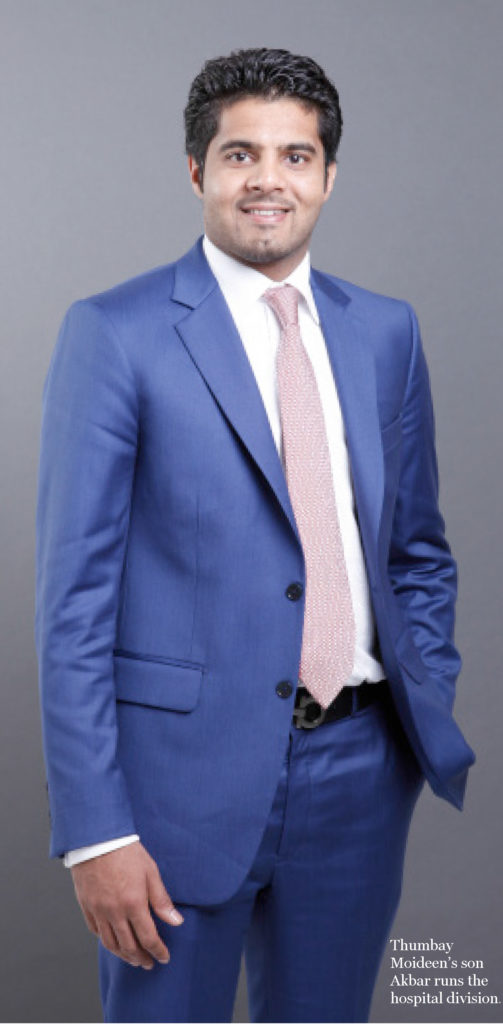
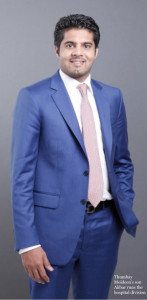
The plan for a teaching hospital began in 2000. For the first two years, students were sent to Iranian Hospital in Dubai, while Moideen built the first 200-bed Thumbay Hospital in Ajman. Financed with $81 million in loans from Islamic banks and his money, it opened in 2002, a year before the first graduating class. He opened three other hospitals with 60 beds each in Fujairah in 2006 and Sharjah in 2011, and 150 beds in Dubai in 2015. His eldest son Akbar who studied hospital management at the SDA Bocconi School of Management in Milan, Italy, runs the hospital division.
AkbarThumbayMPOs25mar2018

GCC countries still struggle with a shortage of medical professionals. There are 1.5 physicians per 1,000 people, while hospital beds lag at 21 per 10,000 people, according to Colliers International, a global real estate consultancy firm.

One law hasn’t changed for Thumbay Group: its medical school graduates are required to complete a year of internship at a government-owned hospital. Besides Al Ain University, they now include the University of Sharjah, and Ras al-Khaimah Medical and Health Sciences University.

The majority of GMU students go on to specialize in areas such as cardiology, neurology, and dermatology; 22% are admitted to U.S. medical schools for further training.

The school’s academic record hasn’t necessarily translated into a preference for its physicians, or any U.A.E.-trained doctor for that matter. Saudi German Hospital in Dubai, for example, hires GMU graduates with three years of experience, but a western education still carries prestige. “Western-trained doctors are preferred by patients,” says Semira Dikbas, executive, International Patients Program at Saudi German Hospital.  “Gulf Medical University is well recognized, but we cannot compare it with any other university in Europe, the U.S. or India.”
 

Thumbay02MPOs25mar2018

In an effort to gain prestige, Moideen started the first medical journal in the GCC. Launched in 2012, the Gulf Medical Journal is a peer-reviewed publication with an international advisory board that includes doctors from India, the U.K. and U.S. Researchers at Gulf Medical University are expected to publish two to three articles a year. The school spends close to $3 million a year on research, and faculty is regularly awarded external grants. Recently, for example, the World Health Organization provided a $10,000 grant to study at-risk relatives of patients with diabetes, which affects one in five people in the U.A.E.

The strategy is slowly paying off at Thumbay hospitals too. In 2013, they received accreditation from Joint Commission International, a U.S. non-profit organization. It bestows its highly coveted stamp of approval on hospitals that meet benchmarks for quality and safety.

Thumbay Group runs the only privately owned teaching hospitals in the U.A.E., but the number of hospitals is growing to meet demand. VPS Healthcare, HNC Hospitals and NMC Healthcare, to name a few, are expanding. Their founders are also Indian entrepreneurs, who have staked out a claim in the healthcare sector in the Gulf.

Moideen has now set his sights on Ghana where he expects to open a medical school by 2017. He inaugurated a hospital in Hyderabad in November 2015, and plans to build hospitals in Saudi Arabia, Qatar, Bombay and Bangalore next year.

source: http://www.forbesmiddleeast.com / Forbes Middle East / Home> Business / March 01st, 2016
BBMP to invest in bike ambulances

Bengaluru, KARNATAKA :

MotorcycleAmbulanceMPOs25mar2018

Will mainly cater to areas in the outer zones

First aid and emergency care may soon become easy, if all goes as per BBMP’s plan. The civic body recently decided to invest in 100 bike ambulances, mainly to ensure that health care is accessible when most needed.

The idea, which was first tabled before the Standing Committee for Health, has been approved by the BBMP council. The city already has nearly 20 bike ambulances that are being operated by the Department of Health and Family Welfare.

Sources in the BBMP said that bike ambulances are most required in the outer zones where the wards are more spread out than those in the core zones. “It is here that the bike ambulances will be most useful in reaching the spot as soon as possible to provide immediate health care,” they said.

Paramedical staff trained in providing emergency care will be outsourced. Of the 100 bike ambulances, 50 will be of lower engine capacity, but equally well-equipped. Sources said these bikes will be given to women paramedical staff. Each bike ambulance will have a first aid kit, cardiac care kit, ortho kit, portable oxygen cylinder, and emergency and life saving medicines.

A mobile app will be developed to enable citizens to access the nearest bike ambulance, apart from a dedicated control room / call centre.

Mujahid Pasha, Chairperson of the Standing Committee for Health, told The Hindu that the bike ambulances will be purchased at a cost of ₹1 crore, from the ₹2 crore allocation for purchase of hearses, health and sanitation in the 2016-17 BBMP budget. “But this may not be enough. We will require at least ₹4 crore a year for operation and maintenance, salary of the paramedical and control room staff, etc. We are hoping for more allocation in the next budget.”

He said that the BBMP is in talks with healthcare providers, including GVK and Spencers. “We are taking inputs from these companies. We will check the feasibility of their inputs and then call for tenders,” he added.

source: http://www.thehindu.com / The Hindu / Home> News> Cities> Benglauru / by Special Correspondent / February 10th, 2018

Udupi: K P Ibrahim Matpady takes charge as president of district WAKF board

Udupi, KARNATAKA :

Udupi :

K P Ibrahim Matpady, the new president of the district WAKF board advisory committee of Udupi, appointed by the Karnataka state WAKF board Bengaluru took charge here on Thursday, March 22 at Udupi VS Acharya zilla panchayat auditorium, Rajathadri Manipal.

Gulam Ahmed Hejmady and Abdul Khader Yousuf K took charge as vice-presidents of the board.

The oath taking ceremony was administered by Maulana Rashid Ahmad Nadvi, a religious leader of Udupi Jama Masjid for the newly appointed office bearers.

Speaking to the gathering, KP Ibrahim Matapady said, “The purpose of WAKF Board is to take responsibility of the welfare of people and also unite them for the development of organization. Everyone should work in unity without any discrimination. WAKF board is a non political organization.

“The first work is to facelift the masjids and also construct cemetery. We do not have proper records for WAKF properties. This issue needs to be addressed at the earliest. We also intend to construction Muslim sabhabhavan,” he said.

Habib Ali, Ismael Moulana Byndoor, T Hussain Saheb Byndoor, B S Shamsuddin Navunda, Khalif Abdul Munaf Kandlur, Mohammed Ali Kunjimon Kodi, Shabhan Hangaluru Kundapura, Mohammed Gouse Sastan, Tajuddin Ibrahim Brahmavar, Faruk Saheb Baikady, B Afzul Saheb Hoode, Hazi Abbobakker Nejar, Habeeb Ali Ambagilu, Riaz Palli Udyavar, Nasir Ali Bailur, Azeezuddin Rizwan Moulana Karkala, Hassan Shaikh Ahmed, Abdul Khader and Abdul Rehman K Hejamady received their respective duties.

Yasin Malpe, president of District Muslim Okkoota, Haji Abbobakker Atrady, Gudan Bhasha former president of Muslim Okkoota, Ismail Athrady and others were present.

Muzauddin welcomed the gathering. Abdul Aziz compered the programme.

source: http://www.daijiworld.com / DaijiWorld.com / Home> Karnataka / by Daiji World Media Network – Udupi (HB) / March 23rd, 2018

Muslim conference on unity on Sunday

Udupi, KARNATAKA :

The Udupi Zilla Muslim Okkoota will organise a conference on unity at the Mahatma Gandhi Bayalu Ranga Mandir at Beedinagudde here on Sunday.

Speaking to presspersons here on Wednesday, Khatib Abdul Rasheed, conference convener, said that the Muslim community had to empower itself economically, socially, politically and educationally and contribute to the task of nation building.

The theme of the conference is: Empowerment of community for nation building.

Maulana Toukhir Raza Khan will inaugurate the conference.

Mohammed Yaseen Malpe, president of Udupi Zilla Muslim Okkoota, will deliver the keynote address.

Al-Haj Twaka Ahmed Musliyar, Khazi of Mangaluru, will deliver the valedictory address.

source: http://www.thehindu.com / The Hindu / Home> National> Karnataka / by Special Correspondent / Udupi – March 02nd, 2018