All posts by mpositiveone@gmail.com

Congress wins 3 Rajya Sabha seats, BJP one in Karnataka

Bengaluru, KARNATAKA :

All three Congress candidates – Nasir Husain, L Hanumanathaiah, G C Chandrashekar – and BJP candidate Rajeev Chandrasekhar on Friday emerged victorious in the Rajya Sabha elections from the state amid a boycott by JD(S) legislators, who cited violation of electoral rules.

A candidate required around 38 votes to win the elections. Members of the Legislative Assembly form the electoral college for the Rajya Sabha polls. Of the 217 eligible voters, as many as 188 members voted and four votes were found invalid.

While Congress candidates secured the required number of votes for victory – Chandrashekar (46 ), L Hanumanathaiah(44) and Husain (42 ) – B M Farook of the JD(S) lost the polls as he secured only two votes. This is the second time that Farook is tasting defeat in the Rajya Sabha elections. Rajeev Chandrasekhar secured the highest number votes (50) to bag his third consecutive term to the Rajya Sabha.

The day witnessed high drama. The process of counting was delayed by nearly two-and-a-half hours as Chief Electoral Officer (CEO) Sanjeev Kumar referred a memorandum submitted to the Election Commission of India (ECI) submitted to him by the JD(S) seeking countermanding of the polls. Kumar was discharing his duties as observer of the ECI.

The JD(S), in its complaint, cited gross violation of electoral rules by Legislative Assembly Secretary S Murthy, who is the Returning Officer (RO). The party had objected to two Congress legislators – Revenue Minister Kagodu Thimmappa and Gurmitkal MLA Baburao Chinchansur – being allowed a second chance to cast their votes.

Both Thimmappa and Chinchansur had sought replacement of ballot papers as they wrongly marked their preference. The election officers obliged, much to the chagrin of the JD(S). Counting of votes which was scheduled to start at 5 pm, commenced only at 7.30 pm after the ECI gave its go-ahead for the process.

ECI’s direction
The ECI subsequently directed that the votes of Thimmappa and Chinchansur should be rejected and the counting process should commence after due segregation of ballot papers. The ECI, in its response, stated that the RO’s decision to issue fresh ballot papers was in total violation of voting procedure provided under the Conduct of Election Rules, 1961. The ECI replaced Murthy with Assembly Joint Secretary M S Kumaraswamy.

The JD(S) had requested the Congress not to field its third candidate and extend its support to the party candidate. However, the Congress not only fielded its third candidate – G C Chandrashekar – but also ensured his victory. Friday’s development is bound to further widen the gap between the Congress and the JD(S) in the run-up to the crucial Assembly polls. For its part, the Congress has bagged the support of at least five of the eight independents, including Kudligi MLA B Nagendra, who is likely to join the party.

An analysis of the voting pattern shows that all the seven JD(S) rebels voted for Congress candidates. The BJP, which has 43 votes of its own, secured 50. The party seems to have not only secured the support of not only two BSR legislators and two KJP MLAs but three others.

source: http://www.deccanherald.com / Deccan Herald / Home> State / DH News Service, Bengaluru / March 24th, 2018
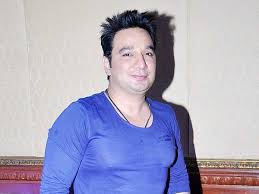
Ahmed Khan: I did not want to be a slave of Friday

Mumbai, MAHARASHTRA :

AhmedKhanMPOs24mar2018

He made his directorial debut in 2004 with ‘Lakeer’, but Ahmed Khan said soon after his second film, ‘Fool n Final’, he decided to take a break from direction as he did not want his creativity to be a “slave of Friday”.

The choreographer, who will be returning to the director’s chair with ‘Baaghi 2″, said he decided to take up the project as he wanted to work with lead actor  Tiger Shroff and producer Sahid Nadiadwala .

“I was quite done with direction. I did not want to be a slave of ‘Friday’. I had an ongoing career in choreography and I also produced two films in between. I had ad films to do.

“Almost every year I was offered three-four films, the offers were good but somehow I did not feel like doing it or was caught up with other work. After over nine years I got offer from Nadiadwala, who is like my elder brother and Tiger was there too, so I said yes,” Ahmed told .

The makers recently released the remixed version of ’90s chartbuster track ‘Ek Do Teen” from ‘Tezaab’. Actor Jacqueline Fernandez has recreated the dance number, which originally featured  Madhuri Dixit .

Ahmed said the song is his personal favourite and he wanted to popularise it again by bringing out the new version

“It is my personal love for the song and so we got it. Now that we have taken the song people should appreciate it. Today’s audience generation now knows about ‘Ek Do Teen’.

“I am not saying we have done a great job, even we are doing business as it is a hit song so we have taken it. At the same time see the benefit, we are taking it to another generation, giving it a life,” he adds.

The upcoming action venture, which is a sequel to the 2016 hit ‘Baaghi’, is produced by Sajid under his banner. Also featuring Disha Patani, the film will hit the theatres on March 30.

Ahmed, who started his career in Bollywood as a child artiste, said if not movies he would have pursued a career in martial arts.
“If I would not have been a choreographer or a filmmaker I would have been a martial artist teacher. I am a black bet in Taekwondo, Taichung, I have done MMA.

“I have gone for tournaments. I have broken all parts of my body. Two-and-half-years back I was kicked in my neck and I got tinch of a vertigo and after that I stopped. I wanted to increase my level but my wife stopped me saying I need to relax now,” he said

source: http://www.timesofindia.indiatimes.com / The Times of India / News> Entertainment> Hindi> Bollywood> News / by PTI / March 24th, 2018

Bhaskar Moily elected Mangaluru Mayor

Mangaluru, KARNATAKA :

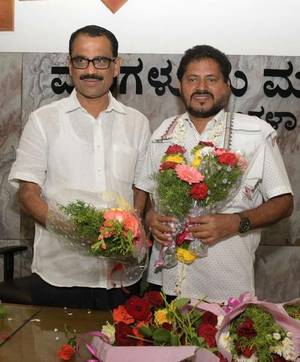
K.Bhaskar Moily (left), new Mayor of Mangaluru, and Mohammed Kunjathbail, Deputy Mayor. | Photo Credit: PHOTO: H.S. MANJUNATH

K. Bhaskar Moily and Muhammad Kunjathabail, both from Congress, were elected Mayor and Deputy Mayor of Mangaluru on Thursday.

Mr. Moily and Mr. Kunjathabail got 37 votes each while BJP’s Surendra Shetty and Meera Karkera contesting for Mayor and Deputy Mayor respectively got 19 votes each. The election was held on the Mangaluru City Corporation premises.

Members to different standing committees were elected unopposed. Mysuru Regional Commissioner Shivayogi Kalasad conducted the proceedings as the returning officer.

source: http://www.thehindu.com / The Hindu / Home> News> States> Karnataka / by Special Correspondent / Mangaluru – March 08th, 2018

Mangaluru City North MLA to lay foundation stone for various development works on March 15

Mangaluru, KARNATAKA :

Mangaluru :

Mangaluru City North MLA B A Mohiuddin Bava will go on a foundation stone laying spree on March 15. The projects include foundation stone for first phase of market complex at Surathkal, a six-lane road from Surathkal to Kaikamba Circle till Ganeshpura temple, concreting of Surathkal to Guddekoppa Road, building of zonal office of Mangaluru City Corporation and sea wall at Hosabettu coast, Mayor Bhaskar Moily announced here on Wednesday.

Filling in for Bava, who was scheduled to address the media, the mayor said the first phase of the market complex will be taken up at a cost of Rs 61 crore against total project cost of Rs 126 crore. While MCC will pitch in with Rs 11 crore, the state government has given a special grant of Rs 50 crore for the project, he said adding this is for the first time that state government has released a grant of this size for any market construction project anywhere in Karnataka.

The road from Surathkal to Kaikamba Circle is six-lane concrete road that is 4.3-km long, Bhaskar said adding cost of this project that public works department will execute is Rs 62.10 crore. While MCC will contribute Rs 4.10 crore, the PWD will chip in with remaining Rs 58 crore, he said, adding it is also a first in that the department has provided a grant of this size for any road project in the state and thanked CM Siddaramaiah and the MLA for his efforts in getting it.

MCC will take up concreting of Surathkal-Guddekoppa road out of premium FAR funds at a cost of Rs 1.13 crore. The new building of MCCs zonal office at Surathkal will be constructed using state finance commission grants at a cost of Rs 2.25 crore. Department of ports and fisheries will execute the sea wall work at Hosabettu at a cost of Rs 5 crore, the mayor said. K Mahmmad, deputy mayor, Deepak Poojary, corporator were present on this occasion.

source: http://www.timesofindia.indiatimes.com / The Times of India / News> City News> Mangalore News / by Jaideep Shenoy / TNN / March 14th, 2018

Saleem Beg is member National Monument Authority

UTTARAKHAND / JAMMU & KASHMIR :

Srinagar :

Prominent name in heritage conservation and former bureaucrat from Srinagar City, Muhammad Saleem Beg has been appointed as a member of the prestigious National Monument Authority(NMA), Government of India.
Former Director General Tourism, Beg is also the INTACH’s convener for the state chapter. An official handout said Beg has been appointed as whole time member of the NMA. “The Authority has been setup as per provisions of The Ancient Monuments and Archaeological Sites and Remains AMASR (Amendment and Validation) Act, 2010 which was enacted by the Parliament in March, 2010,” it added.
“The Authority has eminent historians and renowned cultural personalities as its whole time and part-time members. The Authority is mandated to engage with States and central agencies for conservation and preservation of the historic monuments,” the handout added.
Beg’s appointment is being credited to his marathon experience of heritage conservation in Kashmir, particularly in the architectural sector.
The man who accomplished projects like restoration of Aali Masjid and Thag Baab Sahib (RA) shrine apart from conservation of Mughal monuments, Beg is associated with many national and international organizations in the field of art and culture.
He has also been associated with UNESCO, World Monument Fund, Indian Heritage Cities Network as a trustee and other cultural organizations nationally and internationally.
Pundits said under his leadership INTACH has emerged as a premier organization and a credible voice in advocacy and promotion of art and culture. “His work with universities like Jamia Milia Islamia, Kashmir University and University of Illinios, USA has given him high academic credentials in art and heritage,” said an observer.
Since 2006, Beg has been struggling to seek conservation of heritage sites in  Kashmir particularly  Srinagar, which INTACH has listed after a marathon survey.

source: http://www.greaterkashmir.com / Greater Kashmir / Home> Srinagar / November 04th, 2018

Renovating Rahim’s tomb: The original monument of love

NEW DELHI :

Rahim01MPOs22mar2018

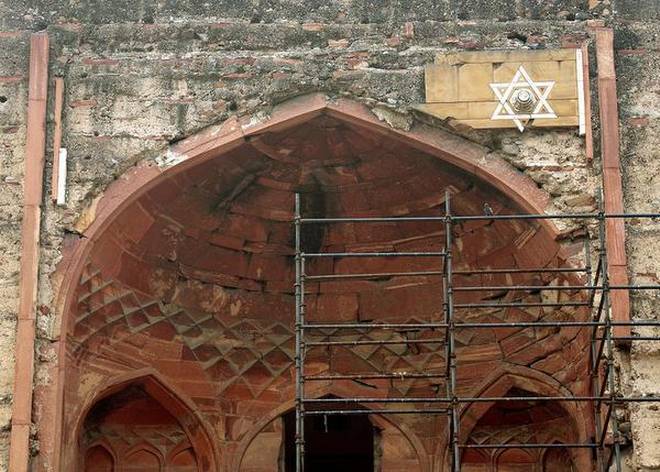
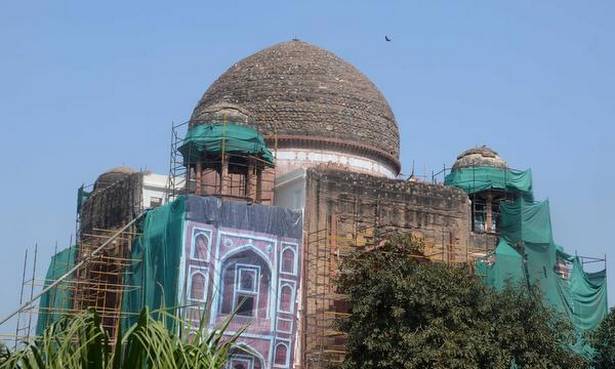
Rahim’s tomb, inspiration behind the Taj Mahal, was about to collapse when it was rescued by a conservation project

Rahim02MPOs22mar2018

Some 50 years before that magnificent monument of love, Taj Mahal, was built, Abdur Rahim Khan-e-Khanan, a poet and diwan in Emperor Akbar’s court, built a tomb in the memory of his wife Mah Banu. It was the first Mughal tomb built for a woman.

Constructed in 1598, the tomb stands a few hundred meters south of the Humayun’s Tomb, a world heritage site, in Delhi. This location was chosen for its proximity to Hazrat Nizamuddin Auliya’s Dargah — it was considered auspicious to be buried near the grave of a saint. Rahim too was eventually buried here in 1627.

Located near one of Delhi’s busiest roads, Mathura Road, Rahim’s tomb remained largely ignored for several years.

Then in 2014 the Ministry of Culture requested the Aga Khan Trust for Culture (AKTC) to restore Rahim’s tomb.

The tomb’s condition was precarious, to say the least, when the project began. “I usually don’t say this, but this building could have collapsed,” says Ratish Nanda, AKTC’s Chief Executive. It was “a very complex” project, he says. The restoration began in association with the Archaeological Survey of India and funding from InterGlobe, an Indian conglomerate.

There were deep cracks in the crypt, the first floor and the dome – “some so wide that you could put your arm through them.”

This needed immediate attention, and he realised it would take up to a year to fix them. Vandalism had added to the structure’s deterioration. Stones were missing, the white marble on the dome had been stripped off, water was seeping through. A flood a few years ago had also created cracks in the crypt’s vault.

Kilos of concrete

The restoration that had been attempted previously was woefully inappropriate and used modern plaster and cement, and had compounded the problem.

AKTC had faced a similar challenge during their restoration of Humayun’s Tomb, where they had to remove over a million kilos of concrete. The tomb wasn’t particularly structurally sound to begin with either, much like Humayun’s Tomb.

The team began with architectural documentation. This involved 3-D laser scanning (a technique first developed to find leaks in nuclear plants), photo archival research, historical research. Every stone was drawn up.

In 1968, the renowned British historian Percy Brown identified Humayun’s and Rahim’s tombs as structures that inspired the Taj Mahal. “But what is most significant about Rahim’s tomb,” Nanda says “is Rahim.” Rahim was just four when his father, Bairam Khan, an important military commander in the Mughal army, was assassinated. He grew up under the foster care of Emperor Akbar. He would later become one of Akbar’s nine most important ministers, the Navaratnas, and prove his own capability as a commander.

Most of us, however, know Rahim better as a poet. Apart from his famous dohas, he also wrote verses in Arabic, Sanskrit and Turkish, and translated Emperor Babur’s autobiography, Baburnama, from Turkish to Persian.

“I like the idea of this multidimensional personality. [He is] almost a renaissance figure,” says former diplomat T.C.A. Raghavan, whose curiosity about Rahim eventually led him to write a book about the man and his father, Attendant Lords (2017).

Secular symbol

Ujwala Menon, a conservation architect with AKTC, says that he was a secular figure and a patron of architecture. “The water supply system that he built in Burhanpur, with underground pipelines to every part, we can’t replicate that even today.”

Menon says that an attempt will also be made to restore the grand garden with plants that the Mughals favoured, such as citrus orchards.

A project of this scale requires several layers of work — preservation to keep the building in the state that it is found, restoration to bring the structure as close to its original condition as possible and reconstruction, which also involves a technique called ‘anastylosis’, where a ruined building or a broken object is restored using its original material. The vaults and parapet here were reconstructed using new pieces of Delhi quartzite and red sandstone respectively. Paint and lime-wash layers had to be painstakingly removed to reveal the incised geometric and floral patterns.

It will be another 16 to 20 months before the restoration of the tomb is complete, as there is major structural work to be done on the dome and facade.

But views on conservation can be subjective. There are those who criticise the work being carried out, saying that such techniques take away the narrative of age from the structure. Some believe that preservation is the only correct conservation technique.

But critics often focus on the aesthetics, not taking into account the structural integrity of the building. Nanda illustrates this with the analogy of skin. “You cannot say, ‘oh my skin is falling off, but I won’t repair it.’ Skin, besides making you look like who you are, is also fulfilling a lot of other functions.”

It is to counter such ‘mad arguments’ that Nanda says AKTC got the project extensively peer reviewed by over 50 different individuals — from architects, archaeologists and engineers, to historians, journalists and bureaucrats. These included Jaya Jaitly, Narayani Gupta, Saleem Beg, William Dalrymple, Gillian Wright and Lynn Meskell.

Nanda says that AKTC doesn’t take up a project unless the work can benefit local people. The Nizamuddin Basti Urban Renewal Initiative, of which the Rahim tomb renovation is a part, has also generated over five lakh man days of work for master craftsmen.

Earlier this year, a book, Celebrating Rahim, was published about Rahim’s life and and his artistic, political and intellectual work. AKTC and InterGlobe hope to bring out a compilation of Rahim’s written verses as well.

Nanda is appreciative about the private sector involvement in the project. “Unless there is a huge public interest in conservation, the future of heritage conservation is bleak.”

When he’s not chasing stories, the writer can be found playing Ultimate Frisbee or endless rounds of Catan.

source: http://www.thehindu.com / The Hindu / Home> Society> History & Culture / by Shashank Bhargava / March 17th, 2018

Iqbal Siddiqui: Maharashtra cricketer who created records on Test debut

MAHARASHTRA :

Siddiqui opened batting and bowling in his only Test, and took a spectacular catch. That was it.

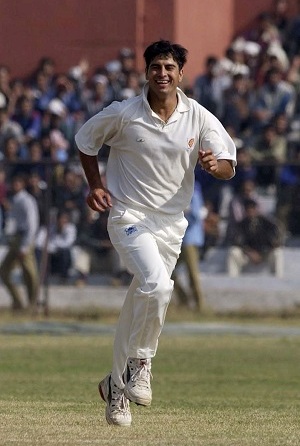
Iqbal Siddiqui © Getty Images

Iqbal Siddiqui, born December 26, 1974, was a Maharashtra stalwart through the 1990s. Abhishek Mukherjee looks at a man whose solitary Test resulted in multiple records for him.

The ‘One-Test Wonder’ tag does not sound something to be very proud of. Iqbal Rashid Siddiqui, however, had a remarkable one-off outing. It was not a remarkable performance, but he created multiple records in the process. But all in due course of time.

Siddiqui was reminiscent of Kapil Dev in more ways than one. He was stout, had an imposing frame, could generate deceptive pace, could swing the ball in air and gain significant movement off the pitch, and had that rare ability to run through a side on flat tracks — an attribute Indian pacers are not known for.

His 90 First-Class matches, mostly for Maharashtra, earned him 315 wickets at 30.08 — a number that reflects his inconsistency more than anything else. A decent batsman, he also scored 1,343 runs and had scored a hundred. He was also an excellent outfielder.

Maharashtra days

Born in Aurangabad, Siddiqui made his way quickly through the Under-16s and Under-19s. He made his First-Class debut in 1992-93, and stormed through Tamil Nadu at Bhusawal in the second innings with 6 for 59 and 4 for 71 in his second match.

He found a berth in the India Under-19s side for their 1994 tour of England. He had an excellent outing in the first Youth Test at Taunton against England Under-19s, taking five for 75 and four for 88; his tally included wickets of Marcus Trescothick, Michael Vaughan, and Anthony McGrath. Siddiqui headed the Indian bowling charts on the tour with 18 wickets at 24.

However, inconsistency caught up with him, and his career seemed to be fading away by 1995-96 (he even shifted to Hyderabad), though he found a place in the Irani Cup squad. Then came the match at Pune in 1997-98, where he routed Baroda with 7 for 49 and 5 for 30. The match figures of 12 for 79 remained his career-best.

Sent in as night-watchman against Orissa at Pune next season, Siddiqui slammed 116 from 292 balls. He ran through Saurashtra the next season with a career-best 8 for 72 at Pune (he took 2 more in the next innings). Consistent performances in the domestic circuit earned him a call-up for India A in their match against the touring Englishmen at Jaipur.

Siddiqui removed Mark Butcher after Sunil Joshi declared the innings closed at 233 for 9. But his real impact came in his second spell, when he removed Vaughan, Mark Ramprakash, and Andrew Flintoff in the space of 12 balls. He finished with 4 for 53, and gave the hosts a 63-run lead. Craig White bowled out India A for 109. This time Siddiqui removed Trescothick, but the tourists reached home with 3 wickets in hand. The selectors liked what they saw: Siddiqui made his debut in the first Test of the series at Mohali.

One Test, many records

To be fair, the selectors were harsh on the Indian bowlers after a dismal tour of South Africa. They brought in two debutant opening bowlers (Tinu Yohannan would partner Siddiqui), while in Sanjay Bangar  they drafted in an all-rounder. England also had two new men in James Foster and Richard Dawson.

England got off to a good start and reached 172 for 2 when Siddiqui claimed his only international wicket: Graham Thorpe edged one to VVS Laxman at third slip. Harbhajan Singh then bowled a fantastic spell, and the English were bowled out for 238. Deep Dasgupta, opening due to Virender Sehwag’s ban, scored a hundred; Rahul Dravid and Sachin Tendulkar both scored eighties; and India secured a 231-run lead.

Siddiqui, having taken 1 for 32 in the first innings, got only 8 wicketless overs in the second as Anil Kumble routed England for 235. However, he stunned Mohali by taking an exceptional tumbling catch of Trescothick at deep fine-leg off Yohannan. With only 5 to chase, Sourav Ganguly sent Siddiqui to open with Dasgupta; Siddiqui hit a boundary off the first ball from Matthew Hoggard and took a single from the second, and that was that.

In the process Siddiqui became the 12th player (and second Indian, after Manoj Prabhakar) to open batting and bowling on debut. He also remains the only cricketer to do the same in his only Test, and the second person to play the winning shot in his only Test after Jeff Moss.

[Note: Pat Cummins has also played the winning shot it in the only Test he has played so far, but he may play again.]

Later days

Siddiqui never played another Test. He played domestic cricket till 2004-05 before calling it quits. His last season saw him score 59 and take 5 for 68 against Assam at Aurangabad. He also played for Sevenoaks Vine in Kent Cricket League Premier Division in 2006, finishing with most wickets for the club (20 at 28.75).

(Abhishek Mukherjee is the Chief Editor and Cricket Historian at CricketCountry. He blogs here and can be followed on Twitter here)

source: http://www.cricketcountry.com / Cricket Country / Home> Features> Moments In History / by Abhishek Mukherjee / December 26th, 2016

Large scale promotions in Police Dept., DGP issues orders

Hyderabad, TELANGANA :

TSPoliceMPOs21mar2018

Hyderabad:

Govt. of Telangana issued orders promoting many police officials.

Many Asst. SPs have been promoted as Addl. DCPs and DCPs have been promoted as appeal SPs. DGP of Telangana State, Mr. Anurag Sharma issued these orders on 1st November.

Mr. Mohammed Tajuddin Ahmed, Mr. Ghouse Moinuddin, Mr. Mohammed Iqbal Siddiqui, MA Bari have been promoted as Addl. DCPs.

Ms. Shaik Saleema DSP has been transferred as Addl. DCP (Crime-II) Rachakonda, Mr. Shaik Ismail ACP of Khammam has been appointed as Addl. SP, Suryapet. Ms. Rehana Ghouse DSP, CID has been appointed as Asst. Director, Telangana State Police Academy.

source: http://www.siasat.com / The Siasat Daily / Home> Hyderabad / by Siasat News  / November 02nd, 2017

Lone warrior strives for making the Valley greener

Srinagar , JAMMU & KASHMIR :

Businessman Bhat has spent Rs 30 lakh from his pocket to plant 1,45,000 trees; he aims to plant 20,000 trees every year.

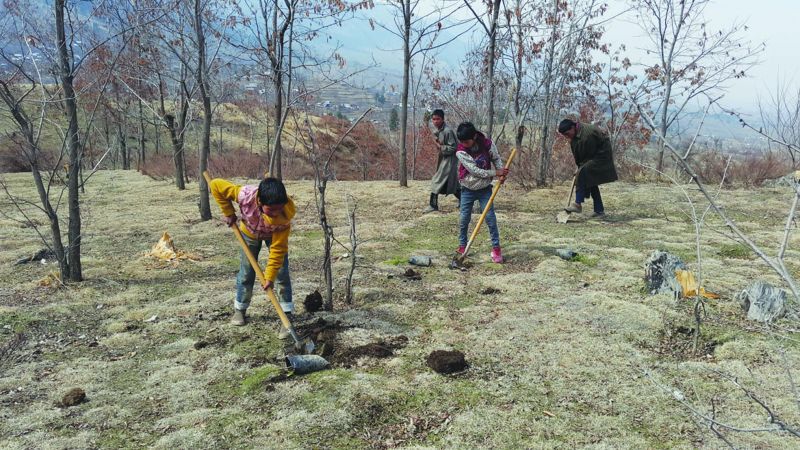
Abdul Hameed Bhat digging pits and planting conifer saplings.

Srinagar:

About nine years ago, he single-handedly began planting trees on barren hillocks which, till a couple of decades ago, used to be full of beautiful clusters of deodar or Himalayan cedar and conifer trees.

Abdul Hameed Bhat, 51, a businessman, has himself planted or helped volunteers in planting as many as 1,45,000 trees, mostly pine, in different parts of the Kashmir valley spending Rs 30 lakh from his own pocket.

“I don’t get any financial help from government or any other source nor do I run any NGO. It is an effort made at personal level,” he said, calling it a “heart mission” rooted in his love for environment.

Mr Bhat’s passion began in 2009 when he started taking care of dozens of pine trees planted by the social forestry department on the pavements outside his office in Srinagar’s Barzulla area but were left unattended.

As a  promotion activity in his auto business, he started gifting saplings to clients in place of calendars, diaries and other stationery items.

Last Sunday, Mr Bhat, a school dropout who has made it big in business, was joined by a large group of volunteers, including journalists and members of a football club,  to plant over 1,000 pine trees on a knoll at Sutaharan in central district of Budgam. Sitting in the lap of Pirpanjal Range, Sutaharan like many other Valley areas has witnessed large-scale deforestation mainly during the three-decade old armed conflict in Kashmir.

“There are many things we can do to preserve and protect our environment if we want to preserve and protect life on Earth and leave behind something good for our coming generations,” he told this correspondent after digging about 100 holes and planting saplings in them.

Mr Bhat said that it pains him to see deforestation across Kashmir and he took a “conscious decision” to do his bit to rectify the wrong.

“I know the damage done to our woods over the years is huge and no single effort is likely to have a great impact of reparation. But I thought whatever I can, I must do,” he said.

Relentlessly dedicated to restoring nature, Mr Bhat who is now known to many people in Kashmir as “Green Warrior” has not only won appreciation from all but is also enthusiastically joined by volunteers from almost every walk of life in planting trees.

Rahim Greens, a subsidiary of Rahim Motors owned by Mr Bhat, in collaboration with various organisations and the state’s forest department sometime ago launched a plantation drive in Srinagar city and Rajouri district in the Jammu region and involved educational institutions. An initiative named as “The Tree of Life” was organised by it jointly with Help Voluntary Trust earlier.

“No doubt, Hameed Sahib took the initiative and continues to be at the forefront of the campaign but it now appears to be a story of Mein akela hi chala tha janib-e-manzil magar; loag saath aatey gaye aur karvan banta gaya (I set out alone for the destination but people kept joining me and it turned into a caravan),” said a volunteer.

One of the prominent faces which have ardently joined the crusade is Rifat Abdullah, a TV journalist. Apart from distributing saplings in schools and colleges, he has adopted a barren hill in Rathsun area of Budgam and taken a pledge to convert it into what he calls “First Oxygen Zone” of Jammu and Kashmir.

“Thousands of deodar trees have been planted voluntarily on the hill, so far, under ‘Mission One Crore Plants’ launched by ‘Save Environment, Save Kashmir’, a public movement,” he wrote on Facebook.

Volunteers in Sutaharan area of the Valley.

The Kashmir valley bounded on the southwest by the Pir Panjal Range and on the northeast by the main Himalayas range is blessed with exotic natural beauty of landscape and water bodies. But over the years, its water bodies, mountains and particularly forests have been vandalised and the ecological assets are fast disappearing. As per official statistics, more than 14,000 hectares of forestland, including 9,496 hectares in the Jammu region and 4,877 hectares in Kashmir, has been encroached upon by people.

The state has a total forest area of 20,230 square km, largely distributed in the Valley (8,128 sq.km) and the Jammu region (12,066 sq. km). The twin district of Leh and Kargil in Ladakh are mostly devoid of forest vegetation with only 36 sq. km forest area together.

Forest minister Choudhary Lal Singh claimed that the government retrieved from encroachers around 135,000 kanals (16,875 acres) of forestland in 2016-17 for restoration.

“I have asked divisional forest officers to gear up their men and machinery for demarcation of retrieved forests land to avoid further encroachment,” he said.

Officials claim that a slew of measures have been initiated to regenerate the degraded forests. These include planting over two crore saplings across the state — 250,000 of these along the highways.

Mr Singh, while speaking in the state Assembly recently, admitted that out of 20,230 sq km forest area, about 9,000 sq km area is degraded due to “unabated human intervention”.

He also said that 382,000 kanals (47,750 arces) of forest area was under encroachment as on April 1, 2016. “I need around Rs 10,000 crore for treating 9,00,000 hectares of degraded forest area of the state and at the rate of present funding, it will take more than 350 years to rehabilitate the degraded forest area,” he said.

As per the forest policy of the country, 33 per cent of the total area of every region in plains and 60 per cent in the Himalayan region must be under forest cover but the ground reality is that India does not have more than 22 per cent total forest area.

In Jammu and Kashmir, despite it falling in the Himalayan region, the total forest area is about 20 per cent of the total area. The Valley has been experiencing erratic snowfall and hotter summers for the last decade or so and environmentalists say that the main reason for it has been the large-scale deforestation.

Ecologists and other experts insist that restoring the state’s green cover needs the involvement of people and more importantly the spirit shown by  Mr Bhat and his partners.

Mr Bhat is hopeful of a greener future. “Our younger generation is aware of the consequences (of deforestation). I have found young boys and girls more than willing to work with me and others in our humble effort to see our  surroundings turn green again.

source: http://www.asianage.com / The Asian Age / Home> India> All India / by Yusuf Jameel , The Asian Age / March 17th, 2018

Girls looking at girls

NEW DELHI :

A new photo exhibition in Chandigarh is a boost to women on both sides of the camera

Work from Delhi-based photographer Uzma Mohsin’s series ‘Love & Other Hurts’.

Men look at womenWomen watch themselves being looked at—this John Berger aphorism sums up a majority of the writings by the brilliant English art critic, who based his observations on visual history ranging from Renaissance paintings to contemporary advertisements.

The politics of representation of women in art and photography has been fraught with all manner of problems long before #FearlessGirl and #MeToo became global hashtags. I’ve been a big fan of The Guerrilla Girls, a group of anonymous feminist activist artists who show up wearing gorilla masks in public and use data, humour and outrageous imagery to expose gender bias in politics, art and pop culture. One of their posters about female representation at the MET asks, “Do women have to be naked to get into the Met. Museum?” Illustrated with a visual of the classic 19th century nude La Grande Odalisque (with a gorilla head, of course), it states: Less than 5% of the artists in the Modern Art section are women, but 85% of the nudes are female.

Certain industries—advertising, pornography, fashion—bear a greater burden of guilt than others. Which is why it is interesting that a new exhibition celebrating the female gaze is curated by a former Vogue and Maxim photo editor, Iona Fergusson, who has spent close to a decade commissioning portraits, fashion and beauty editorials.

Opening this weekend at the Punjab Lalit Kala Akademi in Chandigarh, before it travels to Delhi and London, Girl Gaze: Journeys Through The Punjab & The Black Country, UK is categorically a project “about women by women”, says Fergusson. It is a photographic exploration drawing parallels between women from Punjab and the UK’s “Black Country” area, which has one of the largest Punjabi diasporas.

A striking work from Delhi-based photographer Uzma Mohsin’s series Love & Other Hurts is a portrait of a second-generation immigrant—a tattooed woman sporting an edgy hairdo with mermaid-blue hair swept to one side, with the other half dyed in a leopard pattern. “Birmingham, where she’s from, has a thriving metal scene,” says Mohsin over the phone from Chandigarh. The woman’s personal style is a canny metaphor for acquired taste marrying an inherited aesthetic. Mohsin plans to exhibit her 60 photographs with interwoven threads symbolizing the Phulkari embroidery work synonymous with Punjabi women. Another photographer, the UK’s Jennifer Pattison, is interested in magical worlds that find expression in the traditions of the Punjabi folk festival Lohri. Her fine art photographs, titled Rice Pudding Moon & The River Of Dreams, are inspired by songs that tell of a mother’s love and a land of dreams.

“We were interested in exploring the impact that immigration had on the women…the restrictions on freedom, agency and their own bodies,” says Fergusson.

She admires the work of South African photographer Zanele Muholi, for daring to increase the visibility of the black LGBTQ+ community in a country where women are killed for their homosexuality.

While it was on Fergusson’s agenda to commission women photographers who would explore diverse themes regarding gender, identity, patriarchy, tradition, culture and memory, she was also keen to highlight relatively lesser-known names. Her curatorial mission was to present photographs in which the subjects had agency and participated actively in image production. “It was important to prevent the phenomenon of Other-ing,” she says.

Mohsin’s series does this very literally: A bulk of her photographs are multiple exposure works. She first handed over film cameras to her subjects in the UK (mostly older Punjabi immigrant women) and asked them to photograph objects and scenes that represented them. Simultaneously, she recorded their oral narratives and memories of the places they had left behind. Then, following their stories, she made her own photographs in Punjab, using the same film rolls. “With multiple exposure on film, it’s always a bit of serendipity. Some worked and some didn’t… but it was great to have the subjects so intimately involved with the process,” she says.

Rather than pretty pictures and domestic scenes, the exhibits in Girl Gazecreate layered images that go beyond the purely personal to comment on the impact of migration and cultural cross-pollination. It is a reminder that when girls look at girls, they paint big pictures.

Girl Gaze: Journeys Through The Punjab & The Black Country, UK will premiere in Chandigarh (10-18 March), then travel to Jalandhar (23-27 March), and, later in the year, to Delhi, London and Wolverhampton.

The writer tweets at @aninditaghose

source: http://www.livemint.com / Live Mint / Home> Leisure> Ed-line / by Anindita Ghose / March 10th, 2018