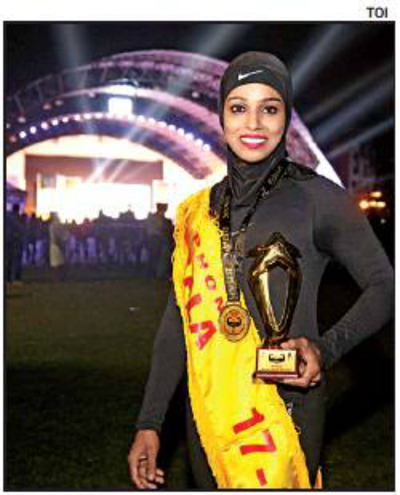
It is rare that a fully-clad hijabwearing contestant wins a body building competition, that too when the fellow contestants could show their fully toned bodies. Majiziya Bhanu, who hails from Orkkatteri in Kozhikode, could do just that as she was able to wow the judges by her fitness despite wearing a body-hugging sportswear and won the gold at a body building event held in Kochi on Sunday evening.
Majiziya Bhanu, a professional weightlifter, was on her way to Kozhikode after attending the contest in Alappuzha, when she heard about the contest in Kochi.“My fiancée encouraged me to attend the event. I had never before taken part in a bodybuilding competition.
So, I sought the help of my weightlifting coach, who sent photos of poses to be displayed on WhatsApp,” said Majizia, a final-year BDS student.“I was quite confident of winning the championship as I found the other women contestants to be chubby,” she added.
Wearing black body-hugging sports pants, full sleeve tight top and a headscarf, Majiziya displayed her physique through the mandatory four postures. Within hours after winning the powerlifting championship in Alappuzha, Majiziya achieved success once again in the bodybuilding championship in Kochi.
“I don’t defy my religion as I cover my body. I am quite confident about attending more powerlifting championships in future. I want to start an academy for powerlifting to facilitate children in my native village to get training in powerlifting,” she said.
Majiziya follows a strict diet and does not eat rice so that she can maintain her weight. Her daily diet includes vegetables, goat milk, dry fruits, chicken and oats.
While girls in her age walk extra miles to make their bodies flimsy, Majiziya prefers to focus on fitness.
She says that she is grateful to her parents for their unequivocal support in allowing her to participate in the weightlifting championship. Her father Abdul Majeed is a businessman in the Middle East while her mother Razia is a homemaker.
source: http://www.timesofindia.indiatimes.com / The Times of India / News> City News> Kochi News / by T C Sreemol / TNN / February 27th, 2018
Quaide Milleth Award For Probity In Political/Public Life (2018) to Hamid Ansari and Aruna Roy
Chennai:
The Quaide Milleth Educational and social Trust instituted the Quaide Milleth Award for probity in Political\Public Life in the year 2015, to commemorate the 40th Anniversary of the Trust. This award shall be presented every year to people with exemplary track record and commitment to India’s Constitutional, Democratic, Values, Secularism, Pluralism, inclusive and service for marginalized people.
Furtherance of the Honour taking place every year, with which this year the jury endeavoured and found the people who are thriving to serve for the Nation and being the part to make democracy strong.
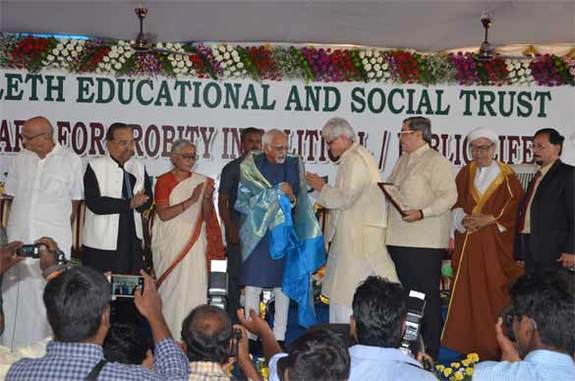
Under the auspices of Alhaj. M.G. Dawood MiaKhan Sahib, The General Secretary and Correspondent of the Quaide Milleth Educational and Social Trust has bestowed “The Quaide Milleth Award for Probity in Political/Public Life” for this year to His Excellency Honourable Dr. Mohammad Hamid Ansari, Former Vice President of India and Smt. Aruna Roy, Social Activist & Founder of Mazdoor Kisan Shakthi Sangathan.
The Award Presentation Ceremony held at Quaide Milleth College, began with the Qiraath (Citation of Quran Verses) followed by salutation to Tamil Thai Vazhthu.
Dr. A. Rafi, Principal of the College, welcomed the gathering for the Award Ceremony. He shared the brief history of the college with the milestones it has reached by highlighting the facts that the college has achieved 89% of placement last year and heir the NAAC certification recently. Then he marked the achievements of the dignitaries and their exertion rendered for the society.
Then, Padma Bushan Janab. Moosa Raza, I.A.S (Retd.), Former Secretary to Government of India and Chairman S.I.E.T., was called upon to preside over the Award Ceremony. In his presidential address he mentioned the Awardees as the “Children of India” who are awarded by The Quaide Milleth Educational and Social Trust. He also added by stating that Hamid Ansari is a very humane who respect people and excellent in performing his duties. He (Hamid Ansari) has done a commendable job when he was an Indian ambassador for Saudi Arabia by bringing investments from these countries. And he added that “The whole world will listen to him when he is silent”. Moosa Raza also brought Aruna Roy’s contribution to a broad day light. She has championed “The Right to Information Act” and “The Right to Education”
The above two recipients of the prestigious award were felicitated by Shri.Gopalakrishna Gandhi, Former Governor of West Bengal, Dr. Mufti Khazi Salhudeen Mohammed Ayub, President of QUEST, Rev. Bishop Dr. Devesagayam, Church of South India (Rtd) and T.K. Rangarajan, Rajya Sabha Member.
Shri.Gopalakrishna Gandhi ironically commented that at the present scenario people with Probity and Honesty are to be searched.
Dr. Mufti Khazi Salhudeen Mohammed Ayub went to the root of this award giving, which has been derived from the altruistic life and ideals of Quaide Milleth Sahib.
Rev. Bishop Dr. Devesagayam has applauded the idealism of the recipients and requested the future generation to imbibe the same.
T.K. Rangarajan, appreciated the leadership qualities of both the awardees.
The felicitation was followed by the citation of the award by Alhaj. M.G. Dawood MiaKhan Sahib. He emulated the values of Quaide Milleth for constituting this unique award. He reminded and compared the fact that as a politician Quaide Milleth abided the Law, respected the Constitution of the country and at the same time he remained uncompromising on his values and Policies. But today’s politics has become the place for corruption. He added the Quaide Milleth Award is not just to Honour but also to introduce the great minds to the society and to recognise their admirable contribution to the Nation. He also brought in the history of Quaide Milleth that he was the Leader of Masses due which he was elected as Member of Loksabha for 3 consecutive period without going to the constituency. He requested Mohammed Hamid Ansari to resume his work as the Nation requires his service. He called Aruna Roy as “Women of Intolerant” because she is intolerant towards the fascism, against the one who oppresses and discriminates the downtrodden.
A minute of silence was observed to honour the demise of The Senior Journalist Gniani and National Herald Editor and Chief Mr. Neelabh Mishra.
Smt. Aruna Roy, proclaimed her gratitude for receiving the award in the name of Quaide Milleth – Member of Constitution to promote Secularism. She expressed that Quaide Milleth was her Ideal who taught her the Constitution. She questioned the Powers that “Why are you afraid of pluralism?” and she emphasised one Nation, one thinking, one Ideology concept is not possible in a secular country like India. She felt and interrogated that “What happened to the Nation”, nowadays people with Ideas of difference are assassinated like Bansare, Dhabolkar, kalpurki, Gouri lingesh who are the activists and journalists. She criticised the fact that 73% of India’s wealth is with just 1% of people. She explained to the crowd that “Information is power”. When the Information is open to public it will construct good governance. Today there are 60 lakh beneficiaries of RTI, she believed that it will increase the accountability of every person who is in power. She encouraged the voices against the corruption and inequality through non-violence. She concluded that “QUAIDE MILLETH AWARD 2018 FOR PROBITY IN POLITICAL\PUBLIC LIFE, is really to recognise the real Indian to speak the truth to Power”.
Dr. Mohammed Hamid Ansari expressed his humility through his discomfort rather in receiving the award than giving it. He said that “In spite of differences of manner, food and faith we are equal as citizens of India”. He cited the article “51A the Fundamental of Duties” and articulated that it was created by executive judicial body to delineate everyone’s duty. He emphasised that “The common man has given the responsibility to the politicians to make Laws, discuss public difficulties and execute accountability”. He urged to the Judiciaries to discharge their duties quickly and fearlessly. He insisted that “Our duty is to ensure that the institution created by constitution should be safe guarded and protect public property”. He completed his speech with his humble words that “I did not do any unusual and I was taught to follow the rules”.
The 4th annals of QUAIDE MILLETH AWARD Ceremony confined with the Vote of Thanks delivered by Janab. M.H.B. Thajudheen, EC Member, QUEST. (Press release)
source: http://www.milligazette.com / The Milli Gazette / Home> Online News> National / March 02nd, 2018
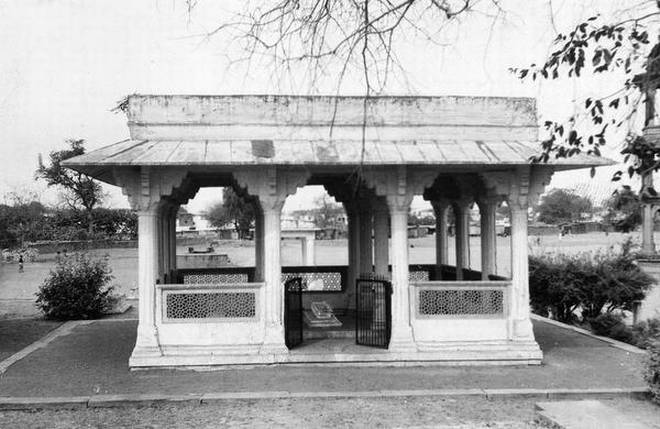
Tansen’s tomb in Gwalior | Photo Credit: HINDU PHOTO ARCHIVES
He created many ragas, could produce any sound and lent a distinct style to Senia gharana
This gharana is made up of the legend of Tansen, the father of Indian classical music. Though Tansen was a vocalist, the gharana also produced sitar maestros. The Senia style of sitar playing started with the legendary Ustad Maseet Sen, who belonged to the sixth generation in the Tansen lineage. ( The pioneer of Maseetkhani style, even today, 100 years later, the Maseetkhan Baj is played by the sitarists of this gharana. These musicians came to be known as the sitarists of Jaipur Senia Gharana. They lay emphasis on the purity of raga and technique. Their style of playing was that of the bin or veena. Ustad Mushtaq AliKhan, son of Ashiq Ali Khan of Varanasi had the privilege of learning from Ustad BarkhatAli khan of Jaipur, who went by the title ‘Aftab-e-Sitar’. Pt. Debu Choudhuri was fortunate to learn from ‘Dada Guru’ (Ustad Mushtaq Ali Khan).
On the vocal front, the gharana is referred to as Qawwal Bachcha. Its most well-known exponent of our time is the Lucknow-based Ustad Shamshudeen Khan, popularly called Ustad Gulshan Bharathi (recepient of ‘Yash Bharathi’ award). This style is known as bol bant ki gayaki and bol banav ki gayaki. Short and crisp bol taans are significant features, while the aakar is sparingly used. Many of his disciples have made a mark in films, notable among them being Shashi Suman, music composer of Bajirao Mastani and Harjeet Saxena.
Coming back to Mian Tansen. He was born as Ramatanu and later came to be known as Tanna. There are many legends woven around his life. It is said that he could produce any sound. The story goes that once when the sadhus were crossing a field they heard a lion’s roar and located it to a young boy sitting on a tree. They advised his father to send him to Swami Haridas for training.
However, it is believed that Tansen was born dumb and was taken to the Sufi saint MurshidMohammed Ghouse Gwaliari. On reaching Gwalior, he visited the Sufi saint and found him in the company of Swami Haridas. The saint blew air into the mouth of the child and Tanna began to speak. When the saint came to know the child was also deaf, he blew air into his ears and he was cured. The Sufi saint then asked Swami Haridas to take him into his fold. Thus began his musical journey (M.A Bakhy).
Titles to Tansen
Tansen was the title given to him by Raja Vikramjit of Gwalior. Tansen was a court musician in the darbar of Raja Ramachandra of Bandavagarh (Rewa).
When Akbar heard of his prodigious talent, he sent a ‘firman’ to the king asking for Tansen and made him one of the Navaratnas in his court. He gave him the title of ‘Mian’. Tansen is also known as the ‘Sangit Samrat’, according to Musical Heritage of India by Lalita Ramakrishna.
Abul Fazl records in his Ain-i-Akbari that Akbar gave Rs 2 lakhs to Tansen for his first performance in the court. He composed many dhrupads on Ganesha, Shiva, Parvati and Rama. He also composed songs on his patrons.
Kalpadruma is a compliation of 300 of his dhrupads that were in Gauhar Bani. Tansen composed in his favourite ragas — Multani, Bhairavi and Todi .
He invented the night raga Darbari Kanhra, morning raga Mian Ki Todi, mid-day raga, Mian ki Sarang, seasonal raga Mian ki Malhar. His descendants and disciples are called Seniyas.
While Tansen graced the court of Akbar, many aspiring singers would practice round the clock and caused a lot of disturbance to him. This came to the notice of Emperor Akbar and he banned one and all from pursuing music. The story goes that a competition was organised between Baiju Bawra, also a disciple of Swami Haridas, and Tansen. The loser was to be executed. The two sang under the magic spell of love and reverence to their Guru. Tansen’s tanpura string broke. Baiju asked Akbar to grant him three wishes — not to execute Tansen, to lift the ban on singers and to set free the people who were innocent.
Another famous story is about theintrigue to bring about Tansen’s end by making him sing Raga Deepak. Tansen, who was known for the purity of his renditions, foresaw his fate, but could not say ‘no’ to the emperor. He had asked all the lamps in the court to be extinguished. As he sang, the lamps lit and the flames engulfed him.
On hearing this, his wife Husseini broke into raga Megh Malhar, beckoned rains and saved Tansen. This was a turning point in the legendary singer’s life and he went back to Sufi saint Hazrat Ghouse Gwaliari. While the Tansen samorah in Gwalior commemorates him as a singer, the yearly Urs has canonised him as a saint.
source: http://www.thehindu.com / The Hindu / Home> Entertainment> Music / by Jyoti Nair / March 01st, 2018
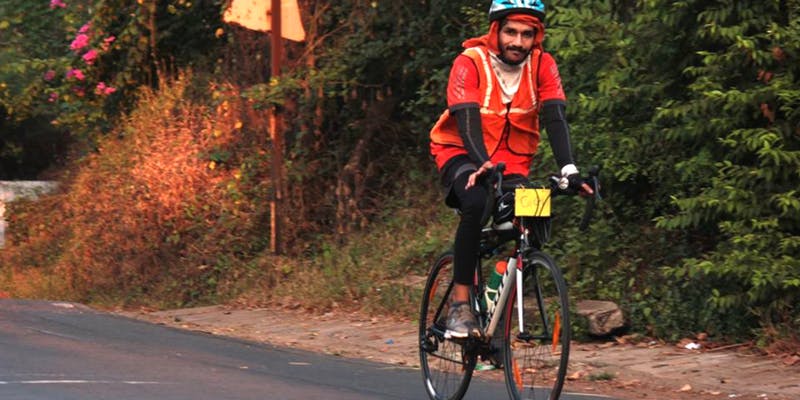
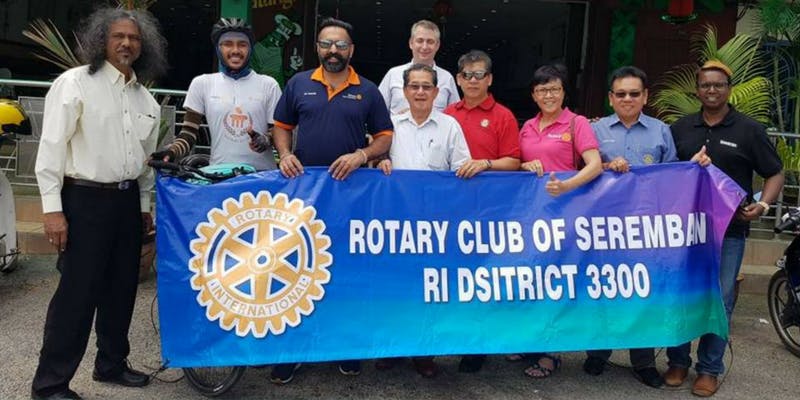
Prof SS Shameem cycled 2,140 kms across Malaysia to spread awareness on the Polio Virus and global eradication of the disease.
The World Health Organization reports Polio cases have decreased by 99 percent across the world since 1988. Yet, even if one child contracts the disease today, the fear of it spreading to 200,000 cases a year lingers.
While awareness campaigns, and health camps, have achieved much in terms of spreading awareness, one man embarked on a solo journey on his bicycle, riding the length and breadth of Malaysia, to spread the word.
SS Shameem, an assistant professor in the Department of Computer Applications in Manipal Institute of Technology, Karnataka, who is posted at Manipal International University, Malaysia, cycled 2,140 km over two weeks from January 31 to February 14 to spread word on eradication of polio.
“Malaysia was declared a Polio-Free country a decade ago; but as it’s known – polio can spread anywhere, anytime unless properly taken care of. I am currently located at Malaysia; so it was decided that the expedition would be held here. Earlier, I had done similar events back in India for causes like Green and Healthy India, among others,” says Shameem.
The campaign
The cycling campaign helped raise Rs 3 lakh (over 18,000 Malaysian Ringgit) for the global EndPolio mission of Rotary International. Operation Polio Eradication by Manipal is a movement by Manipal Academy of Higher Learning and Manipal Global. Shameem’s cycling expedition also promoted the institution’s Green-Health Awareness Campaign.
“Globally, most governments and NGOs are working on eradicating polio from the face of the earth. But we’re still yet to achieve 100 percent on this. As long as there’s one case, it can spread. Rotary International has been working tirelessly for many years with its EndPolio mission. This cycling expedition was in association with Rotary’s initiative. Manipal, having a strong presence in the medical sector in Malaysia as well, promoted this expedition for the same cause,” Shameem said.
In India, which reported its last case of polio virus in 2011, awareness to ensure the disease doesn’t make another appearance is imperative. Once known as a hotbed for the virus, various pulse polio campaigns led to the successful eradication of the disease.
“A lot of initiatives were taken; but as all would agree, content on an official document and facts/reality have a lot of difference. Much work is needed on the ground level; which needs lot of funding, and more importantly public awareness. At least, I can do my part through such cycling expeditions and campaigns,” he adds.
His journey also translated into a knowledge sharing space, where misunderstandings about the disease were cleared and information spread.
For the love of cycling
While there are many methods to spread awareness on health issues, Shameem believes that to reach out to as many people as possible, one needs to travel. To support the cause of polio eradication, he cycled 100-200 km a day. He began the two-week voyage from Nilai, passing through Kuala Lumpur, Rewang, Taiping, Ipoh, Penang, Perlis, Kedah, Mersing, Johor, Bahru, Muar, Melacca, Tampin, Seremban, before ending it at Nilai. The expedition covered the whole of Malaysian mainland.
“The attempt caught people’s attention and they wanted to know more about it. That serves our purpose. Also, seeing a solo effort of riding 100-200 km per day, 2000+ km straight, people helped out; which helped in our EndPolio Fund-raising campaign. I don’t think we could have gotten a better response, or raised more money in a Greener way, through a mode other than this.”
Back in India, Shameem has had successful cycling expeditions. In 2016, he rode solo from Kanyakumari to Kashmir, covering a distance of 3200 km in 23 days. His other feats include a solo 1500 km expedition from Bengaluru to Odisha in eight days in 2015, a group stint from Manipal to Jaipur covering 2500 km in 20 days in 2016, and from Okha to Dibrugarh, covering 3200 km in 19 days in 2017.
At the Manipal Institute of Technology, Karnataka, students, alumni and staff have created cycling clubs, and participate in various local and national circuits. Shameem believes the youth needs to be enthused about cycling and using it as a means to create greater community engagement.
“I love cycling. I like to push myself beyond limits; I want to try the tough things. Exploring places on cycle defines me; and that’s why I do it.”
From the cyclist’s journal
The only concerns were wildlife and reptiles. A particular 250 km stretch in northern Malaysia is full of mountains and thick forest, with no trace of human life for miles. Wild-pigs, elephants, even tigers are seen roaming freely on highways. I was lucky to have not encountered any at all. I was carrying two small knives at hands’ reach while cycling on the stretch. – Shameem
source: http://www.yourstory.com / YourStory.com / Home> Social Story / by Deepika Rao / March 02nd, 2018
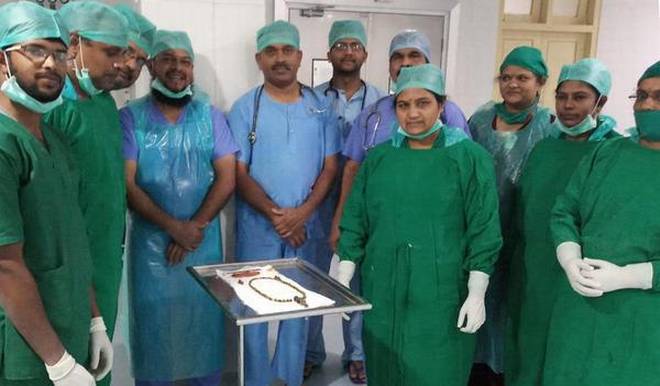
The surgical team displaying the 99 gallstones that were removed from a patient at Tumkur District Hospital. | Photo Credit: Special Arrangement
When 45-year-old Salma went to the Tumkur District Hospital with pain and swelling in her abdomen, little did she know that doctors would detect as many as 99 gallstones. Ms. Salma, a diabetic and having hypertension for the last 10 years, had visited several hospitals and was diagnosed with umbilical hernia. As she also had heart problem, she postponed the surgery.
However, at the Tumkur District hospital, an ultrasound revealed she had multiple gallstones in her abdomen. “When she came to us, she had severe abdomen pain. Her sugar level was abnormally high and haemoglobin was low, apart from other issues. We admitted her for 15 days and stabilised her parameters before we worked her up for the surgery. The surgery was done on Tuesday,” said Dinesh R. and Waseem Imran, the doctors who performed the surgery.
Dr. Waseem said although multiple gallstones are not unusual, finding 99 in a person is rare. “In the three-hour surgery we removed her umbilical hernia and the gallstones. She is recuperating well in the ICU. She will be discharged in eight days, he added.
source: http://www.thehindu.com / The Hindu / Home> News> States> Karnataka / by Special Correspondent / Bengaluru – February 28th, 2018
‘Everyone is equal, whether you’re poor or rich, it doesn’t matter’, says Ashraf ‘Sherry’ Thamarassery.
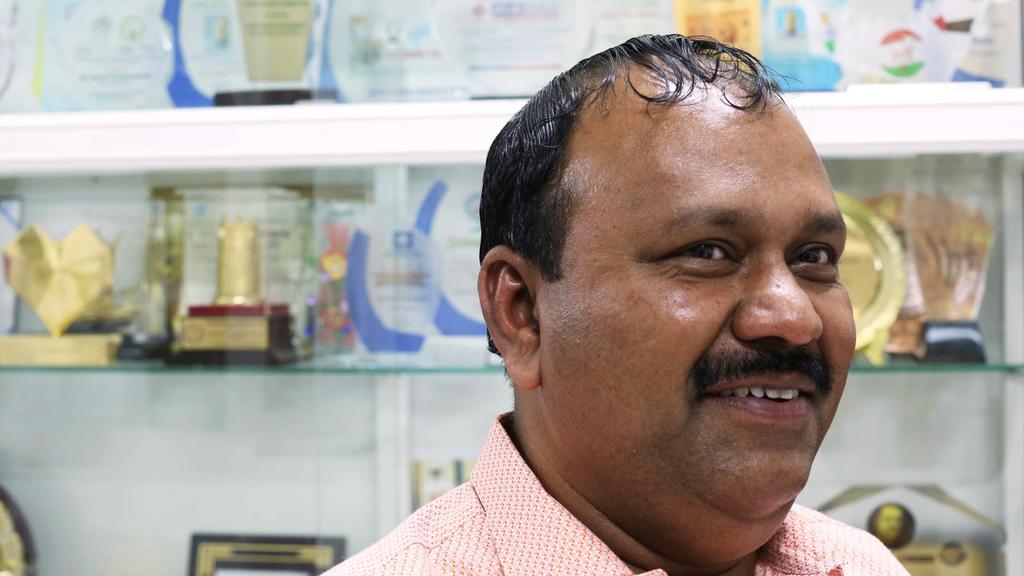
Ashraf ‘Sherry’ Thamarassery, who volunteers his time helping repatriate the dead from the Emirates, has helped repatriate 4,700 bodies from the UAE and recently helped send the remains of Indian actress Sridevi back home to Mumbai. Jon Gambrell / AP Photo
Away from the camera flashes and the eyes of her millions of fans in India, the actress Sridevi’s body made its way to a simple mortuary in Ajman, where one man helped sign out her remains to return home.
Listed only as “ASHRAF” on the official paperwork in Dubai, Ashraf ‘Sherry’ Thamarassery is a 44-year-old Indian from Kerala who has become a ferryman of sorts for those who die here in the Emirates.
From indebted labourers to the moneyed elite, Thamarassery has helped repatriate 4,700 bodies to 38 countries across the world. He views it as a noble responsibility.
“For them, you or me, it’s all the same and everyone is equal. If someone dies in their room, they will take them to the hospital and then to be checked at the police mortuary,” Mr Thamarassery said.
“It’s the same process, whether Dubai or Sharjah or any emirate. Whether you’re poor or rich, it doesn’t matter.”
Sherry offered shrugs when talking about Sridevi, saying he helped repatriate five bodies on Tuesday, including the famed Bollywood star’s.
It’s hard to overstate the power Sridevi had over the imagination of many in India.
Starting out as a four-year-old child star in south Indian regional movies, she later became known for her impeccable comic timing as well as her dancing skills.
She appeared in hundreds of films, perhaps most known for her song-and-dance Hawa Hawai routine in the 1987 film Mr India, in which she joyfully prances around in an almost-elastic set of whirls, twirls and silly faces.
She smashed into the male-dominated movie industry to become her own star.
The 54-year-old Sridevi, only known by one name, which means “Goddess” in Hindi, died in Dubai while in the UAE for a wedding. Police and prosecutors say she drowned in a hotel bathtub after losing consciousness, calling her death accidental. Police officials also have said the actress had alcohol in her system at the time of her drowing.
News of her death dominated India’s newspapers and many television networks, with coverage ranging from the restrained to the lurid. One TV station aired a segment showing a reporter talking about her death while laying in a bathtub, while others had computer-generated graphics imagine the scene. Many newspapers chose not to mention she had alcohol in her system, while a hashtag #LetHerRestInPeace emerged on social media.
While Indian officials quickly cancelled her passport and prepared the other documents, Mr Thamarassery said the necessary police clearance slowed Sridevi’s repatriation. He said he has received hundreds of calls from journalists, officials and others in the interim.
When the clearance came, Mr Thamarassery travelled to a government-run mortuary in Dubai and there officials embalmed her corpse as he handled paperwork for her and three others.
On Tuesday night, Mr Thamarassery returned home to the apartment he shares with his wife and daughter in Ajman. There, he runs a mechanics shop but focuses largely on his philanthropic efforts.
Shelf upon shelf in his home bears honours and awards. A framed picture hangs on the wall showing him meeting Indian Prime Minister Narendra Modi.
“I do this to earn blessings, but also when someone dies here, people don’t know how to manage the repatriation procedures,” he said. “That’s why I do it.”
All the while, his phone never stopped ringing, some of them undoubtedly new calls for his help.
source: http://www.thenational.ae / The National / Home> UAE / by Associated Press / February 28th, 2018
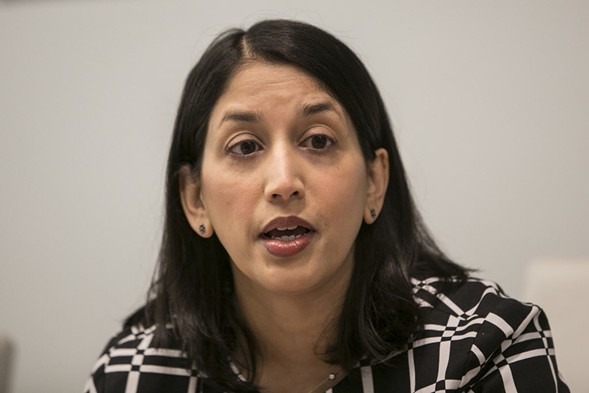
Sameena Mustafa has had a successful career as a real estate broker working with nonprofits and small businesses in addition to a rising profile in the city’s comedy scene. In 2015 she cofounded Simmer Brown, a South Asian comedy collective. But the 2016 election made her take a hard look at the local political arena and decide to get involved. Now Mustafa, 47, is one of three Democratic primary challengers to incumbent Fifth District U.S. representative Mike Quigley, who’s held that office for nearly a decade. Mustafa believes he’s out of touch with the progressive values that she sees to be increasingly animating the district. If she wins, Mustafa would be the first Muslim woman in Congress and the first Indian-American woman to represent Illinois.
Here at the Reader we’re familiar with your comedy work. Have you always been doing comedy alongside your real estate career?
I started comedy in 2014, and that’s the newest venture. Real estate I started in 2003. I was still working full-time while I was performing. Comedy is a late-night venture, as it were, so it’s not something that would conflict with business meetings.
I had been creative when I was younger. I wrote poetry, and I wrote in high school. So I had that creative side of me, and it was one of those things where someone was like, “Take a class at Second City!,” and it was fine. I took another one and a friend suggested, “Hey, if you like this but you want something a little bit different, try this women-only stand-up and storytelling class,” and that was the Feminine Comique. My graduation was four years ago, my comedy graduation. I never actually performed onstage before that graduation. It was so different from anything I’ve done in terms of writing. I did debate in college, so I had no problem speaking in public, but this is very different—it was me bringing my political ideas, my creative side, and my comfort with being in front of people. Immediately I had an affinity for it. I really enjoyed it. I was nervous the first time I was onstage, but I loved it.
I can’t find any of your stand-up on YouTube. Is there a reason for that?
I see comedy as something you do. It’s something you can be doing for 20 years and still be learning and evolving—it’s like any craft. To me it was more important for people to come to shows. I didn’t want to do, like, a Facebook live. It was more about having the interaction and immediacy. We’re essentially creating an experience, a community in real time.
You’re running against an incumbent who’s held this seat for nearly a decade. Some would say that it’s not a great strategy for a first attempt at political office. Why did you decide to spend your time and money on a race that’s really stacked against you?
The electorate is looking for a different type of leader, one that’s grassroots, connected to the community, that isn’t somebody that’s been selected for them. If you look at the last ten years, Democrats have lost over 1,000 seats on every level including the White House. So it’s one of those things where all the data is pointing against your assumptions, yet you’re still holding those assumptions? To me this was a district, this was an incumbent that was important enough to challenge because we have a completely different environment than we did two years ago. And so to have someone in that seat who doesn’t advocate for the values of the voters of the Fifth District was an opportunity to bring that, to bring that leadership.
And having lived in the district as long as I have and had immediate contact with people from all walks of life and different parts of the district—you get a sense of what people value. When you’re in an environment like a comedy show, it’s a flash focus group. It’s not hard to figure out what people are thinking and feeling and what they care about. Mike Quigley refused to do a town hall following the inauguration, which was something being done by Republican lawmakers across the country. And I thought: Why is my Democratic congressman, in a very Democratic district, refusing to do them?
You’ve been living in the district for 30 years. When did you first learn anything about your congressman? And can you describe your relationship with the congressman over the years?
I knew who he was and, frankly, because he has never been challenged, I voted for him. I knew he had the baseline: he was pro-choice, he was pro-LGBT. Then when I started looking at my stack of leaders up and down the ballot and started thinking about the issues I cared about and started doing some research on some stances that Mike Quigley had taken, it occurred to me that he may be good on those two issues but there’s so many issues on which he is falling short. Or, frankly, is in opposition to the values that I hold and that the voters hold in the district. Mike Quigley is not someone who sticks his neck out on issues.
If you were elected, you’d be the first Muslim woman in Congress. What goes through your mind as you consider that prospect?
It would certainly be a milestone, but I’m optimistic that people in Democratic politics are increasingly accepting of leaders irrespective of their religion, gender, or ethnicity and are looking for candidates who stand with them on the issues and share their values. More doors are opening for candidates who have something to offer but who historically have not had opportunities to serve.
In light of the conversation that you participated in with the Reader last year, talking about feminism and intersectionality in what would be considered a nonmainstream way, how are you bringing your political consciousness as a feminist committed to intersectionality to this very mainstream political arena?
It’s in how I’ve organized my campaign, it’s in how I’ve talked about the issues. . . . I gotta tell you, we’ve talked to thousands of voters, and this is a progressive district. So when you approach them, they assume you’re agreeing on some baseline principles. Are you pro-choice? Are you pro-LGBT? Do you support the Dreamers, immigration reform? Are you going to be supporting health care access for all? This is something I’ve found is resonating with voters.
On the intersectionality piece per se, I have made it a point to have a very inclusive team. The majority of the leaders on my team are women and women of color. Those are the kinds of things that resonate with volunteers, with donors, with voters.
And are you also mentally preparing yourself to step into an electoral political space which requires compromise and working with people who have a radically different political understanding of things?
I’ve spent the last 13 years advocating for people and organizations that are founded on values—nonprofits that are working on important issues like immigration, sexual assault survivors. It’s something where I’m literally negotiating against people who don’t necessarily share those values and they are not really committed to those outcomes. And they have their own agenda, and they have their own profit motive, specifically in the space of commercial real estate.
As it relates to being a public figure and having criticism—I’ve been doing it for the last six, seven months. I have put myself out there in a way that’s public, and in some ways it was an extension of what I was doing in the arts community. Because when you’re onstage, you’re essentially saying, “I am open to anything. I’m declaring my values, I’m declaring my beliefs, and I welcome you to challenge them.” But I’m not shying away from being a public figure.
You’ve talked about how problematic gerrymandering is, how it creates this strange monoculture of an electorate in one particular district. Is there anything you’ve been either pleasantly or unpleasantly surprised by as you’ve been campaigning around the absurd contours of the Fifth District?
I know this district, this is the district I grew up in, my parents have lived here for over 40 years, and I felt confident in my knowledge of what the values were that I held and that were shared by the voters. And one thing that I keep getting positive reinforcement on is how much, despite the gerrymandering, how much the voters and the district value diversity and believe in inclusion and view it as one of our strengths. I’m getting phone calls, e-mails, and messages from people who are saying, “We want to help you, we support you, we share your values and we want to see a leader like you represent us.” It’s humbling, and it’s an honor. This has been an incredible opportunity to connect with people on values and policies that they care about.
source: http://www.chicagoreader.com / The Chicago Reader – TheReader / Home> News> Politics> The Best of Chicago / by Maya Dokmasova / February 27th, 2018
Uttarakhand’s Anu Kumar became the first double gold medallist in the competition.
Nisar Ahmed wishes to “explode the myth that Indians cannot run below 10 seconds.” Photo: Special Arrangement.
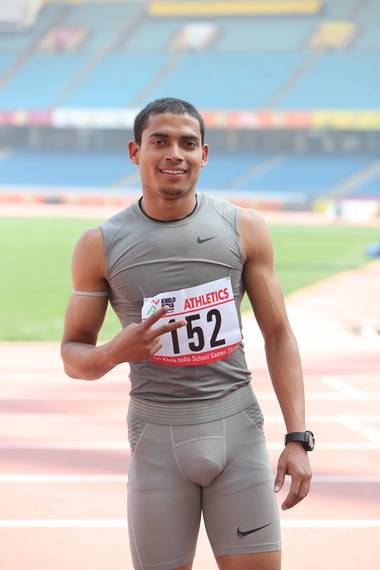
Delhi sprinter Nisar Ahmad justified his decision to postpone a training trip to Jamaica, becoming the fastest runner at the Khelo IndiaSchool Games on Friday with a 10.76 seconds finish in the 100 metres dash at the Jawaharlal Nehru Stadium. Karnataka’s V. A. Shashikanth was runner-up in 10.90s and Haryana’s Govind Kumar came third in 10.95s.
Ahmed, in fact, completed in 10.77s even as the recall whistle went off; he was told that the actual race would be run after 20 minutes. Karan Hegiste of Karnataka, expected to push Ahmed, was disqualified because of another false start on resumption.
“I want to use this scholarship to explode the myth that Indians cannot run below 10 seconds. I had to delay my trip to Jamaica but will now leave tomorrow,” Ahmed, who skipped the 200m to concentrate on the sprint, said.
Avantika Narale of Maharashtra was the fastest girl in the competition, winning the 100m in 12.35 seconds.
Double gold for Anu Kumar
Uttarakhand’s Anu Kumar, meanwhile, became the first double gold medallist in the competition, adding the 800m on Day Three to the 1500m he won on the first day with a personal best timing of 1:52.08. His previous best was 1:53.59, set at the World School Games in France where Anu finished second.
Also completing her golden double was Haryana’s Pooja, adding the Discus Throw gold to her kitty with a throw of 41.01m. She had earlier won gold in Shot Put as well. Tamil Nadu’s A. Jenci Susan won silver with a throw of 40.43m while Uttar Pradesh’s Nikita Verma won bronze.
Mane equals National record
In shooting, Shahu Mane, who has qualified for the Youth Olympics later this year, shot a score of 247.7 to equal the national record in the youth category and take gold ahead of more fancied rivals in the 10m air rifle competition. While Hriday Hazarika, the country’s top-ranked youth shooter, and Yashvardhan both managed to better the existing national record with scores of 624.3 and 623.9 respectively in qualifying, they faltered in the final round to finish out of the medal bracket.
Among the girls, Chandigarh’s Zeena Khitta took gold ahead of Nandita Sul and Yana Rathore. Zeena, who would be participating in the ISSF Junior World Cup in March, took control in the finals early on and stayed in front all through to finish with 251.6, 2.3 points ahead of second-placed Nandita.
100m: Boys:1. Nisar Ahmed (10.76s), 2. Shashikanth VA (10.90s), 3. Govind Kumar (10.95s); Girls: 1. Avantika Narale (12.35s), 2. R. Giridharani (12.49s), 3. M Santra Teresa Martin (12.61s).
800m: Boys:1. Anu Kumar (1:52.08), 2. N Sree Kiran (1:54.13), 3. Vaseem Tomar (1:55.78); Girls: 1. Tai Bamhane (2:13.37), 2. Priscilla Daniel (2:13.91), 3. Sandra A S (2:15.92).
M&C Saatchi India has appointed Parveez Shaikh as their senior vice president and executive creative director.Shaikh is best known for building Contract’s creative reputation during the 11 years that he spent at the agency before he quit, in 2003. He has worked as a creative consultant with a few leading agencies for a few years after that.
M&C Saatchi India has appointed Parveez Shaikh as their senior vice president and executive creative director.
Shaikh is best known for building Contract’s creative reputation during the 11 years that he spent at the agency before he quit, in 2003.
He has worked as a creative consultant with a few leading agencies for a few years after that.
Shaikh has worked on premium, blue-chip clients such as Philips Audio, Franklin Templeton AMC, Asian Paints, Shoppers’ Stop, ICICI Bank and Cadbury India.
He has won over a hundred national and international awards, including two Cannes Lions and five finalists at the prestigious Cannes Advertising Festival, an entry in the D&AD, the One Show, the New York Festival and the ‘Copywriter of the Year’ award.
He has also featured in the Indian Copy Book as one of the 16 best Indian copywriters of all time. Shaikh will be based in Mumbai.
source: http://www.campaignindia.in / Campaign India / Home> Advertising / by Campaign India Team / May 22nd, 2008
Player Ikram Ali of Madhya Pradesh Athletics Academy exhibited an impressive performance at ‘Khelo India School Games’ and brought laurels to the State. Ikram Ali bagged a gold medal for State in discuss throw.
It is to be noted that Khelo India School Games are being played at New Delhi. Ikram Khan secured first place by throwing 51.39 meters of pistol and earned gold medal by making Madhya Pradesh proud. Punjab in second place and Karnataka player in third position.
Madhya Pradesh’s 10 athletes are participating in Khelo India School Games, of which 8 are player of Madhya Pradesh State Athletics Academy. Under the competition, Academy’s player Sarvjit Patel will perform talent in the five-kilometer walk-through competition on Saturday.
Meanwhile, in All India Civil Services Volley Ball Competition Madhya Pradesh defeated Haryana.
Notably, the All India Civil Services Volley Ball competition, which started today in the city stadium, Madhya Pradesh defeated the Haryana Secretariat 2-0. The players of Madhya Pradesh performed better, defeating Haryana by 25-18, 25-19 in two sets.
Here on Friday 9 matches were played in the first session starting from 8am. Himachal Pradesh defeated Chhattisgarh Secretariat by 2-0. Similarly, the Goa Secretariat defeated GNCT Delhi, RSB Ahmedabad defeated RSB Uttarakhand, RSB Kochi defeated RSB Hyderabad, Central Secretariat Delhi defeated Tamil Nadu secretariat, RSB Mumbai defeated RSB Chennai, Andhra Pradesh Secretariat defeated Uttar Pradesh Secretariat and Gujarat Secretariat defeated Telangana Secretariat 2-0 difference.
RSB Hyderabad defeated RSB Kanpur, RSB Jabalpur defeated RSB Patna, RSB Kochi defeated RSB Jaipur by 2-0 in competitions in the second session in the second session on Friday.
source: http://www.dailypioneer.com / The Pioneer / Home> State Editions> Bhopal / by Staff Reporter / Saturday – February 03rd, 2018